Showing posts with label Player. Show all posts

Wednesday, March 1, 2023

The Story And Significance Of Ray Flaherty - Won Three NFL Championship Teams, One As A Player And Two As A Head Coach

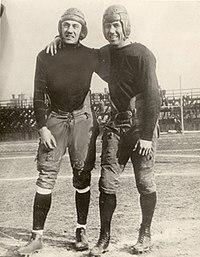
Raymond Paul Flaherty was an American football player and coach in the National Football League, and a member of the Pro Football Hall of Fame. He was part of three NFL Championship teams, one as a player and two as a head coach.

Flaherty began his professional football career in 1926 with the Los Angeles Wildcats of the American Football League, a team of western players based in Illinois. It played all its games on the road in its only season, which ended with a post-season barnstorming tour through the South against league rival New York Yankees. Flaherty then played in the National Football League for eight seasons, first with the Yankees (1927–1928) with Red Grange, until the franchise folded following the 1928 season. He joined the New York Giants, 1929 through the 1935 season, except for 1930, when he returned to Spokane as the head coach at his alma mater, Gonzaga. He also coached the Bulldog basketball team for a season (1930–1931). At the end of the 1935 season, Flaherty's jersey number 1 was 'taken out of circulation', thus making Flaherty the first professional football player to have his number retired.
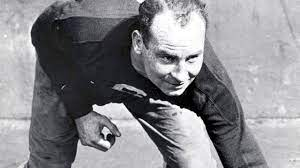
At age 26, Flaherty played a season of minor league baseball in 1930, as a second baseman with the Providence Grays of the Eastern League.

Following his playing career, Flaherty was hired by George Preston Marshall, owner of the NFL's Boston Redskins, as head coach for the 1936 season. The team won the division title that year, then relocated to Washington, D.C. for the 1937 season, and picked up future hall of fame quarterback Sammy Baugh in the first round of the 1937 NFL draft. In seven seasons at the helm of the Redskins, Flaherty won four division titles (1936, 1937, 1940, 1942) and two NFL Championships (1937, 1942). Among his innovations on offense, Flaherty is credited with inventing the screen pass in 1937.

The Redskins held their 1940 training camp in Spokane at Gonzaga; the previous year's camp was also held in Spokane County, at Eastern Washington College in Cheney. In 1941 and 1942, the Redskins trained in California in San Diego at Brown Military Academy.

Flaherty served as an officer in the U.S. Navy during World War II, then returned to pro football in 1946 as a head coach in the new All-America Football Conference (AAFC). With the New York Yankees, he won division titles in each of his two full seasons at the helm, but lost to the Cleveland Browns in the title games. After a poor start in 1948, owner Dan Topping relieved Flaherty of his duties in mid-September. Several months later he was hired as head coach of the AAFC's Chicago Hornets, known as the Rockets in their three previous seasons. He was inducted into the Pro Football Hall of Fame in 1976 for his contributions as a coach.

After the end of the AAFC in 1949, Flaherty returned to the Spokane area to enter private business as a beverage distributor, and lived in nearby northern Idaho. During football season, he was a part-time columnist for the Spokane Daily Chronicle. A college friend of Bing Crosby, Flaherty participated in the singer's Spokane memorial service in 1977.

After an extended illness, Flaherty died in 1994 in Hayden, Idaho at the age of 90; he and his wife Jackie (1921–2007) are buried at St. Thomas Cemetery in Coeur d'A
lene.
Sources
https://www.pro-football-reference.com/
https://www.profootballarchives.com/index.html
https://americanfootballdatabase.fandom.com/wiki/Football_Wiki
https://www.gridiron-uniforms.com/GUD/controller/controller.php?action=main
https://www.profootballhof.com/hall-of-famers/
Blanchette, John (July 20, 1994). "NFL legend Ray Flaherty dies". Spokesman-Review. Spokane, Washington. p. C1.
 Blanchette, John (November 2, 1983). "Papa Bear met his match in Ray Flaherty". Spokesman-Review. Spokane, Washington. p. C1.
 Godes, Kerry (March 30, 1987). "Gonzaga Prep selects six for its new Hall of Fame". Spokane Chronicle. Washington. p. C5.
 "Ray Flaherty Gonzaga coach". Spokesman-Review. Spokane, Washington. May 4, 1980. p. 1, sports.
 "RAY FLAHERTY". Gonzaga Bulldogs. Retrieved August 8, 2024.
 Derrick, Merle (January 27, 1976). "Flaherty honored". Spokane Daily Chronicle. Washington. p. 17.
 "Irish casaba tossers hit winning stride; play Spokane Sparklers Saturday night". Spokane Daily Chronicle. Washington. January 7, 1931. p. 15.
 Berry, Allison (February 2, 2012). "Top 10 Things You Didn't Know About the New York Giants". Time Magazine. p. 7.
 Eisen, Michael. "Malik Nabers to wear No. 1 with permission from Flaherty family". www.giants.com. Retrieved August 29, 2024.
 "Flaherty to coach Boston Redskins". Spokane Daily Chronicle. Washington. Associated Press. December 24, 1935. p. 1.
 Blanchette, John (July 22, 1994). "Flaherty earned due respect". Spokesman-Review. p. C1.
 "Legends: Flaherty in 'same class'". Ellensburg Daily Record. Washington. UPI. September 4, 1980. p. 8.
 "Flaherty sends Redskins into first practice grind". Spokane Daily Chronicle. Washington. August 6, 1940. p. 11.
 "Pro grid squad begins practice". Spokesman-Review. Spokane, Washington. August 8, 1939. p. 11.
 "Redskins will train on Gonzaga field starting August 6". Spokane Daily Chronicle. Washington. July 24, 1940. p. 11.
 Johnson, Bob (January 19, 1959). "Woo Redskins". Spokane Daily Chronicle. Washington. p. 13.
 Johnson, Bob (January 28, 1972). "Two trips west". Spokane Daily Chronicle. Washington. p. 13.
 "Training camp history". Redskins RVA. Retrieved February 7, 2014.
 "Yankees "fire" Ray Flaherty as grid coach". Spokesman-Review. Spokane, Washington. Associated Press. September 18, 1948. p. 11.
 "Ray Flaherty named coach of Chicago Rockets". Pittsburgh Press. United Press. January 30, 1949. p. 24.
 "Ray Flaherty to get Chappuis and others". Spokane Daily Chronicle. Washington. United Press. February 1, 1949. p. 11.
 Missildine, Harry (January 27, 1976). "Flaherty named to pro grid hall". Spokesman-Review. Spokane, Washington. p. 11.
 "Ray Flaherty gains Hall induction today". Spokesman-Review. Spokane, Washington. Associated Press. July 24, 1976. p. 13.
 Hewins, Jack (August 22, 1951). "Flaherty won't coach unless offer "too good to decline" appears". Spokesman-Review. Spokane, Washington. Associated Press. p. 13.
 "Flaherty to conduct football dope column". Spokane Daily Chronicle. Washington. September 3, 1954. p. 11.
 "Flaherty experts on football again". Spokane Daily Chronicle. Washington. September 5, 1958. p. 11.
 "Crosby service set". Spokane Daily Chronicle. Washington. October 17, 1977. p. 3.
 Smith, Jim (October 19, 1977). "Memorial rites held for city favorite, Bing Crosby". Spokesman-Review. Spokane, Washington. p. 7.
 "NCAA Statistics; Coach; Ray Flaherty". National Collegiate Athletic Association. Retrieved January 19, 2025.

Monday, June 6, 2022

The Story And Significance Of Jimmy Conzelman - The Last Cardinals Head Coach To Win An NFL Title

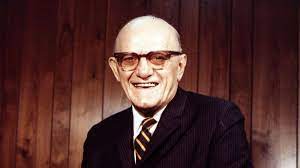
James Gleason Dunn Conzelman was an American football player and coach, baseball executive, and advertising executive. He was inducted into the Pro Football Hall of Fame in 1964 and was selected in 1969 as a quarterback on the National Football League 1920s All-Decade Team.

A native of St. Louis, Conzelman played college football for the 1918 Great Lakes Navy Bluejackets team that won the 1919 Rose Bowl. In 1919, he was an All-Missouri Valley Conference quarterback for the Washington University Pikers football team. He then played ten seasons as a quarterback, halfback, placekicker, and coach in the National Football League for the Decatur Staleys (1920), Rock Island Independents (1921–1922), Milwaukee Badgers (1922–1924), Detroit Panthers (1925–1926), and Providence Steam Roller (1927–1929). He was also a team owner in Detroit and, as player-coach, led the 1928 Providence Steam Roller team to an NFL championship.

From 1932 to 1939, Conzelman was the head football coach for the Washington University Bears football team, leading the program to Missouri Valley Conference championships in 1934, 1935, and 1939. He served as head coach of the NFL's Chicago Cardinals from 1940 to 1942 and again from 1946 to 1948. He led the Cardinals to an NFL championship in 1947 and Western Division championships in 1947 and 1948. He was also an executive with the St. Louis Browns in Major League Baseball from 1943 to 1945.

Conzelman enrolled at Washington University in St. Louis in 1916. He played freshman football that year but enlisted in the United States Navy when the United States entered World War I in 1917. He was stationed at the Great Lakes Naval Station north of Chicago. During two years of service, he played for the Naval Station's football, baseball, and basketball teams. He also took up boxing while in the Navy and won a championship in the middleweight division. He was the quarterback of the 1918 Great Lakes Navy Bluejackets football team that defeated previously undefeated Navy and then defeated the Mare Island Marines by a 17–0 score in the 1919 Rose Bowl. Conzelman's teammates on the 1918 Great Lakes team included George Halas and Paddy Driscoll, all three of whom were later inducted into the Pro Football Hall of Fame.

After the war, Conzelman turned down offers to become a professional boxer and returned to Washington University in February 1919. He played for the 1919 Washington Pikers football team that compiled a 5–2 record and outscored opponents 127 to 30. Conzelman was selected as the All-Missouri Valley Conference quarterback for 1919. He also was the catcher for the 1920 Washington University baseball team and organized an orchestra, played banjo, and wrote songs while attending Washington University.

During the spring semester of 1920, Conzelman lost his eligibility to play football due to academic deficiencies. His father had also died in May 1919, and he withdrew from school to help support his mother and younger siblings. In June 1920, Conzelman announced that he would not return to Washington University in the fall. He spent the summer leading an orchestra in Arkansas.

In mid-October 1920, Conzelman joined the Decatur Staleys (later renamed the Chicago Bears) of the newly formed American Professional Football Association (later renamed the NFL). He planned to relocate permanently to Decatur and also play for the Staleys baseball and basketball teams. Conzelman was reunited at Decatur with player-coach George Halas, with whom Conzelman had played on the 1918 Great Lakes team. In Conzelman's first game with the Staleys, he scored the game's only touchdown on a 43-yard run. Playing at the halfback position, Conzelman handled punting, placekicking and passing for the Staleys in the important games and was selected as a second-team player on the 1920 All-Pro team. The 1920 Staleys compiled a 10–1–2 record and finished in second place in the league.

In October 1921, Conzelman joined the Rock Island Independents as the team's captain and coach. At age 23, he was one of the youngest coaches in NFL history. He led Rock Island to a 4–1 record during the 1921 season.

After starting the season with Rock Island, Conzelman signed with the Milwaukee Badgers in the middle of their 1922 season. He was the Badgers' coach and a player for the final three games of the 1922 season during which the team went 0–3.

During the 1923 season, Conzelman, as player and coach, led the Badgers to a 7–2–3 record and a third-place finish out of 20 teams in the NFL. Conzelman was also the team's second-highest scorer with four touchdowns and two extra points. During the 1924 season, Conzelman remained with the Badgers as a player only. The team's record fell to 5–8 and 12th place in the NFL.

In 1925, Conzelman organized and became the owner of a new NFL franchise in Detroit, which he named the Detroit Panthers. He reportedly paid a franchise fee of only $50 to the NFL to acquire the Detroit franchise. In addition to being the owner, Conzelman was also the team's coach and a player during the 1925 and 1926 NFL seasons. During the 1925 season, Conzelman's Detroit club compiled an 8–2–2 record, played at Navin Field, and outscored opponents by a combined total of 129 to 39.

During the 1926 season, the Panthers dropped to 4–6–2 and compiled a record of 0–3–2 in the month of November. The team's attendance in Detroit was approximately 3,000 persons per game, not enough for Conzelman to make a profit. Accordingly, in August 1927, Conzelman sold the Detroit franchise back to the NFL for $1,200. Conzelman later recalled: "We simply were ahead of our time in Detroit. The town wasn't quite ready for pro football."


In August 1927, following his decision to sell the Detroit franchise back to the league, Conzelman signed as a player, manager and coach for the Providence Steam Roller. Conzelman brought players Gus Sonnenberg and Eddie Lynch with him from Detroit. Conzelman and Wildcat Wilson were the leading scorers on the 1927 Providence team, each with four touchdowns. The Steam Roller finished the 1927 season an 8–5–1 record and a fifth-place finish in the NFL.

Conzelman led the 1928 Providence team to an 8–1–2 record and the club's first NFL championship. The team's passing combination of Wildcat Wilson to Conzelman was the most effective in the league and accounted for most of the club's yardage until Conzelman twisted knee ligaments on a reception against the Yankees. Despite being unable to play in the second half of the season due to the injury, Conzelman was unanimously voted by his teammates as the team's most valuable player.

In his final season as an NFL player-coach, Conzelman led the 1929 Providence team to a 4–6–2 record.

In the fall of 1931, Conzelman served as the head coach of the St. Louis Gunners, an independent professional football team sponsored by a local field artillery unit of the National Guard. The Gunners posted a 5–2–1 record in 1931. After a game against the NFL's Chicago Cardinals, Chicago captain Ernie Nevers called the Gunners the "best independent club we have ever faced."

In January 1932, Conzelman returned to Washington University in St. Louis as the school's head football coach. He became the school's first alumnus to lead the football team. Over the next eight years, Conzelman led Washington University Bears football team to Missouri Valley Conference championships in 1934, 1935, and 1939, and compiled an overall record of 40–35–2.

In January 1940, Conzelman tendered his resignation as head coach of the Washington University football team, but the resignation was not accepted by the athletic board. The university chancellor directed Conzelman to attend an alumni rally in his support. Conzelman appeared and announced that he would not withdraw his resignation, though he would continue to support the program from the outside. Newspaper accounts indicate that he may have been fired under pressure from a powerful "anti-Conzelman" group of alumni in downtown St. Louis.

In April 1940, Conzelman was hired as the head coach of the NFL's Chicago Cardinals. He replaced Ernie Nevers in the position. In his first stint as head coach of the Cardinals, Conzelmean served three years with the Cardinals from 1940 to 1942, leading the club to a combined three-year record of 8–22.


tenure as head coach of the Cardinals was interrupted by a two-years stint as an administrator in Major League Baseball for the St. Louis Browns. In June 1943, he resigned his job as head coach of the Cardinals and was hired as director of public relations and assistant to Donald Lee Barnes, president and owner of the Browns. He remained with the Browns for two years and was said to be the "secret weapon" of the 1944 St. Louis Browns team that won the American League pennant. Conzelman resigned his post with the club in August 1945.


In late November 1945, Conzelman was hired for a second time to serve as head coach of the Chicago Cardinals starting with the 1946 NFL season. During the 1947 season, the Cardinals with their "Million Dollar Backfield" compiled a 9–3 record and defeated the Philadelphia Eagles in the 1947 NFL Championship Game. Conzelman's 1948 Cardinals team compiled an 11–1 record during the regular season, led the NFL in offense with an average of 32.9 points per game, and lost to the Eagles in the 1948 NFL Championship Game. In their second stint under Conzelman, the Cardinals compiled a 26–9 record from 1946 to 1948.

On January 7, 1949, three weeks after the loss in the 1948 Championship Game, Conzelman resigned as the Cardinals' head coach. He had been working for D'Arcy Advertising Co. for the prior two years during the off-season and stated that he was resigning his coaching position to devote his full efforts to the advertising firm. The Cardinals' management said at the time that Conzelman's resignation was unexpected and "came like a bolt from the blue."
Sources
https://www.pro-football-reference.com/
https://www.profootballarchives.com/index.html
https://americanfootballdatabase.fandom.com/wiki/Football_Wiki
https://www.gridiron-uniforms.com/GUD/controller/controller.php?action=main
https://www.profootballhof.com/hall-of-famers/
 "Jimmy Conzelman". Pro-Football-Reference.com. Sports Reference LLC. Retrieved December 3, 2016.
 Bob Broeg (2000). The 100 Greatest Moments in St. Louis Sports. Missouri History Museum. p. 43. ISBN 1883982316.
 Bill Schubert (1997). "Jimmy Conzelman" (PDF). The Coffin Corner. Pro Football Researchers.
 Walter Barlow Stevens (1909). St. Louis, the Fourth City, 1764-1909, Volume 2. S. J. Clarke Publishing Company. p. 775.
 "New Coach Star at Football, Baseball, Basketball; Is Musician and Songwriter". St. Louis Post-Dispatch. January 22, 1932. p. 2B – via Newspapers.com. Open access icon
 Carnation (McKinley High School yearbook). June 1916. p. 81.
 David Condon (January 22, 1932). "Sports World Mourning for Jimmy Conzelman". Chicago Tribune. p. 2 – via Newspapers.com. Open access icon
 "1919 Washington (MO) Bears Schedule and Results". SR/College Football. Sports Reference LLC. Retrieved December 3, 2016.
 "Conzelman Says He Will Not Be Back". The Des Moines Register. June 28, 1920. p. 4.
 "Died". Dental Health. June 1919. p. 31.
 "Jimmy Conzelman Joins Staley Football Team". St. Louis Post-Dispatch. October 13, 1920. p. 24 – via Newspapers.com. Open access icon
 "Conzelman's 43-Yard Run Nets A Touchdown and Wins for Staley Eleven". St. Louis Post-Dispatch. October 18, 1920. p. 19 – via Newspapers.com. Open access icon
 "Jim Conzelman Gets Position on Second All-Star "Pro" Eleven". St. Louis Post-Dispatch. December 12, 1920. p. 12 – via Newspapers.com. Open access icon
 "Conzelman Is Made Manager: Former Staley Player To Handle Rock Island Football Team". The Decatur Herald. October 21, 1921. p. 4 – via Newspapers.com. Open access icon
 "Jimmy Conzelman Coaching Record". SR/College Football. Sports Reference LLC. Retrieved December 3, 2016.
 "Lauer and Lyle, Pair of Rock Island Stars, Play With Green Bay Sunday". Green Bay Press-Gazette. November 24, 1922. p. 11.
 "1922 Milwaukee Badgers Statistics & Players". Pro-Football-Reference.com. Sports Reference LLC. Retrieved December 4, 2016.
 "1923 Milwaukee Badgers Statistics & Players". Pro-Football-Reference.com. Sports Reference LLC. Retrieved December 4, 2016.
 "1924 Milwaukee Badgers Statistics & Players". Pro-Football-Reference.com. Sports Reference LLC. Retrieved December 4, 2016.
 "Pro Grid Loop Dates Named: Conzelman Has Local Franchise". Detroit Free Press. August 3, 1925. p. 12.
 "Conzelman Is Versatile Stars In Athletics, Music". Detroit Free Press. August 23, 1925. p. 23.
 Richard Bak (1998). A Place for Summer: A Narrative History of Tiger Stadium. Wayne State University Press. p. 252. ISBN 0814325122.
 "1925 Detroit Panthers Statistics & Players". Pro-Football-Reference.com. Sports Reference LLC. Retrieved December 4, 2016.
 "1926 Detroit Panthers Statistics & Players". Pro-Football-Reference.com. Sports Reference LLC. Retrieved December 4, 2016.
 Richard Bak, A Place for Summer, pp. 252–253.
 Richard Bak, A Place for Summer, p. 248.
 "Detroit Surrenders Its National Wheel Football Franchise: Conzelman To Manage Providence; Takes Sonnenberg and Lynch With Him". Green Bay Press-Gazette. August 22, 1927. p. 14 – via Newspapers.com. Open access icon
 "1927 Providence Steam Roller Statistics & Players". SR/College Football. Sports Reference LLC. Retrieved December 3, 2016.
 "1928 Providence Steam Roller Statistics & Players". SR/College Football. Sports Reference LLC. Retrieved December 3, 2016.
 "Jimmy Conzelman "Most Valuable Man" On Greatest Team in "Pro" Football". St. Louis Post-Dispatch. December 9, 1928 – via Newspapers.com. Open access icon
 "Conzelman Still at It". St. Louis Post-Dispatch. October 18, 1929. p. 44 – via Newspapers.com. Open access icon
 "1929 Providence Steam Roller Statistics & Players". SR/College Football. Sports Reference LLC. Retrieved December 3, 2016.
 "1922 Rock Island Islanders Statistics". Baseball-Reference.com.
 "Jimmy Conzelman Minor Leagues Statistics & History". Baseball-Reference.com.
 "1922 Rock Island Islanders minor league baseball Roster on StatsCrew.com". www.statscrew.com.
 Carroll, Bob (1983). "The St. Louis Gunners" (PDF). Coffin Corner. 4 (Annual). Professional Football Researchers Association: 1–2, 10.
 "Jim Conzelman Will Coach Pro Battery Eleven". St. Louis Post-Dispatch. October 21, 1931. p. 7C – via Newspapers.com. Open access icon
 "Jim Conzelman Named Head Football Coach at Washington". St. Louis Post-Dispatch. January 22, 1932. p. 2B – via Newspapers.com. Open access icon
 W. Vernon Tietjen (January 17, 1940). "Conzelman Definitely Resigns As Bears' Grid Coach: Accepts Post on Athletic Council, Cheered by Grads". St. Louis Star-Times. p. 18 – via Newspapers.com. Open access icon
 "Washington Alumni To Probe Firing of Conzelman: Indignant Group to Determine if Coach Was Treated Fairly". St. Louis Star-Times. January 18, 1940. p. 22 – via Newspapers.com. Open access icon
 "Conzelman Is New Cardinal Football Boss: Former Star Will Take Charge at Once". Chicago Daily Tribune. April 11, 1940. p. 30 – via Newspapers.com. Open access icon
 Jack Hemstock (June 3, 1943). "Browns Sign Conzelman As Assistant To Barnes". St. Louis Star-Times. p. 22 – via Newspapers.com. Open access icon
 Wilfrid Smith (June 4, 1943). "Baseball Calls Conzelman To Job In St. Louis". St. Louis Post-Dispatch. p. 23 – via Newspapers.com. Open access icon
 "Conzelman Quits As Browns Aide". Democrat and Chronicle (Rochester, NY). August 25, 1945. p. 11 – via Newspapers.com. Open access icon
 "Conzelman Will Resume Coaching Chicago Cards". St. Louis Post-Dispatch. November 28, 1945. p. 2B – via Newspapers.com. Open access icon
 "1947 Chicago Cardinals Statistics & Players". Pro-Football-Reference.com. Sports Reference LLC. Retrieved December 3, 2016.
 "1948 Chicago Cardinals Statistics & Players". Pro-Football-Reference.com. Sports Reference LLC. Retrieved December 3, 2016.
 "Conzelman, Cardinal Grid Coach, Resigns Post With NFL Titlists". Portland Press Herald. January 8, 1949. p. 7 – via Newspapers.com. Open access icon
 "Jimmy Conzelman Quits As Coach of Grid Cards For Ad Firm Job Here". St. Louis Post-Dispatch. January 8, 1949. p. 6A – via Newspapers.com. Open access icon
 "Conzelman Signs Up For Park Opera Role". St. Louis Post-Dispatch. April 14, 1957. p. 4G – via Newspapers.com. Open access icon
 "Jimmy Conzelman, 72, is Dead; Coached Cardinals to Grid Title". The New York Times. August 1970.
 "American Memorial, Meaux". March 3, 2014.
 "Conzelman, Hinkle Gain Hall of Fame". St. Louis Post-Dispatch. February 28, 1964. p. 1E – via Newspapers.com. Open access icon
 Bill Schubert, "Jimmy Conzelman," The Coffin Corner, vol. 19, no. 1 (1997).
 "Conzelman Nominated To Hall". St. Louis Post-Dispatch. December 7, 1967. p. 1E – via Newspapers.com. Open access icon
 "Conzelman Plaque To Be Dedicated". St. Louis Post-Dispatch. September 11, 1968. p. 2E – via Newspapers.com. Open access icon
 Bob Broeg (August 27, 1969). "'Nice Things' Surprise Modest Jim Conzelman". St. Louis Post-Dispatch. p. 2E – via Newspapers.com. Open access icon
 "Maxvill, Devine In First Class To Enter Washington U. Hall". St. Louis Post-Dispatch. June 24, 1992. p. 8D – via Newspapers.com. Open access icon
 "Honors scheduled". The Arizona Republic. July 31, 2000.
 "Sues Jimmy Conzelman". The St. Louis Star. January 17, 1930. p. 1 – via Newspapers.com. Open access icon
 "Peggy Udell Again Wears Wedding Ring: Mother Announces Former Follies Girl's Marriage to Professional Ball Player". The Philadelphia Inquirer. April 15, 1924. p. 9 – via Newspapers.com. Open access icon
 "Peggy Udell Seeks Divorce". The Great Falls Tribune. July 10, 1924. p. 9 – via Newspapers.com. Open access icon
 "Stork Holds Up Former Follies Girl's Divorce Suit". The Gazette Times (Pittsburgh). July 5, 1925. p. 1 – via Newspapers.com. Open access icon
 "Coach Conzelman To Wed Miss Anna Forrestal Soon". St. Louis Star-Times. December 3, 1936. p. 28 – via Newspapers.com. Open access icon
 "Football Coach Conzelman To Wed Miss Anna Forrestal: Wedding to Take Place at Seminary in Florissant; Third for Athlete". St. Louis Post-Dispatch. December 2, 1936. p. 6C – via Newspapers.com. Open access icon
 Marriage License for James Conzelman and Ann Forrestal, both of St. Louis, issued November 27, 1936, ceremony December 5, 1936. Ancestry.com. Missouri, Marriage Records, 1805–2002 [database on-line].
 "Jimmy Conzelman Dies". St. Louis Post-Dispatch. July 31, 1970. Retrieved July 23, 2016 – via Newspapers.com.
Bob Curran, Pro Football's Rag Days. Englewood Cliffs, NJ: Prentice-Hall, 1969.

Monday, December 13, 2021

The Story And Significance of George Halas - The Founder And Owner Of The Chicago Bears

George Stanley Halas Sr., nicknamed "Papa Bear" and "Mr. Everything", was an American professional football player, coach, and team owner. He was the founder and owner of the National Football League's Chicago Bears, and served as his own head coach on four occasions. He was also lesser-known as a Major League Baseball player for the New York Yankees. 
Halas was one of the co-founders of the National Football League in 1920, and in 1963 became one of the first 17 inductees into the Pro Football Hall of Fame.
After graduating from Crane High School in Chicago, he attended the University of Illinois, playing football for coach Bob Zuppke, as well as baseball and basketball, and earning a degree in civil engineering. He also became a member of Tau Kappa Epsilon fraternity. He helped Illinois win the 1918 Big Ten Conference football title.
Serving as an ensign in the Navy during World War I, he played for a team at the Great Lakes Naval Training Station, and was named the MVP of the 1919 Rose Bowl. On a team which included Paddy Driscoll and Jimmy Conzelman (Both in the NFL Hall of Fame), Halas scored a receiving touchdown and returned an intercepted pass 77 yards in a 17–0 win over the Mare Island Marines of California; the team was also rewarded with their military discharges.
Afterward, Halas played minor league baseball, eventually earning a promotion to the New York Yankees, where he played 12 games as an outfielder in 1919. However, a hip injury effectively ended his baseball career. Halas said that he was succeeded as the Yankees' right fielder by Babe Ruth, but in reality, it was Sammy Vick. Later that year, Halas played football for the Hammond Pros and received about $75 per game.
After one year with the Pros, Halas moved to Decatur, Illinois to take a position with the A. E. Staley Company, a starch manufacturer. He served as a company sales representative, an outfielder on the company-sponsored baseball team, and the player-coach of the company-sponsored football team the Decatur Staleys. Halas selected his alma mater's colors—orange and navy blue—for the team's uniforms. In 1920, Halas represented the Staleys at the meeting which formed the American Professional Football Association (which became the NFL in 1922) in Canton, Ohio. After the Staleys' season ended, Halas and teammates George Trafton, Hub Shoemake, and Hugh Blacklock joined the Chicago Stayleys for a December 19 match against the Chicago Cardinals, marking the only time Halas would be an NFL team's opponent for another team besides the Staleys/Bears. The game ended in a 14–14 tie.
Despite a 10–1–2 record, the Staleys ended the season awash in red ink. The Staleys' financial troubles didn't dissuade Halas from significantly upgrading the roster, to the point that it was a works team in name only. After the first game of the 1921 season, company founder and namesake Augustus E. Staley turned over control of the team to Halas so he could move the team to Chicago, where the team had attracted its biggest gates of the 1920 season. Staley gave Halas a $5,000 bonus for the move to Chicago provided that he keep the Staleys franchise name for the 1921 season. Halas then took on teammate Edward "Dutch" Sternaman as a partner. The newly minted "Chicago Staleys" set up shop at Cubs Park, soon to be known as Wrigley Field; Halas had a good relationship with Chicago Cubs owner William Wrigley Jr. and president Bill Veeck Sr.. The Staleys maneuvered their schedule to win their first NFL championship that year. The following year, Halas renamed his team the "Chicago Bears." Years later, he recalled that he wanted to find a way to choose a name that would give a nod to the Cubs. Reasoning that football players were far bigger than baseball players, he concluded, "if baseball players are cubs, then football players must be bears!"
Halas was not only the team's coach but also played end (wide receiver on offense, defensive end on defense) and handled ticket sales and the business of running the club. Named to the NFL's all-pro team in the 1920s, his playing highlight occurred in a 1923 game when he stripped Jim Thorpe of the ball, recovered the fumble, and returned it 98 yards for a league record which would stand until 1972. In 1925, Halas persuaded Illinois star player Red Grange to join the Bears; it was a significant step in establishing both the respectability and popularity of the league, which had previously been viewed as a refuge for less admirable players.
After ten seasons, Halas stepped back from the game in 1930, retiring as a player and handing coaching duties to Lake Forest Academy coach Ralph Jones; but he remained the team's owner, becoming sole owner in 1932. However, severe financial difficulties brought on by the Great Depression put the Bears in dire financial straits even though Jones led them to the NFL title in 1932. Halas returned as coach in 1933 to eliminate the additional cost of paying a head coach's salary. He coached the Bears for another ten seasons. His 1934 team was undefeated until a loss in the championship game to the New York Giants.
In the late 1930s, Halas and University of Chicago coach Clark Shaughnessy perfected the T-formation system to create a revolutionary and overwhelming style of play which drove the Bears to an astonishing 73–0 victory over the Washington Redskins in the 1940 NFL Championship Game which is still the most lopsided margin of victory in NFL history. Every other team in the league immediately began trying to imitate the format. The Bears repeated as NFL champions in 1941, and the 1940s would be remembered as the era of the "Monsters of the Midway".
Halas and Shaughnessy had created a revolutionary concept with the T-formation offense. The complex spins, turns, fakes, and all-around athletic versatility required to execute the scheme limited the possible players available. Halas believed he'd found the perfect quarterback for his new offense in Sid Luckman, a passing star at Columbia University. Luckman was a single wing tailback; the tailback is the primary runner and passer in that scheme. Luckman launched his Hall of Fame career playing quarterback for the Bears from 1939 to 1950. Halas was not satisfied with other players who succeeded Luckman under center. During this coaching stint, he had on the Bears roster two future Hall of Fame players, Bobby Layne in 1948 and George Blanda from 1949 to 1958. Other notable players included Heisman Trophy winner Johnny Lujack from 1948 to 1951 and Zeke Bratkowski from 1954 to 1960. Blanda played in the NFL until 1975; Bratkowski moved on the Los Angeles Rams before signing with Vince Lombardi's Green Bay Packers in 1963, where he played an important role as "super sub" to starter Bart Starr in winning three straight NFL championships in 1965-'66-'67; and Bobby Layne quarterbacked the Detroit Lions to three NFL championship games between 1952 and 1954, winning two.
Halas entered the Navy again after the advent of World War II in 1942, with the rank of lieutenant commander. He served overseas for 20 months under the command of Admiral Chester Nimitz. His duties were supporting the welfare and recreational activities of the Seventh Fleet. He was awarded the Bronze Star during his recall and released from duty in 1946 with the rank of captain. While Halas was in the Navy, the Bears won another title in 1943 under Hunk Anderson and Luke Johnsos. Returning to the field in 1946, he coached the club for a third decade, again winning a title in his first year back as coach. That same year, Halas met with the Army Chief of Staff, General Dwight Eisenhower, the Navy Chief of Staff, Admiral Chester Nimitz, and the Air Force Chief of Staff, General Carl Spaatz, and offered to set up an annual charity football game, with the Bears as hosts, whose proceeds would go to the relief agencies of the armed forces. By mid-1957, proceeds from this game were $438,350.76 and proceeds from all games the Bears participated in between 1946 and 1957 were over $2 million.
In 1939, Halas followed Tim Mara footsteps who purchase the Stapleton Buffaloes in 1937 and obtained the rights to a former NFL club Newark Tornadoes (now in the American Association) from Piggy Simandl, changed the team's name to Bears and stocked with talent that did not make the Chicago roster. He used the club to incubate talent and for easy return for injured players, thus making it pro football's first true farm team. Newark's most notable names included Joe Zeller as coach and Gene Ronzani who led them to the 1939 championship (with a little help in the playoff from Sid Luckman). Halas folded the team in 1941, after the Japanese attack on Pearl Harbor ushered in the United States’ participation in World War II. It would later be revived for one more season (1946) as the Newark Bombers under Halas ownership (not as a farm team), but was folded altogether at the end of the season, and was substituted by the Bloomfield Cardinals.

In 1946, after he returned from service in WWII, Halas also launched the Akron Bears of the American Football League as the Chicago Bears' minor league affiliate. The launch was an attempt to interfere with the territorial rights of the Cleveland Browns, a team in the NFL rival All-America Football Conference (AAFC); Akron is located just 30 miles from Cleveland.

The team was coached again by Ronzani and had notable players like quarterback George Gulyanics, Ed Ecker, Lloyd Reese, Raymond Schumacher and Jack Karwales. The Bears were successful on the field, including reaching the league final before losing 14–13 to the Jersey City Giants but lost at the box office a sum of $52,000, partly because they had large traveling expenses as most of the league team were located on the East Coast. The team did not return for a second season.

After a brief break in 1956–57, he returned as head coach for a final decade from 1958 to 1967. Despite winning his sixth and last league title in 1963, he did not enjoy the same success as he had before the war, and officially retired on May 27, 1968. He did win his 200th game in 1950 and his 300th game in 1965, becoming the first coach to reach both milestones. His six NFL Championships as a head coach is tied for the most all time with Green Bay's Curly Lambeau and later, New England's Bill Belichick. In 40 years as a coach, he endured only six losing seasons, three of which came during his final stint. A pioneer both on and off the field, Halas made the Bears the first team to hold daily practice sessions, to analyze film of opponents to find weaknesses and means of attack, place assistant coaches in the press box during games, place tarp on the field, publish a club newspaper, and to broadcast games by radio. He also offered to share the team's substantial television income with teams in smaller cities, firmly believing that what was good for the league would ultimately benefit his own team. A firm disciplinarian, Halas maintained complete control of his team and did not tolerate disobedience and insubordination by players. He also insisted on absolute integrity and honesty in management, believing that a handshake was sufficient to finalize a deal; few, if any, intermediaries were necessary.
Halas's career ledger reads as follows: 63 years as an owner, 40 as a coach, 324 wins, and 8 NFL titles as a coach or owner. His 324 victories stood as an NFL record for nearly three decades, and are still far and away the most in Bears history; they are three times that of runner-up Mike Ditka. He was a charter member of the Pro Football Hall of Fame in 1963.
Sources
https://www.pro-football-reference.com/
https://www.profootballarchives.com/index.html
https://americanfootballdatabase.fandom.com/wiki/Football_Wiki
https://www.gridiron-uniforms.com/GUD/controller/controller.php?action=main
https://www.profootballhof.com/hall-of-famers/
Davis, Jeff, Papa Bear, (McGraw-Hill Co., 2005), 32.
 Encyclopedia of ethnicity and sports in the United States, Ed. George B. Kirsch, Othello Harris and Claire Elaine Nolte, (Greenwood Publishing, 2000), 164.
 Elliott J. Gorn, Sports in Chicago, (University of Illinois Press, 2008), 7.
 Twombly, Wells (1976). 200 Years of Sport in America. New York: McGraw-Hill. p. 186. ISBN 0-07-065640-1.
 Gloria Cooksey, George Halas: An entry from Gale's Notable Sports Figures 2004.
 "Halas, George Stanley". www.encyclopedia.com.
 "ITB: Halas escapes Eastland Disaster". Chicago Bears. October 29, 2013. Archived from the original on December 13, 2013. Retrieved November 5, 2013.
 "George Halas". Encyclopedia.com. Retrieved January 11, 2022.
 "The Story of "Papa Bear" George Halas". Illinois Fighting Illini. February 2, 2020. Retrieved January 11, 2022.
 "Mass slated tomorrow for Mrs. Halas, 70". The Chicago Tribune. Vol. 119, no. 47. Chicago. February 16, 1966. p. 6 sec. 2. Retrieved January 11, 2022 – via Newspapers.com.
 Names, Larry D (1987). "The Myth". In Scott, Greg (ed.). The History of the Green Bay Packers: The Lambeau Years. Vol. 1. Angel Press of WI. p. 31. ISBN 0-939995-00-X.
 "George Halas, Randall McDaniel, Pop Warner and Vince Young to be Inducted into the Rose Bowl Hall of Fame Class of 2018". Tournament of Roses – Rose Bowl Game. September 10, 2018. Retrieved December 14, 2021.
 "George Halas". Society for American Baseball Research. Retrieved February 2, 2021.
 U.S. House III, 1957, p. 2714.
 "Evolution of the Bears Colors". National Football League. September 13, 2012. Retrieved December 21, 2012.
 Marines Are Swamped By Great Stars :Minneapolis Team Swept Off Their Feet by Crack Hammond Eleven. (October 27, 1919). Minneapolis Morning Tribune (1909–1922),10. Retrieved September 2, 2010, from ProQuest Historical Newspapers Minneapolis Tribune (1867–1922). (Document ID: 1513834502).
 "George Stanley Halas (Papa Bear)". Staley Museum. December 10, 2015.
 "Decatur stars oppose Driscoll". The Dispatch. December 20, 1920. Retrieved May 23, 2020 – via Newspapers.com.
 Halas, George S. (August 9, 2015). "From Decatur to NFL, with Potholes Along Way". Chicago Tribune.
 George Halas at The Staley Museum
 Chicago Bears Media Guide, 2020
 Exoo, Thales (January 31, 2007). "Ask Chicagoist: Why Are They Called the Bears?". Chicagoist. Gothamist. Archived from the original on May 10, 2017. Retrieved December 19, 2016.
 "Chicago Bears 1934 Games and Schedule". Pro-Football-Reference.com. Retrieved June 30, 2025.
 "George Halas Record, Statistics, and Category Ranks - Pro-Football-Reference.com". Pro-Football-Reference.com.
 U.S. House III, 1957, p. 2713.
 U.S. House III, 1957, p. 2720.
 "Happy Birthday George Halas". Chicago Bears. January 31, 2014. Archived from the original on February 19, 2014. Retrieved February 2, 2014.
 "Lords of the Rings: The NFL's 10 greatest coaches". Archived from the original on February 3, 2014. Retrieved December 5, 2013.
 "Football.History". www.njsportsheroes.com.
 "Nothing minor about it" (PDF).
 "Papa Bear's Nightmare" (PDF).
 "Bears coaching history". Chicago Bears. January 14, 2013. Archived from the original on August 7, 2017. Retrieved January 16, 2013.
 "2016 Hall of Fame – Illinois Engineering". engineering.illinois.edu.
 "George S. Halas Historical Marker". www.hmdb.org. Retrieved January 28, 2025.
 Mayer, Larry (February 19, 2020). "Halas was a pro basketball pioneer as well". Chicago Bears. Retrieved February 19, 2020.
 Rosenthal, Gregg (June 6, 2013). "Pro Football Hall of Famers who fought on D-Day". National Football League. Retrieved June 6, 2013.
 Greenberg, Jon (January 15, 2010). "'Super Bowl Shuffle' endures long after 1985". ESPN.com. Retrieved December 14, 2024.
 Pinak, Patrick (February 4, 2023). "The "Super Bowl Shuffle" and the 1985 Chicago Bears Were Both Massive Hits". FanBuzz. Retrieved December 14, 2024.
 "Six HOFers to toss coin at Super Bowl". Pro Football Hall of Fame. January 26, 2004. Retrieved May 7, 2021.
 The following source differs from Pro-Football-Reference.com and states that the record was 10–1–1 for 1921: Vass, George (1971). "The Bears Find a Den". George Halas and the Chicago Bears. Henry Regnery Company. p. 44. ISBN 0809295970.
Davis, Jeff (2006). Papa Bear: The Life and Legacy of George Halas. McGraw Hill Professional. ISBN 0-07-147741-1.
Hibner, John Charles (1993). "University of Oregon and University of Pennsylvania (1917)", in The Rose Bowl, 1902–1929: A Game-by-Game History of Football's Foremost Event, from its Advent through its Golden Era. Jefferson, NC: McFarland & Company, Inc. Publishers.
Organized Professional Team Sports: Part 3. (password protected except at participating U.S. library) by United States House Committee on the Judiciary III, Subcommittee on Antitrust (1957). pp. 2713–2716

Friday, December 10, 2021

The Story And Significance Of Jim Thorpe - The Greatest Athlete There Ever Was


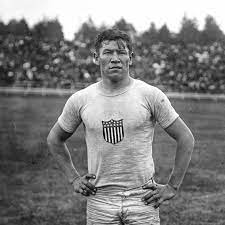
James Francis Thorpe (Sac and Fox (Sauk): Wa-Tho-Huk, translated as "Bright Path"; May 22 or 28, 1887 – March 28, 1953) was an American athlete and Olympic gold medalist. A member of the Sac and Fox Nation, Thorpe was the first Native American to win a gold medal for the United States in the Olympics. Considered one of the most versatile athletes of modern sports, he won two Olympic gold medals in the 1912 Summer Olympics (one in classic pentathlon and the other in decathlon). He also played American football (collegiate and professional), professional baseball, and basketball.
He lost his Olympic titles after it was found he had been paid for playing two seasons of semi-professional baseball before competing in the Olympics, thus violating the contemporary amateurism rules. In 1983, 30 years after his death, the International Olympic Committee (IOC) restored his Olympic medals with replicas, after ruling that the decision to strip him of his medals fell outside of the required 30 days. Thorpe is to date listed as co-champion in both the decathlon and pentathlon events according to official IOC records.
Thorpe grew up in the Sac and Fox Nation in Indian Territory (what is now the U.S. state of Oklahoma). As a youth, he attended Carlisle Indian Industrial School in Carlisle, Pennsylvania, where he was a two-time All-American for the school's football team under coach Pop Warner. After his Olympic success in 1912, which included a record score in the decathlon, he added a victory in the All-Around Championship of the Amateur Athletic Union. In 1913, he played for the Pine Village Pros in Indiana. Later in 1913, Thorpe signed with the New York Giants, and he played six seasons in Major League Baseball between 1913 and 1919. Thorpe joined the Canton Bulldogs American football team in 1915, helping them win three professional championships. He later played for six teams in the National Football League (NFL). He played as part of several all-American Indian teams throughout his career, and barnstormed as a professional basketball player with a team composed entirely of American Indians.
From 1920 to 1921, Thorpe was nominally the first president of the American Professional Football Association (APFA), which became the NFL in 1922. He played professional sports until age 41, the end of his sports career coinciding with the start of the Great Depression. He struggled to earn a living after that, working several odd jobs. He suffered from alcoholism, and lived his last years in failing health and poverty. He was married three times and had eight children, before suffering from heart failure and dying in 1953.
Thorpe has received numerous accolades for his athletic accomplishments. The Associated Press ranked him as the "greatest athlete" from the first 50 years of the 20th century, and the Pro Football Hall of Fame inducted him as part of its inaugural class in 1963. The town of Jim Thorpe, Pennsylvania was named in his honor. It has a monument site that contains his remains, which were the subject of legal action. Thorpe appeared in several films and was portrayed by Burt Lancaster in the 1951 film Jim Thorpe – All-American.
 He first played professional football in 1913 as a member of the Indiana-based Pine Village Pros, a team that had a several-season winning streak against local teams during the 1910s. He signed with the Canton Bulldogs in 1915. They paid him $250 ($6,396 today) a game, a tremendous wage at the time. Before signing him Canton was averaging 1,200 fans a game, but 8,000 showed up for Thorpe's debut against the Massillon Tigers. The team won titles in 1916, 1917, and 1919. Thorpe reportedly ended the 1919 championship game by kicking a wind-assisted 95-yard punt from his team's own 5-yard line, effectively putting the game out of reach.
In 1920, the Bulldogs were one of 14 teams to form the American Professional Football Association (APFA), which would become the National Football League two years later. Thorpe was nominally the APFA's first president, but spent most of the year playing for Canton; a year later, he was replaced as president by Joseph Carr. He continued to play for Canton, coaching the team as well. Between 1921 and 1923, he helped organize and played for the Oorang Indians (LaRue, Ohio), an all-Native American team. Although the team's record was 3–6 in 1922, and 1–10 in 1923, Thorpe played well and was selected for the Green Bay Press-Gazette's first All-NFL team in 1923. This was later formally recognized in 1931 by the NFL as the league's official All-NFL team).
Even though his NFL stats look ordinary, he started his NFL career at 33 he was the first big star in the league and also being the first president of the league is what is most important from his NFL career. Thorpe never played for an NFL championship team. He retired from professional football at age 41, having played 52 NFL games for six teams from 1920 to 1928.
Sources
https://www.pro-football-reference.com/
https://www.profootballarchives.com/index.html
https://americanfootballdatabase.fandom.com/wiki/Football_Wiki
https://www.gridiron-uniforms.com/GUD/controller/controller.php?action=main
https://www.profootballhof.com/hall-of-famers/
Bird, S. Elizabeth (May 2, 1996). Dressing in feathers: the construction of the Indian in American popular culture. London, UK: Avalon. ISBN 978-0-8133-2667-2.
Bloom, John (May 2, 1996). ""There Is Madness in the Air": The 1926 Haskell Homecoming and Popular Representations of Sports in Federal Indian Boarding Schools". In Bird, S. Elizabeth (ed.). Dressing in feathers: the construction of the Indian in American popular culture. London, UK: Avalon. ISBN 978-0-8133-2667-2.
Buford, Kate (2012). Native American Son: the life and sporting legend of Jim Thorpe . Lincoln, Nebraska: University of Nebraska Press. ISBN 978-0-8032-4089-6. OCLC 756837088.
Cava, Pete (Summer 1992). Baseball in the Olympics (PDF). pp. 7–15. Archived from the original (PDF) on August 9, 2017.
Cook, William A. (2011). Jim Thorpe: a biography. Jefferson, N.C: McFarland & Co. ISBN 978-0-7864-6355-8. OCLC 692291486.
Dodge, Robert V. (2013). Which chosen people? Manifest destiny meets the Sioux as seen by Frank Fiske, frontier photographer. New York, N.Y: Algora Publishing. ISBN 978-1-62894-029-9.
Dyreson, Mark (1998). Making the American team: sport, culture, and the Olympic experience. Sport and society. Urbana, Ill.: University of Illinois Press. ISBN 978-0-252-06654-2.
Elfers, James E. (2003). The Tour to End All Tours: the story of major league baseball's 1913-1914 world tour. Lincoln: University of Nebraska Press. ISBN 978-0-8032-6748-0.
Findling, John E.; Pelle, Kimberly D., eds. (2004). Encyclopedia of the modern Olympic movement. Westport, Conn: Greenwood Press. ISBN 978-0-313-32278-5.
Gerasimo, Luisa; Whiteley, Sandra, eds. (2003). The teacher's calendar of famous birthdays. New York: McGraw-Hill. ISBN 978-0-07-141230-8.
Hilger, Michael (2016). Native Americans in the movies: portrayals from silent films to the present. Lanham Boulder New York London: Rowman & Littlefield. ISBN 978-1-4422-4002-5.
Hoxie, Frederick E., ed. (1996). Encyclopedia of North American Indians. Boston, Mass.: Houghton Mifflin. ISBN 978-0-395-66921-1.
Jeansonne, Glen; Luhrssen, David (2006). A time of paradox: America since 1890. Lanham, Md: Rowman & Littlefield. ISBN 978-0-7425-3376-9. OCLC 62109927.
Landrum, Dr. Gene N. (2006). Empowerment: the Competitive Edge in Sports, Business & Life. Brendan Kelly Publishing, Incorporated. ISBN 978-1-89-599724-8.
Lincoln, Kenneth; Slagle, Al Logan (1997). The good red road: passages into Native America. Lincoln: University of Nebraska Press. ISBN 978-0-8032-7974-2.
Magill, Frank Northen, ed. (1987). Great lives from history. Vol. 1 5: American series Sit - Z. Vol. 1. Pasadena, Cal.: Salem Pr. ISBN 978-0-89356-529-9.
Maraniss, David (2022). Path lit by lightning: the life of Jim Thorpe (1st ed.). New York: Simon & Schuster. ISBN 978-1-4767-4841-2.
Neft, David S.; Cohen, Richard M.; Korch, Rick (1994). The Complete History of Professional Football from 1892 to the Present. St. Martin's Press. ISBN 978-0-31-211435-0.
O'Hanlon-Lincoln, Ceane (2004). County chronicles: a vivid collection of Fayette County, Pennsylvania histories. Chicora, PA: Mechling Bookbindery. ISBN 978-0-9744657-8-4.
Quirk, Charles E., ed. (July 10, 2014). Sports and the Law: Major Legal Cases. Taylor & Francis. ISBN 978-1-13-568222-4.
Rendell, Matt, ed. (2004). The Olympics: Athens to Athens, 1896 - 2004. London: Weidenfeld & Nicolson. ISBN 978-0-297-84382-5.
Schaffer, Kay; Smith, Sidonie, eds. (2000). The Olympics at the Millennium: power, politics, and the games. New Brunswick, NJ: Rutgers University Press. ISBN 978-0-8135-2820-5.
Watterson, John Sayle (November 14, 2002). College Football: History, Spectacle, Controversy. Johns Hopkins University Press. ISBN 978-0-80-187114-6.
Wheeler, Robert W. (1979). Jim Thorpe, World's Greatest Athlete. University of Oklahoma Press. ISBN 978-0-80-611745-4.
Williams, Randy (2006). Sports cinema: 100 movies: the best of Hollywood's athletic heroes, losers, myths, and misfits. Pompton Plains, NJ: Limelight Ed. ISBN 978-0-87910-331-6.
Zarnowski, Frank (March 31, 2005). All-Around Men: Heroes of a Forgotten Sport. Scarecrow Press. ISBN 978-0-81-085423-9.
Zarnowski, Frank (2013). The Pentathlon of the Ancient World. Jefferson, NC: McFarland. ISBN 978-0-7864-6783-9.