Pro Football Historian (PFH) is a blog page written by Flint Given. Pro Football Historian or PFH is a page to inform people on prior NFL events that people might not know about. Learning about teams from the 1920s or even the first few NFL World Championships in the 1930s fascinates me. It's these kinds of events that I want to discuss in this blog. Hopefully you are interested and will continue to check up on my blogs. Check out the website at https://profootballhistorian.lovable.app/
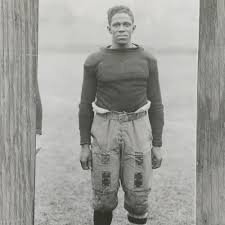
Frederick Douglass "Fritz" Pollard was an American professional football player and coach. In 1921, he became the first African-American head coach in the National Football League. Pollard and Bobby Marshall were the first two African-American players in the NFL in 1920. Football pioneer Walter Camp called Pollard "one of the greatest runners these eyes have ever seen."
Pollard coached Lincoln University's football team in Oxford, Pennsylvania during the 1918 to 1920 seasons and served as athletic director of the school's World War I era Students' Army Training Corps. During 1918–1919, he led the team to a victorious season defeating Howard University's Bisons 13–0 in the annual Thanksgiving classic as well as Hampton University (7–0) on November 9, 1918, and teams of military recruits at Camp Dix (19–0) on November 2, 1918, and Camp Upton (41–0). By the fall of 1920, he had begun to play for Akron, missing key Lincoln losses to Hampton (0–14) and Howard (0–42), much to the consternation of the alumni and administration. Paul Robeson was enlisted by Lincoln's alumni to coach the Thanksgiving 1920 game against Howard.
Pollard criticized Lincoln's administration, saying they had hampered his ability to coach and had refused to provide adequate travel accommodations for the team. "Prior to the Hampton game, the team was compelled to go to Hampton by boat, sleeping on the decks and under portholes," he told a reporter. "No cabins were provided, nor were they given a place to sleep after reaching Hampton. They lost the game through lack of rest." He also blamed the school for not providing the proper equipment. "I, myself, bought and paid $200 out of my pocket for football shoes for the team." He missed the 1920 Howard game, he said, because his Lincoln salary was so low that he was compelled to augment it with pay from Akron.
He played professional football with the Akron Pros, the team he would lead to the APFA championship in 1920. In 1921, he became the co-head coach of the Akron Pros, while still maintaining his roster position as running back. He also played for the Milwaukee Badgers, Hammond Pros, Gilberton Cadamounts, Union Club of Phoenixville and Providence Steam Roller. An article in the October 1, 1921 issue of the Chicago Whip newspaper stated that Pollard served as "assistant coach of the backfield men" of Northwestern University's football team.
Some sources indicate that Pollard also served as co-coach of the Milwaukee Badgers with Budge Garrett for part of the 1922 season.
On November 19, 1922, Pollard and Paul Robeson led the Badgers to victory over the great Jim Thorpe and his Oorang Indians. The final was 13–0 with Robeson scoring both touchdowns in his finest pro football performance.
Fritz also coached the Gilberton Cadamounts, a non-NFL team. In 1923 and 1924, he served as head coach for the Hammond Pros.
Pollard, along with all nine of the African American players in the NFL at the time, were removed from the league at the end of the 1926 season, never to return again. He spent some time organizing all-African American barnstorming teams, including the Chicago Black Hawks in 1928 and the Harlem Brown Bombers in the 1930s.
In the 1930s, Pollard founded his own professional football team, the Brown Bombers. The Depression ended the Brown Bombers' run in 1938, and Pollard went on to other ventures, including a talent agency, tax consulting, and film and music production. He produced Rockin' the Blues in 1956, which included such performers as Connie Carroll, The Harptones, The Five Miller Sisters, Pearl Woods, Linda Hopkins, Elyce Roberts, The Hurricanes, and The Wanderers.
Pollard also published the New York Independent News from 1935 to 1942, purportedly the first African American-owned tabloid in New York City. The war and a rivalry forced it to close. The paper's offices were on 125th Street and at its peak, the paper had a weekly circulation of approximately thirty-five thousand, ranking it among the top most read Black newspapers in the country.
Carroll, John M. (1998). Fritz Pollard: Pioneer in Racial Advancement. Urbana: University of Illinois Press. p. 4. ISBN 0252067991.
Gray, LaVerne (March 1, 2022). "Naomi Willie Pollard Dobson: A Pioneering Black Librarian". Libraries: Culture, History, and Society. 6 (1): 1–20. doi:10.5325/libraries.6.1.0001. ISSN 2473-0343.
Reasons and Patrick, "Pollard Set Records as Black Football Player, Coach", The Plain Dealer, Cleveland, Ohio, 1972, February 27, Section E: 5.
"Crack Lincoln University Team Coached by Fritz Pollard", Philadelphia Tribune, October 19, 1918
"Lincoln University Victor over Howard", Washington Post November 29, 1918.
"Pollard's Orange and Blue Juggernaut Crushes Camp Dix", Philadelphia Tribune, November 9, 1918.
"Lincoln Swamps Camp Upton", Chicago Defender, November 30, 1918.
"Fred Pollard Finishes as Coach for Lincoln", Chicago Defender, December 4, 1920.
"Fritz Pollard Answers Critics", Baltimore Afro-American, December 17, 1920.
"Pollard Made Asst. Coach at Northwestern". The Chicago Whip. October 1, 2021. Retrieved August 9, 2024. Pollard started his duties last Tuesday, appearing on the field in uniform
"Path Lit by Lightning" by David Maraniss
"Rockin' the Blues" – via www.imdb.com.
"Pearl Woods". Discogs.
John M. Carroll (1998). Fritz Pollard: Pioneer in Racial Advancement. University of Illinois Press. ISBN 978-0-252-06799-0.
"Fritz's Fame". Brown University. Brown Alumni News. March 2005. Retrieved February 3, 2016.
"Fritz Pollard: A Forgotten Trailblazer". Retrieved May 26, 2022.
Carroll, John M. (1998). Fritz Pollard: Pioneer in Racial Advancement. University of Illinois Press. pp. 194–196. ISBN 978-0-252-06799-0.
Dunlap, Keith (February 18, 2021). "Fritz was ritz as pioneer for Black football players". Retrieved May 26, 2022.
"03-078 (Fritz Pollard Award)". www.brown.edu.
"Jim Muldoon inducted into Rose Bowl Hall of Fame". Pac-12. Pac-12 Conference. December 30, 2015. Archived from the original on December 30, 2015. Retrieved February 3, 2016. Also inducted (was) ... Brown's Fritz Pollard (1916 Rose Bowl Game)
"Mark Brunell, Fritz Pollard, Tyrone Wheatley and Jim Muldoon to be Inducted into the Rose Bowl Hall of Fame presented by Northwestern Mutual". Tournament of Roses. Pasadena, CA. September 25, 2015. Archived from the original on October 30, 2015. Retrieved February 3, 2016.
"Alpha Athletes at the 1936 Olympic Games in Berlin, Germany". Alpha Phi Alpha fraternity. Retrieved January 10, 2010.
Brown University – Brown University and the Black Coaches Association establish annual Fritz Pollard Award February 18, 2004.
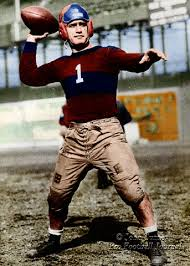
Benjamin Friedman was an American football player and coach, and athletic administrator.
A native of Cleveland, Ohio, Friedman played college football as a halfback and quarterback for the University of Michigan Wolverines from 1924 to 1926. Friedman played in the backfield on both offense and defense, handled kicking and return duties, and was known for his passing game. He was a consensus first-team All-American in both 1925 and 1926, and won the Chicago Tribune Silver Football trophy as the most valuable player in the Big Ten Conference in 1926.
Friedman also played eight seasons in the National Football League for the Cleveland Bulldogs (1927), Detroit Wolverines (1928), New York Giants (1929–1931), and Brooklyn Dodgers (1932–1934). He was the leading passer of his era in the NFL and is credited with revolutionizing the game with his passing prowess. He led the league in passing for four consecutive years from 1927 to 1930, and was selected as the first-team All-NFL quarterback in each of those years. He also served as the head coach of the Giants for the last 2 games of the 1930 season, both were victories. Then he was the head coach of the Dodgers during the 1932 season.
Friedman later served as the head football coach at City College of New York from 1934 to 1941, and at Brandeis University from 1950 to 1959. He was also the first athletic director at Brandeis, holding the position from 1949 to 1963. During World War II, he was a lieutenant in the United States Navy, serving as the deck officer aboard the aircraft carrier USS Shangri-La in the Pacific theater. He was part of the inaugural class of inductees into the College Football Hall of Fame in 1951, and was posthumously inducted into the Pro Football Hall of Fame in 2005.
In August 1927, Friedman announced that he would play professional football for the Cleveland Bulldogs in the National Football League. During the 1927 season, Friedman started all 13 games at quarterback and led Cleveland to an 8–4–1 record. Cleveland had the top scoring offense in the league with an average of 16.1 points per game. In his first NFL game, he threw a 50-yard touchdown pass to Al Bloodgood. He led the NFL during the 1927 with 12 passing touchdowns and 1,721 passing yards; his closest competitors totaled seven passing touchdowns and 1,362 passing yards. He was selected as a first-team All-NFL player by both the Chicago Tribune and the Green Bay Press Gazette.
In 1928, the Cleveland NFL franchise moved to Detroit and became known as the Detroit Wolverines. Friedman started all 10 games for the Wolverines and led the club to a 7–2–1 record. With Friedman at the helm, Detroit also had the top-scoring offense in the league with an average of 18.9 points scored per game. For the second straight season, he led the NFL with 10 passing touchdowns (double the next highest total) and 1,120 yards, and was again selected as a first-team All-NFL player by both the Chicago Tribune and the Green Bay Press Gazette. Friedman also led the NFL in rushing touchdowns in 1928, making him the only player in NFL history to lead the league in both passing and rushing touchdowns in the same season.
In July 1929, Friedman signed with the New York Giants. In his first year in New York, Friedman appeared in all 15 games and led the 1929 Giants to a 13–1–1 record, second best in the NFL. The Giants also had the top scoring offense in the league with an average of 20.8 points per game. Friedman led the NFL with 985 passing yards, and his 20 touchdown passes set an NFL single season record that stood until 1942. After the final game of the 1929 season, one sports writer noted: "The uncanny field generalship of Friedman, combined with his bullet passes, was a big factor in the Giants' thirteenth and last victory of the season."
In 1930, Friedman had another strong season, appearing in 15 games for the Giants and helping the team to a 13–4 record. The Giants again finished in second place in the NFL and had the top scoring offense in the league with 18.1 points scored per game. Friedman led the NFL with 922 passing yards and 10 touchdown passes in 1930. For the fourth consecutive season, Friedman was selected as a first-team All-NFL player.
Friedman's passing proficiency was especially noteworthy considering that the football used at the time was rounder and more difficult to throw. Friedman called plays at the line of scrimmage and threw on first and second down, when most teams waited until third down. "Benny revolutionized football. He forced the defenses out of the dark ages." George Halas later said.
In February 1931, Friedman announced that he intended to retire from professional football. He was hired as an assistant coach for the Yale Bulldogs football team. On October 26, 1931, Friedman signed a contract to return to the Giants for the remainder of the season. Since the Giants' practices were held in the morning, Friedman indicated that his duties with the Giants would not conflict with his coaching duties at Yale. Friedman appeared in nine games for the 1931 Giants.
In March 1932, Friedman signed as player, manager, and coach for the Brooklyn Dodgers. The Dodgers compiled a 3–9 record in 1932.
Friedman signed to return to the Dodgers in September 1933, though he did not serve as the head coach in 1933. He started five of ten games for the 1933 Dodgers. His average of 84.9 passing yards per game led the NFL for the 1933 season.
In 1934, Friedman appeared in only one NFL game.
In his eight seasons in the NFL, statistics are incomplete, but he appeared in 81 games, compiled at least 5,326 passing yards, and had 66 touchdown passes and 51 passes intercepted. He was the NFL's career leader in passing yardage until Sammy Baugh's seventh NFL season in 1947. Friedman also totaled over 1,000 yards rushing and over 400 yards on punt returns. At the time of his retirement, Friedman also held the NFL record with 66 career touchdown passes.
In February 1934, Friedman was hired as the football coach at City College of New York. He remained the coach at City College through the 1941 season, stepping down in 1942 for military service. Friedman's City College teams compiled a composite record of 27–31–4.
In the summer of 1942, Friedman enlisted in the United States Navy with the rank of lieutenant. He was named an assistant football coach at the Great Lakes Naval Training Station in North Chicago, Illinois. He later served as the deck officer aboard the aircraft carrier USS Shangri-La in the Pacific Ocean theater of World War II.
After being discharged, he went into the automobile sales business. He operated a Jeep dealership in Detroit.
In June 1949, Friedman was hired as the athletic director at Brandeis University, a university founded in 1948 at Waltham, Massachusetts. He was also the school's first coach of the Brandeis football team when it began play in 1950. He remained the head football coach at Brandeis through the 1959 season. Despite the limited enrollment, the first years of the football program were incredibly successful winning their first game against the prestigious Harvard freshman team. In the following years Friedman's Judges posted a winning record in their first varsity season as well as going 6–1 in 1957, the team's best record. Friedman's run as head coach of the Judges was filled with years of struggles to attract high end talent. Additionally, players at Brandeis were required to maintain certain academic standards that made it challenging for Friedman to recruit. Despite this, in 10 years as head coach, Friedman's Brandeis football teams compiled a winning record of 38–35–4.
In 1960, Brandeis discontinued its football program, noting that "the per capita cost of fielding a varsity football team is inordinately high in relation to other varsity and intramural sports." Despite the end of the football program, Friedman remained as the athletic director at Brandeis until April 1963 when he resigned his post.
When the College Football Hall of Fame was established in 1951, Friedman was part of the inaugural group of 32 players and 21 coaches to be inducted.
Friedman also received acclaim for his professional football career. Sports writer Paul Gallico called Friedman "the greatest football player in the world." Wellington Mara, the owner of the New York Giants, said of Friedman, "He was the Johnny Unitas of his day. He was the best of his time." George Halas gave Friedman credit for revolutionizing the game with his passing and wrote an article in 1967 titled "Halas Calls Friedman Pioneer Passer – Rest Came By Design."
However, when the Pro Football Hall of Fame was established in 1963, Friedman was overlooked. As years passed, numerous quarterbacks were inducted, including Sammy Baugh (1963), Dutch Clark (1963), Jimmy Conzelman (1964), Paddy Driscoll (1965), Otto Graham (1965), Sid Luckman (1965), Bob Waterfield (1965), Arnie Herber (1966), Bobby Layne (1967), Y. A. Tittle (1971), Norm Van Brocklin (1971), and Ace Parker (1972). Friedman's frustration grew as he continued to be overlooked. In February 1976, more than 40 years after his NFL career had ended, he wrote a letter to The New York Times pleading his case. It was not until 2005, 23 years after his death, that Friedman was finally inducted into the Pro Football Hall of Fame. A group of 40 to 50 players who played for him at Brandeis printed brochures and lobbied for his induction. He was then nominated by the Hall's veterans committee and received the requisite votes by a 39-member panel of selectors.
Friedman was married in February 1931 to Shirley Immerman, a resident of Brooklyn. The wedding was held at a Long Island country club with Guy Lombardo and his orchestra providing the entertainment. They were married for more than 50 years.
In 1949, Friedman became Brandeis University's first athletic director. He also served as head football coach until the school dropped the program. He went on sabbatical in September 1962 and resigned the following April, citing business pressures and the growth of his boys' quarterback school at Camp Kohut in Oxford, Maine. He sold the camp in 1969.
In his later years, Friedman suffered from multiple health problems. He battled and beat cancer, underwent back surgery, and suffered from heart disease and diabetes. In April 1979, Friedman developed a diffused clot of arteries in his left leg that resulted in gangrene. He underwent a partial amputation of his left leg below the knee.
In November 1982, he was found dead in his apartment in New York City as the result of a self-inflicted gunshot wound. He left a note indicating that he was "severely depressed." Friedman was survived by his wife, Shirley, a brother, and a sister.
Professional wrestler Maxwell Jacob Friedman claims to be a relative of Friedman.
"Benny Friedman". Pro-Football-Reference.com. Sports Reference LLC. Retrieved October 5, 2016.
Jewish Sports Stars: Athletic Heroes Past and Present - David J. Goldman - Google Books
Murray Greenberg, Passing Game: Benny Friedman and the Transformation of Football. New York: Public Affairs, 2008; p. 6.
Friedman's mother was referred to as Mayme in the 1910 US Census and as Mamy in the 1930 US Census.
The Scribner Encyclopedia of American Lives: 1981–1985 - Kenneth T. Jackson - Google Books
Whalen, Jim; Staph, C.C. (1986). "The Facts About Friedman" (PDF). The Coffin Corner. Pro Football Researchers.
1910 US Census entry for Louis Friedman and family. Census Place: Cleveland Ward 20, Cuyahoga, Ohio; Roll: T624_1171; Page: 8A; Enumeration District: 0302; FHL microfilm: 1375184. Ancestry.com. 1910 United States Federal Census [database on-line].
Grayson, Harry (December 11, 1943). "Friedman Overcame Discouragement To Be Greatest Player of His Period". The News-Herald (NEA wire story). p. 7 – via Newspapers.com. Open access icon
Greenberg, Passing Game, p. 11.
John J. Grabowski (1992). Sports in Cleveland: An Illustrated History. Indiana University Press. p. 55. ISBN 0253207479.
"University of Michigan Football Rosters". Bentley Historical Library. Retrieved October 5, 2016.
"100–to–1 Shot a Derby Favorite". The News-Herald. December 29, 1924. p. 8 – via Newspapers.com. Open access icon
"Michigan Defeats Wisconsin, 21 to 0: Friedman's Passing and Running Lead to Three Touchdowns by Wolverines; 45,000 Witness Contest". The New York Times. October 26, 1924.
"Michigan Crew Has Easy Time in Home Battle: Northwestern Falls to 27–0 Score – Rockwell Scores Three Touchdowns". Youngstown Vindicator (AP story). November 9, 1924. p. 4C.
Evans, Billy (November 25, 1924). "Friedman Is Michigan's Big Find". The News-Palladium (Benton Harbor, Mich.). p. 5 – via Newspapers.com. Open access icon
"Yost Calls 1925 Eleven Greatest: Does Not Even Except Wonderful Teams of 1901 and 1902; Rolled Up Grand 227 Point Total; Wolverine Mentor Says He's Proud to Have Coached Boys". The Hartford Courant. November 29, 1925. p. B2.
"30,000 See Michigan Take Opener, 39–0: Friedman Stars as Wolverines Beat Michigan State Before Record Crowd". The New York Times. October 4, 1925.
"YOSTMEN STRIKE THROUGH AIR TO NIP STATE, 39–0: EASY FOR MICHIGAN". Chicago Daily Tribune. October 4, 1925. p. A3.
"Michigan Crushes Indiana by 63–0: Wins Easily Behind Brilliant Work of Friedman, Who Is Star of Game". The New York Times. October 11, 1925.
"Michigan Eleven Leads in Big Ten: Decisive Victory Over Wisconsin Puts Yost's Team in Van – Chicago Has Great Defense". The New York Times (AP story). October 19, 1925.
Vidmer, Richards (November 1, 1925). "Michigan Crushes Navy Eleven, 54–0: Yost's Great Wolverine Machine Rolls Relentlessly Over the Middies Eight Times; Excels in Every Phase; Powerful Line Blocks Navy While Friedman and Other Backs Execute Plays at Will". The New York Times.
Hackleman, Jack (December 5, 1956). "1925 Version of Michigan Eleven Called Greatest Work of Pigskin Artist Yost". The Commerce Daily Journal.
Crusinberry, James (November 1, 1925). "Michigan Sinks Navy Gridiron Craft, 54 to 0: Baffling Passes Rout Midshipmen; Near Point a Minute". Chicago Daily Tribune. p. A1.
Crusinberry, James (November 3, 1925). "Brains Replace Beef on Winning Football Teams: Michigan Victory Proves Value of Wits". Chicago Daily Tribune. p. 25. Retrieved July 5, 2017.
Crusinberry, James (November 22, 1925). "Michigan Ruins Gophers' Title Hopes, 35 to 0: Victory Gives Them Claim on Title". Chicago Daily Tribune. p. A1.
"NCAA Football's Finest" (PDF). NCAA. 2002. Retrieved October 5, 2016.
"All-America Roster" (PDF). NCAA. Archived from the original (PDF) on December 1, 2007. Retrieved January 14, 2008.
Will Perry, The Wolverines, pp. 109–112 (Chapter 18 concerning the 1925 and 1926 seasons is titled "The Benny-To-Bennie Show.")
"What's a Michigan Man?". Maize and Blue Football Fans. January 5, 2011.
Parker, Dick. "Friedman to Oosterbaan" (PDF). LA84 Foundation. Archived from the original (PDF) on June 13, 2010. Retrieved October 6, 2016.
Jordan Krumey (March 22, 2009). "Benny To Bennie: The Connection That Changed College Football". Bleacher Report.
Greenberg, Murray (2008). Passing Game: Benny Friedman and the Transformation of Football. Public Affairs. ISBN 9781586484774.
"Benni Oosterbaan: Class of 1987". Muskegon Ara Sports Hall of Fame. Archived from the original on August 28, 2008. Retrieved August 18, 2016.
"Benny Friedman Selected as Captain of Michigan's 1926 Football Squad". The Detroit Free Press. November 24, 1925. p. 22 – via Newspapers.com. Open access icon
"1926 Football Team". University of Michigan, Bentley Historical Library. Retrieved October 6, 2016.
"Benny Friedman, Jewish Football Star, Honored". Jewish Daily Bulletin. November 3, 1926.
"2014 NCAA Football Records: Consensus All-America Selections" (PDF). National Collegiate Athletic Association (NCAA). 2014. p. 5. Archived from the original (PDF) on November 26, 2018. Retrieved October 6, 2016.
"Middle West Given The Lion's Share in All-American Selections". The Huntington Press. Indiana. December 5, 1926 – via Newspapers.com. Open access icon
"Seven Western Players Named On Collier's All-American; Big Three Teams Are Slighted". Charleston Daily Mail. December 6, 1926.
Brown, Norman (December 13, 1926). "Six Mid-West Stars Are On Nation's All-American Football Selection: Mythical Team of Million Grid Fans Released; 500 Newspapers Conduct Poll to Get Genuine Football Eleven". The Davenport Democrat And Leader.
"Fans Select First All-American Grid Team". Billings Gazette. December 13, 1926.
"All-American Is Chosen By New York Sun". Athens Messenger. November 28, 1926.
"These Players Honored by Eckersall with Places on All-America Team". Detroit Free Press. December 12, 1926. p. 29.
""Big Ten" Trophy Goes To Friedman". The Lincoln Star. December 19, 1926. p. 10 – via Newspapers.com. Open access icon
"Benny Joins Cleveland Pros". The Des Moines Register. August 7, 1927. p. 19 – via Newspapers.com. Open access icon
"NFL Career Passing Touchdowns Leaders". Pro-Football-Reference.com. Sports Reference LLC. Retrieved October 5, 2016.
"The Little Giant: Former Michigan star called 'best I ever played against' by Red Grange". Lansing (MI) State Journal (AP story). August 5, 2005. p. 19 – via Newspapers.com. Open access icon
"Ben Friedman Signs To Coach City College". Plainfield, N.J., Courier News. February 5, 1934. p. 16.
"Friedman Named Navy Coach". Montana Standard. August 30, 1942. p. 21 – via Newspapers.com. Open access icon
"Benny Friedman Has Hands Busy In Navy Instead of Football". The Fresno Bee. July 28, 1945. p. 6 – via Newspapers.com. Open access icon
"Friedman Set to Tackle Auto Business". Detroit Free Press. November 28, 1945. p. 14 – via Newspapers.com. Open access icon
"Benny Friedman Named Brandeis Athletic Head". The News Journal. June 16, 1949. p. 42 – via Newspapers.com. Open access icon
"Building Sports at Brandeis U.: Friedman Turns Trailblazer". Detroit Free Press. October 31, 1950. p. 16 – via Newspapers.com. Open access icon
[1]
"Benny Friedman Records by Year". College Football Data Warehouse. David DeLassus. Archived from the original on August 5, 2016. Retrieved October 5, 2016.
"Friedman Left Without Football". Pittsburgh Post-Gazette. May 22, 1960. p. 31 – via Newspapers.com. Open access icon
"Friedman Quits Brandeis Post". The Des Moines Register. April 29, 1963. p. 19 – via Newspapers.com. Open access icon
"Name 32 Players, 21 Coaches To Football's Hall of Fame". Ironwood Daily Globe. November 5, 1951. p. 8 – via Newspapers.com. Open access icon
"The man that fame forgot". The Boston Globe. January 30, 2005.
"Class of 2005 Clippings". Pro Football Hall of Fame. Retrieved October 6, 2016.
"Sports Editor's Mailbox: Football Hall of Fame/N.F.L. Essay/Hockey Soreheads". The New York Times. February 8, 1976.
"Friedman to be inducted to Football Hall of Fame". Jewish Post. April 6, 2005. p. 16.
Wilner, Barry (August 5, 2005). "NFL pioneer Friedman headed to Hall posthumously". The Anniston Star (AP story). p. 24 – via Newspapers.com. Open access icon
"Six Named To Michigan Fame Hall". The News-Palladium (Benton Harbor, Mich.). May 15, 1961. p. 12 – via Newspapers.com. Open access icon
"1976 Inductees". Greater Cleveland Sports Hall of Fame. Retrieved October 5, 2016.
"Benny Friedman profile". International Jewish Sports Hall of Fame. Retrieved October 5, 2016.
"Friedman heads Hall of Honor". Detroit Free Press. July 11, 1980. p. 6D – via Newspapers.com. Open access icon
"Michigan Athletic Hall of Honor". Bentley Historical Library. Retrieved October 5, 2016.
"Inductees". jewishsports.org. Archived from the original on February 13, 2007.
Greenberg, Passing Game, p. 236.
"Cupid Wins This Game". The Eugene Guard. February 12, 1931. p. 5C – via Newspapers.com. Open access icon
"Friedman Resigns Post In Athletics at Brandeis". The New York Times. April 29, 1963.
"Benny Friedman Holds Quarterback 'School'". The Portsmouth (NH) Herald. August 13, 1963. p. 9 – via Newspapers.com. Open access icon
"Friedman Sells Maine Grid Camp; Planning to Open Seven More". Fitchburg Sentinel. July 8, 1969. p. 7 – via Newspapers.com. Open access icon
"More Injuries Now Than '27 For Quarterbacks – Friedman". Florence Morning News. October 14, 1977. p. 21 – via Newspapers.com. Open access icon
Kirshner, Sheldon (December 2, 2009). "American Jewish Football Player Revolutionized the Game". The Canadian Jewish News.
"Wolverine great Friedman has his left leg amputated". Detroit Free Press. April 28, 1979. p. 1C – via Newspapers.com. Open access icon
"Ex-Wolverine QB Friedman found dead". Detroit Free Press. November 24, 1982. p. 1D – via Newspapers.com. Open access icon
Tuite, James (November 24, 1982). "Benny Friedman, Star Passer At Michigan And With Pros". The New York Times.
"Bennie Friedman NFL Record, Statistics, and Category Ranks". Pro-football-reference.com. Retrieved January 7, 2025.
Bob Curran, Pro Football's Rag Days. Englewood Cliffs, NJ: Prentice-Hall, 1969.
Barry Gottehrer, The Giants of New York: The History of Professional Football's Most Fabulous Dynasty. New York, G.P. Putnam's Sons, 1963.
Murray Greenberg, Passing Game: Benny Friedman and the Transformation of Football. New York: Public Affairs, 2008.
Francis J. Powers, "Friedman of Michigan Team is One of Big Ten Stars: Splendid Showing of Wolverines is Credited to Him," Springfield [OH] News-Sun, Nov. 10, 1924, pp. 12–13.
Charles Louis Trippi is a former American football player. He played professionally for the Chicago Cardinals of the National Football League from 1947 to 1955. Although primarily a running back, his versatility allowed him to fill a multitude of roles over his career, including quarterback, defensive back, punter, and return specialist. A "quintuple-threat", Trippi was adept at running, catching, passing, punting, and defense.
Trippi attended the University of Georgia, where he played college football for the Georgia Bulldogs from 1942 to 1946, with an interlude in 1944 while serving in the military during World War II. As a sophomore, he guided Georgia to victory in the 1943 Rose Bowl and was named the game's most valuable player. As a senior in 1946, he won the Maxwell Award as the nation's most outstanding college football player, was named the Southeastern Conference's player of the year, and earned unanimous first-team All-America recognition.
Drafted first overall by the Cardinals as a "future pick" in the 1945 NFL Draft, Trippi was also pursued by the New York Yankees of the All-America Football Conference (AAFC) as well as multiple professional baseball teams. He ultimately signed a record $100,000 contract with the Cardinals. As a rookie, Trippi led Chicago's "Million Dollar Backfield" to victory in the 1947 NFL Championship Game. By the time he retired he had compiled the most yards of total offense by a player in NFL history. Trippi was inducted into the College Football Hall of Fame in 1959 and the Pro Football Hall of Fame in 1968.
Trippi is the oldest living member of the Pro Football Hall of Fame, the oldest living first overall NFL draft pick, and the oldest confirmed living former American football player.
Charles Louis Trippi was born to an Italian immigrant father on December 14, 1921, in Pittston, Pennsylvania, a coal-mining community. Seeking to avoid the dangers of a life mining coal like his father, Trippi turned to sports. He began his football career as a tailback for the Red and White of Pittston High School Panthers which in 1967 became Pittston Area patriots with the merger of Avoca, Dupont and Duryea schools. He also played semi-professional baseball while in high school.
Considered undersized at 160 pounds, Trippi was turned down by four colleges before being recruited to play for the University of Georgia by Georgia alum Harold "War Eagle" Ketron. He was given a scholarship and played for the Georgia Bulldogs football varsity team from 1942 to 1946, with an interlude in 1944 due to World War II. As a sophomore in 1942, he played alongside that season's Heisman Trophy winner Frank Sinkwich. That year, Trippi and Sinkwich led Georgia to a 75–0 win over rival Florida, a game in which Trippi threw a touchdown pass to end George Poschner, scored two rushing touchdowns, and on defense returned an interception for a touchdown. Georgia finished the season with a record of 11–1 and was named the consensus national champion. Trippi then guided Georgia to a 9–0 victory over UCLA in the 1943 Rose Bowl, in which he carried 27 times for 115 yards and also handled passing and punting duties. He was retroactively named the game's most valuable player when the award was created in 1953.
Trippi's college career was interrupted by World War II, causing him to miss the 1943 and 1944 seasons and all but six games in 1945. He played for the 1944 Third Air Force Gremlins football team and was selected as a first-team back on the Associated Press' 1944 Service All-America team. While in the service in 1945, he was drafted by the Chicago Cardinals of the National Football League as a future pick; per an agreement with Cardinals owner Charles Bidwill, Trippi was allowed to return to Georgia after his time in the military.
Despite missing Georgia's first five games of the 1945 season, Trippi was named a first-team All-Southeastern Conference back by both the Associated Press (AP) and United Press International (UPI). He threw a 54-yard touchdown pass and returned a punt 69 yards for a touchdown in Georgia's 20–6 win over Tulsa in the Oil Bowl on New Years Day. In 1946, Trippi led Georgia to its first undefeated season. Against rival Georgia Tech in the final game of that year, Trippi compiled 544 combined yards rushing, passing, and returning kicks, and scored three touchdowns in Georgia's 35–7 victory. Georgia then defeated North Carolina 20–10 in the Sugar Bowl, where Trippi carried 14 times for 54 yards and threw a 67-yard touchdown pass to end Dan Edwards. After the season, Trippi was given the Maxwell Award as the most outstanding college player in the nation, the Walter Camp Memorial Trophy as the nation's best back, and was a unanimous choice for the All-America team. He finished as runner-up in Heisman Trophy voting behind winner Glenn Davis of Army.
Due to relaxed regulations during WWII years, Trippi holds the unusual distinction of participating in the Chicago College All-Star Game a record five times: twice with Georgia, twice in the military, and once with the Cardinals. He was named the Most Valuable Player of the game in 1945. It was at the Chicago College All-Star Game that Bidwell decided he would draft Trippi first overall, as "Card-Pitt" was winless in 1944 and in need of a play-maker. "He said, 'I'm gonna get ya,'" Trippi recalled. "He wanted me to play for him, and I said, 'All you've got to do is draft me and I'm ready.'"
In addition to football, Trippi was highly sought-after for his baseball skills. As a senior on Georgia's baseball team in 1946, he recorded a batting average of .475 and hit 11 home runs in 30 games while playing as a shortstop and outfielder. In 1947, Trippi played one season of minor league baseball with the Southern Association's Atlanta Crackers. He recorded a batting average of .334 through 106 games while drawing large crowds. Multiple Major League Baseball teams attempted to sign him, including the New York Yankees, Boston Red Sox, Boston Braves, and Philadelphia Phillies, but those deals fell through when he joined the NFL. Between NFL seasons in 1948 and 1949, Trippi served as Georgia's baseball coach, compiling a 34–18 win–loss record.
Trippi was a major part in the battling between the NFL and All-America Football Conference (AAFC). The 26-year-old rookie had plenty of leverage as a star commodity, and so weighed his options: the Cardinals and the AAFC's New York Yankees. The Yankees were sure they had signed Trippi to a joint deal that included a contract with the Yankees of MLB, but Cardinals owner Charles Bidwill signed Trippi to a four-year contract worth an unprecedented $100,000 along with a first-year bonus of $25,000. The contract was considered the most lucrative in pro football history. Trippi felt the NFL was more established and stable, and Bidwill had offered him job security.
Trippi's addition completed Bidwill's "Dream Backfield". Although Bidwill did not live to see it, Trippi became the game breaker in a talented corps that included Paul Christman, Pat Harder, Marshall Goldberg and, later, Elmer Angsman. Trippi served a multitude of roles for the Cardinals as a rookie: in 11 games, he rushed 83 times for 401 yards, caught 23 passes for 240 yards, averaged 43.4 yards on 13 punts, returned eight punts for 181 yards and 15 kickoffs for 321 yards, and on defense returned an interception 59 yards for a touchdown. The Cardinals compiled nine wins and three losses and faced the Philadelphia Eagles in the 1947 NFL Championship Game, which the Cardinals won 28–21 largely due to a spectacular all-around performance by Trippi. Playing on an icy field in Chicago, Trippi wore basketball shoes for better traction and totaled 206 yards, including 102 yards with two punt returns. He scored touchdowns on a 44-yard run and a 75-yard punt return. During the punt return, he twice escaped an encirclement of tacklers and fell to his knees near midfield before cutting to the outside and sprinting for the score. Trippi was named to the 1947 All-Pro second-team backfield by the United Press.
Trippi led the NFL in all-purpose yards in both 1948 and 1949, compiling 1,485 and 1,552 respectively. His 5.4 rushing yards per carry in 1948 also led the league, as did his two punt return touchdowns. He had a 45-yard punt return touchdown against the Green Bay Packers and later returned a punt 67 yards for a touchdown against the Pittsburgh Steelers. Trippi was a first-team All-Pro selection for 1948 by the AP, UPI, New York Daily News, and The Sporting News, among others. The Cardinals returned to the championship game in 1948, and this time were shutout by the Eagles for a 7–0 loss. Trippi was held to nine carries for only 26 yards during the game, which was played in a heavy snowstorm. Trippi saw heavy use as a receiver in 1949; in addition to rushing for 554 yards, he led the Cardinals in receptions (32) and receiving touchdowns (six) and was second on the team with 412 receiving yards.
After playing as a left halfback for his first four seasons, Trippi switched to quarterback during 1951 and 1952. On December 15, 1951, on frozen turf in Wrigley Field, Trippi completed nine passes for 106 yards and carried 11 times for 145 yards, accounting for three touchdowns as the Cardinals defeated the Bears 24–14. Following the 1952 season, he was invited to the Pro Bowl as a backup quarterback for the American Conference. Trippi moved back to offensive halfback for one season and again was invited to the Pro Bowl. He then switched over to play defense in 1954, recording three pass interceptions as a defensive back. He also became the Cardinals' primary punter for 1953 and 1954, and had a career punting average of over 40 yards per punt. His career essentially ended in the 1955 preseason when he was tackled by John Henry Johnson of the San Francisco 49ers, which left Trippi with a smashed nose, a concussion, and a protruding bone behind his eye that gave him double vision. He appeared in only five games that season and did not record any statistics on offense. Trippi retired on December 13, 1955, a day before his 33rd birthday. At the time, his 6,053 yards of total offense (3,506 rushing, 2,547 passing, and 1,321 receiving) was the most by a player in NFL history, and he had compiled the fourth-most all-purpose yards of any player (7,148).
Hall of Famer Art Donovan tells this story from late in Trippi's career: "Earlier in the season, the Bears had nearly killed Charlie Trippi, a very tough halfback. The guy who did it to him was Ed Sprinkle.... Sprinkle sucker-punched Trippi and shattered his jaw. He required a whole series of bone grafting. Then next season, Trippi broke Sprinkle's jaw. What goes round comes round."
After he ended his playing career, Trippi served as an assistant coach with the Cardinals from 1957 to 1965, mostly coaching the offensive backfield. He later took up a business in real estate. Trippi was inducted into the College Football Hall of Fame in 1959; the Georgia Sports Hall of Fame in 1965; and the Pro Football Hall of Fame and Pennsylvania Sports Hall of Fame in 1968. He is the only player in the Pro Hall of Fame to have accumulated at least 1,000 yards each receiving, passing, and rushing. In 2007, he was ranked 20th on ESPN's list of the top 25 players in college football history. The football stadium at Pittston Area High School is named Charley Trippi Stadium in his honor. In 1969, Trippi was named to the NFL's 1940s All-Decade Team, compiled to honor the best players of the decade. As of 2022, Trippi is the oldest living member of the Pro Football Hall of Fame, as well as the oldest living No. 1 NFL draft pick.
On December 14, 2021, Trippi turned 100, becoming the second Pro Football Hall of Famer to reach that milestone, after Clarence "Ace" Parker.
23 rushing, 11 receiving, 2 return and 1 interception return
"Charley Trippi, One Of Ten Nominated To Grid "Hall Of Fame"". Pittston Gazette. October 16, 1959. p. 6. Retrieved March 31, 2017.
Lane, Fred (December 5, 2006). "Transcript of Interview with Charley Trippi". uga.edu. University of Georgia. Retrieved March 31, 2017.
Freeman, Donald (October 16, 1949). "Trippi's Terrific". Chicago Tribune. p. 11. Retrieved April 1, 2017.
Magill, Dan (October 30, 2008). "Magill: Dogs' 75–0 thumping of Gators most memorable". Athens Banner-Herald. Archived from the original on April 1, 2017. Retrieved March 31, 2017.
Frawley, Frank (January 2, 1943). "Georgia Wins Rose Bowl Classic, 9–0". The Salt Lake Tribune. Associated Press. p. 5. Retrieved March 31, 2017.
"Rose Bowl Champions, MVPs". Los Angeles Times. January 4, 2002. Retrieved March 31, 2017.
"Navy Places Four on AP Service All-America; Trippi in Backfield". The St. Petersburg Times. December 12, 1944. p. 10 – via Newspapers.com.
Steele, David (January 1, 2015). "Cardinals close to heart of oldest Pro Football Hall of Fame player". The Sporting News. Retrieved April 12, 2017.
"'Bama Dominates Mythical Team". The Ogden Standard-Examiner. Associated Press. December 4, 1945. p. 12. Retrieved April 1, 2017 – via Newspapers.com.
Burns Bennett (November 27, 1945). "Gilmer and Mancha Get Berths on UP All-Southeastern". The Anniston Star. p. 8. Retrieved May 31, 2015 – via Newspapers.com.
Patrick, Skipper (January 2, 1946). "Trippi Tramps on Hurricanes". The Monroe News-Star. Associated Press. p. 6. Retrieved April 4, 2017 – via Newspapers.com.
Barnett, Bob; Carroll, Bob (1989). "Charley Trippi: A Success Story" (PDF). The Coffin Corner. 11 (1). Retrieved April 4, 2017.
"Trippi Winner Of Football Award". The Free Lance-Star. Associated Press. December 11, 1946. p. 3. Retrieved April 4, 2017.
"New Honor for Charley Trippi". The Decatur Herald. Associated Press. June 24, 1947. p. 14. Retrieved April 4, 2017 – via Newspapers.com.
"1946 College Football Year Summary". Sports-Reference.com. Retrieved April 4, 2017.
"Charley Trippi Bio". Pro Football Hall of Fame. Retrieved April 12, 2017.
"Charley Trippi's College All-Star Game Trophy". Pro Football Hall of Fame. Retrieved April 12, 2017.
Wolken, Dan (April 21, 2013). "Oldest living No. 1 pick remembers a different draft". USA Today. Retrieved April 12, 2017.
Reichler, Joe (January 16, 1947). "Trippi To Sign With Chicago". Tucson Daily Citizen. Associated Press. p. 8. Retrieved April 13, 2017.
"Charles Trippi Minor League Statistics & History". Baseball-Reference.com. Sports Reference. Retrieved April 4, 2017.
"Baseball and Football Make Firm Contract". The Daily Chronicle. United Press. January 15, 1947. p. 8. Retrieved April 4, 2017 – via Newspapers.com.
"All-Time Georgia Baseball Coaches". georgiadogs.com. University of Georgia. Archived from the original on April 13, 2017. Retrieved April 13, 2017.
Einstein, Charles (January 17, 1947). "Chicago Cardinals to Pay Trippi $100,000". The Daily Times. International News Service. p. 6. Retrieved March 7, 2017 – via Newspapers.com.
Chamberlain, Charles (January 17, 1947). "Trippi Gets Peanuts, Says Gallopin' Ghost". News-Journal. Associated Press. p. 21. Retrieved April 12, 2017 – via Newspapers.com.
"The Cards' dream season in '47". Pro Football Hall of Fame. January 1, 2005. Retrieved April 3, 2017.
"Charley Trippi Stats". Pro-Football-Reference.com. Sports Reference. Retrieved April 4, 2017.
Goldberg, Dave (January 13, 2009). "Not Surprising". The Index-Journal. p. 11. Retrieved April 4, 2017 – via Newspapers.com.
Sainsbury, Ed (December 29, 1947). "Cardinals Down Eagles to Gain Pro Grid Crown". The Evening News. United Press. p. 20. Retrieved April 4, 2017 – via Newspapers.com.
Green, Russ (December 11, 1947). "Bears, Cardinals Each Place Three Men On U. P. All-Pro Eleven". Freeport Journal-Standard. United Press. p. 13. Retrieved April 4, 2017 – via Newspapers.com.
Smith, Wilfred (December 20, 1948). "Heavy Snow Mars Game; Use Lights". Chicago Daily Tribune. p. 1. Retrieved April 12, 2017.
"1949 Chicago Cardinals Statistics & Players". Pro-Football-Reference.com. Sports Reference. Retrieved April 13, 2017.
"Cards Upset Bears, 24–14; Trippi Stars". The Decatur Herald. Associated Press. December 17, 1951. p. 4. Retrieved April 11, 2017 – via Newspapers.com.
"Pro Bowl Will Feature Leading T Quarterbacks". Janesville Daily Gazette. Associated Press. January 9, 1953. p. 10. Retrieved April 13, 2017 – via Newspapers.com.
"Eastern Squad Wins Pro Bowl Game, 20–9". Pittsburgh Post-Gazette. Associated Press. January 18, 1954. p. 18. Retrieved April 13, 2017.
"Trippi Badly Hurt; Fear Career Over". St. Petersburg Times. Associated Press. September 16, 1955. p. 12. Retrieved September 28, 2016.
"Charley Trippi Retires As Player for Cardinals". Moberly Monitor-Index. Associated Press. December 13, 1955. p. 9. Retrieved April 12, 2017 – via Newspapers.com.
"Player Season Finder Query Results: For combined seasons, from 1920 to 1955, played in the NFL, sorted by descending All-Purpose Yds". Pro-Football-Reference.com. Sports Reference. Retrieved April 13, 2017.
Stinson, Thomas. "Charley Trippi, UGA sports icon, dies at age 100". Archived from the original on December 20, 2022. Retrieved December 20, 2022 – via AJC.com.
Donovan, Arthur (1987). Fatso: Football When Men Were Really Men. W. Morrow. p. 172. ISBN 0-688-07340-9.
Michaux, Scott (April 12, 2012). "Michaux: It's time to celebrate Charley Trippi Day". Athens Banner-Herald. Archived from the original on April 12, 2017. Retrieved April 12, 2017.
"HAPPY BIRTHDAY, CHARLEY TRIPPI!". profootballhof.com. Pro Football Hall of Fame. Retrieved December 14, 2021.
"Legendary Hall of Fame UGA football player Charley Trippi dies at 100 – WSB-TV Channel 2 – Atlanta". Wsbtv.com. October 19, 2022. Retrieved October 19, 2022.
Goldstein, Richard (October 19, 2022). "Charley Trippi, Versatile Football Hero, Dies at 100". The New York Times. Retrieved October 19, 2022.
"Georgia football legend Charley Trippi dies at 100". Fox 5 Atlanta. October 19, 2022. Retrieved October 19, 2022.
Sullivan, George (1972). The Great Running Backs. New York: G. P. Putnam's Sons. pp. 69–73. ISBN 0-399-11026-7.
Ziemba, Joe (1999). When Football Was Football: The Chicago Cardinals and the Birth of the NFL. Chicago: Triumph Books. pp. 309–314. ISBN 1-57243-317-5.
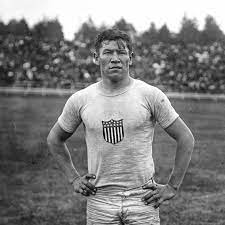
James Francis Thorpe (Sac and Fox (Sauk): Wa-Tho-Huk, translated as "Bright Path"; May 22 or 28, 1887 – March 28, 1953) was an American athlete and Olympic gold medalist. A member of the Sac and Fox Nation, Thorpe was the first Native American to win a gold medal for the United States in the Olympics. Considered one of the most versatile athletes of modern sports, he won two Olympic gold medals in the 1912 Summer Olympics (one in classic pentathlon and the other in decathlon). He also played American football (collegiate and professional), professional baseball, and basketball.
He lost his Olympic titles after it was found he had been paid for playing two seasons of semi-professional baseball before competing in the Olympics, thus violating the contemporary amateurism rules. In 1983, 30 years after his death, the International Olympic Committee (IOC) restored his Olympic medals with replicas, after ruling that the decision to strip him of his medals fell outside of the required 30 days. Thorpe is to date listed as co-champion in both the decathlon and pentathlon events according to official IOC records.
Thorpe grew up in the Sac and Fox Nation in Indian Territory (what is now the U.S. state of Oklahoma). As a youth, he attended Carlisle Indian Industrial School in Carlisle, Pennsylvania, where he was a two-time All-American for the school's football team under coach Pop Warner. After his Olympic success in 1912, which included a record score in the decathlon, he added a victory in the All-Around Championship of the Amateur Athletic Union. In 1913, he played for the Pine Village Pros in Indiana. Later in 1913, Thorpe signed with the New York Giants, and he played six seasons in Major League Baseball between 1913 and 1919. Thorpe joined the Canton Bulldogs American football team in 1915, helping them win three professional championships. He later played for six teams in the National Football League (NFL). He played as part of several all-American Indian teams throughout his career, and barnstormed as a professional basketball player with a team composed entirely of American Indians.
From 1920 to 1921, Thorpe was nominally the first president of the American Professional Football Association (APFA), which became the NFL in 1922. He played professional sports until age 41, the end of his sports career coinciding with the start of the Great Depression. He struggled to earn a living after that, working several odd jobs. He suffered from alcoholism, and lived his last years in failing health and poverty. He was married three times and had eight children, before suffering from heart failure and dying in 1953.
Thorpe has received numerous accolades for his athletic accomplishments. The Associated Press ranked him as the "greatest athlete" from the first 50 years of the 20th century, and the Pro Football Hall of Fame inducted him as part of its inaugural class in 1963. The town of Jim Thorpe, Pennsylvania was named in his honor. It has a monument site that contains his remains, which were the subject of legal action. Thorpe appeared in several films and was portrayed by Burt Lancaster in the 1951 film Jim Thorpe – All-American.
He first played professional football in 1913 as a member of the Indiana-based Pine Village Pros, a team that had a several-season winning streak against local teams during the 1910s. He signed with the Canton Bulldogs in 1915. They paid him $250 ($6,396 today) a game, a tremendous wage at the time. Before signing him Canton was averaging 1,200 fans a game, but 8,000 showed up for Thorpe's debut against the Massillon Tigers. The team won titles in 1916, 1917, and 1919. Thorpe reportedly ended the 1919 championship game by kicking a wind-assisted 95-yard punt from his team's own 5-yard line, effectively putting the game out of reach.
In 1920, the Bulldogs were one of 14 teams to form the American Professional Football Association (APFA), which would become the National Football League two years later. Thorpe was nominally the APFA's first president, but spent most of the year playing for Canton; a year later, he was replaced as president by Joseph Carr. He continued to play for Canton, coaching the team as well. Between 1921 and 1923, he helped organize and played for the Oorang Indians (LaRue, Ohio), an all-Native American team. Although the team's record was 3–6 in 1922, and 1–10 in 1923, Thorpe played well and was selected for the Green Bay Press-Gazette's first All-NFL team in 1923. This was later formally recognized in 1931 by the NFL as the league's official All-NFL team).
Even though his NFL stats look ordinary, he started his NFL career at 33 he was the first big star in the league and also being the first president of the league is what is most important from his NFL career. Thorpe never played for an NFL championship team. He retired from professional football at age 41, having played 52 NFL games for six teams from 1920 to 1928.
Bird, S. Elizabeth (May 2, 1996). Dressing in feathers: the construction of the Indian in American popular culture. London, UK: Avalon. ISBN 978-0-8133-2667-2.
Bloom, John (May 2, 1996). ""There Is Madness in the Air": The 1926 Haskell Homecoming and Popular Representations of Sports in Federal Indian Boarding Schools". In Bird, S. Elizabeth (ed.). Dressing in feathers: the construction of the Indian in American popular culture. London, UK: Avalon. ISBN 978-0-8133-2667-2.
Buford, Kate (2012). Native American Son: the life and sporting legend of Jim Thorpe . Lincoln, Nebraska: University of Nebraska Press. ISBN 978-0-8032-4089-6. OCLC 756837088.
Cava, Pete (Summer 1992). Baseball in the Olympics (PDF). pp. 7–15. Archived from the original (PDF) on August 9, 2017.
Cook, William A. (2011). Jim Thorpe: a biography. Jefferson, N.C: McFarland & Co. ISBN 978-0-7864-6355-8. OCLC 692291486.
Dodge, Robert V. (2013). Which chosen people? Manifest destiny meets the Sioux as seen by Frank Fiske, frontier photographer. New York, N.Y: Algora Publishing. ISBN 978-1-62894-029-9.
Dyreson, Mark (1998). Making the American team: sport, culture, and the Olympic experience. Sport and society. Urbana, Ill.: University of Illinois Press. ISBN 978-0-252-06654-2.
Elfers, James E. (2003). The Tour to End All Tours: the story of major league baseball's 1913-1914 world tour. Lincoln: University of Nebraska Press. ISBN 978-0-8032-6748-0.
Findling, John E.; Pelle, Kimberly D., eds. (2004). Encyclopedia of the modern Olympic movement. Westport, Conn: Greenwood Press. ISBN 978-0-313-32278-5.
Gerasimo, Luisa; Whiteley, Sandra, eds. (2003). The teacher's calendar of famous birthdays. New York: McGraw-Hill. ISBN 978-0-07-141230-8.
Hilger, Michael (2016). Native Americans in the movies: portrayals from silent films to the present. Lanham Boulder New York London: Rowman & Littlefield. ISBN 978-1-4422-4002-5.
Hoxie, Frederick E., ed. (1996). Encyclopedia of North American Indians. Boston, Mass.: Houghton Mifflin. ISBN 978-0-395-66921-1.
Jeansonne, Glen; Luhrssen, David (2006). A time of paradox: America since 1890. Lanham, Md: Rowman & Littlefield. ISBN 978-0-7425-3376-9. OCLC 62109927.
Landrum, Dr. Gene N. (2006). Empowerment: the Competitive Edge in Sports, Business & Life. Brendan Kelly Publishing, Incorporated. ISBN 978-1-89-599724-8.
Lincoln, Kenneth; Slagle, Al Logan (1997). The good red road: passages into Native America. Lincoln: University of Nebraska Press. ISBN 978-0-8032-7974-2.
Magill, Frank Northen, ed. (1987). Great lives from history. Vol. 1 5: American series Sit - Z. Vol. 1. Pasadena, Cal.: Salem Pr. ISBN 978-0-89356-529-9.
Maraniss, David (2022). Path lit by lightning: the life of Jim Thorpe (1st ed.). New York: Simon & Schuster. ISBN 978-1-4767-4841-2.
Neft, David S.; Cohen, Richard M.; Korch, Rick (1994). The Complete History of Professional Football from 1892 to the Present. St. Martin's Press. ISBN 978-0-31-211435-0.
O'Hanlon-Lincoln, Ceane (2004). County chronicles: a vivid collection of Fayette County, Pennsylvania histories. Chicora, PA: Mechling Bookbindery. ISBN 978-0-9744657-8-4.
Quirk, Charles E., ed. (July 10, 2014). Sports and the Law: Major Legal Cases. Taylor & Francis. ISBN 978-1-13-568222-4.
Rendell, Matt, ed. (2004). The Olympics: Athens to Athens, 1896 - 2004. London: Weidenfeld & Nicolson. ISBN 978-0-297-84382-5.
Schaffer, Kay; Smith, Sidonie, eds. (2000). The Olympics at the Millennium: power, politics, and the games. New Brunswick, NJ: Rutgers University Press. ISBN 978-0-8135-2820-5.
Watterson, John Sayle (November 14, 2002). College Football: History, Spectacle, Controversy. Johns Hopkins University Press. ISBN 978-0-80-187114-6.
Wheeler, Robert W. (1979). Jim Thorpe, World's Greatest Athlete. University of Oklahoma Press. ISBN 978-0-80-611745-4.
Williams, Randy (2006). Sports cinema: 100 movies: the best of Hollywood's athletic heroes, losers, myths, and misfits. Pompton Plains, NJ: Limelight Ed. ISBN 978-0-87910-331-6.
Zarnowski, Frank (March 31, 2005). All-Around Men: Heroes of a Forgotten Sport. Scarecrow Press. ISBN 978-0-81-085423-9.
Zarnowski, Frank (2013). The Pentathlon of the Ancient World. Jefferson, NC: McFarland. ISBN 978-0-7864-6783-9.