Showing posts with label End. Show all posts

Wednesday, April 10, 2024

The Story And Significance Of Bud Grant - Coached The Vikings To Four Super Bowls In Eight Years

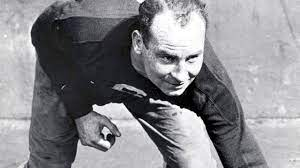
Harry Peter "Bud" Grant Jr. was an American professional gridiron football player and coach in the National Football League and Canadian Football League (CFL). Grant was head coach of the NFL's Minnesota Vikings for 18 seasons; he was the team's second (1967–83) and fourth (1985) head coach, leading them to four Super Bowl appearances, 11 division titles, one league championship and three National Football Conference championships. Before coaching the Vikings, he was the head coach of the Winnipeg Blue Bombers for 10 seasons, winning the Grey Cup four times.

Grant attended the University of Minnesota and was a three-sport athlete, in football, basketball, and baseball. After college, he played in the National Basketball Association (NBA) for the Minneapolis Lakers where he won the 1950 NBA Finals. Grant left the NBA to play in the NFL with the Philadelphia Eagles before leaving for the Winnipeg Blue Bombers of the CFL. A statue of Grant stands in front of the Winnipeg Blue Bombers' current stadium, IG Field.

Grant is the most successful coach in both Vikings and Blue Bombers history. He is the fifth-most winningest coach in professional football history with a combined 286 wins in the NFL and CFL. Grant was elected to the Canadian Football Hall of Fame in 1983 and to the Pro Football Hall of Fame in 1994. He was the first coach to guide teams to both the Grey Cup and the Super Bowl, the only other being Marv Levy.

He graduated from high school in 1945 and enlisted in the U.S. Navy during World War II. He was assigned to the Great Lakes Naval Training Station in Illinois and played on the football team coached by Paul Brown. Using an acceptance letter from the University of Wisconsin–Madison to be discharged from the service, Grant decided to attend the University of Minnesota instead. He was a three-sport, nine-letterman athlete in football, basketball, and baseball for the Minnesota Golden Gophers, earning All-Big Ten Conference honors in football twice.

While at the University of Minnesota, Grant was a member of the Phi Delta Theta fraternity.

After leaving the University of Minnesota, Grant was selected in both the NFL and NBA draft. He was selected in the first round (14th overall) of the 1950 NFL draft by the Philadelphia Eagles and fourth round (47th overall) selection of the Minneapolis Lakers in the 1950 NBA draft. He played 35 games during the 1949–50 NBA season and signed with the Lakers for the 1950–51 NBA season. He chose to continue his basketball career with the Lakers because they were local and because he was offered a raise to stay for the season. Grant's close friend Sid Hartman was the Lakers' general manager, which may have influenced his decision to remain with the team. He averaged 2.6 points per game in his two seasons as a reserve with the Lakers and was a member of the 1950 championship team. After the death of Arnie Ferrin in 2022, he became the oldest living NBA champion.

After two seasons in the NBA, Grant decided to end his professional basketball career. He contacted the Philadelphia Eagles of the NFL and agreed to play for the team during the 1951 NFL season. In his first season with the Eagles, Grant played as a defensive end and led the team in sacks (an unofficial statistic at the time). He switched to offense as a wide receiver for his second season with the club and ranked second in the NFL for receiving yardage, with 997 yards on 56 catches, including seven touchdowns.

Grant's contract expired at the end of the 1952 NFL season and the Eagles refused to pay him what he thought he was worth. The Winnipeg Blue Bombers of the CFL had been interested in Grant while in college. Grant left for Winnipeg, Manitoba in 1953 and became the first professional player to "play out his option" and leave for another team. He played for the Blue Bombers until 1956 as an offensive end and was named a Western Conference all-star three times. He led the Western Conference in pass receptions for the 1953, 1954, and 1956 seasons and receiving yards for the 1953 and 1956 seasons. He also holds the distinction of having made five interceptions in a playoff game, played on October 28, 1953, which is a record in all of professional football. The Blue Bombers played for the Grey Cup in 1953, but lost to the Hamilton Tiger-Cats in the 41st Grey Cup game.

Blue Bombers management decided that they needed a new coach prior to the 1957 season. On January 30, 1957, Grant accepted the Blue Bombers head coaching position after impressing management with his ability to make adjustments on offense and defense as a player. Club president J. T. Russell thought that Grant could coach even though nobody else did. Grant remained the head coach of the Blue Bombers until 1966. At age 29 (he was 30 by the time he coached his first game), Grant became the youngest head coach in CFL history.

During his ten seasons as head coach in Winnipeg, he led the team to six Grey Cup appearances winning the championship four times in 1958, 1959, 1961, and 1962. He finished his Blue Bombers coaching career with a regular season record of 105 wins, 53 losses, and two ties and an overall record of 122 wins, 66 losses, and 3 ties. Grant was the CFL Coach of the Year in 1965. Grant took on additional responsibilities as a club manager between 1964 and 1966. Max Winter, the Minnesota Vikings founder, contacted Grant in 1961 and asked him to coach the new NFL expansion team. Grant declined the offer and remained in Winnipeg until 1967 when Winter and General Manager Jim Finks were successful in luring Grant to Minnesota.

The Minnesota Vikings hired Grant as their head coach on March 11, 1967, taking over from their original coach, Norm Van Brocklin.

Over his tenure as Vikings head coach, Grant was known for instilling discipline in his teams and displaying a lack of emotion during games. He believed that football is a game of controlled emotion and teams would not follow the coach's lead if he were to panic or lose his poise during the course of a game. He required his team to stand at attention in a straight line during the entire national anthem played before the game and even had national anthem practice. Grant required outdoor practice during the winter to get players used to the cold weather and did not allow heaters on the sidelines during games. As per the latter practice it goes that Grant posited that with the heaters present on the sidelines the players would gather around the source of the warmth but if the heaters were not present the players would be paying attention to the game.

In his second year, Grant led the team to a divisional championship and his first NFL playoffs appearance. In 1969, he led the team to its first NFL Championship and their first appearance in the Super Bowl. The Vikings lost in Super Bowl IV to the American Football League champion Kansas City Chiefs. Prior to the 1970 season, Minnesota released Joe Kapp. After starting Gary Cuozzo at quarterback in 1970 and 1971, the Vikings re-acquired Fran Tarkenton prior to the 1972 season. During the 1970s, the Vikings appeared in three more Super Bowls (VIII, IX, and XI) under Grant and lost each one, but he was the first coach to lead a team to four Super Bowl appearances. He retired after the 1983 NFL season and was succeeded by Les Steckel, who led the team to a 3–13 record the following season. Steckel was fired as head coach after the 1984 season and Grant returned as coach for the Vikings in 1985. After one season where he returned the club to a 7–9 record, he stepped down again. Grant retired as the eighth most successful coach in NFL history with an overall record of 161 wins, 99 losses, and 5 ties. As of 2021, he also remains the most successful coach in Vikings history. During his tenure with the Vikings, he led the Vikings to four Super Bowl games, 11 division titles, one league championship, and three NFC championships.

Grant was the first coach to lead his teams to both a Grey Cup and a Super Bowl, with the only other one being Marv Levy.

After retiring, Grant became a less prominent public figure and focused on hunting and fishing as well as supporting environmental reforms. He was a spokesperson against Native American hunting and fishing treaty rights in Minnesota. In 1993, Grant's efforts resulted in a death threat. In 2005, he spoke at a Capitol rally in Minnesota for the conservation of wetlands, wetland wildlife, and water. Grant addressed 5,000 supporters, saying, "In this legislative session, we want to see some action. It's more important than any stadium they could ever build in this state." In 1983, Grant was inducted into the Canadian Football Hall of Fame and in 1994, he would be inducted into the Pro Football Hall of Fame by Sid Hartman, who was by then a senior Minnesota sports columnist.

Until his death, Grant was still listed as a consultant for the Vikings and maintained an office at the team's headquarters at TCO Performance Center in Eagan, Minnesota.

In 2004, Bud Grant would be asked to return to the position of Vikings head football coach by Red McCombs, hypothetically replacing Mike Tice. However, the deal would break down over the salary Grant would receive. As Grant would state afterwards, "I would have come back...for a short time, anyway. It certainly would have been exciting to do at 78 years old."

In 2014, the Winnipeg Blue Bombers unveiled a statue of Coach Grant outside IG Field. In 2016, Grant was inducted into the Blue Bomber ring of honour.

Bud married Pat in 1950, and they had six children (Kathy, Laurie, Harry III "Peter", Mike, Bruce, and Danny). Bruce died July 25, 2018, from brain cancer. Mike started coaching in 1979 at Minnetonka High School, then became the Forest Lake head coach from 1981 to 1986 and 1989 to 1991. In between those stints, Mike served as the Saint John's (Minnesota) offensive coach in 1987 and 1988. Mike has been the football head coach for Eden Prairie High School in Eden Prairie, Minnesota since 1992. Mike Grant has coached Eden Prairie to 11 state championships since he began his tenure at the school. Bud Grant's grandson Ryan Grant was a quarterback and linebacker at Eden Prairie and played at the University of Minnesota (2008–2012) as a linebacker. Bud's granddaughter Jenny is married to former NFL quarterback Gibran Hamdan.

Pat Grant died of Parkinson's disease on March 4, 2009, at age 81.

Bud Grant died at home in Bloomington, Minnesota, on March 11, 2023, at age 95.

Sources
https://www.pro-football-reference.com/
https://www.profootballarchives.com/index.html
https://americanfootballdatabase.fandom.com/wiki/Football_Wiki
https://www.gridiron-uniforms.com/GUD/controller/controller.php?action=main
https://www.profootballhof.com/hall-of-famers/
 "Grant's legacy still looms in Minnesota". Associated Press. August 12, 2006. Archived from the original on August 31, 2006. Retrieved May 25, 2007.
 Dawson, Chris (September 12, 2024). "O'Shea humbly becomes Blue Bombers all-time winning coach". Bay Today. Retrieved December 2, 2024.
 "Beating the Clock". American Football Monthly. June 1999. Archived from the original on September 28, 2007. Retrieved May 13, 2007.
 "Harry (Bud) Grant". Canadian Football Hall of Fame & Museum. Retrieved April 26, 2018.
 "Bud Grant". Pro Football Hall of Fame. Retrieved May 13, 2007.
 "History: Bud Grant". Viking Update. July 19, 2001. Archived from the original on June 29, 2007. Retrieved May 12, 2007.
 Kumpula, Carlo (May 9, 2007). "'The Glacier' and 'The Gladiator'". Spooner Advocate (Spooner, Wisconsin). Archived from the original on June 13, 2007. Retrieved May 13, 2007.
 Armistice Day Blizzard nearly claimed Bud Grant Star-Tribune, Accessed March 11, 2023
 "Bud Grant". Manlyweb.com. Retrieved May 13, 2007.
 Marshall, Brian (1998). "Bud Grant: Purple and Blue, Through and Through". Professional Football Researchers Association. Archived from the original on April 3, 2007. Retrieved May 13, 2007.
 1947 Minnesota Gopher yearbook, p.311, accessed August 13, 2020.
 "Bud Grant". Phi Delta Theta Fraternity. Retrieved March 11, 2023.
 "The 1950 NFL Draft". Pro Football Hall of Fame. Retrieved May 13, 2007.
 "1950 NBA Draft". Basketball-Reference.com. Retrieved May 13, 2007.
 "Bud Grant Statistics". Basketball-Reference.com. Retrieved May 28, 2007.
 "1950 Minneapolis Lakers". Basketball-Reference.com. Retrieved May 13, 2007.
 Florio, Mike (March 11, 2023). "Bud Grant dies at 95". ProFootballTalk. NBC Sports.
 "Bud Grant NFL Football Statistics". Pro Football Reference. Sports Reference LLC. Retrieved November 12, 2025.
 "Bud Grant". The Manitoba Sports Hall of Fame & Museum. Archived from the original on July 9, 2007. Retrieved May 13, 2007.
 "All-Time Playoff Records". CFL.ca. Retrieved May 13, 2007.
 Young, Lindsey (March 10, 2022). "5 Interceptions & a Pro Football Record: The Lesser-Known Bud Grant Story". Vikings.com. Retrieved August 28, 2025.
 "Harry Peter Bud Grant". CFL.ca. Retrieved May 13, 2007.
 Goodwin, Jack (March 11, 1967). "Bud Grant Named Vikings' Head Coach". Minneapolis Star. Archived from the original on August 19, 2013. Retrieved March 11, 2023.
 "Ex-Vikings HC Bud Grant's insane cold weather rituals". NFL.com. January 7, 2016. Retrieved February 29, 2024.
 Gordon, Grant (March 11, 2023). "Bud Grant, legendary Vikings head coach and Pro Football Hall of Famer, dies at age 95". National Football League.
 "Harry Bud Grant". College Basketball at Sports Reference. Retrieved March 12, 2023.
 "Bud Grant". Basketball Reference. Sports Reference. Retrieved November 17, 2022.
 "Bud Grant Coaching Record – Pro Football Archives". www.profootballarchives.com. Archived from the original on January 23, 2022.
 "Grant Receives A Death Threat". The New York Times. January 10, 1993. Archived from the original on January 30, 2013. Retrieved May 12, 2007.
 Anderson, Dennis (January 11, 2005). "Rally hats on". Minnesota Environmental Partnership. Archived from the original on September 29, 2007. Retrieved May 25, 2007.
 Schultz, Chris (April 11, 2005). "Open water has returned once again". Herald Journal. Archived from the original on March 23, 2006. Retrieved May 25, 2007.
 Bud Grant's Career Capsule Pro Football Hall of Fame, Accessed October 19, 2020
 "Minnesota Vikings | Front Office Staff". www.vikings.com.
 Grant, Bud; Bruton, Jim (2013). I Did It My Way: A Remarkable Journey to the Hall of Fame. Triumph Books. ISBN 9781623683153.
 "Blue Bombers unveil statue of coaching legend Bud Grant". CBC. Retrieved March 13, 2023.
 "Legendary coach Bud Grant going into Bombers Ring of Honour". CBC. September 26, 2016. Retrieved August 28, 2025.
 Brackin, Dennis; Rand, Mike. "Success has a price". Star Tribune. Archived from the original on June 7, 2007. Retrieved May 7, 2007.
 Rand, Michael (November 23, 2007). "Eagles' all-around game proves to be too much". Archived from the original on November 25, 2007. Retrieved November 24, 2007.
 Monter, Chris (April 5, 2007). "Ryan Grant Commits to Minnesota". GoldenSports.net. Archived from the original on December 20, 2007. Retrieved May 13, 2007.
 Jude, Adam (September 8, 2016). "For UW assistant coach Bush Hamdan, Seattle's been a happy reunion personally and professionally". The Seattle Times.
 Harlow, Tim (March 4, 2009). "Pat Grant, wife of Vikings coach, dies". Star Tribune. Archived from the original on March 7, 2009. Retrieved March 5, 2009.
 Belson, Ken (March 11, 2023). "Bud Grant, Longtime Minnesota Vikings Coach, Dies at 95". The New York Times. Retrieved March 11, 2023.
 "Hall of Fame Vikings coach Grant dies at age 95". ESPN.com. March 11, 2023.
 "Bud Grant". Pro Football History.com. May 20, 1927. Retrieved March 11, 2023.
 "Pete Carroll". Pro Football History.com.
 "Marc Trestman". Pro Football History.com.
 "Jerry Burns". Pro Football History.com.
 "Buddy Ryan". Pro-Football-Reference.com.
 "Neill Armstrong". Pro Football History.com.
 "Jack Patera". Pro Football History.com.
 "Bob Hollway". Pro Football History.com.
Bruton, Jim; Grant, Bud. I Did It My Way: A Remarkable Journey to the Hall of Fame, published by Triumph Books, 2013, ISBN 9781600787867
McGrane, Bill (1986). Bud: The Other Side of the Glacier. Harper & Row. ISBN 0-06-015583-3.

Wednesday, June 28, 2023

The Story And Significance Of Morris (Red) Badgro - NFL Champion And Receptions Co-Leader in 1934

Morris Hiram "Red" Badgro was an American professional football and baseball player. He played as an end in the National Football League. He was inducted into the Pro Football Hall of Fame in 1981.
A native of Orillia, Washington, he attended the University of Southern California (USC) where he played baseball, basketball, and football. He then played nine seasons of professional football for the New York Yankees (1927–1928), New York Giants (1930–1935), and Brooklyn Dodgers (1936). He was selected as a first-team All-Pro in 1931, 1933, and 1934. He scored the first touchdown in the first NFL Championship Game and was a member of the 1934 New York Giants team that won the second NFL Championship Game.

Badgro also played professional baseball as an outfielder for six years from 1928 to 1933, including two seasons in Major League Baseball for the St. Louis Browns (1929–1930). After his career as an athlete was over, Badgro served as a football coach for 14 years, including stints as the ends coach for Columbia (1939–1942) and Washington (1946–1953).

Badgro played 10 seasons of professional football. During the 1927 season, he appeared in 12 games for the New York Yankees. The Yankees folded after the 1928 season, and Badgro opted to focus on professional baseball. He did not play professional football in 1929.

After playing Major League Baseball in 1929 and 1930, Badgro qualified as a free agent in professional football and signed with the New York Giants for $150 a game. He gained his greatest acclaim as the starting left end for the Giants from 1930 to 1935. He was regarded as a sure-tackling defender and an effective blocker and talented receiver on offense. Giants coach Steve Owen said of Badgro: "He could block, tackle, and catch passes equally well. And he could do each with the best of them."

In 1930, he appeared in 17 games at left end, 14 as a starter, and was selected by the Green Bay Press-Gazette as a second-team end on the 1930 All-Pro Team.

In 1931, he appeared in 13 games, 11 as a starter, and was selected by the NFL as a first-team end on the official 1931 All-Pro Team.

In 1932, he appeared in 12 games, 11 as a starter.

In 1933, he appeared in 12 games, 10 as a starter, and was selected by the Chicago Daily News as a second-team end on the 1933 All-Pro Team. He helped lead the Giants to the 1933 NFL Championship Game where he scored the first touchdown in the first NFL Championship Game, a 29-yard touchdown on a pass from Harry Newman.

In 1934, he appeared in 13 games, all as a starter, for the Giants team that won the 1934 NFL Championship Game. He was selected by the NFL and the Chicago Daily News as a first-team end on the 1934 All-Pro Team. He also led the NFL with 16 receptions.

Playing against the Boston Redskins in 1935, Badgro blocked a punt, and teammate Les Corzine returned it for a go-ahead touchdown.

Badgro also played professional baseball. He played minor league ball in 1928 for the Tulsa Oilers in the Western League and the Muskogee Chiefs in the Western Association, compiling a .351 batting average in 513 at bats. He also played for the Milwaukee Brewers of the American Association in 1929.

In June 1929, Badgro made his major league debut with the St. Louis Browns. Over the 1929 and 1930 season, he appeared in 143 games, 80 of them as a right fielder and 13 as a center fielder. He compiled a .257 batting average in 382 major league at-bats and appeared in his final major league game on September 18, 1930.

Badgro continued to play in the minor leagues for several years, including stints with the Wichita Falls Spudders of the Texas League (1931–1932) and Seattle Indians of the Pacific Coast League (1933).

In 1937, Badgro returned to USC to finish the credits he needed to graduate. At the same time, he was a member of Howard Jones' football coaching staff at USC, responsible for working with USC's frosh players.

In June 1938, Badgro was hired as the football coach at Ventura High School in Ventura, California. He also coached football, baseball, and basketball for Ventura Junior College.

In June 1939, he was hired as an assistant coach (responsible for ends) under Lou Little at Columbia. He remained at Columbia through the 1942 season.

In 1944, Badgro was employed in a Seattle war plant.

In February 1946, Badgro was hired as an assistant football coach at the University of Washington. When Howard Odell took over as Washington's head coach, he retained Badgro as his ends coach. Badgro was again retained when John Cherberg took over as head coach in 1953. He resigned his coaching post at Washington in January 1954 in order to pursue private business in Kent, Washington.

Badgro was married to Dorothea Taylor. After retiring from football, Badgro worked for the Department of Agriculture in the State of Washington.

In 1967, Badgro was inducted into the Washington State Sports Hall of Fame. Badgro was inducted into the Pro Football Hall of Fame in 1981 at age 78. At that time, he was the oldest person to be inducted into the Hall of Fame.

Badgro died in July 1998 at age 95 in Kent, Washington. He had been hospitalized after a fall.
Sources
https://www.pro-football-reference.com/
https://www.profootballarchives.com/index.html
https://americanfootballdatabase.fandom.com/wiki/Football_Wiki
https://www.gridiron-uniforms.com/GUD/controller/controller.php?action=main
https://www.profootballhof.com/hall-of-famers/
"Red Badgro". Pro-Football-Reference.com. Sports Reference LLC. Retrieved October 1, 2017.
 Census entry for Walter Badgro and family. Son Morris H. age 7 born in Washington State. Census Place: Orillia, King, Washington; Roll: T624_1657; Page: 3B; Enumeration District: 0027; FHL microfilm: 1375670. Ancestry.com. 1910 United States Federal Census [database on-line].
 Census entry for Walter Badgro and family. Son Morris age 16 born in Washington State. Census Place: Orillia, King, Washington; Roll: T625_1925; Page: 7A; Enumeration District: 55. Ancestry.com. 1920 United States Federal Census [database on-line].
 "Morris "Red" Badgro". Greater Kent Historical Society. Retrieved October 1, 2017.[permanent dead link]
 Richard Whittingham (1984). What a Game They Played: An Inside Look at the Golden Era of Pro Football. University of Nebraska Press. p. 46. ISBN 0803298196.
 "'Red' Badgro Is All-Around Star". Santa Ana Register. March 18, 1927. p. 13 – via Newspapers.com.
 "Badgro on All-Coast Basketball Team". Los Angeles Times. March 10, 1927. p. 37 – via Newspapers.com.
 "Morris Badgro Named On 3 All-Coast Teams". The Courier-Journal. May 15, 1927. p. 72 – via Newspapers.com.
 Whittingham, "What a Game They Played", pp. 47-48.
 Richard Whittingham (1984). What a Game They Played: An Inside Look at the Golden Era of Pro Football. University of Nebraska Press. p. 45. ISBN 0803298196.
 "1933 NFL Championship Game". Pro Football Hall of Fame. Retrieved October 1, 2017.
 "Giants Defeat Redskins, 17-6, In Early Attack". Chicago Tribune. October 21, 1935. p. 23 – via Newspapers.com.
 "Red Badgro Minor League Statistics". Baseball-Reference.com. Sports Reference LLC. Retrieved October 1, 2017.
 "Red Badgro Statistics". Baseball-Reference.com. Sports Reference LLC. Retrieved October 1, 2017.
 Whittington, "What a Game They Played", p. 51.
 "Troy Drills on Defense". Los Angeles Times. September 21, 1937. p. 30 – via Newspapers.com.
 "Badgro Will Coach At Ventura High". The San Bernardino County Sun. June 4, 1938. p. 15 – via Newspapers.com.
 "Badgro to Coach Ends at Columbia". The Brooklyn Daily Eagle. June 23, 1939. p. 20 – via Newspapers.com.
 "Stars Serving Under Uncle Sam". Pittsburgh Post-Gazette. November 17, 1942. p. 19 – via Newspapers.com.
 "Huskies Sign Red Badgro". Los Angeles Times. February 19, 1946. p. 11 – via Newspapers.com.
 "Reggie Root and Red Badgro Named Husky Grid Aides". Los Angeles Times. January 17, 1948. p. 31 – via Newspapers.com.
 "Huskies Name Back Coach". Corvallis Gazette-Times. March 14, 1953. p. 3 – via Newspapers.com.
 "Huskies Lose Coach Badgro". Statesman Journal. January 29, 1954. p. 7 – via Newspapers.com.
 "Sports Figures Honored". The Daily Chronicle. January 25, 1967. p. 10 – via Newspapers.com.
 "Badgro to become Hall of Fame's oldest enshrinee". The Akron Beacon Journal. July 29, 1981. p. E1 – via Newspapers.com.
 Frank Litsky (July 15, 1998). "Red Badgro, 95, Football Hall of Famer, Dies". The New York Times. Retrieved October 1, 2017.

Wednesday, March 1, 2023

The Story And Significance Of Ray Flaherty - Won Three NFL Championship Teams, One As A Player And Two As A Head Coach

Raymond Paul Flaherty was an American football player and coach in the National Football League, and a member of the Pro Football Hall of Fame. He was part of three NFL Championship teams, one as a player and two as a head coach.

Flaherty began his professional football career in 1926 with the Los Angeles Wildcats of the American Football League, a team of western players based in Illinois. It played all its games on the road in its only season, which ended with a post-season barnstorming tour through the South against league rival New York Yankees. Flaherty then played in the National Football League for eight seasons, first with the Yankees (1927–1928) with Red Grange, until the franchise folded following the 1928 season. He joined the New York Giants, 1929 through the 1935 season, except for 1930, when he returned to Spokane as the head coach at his alma mater, Gonzaga. He also coached the Bulldog basketball team for a season (1930–1931). At the end of the 1935 season, Flaherty's jersey number 1 was 'taken out of circulation', thus making Flaherty the first professional football player to have his number retired.

At age 26, Flaherty played a season of minor league baseball in 1930, as a second baseman with the Providence Grays of the Eastern League.

Following his playing career, Flaherty was hired by George Preston Marshall, owner of the NFL's Boston Redskins, as head coach for the 1936 season. The team won the division title that year, then relocated to Washington, D.C. for the 1937 season, and picked up future hall of fame quarterback Sammy Baugh in the first round of the 1937 NFL draft. In seven seasons at the helm of the Redskins, Flaherty won four division titles (1936, 1937, 1940, 1942) and two NFL Championships (1937, 1942). Among his innovations on offense, Flaherty is credited with inventing the screen pass in 1937.

The Redskins held their 1940 training camp in Spokane at Gonzaga; the previous year's camp was also held in Spokane County, at Eastern Washington College in Cheney. In 1941 and 1942, the Redskins trained in California in San Diego at Brown Military Academy.

Flaherty served as an officer in the U.S. Navy during World War II, then returned to pro football in 1946 as a head coach in the new All-America Football Conference (AAFC). With the New York Yankees, he won division titles in each of his two full seasons at the helm, but lost to the Cleveland Browns in the title games. After a poor start in 1948, owner Dan Topping relieved Flaherty of his duties in mid-September. Several months later he was hired as head coach of the AAFC's Chicago Hornets, known as the Rockets in their three previous seasons. He was inducted into the Pro Football Hall of Fame in 1976 for his contributions as a coach.

After the end of the AAFC in 1949, Flaherty returned to the Spokane area to enter private business as a beverage distributor, and lived in nearby northern Idaho. During football season, he was a part-time columnist for the Spokane Daily Chronicle. A college friend of Bing Crosby, Flaherty participated in the singer's Spokane memorial service in 1977.

After an extended illness, Flaherty died in 1994 in Hayden, Idaho at the age of 90; he and his wife Jackie (1921–2007) are buried at St. Thomas Cemetery in Coeur d'A
lene.
Sources
https://www.pro-football-reference.com/
https://www.profootballarchives.com/index.html
https://americanfootballdatabase.fandom.com/wiki/Football_Wiki
https://www.gridiron-uniforms.com/GUD/controller/controller.php?action=main
https://www.profootballhof.com/hall-of-famers/
Blanchette, John (July 20, 1994). "NFL legend Ray Flaherty dies". Spokesman-Review. Spokane, Washington. p. C1.
 Blanchette, John (November 2, 1983). "Papa Bear met his match in Ray Flaherty". Spokesman-Review. Spokane, Washington. p. C1.
 Godes, Kerry (March 30, 1987). "Gonzaga Prep selects six for its new Hall of Fame". Spokane Chronicle. Washington. p. C5.
 "Ray Flaherty Gonzaga coach". Spokesman-Review. Spokane, Washington. May 4, 1980. p. 1, sports.
 "RAY FLAHERTY". Gonzaga Bulldogs. Retrieved August 8, 2024.
 Derrick, Merle (January 27, 1976). "Flaherty honored". Spokane Daily Chronicle. Washington. p. 17.
 "Irish casaba tossers hit winning stride; play Spokane Sparklers Saturday night". Spokane Daily Chronicle. Washington. January 7, 1931. p. 15.
 Berry, Allison (February 2, 2012). "Top 10 Things You Didn't Know About the New York Giants". Time Magazine. p. 7.
 Eisen, Michael. "Malik Nabers to wear No. 1 with permission from Flaherty family". www.giants.com. Retrieved August 29, 2024.
 "Flaherty to coach Boston Redskins". Spokane Daily Chronicle. Washington. Associated Press. December 24, 1935. p. 1.
 Blanchette, John (July 22, 1994). "Flaherty earned due respect". Spokesman-Review. p. C1.
 "Legends: Flaherty in 'same class'". Ellensburg Daily Record. Washington. UPI. September 4, 1980. p. 8.
 "Flaherty sends Redskins into first practice grind". Spokane Daily Chronicle. Washington. August 6, 1940. p. 11.
 "Pro grid squad begins practice". Spokesman-Review. Spokane, Washington. August 8, 1939. p. 11.
 "Redskins will train on Gonzaga field starting August 6". Spokane Daily Chronicle. Washington. July 24, 1940. p. 11.
 Johnson, Bob (January 19, 1959). "Woo Redskins". Spokane Daily Chronicle. Washington. p. 13.
 Johnson, Bob (January 28, 1972). "Two trips west". Spokane Daily Chronicle. Washington. p. 13.
 "Training camp history". Redskins RVA. Retrieved February 7, 2014.
 "Yankees "fire" Ray Flaherty as grid coach". Spokesman-Review. Spokane, Washington. Associated Press. September 18, 1948. p. 11.
 "Ray Flaherty named coach of Chicago Rockets". Pittsburgh Press. United Press. January 30, 1949. p. 24.
 "Ray Flaherty to get Chappuis and others". Spokane Daily Chronicle. Washington. United Press. February 1, 1949. p. 11.
 Missildine, Harry (January 27, 1976). "Flaherty named to pro grid hall". Spokesman-Review. Spokane, Washington. p. 11.
 "Ray Flaherty gains Hall induction today". Spokesman-Review. Spokane, Washington. Associated Press. July 24, 1976. p. 13.
 Hewins, Jack (August 22, 1951). "Flaherty won't coach unless offer "too good to decline" appears". Spokesman-Review. Spokane, Washington. Associated Press. p. 13.
 "Flaherty to conduct football dope column". Spokane Daily Chronicle. Washington. September 3, 1954. p. 11.
 "Flaherty experts on football again". Spokane Daily Chronicle. Washington. September 5, 1958. p. 11.
 "Crosby service set". Spokane Daily Chronicle. Washington. October 17, 1977. p. 3.
 Smith, Jim (October 19, 1977). "Memorial rites held for city favorite, Bing Crosby". Spokesman-Review. Spokane, Washington. p. 7.
 "NCAA Statistics; Coach; Ray Flaherty". National Collegiate Athletic Association. Retrieved January 19, 2025.

Tuesday, February 21, 2023

The Story And Significance Of Dante Lavelli - In The 1950 NFL Championship Game, Dante Caught 11 Passes, Then A Record, And Scored Two Touchdowns

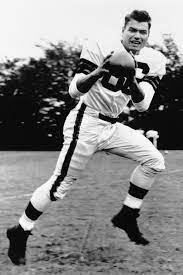
Dante Bert Joseph "Gluefingers" Lavelli was an American professional football player who was an end for the Cleveland Browns in the All-America Football Conference (AAFC) and National Football League from 1946 to 1956. Starring alongside quarterback Otto Graham, fullback Marion Motley, placekicker Lou Groza and fellow receiver Mac Speedie, Lavelli was an integral part of a Browns team that won seven championships during his 11-season career. Lavelli was known for his sure hands and improvisations on the field. He was also renowned for making catches in critical situations, earning the nickname "Mr. Clutch". "Lavelli had one of the strongest pairs of hands I've ever seen," Browns coach Paul Brown once said of him. "When he went up for a pass with a defender, you could almost always count on him coming back down with the ball."

Lavelli grew up in Hudson, Ohio and played football, baseball and basketball at his local high school. After graduating, he enrolled at Ohio State University, where he played only a handful of games before he was drafted for service in the U.S. Army during World War II. Returning in 1945 after serving in Europe, he joined the Browns in the team's first-ever season in the AAFC. Helped by Lavelli's play, the Browns won each of the AAFC's championships before the league dissolved in 1949 and the team was absorbed by the NFL. Cleveland continued to succeed in the NFL, winning championships in 1950, 1954 and 1955. Lavelli, who helped found the National Football League Players Association toward the end of his career, retired after the 1956 season.

After retiring from football, Lavelli held a variety of coaching and scouting jobs and was active in NFL alumni affairs. He also ran a furniture store in Rocky River, Ohio. He was elected to the Pro Football Hall of Fame in 1975. He died in a Cleveland hospital in 2009.

On arrival at Ohio State, Lavelli roomed with Les Horvath and Don McCafferty and played on the freshman team under coach Trevor Rees. Brown switched Lavelli to end (the position is now called wide receiver). His playing time with the football team was limited, however, due to injury. He became a first-string end as a sophomore in 1942, but was ailing from a charley horse in his thigh and sat out the first game of the season against a Fort Knox military team. He had recovered by the third game of the season and started in a game against Southern California. Lavelli was hit in the knee while grabbing for a pass near the end of the game, however, he broke a bone. He was sidelined for the rest of the season. The Buckeyes won the college football national championship that year.

After the 1942 season, Lavelli was drafted by the U.S. Army as American involvement in World War II intensified. After basic training and a number of other specialized courses on land-sea assaults, he was sent with the 28th Infantry Division to fight in the European Theatre of World War II. There his division landed on Omaha Beach, part of the Allied invasion of Germany-occupied France in 1944. He was involved with American forces in Germany's Battle of the Bulge offensive and in the Siege of Bastogne later the same year. One in five members of his division was killed in battle.

After returning from the war, Lavelli was again offered a chance to play baseball with the Tigers. He saw a matchup in late 1945 between the National Football League's New York Giants and Washington Redskins and noticed that a former teammate at Ohio State named Sam Fox was an end for the Giants. "I thought if he could make the grade, so could I," Lavelli later said. When Paul Brown offered him a chance to play on a new professional team he was coaching in the All-America Football Conference (AAFC) in 1946, Lavelli jumped at the opportunity. He was given a $500 bonus ($6,948 in today's dollars) for signing with the team, called the Cleveland Browns.

Lavelli attended the Browns' first training camp in 1946. Competition was fierce for a spot on the roster, but Lavelli was one of the men who made it. He was up against a number of National Football League veterans and former college stars. "The toughest game I ever played in was the first intrasquad scrimmage game," he said later. "Nobody talked to each other for two days." He joined an offense that featured quarterback Otto Graham, fullback Marion Motley, placekicker Lou Groza and fellow end Mac Speedie. Lavelli quickly became Graham's top passing target and led the AAFC in receiving as a rookie with 40 receptions and 843 yards. The Browns made it to the league championship that season, and Lavelli caught the game-winning touchdown in a 14–9 victory over the AAFC's New York Yankees. The victory "didn't mean so much then, but as time goes on, it builds," Lavelli said in 2008.

The Browns won the AAFC championship again in 1947. Lavelli finished second in the league in receiving behind his teammate Speedie. Both Lavelli and Speedie were named to all-AAFC teams, as they had been in 1946. Lavelli broke his leg in a preseason game in 1948 and sat out seven weeks. He came back later in the year and helped Cleveland finish a perfect season, catching a touchdown pass in a 31–21 win over the AAFC's Brooklyn Dodgers in the championship game. In a game against the Los Angeles Dons the following year, Lavelli caught four touchdowns and had 209 receiving yards, an AAFC record. In 1949 Cleveland won the AAFC championship for the fourth year in a row. The AAFC dissolved before the 1950 season and three of its teams, including the Browns, were absorbed by the more established National Football League. Lavelli was the AAFC's all-time leader in yards per catch and second in receiving yards behind Speedie.

As the Browns won in the AAFC, Lavelli continued his studies at Ohio State between seasons and got his degree in 1949. He married Joy Wright of Brecksville, Ohio that year.

When Cleveland entered the NFL in 1950, questions lingered about whether the team could sustain its early dominance. The Browns, however, began the season by beating the defending NFL champions, the Philadelphia Eagles. Dante Lavelli recalls, "The game I'll never forget is the first game we played in the National Football League. We beat the Philadelphia Eagles, 35-10. We went back to Cleveland the next day and waiting for us was something else we could be proud of. The press has asked Bert Bell, commissioner of the NFL, what he thought of the game. 'The Browns are the greatest football club I ever saw,' he said."

The team finished with a 10–2 regular-season record and reached the championship game after winning a playoff game against the New York Giants. In the championship against the Los Angeles Rams, Lavelli caught 11 passes – then a record for a title game – and had two touchdown receptions. The Browns won the game 30–28.

Cleveland reached the NFL championship game the following year but lost to the Rams. The 1952 and 1953 seasons followed a similar pattern: the Browns made it to the championship game but lost both times to the Detroit Lions. Lavelli was named to the Pro Bowl in 1951 and 1953. He was seventh in the NFL in receiving yards in 1951, with 586. He gained 783 receiving yards in 1953, the fifth-highest total in the league.

Over the years, Lavelli developed a reputation for making big plays when they counted most, as he had done with his touchdown reception in the Browns' first championship game in 1946. He was nicknamed "Mr. Clutch" in a Pittsburgh Steelers scouting report, although "Gluefingers" – a name bestowed upon him by Browns announcer Bob Neal – was more widely used. He practiced with Graham tirelessly to refine routes and was not afraid to run over the middle, where he risked a pounding from defenders when the ball came his way. "Dante was the greatest guy at catching a ball in a crowd that I have ever seen," Brown once said. Among other innovations, he and Graham also mastered sideline patterns at a time when few teams used them.

The Browns won another championship in 1954, thanks in part to a strong regular-season performance from Lavelli. Lavelli led the team in receiving that year and made the Pro Bowl after the Browns beat the Lions for their second NFL title. A third NFL championship followed in 1955. In the championship game against the Rams, Lavelli caught a touchdown in the second quarter and scored a second time on a 50-yard pass just before the end of the first half. The Browns won 38–14.

Lavelli initially planned to retire in 1955 but came back for a final year in 1956, when the Browns posted a 5–7 record, the team's first-ever losing season. In his 11-year career, Lavelli caught 386 passes for 6,488 yards and 62 touchdowns. He was a confident receiver, former teammates said in later years. He could often be heard calling for Graham to throw him the ball while running routes. He was also known for his ability to improvise on the field. In a 1955 game against the Eagles in slippery conditions, he caught the winning touchdown with less than a minute left by swinging around the goalpost with his arm to get open.

During his Browns career, Lavelli was involved in the creation of the National Football League Players Association. The concept of a union to represent players in league matters was hatched in Lavelli's basement in 1954. Lavelli and two teammates, Abe Gibron and George Ratterman, met every Wednesday to discuss the union. They approached Creighton Miller, a Cleveland lawyer and former Notre Dame star who had worked briefly as an assistant coach with the Browns, for help. The union was founded at a meeting before the NFL championship game in 1956. The following year, the players got $50 per exhibition game, a $5,000 minimum salary, injury pay and medical care. The union is now the primary representative of players in labor negotiations and disputes with the NFL.

After retiring from football, Lavelli ran an appliance business on Cleveland's west side. From 1961 through 1963, he served as an assistant to Graham, who was coaching college stars in the annual College All-Star Game. Lavelli was also an assistant coach with the Browns and a scout for the Chicago Bears. He later owned a furniture store in Rocky River, Ohio and had an interest in two bowling alleys. He had a hand in founding the NFL Alumni Association, a charitable organization.

Lavelli was elected to the Pro Football Hall of Fame in 1975, joining former teammates Graham, Motley and Groza and coach Paul Brown. Later in life, he golfed and attended NFL alumni events and lobbied to get the NFL to recognize his and other players' AAFC statistics. The NFL refused to incorporate AAFC statistics into its own when the league dissolved and the Browns became part of the NFL, in contrast to the NFL's recognition of statistics from the American Football League (AFL) following the AFL-NFL merger. Lavelli called it a "double standard". He died in 2009 at 85 at Fairview Hospital in Cleveland and is buried in St. Mary's Cemetery, Hudson, OH. He and his wife Joy had three children, Lucinda, Edward and Lisa; as well as four grandchildren, Aaron, Noah, Luke and Danielle; and two great-grandsons, Alexander, Warren and Harrison. Hudson High's stadium is named in honor of him.

The Akron Community Foundation established a Dante Lavelli Scholarship Fund in 2010 to help Hudson High athletes pay for college. "He was one of the best I’d ever seen," Willie Davis, a defensive end who played for the Browns shortly after Lavelli retired, said. "He set the mold with his running patterns and catching the ball." After Lavelli retired, Graham praised his abilities and remembered his eagerness to get his hands on the ball. "He was always coming into the huddle and telling me he was open and that I should throw to him," Graham said. "He wasn't saying that to be a big shot. He just loved to play. If he was open by a few inches, he'd be yelling, 'Otto, Otto.' Many a time when I was stuck and heard that voice I would throw it in his direction and darned if he didn't come down with it. He had fantastic hands."
Sources
https://www.pro-football-reference.com/
https://www.profootballarchives.com/index.html
https://americanfootballdatabase.fandom.com/wiki/Football_Wiki
https://www.gridiron-uniforms.com/GUD/controller/controller.php?action=main
https://www.profootballhof.com/hall-of-famers/
 Keim 1999, p. 54.
 Heaton 2007, p. 172.
 Steinberg 1992, p. 93.
 Keim 1999, p. 51.
 Litsky, Frank (January 21, 2009). "Dante Lavelli, Cleveland Browns Receiver Known as Gluefingers, Dies at 85". The New York Times. Archived from the original on October 14, 2017. Retrieved July 14, 2012.
 Boyer 2006, p. 33.
 Cantor 2008, pp. 205–206.
 Steinberg 1992, p. 94.
 Pluto, Terry (January 24, 2009). "Lavelli caught everything, but his family insists they received the most". Cleveland Plain Dealer. Archived from the original on October 7, 2012. Retrieved July 14, 2012.
 Steinberg 1992, p. 95.
 Keim 1999, p. 53.
 Piascik 2007, p. 22.
 Piascik 2007, p. 29.
 Piascik 2007, p. 45.
 Piascik 2007, p. 65.
 Piascik 2007, p. 64.
 Grossi 2008, p. 14.
 Piascik 2007, p. 82.
 Piascik 2007, p. 109.
 Piascik 2007, pp. 118–119.
 Piascik 2007, p. 134.
 Piascik 2007, p. 146.
 Piascik 2007, p. 141.
 Piascik 2007, p. 149.
 Heaton 2007, p. 174.
 Piascik 2007, p. 145.
 Piascik 2007, p. 164.
 Billings, Bob (April 1975). "Dante Lavelli Recalls: THE GAME I"LL NEVER FORGET". Football Digest. 4: 56–60.
 Piascik 2007, pp. 173–176.
 Heaton 2007, p. 173.
 Piascik 2007, pp. 178–181.
 Piascik 2007, p. 233.
 Piascik 2007, pp. 253, 281.
 Piascik 2007, pp. 235, 284.
 "1951 NFL Leaders and Leaderboards". Pro Football Reference. Archived from the original on August 31, 2012. Retrieved September 13, 2012.
 "1953 NFL Leaders and Leaderboards". Pro Football Reference. Archived from the original on September 4, 2012. Retrieved September 13, 2012.
 Steinberg 1992, p. 96.
 Piascik 2007, p. 315.
 Piascik 2007, p. 325.
 Piascik 2007, pp. 316, 319.
 Piascik 2007, p. 340.
 Piascik 2007, p. 341.
 Piascik 2007, p. 366.
 Keim 1999, pp. 53–54.
 Piascik 2007, p. 73.
 Anderson, Dave (September 26, 1982). "The "Erased" Labor Leader". The New York Times. Archived from the original on December 17, 2010. Retrieved July 16, 2012.
 "About Us". NFLPlayers.com. Archived from the original on October 11, 2012. Retrieved July 16, 2012.
 Heaton, Chuck (December 14, 1956). "Lavelli Aims to Add to Impressive Figures in Farewell Game With Cards". Cleveland Plain Dealer. p. 55. Football will become but a memory for the 33-year-old veteran after Sunday afternoon when he returns to his west side appliance business.
 "College All-Star Gridders Begin Training Thursday". The Milwaukee Journal. Associated Press. July 9, 1961. p. 4. Retrieved July 16, 2012.[permanent dead link]
 "U-M's Miller Named To College All-Stars". The Miami News. Miami News Wire Services. June 10, 1962. p. 2C. Retrieved July 16, 2012.[permanent dead link]
 "College Stars, Packers Battle". Eugene Register-Guard. Associated Press. July 28, 1963. p. 3B. Retrieved July 16, 2012.
 "Browns Hall of Famer Dante 'Gluefingers' Lavelli dies at 85". NFL.com. Associated Press. January 21, 2009. Archived from the original on September 26, 2015. Retrieved July 16, 2012.
 "Cleveland Browns legend Dante Lavelli remembered". Retrieved September 6, 2020.
 "Dante Lavelli Stadium". Hudsonexplorers.com. Archived from the original on May 4, 2011. Retrieved July 16, 2012.
 "Dante Lavelli Scholarship Fund". Akron Community Foundation. Archived from the original on November 5, 2016. Retrieved September 13, 2012.
Boyer, Mary Schmitt (2006). Browns Essential. Chicago: Triumph Books. ISBN 978-1-57243-873-6.
Cantor, George (2008). Paul Brown: The Man Who Invented Modern Football. Chicago: Triumph Books. ISBN 978-1-57243-725-8.
Grossi, Tony (2004). Tales From the Browns Sideline. Champaign, IL: Sports Publishing LLC. ISBN 978-1-58261-713-8.
Heaton, Chuck (2007). Browns Scrapbook: A Fond Look Back at Five Decades of Football, from a Legendary Cleveland Sportswriter. Cleveland: Gray & Company. ISBN 978-1-59851-043-0.
Keim, John (1999). Legends by the Lake: The Cleveland Browns at Municipal Stadium. Akron, OH: University of Akron Press. ISBN 978-1-884836-47-3.
Piascik, Andy (2007). The Best Show in Football: The 1946–1955 Cleveland Browns. Lanham, MD: Taylor Trade Publishing. ISBN 978-1-58979-571-6.
Steinberg, Donald (1992). Expanding Your Horizons: Collegiate Football's Greatest Team. Pittsburgh, PA: Dorrance Publishing. ISBN 978-0-8059-3323-9.

Monday, January 9, 2023

The Story And Significance Of Raymond Berry - His 12 Receptions In The 1958 NFL Championship Game Record For More Than Half A Century

Raymond Emmett Berry Jr. is an American former professional football player and coach in the National Football League. He played as a split end for the Baltimore Colts from 1955 to 1967, and after several assistant coaching positions, was head coach of the New England Patriots from 1984 to 1989. With the Colts, Berry led the NFL in receptions and receiving yards three times and in receiving touchdowns twice, and was invited to six Pro Bowls. The Colts won consecutive NFL championships, including the 1958 NFL Championship Game, known as "The Greatest Game Ever Played" in which Berry caught 12 passes for 178 yards and a touchdown. He retired as the all-time NFL leader in both receptions and receiving yardage.

As a head coach, Berry led the Patriots to Super Bowl XX following the 1985 season, where his team was defeated by the Chicago Bears, 46–10.

After catching very few passes in high school and college, Berry was drafted in the 20th round of the 1954 NFL Draft by the Colts and was considered a long shot to make the team's roster. Diminutive and unassuming, his subsequent rise to the Pro Football Hall of Fame has been touted as one of football's Cinderella stories. He made up for his lack of athleticism through rigorous practice and attention to detail, and was known for his near-perfect route running and sure-handedness. Berry was a favorite target of quarterback Johnny Unitas, and the two were regarded as the dominant passing and receiving duo of their era.

After his playing career, Berry coached wide receivers for the Dallas Cowboys, the University of Arkansas, Detroit Lions, Cleveland Browns, and Patriots. He became the Patriots' head coach in 1984 and held that position through 1989, amassing 48 wins and 39 losses. In recognition of his playing career, Berry was inducted into the Pro Football Hall of Fame in 1973. He is a member of the NFL 75th Anniversary All-Time Team as one of the best players of the NFL's first 75 years and a unanimous selection to the NFL 100th Anniversary All-Time Team as one of the best players of the NFL's first 100 years. His number 82 jersey is retired by the Indianapolis Colts and he is a member of the Patriots' 1980s All-Decade Team.

Berry was drafted by the Baltimore Colts in the 20th round as the 203rd overall pick of the 1954 NFL Draft. Considered a long-shot to make the team roster,  he was used sparingly as a rookie, catching only 13 passes. By his second NFL season he became a permanent starter when the Colts acquired quarterback Johnny Unitas. Over the next 12 seasons together the two became one of the most dominant passing and catching duos in NFL history. Berry, who did not miss a single game until his eighth year in the league, led the NFL in receptions and receiving yards three times and in receiving touchdowns twice.

In 1957, Berry caught 47 passes for 800 yards and six touchdowns, leading the NFL in receiving yards for the first time. Against the Washington Redskins that year in near-freezing weather, Unitas connected with Berry on 12 passes for 224 yards and two touchdowns, staging what the Pittsburgh Post-Gazette called a "spectacular show". He was recognized as a first-team All-Pro by The Sporting News and earned second-team honors from the Associated Press (AP). The following season, he recorded 794 receiving yards and led the league with 56 receptions and nine touchdowns. For his efforts, Berry was invited to his first Pro Bowl, and was a first-team All-Pro by the AP and several other major selectors. The Colts finished atop the Western Division with a record of 9–3 and faced the New York Giants in the NFL Championship Game.

One of Berry's most notable performances was in that 1958 NFL Championship Game, known as "The Greatest Game Ever Played", in which he led the Colts to the franchise's first title with a then championship record 12 catches for 178 yards and a touchdown in the Colts' 23–17 victory over the Giants. At the end of regulation, he caught three consecutive passes for 62 yards to set up the Colts' tying field goal. He also had two key receptions for 33 yards during the Colts' final game-winning drive in overtime. His 12 receptions would remain an NFL championship game record for more than half a century, topped by one by Demaryius Thomas in Super Bowl XLVIII after the 2013 season.

Berry led the NFL in receptions, receiving yards, and receiving touchdowns in 1959, becoming the fourth player to record a "triple crown" in receiving. His 14 receiving touchdowns set a Colts single-season franchise record that stood unmatched for over four decades. He was invited to his second straight Pro Bowl, and earned first-team All-Pro honors from the AP, UPI, the Newspaper Enterprise Association, and the New York Daily News. The Colts won back-to-back championships in an encore with the Giants, 31–16. In that game, Berry caught five passes for 68 yards, second on the team behind halfback Lenny Moore's 126 yards on three receptions.

In 1960, Berry recorded his only 1,000-yard season, catching 74 passes en route to career highs in receiving yards (1,298) and receiving yards per game (108.2). Each of those totals led the NFL that year by a wide margin; no other player had more than 1,000 yards, and the next highest yards-per-game average was 81.0. He had a mid-season string of six straight games with over 100 yards, during which he caught 50 passes for 920 yards and eight touchdowns. Berry again was a Pro Bowl invitee, and earned first-team All-Pro honors from all the same selectors as the previous year, including unanimous All-Pro recognition by UPI sportswriters.

Following this zenith, Berry did not have the same statistical success over his final seven seasons, but remained a consistent target for Unitas. His 75 receptions in the 1961 season was second-most in the league, and he finished 10th in receiving yards, but failed to record a touchdown for the first time since his rookie year. He scored the first touchdown of the 1962 Pro Bowl on a 16-yard reception from Unitas in the first quarter. His streak of Pro Bowl invitations ended at four, but he rebounded to appearances in 1963 and 1964, the latter his final. The Colts returned to the postseason in 1964, where they were shut out 27–0 by the Cleveland Browns in the 1964 championship game.

After consecutive seasons recording 700+ receiving yards and seven touchdowns in 1965 and 1966, Berry missed half of the 1967 season due to injuries and caught only 11 passes for 167 yards. He announced his retirement shortly after the season's end. He completed his professional playing career having caught 631 passes for 9,275 yards (14.7 yards per catch) and 68 touchdowns. At the time, he held the NFL career records for receptions and receiving yards, and his receiving touchdowns were tied for fourth most with Don Maynard.

After retiring from playing, Berry joined Tom Landry's Dallas Cowboys coaching staff as receivers coach. In 1970, after two seasons, Berry took a job with Frank Broyles at the University of Arkansas as receivers coach. In 1973 Berry joined Don McCafferty with the Detroit Lions as his receivers coach. In 1976, Berry joined former SMU teammate Forrest Gregg as his receivers coach with the Cleveland Browns. Berry joined the New England Patriots as receivers coach under Chuck Fairbanks in 1978. He stayed on with new coach Ron Erhardt until Erhardt and his entire staff were fired following a 2–14 1981 season. Berry left football and worked in real estate in Medfield, Massachusetts, until the Patriots fired Ron Meyer in the middle of the 1984 season and hired Berry to replace him. Under his leadership, the Patriots won four of their last eight games and finished the season with a 9–7 record. Berry's importance to the team was reflected less in his initial win–loss record than in the respect he immediately earned in the locker room – according to running back Tony Collins, "Raymond Berry earned more respect in one day than Ron Meyer earned in three years".

In the 1985 season, the team improved further, posting an 11–5 record and making the playoffs as a wild card team. They went on to become the first team in NFL history to advance to the Super Bowl by winning three playoff games on the road, defeating the New York Jets 26–14 (the second postseason win in franchise history), the Los Angeles Raiders 27–20, and the Miami Dolphins 31–14. It was the first time the Patriots had beaten the Dolphins at the Orange Bowl (Miami's then-home stadium) since 1966, Miami's first season as a franchise. The Patriots had lost to the Dolphins there 18 consecutive times, including a 30–27 loss in Week 15 of the regular season. Despite their success in the playoffs, the Patriots were heavy underdogs to the Chicago Bears in Super Bowl XX. They lost 46–10 in what was at the time the most lopsided defeat in Super Bowl history. "We couldn't protect the quarterback, and that was my fault. I couldn't come up with a system to handle the Bears' pass rush", Berry acknowledged.

The following season, Berry's Patriots again recorded an 11–5 record and made the playoffs, this time after winning their second division title as an NFL team. However, they lost in the first round of the postseason. It would be Berry's last postseason appearance in New England, and the Patriots' last playoff berth altogether until 1994. They narrowly missed the playoffs with an 8–7 record in 1987 (a strike-shortened season) and a 9–7 record in 1988, in which quarterback Doug Flutie went 6–3 as a starter. However, Berry benched Flutie in the season finale against the Denver Broncos until the final seconds. The Patriots lost 21–10 and Flutie left for the CFL less than two years later. Then in Berry's last year as a coach, the Patriots finished the 1989 season 5–11. New Patriots majority owner Victor Kiam demanded Berry relinquish control over personnel and reorganize his staff; Berry refused and was fired. His regular-season coaching record was 48–39 (.552) and he was 3–2 (.600) in the playoffs.

After a year out of coaching, Berry joined Wayne Fontes' staff with the Detroit Lions in 1991 as their quarterbacks coach, and then held the same position the following season on Dan Reeves' staff with the Denver Broncos. Reeves was fired after that season, along with his entire coaching staff.

In 1973, Berry was voted into the Pro Football Hall of Fame in Canton, Ohio. He is a member of the NFL 75th Anniversary All-Time Team, compiled in 1994 by the Hall of Fame selection committee and media to honor the NFL's best players of the league's first 75 years, and the 1950s All-Decade Team. In 1999, he was ranked 40th on The Sporting News' list of the 100 Greatest Football Players. Berry's number 82 jersey is retired by the Colts, he is a member of the Patriots' 1980s All-Decade Team as a coach, and he is enshrined in the Baltimore Ravens Ring of Honor.
Sources
https://www.pro-football-reference.com/
https://www.profootballarchives.com/index.html
https://americanfootballdatabase.fandom.com/wiki/Football_Wiki
https://www.gridiron-uniforms.com/GUD/controller/controller.php?action=main
https://www.profootballhof.com/hall-of-famers/
 Berry 2016, p. 1.
 "Raymond Berry Bio". Pro Football Hall of Fame. Retrieved January 11, 2017.
 Newell, Cliff (February 10, 1985). "Raymond Berry: Underestimated Champion : Skinny Little Receiver Looked More Like a Candidate for the Hospital Than a Football Immortal at Schreiner". Los Angeles Times. Retrieved January 10, 2017.
 "Past Athletic Hall of Honor". Schreiner University. Archived from the original on October 6, 2017. Retrieved January 10, 2017.
 Wills 2004, p. 348.
 Olesker 2008, p. 105.
 Wills 2004, p. 359.
 "Raymond Berry Stats". Pro Football Reference. Sports Reference LLC. Archived from the original on November 13, 2016. Retrieved January 10, 2017.
 "Unitas' Score Wins for Colts Over 'Skins in Last Minute, 21–17". Pittsburgh Post-Gazette. Associated Press. November 11, 1957. p. 27. Retrieved January 17, 2017.
 "1958 NFL All-Pros". Pro Football Reference. Sports Reference LLC. Retrieved January 16, 2017.
 "Flashy Colts Seek First NFL Crown". The Eugene Guard. Associated Press. December 28, 1958. p. 24. Retrieved October 6, 2017 – via Newspapers.com.
 "Baltimore Colts at New York Giants – December 28th, 1958". Pro Football Reference. Sports Reference LLC. Retrieved January 16, 2017.
 Gregory, Sean (December 29, 2008). "Legends of the NFL's "Greatest Game Ever"". Time. Retrieved January 14, 2017.
 "Broncos Demaryius Thomas Sets Super Bowl Receptions Record In Losing Effort". cbslocal.com. February 2, 2014.
 "Triple crown for receivers". Chicago Tribune. December 18, 2003. Retrieved January 16, 2017.
 Porter, David L. (2004). Latino and African American Athletes Today: A Biographical Dictionary (illustrated ed.). Greenwood Publishing Group. p. 156. ISBN 0313320489.
 "Brown Tops All-Pro Squad". Lakeland Ledger. Associated Press. December 23, 1959. p. 10. Retrieved January 29, 2017.
 "Berry, Brown, Huff Lead All-Pro Team". The Town Talk. United Press International. December 23, 1959. p. 11. Retrieved January 29, 2017 – via Newspapers.com.
 Olderman, Murray (December 17, 1959). "Colts, Giants Dominate Players' All-Pro Teams". Redlands Daily Facts. Newspaper Enterprise Association. p. 8. Retrieved January 29, 2017 – via Newspapers.com.
 "1959 NFL All-Pros". Pro Football Reference. Sports Reference LLC. Retrieved January 16, 2017.
 "New York Giants at Baltimore Colts – December 27th, 1959". Pro Football Reference. Sports Reference LLC. Retrieved January 17, 2017.
 Sell, Jack (December 28, 1959). "Colts Destroy Giants for Pro Crown, 31–16". Pittsburgh Post-Gazette. p. 20. Retrieved January 17, 2017.
 "1960 NFL Leaders and Leaderboards". Pro Football Reference. Sports Reference LLC. Retrieved January 17, 2017.
 "Raymond Berry 1960 Game Log". Pro Football Reference. Sports Reference LLC. Retrieved January 17, 2017.
 "1960 NFL All-Pros". Pro Football Reference. Sports Reference LLC. Retrieved January 17, 2017.
 "Ray Berry Only Unanimous Choice on All-Pro Team". Traverse City Record-Eagle. United Press International. December 21, 1960. p. 17. Retrieved January 29, 2017.
 "Unitas' Last-Second Pass Nips East, 31–20". Pittsburgh Post-Gazette. Associated Press. January 15, 1962. p. 23. Retrieved January 18, 2017.
 "Cleveland Wallops Baltimore, 27–0". Eugene Register-Guard. Associated Press. November 28, 1964. p. 1D. Retrieved January 18, 2017.
 Snyder, Cameron C. (January 7, 1968). "Retirement Is 'Certain,' Berry Says". The Baltimore Sun. p. 35. Retrieved January 29, 2017.
 "NFL Career Receptions Leaders Through 1967". Pro Football Reference. Sports Reference LLC. Retrieved January 19, 2017.
 "NFL Career Receiving Yards Leaders Through 1967". Pro Football Reference. Sports Reference LLC. Retrieved January 19, 2017.
 "NFL Career Receiving Touchdowns Leaders Through 1967". Pro Football Reference. Sports Reference LLC. Retrieved January 19, 2017.
 Rogers, Ron (July 30, 1983). "Ex-Colt recalls a simpler time". The York Dispatch (York, Pennsylvania). p. 14.
 "Doug Atkins Stats, Height, Weight, Position, Draft, College". Pro-Football-Reference.com. Retrieved October 5, 2025.
 "Doug Atkins | Pro Football Hall of Fame". pfhof. Retrieved October 5, 2025.
 Couch, Dick (September 5, 1968). "Dallas Top Grid Choice". The Evening News. Associated Press. p. 6B. Retrieved January 17, 2017.
 Donaldson, Jim (December 20, 1985). "Berry Again Overcomes The Skeptics". Chicago Tribune. Retrieved January 14, 2017.
 Felger 2006, p. 76.
 Rattey, Chris (October 8, 2015). "Squish the Fish: 1985 Patriots run one of the greatest in NFL history". The Boston Globe. Retrieved January 17, 2017.
 Goldberg, Jeff (January 24, 1997). "Ah Yes, The '85 Pats: They Were Never Dull". Hartford Courant. Retrieved January 17, 2017.
 "Patriots break jinx vs. Miami". Bangor Daily News. Associated Press. January 13, 1986. p. 8. Retrieved January 17, 2017.
 Murray, Jim (January 23, 1986). "It's Not Berry's Part, but He's Got His Act Down Pat". Los Angeles Times. Retrieved January 19, 2017.
 Felger 2006, p. 80.
 "Patriots Fire Berry; Rust in Line for Job". Los Angeles Times. Associated Press. February 27, 1990. Retrieved January 11, 2017.
 "Raymond Berry Record, Statistics, and Category Ranks". Pro Football Reference. Sports Reference. Retrieved October 6, 2017.
 "Berry named QB coach of the Broncos". United Press International. February 12, 1992. Retrieved January 28, 2017.
 "Denver Broncos fire Dan Reeves". The Tuscaloosa News. Associated Press. December 29, 1992. p. 3B. Retrieved January 28, 2017.
 Berry 2016, p. 13.
 Berry 2016, p. 12.
 Roberts, Rich (January 20, 1986). "The Meticulous Motivator Raymond Berry: Locked Into His Own Private World, He's Still Been Able to Leave It Long Enough to Reach the Hall of Fame and Super Bowl". Los Angeles Times. Retrieved January 11, 2017.
 Klingaman, Mike (January 21, 2012). "Former Colts great Raymond Berry has ties to Baltimore and New England". The Baltimore Sun. Archived from the original on February 2, 2017. Retrieved January 20, 2017.
 "NFL 100". NFL.com. Retrieved November 3, 2024.
 "Very Best of the NFL". Detroit Free Press. August 24, 1994. p. 1D. Retrieved November 10, 2016 – via Newspapers.com. Open access icon
 "Graham, Huff on All-1950s Pro Football Selections". Racine Sunday Bulletin. Associated Press. August 31, 1969. p. 6C. Retrieved January 28, 2017 – via Newspapers.com. Open access icon
 "Sporting News Top 100 Football Players". Democrat and Chronicle. August 15, 1999. p. 3D. Retrieved November 10, 2016 – via Newspapers.com. Open access icon
 Staff, The Athletic NFL. "The NFL 100: From Derrick Brooks to Tom Brady, The Athletic finds the best players in football history". The New York Times. ISSN 0362-4331. Retrieved November 3, 2024.
 "NFL Retired Player Numbers". NFL.com. National Football League. Retrieved January 28, 2017.
 Price, Christopher (2013). New England Patriots New & Updated Edition: The Complete Illustrated History (illustrated, revised ed.). MVP Books. p. 198. ISBN 978-0760345139.
 Hensley, Jamison (October 5, 2002). "Ravens to honor Unitas, ex-Colts". The Baltimore Sun. Retrieved January 28, 2017.
 "Hall induction was full of stars". The Gadsden Times. May 23, 2010. Retrieved January 20, 2017.
 Smith, Sam (January 16, 1986). "Pats Ripen Under Berry". Chicago Tribune. Retrieved January 20, 2017.
 Klingaman, Mike (December 15, 2009). "Catching Up With...former Colt Raymond Berry". The Toy Department (The Baltimore Sun sports blog). Retrieved January 10, 2017.
 Klingaman, Mike (February 6, 2012). "Raymond Berry's 'Super' Walk". The Baltimore Sun. Archived from the original on February 2, 2017. Retrieved January 20, 2017.
Berry, Raymond; Stewart, Wayne (2016). All the Moves I Had: A Football Life. Rowman & Littlefield. ISBN 978-1493017812.
Felger, Michael (2006). Tales from the Patriots Sideline (illustrated, reprint ed.). Sports Publishing LLC. ISBN 1596701544.
Olesker, Michael (October 13, 2008). "5: Father Raymond Berry". The Colts' Baltimore: A City and Its Love Affair in the 1950s (illustrated ed.). JHU Press. ISBN 978-0801890628.
Wills, Garry (2004). "37: Raymond Berry". Lead Time: A Journalist's Education (illustrated, reprint ed.). Houghton Mifflin Harcourt. ISBN 0618446907.

Monday, November 21, 2022

The Story And Significance Of Bill Hewitt - First Player In League History To Be Named An All-Pro for Two Different Teams

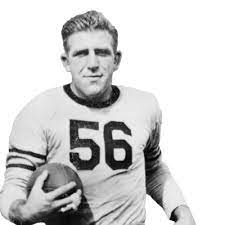
William Ernest Hewitt was an American professional football player who was a defensive end and end in the National Football League. He played five seasons for the Chicago Bears (1932–1936), three for the Philadelphia Eagles (1937–1939), and one for the Phil-Pitt Steagles (1943). He is remembered for his refusal to wear a helmet as one of the last NFL players not to wear one.

Hewitt played college football for the Michigan Wolverines, where he was named team's most valuable player and first-team All-Big Ten his senior season. In nine NFL seasons, he was named an All-Pro six times, won two NFL championships, and in 1934 led the league in touchdown receptions. His jersey number 56 is retired by the Bears and he is a member of the Philadelphia Eagles Hall of Fame. Hewitt was posthumously inducted into the Pro Football Hall of Fame in 1971.

His head coach in Chicago, George Halas, called Hewitt "absolutely fearless. He was a happy-go-lucky guy until he stepped onto the field and then he was a terror on offense or defense. He asked no quarter nor gave any." For most of his career, Hewitt refused to wear a helmet during games, reasoning that wearing one inhibited his play. He played without one until 1939, his final season with the Eagles, due to new league rules requiring players to wear a helmet. On defense, Hewitt was known for his quick reaction to the snap, which led fans to refer to him as "The Offside Kid." "I just anticipate when the ball is going to be snapped and charge at the same time", explained Hewitt. "Anyway, what is the head linesman for? It's up to him to call offside if he thinks I am."

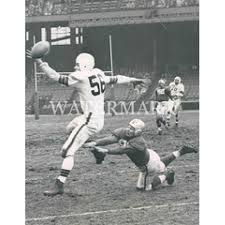
Hewitt played for the Chicago Bears for five seasons, from 1932 to 1936. As a rookie, he played in the 1932 NFL Playoff Game for the Bears against the Portsmouth Spartans, which was held to break a tie that season for the NFL championship. The Bears defeated the Spartans 9–0. The next season the Bears played in the first ever NFL Championship Game, against the New York Giants. Hewitt had only one reception for three yards in the game, but was a part of what was described as "the greatest play of the game." In the fourth quarter, with the Bears trailing by five, Hewitt received a pass from Bears quarterback Keith Molesworth, before lateraling to end Bill Karr, who then ran 19 yards for the final touchdown of the game. The Bears won the game 23–21.

Hewitt led the league in receiving touchdowns in 1934, with five, and was named a first-team All-NFL selection for the third time in as many years. In 1935 Hewitt caught five passes and was without a touchdown for the first time in his career. He had his most productive season as a pro in both receiving yards and touchdowns in 1936, as he caught 15 passes for 358 yards and six touchdowns.

After considering retirement, Hewitt was traded to the Philadelphia Eagles with $4,000 in cash from the Bears in exchange for the rights to the first overall selection in the 1937 NFL Draft, Sam Francis, on February 15, 1937. Hewitt's game salary increased from $100 per game to $200 per game following the trade. He played for the Eagles for three seasons from 1937 to 1939. He was named to the All-NFL team in 1937, becoming the first player in league history to be named an All-Pro for two different teams. He had his second All-NFL selection as an Eagle in 1938 after catching a career-high 18 passes on the season. In November 1939, Eagles president Bert Bell announced Hewitt would be retiring at the end of the season after eight years in the NFL. In his final home game with the Eagles, against the Pittsburgh Pirates, he was the middle man of a 66-yard play as he received a 26-yard pass from Davey O'Brien and lateraled to Jay Arnold, who ran 40 yards for the touchdown. They won 17–14, their first and only win that season.

After being out of football for three seasons, Hewitt returned in 1943 to play fullback for the Steagles, a temporary merger of the Eagles and Pittsburgh Steelers during World War II. He appeared in six games that season, started in four of them, and caught two passes for 22 yards, after which he retired for good. During his career he caught 103 passes for 1,638 yards and 23 touchdowns. He also had one rushing touchdown and three passing touchdowns. He was named an All-Pro by at least one major U.S. publication six times in his career.

After retiring from professional football in 1943, Hewitt worked for Supplee-Wills-Jones, a milk company, until September 1946. He died in a car crash on January 14, 1947 in Sellersville, Pennsylvania and was interred at Holy Sepulchre Cemetery in Cheltenham Township, Pennsylvania.

Hewitt was inducted into the Pro Football Hall of Fame in 1971. With his induction, the Bears became the first NFL team to have a complete one-platoon lineup in the Hall of Fame. In 2008 Hewitt was named to the University of Michigan Athletic Hall of Honor. He is a member of the National Football League 1930s All-Decade Team, selected in 1969 by the Hall of Fame. Hewitt's jersey number 56 is retired by the Bears, and he is enshrined in the Philadelphia Eagles Hall of Fame.
Sources
https://www.pro-football-reference.com/
https://www.profootballarchives.com/index.html
https://americanfootballdatabase.fandom.com/wiki/Football_Wiki
https://www.gridiron-uniforms.com/GUD/controller/controller.php?action=main
https://www.profootballhof.com/hall-of-famers/
Lyons, 2010, p. 70.
 Bentley Historical Library. "1929 Football Team -- University of Michigan Athletics". bentley.umich.edu. Regents of the University of Michigan. Retrieved May 23, 2016.
 Bentley Historical Library. "1930 Football Team -- University of Michigan Athletics". bentley.umich.edu. Regents of the University of Michigan. Retrieved May 23, 2016.
 George Kirksey (November 24, 1931). "United Press All Big Ten Selections for 1931". The Indiana Gazette (Indiana, Pennsylvania). p. 10.(subscription required)
 Bentley Historical Library. "1931 Football Team -- University of Michigan Athletics". bentley.umich.edu. Regents of the University of Michigan. Retrieved May 23, 2016.
 "Hewitt, Michigan Fullback, to Play in East-West Tilt". Ludington Daily News. December 11, 1931. p. 6. Retrieved May 23, 2016.
 "Michigan Defeats Minnesota, 6-0". Ludington Daily News. Associated Press. November 22, 1931. p. 6. Retrieved May 23, 2016.
 "13 Bears In Hall Of Fame". Sarasota Herald-Tribune. Associated Press. February 11, 1971. p. 1–D. Retrieved May 24, 2016.
 "Bill Hewitt Bio – Pro Football Hall of Fame Official Site". profootballhof.com. Retrieved May 24, 2016.
 "Bears in the Hall – Bill Hewitt". chicagobears.com. Archived from the original on March 5, 2016. Retrieved May 24, 2016.
 "Lombardi, Brown among Hall of Fame inductees". Star-News. United Press International. February 4, 1971. p. 1D. Archived from the original on October 31, 2023. Retrieved May 24, 2016.
 "Bill Hewitt of Grid Fame Killed in Auto Accident". The Milwaukee Journal. Associated Press. January 15, 1947. p. 6. Archived from the original on October 31, 2023. Retrieved May 25, 2016.
 Dunkley, Charles W. (December 19, 1932). "Bears beat Spartans, 9–0; win pro title". Milwaukee Sentinel. Associated Press. p. 13. Retrieved May 22, 2016.
 "Bears Whip Giants, 23–21; World Champions". Chicago Tribune. December 18, 1933. p. 23.
 "New York Giants 21 at Chicago Bears 23". Pro-Football-Reference.com. Sports Reference LLC. Retrieved May 23, 2016.
 Kirksey, George (December 17, 1933). "Bears win pro title in thrill-packed game". Pittsburgh Press. United Press. pp. 28–29. Retrieved May 22, 2016.
 "1934 NFL Receiving". Pro-Football-Reference.com. Sports Reference LLC. Retrieved May 24, 2016.
 "Bill Hewitt Career Touchdown Log". Pro-Football-Reference.com. Sports Reference LLC. Retrieved May 24, 2016.
 "Bill Hewitt NFL Football Statistics". Pro-Football-Reference.com. Sports Reference LLC. Retrieved May 24, 2016.
 "Trade Bill Hewitt to Phillie Eagles". Ludington Daily News. Associated Press. February 16, 1937. p. 6. Retrieved May 24, 2016.
 "Hewitt to Quit". The Pittsburgh Press. November 21, 1939. p. 29. Retrieved May 25, 2016.
 "O'Brien Passes Eagles Ton Win Over Bucs, 17–14". Herald-Journal. Associated Press. November 24, 1939. p. 5. Retrieved May 25, 2016.
 "1939 Philadelphia Eagles". Pro-Football-Reference.com. Sports Reference LLC. Retrieved May 25, 2016.
 "Redskins Are Due to Set Pace Again for Eastern Pros". The Milwaukee Journal. United Press. September 16, 1943. p. 2. Archived from the original on October 31, 2023. Retrieved May 23, 2016.
 "Bill Hewitt Fatally Injured in Car Crash". The Milwaukee Sentinel. January 15, 1947. Archived from the original on May 15, 2016. Retrieved March 30, 2015.
 Frank, Michael. "Burial Places of Hall of Famers" (PDF). www.profootballresearchers.org. Retrieved October 27, 2022.
 "Lombardi Leads Six Into Hall". The Day. February 1, 1971. Retrieved March 30, 2015.
 "Bears Have Club in Football's Hall". The Spokesman-Review. Associated Press. February 11, 1971. p. 23. Retrieved May 24, 2016.
 "Howard heads Michigan Hall of Fame class". The Tuscaloosa News. February 3, 2008. p. 5C. Retrieved May 24, 2016.
 "From the Hall of Fame Archives: The 1930s All-Decade Team". NFL.com. Retrieved May 25, 2016.
 "Numbers: the new shortage". Lodi News-Sentinel. United Press International. December 15, 1980. p. 12. Retrieved May 25, 2016.
 "Eagles Hall of Fame Inductees" (PDF). philadelphiaeagles.com. Archived from the original (PDF) on February 25, 2016. Retrieved May 25, 2016.
Lyons, Robert S. (2010). On Any Given Sunday, A Life of Bert Bell. Philadelphia: Temple University Press. ISBN 978-1-59213-731-2