Showing posts with label Owner. Show all posts

Wednesday, June 3, 2026

The Story And Significance Of Jerry Jones - Three Time Super Bowl Champion Owner and NFL Business Leader

Jerral Wayne Jones Sr. is an American billionaire businessman who is the owner, president, and general manager of the Dallas Cowboys of the National Football League. He bought the team from Bum Bright in 1989.

Jones was born in Los Angeles, California, and moved to North Little Rock, Arkansas, as a child. His parents owned an independent grocery store. Jones was a running back at North Little Rock High School, graduating in 1960. Afterward, his family moved to Springfield, Missouri, where his father led a successful insurance company. Jones attended the University of Arkansas, co-captaining the 1964 national championship football team. Following graduation, he became an executive vice president at his family's insurance company. After selling it, the Joneses established Buena Vista Animal Paradise.

In 1989, Jones purchased the Dallas Cowboys for $140 million, and swiftly replaced Tom Landry with Jimmy Johnson as the head coach. Under Jones, the team achieved success, winning Super Bowl XXVII, XXVIII, and XXX. Jones stands out as an NFL owner with a successful football player background. Despite initial criticism for firing beloved personnel, Jones' leadership elevated the franchise's value to an estimated $10 billion, and his ownership of the Cowboys gives him an estimated net worth of $17 billion. He played a pivotal role in securing lucrative television deals, contributing to the NFL's financial prosperity. Criticized for his high visibility and controversial decisions as both owner and general manager, Jones remains a polarizing figure among fans. Notably, he mended relations with Johnson in 2023, inducting him into the Cowboys Ring of Honor. Jones also influenced team relocations and faced fines from the NFL for public comments on officiating and labor issues. Inducted into the Pro Football Hall of Fame in 2017, Jones has been a recipient of various honors.

Jones was born on October 13, 1942, in Los Angeles, California, to John "Pat" and Arminta Jones. The family moved back to North Little Rock, Arkansas, in 1945. His parents owned two branches of Pat's Super Market in the Rose City neighborhood of North Little Rock. Jones was a running back at North Little Rock High School, graduating in 1960.

After his graduation, Jones' parents moved to Springfield, Missouri, where Pat was president and chairman of Modern Security Life Insurance Co. The company, which an advertisement billed as a "one in a million" company, saw its assets increase from $440,299.76 in its first statement in 1961 to $6,230,607 in 1965 ($4,643,041.96 to $62,365,606.91 in 2024). After graduating from the University of Arkansas, Jerral W. Jones was listed as an executive vice president. With the success of the company, the Joneses assembled the 5,500-acre (2,200 ha) Buena Vista Ranch east of Springfield in Rogersville, Missouri, in the Ozark Mountains. In 1971, after selling the insurance company, the couple carved out 400 acres (160 ha) of their ranch to start Buena Vista Animal Paradise, where tourists could visit exotic animals (now Wild Animal Safari in Strafford, Missouri).

Jones attended the University of Arkansas, where he was a member of Kappa Sigma fraternity. He was co-captain of Arkansas' 1964 national championship football team. He was an offensive lineman for College Football Hall of Fame coach Frank Broyles and a teammate of college football and NFL coach Jimmy Johnson, whom Jones hired as his first head coach after purchasing the Cowboys.

Other notable teammates were Glen Ray Hines, a consensus All-American offensive tackle; Ken Hatfield, who went on to coach several major programs including Arkansas; Jim Lindsey; future Outland Trophy winner Loyd Phillips; and College Football Hall of Fame linebacker Ronnie Caveness. Several future head coaches were assistant coaches for Broyles on the Razorbacks' staff during Jones' college career in Fayetteville, including three more members of the College Football Hall of Fame: Hayden Fry (Southern Methodist University, North Texas State University, and the University of Iowa); Johnny Majors (Iowa State University, University of Pittsburgh, and the University of Tennessee), and Barry Switzer (University of Oklahoma, and later head coach of the Cowboys under Jones).

According to an interview with Jones on HBO, after graduating from college in 1965, he borrowed a million dollars from Jimmy Hoffa's Teamsters union to open up a string of Shakey's Pizza Parlor restaurants in Missouri. When that venture failed, Jones was given a job at his father's insurance company, Modern Security Life of Springfield, Missouri. He received his master's degree in business in 1970. After several other unsuccessful business ventures (including an attempt, again using Teamsters money, to purchase the American Football League's San Diego Chargers in 1966), he began an oil and gas exploration business in Arkansas, Jones Oil and Land Lease, which became successful. His privately held company currently does natural resource prospecting.

In 2008, Jones formed a partnership with Yankee Global Enterprises to create Legends Hospitality, a food, beverage, merchandise, retail, and stadium operations corporation serving entertainment venues.

On February 25, 1989, Jones purchased the Cowboys from H. R. "Bum" Bright for $140 million (equivalent to $310 million in 2024). Soon after the purchase, he fired longtime coach Tom Landry, to that point the only coach in the team's history, in favor of his old teammate at Arkansas, Jimmy Johnson. At the time Johnson was the head coach of the University of Miami Hurricanes, whom he had led to a national championship in 1987. A few months later, Jones fired longtime general manager Tex Schramm and assumed complete control over football matters.

After a slow start under Jones and Johnson (the first season under Jones, a 1–15 finish, remains second only to the team's winless inaugural season in terms of futility), they quickly built a team often considered one of the best NFL franchises of the 1990s. The Cowboys won Super Bowl XXVII in the 1992 season, as well as Super Bowl XXVIII the following year. Johnson then departed and was replaced by Barry Switzer, who won Super Bowl XXX in the 1995 season.

At the time of the sale, the financially troubled Bright claimed to be losing $1 million per month on the franchise. During Jones' tenure, the Cowboys have appreciated in value to an estimated $12.5 billion, turning its owner into a billionaire in the process. Much of the league's financial success since 1989 has been credited to Jones himself. In particular, he was decisive in securing Fox as the NFC's primary broadcaster at a time when the traditional "Big Three" networks were trying to convince the league into accepting a rollback in television rights fees.

Increased television revenues have played a decisive role in securing the NFL's place as the world's richest sports league, with revenues of well over $1.2 billion per season.

Despite success in the early years of his ownership of the Cowboys, the decades of mediocrity that have followed, as well as his hands-on approach including disputes with African-American players over money and social issues, have made him one of the most disliked NFL owners. In an online poll from October 8, 2003, Jones was named the least-favorite sports personality by Sports Illustrated, in three states (Virginia, Delaware, and Texas).

Jones is often vilified by fans who remain bitter at his unceremonious firings of longtime Cowboys personnel who were fan favorites, most notably head coach Tom Landry and personnel chief Gil Brandt, even though the Cowboys had done poorly the last few seasons before Jones became owner. Jones stated he did not give consideration to retaining Landry for even a season, as he said he would not have purchased the team unless he could hire Johnson as coach. Jones did not discuss the matter with Landry before announcing the decision. This was denounced by football fans and media as lacking class and respect. The Cowboys had long emphasized pride and tradition, and great performance and loyal service were expected to be rewarded. Since the dismissal, Jones indicated that he regrets the process of Landry's firing and his role in it. It later emerged that Jones' predecessor, Bright, had been dissatisfied with Landry for years and offered to relieve Jones of the inevitable criticism by dismissing the longtime coach himself prior to selling the team. Bright had wanted to fire Landry as early as 1987, only to have general manager Tex Schramm tell him that there wasn't a suitable replacement available.

Some of the fan criticism is due to Jones' high visibility and involvement as the "face of the team", a contrast to both Bright and the Cowboys' original owner Clint Murchison Jr. Jones's prominent role has led to fans expressing displeasure with Jones and the lack of success of the franchise, with particular criticism of Jones serving as his own general manager. There was particular criticism of Jones over his conflict with head coach Jimmy Johnson, as Jones "wanted Cowboys fans to know he had helped build those Super Bowl-winning teams", while "Johnson insisted that he made all of the personnel moves" because he had the final say in football matters and refused to relinquish this power. Consequently, Jones fired Johnson after the 1993 season despite coming off of two consecutive Super Bowl wins, and refused to induct Johnson into the Cowboys Ring of Honor for 30 years until December 30, 2023, after Johnson was inducted the Pro Football Hall of Fame in 2020. Jones also initially promised Bill Parcells, the Cowboys' head coach from 2003 through 2006, complete control over football matters; however, their relationship broke down after Jones signed controversial wide receiver Terrell Owens. Parcells' successor, Wade Phillips, complained to friends about being "undermined and second-guessed, repeatedly" by Jones.

Jones and Mike Brown of the Cincinnati Bengals are the only two active NFL owners who have the title or powers of general manager. Jones stated that working as his own general manager helps streamline decision-making and communication lines with the coaching staff. Over Jones' tenure, Cowboys fans have organized a number of grassroots efforts to displace Jones from his position.

Jones is the subject of the 2008 book Playing to Win by David Magee. In the book, Jones admitted he handled the firing of Landry poorly and accepted some blame for the disintegration of his relationship with Landry's successor, Jimmy Johnson.

Jones became involved in the St. Louis Rams move back to Los Angeles with Rams owner Stan Kroenke in 2016. He was instrumental in brokering a deal between Kroenke, San Diego Chargers owner Dean Spanos, and Oakland Raiders owner Mark Davis to ensure that Kroenke's SoFi Stadium plan passed, which it did via a 30–2 owners' vote in favor. Jones' support and role in the negotiations were criticized by some fans and sports media in St. Louis. Jones was also a key proponent of the Oakland Raiders' move to Las Vegas to play at Allegiant Stadium.

In February 2021, the Great Texas Freeze caused the Texas power grid to fail and energy prices to surge due to deregulation. Official sources place the death toll at 246, while estimates range to over 700 that people may have died due to the weather and grid issues. Jones and his company Comstock Resources Inc. received criticism for raising prices over 70x the normal rates for natural gas and celebrating huge profits from the storm.

Jones was fined $25,000 by the NFL for publicly criticizing referee Ed Hochuli after Hochuli made a call in a game between the San Diego Chargers and the Denver Broncos on September 14, 2008. Jones made comments both to the press and on his radio show, saying Hochuli was one of the most criticized officials in the NFL. This was Jones' first fine by the NFL.

In 2009, Jones was fined $100,000 for violating a gag order on labor issues, commenting that revenue sharing was "on its way out". Commissioner Roger Goodell had issued a gag order for all owners and team executives from discussing any aspect of the pending labor issues. Jones "crossed the line", drawing a "six-figure" fine, sources said, as the commissioner distributed a memo to all 32 owners, along with a reminder that the gag order remains in effect. Goodell did not disclose the specific amount of Jones's fine in the memo.

In 2025, Jones was fined $250,000 for flipping his middle finger at fans during the Cowboys' game against the Jets. Although Jones claimed that the obscene gesture was "inadvertent", he did not appeal the fine.

Jones was the inspiration for the character Baxter Cain (Robert Vaughn), owner of the Dallas Felons, in the 1998 film BASEketball. He had a brief cameo appearance as himself in the 1998 made-for-television reunion movie Dallas: War of the Ewings.

Jones and Deion Sanders appeared together in several television commercials during Sanders' time with the Cowboys.

Jones also appeared as himself in a 1996 episode of the television show Coach and in a 2007 television commercial for Diet Pepsi MAX, which also featured then Cowboys head coach Wade Phillips and quarterback Tony Romo.

He appeared as himself in the seventh season of the HBO series Entourage in 2010, in an episode of the TNT incarnation of Dallas titled "Truth and Consequences", which aired on July 4, 2012, in a series of commercials for the 2012 season of ESPN's Monday Night Football, and in the season 4 premiere of The League. In 2013, Jones narrated a documentary film on former teammate and business partner Jim Lindsey.

Jones also appeared in a 2013 Pepsi commercial, walking into an elevator filled with three men wearing New York Giants apparel, who look at him with discontent.

He was parodied on the first episode, "Go Fund Yourself", of the eighteenth season of South Park, along with several other NFL team owners. In one scene, Jones is depicted as having huge, bulging chameleon-like eyes, as a young woman's head pops up from his lap. He reappears in the season 21 episode "Moss Piglets."

He appeared as himself in the ninth episode of Landman, titled "Wolf Camp", alongside Billy Bob Thornton and Jon Hamm.

He is depicted in season 14, episode 7 of King of the Hill "Any Given Hill-Day".

Jones married Eugenia Chambers in 1963, whom he met while both were college undergraduates. They have three children. Stephen is the Cowboys' chief operating officer, executive vice president, and director of player personnel. Charlotte is the Cowboys' executive vice president and chief brand officer. Jerry Jones Jr. is the Cowboys' chief sales and marketing officer/vice president. Jones splits his time between a home in Highland Park, Texas and a home in Destin, Florida.

Jones was close friends and neighbors with Kansas City Chiefs owner Lamar Hunt. The two lived in an upscale neighborhood in Dallas. Since 1998, their teams have played for the Preston Road Trophy, which was commissioned by Hunt to add a competitive nature to their friendship. When the trophy changed hands, Hunt and Jones usually played pranks on the other.

Jones revealed in July 2015 at a press conference before Cowboys training camp that he had undergone hip replacement surgery, joking that he would not start the season on the PUP list.

As of November 2024, Jones' net worth is reported by Forbes to be $16.1 billion, the majority of which can be accounted for as being his ownership stake in the Cowboys who are currently valued by the same publication to be the world's most valuable sports team at $10.1 billion.

In March 2022, Jones was served with legal action by a 25-year-old woman who claimed that he is her biological father. The woman is the daughter of a former airline employee that Jones met in Little Rock, Arkansas. Jones has paid nearly $3 million to the woman and her mother, which included the woman's full tuition at Southern Methodist University and a $70,000 Range Rover on her 16th birthday. Requests for money and other expenses exceeded the amount that Jones agreed to pay in the trust agreement between the parties by nearly $1 million over the years, including $33,000 for a "Sweet 16" birthday party, which was featured on the reality TV show Big Rich Texas. On February 29, 2024, a court decision required Jones to undergo a paternity test concerning the woman's claim. Concurrently, Jones filed a counter lawsuit for a breach of the original settlement agreement executed nearly two years after woman was born which included "If Mother or Child, or any person on behalf of Child, brings or commences any kind of legal proceeding seeking to establish the paternity of Child... , Putative Father may, in his sole discretion, elect to terminate the Agreement and the Funding Trust and the Distribution Trust, or either of them, and enforce any and all remedies available to him at law or in equity. A breach of this provision shall be considered a breach of the entire Agreement." During the trial in the countersuit, the trial abruptly ended as "Jones agreed to drop the countersuit if the women dismissed pending lawsuits against him, including one where the billionaire was ordered to take a DNA test".

In November 2022, a 1957 photo surfaced depicting a 14-year-old Jones witnessing White students attempting to prevent six African-American students from entering North Little Rock High School in Arkansas. North Little Rock was beginning to integrate in 1957. Despite the school's head football coach ordering the team (which Jones was a part of) to stay away from such scenes, Jones said he was there as a curious bystander. Jones also stated: "I don't know that I or anybody anticipated or had a background of knowing what was involved. It was more a curious thing." Jones has expressed regret in not doing more to help the Black students feel more accepted at Little Rock.

In 2025, Jones donated $1 million to MAGA Inc., a super PAC that supports Donald Trump.

In August 2025, Jones revealed that he was diagnosed with stage 4 cancer in 2010.

Sources
"Jerry Jones's Career Capsule". ProFootballHOF.com. Retrieved November 21, 2019.
 "JERRAL WAYNE JONES, SR". HoratioAlger.com. Retrieved November 2, 2023.
 "Jerral Wayne "Jerry" Jones | Arkansas Business Hall of Fame | Walton College | University of Arkansas". walton.uark.edu. Retrieved April 9, 2024.
 "Jerry Jones – Missouri Sports Hall of Fame". Retrieved April 9, 2024.
 Farmer, Sam (September 19, 2021). "For Cowboys owner Jerry Jones, Southern California has always been a second home". Los Angeles Times. Retrieved April 9, 2024.
 "Jerry Jones & family". Forbes. Retrieved April 20, 2025.
 Dent, Jim. King of the Cowboys: The Life and Times of Jerry Jones, p. 214 (Adams Media Corporation, 1995): "Pat Jones moved his family back from Los Angeles to North Little Rock in 1945."
 "Only known remaining image of the store in which Jerry Jones grew up - Best of Arkansas Sports". January 4, 2012. Retrieved February 26, 2018.
 "Springfield Leader 1966-02-20 p20". Newspapers.com. February 20, 1966. Retrieved February 11, 2018.
 "Arminta Jones Obituary - Springfield, MO | News-Leader". Legacy.com. Retrieved February 11, 2018.
 "Prominent Alumni - Kappa Sigma Fraternity". kappasigma.org. Retrieved September 25, 2018.
 "New Cowboys Owner Fires Landry, Hires Jimmy Johnson
Arkansas Millionaire Buys Club, Taps Miami Coach – His Ex-Roommate". Deseret News. Associated Press. February 26, 1989. Retrieved July 22, 2018.
 "Arkansas Celebrates 1964 National Title Team". Arkansas News Bureau. October 11, 2014. Retrieved June 21, 2019.
 "An ever growing snowball". July 27, 2017.
 "Jerry Jones asked Hoffa's Teamsters for a loan to buy the Chargers in 1966". September 22, 2015.
 "Jerry Jones Sports Biography, Photos & Rise to Success" Archived January 23, 2014, at the Wayback Machine. AskMen (October 13, 1942). Retrieved on December 21, 2010.
 Dezember, Ryan (June 22, 2022). "Dallas Cowboys Owner Jerry Jones Scores on Billion-Dollar Natural-Gas Gambit". WSJ. Retrieved April 5, 2024.
 "Dallas Cowboys, New York Yankees form joint concessions venture" (Archived June 11, 2009, at the Wayback Machine). The Dallas Morning News.
 Gaines, Cork (November 11, 2017). "When Jerry Jones bought the Dallas Cowboys they were losing $1 million per month and now it is the most valuable sports team in the world". Business Insider. Retrieved July 21, 2018.
 Pincus, David (February 26, 2010). "2/25/1989 - New owner fires Tom Landry". SB Nation. Retrieved July 21, 2018.
 "Executive Profile – Jerry Jones". Dallas Cowboys. Archived from the original on March 5, 2010.
 "1989 Dallas Cowboys Statistics and Players". Pro Football Reference. Retrieved July 17, 2018.
 "1960 Dallas Cowboys Statistics and Players". Pro Football Reference. Retrieved July 17, 2018.
 "Super Bowl XXVII - Dallas Cowboys vs. Buffalo Bills - January 31st, 1993". Pro Football Reference. Retrieved July 17, 2018.
 "Super Bowl XXVIII - Dallas Cowboys vs. Buffalo Bills - January 30th, 1994". Pro Football Reference. Retrieved July 17, 2018.
 "Super Bowl XXX - Pittsburgh Steelers vs. Dallas Cowboys - January 28th, 1996". Pro Football Reference. Retrieved July 17, 2018.
 Horn, Barry (February 26, 2018). "29 years ago yesterday, Jerry Jones bought the Cowboys. Here's an illustrated timeline of his tenure in Dallas". Dallas News. Retrieved July 22, 2018.
 Gary Myers (December 10, 2016). "Cowboys' Jerry Jones opens up to News about trying to end Super Bowl drought, Tony Romo, Dak Prescott and possible HoF election". New York Daily News.
 Kutz, Steven (July 2, 2016). "NFL took in $13 billion in revenue last season — see how it stacks up against other pro sports leagues". Forbes.com. Retrieved January 18, 2025.
 Tinsley, Justin (July 24, 2025). "Jerry Jones is dark cloud Dallas Cowboys can't escape". Andscape. Retrieved July 24, 2025.
 Illustrated features state of Virginia in series of 50 state-specific weekly section. Archived August 12, 2013, at the Wayback Machine, Sportsillustrated.cnn.com, October 9, 2003; retrieved December 21, 2010.
 "Ex-Cowboys Owner Bright Almost Fired Landry in '87". Los Angeles Times. February 26, 1990. Accessed January 2, 2021.
 "Jerry Jones built a Hall of Fame legacy for knowing how to 'stir it up a little bit'". SB Nation. Vox Media. August 4, 2017. Retrieved July 22, 2018.
 "Why Jerry Jones' argument for keeping GM role no longer holds water". Dallas Morning News. March 17, 2018. Retrieved June 27, 2018.
 Whitt, Richie (November 19, 2023). "BREAKING - Jerry Jones Reveals Dallas Cowboys Ring of Honor Induction For Jimmy Johnson". Sports Illustrated.
 Van Natta, Don Jr. (August 28, 2014). "Jerry Football". ESPN.com.
 Lane, Mark. "Dallas Cowboys owner Jerry Jones explains why he is also the team president and GM". all22.com. Cox Media Group. Retrieved July 22, 2018.
 Fire Jerry Jones! Archived January 15, 2022, at the Wayback Machine, firejerryjones.com; retrieved December 21, 2010.
 Sports Day DFW (January 13, 2016). "Report: Still an NFL power broker, Cowboys' Jerry Jones helps Rams earn Los Angeles move". Sports Day DFW, January 13, 2016.
 Kawakami, Tim (March 27, 2017). "How Cowboys owner Jerry Jones got this Vegas Raiders deal done". Mercury News. Retrieved September 19, 2019.[permanent dead link]
 Donegan, Brian. "Great Texas Freeze killed nearly 3 times more people than Hurricane Harvey". foxweather.com. Retrieved August 20, 2025.
 Domonoske, Camila (February 18, 2021). "Jerry Jones' Company Hits 'Jackpot' As Harsh Storms Send Natural Gas Prices Surging". NPR.org. Retrieved August 20, 2025.
 San Diego Union Tribune, September 29, 2008, D14
 Leahy, Sean (September 13, 2009). "NFL fines Cowboys' Jerry Jones $100,000 for CBA remarks". USA Today.
 Mortensen, Chris (September 13, 2009). "Sources: Jones fined at least $100K". ESPN.com. Retrieved August 26, 2024.
 "Cowboys owner Jerry Jones won't appeal $250K fine for obscene gesture". NFL.com.
 JimLindseyStory.com Archived August 10, 2013, at the Wayback Machine. Retrieved May 3, 2013.
 "Pepsi and the NFL get fans pumped for football all season long". PepsiCo.com. September 5, 2013. Archived from the original on December 22, 2014. Retrieved December 22, 2014.
 "'South Park' also ripped Jerry Jones, Roger Goodell in classic Redskins takedown". Comcast SportsNet. September 25, 2014. Archived from the original on December 25, 2014. Retrieved December 22, 2014.
 Camenker, Jacob. "Jerry Jones makes 'Landman' cameo: Cowboys owner impresses with emotional monologue". USA TODAY. Retrieved January 10, 2025.
 Ede-Osifo, Uwa (August 4, 2025). "'King of the Hill' returns after 15 years with its familiar North Texas flair". Dallas News. Retrieved August 13, 2025.
 Koski, Genevieve (August 5, 2025). "King of the Hill Recap: The Old Man". Vulture. Retrieved August 13, 2025.
 "Cowboys GM Jerry Jones named NFL Executive of the Year by PFWA". Cbssports.com.
 Foundation, National Football. "Jerry Jones to Receive Distinguished Texan Award > National Football Foundation > NewsDetail". www.footballfoundation.org. Archived from the original on April 2, 2015. Retrieved March 10, 2015.
 "Pro Football Hall of Fame's Class of 2017 - Pro Football Hall of Fame Official Site". www.profootballhof.com.
 "Golden Plate Awardees of the American Academy of Achievement". www.achievement.org. American Academy of Achievement.
 "Jerry Jones Honored With Horatio Alger Award". November 18, 2013.
 "Log In or Sign Up to View". www.facebook.com.
 "Charlotte Jones Anderson official Dallas Cowboys bio". Archived from the original on June 3, 2013.
 Vasquez, Savannah. "Celebs spotted on the Emerald Coast". The Northwest Florida Daily News. Retrieved November 9, 2024.
 "Buyer of $12 million Highland Park mansion gets Jerry Jones as a neighbor". Dallas News. March 10, 2017. Retrieved September 7, 2024.
 Land, Meredith (December 5, 2025). "How North Texas landed nine World Cup matches and global attention". KXAS-TV. Retrieved January 4, 2026.
 Merrill, Elizabeth (December 11, 2005). "Winning against hometown team has always been special for Hunt". The Kansas City Star. Retrieved November 27, 2025 – via Newspapers.com.
 "Mick Shots: Don't Forget, This Is A Trophy Game". Dallas Cowboys. November 17, 2021. Retrieved January 3, 2026.
 Grathoff, Pete (December 6, 2021). "Chiefs' Clark Hunt aims to win back an 'el cheapo' trophy from Cowboys' Jerry Jones". The Kansas City Star. Retrieved November 28, 2025.
 Merrill, Elizabeth (December 11, 2005). "Winning against hometown team has always been special for Hunt". The Kansas City Star. Retrieved November 27, 2025 – via Newspapers.com.
 "Cowboys owner Jerry Jones gets promise he won't be placed on PUP list after hip replacement". dallasnews.com. July 29, 2015. Retrieved September 25, 2018.
 Van Natta Jr., Don (March 10, 2022). "Woman sues Jerry Jones, alleges Dallas Cowboys owner paid her mother to conceal that he was her biological father". ESPN.com. Retrieved March 10, 2022.
 Van Natta, Don Jr. (March 31, 2022). "Dallas Cowboys owner Jerry Jones paid millions to woman who filed paternity lawsuit, lawyer says". ESPN.
 Brock, Todd (February 29, 2024). "Cowboys owner Jerry Jones ordered to take paternity test in ongoing 2022 case". www.cowboyswire.usatoday.com. Retrieved August 28, 2024.
 Jenkins, S.E. (July 17, 2024). "Jerry Jones' countersuit against woman who claims to be his daughter heads to jury trial". CBS News.
 "Cowboys' Jerry Jones reaches resolution in paternity countersuit". ESPN. July 23, 2024.
 Archer, Todd (November 25, 2022). "Jerry Jones fields questions about 1957 photo published in report". ESPN. Retrieved November 25, 2022.
 "Cowboys owner Jerry Jones identified in troubling 1957 segregation photo". www.marca.com. November 24, 2022. Retrieved November 26, 2022.
 Whitt, Richie (November 25, 2022). "'I Had No Idea': Cowboys Owner Jerry Jones Reflects On 1957 Little Rock Protest Photo". Dallas Cowboys On SI. Retrieved October 19, 2024.
 Kamisar, Ben; Bowman, Bridget (July 31, 2025). "Trump's super PAC raises a massive $177 million, bolstering his political influence". NBC News. Archived from the original on August 3, 2025. Retrieved August 3, 2025.
 Townsend, Brad (August 13, 2025). "Cowboys owner Jerry Jones reveals he overcame stage 4 cancer". Dallas News. Retrieved August 13, 2025.

Monday, March 9, 2026

The Story And Significance Of Eddie DeBartalo Jr. - Owner Of Five Super Bowl Champion San Francisco 49er Teams

Edward John DeBartolo Jr. is an American businessman best known for his 23-year ownership of the San Francisco 49ers of the National Football League. The five Super Bowls the 49ers dynasty won in 14 years are a record total for a single owner. On February 6, 2016, DeBartolo was elected to the Pro Football Hall of Fame as a contributor.

DeBartolo was involved in the 1998 corruption case of former Louisiana governor Edwin Edwards. DeBartolo pleaded guilty to a charge of failing to report a felony and received a $1 million fine along with two years of probation in return for his testimony against Edwards. DeBartolo was fined by the NFL and barred from active control of the 49ers for a year. On February 18, 2020, President Donald Trump granted DeBartolo a presidential pardon.

DeBartolo was born and raised in Youngstown, Ohio, the son of Marie Patricia (Montani) and Edward J. DeBartolo Sr., a real estate developer. He went to high school at Cardinal Mooney.

DeBartolo developed shopping malls as part of a corporation founded by his father, Edward J. DeBartolo Sr. The Edward J. DeBartolo Corporation became one of the largest public real estate businesses in the United States, at one point controlling over two billion square feet of retail real estate space nationwide.

DeBartolo was actively involved in franchise ownership and sports management, becoming one of the most successful and generous owners in professional sports. His ownership of the 49ers proved especially notable. During DeBartolo's 23 years owning the team beginning in 1977, the team won an unprecedented five Super Bowls under coaches Bill Walsh and George Seifert: Super Bowl XVI in 1982, XIX in 1985, XXIII in 1989, XXIV 1990, and XXIX in 1995. From the early 1980s through the mid-1990s, DeBartolo presided over a team that had the most wins within a decade in football history.

According to 49ers quarterback Steve Young, DeBartolo's "family approach" to running the team changed the landscape of the NFL. Under it, "the players were what mattered", and that changed the face of the sport as other teams began to follow the 49ers' model. "In most of the league, the players were chattel. What I see in the league today are owners who have made their players partners. That changes the nature of the NFL." DeBartolo affirms this, saying: "I tried to run the 49ers like a family rather than a business. I viewed the players and myself really, basically, as a partnership. Our goal was to win the Super Bowl every year, and we had to do that together."

In 1991, DeBartolo arranged to sell the family-owned Pittsburgh Penguins National Hockey League franchise to assist the DeBartolo Corporation in the aftermath of the real estate collapse of 1987. His sister, Denise DeBartolo York, had served as president. Five years later, many family-owned shopping malls were sold to the Simon Property Group, which operated for a few years as the Simon DeBartolo Group.

In 1992, DeBartolo was accused of sexual assault at his Menlo Park condo by a cocktail waitress he met at a local bar. The married DeBartolo, who denied any wrongdoing, was never charged but reportedly paid $200,000 to settle the case out of court.

DeBartolo was involved in the 1998 corruption case of Edwin Edwards, former governor of Louisiana. DeBartolo pleaded guilty to a charge of failing to report a felony, and received a $1 million fine and two years of probation in return for his testimony against Edwards. Edwards was on trial for extortion and other charges, among which were the $400,000 he demanded from DeBartolo to gain a riverboat casino license. DeBartolo received the license, but withdrew from the casino project after he was subpoenaed during the subsequent bribery investigation. DeBartolo was fined by the NFL, and barred from active control of the 49ers for a year.

DeBartolo could have returned to the team, but instead ceded control of the franchise to his sister, Denise York, in 2000, in return for other parts of the family business empire. In spite of the public perception that the transfer had been forced by the league, DeBartolo confirms it was voluntary.

DeBartalo said on the matter that "Truthfully, the team really wasn't taken away from me. I think it's been a misnomer for many many years. Commissioner Tagliabue did obviously suspend me, but as I was going through negotiations with my family and we went through these negotiations and we went through them with lawyers, obviously and with a judge in Akron, Ohio. It did not come down to that team being taken, it came down to a decision that had to be made whether or not I wanted the 49ers or whether or not I wanted to take the other part of the company. And I figured at that time, and my sister Denise (49ers owner Denise York) was involved totally as was her family. I decided in that meeting in Akron Ohio, that I thought it would be best that I took the other side and my tenure with the 49ers would end then and end there. I don't know if that story has ever been told, it may have been, it may have not been. But, it really was a choice, I figured there was more to do with my life at that time. I had succeeded and done a lot with the 49ers. It meant the world to me, but I figured with my daughters, with them getting older and obviously with all of us getting older and having grandchildren at the time, and them planning on families, that it would be best for me to do what was best to be a good grandfather, be a good husband and dad, and do what I want to do and maybe travel a little bit and spend more time with my family"

Hall of Fame offensive tackle Anthony Muñoz of the Cincinnati Bengals attended a celebrity flag football game at Candlestick Park in 2014 — the last football event before the 49ers' old home was torn down, where he said:

The final touchdown pass, there were probably 30,000 people in that stadium viewing a bunch of old guys playing a flag football game, but to see (Montana) throw to (DeBartolo) for the final touchdown there and to hear the fans go crazy and to see the admiration from these former players like Ronnie Lott and Joe Montana; that to me was impressive ... to me, that's what it's all about.

On February 18, 2020, President Donald Trump granted DeBartolo a presidential pardon.

DeBartolo and his wife, Candy, have three daughters: Lisa, Nicole, and Tiffanie. Tiffanie is an author and the director of the film Dream for an Insomniac (1996). In 2007, DeBartolo co-founded Brooks-DeBartolo Collegiate High School in Tampa, Florida with fellow Pro Football Hall of Fame member Derrick Brooks.

DeBartolo also has a half-brother, Edward M. Kobel, who is the current president and COO of DeBartolo Development.

DeBartolo's mother was Marie Patricia Montani DeBartolo, in whose honor the DeBartolo Performing Arts Center at the University of Notre Dame was posthumously dedicated.

On December 1, 2024, Donald Trump nominated DeBartolo's son-in-law Chad Chronister,Sheriff of Hillsborough County, FL, as head of the U.S. Drug Enforcement Administration. However, Chronister withdrew his name from consideration a few days later.

Sources
"DeBartolo Holdings". DeBartolo Holdings. Retrieved May 18, 2010.
 Family approach leads Eddie DeBartolo to steps of Hall of Fame
 Price, Taylor. "Former 49ers Owner Eddie DeBartolo Jr. Selected to Pro Football Hall of Fame". Forty Niners Football Company LLC. Archived from the original on March 12, 2016. Retrieved February 7, 2016.
 Cole, Jason (August 1, 2008). "Is DeBartolo worthy of spot in Hall?". Yahoo! Sports. Retrieved January 19, 2020.
 Smith, Michael David (February 18, 2020). "Trump pardons Eddie DeBartolo Jr". profootballtalk.nbcsports.com. Retrieved February 18, 2020.
 Gareffa, Peter M. (March 1989). Newsmakers, 1989 Subscription. ISBN 9780810322080.
 "DeBartolo Holdings History". DeBartolo Holdings. Retrieved May 18, 2010.
 Rick Reilly (September 10, 1990). "To Eddie DeBartolo Jr., the most generous owner in sports, nothing is too good for a San Francisco 49er – SI Vault". Sportsillustrated.cnn.com. Retrieved May 18, 2010.
 "Historical Highlights". 49ers.com. June 6, 1944. Archived from the original on December 23, 2010. Retrieved May 18, 2010.
 Winokur, Scott (August 1, 1999). "The Life & Times Of Eddie Debartolo". sfgate.com. Retrieved November 6, 2015.
 Dietz, David; Arceneaux, Howard (October 7, 1998). "DeBartolo Guilty of Felony / $1 million fine, 2 years of probation". sfgate.com. Retrieved May 18, 2010.
 Holloway, Patrick (January 26, 2016). "Eddie DeBartolo speaks to Bay Area media". Niners Nation. Retrieved January 19, 2020.
 Knapp, Gwen (April 22, 2008). "DeBartolo: 49ers on right track". Sfgate.com. Retrieved May 18, 2010.
 "49ers Honor Former Owner Eddie DeBartolo Jr". ESPN. September 20, 2009. Retrieved January 24, 2011.
 "Homepage News Article » Road to Canton (via South Florida)". Profootballhof.com. October 14, 2009. Archived from the original on January 13, 2010. Retrieved May 18, 2010.

Monday, March 17, 2025

The Story And Significance Of Ralph Wilson Jr. - Founder And First Owner Of The Buffalo Bills

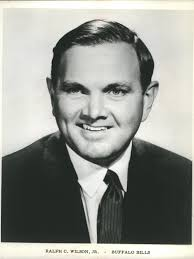
Ralph Cookerly Wilson Jr. was an American businessman and sports executive. He was best known as the founder and owner of the Buffalo Bills, a team in the National Football League. He was one of the founding owners of the American Football League (AFL), the league with which the NFL merged in 1970, and was the last of the original AFL owners to own his team. At the time of his death he was the oldest owner in the NFL, at age 95. His 54 years of ownership was the third longest tenure by one owner in league history behind George Halas and Art Rooney. Wilson was inducted into the Pro Football Hall of Fame in 2009.

Wilson grew up in Detroit, Michigan, the son of salesman Ralph Wilson Sr. and his wife Edith Cole.

Choosing to go out of state to attend the University of Virginia (where he joined the Phi Delta Theta fraternity), Wilson returned to Michigan for graduate school at the University of Michigan Law School. He was a 1936 graduate of Detroit University School, now University Liggett School. Before Pearl Harbor, he enlisted in the U.S. Navy and served in the Atlantic and Pacific Theaters. After the war ended, he took over his father's insurance business and invested in Michigan area mines and factories. He eventually purchased several manufacturing outlets, construction firms, television and radio stations, and founded Ralph Wilson Industries. Before founding the Buffalo Bills, Ralph Wilson Jr. was a minority owner of the Detroit Lions in the 1950s. 

Wilson got wind of Lamar Hunt's plans for a new league, the American Football League, to challenge the NFL. He tried to put together a team in Miami, but was turned down. His next choice was Buffalo, where the AFL's first choice of owner, Pat McGroder, had declined to start a team. In September 1959, Wilson sent Hunt a telegram with the words, "Count me in with Buffalo.” He named his new team the Bills, after a previous team that had played in the All-America Football Conference from 1946 to 1949. On October 28, 1959, the Buffalo Bills officially became the seventh AFL team. Wilson made professional football a resounding success in a "small market", signing such stars as Cookie Gilchrist, Jack Kemp, and Tom Sestak and Hall of Famers Billy Shaw and O. J. Simpson.

He was a guiding force in AFL policies that ensured success, such as gate and television revenue sharing. As one of only three AFL owners to be on relatively solid financial ground (along with Hunt and Bud Adams), Wilson lent the financially troubled Oakland Raiders $400,000 and was also willing to lend money to Billy Sullivan of the New England Patriots. Wilson helped keep those franchises afloat, likely saving the entire league from folding (the AFL was unique among professional football leagues in that not a single AFL franchise folded in its history). In November 1963, Wilson along with then Raiders general manager Al Davis lobbied successfully to have AFL games postponed the Sunday after President John F. Kennedy's assassination; NFL games were played as scheduled.

Wilson was most concerned about his team's financial solvency and was largely indifferent to the Bills' on-field success; O. J. Simpson later noted of his contract negotiations with the Bills that when Simpson's agent told Wilson of Simpson's potential to make the team a championship contender, Wilson shot back "What good would a championship do me? All that means is everybody wants a raise."

In 1989, after league commissioner Pete Rozelle announced his retirement, Wilson was on the six-member committee who was tasked with nominating potential candidates for the open position. Wilson's nominee, his former quarterback Jack Kemp, declined to pursue the post, as he had already taken a position in the U.S. Cabinet. (The job ultimately went to league attorney Paul Tagliabue.)

After the original naming rights deal on the Bills' current stadium expired in 1998, the facility's name was changed from Rich Stadium to Ralph Wilson Stadium; it would not receive a new naming rights deal until 2016, after his death and the subsequent sale of the team. According to an article on msn.com, Wilson, described as "stubborn", turned down numerous naming rights deals for the stadium.

Wilson was one of the league's most outspoken owners, even near the end of his life. Wilson voted against the Cleveland Browns' relocation to Baltimore in 1995. He publicly rebuked NFL Commissioner Paul Tagliabue in an open letter in 1998 over league policy, which disallowed criticism of referees, after poor officiating had a direct impact on a Bills loss that season. He was one of two owners (the Cincinnati Bengals' Mike Brown being the other) to oppose the league's former (pre-2011) collective bargaining agreement. (Wilson and Brown were commended for their foresight when the agreement later led to the 2011 NFL Lockout.) He also negotiated a deal to have his team play home games in Toronto from 2008 until 2014.

Wilson retired from the position of president in 2001, giving operational control to general manager Tom Donahoe; Wilson retook control of the team's operations in 2006. Wilson again retired as team president, this time surrendering all control of the team's operations to Russ Brandon, on January 1, 2013. He continued to consult with Brandon on team and league operations up until his death.

Wilson maintained a permanent residence in Grosse Pointe Shores, Michigan with his wife, Mary McLean, whom he met in 1989. He had three daughters from his first marriage to Janet McGregor Wilson, two of whom became involved in team business: Linda Wilson Bogdan (1948–2009), Pro Football's first female scout, was the franchise's Corporate Vice President until her death. Another daughter, Christy Wilson Hofmann, served as a consultant in the area of merchandising. The third daughter, Edith Wilson (1951–2020) was never involved with the franchise. The highest ranking relative in the organization was Mary Owen, Wilson's niece, who served as Vice President of Strategic Planning until the team was sold. Wilson and his first wife divorced in 1970 after 26 years of marriage and shortly after their youngest daughter, Edith, turned 19.

Beginning in the 1990s, Wilson maintained a small, but very valuable, art collection, including works by Claude Monet, Édouard Manet and Alfred Sisley; this collection was valued in the tens of millions of dollars.

Wilson was a 1992 inductee of the Greater Buffalo Sports Hall of Fame. He was a 33rd degree Scottish Rite Freemason.

Wilson broke his hip in a fall at his home in July 2011, causing him to miss the Bills' home opener for the first time in franchise history. The injury resulted in him needing to use a wheelchair. He issued a statement saying that he was undergoing physical therapy and hoped to attend at least one game during the season. Wilson also stated that he was "very surprised" by the team's 41–7 victory over Kansas City in Week 1. He was hospitalized in August and early September 2012 with an unspecified infection and missed attending games in the entire 2012 season. In April 2013, Wilson was reported as "doing really well," with a statement that he hoped to make the 2013 home opener.

Wilson died at his home on March 25, 2014, of natural causes at the age of 95. His estate held the franchise in trust until its sale to Buffalo Sabres owners Terry and Kim Pegula in September 2014. The proceeds from the sale were used to form an endowment for the Ralph C. Wilson Jr. Foundation, which funds charitable causes in the Buffalo and Detroit areas, in accordance with Wilson's instructions for the money set forth prior to his death. The donation amounted to $1.2 billion and would be given away over the next two decades. The organization was overseen for a few months by his niece Mary Owen until its sale to the Pegulas was completed on October 8, 2014.

On January 31, 2009, Wilson was elected to the Pro Football Hall of Fame along with former Buffalo Bills defensive end Bruce Smith. The Hall of Fame game, played the day after the 2009 inductions, strayed from the usual AFC–NFC format and instead was contested by two original American Football League teams: the Buffalo Bills and the Tennessee Titans (formerly the Houston Oilers). This matchup was announced after Wilson was elected. Like Wilson, Titans owner Bud Adams was the only owner his team has ever had, and the two were the only living members of the "Foolish Club", the founders of the original eight AFL teams. Wilson and Adams are two of only four men who have owned a professional football franchise continuously for fifty years (George Halas, who owned the Chicago Bears from 1920 until his death in 1983, is the third, and William Clay Ford Sr., Wilson's neighbor, who owned the Detroit Lions from 1961 to 2014, is the fourth).

The Hall of Fame game on Sunday, August 9, was a kickoff to the 2009 season, which would have been the 50th season of play for the AFL, if the NFL had not merged with it. Wilson was officially inducted into the Pro Football Hall of Fame on Saturday, August 8, 2009, with ESPN icon Chris Berman acting as his "presenter". Wilson was scheduled to receive his Hall of Fame ring in a halftime ceremony during the Bills game against the Cleveland Browns on October 11, 2009. However, Wilson cancelled the event at the last moment, without notifying the press or fans, and no explanation was given. It was widely speculated that Wilson cancelled the event out of fear of being booed by Bills fans for the team's chronic poor performance on the field and a series of highly unpopular managerial decisions. He was eventually presented with the ring on November 1.

Wilson donated US$2.5 million to the construction of a "Pro Football Research and Preservation Center" at the Hall of Fame; the facility was named in Wilson's honor on August 13, 2012.

Wilson was also involved for a number of years in the sport of Thoroughbred horse racing both as a breeder and as an owner in France and the United States. He bred Santa Anita Derby winner Jim French, as well as two-year-old European superstar Arazi, winner of the 1991 Breeders' Cup Juvenile and European Horse of the Year. Another horse, Outta Here, raced in the 2003 Kentucky Derby and finished in seventh place.

Sources
https://www.pro-football-reference.com/
https://www.profootballarchives.com/index.html
https://americanfootballdatabase.fandom.com/wiki/Football_Wiki
https://www.gridiron-uniforms.com/GUD/controller/controller.php?action=main
https://www.profootballhof.com/hall-of-famers/
"List of NFL Owners-Past and Present". Footballgeography.com. Archived from the original on October 23, 2018. Retrieved September 12, 2018.
 Dvorchak, Robert. "1940s put Steelers to tests that nearly break them". Post-Gazette.com. Retrieved September 12, 2018.
 Gaughan, Mark. Father's example inspired Wilson in football and business. The Buffalo News. Retrieved March 26, 2014.
 "Ralph Wilson, Virginia '40". PhiDeltaTheta.org. Phi Delta Theta Fraternity. Retrieved September 12, 2018.
 "Lieut.Wilson at Tokyo Meet" (PDF). digitize.gp.lib.mi.us. Grosse Pointe Public Library. Archived from the original (PDF) on December 1, 2022. Retrieved June 12, 2022.
 Graham, Tim (March 21, 2011). "WWII Museum honors Ralph Wilson". ESPN.
 Shea, Bill. "Ralph Wilson, Grosse Pointe Shores resident and Buffalo Bills owner, dies at 95". Crain’s Detroit Business. Crain Communications, Inc. Retrieved September 12, 2018.
 Warren, Matt (June 17, 2011). "Best Moments in Bills History, No. 23: Miami Turns Down Ralph Wilson". SB Nation: Buffalo Rumblings. Vox Media. Retrieved September 10, 2018.
 Damien, Levi (March 25, 2014). "Raiders wouldn't exist without Ralph Wilson: Legendary Bills owner passes at 95". Silverandblackpride.com. Vox Media. Retrieved September 12, 2018.
 Roth, Leo. "Leo Roth: Ralph Wilson made right call in wake of JFK's death". Democrat & Chronicle. Retrieved September 11, 2018.
 "The O.J. Simpson interview: On prison, 'retirement' and football". March 16, 2018.
 "The most at-risk sports teams - MSN Money". Archived from the original on July 14, 2011. Retrieved July 18, 2009.
 Shapiro, Leonard. "OWNERS APPROVE MOVE OF NFL TEAM TO BALTIMORE". The Washington Post. Retrieved September 11, 2018.
 Ralph Wilson - Remember This One? Archived October 18, 2015, at the Wayback Machine WBEN. Retrieved March 30, 2014.
 Myers, Gary (May 14, 2011). "Buffalo Bills owner Ralph Wilson never wanted that deal NFL owners now can't seem to stomach". NYDailyNews.com. New York Daily News. Retrieved September 11, 2018.
 Riordan, Tim (July 16, 2014). "Worst Buffalo Sports Moments #15 - The Bills play in Toronto". SB Nation. Vox Media. Retrieved September 10, 2018.
 Pollock, Chuck (January 2, 2016). "Donahoe gets another chance with the Eagles". OleanTimesHerald.com. Olean Times Herald. Retrieved September 11, 2018.
 "Bills owner fires Donahoe, will be team president". ESPN. January 4, 2006. Retrieved September 11, 2018.
 Simon, Howard (January 1, 2013). "Bills Owner Ralph Wilson Gives Up Control Of Franchise". WGR. Archived from the original on March 25, 2014. Retrieved January 1, 2013.
 Update: Wilson still hospitalized Deprecated link archived February 9, 2013, at archive.today. WGRZ. Retrieved September 1, 2012.
 "Lawrence Daily Journal World Archives, Feb 3, 1971, p. 28". NewspaperArchive.com. February 3, 1971. Retrieved November 14, 2018.
 Wawrow, John (June 5, 2014). Bills owner's estate auctioning off art collection. Associated Press. Retrieved June 5, 2014.
 "Ralph Wilson Receives Distinguished Service Medal". The Northern Light. November 2010. Retrieved January 1, 2013.
 Brown, Clifton. "Broken hip ends Wilson's home opener streak". SportingNews.com. Sporting News Media. Archived from the original on September 11, 2018. Retrieved September 11, 2018.
 Sullivan, Jerry (April 12, 2013). "Ralph shooting for home opener". The Buffalo News. Archived from the original on April 16, 2013. Retrieved April 12, 2013.
 "Ralph Wilson, owner of Buffalo Bills, dies at 95". Buffalonews.com. Archived from the original on March 26, 2014. Retrieved November 26, 2021.
 Buscaglia, Joe (April 3, 2014). "Mary Wilson Named Controlling Owner of the Bills". WGR. Archived from the original on April 7, 2014.
 Graham, Tim (October 3, 2014). Mary Owen to leave Bills, remain powerful overseeing Wilson Foundation Archived October 5, 2014, at the Wayback Machine. The Buffalo News. Retrieved October 3, 2014.
 "Ralph Wilson's Foundation to Donate $1.2 Billion Over the Next Two Decades". Sportsnaut.com. July 22, 2015. Retrieved October 22, 2020.
 "Sale of Bills unanimously approved". ESPN. October 8, 2014. Retrieved March 7, 2021.
 "Ralph Wilson". phideltatheta.org. Retrieved September 10, 2018.
 "Bills vs. Titans in 2009 Hall of Fame Game". ProFootballHOF.com. Retrieved September 12, 2018.
 "CHRIS BERMAN'S REACTION TO SERVING AS RALPH WILSON JR.'S PRESENTER". ProFootballHOF.com. Retrieved September 10, 2018.
 "Ralph Wilson Receives Ring". ProFootballHOF.com. Retrieved September 10, 2018.
 "Pro Football Hall to unveil Wilson center". Bizjournals.com. Retrieved November 26, 2021.
 Anderson, Dave (January 26, 1991). "SPORTS OF THE TIMES; 25 Years Ago, Mara, Wilson Fueled Merger". The New York Times.
 Sommer, Mark (October 18, 2024). "Ralph Wilson's biggest gift yet: $100M to transform LaSalle Park, trails". Buffalo News. Retrieved October 21, 2024.
 "Ralph C. Wilson Jr. Foundation announces $6 million for Explore and More". WGRZ. February 14, 2018. Retrieved May 10, 2019.

Wednesday, August 21, 2024

The Story And Significance Of Dan Rooney - Contributor To Winning 15 Division Championships, Eight AFC Championships, And An NFL Record Six Super Bowl Championships For The Pittsburgh Steelers

Daniel Milton Rooney was an American executive and diplomat best known for his association with the Pittsburgh Steelers, an American football team in the National Football League, and son of the Steelers' founder, Art Rooney. He held various roles within the organization, most notably as president, owner and chairman.

Rooney implemented a philosophy and management style that emphasized open, practical and efficient management. The Steelers were very successful during his tenure, winning 15 division championships, eight AFC Championships, and an NFL record six Super Bowl Championships. In 2000, he was elected to the Pro Football Hall of Fame for his contributions to the game. He was also credited with spearheading a requirement that NFL teams with head coach and general manager vacancies interview at least one minority candidate, which has become known as the "Rooney Rule".

Outside of football, Rooney served as the United States Ambassador to Ireland, from July 2009 until his resignation in December 2012. He was also co-founder of the Ireland-related fundraising organization The Ireland Funds.

Daniel Milton Rooney was born in Pittsburgh, Pennsylvania, the son of Kathleen (née McNulty) and Pittsburgh Steelers' owner Art Rooney. In the Steelers organization, Rooney was involved in many aspects of the franchise from the time he was a young boy, often assisting his father at Pitt Stadium and Forbes Field. He grew up in the North Side neighborhood of Pittsburgh and attended North Catholic High School where he excelled as the team's quarterback. He was also the coach for the St. Peter's Elementary school football team, which was quarterbacked by future CIA Director and lifelong friend Michael Hayden. Rooney was mentored by Fran Fogerty, Joe Carr and Ed Kiely. These men assisted in teaching him the business of football. After graduating from Duquesne University, with his major in accounting, he knew football was what he wanted to pursue.

In 1960, Rooney originally worked as director of personnel for the Steelers. By early 1969, Rooney was managing the day-to-day operations of the team and personally selected the coaching hire of Chuck Noll. Rooney was appointed team president in 1975 and was officially given full operational control of the franchise. His father remained chairman and President Emeritus, as well as the public face of the franchise, until his death in 1988.

Rooney generally avoided the spotlight, but he was a very active owner behind the scenes. Rooney helped lead the negotiations of the collective bargaining agreement of 1982, and is largely credited both by owners and players for ending a strike that lasted half of the season. He was also one of the main architects of the salary cap, which was implemented in 1993. Rooney became the patriarch and controlling owner of the team, following the death of his father. In 2003, Rooney followed in his father's footsteps by slowly ceding day-to-day operations of the franchise to the next generation of the family. While Rooney was still chairman, and to many fans, the public face of the team, his son Art Rooney II assumed full operational control of the Steelers.

In 1995, Rooney tried to stop the Steelers' biggest rival, the Cleveland Browns, from moving to Baltimore. He and Buffalo Bills owner Ralph Wilson were the only owners to vote against the move and he was a driving force in ensuring the Browns return to Cleveland in 1999.

On July 7, 2008, Rooney and his son, team president Art Rooney II, announced that they were seeking to buy out his brothers' shares in the team. The team initially said that some of Rooney's four brothers want to "get out of the NFL and focus their business efforts on their racetracks and other interests." The Wall Street Journal reported that the Steelers had "been secretly shopped to potential buyers amid continuing divisions among the five sons of the team's founder, Art Rooney Sr." This forced the Steelers to announce that prolonged, ongoing negotiations were under way concerning the "restructuring" of ownership, which could have resulted in the sale of the franchise or a consolidation of control within the Rooney family. Discussions had supposedly been taking place for the last two years. The use of the phrase "ensure compliance with NFL ownership policies" referred to the family's gambling operation. At the time of publication, they owned Yonkers Raceway, a harness racing track outside of New York City, and Palm Beach Kennel Club, a greyhound racetrack in West Palm Beach. The New York racetrack had been owned by the family since 1972, and the Florida racetrack had been owned since 1970. The team said "these facilities have added forms of gaming that are inconsistent with NFL gambling policy.", relating to the then-recent installation of slot machines. According to league policy, no NFL owner may own, directly or indirectly, any interests in a gambling casino. The NFL defines any facility with slot machines as a casino.

The Steelers' statement said that NFL commissioner Roger Goodell asked former NFL commissioner Paul Tagliabue to "serve as a league representative in discussions with the family in order to reach an agreement on the separation of the gambling interests and on a restructuring of ownership if the team is sold." Any sale involving an NFL team is subject to a league review and must be approved by 75% of member clubs. The Steelers were valued at $929 million by Forbes magazine in September 2007. However, Rooney's brothers: Art Jr., Tim, Patrick and John released a statement confirming that they retained Goldman, Sachs & Co. to put a price tag on the franchise, and analysts in New York placed its value between $800 million and $1.2 billion. Their shares were likely worth more than Dan and Art II had offered in the initial buyout, and it could have raised even higher and still remain under the NFL's ceiling of $150 million in ownership debt. Each Rooney brothers' stake was worth about $160 million, or less than Dan was believed to be offering. Art Jr. was the brother who might have determined if the majority of the team remains in the Rooney family. He was formerly a Pro Football Hall of Fame nominee for his drafting skills, and was fired by Dan in 1987. The brothers likely would not have retained Goldman Sachs if they felt they could soon work out a deal with Dan. The move also reflected their fears that selling to Dan, coupled with the ensuing taxes, could leave their children and grandchildren with far less money than their shares are worth.[citation needed] There was also concern if any of the brothers were to die without a change in ownership, their heirs would face estate taxes of up to 45% of the shares' value. Rooney worked with Morgan Stanley and PNC Financial Services to attempt to bring in additional investors who might prop up his buyout attempt.

According to The Wall Street Journal, Duquesne Capital Management chairman Stanley Druckenmiller was apparently interested in acquiring the team. On July 8, The Associated Press reported that a deal could be reached within days to sell a majority interest in the Steelers to Druckenmiller, taking control of the franchise away from the Rooney family. However Rooney, stopped short of guaranteeing that he and his son, would be able to stay at the helm of a team. He hinted that "many people," not just Druckenmiller, might be interested in the NFL franchise. Later, NFL spokesman Greg Aiello stated that the NFL would continue to support the Rooneys in their efforts to retain control of the Steelers, and maintained the franchise would not relocate to another city, only that the ownership will either change or be consolidated.

On November 21, the Pittsburgh Post-Gazette reported that Tim and Pat planned to sell each of their 16% stakes in the Steelers, so they could remain involved in racetracks and casinos in Yonkers and West Palm Beach. John and Art Jr. each planned to keep a little less than half of their 16% stake, and Dan and Art II, were trying to acquire 30% of the team to abide by NFL policy and compiled a list of investors who, in essence, would become their new partners in the franchise.

On March 19, 2008, Rooney released wide receiver Cedrick Wilson from the Steelers, after he was arrested for punching his former girlfriend. However earlier that month, on March 8, Rooney failed to offer any type of discipline to linebacker James Harrison for slapping his girlfriend. When asked about the incident involving Wilson, Rooney stated that "the Steelers do not condone violence of any kind, especially against women". However, he was then confronted about this by Ed Bouchette and Michael A. Fuoco of the Pittsburgh Post-Gazette, who asked why Harrison was not punished for committing the same crime. Rooney said that the cases were different and stated that "I know many are asking the question of we released Wilson and Harrison we kept. The circumstances—I know of the incidents, they are completely different. In fact, when I say we don't condone these things, we don't, but we do have to look at the circumstances that are involved with other players and things like that, so they're not all the same. What James Harrison was doing and how the incident occurred, what he was trying to do was really well worth it. He was doing something that was good, wanted to take his son to get baptized where he lived and things like that. She said she didn't want to do it."

Rooney later said that Harrison had no intention of harming his girlfriend when he went to her house to pick up his son. "The situation angered him. He didn't go there with intent." Meanwhile, Rooney stated that the Wilson case was different. According to Rooney "[Wilson] knew what he was doing. He knew where his [former] girlfriend was and went to the bar looking for her. When he got there he punched her. That's different and I understand he expressed no regret.

Afterwards, Rooney was criticized by the Women's Center and Shelter of Pittsburgh as a result of his comments. ESPN's Matt Mosley later wrote that Rooney's attempt to "explain that Harrison's heart was in the right place ... had to be one of the worst Public Relations moments in club history."

In August 2004, Pittsburgh Tribune-Review writer Bill Steigerwald reported that Rooney's team received $5 million in state funds for a new, $12 million amphitheater. This was in addition to the $158 million in public subsidies the organization received to build Heinz Field. Steigerwald wrote that: Since the Steelers don't own any taxable property, the Rooneys dodge city and county real estate taxes. Heinz Field, which the Steelers operate and profit from in myriad ways, is owned by taxpayers through the Sports and Exhibition Authority. The team offices, practice field and workout facilities are leased from UPMC's tax-exempt Sports Performance Complex. Steelers players pay payroll and occupation taxes like everyone else. Fans pay the 5 percent city amusement tax on each ticket. But the Steelers - like a few other profit-making corporations - aren't exempt from paying both a city mercantile tax (3 mills on concessions, etc.) and a city business privilege tax (6 mills on gross receipts). Tax officials say these taxes are highly complicated to compute – and the final amounts the Steelers pay are top secret.

On March 17, 2009, President Obama announced he had nominated Rooney to become the next U.S. ambassador to Ireland, citing the owner's longstanding support for Irish-American charitable causes. In 2008, Rooney gave $30,000 to a Democratic Party committee that aided Obama's campaign, according to CQ MoneyLine, a non-partisan group that tracks political contributions. According to David Lewis, a Vanderbilt University political scientist and the author of The Politics of Presidential Appointments, "giving coveted ambassadorships to political supporters is a relatively low-risk way for presidents to repay campaign debts."

Secretary of State Hillary Clinton swore him in as the new ambassador to Ireland on July 1, 2009. Rooney presented his credentials to Irish President Mary McAleese on July 3, before making his first official speaking engagement at a lunch hosted by the American Chamber of Commerce Ireland. In a leaked diplomatic cable to Clinton in 2009 Rooney described Irish politics as having an "often unaccountable political class" which allows itself "perks".

In an April 2011 interview with The Irish Times, Rooney mentioned that he would consider resigning his ambassadorship in order to campaign for Obama's re-election. In a prepared statement released after that interview was published. Rooney stated, "I was asked what I could do to help [Obama] in the next election and I responded that the best thing I could do would be to help him campaign. Were I to do so, it would require my resignation as ambassador to Ireland. However, I am very pleased with my accomplishments to date and I intend to continue to carry out my duties." On December 14, 2012, he resigned as ambassador to Ireland and returned to Pittsburgh. He would eventually be replaced in June 2014 by Kevin O'Malley.

Rooney was married to his wife Patricia Regan for sixty-five years. They first met in the office of the Steelers where she was working, and got married soon after. The couple had nine children together, although he was predeceased by two of his daughters. Rooney was also the maternal great-uncle of actresses Kate Mara and her sister Rooney Mara.

In 2008, he surprised many with his public endorsement of Barack Obama for president. The family had traditionally been very private on politics, even being rumored to have a Republican bent. Rooney responded to his public endorsement with: "When I think of Barack Obama's America I have great hope. I support his candidacy and look forward to his Presidency."

Rooney was the benefactor of the Rooney Prize for Irish Literature and vice-chairman of The American Ireland Fund. He was also a founding chairman of The Mentoring Partnership of Southwestern Pennsylvania. He was named to the PoliticsPA list of most influential individuals in Pennsylvania politics in 2002. In 2008, Rooney became an honorary Commander of the Most Excellent Order of the British Empire. He won the 2009 Jack Horrigan Memorial Award, presented by the Pro Football Writers Association to honor a league or club official "for his or her qualities and professional style in helping the pro football writers do their job." He was recognized in 2016 with a Lifetime Achievement Award from the Jackie Robinson Foundation.

Rooney died at the age of 84 on April 13, 2017. Attendees at his funeral in Pittsburgh included former president Barack Obama and former secretary of state John Kerry. His burial was in Christ Our Redeemer Catholic Cemetery, Ross Township, Pennsylvania.

Sources
https://www.pro-football-reference.com/
https://www.profootballarchives.com/index.html
https://americanfootballdatabase.fandom.com/wiki/Football_Wiki
https://www.gridiron-uniforms.com/GUD/controller/controller.php?action=main
https://www.profootballhof.com/hall-of-famers/
"Ambassador Dan Rooney Resigns | Embassy of the United States Dublin, Ireland". Archived from the original on April 8, 2014. Retrieved April 7, 2014.
 "Obama remembers lifelong Republican Dan Rooney".
 "Dan Rooney returns as Steelers' chairman". Retrieved April 14, 2017.
 Rhee, Foon (March 17, 2009). "Obama nominates Dan Rooney as Irish ambassador". The Boston Globe. Retrieved March 17, 2009.
 "Our History". irelandfunds.org. Retrieved April 14, 2017.
 Wise, Mike (November 3, 2008). "Mike Wise: The Spy Who Loved Rooney". The Washington Post.
 Guggenheimer, Paul (May 5, 2023). "Bill Cowher talks leadership, Steelers draft, Pickett at Duquesne graduation as he receives honorary degree". TribLIVE.com. Retrieved March 21, 2025.
 "General Managers". RetroSeasons. March 21, 2023. Retrieved March 21, 2025.
 "One-on-one interview with Dick Haley". Behind the Steel Curtain. June 22, 2016. Retrieved March 21, 2025.
 "10 Critical Dan Rooney Decisions that Shaped the Pittsburgh Steelers". Steel Curtain Rising. April 17, 2017. Retrieved January 2, 2025.
 Dedman, Gordon (September 6, 2020). "Steelers History: Dan Rooney Brings Chuck Noll to the Steelers". Steel City Blitz. Retrieved January 2, 2025.
 Marczi, Matthew (April 26, 2017). "'Rooney: The Next Generation' Could Already Be On Staff". steelersdepot.com. Steelers Depot. Retrieved November 17, 2023.
 Brown, Scott (April 24, 2014). "Big Ben pick returned Steelers to glory". ESPN.com. Retrieved January 2, 2025.
 "1969 Pittsburgh Steelers Rosters, Stats, Schedule, Team Draftees". Pro-Football-Reference.com. December 16, 2024. Retrieved January 2, 2025.
 DeArdo, Bryan (June 15, 2018). "Dan Rooney gave Chuck Noll a bonus after a 1-13 season". 247Sports. Retrieved January 2, 2025.
 "Cowher To Stay With Steelers". CBS News. January 12, 2000. Retrieved January 2, 2025.
 Robinson, Alan (January 13, 2000). "Cowher staying as Steelers coach". SouthCoastToday.com. Retrieved January 2, 2025.
 "2016 Pittsburgh Steelers Rosters, Stats, Schedule, Team Draftees, Injury Reports". Pro-Football-Reference.com. December 16, 2024. Retrieved March 21, 2025.
 "Dan Rooney exploring buyout of brothers". Pittsburgh Tribune-Review (from AP). July 7, 2008. Archived from the original on August 2, 2008. Retrieved March 17, 2009.
 Prisuta, Mike (July 8, 2008). "The selling of the Steelers". Pittsburgh Tribune-Review. Archived from the original on August 1, 2008. Retrieved March 17, 2009.
 Robinson, Alan (July 11, 2008). "Rooney brother may decide Steelers ownership fight". Pittsburgh Tribune-Review (from AP). Archived from the original on August 8, 2008. Retrieved March 17, 2009.
 Gorman, Kevin; Mike Prisuta (July 11, 2008). "Estate tax threatens NFL's old guard of owners". Pittsburgh Tribune-Review. Archived from the original on August 21, 2008. Retrieved March 17, 2009.
 Prine, Carl; Mike Dudurich (July 9, 2008). "'Low key' billionaire eyes Steelers". Pittsburgh Tribune-Review. Archived from the original on August 8, 2008. Retrieved March 17, 2009.
 Bouchette, Ed; Gerry Dulac (November 21, 2008). "Two Rooney brothers to sell all shares". Pittsburgh Post-Gazette. Retrieved March 17, 2009.
 Kotts, Michelle (May 27, 2021). "The Legacy of the Steelers "Jefferson Street" Joe Gilliam". Still Curtain. Retrieved March 21, 2025.
 "The Rooney Rule". NFL Football Operations. Retrieved March 21, 2025.
 "Rooney's Comments Regarding Domestic Abuse Draw Criticism". Street and Smith's SportBusiness Daily. March 25, 2008. Retrieved March 17, 2009.
 "UPDATED: Dan Rooney mea culpa". Pittsburgh Post-Gazette. March 20, 2008. Retrieved November 10, 2009.
 Steigerwald, Bill (August 29, 2004). "Rooney family values". Retrieved March 17, 2009.[permanent dead link]
 Schouten, Fredreka (March 18, 2009). "Steelers owner drafted as envoy to Ireland". USA Today. Retrieved January 28, 2011.
 "Daily Appointments Schedule for July 1, 2009". July 1, 2009.
 "Clinton was kept in loop on expenses scandals". Irish Independent.
 Marlowe, Lara (April 23, 2011). "I told Obama, you gotta go to Ireland. He said, I will". The Irish Times. Retrieved April 25, 2011.
 Conte, Andrew (April 25, 2011). "Rooney says he's staying in Ireland". Archived from the original on April 29, 2011. Retrieved April 25, 2011.
 Itkowitz, Colby; Kamen, Al (June 5, 2014). "Obama nominates Kevin O'Malley as Ireland ambassador". The Washington Post. Retrieved June 6, 2014.
 Rutter, Joe (April 18, 2017). "Dan Rooney remembered for living life guided by faith, family and football". Pittsburgh Tribune-Review. Retrieved October 4, 2018.
 Bouchette, Ed (April 13, 2017). "Remembering an NFL icon: Steelers owner Dan Rooney". Pittsburgh Journal Star. Retrieved October 4, 2018.
 Ruck, Rob (2010). Rooney A Sporting Life. The Board of Regents of the University of Nebraska. pp. 290. ISBN 9780803222830.
 Belson, Ken (April 13, 2017). "Steelers Chairman Dan Rooney, 84, Dies; N.F.L. Force and Link to Football's Past". The New York Times. Retrieved October 4, 2018.
 Rooney, Dan (April 14, 2008). "Dan Rooney endorses Sen. Barack Obama (open letter)". Pittsburgh Tribune-Review. Archived from the original on February 5, 2009. Retrieved March 17, 2009.
 "About The Mentoring Partnership of Southwestern PA" Archived July 27, 2009, at the Wayback Machine Retrieved June 18, 2009.
 "Sy Snyder's Power 50". PoliticsPA. The Publius Group. 2002. Archived from the original on April 21, 2002.
 Bouchette, Ed (August 2, 2008). "Steelers Notebook: Rooney honored for work for peace". Pittsburgh Post-Gazette. Retrieved August 2, 2008.
 "Jack Horrigan Award". profootballwriters.org. Archived from the original on December 9, 2018. Retrieved April 14, 2017.
 Popejoy, Curt (March 7, 2016). "Steelers chairman Dan Rooney to be honored by Jackie Robinson Foundation". steelerswire.usatoday.com. Retrieved April 14, 2017.
 "Steelers chairman Dan Rooney dies at 84". ESPN.com. April 13, 2017. Retrieved April 13, 2017.
 Sanserino, Michael; Carswell, Simon (April 18, 2017). "Obama attends funeral of ex-ambassador to Ireland". The Irish Times. Retrieved April 19, 2017.
 "'Faith, family, football:' Steelers owner Dan Rooney mourned at funeral Mass in Pittsburgh". WTAE.com. April 18, 2017. Retrieved May 6, 2017.

Wednesday, June 12, 2024

The Story And Significance Of Wellington Mara - Founder Of The New York Giants Franchise

Wellington Timothy Mara was an American co-owner of the New York Giants of the National Football League from 1959 until his death. He was the younger son of Tim Mara, who founded the Giants in 1925. Wellington was a ball boy that year.

Mara was born in Rochester, New York, the son of Tim Mara and Elizabeth "Lizette" Mara (née Barclay). He was of Irish descent. Mara was an alumnus of Loyola School and Fordham University, both Catholic, Jesuit schools in New York City.

In 1930, Tim Mara split his ownership interests between Wellington (then 14) and his older brother Jack. Soon after graduating from Fordham University, Wellington moved into the Giants' front office as team treasurer and assistant to his father, and became the team's secretary in 1940. After fighting in World War II in the U.S. Navy, he returned to the Giants as team vice president, a post he retained after his father died in 1958. When Jack, who had been president since 1941, died of cancer at age 57 prior to the 1965 season, Wellington became team president.

For his first 37 years in the organization, he handled the franchise's football decisions. However, his growing involvement in league affairs led him to turn over most of his day-to-day responsibilities to operations director Andy Robustelli in 1974. Mara didn't relinquish full control over the football side of the operation until 1979, when George Young became the team's general manager.

The Giants were hamstrung for several years by a strained relationship between Wellington and his nephew Tim J. Mara, who inherited Jack's stake in the team. By the 1970s, they almost never spoke to each other, and a partition had to be built in the owners' box. The Maras continued to retain close control over the Giants' day-to-day operations long after most other owners had delegated such authority. Only the fallout from "The Fumble" in 1978, in which a certain Giant win turned into a loss to the Philadelphia Eagles on a last-second fumble, convinced the Maras of the need to modernize—among other things, by hiring Young and giving him full control over football operations.

Under Mara's direction, the Giants won six NFL titles (including two Super Bowl wins), nine conference championships (including six Eastern Conference championships in the days before the NFL-AFL merger and three NFC championships post-merger), and 13 division championships. An eighth NFL title, third and fourth Super Bowl victories, fifth NFC championship (11th conference championship overall), and 15th division title have been captured since his passing under the leadership of his son, John, and co-owner Steve Tisch (who in turn is the son of Wellington's former co-owner from 1991–2005, Bob Tisch; Tisch also died in 2005, with his death coming three weeks after Mara's).

The Giants have also accumulated the third highest number of victories in National Football League history. Mara was also well liked by the Giants' players, and was known to stick by them even when they struggled with off-the-field problems. When Lawrence Taylor was inducted into the Pro Football Hall of Fame in 1999 he credited Mara for supporting him even during the worst times of his drug addiction saying, "He probably cared more about me as a person than he really should have." Taylor has since lived a clean life style and credits Mara with having helped him to fight his addiction. Wellington had surgery in May 2005 to remove cancerous lymph nodes from his neck and under his armpit, but was initially given a good prognosis by his doctors who said the cancer had not metastasized, according to his son, John Mara, the Giants' co-chief executive officer.

Mara was married to Ann Mara, and their granddaughters include actresses Kate Mara and Rooney Mara, and they also have a grandson, NHL player Patrick Brown.

Wellington Mara was enshrined in the Pro Football Hall of Fame in 1997. In 2007, the University at Albany, where the Giants held training camp for many years, named their practice field after Mara and Bob Tisch. Mara was elected into the New Jersey Hall of Fame in 2012.

Not long after Mara came to work with the team, the players – many of whom were barely older than him – nicknamed him "Duke" because they knew he was named after the Duke of Wellington, whom his father called "the fightingest of all Irishmen," and the nickname stuck. The Wilson football used in NFL games prior to the AFL merger (1941–1969) was nicknamed "THE DUKE" after Mara; the ball was named as such by George Halas, the owner and head coach of the Chicago Bears, to reward Tim Mara for arranging the contract that made Wilson the official supplier of footballs to the NFL. Since the 2006 season, a new version of "THE DUKE" has been used in NFL games.

Mara died of lymphoma at his home in October 2005 at age 89. After his Friday funeral at Saint Patrick's Cathedral in Midtown Manhattan, he was interred at Gate of Heaven Cemetery in Hawthorne. He was survived by his wife Ann (1929–2015), eleven children, and 42 grandchildren.

Two days after his funeral, his team honored him by shutting out the Washington Redskins, the team he always viewed as the Giants' biggest (and oldest) rival, 36–0 on October 30 at Giants Stadium. The 80,000 fans in attendance gave his mention a standing ovation.

Sources
https://www.pro-football-reference.com/
https://www.profootballarchives.com/index.html
https://americanfootballdatabase.fandom.com/wiki/Football_Wiki
https://www.gridiron-uniforms.com/GUD/controller/controller.php?action=main
https://www.profootballhof.com/hall-of-famers/
 "MRS. TIMOTHY J. MARA". The New York Times. July 23, 1963. Retrieved April 30, 2010.
 "Wellington Mara". profootballhof.com. Pro Football Hall of Fame. Retrieved October 11, 2025.
 Battista, Judy. "Late Giants owner's letters paint gripping picture of World War II service". nfl.com. NFL Enterprises LLC. Retrieved October 11, 2025.
 Horrigan, Joe. "WELLINGTON MARA: A Giant". footballresearch.com. The Coffin Corner. Retrieved October 11, 2025.
 "Robustelli, former Giants star, is dead". recordonline.com. Times Herald-Record. Retrieved October 11, 2025.
 "STILL A GIANT TO YOUNG". nydailynews.com. New York Daily News. Retrieved October 11, 2025.
 McDonald, Archie (January 26, 1987). "Family feud a Giants' tradition". The Vancouver Sun.
 Katz, Michael. "Maras' Feud Over Staff Erupts; Rozelle Looms as an Arbitrator Pete Rozelle, center, N.F.L. commissioner, may be forced to arbitrate differences between Wellington Mara, left, and Tim Mara". nytimes.com. The New York Times Company. Retrieved October 11, 2025.
 Ellenport, Craig. "The Fumble That Changed Football: Miracle at the Meadowlands, 40 Years Later". si.com. ABG-SI, LLC. Retrieved October 11, 2025.
 martino, Douglas. "Preston Robert Tisch, Owner of Loews Hotels and Giants, Dies". nytimes.com. The New York Times Company. Retrieved October 11, 2025.
 sportsillustrated.cnn.com, Five for the ages: Pro Football Hall of Fame inducts five more members, accessed February 17, 2007
 Dave Anderson, PRO FOOTBALL; Losing Himself to Find Himself, New York Times, November 28, 2003, accessed April 4, 2008
 Schwartz, Paul. "GIANTS' OWNER GETTING WELL". nypost.com. NYP Holdings, Inc. Retrieved October 11, 2025.
 "UAlbany Dedicates Practice Field in Honor of New York Giants Owners Wellington Mara and Bob Tisch". albany.edu. University at Albany. Retrieved December 23, 2021.
 "The Newark Star Ledger".
 "History of Wilson Football and the NFL". Archived from the original on March 4, 2016. Retrieved April 27, 2012.
 Frassinelli, Mike (January 30, 2014). "Why is the NFL football called The Duke?". NJ.com. Retrieved March 26, 2018.
 Gummer (Editor), Scott (2024). 100 Seasons-New York Football Giants: The People, The Moments, The Traditions. Skybox Press. p. 24. {{cite book}}: |last1= has generic name (help)
 Sandomir, Richard (October 29, 2005). "Mara Is Remembered as a Giant Among Men". The New York Times.
 McShane, Larry (October 29, 2005). "Giants' owner remembered as one of the greats". Pittsburgh Post-Gazette. Associated Press. p. D7.
 Hanlon, Greg (November 30, 2008). "Top 10 Moments in the Giants-Redskins Rivalry". The New York Times.
 Porter, David (October 31, 2005). "Giants win one for Wellington". Pittsburgh Post-Gazette. Associated Press. p. D5.

Monday, March 4, 2024

The Story And Significance Of Al Davis - Part Of The Raiders Organization For Almost Five Decades

Allen Davis  was an American football coach and executive. He was the principal owner and general manager (officially titled managing general partner) of the National Football League Oakland Raiders for 39 years, from 1972 until his death in 2011. Prior to becoming principal owner of the Raiders, he served as the team's head coach from 1963 to 1965 and part owner from 1966 to 1971, assuming both positions while the Raiders were part of the American Football League (AFL). He served as AFL commissioner in 1966.

Known for his motto "Just win, baby", the Raiders became one of the NFL's most successful and popular teams under Davis' management. The franchise enjoyed their greatest successes during the 1970s and 1980s where they were perennial playoff contenders and won three Super Bowl titles. He was inducted into the Pro Football Hall of Fame in 1992.

Davis was active in civil rights, refusing to allow the Raiders to play in any city where black and white players had to stay in separate hotels. He was the first NFL owner in the modern era to hire a black head coach (Art Shell), the first to hire a female chief executive (Amy Trask), and the first NFL owner to hire a Latino head coach (Tom Flores). He remains the only executive in NFL history to be an assistant coach, head coach, general manager, commissioner, and owner.

In job hunting, he would introduce himself as "Davis from Syracuse", likely intentionally to conflate with George Davis, star halfback for the school's football team. Turned down at Hofstra University and by Bill Altenberg, athletic director at Adelphi University (both on Long Island), he approached Adelphi's president. What went on between the two men is not known; his biographer Mark Ribowsky suggests Davis used a combination of "bluff and con," but a half hour after Altenberg dismissed Davis from his office, he received a call from the president that he had a new freshman football coach.

In 1952, with his student deferral ended upon receipt of his master's degree, Davis was inducted into the United States Army. He quickly secured a place attached to a public relations unit near Syracuse, and set about obtaining a place on one of the coaching staff for the military's football teams. General Stanley Scott of Fort Belvoir, Virginia, obtained Davis's services in 1953 as football coach for his post's football squad. At the time, military football was taken very seriously; the teams were well-stocked with drafted college stars, and often scrimmaged National Football League teams. Davis coached Fort Belvoir, just south of Washington, D.C., to a record of eight wins, two losses, and one tie (8–2–1), missing a chance to play in the Poinsettia Bowl in San Diego because of a final-game loss to the nearby Quantico Marine Base. As a private first class, he was often coaching players of a higher rank, including officers.[19] Near the end of 1952, he was called to testify before a congressional committee investigating whether athletes were being coddled in the military. Although most of Davis's team was sent to Korea, he remained at Fort Belvoir until his discharge in 1954.[20][21] While coaching in the army, Davis sold scouting information about his players to NFL teams.[22] One NFL executive who contacted Davis was Pete Rozelle of the Los Angeles Rams, but as Rozelle had been allocated no money, Davis gave him no information.

After his military service, Davis married his fiancée, Carol Sagal, in a Brooklyn synagogue; the couple established a first home in Atlantic Beach, near Al Davis's parents. Davis worked for a year as a freelance scout for the Baltimore Colts of the NFL. He had considerable knowledge of the players he had had on his roster or coached against, and advised the Colts which players to offer contracts to or draft as they returned to civilian life. Davis cultivated the Colts' head coach, Weeb Ewbank, hoping Ewbank's connections would lead to a coaching job for Davis, and these efforts paid off in January 1955, when Davis was hired by The Citadel in South Carolina as an assistant to first-year head coach John Sauer. In contrast to the glory won by its alumni in war, the South Carolina military academy's football team had lost every game the previous season, and previous head coach John McMillan was dismissed after two seasons. Davis stated, in his interview, that he would be able to persuade small-town boys from the Northeast to attend The Citadel, which often had difficulty in recruiting star players because of its regimented lifestyle. He was successful in his recruiting, although not all remained past the first training camp, at Parris Island Marine base.

During games, Davis was stationed in the press box, calling plays which were generally run by Sauer without modification. The Citadel unexpectedly began the season by winning five of its first six games, although it lost the next three to end the season 5–4. Davis received much credit for his role in The Citadel's success, although losing Sauer's regard through too-aggressive self-promotion. The 1956 season was less successful, as the team finished 3–5–1. Sauer resigned at the end of the season; Davis unsuccessfully sought the head coaching position and then resigned; Ribowsky records that there were allegations of payments and other benefits to players in violation of NCAA rules; he also states that Davis pressured professors to change grades to keep student-athletes eligible to play football. By the time he left The Citadel, Davis had already arranged his next job, at the University of Southern California (USC) in Los Angeles.

Davis was an effective recruiter as a USC assistant coach, bringing one prospect, Angelo Coia to the Los Angeles Coliseum at night, and as the lights were slowly turned off, asked the student to imagine himself playing there before 100,000 people. Coia played for USC and later worked for the Raider front office. When Davis arrived, USC was on NCAA probation for allowing alumni to surreptitiously give money to players, and had not been permitted to play in a bowl game after the 1956 season; these sanctions hampered Davis's first two seasons at USC, 1957 and 1958, during which the team posted a combined 5-14-1 record. The head coach, Don Clark, came to rely heavily on Davis. Clark and Davis hoped that 1959 would bring a conference championship and the chance to play in the Rose Bowl, but in April 1959 USC was sanctioned by the NCAA again, this time for inducing recruits signed by other schools into breaking their letters of intent. Not allowed to play on television, USC won its first eight games before losing to UCLA and Notre Dame. Despite the defeats, the team was Pacific Coast Conference champions, but because of the sanctions could not play in the Rose Bowl. Clark resigned after the season; although Davis put in for the position, it went to another assistant, John McKay, who did not keep Davis on his staff.

Davis had met Los Angeles Rams coach Sid Gillman in Atlantic City at a coaching clinic; the NFL coach had been impressed that Davis had sat in the front row, taken copious notes, and had asked many questions afterwards. Gillman was fired after the 1959 season, but was quickly hired by the Los Angeles Chargers of the startup American Football League (AFL) for their debut 1960 season. He hired Davis as backfield coach on a coaching staff which included future hall of famer Chuck Noll as well as future AFL head coach and NFL general manager Jack Faulkner. Gillman later stated that he hired Davis for his success both as a coach and as a recruiter, and because "Al had that knack of telling people what they wanted to hear. He was very persuasive."

The AFL's rules were crafted to encourage wide-open, high-scoring football. In later years, much to Gillman's anger, Davis hinted that he had designed the Chargers' offense, or at least deserved partial credit. The team initially proved successful, winning the AFL Western Division in 1960 and 1961, although losing each time in the AFL Championship Game to the Houston Oilers. Due to financial losses sustained by drawing small crowds to the huge Los Angeles Coliseum, the team moved to San Diego in 1961. In 1962, however, the team won only four of fourteen games.

One player whom Davis recommended to the Chargers, and then secured, was wide receiver Lance Alworth of Arkansas, who was a first-round selection of NFL San Francisco 49ers in the 1962 NFL Draft. Unwilling to give the 49ers a chance to sign him, Davis raced onto the field at the conclusion of Alworth's final college game and signed him to a contract under the goalpost as 49ers head coach Red Hickey watched helplessly from the stands. Davis later stated, "I knew it wasn't safe to let Alworth go to the dressing room." In 1978, Davis was selected by Alworth to introduce him at his induction to the Pro Football Hall of Fame in Canton, Ohio.

Early in the 1962 season, Davis spoke with Oakland Raiders owner F. Wayne Valley about their head coaching job. However, Davis was not then interested. After the team's disastrous 1962 season, in which it lost its first 13 games before defeating a Boston Patriots team demoralized from having just been eliminated from playoff contention, Valley sought to replace head coach Red Conkright.

A number of names were rumored to be in contention for the Raiders head coaching job, from Green Bay Packers coach Vince Lombardi to Lou Agase, former coach of the Canadian Football League Toronto Argonauts. On January 1, 1963, Davis met with Valley and the other Raiders general partner, Ed McGah. According to witnesses present at the negotiations, Davis did not have a high opinion of Valley and McGah, indicating during their absence that they did not know the right questions to ask. They offered him a one-year contract as head coach. He declined, insisting on a multi-year deal as both head coach and general manager, with complete control over football operations, to which they eventually agreed and settled on a three-year stint at an annual salary of $20,000. According to Davis biographer Ira Simmons, the date that Davis came to Oakland, January 18, 1963, "was probably one of the three or four most important dates in AFL history. Maybe NFL history too." Valley later stated, "we needed someone who wanted to win so badly, he would do anything. Everywhere I went, people told me what a son of a bitch Al Davis was, so I figured he must be doing something right."

The Raiders team had been a late addition to the original AFL in 1960; the franchise had been awarded when the owners of the AFL Minnesota team had been induced to join the NFL instead. While it inherited the departed Minnesota team's draft picks, it had little else. The franchise, originally nicknamed the Señors (changed to Raiders after columnists raised objections) was not established until the other AFL teams had had the opportunity to sign players and coaches, a handicap which contributed to it being the only team to post a losing record in each of the AFL's first three seasons. The University of California refused to let it play at Memorial Stadium in Berkeley, and no other facility in the East Bay was suitable even for temporary use, forcing it to play its first two seasons at Kezar Stadium and Candlestick Park, both located across the bay in San Francisco.

Valley and his group purchased the Raiders in 1961. Valley and his partners used the threat of leaving to induce city officials to construct Frank Youell Field, a temporary facility in downtown Oakland next to the Nimitz Freeway which held about 15,000 people, the use of which was shared with high schools. Planning for a larger stadium — what became the Oakland Coliseum — began, but there was no guarantee that it would ever be built. 

Davis immediately began to try to build the Raiders into a championship team, both on the field and in the front office. Many Raiders players and front-office employees were dismissed. Since their first season, the Raiders had used hand-me-down black and gold uniforms from the University of the Pacific in Stockton. Davis had been impressed by the black uniforms of the football players at West Point, which he felt made them look larger. Soon after he arrived, the Raiders adopted their now-iconic silver and black motif. The Raiders' offices were on an open mezzanine overlooking a downtown Oakland hotel lobby; Davis got Valley to move them to more private facilities. With no agreement between the AFL and NFL, drafted players often went to the higher bidder. Davis could not hope to outbid the NFL and drafted players with remaining college eligibility, hoping to sign them once they finished their careers. Thus, his hopes of success for 1963 rested on what trades he could make, and in signing players cut by other teams.

Davis's methods of acquiring these players caused other teams' executives to regard him with respect and caution. He acquired All-AFL guard Bob Mischak from the New York Jets for Dan Ficca without telling Jets coach/general manager Weeb Ewbank that Ficca would not be released from his military service until after the season began. Wide receiver Art Powell had played out his contract with New York and become a free agent, and had apparently been signed by the Buffalo Bills. Davis learned that the Powell contract had been made before the season ended, and thus constituted tampering. He signed Powell himself, and the Bills did not contest it.

Gillman's Chargers teams had used high-powered offenses. Davis sought to increase their power. From the opening of training camp, he sought to motivate his players, using techniques he had learned in the military. From the start, players saw phrases like "commitment to excellence" and, on schedules next to the time of games, "We go to war!" In the season opener, at Houston's Jeppesen Stadium against the Oilers, the two-touchdown underdog Raiders won, 24–13, then came home to defeat the Bills 35–17. A home loss to the Patriots was next, followed by an East Coast road trip on which the Raiders lost all three games. To growing excitement in Oakland, the Raiders did not lose the rest of the season, finishing 10–4, a game behind the division champion Chargers, whom the Raiders defeated twice. Davis was voted AFL Coach of the Year. The 1963 Oakland Raiders were the only pro football team to improve its record by nine victories under the 14-game schedule.

Although the team slipped to 5–7–2 in 1964, it rebounded to an 8–5–1 record in 1965.

By the end of its sixth season in 1965, the American Football League had overcome its initial status of bare-bones survivor to become a significant rival to the NFL. With a television contract with NBC and major stadiums constructed or being built, the AFL could afford to compete on equal terms for players with the NFL. Not all AFL owners sought a merger — Jets owner Sonny Werblin, for example, felt that with brand-new Shea Stadium and the young star Joe Namath at quarterback, his team could compete on equal terms with the crosstown NFL Giants, then playing at Yankee Stadium in the South Bronx. However, most AFL owners wanted to be a part of the older, better-established NFL, whose owners feared continued escalation of player salaries.

While the AFL owners liked the league's first commissioner, Joe Foss, they had little confidence in his abilities at a time for struggle between the two leagues, and Foss resigned on April 7, 1966. Davis, 36, was voted in as commissioner the following day, and took the job with Valley's agreement, hired as a fighter who would win the war with the NFL. The owners, led by Chiefs owner Lamar Hunt, felt that Davis could put pressure on the NFL and force a favorable settlement. His biographer, Glenn Dickey, notes that Davis was deceived by the owners, "He thought he had been hired to win the war with the NFL. In fact, the owners only wanted to force a peace. They were quietly negotiating a merger while Davis was fighting a war."

According to sportswriter Ken Rappoport in his history of the AFL, "Davis had a plan, and, considering the football genius the man would become, no one should have been surprised that it would work—brilliantly." Davis's target in the war was the NFL's quarterbacks, arranging for AFL teams to sign star players, such as Roman Gabriel of the Rams, who would be free agents after 1966 although that season had not yet begun. Gabriel, with his AFL contract to begin in 1967, received an immediate $100,000 bonus. The signing of 49ers quarterback John Brodie was announced by Davis and the AFL. These transactions increased the financial pressure on the NFL's weaker franchises, which faced the prospect of losing their best players in a year, or greatly increasing their labor costs. A merger agreement was announced on June 8 and Davis was greatly displeased with the agreement on two fronts. It required the Jets and Raiders to pay indemnities to the Giants and 49ers for establishing teams within their exclusive territories, and it also put him out of a job: the merger agreement immediately abolished the post of AFL commissioner. Pete Rozelle would continue in his post as NFL commissioner under the merger agreement. Davis had hoped to be named commissioner if any merger was reached; the result increased what already had become a dislike of Rozelle.

Davis resigned as commissioner on July 25, 1966. AFL owners wanted Davis to continue serving as AFL President. AFL owners had explicitly agreed that the office of AFL President would be subservient to that of the NFL Commissioner, and Davis flatly refused to consider serving as a subordinate to Rozelle. Eventually, Milt Woodard (who was assistant commissioner under Foss) agreed to serve as President of the AFL.

After resigning as AFL commissioner, Davis formed a holding company, A.D. Football, Inc. and returned to his old club as one of three general partners, along with Wayne Valley and Ed McGah. He owned a 10% stake in the team, and was also named head of football operations. From this day onward, Davis was operating head of the franchise; Valley and McGah largely left the Raiders in Davis' hands.

On the field, the team Davis had assembled and coached steadily improved. With John Rauch (Davis's hand-picked successor) as head coach, the Raiders won the 1967 AFL Championship, defeating the Houston Oilers 40–7. The win earned the team a trip to Super Bowl II, where they were beaten 33–14 by Vince Lombardi's Green Bay Packers. The following two years, the Raiders again won Western Division titles, only to lose the AFL Championship to the eventual Super Bowl winners—the New York Jets (1968) and Kansas City Chiefs (1969).

In 1969, John Madden became the team's sixth head coach, and under him, the Raiders became one of the most successful franchises in the NFL, winning six division titles during the 1970s. In 1970, the AFL-NFL merger took place and the Raiders joined the Western Division of the American Football Conference in the newly merged NFL. The first post-merger season saw the Raiders win the AFC West with an 8–4–2 record and go all the way to the conference championship, where they lost to the Colts. Despite another 8–4–2 season in 1971, the Raiders failed to win the division or achieve a playoff berth.

In 1972, while managing general partner Valley was attending the 1972 Summer Olympics in Munich, Davis drafted a revised partnership agreement that made him the new managing general partner, with near-absolute control over team operations. McGah signed the agreement. Since two of the team's three general partners had voted in favor of the agreement, it was binding under California partnership law at the time. Valley sued to overturn the agreement once he returned to the country but was unsuccessful. Valley sold his interest in 1976 and from that point none of the other partners played any role in the team's operations, despite the fact that Davis did not acquire a majority interest in the Raiders until 2005, when he bought the shares held by McGah's family (McGah died in 1983). At the time of his death, Davis owned about 67% of the team.

In addition to serving as owner, Davis effectively served as his own general manager until his death — longer than any football operations chief in the league at the time. When he died, he was one of three NFL owners who had the title or powers of general manager, the others being Jerry Jones of the Dallas Cowboys and Mike Brown of the Cincinnati Bengals. Davis was long recognized as one of the most hands-on owners in professional sports and reportedly had more authority over day-to-day operations than any other owner in the league.

Davis was known throughout the league as a maverick and dressed the part. By the time he had taken complete control of the Raiders, he had assumed his classic image—slicked-back hair in a 1950s-style ducktail, dark sunglasses, tracksuits and Brooklyn-tinged speech ("the Raiduhs").

With Davis in control, the Raiders became one of the most successful teams in all of professional sports. From 1967 to 1985, the team won 13 division championships, one AFL championship (1967), three Super Bowls (XI, XV and XVIII) and made 15 playoff appearances. Although the Raiders later fell on harder times, going 37–91 from 2003 to 2010, they are one of only five teams to play in the Super Bowl in four different decades[timeframe?], the others being the Pittsburgh Steelers, New England Patriots, New York Giants and Denver Broncos.

In 1992, Davis was inducted into the Pro Football Hall of Fame as a Team and League Administrator and was presented by John Madden. Davis was chosen by a record nine Pro Football Hall of Fame inductees to present them at the Canton, Ohio ceremony: Lance Alworth, Jim Otto, George Blanda, Willie Brown, Gene Upshaw, Fred Biletnikoff, Art Shell, Ted Hendricks and Madden.


In 2007, Davis sold a minority stake in the Raiders for $150 million and said that he would not retire until he won two more Super Bowls or died.

Davis' generosity was legendary when it came to helping former players in need, although he routinely did so without fanfare. His philosophy was: once a Raider, always a Raider.

Davis was long considered one of the most controversial owners in the NFL and was involved in multiple lawsuits involving Los Angeles, Oakland, Irwindale and the National Football League. In 1980, he attempted to move the Raiders to Los Angeles but was blocked by a court injunction. In response, Davis filed an antitrust lawsuit against the NFL and his team won the Super Bowl. In June 1982 a federal district court ruled in Davis' favor and the team relocated to Los Angeles for the 1982 NFL season. When the upstart United States Football League filed its antitrust suit in 1986, Davis was the only NFL owner who sided with the USFL.

In 1995, after being unable to secure a new stadium in the Los Angeles area and when a proposed move to Sacramento that involved Davis taking ownership of the Sacramento Kings fell apart, Davis moved the team back to Oakland then sued the NFL, claiming the league sabotaged the team's effort to build a stadium at Hollywood Park in Inglewood by not doing enough to help the team move from the antiquated Los Angeles Memorial Coliseum to a new stadium complete with luxury suites. The NFL won a verdict in 2001, but Los Angeles County Superior Court Judge Richard Hubbell ordered a new trial amid accusations that one juror was biased against the team and Davis and that another juror committed misconduct. A state appeals court later overturned that decision. The case was thrown out in 2007 when the Supreme Court of California unanimously ruled that the verdict against the Raiders stood. This was the last of several lawsuits the Raiders had outstanding against the league and its stadium landlords.

In the mid-1990s, Davis sued the NFL on behalf of the Raiders, claiming the Raiders had exclusive rights to the Los Angeles market, even though the Raiders were in Oakland. Davis and the Raiders lost the lawsuit.

In 2007, NFL Films chose the feud between Davis and the NFL/Pete Rozelle as their number 1 greatest feud in NFL history on the NFL Network's Top Ten Feuds, citing almost a half-century of animosity between Davis and the league. Some believe that the root of Davis' animosity towards the NFL and his former co-owners in the AFL was the surreptitious way they pushed the AFL-NFL merger behind his back.

The feud was most recently chronicled in Al Davis vs. the NFL, a documentary on the feud between Davis and Rozelle first broadcast by ESPN on February 4, 2021, as part of its 30 for 30 series. The film's narrative structure uses reconstructions of Davis and Rozelle to "tell" its story, using deepfake technology and extensive content from the NFL Films archives.

Davis introduced the Raiders' signature colors silver and black in 1963 in a unilateral move as head coach and general manager. In 1966 as AFL Commissioner, Davis initiated a bidding war with the NFL over players. But it was his return to Oakland in 1967 that allowed him to reach his true calling. That season Davis made a number of roster moves, including landing Buffalo Bills quarterback Daryle Lamonica, a backup for starter Jack Kemp on two AFL champion Bills teams. Another move at first thought to be desperate was the signing of former Houston Oilers quarterback George Blanda, who was already 39 but was still a very solid placekicker, and had played on the first AFL champion teams with Houston, as well as for the Chicago Bears and Baltimore Colts before that. Davis identified Blanda as a mentor for Lamonica as well as a solid special teams man despite his advanced age. That year, he also drafted guard Gene Upshaw, who would become the cornerstone of the Oakland offensive line well into the 1980s. Lamonica propelled the Raiders to a 13–1 won-lost record in the 1967–68 season, and they coasted to the league championship with a 40–7 victory over Houston, although they were defeated easily by the Green Bay Packers in Super Bowl II. Oakland under Davis would go on to win the two remaining AFL Western Division titles before the 1970 AFL–NFL merger.

During the first years of the new league format Oakland was a dominant franchise, winning the AFC West Division every year except 1971, and was kept out of the Super Bowls between 1970 and 1975 only by phenomenal Baltimore Colts, Miami Dolphins and Pittsburgh Steelers teams. Indeed, during the nine-year span from 1967 through 1975, the Raiders were eliminated by the team that won the Super Bowl on seven occasions (Green Bay in Super Bowl II at the end of the 1967 season, Super Bowl III champion New York in the 1968 AFL Championship Game, Super Bowl IV champion Kansas City in the 1969 AFL Championship Game, Super Bowl V champion Baltimore in the 1970 AFC Championship, Super Bowl VIII champion Miami in the 1973 AFC Championship Game, and Super Bowl IX and X champion Pittsburgh in the 1974 and 1975 AFC Championship Games). Finally, in 1976, the Raiders won their first title in Super Bowl XI under Davis's homegrown head coach John Madden. From 1970 to 1981 Oakland was able to reach the AFC Championship Game seven out of eleven years, and won two Super Bowls. They also captured additional division titles in that span.

In the 1980 offseason, star quarterback Ken Stabler attempted to renegotiate his contract with the Raiders. A veteran “gunslinger”, Stabler had won the Raiders' only title until then and had been a mainstay since his 1968 signing with the team as a protégé of Lamonica. Davis angered much of the Raider community by dealing him to the Oilers for quarterback Dan Pastorini, a trade many regarded as selfishly seeking revenge while strengthening the team's top AFC rival. Pastorini was injured in week 5, and the starting role fell to his backup, Jim Plunkett. The former Heisman Trophy-winning but little-achieved professional led the Raiders to a first-place tie with San Diego for the best AFC West record and the wild-card spot for their first playoff appearance since 1977. The Raiders defeated Stabler and the Oilers, 27–7, in the AFC wild card game, and subsequently became the third second-place team to play in the Super Bowl, joining the 1969 Kansas City Chiefs and the 1975 Dallas Cowboys. They defeated the Philadelphia Eagles, 27–10, in Super Bowl XV, enabling them to become the first wild-card team to ever win the Super Bowl. The Raiders won the AFC semifinal game over the Browns, 14–12, at Cleveland in one of the most exciting games, with a key interception of a Brian Sipe pass sealing victory in the freezing cold by Lake Erie. Then they defeated San Diego, 34–27, on the road on their march to victory in Super Bowl XV in New Orleans.

Marcus Allen, the most valuable player in the Raiders' Super Bowl XVIII victory, was ordered benched by Davis for two years following a contract dispute. Davis only commented, "He was a cancer on the team." Allen said that Davis "told me he was going to get me." He added that "I think he's tried to ruin the later part of my career. He's trying to stop me from going to the Hall of Fame. They don't want me to play." Davis called Allen's charges "fraudulent", and then-Raiders coach Art Shell said only he decided who plays. The Raiders released Allen in 1992, and he played the last five years of his 16-year, Hall of Fame career with the Kansas City Chiefs.

On February 18, 2002, Davis dealt his head coach Jon Gruden to the Tampa Bay Buccaneers in exchange for Tampa Bay's 2002 and 2003 first-round draft picks, 2002 and 2004 second-round draft picks, and $8 million in cash. His replacement, Bill Callahan, led Oakland to an 11–5 record and their third consecutive division championship. The Raiders reached Super Bowl XXXVII, where they faced Gruden, who led Tampa Bay to its first Super Bowl berth. The Buccaneers won in a 48–21 blowout, in a matchup that was termed the "Gruden Bowl". Seventeen years later, Gruden returned to the Raiders as head coach in 2018 after seven years with the Buccaneers and nine years with ESPN, although he resigned in 2021 as a result of emails leaked of Gruden making misogynistic, homophobic, and racist comments.

Although it was not apparent at the time, the Raiders' loss in the Super Bowl would be Davis' last hurrah. The Raiders would start to struggle and suffer six consecutive losing seasons from 2003 to 2009, the longest drought in franchise history. This included double-digit loss record seasons in seven consecutive years from 2003 to 2009. The team cycled through multiple head coaches. Their 2007 first overall draft pick, quarterback JaMarcus Russell, was called "the biggest draft flop in NFL history" by FoxSports.com. Davis was largely blamed, and his motto of "Just win, baby!" was mocked by many. Russell was released by the Raiders in May 2010 and never played another down in the NFL.

The 2011 Raiders' record was 2–2 at Davis' death. The day after his death, the Raiders defeated the Houston Texans 25–20 on a final play interception by safety Michael Huff in the end zone. The Raiders finished the season with a record of 8–8 and missed the playoffs, after starting the season 7–4.

Davis breached several civil rights and diversity barriers during his career with the Raiders. In 1963, the Raiders were scheduled to play a preseason game in Mobile, Alabama. In protest of Alabama's segregation laws, Davis refused to allow the game to be played there and demanded the game be moved to Oakland. He also refused to allow the players to travel to cities to play games where the black and white players would have to stay in separate hotels.

Davis was the first NFL owner to hire an African American head coach, Art Shell, and a female chief executive, Amy Trask. He also hired Tom Flores, the first Latino head coach in the league.

Davis died, aged 82, in his suite at the Hilton Hotel Oakland Airport at 2:45 a.m. PDT on October 8, 2011, in Oakland, California. Nine days later, a private service and funeral was held for Davis, who was interred at Chapel of the Chimes. In the days following the funeral, The Associated Press obtained information pertaining to Davis' death. The death certificate, issued by Alameda County, disclosed Davis had died from "an abnormal heart rhythm, congestive heart failure and a heart muscle disease". Davis had previously undergone heart surgery in 1996. Davis was also afflicted with Merkel-cell carcinoma, a rare skin cancer, and had undergone throat surgery in the days preceding his death.

There was an outpouring of support and grief in the wake of Davis' death. John Madden, who had remained close to Davis since their first meeting in 1966, lamented, "You don't replace a guy like that. No way. No damn way. You look at the things he's done that no one ever did before, being a scout, assistant coach, head coach, general manager, commissioner and owner." The Sunday following his death, the Oakland Raiders adorned their helmets with a sticker which read "Al" in Davis' memory. A league-wide moment of silence was also observed. Despite the widespread remembrance of his accomplishments, Davis' position as a controversial figure lives on as part of his legacy. Sportswriter Rick Reilly was particularly adamant that the questionable personnel decisions Davis made later in his career and his arrogant, brash personality should not be forgotten amidst sportswriters' praise of him as an innovative owner.

Davis was survived by his wife, Carol, and their only child, Mark, a graduate of California State University, Chico. Mark assumed his father's old title of managing general partner of the Raiders and with his mother owns the majority of the team. Both Mark and Carol represent the Raiders in owners' meetings. Carol suffered a serious heart attack in 1979 and was hospitalized for three weeks but was able to make a complete recovery.

Al Davis' mother Rose had lived to age 103. She died in 2001, having outlived her husband Lou by 40 years.

Sources
https://www.pro-football-reference.com/
https://www.profootballarchives.com/index.html
https://americanfootballdatabase.fandom.com/wiki/Football_Wiki
https://www.gridiron-uniforms.com/GUD/controller/controller.php?action=main
https://www.profootballhof.com/hall-of-famers/
 "Al Davis, Hall of Fame owner of Raiders, dies at age 82". NFL.com. October 8, 2011. Retrieved August 6, 2023.
 "NFL mourns passing of Raiders owner Al Davis". SportingNews.com. Associated Press. October 8, 2011. Archived from the original on February 2, 2013.
 Inman, Cam (September 10, 2020). "Al Davis' diversity legacy: Of Silver & Black, and the full rainbow". The Mercury News. Retrieved March 18, 2022.
 Elman, Jake (February 2, 2021). "Late Raiders Owner Al Davis Fought Segregation Laws as Fiercely as He Did the NFL". Sportscasting | Pure Sports. Archived from the original on March 20, 2023. Retrieved March 18, 2022.
 "Hall of Famer Al Davis went the extra yard for social justice | Pro Football Hall of Fame Official Site". pfhof. Retrieved March 18, 2022.
 Frank, Vincent. "Al Davis: Art Shell and 5 NFL Coaches Who Owe Most to Oakland Raiders Owner". Bleacher Report. Retrieved June 19, 2022.
 Davenport, Gary. "Al Davis: Hiring Art Shell Paved the Way for Diversity in the NFL". Bleacher Report. Retrieved June 19, 2022.
 RaiderusMax. "Amy Trask of the Oakland Raiders: The Toughest and 1st Female CEO in the NFL". Bleacher Report. Retrieved June 19, 2022.
 Shaw, A.R. (October 8, 2011). "Oakland Raiders Owner Al Davis Dies, Hired First Black and Latino Coaches in the NFL". Rolling Out. Retrieved July 22, 2024.
 Robertson, Maddie (October 21, 2020). "The impact of one man on America and professional football, the story of Al Davis". Footballscoop. Retrieved March 18, 2022.
 Schalter, Ty. "Al Davis Death: Oakland Raiders Owner Championed Diversity in the NFL". Bleacher Report. Retrieved June 19, 2022.
 "Hall of Famer Al Davis went the extra yard for social justice | Pro Football Hall of Fame Official Site". pfhof. Retrieved June 19, 2022.
 Gray, Jim (June 20, 2025). "Jim Gray on the Dan Patrick Show Full Interview (6-20-25)". Retrieved June 20, 2025.
 Ribowsky 1991, pp. 15–24.
 Dickey, p. 3.
 Simmons, pp. 12–13.
 Ribowsky 1991, pp. 27–31.
 Ribowsky 1991, pp. 34–35.
 Ribowsky 1991, pp. 11–13.
 Toppmeyer, Blake. "How former Tennessee Vols lineman Jim Haslam came to play football for Al Davis on a military base", Knoxnews.com, April 23, 2019. Retrieved June 23, 2021.
 Ribowsky 1991, pp. 41–54.
 Richmond 2010, p. 41.
 Simmons, pp. 14–15.
 Dickey, p. 4.
 Ribowsky 1991, pp. 58–64.
 Ribowsky 1991, pp. 65–76.
 Ribowsky 1991, pp. 76–92.
 Dickey, p. 5.
 Simmons, p. 18.
 Ribowsky 1991, pp. 95–97.
 Simmons, pp. 18–21.
 Simmons, p. 19.
 Simmons, pp. 37–38.
 Simmons, pp. 29–35.
 Richmond 2010, p. 44.
 Ribowsky 1991, pp. 110–111.
 Simmons, pp. 29–30.
 Simmons, pp. 23–29.
 Miller 2003, p. 119.
 Ribowsky 1991, pp. 118–121.
 Ribowsky 1991, pp. 121–123.
 Ribowsky 1991, pp. 125–130.
 Ribowsky 1991, pp. 130–134.
 Simmons, pp. 43–45.
 Rappoport, pp. 159–166.
 "Foss quits $50,000 post as AFL czar". Milwaukee Sentinel. Associated Press. April 8, 1966. p. 2, part 2.[permanent dead link]
 "Appoint Davis as AFL czar". Milwaukee Sentinel. Associated Press. April 9, 1966. p. 1, part 2.[permanent dead link]
 Dickey, pp. 38–39.
 Rappoport, p. 164.
 Rappoport, pp. 164–166.
 Ribowsky 1991, pp. 165–177.
 "Woodard new boss in AFL power shift". Milwaukee Journal. Associated Press. July 26, 1966. p. 13, part 2.[permanent dead link]
 "Art Modell interim president for NFL". Miami News. Associated Press. May 27, 1967. p. 1B.[permanent dead link]
 Sandomir, Richard (October 10, 2011). "A brash style and power plays allowed Davis to wrest control". New York Times. Retrieved April 25, 2014.
 ESPN Classic's SportsCentury
 Young, Eric (November 19, 2007). "Davis sells minority stake in Raiders for $150M".
 "Mercury News - San Diego Hotels Review". www.mercextra.com.
 Steve Kroner. "'Raiders players, coaches recall Al Davis' loyalty". San Francisco Chronicle. October 9, 2011.
 Dickey, Just Win, Baby. p. 168.
 Dickey, Just Win, Baby. p. 172.
 "Al Davis biography". HickokSports.com. Archived from the original on February 23, 2002. Retrieved January 30, 2007.
 Puma, Mike (December 1, 2003). "Good guys wear black". ESPN Classic. Retrieved January 30, 2007.
 "A Gridiron Home". UCLA Alumni. August 18, 1982. Retrieved February 20, 2024.
 "A Tale of Two Davises". The Ringer.
 "Al Davis, Hall of Fame owner of Raiders, dies at age 82". NFL.com.
 "Court ends Raiders lawsuit against NFL". Associated Press.
 "Al Davis, Hall of Fame owner of Raiders, dies at age 82". NFL.com. Retrieved March 16, 2015.
 "ESPN Films Latest 30 for 30 Documentary Al Davis vs. The NFL to Premiere February 4" (Press release). ESPN. January 15, 2021. Retrieved October 7, 2021.
 Gay, Nancy (August 4, 2003). "Raiders Notebook: Classy Allen has the last word on his day". San Francisco Chronicle. p. D–7. Archived from the original on September 16, 2011. Retrieved June 29, 2017.
 "Pro Football: Raiders' Allen Irked at Davis". The New York Times. December 15, 1992. Archived from the original on October 14, 2011.
 "Gruden agrees to five-year deal with Bucs". ESPN. February 18, 2002. Archived from the original on September 24, 2012.
 Martzke, Rudy. "'Gruden Bowl' keeps fans glued to TVs". USA Today. January 27, 2003.
 Shpigel, Ben (November 13, 2021). "Gruden Sues N.F.L. and Goodell, Alleging 'Soviet Style' Plot Against Him". The New York Times. p. B10.
 Marvez, Alex (October 8, 2011). "Davis leaves Raiders on the right path". FoxSports.com. Fox Sports Interactive Media. Archived from the original on October 10, 2011.
 Battista, Judy (October 9, 2011). "Al Davis Was a Maverick Until His Death". The New York Times. Retrieved April 24, 2025.
 Farmer, Sam (October 9, 2011). "Al Davis dies at 82; Oakland Raiders owner transformed team". Los Angeles Times. Archived from the original on October 10, 2011.
 "History: Latin-Americans in Pro Football". Pro Football Hall of Fame. Archived from the original on October 14, 2011.
 Branch, John (November 15, 2008). "For Alberto Riveron, From Cuba to N.F.L.'s First Hispanic Referee". The New York Times. p. SP1. Archived from the original on June 18, 2013.
 McDonald, Jerry (August 12, 2016). "Al Davis' death still resonates with Raiders one year later". The Mercury News. Retrieved November 21, 2016.
 "Raiders owner Al Davis dead at 82". ESPN. Associated Press. October 9, 2011. Archived from the original on March 21, 2012. Retrieved 6 June 2012.
 "Al Davis died of heart failure". ESPN. Associated Press. October 28, 2011. Archived from the original on December 30, 2011. Retrieved 6 June 2012.
 Schulman, Henry (October 17, 2011). "Raiders fans pay respects to Al Davis at Oakland chapel". San Francisco Chronicle. Archived from the original on January 20, 2012. Retrieved 6 June 2012.
 Farooq, Sajid (October 28, 2011). "Al Davis Death Certificate Reveals Cause of Death". KNTV. Retrieved September 3, 2023.
 Sandomir, Richard (October 13, 2011). "For Grieving Madden, a Death in the Family". The New York Times. Retrieved October 14, 2011.
 "Raiders honor Davis with helmet decals, win over Texans". National Football League. Associated Press. October 9, 2011. Archived from the original on January 21, 2012. Retrieved 6 June 2012.
 Reilly, Rick (October 14, 2011). "Commitment to honesty". ESPN. Archived from the original on April 18, 2012. Retrieved 17 October 2011.
 Tafur, Vittorio (October 9, 2011). "Davis family will retain ownership of Raiders". San Francisco Chronicle. Archived from the original on March 28, 2012. Retrieved 9 October 2011.
 "Raiders owner admits L.A. stadium talks". ESPN. Associated Press. January 10, 2012. Archived from the original on June 30, 2012. Retrieved January 11, 2012.
 "Carole Davis returns to fun, travel and football". Gadsden Times. November 9, 1980. Retrieved October 14, 2011.
 "Al Davis' mother, Rose, dies at 103". Amarillo Globe-News. Associated Press. October 23, 2001. Archived from the original on June 16, 2013. Retrieved October 14, 2011.
 "Wk 5 Can't-Miss Play: Emotional finish". Archived from the original on October 12, 2011. Retrieved October 12, 2011.
 "Final play – Raiders had 10 on field". Archived from the original on January 20, 2013. Retrieved October 12, 2011.
 "Was Davis the 11th Raider on the field?". Retrieved October 12, 2011.
 "Raiders vs. Texans, NFL Scores: Last-Second Michael Huff Interception Seals Raiders 25–20 Win". Retrieved October 12, 2011.
 Samano, Simon (October 12, 2011). "Raiders knew they were a man down on final play vs. Texans". NFL.com. Retrieved October 13, 2011.
 "Raiders hold off Texans on emotional day after honoring Al Davis". ESPN.com. Associated Press. October 9, 2011. Archived from the original on October 11, 2011. Retrieved October 9, 2011.
 Dinant, Jason (June 24, 2020). "Raiders' Al Davis memorial torch moved to Henderson from Oakland". KTNV. Retrieved October 30, 2025.
 Becker, Jon. "Which Raider great got to light Al Davis' memorial torch for last time in Oakland?". East Bay Times. Retrieved October 30, 2025. From Hall of Fame coach John Madden, who first ignited the flame a week after Al Davis died in 2011, to Woodson, there was a star-studded list of distinguished Raiders alumni and celebrities who Mark Davis called upon to fulfill the duty for home games.
 "Al Davis Memorial Torch". Las Vegas Raiders. Retrieved October 30, 2025. Since the tradition started, several Raiders alumni, celebrities, and fans have had the opportunity to light the torch; let's take a look at the full list.
 Akers, Mick (October 9, 2020). "Al Davis torch 'eternally' lit at Raiders' Henderson HQ". Las Vegas Review-Journal. Retrieved October 30, 2025. The Raiders took a moment Thursday night to mark the nine-year anniversary of the death of team owner Al Davis by lighting the original torch created in his honor. Owner Mark Davis, Al Davis' son, chose Raiders President Marc Badain to light the torch that sits in front of the team's headquarters in Henderson.
 Akers, Mick (September 6, 2018). "FIVE THINGS TO KNOW ABOUT THE RAIDERS' FUTURE HOME". Las Vegas Weekly. Archived from the original on August 3, 2021. Retrieved August 4, 2019.
 Katsilometes, John (September 8, 2025). "Vegas again at Raiders opener". Las Vegas Review-Journal. Retrieved October 30, 2025.
 Akers, Mick (November 25, 2019). "The skeleton of the memorial torch at @AllegiantStadm being constructed. Will be 85 feet tall when complete and the largest 3-D printed object in the world, according to Don Webb. #vegas #raiders #stadiumpic.twitter.com/gcikVfIRnS". @mickakers. Retrieved November 25, 2019.
 "Southern California Jewish Sports Hall of Fame Home". scjewishsportshof.com.
Dickey, Glenn (1991). Just Win, Baby: Al Davis & His Raiders. New York: Harcourt Brace Jovanovich. ISBN 978-0-15-146580-4.
Ribowsky, Mark (1991). Slick: The Silver and Black Life of Al Davis. New York: Macmillan Publishing Company. ISBN 978-0-02-602500-3.
Simmons, Ira (1990). Black Knight: Al Davis and His Raiders. Rocklin, California: Prima Publishing. ISBN 978-1-55958-055-7.
Miller, Jeff (2003). Going Long: The Wild Ten-Year Saga of the Renegade American Football League In the Words of Those Who Lived It. McGraw-Hill. ISBN 0-07-141849-0.
Olderman, Murray (2012). Just Win, Baby: The Al Davis Story. Illinois: Triumph Books. ISBN 978-1-60078-764-5.
Davis, Jeff (2008). Rozelle, Czar of the NFL. New York: McGraw Hill. ISBN 978-0-07-147166-4.
Rappoport, Ken (2010). The Little League that Could: A History of the American Football League. Lanham, Maryland: Taylor Trade Publishing. ISBN 978-1-58979-463-4.
Richmond, Peter (2010). Badasses: The Legend of Snake, Foo, Dr. Death, and John Madden's Oakland Raiders. New York: HarperCollins. ISBN 978-0-06-183430-1.