Showing posts with label Decatur Staleys. Show all posts

Monday, July 11, 2022

The Story And Significance Of Guy Chamberlin - The Best Win Percentage Of Any Coach In NFL History

Berlin Guy "Champ" Chamberlin, sometimes misspelled Guy Chamberlain, was an American football player and coach. He was inducted into the College Football Hall of Fame in 1962 and the Pro Football Hall of Fame in 1965. He was also named in 1969 to the NFL 1920s All-Decade Team.

A native of Blue Springs, Nebraska, Chamberlin played college football as a halfback at Nebraska Wesleyan University in 1911 and 1912. He transferred to the University of Nebraska in 1913 and played at the halfback and end positions for the undefeated 1914 and 1915 Nebraska Cornhuskers football teams that won consecutive Missouri Valley Conference championships. He was a consensus first-team All-American in 1915, and he was selected in 1936 as the greatest player in Nebraska football history.
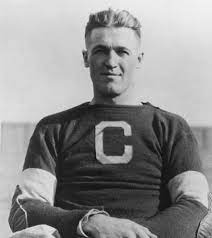
He played professional football for nine years with the Canton Bulldogs (1919), Decatur / Chicago Staleys (1920–1921), Canton Bulldogs (1922–1923), Cleveland Bulldogs (1924), Frankford Yellow Jackets (1925–1926), and Chicago Cardinals (1927). He won professional football championships in six of his nine seasons in professional football: as a player in 1919 with the undefeated Bulldogs and in 1921 with the Staleys, and as a player/coach in 1922, 1923, and 1924 with the Bulldogs and in 1926 with the Yellow Jackets. He compiled a 58-16-7 record in six years as a head coach in the National Football League (NFL), the best win percentage (.759) of any coach in NFL history with a minimum 50 wins. He is also the only coach to win NFL championships with three different clubs.

After graduating from Nebraska, Chamberlin returned to the family farm. In August 1916, he was hired as the athletic director and football coach at Doane College in Crete, Nebraska. In 1917, he returned to work on his father's farm in Blue Springs, Nebraska.

Chamberlin served in the United States Army from May 1918 to October 1919. He served in a field artillery unit with the rank of second lieutenant and was stationed at Camp Zachary Taylor in Louisville, Kentucky, Fort Sill in Oklahoma, and Camp Kearny in San Diego County, California.
Professional football

Chamberlin began playing professional football in 1919 as an end for Jim Thorpe's undefeated 1919 Canton Bulldogs, winners of that year's unofficial professional football championship with a 9–0–1 record.

In August 1920, the American Professional Football Association (APFA, later renamed the National Football League) was organized. Chamberlin signed with George Halas' 1920 Decatur Staleys team that compiled a 10–1–2 record and finished second in the APFA. At the end of the 1920 season, Chamberlin was selected as a first-team end on the first All-Pro Team.

In 1921, Chamberlin played as a center fielder for the Staleys baseball team during the summer, and he remained with the organization as the Staleys football team moved to Chicago and won the APFA championship with a 9–1–1 record. On December 3, 1921, before a crowd of 13,000 in Chicago, the Staleys defeated the first-place Buffalo All-Americans in what was touted as the championship game. In the victory over Buffalo, Chamberlain intercepted a pass and returned it 90 yards for the game-winning touchdown.
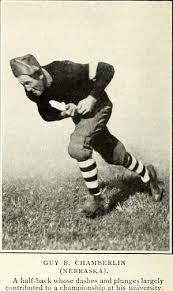
George Halas, who coached Chamberlin with the Staleys, wrote in 1957: "Chamberlin was the best 2-way end I've ever seen. He was a tremendous tackler on defense and a triple-threat performer on offense."


In 1922, Chamberlin joined the Canton Bulldogs in multiple roles as a player, head coach, team captain, and part owner. He strengthened the team in the off-season by signing guard Tarzan Taylor, with whom he had played on the Staleys, and tackle Link Lyman, an All-American who played at Chamberlin's alma mater, Nebraska. Chamberlin led the 1922 Bulldogs to an NFL championship with an undefeated 10–0–2 record. The team shut out nine of twelve opponents and allowed only 15 points in 12 games. Three players from the 1922 Bulldogs (Chamberlin, Lyman, and Pete Henry) were later inducted into the Pro Football Hall of Fame. Chamberlin led the team in scoring with seven touchdowns, two of them on interception returns. He played at the halfback position in the first game of the season and at end for the remaining 12 games; he reportedly "played every minute of the thirteen games."

Chamberlin returned to the Bulldogs as player/coach the following year. The 1923 team had another undefeated season (11-0-1), shut out eight of twelve opponents, outscored all opponents by a combined total of 246 to 19, and won its second consecutive NFL championship. After the season, Chamberlin was selected as a first-team All-Pro player by Collyer's Eye magazine.

In August 1924, Cleveland jeweler Samuel Deutsch bought the Canton Bulldogs and moved the team to Cleveland where they became the Cleveland Bulldogs during the 1924 NFL season. With Chamberlin still serving as player/coach, the Bulldogs compiled a 7–1–1 record, outscored opponents by a total of 229 to 60, and won their third consecutive NFL championship. After the 1924 season, Chamberlin was again selected as a first-team All-Pro by Collyer's Eye and a third-team All-Pro by the Green Bay Press-Gazette.

In three seasons with the Bulldogs, Chamberlin led the franchise to three NFL championships and a record of 28-1-4, having outscored opponents by a combined total of 659 to 94. Dave Noble, who played for the 1924 Bulldogs, explained Chamberlin's coaching success as follows: "Guy Chamberlain knows as much or more football than any other coach in the country. Moreover, he has a faculty for getting the most out of players, not because he is a driver, for he isn't that sort, but because they like him and will do their utmost to please him by playing hard."

In 1925, Chamberlin joined the Frankford Yellow Jackets in Philadelphia as player and coach. He led the 1925 Frankford team to a 15–7 overall record, 13–7 against NFL opponents. The team had compiled a 9–1 record in its first 10 games, but Chamberlin suffered a broken shoulder in a game against Akron,[30] and the Yellow Jackets lost six of the next eight games. Chamberlin returned to the lineup in mid-December and led the team to victories in its final two games.

In 1926, Chamberlin returned to Philadelphia and appeared in all 17 games as a player, despite being the oldest player on the team at age 32. He led the 1926 Yellow Jackets to an NFL championship with a 14–1–2 record, shutting out 10 NFL opponents and outscoring all NFL opponents, 236 to 49. On December 4, 1926, the Yellow Jackets defeated the previously unbeaten Chicago Bears, 7–6, to secure the championship. In a 1968 book titled "Pro Football's All-time Greats", the author wrote that Chamberlin blocked both an extra point and a field goal in the victory over the Bears, though contemporary accounts do not corroborate the claim.

In two years at Frankford, Chamberlin led the Yellow Jackets to Philadelphia's first NFL championship and compiled a 27-8-2 record against NFL opponents.

In August 1927, Chamberlin signed as player/coach for the Chicago Cardinals. With the exception of Ben Jones, the 1927 Cardinals lacked star players, and Chamberlin at age 33 started only one game. The team compiled a 3–7–1 and finished ninth in the NFL.

With a 58-16-7 record in six years as an NFL head coach, Chamberlin has the best win percentage (.759) of any coach in NFL history with a minimum of 50 wins. Chamberlin received numerous honors for his accomplishments as a football player and coach.
Sources
https://www.pro-football-reference.com/
https://www.profootballarchives.com/index.html
https://americanfootballdatabase.fandom.com/wiki/Football_Wiki
https://www.gridiron-uniforms.com/GUD/controller/controller.php?action=main
https://www.profootballhof.com/hall-of-famers/
"Guy Chamberlin Record". Pro-Football-Reference.com. Sports Reference LLC. Retrieved May 7, 2017.
 "Berlin Guy Chamberlin Monument". City of Blue Springs, Nebraska. Retrieved May 7, 2017.
 "The Beta Theta Pi". Google.com/books. 1915.
 "Football Roll of Honor: The Men Whom the Best Coaches of the Country Have Named as the Stars of the Gridiron in 1914" (PDF). Outing. 1915. p. 498.
 "Huskers Triumph In Final Combat". The Lincoln Star. November 21, 1915. p. 13 – via Newspapers.com.
 "Covers Wide Scope In Choosing His All-American Gridironers". The Lincoln Star. December 5, 1915 – via Newspapers.com.
 Walter Eckersall (December 5, 1915). "Nebraska Player on 'All-America': Chamberlain, Huskers' Wizard, is Given Recognition by New York Writer". Chicago Tribune – via Newspapers.com.
 "Buck Mayer and Vandegraaaff Are Chosen for All-American". The Charlotte News. December 5, 1915. p. 10 – via Newspapers.com.
 "untitled". The Emporia (KS) Gazette. August 10, 1916. p. 5 – via Newspapers.com.
 Draft registration card dated June 1917 for Berlin Guy Chamberlin, born January 16, 1894, working as a farmer in the employ of Elmer Chamberlin. Registration State: Nebraska; Registration County: Gage; Roll: 1711529. Source Information: Ancestry.com. U.S., World War I Draft Registration Cards, 1917-1918 [database on-line].
 "Staleys Sign All American Grid Star". The Pantagraph (Bloomington, IL). October 7, 1920. p. 10 – via Newspapers.com.
 Hogrogian, John (1984). "1920 All-Pros" (PDF). The Coffin Corner. 6 (1). Professional Football Researchers Association. Archived from the original (PDF) on August 8, 2014.
 "1920 APFA All-Pros". Pro-Football-Reference.com. Sports Reference LLC. Retrieved May 8, 2017.
 "Staleys Easily Defeat Madison Club of Dakota League". Decatur Herald. May 13, 1921. p. 4 – via Newspapers.com.
 "Staleys Annex 1921 Professional Title by Win Over Buffalo". The Decatur Review. December 5, 1921. p. 10 – via Newspapers.com.
 "Staleys Win National Pro Grid Title: Beat Buffalo, 10-7; Starchworkers Win 10-7; Chamberlain Makes 90 Yard Run". Decatur Herald. December 5, 1921. p. 4 – via Newspapers.com.
 "1922 Canton Bulldogs Statistics & Players". Pro-Football-Reference.com. Sports Reference LLC. Retrieved May 8, 2017.
 "Chamberlain To Quit Canton Bulldogs". The Akron Beacon Journal. December 15, 1922. p. 30 – via Newspapers.com.(part owner)
 "Lyman To Play At Canton: Former Husker Star Will Join Guy Chamberlain's Professional Team In Ohio". The Nebraska State Journal. September 25, 1922. p. 3 – via Newspapers.com.
 "Guy Chamberlain Places Canton Back on the Grid Map". The Decatur Review. December 24, 1922. p. 7 – via Newspapers.com.
 "Guy Chamberlain To Coach Canton Bulldogs Grid Team". The Akron Beacon Journal. August 2, 1923. p. 16 – via Newspapers.com.
 "1923 Canton Bulldogs Schedule & Game Results". Pro-Football-Reference.com. Sports Reference LLC. Retrieved April 9, 2017.
 "1923 NFL All-Pros". Pro-Football-Reference.com. Sports Reference LLC. Retrieved April 9, 2017.
 "Collyer's All-Star Pro Elevens". The Davenport Democrat and Leader. December 21, 1923. p. 25 – via Newspapers.com.
 "Champion Bulldogs Sold To Cleveland". Akron Beacon-Journal. August 4, 1924. p. 12 – via Newspapers.com.
 "1924 Cleveland Bulldogs Schedule & Game Results". Pro-Football-Reference.com. Sports Reference LLC. Retrieved April 9, 2017.
 "1924 NFL All-Pros". Pro-Football-Reference.com. Sports Reference LLC. Retrieved April 9, 2017.
 "Noble Keen For Ex-Husker Star". The Lincoln Star. December 30, 1924. p. 6 – via Newspapers.com.
 "1925 Frankford Yellow Jackets Statistics & Players". Pro-Football-Reference.com. Sports Reference LLC. Retrieved May 8, 2017.
 "Guy Chamberlain Is Out of Game; Right Shoulder Fractured". Green Bay Press-Gazette. November 14, 1925. p. 14 – via Newspapers.com.
 "1926 Frankford Yellow Jackets Statistics & Players". Pro-Football-Reference.com. Sports Reference LLC. Retrieved May 8, 2017.
 "Frankford Tops Bears in Thrilling Fray: Stockton Passes 45 Yards to Homan, Scores Touchdown". The Philadelphia Inquirer. December 5, 1926. p. Sports 1, 3 – via Newspapers.com.
 Fitzpatrick, Frank (February 15, 2007). "Why did winning coach leave Philly?". The Philadelphia Inquirer.
 "Chamberlain To Coach Cards' Pro Gridiron Squad". Chicago Daily Tribune. August 9, 1927. p. 17 – via Newspapers.com.
 "1927 Chicago Cardinals Statistics & Players". Pro-Football-Reference.com. Sports Reference LLC. Retrieved May 9, 2017.
 Willis, Chris (2024). The NFL's 60-Minute Men: All-Time Greats of the Two-Way Player Era, 1920-1945. McFarland. pp. 68–72. ISBN 9781476691329.
 "Chamberlin, End, Is Husker 'All' Player". The Minneapolis Star. November 14, 1936. p. 12.
 "Guy Chamberlin Named To State Hall of Fame". Lincoln Evening Journal. August 21, 1951. p. 9 – via Newspapers.com.
 "Nebraska's Guy Chamberlin to Football Hall of Fame". Lincoln Evening Journal. April 4, 1962. p. 32 – via Newspapers.com.
 "Guy Thankful To Former Mates: Exceptional NU, Pro Grid Star Accepts Honor for 'Whole Team'". Lincoln Evening Journal. April 4, 1962. p. 32 – via Newspapers.com.
 "Chamberlin Field Officially Dedicated". Lincoln Evening Journal. July 16, 1962. p. 13 – via Newspapers.com.
 "Guy Chamberlin To Hall of Fame". The Lincoln Star. September 12, 1965. p. 28 – via Newspapers.com.
 "Nebraska announces 2016 Football Award winners". NebraskaOnline.com. December 18, 2016. Retrieved May 9, 2017.
 "Halas, Grange on NFL All-Star Team of '20s". Decatur Herald. August 24, 1969. p. 20 – via Newspapers.com.
 "Hall of Famers". The Lincoln Star. May 16, 1971. p. 12 – via Newspapers.com.
 "Nebraska adds eight former football players to its list of Huskers with retired jerseys". August 23, 2017. Retrieved January 16, 2019.
 "untitled". The Nebraska State Journal. February 12, 1923. p. 6 – via Newspapers.com.
 1920 U.S. Census entry for Berlin Guy Chamberlin and wife Lucile. Census Place: Canton Ward 3, Stark, Ohio; Roll: T625_1434; Page: 6B; Enumeration District: 38; Image: 449. Source Information: Ancestry.com. 1920 United States Federal Census [database on-line].
 1930 U.S. Census entry for Guy Chamberlin, age 36, wife Lucile, and daughter Patricia. Census Place: East Cleveland, Cuyahoga, Ohio; Roll: 1785; Page: 5B; Enumeration District: 0595; Image: 11.0; FHL microfilm: 2341519. Source Information: Ancestry.com. 1930 United States Federal Census [database on-line].
 "Bernyce G. Weekes United In Marriage with Guy Chamberlin". The Lincoln Star. June 13, 1941. p. 9 – via Newspapers.com.
 "Guy Chamberlin Dies at 73". Lincoln Evening Journal. April 4, 1967. p. 13 – via Newspapers.com.
 "Husker Football Stars Go To Chamberlin Rites". The Lincoln Star. April 8, 1967. p. 11 – via Newspapers.com.

Monday, June 27, 2022

The Story And Significance Of George Trafton - The First Dominate Center

George Edward Trafton was an American football player and coach, boxer, boxing manager, and gymnasium proprietor. He was inducted into the Pro Football Hall of Fame in 1964 and was also selected in 1969 as the center on the NFL 1920s All-Decade Team.

A native of Chicago, Trafton played college football for Knute Rockne's undefeated 1919 Notre Dame Fighting Irish football team. He played professional football in the National Football League as a center for the Decatur Staleys (1920), Chicago Staleys (1921), and Chicago Bears (1923–1932). He is credited as being the first center to snap the ball with one hand and was selected six times as a first-team All Pro.

Trafton also competed as a boxer for a time. He also worked as an assistant football coach for Northwestern in 1922, the Green Bay Packers in 1944, and the Cleveland / Los Angeles Rams from 1945 to 1949. He was the head coach of the Winnipeg Blue Bombers from 1951 to 1953. He led the Blue Bombers to the 41st Grey Cup in 1953.

At age 22, Trafton played college football for one year at the University of Notre Dame. He was a member of Knute Rockne's 1919 Notre Dame Fighting Irish football team that featured George Gipp, compiled a perfect 9–0 record, outscored opponents 229–47, and was recognized as a co-national champion by the National Championship Foundation and Parke H. Davis. Trafton also played for the Notre Dame basketball team during the 1920-1921 season.

In early July 1920, Trafton signed to play for the Decatur Staleys in the inaugural season of the National Football League (known that year as the American Professional Football Association). Trafton appeared in all 13 games for the 1920 Staleys team that compiled a 10–1–2 record and finished in second place in the new league. At the end of the 1920 season, Trafton was selected as a first-team All Pro. The 1920 Staleys included three players who were later inducted into the Pro Football Hall of Fame: Trafton, George Halas, and Jimmy Conzelman.

In June 1921, Trafton returned to the Staleys, working in A. E. Staley's starch plant during the summer. The 1921 Staleys compiled a 9–1–1 and won the first NFL championship in the history of the Chicago Bears franchise (the Staleys were renamed the Bears in 1922).


In 1922, Trafton took leave from professional football to serve as an assistant football coach, with responsibility for the linemen, for Northwestern University in Evanston, Illinois. The 1922 Northwestern Purple football team compiled a 3–3–1, and went 1–3–1 against Big Ten Conference opponents. In February 1923, Trafton was forced to resign his coaching job due to a ruling from the Big Ten Conference prohibiting former professional players to coach in any capacity for a conference team. Northwestern's athletic director, Dana Evans, said at the time that he accepted the resignation with reluctance and called Trafton "one of the best line coaches in the conference and a large factor in developing the 1922 Purple eleven."

In September 1923, Trafton returned to the NFL as a player with the Chicago Bears. He continued playing with the Bears through the 1932 season. During Trafton's tenure with the Bears, the Staleys/Bears won NFL championships in 1921 and 1932, and Trafton was selected six times as a first-team All Pro (1920, 1923–1927). According to his biography at the Pro Football Hall of Fame, he "was one of the first centers to rove on defense and the very first on offense to center the football with only one hand."

Trafton also became known as one of the roughest players in the earliest years of the NFL. Red Grange called Trafton the "meanest, toughest player alive." Grange claimed it was a tackle by Trafton, twisting Grange's knee while his cleats were stuck in the turf, that ended Grange's career. It was said of Trafton that he was strongly disliked in every NFL city except Green Bay and Rock Island where "he was hated." During a game against Rock Island, he reportedly knocked unconscious four Rock Island players over a span of only 12 plays, knocked a Rock Island halfback into a fence, and was chased from the city after the game under a barrage of thrown objects.

In addition to his football career, Trafton also had a long association with the sport of boxing, as a boxer in 1929 and 1930, and thereafter as a boxing manager and gymnasium operator.

Trafton's first boxing match of note was a December 1929 bout against Chicago White Sox first baseman Art Shires. Trafton won by decision after five rounds. Sports writer Charles Dunkley later called it a legendary bout "which was as vicious and spectacular as it was hilarious." He fought three more bouts in January and February 1930, winning two of those matches by knockout and a third by disqualification.

On March 26, 1930, Trafton faced future world champion Primo Carnera in Kansas City. Trafton was knocked out by Carnera in the first round of their fight. In the aftermath of the fight, Trafton was suspended indefinitely by the Missouri Boxing Commission for failing to provide more resistance in the 54-second bout.

After retiring from professional football, Trafton operated a boxing gymnasium at 180 West Randolph Street in Chicago in the 1930s and early 1940s. He also served as a manager for boxers. The boxers he managed included light welterweight Willie Joyce who was the 1936 National AAU bantamweight champion, and the 1937 Chicago & Intercity Golden Gloves Champion.

In June 1944, Trafton was hired as an assistant coach with the Green Bay Packers and put in charge of the team's linemen. Working with head coach Curly Lambeau, Trafton helped lead the 1944 Packers to an 8–2 record and the NFL championship. Despite the team's success, Trafton was released by the Packers in January 1945.

In May 1945, Trafton was hired by the Cleveland Rams as the team's line coach. He remained the Rams' line coach when they moved to Los Angeles in 1946 and through the 1949 season. The Rams won the NFL title in 1945. In 1950, he moved to a position in the Rams' front office as promotions director.

In May 1951, Trafton signed a one-year contract as the head coach of the Winnipeg Blue Bombers. Trafton led the 1951 Blue Bombers to an 8-6 record and a third-place finish out of four teams in the Western Interprovincial Football Union. Trafton remained with the Blue Bombers in 1952 and led the club to a 12–3–1, though the team lost to Edmonton in the WIFU Finals. In his third and final season with Winnipeg, he led the 1953 Blue Bombers to an 8–8 record and led the club to the 41st Grey Cup game, which it lost by a 12–6 score against Hamilton. Two weeks after Winnipeg's loss in the Grey Cup game, Trafton was fired in December 1953. He announced his retirement from coaching in January 1954.
Sources
https://www.pro-football-reference.com/
https://www.profootballarchives.com/index.html
https://americanfootballdatabase.fandom.com/wiki/Football_Wiki
https://www.gridiron-uniforms.com/GUD/controller/controller.php?action=main
https://www.profootballhof.com/hall-of-famers/
"George Trafton". Pro-Football-Reference.com. Sports Reference LLC. Retrieved December 13, 2016.
 "Notre Dame Star Landed: Trafton, 207 Pound Center, To Play With Staley Football Team". The Decatur Herald. July 3, 1920. p. 4 – via Newspapers.com. Open access icon
 "1920 Decatur Staleys Statistics & Players". Pro-Football-Reference.com. Sports Reference LLC. Retrieved December 13, 2016.
 Hogrogian, John (1984). "1920 All-Pros" (PDF). The Coffin Corner. 6 (1). Professional Football Researchers Association.
 "Trafton Reports To Staley Camp". Decatur Herald. June 16, 1921. p. 4 – via Newspapers.com. Open access icon
 "1921 Decatur Staleys Statistics & Players". Pro-Football-Reference.com. Sports Reference LLC. Retrieved December 13, 2016.
 Walter Eckersall, "Purple Football Outlook Is Best In Three Years," Chicago Tribune, Sept. 26, 1922, p. 16.
 "Trafton Forced Out". Chicago Daily Tribune. February 6, 1923. p. 18 – via Newspapers.com. Open access icon
 "Geo. Trafton To Play With Bears". Chicago Daily Tribune. September 26, 1923. p. 24 – via Newspapers.com. Open access icon
 "George Trafton biography". Pro Football Hall of Fame. Retrieved December 13, 2016.
 Jim Bell (September 24, 1971). "A 'Butkus' of yesterday". Alton Evening Telegraph. p. 17 – via Newspapers.com. Open access icon
 Howard Roberts, The Chicago Bears. New York: G.P. Putnam's Sons, 1947; p. 52.
 "George (Super Great) Trafton Outpoints Arthur (The Great) Shires". Asbury Park Evening Press. December 17, 1929. p. 15 – via Newspapers.com. Open access icon
 Westbrook Pegler (December 19, 1929). "Drop of the Hat Fighters Just Aren't There". Chicago Daily Tribune. p. 29 – via Newspapers.com. Open access icon
 "Grid Star Ends His Retirement To Return As Line Coach Of Green Bay Packers". The Cincinnati Enquirer. July 7, 1944. p. 14 – via Newspapers.com. Open access icon
 "George Trafton|BoxRec". boxrec.com. Retrieved December 15, 2016.
 "Carnera Floors Trafton In Single Round". Eugene Register Guard. Associated Press. March 27, 1930. p. 10. Retrieved February 28, 2011.
 "Trafton Suspended". The Lewiston Daily Sun. Associated Press. March 28, 1930. p. 19. Retrieved February 28, 2011.
 Braven Dyer (February 8, 1943). "The Sports Parade". Los Angeles Times. p. 19 – via Newspapers.com. Open access icon
 "Brute Trafton Is Signed as Packers' Assistant Coach". Green Bay Press-Gazette. June 10, 1944. p. 11 – via Newspapers.com. Open access icon
 "1944 Green Bay Packers Schedule and Game Results". Pro-Football-Reference.com. Sports Reference LLC. Retrieved December 13, 2016.
 "George Trafton Is Released as Coach of Packer Line, Lambeau". Green Bay Press-Gazette. February 22, 1945. p. 17 – via Newspapers.com. Open access icon
 "Rams Sign Third Ex-Irish Coach". The Evening Independent (Massillon, Ohio). May 9, 1945. p. 11 – via Newspapers.com. Open access icon
 "Name Trafton, Ex-Bears Star, Winnipeg Coach". Chicago Daily Tribune. May 2, 1951. p. 4-3 – via Newspapers.com. Open access icon
 "Fire Trafton". The Akron Beacon Journal. December 12, 1953. p. 15 – via Newspapers.com. Open access icon
 "Trafton Retires". The Lethbridge Herald. January 19, 1954. p. 6 – via Newspapers.com. Open access icon
 "Trafton's Play on Chalk Field Wins Him Wife". Chicago Daily Tribune. December 20, 1923. p. 14 – via Newspapers.com. Open access icon
 "George Trafton Grid Star Weds". The Decatur Herald. December 24, 1923. p. 8 – via Newspapers.com. Open access icon
 "George Trafton Asking For Divorce". The Decatur Daily Review. March 19, 1926. p. 28 – via Newspapers.com. Open access icon
 "Trafton, Captain of Bears, Gets Divorce". Chicago Daily Tribune. March 30, 1926. p. 21 – via Newspapers.com. Open access icon
 "230 LB. Athlete Sues 110 Pound Wife as Cruel". Chicago Daily Tribune. April 4, 1931. p. 22 – via Newspapers.com. Open access icon
 "George Trafton Just a Gigolo, Wife Charges". Chicago Daily Tribune. May 15, 1931. p. 29 – via Newspapers.com. Open access icon
 "Gets Divorce". Chicago Daily Tribune. June 16, 1931. p. 5.
 "Trafton, Bears' Center, Weds for Third Time". Chicago Daily Tribune. December 31, 1932. p. 14 – via Newspapers.com. Open access icon
 "It's a Boy for Trafton". Green Bay Press-Gazette. August 10, 1949. p. 15 – via Newspapers.com. Open access icon
 Frank Finch (September 9, 1971). "'Trafton the Great,' Former Notre Dame, Pro Gridder, Dies (part 2)". Los Angeles Times. p. III-9 – via Newspapers.com. Open access icon
 "Whatever Happened To ... George Trafton". Leader-Times (PA). December 30, 1958. p. 9 – via Newspapers.com. Open access icon
 "Helms Honors 25 Pro Greats". Los Angeles Times. August 10, 1950. p. IV-3 – via Newspapers.com. Open access icon
 "Pro Football Hall of Fame Honoring First Stars". Racine (WI) Sunday Bulletin. August 24, 1969. p. 4B – via Newspapers.com. Open access icon
 "Trafton Recovering From Hip Surgery". Los Angeles Times. April 15, 1971. p. III-10 – via Newspapers.com. Open access icon
 Frank Finch (September 9, 1971). "'Trafton the Great,' Former Notre Dame, Pro Gridder, Dies". Los Angeles Times. p. III-1 – via Newspapers.com. Open access icon
 "George Trafton, Former Bear Great, Dead at 74". Chicago Tribune. September 9, 1971. p. 3-1 – via Newspapers.com. Open access icon
 "George Trafton funeral service". Chicago Tribune. September 14, 1971 – via Newspapers.com.

Tuesday, December 21, 2021

Who Were The Moline Universal Tractors?

The Moline Universal Tractors, also known as the Moline Athletics, were an independent American football team that played in 1920. They played in two official APFA games. They played against the Decatur Staleys and Chicago Cardinals. They played in seven games total, and had a 2-5 record. In 2017, there was a throwback game to celebrate football history that had the Universal Tractors play the Rock Island Independents. In their first ever game they played at Staley Field losing to the Chicago Staleys 0-20. The Tractors went home to Browning Field the following week to play the Clinton Indepedents. The Tractors won 20-0 in that matchup. The next few weeks were all road games. In their third game the Tractors lost 3-33 to the Chicago Cardinals. The Tractors lost the following week 8-14 to Rockford A.A.C.,  A couple weeks later the Tractors lost 0-7 to the Elgin American Legion. The following week at a neutral site the Tractors defeated the Kewanee Walworths 27-0. They finally would play a home game the next matchup but it ultimately would be the Moline Universal Tractors last game. They were defeated at home by a final score of 0-7 to the Moline Indians.

Sources
https://www.pro-football-reference.com/
https://www.profootballarchives.com/index.html
https://americanfootballdatabase.fandom.com/wiki/Football_Wiki
https://www.gridiron-uniforms.com/GUD/controller/controller.php?action=main
https://www.profootballhof.com/hall-of-famers/
"Clipped From The Daily Times". The Daily Times. September 27, 1920. p. 10 – via newspapers.com.
 "UNIVERSAL TRACTORS TO DECATUR". The Daily Times. October 2, 1920. p. 15 – via newspapers.com.
 "1920 Moline Athletics +Peoria Caterpillars - Pro Football Archives". www.profootballarchives.com.
 "Moline Universal Tractors coaches | Pro Football History.com". pro-football-history.com.
 Turner, Jonathan (15 October 2017). "Independents, Universal Tractors square off in throwback game". Dispatch Argus.
 "Photos: Rock Island Independents and Moline Universal Tractors". The Quad-City Times. 15 October 2017.
 "Vintage football game to take place in Rock Island". www.kwqc.com. 10 October 2017.

Thursday, December 16, 2021

Kewanee Walworths - Only One Of Three Teams To Score Against The Staleys In 1920

The Kewanee Walworths were an American football team that played two seasons. They were an independent team. In 1920 they played one game against an APFA (later to named the NFL) team; they played a game against the Decatur Staleys. In 1919 they played 9 games and had a 8–1 record. Their head coach was John "Big Jack" Pollock. They played all of their games at their home stadium at Kewanee High School, Illinois. Their only loss was a game against "Moline Clubhouse". In 1920 they had a 2-4-2 record. In their 3rd game of the season they lost 7–25 against the Decatur Staleys in an official APFA game. This was the second game in the rich history of the Decatur Staleys/Chicago Bears history. They were one of three teams to score points against the Staleys. The owner of the Staleys, George Halas, would later sign the player who scored the touchdown. 1920 was their last season because they did not get enough fan support to meet their financial needs. They played their home games at the Fairgrounds (Kewanee High School).

Sources
https://www.pro-football-reference.com/
https://www.profootballarchives.com/index.html
https://americanfootballdatabase.fandom.com/wiki/Football_Wiki
https://www.gridiron-uniforms.com/GUD/controller/controller.php?action=main
https://www.profootballhof.com/hall-of-famers/
"1919 Kewanee Walworths - Pro Football Archives". www.profootballarchives.com.
 Courier, Larry LockFor the Star. "Kewanee football follows NFL roots – Walworth team played Staleys, Bears' precursor". Star Courier - Kewanee, IL.
 "1920 Kewanee Walworths - Pro Football Archives". www.profootballarchives.com.
 "Kewanee Walworths at Decatur Staleys - October 10th, 1920". Pro-Football-Reference.com.

Who Were The Rockford A.C.?

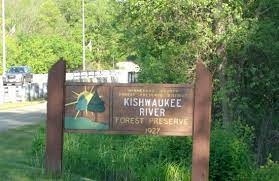
Similar to the Champaign American Legion, Rockford A.C., the Rockford A.C. has very little research and information on the team's history. They played one game against the APFA team in the Decatur Staleys (later to be the Chicago Bears). Rockford A.C. lost the game 0-29 at Kishwuakee Park. Other than this one game Rockford A.C. has no other information like who played for them or who else they played, if they even played any other games. The field where the game was played is now Beyer Stadium. Beyer Stadium, one mile from downtown in Rockford, Illinois, was the home of the All-American Girls Professional Baseball League's Rockford Peaches from 1943 to 1954.
It was a multi-purpose facility, as contemporary newspaper articles also report high school baseball and football games being played there. Its address in city directories was typically given as 311 15th Avenue. It began as Kishwaukee Park or simply Rockford Base Ball Park in about 1913 when the Rockford club of the Wisconsin-Illinois League moved into it from their previous home, Riverside Park. That club folded after the 1923 season and sold the ballpark to Rockford High School for use as their athletic field. By 1925 the venue was being called Rockford Municipal Stadium or 15th Avenue Stadium. In 1948 it was renamed in honor of Charles Beyer, long-time high school athletics coach.
Sources
https://www.pro-football-reference.com/
https://www.profootballarchives.com/index.html
https://americanfootballdatabase.fandom.com/wiki/Football_Wiki
https://www.gridiron-uniforms.com/GUD/controller/controller.php?action=main
https://www.profootballhof.com/hall-of-famers/
 Vela, Susan (August 29, 2015). "Hundreds visit Beyer Stadium in Rockford to celebrate renovations". Rockford Register Star. Retrieved October 31, 2023.
 "Letter: Beyer Stadium is a key part of Rockford's history". Rockford Register Star. February 27, 2013. Retrieved October 31, 2023.
 Guerrero, Isaac (May 25, 2018). "Beyer Stadium's second act". Rockford Register Star. Retrieved October 31, 2023.
 1
 "Landmarks | Rockford, IL". www.rockfordil.gov. Retrieved October 31, 2023.
 Andrew (April 8, 2017). "Beyer Stadium". RPL's Local History. Retrieved October 31, 2023.

Champaign (American) Legion - The Most Unexplored Team In Professional Football History

The Champaign Legion was a football team in 1920. Not much information is out there on this team but all that is currently known is that they played a game against the Decatur Staleys (later becoming the Chicago Bears) of APFA in 1920. In the game Dutch Sternaman ran for two touchdowns and threw one later in the football game to Pard Pearce. Sternaman also kicked two extra points to result in a 20-0 win for the Staleys. The only information of the game was it was played in Champaign, Illinois on McKinley Field. The field is still being used today but after many years of renovations it looks nothing like it did in 1920. Reportedly 500 people were in attendance for the game. Besides this game there is no other information on this team. We do not know who played for Champaign, who founded it or why they played one game then never played again. We also do not know what league, if any they were in. They just played one game, lost it to 0-20 on November 11th, 1920 and never played another game again from all that we know. In professional football history this might be the most unexplored teams in its history.

Sources
https://www.pro-football-reference.com/
https://www.profootballarchives.com/index.html
https://americanfootballdatabase.fandom.com/wiki/Football_Wiki
https://www.gridiron-uniforms.com/GUD/controller/controller.php?action=main
https://www.profootballhof.com/hall-of-famers/

Monday, December 13, 2021

The Story And Significance of George Halas - The Founder And Owner Of The Chicago Bears

George Stanley Halas Sr., nicknamed "Papa Bear" and "Mr. Everything", was an American professional football player, coach, and team owner. He was the founder and owner of the National Football League's Chicago Bears, and served as his own head coach on four occasions. He was also lesser-known as a Major League Baseball player for the New York Yankees. 
Halas was one of the co-founders of the National Football League in 1920, and in 1963 became one of the first 17 inductees into the Pro Football Hall of Fame.
After graduating from Crane High School in Chicago, he attended the University of Illinois, playing football for coach Bob Zuppke, as well as baseball and basketball, and earning a degree in civil engineering. He also became a member of Tau Kappa Epsilon fraternity. He helped Illinois win the 1918 Big Ten Conference football title.
Serving as an ensign in the Navy during World War I, he played for a team at the Great Lakes Naval Training Station, and was named the MVP of the 1919 Rose Bowl. On a team which included Paddy Driscoll and Jimmy Conzelman (Both in the NFL Hall of Fame), Halas scored a receiving touchdown and returned an intercepted pass 77 yards in a 17–0 win over the Mare Island Marines of California; the team was also rewarded with their military discharges.
Afterward, Halas played minor league baseball, eventually earning a promotion to the New York Yankees, where he played 12 games as an outfielder in 1919. However, a hip injury effectively ended his baseball career. Halas said that he was succeeded as the Yankees' right fielder by Babe Ruth, but in reality, it was Sammy Vick. Later that year, Halas played football for the Hammond Pros and received about $75 per game.
After one year with the Pros, Halas moved to Decatur, Illinois to take a position with the A. E. Staley Company, a starch manufacturer. He served as a company sales representative, an outfielder on the company-sponsored baseball team, and the player-coach of the company-sponsored football team the Decatur Staleys. Halas selected his alma mater's colors—orange and navy blue—for the team's uniforms. In 1920, Halas represented the Staleys at the meeting which formed the American Professional Football Association (which became the NFL in 1922) in Canton, Ohio. After the Staleys' season ended, Halas and teammates George Trafton, Hub Shoemake, and Hugh Blacklock joined the Chicago Stayleys for a December 19 match against the Chicago Cardinals, marking the only time Halas would be an NFL team's opponent for another team besides the Staleys/Bears. The game ended in a 14–14 tie.
Despite a 10–1–2 record, the Staleys ended the season awash in red ink. The Staleys' financial troubles didn't dissuade Halas from significantly upgrading the roster, to the point that it was a works team in name only. After the first game of the 1921 season, company founder and namesake Augustus E. Staley turned over control of the team to Halas so he could move the team to Chicago, where the team had attracted its biggest gates of the 1920 season. Staley gave Halas a $5,000 bonus for the move to Chicago provided that he keep the Staleys franchise name for the 1921 season. Halas then took on teammate Edward "Dutch" Sternaman as a partner. The newly minted "Chicago Staleys" set up shop at Cubs Park, soon to be known as Wrigley Field; Halas had a good relationship with Chicago Cubs owner William Wrigley Jr. and president Bill Veeck Sr.. The Staleys maneuvered their schedule to win their first NFL championship that year. The following year, Halas renamed his team the "Chicago Bears." Years later, he recalled that he wanted to find a way to choose a name that would give a nod to the Cubs. Reasoning that football players were far bigger than baseball players, he concluded, "if baseball players are cubs, then football players must be bears!"
Halas was not only the team's coach but also played end (wide receiver on offense, defensive end on defense) and handled ticket sales and the business of running the club. Named to the NFL's all-pro team in the 1920s, his playing highlight occurred in a 1923 game when he stripped Jim Thorpe of the ball, recovered the fumble, and returned it 98 yards for a league record which would stand until 1972. In 1925, Halas persuaded Illinois star player Red Grange to join the Bears; it was a significant step in establishing both the respectability and popularity of the league, which had previously been viewed as a refuge for less admirable players.
After ten seasons, Halas stepped back from the game in 1930, retiring as a player and handing coaching duties to Lake Forest Academy coach Ralph Jones; but he remained the team's owner, becoming sole owner in 1932. However, severe financial difficulties brought on by the Great Depression put the Bears in dire financial straits even though Jones led them to the NFL title in 1932. Halas returned as coach in 1933 to eliminate the additional cost of paying a head coach's salary. He coached the Bears for another ten seasons. His 1934 team was undefeated until a loss in the championship game to the New York Giants.
In the late 1930s, Halas and University of Chicago coach Clark Shaughnessy perfected the T-formation system to create a revolutionary and overwhelming style of play which drove the Bears to an astonishing 73–0 victory over the Washington Redskins in the 1940 NFL Championship Game which is still the most lopsided margin of victory in NFL history. Every other team in the league immediately began trying to imitate the format. The Bears repeated as NFL champions in 1941, and the 1940s would be remembered as the era of the "Monsters of the Midway".
Halas and Shaughnessy had created a revolutionary concept with the T-formation offense. The complex spins, turns, fakes, and all-around athletic versatility required to execute the scheme limited the possible players available. Halas believed he'd found the perfect quarterback for his new offense in Sid Luckman, a passing star at Columbia University. Luckman was a single wing tailback; the tailback is the primary runner and passer in that scheme. Luckman launched his Hall of Fame career playing quarterback for the Bears from 1939 to 1950. Halas was not satisfied with other players who succeeded Luckman under center. During this coaching stint, he had on the Bears roster two future Hall of Fame players, Bobby Layne in 1948 and George Blanda from 1949 to 1958. Other notable players included Heisman Trophy winner Johnny Lujack from 1948 to 1951 and Zeke Bratkowski from 1954 to 1960. Blanda played in the NFL until 1975; Bratkowski moved on the Los Angeles Rams before signing with Vince Lombardi's Green Bay Packers in 1963, where he played an important role as "super sub" to starter Bart Starr in winning three straight NFL championships in 1965-'66-'67; and Bobby Layne quarterbacked the Detroit Lions to three NFL championship games between 1952 and 1954, winning two.
Halas entered the Navy again after the advent of World War II in 1942, with the rank of lieutenant commander. He served overseas for 20 months under the command of Admiral Chester Nimitz. His duties were supporting the welfare and recreational activities of the Seventh Fleet. He was awarded the Bronze Star during his recall and released from duty in 1946 with the rank of captain. While Halas was in the Navy, the Bears won another title in 1943 under Hunk Anderson and Luke Johnsos. Returning to the field in 1946, he coached the club for a third decade, again winning a title in his first year back as coach. That same year, Halas met with the Army Chief of Staff, General Dwight Eisenhower, the Navy Chief of Staff, Admiral Chester Nimitz, and the Air Force Chief of Staff, General Carl Spaatz, and offered to set up an annual charity football game, with the Bears as hosts, whose proceeds would go to the relief agencies of the armed forces. By mid-1957, proceeds from this game were $438,350.76 and proceeds from all games the Bears participated in between 1946 and 1957 were over $2 million.
In 1939, Halas followed Tim Mara footsteps who purchase the Stapleton Buffaloes in 1937 and obtained the rights to a former NFL club Newark Tornadoes (now in the American Association) from Piggy Simandl, changed the team's name to Bears and stocked with talent that did not make the Chicago roster. He used the club to incubate talent and for easy return for injured players, thus making it pro football's first true farm team. Newark's most notable names included Joe Zeller as coach and Gene Ronzani who led them to the 1939 championship (with a little help in the playoff from Sid Luckman). Halas folded the team in 1941, after the Japanese attack on Pearl Harbor ushered in the United States’ participation in World War II. It would later be revived for one more season (1946) as the Newark Bombers under Halas ownership (not as a farm team), but was folded altogether at the end of the season, and was substituted by the Bloomfield Cardinals.

In 1946, after he returned from service in WWII, Halas also launched the Akron Bears of the American Football League as the Chicago Bears' minor league affiliate. The launch was an attempt to interfere with the territorial rights of the Cleveland Browns, a team in the NFL rival All-America Football Conference (AAFC); Akron is located just 30 miles from Cleveland.

The team was coached again by Ronzani and had notable players like quarterback George Gulyanics, Ed Ecker, Lloyd Reese, Raymond Schumacher and Jack Karwales. The Bears were successful on the field, including reaching the league final before losing 14–13 to the Jersey City Giants but lost at the box office a sum of $52,000, partly because they had large traveling expenses as most of the league team were located on the East Coast. The team did not return for a second season.

After a brief break in 1956–57, he returned as head coach for a final decade from 1958 to 1967. Despite winning his sixth and last league title in 1963, he did not enjoy the same success as he had before the war, and officially retired on May 27, 1968. He did win his 200th game in 1950 and his 300th game in 1965, becoming the first coach to reach both milestones. His six NFL Championships as a head coach is tied for the most all time with Green Bay's Curly Lambeau and later, New England's Bill Belichick. In 40 years as a coach, he endured only six losing seasons, three of which came during his final stint. A pioneer both on and off the field, Halas made the Bears the first team to hold daily practice sessions, to analyze film of opponents to find weaknesses and means of attack, place assistant coaches in the press box during games, place tarp on the field, publish a club newspaper, and to broadcast games by radio. He also offered to share the team's substantial television income with teams in smaller cities, firmly believing that what was good for the league would ultimately benefit his own team. A firm disciplinarian, Halas maintained complete control of his team and did not tolerate disobedience and insubordination by players. He also insisted on absolute integrity and honesty in management, believing that a handshake was sufficient to finalize a deal; few, if any, intermediaries were necessary.
Halas's career ledger reads as follows: 63 years as an owner, 40 as a coach, 324 wins, and 8 NFL titles as a coach or owner. His 324 victories stood as an NFL record for nearly three decades, and are still far and away the most in Bears history; they are three times that of runner-up Mike Ditka. He was a charter member of the Pro Football Hall of Fame in 1963.
Sources
https://www.pro-football-reference.com/
https://www.profootballarchives.com/index.html
https://americanfootballdatabase.fandom.com/wiki/Football_Wiki
https://www.gridiron-uniforms.com/GUD/controller/controller.php?action=main
https://www.profootballhof.com/hall-of-famers/
Davis, Jeff, Papa Bear, (McGraw-Hill Co., 2005), 32.
 Encyclopedia of ethnicity and sports in the United States, Ed. George B. Kirsch, Othello Harris and Claire Elaine Nolte, (Greenwood Publishing, 2000), 164.
 Elliott J. Gorn, Sports in Chicago, (University of Illinois Press, 2008), 7.
 Twombly, Wells (1976). 200 Years of Sport in America. New York: McGraw-Hill. p. 186. ISBN 0-07-065640-1.
 Gloria Cooksey, George Halas: An entry from Gale's Notable Sports Figures 2004.
 "Halas, George Stanley". www.encyclopedia.com.
 "ITB: Halas escapes Eastland Disaster". Chicago Bears. October 29, 2013. Archived from the original on December 13, 2013. Retrieved November 5, 2013.
 "George Halas". Encyclopedia.com. Retrieved January 11, 2022.
 "The Story of "Papa Bear" George Halas". Illinois Fighting Illini. February 2, 2020. Retrieved January 11, 2022.
 "Mass slated tomorrow for Mrs. Halas, 70". The Chicago Tribune. Vol. 119, no. 47. Chicago. February 16, 1966. p. 6 sec. 2. Retrieved January 11, 2022 – via Newspapers.com.
 Names, Larry D (1987). "The Myth". In Scott, Greg (ed.). The History of the Green Bay Packers: The Lambeau Years. Vol. 1. Angel Press of WI. p. 31. ISBN 0-939995-00-X.
 "George Halas, Randall McDaniel, Pop Warner and Vince Young to be Inducted into the Rose Bowl Hall of Fame Class of 2018". Tournament of Roses – Rose Bowl Game. September 10, 2018. Retrieved December 14, 2021.
 "George Halas". Society for American Baseball Research. Retrieved February 2, 2021.
 U.S. House III, 1957, p. 2714.
 "Evolution of the Bears Colors". National Football League. September 13, 2012. Retrieved December 21, 2012.
 Marines Are Swamped By Great Stars :Minneapolis Team Swept Off Their Feet by Crack Hammond Eleven. (October 27, 1919). Minneapolis Morning Tribune (1909–1922),10. Retrieved September 2, 2010, from ProQuest Historical Newspapers Minneapolis Tribune (1867–1922). (Document ID: 1513834502).
 "George Stanley Halas (Papa Bear)". Staley Museum. December 10, 2015.
 "Decatur stars oppose Driscoll". The Dispatch. December 20, 1920. Retrieved May 23, 2020 – via Newspapers.com.
 Halas, George S. (August 9, 2015). "From Decatur to NFL, with Potholes Along Way". Chicago Tribune.
 George Halas at The Staley Museum
 Chicago Bears Media Guide, 2020
 Exoo, Thales (January 31, 2007). "Ask Chicagoist: Why Are They Called the Bears?". Chicagoist. Gothamist. Archived from the original on May 10, 2017. Retrieved December 19, 2016.
 "Chicago Bears 1934 Games and Schedule". Pro-Football-Reference.com. Retrieved June 30, 2025.
 "George Halas Record, Statistics, and Category Ranks - Pro-Football-Reference.com". Pro-Football-Reference.com.
 U.S. House III, 1957, p. 2713.
 U.S. House III, 1957, p. 2720.
 "Happy Birthday George Halas". Chicago Bears. January 31, 2014. Archived from the original on February 19, 2014. Retrieved February 2, 2014.
 "Lords of the Rings: The NFL's 10 greatest coaches". Archived from the original on February 3, 2014. Retrieved December 5, 2013.
 "Football.History". www.njsportsheroes.com.
 "Nothing minor about it" (PDF).
 "Papa Bear's Nightmare" (PDF).
 "Bears coaching history". Chicago Bears. January 14, 2013. Archived from the original on August 7, 2017. Retrieved January 16, 2013.
 "2016 Hall of Fame – Illinois Engineering". engineering.illinois.edu.
 "George S. Halas Historical Marker". www.hmdb.org. Retrieved January 28, 2025.
 Mayer, Larry (February 19, 2020). "Halas was a pro basketball pioneer as well". Chicago Bears. Retrieved February 19, 2020.
 Rosenthal, Gregg (June 6, 2013). "Pro Football Hall of Famers who fought on D-Day". National Football League. Retrieved June 6, 2013.
 Greenberg, Jon (January 15, 2010). "'Super Bowl Shuffle' endures long after 1985". ESPN.com. Retrieved December 14, 2024.
 Pinak, Patrick (February 4, 2023). "The "Super Bowl Shuffle" and the 1985 Chicago Bears Were Both Massive Hits". FanBuzz. Retrieved December 14, 2024.
 "Six HOFers to toss coin at Super Bowl". Pro Football Hall of Fame. January 26, 2004. Retrieved May 7, 2021.
 The following source differs from Pro-Football-Reference.com and states that the record was 10–1–1 for 1921: Vass, George (1971). "The Bears Find a Den". George Halas and the Chicago Bears. Henry Regnery Company. p. 44. ISBN 0809295970.
Davis, Jeff (2006). Papa Bear: The Life and Legacy of George Halas. McGraw Hill Professional. ISBN 0-07-147741-1.
Hibner, John Charles (1993). "University of Oregon and University of Pennsylvania (1917)", in The Rose Bowl, 1902–1929: A Game-by-Game History of Football's Foremost Event, from its Advent through its Golden Era. Jefferson, NC: McFarland & Company, Inc. Publishers.
Organized Professional Team Sports: Part 3. (password protected except at participating U.S. library) by United States House Committee on the Judiciary III, Subcommittee on Antitrust (1957). pp. 2713–2716

Tuesday, April 10, 2018

History Of The Chicago Bears

bears
The Chicago Bears are one of only two charter members of the National Football League still in existence (the other being the Cardinals). The franchise started in Decatur as the Decatur Staleys.
In 1921, Halas the founder and owner moved the team to Chicago if he would agree to keep the Staleys name for a year. The Staleys won the 1921 league championship. A year later, the team was renamed the Chicago Bears. Most likely a resemblance to the Chicago Cubs baseball team. The Bears were the first to buy a player from another team, that being for Ed Healey from the Rock Island football team in 1922. The Bears signed the fabled collegiate All-America, Red Grange, in 1925. In 1932, they defeated the Portsmouth Spartans 9-0 to win the first NFL championship (is an unofficial championship game but took off the next year) in the first NFL game to be played indoors. The next year, they inaugurated the NFL championship series by defeating the New York Giants, 23-21. The following year they returned but the Giants got their revenge in the Sneaker’s game.aaa
The Bears kicked off the 1940s with four straight NFL championship appearances. The Bears won three, including the famous 73-0 annihilation of the Washington Redskins in 1940. The one lost occurred with maybe the most dominating team ever in 1942 losing to the Redskins in the title game. Despite winning nearly 60 percent of their games in the 1950s, the Bears did not win an NFL title and made only one playoff appearance. They finally broke a 17-year championship drought with a 14-10 win over the New York Giants in 1963. Which was the last title game coached by George Halas.
aaaaaaAlmost all of the successes on and off the field for the Bears in the 64-year period between 1920 and 1983 can be attributed to George (Papa Bear) Halas, who served the Bears as an owner, player, coach, general manager, traveling secretary, and in virtually every other capacity imaginable for a football team. Halas split his 40-year coaching into four 10-year segments. When he retired after the 1967 season, he ranked as the all-time leader in coaching victories with 324, a record that stood for 27 years. Halas died in 1983, but the Bears tradition is carried on today by grandson George McCaskey who serves as the club’s Chairman of the Board. They had a 15-1 season in 1985 and won the Super Bowl with coach Mike Ditka. Chicago has qualified for the playoffs 21 times, won 19 division titles, eight NFL championships and Super Bowl XX.

The Bears also have the proud distinction of listing the most long-time team members as Pro Football Hall of Fame enshrinees. Such names as Red Grange, Bronko Nagurski, Sid Luckman, Dick Butkus, Gale Sayers, Walter Payton, Bulldog Turner, Danny Fortmann and Halas himself are true legends not only of the Bears, but of pro football itself. They have the most inductees in NFL history.
Sources
https://www.pro-football-reference.com/
https://www.profootballarchives.com/index.html
https://americanfootballdatabase.fandom.com/wiki/Football_Wiki
https://www.gridiron-uniforms.com/GUD/controller/controller.php?action=main
https://www.profootballhof.com/hall-of-famers/