Showing posts with label Milwaukee Badgers. Show all posts

Wednesday, November 20, 2024

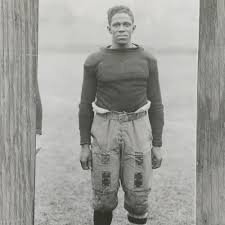
The Story And Significance Of Fritz Pollard - First African-American Head Coach And One Of The First Two African-American Players In NFL History

Frederick Douglass "Fritz" Pollard was an American professional football player and coach. In 1921, he became the first African-American head coach in the National Football League. Pollard and Bobby Marshall were the first two African-American players in the NFL in 1920. Football pioneer Walter Camp called Pollard "one of the greatest runners these eyes have ever seen."

Pollard coached Lincoln University's football team in Oxford, Pennsylvania during the 1918 to 1920 seasons and served as athletic director of the school's World War I era Students' Army Training Corps. During 1918–1919, he led the team to a victorious season defeating Howard University's Bisons 13–0 in the annual Thanksgiving classic as well as Hampton University (7–0) on November 9, 1918, and teams of military recruits at Camp Dix (19–0) on November 2, 1918, and Camp Upton (41–0). By the fall of 1920, he had begun to play for Akron, missing key Lincoln losses to Hampton (0–14) and Howard (0–42), much to the consternation of the alumni and administration. Paul Robeson was enlisted by Lincoln's alumni to coach the Thanksgiving 1920 game against Howard.

Pollard criticized Lincoln's administration, saying they had hampered his ability to coach and had refused to provide adequate travel accommodations for the team. "Prior to the Hampton game, the team was compelled to go to Hampton by boat, sleeping on the decks and under portholes," he told a reporter. "No cabins were provided, nor were they given a place to sleep after reaching Hampton. They lost the game through lack of rest." He also blamed the school for not providing the proper equipment. "I, myself, bought and paid $200 out of my pocket for football shoes for the team." He missed the 1920 Howard game, he said, because his Lincoln salary was so low that he was compelled to augment it with pay from Akron.

He played professional football with the Akron Pros, the team he would lead to the APFA championship in 1920. In 1921, he became the co-head coach of the Akron Pros, while still maintaining his roster position as running back. He also played for the Milwaukee Badgers, Hammond Pros, Gilberton Cadamounts, Union Club of Phoenixville and Providence Steam Roller. An article in the October 1, 1921 issue of the Chicago Whip newspaper stated that Pollard served as "assistant coach of the backfield men" of Northwestern University's football team.

Some sources indicate that Pollard also served as co-coach of the Milwaukee Badgers with Budge Garrett for part of the 1922 season.

On November 19, 1922, Pollard and Paul Robeson led the Badgers to victory over the great Jim Thorpe and his Oorang Indians. The final was 13–0 with Robeson scoring both touchdowns in his finest pro football performance.

Fritz also coached the Gilberton Cadamounts, a non-NFL team. In 1923 and 1924, he served as head coach for the Hammond Pros.

Pollard, along with all nine of the African American players in the NFL at the time, were removed from the league at the end of the 1926 season, never to return again. He spent some time organizing all-African American barnstorming teams, including the Chicago Black Hawks in 1928 and the Harlem Brown Bombers in the 1930s.

In the 1930s, Pollard founded his own professional football team, the Brown Bombers. The Depression ended the Brown Bombers' run in 1938, and Pollard went on to other ventures, including a talent agency, tax consulting, and film and music production. He produced Rockin' the Blues in 1956, which included such performers as Connie Carroll, The Harptones, The Five Miller Sisters, Pearl Woods, Linda Hopkins, Elyce Roberts, The Hurricanes, and The Wanderers.

Pollard also published the New York Independent News from 1935 to 1942, purportedly the first African American-owned tabloid in New York City. The war and a rivalry forced it to close. The paper's offices were on 125th Street and at its peak, the paper had a weekly circulation of approximately thirty-five thousand, ranking it among the top most read Black newspapers in the country.

Sources
https://www.pro-football-reference.com/
https://www.profootballarchives.com/index.html
https://americanfootballdatabase.fandom.com/wiki/Football_Wiki
https://www.gridiron-uniforms.com/GUD/controller/controller.php?action=main
https://www.profootballhof.com/hall-of-famers/
Carroll, John M. (1998). Fritz Pollard: Pioneer in Racial Advancement. Urbana: University of Illinois Press. p. 4. ISBN 0252067991.
 Gray, LaVerne (March 1, 2022). "Naomi Willie Pollard Dobson: A Pioneering Black Librarian". Libraries: Culture, History, and Society. 6 (1): 1–20. doi:10.5325/libraries.6.1.0001. ISSN 2473-0343.
 Reasons and Patrick, "Pollard Set Records as Black Football Player, Coach", The Plain Dealer, Cleveland, Ohio, 1972, February 27, Section E: 5.
 "Crack Lincoln University Team Coached by Fritz Pollard", Philadelphia Tribune, October 19, 1918
 "Lincoln University Victor over Howard", Washington Post November 29, 1918.
 "Pollard's Orange and Blue Juggernaut Crushes Camp Dix", Philadelphia Tribune, November 9, 1918.
 "Lincoln Swamps Camp Upton", Chicago Defender, November 30, 1918.
 "Fred Pollard Finishes as Coach for Lincoln", Chicago Defender, December 4, 1920.
 "Fritz Pollard Answers Critics", Baltimore Afro-American, December 17, 1920.
 "Pollard Made Asst. Coach at Northwestern". The Chicago Whip. October 1, 2021. Retrieved August 9, 2024. Pollard started his duties last Tuesday, appearing on the field in uniform
 "Path Lit by Lightning" by David Maraniss
 "Rockin' the Blues" – via www.imdb.com.
 "Pearl Woods". Discogs.
 John M. Carroll (1998). Fritz Pollard: Pioneer in Racial Advancement. University of Illinois Press. ISBN 978-0-252-06799-0.
 "Fritz's Fame". Brown University. Brown Alumni News. March 2005. Retrieved February 3, 2016.
 "Fritz Pollard: A Forgotten Trailblazer". Retrieved May 26, 2022.
 Carroll, John M. (1998). Fritz Pollard: Pioneer in Racial Advancement. University of Illinois Press. pp. 194–196. ISBN 978-0-252-06799-0.
 Dunlap, Keith (February 18, 2021). "Fritz was ritz as pioneer for Black football players". Retrieved May 26, 2022.
 "03-078 (Fritz Pollard Award)". www.brown.edu.
 "Jim Muldoon inducted into Rose Bowl Hall of Fame". Pac-12. Pac-12 Conference. December 30, 2015. Archived from the original on December 30, 2015. Retrieved February 3, 2016. Also inducted (was) ... Brown's Fritz Pollard (1916 Rose Bowl Game)
 "Mark Brunell, Fritz Pollard, Tyrone Wheatley and Jim Muldoon to be Inducted into the Rose Bowl Hall of Fame presented by Northwestern Mutual". Tournament of Roses. Pasadena, CA. September 25, 2015. Archived from the original on October 30, 2015. Retrieved February 3, 2016.
 "Alpha Athletes at the 1936 Olympic Games in Berlin, Germany". Alpha Phi Alpha fraternity. Retrieved January 10, 2010.
 Brown University – Brown University and the Black Coaches Association establish annual Fritz Pollard Award February 18, 2004.

Monday, June 6, 2022

The Story And Significance Of Jimmy Conzelman - The Last Cardinals Head Coach To Win An NFL Title

James Gleason Dunn Conzelman was an American football player and coach, baseball executive, and advertising executive. He was inducted into the Pro Football Hall of Fame in 1964 and was selected in 1969 as a quarterback on the National Football League 1920s All-Decade Team.

A native of St. Louis, Conzelman played college football for the 1918 Great Lakes Navy Bluejackets team that won the 1919 Rose Bowl. In 1919, he was an All-Missouri Valley Conference quarterback for the Washington University Pikers football team. He then played ten seasons as a quarterback, halfback, placekicker, and coach in the National Football League for the Decatur Staleys (1920), Rock Island Independents (1921–1922), Milwaukee Badgers (1922–1924), Detroit Panthers (1925–1926), and Providence Steam Roller (1927–1929). He was also a team owner in Detroit and, as player-coach, led the 1928 Providence Steam Roller team to an NFL championship.

From 1932 to 1939, Conzelman was the head football coach for the Washington University Bears football team, leading the program to Missouri Valley Conference championships in 1934, 1935, and 1939. He served as head coach of the NFL's Chicago Cardinals from 1940 to 1942 and again from 1946 to 1948. He led the Cardinals to an NFL championship in 1947 and Western Division championships in 1947 and 1948. He was also an executive with the St. Louis Browns in Major League Baseball from 1943 to 1945.

Conzelman enrolled at Washington University in St. Louis in 1916. He played freshman football that year but enlisted in the United States Navy when the United States entered World War I in 1917. He was stationed at the Great Lakes Naval Station north of Chicago. During two years of service, he played for the Naval Station's football, baseball, and basketball teams. He also took up boxing while in the Navy and won a championship in the middleweight division. He was the quarterback of the 1918 Great Lakes Navy Bluejackets football team that defeated previously undefeated Navy and then defeated the Mare Island Marines by a 17–0 score in the 1919 Rose Bowl. Conzelman's teammates on the 1918 Great Lakes team included George Halas and Paddy Driscoll, all three of whom were later inducted into the Pro Football Hall of Fame.

After the war, Conzelman turned down offers to become a professional boxer and returned to Washington University in February 1919. He played for the 1919 Washington Pikers football team that compiled a 5–2 record and outscored opponents 127 to 30. Conzelman was selected as the All-Missouri Valley Conference quarterback for 1919. He also was the catcher for the 1920 Washington University baseball team and organized an orchestra, played banjo, and wrote songs while attending Washington University.

During the spring semester of 1920, Conzelman lost his eligibility to play football due to academic deficiencies. His father had also died in May 1919, and he withdrew from school to help support his mother and younger siblings. In June 1920, Conzelman announced that he would not return to Washington University in the fall. He spent the summer leading an orchestra in Arkansas.

In mid-October 1920, Conzelman joined the Decatur Staleys (later renamed the Chicago Bears) of the newly formed American Professional Football Association (later renamed the NFL). He planned to relocate permanently to Decatur and also play for the Staleys baseball and basketball teams. Conzelman was reunited at Decatur with player-coach George Halas, with whom Conzelman had played on the 1918 Great Lakes team. In Conzelman's first game with the Staleys, he scored the game's only touchdown on a 43-yard run. Playing at the halfback position, Conzelman handled punting, placekicking and passing for the Staleys in the important games and was selected as a second-team player on the 1920 All-Pro team. The 1920 Staleys compiled a 10–1–2 record and finished in second place in the league.

In October 1921, Conzelman joined the Rock Island Independents as the team's captain and coach. At age 23, he was one of the youngest coaches in NFL history. He led Rock Island to a 4–1 record during the 1921 season.

After starting the season with Rock Island, Conzelman signed with the Milwaukee Badgers in the middle of their 1922 season. He was the Badgers' coach and a player for the final three games of the 1922 season during which the team went 0–3.

During the 1923 season, Conzelman, as player and coach, led the Badgers to a 7–2–3 record and a third-place finish out of 20 teams in the NFL. Conzelman was also the team's second-highest scorer with four touchdowns and two extra points. During the 1924 season, Conzelman remained with the Badgers as a player only. The team's record fell to 5–8 and 12th place in the NFL.

In 1925, Conzelman organized and became the owner of a new NFL franchise in Detroit, which he named the Detroit Panthers. He reportedly paid a franchise fee of only $50 to the NFL to acquire the Detroit franchise. In addition to being the owner, Conzelman was also the team's coach and a player during the 1925 and 1926 NFL seasons. During the 1925 season, Conzelman's Detroit club compiled an 8–2–2 record, played at Navin Field, and outscored opponents by a combined total of 129 to 39.

During the 1926 season, the Panthers dropped to 4–6–2 and compiled a record of 0–3–2 in the month of November. The team's attendance in Detroit was approximately 3,000 persons per game, not enough for Conzelman to make a profit. Accordingly, in August 1927, Conzelman sold the Detroit franchise back to the NFL for $1,200. Conzelman later recalled: "We simply were ahead of our time in Detroit. The town wasn't quite ready for pro football."


In August 1927, following his decision to sell the Detroit franchise back to the league, Conzelman signed as a player, manager and coach for the Providence Steam Roller. Conzelman brought players Gus Sonnenberg and Eddie Lynch with him from Detroit. Conzelman and Wildcat Wilson were the leading scorers on the 1927 Providence team, each with four touchdowns. The Steam Roller finished the 1927 season an 8–5–1 record and a fifth-place finish in the NFL.

Conzelman led the 1928 Providence team to an 8–1–2 record and the club's first NFL championship. The team's passing combination of Wildcat Wilson to Conzelman was the most effective in the league and accounted for most of the club's yardage until Conzelman twisted knee ligaments on a reception against the Yankees. Despite being unable to play in the second half of the season due to the injury, Conzelman was unanimously voted by his teammates as the team's most valuable player.

In his final season as an NFL player-coach, Conzelman led the 1929 Providence team to a 4–6–2 record.

In the fall of 1931, Conzelman served as the head coach of the St. Louis Gunners, an independent professional football team sponsored by a local field artillery unit of the National Guard. The Gunners posted a 5–2–1 record in 1931. After a game against the NFL's Chicago Cardinals, Chicago captain Ernie Nevers called the Gunners the "best independent club we have ever faced."

In January 1932, Conzelman returned to Washington University in St. Louis as the school's head football coach. He became the school's first alumnus to lead the football team. Over the next eight years, Conzelman led Washington University Bears football team to Missouri Valley Conference championships in 1934, 1935, and 1939, and compiled an overall record of 40–35–2.

In January 1940, Conzelman tendered his resignation as head coach of the Washington University football team, but the resignation was not accepted by the athletic board. The university chancellor directed Conzelman to attend an alumni rally in his support. Conzelman appeared and announced that he would not withdraw his resignation, though he would continue to support the program from the outside. Newspaper accounts indicate that he may have been fired under pressure from a powerful "anti-Conzelman" group of alumni in downtown St. Louis.

In April 1940, Conzelman was hired as the head coach of the NFL's Chicago Cardinals. He replaced Ernie Nevers in the position. In his first stint as head coach of the Cardinals, Conzelmean served three years with the Cardinals from 1940 to 1942, leading the club to a combined three-year record of 8–22.


tenure as head coach of the Cardinals was interrupted by a two-years stint as an administrator in Major League Baseball for the St. Louis Browns. In June 1943, he resigned his job as head coach of the Cardinals and was hired as director of public relations and assistant to Donald Lee Barnes, president and owner of the Browns. He remained with the Browns for two years and was said to be the "secret weapon" of the 1944 St. Louis Browns team that won the American League pennant. Conzelman resigned his post with the club in August 1945.


In late November 1945, Conzelman was hired for a second time to serve as head coach of the Chicago Cardinals starting with the 1946 NFL season. During the 1947 season, the Cardinals with their "Million Dollar Backfield" compiled a 9–3 record and defeated the Philadelphia Eagles in the 1947 NFL Championship Game. Conzelman's 1948 Cardinals team compiled an 11–1 record during the regular season, led the NFL in offense with an average of 32.9 points per game, and lost to the Eagles in the 1948 NFL Championship Game. In their second stint under Conzelman, the Cardinals compiled a 26–9 record from 1946 to 1948.

On January 7, 1949, three weeks after the loss in the 1948 Championship Game, Conzelman resigned as the Cardinals' head coach. He had been working for D'Arcy Advertising Co. for the prior two years during the off-season and stated that he was resigning his coaching position to devote his full efforts to the advertising firm. The Cardinals' management said at the time that Conzelman's resignation was unexpected and "came like a bolt from the blue."
Sources
https://www.pro-football-reference.com/
https://www.profootballarchives.com/index.html
https://americanfootballdatabase.fandom.com/wiki/Football_Wiki
https://www.gridiron-uniforms.com/GUD/controller/controller.php?action=main
https://www.profootballhof.com/hall-of-famers/
 "Jimmy Conzelman". Pro-Football-Reference.com. Sports Reference LLC. Retrieved December 3, 2016.
 Bob Broeg (2000). The 100 Greatest Moments in St. Louis Sports. Missouri History Museum. p. 43. ISBN 1883982316.
 Bill Schubert (1997). "Jimmy Conzelman" (PDF). The Coffin Corner. Pro Football Researchers.
 Walter Barlow Stevens (1909). St. Louis, the Fourth City, 1764-1909, Volume 2. S. J. Clarke Publishing Company. p. 775.
 "New Coach Star at Football, Baseball, Basketball; Is Musician and Songwriter". St. Louis Post-Dispatch. January 22, 1932. p. 2B – via Newspapers.com. Open access icon
 Carnation (McKinley High School yearbook). June 1916. p. 81.
 David Condon (January 22, 1932). "Sports World Mourning for Jimmy Conzelman". Chicago Tribune. p. 2 – via Newspapers.com. Open access icon
 "1919 Washington (MO) Bears Schedule and Results". SR/College Football. Sports Reference LLC. Retrieved December 3, 2016.
 "Conzelman Says He Will Not Be Back". The Des Moines Register. June 28, 1920. p. 4.
 "Died". Dental Health. June 1919. p. 31.
 "Jimmy Conzelman Joins Staley Football Team". St. Louis Post-Dispatch. October 13, 1920. p. 24 – via Newspapers.com. Open access icon
 "Conzelman's 43-Yard Run Nets A Touchdown and Wins for Staley Eleven". St. Louis Post-Dispatch. October 18, 1920. p. 19 – via Newspapers.com. Open access icon
 "Jim Conzelman Gets Position on Second All-Star "Pro" Eleven". St. Louis Post-Dispatch. December 12, 1920. p. 12 – via Newspapers.com. Open access icon
 "Conzelman Is Made Manager: Former Staley Player To Handle Rock Island Football Team". The Decatur Herald. October 21, 1921. p. 4 – via Newspapers.com. Open access icon
 "Jimmy Conzelman Coaching Record". SR/College Football. Sports Reference LLC. Retrieved December 3, 2016.
 "Lauer and Lyle, Pair of Rock Island Stars, Play With Green Bay Sunday". Green Bay Press-Gazette. November 24, 1922. p. 11.
 "1922 Milwaukee Badgers Statistics & Players". Pro-Football-Reference.com. Sports Reference LLC. Retrieved December 4, 2016.
 "1923 Milwaukee Badgers Statistics & Players". Pro-Football-Reference.com. Sports Reference LLC. Retrieved December 4, 2016.
 "1924 Milwaukee Badgers Statistics & Players". Pro-Football-Reference.com. Sports Reference LLC. Retrieved December 4, 2016.
 "Pro Grid Loop Dates Named: Conzelman Has Local Franchise". Detroit Free Press. August 3, 1925. p. 12.
 "Conzelman Is Versatile Stars In Athletics, Music". Detroit Free Press. August 23, 1925. p. 23.
 Richard Bak (1998). A Place for Summer: A Narrative History of Tiger Stadium. Wayne State University Press. p. 252. ISBN 0814325122.
 "1925 Detroit Panthers Statistics & Players". Pro-Football-Reference.com. Sports Reference LLC. Retrieved December 4, 2016.
 "1926 Detroit Panthers Statistics & Players". Pro-Football-Reference.com. Sports Reference LLC. Retrieved December 4, 2016.
 Richard Bak, A Place for Summer, pp. 252–253.
 Richard Bak, A Place for Summer, p. 248.
 "Detroit Surrenders Its National Wheel Football Franchise: Conzelman To Manage Providence; Takes Sonnenberg and Lynch With Him". Green Bay Press-Gazette. August 22, 1927. p. 14 – via Newspapers.com. Open access icon
 "1927 Providence Steam Roller Statistics & Players". SR/College Football. Sports Reference LLC. Retrieved December 3, 2016.
 "1928 Providence Steam Roller Statistics & Players". SR/College Football. Sports Reference LLC. Retrieved December 3, 2016.
 "Jimmy Conzelman "Most Valuable Man" On Greatest Team in "Pro" Football". St. Louis Post-Dispatch. December 9, 1928 – via Newspapers.com. Open access icon
 "Conzelman Still at It". St. Louis Post-Dispatch. October 18, 1929. p. 44 – via Newspapers.com. Open access icon
 "1929 Providence Steam Roller Statistics & Players". SR/College Football. Sports Reference LLC. Retrieved December 3, 2016.
 "1922 Rock Island Islanders Statistics". Baseball-Reference.com.
 "Jimmy Conzelman Minor Leagues Statistics & History". Baseball-Reference.com.
 "1922 Rock Island Islanders minor league baseball Roster on StatsCrew.com". www.statscrew.com.
 Carroll, Bob (1983). "The St. Louis Gunners" (PDF). Coffin Corner. 4 (Annual). Professional Football Researchers Association: 1–2, 10.
 "Jim Conzelman Will Coach Pro Battery Eleven". St. Louis Post-Dispatch. October 21, 1931. p. 7C – via Newspapers.com. Open access icon
 "Jim Conzelman Named Head Football Coach at Washington". St. Louis Post-Dispatch. January 22, 1932. p. 2B – via Newspapers.com. Open access icon
 W. Vernon Tietjen (January 17, 1940). "Conzelman Definitely Resigns As Bears' Grid Coach: Accepts Post on Athletic Council, Cheered by Grads". St. Louis Star-Times. p. 18 – via Newspapers.com. Open access icon
 "Washington Alumni To Probe Firing of Conzelman: Indignant Group to Determine if Coach Was Treated Fairly". St. Louis Star-Times. January 18, 1940. p. 22 – via Newspapers.com. Open access icon
 "Conzelman Is New Cardinal Football Boss: Former Star Will Take Charge at Once". Chicago Daily Tribune. April 11, 1940. p. 30 – via Newspapers.com. Open access icon
 Jack Hemstock (June 3, 1943). "Browns Sign Conzelman As Assistant To Barnes". St. Louis Star-Times. p. 22 – via Newspapers.com. Open access icon
 Wilfrid Smith (June 4, 1943). "Baseball Calls Conzelman To Job In St. Louis". St. Louis Post-Dispatch. p. 23 – via Newspapers.com. Open access icon
 "Conzelman Quits As Browns Aide". Democrat and Chronicle (Rochester, NY). August 25, 1945. p. 11 – via Newspapers.com. Open access icon
 "Conzelman Will Resume Coaching Chicago Cards". St. Louis Post-Dispatch. November 28, 1945. p. 2B – via Newspapers.com. Open access icon
 "1947 Chicago Cardinals Statistics & Players". Pro-Football-Reference.com. Sports Reference LLC. Retrieved December 3, 2016.
 "1948 Chicago Cardinals Statistics & Players". Pro-Football-Reference.com. Sports Reference LLC. Retrieved December 3, 2016.
 "Conzelman, Cardinal Grid Coach, Resigns Post With NFL Titlists". Portland Press Herald. January 8, 1949. p. 7 – via Newspapers.com. Open access icon
 "Jimmy Conzelman Quits As Coach of Grid Cards For Ad Firm Job Here". St. Louis Post-Dispatch. January 8, 1949. p. 6A – via Newspapers.com. Open access icon
 "Conzelman Signs Up For Park Opera Role". St. Louis Post-Dispatch. April 14, 1957. p. 4G – via Newspapers.com. Open access icon
 "Jimmy Conzelman, 72, is Dead; Coached Cardinals to Grid Title". The New York Times. August 1970.
 "American Memorial, Meaux". March 3, 2014.
 "Conzelman, Hinkle Gain Hall of Fame". St. Louis Post-Dispatch. February 28, 1964. p. 1E – via Newspapers.com. Open access icon
 Bill Schubert, "Jimmy Conzelman," The Coffin Corner, vol. 19, no. 1 (1997).
 "Conzelman Nominated To Hall". St. Louis Post-Dispatch. December 7, 1967. p. 1E – via Newspapers.com. Open access icon
 "Conzelman Plaque To Be Dedicated". St. Louis Post-Dispatch. September 11, 1968. p. 2E – via Newspapers.com. Open access icon
 Bob Broeg (August 27, 1969). "'Nice Things' Surprise Modest Jim Conzelman". St. Louis Post-Dispatch. p. 2E – via Newspapers.com. Open access icon
 "Maxvill, Devine In First Class To Enter Washington U. Hall". St. Louis Post-Dispatch. June 24, 1992. p. 8D – via Newspapers.com. Open access icon
 "Honors scheduled". The Arizona Republic. July 31, 2000.
 "Sues Jimmy Conzelman". The St. Louis Star. January 17, 1930. p. 1 – via Newspapers.com. Open access icon
 "Peggy Udell Again Wears Wedding Ring: Mother Announces Former Follies Girl's Marriage to Professional Ball Player". The Philadelphia Inquirer. April 15, 1924. p. 9 – via Newspapers.com. Open access icon
 "Peggy Udell Seeks Divorce". The Great Falls Tribune. July 10, 1924. p. 9 – via Newspapers.com. Open access icon
 "Stork Holds Up Former Follies Girl's Divorce Suit". The Gazette Times (Pittsburgh). July 5, 1925. p. 1 – via Newspapers.com. Open access icon
 "Coach Conzelman To Wed Miss Anna Forrestal Soon". St. Louis Star-Times. December 3, 1936. p. 28 – via Newspapers.com. Open access icon
 "Football Coach Conzelman To Wed Miss Anna Forrestal: Wedding to Take Place at Seminary in Florissant; Third for Athlete". St. Louis Post-Dispatch. December 2, 1936. p. 6C – via Newspapers.com. Open access icon
 Marriage License for James Conzelman and Ann Forrestal, both of St. Louis, issued November 27, 1936, ceremony December 5, 1936. Ancestry.com. Missouri, Marriage Records, 1805–2002 [database on-line].
 "Jimmy Conzelman Dies". St. Louis Post-Dispatch. July 31, 1970. Retrieved July 23, 2016 – via Newspapers.com.
Bob Curran, Pro Football's Rag Days. Englewood Cliffs, NJ: Prentice-Hall, 1969.

Thursday, January 13, 2022

Who Were The Milwaukee Badgers And What Scandel Were They Involved In?

The Milwaukee Badgers were a professional American football team based in Milwaukee, Wisconsin, that played in the National Football League from 1922 to 1926. The team played its home games at Athletic Park, later known as Borchert Field, on Milwaukee's north side. The team was notable for having a large number of African-American players for the time.

After the team folded following the 1926 season (largely due to being left broke because of a $500 fine by the NFL for using four high-school players in a 1925 game against the Chicago Cardinals, a game arranged after the Badgers had disbanded for the season), many of its members played for the independent semi-pro Milwaukee Eagles. A few of the players from this team went on to play for the original Pittsburgh Pirates football team in 1933; the team later became the Steelers. This has led some to mistakenly believe that either the Badgers or Eagles became the Steelers. The 1925 Chicago Cardinals–Milwaukee Badgers scandal was a scandal centered around a 1925 game between the Chicago Cardinals and the Milwaukee Badgers of the National Football League. The scandal involved a Chicago player, Art Folz, hiring a group of high school football players to play for the Milwaukee Badgers, against the Cardinals. This would ensure an inferior opponent for Chicago. The game was used to help prop up their win-loss percentage and as a chance of wresting away the 1925 Championship away from the first place Pottsville Maroons.


In 1925, the Chicago Cardinals were in the running to win the NFL championship with the Pottsville Maroons. The Maroons had beaten the Cardinals 21-7 earlier in the season at Comiskey Park. This loss gave Pottsville a half game lead in the standings. However, the Cardinals felt that they could make up for the loss. Many professional football teams during the first decade of the NFL would schedule some easy extra games to pad their record and place in the standing. The Cardinals had hoped that the move would help bump the team to a first place finish over Pottsville. Prior to 1933, the team with the best record in the standings at the end of the season was named the season's NFL Champions.


The two extra games were scheduled against the inferior Milwaukee Badgers and Hammond Pros, both of which were NFL members but had disbanded for the year. The Badgers, owned by Ambrose McGuirk, agreed to a game against the Cardinals. However, McGuirk lived in Chicago, which put him at a disadvantage in getting his team back together to play the Cardinals. Art Folz, a substitute quarterback for the Cardinals, convinced four players from Englewood High School, located in Chicago, into joining the Badgers for the game under assumed names, thereby ensuring that the Cardinals' opponent was not a pro caliber club. It also should be noted that Folz himself was an Englewood High School graduate. Meanwhile the Cardinals' owner, Chris O'Brien, unaware of the roster tampering, but still sensing a mismatch, didn't even charge attendance to the few scattered spectators who turned up for the December 10, 1925 game. However, the second game on December 12, against Hammond proved to be much closer in score with 13-0 Cardinals win over the Pros.
A few weeks later, when NFL President Joseph Carr learned high school players had been used, he told reporters the 59-0 Cardinals win would be stricken from the record. However, the league had never got around to removing it. The game is still a part of the NFL records. Chris O'Brien was also fined $1,000 by Carr for allowing his team play a game against high schoolers, even though he claimed that he was unaware of the players' status. Ambrose McGuirk was ordered to sell his Milwaukee franchise within 90 days. Folz, for his role, was barred from football for life.


By the summer of 1926, Carr toned down his punishment for each party involved in the scandal. Folz's lifetime ban was lifted, probably to prevent him from going the first American Football League, however he chose not to return to pro football. The $1,000 fine against O'Brien was rescinded, probably since the amount would have put the Cardinals out of business. McGuirk though had already sold his Badgers franchise to Johnny Bryan, a fullback with the Chicago Bears. The Englewood players were also forgiven, and two of them, William Thompson and Charles Richardson, earned high school all-star recognition at the end of the season. Folz reportedly told the high schoolers that the game was a "practice game" and would in no part affect their amateur status.


In early December 1925, the Maroons, with a 9-2 record, were just a half-game behind the Cardinals, who were 9-1-1. At the same time as the Hammond-Chicago game, the Maroons scheduled a game against a team of Notre Dame all-stars that included the famed Four Horsemen. Due to the public interest of the game, it was played in a larger venue, Philadelphia's Shibe Park, not Pottsville's Minersville Park, which was mainly a high school stadium. By playing in Philadelphia, the Maroons were violating territory agreements drawn up by the NFL. Philadelphia was within the boundaries already claimed as the home by the Frankford Yellow Jackets. The Yellow Jackets, after hearing of the planned Notre Dame contest, filed a protest with the NFL. Pottsville's owner said all along that the game was sanctioned by the NFL and that he had received permission to play in Philadelphia from an NFL secretary. However, Carr had the final say and on several occasions, he threatened the Pottsville team with suspension from the league if the game took place. Pottsville played the game anyway and won, 9-7, on a last-minute field goal. The Maroons were fined, tossed from the league, and stripped of their title. They'd also have to cancel the remaining game on their schedule, against the Providence Steam Roller. The team also was ruled ineligible for the league title, which was eventually awarded to the Cardinals.


However, the Pottsville fans still demand to know why Cardinals was awarded the title even though they too were found by Carr to have violated the NFL's rules. According to Bob Carroll of the Professional Football Researchers Association, "The Cardinals didn't defy the league," Carroll said. "Pottsville did. It was a great team, but the owner made a mistake." However, it is still not entirely known if O'Brien knew of the high school players on the Badgers team.


The Pottsville team was reinstated by the NFL in July 1926, mainly because the NFL didn't want to lose Pottsville's skilled group of players to the upstart American Football League. Even though the Cardinals were awarded the 1925 Championship, O'Brien refused to accept it, stating that he didn't want to win the title "that way". However in 1933, as Charles Bidwell took over as the owner of the Cardinals, he began to claim the 1925 title belonged to the Cardinals, overturning O'Brien earlier decision. It is also believed that a Cardinals Football Curse was put upon the Cardinals and Bidwell because of the events surrounding the 1925 Championship. The Cardinals did however, win the NFL Championship in 1947.

Sources
https://www.pro-football-reference.com/
https://www.profootballarchives.com/index.html
https://americanfootballdatabase.fandom.com/wiki/Football_Wiki
https://www.gridiron-uniforms.com/GUD/controller/controller.php?action=main
https://www.profootballhof.com/hall-of-famers/
Reimann, George (December 3, 1981). "Pro football lived here". Milwaukee Journal. p. 3, part 3.
 Cliff Christl for the Milwaukee Journal Sentinel (October 23, 1999). "Packers' survival in NFL a fluke of circumstance". Archived from the original on September 23, 2006. Retrieved March 17, 2008.
 "Green Bay Packers season tickets". Retrieved April 29, 2012.
 "Badgers, Milwaukee's great 'pro' eleven, to meet Racine Sunday". Milwaukee Journal. October 12, 1922. p. 2, final.
 "Milwaukee pro eleven trims Racine Legion". Milwaukee Sentinel. October 16, 1922. p. 7.
 Prigge, Matthew J. (December 28, 2011). "Smash-Mouth Football: The brief, bruising years of the NFL's Milwaukee Badgers". Express Milwaukee. Retrieved April 30, 2013.
 "Bryan Badgers quit pro league". Milwaukee Sentinel. July 17, 1927. p. 1, section 3.
 Maas, Tyler (October 21, 2021). "The short, scandalous story of Milwaukee's NFL team". Milwaukee Record. Retrieved July 19, 2022.
 "Player BIO | Pro Football Hall of Fame Official Site". www.profootballhof.com.