Showing posts with label Chicago Cardinals. Show all posts

Monday, February 6, 2023

The Story And Significance Of Dick "Night Train" Lane - Most Interceptions In One Season With 14

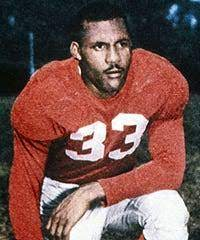
Richard Lane, commonly known as Dick "Night Train" Lane, was an American professional football player who was a cornerback for 14 years in the National Football League. He played for the Los Angeles Rams (1952–1953), Chicago Cardinals (1954–1959), and Detroit Lions (1960–1965).

As a rookie in 1952, Lane had 14 interceptions, a mark that remains an NFL record 70 years later. He played in the Pro Bowl seven times and was selected as a first-team All-Pro player seven times between 1956 and 1963. His 68 career interceptions ranked second in NFL history at the time of his retirement and still ranks fourth in NFL history. He was also known as one of the most ferocious tacklers in NFL history and was inducted into the Pro Football Hall of Fame in 1974. He was named to the National Football League 50th Anniversary All-Time Team in 1969, named to the 75th Anniversary All-Time Team in 1994 and unanimously named to the National Football League 100th Anniversary All-Time Team in 2019. In 1999, he was ranked number 20 on The Sporting News' list of the 100 Greatest Football Players.

After retiring from professional football, Lane worked for the Detroit Lions in various administrative positions from 1966 to 1972 and then held assistant coaching positions at Southern University (1972) and Central State University (1973). For 17 years, from 1975 to 1992, he was in charge of Detroit's Police Athletic League.

After graduating from high school, Lane lived for a time in Council Bluffs, Iowa, with his birth mother, Etta Mae King. She had visited during Lane's youth, and the two reconciled. His mother and a man had opened a tavern in Council Bluffs. While in Council Bluffs, a baseball scout signed Lane, and he played for a time with the Negro league Omaha Rockets, a farm team for the Kansas City Monarchs.

In the fall of 1947, Lane enrolled at Scottsbluff Junior College in Scottsbluff, Nebraska. He played one season of college football at Scottsbluff. He was the only African American player on the team, and a clipping from the college newspaper noted, "He is outstanding for his vicious tackles, hard running and pass snatching." The Scottsbluff football team compiled a 5–3–1 record with Lane in the lineup in 1947 and finished in third place in the Nebraska Junior College Conference.

In 1948, Lane enlisted in the United States Army and served for four years. He served at Fort Ord on Monterey Bay in California and played on a Fort Ord football team. In 1951, he caught 18 touchdown passes for Fort Ord. He received second-team All-Army honors in 1949 and first-team honors in 1951. After his discharge from the Army, Lane worked in an aircraft plant in Los Angeles, lifting heavy sheets of metal out of a bin and placing them into a press.

While working at the aircraft plant in Los Angeles, Lane passed the Los Angeles Rams offices on his bus ride to work. He walked into the office with a scrapbook of clippings in 1952 and asked for a tryout. He was recommended to the Rams by Gabby Sims and signed as a free agent. Lane initially tried out as a receiver, the position he had played at Fort Ord, but was switched to a defensive back by the Rams. In the Rams' first scrimmage on August 3, 1952, Lane drew praise as "the outstanding player in the scrimmage by a country mile" due to his "ferocious" approach to the game and his speed in chasing down Elroy Hirsch. After the scrimmage, Rams head coach Joe Stydahar said, "Lane came out here to make the ball club. Well, last night he got himself a job."

Lane acquired the nickname "Night Train" during his first training camp with the Rams. Teammate Tom Fears had a record player in his room and frequently played the record, "Night Train", by Jimmy Forrest. The record was released in March 1952 and was the #1 R&B hit for seven weeks. According to an account published by the Los Angeles Times in August 1952, "Whenever Fears plays it Lane can be found in the hall outside Tom's room dancing to the music." Lane was initially uncomfortable with the racial implication of the nickname, which had been bestowed on him by his white teammates, but he embraced it after a newspaper reported on his performance against Washington Redskins star Choo Choo Justice with the headline, "Night Train Derails Choo Choo".

As a rookie in 1952, Lane appeared in all 12 regular season games and broke the NFL single-season record with 14 interceptions. He also led the league with 298 interception return yards and two interceptions returned for touchdowns. In his first NFL game, a 37–7 loss to the Cleveland Browns, Lane was credited by the Los Angeles Times with playing "a positively sensational game at defensive halfback (he made about 50% of the tackles)." On December 7, 1952, he intercepted three passes in a 45–27 victory over the Green Bay Packers, including an 80-yard return of a pass from Tobin Rote. The following week, he intercepted three more passes in a 28–14 victory over the Pittsburgh Steelers, including one that he returned 42 yards for a touchdown. However, he sprained an ankle after making his third interception against the Steelers and was lost to the Rams for their playoff game against the Detroit Lions. The NFL later prepared a list of the greatest single-season performances of all time and ranked Lane's 1952 season fourth on that list.

After Lane blocked two field-goal attempts during a July 1953 scrimmage, Rams coach Hamp Pool said, "Night Train has the reflexes of a cat. It just doesn't seem possible that a man can come in from so far out and get in front of the ball in a matter of a couple of seconds." During the 1953 season, Lane appeared in 11 games for the Rams, but he intercepted only three passes. The highlight of his 1953 season was a blocked field goal against the Green Bay Packers; Lane blocked the kick at the Rams' 25-yards line, caught it on the bounce 45 yards downfield, and returned it for a touchdown.

In January 1954, the Rams traded Lane to the Chicago Cardinals in a three-team deal that also involved Don Doll. During the 1954 season, Lane appeared in all 12 regular season games for the Cardinals and again led the NFL in both interceptions (10) and interception return yards (181). Lane was occasionally used as a receiver by the Cardinals, and on November 13, 1955, he caught a pass from Ogden Compton, a play that covered 98 yards, the second longest pass in NFL history up to that time.

Lane remained with the Cardinals for six seasons from 1954 through 1959, appearing in 68 games and intercepting 30 passes. During his years with the Cardinals, Lane received All-NFL honors in 1954 (AP and UPI second team), 1955 (UPI second team), 1956 (AP and UPI first team), 1957 (Sporting News first team), 1958 (AP second team), 1959 (NEA first team). He was also invited to play in the Pro Bowl in 1954, 1955, 1956, and 1958.

On August 22, 1960, the Cardinals traded Lane to the Detroit Lions in exchange for lineman Gerry Perry. Lions great Joe Schmidt later called it "one of the greatest trades that will ever be made in any sport." At the time of the trade, Lions head coach George Wilson noted: "He has a reputation as a gambler. We are aware of that but he still has speed and experience."

In the Lions' first win of the 1960 season, a 30–17 victory over the Baltimore Colts, Lane intercepted a Johnny Unitas pass and returned it 80 yards for a touchdown, quickly becoming a fan favorite in Detroit. In his first two seasons with the Lions, Lane intercepted 11 passes for 175 return yards. In all, Lane played six seasons with the Lions from 1960 to 1965, appearing in 66 games with 21 interceptions for 272 yards. During his time with the Lions, Lane received All-NFL honors in 1960 (UPI, NEA, and Sporting News first team), 1961 (AP, NEA, and Sporting News first team), 1962 (AP, UPI, Sporting News, and NEA first team), 1963 (UPI and Sporting News first team). He was also invited to play in the Pro Bowl in 1960, 1961, and 1962.

Lane appeared in the 1962 Pro Bowl despite suffering from appendicitis. Weakened and in pain, he blocked an extra point kick and intercepted a Y. A. Tittle pass and returned it 42 yards for the West All-Stars. He checked into a Los Angeles hospital the next day and had his appendix removed.

In early July 1963, Lane married jazz singer Dinah Washington and began serving as her business manager, leading to reports that he may not continue his football career. However, he signed a contract with the Lions in late July. Lane intercepted five passes and recovered two fumbles in 14 games for the 1963 Lions.

Lane was hampered by injuries after the 1963 season. In August 1964, he was injured in a pre-season game, had surgery on his knee, and was out of action for the first part of the 1964 season. Lane ultimately appeared in seven games for the 1964 Lions, managing only one interception, the lowest total of his career up to that point.

On September 7, 1965, after undergoing off-season knee surgery, Lane, at age 37, was released by the Lions. When no other team claimed him, Lane returned to the Lions as a taxi squad player. He was returned to the active lineup on October 20, 1965, appearing in seven games with no interceptions for the first time in his career.

Lane was known as a ferocious tackler, and his style of play led to changes in the rules of the game. In 1961, he tackled Jon Arnett by the face mask as he ran at full speed down the field. Arnett lay motionless on the field after the tackle, and the play left a lasting impression. The following year, the NFL adopted a rule prohibiting the grasping of an opponent's face mask.

Lane's practice of tackling opponents about the head and neck, which was then a legal technique, was sometimes called a "Night Train Necktie". It later became known as a clothesline tackle and prohibited.

During his 14 years in the NFL, Lane recorded 68 interceptions, 1,207 interception return yards, and five touchdowns on interception. He also recovered 11 fumbles, returning them for 57 yards and one touchdown. From 1954 to 1963, he was selected as a first-team All-NFL player seven times and played in seven Pro Bowls. His single-season record of 14 interceptions still stands despite the lengthening of the NFL season from 12 to 16 and eventually 17 games. Lane's 68 career interceptions ranked second in NFL history at the time of his retirement and still ranks fourth in NFL history as of the end of the 2018 NFL season. His 1,207 interception return yards also ranked second in NFL history when he retired and still ranks sixth in NFL history. His 298 interception return yards in 1952 was three yards short of the NFL record at the time and remains the seventh best single-season total in NFL history.
Sources
https://www.pro-football-reference.com/
https://www.profootballarchives.com/index.html
https://americanfootballdatabase.fandom.com/wiki/Football_Wiki
https://www.gridiron-uniforms.com/GUD/controller/controller.php?action=main
https://www.profootballhof.com/hall-of-famers/
 "Career interceptions". Footballdb.com.
 "Night Train Lane". Pro-Football-Reference.com. Sports Reference LLC. Retrieved September 28, 2016. (listing date of birth as April 16, 1928)
 Ancestry.com. U.S., Social Security Applications and Claims Index, 1936-2007 [database on-line]. Provo, UT, USA: Ancestry.com Operations, Inc., 2015. Listing date of birth as April 16, 1928.
 Rick Cantu (January 19, 2001). "Night Train's tale: NFL Hall of Famer Dick Lane reflects on East Austin roots, pro football life in new book". Austin American-Statesman. p. C1.
 Gary Klein (January 31, 2002). "Dick 'Night Train' Lane, 73; Set Record as Rookie on L.A. Rams". Los Angeles Times. p. B12 – via Newspapers.com. Open access icon
 Jim Vertuno (January 31, 2002). "NFL legend 'Night Train' Lane dead at 73". Longview News-Journal (AP story). p. 3D – via Newspapers.com. Open access icon
 Richard Goldstein (February 1, 2002). "Night Train Lane, 73, N.F.L. Defensive Star". The New York Times.
 John Maher (October 23, 1994). "Richard Night Train Lane: After a Remarkable Football Career and Life, This Lion in Winter Has Pulled Into His Home Station Again". Austin American-Statesman. p. C14.
 Andrew Maraniss (June 30, 1991). "'Night Train' knew his cues, and used one". Austin American-Statesman. p. F4.
 Obituaries indicate that he led the 1944 team that won the Prairie View championship, but more detailed stories indicate he appeared in only one game for the 1944 team.
 "Former Scottsbluff college gridster will be honored". The Columbus Telegram (Columbus, Nebraska). February 8, 1974. p. 10.
 "Where He Is Now: On the Track of "Night Train" Lane". Ukiah Daily Journal. November 13, 1981. p. 14 – via Newspapers.com. Open access icon
 "Whatever happened to ... 'Night Train' Lane". Ebony. May 1978. pp. 100, 102, 104.
 Al Wolf (July 26, 1953). "Sportraits". Los Angeles Times. p. 65 – via Newspapers.com. Open access icon
 Frank Finch (August 4, 1952). "Stydahar Groans Over Rams' Play in First Squad Scrum at Redlands". Los Angeles Times. p. IV.2 – via Newspapers.com. Open access icon
 "Dick "Night Train" Lane Hall of Fame Biography". Pro Football Hall of Fame. Retrieved September 29, 2016.
 "Browns Outclass Rams, 37-7, Before 57,832". Los Angeles Times. September 29, 1952. p. 54 – via Newspapers.com. Open access icon
 Frank Finch (December 8, 1952). "Rams Roar Over Packers, 45 to 27: Lane Runs 80 Yards for Score". Los Angeles Times. p. 81 – via Newspapers.com. Open access icon
 "Rams Hand Steelers 28-14 Beating to Tie for Crown". Los Angeles Times. December 15, 1952. p. 78 – via Newspapers.com. Open access icon
 "Lane's Injury Dims Ram Victory Party". Los Angeles Times. December 15, 1952. p. 77 – via Newspapers.com. Open access icon
 "Top Ten Season Performances". NFL.com. Retrieved September 28, 2016.
 "Lane, Agajian Star in Workout". Los Angeles Times. July 24, 1953. p. 59 – via Newspapers.com. Open access icon
 "Rams Trounce Packers, 33-17". Los Angeles Times. December 13, 1953. p. 82 – via Newspapers.com. Open access icon
 "FOR 'NIGHT TRAIN' LANE, NFL HAS CHANGED–BUT NOT ENOUGH". Sun-sentinel.com. March 10, 1985.
 "Rams Obtain Doll, Peters in Triple Deal, Lose Lane". Los Angeles Times. January 31, 1954. p. 86 – via Newspapers.com. Open access icon
 "Bays Even Slate at 4-4, Gain in Race". Green Bay Press-Gazette. November 14, 1955. p. 21 – via Newspapers.com. Open access icon
 "Lions Get Help for Defense: Perry Sent Out For Dick Lane". Detroit Free Press. August 23, 1960. p. 25 – via Newspapers.com. Open access icon
 "Lions Get Help for Defense". Detroit Free Press. August 23, 1960. p. 27 – via Newspapers.com. Open access icon
 George Puscas (October 25, 1960). "Lose or Win ... Wilson Missing". Detroit Free Press. p. 29 – via Newspapers.com. Open access icon
 "Game Icer for Detroit". Lansing State Journal. October 24, 1960 – via Newspapers.com. Open access icon
 "Night Train: Now It Can Be Told!". Detroit Free Press. January 18, 1962. p. 30 – via Newspapers.com. Open access icon
 "Unitas Pass Beats East". Detroit Free Press. January 15, 1962. p. 29 – via Newspapers.com. Open access icon
 "Night Train Lane Signs With Lions". The Fresno Bee. July 31, 1963. p. 2D – via Newspapers.com. Open access icon
 "Lane Lost To Lions 6 Weeks". Detroit Free Press. August 21, 1964 – via Newspapers.com. Open access icon
 "Lane OK After Knee Surgery". Detroit Free Press. August 22, 1964. p. 6 – via Newspapers.com. Open access icon
 "Joe Don Is AWOL From Lions". Detroit Lions. September 8, 1965. p. 2C – via Newspapers.com. Open access icon
 "Lions Put Lane on Taxi Squad". Detroit Free Press. September 11, 1965. p. 1C – via Newspapers.com. Open access icon
 George Puscas (October 21, 1965). "Night Train Back To Help Lions". Detroit Free Press. p. 1F – via Newspapers.com. Open access icon
 George Puscas (July 28, 1974). "'Train' Was a Special Sort of Cat". Detroit Free Press. p. 6E – via Newspapers.com. Open access icon
 "Evolution of the rules: from hashmarks to crackback blocks". NFL.com. Archived from the original on September 28, 2014. Retrieved September 28, 2016.
 "Top Ten Most Feared Tacklers". NFL Films. 2009. Retrieved September 28, 2016.
 "A Trip With Night Lane". The Sun-Telegram. November 28, 1975. p. 6 – via Newspapers.com. Open access icon
 Paper Lion, Plimpton, 40th anniversary edition, pg. 136.
 "NFL Single-Season Interceptions Leaders". Pro-Football-Reference.com. Sports Reference LLC. Retrieved September 28, 2016.
 "NFL Career Interceptions Leaders". Pro-Football-Reference.com. Sports Reference LLC. Retrieved September 28, 2016.
 "NFL Career Interception Return Yards Leaders". Pro-Football-Reference.com. Sports Reference LLC. Retrieved September 28, 2016.
 "NFL Single-Season Interception Return Yards Leaders". Pro-Football-Reference.com. Sports Reference LLC. Retrieved September 28, 2016.
 "Night Train Lane Picked On Pros' All-Time Team". Detroit Free Press. September 7, 1969. p. 3E – via Newspapers.com. Open access icon
 "Graham, Huff on All-1950s Pro Football Selections". Racine Sunday Bulletin. August 31, 1969. p. 6C – via Newspapers.com. Open access icon
 Jack Saylor (February 6, 1974). "It's Hall of Fame for Night Train". Detroit Free Press. p. 1D – via Newspapers.com. Open access icon
 "Famer Lane Has a Message". Detroit Free Press. July 28, 1974. p. 1E – via Newspapers.com. Open access icon
 Drew Sharp (January 26, 1988). "Overdue 'Train' happy to reach Hall of Fame". Detroit Free Press. p. 1D – via Newspapers.com. Open access icon
 "Very Best of the NFL". Detroit Free Press. August 24, 1994. p. 1D – via Newspapers.com. Open access icon
 "untitled". Democrat and Chronicle (Rochester, NY). August 15, 1999. p. 3D – via Newspapers.com. Open access icon
 "Inductees". Texas Sports Hall of Fame. Archived from the original on September 30, 2016. Retrieved September 28, 2016.
 "Honors scheduled". The Arizona Republic. July 31, 2006. p. C5 – via Newspapers.com. Open access icon
 "Lane Moves to Southern U.: Night Train Quits the Lions". Detroit Free Press. February 10, 1972. p. 3D – via Newspapers.com. Open access icon
 "'Night Train' Shifts Jobs". Detroit Free Press. June 24, 1973. p. 5E – via Newspapers.com. Open access icon
 "'Night Train' Has A Coaching Dream". Detroit Free Press. August 31, 1973. p. 1D – via Newspapers.com. Open access icon
 "Groza, Lane make Canton". The Xenia (OH) Daily Gazette. February 6, 1974. p. 6 – via Newspapers.com. Open access icon
 Ron Roach (February 7, 1974). "Pro Ball, Then Degree For Night Train". Alexandria Daily Town Talk (AP story). p. B3 – via Newspapers.com. Open access icon
 Steve Crowe (April 23, 1987). "Lane urges youths to find PAL". Detroit Free Press. p. 5A – via Newspapers.com. Open access icon
 "Night Train Lane to be honored, roasted by PAL". Detroit Free Press. January 19, 1993. p. 4B – via Newspapers.com. Open access icon
 "A Richard (Night Train) Lane Salute". Detroit Free Press. January 22, 1993. p. 2F – via Newspapers.com. Open access icon
 "Night Train Gets Divorce". Detroit Free Press. January 30, 1963. p. D3 – via Newspapers.com. Open access icon
 "Night Train, Dinah Wed". Detroit Free Press. July 3, 1963. p. 2C – via Newspapers.com. Open access icon
 "Singer Dinah Washington Dies". Detroit Free Press. December 15, 1963. p. 3 – via Newspapers.com. Open access icon
 "'Night Train' Lane To Wed Detroit Schoolteacher". Jet. Johnson Publishing Company. September 10, 1964. p. 55.
 "Resident was first black woman in Coca-Cola ads". Ocala Star Banner. September 4, 2007.
 Helpers, Marian. "Lutheran Convert: Richard Lane". Whyimcatholic.com. Retrieved March 11, 2019.
 Rick Cantu (January 31, 2002). "Austinite was one of NFL's greatest players". Austin American-Statesman.
 Goldstein, Richard (February 2002). "Night Train Lane, 73, N.F.L. Defensive Star". The New York Times. Retrieved May 17, 2025.
 Ian O'Connor (February 3, 2016). "Another CTE case, another reason football needs dramatic change". ESPN.com.

Wednesday, December 21, 2022

The Story And Significance Of Ollie Matson - Retired In Second For Most Career All-Purpose Yards

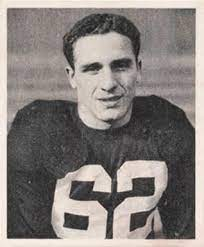
Ollie Genoa Matson II was an American Olympic medal winning sprinter and professional American football running back who played in the National Football League from 1952 to 1966. Drafted into the NFL by the Chicago Cardinals, Matson was traded to the Los Angeles Rams for nine players following the 1958 season.

Matson was named to the Pro Bowl six times during the course of his career and was elected to the Pro Football Hall of Fame in 1972.

Prior to joining the National Football League in 1952, Matson competed in track and field as part of the United States Olympic Team in the 1952 Summer Olympics at Helsinki, Finland. Matson won a bronze medal in the 400-meter run and a silver medal as part of the United States 4x400-meter relay team.

Ollie Matson was drafted in the first round of the 1952 NFL draft by the Chicago Cardinals, third pick overall. He went on to share 1952 Rookie of the Year honors with Hugh McElhenny of the San Francisco 49ers.

Matson missed the entire 1953 season while serving in the United States Army. During his year of service, he was named the MVP of the All-Army football team.

During the 1957 season, Matson was used extensively as a wide receiver by Chicago Cardinals head coach Ray Richards. Matson's productivity at the position was questioned in the wake of the team's 3 win, 9 loss finish, with some observers arguing that Matson's effectiveness as a running back was diminished by such use. New Cardinals head coach for 1958 Frank "Pop" Ivy took strong exception to such criticism of Matson lining up as a wide out, declaring:

"I have heard people say that the Cards stuck Matson out there on the flank as a 'decoy' on pass plays, and then forgot about him. That is absurd. He was sent out as flanker with the idea of throwing to him. But most opponents feared him so much that they doubled up on him. They watched him just as closely when he lines up as running back. They'd double team him if he were sitting up in the grandstand eating hot dogs, just to make sure."

Matson finished the aforementioned 1957 campaign as the NFL's sixth most prolific running back, with 577 yards gained in 134 carries, for a 4.3 yard average, with 6 touchdowns. To this he added 20 catches for 451 yards and 3 touchdowns through the air.

Following the 1958 season, Matson was traded by the Cardinals to the league's marquee franchise, the Los Angeles Rams, for nine players. Matson would later play for the Detroit Lions and the Philadelphia Eagles, earning Pro Bowl honors six times in his career (1952 and 1954–1958).

When Matson retired in 1966, his 12,799 career all-purpose yards were second only to Jim Brown.

Matson was inducted to the Pro Football Hall of Fame in 1972.
Sources
https://www.pro-football-reference.com/
https://www.profootballarchives.com/index.html
https://americanfootballdatabase.fandom.com/wiki/Football_Wiki
https://www.gridiron-uniforms.com/GUD/controller/controller.php?action=main
https://www.profootballhof.com/hall-of-famers/
Litsky, Frank (February 21, 2011). "Ollie Matson, an All-Purpose Football Star, Is Dead at 80". The New York Times. ISSN 0362-4331. Retrieved May 11, 2025.
 "Ollie Matson". Stockton Evening and Sunday Record. November 17, 1951. p. 26.
 King, Larry L. (October 22, 1966). "They Couldn't Cut Old Ollie, Could They?". Saturday Evening Post: 107–11.
 "SF All-Stars Down Cub Track Team". The Berkeley Gazette. March 29, 1948. p. 14.
 Mike Parker (May 14, 2009). ollie matson story. Retrieved May 11, 2025 – via YouTube.
 "Jamaican Steps 440 in 46; LaBeach Races to 9.4 100". Independent (Long Beach, California). June 6, 1948. p. 26.
 "Sports Shorts". Daily News (Los Angeles, California). November 23, 1951. p. 31.
 Newland, Russ (June 6, 1948). "McKenley Speeds To 46 Second Record In 440". The Fresno Bee. p. 33.
 Strite, Dick (December 29, 1948). "Highclimber". The Eugene Guard. p. 12.
 "Experts Hail Ollie Matson All-Time And All-American Football Great". The Press Democrat (Santa Rosa, California). October 20, 1949. p. 14.
 "Ollie Matson Rests For Cal Game". Alameda Times Star. November 15, 1950. p. 13.
 "Ollie Matson Still Ailing". Stockton Evening and Sunday Record. November 30, 1950. p. 36.
 "Matson Would Be All-Time Star On Big Team, Dons' Coach Says". Evening Star (Washington, D.C.). October 24, 1951. p. 65.
 "Monachino, Hatfield Make All-Coast". The Daily Breeze (Torrance, California). December 5, 1950. p. 8.
 "Ollie Matson Will Run In 100 Yard Dash Saturday". The Fresno Bee. May 11, 1949. p. 29.
 Fraley, Oscar (October 13, 1951). "Sports Parade". Berwick Enterprise (Berwick, Pennsylvania). p. 10.
 "Stanford's McColl; Cal's Richter: USF's Ollie Matson; Washington's McElhenny". The Humboldt Times (Eureka, California0. December 7, 1951. p. 15.
 Claasen, Harold (December 7, 1951). "Tenn., Michigan State And Maryland Players Dominate All-American Team". Rocky Mount Telegram (Associated Press). p. 6.
 "Ollie Matson Named on INS All-America". Alabama Tribune (Montgomery, Alabama). November 30, 1951. p. 6.
 "INS All-Coast Team Strong as Any Sectional Squad in Nation". Hanford Morning Journal. November 24, 1951. p. 6.
 "Gino Marchetti | Pro Football Hall of Fame". pfhof. Retrieved May 11, 2025.
 "Bob St. Clair | Pro Football Hall of Fame". pfhof. Retrieved May 11, 2025.
 Litsky, Frank (February 21, 2011). "Ollie Matson, an All-Purpose Football Star, is Dead at 80". The New York Times.
 "1951 USF Dons: The team that stood tall". NFL.com. Retrieved October 9, 2024.
 "West Favored In Shrine Game Today". The Times-Herald (Vallejo, California). December 29, 1951. p. 10.
 "Stong All-Star Squad to Train For Rams Foe". Norfolk Daily News. July 11, 1952. p. 6.
 "1952 NFL Draft Listing". Pro-Football-Reference.com. Retrieved May 11, 2025.
 "Ollie Matson (1959) - Hall of Fame". University of San Francisco Athletics. Retrieved May 11, 2025.
 "1952 NFL All-Pros". Pro-Football-Reference.com. Retrieved May 11, 2025.
 "1952 NFL Pro Bowlers". Pro-Football-Reference.com. Retrieved May 11, 2025.
 "Ollie Matson Stats". Pro-Football-Reference.com.
 "1952 NFL Leaders and Leaderboards". Pro-Football-Reference.com. Retrieved May 11, 2025.
 "Ollie Matson Wins All-Army MVP Award", Jet Magazine, 5 (7), Johnson Publishing Company: 51, December 23, 1953, retrieved July 13, 2017
 "1954 NFL Leaders and Leaderboards". Pro-Football-Reference.com. Retrieved May 11, 2025.
 "1954 NFL Pro Bowlers". Pro-Football-Reference.com. Retrieved May 11, 2025.
 "1954 NFL All-Pros". Pro-Football-Reference.com. Retrieved May 11, 2025.
 "1955 NFL Pro Bowlers". Pro-Football-Reference.com. Retrieved May 11, 2025.
 "1955 NFL Pro Bowlers". Pro-Football-Reference.com. Retrieved May 11, 2025.
 "1956 NFL Pro Bowlers". Pro-Football-Reference.com. Retrieved May 11, 2025.
 "1956 NFL All-Pros". Pro-Football-Reference.com. Retrieved May 11, 2025.
 "Arizona Cardinals Team Records, Leaders, and League Ranks". Pro-Football-Reference.com. Retrieved May 11, 2025.
 Cooper Rollow, "Cardinals: 1958 Season May Determine Cards' Future in the Windy City", in 1958 Pro Football. Los Angeles, California: Petersen Publishing Co., 1958; pg. 80.
 "Official 1957 NFL Season Statistics", 1958 Pro Football. Los Angeles, California: Petersen Publishing Co., 1958; pp. 86-90.
 "1957 NFL Leaders and Leaderboards". Pro-Football-Reference.com. Retrieved May 11, 2025.
 "1957 NFL Pro Bowlers". Pro-Football-Reference.com. Retrieved May 11, 2025.
 "1957 NFL All-Pros". Pro-Football-Reference.com. Retrieved May 11, 2025.
 "1958 NFL Pro Bowlers". Pro-Football-Reference.com. Retrieved May 11, 2025.
 Eisenberg, 2009, pg. 10
 "Rams Acquire Matson In Big Player Swap". Anaheim Bulletin (United Press International). March 2, 1959. p. 10.
 Katzowitz, Josh (2012). Sid Gillman Father of the Passing Game. Clerisy Press. pp. 147–8. ISBN 978-1-57860-505-7.
 Lewis, Dave (December 19, 1960). "Once Over Lightly". Independent (Long Beach, California). p. 19.
 "Injured Rams Knock Heads With G-Bay". The Californian (Salinas, California). December 16, 1960. p. 19.
 "Lions Give Sewell For Ollie Matson". The Evening Sun (Baltimore). August 21, 1963. p. 52.
 Izenberg, Jerry (October 19, 1964). "At Large, The Runner". The Star-Ledger (Newark, New Jersey). p. 19.
 "1964 Awards Voting". Pro-Football-Reference.com. Retrieved May 11, 2025.
 "Jim Brown Stats, Height, Weight, Position, Draft, College". Pro-Football-Reference.com. Retrieved May 11, 2025.
 "Ollie Matson | Pro Football Hall of Fame". pfhof. Retrieved May 12, 2025.
 "Ollie Matson, College Football Hall of Fame".
 Ollie Matson Obituary http://www.legacy.com/ns/obituary.aspx?n=ollie-matson&pid=148772388
 "Faces of Concussions: Football families share lives with CTE". Associated Press. April 21, 2021.
 "Ollie Matson Obituary | Ollie Matson Funeral | Legacy.com". Legacy.com.
 Melissa Healy, "Aggression, Explosivity Linked to Multiple Concussions in New Study," Los Angeles Times, December 4, 2012.
 "The driving force behind Chronic Traumatic Encephalopathy (CTE)". Concussion Legacy Foundation. Archived from the original on July 2, 2023. Retrieved July 2, 2023.
 Ken Belson and Benjamin Mueller (June 20, 2023). "Collective Force of Head Hits, Not Just the Number of Them, Increases Odds of C.T.E. The largest study of chronic traumatic encephalopathy to date found that the cumulative force of head hits absorbed by players in their careers is the best predictor of future brain disease". The New York Times. Retrieved July 2, 2023.
 "Ollie Matson". Concussion Legacy Foundation. Retrieved May 11, 2025.
John Eisenberg, That First Season:: How Vince Lombardi Took the Worst Team in the NFL and Set It on the Path to Glory. New York: Houghton Mifflin Harcourt Publishing Co., 2009.

Friday, October 7, 2022

The Story And Significance Of Charley Trippi - Only Player In The Pro Football Hall of Fame To Have Accumulated At Least 1,000 Yards Receiving, Passing, And Rushing

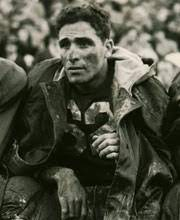
Charles Louis Trippi is a former American football player. He played professionally for the Chicago Cardinals of the National Football League from 1947 to 1955. Although primarily a running back, his versatility allowed him to fill a multitude of roles over his career, including quarterback, defensive back, punter, and return specialist. A "quintuple-threat", Trippi was adept at running, catching, passing, punting, and defense.

Trippi attended the University of Georgia, where he played college football for the Georgia Bulldogs from 1942 to 1946, with an interlude in 1944 while serving in the military during World War II. As a sophomore, he guided Georgia to victory in the 1943 Rose Bowl and was named the game's most valuable player. As a senior in 1946, he won the Maxwell Award as the nation's most outstanding college football player, was named the Southeastern Conference's player of the year, and earned unanimous first-team All-America recognition.

Drafted first overall by the Cardinals as a "future pick" in the 1945 NFL Draft, Trippi was also pursued by the New York Yankees of the All-America Football Conference (AAFC) as well as multiple professional baseball teams. He ultimately signed a record $100,000 contract with the Cardinals. As a rookie, Trippi led Chicago's "Million Dollar Backfield" to victory in the 1947 NFL Championship Game. By the time he retired he had compiled the most yards of total offense by a player in NFL history. Trippi was inducted into the College Football Hall of Fame in 1959 and the Pro Football Hall of Fame in 1968.

Trippi is the oldest living member of the Pro Football Hall of Fame, the oldest living first overall NFL draft pick, and the oldest confirmed living former American football player.

Charles Louis Trippi was born to an Italian immigrant father on December 14, 1921, in Pittston, Pennsylvania, a coal-mining community. Seeking to avoid the dangers of a life mining coal like his father, Trippi turned to sports. He began his football career as a tailback for the Red and White of Pittston High School Panthers which in 1967 became Pittston Area patriots with the merger of Avoca, Dupont and Duryea schools. He also played semi-professional baseball while in high school.

Considered undersized at 160 pounds, Trippi was turned down by four colleges before being recruited to play for the University of Georgia by Georgia alum Harold "War Eagle" Ketron. He was given a scholarship and played for the Georgia Bulldogs football varsity team from 1942 to 1946, with an interlude in 1944 due to World War II. As a sophomore in 1942, he played alongside that season's Heisman Trophy winner Frank Sinkwich. That year, Trippi and Sinkwich led Georgia to a 75–0 win over rival Florida, a game in which Trippi threw a touchdown pass to end George Poschner, scored two rushing touchdowns, and on defense returned an interception for a touchdown. Georgia finished the season with a record of 11–1 and was named the consensus national champion. Trippi then guided Georgia to a 9–0 victory over UCLA in the 1943 Rose Bowl, in which he carried 27 times for 115 yards and also handled passing and punting duties. He was retroactively named the game's most valuable player when the award was created in 1953.

Trippi's college career was interrupted by World War II, causing him to miss the 1943 and 1944 seasons and all but six games in 1945. He played for the 1944 Third Air Force Gremlins football team and was selected as a first-team back on the Associated Press' 1944 Service All-America team. While in the service in 1945, he was drafted by the Chicago Cardinals of the National Football League as a future pick; per an agreement with Cardinals owner Charles Bidwill, Trippi was allowed to return to Georgia after his time in the military.

Despite missing Georgia's first five games of the 1945 season, Trippi was named a first-team All-Southeastern Conference back by both the Associated Press (AP) and United Press International (UPI). He threw a 54-yard touchdown pass and returned a punt 69 yards for a touchdown in Georgia's 20–6 win over Tulsa in the Oil Bowl on New Years Day. In 1946, Trippi led Georgia to its first undefeated season. Against rival Georgia Tech in the final game of that year, Trippi compiled 544 combined yards rushing, passing, and returning kicks, and scored three touchdowns in Georgia's 35–7 victory. Georgia then defeated North Carolina 20–10 in the Sugar Bowl, where Trippi carried 14 times for 54 yards and threw a 67-yard touchdown pass to end Dan Edwards. After the season, Trippi was given the Maxwell Award as the most outstanding college player in the nation, the Walter Camp Memorial Trophy as the nation's best back, and was a unanimous choice for the All-America team. He finished as runner-up in Heisman Trophy voting behind winner Glenn Davis of Army.

Due to relaxed regulations during WWII years, Trippi holds the unusual distinction of participating in the Chicago College All-Star Game a record five times: twice with Georgia, twice in the military, and once with the Cardinals. He was named the Most Valuable Player of the game in 1945. It was at the Chicago College All-Star Game that Bidwell decided he would draft Trippi first overall, as "Card-Pitt" was winless in 1944 and in need of a play-maker. "He said, 'I'm gonna get ya,'" Trippi recalled. "He wanted me to play for him, and I said, 'All you've got to do is draft me and I'm ready.'"

In addition to football, Trippi was highly sought-after for his baseball skills. As a senior on Georgia's baseball team in 1946, he recorded a batting average of .475 and hit 11 home runs in 30 games while playing as a shortstop and outfielder. In 1947, Trippi played one season of minor league baseball with the Southern Association's Atlanta Crackers. He recorded a batting average of .334 through 106 games while drawing large crowds. Multiple Major League Baseball teams attempted to sign him, including the New York Yankees, Boston Red Sox, Boston Braves, and Philadelphia Phillies, but those deals fell through when he joined the NFL. Between NFL seasons in 1948 and 1949, Trippi served as Georgia's baseball coach, compiling a 34–18 win–loss record.

Trippi was a major part in the battling between the NFL and All-America Football Conference (AAFC). The 26-year-old rookie had plenty of leverage as a star commodity, and so weighed his options: the Cardinals and the AAFC's New York Yankees. The Yankees were sure they had signed Trippi to a joint deal that included a contract with the Yankees of MLB, but Cardinals owner Charles Bidwill signed Trippi to a four-year contract worth an unprecedented $100,000 along with a first-year bonus of $25,000. The contract was considered the most lucrative in pro football history. Trippi felt the NFL was more established and stable, and Bidwill had offered him job security.

Trippi's addition completed Bidwill's "Dream Backfield". Although Bidwill did not live to see it, Trippi became the game breaker in a talented corps that included Paul Christman, Pat Harder, Marshall Goldberg and, later, Elmer Angsman. Trippi served a multitude of roles for the Cardinals as a rookie: in 11 games, he rushed 83 times for 401 yards, caught 23 passes for 240 yards, averaged 43.4 yards on 13 punts, returned eight punts for 181 yards and 15 kickoffs for 321 yards, and on defense returned an interception 59 yards for a touchdown. The Cardinals compiled nine wins and three losses and faced the Philadelphia Eagles in the 1947 NFL Championship Game, which the Cardinals won 28–21 largely due to a spectacular all-around performance by Trippi. Playing on an icy field in Chicago, Trippi wore basketball shoes for better traction and totaled 206 yards, including 102 yards with two punt returns. He scored touchdowns on a 44-yard run and a 75-yard punt return. During the punt return, he twice escaped an encirclement of tacklers and fell to his knees near midfield before cutting to the outside and sprinting for the score. Trippi was named to the 1947 All-Pro second-team backfield by the United Press.

Trippi led the NFL in all-purpose yards in both 1948 and 1949, compiling 1,485 and 1,552 respectively. His 5.4 rushing yards per carry in 1948 also led the league, as did his two punt return touchdowns. He had a 45-yard punt return touchdown against the Green Bay Packers and later returned a punt 67 yards for a touchdown against the Pittsburgh Steelers. Trippi was a first-team All-Pro selection for 1948 by the AP, UPI, New York Daily News, and The Sporting News, among others. The Cardinals returned to the championship game in 1948, and this time were shutout by the Eagles for a 7–0 loss. Trippi was held to nine carries for only 26 yards during the game, which was played in a heavy snowstorm. Trippi saw heavy use as a receiver in 1949; in addition to rushing for 554 yards, he led the Cardinals in receptions (32) and receiving touchdowns (six) and was second on the team with 412 receiving yards.

After playing as a left halfback for his first four seasons, Trippi switched to quarterback during 1951 and 1952. On December 15, 1951, on frozen turf in Wrigley Field, Trippi completed nine passes for 106 yards and carried 11 times for 145 yards, accounting for three touchdowns as the Cardinals defeated the Bears 24–14. Following the 1952 season, he was invited to the Pro Bowl as a backup quarterback for the American Conference. Trippi moved back to offensive halfback for one season and again was invited to the Pro Bowl. He then switched over to play defense in 1954, recording three pass interceptions as a defensive back. He also became the Cardinals' primary punter for 1953 and 1954, and had a career punting average of over 40 yards per punt. His career essentially ended in the 1955 preseason when he was tackled by John Henry Johnson of the San Francisco 49ers, which left Trippi with a smashed nose, a concussion, and a protruding bone behind his eye that gave him double vision. He appeared in only five games that season and did not record any statistics on offense. Trippi retired on December 13, 1955, a day before his 33rd birthday. At the time, his 6,053 yards of total offense (3,506 rushing, 2,547 passing, and 1,321 receiving) was the most by a player in NFL history, and he had compiled the fourth-most all-purpose yards of any player (7,148).

Hall of Famer Art Donovan tells this story from late in Trippi's career: "Earlier in the season, the Bears had nearly killed Charlie Trippi, a very tough halfback. The guy who did it to him was Ed Sprinkle.... Sprinkle sucker-punched Trippi and shattered his jaw. He required a whole series of bone grafting. Then next season, Trippi broke Sprinkle's jaw. What goes round comes round."

After he ended his playing career, Trippi served as an assistant coach with the Cardinals from 1957 to 1965, mostly coaching the offensive backfield. He later took up a business in real estate. Trippi was inducted into the College Football Hall of Fame in 1959; the Georgia Sports Hall of Fame in 1965; and the Pro Football Hall of Fame and Pennsylvania Sports Hall of Fame in 1968. He is the only player in the Pro Hall of Fame to have accumulated at least 1,000 yards each receiving, passing, and rushing. In 2007, he was ranked 20th on ESPN's list of the top 25 players in college football history. The football stadium at Pittston Area High School is named Charley Trippi Stadium in his honor. In 1969, Trippi was named to the NFL's 1940s All-Decade Team, compiled to honor the best players of the decade. As of 2022, Trippi is the oldest living member of the Pro Football Hall of Fame, as well as the oldest living No. 1 NFL draft pick.

On December 14, 2021, Trippi turned 100, becoming the second Pro Football Hall of Famer to reach that milestone, after Clarence "Ace" Parker.
Sources
https://www.pro-football-reference.com/
https://www.profootballarchives.com/index.html
https://americanfootballdatabase.fandom.com/wiki/Football_Wiki
https://www.gridiron-uniforms.com/GUD/controller/controller.php?action=main
https://www.profootballhof.com/hall-of-famers/
23 rushing, 11 receiving, 2 return and 1 interception return
 "Charley Trippi, One Of Ten Nominated To Grid "Hall Of Fame"". Pittston Gazette. October 16, 1959. p. 6. Retrieved March 31, 2017.
 Lane, Fred (December 5, 2006). "Transcript of Interview with Charley Trippi". uga.edu. University of Georgia. Retrieved March 31, 2017.
 Freeman, Donald (October 16, 1949). "Trippi's Terrific". Chicago Tribune. p. 11. Retrieved April 1, 2017.
 Magill, Dan (October 30, 2008). "Magill: Dogs' 75–0 thumping of Gators most memorable". Athens Banner-Herald. Archived from the original on April 1, 2017. Retrieved March 31, 2017.
 Frawley, Frank (January 2, 1943). "Georgia Wins Rose Bowl Classic, 9–0". The Salt Lake Tribune. Associated Press. p. 5. Retrieved March 31, 2017.
 "Rose Bowl Champions, MVPs". Los Angeles Times. January 4, 2002. Retrieved March 31, 2017.
 "Navy Places Four on AP Service All-America; Trippi in Backfield". The St. Petersburg Times. December 12, 1944. p. 10 – via Newspapers.com.
 Steele, David (January 1, 2015). "Cardinals close to heart of oldest Pro Football Hall of Fame player". The Sporting News. Retrieved April 12, 2017.
 "'Bama Dominates Mythical Team". The Ogden Standard-Examiner. Associated Press. December 4, 1945. p. 12. Retrieved April 1, 2017 – via Newspapers.com.
 Burns Bennett (November 27, 1945). "Gilmer and Mancha Get Berths on UP All-Southeastern". The Anniston Star. p. 8. Retrieved May 31, 2015 – via Newspapers.com.
 Patrick, Skipper (January 2, 1946). "Trippi Tramps on Hurricanes". The Monroe News-Star. Associated Press. p. 6. Retrieved April 4, 2017 – via Newspapers.com.
 Barnett, Bob; Carroll, Bob (1989). "Charley Trippi: A Success Story" (PDF). The Coffin Corner. 11 (1). Retrieved April 4, 2017.
 "Trippi Winner Of Football Award". The Free Lance-Star. Associated Press. December 11, 1946. p. 3. Retrieved April 4, 2017.
 "New Honor for Charley Trippi". The Decatur Herald. Associated Press. June 24, 1947. p. 14. Retrieved April 4, 2017 – via Newspapers.com.
 "1946 College Football Year Summary". Sports-Reference.com. Retrieved April 4, 2017.
 "Charley Trippi Bio". Pro Football Hall of Fame. Retrieved April 12, 2017.
 "Charley Trippi's College All-Star Game Trophy". Pro Football Hall of Fame. Retrieved April 12, 2017.
 Wolken, Dan (April 21, 2013). "Oldest living No. 1 pick remembers a different draft". USA Today. Retrieved April 12, 2017.
 Reichler, Joe (January 16, 1947). "Trippi To Sign With Chicago". Tucson Daily Citizen. Associated Press. p. 8. Retrieved April 13, 2017.
 "Charles Trippi Minor League Statistics & History". Baseball-Reference.com. Sports Reference. Retrieved April 4, 2017.
 "Baseball and Football Make Firm Contract". The Daily Chronicle. United Press. January 15, 1947. p. 8. Retrieved April 4, 2017 – via Newspapers.com.
 "All-Time Georgia Baseball Coaches". georgiadogs.com. University of Georgia. Archived from the original on April 13, 2017. Retrieved April 13, 2017.
 Einstein, Charles (January 17, 1947). "Chicago Cardinals to Pay Trippi $100,000". The Daily Times. International News Service. p. 6. Retrieved March 7, 2017 – via Newspapers.com.
 Chamberlain, Charles (January 17, 1947). "Trippi Gets Peanuts, Says Gallopin' Ghost". News-Journal. Associated Press. p. 21. Retrieved April 12, 2017 – via Newspapers.com.
 "The Cards' dream season in '47". Pro Football Hall of Fame. January 1, 2005. Retrieved April 3, 2017.
 "Charley Trippi Stats". Pro-Football-Reference.com. Sports Reference. Retrieved April 4, 2017.
 Goldberg, Dave (January 13, 2009). "Not Surprising". The Index-Journal. p. 11. Retrieved April 4, 2017 – via Newspapers.com.
 Sainsbury, Ed (December 29, 1947). "Cardinals Down Eagles to Gain Pro Grid Crown". The Evening News. United Press. p. 20. Retrieved April 4, 2017 – via Newspapers.com.
 Green, Russ (December 11, 1947). "Bears, Cardinals Each Place Three Men On U. P. All-Pro Eleven". Freeport Journal-Standard. United Press. p. 13. Retrieved April 4, 2017 – via Newspapers.com.
 Smith, Wilfred (December 20, 1948). "Heavy Snow Mars Game; Use Lights". Chicago Daily Tribune. p. 1. Retrieved April 12, 2017.
 "1949 Chicago Cardinals Statistics & Players". Pro-Football-Reference.com. Sports Reference. Retrieved April 13, 2017.
 "Cards Upset Bears, 24–14; Trippi Stars". The Decatur Herald. Associated Press. December 17, 1951. p. 4. Retrieved April 11, 2017 – via Newspapers.com.
 "Pro Bowl Will Feature Leading T Quarterbacks". Janesville Daily Gazette. Associated Press. January 9, 1953. p. 10. Retrieved April 13, 2017 – via Newspapers.com.
 "Eastern Squad Wins Pro Bowl Game, 20–9". Pittsburgh Post-Gazette. Associated Press. January 18, 1954. p. 18. Retrieved April 13, 2017.
 "Trippi Badly Hurt; Fear Career Over". St. Petersburg Times. Associated Press. September 16, 1955. p. 12. Retrieved September 28, 2016.
 "Charley Trippi Retires As Player for Cardinals". Moberly Monitor-Index. Associated Press. December 13, 1955. p. 9. Retrieved April 12, 2017 – via Newspapers.com.
 "Player Season Finder Query Results: For combined seasons, from 1920 to 1955, played in the NFL, sorted by descending All-Purpose Yds". Pro-Football-Reference.com. Sports Reference. Retrieved April 13, 2017.
 Stinson, Thomas. "Charley Trippi, UGA sports icon, dies at age 100". Archived from the original on December 20, 2022. Retrieved December 20, 2022 – via AJC.com.
 Donovan, Arthur (1987). Fatso: Football When Men Were Really Men. W. Morrow. p. 172. ISBN 0-688-07340-9.
 Michaux, Scott (April 12, 2012). "Michaux: It's time to celebrate Charley Trippi Day". Athens Banner-Herald. Archived from the original on April 12, 2017. Retrieved April 12, 2017.
 "HAPPY BIRTHDAY, CHARLEY TRIPPI!". profootballhof.com. Pro Football Hall of Fame. Retrieved December 14, 2021.
 "Legendary Hall of Fame UGA football player Charley Trippi dies at 100 – WSB-TV Channel 2 – Atlanta". Wsbtv.com. October 19, 2022. Retrieved October 19, 2022.
 Goldstein, Richard (October 19, 2022). "Charley Trippi, Versatile Football Hero, Dies at 100". The New York Times. Retrieved October 19, 2022.
 "Georgia football legend Charley Trippi dies at 100". Fox 5 Atlanta. October 19, 2022. Retrieved October 19, 2022.
Sullivan, George (1972). The Great Running Backs. New York: G. P. Putnam's Sons. pp. 69–73. ISBN 0-399-11026-7.
Ziemba, Joe (1999). When Football Was Football: The Chicago Cardinals and the Birth of the NFL. Chicago: Triumph Books. pp. 309–314. ISBN 1-57243-317-5.

Monday, September 19, 2022

The Story And Significance Of Joe Stydahar - All-Pro Five Consecutive Years At Offensive Tackle

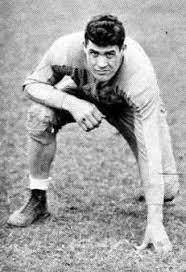
Joseph Lee Stydahar, sometimes listed as Joseph Leo Stydahar, and sometimes known by the nickname "Jumbo Joe", was an American football player and coach. He was inducted into the Pro Football Hall of Fame in 1967 and the College Football Hall of Fame in 1972.

A native of Kaylor, Pennsylvania, Stydahar grew up in West Virginia and played college football and basketball for the West Virginia Mountaineers. He was drafted by the Chicago Bears in the first round of the 1936 NFL Draft and played nine seasons as a tackle for the Bears from 1936 to 1942 and 1945 to 1946. He was selected as a first-team All-Pro five consecutive years from 1936 to 1940 and helped the Bears win NFL championships in 1940, 1942, and 1946 NFL Championship Games.

After his playing career ended, Stydahar was the head coach of the Los Angeles Rams during the 1950 and 1951 seasons and the Chicago Cardinals during the 1953 and 1954 seasons. His 1950 and 1951 Rams teams both advanced to the NFL Championship Game, and the 1951 team won the championship. He also served as an assistant coach for the Rams (1947–1949) and Bears (1963–1965).

hile overlooked by All-America selectors, Stydahar was not overlooked in the 1936 NFL Draft. He was selected by George Halas' Chicago Bears in the first round with the sixth overall pick, becoming the first player drafted by the Bears in the first NFL draft and the first lineman to be selected in the first round.
As a rookie, Stydahar started all 12 games at left tackle for a 1936 Chicago Bears team that compiled a 9–3 record. He was selected as a first-team All-Pro by Collyer's Eye magazine and a second-team All-Pro by the NFL and UPI.

By 1937, Stydahar helped lead the Bears to the NFL Western Division title with a 9-1-1 record. He was recognized as one of the best players in the NFL, receiving the highest point total of any player at any position in voting for the Associated Press (AP) All-Pro team.

The AP reported that "The standout player of the 1937 national pro football league season wasn't Slingin' Sammy Baugh . . ., but Joe Stydahar, veteran tackle of the Chicago Bears. That was the way the coaches of the 10 league clubs figured, at least, when it came to casting their ballots for the all-league team. ... Stydahar received 43 points out of a possible 50".

Stydahar played nine years as a tackle for the Bears from 1936 to 1942 and from 1945 to 1946, appearing in 84 NFL games. He continued to be acknowledged as one of the best players in the league through the 1930s. In 1939, the United Press rated him as "the league's best tackle" and "one of the toughest linemen in the league to take out." He was also ranked third among all NFL players in points received in the AP's 1939 All-Pro voting, trailing only Don Hutson and Dan Fortmann. In all, he was selected as a first-team All-Pro five consecutive years from 1936 to 1940. During his time with the club, the Bears won five NFL Western Division titles (1937, 1940, 1941, 1942, and 1946) and won the 1940, 1942, and 1946 NFL Championship Games.

Stydahar missed the 1943 and 1944 NFL seasons due to military service during World War II. He served as a lieutenant and gunnery officer in the United States Navy on the USS Monterey light aircraft carrier.

In February 1947, Stydahar was hired by the Los Angeles Rams as an assistant coach. He served three years as the Rams' line coach from 1947 to 1949.

In February 1950, Sydahar took over as the Rams' head coach. In his first season as head coach, he led the 1950 Rams to the NFL Western Division championship with a 9–3 record and the top offense in the NFL (38.8 points per game). In the 1950 NFL Championship Game, the Rams lost, 30–28, to the Cleveland Browns on a field goal by Lou Groza with 27 seconds remaining in the game.

In his second season with the Rams, Stydahar led the 1951 Rams to the NFL championship with a victory over the Cleveland Browns in the 1951 NFL Championship Game.

Stydahar began the 1952 season as the Rams' head coach. After losing to the Cleveland Browns in the season opener, dissension between Stydahar and his backfield coach Hamp Pool became public. On September 30, Stydahar reached an agreement with Rams owner Dan Reeves under which Stydahar resigned and was paid him $11,900 to buy out his contract, and Pool was promoted as the new head coach.

In mid-November 1952, Stydahar was hired by the Green Bay Packers. He served as a scout and part-time assistant coach for the balance of the 1952 season.

In January 1953, he was hired as head coach of the Chicago Cardinals. His Cardinals teams compiled records of 1–10–1 in 1953 and 2–10 in 1954. In June 1955, Stydahar and the Cardinals reached an agreement buying out the remainder of his three-year contract with the club.

In February 1963, George Halas hired Stydahar as defensive line coach for the Chicago Bears. Stydahar was credited with overhauling the Bears defensive line, helping to lead the 1963 Bears to the best scoring defense in the NFL and an NFL championship. The Bears dropped to sixth place in the Western Division in 1964, and Stydahar resigned from his position with the club at the end of the 1964 season in order devote his efforts to his work for a corrugated carton company.
Sources
https://www.pro-football-reference.com/
https://www.profootballarchives.com/index.html
https://americanfootballdatabase.fandom.com/wiki/Football_Wiki
https://www.gridiron-uniforms.com/GUD/controller/controller.php?action=main
https://www.profootballhof.com/hall-of-famers/
 "Joe Stydahar Bio". Pro Football Hall of Fame. Retrieved October 9, 2017.
 "Joe "Jumbo Joe" Stydahar". College Football Hall of Fame. Football Foundation. Retrieved October 8, 2017.
 "Joe Stydahar". Pro-Football-Reference.com. Sports Reference LLC. Retrieved October 4, 2017.
 "Stydahar Joins Grid Greats". The Charleston Daily Mail. February 17, 1972. p. 5C – via Newspapers.com.
 "Football Great Stydahar Dies, Had Planned To Live In Beckley". Beckley Post-Herald. March 25, 1977. p. 17 – via Newspapers.com.
 "The Mountaineers All Worked Up Over the Stydahar Case". The Pittsburgh Press. September 20, 1931. p. 41 – via Newspapers.com.
 "Services set for ex-Bear Stydahar". Chicago Tribune. March 25, 1977. p. 4-1 – via Newspapers.com.
 Harry Grayson (November 12, 1935). "By Harry Grayson". Muncie (IN) Evening Press. p. 10 – via Newspapers.com.
 Bernard Bierman (December 2, 1935). "Southern Players Get Grid Spotlight". The Maryville (MO) Daily Forum. p. 8 – via Newspapers.com.
 "Joe Stydahar". West Virginia University. Retrieved October 9, 2017.
 "1936 NFL Draft Listing". Pro-Football-Reference.com. Retrieved March 20, 2023.
 "Stydahar, Veteran Bear Tackle, Is Top Grid Pro". The Burlington (N.C.) Daily Times-News. December 15, 1937. p. 2.
 "Bears Win Three Places on Pro All Star Team". The Hammond (IN) Times. December 14, 1939. p. 21 – via Newspapers.com.
 "Four Giants Win Honors". Los Angeles Times. December 15, 1939. p. II-13 – via Newspapers.com.
 "Joe Stydahar to Help Tutor L. A. Rams' Line". Green Bay Press-Gazette. February 7, 1947. p. 13 – via Newspapers.com.
 "Stydahar To Be Coach Of Rams". The News, Frederick, Md. February 20, 1950. p. 10 – via Newspapers.com.
 "1950 Los Angeles Rams Statistics & Players". Pro-Football-Reference.com. Sports Reference LLC. Retrieved October 9, 2017.
 "1950 Los Angeles Rams Statistics & Players". Pro-Football-Reference.com. Sports Reference LLC. Retrieved October 9, 2017.
 "Trouble Between Coaches Bared". News-Press. September 30, 1952. p. 5 – via Newspapers.com.
 "Pool Succeeds Stydahar as Ram Coach; Joe Paid, $11,900". Los Angeles Times. October 1, 1952. p. 4-1 – via Newspapers.com.
 "Joe Stydahar Joins Bay Staff". Green Bay Press-Gazette. November 14, 1952. p. 13 – via Newspapers.com.
 "Stydahar New Cardinals Coach". The Journal and Courier (IN). January 30, 1953. p. 16 – via Newspapers.com.
 "1953 Chicago Cardinals Statistics & Players". Pro-Football-Reference.com. Sports Reference LLC. Retrieved October 9, 2017.
 "1954 Chicago Cardinals Statistics & Players". Pro-Football-Reference.com. Sports Reference LLC. Retrieved October 9, 2017.
 "Grid Cards Name Richards Coach: Joe Stydahar Out; Settle 3 Season Pact". Chicago Tribune. June 3, 1955. p. 3-1 – via Newspapers.com.
 "Bears Sign Stydahar As Defense Aid". Chicago Tribune. February 15, 1963. p. 4-1 – via Newspapers.com.
 "Bears' Defensive Line Overhauled by Stydahar". Chicago Tribune. August 28, 1963. p. 3-1 – via Newspapers.com.
 "1963 Chicago Bears Statistics & Players". Pro-Football-Reference.com. Sports Reference LLC. Retrieved October 9, 2017.
 "1964 Chicago Bears Statistics & Players". Pro-Football-Reference.com. Sports Reference LLC. Retrieved October 9, 2017.
 "Stydahar Resigns His Post As Line Coach for Bears". The New York Times. December 16, 1964. Retrieved July 19, 2025 – via UPI.
 "Joe Stydahar Record, Statistics, and Category Ranks". Pro-Football-Reference.com. Retrieved June 26, 2025.
 "Pro Football's Hall of Fame Is Announced". The Circleville (OH) Herald. August 3, 1950. p. 13 – via Newspapers.com.
 "Dr. Hugh MacMillan Makes 25th Anniversary All-America". The Cumberland News. December 19, 1960. p. 6 – via Newspapers.com.
 "Fete Ex-Bear Stydahar in Highland Park". Chicago Tribune. April 20, 1967. p. 3-3 – via Newspapers.com.
 "All-1930's NFL Team Selected". The Baltimore Sun. August 27, 1969. p. C5.
 "Inaugural Croatian-American Sports Hall of Fame induction held". croatianweek.com. October 18, 2022.
 "Former NFL Great Joe Stydahar Dies". The Cumberland News. March 25, 1977. p. 16 – via Newspapers.com.
 "Joe Stydahar Father of Boy". Los Angeles Times. February 12, 1948. p. II-9 – via Newspapers.com.
 "Stydahar Proud Father of Son". Redlands Daily Facts. June 27, 1952. p. 7 – via Newspapers.com.
 "In the Wake of the News". Chicago Tribune. March 4, 1955. p. III-1 – via Newspapers.com.
 "Ram-Bear Switch May Help Both ---Stydahar". Los Angeles Times. May 1, 1961. p. IV-2 – via Newspapers.com.
 "Illustrious Career Of Shinnston's "Jumbo Joe" Stydahar Still Being Remembered". Shinnston News & Harrison County Journal. February 2, 2017. Retrieved July 19, 2025.

Wednesday, September 7, 2022

The Story And Significance Charles Bidwill - Built The Chicago Cardinals Into A Champion

Prior to his ownership of the Cardinals, Bidwill was a successful businessman and wealthy lawyer in Chicago, with ties to organized crime boss Al Capone. He was owner of a racing stable, the president of the Chicago Stadium Operating Company and owner of a printing company. Bidwill's only physical participation in athletics came only during his time at St. Ignatius High School and Loyola University. After graduation in 1916, he began his law practice, serving as assistant prosecutor for Chicago and corporation counsel. As a businessman, Bidwill was often referred to as "Blue Shirt Charlie" because he sometimes favored a blue shirt and high boots instead of the traditional white shirt and businessman's shoes'.

Bidwill was part owner of the Chicago Bears, after he helped George Halas buy Edward “Dutch” Sternaman share of the team in 1933. According to Halas, Bidwill purchased team stocks for $5,000.

One night in 1932, Dr. David Jones, the then-owner of the Cardinals, and his wife were guests at an informal dinner party aboard Bidwill's luxurious power-cruising yacht, The Ren-Mar. Bidwill, then a vice president of the Chicago Bears, spoke with Jones that night and the conversation turned to pro football, with Jones complaining of the poor state of his team. Half-jokingly, Bidwill's wife, Violet, asked Jones, "Why don't you sell the Cardinals to Charley?" Jones replied that he would sell anything he owned if the price was right. Bidwill soon turned to Jones and the two began to discuss an offer. Bidwill went on to buy the Cardinals from Jones for $50,000. Bidwill handed Jones a down payment of $2,000 and the two men shook hands. The sale was not announced until 1933 to allow Bidwill time to dispose of his stock in the Bears. It was well known that Bidwill would have much preferred to buy the Bears, but George Halas refused to sell.

In 1940 he tried but failed to buy the Detroit Lions. He then hired Jimmy Conzelman as coach, who later quit as coach to work for the St. Louis Browns.

In 1944, due to World War II, many players were serving in the United States military, leaving a league-wide shortage of players. As a result, the Cardinals and the Pittsburgh Steelers merged their teams for the season. The team's name Card-Pitt was quickly dubbed the "Carpets" by detractors, as "every team in the league walks over them". The team lost ten straight to post an 0–10 record.


After the war the AAFC placed a team in Chicago, the Rockets, which publicly pushed for the Cardinals to leave town. In 1947 Bidwill outbid the Rockets for the rights to All-American Charley Trippi, signing him to a then record $100,000 contract. Trippi was the final piece of what Bidwill called his "Dream Backfield" of Paul Christman, Pat Harder, Marshall Goldberg, Elmer Angsman, and Trippi. They led the Cardinals to their first (and, to date, only) undisputed NFL championship in 1947.

He died of pneumonia in April 1947, shortly after signing Trippi. His widow Violet inherited the team and operated it until her death in early 1962. During her tenure as the Cardinals owner, she and her husband Walter Wolfner relocated the franchise to St. Louis in 1960. Following her death, she left the team to her adopted sons from her first marriage, Charles Jr. and Bill. He is a member of the Chicagoland Sports Hall of Fame and was inducted into the Pro Football Hall of Fame in 1967.

Bill Bidwill bought his older brother's share in 1972, and remained sole owner until his death in 2019. His son Michael Bidwill, who had been team president and operating head of the franchise since 2007, inherited the team. During Bill's time as owner, the team has relocated once more, to Phoenix, Arizona in 1988, and since 1994 have been known as the Arizona Cardinals. Only the Bears (owned by Halas and his descendants since 1921) and the New York Giants (owned by the Mara family since their founding in 1925) have been in the hands of one family longer than the Cardinals.

Sources
https://www.pro-football-reference.com/
https://www.profootballarchives.com/index.html
https://americanfootballdatabase.fandom.com/wiki/Football_Wiki
https://www.gridiron-uniforms.com/GUD/controller/controller.php?action=main
https://www.profootballhof.com/hall-of-famers/
Co-owner of the Card-Pitt in 1944.
 "Bidwill's aids will carry on sports empire". Chicago Sunday Tribune. April 20, 1947. p. 1, part 2.
 "Charles Bidwill, dog track owner, dies in Chicago". Sarasota Herald-Tribune. Associated Press. April 20, 1947. p. 11.
 Craig R. Coenen, From Sandlots to the Super Bowl: The National Football League, 1920–1967. University of Tennessee Press, 2005; p. 21.
 Bob Carroll and Bob Braunwart, "Blue Shirt Charlies Big Red Dream," Coffin Corner, vol. 3, no. 4 (1981); pp. 1–2.
 *"Arizona Cardinals History". Arizona Cardinals. Archived from the original on November 5, 2012. Retrieved September 2, 2010.
 "Cards' history hardly super". Chicago Tribune. 2009.
 Forr, James (2003). "Card-Pitt: The Carpits" (PDF). Coffin Corner. Vol. 25, no. 3. pp. 1–8. Archived from the original (PDF) on October 22, 2012 – via Professional Football Researchers Association.
 Jenkins, Lee (January 29, 2009). "Bidwills Restore Their Family Name". Sports Illustrated. CNN. Archived from the original on April 1, 2010. Retrieved September 3, 2010.
 "Mrs. Wolfner, Cardinals' owner, dies". Chicago Daily Tribune. Associated Press. January 30, 1962. p. 1, part 3.
 "Card owners to be active". Milwaukee Journal. press dispatches. February 8, 1962. p. 13, part 2.[permanent dead link]
 "Court fight begins for Cards' control". Pittsburgh Press. UPI. March 29, 1962. p. 48.
 "Bidwills face court action". Milwaukee Journal. Associated Press. March 31, 1962. p. 2, final.[permanent dead link]
 Howard, Robert. "Court rules for Bidwills". Chicago Daily Tribune. p. 1, part 4.
 "High court rules in favor of sons". Milwaukee Journal. Associated Press. February 2, 1963. p. 2, part 2.[permanent dead link]
 "Bill Bidwill sole owner of Cards". Southeast Missorian. Cape Girardeau. Associated Press. September 12, 1972. p. 8.
 Baum, Bob. "Long, rocky history marks Bidwills' ownership". Boston Globe. AP. Archived from the original on February 4, 2009. Retrieved January 17, 2009.

Wednesday, August 10, 2022

The Story And Significance Of Walt Kiesling - Four Consecutive Years Voted As An All-Pro At Offensive Guard

Walter Andrew Kiesling was an American football guard and tackle who spent 36 years as a player, coach, and aide with National Football League teams. He was posthumously inducted into the Pro Football Hall of Fame in 1966 and was named to the NFL 1920s All-Decade Team in 1969.

A native of Saint Paul, Minnesota, Kiesling played college football at the University of St. Thomas where he was selected as an all-state player in 1923, 1924, and 1925. He then played 13 years as a guard and tackle in the NFL with the Duluth Eskimos (1926–1927), Pottsville Maroons (1928), Chicago Cardinals (1929–1933), Chicago Bears (1934), Green Bay Packers (1935–1936), and Pittsburgh Pirates (1937–1938). He was a first-team All-Pro in 1929, 1930, and 1932, a second-team All-Pro in 1931, and played for the Packers' 1936 NFL championship team.

Kiesling also spent 25 years as a coach or aide for NFL teams, including seven years as head coach of the Pittsburgh Pirates/Steelers from 1939 to 1942 and 1954 to 1956. He led the Steelers to their first winning season in 1942. He also served as co-coach of the wartime merger teams known as the Steagles in 1943 and Card-Pitt in 1944 and as line coach for the Pirates (1937–1938), Green Bay Packers (1945–1948), and Steelers (1949–1953). He retired from active coaching for health reasons in 1957 but remained an aide to the Steelers coaching staff from 1957 to 1961.

In the fall of 1926, Kiesling joined the Duluth Eskimos of the National Football League, appearing in 11 games as a tackle for a team that featured star backs Ernie Nevers and Johnny Blood. He remained in Duluth for the 1927 season, moving to the guard position and appearing in six games.

Kiesling joined the Pottsville Maroons for the 1927 season, starting 10 games at right guard.

Kiesling next joined the Chicago Cardinals where he played at the left guard position from 1929 to 1933. During his prime years with the Cardinals, he was recognized as one of the leading linemen in the NFL.

In 1929, he started 12 games at left guard and was selected as a first-team All-Pro by Collyer's Eye magazine.

In 1930, he appeared in 11 games, nine as a starter, and was selected as a first-team All-Pro in 1930 by both Collyer's Eye and the Green Bay Press-Gazette, based on the returns of ballots sent to the league's coaches, club officials, sports writers and officials.

In 1931, he started nine games at left guards and was selected as a second-team All-Pro by the United Press, the Green Bay Press-Gazette, and Collyer's Eye.

In 1932, he started 10 games at left guard and was selected as a first-team All-Pro by the Associated Press.

Kiesling was the Cardinals' heaviest player, ranging from 235 to 260 pounds at six feet, three inches. He was reputed to be "excellent on defense and unusually shifty on offense." He was also known as "a smart guard, a sure tackler despite his bulk and adept at rushing a passer."

During his NFL career, Kiesling lived in Saint Paul in the off-season, operating a cafe and playing as a pitcher and outfielder for a semi-pro baseball team. He also played league baseball in Montana and Canada.

In August 1934, George Halas signed Kiesling to a one-year contract with the Chicago Bears. Kiesling appeared in 13 games for the Bears, only five as a starter.

In August 1935, Kiesling signed with the Green Bay Packers. At the time of his signing, the Green Bay Press-Gazette wrote "
Kiesling is one of the most experienced players in the pro grid game. Practically no one gains through his side of the line consistently ... Kiesling never dissipates, and trains in the year around, remaining always in top condition".

Kiesling appeared in 10 games for the Packers in 1935. He also appeared in eight games for the 1936 Green Bay Packers team that won the NFL championship.

Kiesling began his coaching career at age 34 during the 1937 season as an assistant coach under Johnny Blood for the Pittsburgh Pirates (renamed the Steelers in 1940). He was also a player for the Pirates during the 1937 and 1938 seasons, appearing in a total of 12 games. When Blood resigned as head coach after the team lost the first three games of the 1939 season, team owner Art Rooney hired Kiesling as the team's new head coach. Kiesling led the Pirates to a 1–6–1 record in the final eight games of the 1939 season.

Kiesling led the Steelers to a 2–7–2 record during the 1940 season and was replaced by Bert Bell and Aldo Donelli in 1941. Kiesling resumed his role as head coach near the end of the 1941 season, leading the team to a 1–2–1 in the final four games.

Kiesling led the 1942 Steelers to a 7–4 record, the first winning season in club history since the team was formed in 1933. Kiesling's 1942 team was led on the field by rookie halfback Bill Dudley who totaled 1,138 yards of total offense (696 rushing and 438 passing) and also had 576 yards on punt and kickoff returns. Dudley was drafted into Army after the 1942 season.

In 1943, with so many players lost to military service, the Steelers were temporarily merged with the Philadelphia Eagles to form the Steagles. Kiesling and the Eagles' coach Greasy Neale served as co-coaches of the Steagles. The Steagles compiled a 5–4–1 record.

In 1944, the Steelers were still lacking players due to the war and formed a one-year merger with the Chicago Cardinals, operating under the name Card-Pitt. Kiesling and the Cardinals' coach Phil Handler served as co-coaches. Despite the play of John Grigas, a Cardinals back who led the NFL in 1944 with 1,154 all-purpose yards and 471 kickoff return yards, the Card-Pitt team gave up 32.8 points per game, compiled a 0–10 record, and was outscored by a combined total of 328–108.

In January 1945, Kiesling resigned as the Steelers' coach. Hours after resigning his position with the Steelers, Kiesling was hired as assistant coach for the Green Bay Packers. He coached the Packers' linemen, and in December 1945, he signed a contract extending his service through the 1947 season. In January 1948, his contract was renewed again through the 1948 season. At the time, Curly Lambeau called Kiesling the top line coach in college or professional football.

Kiesling contracted pneumonia in the winter of 1947 and lost 51 pounds while battling the illness. In February 1949, Kiesling was released by the Packers, with Lambeau advising Kiesling "in the interests of his health to take a year's vacation from football."

Ignoring Lambeau's advice, Kiesling returned to the Steelers in March 1949 as the line coach. He signed a contract extension with the Steelers in March 1950, and remained as line coach through the 1953 season.

In March 1952, Kiesling was hospitalized with what was described as a "heavy cold". In November 1953 he was hospitalized again with pneumonia. Starting with his 1947 bout with pneumonia, Kiesling was plagued with respiratory ailments for the rest of his life.

In late August 1954, Joe Bach resigned as the Steelers' head coach after a poor showing by the team in exhibition games, and Kiesling was promoted to head coach. In his third stint as head coach, Kiesling led the Steelers to records of 5–7 in 1954, 4–8 in 1955, and 5–7 in 1956.

Kiesling is often remembered as the coach who released Johnny Unitas, a player widely acclaimed as one of the greatest in NFL history. The Steelers had selected Unitas, a Pittsburgh native, in the ninth round of the 1955 NFL Draft. Kiesling was satisfied with Jim Finks and Ted Marchibroda as his quarterbacks and was unimpressed by the gangly Unitas. He did not allow Unitas to even play in any exhibition games, and after pre-season camp, Kiesling told Rooney: "Unitas is too dumb. He can't remember plays."

Kiesling's health was declining by the mid-1950s. Steelers' owner Art Rooney considered firing him, but concluded that loyalty outweighed winning. Rooney reportedly said, "Walt will be my head coach as long as he wants to be, and even if he doesn't want to be." Kiesling's health was poor during the 1956 season, yet he returned for the pre-season in 1957, finally retiring in late August 1957. He remained an aide to the Steelers' coaching staff until his death.

Kiesling's overall record as an NFL head coach was 30–55–5.
Sources
https://www.pro-football-reference.com/
https://www.profootballarchives.com/index.html
https://americanfootballdatabase.fandom.com/wiki/Football_Wiki
https://www.gridiron-uniforms.com/GUD/controller/controller.php?action=main
https://www.profootballhof.com/hall-of-famers/
"Death certificate for Walter Aloysius Kiesling, born May 27, 1903, in St. Paul, died March 2, 1962, in Pittsburgh". Ancestry.com (Pennsylvania, Death Certificates, 1906-1964).(Note: Contrary to other sources, Kiesling's death certificate lists his middle name as Aloysius)
 "Walt Kiesling". Pro-Football-Reference.com. Sports Reference LLC. Retrieved September 30, 2017.
 1910 Census entry for Wensel Kiesling and family. Son Walter, age 7, born in Minnesota. Census Place: St Paul Ward 12, Ramsey, Minnesota; Roll: T624_720; Page: 1A; Enumeration District: 0159; FHL microfilm: 1374733. Source Information: Ancestry.com. 1910 United States Federal Census [database on-line].
 1920 Census entry for Wenzel Kiesling and family. Son Walter, age 16, born in Minnesota. Census Place: St Paul Ward 12, Ramsey, Minnesota; Roll: T625_854; Page: 18A; Enumeration District: 146. Source Information: Ancestry.com. 1920 United States Federal Census [database on-line].
 "Kiesling Named Coach After Blood Resigns Pirate Post". Pittsburgh Post-Gazette. October 4, 1939. p. 19 – via Newspapers.com.
 "Four Carleton Stars On Tribune's All-State Eleven". The Minneapolis Sunday Tribune. November 29, 1925 – via Newspapers.com.
 "Walt Kiesling, Former Packer Lineman, Vindicates Record". Green Bay Press-Gazette. December 3, 1942. p. 22 – via Newspapers.com.
 "1929 NFL All-Pros". Pro-Football-Reference.com. Sports Reference LLC. Retrieved October 1, 2017.
 "1930 NFL All-Pros". Pro-Football-Reference.com. Sports Reference LLC. Retrieved April 7, 2017.
 George Whitney Calhoun (December 20, 1930). "Dilweg, Michalske Named On All-American Pro Team; Grange, Nevers Also Chosen". Green Bay Press-Gazette. p. 13.
 George Kirksey (December 15, 1931). "Dutch Clark Is Named On All-America Pro Team: Kirksey Selects Leading Stars On Annual Selection". The Ogden (UT) Standard-Examiner. p. 14.
 George Whitney Calhoun (December 19, 1931). "Four Green Bay Players Chosen On All-American". Green Bay Press-Gazette. p. 13.
 "1931 NFL All-Pros". Pro-Football-Reference.com. Sports Reference LLC. Retrieved April 2, 2017.
 "Portsmouth and Chicago Bears Dominate Pro All-Stars; Grange on Second Team". St. Louis Post-Dispatch. December 18, 1932. p. 3D.
 "Cardinals at Freeport for Game Today". Chicago Tribune. September 17, 1933. p. 31 – via Newspapers.com.
 "Bears Start Drills Today for All Stars". Chicago Tribune. August 16, 1934. p. 15 – via Newspapers.com.
 "Johnny Blood and Walter Kiesling Are Old-Timers". The Sheboygan Press. November 28, 1936. p. 10 – via Newspapers.com.
 "Kiesling Signs With Packers". Green Bay Press-Gazette. July 30, 1936. p. 17 – via Newspapers.com.
 "Kiesling, Engbretsen Signed by Packers". Green Bay Press-Gazette. August 20, 1935. p. 21 – via Newspapers.com.
 "New Pirate Football Faces". The Pittsburgh Press. August 27, 1937. p. 41 – via Newspapers.com.
 "Walt Kiesling Coaching Record". Pro-Football-Reference.com. Sports Reference LLC. Retrieved September 30, 2017.
 "Pittsburgh Steelers Franchise Encyclopedia". Pro-Football-Reference LLC. Sports Reference LLC. Retrieved October 1, 2017.
 "1942 Pittsburgh Steelers Statistics & Players". Pro-Football-Reference.com. Sports Reference LLC. Retrieved October 1, 2017.
 "1944 Chi/Pit Cards/Steelers Statistics & Players". Pro-Football-Reference.com. Sports Reference LLC. Retrieved October 1, 2017.
 "Pro Mentor Resigns - Steelers Seek Successor for Walt Kiesling". The Pittsburgh Press. January 27, 1945. p. 8 – via Newspapers.com.
 "Packers Add Kiesling To Coaching Staff". The Brooklyn Daily Eagle. January 28, 1945. p. 22 – via Newspapers.com.
 "Walt Kiesling, Ex-Packer Tackle, Returns To Grid Alma Mater to Handle Forward Wall". Green Bay Press-Gazette. August 7, 1945. p. 13 – via Newspapers.com.
 "Kiesling Retained as Line Mentor by Bays". Green Bay Press-Gazette. December 6, 1945. p. 21 – via Newspapers.com.
 "Kiesling Back as Line Coach: Veteran Mentor To Start Fourth Packer Season". Green Bay Press-Gazette. January 16, 1948. p. 9 – via Newspapers.com.
 "Sports Cocktails". Green Bay Press-Gazette. February 18, 1947. p. 13 – via Newspapers.com.
 "Told to Take Rest, Kiesling Looks for Job". Pittsburgh Post-Gazette. February 4, 1949. p. 21 – via Newspapers.com.
 "Kiesling Rejoins Steelers' Staff: Former Head Coach Now Line Mentor". The Pittsburgh Press. March 8, 1949. p. 26 – via Newspapers.com.
 "Walter Kiesler Signs To Stay as Steeler Aide". Pittsburgh Post-Gazette. March 22, 1950. p. 21 – via Newspapers.com.
 "Steelers' Stingy Defensive Aces Like to Rock Foes". The Pittsburgh Press. October 27, 1953. p. 28 – via Newspapers.com.
 "Kiesling Sick". The Pittsburgh Press. March 7, 1952. p. 40 – via Newspapers.com.
 "untitled". Pittsburgh Post-Gazette. November 24, 1953. p. 18 – via Newspapers.com.
 "Kiesling Takes Over Steeler Job". The Pittsburgh Press. August 30, 1954. p. 17 – via Newspapers.com.
 Rob Ruck, Maggie Jones Patterson, Michael P. Weber (2010). Rooney: A Sporting Life. University of Nebraska Press. p. 43. ISBN 978-0803228283.
 Rooney: A Sporting Life, p. 285.
 "Parker Takes Over Steeler Reins". The Pittsburgh Press. August 28, 1957. p. 48 – via Newspapers.com.
 Pat Livingston (March 2, 1962). "Walt Kiesling of Steelers Dies". The Pittsburgh Press. p. 30.
 "Pro Grid Circles Mourn Kiesling". Pittsburgh Post-Gazette. March 3, 1962. p. 13 – via Newspapers.com.
 "Steelers' Kiesling Is Hospitalized". The Pittsburgh Press. August 29, 1960. p. 30 – via Newspapers.com.
 "Walt Kiesling's Condition Serious". The Pittsburgh Press. January 16, 1961. p. 67 – via Newspapers.com.
 "Kiesling, Dudley Headed For 'Hall': Pair of Former Steelers Among Eight To Be Inducted At Canton This Summer". The Pittsburgh Press. March 23, 1966. p. 91 – via Newspapers.com.
 "Five Former Packers Named To 1st Decade All-NFL Team". Green Bay Press-Gazette. August 24, 1969. p. 48 – via Newspapers.com.