Showing posts with label Canton Bulldogs. Show all posts

Wednesday, October 26, 2022

History Of The Ohio Leagues

The Ohio League was an informal and loose association of American football clubs active between 1902 and 1919 that competed for the Ohio Independent Championship (OIC). As the name implied, its teams were mostly based in Ohio. It is the direct predecessor to the modern National Football League.

A proposal to add teams from outside Ohio, such as the Latrobe Athletic Association, to form a formal league known as the "Football Association" fell through prior to the 1904 season.

Though a champion was declared by the group throughout its existence, a formal league was not founded until 1920, when several Ohio League teams added clubs from other states to form the American Professional Football Association. In 1922, the APFA became the National Football League.

All but one of the remaining Ohio League teams left the NFL after the 1926 season, with the sole remaining team, the Dayton Triangles, surviving until 1929, before moving several times and eventually ending up in Dallas, after which they were officially cancelled by the NFL, who sold the players and assets to Carroll Rosenbloom in Baltimore, where they were re-named the Colts. The team moved again in 1984 and the descendant of the Triangles franchise is ostensibly now in Indianapolis, just 117 miles to the west of their origin.

The league champions for each season were the 1902 Akron East Ends, 1903 Massillon Tigers who went 8-1-0, 1904 Massillon Tigers who went 7-0-0, 1905 Massillon Tigers who went 10-0-0, 1906 Massillon Tigers who went 10-1-0,1907 Massillon Tigers who went 7-0-1, 1908 Akron Indians who went 8-0-1, 1909 Akron Indians who went 9-0-0, 1910 Shelby Blues and Shelby Tigers who went 14-0-1, 1911 Shelby Blues who went 10-0-0, 1912 Elyria Athletics who went 8-0-0, 1913 Akron Indians who went 8-1-2, 1914 Akron Parratt's Indians who went 8-2-1. The 1915 champions has been disputed with no clear winner to this date. In 1916, the Canton Bulldogs went 9-0-1. In 1917, the Canton Bulldogs went 9-1-0.  In 1918, the Dayton Triangles went 8-0-0. In 1919, the Canton Bulldogs 9-0-1.

Some of the better teams of the 1920s, who did not join the NFL existed in the Ohio Valley, and would form an unofficial but recognized circuit - The Ohio Valley League - which resembled the old Ohio League. The "league" collapsed at the beginning of the Great Depression.

The two stronger teams in the league were the Portsmouth Spartans and the Ironton Tanks, that in the year after the circuit died (1930) beat the New York Giants and Chicago Bears, while the Spartans would join the NFL and would later become the Detroit Lions. Two other noteworthy teams were the Armco Corporation employees teams - Ashland Armco Yellowjackets (Kentucky) and Middletown Armco Blues (Ohio), who featured many former college All-Americans, including Red Roberts.

The champions for the Ohio Valley League were the1925 Ironton Tanks (9-1-2), the 1926 Ironton Tanks (11-1-1), the 1927 Ashland Armco Yellowjackets (7-1-3), 1928 Ironton Tanks (7-1-3), 1929 Portsmouth Spartans (12-2-1).

In 1941, there was a resurgence in pro football in Ohio, as local teams tried to form a new professional league called The Ohio Professional Football League (also known as Ohio Valley League). Six teams came together in an attempt to restore the region's former old glory: The Dayton Dakotas, Dayton Merchants, Cincinnati Pepsi-Colas, Columbus Avondales, Middletown Merchants, and another Canadian team the Thomas Athletic Club from Windsor, Ontario,[18] but they withdrew from the league before the season started.

The circuit operated on a much smaller scale from previous leagues, and did not return for a second season. The Cincinnati Pepsi-Colas were league champions with a 7-0 record. This was the last Ohio based professional football league to date.

Sources
https://www.pro-football-reference.com/
https://www.profootballarchives.com/index.html
https://americanfootballdatabase.fandom.com/wiki/Football_Wiki
https://www.gridiron-uniforms.com/GUD/controller/controller.php?action=main
https://www.profootballhof.com/hall-of-famers/
Massillon won by tiebreaker of common opponents. While both Massillon and the Shelby Blues went undefeated and played each other once to a scoreless tie, Shelby tied the Columbus Panhandles, while Massillon had defeated Columbus twice.
 Both teams finished undefeated, but shared so many players that it was impossible to stage a true championship game. Their records were added together and the two organizations shared the title and officially merged in 1911. The Tigers name was spun off to another team.
 While Akron is traditionally listed as champions, the Dayton Cadets won the Southern Division title with an undefeated record. Akron and Dayton never faced each other.
 The Professional Football Researchers Association lists 1915 as "no clear champion" and discounts the Youngstown Patricians, the only undefeated team that year, as having a subpar schedule. Canton and Massillon, the next two contenders, tied at 5-2-2.
 "the Ohio Valley in 1924" (PDF). Archived (PDF) from the original on September 15, 2015.
 "Thorpe's Farewell Season" (PDF). Archived (PDF) from the original on September 7, 2015.
 Bob Gill, with Tod Maher. Outsiders II: Minor League And Independent Football, 1951-1985, St. Johann Press, 2010. ISBN 1878282654
 "The "Famous" Ironton Tanks" (PDF). Archived (PDF) from the original on September 7, 2015.
 "1930 Ironton Tanks".
 "Armco Semi-Pro Football Teams 1924-1929". 2 September 2019.
 "Armco's Semi-Pro Football Teams" (PDF). Archived (PDF) from the original on June 10, 2021.
 "1925 Ironton Tanks".
 "1926 Ironton Tanks".
 "1927 Ashland Armcos".
 "1928 Ironton Tanks".
 "1929 Portsmouth Spartans".
 "Dakotas to Stand Pat On Lineup". The Journal Herald. October 10, 1941. Retrieved May 5, 2021 – via Newspapers.com.
 "2 Dayton Teams In New Pro Football Circuit". Dayton Daily News. September 21, 1941. Retrieved May 5, 2021 – via Newspapers.com.
 "1941 Cincinnati Pepsi-Colas (OVFL)".
 "1941 Dayton Dakotas (OVFL)".
 "1941 Middletown Merchants (OVFL)".
 "1941 Columbus Avondales (OVFL)".
 "1941 Dayton Merchants (OVFL)".

Monday, October 17, 2022

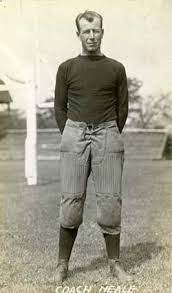
The Story And Significance Of Greasy Neale - Head Coach Of Back To Back Champion Philadelphia Eagles Teams

Alfred Earle "Greasy" Neale was an American football and baseball player and coach.

Neale was born in Parkersburg, West Virginia. Although writers eventually assumed that Neale got his nickname, "Greasy", from his elusiveness on the football field, it actually arose during his youth, from a name-calling joust with a friend.

He played Major League Baseball as an outfielder with the Cincinnati Reds between 1916 and 1924 and briefly with the Philadelphia Phillies for part of the 1921 season. Neale was the starting right fielder for the championship-winning 1919 Reds. He batted .357 in the 1919 World Series and led the Reds with ten hits in their eight-game series win over the scandalous White Sox.

Neale spent all but 22 games of his baseball career with the Reds. He had a career batting average of .259 with 8 home runs, 200 RBI, and 139 stolen bases, and finished in the top ten in stolen bases in the National League four times. When football season came around, often he would leave baseball and fulfill his football duties (albeit playing about 90% of a baseball season most years, with the exception of 1919 when he played the entire season, including the World Series).

Neale also played professional football in the Ohio League with the Canton Bulldogs in 1917, the Dayton Triangles in 1918, and the Massillon Tigers in 1919. He starred as an end on Jim Thorpe's pre-World War I Canton Bulldogs as well as the Dayton Triangles in 1918 and Massillon Tigers in 1919. He coached the Triangles in 1918.

Neale began his coaching career while still a professional player. He served as the head football coach at Muskingum College (1915), West Virginia Wesleyan College (1916–1917), Marietta College (1919–1920), Washington & Jefferson College (1921–1922), the University of Virginia (1923–1928), and West Virginia University (1931–1933), compiling a career college football record of 82–54–11. He coached basketball for two seasons at Marietta (1919–1921) as well, amassing a record of 26–11. He also served as an assistant football coach at Yale Bulldogs football for seven seasons (1934–1940).

At Washington & Jefferson, he led his 1921 squad to the Rose Bowl, where the Presidents played the California Golden Bears to a scoreless tie. At Virginia, Neale was also the head baseball coach from 1923 to 1929, tallying a mark of 80–73–2.

Neale later coached the independent professional Ironton Tanks. He and Tanks quarterback Glenn Presnell claimed victories against the NFL's second-place New York Giants and third-place Chicago Bears in 1930. The team folded in 1931.

Neale moved to the National Football League, serving as head coach of the Philadelphia Eagles from 1941 to 1950. From 1944 through 1949, Neale's Eagles finished second three times and in first place three times. The Eagles won the NFL Championship in 1948 and again in 1949, and became the first team to win back-to-back titles since the 1940-41 Chicago Bears by shutting out their opponents, beating the Chicago Cardinals 7–0 in the snow-ridden 1948 NFL Championship Game and the Los Angeles Rams 14–0 in the 1949 NFL Championship Game in a driving rain storm. It was the last championship for the Eagles until 1960. His offense was led by the passing of quarterback Tommy Thompson, the pass catching of future Hall of Fame end Pete Pihos, and the running of another Hall of Famer, Steve Van Buren. He tallied a mark of 66–44–5 including playoff games in his ten seasons with the club. Neale was inducted into the College Football Hall of Fame in 1967 and the Pro Football Hall of Fame in 1969. Both inductions recognized his coaching career.

Neale died in Florida at the age of 81 and is buried at Parkersburg Memorial Gardens in West Virginia.
Sources
https://www.pro-football-reference.com/
https://www.profootballarchives.com/index.html
https://americanfootballdatabase.fandom.com/wiki/Football_Wiki
https://www.gridiron-uniforms.com/GUD/controller/controller.php?action=main
https://www.profootballhof.com/hall-of-famers/
 "Parkersburg, West Virginia". City-Data.com. Retrieved June 7, 2014.
 Holland, Gerald (August 24, 1964). "Greasy Neale: Nothing To Prove, Nothing To Ask". Sports Illustrated. Retrieved October 26, 2011.
 "Greasy Neale Stats, Height, Weight, Position, Rookie Status & More". Baseball-Reference.com. Retrieved August 10, 2024.
 "Earle (Greasy) Neale | Pro Football Hall of Fame". pfhof. Retrieved August 10, 2024.
 "Greasy Neale Record, Statistics, and Category Ranks". Pro-Football-Reference.com. Retrieved August 10, 2024.
 "Mid-Atlantic Sees Prosperous Season". The Gazette Times. April 9, 1927. Retrieved March 15, 2025.
 "Greasy Neale Will Manage Clarksburg". The Washington Reporter. August 10, 1928. Retrieved March 15, 2025.
 ""Greasy" Neale Goes To Cards". Spokane Daily Chronicle. January 9, 1929. Retrieved March 15, 2025.
 "Pirate Notes". The Pittsburgh Press. April 29, 1929. Retrieved March 15, 2025.
 "Sam Breadon Sends Neale to Rochester". Evening Tribune. July 29, 1929. Retrieved March 15, 2025.
 "Ray Blades Returns; Cunningham Goes". Rochester Evening Journal. August 12, 1929. Retrieved March 15, 2025.
 "Jays Open With Cumberland Club There On May 9". The News-Dispatch. February 24, 1930. Retrieved March 15, 2025.
 "Remembering Greasy Neale: Parkersburg's most accomplished athlete and coach". newsandsentinel.com/. Retrieved August 10, 2024.
 "New Mountaineer Coach". Lawrence Journal-World. December 2, 1930. Retrieved March 15, 2025.
 "Pond and Neale Named Yale Coaches". Pittsburgh Post-Gazette. February 1, 1934. Retrieved March 15, 2025.
 "Greasy Neale – Society for American Baseball Research". Retrieved August 10, 2024.
Jim Campbell, "John Alexander: Pro Football Pioneer," Coffin Corner, vol. 16, no. 2 (1995), pp. 1–9.
Bob Curran, Pro Football's Rag Days. Englewood Cliffs, NJ: Prentice-Hall, 1969.
"1918: A War Year," Coffin Corner, (2012), pp. 1–3.

Friday, August 5, 2022

The Story And Significance Of Joe Guyon - Mr. Everthing For The 1927 Champion New York Giants

Joseph Napoleon "Big Chief" Guyon was an American Indian from the Ojibwa tribe (Chippewa) who was an American football and baseball player and coach. He played college football at the Carlisle Indian Industrial School from 1912 to 1913 and Georgia Tech from 1917 to 1918 and with a number of professional clubs from 1919 to 1927. He was inducted into the Pro Football Hall of Fame in 1966 and the College Football Hall of Fame in 1971.

Guyon signed to play professional football with the Canton Bulldogs in 1919. After the NFL was organized in 1920, he played seven more seasons with the Washington Senators, Cleveland Indians, Oorang Indians, Rock Island Independents, Kansas City Cowboys, and the New York Giants. From 1919 to 1924, he teamed with another outstanding Indian halfback, Jim Thorpe. They parted ways late in the 1924 season when Guyon left the Independents to go to Kansas City. He stayed with the Cowboys in 1925 while Thorpe went to the Giants.

Two years later in 1927, Guyon became a Giant and he played a major role in leading the New Yorkers to the 1927 NFL championship. Guyon, away from the shadow of Thorpe, enjoyed one of his finest seasons and gained the first significant publicity he had enjoyed since his college days. The 1927 Giants compiled an 11-1-1 record largely on the strength of a superior defensive that allowed only 20 points all season. But Guyon, flashing all of his many abilities – passing, running, punting, tackling and blocking and played a leading role in scoring the necessary points for his team that also finished second in scoring that season.

Guyon coached the Bulldogs of Union University in Jackson, Tennessee in 1919. He returned to Union in 1923 and coached all sports from 1923 to 1927. Union inducted Guyon into its sports hall of fame in 2008.

Guyon coached the backfield of the 1920 Georgia Tech team. He also coached high school football at St. Xavier High School in Louisville, Kentucky from 1931 to 1933, with a 16–7–2 record.

Sources
https://www.pro-football-reference.com/
https://www.profootballarchives.com/index.html
https://americanfootballdatabase.fandom.com/wiki/Football_Wiki
https://www.gridiron-uniforms.com/GUD/controller/controller.php?action=main
https://www.profootballhof.com/hall-of-famers/
 "Joe Guyon's HOF Profile". Pro Football Hall of Fame. Retrieved January 21, 2009.
 "Georgia Tech Boasts All-Southern Eleven". Fort Wayne Journal-Gazette. November 20, 1918. p. 6. Retrieved December 17, 2015 – via Newspapers.com. Open access icon
 "Joe Guyon". College Football Hall of Fame. Football Foundation. Retrieved January 21, 2009.
 C. Richard King (March 10, 2015). Native Americans in Sports. Routledge. p. 137. ISBN 9781317464037.
 Sentinel, Joseph Cress, The (November 8, 2012). "Carlisle vs. Army: 100 years later, game remembered for celebrity players".
 Willis, Chris (May 5, 2017). Walter Lingo, Jim Thorpe, and the Oorang Indians: How a Dog Kennel Owner Created the NFL's Most Famous Traveling Team. Rowman & Littlefield. ISBN 9781442277663.
 Rozendaal, Neal (July 9, 2012). Duke Slater: Pioneering Black NFL Player and Judge. McFarland. ISBN 9780786469574.
 "All-Time Football Team Lists Greats Of Past, Present". Gadsden Times. July 27, 1969.
 Umphlett 1992, p. 142
 Umphlett 1992, p. 141
 Spalding Football Guide. Shawnee Mission, Kansas, NCAA Publishing Service. 1918.
 "Strupper and Guyon of Georgia Tech Are Hailed As Two of the Greatest Pigskin Heroes In Seasons". The Day. November 19, 1917.
 "Jackets Win Double Bill" (PDF). The Technique. October 2, 1917. p. 4. Archived from the original (PDF) on October 30, 2014.
 "Georgia Crushes W. and L." The New York Times. October 21, 1917. p. 118. Retrieved November 10, 2024 – via Newspapers.com.
 McCarty 1988a, p. 5
 McCarty 1988b, p. 15
 "Golden Tornado Wins Great Victory" (PDF). The Technique. December 4, 1917. p. 4.
 Union University (January 1, 1920). Lest We Forget 1920. Student Organizations of Union University.
 "Coach Guyon Leaves Union". Cardinal and Cream. April 8, 1927 – via Union University Archives.
 "Union to induct six into Sports Hall of Fame Nov. 7 - News Release". November 5, 2008.
 "Alumni Events 2008" (PDF). Union University. Retrieved November 10, 2024.
 "Blue Print, 1921". School Yearbooks. Georgia Institute of Technology. January 1, 1921.
 Powers-Beck, Jeffrey (August 16, 2011). ""A Role New to the Race": A New History of the Nebraska Indians" (PDF). Nebraska History. Archived from the original on May 22, 2013.
McCarty, Bernie (February 1988). "Georgia Tech's 1917 backfield, better than the Four Horsemen: Part 1" (PDF). College Football Historical Society Newsletter. 1 (3). Archived from the original (PDF) on March 4, 2016.
McCarty, Bernie (May 1988). "Georgia Tech's 1917 backfield, better than the Four Horsemen: Part 2" (PDF). College Football Historical Society Newsletter. 1 (4). Archived from the original (PDF) on March 4, 2016.
Umphlett, Wiley Lee (1992). Creating the Big Game: John W. Heisman and the Invention of American Football. Westport, CT: Greenwood Publishing Group. p. 141. ISBN 978-0-313-28404-5.

Monday, July 11, 2022

The Story And Significance Of Guy Chamberlin - The Best Win Percentage Of Any Coach In NFL History

Berlin Guy "Champ" Chamberlin, sometimes misspelled Guy Chamberlain, was an American football player and coach. He was inducted into the College Football Hall of Fame in 1962 and the Pro Football Hall of Fame in 1965. He was also named in 1969 to the NFL 1920s All-Decade Team.

A native of Blue Springs, Nebraska, Chamberlin played college football as a halfback at Nebraska Wesleyan University in 1911 and 1912. He transferred to the University of Nebraska in 1913 and played at the halfback and end positions for the undefeated 1914 and 1915 Nebraska Cornhuskers football teams that won consecutive Missouri Valley Conference championships. He was a consensus first-team All-American in 1915, and he was selected in 1936 as the greatest player in Nebraska football history.
He played professional football for nine years with the Canton Bulldogs (1919), Decatur / Chicago Staleys (1920–1921), Canton Bulldogs (1922–1923), Cleveland Bulldogs (1924), Frankford Yellow Jackets (1925–1926), and Chicago Cardinals (1927). He won professional football championships in six of his nine seasons in professional football: as a player in 1919 with the undefeated Bulldogs and in 1921 with the Staleys, and as a player/coach in 1922, 1923, and 1924 with the Bulldogs and in 1926 with the Yellow Jackets. He compiled a 58-16-7 record in six years as a head coach in the National Football League (NFL), the best win percentage (.759) of any coach in NFL history with a minimum 50 wins. He is also the only coach to win NFL championships with three different clubs.

After graduating from Nebraska, Chamberlin returned to the family farm. In August 1916, he was hired as the athletic director and football coach at Doane College in Crete, Nebraska. In 1917, he returned to work on his father's farm in Blue Springs, Nebraska.

Chamberlin served in the United States Army from May 1918 to October 1919. He served in a field artillery unit with the rank of second lieutenant and was stationed at Camp Zachary Taylor in Louisville, Kentucky, Fort Sill in Oklahoma, and Camp Kearny in San Diego County, California.
Professional football

Chamberlin began playing professional football in 1919 as an end for Jim Thorpe's undefeated 1919 Canton Bulldogs, winners of that year's unofficial professional football championship with a 9–0–1 record.

In August 1920, the American Professional Football Association (APFA, later renamed the National Football League) was organized. Chamberlin signed with George Halas' 1920 Decatur Staleys team that compiled a 10–1–2 record and finished second in the APFA. At the end of the 1920 season, Chamberlin was selected as a first-team end on the first All-Pro Team.

In 1921, Chamberlin played as a center fielder for the Staleys baseball team during the summer, and he remained with the organization as the Staleys football team moved to Chicago and won the APFA championship with a 9–1–1 record. On December 3, 1921, before a crowd of 13,000 in Chicago, the Staleys defeated the first-place Buffalo All-Americans in what was touted as the championship game. In the victory over Buffalo, Chamberlain intercepted a pass and returned it 90 yards for the game-winning touchdown.

George Halas, who coached Chamberlin with the Staleys, wrote in 1957: "Chamberlin was the best 2-way end I've ever seen. He was a tremendous tackler on defense and a triple-threat performer on offense."


In 1922, Chamberlin joined the Canton Bulldogs in multiple roles as a player, head coach, team captain, and part owner. He strengthened the team in the off-season by signing guard Tarzan Taylor, with whom he had played on the Staleys, and tackle Link Lyman, an All-American who played at Chamberlin's alma mater, Nebraska. Chamberlin led the 1922 Bulldogs to an NFL championship with an undefeated 10–0–2 record. The team shut out nine of twelve opponents and allowed only 15 points in 12 games. Three players from the 1922 Bulldogs (Chamberlin, Lyman, and Pete Henry) were later inducted into the Pro Football Hall of Fame. Chamberlin led the team in scoring with seven touchdowns, two of them on interception returns. He played at the halfback position in the first game of the season and at end for the remaining 12 games; he reportedly "played every minute of the thirteen games."

Chamberlin returned to the Bulldogs as player/coach the following year. The 1923 team had another undefeated season (11-0-1), shut out eight of twelve opponents, outscored all opponents by a combined total of 246 to 19, and won its second consecutive NFL championship. After the season, Chamberlin was selected as a first-team All-Pro player by Collyer's Eye magazine.

In August 1924, Cleveland jeweler Samuel Deutsch bought the Canton Bulldogs and moved the team to Cleveland where they became the Cleveland Bulldogs during the 1924 NFL season. With Chamberlin still serving as player/coach, the Bulldogs compiled a 7–1–1 record, outscored opponents by a total of 229 to 60, and won their third consecutive NFL championship. After the 1924 season, Chamberlin was again selected as a first-team All-Pro by Collyer's Eye and a third-team All-Pro by the Green Bay Press-Gazette.

In three seasons with the Bulldogs, Chamberlin led the franchise to three NFL championships and a record of 28-1-4, having outscored opponents by a combined total of 659 to 94. Dave Noble, who played for the 1924 Bulldogs, explained Chamberlin's coaching success as follows: "Guy Chamberlain knows as much or more football than any other coach in the country. Moreover, he has a faculty for getting the most out of players, not because he is a driver, for he isn't that sort, but because they like him and will do their utmost to please him by playing hard."

In 1925, Chamberlin joined the Frankford Yellow Jackets in Philadelphia as player and coach. He led the 1925 Frankford team to a 15–7 overall record, 13–7 against NFL opponents. The team had compiled a 9–1 record in its first 10 games, but Chamberlin suffered a broken shoulder in a game against Akron,[30] and the Yellow Jackets lost six of the next eight games. Chamberlin returned to the lineup in mid-December and led the team to victories in its final two games.

In 1926, Chamberlin returned to Philadelphia and appeared in all 17 games as a player, despite being the oldest player on the team at age 32. He led the 1926 Yellow Jackets to an NFL championship with a 14–1–2 record, shutting out 10 NFL opponents and outscoring all NFL opponents, 236 to 49. On December 4, 1926, the Yellow Jackets defeated the previously unbeaten Chicago Bears, 7–6, to secure the championship. In a 1968 book titled "Pro Football's All-time Greats", the author wrote that Chamberlin blocked both an extra point and a field goal in the victory over the Bears, though contemporary accounts do not corroborate the claim.

In two years at Frankford, Chamberlin led the Yellow Jackets to Philadelphia's first NFL championship and compiled a 27-8-2 record against NFL opponents.

In August 1927, Chamberlin signed as player/coach for the Chicago Cardinals. With the exception of Ben Jones, the 1927 Cardinals lacked star players, and Chamberlin at age 33 started only one game. The team compiled a 3–7–1 and finished ninth in the NFL.

With a 58-16-7 record in six years as an NFL head coach, Chamberlin has the best win percentage (.759) of any coach in NFL history with a minimum of 50 wins. Chamberlin received numerous honors for his accomplishments as a football player and coach.
Sources
https://www.pro-football-reference.com/
https://www.profootballarchives.com/index.html
https://americanfootballdatabase.fandom.com/wiki/Football_Wiki
https://www.gridiron-uniforms.com/GUD/controller/controller.php?action=main
https://www.profootballhof.com/hall-of-famers/
"Guy Chamberlin Record". Pro-Football-Reference.com. Sports Reference LLC. Retrieved May 7, 2017.
 "Berlin Guy Chamberlin Monument". City of Blue Springs, Nebraska. Retrieved May 7, 2017.
 "The Beta Theta Pi". Google.com/books. 1915.
 "Football Roll of Honor: The Men Whom the Best Coaches of the Country Have Named as the Stars of the Gridiron in 1914" (PDF). Outing. 1915. p. 498.
 "Huskers Triumph In Final Combat". The Lincoln Star. November 21, 1915. p. 13 – via Newspapers.com.
 "Covers Wide Scope In Choosing His All-American Gridironers". The Lincoln Star. December 5, 1915 – via Newspapers.com.
 Walter Eckersall (December 5, 1915). "Nebraska Player on 'All-America': Chamberlain, Huskers' Wizard, is Given Recognition by New York Writer". Chicago Tribune – via Newspapers.com.
 "Buck Mayer and Vandegraaaff Are Chosen for All-American". The Charlotte News. December 5, 1915. p. 10 – via Newspapers.com.
 "untitled". The Emporia (KS) Gazette. August 10, 1916. p. 5 – via Newspapers.com.
 Draft registration card dated June 1917 for Berlin Guy Chamberlin, born January 16, 1894, working as a farmer in the employ of Elmer Chamberlin. Registration State: Nebraska; Registration County: Gage; Roll: 1711529. Source Information: Ancestry.com. U.S., World War I Draft Registration Cards, 1917-1918 [database on-line].
 "Staleys Sign All American Grid Star". The Pantagraph (Bloomington, IL). October 7, 1920. p. 10 – via Newspapers.com.
 Hogrogian, John (1984). "1920 All-Pros" (PDF). The Coffin Corner. 6 (1). Professional Football Researchers Association. Archived from the original (PDF) on August 8, 2014.
 "1920 APFA All-Pros". Pro-Football-Reference.com. Sports Reference LLC. Retrieved May 8, 2017.
 "Staleys Easily Defeat Madison Club of Dakota League". Decatur Herald. May 13, 1921. p. 4 – via Newspapers.com.
 "Staleys Annex 1921 Professional Title by Win Over Buffalo". The Decatur Review. December 5, 1921. p. 10 – via Newspapers.com.
 "Staleys Win National Pro Grid Title: Beat Buffalo, 10-7; Starchworkers Win 10-7; Chamberlain Makes 90 Yard Run". Decatur Herald. December 5, 1921. p. 4 – via Newspapers.com.
 "1922 Canton Bulldogs Statistics & Players". Pro-Football-Reference.com. Sports Reference LLC. Retrieved May 8, 2017.
 "Chamberlain To Quit Canton Bulldogs". The Akron Beacon Journal. December 15, 1922. p. 30 – via Newspapers.com.(part owner)
 "Lyman To Play At Canton: Former Husker Star Will Join Guy Chamberlain's Professional Team In Ohio". The Nebraska State Journal. September 25, 1922. p. 3 – via Newspapers.com.
 "Guy Chamberlain Places Canton Back on the Grid Map". The Decatur Review. December 24, 1922. p. 7 – via Newspapers.com.
 "Guy Chamberlain To Coach Canton Bulldogs Grid Team". The Akron Beacon Journal. August 2, 1923. p. 16 – via Newspapers.com.
 "1923 Canton Bulldogs Schedule & Game Results". Pro-Football-Reference.com. Sports Reference LLC. Retrieved April 9, 2017.
 "1923 NFL All-Pros". Pro-Football-Reference.com. Sports Reference LLC. Retrieved April 9, 2017.
 "Collyer's All-Star Pro Elevens". The Davenport Democrat and Leader. December 21, 1923. p. 25 – via Newspapers.com.
 "Champion Bulldogs Sold To Cleveland". Akron Beacon-Journal. August 4, 1924. p. 12 – via Newspapers.com.
 "1924 Cleveland Bulldogs Schedule & Game Results". Pro-Football-Reference.com. Sports Reference LLC. Retrieved April 9, 2017.
 "1924 NFL All-Pros". Pro-Football-Reference.com. Sports Reference LLC. Retrieved April 9, 2017.
 "Noble Keen For Ex-Husker Star". The Lincoln Star. December 30, 1924. p. 6 – via Newspapers.com.
 "1925 Frankford Yellow Jackets Statistics & Players". Pro-Football-Reference.com. Sports Reference LLC. Retrieved May 8, 2017.
 "Guy Chamberlain Is Out of Game; Right Shoulder Fractured". Green Bay Press-Gazette. November 14, 1925. p. 14 – via Newspapers.com.
 "1926 Frankford Yellow Jackets Statistics & Players". Pro-Football-Reference.com. Sports Reference LLC. Retrieved May 8, 2017.
 "Frankford Tops Bears in Thrilling Fray: Stockton Passes 45 Yards to Homan, Scores Touchdown". The Philadelphia Inquirer. December 5, 1926. p. Sports 1, 3 – via Newspapers.com.
 Fitzpatrick, Frank (February 15, 2007). "Why did winning coach leave Philly?". The Philadelphia Inquirer.
 "Chamberlain To Coach Cards' Pro Gridiron Squad". Chicago Daily Tribune. August 9, 1927. p. 17 – via Newspapers.com.
 "1927 Chicago Cardinals Statistics & Players". Pro-Football-Reference.com. Sports Reference LLC. Retrieved May 9, 2017.
 Willis, Chris (2024). The NFL's 60-Minute Men: All-Time Greats of the Two-Way Player Era, 1920-1945. McFarland. pp. 68–72. ISBN 9781476691329.
 "Chamberlin, End, Is Husker 'All' Player". The Minneapolis Star. November 14, 1936. p. 12.
 "Guy Chamberlin Named To State Hall of Fame". Lincoln Evening Journal. August 21, 1951. p. 9 – via Newspapers.com.
 "Nebraska's Guy Chamberlin to Football Hall of Fame". Lincoln Evening Journal. April 4, 1962. p. 32 – via Newspapers.com.
 "Guy Thankful To Former Mates: Exceptional NU, Pro Grid Star Accepts Honor for 'Whole Team'". Lincoln Evening Journal. April 4, 1962. p. 32 – via Newspapers.com.
 "Chamberlin Field Officially Dedicated". Lincoln Evening Journal. July 16, 1962. p. 13 – via Newspapers.com.
 "Guy Chamberlin To Hall of Fame". The Lincoln Star. September 12, 1965. p. 28 – via Newspapers.com.
 "Nebraska announces 2016 Football Award winners". NebraskaOnline.com. December 18, 2016. Retrieved May 9, 2017.
 "Halas, Grange on NFL All-Star Team of '20s". Decatur Herald. August 24, 1969. p. 20 – via Newspapers.com.
 "Hall of Famers". The Lincoln Star. May 16, 1971. p. 12 – via Newspapers.com.
 "Nebraska adds eight former football players to its list of Huskers with retired jerseys". August 23, 2017. Retrieved January 16, 2019.
 "untitled". The Nebraska State Journal. February 12, 1923. p. 6 – via Newspapers.com.
 1920 U.S. Census entry for Berlin Guy Chamberlin and wife Lucile. Census Place: Canton Ward 3, Stark, Ohio; Roll: T625_1434; Page: 6B; Enumeration District: 38; Image: 449. Source Information: Ancestry.com. 1920 United States Federal Census [database on-line].
 1930 U.S. Census entry for Guy Chamberlin, age 36, wife Lucile, and daughter Patricia. Census Place: East Cleveland, Cuyahoga, Ohio; Roll: 1785; Page: 5B; Enumeration District: 0595; Image: 11.0; FHL microfilm: 2341519. Source Information: Ancestry.com. 1930 United States Federal Census [database on-line].
 "Bernyce G. Weekes United In Marriage with Guy Chamberlin". The Lincoln Star. June 13, 1941. p. 9 – via Newspapers.com.
 "Guy Chamberlin Dies at 73". Lincoln Evening Journal. April 4, 1967. p. 13 – via Newspapers.com.
 "Husker Football Stars Go To Chamberlin Rites". The Lincoln Star. April 8, 1967. p. 11 – via Newspapers.com.

Monday, June 13, 2022

The Story And Significance Of Link Lyman - The Pioneer Of Using Shifting Maneuvers To Disrupt Offensive Blocking Assignments

Lyman was born in 1898 in Table Rock, Nebraska. As an infant, his family moved to Rawlins County, Kansas, where his father, Edwin Lyman, was a farmer, raised stock and engaged in the real estate business. Lyman had four younger brothers (Edwin, Richard, Albert, and Louis) and three younger sisters (Anna, Margret, and Mildred).

Lyman attended high school in McDonald, Kansas, but he did not play football as there was no team with only "six or seven boys in the whole school".

Lyman enrolled at the University of Nebraska in 1917 where he was a member of the Sigma Alpha Epsilon fraternity. After playing freshman football in 1917, he played at the tackle position for the Nebraska Cornhuskers football team in 1918, 1919, and 1921. Lyman was married shortly after the end of the 1919 football season and did not return to the university in the fall of 1920. He returned in February 1921 to establish his eligibility to play in the fall of 1921.


Lyman later recalled: "From the first day, I just loved the game, and we had some pretty good teams, too." The 1921 Nebraska team compiled a 7–1 record, lost a close game against Knute Rockne's Notre Dame team, outscored opponents by a combined total of 283 to 17, and won the Missouri Valley Conference championship. The 1922 Nebraska yearbook noted the following about Lyman: "Lyman was, without doubt, our fastest lineman. Roy is a big man, weighing 200 pounds, and could get down under punts almost as quickly as the ends. Roy proved to be a ground gainer on tackle-around plays before the season was over."

In September 1922, Lyman left Lincoln, Nebraska, to play professional football for the Canton Bulldogs. The Bulldogs were coached by Guy Chamberlin, an All-American out of Nebraska, who invited Lyman to join the team. With Lyman and Pete Henry as its star tackles, the 1922 Canton Bulldogs compiled a 10–0–2 record, shut out nine of twelve opponents, outscored all opponents 184 to 15, and won the NFL championship.

Lyman returned to the Bulldogs the following year. The 1923 team had another undefeated season (11-0-1), shut out eight of twelve opponents, outscored all opponents by a combined total of 246 to 19, and won its second consecutive NFL championship. After the season, Lyman was selected as a first-team All-Pro player by the Canton Daily News and a second-team All-Pro by Collyer's Eye magazine.

In August 1924, Cleveland jeweler Samuel Deutsch bought the Canton Bulldogs and moved the team to Cleveland where they became the Cleveland Bulldogs during the 1924 NFL season. The Bulldogs compiled a 7–1–1 record, outscored opponents by a total of 229 to 60, and won their third consecutive NFL championship. After the 1924 season, Lyman was selected as a first-team All-Pro by Collyer's Eye and a second-team All-Pro by the Green Bay Press-Gazette.

In July 1925, Lyman and four of his teammates (Pete Henry, Rudy Comstock, Ben Jones, and Harry Robb) bought the team for $3,500 and moved it back to Canton. Lyman played seven games for the 1925 Bulldogs and then finished the season playing four games for the Frankford Yellow Jackets. Lyman was reunited with Guy Chamberlain who was then Frankford's head coach. After the 1925 season, Lyman was selected as a first-team All-Pro on the team selected by NFL Commissioner Joseph Carr; he was also selected as a second-team All-Pro by Collyer's Eye.


In December 1925, Lyman joined the Chicago Bears and took part in a winter barnstorming tour that featured football player Red Grange. He joined the Bears again in the fall of 1926. The 1926 Bears team featured five players who were later inducted into the Pro Football Hall of Fame (Lyman, Paddy Driscoll, George Halas, Ed Healey, and George Trafton), posted a 12–1–3 record, and finished second in the NFL.

Lyman remained with the Bears for the 1927 and 1928 seasons. He retired after the 1928 season but returned to the Bears in the fall of 1930. The 1930 Bears compiled a 9–4–1 and finished third in the NFL. Lyman was selected as a first-team All-Pro by Collyer's Eye magazine and the Green Bay Press-Gazette.

Lyman again retired from playing football after the 1931 season. During his two retirements from the Bears, Lyman played semipro ball in Texas and worked in the ranching business.

Lyman returned to the Bears in 1933. The 1933 Bears featured six future Pro Football Hall of Fame players (Lyman, Bronko Nagurski, Red Grange, George Musso, and George Trafton), posted a 10–2–1 record, and defeated the Giants in the 1933 NFL Championship Game.

Lyman played his final year of professional football as a member of the 1934 Bears team that compiled a perfect 13–0 record in the regular season and won the NFL Western Division championship, but lost to the Giants in the 1934 NFL Championship Game. After the 1934 season, Lyman was selected as a first-team All-Pro by the United Press, Green Bay Press-Gazette, and Collyer's Eye. Bears' coach George Halas later observed that Lyman was "stronger and tougher during his last two seasons than when he first joined the team eight years earlier."

Lyman was a pioneer in the use of shifting maneuvers to disrupt the blocking assignments of offensive linemen. According to his biography at the Pro Football Hall of Fame, "the constant shifting by defensive players before each play in modern professional football can be traced back to Lyman, who regularly resorted to similar ploys. His sliding, shifting style of defensive line play confused his opponents and made him one of the most respected players of his time. Lyman explained that the idea of shifting was an instinctive move to fool a blocker. He had a unique ability to diagnose a play and many times he would make his move just as the ball was snapped."

Steve Owen, who played with Lyman in 1925 and later served as coach of the Giants, recalled: "Link was the first lineman I ever saw who moved from the assigned defensive position before the ball was snapped. It was difficult to play against him because he would vary his moves and no matter how you reacted, you could be wrong."

Lyman received many honors for his contributions to the game, including being inducted into the Helms Foundation major league football Hall of Fame (January 1961) and the Nebraska Sports Hall of Fame and receiving the University of Nebraska's Distinguished Alumni Award in June 1961. His greatest honor came in February 1964 when he was elected to the Pro Football Hall of Fame as part of the second class of inductees.

During his 11 years in the NFL, Lyman won four NFL championships and never had a losing season. (In 1929, following Lyman's first retirement, the Bears posted a 4–9–2 record.) He was selected five times as a first-team All-Pro and appeared in 133 official NFL games. He was known as one of the true "iron men" of iron man era. Counting unofficial games, he appeared in a total of 286 professional games and played 211-1/2 hours in those games. At the time of his retirement and for many years thereafter, he held the NFL records for games and playing time logged.
Sources
https://www.pro-football-reference.com/
https://www.profootballarchives.com/index.html
https://americanfootballdatabase.fandom.com/wiki/Football_Wiki
https://www.gridiron-uniforms.com/GUD/controller/controller.php?action=main
https://www.profootballhof.com/hall-of-famers/
"Link Lyman Stats". Pro-Football-Reference.com. Sports Reference LLC. Retrieved April 9, 2017.
 Census entry for Edward Lyman and family. Son William R., born November 1898 in Nebraska. Census Place: Rotate, Rawlins, Kansas; Roll: 496; Page: 3B; Enumeration District: 0138; FHL microfilm: 1240496. Source Information: Ancestry.com. 1900 United States Federal Census [database on-line].
 Census entry for Edwin Lyman and family. Son William R., age 11, born in Nebraska. Census Place: Celia, Rawlins, Kansas; Roll: T624_453; Page: 6A; Enumeration District: 0155; FHL microfilm: 1374466. Source Information: Ancestry.com. 1910 United States Federal Census [database on-line].
 1915 Kansas Census entry for Edwin Lyman. Son William Roy, age 16. Kansas State Historical Society; Topeka, Kansas; Roll: ks1915_191; Line: 6. Source Information: Ancestry.com. Kansas State Census Collection, 1855-1925 [database on-line].
 Draft registration card dated September 12, 1898, for William Roy Lyman, born November 30, 1898. Father is Edwin Lyman. William Roy is employed by his father as a farmer in McDonald, Kansas. Registration State: Kansas; Registration County: Rawlins; Roll: 1643805. Source Information: Ancestry.com. U.S., World War I Draft Registration Cards, 1917-1918 [database on-line].
 Chris Willis (2005). Old Leather: An Oral History of Early Pro Football in Ohio, 1920-1935. Scarecrow Press. p. 58. ISBN 1461670179.
 1918 The Cornhusker, p. 344.
 The 1919 Cornhusker, p. 363.
 The 1922 Cornhusker, p. 256.
 The 1919 Cornhusker, pp. 247 and 251.
 "Roy Lyman To Return To Nebraska". The Des Moines Register. February 22, 1921. p. 8 – via Newspapers.com. Open access icon
 "Husker Star Returns". Lincoln Evening Journal. February 17, 1921. p. 10 – via Newspapers.com. Open access icon
 Old Leather, p. 58.
 "1921 Nebraska Cornhuskers Schedule and Results". SR/College Football. Sports Reference LLC. Retrieved April 9, 2017.
 The 1922 Cornhusker, p. 187.
 "Lyman To Play At Canton: Former Husker Star Will Join Guy Chamberlain's Professional Team In Ohio". The Nebraska State Journal. September 25, 1922. p. 3 – via Newspapers.com. Open access icon
 "1922 Canton Bulldogs Schedule & Game Results". Pro-Football-Reference.com. Sports Reference LLC. Retrieved April 9, 2017.
 "1923 Canton Bulldogs Schedule & Game Results". Pro-Football-Reference.com. Sports Reference LLC. Retrieved April 9, 2017.
 "1923 NFL All-Pros". Pro-Football-Reference.com. Sports Reference LLC. Retrieved April 9, 2017.
 "Collyer's All-Star Pro Elevens". The Davenport Democrat and Leader. December 21, 1923. p. 25 – via Newspapers.com. Open access icon
 "Champion Bulldogs Sold To Cleveland". Akron Beacon-Journal. August 4, 1924. p. 12 – via Newspapers.com. Open access icon
 "1924 Cleveland Bulldogs Schedule & Game Results". Pro-Football-Reference.com. Sports Reference LLC. Retrieved April 9, 2017.
 "1924 NFL All-Pros". Pro-Football-Reference.com. Sports Reference LLC. Retrieved April 9, 2017.
 Old Leather, p. 59.
 "Canton Bulldogs to Return in Fall". The Gazette Times. Pittsburgh. July 19, 1925. p. 31 – via Newspapers.com. Open access icon
 Chris Willis (August 19, 2010). The Man Who Built the National Football League: Joe F. Carr. Scarecrow Press. p. 217. ISBN 9780810876705.
 "1925 NFL All-Pros". Pro-Football-Reference.com. Sports Reference LLC. Retrieved April 9, 2017.
 "Lyman Lines Up With Red Grange: Former Cornhusker Tackle Heads To Florida With Chicago Bears". The Lincoln Star. December 21, 1925. p. 8 – via Newspapers.com. Open access icon
 "Pro Grid Notes". Green Bay Press-Gazette. October 4, 1930. p. 14 – via Newspapers.com. Open access icon
 "1930 All-Pros". Pro-Football-Reference.com. Sports Reference LLC. Retrieved April 9, 2017.
 Lew Freedman (2008). Chicago Bears: The Complete Illustrated History. MVP Books. p. 23. ISBN 978-0760332313.
 "1933 Chicago Bears Schedule & Game Results". Pro-Football-Reference.com. Sports Reference LLC. Retrieved April 9, 2017.
 "Bears Whip Lions, 23–21; World Champions," Chicago Tribune, Dec. 18, 1933; p. 23.
 "1934 Chicago Bears Schedule & Game Results". Pro-Football-Reference.com. Sports Reference LLC. Retrieved April 9, 2017.
 "1934 All-Pros". Pro-Football-Reference.com. Sports Reference LLC. Retrieved April 9, 2017.
 "William Roy Lyman Biography". Pro Football Hall of Fame. Retrieved April 9, 2017.
 "Bears in the Hall: Link Lyman". Chicago Bears. Archived from the original on April 11, 2017. Retrieved April 9, 2017.
 "Shaw, Dutch, Bednarik in Helms Hall". Philadelphia Daily News. January 10, 1961. p. 53 – via Newspapers.com. Open access icon
 "Honors for Erickson, Lyman, Oldt, Stuart". Lincoln Evening Journal. June 4, 1961. p. 28 – via Newspapers.com. Open access icon
 "7 named to NFL Valhalla". The Morning News. February 28, 1964. p. 48 – via Newspapers.com. Open access icon
 "Chicago Bears Franchise Encyclopedia". Pro-Football-Reference.com. Sports Reference LLC. Retrieved April 9, 2017.
 George Kirksey (December 7, 1934). "Bears Have More Team Spirit Than Collegians Is Claim of Feathers: Link Lyman Has Played In 286 Pro Games; Notes on Money Players". The Minneapolis Star. p. 26 – via Newspapers.com. Open access icon
 According to "Lyman One of Greats", published in the Lincoln Evening Journal, March 6, 1964, Lyman's totals were 303 games and 268 hours played.
 "Lyman One of Greats". Lincoln Evening Journal. March 6, 1964. p. 17 – via Newspapers.com. Open access icon
 "Link Lyman Signs as Assistant Grid Coach at Nebraska". Great Falls Tribune. December 16, 1934. p. 14 – via Newspapers.com. Open access icon
 "Nebraska "Fires" Line Coach Link Lyman: Husker Athletic Board Decides; Dismissal Confirmed by Regents". The Lincoln Star. December 20, 1941. p. 10 – via Newspapers.com. Open access icon
 "Lyman Named Line Coach at Creighton". The Decatur Herald. September 1, 1942. p. 10 – via Newspapers.com. Open access icon
 "Link Lyman's Wife Dies in California". Lincoln Evening Journal. December 6, 1967. p. 33 – via Newspapers.com. Open access icon
 Census entry for William Roy Lyman, age 40, employed as a football coach at the state university, and family. Census Place: Lincoln, Lancaster, Nebraska; Roll: T627_2254; Page: 4B; Enumeration District: 55-54B. Source Information: Ancestry.com. 1940 United States Federal Census [database on-line].
 "About people". Lincoln Evening Journal. October 5, 1944. p. 5 – via Newspapers.com. Open access icon
 "'Link' Lyman Takes Position With Insurance Firm". The Lincoln Star. March 2, 1942. p. 1 – via Newspapers.com. Open access icon
 "'Link' Lyman to Texas As Insurance Manager". The Nebraska State Journal. August 22, 1948. p. 15 – via Newspapers.com. Open access icon
 "Link Lyman Is Lincoln Visitor". Lincoln Evening Journal. November 24, 1954. p. 12 – via Newspapers.com. Open access icon
 "Link Lyman to Be Feted". Los Angeles Times. April 20, 1964. p. 41.
 "Lyman Dead". Anderson (IN) Herald. December 31, 1972. p. 23 – via Newspapers.com. Open access icon
 "Ex-Football Great Lyman Dies in Crash". The Sun-Telegram (San Bernardino, CA). December 30, 1972. p. C2 – via Newspapers.com.

Friday, December 10, 2021

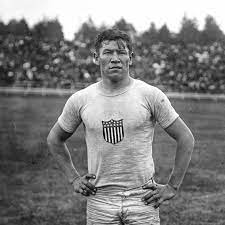
The Story And Significance Of Jim Thorpe - The Greatest Athlete There Ever Was


James Francis Thorpe (Sac and Fox (Sauk): Wa-Tho-Huk, translated as "Bright Path"; May 22 or 28, 1887 – March 28, 1953) was an American athlete and Olympic gold medalist. A member of the Sac and Fox Nation, Thorpe was the first Native American to win a gold medal for the United States in the Olympics. Considered one of the most versatile athletes of modern sports, he won two Olympic gold medals in the 1912 Summer Olympics (one in classic pentathlon and the other in decathlon). He also played American football (collegiate and professional), professional baseball, and basketball.
He lost his Olympic titles after it was found he had been paid for playing two seasons of semi-professional baseball before competing in the Olympics, thus violating the contemporary amateurism rules. In 1983, 30 years after his death, the International Olympic Committee (IOC) restored his Olympic medals with replicas, after ruling that the decision to strip him of his medals fell outside of the required 30 days. Thorpe is to date listed as co-champion in both the decathlon and pentathlon events according to official IOC records.
Thorpe grew up in the Sac and Fox Nation in Indian Territory (what is now the U.S. state of Oklahoma). As a youth, he attended Carlisle Indian Industrial School in Carlisle, Pennsylvania, where he was a two-time All-American for the school's football team under coach Pop Warner. After his Olympic success in 1912, which included a record score in the decathlon, he added a victory in the All-Around Championship of the Amateur Athletic Union. In 1913, he played for the Pine Village Pros in Indiana. Later in 1913, Thorpe signed with the New York Giants, and he played six seasons in Major League Baseball between 1913 and 1919. Thorpe joined the Canton Bulldogs American football team in 1915, helping them win three professional championships. He later played for six teams in the National Football League (NFL). He played as part of several all-American Indian teams throughout his career, and barnstormed as a professional basketball player with a team composed entirely of American Indians.
From 1920 to 1921, Thorpe was nominally the first president of the American Professional Football Association (APFA), which became the NFL in 1922. He played professional sports until age 41, the end of his sports career coinciding with the start of the Great Depression. He struggled to earn a living after that, working several odd jobs. He suffered from alcoholism, and lived his last years in failing health and poverty. He was married three times and had eight children, before suffering from heart failure and dying in 1953.
Thorpe has received numerous accolades for his athletic accomplishments. The Associated Press ranked him as the "greatest athlete" from the first 50 years of the 20th century, and the Pro Football Hall of Fame inducted him as part of its inaugural class in 1963. The town of Jim Thorpe, Pennsylvania was named in his honor. It has a monument site that contains his remains, which were the subject of legal action. Thorpe appeared in several films and was portrayed by Burt Lancaster in the 1951 film Jim Thorpe – All-American.
 He first played professional football in 1913 as a member of the Indiana-based Pine Village Pros, a team that had a several-season winning streak against local teams during the 1910s. He signed with the Canton Bulldogs in 1915. They paid him $250 ($6,396 today) a game, a tremendous wage at the time. Before signing him Canton was averaging 1,200 fans a game, but 8,000 showed up for Thorpe's debut against the Massillon Tigers. The team won titles in 1916, 1917, and 1919. Thorpe reportedly ended the 1919 championship game by kicking a wind-assisted 95-yard punt from his team's own 5-yard line, effectively putting the game out of reach.
In 1920, the Bulldogs were one of 14 teams to form the American Professional Football Association (APFA), which would become the National Football League two years later. Thorpe was nominally the APFA's first president, but spent most of the year playing for Canton; a year later, he was replaced as president by Joseph Carr. He continued to play for Canton, coaching the team as well. Between 1921 and 1923, he helped organize and played for the Oorang Indians (LaRue, Ohio), an all-Native American team. Although the team's record was 3–6 in 1922, and 1–10 in 1923, Thorpe played well and was selected for the Green Bay Press-Gazette's first All-NFL team in 1923. This was later formally recognized in 1931 by the NFL as the league's official All-NFL team).
Even though his NFL stats look ordinary, he started his NFL career at 33 he was the first big star in the league and also being the first president of the league is what is most important from his NFL career. Thorpe never played for an NFL championship team. He retired from professional football at age 41, having played 52 NFL games for six teams from 1920 to 1928.
Sources
https://www.pro-football-reference.com/
https://www.profootballarchives.com/index.html
https://americanfootballdatabase.fandom.com/wiki/Football_Wiki
https://www.gridiron-uniforms.com/GUD/controller/controller.php?action=main
https://www.profootballhof.com/hall-of-famers/
Bird, S. Elizabeth (May 2, 1996). Dressing in feathers: the construction of the Indian in American popular culture. London, UK: Avalon. ISBN 978-0-8133-2667-2.
Bloom, John (May 2, 1996). ""There Is Madness in the Air": The 1926 Haskell Homecoming and Popular Representations of Sports in Federal Indian Boarding Schools". In Bird, S. Elizabeth (ed.). Dressing in feathers: the construction of the Indian in American popular culture. London, UK: Avalon. ISBN 978-0-8133-2667-2.
Buford, Kate (2012). Native American Son: the life and sporting legend of Jim Thorpe . Lincoln, Nebraska: University of Nebraska Press. ISBN 978-0-8032-4089-6. OCLC 756837088.
Cava, Pete (Summer 1992). Baseball in the Olympics (PDF). pp. 7–15. Archived from the original (PDF) on August 9, 2017.
Cook, William A. (2011). Jim Thorpe: a biography. Jefferson, N.C: McFarland & Co. ISBN 978-0-7864-6355-8. OCLC 692291486.
Dodge, Robert V. (2013). Which chosen people? Manifest destiny meets the Sioux as seen by Frank Fiske, frontier photographer. New York, N.Y: Algora Publishing. ISBN 978-1-62894-029-9.
Dyreson, Mark (1998). Making the American team: sport, culture, and the Olympic experience. Sport and society. Urbana, Ill.: University of Illinois Press. ISBN 978-0-252-06654-2.
Elfers, James E. (2003). The Tour to End All Tours: the story of major league baseball's 1913-1914 world tour. Lincoln: University of Nebraska Press. ISBN 978-0-8032-6748-0.
Findling, John E.; Pelle, Kimberly D., eds. (2004). Encyclopedia of the modern Olympic movement. Westport, Conn: Greenwood Press. ISBN 978-0-313-32278-5.
Gerasimo, Luisa; Whiteley, Sandra, eds. (2003). The teacher's calendar of famous birthdays. New York: McGraw-Hill. ISBN 978-0-07-141230-8.
Hilger, Michael (2016). Native Americans in the movies: portrayals from silent films to the present. Lanham Boulder New York London: Rowman & Littlefield. ISBN 978-1-4422-4002-5.
Hoxie, Frederick E., ed. (1996). Encyclopedia of North American Indians. Boston, Mass.: Houghton Mifflin. ISBN 978-0-395-66921-1.
Jeansonne, Glen; Luhrssen, David (2006). A time of paradox: America since 1890. Lanham, Md: Rowman & Littlefield. ISBN 978-0-7425-3376-9. OCLC 62109927.
Landrum, Dr. Gene N. (2006). Empowerment: the Competitive Edge in Sports, Business & Life. Brendan Kelly Publishing, Incorporated. ISBN 978-1-89-599724-8.
Lincoln, Kenneth; Slagle, Al Logan (1997). The good red road: passages into Native America. Lincoln: University of Nebraska Press. ISBN 978-0-8032-7974-2.
Magill, Frank Northen, ed. (1987). Great lives from history. Vol. 1 5: American series Sit - Z. Vol. 1. Pasadena, Cal.: Salem Pr. ISBN 978-0-89356-529-9.
Maraniss, David (2022). Path lit by lightning: the life of Jim Thorpe (1st ed.). New York: Simon & Schuster. ISBN 978-1-4767-4841-2.
Neft, David S.; Cohen, Richard M.; Korch, Rick (1994). The Complete History of Professional Football from 1892 to the Present. St. Martin's Press. ISBN 978-0-31-211435-0.
O'Hanlon-Lincoln, Ceane (2004). County chronicles: a vivid collection of Fayette County, Pennsylvania histories. Chicora, PA: Mechling Bookbindery. ISBN 978-0-9744657-8-4.
Quirk, Charles E., ed. (July 10, 2014). Sports and the Law: Major Legal Cases. Taylor & Francis. ISBN 978-1-13-568222-4.
Rendell, Matt, ed. (2004). The Olympics: Athens to Athens, 1896 - 2004. London: Weidenfeld & Nicolson. ISBN 978-0-297-84382-5.
Schaffer, Kay; Smith, Sidonie, eds. (2000). The Olympics at the Millennium: power, politics, and the games. New Brunswick, NJ: Rutgers University Press. ISBN 978-0-8135-2820-5.
Watterson, John Sayle (November 14, 2002). College Football: History, Spectacle, Controversy. Johns Hopkins University Press. ISBN 978-0-80-187114-6.
Wheeler, Robert W. (1979). Jim Thorpe, World's Greatest Athlete. University of Oklahoma Press. ISBN 978-0-80-611745-4.
Williams, Randy (2006). Sports cinema: 100 movies: the best of Hollywood's athletic heroes, losers, myths, and misfits. Pompton Plains, NJ: Limelight Ed. ISBN 978-0-87910-331-6.
Zarnowski, Frank (March 31, 2005). All-Around Men: Heroes of a Forgotten Sport. Scarecrow Press. ISBN 978-0-81-085423-9.
Zarnowski, Frank (2013). The Pentathlon of the Ancient World. Jefferson, NC: McFarland. ISBN 978-0-7864-6783-9.

Thursday, December 9, 2021

The Story And Significance Of Pete Henry - The Best Tackle Of The 1920s


Wilbur Francis "Pete" Henry was an American football player, coach, and athletic administrator. He was a charter inductee into both the College Football Hall of Fame in 1951 and the Pro Football Hall of Fame in 1963.
Upon graduating from college in 1920, Henry was 5 feet, 11 inches and weighed 235 pounds, but was "considered a fast man, able to do the hundred in close to 11 seconds." He received offers to play professional football for the Canton Bulldogs, Cleveland Tigers, Akron Pros, Hammond Pros, and Rock Island Independents. He signed with Canton in September 1920, saying he wished to play with Jim Thorpe.
As a rookie, Henry participated in the first season of the new professional association that became the NFL. He played all 13 games for the 1920 Bulldogs team that compiled a 7–4–2 record. At the end of the 1920 season, Henry was selected as a first-team tackle on the All-Pro team selected by sportswriters Bruce Copeland (Rock Island Argus).
In 1921, Henry again played every game for the Bulldogs team that compiled an 8–3–3 record. Henry was selected as a first-team All-Pro team compiled by the Buffalo Evening News.
In 1922, Guy Chamberlin joined the Canton team as player, coach, and part owner and built the Bulldogs into one of the NFL's first powerhouse teams. The 1922 Bulldogs team included Pro Football Hall of Famers (Henry, Chamberlin, and Link Lyman), compiled a 10–0–2 record, shut out nine of twelve opponents, outscored all opponents 184 to 15, and won the 1922 NFL championship.
The following year, the 1923 Canton Bulldogs with Henry and Chamberlin compiled another undefeated season (11–0–1), shut out eight of twelve opponents, outscored all opponents by a combined total of 246 to 19, and won its second consecutive NFL championship. Henry led the 1923 team with 58 points on nine field goals, 25 extra points, and a touchdown reception. On October 23, 1923, he set an NFL record with a 94-yard punt; his record stood until 1969. On November 11, 1923, with the Bulldogs trailing to Buffalo by a 3–0 score and a half minute left in the game, Henry blocked a Tommy Hughitt punt and then drop-kicked a field goal to preserve Canton's undefeated season. At the end of the 1923 season, Henry was selected by Collyer's Eye magazine, the Green Bay Press-Gazette, and the Canton Daily News as a first-team player on the 1923 All-Pro Team.
In August 1924, Cleveland jeweler Samuel Deutsch bought the Canton Bulldogs and moved the team to Cleveland where they became the Cleveland Bulldogs during the 1924 NFL season. Henry did not join the Bulldogs in Cleveland, instead playing for the 1924 Pottsville Maroons of the Anthracite League. Henry led Pottsville to a 12–1–1 record and the Anthracite League championship and was named to the All-Anthracite team at the end of the 1924 season.
In January 1925, Henry was reinstated to good standing with the NFL, having been subjected to sanctions the previous year when he refused to join the Bulldogs when the team moved to Cleveland. In the summer of 1925, Henry and four other Canton alumni (Link Lyman, Rudy Comstock, Ben Jones, and Harry Robb) bought the Cleveland Bulldogs for $3,500 and moved the team back to Canton. Henry appeared in only six games for the 1925 Canton team, missing much of the season due to injury. The following year, he appeared in all 13 games and served as co-head coach with Harry Robb of the 1926 Canton team that compiled a 1–9–3 record.
Before the 1927 season, the NFL dropped 12 teams, including Canton. In September 1927, Henry signed to play with the New York Giants. He appeared in only four games for the Giants. In mid-October 1927, he was acquired by the Pottsville Maroons (for whom he had played in 1924) in a transaction with the Giants. He remained with Pottsville through the 1928 season. He also served as head coach of the 1928 Pottsville team that compiled a 2–8 record against NFL opponents.
In 1929, Henry returned to Washington & Jefferson as an assistant football coach. He became athletic director in 1932 and held that position until his death in 1952. He was also the head coach of the Washington & Jefferson football team in 1942 and 1945.
Sources
https://www.pro-football-reference.com/
https://www.profootballarchives.com/index.html
https://americanfootballdatabase.fandom.com/wiki/Football_Wiki
https://www.gridiron-uniforms.com/GUD/controller/controller.php?action=main
https://www.profootballhof.com/hall-of-famers/
 "Pete Henry". Pro-Football-Reference.com. Sports Reference LLC. Retrieved October 19, 2017.
 "'Pete' Henry's Father, 72, Dies". The Mansfield News-Journal. January 31, 1938. p. 7 – via Newspapers.com.
 1910 U.S. Census entry for Ulyses S. Henry and family. Son Wilbur F., age 12, born in Ohio. Census Place: Mansfield Ward 3, Richland, Ohio; Roll: T624_1225; Page: 7A; Enumeration District: 0184; FHL microfilm: 1375238. Source Information: Ancestry.com. 1910 United States Federal Census [database on-line].
 "Larger than football: Henry's size and speed made him a superstar in early years". Mansfield News Journal. August 31, 1999. pp. 1B, 4B – via Newspapers.com.
 Chris Willis (2005). "The Perfect Tackle: The Career of Hall of Famer Pete Henry" (PDF). The Coffin Corner. Pro Football Researchers. Retrieved October 20, 2017.
 "Wilbur "Fats" Henry". National Football Foundation. Retrieved October 20, 2017.
 "Washington & Jefferson Presidents School History". SR/College Football. Sports Reference LLC. Retrieved October 20, 2017.
 "1915 Washington & Jefferson Presidents Schedule and Results". SR/College Football. Sports Reference LLC. Retrieved October 20, 2017.
 John Heisman (November 29, 1928). "Heisman's Hundred in Hall of Football Fame". The Philadelphia Inquirer. p. 14 – via Newspapers.com.
 "Selected By Camp In 1917, 19: Pete Henry Was First W-J Athlete Honored; Four-Letter Winner". The Mansfield News-Journal. December 10, 1937. pp. 22, 23 – via Newspapers.com.
 Spalding's Football Guide
 "Football Award Winners" (PDF). National Collegiate Athletic Association (NCAA). 2016. p. 6. Retrieved October 21, 2017.
 E. Lee, North (1991). "Chapter 6: Who Scared Pitt?". Battling the Indians, Panthers, and Nittany Lions: The Story of Washington & Jefferson College's First Century of Football, 1890-1990. Daring Books. pp. 75–83. ISBN 978-1-878302-03-8. OCLC 24174022.
 "Warner Ranks Two Pitt, One W. & J. Men on "Greatest" Team". The Gazette Times. Pittsburgh. November 2, 1920. p. 9 – via Newspapers.com.
 "Canton Bulldogs Get Wilbur Henry". The Mansfield News. September 19, 1920. p. 2B – via Newspapers.com.
 "Recalls Toledo Battle". The Mansfield News-Journal. December 9, 1937. p. 20 – via Newspapers.com.
 Hogrogian, John (1984). "1920 All-Pros" (PDF). The Coffin Corner. 6 (1). Professional Football Researchers Association.
 "1921 APFA All-Pros". pro-football-reference.com. Sports Reference LLC. Retrieved July 24, 2014.
 "1922 Canton Bulldogs Statistics & Players". Pro-Football-Reference.com. Sports Reference LLC. Retrieved October 20, 2017.
 "1923 Canton Bulldogs Schedule & Game Results". Pro-Football-Reference.com. Sports Reference LLC. Retrieved April 9, 2017.
 "All-Americans and Canton in 3-3 Tie Game: Blocked Punt and field goal by Henry in Final Minute of Play Saves Bulldog Eleven From Defeat". The Buffalo Commercial. November 12, 1923. p. 8 – via Newspapers.com.
 "Henry Again Saves Canton Pro Eleven". The Mansfield News. November 12, 1923. p. 9 – via Newspapers.com.
 "1923 NFL All-Pros". Pro-Football-Reference.com. Sports Reference LLC. Retrieved April 9, 2017.
 "Collyer's All-Star Pro Elevens". The Davenport Democrat and Leader. December 21, 1923. p. 25 – via Newspapers.com.
 "Champion Bulldogs Sold To Cleveland". Akron Beacon-Journal. August 4, 1924. p. 12 – via Newspapers.com.
 "Copley Names Chapman On His All-Star Anth. Football Aggregation". Mount Carmel (PA) Item. December 15, 1924. p. 5.
 "Pete Henry In National League Again". The Mansfield News. January 19, 1925. p. 8 – via Newspapers.com.
 Old Leather, p. 59.
 "Canton Bulldogs to Return in Fall". The Gazette Times. Pittsburgh. July 19, 1925. p. 31 – via Newspapers.com.
 "1925 Canton Bulldogs Statistics & Players". Pro-Football-Reference.com. Sports Reference LLC. Retrieved October 22, 2017.
 "Akron Is Next On Bulldog Program". The Daily Times. New Philadelphia, Ohio. November 12, 1925. p. 7 – via Newspapers.com.
 "1926 Canton Bulldogs Statistics & Players". Pro-Football-Reference.com. Sports Reference LLC. Retrieved October 22, 2017.
 "Here's Your Hat" (PDF). Pro Football Researchers Association. Archived from the original (PDF) on December 18, 2010. Retrieved February 24, 2012.
 "Pete Henry Signs To Play With Giants". Chester (PA) Times. September 22, 1927. p. 15 – via Newspapers.com.
 "Pete Henry Comes Back To Pottsville". Mount Carmel (PA) Item. October 20, 1927. p. 2 – via Newspapers.com.
 "1928 Pottsville Maroons Statistics & Players". Pro-Football-Reference.com. Sports Reference LLC. Retrieved October 21, 2017.
 "Who's Football's Greatest Player?". The Courier-Journal. November 22, 1931. p. 54 – via Newspapers.com.
 "'Pete' Henry Named on Collier's Eternal All-America By Rice". The Mansfield News-Journal. December 2, 1939. p. 6 – via Newspapers.com.
 "Pete Henry Named To Pro Hall of Fame". The Daily Republican. Monongahela, PA. October 18, 1951. p. 2 – via Newspapers.com.
 "Hall of Fame Now Has 31 Players and 21 Coaches". Wisconsin Rapids (Wis.) Daily Tribune. November 5, 1951. p. 7 – via Newspapers.com.
 "Election of Late Pete Henry to Hall of Fame Will Be Honored Saturday". The Daily Notes. Canonsburg, PA. October 20, 1953. p. 8.
 "Pittsburgh Touch Given Pro Football's 'Hall' In Canton: 17, Including Bert Bell, Pete Henry And Cal Hubbard, Charter Members". The Pittsburgh Press. September 6, 1963. p. 32 – via Newspapers.com.
 National Collegiate Athletic Association, The Official National Collegiate Athletic Association Football Guide, 1970. Phoenix, AZ: College Athletics Publishing Service, 1970; p. 161.
 "All-1920s NFL Team Selected". The Baltimore Sun. August 27, 1969. p. C5.
 "W&J To Honor Former Athlete At Dedication". The Daily Notes. Canonsburg, PA. February 2, 1971. p. 5 – via Newspapers.com.
 "Wilbur Henry To Coach At W. & J." The Mansfield News. June 22, 1929. p. 19 – via Newspapers.com.
 "W. & J. Frosh To Meet Kiski". The Daily Republican. Monongahela, PA. October 2, 1929. p. 3 – via Newspapers.com.
 "W. & J. Elevates Henry As Coach". The Evening Independent. Massillon, Ohio. July 10, 1930. p. 11 – via Newspapers.com.
 "Henry Directs W-J Athletics". The Daily Times. Philadelphia, Ohio. April 22, 1932. p. 6 – via Newspapers.com.
 "Henry Is Named Football Coach At Wash-Jeff". The Daily Notes. Canonsburg, PA. April 24, 1942. p. 8 – via Newspapers.com.
 "The Sportseer". The Indiana (PA) Gazette. October 25, 1956. p. 10 – via Newspapers.com.
 "Coach Chosen To Lead W. & J. To Glory Road". The Daily Notes. Canonsburg, PA. January 15, 1946. p. 6 – via Newspapers.com.
 "Joins Professionals". The News-Messenger (Fremont, Ohio). September 19, 1927. p. 8 – via Newspapers.com.
 Rex Hess (November 11, 1942). "Sports Podge". Mansfield News-Journal. p. 10 – via Newspapers.com.
 "Pete Henry's Leg Amputated". The Daily Notes. Canonsburg, PA. January 20, 1949. p. 6 – via Newspapers.com.
 "Sports World Pays Tribute To Henry". The Daily Notes. Canonsburg, PA. February 8, 1952. p. 6 – via Newspapers.com.
 Death certificate for Wilbur Frank Henry, dated February 9, 1952. Pennsylvania Historic and Museum Commission; Pennsylvania, US; Certificate Number Range: 017401-019950. Ancestry.com. Pennsylvania, Death Certificates, 1906-1964 [database on-line].
 Scarborough, David Knowles (1979). "Intercollegiate Athletics at Washington and Jefferson College: the Building of a Tradition". Ph.D Dissertation. Pittsburgh, Pennsylvania: University of Pittsburgh: 73.