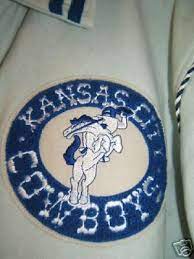
Showing posts with label Kansas City Cowboys. Show all posts

Monday, August 15, 2022

The Story And Significance Of Steve Owen - Won NFL Titles As A Player And Coach For The New York Giants

Stephen Joseph Owen was an American football player and coach. He earned a place in the Pro Football Hall of Fame as head coach of the National Football League's New York Giants for 24 seasons, from 1930 to 1953.

Owen's skill at designing defenses, his fundamentals-centered approach to the game and his innovative "A formation," a variation on the single-wing, also helped his offenses thrive and were key to his success. His personal style was memorable for the odd congruence of gravelly voice and easy disposition to go with his perpetual tobacco chewing.

Owen served in the U.S. Army training corps in World War I, then returned to coach for a year at Phillips before going to work in oil fields in various parts of the Southwest. He started to play pro football in 1924, at $50 a game, for the NFL's Kansas City Cowboys (who played all their games on the road!). After playing for the Cowboys and then the Cleveland Bulldogs in 1925, he was sold to the New York Giants in 1926 for $500, joining his brother Bill. After a futile attempt to get a cut of the purchase price from Kansas City coach Leroy Andrews, he later said of the sale. I had seen a lot of fat hogs go for more than they paid for me. But in those days, a fat hog was a lot more valuable than a fat tackle. I was going to New York even if I had to walk there.

His leadership became clearly evident during the 1927 season as captain of a team that outscored opponents 197–20, went 11–1–1 and won the NFL title.

In 1930, he was promoted to co-player-coach for the final two games of the season with another future Hall of Famer, Benny Friedman. The 2–0 finish was a premonition of Owen's future long-term success as sole head coach starting the following season. In an unusual move for the time, he didn't sign a formal contract with owner Tim Mara. He would coach the next 23 years on a handshake. He retired as a player following the 1931 season, except for a brief comeback in 1933, helping the Giants go 11–3 and get to the title game, the first of eight appearances the Giants would make during his tenure.

The team slipped to 8–5 in 1934, but still made the NFL championship game again. Facing the 13–0 Chicago Bears, the Giants came in as huge underdogs and trailed 10–3 at halftime. The icy conditions and 9 °F (5.0 °C) weather led to an adjustment between halves that became a memorable part of National Football League lore. A friend of the Maras owned a nearby shoe warehouse, and opened it on that freezing Sunday afternoon to supply the entire team with new sneakers for better footing on the frozen turf than they had had with conventional cleats, enabling them to run off 27 unanswered points in the second half for a 30–13 win and the team's first title. More than seven decades later, the contest is still remembered as "the sneakers game."

Despite the institution of the NFL draft due to the continued dominance of the Bears and Giants, the Giants returned to the championship game in 1935 and won their second and last title under Owen in 1938, 23-17 over the Green Bay Packers despite being outgained in yardage 379–208, with nine points on two blocked punts the margin of victory. New York appeared in four more season-ending NFL title clashes under Owen, but lost them all. An early World War II Three Stooges short referred to them when Moe sarcastically asked a hulking adversary, "Did you ever play footborl for da Giants?!"

In 1950, the Giants faced a powerful new foe with the arrival of the All-America Football Conference champion Cleveland Browns. The Browns consigned them to runner-up finishes in each of the next three seasons, though Owen's "umbrella defense" shut down passing attacks and made life miserable for the first-place Browns. New York won four of their six regular-season meetings but dropped a defensive playoff struggle with them after finishing tied with the Browns for the Eastern Division title at the end of the 1950 season.

Owen was the host of Pro Football Highlights on the DuMont Television Network from 1951 to 1953.
After the Giants slipped to 3–8 in 1953, Owen announced his retirement as head coach days before the end of the regular season, ending his 28 years at field level with the Giants. As the final minutes ticked away in his last game as Giant coach, a late-game loss to eventual champion Detroit, television cameras showed him standing alone on the sidelines in tears. His record as head coach was 150–99–17 (.596) and his 150 wins are still the most in franchise history.

Owen remained with the Giants as head scout. During the 1954 season, he served as a collegiate spring practice assistant, first at South Carolina and then at Baylor. He returned to the collegiate ranks full-time in 1955 as an assistant coach at Baylor.

Just weeks after the end of the 1955 season, the Philadelphia Eagles hired Hugh Devore as head coach and added Owen as his assistant soon after. But two seasons of struggling in Philadelphia led to the entire coaching staff's dismissal, and Owen eventually became a head coach yet again, this time on an interim basis with the Canadian Football League's Toronto Argonauts on September 21, 1959.

The Argonauts declined Owen's offer to stay on as full-time head coach for 1960, but retained him as a scout and advisor before he moved to the CFL's Calgary Stampeders on August 23, 1960 as interim head coach, but as in Toronto Owen was replaced at the end of the season. On December 29 of the same year, he was named head coach of the Saskatchewan Roughriders, a CFL team that had won just once in 1960. Owen's 1961 team nearly reached the playoffs, then did so the following year and was voted CFL Coach of the Year. But after suffering a heart attack late in 1962, he resigned on January 6, 1963.

Unable to stay away from the sport, however, he soon came back as head coach of the United Football League's Syracuse Stormers on March 20, 1963. After an 0–12 season, Owen returned to the New York Giants that November to scout for them.

Owen was stricken with a terminal cerebral hemorrhage in May 1964. After eight days in critical care, Owens died at age 66 on May 17 in Oneida, New York. He was buried at St. Patrick's Cemetery in Oneida.

Owen was inducted into the Pro Football Hall of Fame as a member of its fourth class in 1966, enshrined on September 17.
Sources
https://www.pro-football-reference.com/
https://www.profootballarchives.com/index.html
https://americanfootballdatabase.fandom.com/wiki/Football_Wiki
https://www.gridiron-uniforms.com/GUD/controller/controller.php?action=main
https://www.profootballhof.com/hall-of-famers/
 "Stout Steve Owen, former Giants' coaching great, dies". Daytona Beach Morning Journal. Florida. Associated Press. May 18, 1964. p. 12.
 "Steve Owen quits grid Giants". Pittsburgh Post-Gazette. Associated Press. December 11, 1953. p. 26.
 "Hall of fame to induct 8 grid pros". Pittsburgh Post-Gazette. Associated Press. September 15, 1966. p. 40.
 Gottehrer. pg. 42–3
 New York Giants (1925–Present)
 "Steve Owen resigns as coach of New York Giant gridders". Eugene Register-Guard. Oregon. United Press. December 11, 1953. p. 2B.
 "Steve Owen to help coach Baylor gridders". Reading Eagle. (Pennsylvania). United Press. July 18, 1955. p. 13.
 "Stout Steve Owen Baylor hired to cure Baylor foldups". Spokesman-Review. (Spokane, Washington). Associated Press. September 18, 1955. p. 1, sports.
 "Steve Owen to join Eagles". Victoria Advocate. (Texas). Associated Press. January 15, 1956. p. 12A.
 "Owen top Canadian pro coach". Prescott Evening Courier. (Arizona). UPI. November 30, 1962. p. 8.
 "Hall of Famers by Year of Enshrinement". Pro Football Hall of Fame. National Football League. Retrieved February 4, 2013.
Gottehrer, Barry. The Giants of New York, the history of professional football's most fabulous dynasty. New York, G. P. Putnam's Sons, 1963 OCLC 1356301

Friday, August 5, 2022

The Story And Significance Of Joe Guyon - Mr. Everthing For The 1927 Champion New York Giants

Joseph Napoleon "Big Chief" Guyon was an American Indian from the Ojibwa tribe (Chippewa) who was an American football and baseball player and coach. He played college football at the Carlisle Indian Industrial School from 1912 to 1913 and Georgia Tech from 1917 to 1918 and with a number of professional clubs from 1919 to 1927. He was inducted into the Pro Football Hall of Fame in 1966 and the College Football Hall of Fame in 1971.

Guyon signed to play professional football with the Canton Bulldogs in 1919. After the NFL was organized in 1920, he played seven more seasons with the Washington Senators, Cleveland Indians, Oorang Indians, Rock Island Independents, Kansas City Cowboys, and the New York Giants. From 1919 to 1924, he teamed with another outstanding Indian halfback, Jim Thorpe. They parted ways late in the 1924 season when Guyon left the Independents to go to Kansas City. He stayed with the Cowboys in 1925 while Thorpe went to the Giants.

Two years later in 1927, Guyon became a Giant and he played a major role in leading the New Yorkers to the 1927 NFL championship. Guyon, away from the shadow of Thorpe, enjoyed one of his finest seasons and gained the first significant publicity he had enjoyed since his college days. The 1927 Giants compiled an 11-1-1 record largely on the strength of a superior defensive that allowed only 20 points all season. But Guyon, flashing all of his many abilities – passing, running, punting, tackling and blocking and played a leading role in scoring the necessary points for his team that also finished second in scoring that season.

Guyon coached the Bulldogs of Union University in Jackson, Tennessee in 1919. He returned to Union in 1923 and coached all sports from 1923 to 1927. Union inducted Guyon into its sports hall of fame in 2008.

Guyon coached the backfield of the 1920 Georgia Tech team. He also coached high school football at St. Xavier High School in Louisville, Kentucky from 1931 to 1933, with a 16–7–2 record.

Sources
https://www.pro-football-reference.com/
https://www.profootballarchives.com/index.html
https://americanfootballdatabase.fandom.com/wiki/Football_Wiki
https://www.gridiron-uniforms.com/GUD/controller/controller.php?action=main
https://www.profootballhof.com/hall-of-famers/
 "Joe Guyon's HOF Profile". Pro Football Hall of Fame. Retrieved January 21, 2009.
 "Georgia Tech Boasts All-Southern Eleven". Fort Wayne Journal-Gazette. November 20, 1918. p. 6. Retrieved December 17, 2015 – via Newspapers.com. Open access icon
 "Joe Guyon". College Football Hall of Fame. Football Foundation. Retrieved January 21, 2009.
 C. Richard King (March 10, 2015). Native Americans in Sports. Routledge. p. 137. ISBN 9781317464037.
 Sentinel, Joseph Cress, The (November 8, 2012). "Carlisle vs. Army: 100 years later, game remembered for celebrity players".
 Willis, Chris (May 5, 2017). Walter Lingo, Jim Thorpe, and the Oorang Indians: How a Dog Kennel Owner Created the NFL's Most Famous Traveling Team. Rowman & Littlefield. ISBN 9781442277663.
 Rozendaal, Neal (July 9, 2012). Duke Slater: Pioneering Black NFL Player and Judge. McFarland. ISBN 9780786469574.
 "All-Time Football Team Lists Greats Of Past, Present". Gadsden Times. July 27, 1969.
 Umphlett 1992, p. 142
 Umphlett 1992, p. 141
 Spalding Football Guide. Shawnee Mission, Kansas, NCAA Publishing Service. 1918.
 "Strupper and Guyon of Georgia Tech Are Hailed As Two of the Greatest Pigskin Heroes In Seasons". The Day. November 19, 1917.
 "Jackets Win Double Bill" (PDF). The Technique. October 2, 1917. p. 4. Archived from the original (PDF) on October 30, 2014.
 "Georgia Crushes W. and L." The New York Times. October 21, 1917. p. 118. Retrieved November 10, 2024 – via Newspapers.com.
 McCarty 1988a, p. 5
 McCarty 1988b, p. 15
 "Golden Tornado Wins Great Victory" (PDF). The Technique. December 4, 1917. p. 4.
 Union University (January 1, 1920). Lest We Forget 1920. Student Organizations of Union University.
 "Coach Guyon Leaves Union". Cardinal and Cream. April 8, 1927 – via Union University Archives.
 "Union to induct six into Sports Hall of Fame Nov. 7 - News Release". November 5, 2008.
 "Alumni Events 2008" (PDF). Union University. Retrieved November 10, 2024.
 "Blue Print, 1921". School Yearbooks. Georgia Institute of Technology. January 1, 1921.
 Powers-Beck, Jeffrey (August 16, 2011). ""A Role New to the Race": A New History of the Nebraska Indians" (PDF). Nebraska History. Archived from the original on May 22, 2013.
McCarty, Bernie (February 1988). "Georgia Tech's 1917 backfield, better than the Four Horsemen: Part 1" (PDF). College Football Historical Society Newsletter. 1 (3). Archived from the original (PDF) on March 4, 2016.
McCarty, Bernie (May 1988). "Georgia Tech's 1917 backfield, better than the Four Horsemen: Part 2" (PDF). College Football Historical Society Newsletter. 1 (4). Archived from the original (PDF) on March 4, 2016.
Umphlett, Wiley Lee (1992). Creating the Big Game: John W. Heisman and the Invention of American Football. Westport, CT: Greenwood Publishing Group. p. 141. ISBN 978-0-313-28404-5.

Monday, January 17, 2022

Who Were The Kansas City Cowboys?

The Kansas City Cowboys were a National Football League team based in Kansas City, Missouri. The team was founded as the Kansas City Blues in 1924, and as the Kansas City Cowboys in 1925 and 1926. The Blues competed as a traveling team, playing all of their NFL games in other cities' stadiums in their only year under that name. LeRoy Andrews acted as the team's player-coach.

The team was owned by Maurice R. Smith, Joe Brecklein and Cameron K. Reid. The Cowboys were known for dressing in cowboy attire and fans came out in great numbers to see them play. Immediately after the game, the Giants hired away head coach LeRoy Andrews and most of the Cowboys players. Maurice R. Smith then arranged to give what remained of the team to Cleveland under the condition that it would be given back if he wanted the team returned.

President Joe Carr of the NFL agreed to the arrangement although there was never any assurance it would be honored. The Kansas City Cowboys were actually purchased by the Cleveland Bulldogs in 1927 and merged with that franchise. It is believed The Bulldogs were sold to the Detroit Wolverines who hired coach LeRoy Andrews to coach the team. The Wolverines were then bought by the New York Giants who deactivated the team bringing the story of the Kansas City Cowboys, Cleveland Bulldogs and Detroit Wolverines to an end.

Coach Steve Owen played for the Kansas City Cowboys and played for the Cleveland Bulldogs. He and LeRoy Andrews fell out over their part of the purchase price for the Cowboys when they were sold to the Bulldogs and resulted in his contract being sold to the New York Giants. Owen was then hired as head coach of the Giants in 1931 and remained their coach until 1953. Steve Owen would ultimately end up in the NFL Hall of Fame in 1966.

The Kansas City Blues/Cowboys just played three seasons compiling a 12-15-1 record.

Sources
https://www.pro-football-reference.com/
https://www.profootballarchives.com/index.html
https://americanfootballdatabase.fandom.com/wiki/Football_Wiki
https://www.gridiron-uniforms.com/GUD/controller/controller.php?action=main
https://www.profootballhof.com/hall-of-famers/
 "Kansas City Cowboys (1924-1926)". sportsecyclopedia.com.
 Murray Greenberg, Passing Game: Benny Friedman and the Transformation of Football. New York: Public Affairs, 2008; p. 140.
 "Detroit Wolverines (1928)". sportsecyclopedia.com.
 Fleming, Frank. "Detroit Wolverines". Sportsecyclopedia. Retrieved August 22, 2018.
 "Coach Tackle Steve Owen". Pro Football Hall of Fame. Retrieved August 22, 2018.
 Fleming, Frank. "Kansas City Cowboys". Sportsecyclopedia. Retrieved August 22, 2018.
 "Cleveland Bulldogs". Case Western Reserve University. May 11, 2018. Retrieved August 22, 2018.