Showing posts with label HOF 1966. Show all posts

Friday, August 19, 2022

The Story And Significance Of Bulldog Turner - Selected As A First-Team All-Pro In Eight Of His 13 Seasons

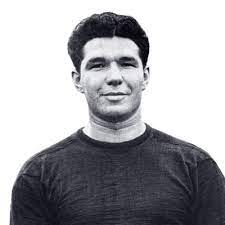
Clyde Douglas "Bulldog" Turner was an American football player and coach. He was elected, as a player, to the College Football Hall of Fame in 1960 and the Pro Football Hall of Fame in 1966. He was also selected in 1969 to the NFL 1940s All-Decade Team.

Turner played college football as a center at Hardin–Simmons University from 1937 to 1939 and was selected as an All-American in 1939. After being selected by the Chicago Bears in the first round of the 1940 NFL Draft, he played professional football for the Bears, principally as a center on offense and linebacker on defense, for 13 years from 1940 to 1952. He was selected as a first-team All-Pro eight times (1940–1944, 1946–1948) and was a member of Bears teams that won NFL championships in 1940, 1941, 1943, and 1946.

After his playing career was over, Turner held assistant coaching positions with Baylor University (1953) and the Chicago Bears (1954–1957). He was the head coach of the New York Titans of the American Football League (AFL) during the 1962 AFL season.

Turner enrolled at Hardin–Simmons University in Abilene, Texas, in 1936 at age 17. As a freshman, he weighed 172 pounds and "showed no outward signs of developing into a football player." By the fall of his sophomore year, Turner had gained 18 pounds and won the job as the starting center on the Hardin–Simmons Cowboys football team. By his senior year, he had increased his weight to 235 pounds.

Early in his career at Hardin–Simmons, Turner and teammate A. J. Roy encouraged each other in practice sessions by referring to each other by nicknames. Turner was given the nickname "Bulldog", and Roy was known as "Tiger". Turner later recalled his college experience as follows: "We got room, board and tuition, but we had to buy our own books and we were supposed to take care of two jobs. I had to sweep out the gym and wait tables, but I kind of farmed out the sweeping after a while. It was tough but I loved it. And the more I played, the more I liked the game."

In September 1938, Turner first gained national attention when Associated Press photographer Jimmy Laughead, playing off Turner's strength and his background growing up in West Texas Hereford cattle country, took his picture posing with a 240-pound calf around his shoulders. Turner later recalled posing with the calf: "That day about did me in. I don't think I've ever been so tired in my life."

Turner played center for Hardin–Simmons for three years, and during that time, the football team compiled records of 8–0–1 in 1937, 8–2 in 1938, 7–1–1 in 1939. At the end of the 1939 season, Turner was selected by the New York Sun as the first-team center on the 1939 College Football All-America Team. He was also named to the Associated Press "Little All-America" team. He played in post-season all-star games including the East–West Shrine Game on January 1, 1940, and the Chicago College All-Star Game on August 29, 1940.

In December 1939, Turner was selected by the Chicago Bears with the seventh overall pick in the first round of the 1940 NFL Draft. He was the only lineman selected in the first ten picks. In June 1940, Turner signed a three-year contract with the Bears.

While Turner was in college, he was the subject of recruitment efforts by George Richards, the owner of the Detroit Lions. An NFL investigation concluded that Richards had tampered with Turner by paying for Turner's dental work, giving him $100, and advising him to announce publicly that he would not play professional football so as to dissuade other teams from drafting him. The NFL fined the Lions $5,000 for the violation.

As a rookie, Turner, at age 21, appeared in 11 games, nine of them as the starting center, for the 1940 Chicago Bears team that compiled an 8–3 record and defeated the Washington Redskins, 73–0, in the NFL Championship Game. In the championship game, Turner intercepted a Sammy Baugh pass and returned it 29 yards for a touchdown. At the end of the 1940 season, he was selected as a first-team All-Pro by the Chicago Herald-American and as a second-team All-Pro by the National Football League (NFL), United Press (UP), and International News Service (INS). He was one of only two rookies (Don Looney was the other) to receive All-Pro honors in 1940.

In 1941, Turner appeared in all 11 games, 10 as a starter, for the 1941 Bears that compiled a 10–1 and again won the NFL championship. Turner was selected as the All-Pro center, receiving first-team honors on the so-called "official" All-Pro team selected by a committee of professional football writers for the NFL, as well as All-Pro teams selected by the Associated Press (AP), UP, Collyer's Eye (CE), the New York Daily News (NYDN), and the Chicago Herald American. The consensus selection of Turner as the NFL's top center marked a transition from Mel Hein, who had been a consensus All-Pro at the position for the prior nine years. Turner was a unanimous All-Pro pick by the UP sports writers.

In 1942, Turner started all 11 games and helped the Bears win the NFL Western Division title with an 11–0 record, though the team lost to the Washington Redskins in the 1942 NFL Championship Game. Turner led the NFL with eight interceptions in 1942. He scored two touchdowns, one on an interception return and the other on a fumble recovery and return. At the end of the 1942 season, Turner was selected as the first-team center on the All-Pro team by the NFL, AP, INS, and NYDN. Jack Mahon of the INS wrote that Turner "was in a class by himself at center this season." Though invited to play in the Pro Bowl, he was unable to do so due to a throat infection.

In 1943, Turner started all 10 games and helped the Bears win their third NFL championship in four years. He was selected as a first-team All-Pro by the AP, UP, INS, NYDN, and Pro Football Illustrated (PFI). He was a unanimous pick by the AP sports writers.

In 1944, Turner appeared in all 10 games for the Bears team that compiled a 6–3–1 record and finished in second place in the NFL Western Division. On December 3, 1944, Turner was shifted into the backfield late in a game against Card-Pitt; he had a 48-yard run for the only rushing touchdown of his career. He was selected as a first-team All-Pro by the AP, UP, INS, and NYDN. In his first five seasons with the Bears, he appeared in 58 consecutive games, played all 60 minutes in eight of those games, and won three NFL championships.

In January 1945, Turner was inducted into the United States Army Air Forces and was assigned as a physical training instructor. In 1945, he played for the Second Air Force Superbombers football team in Colorado Springs, Colorado. He was granted furlough to play two games for the Bears and then returned to the Superbombers team where he finished the 1945 football season. At the end of the season, Turner was the leading pick on the All-Army Air Forces conference football team.

In March 1946, Turner rejected offers to play in the All-America Football Conference and signed a contract to return to the Bears. He appeared in all 11 games, and helped lead the 1946 Bears to another NFL championship. At the end of the season, Turner was selected as a first-team All-Pro by the AP, UP, and NYDN.

In 1947, Turner appeared in all 12 games for a Bears team that compiled an 8–4 record and finished in second place in the NFL Western Division. During the 1947 season, Turner intercepted a Sammy Baugh pass and returned it 96 yards for a touchdown, a moment that Turner later selected as the highlight of his career. At the end of the season, he was picked as a first-team All-Pro by the AP, NYDN, and PFI.

In 1948, Turner again appeared in all 12 games for the Bears team that compiled a 10–2 record and again finished in second place in the NFL Western Division. For the eighth and final time, Turner was selected as a first-team All-Pro center, receiving first-team honors from AP, UP, PFI, and The Sporting News.

Turner continued to play for the Bears for four more years, appearing in all 12 games each year from 1949 to 1952. In his final year, he played at the offensive tackle position. In 13 NFL seasons, Turner appeared in 138 regular season games and seven post-season games. He intercepted 17 passes in the regular season and four more in five NFL championship games. He was selected as a first-team All-Pro in eight of his 13 seasons.

Turner was big for his day (6 ft 1 in (1.85 m), 237 lb (108 kg)); however, he was smart and very fast. Turner later boasted about his talent as a blocker: "I was such a good blocker, that the men they put in front of me – and some were stars who were supposed to be making a lot of tackles – they would have their coaches saying, 'why ain't you making any tackles?' they'd say, 'that bum Turner is holding.' Well that wasn't true. . . . I could handle anybody that they'd put in front of me." According to George Halas, Turner was "perhaps the smartest player" he had in 40 years as the Bears' coach, a player who "knew every assignment for every player on every player." Teammate George Musso once said of Turner, "Who knows what kind of player he would have been if he ever got to rest during a game?"

During the 1952 NFL season, Turner was both a player for the Bears and an assistant coach responsible for instructing the guards and centers.

In January 1953, after retiring as a player, Turner was hired as an assistant line coach at Baylor University in Waco, Texas. He had a ranch in nearby Gatesville, and was responsible for coaching the offensive centers and defensive linebackers. He resigned his post at Baylor in February 1954.
Turner was an assistant coach for the Bears from 1954 to 1957. He worked from the press-box and communicated by telephone to George Halas about weaknesses he had observed in opponents' defenses. He gave up his job with the Bears in 1958 to devote his full efforts to his ranch in Texas.

In December 1961, Turner was hired as the head coach of the New York Titans of the American Football League. Despite a pre-season injury to All-AFL fullback Bill Mathis, whose 846 rushing yards was second best in the 1961 AFL season, the Titans opened the season with a 2–1 record. However, owner Harry Wismer was broke and unable to pay the players, who refused to practice and went on a two-day strike. Wismer threatened to put the entire team on waivers, and his erratic behavior, including hastily placing six starters on waivers after a loss and threatening to sue the Denver Broncos after quarterback Lee Grosscup was injured on a hard tackle, caused the Titans to be described as "the kookiest franchise in professional football." Even with financial assistance from other AFL clubs, the Titans' payroll deficiencies continued, and Turner had to expend energy just enticing his team to suit up. The team drew only 36,161 spectators to seven home games and finished with a 5–9 record. The team was sold in March 1963 and became the New York Jets. Turner was fired that same month.
Sources
https://www.pro-football-reference.com/
https://www.profootballarchives.com/index.html
https://americanfootballdatabase.fandom.com/wiki/Football_Wiki
https://www.gridiron-uniforms.com/GUD/controller/controller.php?action=main
https://www.profootballhof.com/hall-of-famers/
"Bulldog Turner Stats". Pro-Football-Reference.com. Sports Reference LLC. Retrieved May 11, 2017.
 "Celebrate 50th Anniversary". The Gatesville (TX) Messenger and Star-Forum. March 10, 1957. p. 12 – via Newspapers.com.
 "The Dry Days of "Bulldog" Turner". The Gatesville Messenger. January 24, 1985. p. 1B – via Newspapers.com.
 "Bulldog Turner an All-Star of the All-Stars". Chicago Tribune. August 24, 1940. p. 16 – via Newspapers.com.
 Murray Olderman (September 30, 1974). "'Bulldog' Turner beats Clyde". Dixon (IL) Evening Telegraph. p. 10.
 "Associated Press Picture News". Corvallis (OR) Daily Gazette-Times. September 19, 1938. p. 5 – via Newspapers.com.
 "Grid Training". Wilmington (DE) Morning News. September 16, 1938. p. 29 – via Newspapers.com.
 "Let's Study Case of Bulldog Turner, HSU Center". Abilene (TX) Reporter-News. July 1, 1939. p. 2 – via Newspapers.com.
 "2011 Hardin–Simmons Football Media Guide". Hardins–Simmons University. 2011. pp. 83, 88.
 College Football Hall of Fame profile
 "McAfee of Duke Rated Best Back in N.Y. Sun Pick: Turner of Hardin–Simmons Considered 'One of Great All-Time Centers'". The Daily Argus-Leader. December 2, 1939. p. 3 – via Newspapers.com.
 "Loughney Is Selected On All Star Team". Times-Leader(Wilkes-Barre, PA). December 7, 1939. p. 26 – via Newspapers.com.
 "All-America Turner Back From East-West Classic". Abilene Reporter-News. January 9, 1940. p. 2 – via Newspapers.com.
 "1940 NFL Draft Listing". Pro-Football-Reference.com. Retrieved March 30, 2023.
 "Turner Only Lineman Among First Ten Gridders Drafted By National League". Abilene Reporter-News. December 10, 1939. p. 11 – via Newspapers.com.
 "Bears Sign Star: Bulldog Turner Given Three-Year Grid Contract". The Tennessean. June 23, 1940. p. 35 – via Newspapers.com.
 "Lions Tampered With Bulldog Turner". The Corpus Christi Caller-Times. September 12, 1975. p. 20 – via Newspapers.com.
 "1940 Chicago Bears Statistics & Players". Pro-Football-Reference.com. Sports Reference LLC. Retrieved May 11, 2017.
 "Chicago Bears Run Wild To Win Pro Grid Title". Amarillo (TX) Daily News. December 9, 1940. p. 3 – via Newspapers.com.
 "1940 NFL All-Pros". Pro-Football-Reference.com. Sports Reference LLC. Retrieved May 11, 2017.
 "Three Dodgers, Two Bears Win All-Pro Berths". Chicago Tribune. December 22, 1940. pp. 2–4 – via Newspapers.com.
 "All-National Pro Stars". The Times Herald (Port Huron, MI). December 30, 1941. p. 11.
 "Four ChiBears Named On All-Pro Loop Team". The Times Herald (Port Huron, MI). December 30, 1941. p. 11.
 Dillon Graham (December 9, 1940). "4 Bears Chosen on All-Loop Pro Team". Ironwood (MI) Daily Globe. p. 10.
 George Kirksey (December 12, 1941). "Bears, Packers Top All-Star Pro Gridders". Arizona Republic. p. 21.
 "1941 NFL All-Pros". Pro-Football-Reference.com. Sports Reference LLC. Retrieved April 4, 2017.
 "Chicago Bears Place Four on All-Pro League Team". Los Angeles Times. December 9, 1941. p. 27 – via Newspapers.com.
 "Bears, Packers Dominate Star Pro Team". The News-Herald. December 30, 1941. p. 9 – via Newspapers.com.
 "Bulldog Turner Top Pass Interceptor". The Abilene (TX) Reporter-News. February 19, 1943. p. 10 – via Newspapers.com.
 "1942 NFL All-Pros". Pro-Football-Reference.com. Sports Reference LLC. Retrieved May 16, 2017.
 "Chicago Bears place five on all national pro loop team". Lincoln Sunday Journal and Star. December 6, 1942. p. 12 – via Newspapers.com.
 "Bulldog Turner Not To Play In Pro Bowl Tilt". Abilene (TX) Reporter-News. December 23, 1942. p. 3 – via Newspapers.com.
 "1943 NFL All-Pros". Pro-Football-Reference.com. Sports Reference LLC. Retrieved May 16, 2017.
 "Baugh, Turner and Hutson – 3 Unanimous on All-Pro". Abilene (TX) Reporter-News. December 17, 1943. p. 19 – via Newspapers.com.
 "Bears Trample Over Steelers, 49–7". Pittsburgh Post-Gazette. December 4, 1944. p. 16 – via Newspapers.com.
 "1944 NFL All-Pros". Pro-Football-Reference.com. Sports Reference LLC. Retrieved May 16, 2017.
 "Chicago Bears' Bulldog Turner slated to play with Superbomber eleven here". The Nebraska State Journal. July 29, 1945. p. 9 – via Newspapers.com.
 "Turner leads Bomber line". Lincoln Journal. November 7, 1945. p. 8 – via Newspapers.com.
 "Bulldog Turner Joins Bears for Game in Detroit Sunday". Chicago Tribune. October 25, 1945. p. 30 – via Newspapers.com.
 "'Bulldog' Turner on Air Force All-Stars". St. Louis Post-Dispatch. January 4, 1946. p. 20 – via Newspapers.com.
 "Bulldog Turner Back With Bears". The Evening News, Harrisburg, PA. March 26, 1946. p. 18 – via Newspapers.com.
 "1946 NFL All-Pros". Pro-Football-Reference.com. Sports Reference LLC. Retrieved May 16, 2017.
 "Bears Rout Redskins: Bears Trample Redskins, 56-20". Chicago Tribune. October 27, 1947. pp. 4–1 – via Newspapers.com.
 "Where Is He Now: Clyde (Bulldog) Turner – Two Way Performer". Asheville (NC) Citizen-Times. December 16, 1983. p. 86 – via Newspapers.com.
 "1947 NFL All-Pros". Pro-Football-Reference.com. Sports Reference LLC. Retrieved May 16, 2017.
 Frank Eck (December 13, 1947). "Bulldog Turner Picked on All-Professional Grid Team". Abilene (TX) Reporter-News. p. 2 – via Newspapers.com.
 "1948 NFL All-Pros". Pro-Football-Reference.com. Sports Reference LLC. Retrieved May 16, 2017.
 "Bulldog Turner All-League Again". Abilene (TX) Reporter-News. November 10, 1948. p. 4.
 "Bulldog Turner Retires, Takes Post at Baylor U." Wilmington (DE) Morning News. January 14, 1953. p. 33 – via Newspapers.com.
 "Clyde Turner Bio". Pro Football Hall of Fame. Retrieved May 16, 2017.
 "Ill-fated Turner still a Bulldog". Chicago Tribune. June 7, 1987. pp. 3–1, 3–10 – via Newspapers.com.
 "Bulldog Turner Decides On One More Farewell". Chicago Tribune. July 10, 1952. p. 53 – via Newspapers.com.
 "Bulldog Turner Joins Staff: Jack Russell Is Named New Baylor Line Coach". The Waco News-Tribune. January 15, 1953. p. 8 – via Newspapers.com.
 "Bulldog Turner Quits at Baylor". Abilene Reporter-News. February 9, 1954. p. 30 – via Newspapers.com.
 "Turner Tabbed for Niche In Football Hall of Fame (part 2)". The Gatesville (TX) Messenger and Star-Forum. October 7, 1960. p. 8 – via Newspapers.com.
 "From the Cuff". The Gatesville Messenger and Star-Forum. November 11, 1955. p. 14 – via Newspapers.com.
 "POST-ed". The Gatesville Messenger and Star-Forum. July 25, 1958. p. 17 – via Newspapers.com.
 "Bulldog Turner is new Titans coach". Lawrence Journal World. Kansas. Associated Press. December 19, 1961. p. 14.
 "Titans Open At Home Vs. Denver Broncs". The Arizona Republic. September 29, 1962. p. 17 – via Newspapers.com.
 "Titans Really Something: Harry Wismer Mastermind of Kookiest Team in Pro Football". Sandusky Register. Newspaper Enterprise Association. October 31, 1962. p. 8B – via Newspapers.com.
 Goldstein, Richard (November 2, 1998). "Bulldog Turner, 79, a Star For Bears and Hall of Famer". New York Times. Retrieved February 18, 2016.
 "1962 New York Titans Statistics & Players". Pro-Football-Reference.com. Sports Reference LLC. Retrieved May 11, 2017.
 "Turner is fired as Titan skipper". Lawrence Journal World. Kansas. Associated Press. March 27, 1963. p. 14.
 "Turner Is Named To Hall of Fame". The Abilene Reporter-News. October 21, 1951. p. 4D – via Newspapers.com.
 "'40 Gridders Could Make It Now". The Progress-Index (VA). June 22, 1968. p. 10 – via Newspapers.com.
 "Putting Around". The Amarillo (TX) Globe-Times. October 28, 1964. p. 32 – via Newspapers.com.
 "Turner Tabbed for Niche In Football Hall of Fame". The Gatesville (TX) Messenger and Star-Forum. October 7, 1960. p. 1 – via Newspapers.com.
 "Turner Is Tapped For Hall of Fame". The Gatesville (TX) Messenger and Star-Forum. December 8, 1961. p. 1 – via Newspapers.com.
 "Bulldog Turner To Hall of Fame". The Salina Journal. March 23, 1966. p. 14 – via Newspapers.com.
 "Canadeo, Brock, Ray on All-'40s". Green Bay Press-Gazette. August 26, 1969. p. 17 – via Newspapers.com.
 "POST-ed". The Gatesville (TX) Messenger and Star-Forum. July 11, 1969. p. 19 – via Newspapers.com.
 "Texas All-Pro team would be contender". Great Falls (MT) Tribune. November 12, 1975. p. 17 – via Newspapers.com.
 "Clyde "Bulldog" Turner". Hardin-Simmons University. Archived from the original on September 21, 2015. Retrieved May 17, 2017.
 "Athletic Hall of Fame Inductees". Hardin-Simmons University. Retrieved May 17, 2017.
 "50 Greatest Bears: Bulldog Turner". ESPN.com. Retrieved May 17, 2017.
 "Mrs. Gladys W. Turner". The Gatesville Messenger. November 3, 1988. p. 10C – via Newspapers.com.
 "This was News – 10, 20 Years Ago". The Gatesville (TX) Messenger and Star-Forum. August 19, 1960. p. 15 – via Newspapers.com.
 "Turner's Horse Wins First Race". The Gatesville (TX) Messenger and Star-Forum. June 12, 1964. p. 9 – via Newspapers.com.
 "POST-ed". The Gatesville (TX) Messenger and Star-Forum. March 26, 1965. p. 13 – via Newspapers.com.
 "POST-ed". The Gatesville (TX) Messenger and Star-Forum. March 4, 1966. p. 13 – via Newspapers.com.
 "H-SU Great Has Stroke". Abilene Reporter-News. August 30, 1974. p. 58 – via Newspapers.com.
 "Ex-"Monster" Has Stroke In Chicago". El Paso Herald-Post. September 13, 1974. p. 26 – via Newspapers.com.
 "Gladys Turner, wife of former Bears great". Chicago Tribune. October 27, 1988. pp. 3–23 – via Newspapers.com.
 "Bulldog Turner, star on Bears of '40s, dies: Center-linebacker earned 4 title rings (part 1)". Chicago Tribune. October 31, 1998. pp. 3–1 – via Newspapers.com.
 "Bulldog Turner, star on Bears of '40s, dies: Center-linebacker earned 4 title rings (part 2)". Chicago Tribune. October 31, 1998. p. 3 – via Newspapers.com.

Wednesday, August 17, 2022

The Story And Significance Of Shorty Ray - The Man Who Rewrote The NFL Rules Book

Hugh Light "Shorty" Ray was an American football player and official. He was the first technical advisor on the rules and supervisor of officials for the National Football League from 1938 to 1952. He was inducted into the Pro Football Hall of Fame in 1966.

After graduating from the University of Illinois, Ray served as the athletic director at the Smith Academy in St. Louis from 1907 to 1908. In 1909, he was hired as a mechanical drawing instructor at Wendell Phillips High School in Chicago. He continued teaching mechanical drawing in Chicago high schools for more than 30 years.

In addition to his work as a teacher, Ray worked as a football official in Big Ten Conference games in the 1920s and 1930s. He also officiated in basketball and baseball games.

Ray helped organize the Athletic Officials Association (AOA) and organized rules clinics and written tests that were mandatory for members of the AOA. He was also the author of the high school football code and invented and copyrighted the "Play Situation Book" now called the "Case Book" The "Play Situations Book" taught the Officials, Coaches, and Players the rules through example and standardized their implementation. According to the Pro Football Hall of Fame, "many experts concede that Shorty did much to save the game during the dark days [in the 1920s] when football was under a cloud of mounting injuries, outmoded rules, haphazard officiating and draggy contests."

George Halas persuaded the NFL to hire Ray in 1938 to rewrite its rules book and train its officials. In 1947, Ray was given a five-year contract as Technical Advisor on the Rules and Supervisor of Officials to the NFL and resigned from the Chicago public schools to devote his full efforts to his job with the NFL. He served as a technical adviser to the NFL and supervisor of officials until his retirement in 1952. Ray has been credited with making the forward pass "an effective weapon by redesigning the ball." Ray also sought to increase the speed of play. He said, "The faster you play, the more plays you create." He directed officials to be prompt in recovering the ball and getting it into play again and insisted that the 30 seconds allowed to put the ball in play be strictly enforced. With Ray's emphasis on faster play, the average number of plays per touchdown decreased from 48 in 1938 to 24 in 1945.

Ray was also responsible for numerous rules changes, including the following rules. He changed the rules so that an incomplete pass was not a loss to the passing team. He developed the rule that the clock stops from the moment an incomplete pass hits the ground until play resumes.

Ray's biography at the Pro Football Hall of Fame calls him pro football's "unknown hero" who "helped save an often-unexciting game from extinction." According to that biography, "Shorty insisted his officials became absolute masters of the rules book. He gave them written tests and demanded that they score better than 95 percent every time. George Halas said in 1949 that his role in hiring Ray was "my greatest contribution to the National Football League," and later said of Ray: "He was the smartest man in rules ever. He was a genius."

In his later years, however, Ray was criticized for becoming overly technical, "inundating his officials with memoranda," urging them to speed up play, call all fouls, and stop the clock. Under his guidance to speed up play, the NFL played a record 10,451 plays during the 1947 NFL season. However, penalties also increased to an average of 13 per game in 1951. Frustrated with the growing rate of penalties, a group of owners sought to have Ray fired, but loyalists including George Halas defended Ray.

Ray resigned as the NFL's technical adviser in May 1952; he said at the time that he no longer felt he could physically do the job.

Ray was married to Charlotte Johnson (sometimes known as "Lottie") in October 1908. They had four children: Charlotte (born 1912), Hugh Jr. (born 1913), Edith Virginia (born 1918), and Mary Jane (born 1921).

Ray moved to Los Angeles after retiring from his position with the NFL. He died at a sanitarium there in September 1956 after suffering a cerebral hemorrhage at age 72. He was buried in Chicago.

In March 1966, Ray was posthumously elected to the Pro Football Hall of Fame as part of its fourth class of inductees. At the induction ceremony in September 1966, Ray's son, Hugh L. Ray Jr., accepted the honor on his father's behalf. Ray and Art McNally, who served as head of officiating from 1968 to 1991 and was enshrined in 2022, are the only Hall inductees to be enshrined for work related to officiating.

In 2014, Ray's grandson, James W. Stangeland, published a biography of Ray. and American football history titled, "Hugh L. Ray, The NFL's Mr. Einstein: Master Designer Of The Modern Game." Stangeland wrote the book "to set the record straight about Hugh L. Ray's true role in American football history."
Sources
https://www.pro-football-reference.com/
https://www.profootballarchives.com/index.html
https://americanfootballdatabase.fandom.com/wiki/Football_Wiki
https://www.gridiron-uniforms.com/GUD/controller/controller.php?action=main
https://www.profootballhof.com/hall-of-famers/
 The Semi-Centennial Alumni Record of the University of Illinois. University of Illinois. 1918. p. 593.
 Jimmy Jordan (September 9, 1945). "Hugh Ray and his Stopwatch Have Done Much for Football: Small and Modest Rules Expert Is Known as the Game's Foremost Trouble Shooter". Council Bluffs (Iowa) Nonpareil. p. 17.
 "Hugh Ray Bio". Pro Football Hall of Fame. Retrieved December 1, 2016.
 Harry Grayson (August 8, 1940). "Pros Hire High School Football Coach: Ray Gets Contract To Speed Up Grid Games; Illinois Quarterback in 1905 Given Five Year Contract With National League". Wilkes Barre, Pa., Times Leader. p. 18.
 George S. Halas (February 11, 1967). "Rules, Game Sophisticated, a 'Lucky' Halas Looks Ahead". Chicago Tribune. p. 2-1.
 "Hugh Ray, Big 10 Official, Hurt As Auto Skids". Chicago Daily Tribune. August 31, 1936. p. 18.
 Ralph Trost (December 27, 1941). "So They Tell Me". The Brooklyn Daily Eagle. p. 9.
 Seymour Smith (September 14, 1966). "Pro Football To Honor Ray: Rules Advisor's Ideas Gave Game Needed Boost". The Sun (Baltimore). p. C4.
 "Officials, Not Rams, Beat Us Sunday: Halas". Chicago Tribune. November 3, 1949. pp. 2–3.
 Pat Livingston (October 28, 1971). "Official Upstaging Stars". The Pittsburgh Press. p. 41.
 "Shorty Ray Quits As NFL Adviser". The Arizona Republic. May 24, 1952. p. 20.
 "'Shorty' Ray, Ex-NFL Adviser, Succumbs at 72". Los Angeles Times. September 18, 1956. p. II-2.
 "Hugh L. Ray, Gridiron Code Pioneer, Dies". Chicago Tribune. September 18, 1956.
 Art Daley (March 23, 1966). "Arnie Herber Named to Pro Grid Fame Hall; Kiesling and McAfee Also Among Picks". Green Bay Press-Gazette. p. 39.
 James W. Stangeland. "Hugh Ray Football.com". Archived from the original on November 10, 2014. Retrieved December 1, 2016.
 James W. Stangeland. "Hugh L. Ray, THE NFL'S Mr. Einstein: Master Designer Of The Modern Game". Createspace.com. Retrieved December 1, 2016.

Friday, August 12, 2022

The Story And Significance Of George McAfee - NFL Record Holder For Punt Return Average

George Anderson McAfee was a professional American football player. He played as a back for the Chicago Bears from 1940 to 1941 and 1945 to 1950. As an undergraduate at Duke University, McAfee starred in baseball and track and field as well as college football. McAfee was elected to the College Football Hall of Fame and the Pro Football Hall of Fame. He still holds the NFL record for punt return average in a career.

McAfee was the second overall pick in the 1940 NFL draft. Nicknamed "One-Play McAfee", he was known for explosive speed; he ran a 100-yard dash in 9.7 seconds. In his first professional game, McAfee returned a punt for a 75 yard touchdown with 30 seconds to play to beat the Brooklyn Dodgers. Later in his rookie season, he ran back a kickoff for 93 yards and threw a touchdown pass to help the Bears win over their rival, the Green Bay Packers. In the final game of the season, the 1940 NFL championship game, McAfee returned an interception for a 34-yard touchdown during the 73–0 victory over the Washington Redskins.

His second year in the League, 1941, was a banner year for McAfee: he led the league with a 7.3 rushing yards per carry while scoring a league-high 12 touchdowns in an 11-game season. While his rushing yardage totals seem modest by today's standards, he had to share the backfield with other outstanding running backs, such as Hugh Gallarneau, Norm Standlee, and Bill Osmanski, as well as Hall of Fame quarterback Sid Luckman. Known for his versatility, in 1941 his 12-touchdown total consisted of six by rushing, three receiving, one by punt return, one by kickoff return, and one by interception return, all while helping the Chicago Bears to their second straight NFL league championship over the New York Giants. That season, his 31.6 yards per punt return also set a franchise record that still stands.

Following his All-pro 1941 season, McAfee entered the Navy in World War II, returning for three games each in 1945 and 1946. He played four more seasons in the NFL, becoming more of a return specialist, especially after a disastrous 11-fumble season in 1948. In 1948 and 1950 he led the NFL in punt returns (30 for a league-leading 417 yards in 1948, 33 in 1950). In his final professional game, a division-round loss to the Los Angeles Rams, McAfee had six punt returns for 79 yards, setting the Bears' playoff franchise record for most returns in a game, and most yards and yards per return in a game, single post-season, and post-season career (a total of seven franchise records).

McAfee volunteered to join the United St
ates Navy after the U.S. entered World War II. He served between 1942 and 1945.

McAfee returned to Chicago in 1945 after missing almost 4 complete seasons during what would likely have been the prime of his pro career. In his first game back, late in 1945, McAfee carried the ball five times for 105 yards and three touchdowns.

McAfee played for Chicago until 1950. While McAfee was not again voted to the All Pro team, he continued to excel on both offense and defense for the Bears.

During his time playing pro football, McAfee scored 234 points, gained 5,313 combined net yards, intercepted 25 passes in eight seasons, and was the NFL punt return champion. As of 2018, he remains the all time NFL record holder for average punt return in a career at 12.78 yards.

McAfee’s coach at Duke, Wallace Wade, called him “a one-man offense, and practically unstoppable.” Red Grange, a star of earlier Bears teams, called McAfee "the most dangerous man with the football in the game." Green Bay Coach Earl "Curly" Lambeau called McAfee "the most talented back the Packers ever faced." John F. Kieran, the sports columnist for The New York Times, wrote in 1940: “the debate around Chicago has been as to whether McAfee is just as good as Jim Thorpe ever was, or better.” George Halas, the Bears’ longtime owner and coach, once said, “the highest compliment you can pay any ball carrier is just compare him with McAfee.”

McAfee himself described his running strategy differently. At 6’, 178 pounds, he was small even for his era. During his initial training camp with the Bears, he was impressed by the size of the so-called Monsters of the Midway. "I never saw so many big men in my life," McAfee said at the time. "I remember clearly, on one of the first scrimmage plays, that a rookie halfback was knocked cold trying to bring down Bill Osmanski. That play served as a valuable lesson for me. Whenever I ran with the ball, I had that picture in my mind of [him] there on the ground, cold as a stone. I would run as fast as I could if there was any daylight."

During his college football career, McAfee was named first-team All-American, helped the Duke Blue Devils to two Southern Conference championships, and was a member of the Iron Dukes, which narrowly lost the 1939 Rose Bowl to Southern Cal.

While starring as running back, defensive back, kicker, punter, and kick returner for the mighty Chicago Bears of the 1940s, McAfee was named All Pro, set the all-time career punt return mark, and contributed to the Bears' NFL championships in 1940, 1941, and 1946.

McAfee's jersey #5 was retired by Chicago in 1955. He entered the College Football Hall of Fame in 1961, the Pro Football Hall of Fame in 1966, the North Carolina Sports Hall of Fame in 1967, and the Duke Sports Hall of Fame in 1975, where he was a charter member. McAfee was also named to the NFL's 1940s All-Decade Team and the All-Time Two Way Team.
Sources
https://www.pro-football-reference.com/
https://www.profootballarchives.com/index.html
https://americanfootballdatabase.fandom.com/wiki/Football_Wiki
https://www.gridiron-uniforms.com/GUD/controller/controller.php?action=main
https://www.profootballhof.com/hall-of-famers/
"NFL Yards per Punt Return Career Leaders (Since 1941)". Pro-Football-Reference.com.
 Litsky, Frank (March 5, 2009). "George McAfee, N.F.L. Hall of Famer, Dies at 90". The New York Times. Retrieved October 30, 2016.
 "Hall of Famer George McAfee Passes Away". National Football Foundation. March 5, 2009. Retrieved October 31, 2016.
 "1940 NFL Draft Listing". Pro-Football-Reference.com. Retrieved March 30, 2023.
 "Divisional Round - Chicago Bears at Los Angeles Rams - December 17th, 1950". Pro-Football-Reference.com.
 Schudel, Matt (March 8, 2009). "George McAfee Dies; Hall of Fame Halfback for Chicago Bears". The Washington Post. Retrieved October 27, 2025.
 "Taking a Look in the Bears History Book: George McAfee". July 23, 2010.
 Markus, Robert (October 18, 1965). "Halas Rates Kansas Star with Greats". Chicago Tribune. p. 1, section 3. Retrieved February 19, 2017.
 "George Anderson McAfee, #5 Chi - Genealogy.com". www.genealogy.com. Retrieved November 20, 2023.
 "George McAfee Dies; Hall of Fame Halfback for Chicago Bears". Washingtonpost.com. Retrieved June 11, 2022.
 "Report: Bears great McAfee died after drinking poison in assisted living". Chicago Tribune. July 31, 2013. Retrieved February 17, 2024.
 James, Susan Donaldson (July 30, 2013). "Dad Dies After Drinking Poison in Assisted Living". ABC News. Retrieved October 30, 2016.
 Thompson, A.C. (August 1, 2013). "The Deaths and Disappearance that Haunt Assisted Living". Frontline. CBS. Retrieved October 30, 2016.
Sullivan, George (1972). The Great Running Backs. New York: G. P. Putnam's Sons. pp. 46–49. ISBN 0-399-11026-7.

Wednesday, August 10, 2022

The Story And Significance Of Walt Kiesling - Four Consecutive Years Voted As An All-Pro At Offensive Guard

Walter Andrew Kiesling was an American football guard and tackle who spent 36 years as a player, coach, and aide with National Football League teams. He was posthumously inducted into the Pro Football Hall of Fame in 1966 and was named to the NFL 1920s All-Decade Team in 1969.

A native of Saint Paul, Minnesota, Kiesling played college football at the University of St. Thomas where he was selected as an all-state player in 1923, 1924, and 1925. He then played 13 years as a guard and tackle in the NFL with the Duluth Eskimos (1926–1927), Pottsville Maroons (1928), Chicago Cardinals (1929–1933), Chicago Bears (1934), Green Bay Packers (1935–1936), and Pittsburgh Pirates (1937–1938). He was a first-team All-Pro in 1929, 1930, and 1932, a second-team All-Pro in 1931, and played for the Packers' 1936 NFL championship team.

Kiesling also spent 25 years as a coach or aide for NFL teams, including seven years as head coach of the Pittsburgh Pirates/Steelers from 1939 to 1942 and 1954 to 1956. He led the Steelers to their first winning season in 1942. He also served as co-coach of the wartime merger teams known as the Steagles in 1943 and Card-Pitt in 1944 and as line coach for the Pirates (1937–1938), Green Bay Packers (1945–1948), and Steelers (1949–1953). He retired from active coaching for health reasons in 1957 but remained an aide to the Steelers coaching staff from 1957 to 1961.

In the fall of 1926, Kiesling joined the Duluth Eskimos of the National Football League, appearing in 11 games as a tackle for a team that featured star backs Ernie Nevers and Johnny Blood. He remained in Duluth for the 1927 season, moving to the guard position and appearing in six games.

Kiesling joined the Pottsville Maroons for the 1927 season, starting 10 games at right guard.

Kiesling next joined the Chicago Cardinals where he played at the left guard position from 1929 to 1933. During his prime years with the Cardinals, he was recognized as one of the leading linemen in the NFL.

In 1929, he started 12 games at left guard and was selected as a first-team All-Pro by Collyer's Eye magazine.

In 1930, he appeared in 11 games, nine as a starter, and was selected as a first-team All-Pro in 1930 by both Collyer's Eye and the Green Bay Press-Gazette, based on the returns of ballots sent to the league's coaches, club officials, sports writers and officials.

In 1931, he started nine games at left guards and was selected as a second-team All-Pro by the United Press, the Green Bay Press-Gazette, and Collyer's Eye.

In 1932, he started 10 games at left guard and was selected as a first-team All-Pro by the Associated Press.

Kiesling was the Cardinals' heaviest player, ranging from 235 to 260 pounds at six feet, three inches. He was reputed to be "excellent on defense and unusually shifty on offense." He was also known as "a smart guard, a sure tackler despite his bulk and adept at rushing a passer."

During his NFL career, Kiesling lived in Saint Paul in the off-season, operating a cafe and playing as a pitcher and outfielder for a semi-pro baseball team. He also played league baseball in Montana and Canada.

In August 1934, George Halas signed Kiesling to a one-year contract with the Chicago Bears. Kiesling appeared in 13 games for the Bears, only five as a starter.

In August 1935, Kiesling signed with the Green Bay Packers. At the time of his signing, the Green Bay Press-Gazette wrote "
Kiesling is one of the most experienced players in the pro grid game. Practically no one gains through his side of the line consistently ... Kiesling never dissipates, and trains in the year around, remaining always in top condition".

Kiesling appeared in 10 games for the Packers in 1935. He also appeared in eight games for the 1936 Green Bay Packers team that won the NFL championship.

Kiesling began his coaching career at age 34 during the 1937 season as an assistant coach under Johnny Blood for the Pittsburgh Pirates (renamed the Steelers in 1940). He was also a player for the Pirates during the 1937 and 1938 seasons, appearing in a total of 12 games. When Blood resigned as head coach after the team lost the first three games of the 1939 season, team owner Art Rooney hired Kiesling as the team's new head coach. Kiesling led the Pirates to a 1–6–1 record in the final eight games of the 1939 season.

Kiesling led the Steelers to a 2–7–2 record during the 1940 season and was replaced by Bert Bell and Aldo Donelli in 1941. Kiesling resumed his role as head coach near the end of the 1941 season, leading the team to a 1–2–1 in the final four games.

Kiesling led the 1942 Steelers to a 7–4 record, the first winning season in club history since the team was formed in 1933. Kiesling's 1942 team was led on the field by rookie halfback Bill Dudley who totaled 1,138 yards of total offense (696 rushing and 438 passing) and also had 576 yards on punt and kickoff returns. Dudley was drafted into Army after the 1942 season.

In 1943, with so many players lost to military service, the Steelers were temporarily merged with the Philadelphia Eagles to form the Steagles. Kiesling and the Eagles' coach Greasy Neale served as co-coaches of the Steagles. The Steagles compiled a 5–4–1 record.

In 1944, the Steelers were still lacking players due to the war and formed a one-year merger with the Chicago Cardinals, operating under the name Card-Pitt. Kiesling and the Cardinals' coach Phil Handler served as co-coaches. Despite the play of John Grigas, a Cardinals back who led the NFL in 1944 with 1,154 all-purpose yards and 471 kickoff return yards, the Card-Pitt team gave up 32.8 points per game, compiled a 0–10 record, and was outscored by a combined total of 328–108.

In January 1945, Kiesling resigned as the Steelers' coach. Hours after resigning his position with the Steelers, Kiesling was hired as assistant coach for the Green Bay Packers. He coached the Packers' linemen, and in December 1945, he signed a contract extending his service through the 1947 season. In January 1948, his contract was renewed again through the 1948 season. At the time, Curly Lambeau called Kiesling the top line coach in college or professional football.

Kiesling contracted pneumonia in the winter of 1947 and lost 51 pounds while battling the illness. In February 1949, Kiesling was released by the Packers, with Lambeau advising Kiesling "in the interests of his health to take a year's vacation from football."

Ignoring Lambeau's advice, Kiesling returned to the Steelers in March 1949 as the line coach. He signed a contract extension with the Steelers in March 1950, and remained as line coach through the 1953 season.

In March 1952, Kiesling was hospitalized with what was described as a "heavy cold". In November 1953 he was hospitalized again with pneumonia. Starting with his 1947 bout with pneumonia, Kiesling was plagued with respiratory ailments for the rest of his life.

In late August 1954, Joe Bach resigned as the Steelers' head coach after a poor showing by the team in exhibition games, and Kiesling was promoted to head coach. In his third stint as head coach, Kiesling led the Steelers to records of 5–7 in 1954, 4–8 in 1955, and 5–7 in 1956.

Kiesling is often remembered as the coach who released Johnny Unitas, a player widely acclaimed as one of the greatest in NFL history. The Steelers had selected Unitas, a Pittsburgh native, in the ninth round of the 1955 NFL Draft. Kiesling was satisfied with Jim Finks and Ted Marchibroda as his quarterbacks and was unimpressed by the gangly Unitas. He did not allow Unitas to even play in any exhibition games, and after pre-season camp, Kiesling told Rooney: "Unitas is too dumb. He can't remember plays."

Kiesling's health was declining by the mid-1950s. Steelers' owner Art Rooney considered firing him, but concluded that loyalty outweighed winning. Rooney reportedly said, "Walt will be my head coach as long as he wants to be, and even if he doesn't want to be." Kiesling's health was poor during the 1956 season, yet he returned for the pre-season in 1957, finally retiring in late August 1957. He remained an aide to the Steelers' coaching staff until his death.

Kiesling's overall record as an NFL head coach was 30–55–5.
Sources
https://www.pro-football-reference.com/
https://www.profootballarchives.com/index.html
https://americanfootballdatabase.fandom.com/wiki/Football_Wiki
https://www.gridiron-uniforms.com/GUD/controller/controller.php?action=main
https://www.profootballhof.com/hall-of-famers/
"Death certificate for Walter Aloysius Kiesling, born May 27, 1903, in St. Paul, died March 2, 1962, in Pittsburgh". Ancestry.com (Pennsylvania, Death Certificates, 1906-1964).(Note: Contrary to other sources, Kiesling's death certificate lists his middle name as Aloysius)
 "Walt Kiesling". Pro-Football-Reference.com. Sports Reference LLC. Retrieved September 30, 2017.
 1910 Census entry for Wensel Kiesling and family. Son Walter, age 7, born in Minnesota. Census Place: St Paul Ward 12, Ramsey, Minnesota; Roll: T624_720; Page: 1A; Enumeration District: 0159; FHL microfilm: 1374733. Source Information: Ancestry.com. 1910 United States Federal Census [database on-line].
 1920 Census entry for Wenzel Kiesling and family. Son Walter, age 16, born in Minnesota. Census Place: St Paul Ward 12, Ramsey, Minnesota; Roll: T625_854; Page: 18A; Enumeration District: 146. Source Information: Ancestry.com. 1920 United States Federal Census [database on-line].
 "Kiesling Named Coach After Blood Resigns Pirate Post". Pittsburgh Post-Gazette. October 4, 1939. p. 19 – via Newspapers.com.
 "Four Carleton Stars On Tribune's All-State Eleven". The Minneapolis Sunday Tribune. November 29, 1925 – via Newspapers.com.
 "Walt Kiesling, Former Packer Lineman, Vindicates Record". Green Bay Press-Gazette. December 3, 1942. p. 22 – via Newspapers.com.
 "1929 NFL All-Pros". Pro-Football-Reference.com. Sports Reference LLC. Retrieved October 1, 2017.
 "1930 NFL All-Pros". Pro-Football-Reference.com. Sports Reference LLC. Retrieved April 7, 2017.
 George Whitney Calhoun (December 20, 1930). "Dilweg, Michalske Named On All-American Pro Team; Grange, Nevers Also Chosen". Green Bay Press-Gazette. p. 13.
 George Kirksey (December 15, 1931). "Dutch Clark Is Named On All-America Pro Team: Kirksey Selects Leading Stars On Annual Selection". The Ogden (UT) Standard-Examiner. p. 14.
 George Whitney Calhoun (December 19, 1931). "Four Green Bay Players Chosen On All-American". Green Bay Press-Gazette. p. 13.
 "1931 NFL All-Pros". Pro-Football-Reference.com. Sports Reference LLC. Retrieved April 2, 2017.
 "Portsmouth and Chicago Bears Dominate Pro All-Stars; Grange on Second Team". St. Louis Post-Dispatch. December 18, 1932. p. 3D.
 "Cardinals at Freeport for Game Today". Chicago Tribune. September 17, 1933. p. 31 – via Newspapers.com.
 "Bears Start Drills Today for All Stars". Chicago Tribune. August 16, 1934. p. 15 – via Newspapers.com.
 "Johnny Blood and Walter Kiesling Are Old-Timers". The Sheboygan Press. November 28, 1936. p. 10 – via Newspapers.com.
 "Kiesling Signs With Packers". Green Bay Press-Gazette. July 30, 1936. p. 17 – via Newspapers.com.
 "Kiesling, Engbretsen Signed by Packers". Green Bay Press-Gazette. August 20, 1935. p. 21 – via Newspapers.com.
 "New Pirate Football Faces". The Pittsburgh Press. August 27, 1937. p. 41 – via Newspapers.com.
 "Walt Kiesling Coaching Record". Pro-Football-Reference.com. Sports Reference LLC. Retrieved September 30, 2017.
 "Pittsburgh Steelers Franchise Encyclopedia". Pro-Football-Reference LLC. Sports Reference LLC. Retrieved October 1, 2017.
 "1942 Pittsburgh Steelers Statistics & Players". Pro-Football-Reference.com. Sports Reference LLC. Retrieved October 1, 2017.
 "1944 Chi/Pit Cards/Steelers Statistics & Players". Pro-Football-Reference.com. Sports Reference LLC. Retrieved October 1, 2017.
 "Pro Mentor Resigns - Steelers Seek Successor for Walt Kiesling". The Pittsburgh Press. January 27, 1945. p. 8 – via Newspapers.com.
 "Packers Add Kiesling To Coaching Staff". The Brooklyn Daily Eagle. January 28, 1945. p. 22 – via Newspapers.com.
 "Walt Kiesling, Ex-Packer Tackle, Returns To Grid Alma Mater to Handle Forward Wall". Green Bay Press-Gazette. August 7, 1945. p. 13 – via Newspapers.com.
 "Kiesling Retained as Line Mentor by Bays". Green Bay Press-Gazette. December 6, 1945. p. 21 – via Newspapers.com.
 "Kiesling Back as Line Coach: Veteran Mentor To Start Fourth Packer Season". Green Bay Press-Gazette. January 16, 1948. p. 9 – via Newspapers.com.
 "Sports Cocktails". Green Bay Press-Gazette. February 18, 1947. p. 13 – via Newspapers.com.
 "Told to Take Rest, Kiesling Looks for Job". Pittsburgh Post-Gazette. February 4, 1949. p. 21 – via Newspapers.com.
 "Kiesling Rejoins Steelers' Staff: Former Head Coach Now Line Mentor". The Pittsburgh Press. March 8, 1949. p. 26 – via Newspapers.com.
 "Walter Kiesler Signs To Stay as Steeler Aide". Pittsburgh Post-Gazette. March 22, 1950. p. 21 – via Newspapers.com.
 "Steelers' Stingy Defensive Aces Like to Rock Foes". The Pittsburgh Press. October 27, 1953. p. 28 – via Newspapers.com.
 "Kiesling Sick". The Pittsburgh Press. March 7, 1952. p. 40 – via Newspapers.com.
 "untitled". Pittsburgh Post-Gazette. November 24, 1953. p. 18 – via Newspapers.com.
 "Kiesling Takes Over Steeler Job". The Pittsburgh Press. August 30, 1954. p. 17 – via Newspapers.com.
 Rob Ruck, Maggie Jones Patterson, Michael P. Weber (2010). Rooney: A Sporting Life. University of Nebraska Press. p. 43. ISBN 978-0803228283.
 Rooney: A Sporting Life, p. 285.
 "Parker Takes Over Steeler Reins". The Pittsburgh Press. August 28, 1957. p. 48 – via Newspapers.com.
 Pat Livingston (March 2, 1962). "Walt Kiesling of Steelers Dies". The Pittsburgh Press. p. 30.
 "Pro Grid Circles Mourn Kiesling". Pittsburgh Post-Gazette. March 3, 1962. p. 13 – via Newspapers.com.
 "Steelers' Kiesling Is Hospitalized". The Pittsburgh Press. August 29, 1960. p. 30 – via Newspapers.com.
 "Walt Kiesling's Condition Serious". The Pittsburgh Press. January 16, 1961. p. 67 – via Newspapers.com.
 "Kiesling, Dudley Headed For 'Hall': Pair of Former Steelers Among Eight To Be Inducted At Canton This Summer". The Pittsburgh Press. March 23, 1966. p. 91 – via Newspapers.com.
 "Five Former Packers Named To 1st Decade All-NFL Team". Green Bay Press-Gazette. August 24, 1969. p. 48 – via Newspapers.com.

Monday, August 8, 2022

The Story And Significance Arnie Herber - The First Great Long Thrower

Arnold Charles Herber was an American football quarterback who played in the National Football League for 13 seasons, primarily with the Green Bay Packers. During his Packers tenure from 1930 to 1940, he led the league in passing yards and touchdowns three times and won four NFL Championship Games. Herber retired after 11 seasons in Green Bay, but returned in 1944 with New York Giants, where he played his final two seasons. He was inducted to the Pro Football Hall of Fame in 1966.

Born in Green Bay, Wisconsin, Herber was a Packers fan from a young age, all while starring at local Green Bay West High School in football and basketball. He played two years of college football, on the freshman team at University of Wisconsin–Madison and spent his sophomore season at Regis College in Denver, which dropped football after the 1929 season. Herber went back to Green Bay and worked in the club house as a handyman. Coach Curly Lambeau gave Herber a try-out and Herber at age 20 joined a team that was currently dominating the NFL.

Green Bay had posted an undefeated 12–0–1 record and won the NFL title in 1929, the year before Herber was on the roster. In his first year, 1930, the Packers continued their success and won another title with Herber playing tailback in the famous Notre Dame Box formation. In 1931, with Herber throwing more than usual for that era to early greats like John "Blood" McNally, the Packers reeled off nine straight wins to start the season and held on to win a third straight title. No other team in NFL history, besides the Packers themselves in the 1960s, has won three consecutive titles.

The NFL did not start keeping statistics until 1932, when they did that year, Herber finished as the top passer in the league with 639 yards and nine touchdowns. He won the passing title again in 1934 with 799 yards and eight touchdowns. But Herber reached his peak as a pro starting in 1935 with the arrival of Don Hutson, the league's first true wide receiver, who changed the game with his graceful moves, precise patterns, and superb hands. Herber loved to throw the ball long and was a perfect fit for Hutson's talent. Hutson's first NFL reception was an 83-yard touchdown pass from Herber on the first play of the game when the Packers beat the Chicago Bears, 7–0. In 1936, Herber and Hutson rewrote (temporarily) the NFL passing-receiving record book. Herber tossed a record 177 passes for a record 1,239 yards, and 11 touchdowns. Hutson set new records with 34 catches, 526 yards receiving, and eight touchdowns, all marks he would soon improve. Green Bay finished 10-1-1 and went to the NFL title game, which they won 21-6 over the Boston Redskins at the Polo Grounds in New York. In that game, Green Bay passed for 153 yards and Herber threw two touchdowns, one to Hutson.

Sharing time with another great passer, Cecil Isbell, Herber led the Packers to the title game again in 1938 and 1939. In the 1938 championship game, Green Bay lost to the New York Giants 23–17 at the Polo Grounds despite another touchdown pass from Herber. In 1939, Green Bay avenged that loss with a 27–0 drubbing of the Giants in Milwaukee. Herber threw for another touchdown in the 1939 title game. In 1940, Isbell began to get more playing time and Herber was waived at the end of training camp in 1941, and retired after 11 seasons with Green Bay.

At age 34, Herber came back to the draft-depleted NFL in 1944, answering a call to play for the New York Giants. Herber threw sparingly but efficiently, for 651 yards and six touchdowns. As usual for Herber-led teams, the Giants won their conference and went to the NFL title game. Herber's old squad, the Packers, still featuring Don Hutson, beat the Giants 14-7. Herber played one more forgettable season with the Giants in 1945 and then retired for good.

Overall, Herber passed for 8,041 yards, 81 touchdowns, and 106 interceptions. He led his teams to four NFL championships. At the time Herber retired for the first time in 1940, he had equaled Benny Friedman for the all-time lead in touchdown passes with 66. He added to his total later when he came out of retirement for a two-year stint with the New York Giants.

Herber was the first great long thrower in the NFL and his success paved the way for truly "modern" quarterbacks Sammy Baugh and Sid Luckman. Herber was said to throw the ball with all five fingers on the laces, a peculiarity shared by no one else. It was his performance with Don Hutson, however, that made him a legend and assured his place in the Pro Football Hall of Fame in 1966. He was elected to the Wisconsin Athletic Hall of Fame in 1968.

During the NFL's 50th season celebration in 1969, Herber was selected to the All-1930s team in August. Two months later, he died of cancer at age 59 in Green Bay, and is buried at its Fort Howard Memorial Park.
Sources
https://www.pro-football-reference.com/
https://www.profootballarchives.com/index.html
https://americanfootballdatabase.fandom.com/wiki/Football_Wiki
https://www.gridiron-uniforms.com/GUD/controller/controller.php?action=main
https://www.profootballhof.com/hall-of-famers/
 "Arnie Herber a home town boy who made good with Packers". Milwaukee Sentinel. November 20, 1932. p. 12A.
 Walfoort, Cleon (November 5, 1965). "Herber couldn't thread needle with ball, but..." Milwaukee Journal. p. 24, part 2.
 "1929 Green Bay Packers Statistics & Players". Pro-Football-Reference.com.
 "Arnie Herber captures pro passing title". Milwaukee Journal. December 14, 1934. p. 8, part 2.
 Burton, Lewis (December 12, 1938). "Giants defeat Packers, 23-17 for pro title". Milwaukee Sentinel. p. 13.
 Gannon, Pat (December 12, 1938). "Giants' early attack defeats Green Bay for title, 23 to 17". Milwaukee Journal. p. 4, part 2.
 Strickler, George (December 11, 1939). "Packers win pro title; whip Giants, 27-0". Chicago Tribune. p. 21.
 Kuechle, Oliver E. (September 10, 1941). "Packers ask waivers on Herber, five others". Milwaukee Journal. p. 3, part 2.
 "Arnie Herber attempts comeback with Giants". Milwaukee Journal. Associated Press. September 1, 1944. p. 8.
 "Championship - Green Bay Packers at New York Giants - December 17th, 1944". Pro-Football-Reference.com. Retrieved May 17, 2025.
 "Herber, Kiesling in grid hall". Milwaukee Journal. wire services. March 23, 1966. p. 19, part 2.
 "3 ex-Packers to receive fame honors". Milwaukee Journal. October 29, 1968. p. 1, part 2.
 Rathet, Mike (August 26, 1969). "Hutson, Herber selected to All-1930s football team". Reading Eagle. Pennsylvania. Associated Press. p. 23.
 "Arnie Herber, Ex-Packer Ace, Dies of Cancer". The La Crosse Tribune. October 15, 1969. p. 31. Retrieved March 27, 2015 – via Newspapers.com. Open access icon
 Christl, Cliff. "Arnie Herber". Packers.com. Archived from the original on October 3, 2023. Retrieved September 20, 2023.

Friday, August 5, 2022

The Story And Significance Of Joe Guyon - Mr. Everthing For The 1927 Champion New York Giants

Joseph Napoleon "Big Chief" Guyon was an American Indian from the Ojibwa tribe (Chippewa) who was an American football and baseball player and coach. He played college football at the Carlisle Indian Industrial School from 1912 to 1913 and Georgia Tech from 1917 to 1918 and with a number of professional clubs from 1919 to 1927. He was inducted into the Pro Football Hall of Fame in 1966 and the College Football Hall of Fame in 1971.

Guyon signed to play professional football with the Canton Bulldogs in 1919. After the NFL was organized in 1920, he played seven more seasons with the Washington Senators, Cleveland Indians, Oorang Indians, Rock Island Independents, Kansas City Cowboys, and the New York Giants. From 1919 to 1924, he teamed with another outstanding Indian halfback, Jim Thorpe. They parted ways late in the 1924 season when Guyon left the Independents to go to Kansas City. He stayed with the Cowboys in 1925 while Thorpe went to the Giants.

Two years later in 1927, Guyon became a Giant and he played a major role in leading the New Yorkers to the 1927 NFL championship. Guyon, away from the shadow of Thorpe, enjoyed one of his finest seasons and gained the first significant publicity he had enjoyed since his college days. The 1927 Giants compiled an 11-1-1 record largely on the strength of a superior defensive that allowed only 20 points all season. But Guyon, flashing all of his many abilities – passing, running, punting, tackling and blocking and played a leading role in scoring the necessary points for his team that also finished second in scoring that season.

Guyon coached the Bulldogs of Union University in Jackson, Tennessee in 1919. He returned to Union in 1923 and coached all sports from 1923 to 1927. Union inducted Guyon into its sports hall of fame in 2008.

Guyon coached the backfield of the 1920 Georgia Tech team. He also coached high school football at St. Xavier High School in Louisville, Kentucky from 1931 to 1933, with a 16–7–2 record.

Sources
https://www.pro-football-reference.com/
https://www.profootballarchives.com/index.html
https://americanfootballdatabase.fandom.com/wiki/Football_Wiki
https://www.gridiron-uniforms.com/GUD/controller/controller.php?action=main
https://www.profootballhof.com/hall-of-famers/
 "Joe Guyon's HOF Profile". Pro Football Hall of Fame. Retrieved January 21, 2009.
 "Georgia Tech Boasts All-Southern Eleven". Fort Wayne Journal-Gazette. November 20, 1918. p. 6. Retrieved December 17, 2015 – via Newspapers.com. Open access icon
 "Joe Guyon". College Football Hall of Fame. Football Foundation. Retrieved January 21, 2009.
 C. Richard King (March 10, 2015). Native Americans in Sports. Routledge. p. 137. ISBN 9781317464037.
 Sentinel, Joseph Cress, The (November 8, 2012). "Carlisle vs. Army: 100 years later, game remembered for celebrity players".
 Willis, Chris (May 5, 2017). Walter Lingo, Jim Thorpe, and the Oorang Indians: How a Dog Kennel Owner Created the NFL's Most Famous Traveling Team. Rowman & Littlefield. ISBN 9781442277663.
 Rozendaal, Neal (July 9, 2012). Duke Slater: Pioneering Black NFL Player and Judge. McFarland. ISBN 9780786469574.
 "All-Time Football Team Lists Greats Of Past, Present". Gadsden Times. July 27, 1969.
 Umphlett 1992, p. 142
 Umphlett 1992, p. 141
 Spalding Football Guide. Shawnee Mission, Kansas, NCAA Publishing Service. 1918.
 "Strupper and Guyon of Georgia Tech Are Hailed As Two of the Greatest Pigskin Heroes In Seasons". The Day. November 19, 1917.
 "Jackets Win Double Bill" (PDF). The Technique. October 2, 1917. p. 4. Archived from the original (PDF) on October 30, 2014.
 "Georgia Crushes W. and L." The New York Times. October 21, 1917. p. 118. Retrieved November 10, 2024 – via Newspapers.com.
 McCarty 1988a, p. 5
 McCarty 1988b, p. 15
 "Golden Tornado Wins Great Victory" (PDF). The Technique. December 4, 1917. p. 4.
 Union University (January 1, 1920). Lest We Forget 1920. Student Organizations of Union University.
 "Coach Guyon Leaves Union". Cardinal and Cream. April 8, 1927 – via Union University Archives.
 "Union to induct six into Sports Hall of Fame Nov. 7 - News Release". November 5, 2008.
 "Alumni Events 2008" (PDF). Union University. Retrieved November 10, 2024.
 "Blue Print, 1921". School Yearbooks. Georgia Institute of Technology. January 1, 1921.
 Powers-Beck, Jeffrey (August 16, 2011). ""A Role New to the Race": A New History of the Nebraska Indians" (PDF). Nebraska History. Archived from the original on May 22, 2013.
McCarty, Bernie (February 1988). "Georgia Tech's 1917 backfield, better than the Four Horsemen: Part 1" (PDF). College Football Historical Society Newsletter. 1 (3). Archived from the original (PDF) on March 4, 2016.
McCarty, Bernie (May 1988). "Georgia Tech's 1917 backfield, better than the Four Horsemen: Part 2" (PDF). College Football Historical Society Newsletter. 1 (4). Archived from the original (PDF) on March 4, 2016.
Umphlett, Wiley Lee (1992). Creating the Big Game: John W. Heisman and the Invention of American Football. Westport, CT: Greenwood Publishing Group. p. 141. ISBN 978-0-313-28404-5.

Wednesday, August 3, 2022

The Story And Significance Of Bill Dudley - The Only Player To Lead The League In Rushing, Interceptions And Punt Return Yardage

William McGarvey "Bullet Bill" Dudley was an American professional football player in the National Football League for the Pittsburgh Steelers, Detroit Lions, and Washington Redskins. He was inducted into the Pro Football Hall of Fame in 1966 and the Virginia Sports Hall of Fame in 1972.

Dudley was drafted in the 1942 NFL Draft with the first overall pick by the Pittsburgh Steelers. During the 1942 season, he led the league in rushing with 696 yards on 162 carries and was then named to the All-Pro team. He also completed 35 of 94 passes for 438 yards and two touchdowns, punted 18 times for a 32.0 average, returned 20 punts for 271 yards (14.0 avg), and ran back 11 kickoffs for 298 yards (27.0 avg), scoring once. In the first game of his professional career, Dudley ran for a 55-yard touchdown and in his second game scored on a kickoff return.

In 1942, the U. S. armed services began drafting all eligible young men to fight in World War II. Dudley originally enlisted and was sworn into the Naval Air Corps; however, they found out he needed to have his parents' consent, since he was not yet 21. Dudley then enlisted in U. S. Army Air Corps in September 1942, but there was an influx of recruits and Dudley was told he would have to wait three months before he began training. This delay made it possible for him to finish his rookie season with the Steelers.

Dudley went through basic training in Florida and then attended flight school in Texas. He then joined the Army's football team. In 1944, Dudley helped his team to a 12–0 record and was named the Most Valuable Player. At the end of the war, Dudley was shipped to the Pacific and flew two supply missions. He was then sent to Hawaii where the Army selected him to play in three more football games against All-Star teams.

Dudley returned to Pittsburgh that fall and rejoined the Steelers's team for the last four games of the 1945 season. In a game against the Chicago Cardinals, he ran for two touchdowns and kicked for two additional points and became the Steelers' leading scorer for that season. He also rushed for 204 yards and returned three kickoffs for 65 yards.

In 1946, the Steelers hired a new coach Jock Sutherland and Dudley scored 48 points, which contributed to the Steelers' 5–5–1 record. During that season, he became the league leader in rushing (604 yards), interceptions (10 total which he returned for 242 yards) and punt returns (27 total for 385 yards). In doing this, Dudley became the only NFL player to lead in four unique statistical categories. He was named All-Pro and was awarded the NFL's Most Valuable Player Award. Dudley became the first (and as of 2007, only) person to win MVP awards in college, service, and professional levels.

Dudley was traded to the Detroit Lions after 1946, where he was offered a three-year contract and $20,000 a season. He was elected captain of his team all three years, 1947–1949. During his first year with the Lions, the team finished last. On October 19, 1947, against the Chicago Bears, Dudley returned a punt for an 84-yard touchdown. During 1947, he scored 13 touchdowns; seven on pass receptions, four on runs from scrimmage, one on a punt return, one on kickoff return and throwing two. In his last season with the Lions, he led Detroit in scoring for the third year in a row.

At the end of the 1949 season, Lions coach Bo McMillin traded Dudley to the Washington Redskins, where he played for three seasons, during which he led the team in scoring every year. On December 3, 1950, Dudley fielded a 60-yard punt kicked by Steelers' player Joe Geri. He ran over 30 yards before he reached his hands out of bounds, while keeping both feet in bounds, and caught the punt at the Redskin's four-yard line, and then ran it for a 96-yard touchdown. Dudley took a break during the 1952 season but returned in 1953. He retired at the end of the season due to knee injuries and an overall physical deterioration.

Dudley was named first- or second-team All-NFL six times in his career and was named to three Pro Bowls. During his nine pro seasons, Dudley gained 3,057 yards on 765 rushing attempts, a 4.0 average, and scored 20 touchdowns; caught 123 passes for 1,383 yards and 18 touchdowns; returned 124 punts for 1,515 yards and three touchdowns; ran back 78 kickoffs for 1,743 yards and one touchdown; intercepted 23 passes and returned them for 459 yards and two touchdowns; and punted 191 times for a 38.2-yard average. He added 121 extra points and 33 field goals to his 44 touchdowns for a total of 484 points. Dudley led his team in scoring during every one of his nine NFL seasons.

Dudley is the only player ever with a rushing touchdown, touchdown reception, punt return for touchdown, kickoff return for touchdown, interception return for touchdown, fumble return for a touchdown, and a touchdown pass. He also had a touchdown via lateral and kicked PATs and field goals.

After retiring, Dudley was a scout for the Steelers and the Lions. In 1951, he then entered the insurance business in Lynchburg, Virginia with his brother Jim.

Dudley was elected to the College Football Hall of Fame in 1956, the Pro Football Hall of Fame in 1966, and the Virginia Sports Hall of Fame in 1972. The Downtown Club of Richmond, Virginia has sponsored the Bill Dudley Award since 1990, awarded each year to the state's top college football player.
Sources
https://www.pro-football-reference.com/
https://www.profootballarchives.com/index.html
https://americanfootballdatabase.fandom.com/wiki/Football_Wiki
https://www.gridiron-uniforms.com/GUD/controller/controller.php?action=main
https://www.profootballhof.com/hall-of-famers/
Obituary The New York Times, February 5, 2010.
 Obituary The Washington Post, February 10, 2010.
 Obituary Los Angeles Times, February 5, 2010.
 "Biography: You can't stop the "Bullet"". Bill Dudley official site. Archived from the original on June 15, 2008. Retrieved July 11, 2008.
 "The Coffin Corner: Vol. 18, No. 4 (1996) Bullet Bill Dudley" (PDF). Pro Football Researchers. Archived from the original (PDF) on October 9, 2010. Retrieved July 13, 2008.
 "Dudley's College Football HOF profile". College Football Hall of Fame. Retrieved July 12, 2008.
 "Dudley's Pro Football HOF profile". Pro Football Hall of Fame. Retrieved July 12, 2008.
 "Most Valuable Players — 1946: Bill Dudley, Pittsburgh Steelers," Pro Football Illustrated, 1947. Mt. Morris, IL: Elbak Publishing Co., 1947; p. 17.
 "Dudley, "Bullet Bill" (William McG.)". HickokSports. Archived from the original on June 9, 2012. Retrieved July 11, 2008.
 Former Steelers star Dudley dies at 88 ESPN, Associated Press story. Retrieved February 4, 2010.
 Heather Dinich, Virginia's Bill Dudley dies at 88 ESPN. Retrieved February 4, 2010.
Whittingham, Richard (2002). What a Game They Played: An Inside Look at the Golden Era of Pro Football. Lincoln, Neb.: University of Nebraska Press. ISBN 978-0-8032-9819-4.
Stinson, Steve (2016). Bullet Bill Dudley – Greatest 60 Minute Man in Football. Lyons Press. ISBN 978-1493018154.
Sullivan, George (1972). The Great Running Backs. New York: G. P. Putnam's Sons. pp. 74–79. ISBN 0-399-11026-7.