Showing posts with label HOF 1968. Show all posts

Monday, October 10, 2022

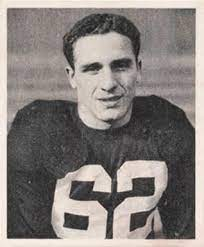
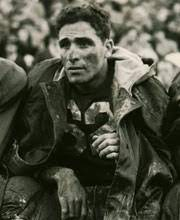
The Story And Significance Of Alex Wojciechowicz - One Of The Founders Of The NFL Alumni Association


Alexander Francis "Wojie" Wojciechowicz was an American football player from 1935 to 1950. He was a two-way player who played at center on offense and at linebacker on defense. He has been inducted into both the College and Pro Football Halls of Fame, was a founder and the first president of the NFL Alumni Association, and was the third player to receive the Order of the Leather Helmet.

Wojciechowicz played college football for the Fordham Rams from 1935 to 1937 and was a member of the line that became known as the Seven Blocks of Granite. He was selected as the consensus first-team All-American center in both 1936 and 1937.

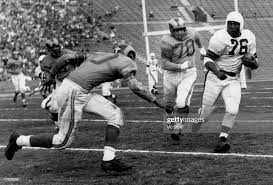
Wojciechowicz was selected by the Detroit Lions in the first round of the 1938 NFL Draft and played for the Lions from 1938 to 1946. He was selected as a first-team All-NFL player in 1939 and 1944. In 1946, he was released by the Lions and then sold to the Philadelphia Eagles, for whom he played from 1946 to 1950. He won two NFL championships with the Eagles, in 1948 and 1949.

Wojciechowicz was selected by the Detroit Lions in the first round, sixth overall pick, of the 1938 NFL Draft. He signed with the Lions in July 1938. For nine years, Wojciechowicz was a fixture in the Lions' lineup, a 60-minute player who played at center on offense and linebacker on defense. He was selected as a first-team All-NFL player in 1939 and 1944 and had seven interceptions in 1944, a Lions single-season record at the time. Between 1938 and 1946, he appeared in 86 games for the Lions, 61 of them as a starter. The Pro Football Hall of Fame, in its biography of Wojciechowicz, states: "On the field, . . . he was all business, one of the last of the 'iron men' of football, a center on offense and a sure-tackling linebacker with unusually good range, on defense." In October 1946, after the Lions lost their season opener, Detroit coach Gus Dorais released four linemen, including Wojciechowicz. Wojciechowicz announced at the time that he would return to his business in New Jersey and added, "This day had to come, and I can't say I'm disappointed that it happened now."

Two days after the Lions announced his release, the Eagles purchased the Lions' rights to Wojciechowicz for an undisclosed sum. He appeared in seven games for the Eagles, only one as a starter, during the 1946 season.

In 1947, he became the Eagles' starting center, appearing in all 12 games for the club, 11 as a starter. The 1947 Eagles compiled an 8–4 record, finished in first place in the NFL East, but lost to the Cardinals in the 1947 NFL Championship Game.

In 1948, Wojciechowicz lost the starting center job to Vic Lindskog, but appeared in 10 games, mostly on defense, for the 1948 Eagles team that shut out the Cardinals in the 1948 NFL Championship Game. In 1949, he appeared in all 12 games, but only one as a starter, as Chuck Bednarik was the starting center for the Eagles team. That year, the Eagles won their second consecutive NFL championship, shutting out the Rams in the 1949 NFL Championship Game.

Wojciechowicz was also one of the founders of the NFL Alumni Association, established to negotiate with the owners for the creation of a pension plan to benefit the game's early players, and was elected as its president in 1968. His son recalled: "He worked hard to establish the indigent players' fund and establish pensions.

He was considered past his prime when he joined the Eagles, but head coach Greasy Neale used him principally as a linebacker, and he responded with quality defensive play. Teammate Jack Hinkle called Wojciechowicz the "toughest guy" on the Eagles' championship teams and added, "He looked like a big, shaggy dog. A sad-eyed St. Bernard. But he'd rip your head off."

In his final NFL season, Wojciechowicz appeared in nine games, none as a starter, and saw only limited action. In December 1950, he announced that he was retiring as a player.

Sources
https://www.pro-football-reference.com/
https://www.profootballarchives.com/index.html
https://americanfootballdatabase.fandom.com/wiki/Football_Wiki
https://www.gridiron-uniforms.com/GUD/controller/controller.php?action=main
https://www.profootballhof.com/hall-of-famers/
 "Ex-Lion Wojie Still Solid at 265". Detroit Free Press. United Press International. February 5, 1977. p. 11 – via Newspapers.com.
 Richard Whittingham, What a Game They Played: An Inside Look at the Golden Era of Pro Football. (1984) Lincoln, NE: University of Nebraska Press, 2001; p. 155.
 Whittingham, What a Game They Played, pp. 155–156.
 Whittingham, What a Game They Played, p. 156.
 "Alex Wojciechowicz, Football Player, 76". The New York Times. Associated Press. July 14, 1992. Retrieved November 4, 2024.
 "Wojciechowicz: A name chiseled in granite". The Independent (Long Beach, CA). November 23, 1976. p. 20.
 "2014 NCAA Football Records: Consensus All-America Selections" (PDF). National Collegiate Athletic Association (NCAA). 2014. p. 5. Archived from the original (PDF) on November 26, 2018. Retrieved August 16, 2014.
 "Wojie Signed for Lion Post". Detroit Free Press. July 17, 1938. p. 37.
 Larry Favinger (September 22, 1976). "Sport City". The Portsmouth Herald. p. 10.
 "1938 NFL Draft Listing". Pro-Football-Reference.com. Retrieved March 25, 2023.
 "Alex Wojciechowicz". Pro Football Hall of Fame. Retrieved February 19, 2016.
 "Alex Wojciechowicz". Pro-Football-Reference.com. Sports Reference LLC. Retrieved February 19, 2016.
 "Wojie, Forte Get Gate After Cardinal Debacle in Home Opener". Detroit Free Press. October 15, 1946. p. 12.
 "Wojie Will Be Eagle on Sunday". Detroit Free Press. October 17, 1946. p. 19.
 "1947 Philadelphia Eagles". Pro-Football-Reference.com. Sports Reference LLC. Retrieved February 19, 2016.
 "1948 Philadelphia Eagles". Pro-Football-Reference.com. Sports Reference LLC. Retrieved February 19, 2016.
 "1949 Philadelphia Eagles". Pro-Football-Reference.com. Sports Reference LLC. Retrieved February 19, 2016.
 Didinger, Ray. "Eagles' Wojciechowicz was club's 'toughest guy'", Asbury Park Press, July 15, 1992. Accessed May 10, 2017. "Alex Wojciechowicz , one of 12 Philadelphia Eagles in the Pro Football Hall of Fame, died Monday at his home in Forked River, N.J."
 "A Block of Granite: Wojciechowicz Will End 13 Years in Pro Sport". The Daily Courier. December 21, 1950. p. 6.
 "Star Guard on Fordham Eleven Becomes Father". The Evening News. August 22, 1938. p. 8.
 "Asbury Park to Get 3 Wojies". Asbury Park Evening Press. July 31, 1947. p. 17.
 "A. F. Wojciechowicz, 76, football Hall of Famer". Asbury Park Press. July 14, 1992. p. 7.
 "Negotiations Underway for Alumni". The Argus. August 29, 1968. p. 12.
 "Wojciechowicz One of Sixteen Named to Football Hall of Fame". Asbury Park Press. July 25, 1955. p. 16.
 "Alex "Wojie" Wojciechowicz". College Football Hall of Fame. Football Foundation. Retrieved February 19, 2016.
 "'Wojie' Among 7 Members Picked". Asbury Park Press. February 20, 1968. p. 22.
 Arthur Daley (February 21, 1968). "Sports of The Times; Immortals With Muscles". The New York Times.
 "Wojciechowicz Selected On NFL 1940s Squad". Asbury Park Press. August 29, 1969. p. 13.
 "Fordham Slates Five Inductees". The Tennessean. April 26, 1970. p. 35.
 "'Wojie' Remembers His High School Coach". Asbury Park Press. November 18, 1971. p. 46.
 "Alex Wojciechowicz". National Polish American Sports Hall of Fame. Archived from the original on December 8, 2015. Retrieved February 19, 2016.
 Charlie Vincent (January 20, 1982). "Former Lion Hall of Famer Wojciechowicz joins elite group in Leather Helmet group". Detroit Free Press. p. 3H.
 "Eagles Hall of Fame Inductees" (PDF). Philadelphia Eagles. Archived from the original (PDF) on February 25, 2016. Retrieved February 19, 2016.

Friday, October 7, 2022

The Story And Significance Of Charley Trippi - Only Player In The Pro Football Hall of Fame To Have Accumulated At Least 1,000 Yards Receiving, Passing, And Rushing

Charles Louis Trippi is a former American football player. He played professionally for the Chicago Cardinals of the National Football League from 1947 to 1955. Although primarily a running back, his versatility allowed him to fill a multitude of roles over his career, including quarterback, defensive back, punter, and return specialist. A "quintuple-threat", Trippi was adept at running, catching, passing, punting, and defense.

Trippi attended the University of Georgia, where he played college football for the Georgia Bulldogs from 1942 to 1946, with an interlude in 1944 while serving in the military during World War II. As a sophomore, he guided Georgia to victory in the 1943 Rose Bowl and was named the game's most valuable player. As a senior in 1946, he won the Maxwell Award as the nation's most outstanding college football player, was named the Southeastern Conference's player of the year, and earned unanimous first-team All-America recognition.

Drafted first overall by the Cardinals as a "future pick" in the 1945 NFL Draft, Trippi was also pursued by the New York Yankees of the All-America Football Conference (AAFC) as well as multiple professional baseball teams. He ultimately signed a record $100,000 contract with the Cardinals. As a rookie, Trippi led Chicago's "Million Dollar Backfield" to victory in the 1947 NFL Championship Game. By the time he retired he had compiled the most yards of total offense by a player in NFL history. Trippi was inducted into the College Football Hall of Fame in 1959 and the Pro Football Hall of Fame in 1968.

Trippi is the oldest living member of the Pro Football Hall of Fame, the oldest living first overall NFL draft pick, and the oldest confirmed living former American football player.

Charles Louis Trippi was born to an Italian immigrant father on December 14, 1921, in Pittston, Pennsylvania, a coal-mining community. Seeking to avoid the dangers of a life mining coal like his father, Trippi turned to sports. He began his football career as a tailback for the Red and White of Pittston High School Panthers which in 1967 became Pittston Area patriots with the merger of Avoca, Dupont and Duryea schools. He also played semi-professional baseball while in high school.

Considered undersized at 160 pounds, Trippi was turned down by four colleges before being recruited to play for the University of Georgia by Georgia alum Harold "War Eagle" Ketron. He was given a scholarship and played for the Georgia Bulldogs football varsity team from 1942 to 1946, with an interlude in 1944 due to World War II. As a sophomore in 1942, he played alongside that season's Heisman Trophy winner Frank Sinkwich. That year, Trippi and Sinkwich led Georgia to a 75–0 win over rival Florida, a game in which Trippi threw a touchdown pass to end George Poschner, scored two rushing touchdowns, and on defense returned an interception for a touchdown. Georgia finished the season with a record of 11–1 and was named the consensus national champion. Trippi then guided Georgia to a 9–0 victory over UCLA in the 1943 Rose Bowl, in which he carried 27 times for 115 yards and also handled passing and punting duties. He was retroactively named the game's most valuable player when the award was created in 1953.

Trippi's college career was interrupted by World War II, causing him to miss the 1943 and 1944 seasons and all but six games in 1945. He played for the 1944 Third Air Force Gremlins football team and was selected as a first-team back on the Associated Press' 1944 Service All-America team. While in the service in 1945, he was drafted by the Chicago Cardinals of the National Football League as a future pick; per an agreement with Cardinals owner Charles Bidwill, Trippi was allowed to return to Georgia after his time in the military.

Despite missing Georgia's first five games of the 1945 season, Trippi was named a first-team All-Southeastern Conference back by both the Associated Press (AP) and United Press International (UPI). He threw a 54-yard touchdown pass and returned a punt 69 yards for a touchdown in Georgia's 20–6 win over Tulsa in the Oil Bowl on New Years Day. In 1946, Trippi led Georgia to its first undefeated season. Against rival Georgia Tech in the final game of that year, Trippi compiled 544 combined yards rushing, passing, and returning kicks, and scored three touchdowns in Georgia's 35–7 victory. Georgia then defeated North Carolina 20–10 in the Sugar Bowl, where Trippi carried 14 times for 54 yards and threw a 67-yard touchdown pass to end Dan Edwards. After the season, Trippi was given the Maxwell Award as the most outstanding college player in the nation, the Walter Camp Memorial Trophy as the nation's best back, and was a unanimous choice for the All-America team. He finished as runner-up in Heisman Trophy voting behind winner Glenn Davis of Army.

Due to relaxed regulations during WWII years, Trippi holds the unusual distinction of participating in the Chicago College All-Star Game a record five times: twice with Georgia, twice in the military, and once with the Cardinals. He was named the Most Valuable Player of the game in 1945. It was at the Chicago College All-Star Game that Bidwell decided he would draft Trippi first overall, as "Card-Pitt" was winless in 1944 and in need of a play-maker. "He said, 'I'm gonna get ya,'" Trippi recalled. "He wanted me to play for him, and I said, 'All you've got to do is draft me and I'm ready.'"

In addition to football, Trippi was highly sought-after for his baseball skills. As a senior on Georgia's baseball team in 1946, he recorded a batting average of .475 and hit 11 home runs in 30 games while playing as a shortstop and outfielder. In 1947, Trippi played one season of minor league baseball with the Southern Association's Atlanta Crackers. He recorded a batting average of .334 through 106 games while drawing large crowds. Multiple Major League Baseball teams attempted to sign him, including the New York Yankees, Boston Red Sox, Boston Braves, and Philadelphia Phillies, but those deals fell through when he joined the NFL. Between NFL seasons in 1948 and 1949, Trippi served as Georgia's baseball coach, compiling a 34–18 win–loss record.

Trippi was a major part in the battling between the NFL and All-America Football Conference (AAFC). The 26-year-old rookie had plenty of leverage as a star commodity, and so weighed his options: the Cardinals and the AAFC's New York Yankees. The Yankees were sure they had signed Trippi to a joint deal that included a contract with the Yankees of MLB, but Cardinals owner Charles Bidwill signed Trippi to a four-year contract worth an unprecedented $100,000 along with a first-year bonus of $25,000. The contract was considered the most lucrative in pro football history. Trippi felt the NFL was more established and stable, and Bidwill had offered him job security.

Trippi's addition completed Bidwill's "Dream Backfield". Although Bidwill did not live to see it, Trippi became the game breaker in a talented corps that included Paul Christman, Pat Harder, Marshall Goldberg and, later, Elmer Angsman. Trippi served a multitude of roles for the Cardinals as a rookie: in 11 games, he rushed 83 times for 401 yards, caught 23 passes for 240 yards, averaged 43.4 yards on 13 punts, returned eight punts for 181 yards and 15 kickoffs for 321 yards, and on defense returned an interception 59 yards for a touchdown. The Cardinals compiled nine wins and three losses and faced the Philadelphia Eagles in the 1947 NFL Championship Game, which the Cardinals won 28–21 largely due to a spectacular all-around performance by Trippi. Playing on an icy field in Chicago, Trippi wore basketball shoes for better traction and totaled 206 yards, including 102 yards with two punt returns. He scored touchdowns on a 44-yard run and a 75-yard punt return. During the punt return, he twice escaped an encirclement of tacklers and fell to his knees near midfield before cutting to the outside and sprinting for the score. Trippi was named to the 1947 All-Pro second-team backfield by the United Press.

Trippi led the NFL in all-purpose yards in both 1948 and 1949, compiling 1,485 and 1,552 respectively. His 5.4 rushing yards per carry in 1948 also led the league, as did his two punt return touchdowns. He had a 45-yard punt return touchdown against the Green Bay Packers and later returned a punt 67 yards for a touchdown against the Pittsburgh Steelers. Trippi was a first-team All-Pro selection for 1948 by the AP, UPI, New York Daily News, and The Sporting News, among others. The Cardinals returned to the championship game in 1948, and this time were shutout by the Eagles for a 7–0 loss. Trippi was held to nine carries for only 26 yards during the game, which was played in a heavy snowstorm. Trippi saw heavy use as a receiver in 1949; in addition to rushing for 554 yards, he led the Cardinals in receptions (32) and receiving touchdowns (six) and was second on the team with 412 receiving yards.

After playing as a left halfback for his first four seasons, Trippi switched to quarterback during 1951 and 1952. On December 15, 1951, on frozen turf in Wrigley Field, Trippi completed nine passes for 106 yards and carried 11 times for 145 yards, accounting for three touchdowns as the Cardinals defeated the Bears 24–14. Following the 1952 season, he was invited to the Pro Bowl as a backup quarterback for the American Conference. Trippi moved back to offensive halfback for one season and again was invited to the Pro Bowl. He then switched over to play defense in 1954, recording three pass interceptions as a defensive back. He also became the Cardinals' primary punter for 1953 and 1954, and had a career punting average of over 40 yards per punt. His career essentially ended in the 1955 preseason when he was tackled by John Henry Johnson of the San Francisco 49ers, which left Trippi with a smashed nose, a concussion, and a protruding bone behind his eye that gave him double vision. He appeared in only five games that season and did not record any statistics on offense. Trippi retired on December 13, 1955, a day before his 33rd birthday. At the time, his 6,053 yards of total offense (3,506 rushing, 2,547 passing, and 1,321 receiving) was the most by a player in NFL history, and he had compiled the fourth-most all-purpose yards of any player (7,148).

Hall of Famer Art Donovan tells this story from late in Trippi's career: "Earlier in the season, the Bears had nearly killed Charlie Trippi, a very tough halfback. The guy who did it to him was Ed Sprinkle.... Sprinkle sucker-punched Trippi and shattered his jaw. He required a whole series of bone grafting. Then next season, Trippi broke Sprinkle's jaw. What goes round comes round."

After he ended his playing career, Trippi served as an assistant coach with the Cardinals from 1957 to 1965, mostly coaching the offensive backfield. He later took up a business in real estate. Trippi was inducted into the College Football Hall of Fame in 1959; the Georgia Sports Hall of Fame in 1965; and the Pro Football Hall of Fame and Pennsylvania Sports Hall of Fame in 1968. He is the only player in the Pro Hall of Fame to have accumulated at least 1,000 yards each receiving, passing, and rushing. In 2007, he was ranked 20th on ESPN's list of the top 25 players in college football history. The football stadium at Pittston Area High School is named Charley Trippi Stadium in his honor. In 1969, Trippi was named to the NFL's 1940s All-Decade Team, compiled to honor the best players of the decade. As of 2022, Trippi is the oldest living member of the Pro Football Hall of Fame, as well as the oldest living No. 1 NFL draft pick.

On December 14, 2021, Trippi turned 100, becoming the second Pro Football Hall of Famer to reach that milestone, after Clarence "Ace" Parker.
Sources
https://www.pro-football-reference.com/
https://www.profootballarchives.com/index.html
https://americanfootballdatabase.fandom.com/wiki/Football_Wiki
https://www.gridiron-uniforms.com/GUD/controller/controller.php?action=main
https://www.profootballhof.com/hall-of-famers/
23 rushing, 11 receiving, 2 return and 1 interception return
 "Charley Trippi, One Of Ten Nominated To Grid "Hall Of Fame"". Pittston Gazette. October 16, 1959. p. 6. Retrieved March 31, 2017.
 Lane, Fred (December 5, 2006). "Transcript of Interview with Charley Trippi". uga.edu. University of Georgia. Retrieved March 31, 2017.
 Freeman, Donald (October 16, 1949). "Trippi's Terrific". Chicago Tribune. p. 11. Retrieved April 1, 2017.
 Magill, Dan (October 30, 2008). "Magill: Dogs' 75–0 thumping of Gators most memorable". Athens Banner-Herald. Archived from the original on April 1, 2017. Retrieved March 31, 2017.
 Frawley, Frank (January 2, 1943). "Georgia Wins Rose Bowl Classic, 9–0". The Salt Lake Tribune. Associated Press. p. 5. Retrieved March 31, 2017.
 "Rose Bowl Champions, MVPs". Los Angeles Times. January 4, 2002. Retrieved March 31, 2017.
 "Navy Places Four on AP Service All-America; Trippi in Backfield". The St. Petersburg Times. December 12, 1944. p. 10 – via Newspapers.com.
 Steele, David (January 1, 2015). "Cardinals close to heart of oldest Pro Football Hall of Fame player". The Sporting News. Retrieved April 12, 2017.
 "'Bama Dominates Mythical Team". The Ogden Standard-Examiner. Associated Press. December 4, 1945. p. 12. Retrieved April 1, 2017 – via Newspapers.com.
 Burns Bennett (November 27, 1945). "Gilmer and Mancha Get Berths on UP All-Southeastern". The Anniston Star. p. 8. Retrieved May 31, 2015 – via Newspapers.com.
 Patrick, Skipper (January 2, 1946). "Trippi Tramps on Hurricanes". The Monroe News-Star. Associated Press. p. 6. Retrieved April 4, 2017 – via Newspapers.com.
 Barnett, Bob; Carroll, Bob (1989). "Charley Trippi: A Success Story" (PDF). The Coffin Corner. 11 (1). Retrieved April 4, 2017.
 "Trippi Winner Of Football Award". The Free Lance-Star. Associated Press. December 11, 1946. p. 3. Retrieved April 4, 2017.
 "New Honor for Charley Trippi". The Decatur Herald. Associated Press. June 24, 1947. p. 14. Retrieved April 4, 2017 – via Newspapers.com.
 "1946 College Football Year Summary". Sports-Reference.com. Retrieved April 4, 2017.
 "Charley Trippi Bio". Pro Football Hall of Fame. Retrieved April 12, 2017.
 "Charley Trippi's College All-Star Game Trophy". Pro Football Hall of Fame. Retrieved April 12, 2017.
 Wolken, Dan (April 21, 2013). "Oldest living No. 1 pick remembers a different draft". USA Today. Retrieved April 12, 2017.
 Reichler, Joe (January 16, 1947). "Trippi To Sign With Chicago". Tucson Daily Citizen. Associated Press. p. 8. Retrieved April 13, 2017.
 "Charles Trippi Minor League Statistics & History". Baseball-Reference.com. Sports Reference. Retrieved April 4, 2017.
 "Baseball and Football Make Firm Contract". The Daily Chronicle. United Press. January 15, 1947. p. 8. Retrieved April 4, 2017 – via Newspapers.com.
 "All-Time Georgia Baseball Coaches". georgiadogs.com. University of Georgia. Archived from the original on April 13, 2017. Retrieved April 13, 2017.
 Einstein, Charles (January 17, 1947). "Chicago Cardinals to Pay Trippi $100,000". The Daily Times. International News Service. p. 6. Retrieved March 7, 2017 – via Newspapers.com.
 Chamberlain, Charles (January 17, 1947). "Trippi Gets Peanuts, Says Gallopin' Ghost". News-Journal. Associated Press. p. 21. Retrieved April 12, 2017 – via Newspapers.com.
 "The Cards' dream season in '47". Pro Football Hall of Fame. January 1, 2005. Retrieved April 3, 2017.
 "Charley Trippi Stats". Pro-Football-Reference.com. Sports Reference. Retrieved April 4, 2017.
 Goldberg, Dave (January 13, 2009). "Not Surprising". The Index-Journal. p. 11. Retrieved April 4, 2017 – via Newspapers.com.
 Sainsbury, Ed (December 29, 1947). "Cardinals Down Eagles to Gain Pro Grid Crown". The Evening News. United Press. p. 20. Retrieved April 4, 2017 – via Newspapers.com.
 Green, Russ (December 11, 1947). "Bears, Cardinals Each Place Three Men On U. P. All-Pro Eleven". Freeport Journal-Standard. United Press. p. 13. Retrieved April 4, 2017 – via Newspapers.com.
 Smith, Wilfred (December 20, 1948). "Heavy Snow Mars Game; Use Lights". Chicago Daily Tribune. p. 1. Retrieved April 12, 2017.
 "1949 Chicago Cardinals Statistics & Players". Pro-Football-Reference.com. Sports Reference. Retrieved April 13, 2017.
 "Cards Upset Bears, 24–14; Trippi Stars". The Decatur Herald. Associated Press. December 17, 1951. p. 4. Retrieved April 11, 2017 – via Newspapers.com.
 "Pro Bowl Will Feature Leading T Quarterbacks". Janesville Daily Gazette. Associated Press. January 9, 1953. p. 10. Retrieved April 13, 2017 – via Newspapers.com.
 "Eastern Squad Wins Pro Bowl Game, 20–9". Pittsburgh Post-Gazette. Associated Press. January 18, 1954. p. 18. Retrieved April 13, 2017.
 "Trippi Badly Hurt; Fear Career Over". St. Petersburg Times. Associated Press. September 16, 1955. p. 12. Retrieved September 28, 2016.
 "Charley Trippi Retires As Player for Cardinals". Moberly Monitor-Index. Associated Press. December 13, 1955. p. 9. Retrieved April 12, 2017 – via Newspapers.com.
 "Player Season Finder Query Results: For combined seasons, from 1920 to 1955, played in the NFL, sorted by descending All-Purpose Yds". Pro-Football-Reference.com. Sports Reference. Retrieved April 13, 2017.
 Stinson, Thomas. "Charley Trippi, UGA sports icon, dies at age 100". Archived from the original on December 20, 2022. Retrieved December 20, 2022 – via AJC.com.
 Donovan, Arthur (1987). Fatso: Football When Men Were Really Men. W. Morrow. p. 172. ISBN 0-688-07340-9.
 Michaux, Scott (April 12, 2012). "Michaux: It's time to celebrate Charley Trippi Day". Athens Banner-Herald. Archived from the original on April 12, 2017. Retrieved April 12, 2017.
 "HAPPY BIRTHDAY, CHARLEY TRIPPI!". profootballhof.com. Pro Football Hall of Fame. Retrieved December 14, 2021.
 "Legendary Hall of Fame UGA football player Charley Trippi dies at 100 – WSB-TV Channel 2 – Atlanta". Wsbtv.com. October 19, 2022. Retrieved October 19, 2022.
 Goldstein, Richard (October 19, 2022). "Charley Trippi, Versatile Football Hero, Dies at 100". The New York Times. Retrieved October 19, 2022.
 "Georgia football legend Charley Trippi dies at 100". Fox 5 Atlanta. October 19, 2022. Retrieved October 19, 2022.
Sullivan, George (1972). The Great Running Backs. New York: G. P. Putnam's Sons. pp. 69–73. ISBN 0-399-11026-7.
Ziemba, Joe (1999). When Football Was Football: The Chicago Cardinals and the Birth of the NFL. Chicago: Triumph Books. pp. 309–314. ISBN 1-57243-317-5.

Wednesday, October 5, 2022

The Story And Significance Of Marion Motley - One Of The First Two African-Americans To Break The Color Barrier In Professional Football

Marion Motley was an American professional football player who was a halfback and linebacker for the Cleveland Browns in the All-America Football Conference (AAFC) and National Football League. He was a leading pass-blocker and rusher in the late 1940s and early 1950s, and ended his career with an average of 5.7 yards per carry, a record for running backs that still stands. A versatile player who possessed both quickness and size, Motley was a force on both offense and defense. Fellow Hall of Fame running back Joe Perry once called Motley "the greatest all-around football player there ever was".

Motley was also one of the first two African-Americans to play professional football in the modern era, breaking the color barrier along with teammate Bill Willis in September 1946, when the two played their first game for the Cleveland Browns.

Motley grew up in Canton, Ohio. He played football through high school and college in the 1930s before enlisting in the military during World War II. While training in the U.S. Navy in 1944, he played for a service team coached by Paul Brown. Following the war, he went back to work in Canton before Brown invited him to try out for the Cleveland Browns, a team he was coaching in the newly formed AAFC. Motley made the team in 1946 and became a cornerstone of Cleveland's success in the late 1940s. The team won four AAFC championships before the league dissolved and the Browns were absorbed by the more established NFL. Motley was the AAFC's leading rusher in 1948 and the NFL leader in 1950, when the Browns won another championship.

Motley and fellow black teammate Bill Willis contended with racism throughout their careers. Although the color barrier was broken in all major American sports by 1950, the men endured shouted insults on the field and racial discrimination off of it. "They found out that while they were calling us niggers and alligator bait, I was running for touchdowns and Willis was knocking the shit out of them," Motley once said. "So they stopped calling us names and started trying to catch up with us." Focused exclusively on winning, Brown did not tolerate racism within the team.

Slowed by knee injuries, Motley left the Browns after the 1953 season. He attempted a comeback in 1955 as a linebacker for the Pittsburgh Steelers but was released before the end of the year. He then pursued a coaching career, but was turned away by the Browns and other teams he approached. He attributed his trouble finding a job in football to racial discrimination, questioning whether teams were ready to hire a black coach. Motley was elected to the Pro Football Hall of Fame in 1968.

As United States involvement in World War II intensified, Motley joined the U.S. Navy in 1944 and was sent to the Great Lakes Naval Training Station. There he played for the Great Lakes Navy Bluejackets, a military team coached by Paul Brown, who was serving in the Navy during an extended leave from his job as head coach of The Ohio State University's football team. Motley played fullback and linebacker at Great Lakes, and was an important component of the team's offense and defense. The highlight of his time at Great Lakes was a 39–7 victory over Notre Dame in 1945. Motley was eligible for discharge before the game – it was the final match of the season and the last military game of World War II – but he stayed on to play. Motley put up an impressive performance, thanks in part to Brown's experimentation with a new play: a delayed handoff later called the draw play.

After the war, Motley went back to Canton and began working at a steel mill, planning to return to Reno in 1946 to finish his degree. That summer, however, Paul Brown was coaching a team in the new All-America Football Conference (AAFC) called the Cleveland Browns. Motley wrote to Brown asking for a tryout, but Brown declined, saying he already had all the fullbacks he needed. At the beginning of August, however, Brown invited Bill Willis, another African-American star, to try out for the team at its training camp in Bowling Green, Ohio. Ten days later, Brown invited Motley to come, too. "I think they felt [Willis] needed a roommate," Motley later said. "I don't think they felt I'd make the team. I'm glad I was able to fool them."

Both Motley and Willis made the team and became two of the first African-Americans to play professional football in the modern era. The Los Angeles Rams of the National Football League had signed the only other black players in pro football earlier that year: Kenny Washington and Woody Strode. The four men broke football's color barrier a seven months before Jackie Robinson was promoted from the Class AAA Montreal Royals to join the Brooklyn Dodgers in 1947. Motley felt the Browns would likely be his only opportunity to make a career of football. "I knew this was the one big chance in my life to rise above the steel mill existence, and I really wanted to take it," he said.

Motley was signed to a contract worth $4,500 a year ($62,532 in 2021 dollars). With the Browns, he joined a potent offense led by quarterback Otto Graham, tackle and placekicker Lou Groza and receivers Dante Lavelli and Mac Speedie. He was a force to be reckoned with in the AAFC, and helped the team win every championship in the league's four years of existence between 1946 and 1949. He had a combination of quickness and power – he was listed at 238 pounds – that helped him plow through tacklers. He was also an able pass blocker and played on defense as a linebacker. Motley rushed for an average of 8.2 yards per carry in his first season. His forte was the trap play, a scheme where a defensive lineman was allowed to come across the line of scrimmage unblocked, opening up space for Motley to run. He led the league in rushing in 1948 as the Browns posted a perfect 15–0 record. He was the AAFC's all-time rushing leader when the league folded after the 1949 season and the Browns were absorbed into the more established National Football League. The Browns had a 47–4–3 overall regular-season win-loss-tie record during the AAFC years as Motley rushed for a total of 3,024 yards.

Like other black players in the 1940s and 1950s, Motley faced racist attitudes both on and off the field. Paul Brown would not tolerate discrimination within the team; he wanted to win and would not let anything get in his way. Motley and Willis, however, were sometimes stepped on and called names during games. "Sometimes I wanted to just kill some of those guys, and the officials would just stand right there," Motley said many years later. "They'd see those guys stepping on us and heard them saying things and just turn their backs. That kind of crap went on for two or three years until they found out what kind of players we were." Motley and Willis did not travel to one game against the Miami Seahawks in the Browns' early years after they received threatening letters. Another time in Miami, Motley and Willis were told they were not welcome at the hotel where the team was staying. Brown threatened to relocate the entire team, and the hotel's management backed down.

Attitudes toward race in America began to change after the war, which had caused social and political upheaval and prompted people to think about the future with more ambition and confidence. Although progress was slow and racially motivated hostility continued for many years, the color barrier was broken in all major sports by 1950. Many of Motley and Willis's teammates on the Browns were used to playing with black players in college, where teams were integrated across most of the country. The presence of Motley and Willis, meanwhile, contributed to strong attendance at many of the Browns' early games as large black audiences came to watch them. By one estimate, 10,000 black fans saw the Browns play their first game.

Aided by Motley's swiftness and size, the Browns won the NFL championship in 1950, their first season in the league. In October 1950, Motley set an NFL record that stood for more than 52 years when he averaged over 17 yards per rush against the Pittsburgh Steelers, with 188 yards on 11 carries. In December 2002, quarterback Michael Vick of the Atlanta Falcons rushed for 173 yards on 10 carries against the Minnesota Vikings, eclipsing Motley's average. Motley also had a 69-yard rushing and 33-yard receiving touchdowns in the game. While Motley did not factor in the Browns' championship game win against the Los Angeles Rams, he led the league in rushing with 810 yards in 1950 despite averaging fewer than 12 carries per game. He was a unanimous first-team All-Pro selection.

By the 1951 season, Motley started to feel the physical effects of his hard-hitting, up-the-middle running style. He suffered a knee injury in training camp, and he was getting older; by the time the season was in full swing, he was 31. Motley only ran for 273 yards and one touchdown that year, an uncharacteristically low total. Despite Motley's troubles, the Browns made the championship game again after winning the American Conference with an 11–1 record. Cleveland, however, lost the title game to the Rams, 24–17. Motley had just five carries and 23 yards.

Motley's knees continued to bother him in 1952. While he showed occasional signs of his old form that season, it became clear to the Browns' coaching staff that he was no longer in his prime. Motley finished the year with 444 yards of rushing and 4.3 yards per carry, a career low. The Browns finished with an 8–4 record but still captured the conference title and secured another spot in the NFL championship game. Motley performed well in that matchup against the Detroit Lions, rushing for 95 yards. The Browns, however, lost 17–7.

The 1953 season was no better for Motley, whose effectiveness was again limited by injury. Cleveland finished with an 11–1 record and faced Detroit in the championship for the second year in a row. As Motley's production declined, the Browns relied on Otto Graham's passing to Lavelli and receiver Ray Renfro, who also lined up as a running back. Motley did not participate in the championship game that year, another loss to the Lions.

Motley thought he could come back and play a ninth season in 1954, and showed up to training camp to prove it. Paul Brown, however, thought otherwise. Dogged by injuries and 34 years old, Motley quit before the season began, after Brown said he would otherwise be cut from the team. "Marion realized that his knee was weak and did not feel that it was coming around," Brown said at the time. "He was one of the truly fine fullbacks in his prime, the type that comes along once in a lifetime. I certainly never will forget some of his runs and I imagine Cleveland football fans feel the same."

Motley took the 1954 season off and attempted a comeback in 1955 after the Browns, who still had rights to Motley under his contract, traded him to the Pittsburgh Steelers for Ed Modzelewski. In Pittsburgh he played seven games as a linebacker, but the Steelers released him before the end of the season. In his eight years in the AAFC and NFL, Motley had rushed for 4,720 yards and averaged 5.7 yards per carry. His career rushing average is still an all-time record for running backs.

After ending his playing career for good, Motley asked Brown about a coaching job with the team. Brown, however, rejected his overtures, saying Motley should instead look for work at a steel mill – the very career football was his ticket out of. Unable to find coaching opportunities in the NFL, he worked as a whisky salesman in the early 1960s. He got occasional scouting assignments from the Browns, but as the Civil Rights Movement began to coalesce in 1965, he issued a statement saying he had been refused a permanent coaching position by the team numerous times. He applied for a coaching job in 1964, he wrote, and was told that there were no vacancies. The Browns then hired Bob Nussbaumer as an assistant. "When I heard of the hiring of a new assistant, I began to wonder if the full reason is whether or not the time is ripe to hire a Negro coach in Cleveland on the professional level," he wrote. Art Modell, the Browns' owner, responded by saying the team filled its coaching positions based on ability and experience, not race. "We are represented by scouts at every major Negro school. And we now have 12 Negroes signed for the 1965 season," he said.

Motley asked Otto Graham for a job with the Washington Redskins when Graham was head coach there in the late 1960s, but he was again turned away. Motley also signed on to coach an all-girl professional football team called the Cleveland Dare Devils in 1967. By 1969, the team had only played a few exhibition games as Cleveland theatrical agent Syd Freedman struggled to drum up interest in a women's league. Later in life, Motley worked for the U.S. postal service in Cleveland, Harry Miller Excavating Suffield, Ohio, the Ohio Lottery and for the Ohio Department of Youth Services in Akron. He died in 1999, twenty-two days after his 79th birthday, of prostate cancer.

In 1968, Motley became the second black player voted into the Pro Football Hall of Fame, located in his hometown of Canton. Having played successfully as a fullback and pass blocker on offense and as a linebacker on defense, he is seen as one of the best all-around players in football history. Blanton Collier, an assistant who took over as the team's head coach after Paul Brown's firing in 1963, said Motley "had no equal as a blocker. He could run with anybody for 30 yards or so. And this man was a great, great linebacker."

Most of Motley's runs were trap plays up the middle, but he had the speed to run outside. "There's no telling how much yardage I might have made if I ran as much as some backs do now," he once said. Running back Jim Brown surpassed Motley's rushing records in the early 1960s, but many of Motley's coaches and fellow players regarded Motley as the better player, in part because of his strength as a blocker. "There is no comparison between Jim Brown and Marion Motley," Graham said at a luncheon in Canton in 1964. "Motley was the greatest all-around fullback."

In his books The Thinking Man's Guide to Pro Football and The New Thinking Man's Guide To Pro Football, football writer Paul Zimmerman of Sports Illustrated called Motley the best player in the history of the sport. He was named to the NFL's 75th Anniversary All-Time Team in 1994.

In November 2019, Motley was selected as one of the twelve running backs on the NFL 100 All-Time Team.
Sources
https://www.pro-football-reference.com/
https://www.profootballarchives.com/index.html
https://americanfootballdatabase.fandom.com/wiki/Football_Wiki
https://www.gridiron-uniforms.com/GUD/controller/controller.php?action=main
https://www.profootballhof.com/hall-of-famers/
Piascik 2007, p. 289.
 Gary Webster, The League That Didn't Exist: A History of the All-America Football Conference. Jefferson, NC: McFarland & Co., 2019; pp. 1-2.
 Piascik 2007, p. 51.
 Shannon 2008, p. 99.
 Piascik 2007, p. 39.
 "Nevada Yearly Results". College Football Data Warehouse. Archived from the original on November 4, 2012. Retrieved July 9, 2012.
 Piascik 2007, p. 40.
 Cantor 2008, p. 72.
 Keim 1999, p. 44.
 Piascik 2007, p. 32.
 Keim 1999, pp. 43–45.
 Shannon 2008, p. 100.
 Litsky, Frank (June 28, 1999). "Marion Motley, Bruising Back For Storied Browns, Dies at 79". New York Times. Archived from the original on November 9, 2012. Retrieved July 9, 2012.
 Piascik 2007, p. 121.
 Piascik 2007, p. 149.
 Piascik 2007, p. 145.
 Piascik 2007, pp. 31, 38–39.
 Keim 1999, p. 45.
 Keim 1999, p. 50.
 Piascik 2007, pp. 31–32.
 Piascik 2007, p. 43.
 Piascik 2007, p. 47.
 Piascik 2007, p. 169.
 "Vick's QB rushing mark". Pro Football Hall of Fame. Archived from the original on July 12, 2010. Retrieved July 8, 2012.
 Piascik 2007, p. 184.
 Piascik 2007, p. 234.
 Piascik 2007, p. 248.
 Piascik 2007, pp. 228–229.
 Piascik 2007, p. 252.
 Piascik 2007, p. 253.
 Piascik 2007, p. 288.
 Piascik 2007, pp. 275–276.
 Piascik 2007, pp. 270–276.
 Heaton, Chuck (September 21, 1954). "Squad Cut to 39 as Motley Quits". Cleveland Plain Dealer. p. 27.
 "Modzelewski Brothers To Play Sunday". Beaver Valley Times. United Press. November 19, 1955. p. 7. Retrieved July 9, 2012.
 "NFL Career Yards per Rushing Attempt Leaders". Pro-Football-Reference.com. Archived from the original on August 5, 2012. Retrieved July 9, 2012.
 "Motley Stirs Tempest". Beaver County Times. United Press International. February 5, 1965. p. 16. Retrieved July 9, 2012.
 "No Kiddin'". The Morning Record. Associated Press. September 9, 1967. p. 9. Retrieved July 9, 2012.
 Ralbovsky, Marty (November 8, 1969). "Girls Playing The Field". The Times-News. NEA. p. 11. Retrieved July 9, 2012.
 Pluto 1997, p. 96.
 Zimmerman 1984, pp. 393–401.
 "NFL 75th Anniversary All-Time Team". NFL.com. Archived from the original on April 26, 2012. Retrieved July 9, 2012.
 NFL 100 All-Time Team running backs revealed
Cantor, George (2008). Paul Brown: The Man Who Invented Modern Football. Chicago: Triumph Books. ISBN 978-1-5724-3725-8.
Keim, John (1999). Legends by the Lake: The Cleveland Browns at Municipal Stadium. Akron, OH: University of Akron Press. ISBN 978-1-884836-47-3.
Piascik, Andy (2007). The Best Show in Football: The 1946–1955 Cleveland Browns. Lanham, MD: Taylor Trade Publishing. ISBN 978-1-58979-571-6.
Pluto, Terry (1997). Browns Town 1964: Cleveland Browns and the 1964 Championship. Cleveland: Gray & Company. ISBN 978-1-886228-72-6.
Shannon, Ronald (2008). Profiles in Ohio History: A Legacy of African American Achievement. Bloomington, IN: iUniverse. ISBN 978-0-59547-716-6.
Sullivan, George (1972). The Great Running Backs. New York: G. P. Putnam's Sons. pp. 79–84. ISBN 0-399-11026-7.
Zimmerman, Paul (1984). The New Thinking Man's Guide To Pro Football. New York: Simon & Schuster. ISBN 978-0-671-60276-5.

Monday, October 3, 2022

The Story And Significance Of Wayne Millner - One Of Two Players In NFL History To Have Two 50+ Yard Touchdowns In A Title Game

Wayne Vernal Millner  was an American college and professional football player who was known for his clutch play as an offensive and defensive end for both the Notre Dame Fighting Irish and for the National Football League's Washington Redskins.

Millner attended and played college football at the University of Notre Dame from 1933 through 1935.

While at Notre Dame, Millner was involved in many notable plays. In 1933, Notre Dame was playing unbeaten Army and trailed 12–6 with one minute to play. Then Millner blocked an Army punt and recovered it for a touchdown and Notre Dame won 13–12.

In 1935, both Notre Dame and Ohio State University were unbeaten. Notre Dame trailed 13–0, but then scored two late touchdowns. Millner then caught a touchdown pass from Bill Shakespeare in the closing seconds to beat Ohio State, 18–13 and stayed undefeated.

Millner was drafted in the eighth round of the 1936 NFL Draft by the Boston Redskins, with head coach Ray Flaherty seeing him as a major component to winning a league championship. After losing to the Green Bay Packers in the title game that year, the franchise moved to Washington, D.C. in 1937 and defeated the Chicago Bears 28–21 to win the title. Millner played a big role in the victory, catching touchdown passes of 55 and 78 yards from Sammy Baugh.

Millner entered the United States Navy during World War II and after three years away, returned to the Redskins for one final season in 1945 before retiring.

During his seven seasons, he caught 124 passes for 1,578 yards, a 12.7 average, and 12 touchdowns.

In 1968, Millner was enshrined in the Pro Football Hall of Fame, becoming only the third Notre Dame player (to that point) to earn the honor. A touching moment took place during the induction ceremonies, when the large crowd there to cheer for former teammate Cliff Battles, also chose to give Millner a huge ovation. Millner had only been accompanied by his wife, Sara.

While playing for the Redskins, Millner was an assistant coach with The Catholic University of America's Cardinals, and went with them to the 1940 Sun Bowl. After having served as a player-coach in 1945, Millner became a full-time assistant for the team the following year, spending three seasons in that role. In 1949, he moved to the All-America Football Conference as a Chicago Hornets assistant, then spent the next year in the same role with the original Baltimore Colts.

In 1951, he was hired as an assistant with the Philadelphia Eagles under Bo McMillin, but when McMillin was diagnosed with terminal stomach cancer, Millner was elevated to interim head coach. He resigned prior to the start of the 1952 NFL season, citing health problems. However, just 17 days after his decision, he accepted an assistant coaching position with the Redskins.

Millner stayed as an assistant until 1957, when he accepted an assistant coaching position at Hardin–Simmons University, working under his old cohort, Baugh. After just one season, Millner resigned the post and worked as a car salesman until returning to the Redskins as a scout in 1963, the same year he suffered his first heart attack.

Millner returned to coaching one final time when he served one year as an assistant with the World Football League's Florida Blazers under former Redskin Jack Pardee in 1974. Originally, the team was scheduled to begin play as the Virginia Ambassadors before financial considerations forced the move.

Millner died of a heart attack in 1976. The entire Redskins organization attended his funeral.
Sources
https://www.pro-football-reference.com/
https://www.profootballarchives.com/index.html
https://americanfootballdatabase.fandom.com/wiki/Football_Wiki
https://www.gridiron-uniforms.com/GUD/controller/controller.php?action=main
https://www.profootballhof.com/hall-of-famers/
Murray A. Sperber. Shake Down the Thunder: The Creation of Notre Dame Football
 The Wisconsin Jewish Chronicle from Milwaukee, Wisconsin on November 13, 1953 · Page 2
 William L. Shanklin. Against All Odds: Football's Great Comebacks and Upsets
 "Wayne Miller" (PDF). Pro Football Researchers. Archived from the original (PDF) on October 11, 2010. Retrieved June 18, 2008.
 College Football Hall of Fame profile
 "1936 NFL Draft Listing". Pro-Football-Reference.com. Retrieved March 20, 2023.
 "Wayne Millner's HOF Profile". Pro Football Hall of Fame. Retrieved June 18, 2008.
 "Bergman in the Dark on Best Preparation for Sun Bowl," Washington Post, Dec. 13, 1939, p. 25.
Bob Curran, Pro Football's Rag Days. Englewood Cliffs, NJ: Prentice-Hall, 1969

Friday, September 30, 2022

The Story And Significance Of Elroy Hirsch - Set An NFL Record With 1,495 Receiving Yards In 1951

Elroy Leon "Crazylegs" Hirsch was an American professional football player, sport executive and actor. He was inducted into the Pro Football Hall of Fame in 1967 and the College Football Hall of Fame in 1974. He was also named to the all-time All-Pro team selected in 1968 and to the National Football League 1950s All-Decade Team.

A native of Wausau, Wisconsin, Hirsch played college football as a halfback at the University of Wisconsin and the University of Michigan, helping to lead both the 1942 Badgers and the 1943 Wolverines to No. 3 rankings in the final AP Polls. He received the nickname "Crazylegs" (sometimes "Crazy Legs") for his unusual running style.

Hirsch served in the United States Marine Corps from 1944 to 1946 and then played professional football in the All-America Football Conference (AAFC) for the Chicago Rockets from 1946 to 1948 and in the NFL for the Los Angeles Rams from 1949 to 1957. During the 1951 season, Hirsch helped lead the Rams to the NFL championship and tied or broke multiple NFL records with 1,495 receiving yards, an average of 124.6 receiving yards per game (still the third-highest season average in NFL history), and 17 touchdown receptions.

Hirsch had a brief career as a motion picture actor in the 1950s and served as the general manager for the Rams from 1960 to 1969 and as the athletic director for the University of Wisconsin from 1969 to 1987.

Hirsch enrolled at the University of Wisconsin in the fall of 1941 and played on the school's freshman football team. As a sophomore, Hirsch starred as a halfback for the 1942 Wisconsin Badgers football team that compiled an 8–1–1 record, defeated reigning national champion Ohio State (17–7), lost only one game to Iowa (0–6), tied with Notre Dame (7–7), and was ranked No. 3 in the final AP Poll. At the end of the season, Hirsch was selected by the Associated Press (AP) as a first-team halfback on the 1942 All-Big Ten Conference football team. In the three years prior to 1942, Wisconsin's football team had gone 8–15–1, and the program had been in decline since 1932. During the 1942 season, Hirsch's only season with the Wisconsin football team, he was a triple-threat man who totaled 767 rushing yards on 141 carries, completed 18 passes for 226 yards, punted four times for an average of 48.8 yards, intercepted six passes, and returned 15 punts for 182 yards. He rushed for a high of 174 yards against Missouri.

Hirsch acquired the "Crazylegs" nickname because of his unusual running style in which his legs twisted as he ran. According to one version, after watching Hirsch play in an October 17, 1942, game against the Great Lakes Naval Station, sportswriter Francis J. Powers of Chicago Daily News wrote: "His crazy legs were gyrating in six different directions, all at the same time; he looked like a demented duck." According to another version, he acquired the nickname in high school when fans in Wausau watched "the tall, slim Hirsch" run as "his legs seemed to whirl in several directions."

Hirsch's father later recalled: "We lived two miles from school. Elroy ran to school and back, skipping and crisscrossing his legs in the cement blocks of the sidewalks. He said it would make him shiftier." Hirsch himself recalled: "I've always run kind of funny because my left foot points out to the side and I seem to wobble." He embraced his nickname, saying in interviews, "Anything's better than 'Elroy'."

In the 1970s, Hirsch filed a lawsuit asserting legal ownership of the "Crazylegs" name. He sued S. C. Johnson & Son for its marketing a shaving gel for women's legs under the brand name "Crazylegs". In a 1997 decision, the Wisconsin Supreme Court held that Hirsch's complaint set forth a viable claim for invasion of Hirsch's common law right of privacy.

In January 1943, Hirsch enlisted in the United States Marine Corps and was transferred to the University of Michigan as part of the V-12 Navy College Training Program. In early September 1943, he broke the record at Michigan's Marine Corps training center, completing a 344-yard obstacle course in one minute and 31 seconds. He was the starting left halfback in the first seven games of the season for Fritz Crisler's 1943 Michigan Wolverines football team that compiled an 8–1 record and was ranked No. 3 in the final AP Poll. After watching Hirsch in pre-season practice, Associated Press football writer Jerry Liska referred to "squirming Elroy Hirsch" as "Wisconsin's gold-plated wartime gift to Michigan." Hirsch and Bill Daley (a V-12 transfer from Minnesota) became Michigan's most powerful offensive weapons during the 1943 season and were dubbed Michigan's "lend-lease backs."

In his first game for Michigan, Hirsch returned the opening kickoff 50 yards, scored two touchdowns and intercepted a pass. He scored five touchdowns in Michigan's first three games and threw for a touchdown in the fourth game against Notre Dame. On October 11, 1943, Hirsch scored three touchdowns, including a 61-yard reverse around the right end, and intercepted a pass to help Michigan to its first victory over Minnesota since 1932. Due to a shoulder injury, he appeared only briefly as a backup to kick for extra points in the final two games of the season, but he still led the Wolverines in passing, punt returns, and scoring.

During the 1943–1944 academic year, Hirsch also won varsity letters in basketball (as a center), track (as a broad jumper), and baseball (as a pitcher), becoming the first Michigan athlete to letter in four sports in a single year. He averaged 7.3 points per game for the 1943–44 Michigan Wolverines men's basketball team, compiled a 6–0 record as a pitcher for the Michigan baseball team, placed third in the long jump in the 1944 indoor championship, and led all three teams to Big Ten Conference championships. On May 13, 1944, Hirsch starred in two sports in the same day, winning the broad jump with a distance of 24 feet, 2-1/4 inches at a track meet in Ann Arbor, Michigan, and then traveling to Columbus, Ohio, where he pitched a one-hitter to give Michigan's baseball team a 5–0 victory over Ohio State.

In June 1944, Hirsch and 23 other Michigan athletes were transferred to the Marine Corps Recruit Depot at Parris Island, South Carolina. In the fall of 1944, Hirsch was assigned to Marine Corps Base Camp Lejeune where he played for the base football team. In the spring of 1945, he was stationed at Marine Corps Base Quantico in Virginia. He was commissioned a second lieutenant in May 1945.

Hirsch remained with the Marine Corps in the fall of 1945 and played for the Marine Corps football team at the Marine Corps Air Station El Toro in California. In September 1945, he scored four touchdowns for the El Toro team in a game against the Los Angeles Bulldogs.

Hirsch was discharged from the military in May 1946. On August 23, 1946, he led the college all-star team to a 16–0 victory over the NFL champion Los Angeles Rams in the Chicago College All-Star Game. Hirsch was named the game's outstanding player, and the Los Angeles Times described his performance in the game as a "one-man show" after he scored the game's only touchdowns, including a 68-yard touchdown sprint, for the college squad. Hirsch later described the game as his greatest athletic thrill.

In January 1945, the Cleveland Rams selected Hirsch in the first round (fifth overall pick) of the 1945 NFL Draft. In May, he announced that he would not sign a contract with the Rams, stating that he intended to return to the University of Wisconsin after his discharge from the military.

He ultimately opted not to play in the NFL, instead playing for the Chicago Rockets of the All-America Football Conference (AAFC). Hirsch chose the Rockets because they were coached by Dick Hanley, who had been Hirsch's coach with the El Toro Marines team. Hirsch played three seasons with the Rockets from 1946 to 1948. During those three years, the Rockets compiled a 7–32 record and won only one game in each of the 1947 and 1948 seasons. Hirsch later said the decision to sign with the Rockets was the worst decision he ever made.

In a remarkable display of versatility, Hirsch appeared in all 14 games for the Rockets in 1946, contributing 1,445 yards: 384 kickoff return yards and one touchdown; 347 receiving yards and three receiving touchdowns; 235 punt return yards and one touchdown; 226 rushing yards and one rushing touchdown; 156 passing yards and one passing touchdown; and 97 return yards on six interceptions.

In September 1947, Hirsch caught a 76-yard touchdown pass for an AAFC record. However, injuries limited Hirsch to five games in 1947. He was described in December 1947 as probably "the highest paid waterboy in pro football."

In the fifth game of the 1948 season, Hirsch sustained a fracture on the right side of his skull after being kicked in the head during a game against the Cleveland Browns. Hirsch did not return to action during the 1948 season, totaling 101 receiving yards and 93 rushing yards in five games.

In June 1949, Hirsch alleged that the Hornets (the Chicago Rockets were renamed the Hornets in 1949) had breached a contractual obligation to pay him a bonus and sought a release to allow him to play for the Green Bay Packers. However, the Los Angeles Rams held Hirsch's NFL rights having selected him in the 1945 NFL Draft, and Hirsch was therefore unable to sign with the Packers. Instead, he signed with the Rams in July 1949. Hirsch earned $20,000 a year from the Rams, following a bidding war with the Hornets. However, after the 1949 season, the AAFC folded, and the Rams reduced his salary with the competition from the AAFC gone. During his career with the Rams, Hirsch never again attained the salary level he was paid as a rookie.

Rams head coach Clark Shaughnessy played Hirsch at the end position. In his first game for the Rams, a 27–24 victory over the Detroit Lions, Hirsch scored two touchdowns, including a 19-yard touchdown reception from Norm Van Brocklin. Over the course of the 1949 season, Hirsch tallied 326 receiving yards, 287 rushing yards, and 55 return yards on two interceptions. During the 1949 season, Hirsch also became one of the first NFL players to wear a plastic helmet. After Hirsch sustained a second head injury (having previously suffered a skull fracture in 1948), Rams coach Shaughnessy had a special, 11-ounce helmet designed for Hirsch, using a strong, light plastic that had been used previously in the construction of fighter planes.

In the opening game of the 1951 season, Norm Van Brocklin passed for an NFL record 554 yards, including 173 yards and four touchdown passes to Hirsch. During the season, Hirsch, Van Brocklin, Bob Waterfield, and Tom Fears (all four of whom have been inducted into the Pro Football Hall of Fame) led the Rams to an 8–4 record and a victory over the Cleveland Browns in the 1951 NFL Championship Game. Easily the best year of his career, Hirsch tied or broke multiple NFL receiving records in 1951. Hirsch set a new NFL record with 1,495 receiving yards. Despite the fact that the NFL season consisted of only 12 games in 1951, Hirsch's single-season receiving record stood for nearly 20 years, until the merger of the AFL and the NFL. Hirsch's average of 124.6 receiving yards per game also set a new NFL record. Through the end of the 2015 NFL season, only two players have exceeded this record. Hirsch also had 17 touchdown receptions in 1951, tying an NFL record set by Don Hutson in 1942. Despite the expansion of the NFL schedule to 16 games, the Hirsch/Hutson mark of 17 touchdown catches lasted until the 1980s, and only four players through the end of the 2015 NFL season have exceeded the mark. On his 17 touchdown catches, Hirsch averaged 51.2 yards, including a 91-yard reception that was the longest of the year in the NFL. For this reason, Bob Oates of the Los Angeles Times wrote that, even in the era of Jerry Rice, Hirsch "remains the greatest long-distance receiving threat of all time." Hirsch's 66 receptions also led the NFL in 1951 and was the fifth highest total in NFL history to that date.

After the 1951 season, Hirsch finished second behind Otto Graham in voting conducted by the United Press (UP) for the NFL Player of the Year award. He was also selected as a first-team All-Pro player by both the Associated Press (AP) and the UP. He was also selected to play in the Pro Bowl each year from 1951 to 1953. Hirsch had another strong season in 1953, leading the NFL with a career-high average of 23.6 yards per reception. He also finished second in the NFL with 941 receiving yards in 1953 and was selected as a first-team All-Pro by the AP and a second-team All-Pro by the UP.

Hirsch continued to play for the Rams through the 1957 season. He announced his retirement as a player at age 34 in January 1958. In nine years with the Rams, Hirsch totaled 343 receptions for 6,299 yards and 53 touchdowns. He also gained 317 rushing yards with the Rams.

After retiring from football, Hirsch accepted a job with Union Oil to replace Bob Richards as the sports director of Union Oil Co.'s 76 Sports Club and the host of its Thursday evening sports television show. He also hosted a daily sports commentary show on KNX radio from 1961 to 1967. During the 1950s, Hirsch also starred in several motion pictures.

In March 1960, Hirsch signed a three-year contract to serve as the general manager of the Los Angeles Rams; he replaced Pete Rozelle as the Rams' general manager after Rozelle was hired as NFL commissioner. The Rams began the 1960s in the lower tier of the NFL, compiling a losing record each year from 1959 to 1965. As general manager, he was in charge of scouting, the college draft, and negotiating player and coach contracts. During his tenure as general manager, the team drafted numerous talented players, including quarterback Roman Gabriel (first-round pick in 1961), Deacon Jones (14th-round pick in 1961), and Merlin Olsen (first-round pick in 1962), player who helped the Rams improve to 11–1–2 in 1967 and 10–3–1 in 1968. In 1963, after Dan Reeves acquired outright ownership of the Rams, Hirsch's title was changed to assistant to the president. He continued to serve as Reeves' assistant through the 1968 season.

In February 1969, Hirsch was hired away from the Rams to serve as the athletic director at the University of Wisconsin. Within four years, he had raised home attendance at football games from an average of 43,000 to 70,000 per game. During his tenure as athletic director, the number of sports offered by the UW athletics department doubled and the Badgers won national titles in ice hockey, men's and women's crew, and men's and women's cross country. However, the program also had problems with recruiting violations and a fundraising controversy. Hirsch announced his resignation as Wisconsin's athletic director in December 1986; the resignation became effective at the end of June 1987. In July 1987, he was hired to do color commentary on radio broadcasts of Wisconsin football games.

Hirsch died of natural causes at an assisted living home in Madison, Wisconsin in January 2004 at age 80.
Sources
https://www.pro-football-reference.com/
https://www.profootballarchives.com/index.html
https://americanfootballdatabase.fandom.com/wiki/Football_Wiki
https://www.gridiron-uniforms.com/GUD/controller/controller.php?action=main
https://www.profootballhof.com/hall-of-famers/
 "Elroy Hirsch". Pro-Football-Reference.com. Sports Reference. Retrieved October 17, 2016.
 "Marathon County Historical Society: People of Marathon County". Archived from the original on August 20, 2016. Retrieved January 15, 2016. "Elroy was born in Wausau on June 17, 1923. His adoptive parents, Otto and Mayme Hirsch were German–Norwegians, his father a worker in a local iron works."
 1930 Census entry for Otto Hirsch and family. Otto, age 42, born in Wisconsin, foreman in iron works. Son Elroy, age six, born in Wisconsin. Census Place: Wausau, Marathon, Wisconsin; Roll: 2582; Page: 15A; Enumeration District: 0066; Image: 959.0; FHL microfilm: 2342316. Ancestry.com. 1930 United States Federal Census [database on-line]. Provo, UT, USA: Ancestry.com Operations Inc, 2002.
 "Wausau Ace Leads Scorers". The Rhinelander (Wis.) Daily News. October 4, 1939. p. 6 – via Newspapers.com. Open access icon
 "Hirsch Runs Wild; Cards Swamp Rapids". The Rhinelander (Wis.) Daily News. October 23, 1939. p. 6 – via Newspapers.com. Open access icon
 Shav Glick (January 29, 2004). "Elroy 'Crazy Legs' Hirsch, 80; Football Hall of Famer Was An L. A. Rams Star". Los Angeles Times. p. B12 – via Newspapers.com. Open access icon
 "Bob-Tales". The Rhinelander (Wis.) Daily News. October 15, 1941. p. 6 – via Newspapers.com. Open access icon
 "1942 Wisconsin Badgers Schedule and Results". SR/College Football. Sports Reference. Retrieved October 18, 2016.
 Burton Benjamin (October 7, 1942). "Sophomore Elroy Hirsch Is Wisconsin's Frank Merriwell (NEA story)". Dixon (IL) Evening Telegraph. p. 8 – via Newspapers.com. Open access icon
 Tony Wirry (October 31, 1942). "Badgers Discover a Climax Runner; He's Elroy Hirsch". East Liverpool (OH) Review. p. 9 – via Newspapers.com. Open access icon
 Len Wagner (April 6, 1969). "He wasn't sure he really wanted the UW job". Green Bay Press-Gazette. pp. 2–4.
 "Badgers Put Four On AP All-Big Ten Team". The Akron Beacon Journal (AP story). November 29, 1942. p. 4C – via Newspapers.com. Open access icon
 Patrick Dorn (May–June 1987). "Crazy Legs Heads Into the open". The Wisconsin Alumnus. pp. 4–5.
 "Elroy Hirsch". University of Wisconsin Sports News Service. February 21, 1969. Retrieved October 20, 2016.
 Anderson, Dave (2005). University of Wisconsin Football. Arcadia Publishing. p. 61.
 Wallace, William N. (January 29, 2004). "Crazylegs Hirsch, 80, Rams' Big-Play Receiver, Is Dead". The New York Times. Retrieved October 18, 2016.
 College Football Hall of Fame profile
 Hirsch v. S. C. Johnson & Son, 280 N.W.2d 129 (1979).
 "Elroy Hirsch". University of Wisconsin. 1969.
 "Hirsch Continues Record-Breaking In Marine Center". The News-Palladium. September 10, 1943. p. 6 – via Newspapers.com. Open access icon
 "1943 Football Team". University of Michigan, Bentley Historical Library. Retrieved October 18, 2016.
 Jerry Liska (September 1, 1943). "Hirsch, Wisconsin's Wartime Gift To Michigan, Living Up to Notices". The Owosso Argus-Press.
 "Michigan Defeats Illinois, 42 to 6: Daley, in Last Game With the Wolverines, Scores Two Touchdowns; Hirsch Also a Factor". The New York Times (AP story). October 31, 1943.
 "Hirsch Is Standout as Michigan Wins: Former Badger Back Scores Pair of Touchdowns in 26–0 Victory Over Camp Grant". The Milwaukee Journal (AP story). September 19, 1943.[permanent dead link]
 John N. Sabo (October 24, 1943). "Dr. Elroy Hirsch Provides Medicine for What Has Been Ailing Michigan". Detroit Free Press. p. 19 – via Newspapers.com. Open access icon
 "Elroy Hirsch Stars as Michigan Leads Minnesota, 28 to 6". The Milwaukee Journal. October 23, 1943.[permanent dead link]
 Bruce Madej; Rob Toonkel; Mike Pearson; Greg Kinney (1997). Michigan: Champions of the West. Sports Publishing LLC. p. 99. ISBN 1-57167-115-3.
 Len Wagner (April 6, 1969). "He wasn't sure he really wanted the UW job (part 2)". Green Bay Press-Gazette. pp. 2–4.
 "We Give You Mr. Elroy Hirsch, Star of Two Sports in One Day". Detroit Free Press. May 14, 1944. p. 13 – via Newspapers.com. Open access icon
 "Elroy Hirsch Sent To Parris Island". The Daily Plainsman. June 9, 1944. p. 9 – via Newspapers.com. Open access icon
 "Marines Uncover A Star Player". The Morning Herald (Hagerstown, MD). November 10, 1944. p. 28 – via Newspapers.com. Open access icon
 "Cleveland Picks Hirsch in Draft". The Rhinelander (Wis.) Daily News. April 7, 1945. p. 5 – via Newspapers.com. Open access icon
 "Highlights in Sports". Clarion-Ledger. May 28, 1945. p. 6 – via Newspapers.com. Open access icon
 "El Toro Mops Up Bombers: Elroy Hirsch Sparks Marines to 20–9 Win as Sinkwich Injured". Los Angeles Times. October 15, 1945. p. 10 – via Newspapers.com. Open access icon
 "El Toro Marines Swamp Bulldogs". Nevada State Journal. September 23, 1945. p. 11 – via Newspapers.com. Open access icon
 "Elroy Hirsch Will Not Play Baseball". The Daily Mail (Hagerstown, MD). May 18, 1946. p. 11 – via Newspapers.com. Open access icon
 Braven Dyer (August 24, 1946). "All-Stars Upset Rams, 16–0, To Stun 97,380: Hirsch Registers Two Touchdowns to Spill National Pro Champs". Los Angeles Times. p. 6 – via Newspapers.com. Open access icon
 "Elroy Hirsch Refuses To Sign Contract With Cleveland Club". Green Bay Press-Gazette. May 28, 1945. p. 13 – via Newspapers.com. Open access icon
 "Chicago Hornets/Rockets Franchise Encyclopedia". Pro-Football-Reference.com. Sports Reference. Retrieved October 19, 2016.
 "Ratterman's Four Tosses Foil Rockets". The Des Moines Register. September 20, 1947. p. 10 – via Newspapers.com. Open access icon
 "Rockets' Elroy Hirsch Claims Highest-Paid Water Boy Title". The Daily Tar Heel. December 4, 1947. p. 3 – via Newspapers.com. Open access icon
 "Grid Ace Suffers Fractured Skull: Elroy Hirsch Injured Sunday May Be Out for Rest of Year". The Salt Lake Tribune. September 30, 1948. p. 20 – via Newspapers.com. Open access icon
 "Packers Or Not at All: Hirsch Claims Hornets Broke His Contract; Approached Packers Because He Wasn't Paid Bonus". Green Bay Press-Gazette. June 3, 1949. p. 13 – via Newspapers.com. Open access icon
 "Los Angeles Rams Sign Halfback Elroy Hirsch". Wilmington (DE) Morning News. July 27, 1949. p. 30 – via Newspapers.com. Open access icon
 Bob Oates (February 7, 1988). "Difference of Distance: Despite Jerry Rice's Big Season in '87, Crazylegs Hirsch, Now 64, Remains the King of the Successful Long Pass". Los Angeles Times. p. III-3.
 Frank Finch (September 24, 1949). "Rams Capture 27–24 Thriller". Los Angeles Times. p. 33 – via Newspapers.com. Open access icon
 John Grasso (2013). Historical Dictionary of Football. Scarecrow Press. p. 178. ISBN 978-0-8108-7857-0.
 "Sports Hot Line". The Cincinnati Enquirer. January 23, 1975. p. 48 – via Newspapers.com. Open access icon
 "Dutch Treat". Pro Football Hall of Fame. Retrieved October 20, 2016.
 "1951 Los Angeles Rams Statistics & Players". Pro-Football-Reference.com. Sports Reference. Retrieved October 19, 2016.
 "NFL Single-Season Receiving Yards Leaders". Pro-Football-Reference.com. Sports Reference. Retrieved October 19, 2016.(At the time of the merger, no NFL player had matched Hirsch's single-season record. However, two AFL players [ Charlie Hennigan in 1961 and 1964 and Lance Alworth in 1965] had exceeded Hirsch's mark, and those totals were merged into the NFL record book at the time of the merger.)
 "NFL Single-Season Receiving Yards per Game Leaders". Pro-Football-Reference.com. Sports Reference. Retrieved October 19, 2016.
 "NFL Single-Season Receiving Touchdowns Leaders". Pro-Football-Reference.com. Sports Reference. Retrieved October 19, 2016.
 Bob Oates (February 7, 1988). "Difference of Distance: Despite Jerry Rice's Big Season in '87, Crazylegs Hirsch, Now 64, Remains the King of the Successful Long Pass (part 2)". Los Angeles Times. p. III-13.
 "NFL Year-by-Year Receptions Leaders". Pro-Football-Reference.com. Sports Reference. Retrieved October 19, 2016.
 Earl Wright (December 21, 1951). "Otto Graham Is Selected by United Press as Pro Football Player of Year". The Berkshire (MA) Evening Eagle. p. 22 – via Newspapers.com. Open access icon
 "Elroy Hirsch Calls It Career at 34 To Become Youth Program Director". Green Bay Press-Gazette. January 15, 1958. p. 21 – via Newspapers.com. Open access icon
 Dick Hyland (January 15, 1958). "Elroy Hirsch Quits Football for TV Position". Los Angeles Times. p. IV1–IV2 – via Newspapers.com. Open access icon
 "Bob Kelly Says . . ". The Independent (Long Beach, CA). August 22, 1958. p. C3 – via Newspapers.com. Open access icon
 "Press Release". University of Wisconsin News and Publication Service. March 15, 1972.
 "'Crazylegs,' Story of Hirsch, Rivoli Theater Feature Film". The La Crosse (WI) Sunday Tribune. November 15, 1953. p. 7 – via Newspapers.com. Open access icon
 "Crazylegs". Hall Bartlett Productions, Inc. 1953. Archived from the original on August 10, 2016.
 "Crazylegs: Hollywood cemented Elroy's fame". Wisconsin Week. July 29, 1987.
 "Attempts Escape From Barless Prison". The Salina Journal. July 10, 1955. p. 14 – via Newspapers.com. Open access icon
 Gloria B. Anderson (January 29, 2004). "Wisconsin loses a legend: Elroy 'Crazylegs' Hirsch, 1923–2004; 'He loved the Badgers'". Green Bay (WI) Press-Gazette. p. C1 – via Newspapers.com. Open access icon
 "Out Of Context Cinema: Zero Hour!". WFMU. September 27, 2007.(includes 10 minutes of clips featuring Hirsch)
 "Captain Midnight Ovaltine advertisement". Captain Midnight. 1956. Archived from the original on January 2, 2020. Retrieved October 20, 2016.
 Nick at Nite's Classic TV Companion, edited by Tom Hill, copyright 1996 by Viacom International, p. 370
 Stephen Cox; Yvonne DeCarlo; Butch Patrick (2006). The Munsters: A Trip Down Mockingbird Lane. Watson-Guptill Publications. p. 190. ISBN 0-8230-7894-9.
 "Crazy Legs Hirsch On The Munsters". BringBackTheLARams. April 26, 2012. Archived from the original on December 12, 2021. Retrieved October 20, 2016.
 Mal Florence (March 23, 1960). "Hirsch Named Ram General Manager". Los Angeles Times. p. IV1 – via Newspapers.com. Open access icon
 "Cleveland/St. Louis/LA Rams Franchise Encyclopedia". Pro-Football-Reference.com. Sports Reference. Retrieved October 19, 2016.
 "Elroy Hirsch Takes Job As U. of Wisconsin AD". The Sun-Telegram (San Bernardino). March 1, 1969. p. A8 – via Newspapers.com. Open access icon
 Ross, J. R. (January 31, 2004). "Elroy 'Crazy Legs' Hirsch; Rams player had running style". The Boston Globe. Retrieved September 25, 2009.
 "Crazylegs: End of Hirsch reign shows need for more than cheerleading". Green Bay Press-Gazette. June 29, 1987. p. A8 – via Newspapers.com. Open access icon
 "Crazy Legs Hirsch to step down". The New Mexican (Santa Fe). December 27, 1986. p. B2 – via Newspapers.com. Open access icon
 "Hirsch will do UW football color". Green Bay Press-Gazette. July 8, 1997. p. C6 – via Newspapers.com. Open access icon
 "#87: Elroy "Crazy legs" Hirsch: The Top 100 NFL's Greatest Players". NFL Films. 2010. Retrieved October 20, 2016.
 "Elroy Hirsch Named to NFL Hall of Fame". Los Angeles Times. February 20, 1968. p. 3 – via Newspapers.com. Open access icon
 "Elroy Hirsch Piked To Grid Hall of Fame". La Crosse (WI) Tribune. April 12, 1974. p. 8 – via Newspapers.com. Open access icon
 "Night Train Lane Picked On Pros' All-Time Team". Detroit Free Press. September 7, 1969. p. 3E – via Newspapers.com. Open access icon
 "Graham, Huff on All-1950s Pro Football Selections". Racine Sunday Bulletin. August 31, 1969. p. 6C – via Newspapers.com. Open access icon
 "Elroy Hirsch Gains State Hall of Fame". The Daily Telegram (Eau-Claire, WI). November 28, 1964. p. 12 – via Newspapers.com. Open access icon
 "Lists". Democrat and Chronicle. January 24, 1992. p. 2D – via Newspapers.com. Open access icon
 "Michigan Athletic Hall of Honor". University of Michigan, Bentley Historical Library. Retrieved October 19, 2016.
 "Rams' All-Time Team". Los Angeles Times. September 17, 1986. p. IIID – via Newspapers.com. Open access icon
 "The Street of Broken Tackles". Chicago Tribune. September 11, 1987.
 "Press Release: Hirsch's No. 40 Retired". University of Wisconsin Sports News Service. November 21, 1987.
 "Football dominates Hall of Fame pick". Battle Creek (MI) Enquirer. July 9, 1988. p. 3C – via Newspapers.com. Open access icon
 "untitled". Democrat and Chronicle (Rochester, NY). August 15, 1999. p. 3D – via Newspapers.com. Open access icon
 "A Great Player, but a Better Nickname". Los Angeles Times. May 20, 2005. p. D2 – via Newspapers.com. Open access icon
 Kravitz, Bob (July 11, 2021). "NFL 100: At No. 94, Elroy 'Crazylegs' Hirsch was 'the embodiment of swivel-hipness'". The New York Times. ISSN 0362-4331. Retrieved November 4, 2024.
 "Race Information". Crazylegs Classic. Retrieved October 19, 2016.
 "North Side Relatives ... Where's Bliss ..." Green Bay Press-Gazette. June 28, 1946. p. 11 – via Newspapers.com. Open access icon
 "Ruth Hirsch Obituary". Wausau Daily Herald. August 6, 2011.
 Karen Walsh (July 29, 1987). "Ruth and Elroy: A good 41 year". Wisconsin Week.
 "Badgers have faithful fan in Mrs. Elroy Hirsch". The Daily Tribune, Wisconsin Rapids (AP story). August 26, 1969. p. 7 – via Newspapers.com.