Tuesday, December 14, 2021

The Story And Significance Of Bert Bell - NFL Commissioner And Co-Founder Of The Philadelphia Eagles

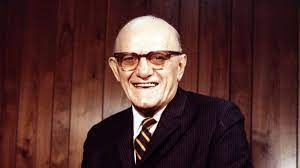
De Benneville "Bert" Bell  was the National Football League commissioner from 1946 until his death in 1959. As commissioner, he introduced competitive parity into the NFL to improve the league's commercial viability and promote its popularity, and he helped make the NFL the most financially sound sports enterprise and preeminent sports attraction in the United States (US). He was posthumously inducted into the charter class of the Pro Football Hall of Fame.
Bell played football at the University of Pennsylvania, where as quarterback, he led his team to an appearance in the 1917 Rose Bowl. After being drafted into the US Army during World War I, he returned to complete his collegiate career at Penn and went on to become an assistant football coach with the Quakers in the 1920s. During the Great Depression, he was an assistant coach for the Temple Owls and a co-founder and co-owner of the Philadelphia Eagles.
With the Eagles, Bell led the way in cooperating with the other NFL owners to establish the National Football League Draft in order to afford the weakest teams the first opportunity to sign the best available players. He subsequently became sole proprietor of the Eagles, but the franchise suffered financially. Eventually, he sold the team and bought a share in the Pittsburgh Steelers. During World War II, Bell argued against the league suspending operations until the war's conclusion.
After the war, he was elected NFL commissioner and sold his ownership in the Steelers. As commissioner, he implemented a proactive anti-gambling policy, negotiated a merger with the All-America Football Conference (AAFC), and unilaterally crafted the entire league schedule with an emphasis on enhancing the dramatic effect of late-season matches. During the Golden Age of Television, he tailored the game's rules to strengthen its appeal to mass media and enforced a policy of blacking out local broadcasts of home contests to safeguard ticket receipts. Amid criticism from franchise owners and under pressure from Congress, he unilaterally recognized the NFLPA and facilitated in the development of the first pension plan for the players. He survived to oversee the "Greatest Game Ever Played" and to envision what the league would become in the future.
By early 1933, Bell's opinion on the NFL had changed, and he wanted to become an owner of a team based in Philadelphia. After being advised by the NFL that a prerequisite to a franchise being rendered in Philadelphia was that the Pennsylvania Blue Laws would have to be mollified, he was the force majeure in lobbying to getting the laws deprecated. He borrowed funds from Frances Upton, partnered with Wray, and he procured the rights to a franchise in Philadelphia which he christened as the Philadelphia Eagles.
After the inaugural 1933 Philadelphia Eagles season, Bell married Upton at St. Madeleine Sophie Roman Catholic Church in Philadelphia. Days later, his suggestion to bestow the winner of the NFL championship game with the Ed Thorp Memorial Trophy was affirmed. In 1934, the Eagles finished with a 4–7 record, The Eagles' inability to seriously challenge other teams made it difficult to sell tickets, and his failure to sign a talented college prospect led him to adduce that the only way to bring stability to the league was to institute a draft to ensure the weakest teams had an advantage in signing the preeminent players. In 1935, his proposal for a draft was accepted, and in February 1936, the first draft kicked off, at which he acted as Master of Ceremonies. Later that month, his first child, Bert Jr., was born.
In the Eagles' first three years, the partners exhausted $85,000, and at a public auction, Bell became sole owner of the Eagles with a bid of $4,500. Austerity measures forced him to supplant Wray as head coach of the Eagles, wherein Bell led the Eagles to a 1–11 finish, their worst record ever. In December, an application for a franchise in Los Angeles was obstructed by Bell and Pittsburgh Steelers owner Rooney as they deemed it too far of a distance to travel for games. During the Eagles' 2-8-1 1937 season, his second child, John "Upton", was born. In the Eagles' first profitable season, 1938, they posted a 5–6 record. The Eagles finished 1–9–1 in 1939 and 1–10 in 1940.
In December 1940, Bell conciliated the sale of Rooney's Steelers to Alexis Thompson, and then Rooney acquired half of Bell's interest in the Eagles. In a series of events known as the Pennsylvania Polka, Rooney and Bell exchanged their entire Eagles roster and their territorial rights in Philadelphia to Thompson for his entire Steelers roster and his rights in Pittsburgh. Ostensibly, Rooney had provided assistance to Bell by rewarding him with a 20% commission on the sale of the Steelers. Bell became the Steelers head coach and Rooney became the general manager.
During the training camp of Pittsburgh's inaugural season with the nickname Steelers, Bell was buoyant with optimism about the team's prospect, but he became crestfallen after Rooney denigrated the squad and flippantly remarked that they looked like the "same old Steelers" (SOS). After losing the first two games of the 1941 season, Rooney compelled Bell into resigning as head coach. Bell's coaching career ended with a 10–46–2 record, his 0.179 winning percentage is second-lowest in NFL history to only Phil Handler's 0.105 for coaches with at least five seasons. And at 36 games under .500 he held the record for futility until John McKay passed him in 1983 and Marion Campbell passed him in 1988. His first daughter and last child, Jane Upton, was born several months after the season's conclusion.
By 1943, 40% of the NFL rosters had been drafted into the United States Armed Forces for World War II. The resulting difficulty in fielding a full-strength squad led some owners to recommend the league should shut down until the war ended. Bell auspiciously argued against this as he feared they might not be able to resume operations easily after the war, and since Major League Baseball was continuing unabated, then they should also.
Throughout Bell's affiliation with the Steelers, he suffered monetarily and Rooney bought an increasing allotment of the franchise from him. Compounding Bell's problems, Arch Ward organized the All-America Football Conference (AAFC) in 1944 to displace the NFL's sovereignty in professional football. Ward's AAFC promptly began luring players to join the league, which resulted in salaries being driven up drastically. In Bill Dudley's contract proceedings with the Steelers, he attributed Bell's anxiety during the negotiations to the rivalry from the AAFC. Furthermore, by the end of 1945, the Steelers were in their most economically perilous situation in its history.
Elmer Layden was appointed the first NFL commissioner in 1941, but Ward appeared as dictating his hiring. Layden tendered his resignation for personal reasons January 1946. Bell, who was not well respected in Pittsburgh, was elected to replace him. He received a three-year contract at $20,000 per year, and transacted a sale of his stake in the Steelers to Rooney, albeit for a price Bell did not construe was full-value. He was then immediately placed at the center of a controversy wherein the owners denied Dan Reeves permission to relocate the Cleveland Rams to Los Angeles. Bell moderated a settlement, and, as a result, the Los Angeles Rams were formed. As a precondition to the Rams leasing the Los Angeles Coliseum, they signed Kenny Washington, which marked the beginning of the end of racial segregation on the field, but also caused "'all hell to break loose'" amidst the owners.
The drawing up of a regular-season schedule had been a perennial source of contention among the NFL owners since the league's inception. The crux of the problem was the scheduling of games meant weighing the interest of owners who, early in the season, wanted their franchises to confront teams that drew the largest crowds, versus owners who wanted to play the weaker franchises to pad their team's win-loss record. The resultant impasse coerced the owners, in 1946, to confer upon Bell the sole discretion in developing the league's schedule. He utilized this responsibility to, early in the season, pit the weaker teams against other weak teams, and the strong teams against other strong teams. His goal was to augment game attendances by keeping the difference in team standings to a minimum as deep into the season as possible.
On the eve of the 1946 championship game, Bell was notified that Merle Hapes and Frank Filchock of the New York Giants had been implicated in a bribing scandal. Filchock was sanctioned by Bell to play in the game but Hapes was suspended. At the next NFL owners' meeting, Bell was worried the repercussions from this event would lead to his firing. However, he was pleasantly surprised to learn that his contract would be elevated to five years at $30,000 per year. Reinvigorated with renewed support, he persuaded the owners to allow him to put sudden-death overtime into the playoffs.
Subsequently, he wrote an anti-gambling resolution into the league constitution, which empowered him with the ability to permanently ban any NFL associated personnel for betting on a game or for withholding information on a game being possibly fixed. Furthermore, to obstruct gamblers from getting inside information, he secreted the names of officials he would assign to games, and he directed each team to promulgate a precursory injury report which listed anyone who might not participate in a game. Eventually, he lobbied to get every state in the US to criminalize the fixing of sporting events and put employees on the payroll of the NFL to investigate potential betting scams.
The NFL's struggle against the AAFC generated stress on wages, attendance, marketing, and by 1949, it had prevented the NFL for showing a profit for three consecutive years. Bell and representatives from both leagues met to attempt a merger, but their efforts were fruitless. In an unrelated matter, he apprised the owners that attendance records had shown televising games locally had a negative impact on the sale of home tickets. Nevertheless, he actualized the NFL's first television contract, for the 1949 championship game. Simultaneously, he dealt with a lawsuit from Bill Radovich, who had been blacklisted for leaving the Lions and gaining employment with the AAFC. Bell and the owners were advised by John C. Jr. that this lawsuit was potentially not winnable, and the ramifications from the outcome of the case weighed heavily on Bell.
One of the primary impediments in an AAFC-NFL merger was the supposed violation of "territorial rights" claimed by Marshall. Eventually, Bell gathered enough support to effectuate a compromise with the AAFC. In late 1949, the leagues merged, and Bell would stay on as commissioner with his contract extended from five to ten years as three AAFC teams (the Cleveland Browns, San Francisco 49ers, and Baltimore Colts) were subsumed. Seeking to capitalize on the publicity of the residual rivalry, he utilized "exquisite dramatic" and business sense and allocated the 1950 opening game to a contest between the 1949 champion Eagles versus the perennial AAFC champion Browns. This game would turn out to be one of the biggest upsets in NFL history where the Cleveland Browns blown out the defending champion Philadelphia Eagles. Feeling financially secure after the merger, he purchased his first home for himself and his family in Narberth, Pennsylvania.
In 1950, Bell originated a blackout rule into the NFL which forbid all teams to televise their home games within a 75-mile radius of their stadium – except for the Rams. Consequently, the United States Department of Justice (DOJ) opened an investigation into a violation of the Sherman Antitrust Act. The Rams attendance for 1950 dropped off by 50%, and this signaled a potential financial disaster. In 1951, he licensed the DuMont Television Network to air the championship games for the next five years, and he stipulated that teams were free to develop their own television contracts independently.
However, preceding the 1951 season, he reimposed the blackout rule on all teams in the league. The DOJ filed suit over this and Bell publicly retorted, "You can't give fans a game for free on TV and also expect them to go to the ballpark"; nevertheless, the suit was ordered to trial for January 1952. After the 1951 season ended, he gained unilateral control over the setting of a television strategy for the NFL. He negotiated a deal with DuMont, which granted it the rights to nationally broadcast one regular-season game every week, and he directed that the income from this contract was to be shared equally between all the teams. In the DOJ's case, the judge ruled that the blackout policy was legal, but both Bell, and the franchises collectively, were enjoined from negotiating a TV contract; Bell was ecstatic. Later that year, Bell forced one of the owners of the Cleveland Browns to sell all of his shares in the team after Bell determined the owner had bet on Browns' football games. Although he hated to fly, at some indeterminate point, he visited the training camps of every team and lectured on the danger gamblers posed to the league.
Bell authorized a Pro Bowl to be held at the end of each season in order to showcase the talents of the best players. But in the early 1950s, on the field activities sometimes denigrated to borderline assault and battery with teams' star players being viciously targeted by opposing players. He answered charges the league was too savage by saying, "'I have never seen a maliciously dirty football player in my life and I don't believe there are any.'" Nevertheless, he ordered broadcasts to follow a strict rule of conduct whereby TV announcers would not be permitted to criticize the game, and neither fights, nor injuries, could be televised by virtue in his belief that announcers were "'salesman for professional football [and] we do not want kids believing that engaging in fights is the way to play football.'"
Bell was criticized for censoring TV broadcasts, a charge he dismissed as not pertinent because he believed he was not impeding the print media but only advertising a product. After CBS and NBC gained the rights to broadcast the games in 1956, Bell advised the franchises to avoid criticizing the games or the officials, and forewarned that TV would give "'us our greatest opportunity to sell the NFL and everyone must present to the public the greatest games ... combined with the finest sportsmanship.'" This relationship with television was the beginning of the NFL's rise to becoming America's most popular sport.
In Radovich v. National Football League, the Supreme Court ruled in Radovich's favor and declared the NFL was subject to antitrust laws, and the implication was that the legality of the draft and reserve clause were dubious. Bell pressed a case in the media that the NFL should be exempted from antitrust regulations and proffered the league was a sport and not a business. He invited an investigation from Congress with respect to the court's ruling. The House Judiciary committee, chaired by Emanuel Celler who believed the draft was illegal and should be abolished, convened in July 1957 to discuss the ramifications of the Radovich decision. Red Grange and Bell testified at the committee's solicitation and argued the draft was essential to the sport's success. Representatives of the NFLPA contradicted these statements and said the draft and the reserve clause were anti-labor, and it seemed as if Congress was going to accept their position. Faced with Congressional opposition, Bell formally recognized the NFLPA and declared he would negotiate with its representatives.
However, Bell was speaking only for himself and without the auspices of the owners. At the next owners' meeting, Rooney admonished they either had to recognize the NFLPA or remove Bell as commissioner. In order to do this, they had to agree in a vote that required a super-majority. Bell unsuccessfully attempted to persuade the owners to permit the NFLPA to act as a bargaining agent for the players. However, he did reach a compromise with the owners to get them to acquiesce to some of the NFLPA's requests for salary standards and health benefits.
For the 1958 season, the duration of timeouts was extended from 60 to 90 seconds and Bell mandated officials call a few TV timeouts during each game and the change triggered criticism from sportswriters. The 1958 championship game became the first NFL championship game decided in overtime, and it was considered to be the greatest football game ever played. The game further increased football's marketability to television advertising, and the drama associated with overtime was the catalyst. Years later, after witnessing Bell openly crying after the game, Raymond Berry attributed it to Bell's realization of the impact the game would have on the prevalence of the sport.
The death of Mara in February 1959 unsettled Bell and he experienced a heart attack later that month. He converted to Catholicism that summer because of the lifelong urging of his wife, Mara's death, and his enduring friendship with Rooney, a practicing Catholic. Bell was advised by his doctor to avoid going to football games, to which he quipped, "I'd rather die watching football than in my bed with my boots off." Bell and his children attended an Eagles game on October 11 at Franklin Field against the Steelers (both his old teams). The Eagles held complimentary box seats for him and guests to watch the game, but he preferred to buy his own tickets and sit with the other fans. Sitting towards the end of the field near the end zone during the fourth quarter of the game, he suffered a fatal heart attack and died later that day at the nearby university hospital. League Treasurer Austin Gunsel was named interim NFL commissioner for the rest of the season.
Afterwards, he was remembered as "a man of buoyant joviality, with a rough and ready wit, laughter and genuine humility and honesty, clearly innocent of pretense and [pretension]." His funeral was held at Narberth's St. Margaret Roman Catholic Church and Monsignor Cornelius P. Brennan delivered the eulogy, as close friends and admirers attended the mass. Dominic Olejniczak and all the extant owners of the NFL franchises were pallbearers. Bell was interred at Calvary Cemetery in West Conshohocken, Pennsylvania, northwest of Philadelphia.
Bell was inducted into the Professional Football Hall of Fame, the Penn Athletics Hall of Fame, the Philadelphia Sports Hall of Fame, and Haverford's Athletic Hall of Fame. The Maxwell Football Club, which he founded in 1937, has presented the best NFL player of the year with the Bert Bell Award since 1959. The Bert Bell Benefit Bowl was exhibited in his honor from 1960 through 1969.
Sources
https://www.pro-football-reference.com/
https://www.profootballarchives.com/index.html
https://americanfootballdatabase.fandom.com/wiki/Football_Wiki
https://www.gridiron-uniforms.com/GUD/controller/controller.php?action=main
https://www.profootballhof.com/hall-of-famers/
Lyons, Robert S. (2010). On Any Given Sunday, A Life of Bert Bell. Philadelphia: Temple University Press. ISBN 978-1-59213-731-2
When Pride Still Mattered, A Life of Vince Lombardi, by David Maraniss, 1999, ISBN 978-0-618-90499-0
Organized Professional Team Sports: Part 1. United States House Committee on the Judiciary I, Subcommittee on Antitrust (1957).
Organized Professional Team Sports: Part 3. United States House Committee on the Judiciary III, Subcommittee on Antitrust (1957).
District Judge Allan Kuhn Grim (November 12, 1953). "United States v. National Football League, 116 F. Supp. 319 – Dist. Court, ED Pennsylvania 1953".
Algeo, Matthew (2006). Last Team Standing. Philadelphia: Da Capo Press. ISBN 978-0-306-81472-3
Berry, Robert C.; with Gould, William B. and Staudohar, Paul D. (1986). Labor Relations in Professional Sports. Dover, MA: Auburn House Pub. Co. ISBN 0-86569-137-1
Brown, Paul; with Clary, Jack (1979). PB, the Paul Brown Story. New York: Atheneum.
Carroll, Bob; with Gershman, Michael, Neft, David, and Thorn, John (1999). Total Football:The Official Encyclopedia of the National Football League. New York: HarperCollins. ISBN 0-06-270174-6
Carroll, John M. (1999). Red Grange and the Rise of Modern Football. Urbana, IL: University of Illinois Press. ISBN 0-252-02384-6
Claassen, Harold (Spike) (1963). The History of Professional Football. Englewood Cliffs, NJ: Prentice-Hall, Inc.
Coenen, Craig R. (2005). From Sandlots to the Super Bowl: The National Football League, 1920–1967. Knoxville, TN: The University of Tennessee Press. ISBN 1-57233-447-9
Daley, Arthur (1963). Pro Football's Hall of Fame. New York: Grosset and Dunlap.
Danzig, Allison (1956). The History of American Football: Its Great Teams, Players, and Coaches. Englewood Cliffs, NJ: Prentice-Hall, Inc.
Davis, Jeff (2005). Papa Bear, The Life and Legacy of George Halas. New York: McGraw-Hill ISBN 0-07-146054-3
DeVito, Carlo (2006). Wellington: the Maras, the Giants, and the City of New York. Chicago: Triumph Books. ISBN 978-1-57243-872-9
Didinger, Ray; with Lyons, Robert S. (2005). The Eagles Encyclopedia. Philadelphia: Temple University Press. ISBN 1-59213-449-1
Gifford, Frank; with Richmond, Peter (2008). The Glory Game: How the 1958 NFL Championship Changed Football Forever. New York: HarperCollins. ISBN 978-0-06-171659-1
Herskowitz, Mickey (1990). The Golden Age of Pro Football. Dallas: Taylor Publishing Company. ISBN 0-87833-751-2
Hession, Joseph (1987). The Rams: Five Decades of Football. San Francisco: Foghorn Press. ISBN 0-935701-40-0
Hibner, John Charles (1993). The Rose Bowl, 1902–1929. Jefferson, NC: McFarland & Company, Inc. Publishers. ISBN 0-89950-775-1
King, Joe (1958). Inside Pro Football. Englewood Cliffs, NJ: Prentice-Hall, Inc.
Layden, Elmer; with Snyder, Ed (1969). It Was a Different Game: The Elmer Layden Story. Englewood Cliffs, NJ:Prentice-Hall, Inc.
LaBlanc, Michael L.; with Ruby, Mary K. (1994). Professional Sports Team Histories: Football. Detroit: Gale Research Inc. ISBN 0-8103-8861-8
Levy, Alan H. (2003). Tackling Jim Crow, Racial Segregation in Professional Football. Jefferson, NC: McFarland and Co., Inc. ISBN 0-7864-1597-5
Littlewood, Thomas B. (1990). Arch: A Promoter, not a Poet: The Story of Arch Ward. Ames, IA: Iowa State University Press. ISBN 0-8138-0277-6
Lomax, Michael E. (April 2001). "Conflict and Compromise: The Evolution of American Professional Football's Labour Relations 1957–1966" (PDF). Football Studies. 4 (1): 5–39. Archived from the original (PDF) on June 9, 2012. Retrieved October 1, 2011.
MacCambridge, Michael (2005). America's Game. New York: Anchor Books. ISBN 978-0-307-48143-6
MacCambridge, Michael (2009). ESPN College Football Encyclopedia: The Complete History of the Game. New York: ESPN Books, Inc. ISBN 1-4013-3703-1
Marquis, Albert Nelson (1934). Who's Who in America: A Biographical Dictionary of Notable Living Men and Women of the United States, Vol., 18, 1934–1935, Two Years. Chicago: The A. N. Marquis Company.
Maule, Tex (1964). The Game; The Official Picture History of the National Football League. New York: Random House
Oriard, Michael (2007). Brand NFL: Making and Selling America's Favorite Sport. Chapel Hill: The University of North Carolina Press. ISBN 978-0-8078-3142-7
Patton, Phil (1984). Razzle-Dazzle: The Curious Marriage of Television and Professional Football. Garden City, NY: The Dial Press. ISBN 0-385-27879-9
Paul, William Henry (1974). The Gray-Flannel Pigskin: Movers and Shakers of Pro Football. Philadelphia: Lippincott.
Pervin, Lawrence A. (2009). Football's New York Giants. Jefferson, NC: McFarland and Company, Inc. ISBN 978-0-7864-4268-3
Peterson, Robert W. (1997). Pigskin: The Early Years of Pro Football. New York: Oxford University Press. ISBN 0-19-507607-9
Piascik, Andy (2007). The Best Show in Football: The 1946–1955 Cleveland Browns. Lanham, MD: Taylor Trade Publishing. ISBN 978-1-58979-360-6
Powers, Ron (1984). Supertube: The Rise of Television Sports. New York: Coward-McCann. ISBN 0-698-11253-9
Rader, Benjamin G. (1984). In its Own Image: How Television Has Transformed Sports. New York: The Free Press. ISBN 0-02-925700-X
Rathet, Mike; with Smith, Don R. (1984). Their Deeds and Dogged Faith. New York: Balsam Press. ISBN 0-917439-02-3
Ratterman, George; with Deindorfer, Robert G. (1962). Confessions of a Gypsy Quarterback; Inside the Wacky World of Pro Football. New York: Coward-McCann, Inc.
Riger, Robert; with Maule, Tex (1960). The Pros. New York: Simon and Schuster.
Rooney, Dan; with Halaas, David F. and Masich, Andrew E. (2007). My 75 Years with the Pittsburgh Steelers and the NFL. Cambridge, MA: Da Capo Press. ISBN 978-0-7867-2603-5
Rothe, Anna; with Prodrick, Elizabeth (1951). "Bert Bell" in Current Biography: Who's News and Why 1950. New York: The H.W. Wilson Company.
Ruck, Rob; with Patterson, Maggie Jones and Weber, Michael P. (2010). Rooney: A Sporting Life. Lincoln, Neb.: University of Nebraska Press. ISBN 978-0-8032-2283-0
Smith, Myron J. Jr. (1993). Professional Football: The Official Pro Football Hall of Fame Bibliography. Westport, CT: Greenwood Press. ISBN 0-313-28928-X
Staudohar, Paul D. (1986). The Sports Industry and Collective Bargaining. Ithaca, NY: ILR Press. ISBN 0-87546-117-4
Sullivan, George (1968). Pro Football's All Time Greats. New York: G. P. Putnam's Sons.
Summerall, Pat; with Levin, Michael (2010). Giants: What I Learned about Life from Vince Lombardi and Tom Landry. Hoboken, NJ: John Wiley & Sons, Inc. ISBN 978-0-470-90908-9
Umphlett, Wiley Lee (1992). Creating the Big Game: John W. Heisman and the Invention of American Football. Westport, CT: Greenwood Press. ISBN 0-313-28404-0
Westcott, Rich (2001). A Century of Philadelphia Sports. Philadelphia: Temple University Press. ISBN 1-56639-861-4
Whittingham, Richard (2002). What a Game They Played: An Inside Look at the Golden Era of Pro Football. Lincoln, Neb.: University of Nebraska Press, Inc. ISBN 978-0-8032-9819-4
Williams, Pete (2006). The Draft: A Year Inside the NFL's Search for Talent. New York: St. Martin's Press. ISBN 978-0-312-35438-1
Willis, Chris (2010). The Man Who Built the National Football League: Joe F. Carr. Lanham, MD: Scarecrow Press, Inc. ISBN 978-0-8108-7669-9
Yost, Mark (2006). Tailgating, Sacks and Salary Caps. Chicago: Kaplan Publishing. ISBN 978-1-4195-2600-8
Lower Merion Historical Society (2000). The first 300 : the amazing and rich history of Lower Merion. Ardmore, Pa. : The Society

The Story And Significance Of Curly Lambeau - Founder Of The Green Bay Packers

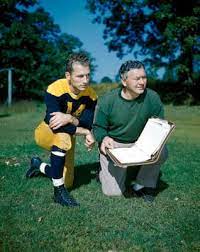
Earl Louis "Curly" Lambeau was an American professional football player and coach in the National Football League. Lambeau, along with his friend and fellow Green Bay, Wisconsin native George Whitney Calhoun, founded the Green Bay Packers in 1919. From 1919 to 1929, Lambeau served as a player-coach and maintained de facto control on the day-to-day operations of the team. As a player, Lambeau lined up as a halfback, which in the early years of the NFL was the premier position. He was the team's primary runner and passer, accounting for 35 touchdowns (eight as a rusher, three as a receiver, and 24 as a passer) in 77 games. He won his only NFL championship as a player in 1929.
From 1919 to 1949, Lambeau was the head coach and general manager of the Packers. He led his team to over 200 wins and six NFL championships, including three straight from 1929 to 1931. He shares the distinction with rival George Halas of the Chicago Bears and later, Bill Belichick of the New England Patriots of coaching his team to the most NFL championships. Lambeau also coached eight players who went on to be elected into the Pro Football Hall of Fame. With players such as quarterback Arnie Herber and split end Don Hutson, his teams revolutionized the use of the passing game in football. After a falling out with the Packers Board of Directors, Lambeau left the Packers to coach the Chicago Cardinals and Washington Redskins, each for two seasons, before retiring in 1953.
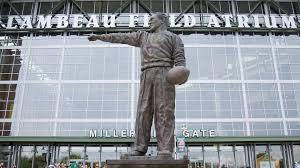
For his accomplishments, Lambeau has been widely recognized and honored. He was named to the NFL 1920s All-Decade Team as one of the top halfbacks in the league's first decade of existence. He was an inaugural inductee to the Pro Football Hall of Fame in 1963 and the Green Bay Packers Hall of Fame in 1970 in recognition for his role as founder, player, and coach of the Packers. Shortly after his death in 1965, the Packers home stadium, which is still in use today, was renamed to Lambeau Field in his honor.
Lambeau and George Whitney Calhoun founded the Green Bay Packers on August 11, 1919, after the packing company put up $500 for uniforms. That fall, the founders secured Willard "Big Bill" Ryan, former coach of Green Bay West High School, to coach the team. The team's name reportedly was offered to Curly by his girlfriend Agnes Aylward after a pickup game; Curly had wanted to call the team "The Green Bay Indians" to respect Indian Packing's purchase of uniforms for the team; so Agnes simply blurted, "Well, for heaven's sake, Curly, why don't you just call them the Green Bay Packers!" The team's naming rights were sold to the Acme Packing Company, and the team remained Packers. The Packers initially played teams from Wisconsin and Michigan's Upper Peninsula. However, the success of the team in 1919 and 1920 quickly led to its joining of the American Professional Football Association (now called the National Football League) in 1921. During that season the team was owned by the Acme Packing Company and John and Emmet Clair of Chicago.
Ryan left the Packers after only one season, and Lambeau became player-coach. However, during the team's first season, Lambeau, as team captain, handled many of the duties associated with a head coach in modern times. In the early days of pro football, the head coach was not allowed to talk to the players during the game. Thus, Lambeau was the team's on-field leader during games, including play calling. He was also responsible for signing players and running practices. For these reasons, the Packers recognize Lambeau as the team's first head coach.
In 1921, he led the team into the one-year-old American Professional Football Association, which became the NFL in 1922. After retiring as a player in 1929, he remained as head coach and general manager until 1949. For the better part of that time, he had near-complete control over the team's day-to-day operations and represented the Packers at owners' meetings.
Before joining the NFL, the Packers achieved an overall 19–2–1 record in 1919 and 1920. Under Lambeau in the NFL, the Packers won six championships (1929, 1930, 1931, 1936, 1939, 1944). He compiled an NFL regular-season record of 209–104–21 (.657) with a playoff record of 3–2, 212–106–21 (.656) overall. Lambeau is still far and away the winningest coach in Packers history. His 104 losses are also the most by a Packers head coach.
The Packers' most successful period came in the 1930s, thanks to the additions of quarterback Arnie Herber and receiver Don Hutson. Herber and Hutson pioneered the passing game, which allowed the Packers to dominate their competitors throughout the 1930s.
In 1946, Lambeau purchased Rockwood Lodge, a former Norbertine retreat, creating the first self-contained training facility in professional football. The purchase was controversial among the Packers' board of directors, many of whom balked at the $32,000 purchase price and $8,000 Lambeau spent on renovations, and some members of the financial committee almost resigned in protest.
Lambeau's players grew to hate the facility as well, partly because they were severely battered by the brick-hard limestone under the fields. On some days, Lambeau had to move practices to fields near City Stadium due to the severe beating his players took at the Lodge.
At the same time, the Packers had begun noticeably slipping on the field after Hutson's retirement in 1945. Still, the Packers remained competitive until 1948, when they suffered their first losing season since 1933, and only the second losing season in franchise history. The bottom fell out in 1949, when the Packers won only two games, at the time, their worst season ever. This was at least in part due to Lambeau's refusal to abandon the Notre Dame Box that he had learned during his brief time in South Bend; the Packers continued to run this variation of the single wing long after most teams began running the T formation.
The Packers were also suffering financially, mainly due to the Rockwood Lodge purchase. Early in the 1949 season, Lambeau largely turned over control of the team to his assistants to devote his attention to the team's financial situation, but even reducing the payroll and his own salary were not enough to stanch the bleeding: by the end of the season, the Packers were on what seemed to be an irreversible slide toward bankruptcy. Desperate for cash, Lambeau found investors willing to invest funds into the team on the condition that it abolished its then-unique public ownership structure.
This proposal was considered rank heresy in Green Bay, and led to rumors that the NFL was using the pending merger with the All-America Football Conference as leverage to force Lambeau to relocate the Packers to the West Coast or shut down the team. In response to these events, team officials offered him a revised contract that stripped him of nearly all control over non-football matters.
Lambeau rejected this offer almost out of hand, and for all intents and purposes, this was the end of his 31-year tenure at the helm of the team he founded; however, he did not formally resign until February 1, 1950, seven days after his beloved Rockwood Lodge burned down in a fire that remains unsolved to this day. The insurance money relieved the Packers' financial woes at one stroke, and ensured they would stay in Green Bay.
After resigning from the Packers, Lambeau filled the open head coach position of the Chicago Cardinals. In addition to the position of head coach, Lambeau also was named vice president and was given complete control of personnel choices. The 1950 season was Lambeau's first in Chicago. The team ended the season 5–7, failing to improve upon its record in the previous season and missing out on the postseason. The 1951 season went even worse for Lambeau and the Cardinals; the team ended the season 3–9 and again failed to reach the postseason.
Lambeau coached the Washington Redskins in 1952 and 1953 going 10-13-1 over those two seasons. In August 1954, Lambeau got into a heated argument with Redskins owner George Preston Marshall in the lobby of Sacramento's Senator Hotel, after which Marshall fired Lambeau on the spot.
He was part of the inaugural class of Pro Football Hall of Fame in 1963, and the inaugural class of the Green Bay Packers Hall of Fame in 1970.
Sources
https://www.pro-football-reference.com/
https://www.profootballarchives.com/index.html
https://americanfootballdatabase.fandom.com/wiki/Football_Wiki
https://www.gridiron-uniforms.com/GUD/controller/controller.php?action=main
https://www.profootballhof.com/hall-of-famers/
 "Curly Lambeau". Encyclopædia Britannica. May 29, 2019. Archived from the original on August 3, 2018. Retrieved November 15, 2019.
 "Mrs. Mary L. Lambeau". Green Bay Press-Gazette. September 18, 1962. p. 22. Archived from the original on November 15, 2019. Retrieved November 15, 2019 – via Newspapers.com.
 Mink, Michael (September 3, 2014). "Curly Lambeau Passed The Test On The Way To NFL's Top". Investor's Business Daily. Archived from the original on August 30, 2018. Retrieved November 15, 2019.
 Christl, Cliff. "Earl "Curly" Lambeau". Green Bay Packers, Inc. Archived from the original on November 15, 2019. Retrieved November 15, 2019.
 Calhoun, George Whitney (September 29, 1917). "Cal's Comment". Green Bay Press-Gazette. p. 8. Archived from the original on November 15, 2019. Retrieved November 15, 2019 – via Newspapers.com.
 Christl, Cliff (May 4, 2017). "The story that was wrong on every count: Curly Lambeau's flirtation with the University of Wisconsin". Green Bay Packers, Inc. Archived from the original on May 8, 2017. Retrieved November 15, 2019.
 "Hall of Famers: Earl L. (Curly) Lambeau — Class of 1963". Green Bay Packers, Inc. Archived from the original on May 24, 2017. Retrieved November 15, 2019.
 Povletich 2012, p. 4.
 The Legend of Lambeau Field DVD
 Christl, Cliff (October 5, 2017). "Packers pioneers overlooked by history". Green Bay Packers. Retrieved March 10, 2025.
 "The 1919 Green Bay Packers - Independent Football (10-1)". www.packershistory.net. Archived from the original on January 18, 2017. Retrieved January 17, 2017.
 "Curly Lambeau Stats". Pro-Football-Reference.com. Archived from the original on May 28, 2024. Retrieved February 22, 2024.
 "1929 Green Bay Packers Rosters, Stats, Schedule". Pro-Football-Reference.com. Retrieved March 11, 2025.
 "Earl (Curly) Lambeau | Pro Football Hall of Fame". pfhof. Retrieved March 11, 2025.
 Christl, Cliff (August 9, 2018). "Packers Fan from Ukraine asks about team's first coach". Green Bay Packers, Inc. Archived from the original on August 9, 2018. Retrieved January 10, 2020.
 "Lambeau's status as Packers' first coach debated". The Sheboygan Press (clipping). Associated Press. January 10, 2004. p. B4. Archived from the original on January 10, 2020. Retrieved January 10, 2020 – via Newspapers.com.
 Fleming, David (September 19, 2013). "Blaze of Glory". ESPN Internet Ventures. Archived from the original on September 26, 2018. Retrieved August 5, 2018.
 Fleming, David (September 19, 2013). "Blaze of Glory". ESPN The Magazine. Archived from the original on February 7, 2014. Retrieved March 21, 2014.
 Daly, Art (December 6, 1948). "Packers Close Out 'Worst' Season in History With 42–7 Loss to Cardinals". Green Bay Press-Gazette. p. 19. Archived from the original on October 10, 2018. Retrieved October 10, 2018 – via Newspapers.com.
 "Green Bay Ends Worst NFL Year". Marshfield News-Herald. Associated Press. December 12, 1949. p. 10. Archived from the original on October 10, 2018. Retrieved October 10, 2018 – via Newspapers.com.
 Hendricks, Martin (August 18, 2016). "Rockwood Lodge had turbulent history". Milwaukee Journal-Sentinel. Archived from the original on August 24, 2016. Retrieved March 8, 2019.
 "Curly Lambeau quits to coach the Cardinals". Milwaukee Journal. February 1, 1950. p. 1, part 1. Archived from the original on November 20, 2015. Retrieved November 19, 2015.
 "Lambeau quits for Card job; Isbell seeks Packer post". Milwaukee Sentinel. Associated Press. February 2, 1950. p. 5, part 2. Archived from the original on November 20, 2015. Retrieved November 19, 2015.
 "Curly Lambeau Quits to Coach the Cardinals". Milwaukee Journal Sentinel. January 31, 1950. Archived from the original on November 17, 2019. Retrieved November 17, 2019.
 "Curly Lambeau's Last (Almost) Hurrah! Coaching the Chicago Cardinals". July 18, 2022. Archived from the original on January 24, 2024. Retrieved January 24, 2024.
 "Lambeau fired as Skins coach". Daytona Beach Morning Journal. Associated Press. August 1954. p. 6. Archived from the original on November 20, 2015. Retrieved November 19, 2015.
 "Lambeau dismissed as Redskins coach". Milwaukee Journal. Associated Press. August 23, 1954. p. 9, part 2. Archived from the original on November 20, 2015. Retrieved November 19, 2015.
 Don Bosley (March 5, 2000). "Sacramento's Big 10: This Summer's U.S. Olympic Track And Field Trials Figures To Make Major News, But The City's History Is Filled With Momentous Sports Happenings. Here Is A List Of The Ones Our Panel Thought Mattered Most...". Sports. Sacramento Bee. p. C1.
 "Curly Lambeau, Founder of Packers, Dies At Age 67". La Crosse Tribune. Associated Press. June 2, 1965. p. 9. Archived from the original on November 15, 2019. Retrieved November 15, 2019 – via Newspapers.com.
 "Curly Lambeau is Stricken and Dies of a Heart Attack". Lawrence (Kansas) Daily Journal World. Associated Press. June 2, 1965. p. 18. Archived from the original on November 20, 2015. Retrieved April 4, 2013.
 "Lambeau, Packer founder, dies; led club to 6 pro league titles". Milwaukee Journal. June 2, 1965. p. 19. Archived from the original on November 20, 2015. Retrieved November 19, 2015.
 Christl, Cliff (May 26, 2016). "The truth and myth about 'The Hungry Five'". Packers.com. Archived from the original on August 1, 2018. Retrieved September 27, 2018.
 "Crowd of 32,132 fills Green Bay's new City Stadium, sees Packers upset Bears". Milwaukee Journal. September 30, 1957. p. 7-part 2. Archived from the original on November 20, 2015. Retrieved November 19, 2015.
 "Packer board backs Lambeau Field idea". Milwaukee Journal. UPI. August 3, 1965. p. 18-part 2. Archived from the original on November 20, 2015. Retrieved November 19, 2015.
 "'Lambeau Field' voted by council". Milwaukee Sentinel. Associated Press. August 5, 1965. p. 3-part 2. Archived from the original on May 10, 2016. Retrieved November 19, 2015.
 "Expansion Planned for Lambeau". The New York Times. Associated Press. August 26, 2011. Archived from the original on June 25, 2017. Retrieved June 28, 2013.
 Demovsky, Rob (July 28, 2015). "Packers president: 'No interest' in selling Lambeau naming rights". ESPN.com. Retrieved September 27, 2024.
 Statues Of Lambeau, Lombardi Unveiled (August 26, 2003). "Statues of Lambeau, Lombardi Unveiled". Packers.com. Archived from the original on December 12, 2023. Retrieved September 27, 2024.
 McGinn, Bob (August 1, 2013). "Green Bay mayor struggling to find a street to rename for Mike McCarthy". Milwaukee Journal Sentinel. Retrieved September 27, 2024.
 "Pro Football Hall of Fame All-Decade Teams – 1920s". Pro-Football-Reference.com. Archived from the original on March 20, 2023. Retrieved April 9, 2024.
 "Packers in the Pro Football Hall of Fame". Packers.com. Retrieved February 12, 2025.
 Bender, Bill (February 9, 2025). "Has any team three-peated in Super Bowl history? History of teams to win three NFL championships in a row". SportingNews.com. Retrieved February 12, 2025.
 "Curly Lambeau". WIHallofFame.com. Retrieved February 12, 2025.
Povletich, William (2012). Green Bay Packers: Trials, Triumphs, and Tradition. Wisconsin Historical Society. ISBN 9780870206030. Retrieved November 15, 2019 – via Google Books.

Monday, December 13, 2021

The Story And Significance of George Halas - The Founder And Owner Of The Chicago Bears

George Stanley Halas Sr., nicknamed "Papa Bear" and "Mr. Everything", was an American professional football player, coach, and team owner. He was the founder and owner of the National Football League's Chicago Bears, and served as his own head coach on four occasions. He was also lesser-known as a Major League Baseball player for the New York Yankees. 
Halas was one of the co-founders of the National Football League in 1920, and in 1963 became one of the first 17 inductees into the Pro Football Hall of Fame.
After graduating from Crane High School in Chicago, he attended the University of Illinois, playing football for coach Bob Zuppke, as well as baseball and basketball, and earning a degree in civil engineering. He also became a member of Tau Kappa Epsilon fraternity. He helped Illinois win the 1918 Big Ten Conference football title.
Serving as an ensign in the Navy during World War I, he played for a team at the Great Lakes Naval Training Station, and was named the MVP of the 1919 Rose Bowl. On a team which included Paddy Driscoll and Jimmy Conzelman (Both in the NFL Hall of Fame), Halas scored a receiving touchdown and returned an intercepted pass 77 yards in a 17–0 win over the Mare Island Marines of California; the team was also rewarded with their military discharges.
Afterward, Halas played minor league baseball, eventually earning a promotion to the New York Yankees, where he played 12 games as an outfielder in 1919. However, a hip injury effectively ended his baseball career. Halas said that he was succeeded as the Yankees' right fielder by Babe Ruth, but in reality, it was Sammy Vick. Later that year, Halas played football for the Hammond Pros and received about $75 per game.
After one year with the Pros, Halas moved to Decatur, Illinois to take a position with the A. E. Staley Company, a starch manufacturer. He served as a company sales representative, an outfielder on the company-sponsored baseball team, and the player-coach of the company-sponsored football team the Decatur Staleys. Halas selected his alma mater's colors—orange and navy blue—for the team's uniforms. In 1920, Halas represented the Staleys at the meeting which formed the American Professional Football Association (which became the NFL in 1922) in Canton, Ohio. After the Staleys' season ended, Halas and teammates George Trafton, Hub Shoemake, and Hugh Blacklock joined the Chicago Stayleys for a December 19 match against the Chicago Cardinals, marking the only time Halas would be an NFL team's opponent for another team besides the Staleys/Bears. The game ended in a 14–14 tie.
Despite a 10–1–2 record, the Staleys ended the season awash in red ink. The Staleys' financial troubles didn't dissuade Halas from significantly upgrading the roster, to the point that it was a works team in name only. After the first game of the 1921 season, company founder and namesake Augustus E. Staley turned over control of the team to Halas so he could move the team to Chicago, where the team had attracted its biggest gates of the 1920 season. Staley gave Halas a $5,000 bonus for the move to Chicago provided that he keep the Staleys franchise name for the 1921 season. Halas then took on teammate Edward "Dutch" Sternaman as a partner. The newly minted "Chicago Staleys" set up shop at Cubs Park, soon to be known as Wrigley Field; Halas had a good relationship with Chicago Cubs owner William Wrigley Jr. and president Bill Veeck Sr.. The Staleys maneuvered their schedule to win their first NFL championship that year. The following year, Halas renamed his team the "Chicago Bears." Years later, he recalled that he wanted to find a way to choose a name that would give a nod to the Cubs. Reasoning that football players were far bigger than baseball players, he concluded, "if baseball players are cubs, then football players must be bears!"
Halas was not only the team's coach but also played end (wide receiver on offense, defensive end on defense) and handled ticket sales and the business of running the club. Named to the NFL's all-pro team in the 1920s, his playing highlight occurred in a 1923 game when he stripped Jim Thorpe of the ball, recovered the fumble, and returned it 98 yards for a league record which would stand until 1972. In 1925, Halas persuaded Illinois star player Red Grange to join the Bears; it was a significant step in establishing both the respectability and popularity of the league, which had previously been viewed as a refuge for less admirable players.
After ten seasons, Halas stepped back from the game in 1930, retiring as a player and handing coaching duties to Lake Forest Academy coach Ralph Jones; but he remained the team's owner, becoming sole owner in 1932. However, severe financial difficulties brought on by the Great Depression put the Bears in dire financial straits even though Jones led them to the NFL title in 1932. Halas returned as coach in 1933 to eliminate the additional cost of paying a head coach's salary. He coached the Bears for another ten seasons. His 1934 team was undefeated until a loss in the championship game to the New York Giants.
In the late 1930s, Halas and University of Chicago coach Clark Shaughnessy perfected the T-formation system to create a revolutionary and overwhelming style of play which drove the Bears to an astonishing 73–0 victory over the Washington Redskins in the 1940 NFL Championship Game which is still the most lopsided margin of victory in NFL history. Every other team in the league immediately began trying to imitate the format. The Bears repeated as NFL champions in 1941, and the 1940s would be remembered as the era of the "Monsters of the Midway".
Halas and Shaughnessy had created a revolutionary concept with the T-formation offense. The complex spins, turns, fakes, and all-around athletic versatility required to execute the scheme limited the possible players available. Halas believed he'd found the perfect quarterback for his new offense in Sid Luckman, a passing star at Columbia University. Luckman was a single wing tailback; the tailback is the primary runner and passer in that scheme. Luckman launched his Hall of Fame career playing quarterback for the Bears from 1939 to 1950. Halas was not satisfied with other players who succeeded Luckman under center. During this coaching stint, he had on the Bears roster two future Hall of Fame players, Bobby Layne in 1948 and George Blanda from 1949 to 1958. Other notable players included Heisman Trophy winner Johnny Lujack from 1948 to 1951 and Zeke Bratkowski from 1954 to 1960. Blanda played in the NFL until 1975; Bratkowski moved on the Los Angeles Rams before signing with Vince Lombardi's Green Bay Packers in 1963, where he played an important role as "super sub" to starter Bart Starr in winning three straight NFL championships in 1965-'66-'67; and Bobby Layne quarterbacked the Detroit Lions to three NFL championship games between 1952 and 1954, winning two.
Halas entered the Navy again after the advent of World War II in 1942, with the rank of lieutenant commander. He served overseas for 20 months under the command of Admiral Chester Nimitz. His duties were supporting the welfare and recreational activities of the Seventh Fleet. He was awarded the Bronze Star during his recall and released from duty in 1946 with the rank of captain. While Halas was in the Navy, the Bears won another title in 1943 under Hunk Anderson and Luke Johnsos. Returning to the field in 1946, he coached the club for a third decade, again winning a title in his first year back as coach. That same year, Halas met with the Army Chief of Staff, General Dwight Eisenhower, the Navy Chief of Staff, Admiral Chester Nimitz, and the Air Force Chief of Staff, General Carl Spaatz, and offered to set up an annual charity football game, with the Bears as hosts, whose proceeds would go to the relief agencies of the armed forces. By mid-1957, proceeds from this game were $438,350.76 and proceeds from all games the Bears participated in between 1946 and 1957 were over $2 million.
In 1939, Halas followed Tim Mara footsteps who purchase the Stapleton Buffaloes in 1937 and obtained the rights to a former NFL club Newark Tornadoes (now in the American Association) from Piggy Simandl, changed the team's name to Bears and stocked with talent that did not make the Chicago roster. He used the club to incubate talent and for easy return for injured players, thus making it pro football's first true farm team. Newark's most notable names included Joe Zeller as coach and Gene Ronzani who led them to the 1939 championship (with a little help in the playoff from Sid Luckman). Halas folded the team in 1941, after the Japanese attack on Pearl Harbor ushered in the United States’ participation in World War II. It would later be revived for one more season (1946) as the Newark Bombers under Halas ownership (not as a farm team), but was folded altogether at the end of the season, and was substituted by the Bloomfield Cardinals.

In 1946, after he returned from service in WWII, Halas also launched the Akron Bears of the American Football League as the Chicago Bears' minor league affiliate. The launch was an attempt to interfere with the territorial rights of the Cleveland Browns, a team in the NFL rival All-America Football Conference (AAFC); Akron is located just 30 miles from Cleveland.

The team was coached again by Ronzani and had notable players like quarterback George Gulyanics, Ed Ecker, Lloyd Reese, Raymond Schumacher and Jack Karwales. The Bears were successful on the field, including reaching the league final before losing 14–13 to the Jersey City Giants but lost at the box office a sum of $52,000, partly because they had large traveling expenses as most of the league team were located on the East Coast. The team did not return for a second season.

After a brief break in 1956–57, he returned as head coach for a final decade from 1958 to 1967. Despite winning his sixth and last league title in 1963, he did not enjoy the same success as he had before the war, and officially retired on May 27, 1968. He did win his 200th game in 1950 and his 300th game in 1965, becoming the first coach to reach both milestones. His six NFL Championships as a head coach is tied for the most all time with Green Bay's Curly Lambeau and later, New England's Bill Belichick. In 40 years as a coach, he endured only six losing seasons, three of which came during his final stint. A pioneer both on and off the field, Halas made the Bears the first team to hold daily practice sessions, to analyze film of opponents to find weaknesses and means of attack, place assistant coaches in the press box during games, place tarp on the field, publish a club newspaper, and to broadcast games by radio. He also offered to share the team's substantial television income with teams in smaller cities, firmly believing that what was good for the league would ultimately benefit his own team. A firm disciplinarian, Halas maintained complete control of his team and did not tolerate disobedience and insubordination by players. He also insisted on absolute integrity and honesty in management, believing that a handshake was sufficient to finalize a deal; few, if any, intermediaries were necessary.
Halas's career ledger reads as follows: 63 years as an owner, 40 as a coach, 324 wins, and 8 NFL titles as a coach or owner. His 324 victories stood as an NFL record for nearly three decades, and are still far and away the most in Bears history; they are three times that of runner-up Mike Ditka. He was a charter member of the Pro Football Hall of Fame in 1963.
Sources
https://www.pro-football-reference.com/
https://www.profootballarchives.com/index.html
https://americanfootballdatabase.fandom.com/wiki/Football_Wiki
https://www.gridiron-uniforms.com/GUD/controller/controller.php?action=main
https://www.profootballhof.com/hall-of-famers/
Davis, Jeff, Papa Bear, (McGraw-Hill Co., 2005), 32.
 Encyclopedia of ethnicity and sports in the United States, Ed. George B. Kirsch, Othello Harris and Claire Elaine Nolte, (Greenwood Publishing, 2000), 164.
 Elliott J. Gorn, Sports in Chicago, (University of Illinois Press, 2008), 7.
 Twombly, Wells (1976). 200 Years of Sport in America. New York: McGraw-Hill. p. 186. ISBN 0-07-065640-1.
 Gloria Cooksey, George Halas: An entry from Gale's Notable Sports Figures 2004.
 "Halas, George Stanley". www.encyclopedia.com.
 "ITB: Halas escapes Eastland Disaster". Chicago Bears. October 29, 2013. Archived from the original on December 13, 2013. Retrieved November 5, 2013.
 "George Halas". Encyclopedia.com. Retrieved January 11, 2022.
 "The Story of "Papa Bear" George Halas". Illinois Fighting Illini. February 2, 2020. Retrieved January 11, 2022.
 "Mass slated tomorrow for Mrs. Halas, 70". The Chicago Tribune. Vol. 119, no. 47. Chicago. February 16, 1966. p. 6 sec. 2. Retrieved January 11, 2022 – via Newspapers.com.
 Names, Larry D (1987). "The Myth". In Scott, Greg (ed.). The History of the Green Bay Packers: The Lambeau Years. Vol. 1. Angel Press of WI. p. 31. ISBN 0-939995-00-X.
 "George Halas, Randall McDaniel, Pop Warner and Vince Young to be Inducted into the Rose Bowl Hall of Fame Class of 2018". Tournament of Roses – Rose Bowl Game. September 10, 2018. Retrieved December 14, 2021.
 "George Halas". Society for American Baseball Research. Retrieved February 2, 2021.
 U.S. House III, 1957, p. 2714.
 "Evolution of the Bears Colors". National Football League. September 13, 2012. Retrieved December 21, 2012.
 Marines Are Swamped By Great Stars :Minneapolis Team Swept Off Their Feet by Crack Hammond Eleven. (October 27, 1919). Minneapolis Morning Tribune (1909–1922),10. Retrieved September 2, 2010, from ProQuest Historical Newspapers Minneapolis Tribune (1867–1922). (Document ID: 1513834502).
 "George Stanley Halas (Papa Bear)". Staley Museum. December 10, 2015.
 "Decatur stars oppose Driscoll". The Dispatch. December 20, 1920. Retrieved May 23, 2020 – via Newspapers.com.
 Halas, George S. (August 9, 2015). "From Decatur to NFL, with Potholes Along Way". Chicago Tribune.
 George Halas at The Staley Museum
 Chicago Bears Media Guide, 2020
 Exoo, Thales (January 31, 2007). "Ask Chicagoist: Why Are They Called the Bears?". Chicagoist. Gothamist. Archived from the original on May 10, 2017. Retrieved December 19, 2016.
 "Chicago Bears 1934 Games and Schedule". Pro-Football-Reference.com. Retrieved June 30, 2025.
 "George Halas Record, Statistics, and Category Ranks - Pro-Football-Reference.com". Pro-Football-Reference.com.
 U.S. House III, 1957, p. 2713.
 U.S. House III, 1957, p. 2720.
 "Happy Birthday George Halas". Chicago Bears. January 31, 2014. Archived from the original on February 19, 2014. Retrieved February 2, 2014.
 "Lords of the Rings: The NFL's 10 greatest coaches". Archived from the original on February 3, 2014. Retrieved December 5, 2013.
 "Football.History". www.njsportsheroes.com.
 "Nothing minor about it" (PDF).
 "Papa Bear's Nightmare" (PDF).
 "Bears coaching history". Chicago Bears. January 14, 2013. Archived from the original on August 7, 2017. Retrieved January 16, 2013.
 "2016 Hall of Fame – Illinois Engineering". engineering.illinois.edu.
 "George S. Halas Historical Marker". www.hmdb.org. Retrieved January 28, 2025.
 Mayer, Larry (February 19, 2020). "Halas was a pro basketball pioneer as well". Chicago Bears. Retrieved February 19, 2020.
 Rosenthal, Gregg (June 6, 2013). "Pro Football Hall of Famers who fought on D-Day". National Football League. Retrieved June 6, 2013.
 Greenberg, Jon (January 15, 2010). "'Super Bowl Shuffle' endures long after 1985". ESPN.com. Retrieved December 14, 2024.
 Pinak, Patrick (February 4, 2023). "The "Super Bowl Shuffle" and the 1985 Chicago Bears Were Both Massive Hits". FanBuzz. Retrieved December 14, 2024.
 "Six HOFers to toss coin at Super Bowl". Pro Football Hall of Fame. January 26, 2004. Retrieved May 7, 2021.
 The following source differs from Pro-Football-Reference.com and states that the record was 10–1–1 for 1921: Vass, George (1971). "The Bears Find a Den". George Halas and the Chicago Bears. Henry Regnery Company. p. 44. ISBN 0809295970.
Davis, Jeff (2006). Papa Bear: The Life and Legacy of George Halas. McGraw Hill Professional. ISBN 0-07-147741-1.
Hibner, John Charles (1993). "University of Oregon and University of Pennsylvania (1917)", in The Rose Bowl, 1902–1929: A Game-by-Game History of Football's Foremost Event, from its Advent through its Golden Era. Jefferson, NC: McFarland & Company, Inc. Publishers.
Organized Professional Team Sports: Part 3. (password protected except at participating U.S. library) by United States House Committee on the Judiciary III, Subcommittee on Antitrust (1957). pp. 2713–2716

Friday, December 10, 2021

The Story And Significance Of Jim Thorpe - The Greatest Athlete There Ever Was


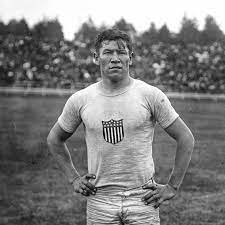
James Francis Thorpe (Sac and Fox (Sauk): Wa-Tho-Huk, translated as "Bright Path"; May 22 or 28, 1887 – March 28, 1953) was an American athlete and Olympic gold medalist. A member of the Sac and Fox Nation, Thorpe was the first Native American to win a gold medal for the United States in the Olympics. Considered one of the most versatile athletes of modern sports, he won two Olympic gold medals in the 1912 Summer Olympics (one in classic pentathlon and the other in decathlon). He also played American football (collegiate and professional), professional baseball, and basketball.
He lost his Olympic titles after it was found he had been paid for playing two seasons of semi-professional baseball before competing in the Olympics, thus violating the contemporary amateurism rules. In 1983, 30 years after his death, the International Olympic Committee (IOC) restored his Olympic medals with replicas, after ruling that the decision to strip him of his medals fell outside of the required 30 days. Thorpe is to date listed as co-champion in both the decathlon and pentathlon events according to official IOC records.
Thorpe grew up in the Sac and Fox Nation in Indian Territory (what is now the U.S. state of Oklahoma). As a youth, he attended Carlisle Indian Industrial School in Carlisle, Pennsylvania, where he was a two-time All-American for the school's football team under coach Pop Warner. After his Olympic success in 1912, which included a record score in the decathlon, he added a victory in the All-Around Championship of the Amateur Athletic Union. In 1913, he played for the Pine Village Pros in Indiana. Later in 1913, Thorpe signed with the New York Giants, and he played six seasons in Major League Baseball between 1913 and 1919. Thorpe joined the Canton Bulldogs American football team in 1915, helping them win three professional championships. He later played for six teams in the National Football League (NFL). He played as part of several all-American Indian teams throughout his career, and barnstormed as a professional basketball player with a team composed entirely of American Indians.
From 1920 to 1921, Thorpe was nominally the first president of the American Professional Football Association (APFA), which became the NFL in 1922. He played professional sports until age 41, the end of his sports career coinciding with the start of the Great Depression. He struggled to earn a living after that, working several odd jobs. He suffered from alcoholism, and lived his last years in failing health and poverty. He was married three times and had eight children, before suffering from heart failure and dying in 1953.
Thorpe has received numerous accolades for his athletic accomplishments. The Associated Press ranked him as the "greatest athlete" from the first 50 years of the 20th century, and the Pro Football Hall of Fame inducted him as part of its inaugural class in 1963. The town of Jim Thorpe, Pennsylvania was named in his honor. It has a monument site that contains his remains, which were the subject of legal action. Thorpe appeared in several films and was portrayed by Burt Lancaster in the 1951 film Jim Thorpe – All-American.
 He first played professional football in 1913 as a member of the Indiana-based Pine Village Pros, a team that had a several-season winning streak against local teams during the 1910s. He signed with the Canton Bulldogs in 1915. They paid him $250 ($6,396 today) a game, a tremendous wage at the time. Before signing him Canton was averaging 1,200 fans a game, but 8,000 showed up for Thorpe's debut against the Massillon Tigers. The team won titles in 1916, 1917, and 1919. Thorpe reportedly ended the 1919 championship game by kicking a wind-assisted 95-yard punt from his team's own 5-yard line, effectively putting the game out of reach.
In 1920, the Bulldogs were one of 14 teams to form the American Professional Football Association (APFA), which would become the National Football League two years later. Thorpe was nominally the APFA's first president, but spent most of the year playing for Canton; a year later, he was replaced as president by Joseph Carr. He continued to play for Canton, coaching the team as well. Between 1921 and 1923, he helped organize and played for the Oorang Indians (LaRue, Ohio), an all-Native American team. Although the team's record was 3–6 in 1922, and 1–10 in 1923, Thorpe played well and was selected for the Green Bay Press-Gazette's first All-NFL team in 1923. This was later formally recognized in 1931 by the NFL as the league's official All-NFL team).
Even though his NFL stats look ordinary, he started his NFL career at 33 he was the first big star in the league and also being the first president of the league is what is most important from his NFL career. Thorpe never played for an NFL championship team. He retired from professional football at age 41, having played 52 NFL games for six teams from 1920 to 1928.
Sources
https://www.pro-football-reference.com/
https://www.profootballarchives.com/index.html
https://americanfootballdatabase.fandom.com/wiki/Football_Wiki
https://www.gridiron-uniforms.com/GUD/controller/controller.php?action=main
https://www.profootballhof.com/hall-of-famers/
Bird, S. Elizabeth (May 2, 1996). Dressing in feathers: the construction of the Indian in American popular culture. London, UK: Avalon. ISBN 978-0-8133-2667-2.
Bloom, John (May 2, 1996). ""There Is Madness in the Air": The 1926 Haskell Homecoming and Popular Representations of Sports in Federal Indian Boarding Schools". In Bird, S. Elizabeth (ed.). Dressing in feathers: the construction of the Indian in American popular culture. London, UK: Avalon. ISBN 978-0-8133-2667-2.
Buford, Kate (2012). Native American Son: the life and sporting legend of Jim Thorpe . Lincoln, Nebraska: University of Nebraska Press. ISBN 978-0-8032-4089-6. OCLC 756837088.
Cava, Pete (Summer 1992). Baseball in the Olympics (PDF). pp. 7–15. Archived from the original (PDF) on August 9, 2017.
Cook, William A. (2011). Jim Thorpe: a biography. Jefferson, N.C: McFarland & Co. ISBN 978-0-7864-6355-8. OCLC 692291486.
Dodge, Robert V. (2013). Which chosen people? Manifest destiny meets the Sioux as seen by Frank Fiske, frontier photographer. New York, N.Y: Algora Publishing. ISBN 978-1-62894-029-9.
Dyreson, Mark (1998). Making the American team: sport, culture, and the Olympic experience. Sport and society. Urbana, Ill.: University of Illinois Press. ISBN 978-0-252-06654-2.
Elfers, James E. (2003). The Tour to End All Tours: the story of major league baseball's 1913-1914 world tour. Lincoln: University of Nebraska Press. ISBN 978-0-8032-6748-0.
Findling, John E.; Pelle, Kimberly D., eds. (2004). Encyclopedia of the modern Olympic movement. Westport, Conn: Greenwood Press. ISBN 978-0-313-32278-5.
Gerasimo, Luisa; Whiteley, Sandra, eds. (2003). The teacher's calendar of famous birthdays. New York: McGraw-Hill. ISBN 978-0-07-141230-8.
Hilger, Michael (2016). Native Americans in the movies: portrayals from silent films to the present. Lanham Boulder New York London: Rowman & Littlefield. ISBN 978-1-4422-4002-5.
Hoxie, Frederick E., ed. (1996). Encyclopedia of North American Indians. Boston, Mass.: Houghton Mifflin. ISBN 978-0-395-66921-1.
Jeansonne, Glen; Luhrssen, David (2006). A time of paradox: America since 1890. Lanham, Md: Rowman & Littlefield. ISBN 978-0-7425-3376-9. OCLC 62109927.
Landrum, Dr. Gene N. (2006). Empowerment: the Competitive Edge in Sports, Business & Life. Brendan Kelly Publishing, Incorporated. ISBN 978-1-89-599724-8.
Lincoln, Kenneth; Slagle, Al Logan (1997). The good red road: passages into Native America. Lincoln: University of Nebraska Press. ISBN 978-0-8032-7974-2.
Magill, Frank Northen, ed. (1987). Great lives from history. Vol. 1 5: American series Sit - Z. Vol. 1. Pasadena, Cal.: Salem Pr. ISBN 978-0-89356-529-9.
Maraniss, David (2022). Path lit by lightning: the life of Jim Thorpe (1st ed.). New York: Simon & Schuster. ISBN 978-1-4767-4841-2.
Neft, David S.; Cohen, Richard M.; Korch, Rick (1994). The Complete History of Professional Football from 1892 to the Present. St. Martin's Press. ISBN 978-0-31-211435-0.
O'Hanlon-Lincoln, Ceane (2004). County chronicles: a vivid collection of Fayette County, Pennsylvania histories. Chicora, PA: Mechling Bookbindery. ISBN 978-0-9744657-8-4.
Quirk, Charles E., ed. (July 10, 2014). Sports and the Law: Major Legal Cases. Taylor & Francis. ISBN 978-1-13-568222-4.
Rendell, Matt, ed. (2004). The Olympics: Athens to Athens, 1896 - 2004. London: Weidenfeld & Nicolson. ISBN 978-0-297-84382-5.
Schaffer, Kay; Smith, Sidonie, eds. (2000). The Olympics at the Millennium: power, politics, and the games. New Brunswick, NJ: Rutgers University Press. ISBN 978-0-8135-2820-5.
Watterson, John Sayle (November 14, 2002). College Football: History, Spectacle, Controversy. Johns Hopkins University Press. ISBN 978-0-80-187114-6.
Wheeler, Robert W. (1979). Jim Thorpe, World's Greatest Athlete. University of Oklahoma Press. ISBN 978-0-80-611745-4.
Williams, Randy (2006). Sports cinema: 100 movies: the best of Hollywood's athletic heroes, losers, myths, and misfits. Pompton Plains, NJ: Limelight Ed. ISBN 978-0-87910-331-6.
Zarnowski, Frank (March 31, 2005). All-Around Men: Heroes of a Forgotten Sport. Scarecrow Press. ISBN 978-0-81-085423-9.
Zarnowski, Frank (2013). The Pentathlon of the Ancient World. Jefferson, NC: McFarland. ISBN 978-0-7864-6783-9.