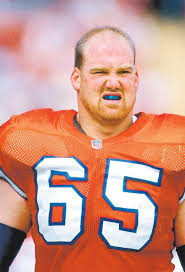
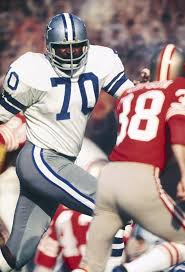
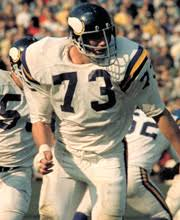
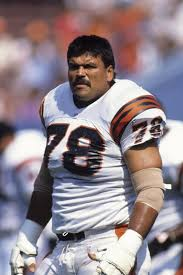
Showing posts with label Offensive Tackle. Show all posts

Monday, April 13, 2026

The Story And Significance Of Orlando Pace - Seven Consecutive Pro Bowl Selections At Left Tackle

Orlando Lamar Pace is an American former professional football offensive tackle who played in the National Football League for 13 seasons, primarily with the St. Louis Rams. He played college football for the Ohio State Buckeyes, winning the Lombardi Award in 1995 after blocking for Eddie George during his Heisman campaign. The following season, Pace won the Outland Trophy, his second Lombardi Award, the Jim Parker Trophy, and UPI Lineman of the Year. Pace was selected first overall in the 1997 NFL draft by the Rams, where he spent all but one season of his professional career. This included being a member of the Greatest Show on Turf. In his final season, he was a member of the Chicago Bears.

With the Rams, Pace was recognized as the cornerstone of an offensive line that blocked for an offense with the most gross yardage, second-highest completion percentage, and fifth-most touchdown passes during his 12 years with the team. Under Pace's protection, the Rams passing offense compiled more than 3,000 yards per season in each of the years he played, seven different quarterbacks eclipsed 3,000 yards in a season, and seven players rushed for 1,000 yards. Pace also protected the league's Most Valuable Player (MVP) recipient for three consecutive seasons, blocking for 1999 and 2001 MVP Kurt Warner and 2000 MVP Marshall Faulk.

Retiring as a seven-time Pro Bowl and three-time first-team All-Pro selection, Pace was a core contributor of the Rams Greatest Show on Turf offense that won the franchise's first Super Bowl title in Super Bowl XXXIV. He was inducted to the College Football Hall of Fame in 2013 and the Pro Football Hall of Fame in 2016.

The Rams traded with the New York Jets for the first overall pick the day before the 1997 NFL draft. Pace was the first offensive lineman since Ron Yary in 1968 to be drafted first overall. After a three-week holdout, on August 15, 1997, Pace signed a seven-year $29.4 million contract that included a $6.3 million signing bonus. Pace played 13 games during the 1997 season, his rookie year. He made his first start against the Oakland Raiders on September 28, 1997, and started every game for the rest of the season.

In 1998, Pace started 16 games at the left tackle position and was named Pro Bowl alternate.

In the 1999 season, Pace played in 896 of 994 offensive plays and was selected to his first Pro Bowl. It was the first time that a Rams' offensive tackle was named to the Pro Bowl since Jackie Slater in 1990. Pace was also a First-team All-Pro for the Super Bowl winning Rams.

In the 2000 season, Pace earned second consecutive Pro Bowl invitation, starting all 16 regular season games and 1 playoff game. Pace was anchor of offensive line that helped offense produce most passing yards in NFL history, playing in 1,006 of possible 1,013 offensive plays (99.3 percent), second highest total on offensive line. Pace was one of three Rams' offensive linemen (C Andy McCollum, RT Ryan Tucker) who were not penalized for holding.

In 2001, Pace started every game for the fourth consecutive season. He played in 100 percent of offensive plays, joining Adam Timmerman as the only Ram to play in every offensive play. He started all three playoff contests, the St. Louis Rams claimed the NFC West title and advanced to Super Bowl XXXVI falling to the New England Patriots, 20–17. He earned third consecutive Pro Bowl invitation.

In 2002, despite missing six games due to injury (three to calf injury in games 4–6 and three to hamstring games in 13–16), Pace earned his fourth consecutive Pro Bowl invitation.

Pace had a lengthy holdout by reporting to camp on August 26, 2003, and signing a one-year deal as the Rams franchise player. The deal was worth $5.7 million. In 2003, Pace started all 16 regular season games and one playoff game, he helped the Rams' offense to rank second in the NFL with an average of 27.9 points a game. He earned a fifth consecutive Pro Bowl invitation as the Rams claimed their third NFC West title in five years.

On September 5, 2004, Pace ended another holdout and signed the Rams' $7.02 million offer. It marked the second straight year Pace missed most or all of the preseason before signing his one-year tender. By designating Pace as a franchise player, the Rams were obligated to pay him the average salary of the five highest-paid offensive linemen in the NFL. Pace went on to start all 16 regular season games at left tackle and both playoff games. He was one of three linemen to start every game (C Andy McCollum, G Adam Timmerman) and blocked for an offense that ranked eighth in the NFL (third in the NFC) in first downs (321). Pace helped Rams convert 13-of-16 fourth down attempts, second highest fourth-down conversion percentage in the NFL (68.4%). He earned his sixth consecutive Pro Bowl invitation.

Pace was a free agent in 2005 and explored the possibility of signing with another team. The Rams placed the franchise tag on Pace again. In March, he visited the Houston Texans. The problem for Pace and the Texans was that if they work out an agreement, the Texans would have had to agree with the Rams on a compensation package, which would be two first-round draft choices which the Rams would be entitled to under the franchise-player rules. However, the day before the deadline, Pace accepted a seven-year, $52.9 million deal. The deal included $18 million in first-year salary and bonus.

In 2005, Pace earned seventh consecutive Pro Bowl invitation, tying him for fourth in Rams history, behind Hall of Famer DT Merlin Olsen (14), Hall of Famer G Tom Mack (11), and LB Les Richter (8). That season, Pace started all 16 games at left tackle, joining C Andy McCollum and G Adam Timmerman as only Rams linemen to start every game.

In 2006, Pace started the 8 games he appeared in until he left in the second quarter against the Seattle Seahawks on November 12, 2006, after he tore his triceps, ending his 2006 season. He was placed on Injured Reserve on November 14.

Pace was injured during the Rams' 2007 season opener against the Carolina Panthers on September 9, 2007. Officials confirmed that Pace would be out for the entire 2007 season, severely jeopardizing the Rams' offense for the remainder of the season.

In 2008, Pace played in and started 14 games, missing only two with an injury, compared to the 15 he missed in 2007 and the 8 he missed in 2006. However, the Rams struggled on the field and their head coach Scott Linehan was fired mid-season and the team fared little better under interim head coach Jim Haslett and the team finished 2–14.

Dogged by injuries in recent seasons, Pace was released by the Rams on March 10, 2009, to save $6 million under the salary cap.

Pace signed a three-year $15 million deal (with $6.1 million guaranteed) with the Chicago Bears on April 2, 2009. Pace started the first 11 games at left tackle in his lone season with the Bears in 2009 before sustaining a groin injury on November 29 in a loss to the Minnesota Vikings. He later finished the year as a reserve behind 2008 first-round draft pick Chris Williams. He was released on March 1, 2010.

In his 13-year career, Pace was paid just over $75 million in salary and bonuses.

Pace owned "Big O's Ltd" in his home town of Sandusky, Ohio. It was a family-friendly sports bar located on W. Perkins Avenue. Pace made appearances at his restaurant, occasionally signing autographs for his hometown fans. Big O's Ltd has since been closed.

Pace was inducted into the Rose Bowl Hall of Fame on December 30, 2013, at the Pasadena Convention Center.

Pace was a finalist in the 2015 Hall of Fame induction class and in his second year of eligibility he made the final 15. On February 6, 2016, he was elected to the Pro Football Hall of Fame.

Pace resides in St. Louis, Missouri. He and his family purchased a house in Henderson, NV in 2025. His son, Landon, currently plays tight end for Wyoming.

He was portrayed by Brandon Murphy in the 2021 film American Underdog: The Kurt Warner Story.

Sources
 "Chicago Bears bio". Archived from the original on April 6, 2012. Retrieved April 3, 2009.
 St. Louis Rams Roster: Orlando Pace Archived September 18, 2006, at the Wayback Machine. The Official Website of the St. Louis Rams. Retrieved September 13, 2006
 Wagoner, Nick (September 6, 2004).Monday Notebook: Pace Back in Fold Archived May 26, 2006, at the Wayback Machine The Official Website of the St. Louis Rams. Retrieved September 13, 2006
 Reynolds, Jeff (May 10, 2006).Cover Boys Archived November 21, 2006, at the Wayback Machine. ProFootball Weekly. Retrieved September 13, 2006
 "1996 Heisman Trophy Voting". sports-reference.com. Retrieved August 26, 2021.
 "Orlando Pace, Combine Results, OT - Ohio State". nflcombineresults.com. Retrieved August 9, 2021.
 Eskenazi, Gerald (April 18, 1997). "Parcells and Jets Deal Quality for Quantity in Draft". The New York Times.
 "1997 NFL Draft Listing". Pro-Football-Reference.com. Retrieved March 30, 2023.
 "Pace Goes No. 1". Pro Football Hall of Fame Official Site. April 14, 2016. Retrieved March 30, 2023.
 Maske, Mark (March 15, 2005). "Texans Making a Play for Pace". The Washington Post. Retrieved March 9, 2025.
 (3-17-2005)Associated Press[permanent dead link] Retrieved September 12, 2010.
 "Orlando Pace 2008 Game Log". Pro-Football-Reference.com. Retrieved December 25, 2024.
 Rams release Pace Archived March 13, 2009, at the Wayback Machine, St. Louis Rams, March 10, 2009
 Orlando Pace released by St. Louis Rams Archived June 3, 2009, at the Wayback Machine, St. Louis Post-Dispatch, March 10, 2009
 "Veteran tackle Pace among three players released by Bears". Archived from the original on January 18, 2012. Retrieved March 2, 2010.
 USA Today.com Retrieved September 12, 2010.
 "Big O'S Limited - Sandusky/Huron - Sandusky | Urbanspoon". www.urbanspoon.com. Archived from the original on August 5, 2012. Retrieved May 22, 2022.
 "Pace To Be Inducted Into Rose Bowl Hall of Fame". Ohio State University. December 10, 2013. Retrieved August 26, 2021.
 "2016 'NFL Honors' complete list of winners". NFL.com. February 6, 2016. Retrieved February 7, 2016.
 Thomas, Jim (November 24, 2015). "Warner, Pace, Bruce, Holt are Hall of Fame semifinalists". St. Louis Post-Dispatch. Retrieved August 26, 2021.
 "Former NFL star purchases $8.4 million Henderson home". Las Vegas Review-Journal. June 12, 2025. Retrieved July 13, 2025.
 "Former NFL star purchases $8.4 million Henderson home". www.msn.com. Retrieved July 13, 2025.

Monday, December 1, 2025

The Story And Significance Of Walter Jones - Four Time First Team All-Pro Selection At Left Tackle

Walter Junior Jones is an American former professional football player who was an offensive tackle in the National Football League for 12 seasons. Born in Alabama, he played college football for the Florida State Seminoles.

Jones played his entire professional career with the Seattle Seahawks, where he was a seven-time All-Pro selection and eventual NFL 2000s All-Decade Team honoree. Starting in each of his 180 games in Seattle, the Seahawks attempted more than 5,500 passes with Jones on the field, while Jones gave up a total of only 23 quarterback sacks, and was penalized for holding just nine times. On February 1, 2014, Jones was selected to the Pro Football Hall of Fame in his first year of eligibility.

Jones was drafted by the Seahawks in the first round with the sixth overall pick in the 1997 NFL draft. He started every game in which he played, beginning with his rookie season. Jones was a member of the 2005 Seahawks team that lost Super Bowl XL to the Pittsburgh Steelers. In 2006, Jones topped the list of the 101 best NFL players by the Sporting News.

Jones was a nine-time Pro Bowl selection and seven-time All-Pro. Jones was perhaps the best at his position in the NFL during the early part of the decade, exemplified by being voted to the NFL's 2000s All-Decade Team. From 1998 through 2000, he helped Ricky Watters achieve three consecutive 1,000-yard seasons for the Seahawks and, later, paved the way for Shaun Alexander's NFL record-setting success.

Jones was recognized by John Madden as the best player in the NFL in 2004 in a broadcast. Madden recognized Jones in numerous broadcasts as the best left tackle in the NFL and possibly one of the best of all time.

Seahawks coach Mike Holmgren has called Jones the best offensive player he had ever coached.

On Thanksgiving 2008, Jones succumbed to a knee injury playing against the Cowboys in his 180th and final game. The injury required microfracture surgery to repair and immediately ended his season. Jones tried to play again in 2009 but was unsuccessful. On October 28, 2009, Jones was placed on injured reserve by the Seahawks. In a press conference the same day, Jones stated his intention to play in 2010. On April 29, 2010, Jones announced on his Twitter account that he would retire.

The Seahawks announced the retirement of his number, 71, and governor Christine Gregoire declared April 30 to be "Walter Jones Day" in the state of Washington.

On December 5, 2010, in a game versus the Carolina Panthers, in front of a crowd of over 66,000, the Seahawks honored the career of Jones by retiring his #71 jersey. This was only the second player number (#80 Steve Largent was the first) to be retired by the Seahawks (they have also retired #12 in honor of the fans).

On January 8, 2011, Jones lifted the 12th Man flag at Qwest Field before the Seahawks' wild card matchup against the New Orleans Saints. The 7–9 Seahawks went on to defeat the defending Super Bowl champion Saints 41–36.

On February 2, 2014, Jones served as the Seahawks' honorary captain at Super Bowl XLVIII at MetLife Stadium in East Rutherford, New Jersey, prior to their 43–8 victory over the Broncos. This coincided with his election onto the Pro Football Hall of Fame. He also helped former Giant and fellow Hall of Famer Michael Strahan toss the coin to end the pregame ceremonies.

Sources
 "Walter Jones Stats, Height, Weight, Position, Draft, College". Pro-Football-Reference.com.
 "FSU's Jones reportedly to enter NFL Draft". The Palm Beach Post. January 8, 1997.
 "Walter Jones, Combine Results, OT - Florida State". nflcombineresults.com. Retrieved November 14, 2021.
 "Walter Jones RAS". ras.football. January 23, 2020. Retrieved November 14, 2021.
 "1997 NFL Draft Listing". Pro-Football-Reference.com. Retrieved March 30, 2023.
 "Pro Football Hall of Fame All-Decade Teams - 2010s". Pro-Football-Reference.com. Retrieved June 6, 2024.
 Sando, Mike (April 29, 2010). "An appreciation for the great Walter Jones". ESPN.com. Retrieved July 12, 2018.
 "Farewell, Walter". Seahawks.com. May 1, 2010. Archived from the original on May 1, 2010. Retrieved July 12, 2018.
 "Walter Jones - RIP? Not so fast, brother | Seattle Sports Insider". October 28, 2009. Archived from the original on February 2, 2014. Retrieved December 3, 2019.
 Greg Johns (April 30, 2010). "Walter Jones: 'I'm ready to move on'". Seattle Post-Intelligencer. Retrieved April 30, 2010.
 "Seahawks-Saints Game Thread | Sportspress Northwest". Sportspress Northwest. Archived from the original on July 16, 2011. Retrieved July 12, 2018.

Monday, October 6, 2025

The Story And Significance Of Jonathan Ogden - Nine Time All-Pro Selection At Offensive Tackle For The Baltimore Ravens

Jonathan Phillip Ogden is an American former professional football player who was an offensive tackle and spent his entire career with the Baltimore Ravens of the National Football League. He played college football for the UCLA Bruins, and was recognized as a unanimous All-American. He was selected by the Ravens with the 4th overall pick in the 1996 NFL draft, making him the first Ravens draft selection in franchise history. He was an 11-time Pro Bowl selection and a nine-time All-Pro. Ogden won Super Bowl XXXV with the Ravens in 2001.

On February 2, 2013, Ogden was voted into the Pro Football Hall of Fame, the first inductee to spend his entire playing career as a Raven. He was inducted into the College Football Hall of Fame in 2012, and has been ranked as the #3 best offensive lineman of all-time by Fox Sports.

During the 1996 NFL draft, Ogden was selected by the Baltimore Ravens in the first round with the fourth overall choice, the first draft pick made by the Ravens. Ozzie Newsome wanted to select Ogden but owner Art Modell wanted to select Lawrence Phillips.

He was named a four-time first team All-Pro and an 11-time Pro Bowler at left tackle, earning trips to Hawaii in every season except his rookie year. During his career, Ogden caught two passes – both for one yard and both for touchdowns. He also recovered 10 fumbles and recorded 10 tackles. Ogden also won a reputation for smiling. "He's a laugher," joked former New York Giants DE Michael Strahan. "You see him, you think to yourself this guy is not mean enough to handle the mean guys out there in the NFL. Jonathan would rip your limbs off, and he'd smile...and wave your arm in front of you." He is widely considered one of the best tackles to ever play the game.

In 2001, Ogden won a Super Bowl ring with the Ravens when they defeated the New York Giants 34–7 in Super Bowl XXXV. Ogden announced his retirement on June 12, 2008 after a career that spanned 12 seasons, all with Baltimore. His retirement left Ray Lewis and Matt Stover as the last remaining Ravens from the team's inaugural season in Baltimore. At 6' 9", Ogden was tied with fellow Raven Jared Gaither for the second tallest player in the NFL behind Bengals tackle Dennis Roland at the end of Ogden's playing career.

Ogden served as the Ravens' honorary captain at Super Bowl XLVII, which saw his former team win their second world championship.

In 1997, he established the Jonathan Ogden Foundation to help student-athletes take responsibility for their futures through lessons learned on the playing field, in the classroom, and throughout their local communities.

On May 1, 2000, Ogden appeared on WWF Raw along with members of the Baltimore Ravens and attempted to win the WWF Hardcore Championship from Crash Holly after Holly was attacked by Steve Blackman, but was unsuccessful. In September 2009, Ogden was selected to Sporting News' Magazine's Team of the Decade (2000's). In 2010, he was placed 72nd on the list of NFL's top 100 players. He was present during the Ravens' Super Bowl XXXV reunion in 2010.

Ogden has starred in commercials for Apple Ford, a dealership in Columbia, Maryland, and during his playing career, he appeared in TV advertisements for GEBCO, a local car insurance company. He also appeared in a 2012 advertisement with Baltimore Mayor Stephanie Rawlings-Blake in support of Maryland Question 7. The measure expanded gambling in the state.

Sources
https://www.pro-football-reference.com/
https://www.profootballarchives.com/index.html
https://americanfootballdatabase.fandom.com/wiki/Football_Wiki
https://www.gridiron-uniforms.com/GUD/controller/controller.php?action=main
https://www.profootballhof.com/hall-of-famers/
Corbett, Jim (February 2, 2013). "Parcells, Carter finally make Pro Football Hall of Fame". USA Today. Retrieved February 2, 2013.
 "Who are the 10 best offensive lineman of all-time? | Fox Sports". amp.foxsports.com.
 Klingaman, Mike (July 22, 2007). "Brains, brawn keep Jonathan Ogden man among boys". Baltimore Sun. Archived from the original on June 24, 2021. Retrieved August 15, 2020.
 Wang, Gene (February 1, 2013). "Jonathan Ogden: From St. Albans to the Baltimore Ravens . . . to the Hall of Fame?". Washington Post.
 Michael Lewis, The Blind Side: Evolution of a Game, at 257 (W.W. Norton & Co., Inc. 2007).
 "Bruin Notes: UCLA All-Time Great Jonathan Ogden Retires; Bruins Name 2008 Captains - UCLA Official Athletic Site". Archived from the original on June 9, 2012. Retrieved December 4, 2010.
 "Eight New Members to be Inducted into UCLA Hall of Fame - UCLA Athletics - UCLA Official Athletic Site". Archived from the original on June 12, 2012. Retrieved December 4, 2010.
 Ogden Officially Enters College Football Hall of Fame Archived June 24, 2013, at the Wayback Machine, UCLABruins.com, December 5, 2012
 "Baltimore Ravens | People | Jonathan Ogden". Archived from the original on April 13, 2011. Retrieved December 4, 2010.
 "WONDERLIC DOESN'T MEAN WUNDERKINDS". mcall.com. April 24, 1996. Retrieved October 23, 2021.
 "Jonathan Ogden, Combine Results, OT - UCLA". nflcombineresults.com. Retrieved October 23, 2021.
 "1996 NFL Draft Listing". Pro-Football-Reference.com. Retrieved March 30, 2023.
 Butt, Jason (August 12, 2013). "Jonathan Ogden, the first Raven in the Hall of Fame". baltimorebeatdown.com. Retrieved November 27, 2018.
 "NFL First Team All-Pro Selections Career Leaders". Pro Football Reference. Retrieved June 10, 2018.
 Pennington, Bill (January 29, 2001). "PRO FOOTBALL: SUPER BOWL; Ravens' Defense Overwhelms Giants in Super Bowl". The New York Times. Retrieved October 18, 2024.
 "Ogden – "I'm a Raven for life"".
 Mills, Chuck (July 29, 2015). "Ravens Top 20 #4: Jonathan Ogden Becomes Immortal". Baltimore Beatdown. Retrieved November 6, 2024.
 "WWF Monday Night Raw -5/01/2000". rawwrestlingrants.blogspot.com. Retrieved September 22, 2018.

Monday, September 15, 2025

The Story And Significance Of Willie Roaf - Nine Time All-Pro At Offensive Tackle

William Layton Roaf, nicknamed "Nasty", is an American former professional football player who was an offensive tackle in the National Football League for 13 seasons. He played college football for Louisiana Tech Bulldogs, where he earned consensus All-American honors. He was a first-round pick in the 1993 NFL draft, and played professionally for the New Orleans Saints and Kansas City Chiefs of the NFL. An 11-time Pro Bowl selection and nine-time All-Pro, he was enshrined in the Pro Football Hall of Fame in 2012 and the College Football Hall of Fame in 2014.

He began his professional football career with the NFL's New Orleans Saints, who selected him with the eighth pick of the first round in the 1993 NFL draft. The draft pick was acquired from the Detroit Lions for the rights to Pat Swilling. Roaf played nine seasons for the Saints; he was named to seven Pro Bowls, and won a spot on both the NFL 1990s All-Decade Team and the 2000s All-Decade Team, making him the most awarded player in Saints history. Roaf suffered a season-ending injury in 2001 and then was traded to the Kansas City Chiefs in March 2002 for a conditional draft choice. He played four more seasons with the Chiefs, and was selected for the Pro Bowl in each of those four years, for a total of 11 Pro Bowl selections. His election to the Pro Football Hall of Fame was announced on February 4, 2012. Roaf played a pivotal role in the run block on the offense with the most rushing touchdowns back to back seasons in NFL history. #1,4 & 5.

On July 28, 2006, Roaf told the Kansas City Star that he was retiring from football. General manager Carl Peterson said he was holding out hoping that Roaf would reverse his decision, but Roaf said he was "solid" on retirement. In 2009 Roaf took his first coaching job, as the offensive line coach at Santa Monica College in Santa Monica, California.

Roaf has been elected to Sports Halls of Fame for Louisiana Tech Athletics (in 2003), Arkansas (in 2007), Louisiana (in 2009), Greater New Orleans (in 2012), and the New Orleans Saints (in 2008). East West Shrine (2018) He was elected to the Pro Football Hall of Fame on February 4, 2012, in his second year of eligibility. Roaf went into the Saints Ring of Honor (2013) Arkansas Black Hall of Fame along with his mother, a legacy inductee. (2013) Roaf was elected to the College Football Hall of Fame in 2014. Roaf is also in the Kansas Chiefs Chiefs Hall of Honor (2011), was as NFL 100th Anniversary Team finalist (2019), and has been inducted to the Missouri Sports Hall of Fame (2022).

Roaf has two sisters and one brother. His sister Phoebe Alison Roaf is the Episcopal Bishop for the Diocese of West Tennessee.

Roaf has four children and one step daughter. He is married to Angela Hernandez Roaf.

Sources
https://www.pro-football-reference.com/
https://www.profootballarchives.com/index.html
https://americanfootballdatabase.fandom.com/wiki/Football_Wiki
https://www.gridiron-uniforms.com/GUD/controller/controller.php?action=main
https://www.profootballhof.com/hall-of-famers/
Hack, Damon (September 5, 2004). "The Fall Hunt Is On at Arrowhead". The New York Times. Archived from the original on May 28, 2015. Retrieved April 11, 2026.
 National Football League, Historical Players, Willie Roaf Archived February 5, 2012, at the Wayback Machine. Retrieved February 15, 2012.
 databaseFootball.com, Players, Willie Roaf. Retrieved February 15, 2012.
 Mickles, Sheldon (June 21, 2009). "Saints' Roaf ruled the line". The Advocate. p. 3C. Archived from the original on July 27, 2009. Retrieved December 1, 2020.
 "Andree Yvonne Layton Roaf (1941–)" Archived June 20, 2010, at the Wayback Machine at Encyclopedia of Arkansas History & Culture (retrieved July 1, 2009).
 "Andree Layton Roaf, first black woman to serve on Arkansas Supreme Court, dies at 68" Archived July 3, 2009, at the Wayback Machine, Associated Press at KFSM-TV website, July 1, 2009.
 Paulsen, David (May 6, 2019). "Phoebe A. Roaf consecrated as fourth bishop of the Diocese of West Tennessee". Episcopal News Service. Retrieved June 28, 2020.
 "Willie Roaf, Combine Results, OT - Louisiana Tech". nflcombineresults.com. Archived from the original on October 19, 2022. Retrieved October 19, 2022.
 "1993 NFL Draft Listing". Pro-Football-Reference.com. Archived from the original on October 30, 2018. Retrieved March 31, 2023.
 Peter King, "Inside The NFL Draft," CNNSI (May 3, 1993).
 "Willie Roaf Stats, Height, Weight, Position, Draft, College". Pro-Football-Reference.com. Archived from the original on December 19, 2024. Retrieved August 23, 2025.
 Pasquarelli, Len (July 28, 2006). "Chiefs Pro Bowl tackle Roaf retires". ESPN.com. Archived from the original on February 23, 2024. Retrieved December 14, 2024.
 "Willie Roaf brings expertise to Area Combine: Former Chiefs tackle to coach linemen" Archived June 4, 2011, at the Wayback Machine, Amarillo Globe-News, May 17, 2009.
 "Willie Roaf" at Arkansas Sports Hall of Fame website (retrieved July 4, 2009).
 Brian Allee-Walsh, "Ex-New Orleans Saints tackle Willie Roaf to make stop at the Louisiana Sports Hall of Fame" Archived June 24, 2009, at the Wayback Machine, The Times-Picayune, June 20, 2009
 Mike Triplett, "Roaf chosen for Saints' Hall of Fame" Archived May 30, 2008, at the Wayback Machine, The Times-Picayune, May 21, 2008.
 "Class of 2011 finalists". Pro Football HOF. January 9, 2011. Archived from the original on November 12, 2011. Retrieved November 15, 2011.
 "Willie Roaf Selected to 2014 College Football Hall of Fame". Sporting Life Arkansas. May 22, 2014. Archived from the original on December 1, 2021. Retrieved December 1, 2021.
 "Roaf selected for college hall". Arkansas Online. May 22, 2014. Archived from the original on December 1, 2021. Retrieved December 1, 2021.
 Kuruvilla, Carol (May 9, 2019). "Former Lawyer Becomes First Black Female Episcopal Bishop In The South". HuffPost. Archived from the original on October 22, 2020. Retrieved December 1, 2020.
 Johnson, Luke (May 22, 2020). "Q&A: Willie Roaf on the toughest player he ever faced and his favorite Saints memory". nola.com. Retrieved April 12, 2022.
 Cunningham, Jimmy (September 28, 2021). "William (Willie) Roaf (1970–)". Encyclopedia of Arkansas. Archived from the original on January 17, 2022. Retrieved April 12, 2022.

Wednesday, February 12, 2025

The Story And Significance Of Gary Zimmerman - Seven Time Pro Bowler At Offensive Tackle

Gary Wayne Zimmerman is an American former professional football player who was a Hall of Fame offensive tackle in the National Football League and United States Football League (USFL). He earned a Super Bowl ring with the Denver Broncos (Super Bowl XXXII).

Zimmerman was born in Fullerton, California and played scholastically at Walnut High School in the San Gabriel Valley of California. He played collegiately at Oregon, and was a first-team All-American as a senior. He was inducted into the Oregon Sports Hall of Fame in 2002.

Zimmerman played for the Minnesota Vikings from 1986 to 1992 and for the Denver Broncos from 1993 to 1997. He won Super Bowl XXXII with the Broncos against the Green Bay Packers. He was selected to the Pro Bowl seven times and was an All-Pro selection eight times. He was inducted into the Pro Football Hall of Fame in 2008.

In 1984, Zimmerman was drafted in the second round (36th overall) by the Los Angeles Express in the 1984 USFL Draft. He subsequently signed with the Express on February 13, 1984, and went on to play in 17 games that season, starting all 17 at left tackle. His Express teammate was future Pro Football Hall of Famer, QB Steve Young. The Express lost in the USFL Semi-Finals to the Arizona Wranglers to end a 10–8 regular season. In 1985, Zimmerman suited up again with the Express, playing in 18 games (starting 17) with a 3-15 club that ended up out of the USFL playoff picture.

After the USFL folded in August 1986, Zimmerman joined the Minnesota Vikings after they obtained his rights from the New York Giants who drafted him in the 1984 NFL Supplemental Draft of USFL and CFL Players.

During his time in the NFL, Zimmerman was famous for his refusal to interact with the media. This disdain for the sports press came about due to an early incident in his NFL career, after comments made by Zimmerman (which stated both the offense and defense didn't play well enough) were construed to be comments that the defense didn't play well enough that led to teammates ostracizing him for speaking ill of his teammates' performance; this led Zimmerman to decide to boycott the sports media as a result, refusing to do interviews or engage in any sort of interaction with them for the rest of his career.

Zimmerman ultimately left the Vikings for the Broncos in 1993, and stayed with the team from 1993 to 1997. He would be part of the team's first Super Bowl-winning squad, winning the game in 1997 and was "in spirit" for the 1998 season. Arriving as the veteran player in 1993 to an offense that was made up of mostly rookies, Zimmerman became the de facto leader of the Broncos offensive line on and off the field. Zimmerman started the Denver offensive line tradition of not speaking to the media. It became a long running tradition that would continue on a full decade after his retirement in 1997. In 2007 the NFL created “The Broncos O-line rule" in response, requiring all players to talk to the media.

He played in 184 NFL games, starting 169 of them.

On February 2, 2008, he was elected to the Pro Football Hall of Fame.

Zimmerman joins Reggie White, Sam Mills, Steve Young, Jim Kelly, Marv Levy, George Allen, Bill Polian, and Sid Gillman as former USFL/AFL league members who are enshrined in the Pro Football Hall of Fame.

Sources
https://www.pro-football-reference.com/
https://www.profootballarchives.com/index.html
https://americanfootballdatabase.fandom.com/wiki/Football_Wiki
https://www.gridiron-uniforms.com/GUD/controller/controller.php?action=main
https://www.profootballhof.com/hall-of-famers/
 "Gary Zimmerman Stats, Height, Weight, Position, Draft, College". Pro-Football-Reference.com. Retrieved July 13, 2025.
 "Gary Zimmerman Stats". NFL.com. Retrieved May 11, 2024.
 "The 1983 NEA All-America team". The Republic (Columbus, Ind.). November 30, 1983. p. 16 – via Newspapers.com. Open access icon
 "Oregon Sports Hall of Fame". Archived from the original on May 13, 2012. Retrieved May 4, 2012.
 "Gary Zimmerman Stats, News and Video - T". NFL.com.
 "USFL.info". Archived from the original on June 18, 2012. Retrieved May 4, 2012.
 "USFL.info - Los Angeles Express". Archived from the original on May 15, 2012. Retrieved May 4, 2012.
 "1984 Supplemental Draft | Pro Football Hall of Fame Official Site".
 "1984 NFL Draft Listing". Pro-Football-Reference.com. Retrieved October 10, 2023.
 "Burned by media, Zim turned mum". August 2, 2008.
 Klis, Mike (July 28, 2007). "New policy unzips lips of Broncos' O-line". The Denver Post. Retrieved October 17, 2024.
 "Gary Zimmerman | Pro Football Hall of Fame Official Site".
 "Pro Football Hall of Fame | Pro Football Hall of Fame Official Site".

Monday, December 30, 2024

The Story And Significance Of Bruce Matthews - 14 Pro Bowls Across Multiple Offensive Line Positions

Bruce Rankin Matthews is an American former professional football player who played as a guard, center, offensive tackle, and long snapper in the National Football League for 19 seasons, from 1983 to 2001. He spent his entire career playing for the Houston / Tennessee Oilers / Titans franchise. Highly versatile, Matthews played every position on the offensive line throughout his NFL career, starting in 99 games as a left guard, 87 as a center, 67 as a right guard, 22 as a right tackle, 17 as a left tackle, and was the long snapper on field goals, PATs, and punts. Having never missed a game due to injury, Matthews' 293 NFL games started is the third most of all time, behind quarterbacks Brett Favre and Tom Brady.

Matthews played college football for the University of Southern California, where he was recognized as a consensus All-American for the USC Trojans football team as a senior. Matthews was selected in the first round of the 1983 NFL draft by the Oilers and was a 14-time Pro Bowl selection, tied for the second-most in NFL history, and a nine-time first-team All-Pro. Matthews was inducted into the Pro Football Hall of Fame in 2007, and his number 74 jersey is retired by the Titans.

After retiring as a player, Matthews served as an assistant coach for the Houston Texans and Titans. A member of the Matthews family of football players, he is the brother of linebacker Clay Matthews Jr.; father of center Kevin Matthews and tackle Jake Matthews; and uncle of linebacker Clay Matthews III and linebacker Casey Matthews.

Matthews is considered to be one of the most versatile offensive linemen to play in the NFL. He started in 99 games as a left guard, 67 as a right guard, 87 as a center, 22 as a right tackle, 17 as a left tackle, and was the snapper on field goals, PATs, and punts. Matthews was selected to 14 Pro Bowls, which at the time tied a league record set by Merlin Olsen. Matthews was also named a first-team All-Pro nine times and an All-American Football Conference selection 12 times. An extremely durable player, Matthews retired after the 2001 season having played more games (296) than any NFL player, excluding kickers and punters, and played in more seasons (19) than any offensive lineman. He never missed a game due to injury, and started 229 consecutive games. Matthews is the only player who played against the Baltimore Colts in their last game at Memorial Stadium in 1983 and against the Baltimore Ravens in their last game at Memorial Stadium in 1997.

The Houston Oilers drafted Matthews with the ninth overall pick in the first round of the 1983 NFL draft. During his first two seasons, Matthews blocked for future Hall of Fame running back Earl Campbell. As a rookie, Matthews played guard and was named to the PFWA All-Rookie Team. Before his second season, Matthews was moved from right guard to center, snapping to rookie quarterback Warren Moon. However, Matthews played multiple positions that season due to injuries on the offensive line; at one point he played center, guard, and tackle in successive weeks. In 1985 and 1986, Matthews alternated between right and left tackle.

Matthews sat out of the first eight games of the 1987 season due to a contract dispute. When he returned, Matthews was moved back to right guard. He remained at the right guard position in 1988, 1989, and 1990, being named to the Pro Bowl each season. Matthews also earned first-team All-Pro recognition each year from the Associated Press (AP), Pro Football Weekly, and The Sporting News. He thrived in the run and shoot offensive scheme adopted by the Oilers around this time, which required linemen to be exceptionally agile. The holes Matthews opened up helped running back Mike Rozier to consecutive Pro Bowls in 1987 and 1988.

The Oilers placed Matthews at center for the final game of the 1990 season in an effort to bolster the team's running game. Of the move, Matthews said, "I'd like to stay at guard, but forces greater than myself make these adjustments." Behind blocking by Matthews and fellow future Hall of Fame guard Mike Munchak, Oilers quarterback Warren Moon led the league in passing yards in 1990 and 1991, and running back Lorenzo White was a 1992 Pro Bowl selection. Matthews remained the team's center through the 1994 season, being named to the Pro Bowl each year.

Prior to the 1995 season, Matthews signed a four-year, $10.3 million contract extension with the Oilers. That year, the Oilers signed free agent center Mark Stepnoski, and as a result, Matthews moved to left guard. He spent the majority of the rest of his career at the position, occasionally filling in for injured players along the offensive line. During this time, the Oilers left Houston for Tennessee after the 1996 season. Matthews' blocking helped running back Eddie George to four straight Pro Bowl seasons.

In 1999, at age 37, Matthews signed another four-year contract to remain with the Oilers. That season, the Oilers rebranded as the Tennessee Titans. The team won 13 games, plus three more in the playoffs before losing to the St. Louis Rams in Super Bowl XXXIV.

Matthews retired from football prior to the 2002 season at the age of 40.

On February 27, 2009, Matthews returned to Houston where he was signed on as an offensive assistant with the Houston Texans after volunteer coaching at his children's high school, Elkins High School.

On February 9, 2011, Matthews was hired as offensive line coach by new Tennessee Titans head coach Mike Munchak. Both were Hall of Fame linemen for the Houston Oilers. Regarding his new job, Matthews stated, "For me this is an opportunity of a lifetime. It is such a unique opportunity to work with Mike because I think he will do a great job. It is just one of those things I couldn't pass up."

After the Titans finished the 2013 season with a 7–9 record, general manager Ruston Webster and president/CEO Tommy Smith met with Munchak and gave him the option to fire a large contingent of assistant coaches, which included Matthews, in exchange for an extension and a raise, or lose his job as head coach. Munchak was not willing to fire everyone they were ordering him to fire, so Munchak parted ways with the Titans, along with Matthews and the other assistant coaches they wanted him to fire.

In his first year of eligibility, Matthews was elected to the Pro Football Hall of Fame as part of the class of 2007. He was inducted during the Enshrinement Ceremony on August 4, 2007, with the unveiling of his bust, sculpted by Scott Myers. Matthews was the first player from the Tennessee Titans to be given this honor since the relocation from Houston. He was the fifth player from the 1983 NFL draft class to be enshrined, joining Dan Marino, Eric Dickerson, John Elway, and Jim Kelly; Darrell Green, Richard Dent, and Jim Covert later became the sixth, seventh, and eighth members. Matthews was selected as a guard on the NFL's All-Decade Team of the 1990s. In 2010, he was ranked 78th on The Top 100: NFL's Greatest Players by the NFL Network. At the 2020 Super Bowl, Matthews was named to the NFL 100 All-Time Team as one of the top 100 players of the first 100 years of the NFL.

Matthews comes from a football family. A devout Christian as evidenced in his Hall of Fame Speech, Matthews is the son of Clay Matthews Sr., who played in the NFL in the 1950s. His brother, Clay Jr., also played 19 seasons in the NFL. Bruce is the uncle of linebacker Clay Matthews III, former NFL linebacker Casey Matthews, and Kyle Matthews of USC football. Bruce and his wife, Carrie, have seven kids: Steven, Kevin, Marilyn, Jake, Mike, Luke, and Gwen. Kevin Matthews played center for Texas A&M until the 2009 football season and then played in the NFL for five years as a member of the Titans and Carolina Panthers. Jake Matthews played offensive tackle for Texas A&M and is currently the starting left tackle of the Atlanta Falcons. Mike Matthews played on the offensive line for Texas A&M, where he was the starting center. His youngest son, Luke, is currently a senior at Texas A&M. Matthews is also the uncle of tight end Troy Niklas by way of his wife's sister.

Sources
https://www.pro-football-reference.com/
https://www.profootballarchives.com/index.html
https://americanfootballdatabase.fandom.com/wiki/Football_Wiki
https://www.gridiron-uniforms.com/GUD/controller/controller.php?action=main
https://www.profootballhof.com/hall-of-famers/
Branch, John (January 14, 2011). "For Matthews Clan, N.F.L. Is All in the Family". The New York Times. Retrieved November 27, 2017.
 "Gittens CIF Player of Year; Millikan's Caldarella honored". Independent. December 23, 1977. p. 32. Retrieved November 28, 2017 – via Newspapers.com.
 "Jacson, Bennett get Shrine team starts". The San Bernardino County Sun. May 3, 1979. p. 87. Retrieved November 28, 2017 – via Newspapers.com.
 Dwyre, Bill (February 3, 2007). "Bottom line: Matthews deserves nod". Los Angeles Times. Retrieved November 28, 2017.
 "USC notes". The San Bernardino County Sun. April 29, 1982. p. 79. Retrieved November 27, 2017 – via Newspapers.com.
 Scarborough, Alex; Gemmell, Kevin (August 30, 2016). "College football royalty collides: The all-time best Tide and Trojans lineups". ESPN.com. Retrieved November 28, 2017.
 Wilner, Barry (August 2, 2007). "Versatile Bruce Matthews was hard to ignore as Oiler and Titan". NFL.com. Associated Press. Archived from the original on December 1, 2017. Retrieved November 29, 2017.
 Walker, Teresa M. (December 5, 1999). "Ironman". Los Angeles Times. Associated Press. Retrieved November 29, 2017.
 "Bruce Matthews Bio". Pro Football Hall of Fame. Retrieved December 2, 2017.
 "Bruce Matthews's Career Highlights". Pro Football Hall of Fame. Retrieved December 2, 2017.
 Ginsburg, David (December 14, 1997). "Oilers help close out another Baltimore era". The Capital. Associated Press. p. 48. Retrieved December 1, 2017 – via Newspapers.com.
 "Dickerson voted top NFL rookie". Santa Cruz Sentinel. Associated Press. January 22, 1984. p. 50. Retrieved November 28, 2017 – via Newspapers.com.
 "Oilers try Matthews at center". The Galveston Daily News. Associated Press. April 13, 1984. p. 19. Retrieved November 28, 2017 – via Newspapers.com.
 "Injuries have slowed progress of Oiler offensive line". The Galveston Daily News. Associated Press. July 28, 1985. p. 30. Retrieved November 28, 2017 – via Newspapers.com.
 "Bruce Matthews Stats". Pro-Football-Reference.com. Sports Reference. Retrieved December 1, 2017.
 "Moon has become leader". The Galveston Daily News. Associated Press. December 20, 1987. p. 28. Retrieved November 28, 2017 – via Newspapers.com.
 Burke, Chris (March 23, 2012). "Best of the Firsts, No. 9: Bruce Matthews". Sports Illustrated. Retrieved December 2, 2017.
 "Veteran OL Bruce Matthews to retire". United Press International. July 15, 2002. Retrieved December 2, 2017.
 "Oilers replace 4 players". Del Rio News Herald. Associated Press. December 28, 1990. p. 8. Retrieved December 2, 2017 – via Newspapers.com.
 Boclair, David (April 29, 2016). "Titans continue to bolster offensive line". Nashville Post. Retrieved December 2, 2017.
 "Oilers, All-Pro center agree to $10.3 million deal". Santa Cruz Sentinel. Associated Press. July 31, 1995. p. 16. Retrieved December 2, 2017 – via Newspapers.com.
 "Oilers offensive line taking shape". The Brazosport Facts. Associated Press. August 9, 1995. p. 11. Retrieved December 2, 2017 – via Newspapers.com.
 Shapiro, Leonard (January 27, 2000). "For Titans' Matthews, a Long Time Coming". The Washington Post. Retrieved December 9, 2017.
 "Plus: Pro Football – Tennessee; Veteran Oiler Remains as a Titan". The New York Times. Associated Press. May 19, 1999. Retrieved December 2, 2017.
 Freeman, Mike (January 31, 2000). "Superbowl XXXIV; Rams Win Super Bowl Thriller, as Titans Fall a Yard Short". The New York Times. Retrieved December 9, 2017.
 "ESPN.com: NFL - Matthews announces retirement after 19 seasons". www.espn.com. Retrieved July 28, 2025.
 "Titans Name Matthews Offensive Line Coach". Tennessee Titans. February 9, 2011. Retrieved November 27, 2017.
 Kuharsky, Paul (January 6, 2014). "Munchak: Firing wasn't over two assistants". ESPN.com. Retrieved November 27, 2017.
 Weisman, Larry (April 17, 2007). "Greatest draft ever? Class of 1983 has Hall of a résumé". USA Today. Retrieved November 27, 2017.
 "NFL's All-Decade Team of the 1990s". Pro Football Hall of Fame. Retrieved December 9, 2017.
 "Official All-Time Team Roster". NFL.COM. Retrieved July 12, 2021.
 McClain, John (August 10, 2008). "NFL Notebook: Touchdown Club to honor Matthews". Houston Chronicle. Retrieved November 27, 2017.
 Galatzan, Matt (April 5, 2022). "Jimbo Fisher: Aggies OL Luke Matthews 'Medically Done'". Sports Illustrated. Retrieved August 23, 2025.
 "Luke Matthews". matthews.com. April 21, 2025. Retrieved August 23, 2025.
 Feldman, Bruce (July 14, 2015). "The next Matthews brother is 15 and already 6-foot-4, 320 pounds". Fox Sports. Retrieved November 30, 2017.

Monday, December 16, 2024

The Story And Significance Of Rayfield Wright - Three Straight All-Pro's At Right Tackle

Larry Rayfield Wright was an American professional football player who was an offensive tackle for the Dallas Cowboys of the National Football League for 13 seasons. He is a member of the Pro Football Hall of Fame, having been inducted in 2006.

Nicknamed "Big Cat" for his nimble feet, Wright played on five NFC Championship teams that advanced to the Super Bowl (1970, 1971, 1975, 1977, and 1978 seasons), winning twice. He also participated in the Ice Bowl against the Green Bay Packers for the NFL championship in his rookie season in 1967.

Wright was selected by the Dallas Cowboys in the seventh round of the 1967 NFL/AFL draft, 182nd overall, as a tight end. During his first three years with Dallas, the 6 feet 6 inches, 225 pounds "Big Cat" was a tight end, defensive lineman, and offensive tackle.

In his third season in 1969, Wright got his first chance as a starter after Ralph Neely was sidelined by injury. His opponent in his first start was Los Angeles Rams future Hall of Fame defensive end Deacon Jones, who was in his prime. Wright's performance was so strong that he won a starting role as right tackle before the first day of training camp in 1970.

For thirteen seasons, Wright played more than 200 games, started at right tackle in six NFC Championship games, and played in five Super Bowls, winning two of them: (VI, XII). He earned his first of four All-Pro honors in 1971 and was voted that same year to the first of six straight Pro Bowls.

Wright was named first- or second-team All-Pro each season from 1971 through 1976, earned three All-NFC honors, and the Cowboys led the league for total offense five times (ranked 6th all-time at retirement in 1979). His blocking and leadership as the team's co-captain for seven years helped the Cowboys win 10 division titles and six conference crowns.

Released by the Cowboys in March 1980, Wright signed in April with division rival Philadelphia, but retired early in training camp in July 1980.

He anchored the line for an offense that finished in the top ten in scoring all ten seasons of the 1970s, while helping pave the way for the first five 1,000-yard rushers in Cowboys' history.

Wright played at a time when the right tackle was the most important spot on the offensive line, and was usually paired against the opponent's best pass rusher. He broke every time-honored mold previously held for men of his size. He was light on his feet and possessed an athleticism that had him miscast as a tight end and defensive end for the first three years of his NFL career.

"Rayfield could do it all," said former Cowboys running back Calvin Hill after Wright's election to the Pro Football Hall of Fame. "He could pull. He could run in the open field. He could finesse-block and power-block in the run game. And there was no one better in pass-blocking. He was dominant."

"He was absolutely the best," said Roger Staubach. "Rayfield was a big, strong guy that was able to transfer his size and strength from tight end to tackle. He also had such quick feet that he was able to deal with some of the faster defensive ends and even the linebacker blitzes. If he got beat, I don't remember it."

Was voted the NFLPA NFC Offensive Lineman of the Year in 1972.

Wright was also presented with a number of individual awards following the conclusion of his career, including the NFL All-Super Bowl Team (1990), the Dallas Cowboys 25th Anniversary Team (1985), the Cowboys' own Ring of Honor (2004), the Texas Sports Hall of Fame (2005) and was named to the NFL’s All-Decade Team of the 1970s.

Wright was inducted into the Georgia Sports Hall of Fame in 1988. He was a member of the NFL All-Time Super Bowl Team in 1990 and received the NFL Legends Award that same year. He was inducted into the Texas Black Sports Hall of Fame in 2002. In 2004, Rayfield Wright was inducted in the Dallas Cowboys Ring of Honor and the Texas Sports Hall of Fame. In 2006, he was elected to the Pro Football Hall of Fame. He was officially inducted, with introduction by college coach Leon J. "Stan" Lomax, during the Enshrinement Ceremony on August 6, 2006 where his bust, sculpted by Scott Myers, was unveiled.

He was also inducted into the State of Georgia Hall of Fame, the Fort Valley Georgia Hall of Fame and the Griffin Georgia Hall of Fame.

In 1992, Wright served as an assistant coach to the Arizona Rattlers of the Arena Football League. Wright's post-football involvement with at-risk, inner city youth resulted in his appointment to the Juvenile Supreme Court in Arizona. He also served as president of the NFL Alumni Chapter, "Caring for Kids" program in the mid-90s. His philanthropic endeavors, including the non-profit "Kids 4 Tomorrow" organization he co-founded with some other NFL players, were featured in Volume 9 of the Philanthropy World Magazine, along with former Cowboy teammate, Cliff Harris.

Wright founded the Rayfield Wright Foundation, which helps children obtain grants to attend college. He authored and published his autobiography Wright Up Front.

In his later years, Wright battled early-onset dementia, the result of numerous head injuries he says he had in 13 seasons, more than 180 regular-season and playoff games from 1967 to 1979. Wright claimed to have suffered several concussions throughout his career, and struggled with memory loss, and claimed to have been in several car accidents caused by seizures. Wright joined other former NFL players in a class-action suit against the NFL accusing the league of hiding evidence of head trauma causing degenerative brain disease; the lawsuit was settled in 2015.

Wright died on April 7, 2022, at the age of 76. At the time of his death, he was survived by his wife Di; his three daughters Courtney Minor, Anitra Hernandez, and Ariel Wright; his sons Laray and Larry Jr; and his brother Lamar.

Sources
https://www.pro-football-reference.com/
https://www.profootballarchives.com/index.html
https://americanfootballdatabase.fandom.com/wiki/Football_Wiki
https://www.gridiron-uniforms.com/GUD/controller/controller.php?action=main
https://www.profootballhof.com/hall-of-famers/
Aron, Jaime (August 5, 2006). "Wright tackled a new position". Free Lance-Star. Fredericksburg, Virginia. Associated Press. p. C7.
 Macur, Juliet (January 26, 2014). "For a Cowboys star with dementia, time is running out". New York Times. Retrieved March 9, 2016.
 Sandomir, Richard (April 8, 2022). "Rayfield Wright, Cowboys' Hall of Fame Lineman, Dies at 76". The New York Times.
 "Default Parallels Plesk Page". www.rayfieldwright.com.
 "1967 NFL Draft Listing". Pro-Football-Reference.com. Retrieved March 29, 2026.
 "Rayfield Wright signs with Philly". Observer-Reporter. Washington, Pennsylvania. Associated Press. April 21, 1980. p. C2.
 "Rayfield Wright retires". Reading Eagle. Pennsylvania. Associated Press. July 27, 1980. p. 77.
 "Years - Hall of Famers - Pro Football Hall of Fame Official Site". www.profootballhof.com.
 "Cliff Harris and Rayfield Wright's Profile in Philanthropy World Magazine". Archived from the original on December 14, 2005. Retrieved December 15, 2005.
 "Cowboy greats file concussion suit against NFL". ESPN.com. Associated Press. April 24, 2012. Retrieved October 25, 2024.
 Baca, Michael (April 7, 2022). "Rayfield Wright, longtime Cowboys tackle and Hall of Famer, dies at 76". NFL.com. Retrieved April 7, 2022.

Wednesday, October 30, 2024

The Story And Significance Of Bob (Boomer) Brown - Five Time First Team All-Pro At Offensive Tackle

Robert Stanford Brown, nicknamed "the Boomer", was an American professional football offensive tackle who played in the National Football League from 1964 through 1973. He played college football for the Nebraska Cornhuskers, earning unanimous All-American honors. Brown was selected by the Philadelphia Eagles as the second overall pick in the 1964 NFL draft. A six-time Pro Bowl selection, he played for the Eagles from 1964 to 1968, the Los Angeles Rams from 1969 to 1970, and the Oakland Raiders from 1971 to 1973. Brown was inducted into the College Football Hall of Fame in 1993 and the Pro Football Hall of Fame in 2004.

Brown was selected in the first round of the 1964 NFL draft by the Philadelphia Eagles with the second overall pick. The contract he signed with the team had a $100,000 signing bonus. After his rookie season in 1964, Brown was named to the NFL All-Rookie team and earned second-team All-Pro honors. He was named to the Pro Bowl in 1965 and 1966 during his five-season career with the Eagles.

After asking for a trade from the Eagles, Brown was sent to the Los Angeles Rams in a five-player exchange on May 12, 1969. The Eagles traded Brown, along with cornerback Jim Nettles, to the Rams in exchange for offensive tackle Joe Carollo, guard Don Chuy, and defensive back Irv Cross.

Brown was traded by the Rams to the Oakland Raiders, along with two draft picks, in exchange for offensive tackle Harry Schuh and cornerback Kent McCloughan on June 23, 1971. He played three seasons for the Raiders, teaming on the offensive line with fellow future Pro Football Hall of Famers Art Shell, Gene Upshaw, and Jim Otto. During the 1971 season, another eventual Hall of Famer, Ron Mix played his final pro season as Brown's backup at right tackle.

Brown was named a first-team All-Pro during five of his ten NFL seasons. Named the NFL/NFC offensive lineman of the year three times, Brown was also selected to the Pro Bowl six times: thrice with the Eagles, twice with the Rams, and once with the Raiders.

In 1993, Brown was inducted into the College Football Hall of Fame. A member of the NFL 1960s All-Decade Team, he was inducted into the Pro Football Hall of Fame in 2004. Brown's No. 64 was retired by the University of Nebraska in 2004.

Brown was married to Cecelia and had a son, Robert Jr. His son was his presenter at his Pro Football Hall of Fame induction ceremony.

Brown had a stroke in April 2023. Afterwards, he lived in a rehabilitation center in Oakland, California, where he died on June 16, 2023, at the age of 81.

Sources
https://www.pro-football-reference.com/
https://www.profootballarchives.com/index.html
https://americanfootballdatabase.fandom.com/wiki/Football_Wiki
https://www.gridiron-uniforms.com/GUD/controller/controller.php?action=main
https://www.profootballhof.com/hall-of-famers/
"Bob 'The Boomer' Brown headed to Canton". NBC Sports. Associated Press. August 4, 2004. Archived from the original on October 9, 2012. Retrieved June 4, 2010.
 Gabriel, Kerith (June 18, 2023). "Bob Brown, Hall of Famer and former Eagles lineman, dies at 81". The Philadelphia Inquirer. Retrieved June 18, 2023.
 "NU's Tackle Bob Brown Says Brother Is Key to Success". Evening World Herald (Omaha, Nebraska0. October 9, 1961. p. 13.
 McKewon, Sam (June 17, 2023). "Former Nebraska OT Bob Brown, Pro and College Football Hall of Famer, dies at 81". Omaha World-Herald. Archived from the original on June 18, 2023. Retrieved June 18, 2023.
 "Bob Brown". National Football Foundation. Retrieved June 18, 2023.
 "Top Draft Pick Signed by Eagles". The Morning Call (Allentown, Pennsylvania). January 2, 1964. p. 49.
 "Orange Bowl - Nebraska vs Auburn Box Score, January 1, 1964". College Football at Sports-Reference.com. Retrieved May 4, 2025.
 "Bob Brown, College Football Hall of Fame". cfbhall.com.
 "Bob Brown" (PDF). The Coffin Corner. 26 (3). 2004. Archived (PDF) from the original on May 31, 2023. Retrieved June 18, 2023.
 "Bob Brown Now A Happy Man". The Free Lance-Star. May 13, 1969. Archived from the original on November 17, 2015. Retrieved June 4, 2010.
 "Ex-NU All-American Brown Plans To Add Weight". The Lincoln Star. December 17, 1964. p. 49. Retrieved June 18, 2023 – via Newspapers.com.
 "Brown goes to Los Angeles with Nettles for Three Rams". The Sioux City Journal. May 13, 1969. p. 12.
 "Forrest Gregg, 1933-2019 | Pro Football Hall of Fame". pfhof. Retrieved May 4, 2025.
 "Jim Parker | Pro Football Hall of Fame". pfhof. Retrieved May 4, 2025.
 "Eagles' Destructive Bob Brown Wants to Be League's Best Offensive Tackle". The Sioux City Journal. August 30, 1966. p. 41.
 "George Allen | Pro Football Hall of Fame". pfhof. Retrieved May 4, 2025.
 "LA's Allen Satisfied with Trade". The Sioux City Journal. May 13, 1969. p. 12.
 "Rams gain nod for Super Bowl". The Pocono Record. August 20, 1970. p. 15.
 "Bob Brown Stats, Height, Weight, Position, Draft, College". Pro-Football-Reference.com. Retrieved May 4, 2025.
 "Rams Trade Bob Brown to Oakland". The Palm Beach Post. AP. June 24, 1971. p. C1. Retrieved June 18, 2023 – via Newspapers.com.
 "John Madden | Pro Football Hall of Fame". pfhof. Retrieved May 4, 2025.
 "A Glance At Raiders". The Baltimore Sun. August 28, 1971. p. 23.
 Ellenport, Craig (July 24, 2004). "Unparalleled Line". Pro Football Hall of Fame. Archived from the original on May 27, 2022. Retrieved June 18, 2023.
 "Behind the Bronze: Willie Lanier | Pro Football Hall of Fame". pfhof. Retrieved November 2, 2024.
 Forbes, Gordon (October 20, 1967). "Brown vs. Robb: It's War". The Philadelphia Inquirer. p. 41.
 Shefski, Bill (January 25, 1967). "Plumb Out Of Sundays". Philadelphia Daily News. p. 47.
 Shefski, Bill (July 25, 1968). "Brown: 'Ripup' Ready for New Tear". Philadelphia Daily News. p. 50.
 "Cheating in the NFL". The Des Moines Register. December 4, 1988. p. 41.
 "Bob Brown". Pro Football Hall of Fame. Archived from the original on February 7, 2023. Retrieved June 18, 2023.
 Kaipust, Rich (July 1, 2009). "Plans announced to celebrate Nebraska's NCAA-record sellout streak when it reaches 300". The Grand Island Independent. Retrieved June 4, 2010.
 "Hall of Fame offensive lineman Bob Brown dies at 81". ESPN. June 17, 2023.
 "Bob Brown, Pro Football Hall of Fame offensive tackle, dead at 81". New York Post. June 17, 2023. Retrieved June 17, 2023.

Wednesday, September 18, 2024

The Story And Significance Of Ron Yary - The First Offensive Lineman Taken First Overall

Anthony Ronald Yary is an American former professional football offensive tackle who played in the National Football League , primarily for the Minnesota Vikings, and also for the Los Angeles Rams. He was elected to the College Football Hall of Fame in 1987 and the Pro Football Hall of Fame in 2001. Yary gave credit for his Pro Football Hall of Fame induction to his former coaches, John Ashton (high school) John McKay (college) and Bud Grant (professional). He also praised his position coaches Marv Goux, Dave Levy, John Michaels and Jerry Burns.

Yary was the first overall pick of the 1968 NFL draft by the Minnesota Vikings, who had traded Fran Tarkenton to the New York Giants for that selection, becoming the first offensive lineman ever to be selected first overall. He played from 1968 to 1981 with the Minnesota Vikings, and 1982 with the Los Angeles Rams. During Yary's tenure with the Vikings, the team won 11 division titles. During that period, Minnesota won the 1969 NFL championship and NFC titles in 1973, 1974 and 1976, and played in Super Bowls IV, VIII, IX and XI where Yary was one of 11 Players to have played in all four games for the Vikings. Yary was named All-Pro 6 consecutive seasons (1971–76) and 2nd Team All-Pro in 1970 and 1977 and was an All-NFC choice from 1970 through 1977. He played in seven consecutive Pro Bowls, and was a major force in a Minnesota team that was highly successful throughout the 1970s. In addition to his All-pro honors, Yary was voted the NFC Offensive Lineman of the Year three times (1973–75) by the NFLPA and was named the NFL Outstanding Blocker of the Year by the 1,000 yard Club for 1975.

Yary won the starting right tackle job (military duty forced him to miss first three games) on the Vikings offensive line in his second season and remained as a fixture at that spot throughout his Minnesota tenure. He was voted to the 1970s All-Decade First Team after the 1979 season.

Yary was also durable and played in spite of injuries. He missed only two games due to injuries—both coming in 1980 with a broken ankle—in 14 years in Minnesota. Later that same year, he continued to play in spite of a broken foot. He was inducted to the Vikings Ring of Honor in 2000. He became a member of the Pro Football Hall of Fame in 2001. He was the last offensive lineman to ever be drafted first overall until Orlando Pace was selected by Rams in 1997.

Yary is married to his wife Jamie and has two sons, Jack and Grant and a daughter, Kinley. Yary resides in Murrieta, California, and once co-owned a sports photography business with his brother Wayne, who bought Ron out in 2001. His son Jack was a tight end for Murrieta Valley High School, and was committed to play at University of Washington before dropping out of the program.

Sources
https://www.pro-football-reference.com/
https://www.profootballarchives.com/index.html
https://americanfootballdatabase.fandom.com/wiki/Football_Wiki
https://www.gridiron-uniforms.com/GUD/controller/controller.php?action=main
https://www.profootballhof.com/hall-of-famers/
 PFBHOF.com
 Infoplease.com
 "nfoplease.com". Archived from the original on May 25, 2011. Retrieved March 24, 2009.
 "FWAA website". Archived from the original on January 2, 2009. Retrieved April 20, 2007.
 "Ron Yary through the years". NFL.com. May 28, 2013. Retrieved August 24, 2025.
 Craig, Mark (May 12, 2007). "So long, SoCal? Yary wants back in the Twin Cities". Star Tribune. Archived from the original on May 15, 2007. Retrieved May 13, 2007.

Wednesday, September 11, 2024

The Story And Significance Of Jackie Slater - Played The Most Seasons Amongst Any Offensive Lineman In NFL History With One Franchise

Jackie Ray Slater, nicknamed "Big Bad Jackie", is an American former professional football player who was an offensive tackle for 20 seasons in the National Football League. He played his entire career with the Rams franchise: 19 seasons in Los Angeles, from 1976 to 1994, and one in St. Louis in 1995. Slater holds the record amongst all offensive linemen who have played the most seasons with one franchise.

A graduate of Jackson State University, he was a teammate of Walter Payton. Drafted in the third round of the 1976 NFL draft, Slater seldom played his first few years before starting in 1979. Known as the most consistent member of one of the most potent offensive lines in NFL history, Slater was selected to seven Pro Bowls and broke a record for most seasons with one team. His jersey number was retired and he was inducted to the Pro Football Hall of Fame in 2001.

Slater was most recently the offensive line coach at Azusa Pacific University in Azusa, California. His son, Matthew Slater, is a former special teams player for the New England Patriots.

Used primarily as a backup and special teams player during his first three seasons, Slater became the starting right tackle in 1979. That year the Rams went to Super Bowl XIV, losing to the Pittsburgh Steelers. In 1980, he was part of an offensive line that surrendered just 29 sacks and helped the Rams' offense finish second in the NFL in total yards gained with 6,006.

In 1983, Rams' offensive line allowed a league-low 23 sacks while also blocking for running back Eric Dickerson's rookie rushing record of 1,808 yards. On September 25, Slater took exception to New York Jets defensive end Mark Gastineau, who showboated after beating Slater for a sack, leading to a bench-clearing brawl that saw both players get ejected.

In 1986, Slater was a key blocker for Dickerson as he ran for a playoff record 248 yards and two touchdowns against the Dallas Cowboys in an NFL divisional game.

Slater was considered the most consistent members of one of the best offensive lines in the NFL, which also included Pro Bowlers Kent Hill and Dennis Harrah, and was recognized for his "work ethic and leadership skills" when he was inducted to the Hall of Fame. He retired after the 1995 season when injuries reduced him to playing one game the entire year. He is the only player in league history to play for one single team/franchise in three different cities (Los Angeles 1976–1979, Anaheim 1980–1994, and St. Louis 1995). Due to his longevity, Slater was also teammates with multiple Hall of Famers from multiple Rams eras such as Merlin Olsen, Joe Namath, Eric Dickerson, Jerome Bettis, and Issac Bruce.

He was voted the National Football League Players Association's NFC Offensive Lineman of the Year four times—1983, 1986, 1987, and 1989—and was the Athletes in Action/Bart Starr Award winner after the 1995 season. Slater played in 259 games from 1976 to 1995, a then-record for offensive lineman. He was the second player to play 20 seasons for one team following Cleveland Browns tackle/kicker Lou Groza. This record was later matched by Washington Redskins cornerback Darrell Green, Detroit Lions kicker Jason Hanson, and New England Patriots quarterback Tom Brady. He played for 24 quarterbacks and 37 running backs. Former teammate Jim Everett stated "Jackie Slater is proof they were playing football in the prehistoric days". He was Dickerson's Hall of Fame presenter in 1999. In 2001, Slater was enshrined in the Pro Football Hall of Fame.

After his football career ended, Slater worked for an ABC affiliate in Los Angeles. He participated as a guest coach during St. Louis Rams training camps in the early 2000s. On February 16, 2006, Oakland Raiders head coach Art Shell hired him to become offensive line coach alongside Irv Eatman. Slater was hired to mentor Robert Gallery, who was moving to left tackle. Gallery struggled that season and Slater was released by the Raiders for the 2007 season and replaced by Tom Cable. He was most recently the offensive line coach at Azusa Pacific University in Azusa, California.

Slater's son, Matthew Slater, played college football at UCLA and was drafted by the New England Patriots in the fifth round of the 2008 NFL draft. He was a gunner and special teams captain for the Patriots. The Slaters have 17 Pro Bowl nods between them, making the Slater family the third most-nominated family in history behind the Matthews family (25) and the Manning family (20). Slater and his family live in Orange County, California.

Slater is active with the NFL Play 60 program, which sends NFL players to schools to discuss spending 60 minutes a day to participate in sports activities.

Sources
https://www.pro-football-reference.com/
https://www.profootballarchives.com/index.html
https://americanfootballdatabase.fandom.com/wiki/Football_Wiki
https://www.gridiron-uniforms.com/GUD/controller/controller.php?action=main
https://www.profootballhof.com/hall-of-famers/
Reed, Tom (August 3, 2001). "Jackie Slater, a consummate pro for the ages". Knight Ridder. Archived from the original on June 11, 2014. Retrieved March 23, 2014.(subscription required)
 Gooddard, Joe (January 10, 1986). "Rams' Slater blocks for best". The Chicago Sun-Times. Archived from the original on June 11, 2014. Retrieved March 25, 2014.(subscription required)
 "History Release: Jackie Slater". Pro Football Hall of Fame. National Football League. 2001. Archived from the original on March 26, 2014. Retrieved March 26, 2014.
 Madden, Matthew (January 1, 1990). "Slater Colors White Invisible". The Boston Globe. Archived from the original on June 11, 2014. Retrieved March 24, 2014.
 "Class of 2001". The Lakeland Ledger. Associated Press. August 4, 2001. p. C2. Retrieved March 26, 2014.
 "20 Years Enough For Rams Slater". The Daily Courier. Associated Press. January 10, 1996. p. 7A. Retrieved March 26, 2014.
 Fallstrom, R.B. (August 2, 2002). "Rams take advantage of special, guest coaches". The Nevada Daily Mail. Associated Press. Retrieved March 26, 2014.
 Corkran, Steve Corkran (October 23, 2008). "Gallery is positioned to succeed". Oakland Tribune. Archived from the original on June 11, 2014. Retrieved March 24, 2014.
 Farson, Julia (January 20, 2014). "Catching up with Jackie Slater". St. Louis Rams. NFL.com. Archived from the original on March 7, 2014. Retrieved March 26, 2014.
 Lowe, Mike (May 4, 2008). "Same name, but son plays another game ; The speedy son of the legendary Jackie Slater takes a run at the Patriots". Portland Press Herald. Archived from the original on June 11, 2014. Retrieved March 24, 2014.(subscription required)
 Price, Christopher (December 28, 2011). "Like father, like son: Jackie Slater ecstatic for Matthew's Pro Bowl berth". WEEI-FM. Retrieved January 2, 2012.
 Walker, Monique (December 7, 2011). "Family reunion on the slate ; Charitable event draws father, son". The Boston Globe. Archived from the original on June 11, 2014. Retrieved March 24, 2014.(subscription required)

Wednesday, July 10, 2024

The Story And Significance Of Anthony Munoz - Eleven Straight First Or Second Team All-Pro Seasons At Left Tackle

Michael Anthony Muñoz is an American former football offensive tackle who played for 13 seasons with the Cincinnati Bengals of the National Football League. He played college football for the USC Trojans. In 2022, an ESPN panel named Muñoz as the greatest offensive tackle in NFL history. He was inducted into the Pro Football Hall of Fame in 1998.

Muñoz was the third overall pick in the 1980 NFL draft by the Cincinnati Bengals. His selection was viewed as a major risk by many pundits since knee problems limited the 6 ft. 6 in., 280-pound Muñoz to just a combined 16 games in his final two college seasons.

Muñoz became a starter in his rookie season and remained a fixture at left tackle for the Bengals for 13 seasons and is considered one of the greatest offensive linemen - if not the greatest - in NFL history. Despite his history of injuries, Muñoz missed just three games during his first 12 seasons. His rigorous workout routine included working out in the weight room he had installed in his home and running three to four miles every day. In addition to his talents as a blocker, Anthony Muñoz was also a capable receiver, notching seven receptions for 18 yards and scoring four touchdowns on tackle-eligible plays, including one in 1984 from rookie quarterback Boomer Esiason against the Cleveland Browns in Cleveland.

Muñoz played in two Super Bowls during his time with the Bengals, XVI and XXIII, both narrow losses to the San Francisco 49ers.

After missing much of the 1992 season battling knee and shoulder injuries, Muñoz attempted to play a 14th season with the Tampa Bay Buccaneers, but he was released before the season started and decided to retire shortly after.

Muñoz was the Offensive Lineman of the Year in 1981, and 1988, and was awarded the NFL Players Association Lineman of the Year honors in 1981, 1985, 1988, and 1989. The NFL Alumni Association voted Munoz the Offensive Lineman of the Year four times (1987, 1989–1991). He won the Seagram's Seven Crowns of Sports award for Offensive Lineman of the Year in 1981 and 1986.

At the time of his retirement, his Pro Bowl selections were tied with Tom Mack for the most ever by an offensive lineman in league history, and also set the Bengals franchise record. In 1994, Muñoz was named to the National Football League 75th Anniversary All-Time Team. In 1999, he was ranked #17 on Sporting News' list of the 100 greatest football players and was the highest-ranked offensive lineman. In 2010, he was ranked #12 on the NFL Network's The Top 100: NFL's Greatest Players list and again was the highest-ranked offensive lineman.

In 1998, Muñoz was enshrined in the Pro Football Hall of Fame. He was the first exclusive Cincinnati Bengals player to be enshrined. Shortly after receiving the honor, Muñoz's hometown of Ontario, California, renamed its Colony Park "Anthony Muñoz Hall of Fame Park". The renaming ceremony was held on June 26, 1998, and was attended by Muñoz, his family, city officials, and Ontario residents.

Muñoz was a member of the Bengals inaugural Ring of Honor class in 2021.

While the Bengals have not officially retired it, they have not reissued the number 78 since Muñoz left the team.

Muñoz appeared in two motion pictures: 1980's Borderline as "Guatemalan" and 1983's The Right Stuff (an Academy Award nominee for Best Picture) as "Gonzalez".

From 1994 to 1995, Muñoz served as a color commentator on Fox Sports' NFL telecasts and has for many years been color commentator for TV broadcasts of Bengals' preseason games.

Since 1992, Muñoz has starred in a series of commercials for the Cincinnati-area furniture store Furniture Fair.

In 2002, the Anthony Muñoz Foundation was created to consolidate Muñoz's charitable activities and encourages area individuals and businesses to "...impact area youth mentally, physically and spiritually". In 2004, Muñoz served on a panel to select the year's recipient of the Walter Payton Award. On November 14, 2012, Allstate dedicated a Hometown Hall of Famers plaque to Muñoz at Chaffey High School. On October 8, 2015, Muñoz received the Congressional Hispanic Caucus Institute (CHCI) Medallion of Excellence for his contributions to the Hispanic community.

Muñoz attended a celebrity flag-football game at Candlestick Park, the last event before the demolition of the stadium in 2014. He describes the event:

The final touchdown pass, there were probably 30,000 people in that stadium viewing a bunch of old guys playing a flag football game, but to see (Montana) throw to (DeBartolo) for the final touchdown there and to hear the fans go crazy and to see the admiration from these former players like Ronnie Lott and Joe Montana; that to me was impressive... to me, that's what it's all about.

Muñoz is of Mexican–American descent and met his wife at USC; they married during his sophomore year in 1978. They have two children. His son Michael played offensive lineman at Tennessee where he was an All-America and went undrafted in 2005. His daughter, Michelle, played basketball at Tennessee and later transferred to Ohio State.

Muñoz is a Christian. He has said, “My faith is everything for me in my life, college, my 13 years playing in the NFL. Now that I've been retired from the NFL it continues to be the most important thing in my life.”

Sources
https://www.pro-football-reference.com/
https://www.profootballarchives.com/index.html
https://americanfootballdatabase.fandom.com/wiki/Football_Wiki
https://www.gridiron-uniforms.com/GUD/controller/controller.php?action=main
https://www.profootballhof.com/hall-of-famers/
 "The NFL's GOAT at every offensive position: Why a panel of experts judged Jim Brown the best running back ever". ESPN.com. May 19, 2023. Retrieved April 8, 2024.
 https://www.youtube.com/watch?v=8pR1-Fm-29A
 https://bleacherreport.com/articles/1650295-top-25-players-in-bengals-history
 "Hometown Hero: Hall of Famer Anthony Munoz reconnects with Chaffey High". Press Telegram. November 14, 2012. Retrieved April 16, 2025.
 "Anthony Munoz can go home again, to the thrill of football campers". Daily Bulletin. July 23, 2016. Retrieved April 16, 2025.
 "USC Legends Anthony Muñoz". Archived from the original on June 29, 2006. Retrieved July 20, 2006.
 "Anthony Muñoz's return sparked USC's 1980 Rose Bowl victory over Ohio State". Los Angeles Daily News. December 28, 2017.
 "Anthony Muñoz's return sparked USC's 1980 Rose Bowl victory over Ohio State". Los Angeles Daily News. December 28, 2017.
 "1980 NFL Draft Listing". Pro-Football-Reference.com. Retrieved September 28, 2025.
 "Anthony Muñoz - Pro Football Hall of Fame Official Site". Profootballhof.com. Retrieved August 8, 2017.
 "PLAYING FOR THE BUCS". ChicagoTribune.com. July 20, 1993.
 profootballresearchers.org Archived October 7, 2010, at the Wayback Machine
 TSN Presents - Football's 100 Greatest Players Archived November 5, 2005, at the Wayback Machine
 "Chaffey High School Alumni Association". Chaffey.org. Retrieved August 8, 2017.
 "Bengals Ring Of Honor Anchored By Hall-of-Famers Paul Brown And Munoz". Bengals.com.
 "Bengals number 78 history". ProFootballReference.com.
 "Anthony Munoz". IMDb. Retrieved August 8, 2017.
 "The Story of ed and Anthony". YouTube.
 About the AMF Archived July 23, 2008, at the Wayback Machine
 "Connect Landing Page - Pro Football Hall of Fame Official Site". Profootballhof.com. Retrieved August 8, 2017.
 "NFL Hall of Famer Anthony Munoz and Education Advocate Sonia Gutierrez to Receive CHCI Highest". Prnewswire.com (Press release). Retrieved August 8, 2017.
 Miller, Ira (January 29, 2016). "Family approach leads Eddie DeBartolo to steps of Hall of Fame". United Press International. Retrieved January 22, 2019.
 "Hispanic Football Hall Of Fame Established To Celebrate Hispanic Excellence In The Game". National Football League. September 17, 2025. Retrieved October 8, 2025.
 "Mason | The Enquirer". Masonbuzz.com. Retrieved August 8, 2017.
 Newhan, Ross (November 13, 1985). "His Faith Produced Miracles : Munoz Needed It to Come Back and Excel in the NFL". Los Angeles Times. Retrieved February 22, 2023.
 "Anthony Munoz Has Been a Man of Faith for 44 Years". Retrieved February 22, 2023