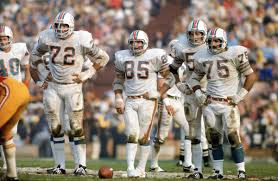
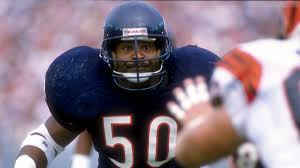
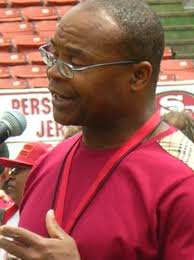
Pro Football Historian (PFH) is a blog page written by Flint Given. Pro Football Historian or PFH is a page to inform people on prior NFL events that people might not know about. Learning about teams from the 1920s or even the first few NFL World Championships in the 1930s fascinates me. It's these kinds of events that I want to discuss in this blog. Hopefully you are interested and will continue to check up on my blogs. Check out the website at https://profootballhistorian.lovable.app/
Tiaina Baul "Junior" Seau Jr. was an American professional football linebacker who played in the National Football League for 20 seasons, mostly with the San Diego Chargers. Known for his passionate play, he was a six-time first-team All-Pro, twelve-time Pro Bowl selection, and named to the NFL 1990s All-Decade Team. He was elected posthumously to the Pro Football Hall of Fame in 2015.
Originally from Oceanside, California, Seau played college football for the USC Trojans, earning All-American honors in 1989. He was selected by the Chargers with the fifth overall pick of the 1990 NFL draft. Seau played for the Chargers for 13 seasons and led them to Super Bowl XXIX before being traded to the Miami Dolphins where he spent three years, and spent his last four seasons with the New England Patriots. After his retirement, his No. 55 was retired by the Chargers and he was inducted into their Hall of Fame.
Seau died by suicide in 2012 at age 43. Later studies by the National Institutes of Health (NIH) concluded that Seau had chronic traumatic encephalopathy (CTE), a brain disease that has also been found in other deceased former NFL players. It is believed to be caused by repetitive head trauma, and can lead to conditions such as dementia, rage, and depression.
After three years as a Trojan, Seau entered the NFL draft after his junior season and was chosen in the first round of the 1990 NFL draft by Bobby Beathard's San Diego Chargers as the fifth overall draft pick. Seau quickly became one of the most popular players on the Chargers, receiving the nickname "Tasmanian Devil", after the wild antics of the cartoon character. He became the face of the Chargers franchise and a San Diego sports icon.
Seau started 15 of the 16 games he played in during his rookie season, and was named an alternate to the 1991 Pro Bowl after recording 85 tackles. In 1991, he picked up 129 tackles and seven sacks and was named to the 1992 Pro Bowl, the first of 12 consecutive Pro Bowls for Seau. In 1992, he was awarded the George Halas Trophy by the Newspaper Enterprise Association as the NFL's top defensive player, NFL Defensive Player of the Year by Football Digest, AFC Defensive Player of the Year by United Press International, and the NFL Players Association (NFLPA) AFC Linebacker of the Year. He also won the NFLPA award in 1993 and 1994.
He started no fewer than 13 games for the Chargers over each of the ensuing 11 seasons, registering a career-high 155 tackles in 1994, when he led his team to a championship appearance in Super Bowl XXIX. In one of the greatest games in his career, he recorded 16 tackles in the 1994 AFC Championship Game while playing with a pinched nerve in his neck in a 17–13 victory over the Pittsburgh Steelers. Despite San Diego's 1–15 record in 2000, the NFL Alumni Association named him their Linebacker of the Year. In 2002, his final year with the Chargers, he logged a then-career low 83 tackles and missed his final Pro Bowl due to an ankle injury.
On April 16, 2003, Seau was traded to the Miami Dolphins for a conditional draft choice. He started 15 games that season for the 10-6 Dolphins and was one of their standout defensive players. However, in 2004, a torn pectoral muscle limited Seau to eight games, 68 tackles, and one sack. He started five of the first seven games he played in with the Dolphins in 2005, but was placed on injured reserve on November 24 with an achilles tendon injury. On March 6, 2006, Seau was released by the Dolphins.
Seau announced his retirement at an emotional press conference on August 14, 2006. He called it his "graduation" because he was not going to stop working. He contended that he was merely moving on to the next phase of his life.
Seau returned to football just four days later, signing with the New England Patriots. He started 10 of the first 11 games for the Patriots, recording 69 tackles before breaking his right arm while making a tackle in a game against the Chicago Bears. He was placed on injured reserve on November 27.
On May 21, 2007, Seau re-signed with the Patriots for the 2007 season. In September 2007, Seau was named one of the Patriots' seven captains. He was a prominent contributor to the Patriots undefeated regular season that year. He started four of the 16 games he played in for the Patriots in 2007, and then started the Patriots' two playoff games before Super Bowl XLII against the New York Giants. New England's undefeated streak ended with a Super Bowl loss to the Giants.
After the Patriots had a number of injuries late in the 2008 season, they re-signed Seau. He started two of four games he played. On December 22, 2008, a fan was arrested for trespassing and assault and battery for tackling Seau as he stood on the New England sideline during a home game against the Arizona Cardinals. Seau stated that he did not feel threatened by the fan; he thought that the fan was happy and excited, and just got carried away.
On October 7, 2009, NFL Network reported that the Patriots had an "agreement in principle" with Seau for a fourth one-year deal; Seau took physicals and worked out with the team. He officially signed on October 13. He was active for 7 games for the Patriots in 2009, recording 14 tackles as a reserve linebacker.
Seau announced his intention to retire permanently on the television program Inside the NFL on January 13, 2010.
His restaurant at Westfield Mission Valley in Mission Valley, California—Seau's The Restaurant, which opened in 1996—was his most successful business venture. Seau also had a clothing line, Say Ow Gear. The restaurant was closed on May 16, 2012, just two weeks after his death; the trustees of his estate explained that "Without Seau's charismatic leadership, it was felt that the future profitability of the restaurant could be in question."
Sports Jobs with Junior Seau premiered on December 2, 2009, on Versus. The show followed Seau as he did the jobs that make sports work. Ten episodes aired through January 27, 2010.
Seau was actively involved with community work through Samoan "sister city" projects within San Diego County.
In 1992, Seau created the Junior Seau Foundation with the mission to educate and empower young people through the support of child abuse prevention, drug and alcohol awareness, recreational opportunities, anti-juvenile delinquency efforts and complementary educational programs.
The 20th Anniversary Junior Seau Celebrity Golf Classic was held March 10–12, 2012, at the La Costa Resort and Spa.
The Foundation gave out an annual award to the individual who exemplifies the mission statement of the Junior Seau Foundation.
In 1989, Seau's older son, Tyler, was born to Seau's high school sweetheart, Melissa Waldrop. Seau broke up with Waldrop when Tyler was 13 months old. He married Gina Deboer in 1991. The couple had three children together, a daughter and two sons, before divorcing in 2002. Seau's son Jake attended Duke University where he played lacrosse. In 2019, Jake signed with the Dallas Rattlers of Major League Lacrosse.
Seau sustained minor injuries in October 2010 when his SUV plunged down a 100-foot cliff in Carlsbad, California, only hours after he was arrested for domestic violence following an incident reported to the police by his girlfriend at their home in nearby Oceanside. Seau stated that he fell asleep at the wheel, and was never charged in the domestic incident.
Seau's nephew, Ian Seau, was also a football player. Another nephew, Micah Seau, played football at San Diego State. His cousin was Pulu Poumele.
On May 2, 2012, Seau was found dead with a gunshot wound to the chest at his home in Oceanside. Authorities ruled his death a suicide. He left no suicide note, but did leave a piece of paper in the kitchen of his home with lyrics he scribbled from his favorite country song, "Who I Ain't." The song, co-written by his friend Jamie Paulin, describes a man who regrets the person he has become.
Seau's death recalled the 2011 suicide of former NFL player Dave Duerson, who shot himself in the chest and left a suicide note requesting that his brain be studied for brain trauma. Seau had no prior reported history of concussions, but his ex-wife said he did sustain concussions during his career. "He always bounced back and kept on playing," Gina Seau said. "He's a warrior. That didn't stop him." Seau had insomnia for at least the last seven years of his life, and he was taking zolpidem (Ambien), a prescription drug commonly prescribed for sleep disorders.
Seau's autopsy report released later in August 2012 by the San Diego County medical examiner indicated that his body contained no illegal drugs or alcohol, but did show traces of zolpidem. No apparent signs of brain damage were found, nor was he determined to have exhibited mood changes and irritability often apparent with concussions and brain damage.
There was speculation that Seau suffered brain damage due to CTE, a condition traced to concussion-related brain damage with depression as a symptom, as dozens of deceased former NFL players were found to have CTE. Seau's family donated his brain tissue to the National Institute of Neurological Disorders and Stroke, part of the NIH; other candidates included the Center for the Study of Traumatic Encephalopathy and the Brain Injury Research Institute. Citing the Seau family's right to privacy, NIH did not intend to release the findings.
On January 10, 2013, Seau's family released the NIH's findings that his brain showed definitive signs of CTE. Russell Lonser of the NIH coordinated with three independent neuropathologists, giving them unidentified tissue from three brains, including Seau's. The three experts - along with two government researchers - arrived at the same conclusion. The NIH said the findings on Seau were similar to autopsies of people "with exposure to repetitive head injuries."
On January 23, 2013, Seau's family sued the NFL over the brain injuries he had over his career. In 2014, his family continued to pursue the lawsuit while opting out of the NFL concussion lawsuit's proposed settlement, which was initially funded with $765 million. The family reached a confidential settlement with the league in 2018. The Seaus' attorney said that they were "pleased" with the resolution.
Seau is one of at least 345 NFL players to be diagnosed after death with chronic traumatic encephalopathy (CTE), which is caused by repeated hits to the head.
Seau was known for his passionate playing style, including a fist-pumping dance he performed after big plays. Rick Gosselin of The Dallas Morning News said Seau "probably was the most dynamic player of his era". NFL head coach Norv Turner, who coached Seau as well as faced him as an opponent, said, "The No. 1 thing about Junior was that he was such an explosive player he'd defeat one-on-one blocks and he was a great tackler."
Seau's quickness allowed him to freelance, which sometimes put him out of position. "People say he gambled a bit, but in reality, his insight led him to the ball ... Even when he was wrong, you had to account for him and that created problems for offensive coordinators. You'd better have somebody blocking him," said former NFL coach Tom Bass.
He was praised by teammates for his work ethic and leadership. He would play when hurt, and often refused to leave games. "He played the game the way it was meant to be played," said retired Denver Broncos quarterback John Elway. Bill Belichick, his coach at New England, praised Seau's leadership and willingness to accept any role.
He was named to the Chargers 40th and 50th anniversary teams, which honor the top players and coaches in the team's history. He was inducted into the San Diego Chargers Hall of Fame on November 27, 2011, as part of Alumni Day ceremonies at a sold-out game against the Denver Broncos at Qualcomm Stadium. Fellow Chargers Hall of Famer Dan Fouts introduced Seau before a crowd of nearly 71,000.
Chargers President Dean Spanos honored Seau after his death as "...An icon in our community. He transcended the game. He wasn't just a football player, he was so much more." The Chargers retired his No. 55 during his public memorial. The Junior Seau Pier Amphitheatre and Junior Seau Beach Community Center were renamed posthumously in his honor by the city of Oceanside in July 2012.
On September 1, 2012, during the University of Southern California's home opener, Seau was honored by the team. On September 16, 2012, the Chargers retired Seau's number 55 during a ceremony at the 2012 regular season home opener against the Tennessee Titans. The San Diego Hall of Champions inducted Seau into the Breitbard Hall of Fame on February 25, 2013, forgoing their normal two-year waiting period after an athlete's retirement or death.
Seau became eligible for election into the Pro Football Hall of Fame in 2015. His eligibility was not accelerated due to his death from the standard five-year waiting period after a player's retirement. On January 31, 2015, Seau was elected to the Pro Football Hall of Fame. He wanted his daughter, Sydney, to introduce him if he were ever to be inducted. However, the Hall of Fame cited a five-year policy of not allowing speeches for deceased inductees, denying Sydney the opportunity to introduce her father.
Instead, she was allowed to speak onstage for three minutes uninterrupted on the NFL Network, and delivered a pared down version of her full speech, which The New York Times published. Seau is the first player of Polynesian and Samoan descent to be inducted into the Hall of Fame.
On September 21, 2018, ESPN released Seau, a 30 for 30 documentary that highlighted Seau's career, as well as the effects of his injuries on his life, his family, and his post-football endeavors.
On August 5, 2023, Junior Seau's linebacker teammate in Miami for three years, Zach Thomas, paid tribute to him at the end of his Pro Football Hall of Fame speech: "But there's one person whose name I've yet to mention. His poster hung on my wall in college, and he was everything I wanted to be as a football player. He was my inspiration, and he became my teammate and friend. Though he's not here physically, he's here in spirit and in a bust in that building behind me. I'm truly honored to join him. Junior Seau, love ya buddy."
Sources
Williamson, Bill (May 2, 2012). "Junior Seau was San Diego". ESPN. Archived from the original on May 5, 2012.
Acee, Kevin (May 2, 2012). "Seau's feats on and off field spoke for themselves". San Diego Union-Tribune S. Archived from the original on February 5, 2013.
Alvarez, Elizabeth. "New Junior Seau mural unveiled in Oceanside". www.msn.com. Retrieved January 17, 2025.
"Micah Seau, nephew of Hall of Fame linebacker Junior Seau, charged with murder". ABC 10 News San Diego KGTV. June 5, 2024. Retrieved January 17, 2025.
Fainaru-Wada, Mark; Avila, Jim; Fainaru, Steve (January 9, 2013). "Doctors: Junior Seau's brain had CTE". ESPN. Archived from the original on January 13, 2013.
Einbinder, Nicole (September 21, 2017). "Aaron Hernandez Found To Have Had "Severe" Case of CTE". Frontline. Public Broadcasting Station. Archived from the original on September 26, 2017. Retrieved September 21, 2017.
"Junior Seau". USC Legends. Archived from the original on May 6, 2012. Retrieved May 2, 2012.
Lieber, Jill (September 6, 1993), "Hard Charger", Sports Illustrated, vol. 79, no. 10, pp. 76–85, archived from the original on July 10, 2017, retrieved December 10, 2017
"Junior Seau". New England Patriots. Archived from the original on December 18, 2009. Retrieved January 17, 2010.
Miller, Jeffrey (January 7, 1987). "Junior Seau Helps Turn Team Around". Los Angeles Times. Archived from the original on August 31, 2024. Retrieved January 17, 2011.
"A Celebration of Life for Junior Seau" (PDF). chargers.com. San Diego Chargers. May 11, 2012. Archived from the original (PDF) on March 13, 2013.
"1990 NFL Draft Listing". Pro-Football-Reference.com. Archived from the original on April 12, 2019. Retrieved May 24, 2023.
Judge, Clark (September 18, 1992). "Junior's Achievement". San Diego Union-Tribune. To teammates, he is "The Tasmanian Devil," named after the frenzied cartoon character.
Henne, Ricky (January 31, 2015). "Junior Seau Elected to Pro Football Hall of Fame". Chargers.com. Archived from the original on February 4, 2015.
"Junior Seau tops NFL on defense". Okmulgee Daily Times. NEA. January 24, 1993. p. 7. Archived from the original on July 9, 2021. Retrieved June 30, 2021 – via Newspapers.com.
Groeschen, Tom (September 8, 1994). "Bengals just have to take medicine: 'Say Ow'". The Cincinnati Enquirer. p. C4. Archived from the original on August 31, 2024. Retrieved June 8, 2022 – via Newspapers.com.
Carroll, Bob; Gershman, Michael; Neft, David; Thorn, John (1999). Total Football: The Official Encyclopedia of the National Football League. HarperCollins Publishers. p. 389. ISBN 9780062701749. Retrieved June 6, 2022 – via Internet Archive.
"Football playoff on the way, Schultz tells NCAA forum". The San Diego Union-Tribune. February 17, 1993. p. D-2. Archived from the original on August 31, 2024. Retrieved June 16, 2022. The Chargers' Junior Seau was selected AFC linebacker of the year in a vote of the NFL Players Association
Judge, Clark (February 9, 1994). "Chargers' Seau to become NFL's richest linebacker". The San Diego Union-Tribune. p. D-1. Archived from the original on August 31, 2024. Retrieved June 15, 2022. Nevertheless, Seau led the team in tackles for the third straight season; led it in tackles for losses; was named the club's co-MVP, along with defensive end Leslie O'Neal; was named a Pro Bowl starter for the third straight year; was named the NFL Players Association AFC Linebacker of the Year and was picked to the All-Pro team.
Kernan, Kevin (May 31, 1995). "Gregory to join scouting department". The San Diego Union-Tribune. p. D-8. Archived from the original on August 31, 2024. Retrieved June 16, 2022. Junior Seau was named the linebacker of the year yesterday, one of four Chargers to win Mackey Awards. The awards are presented by the NFLPA to the year's outstanding players based on statistical achievements of votes among their peers as most valuable at their position.
Jose E. Torres (May 3, 2016). "Chargers LB Junior Seau and CTE". Yahoo Sports. Retrieved June 15, 2022.
"Police: Junior Seau found dead at home". Sports Illustrated. May 2, 2012. Archived from the original on May 5, 2012.
Trotter, Jim (January 28, 2001). "NFL alumni honor Seau as the top LB". The San Diego Union-Tribune. p. C-8. Archived from the original on August 31, 2024. Retrieved June 16, 2022. The association recognized one player at each position, and the selection of Seau spoke volumes considering the Chargers finished 1-15 this season.
"JUNIOR SEAU ELECTED TO PRO FOOTBALL HALL OF FAME". East County Magazine. February 1, 2015. Archived from the original on April 25, 2023. Retrieved June 15, 2022.
Walker, James (May 2, 2012). "Seau made impact in Miami, New England". ESPN.com. Archived from the original on May 4, 2012.
"Hall of a career? Junior Seau retires after 13 seasons". ESPN.com. Associated Press. August 15, 2006. Archived from the original on August 31, 2024. Retrieved November 11, 2009.
Wilson, Bernie (August 18, 2006). "Seau signs with New England". Associated Press. Archived from the original on August 31, 2024. Retrieved May 2, 2012.
Golen, Jimmy (January 22, 2008). "Seau going back to Super Bowl after 13 years". Associated Press. Retrieved May 2, 2012.
Reiss, Mike (May 2, 2012). "Reflecting on Seau's time with Pats". ESPNBoston.com. Archived from the original on May 5, 2012.
Perloff, Andrew (December 24, 2008). "Seau Comments on Fan Tackle, His Future". Sports Illustrated. Archived from the original on February 3, 2009. Retrieved November 11, 2009.
Davis, Nate (October 8, 2009). "Patriots have 'agreement in principle' with LB Junior Seau". USA Today. Archived from the original on April 5, 2012. Retrieved November 11, 2009.
Rapoport, Ian (October 13, 2009). "Linebacker Junior Seau officially signs with the Patriots, Versus announces". Boston Herald. Archived from the original on January 24, 2010. Retrieved November 11, 2009.
"Junior Seau 2009 Game Log". Pro-Football-Reference.com. Retrieved September 22, 2025.
Reiss, Mike (January 13, 2010). "Junior Seau plans to retire". ESPNBoston.com. Archived from the original on December 24, 2018. Retrieved January 13, 2010.
"Junior Seau Stats". ESPN Internet Ventures. Archived from the original on August 31, 2024. Retrieved March 24, 2014.
2002 San Diego Chargers Media Guide. Pg. 128.
2008 New England Patriots Media Guide. Pg. 247.
Baker, Debbie; Davis, Kristina; Repard, Pauline (May 2, 2012). "Junior Seau, hometown icon, takes his life". U-T San Diego. Archived from the original on January 16, 2013.
Davis, Kristina; Wilkens, John (May 2, 2012). "San Diego mourns loss of an icon". U-T San Diego. Archived from the original on February 5, 2013.
"Junior Seau's restaurant, popular with sports fans, closes". Los Angeles Times. May 16, 2012. Archived from the original on May 20, 2012. Retrieved May 23, 2012.
"Junior Seau Foundation". www.radyfoundation.org. Archived from the original on December 7, 2021. Retrieved January 23, 2021.
Lieber Steeg, Jill (October 14, 2012). "Junior Seau: Song of sorrow". U-T San Diego. Archived from the original on January 16, 2013.
"40 Tyler Seau". Delta State University Athletics. 2010. Archived from the original on September 24, 2015. Retrieved January 9, 2013.
Lieber Steeg, Jill (October 21, 2012). "Junior Seau: Bitter endgame". San Diego Union-Tribune. Archived from the original on May 18, 2017. Retrieved January 9, 2013.
Trotter, Jim (October 27, 2003). "Seau says his career has been rejuvenated with trade to Miami, but he'd rather be here". San Diego Union-Tribune. Archived from the original on February 10, 2004. Retrieved January 17, 2011.
"Junior Seau: Biography". TV Guide. Archived from the original on June 17, 2011. Retrieved January 17, 2011.
"2019 Men's Lacrosse Roster: Jake Seau". Duke Athletics. 2019. Archived from the original on August 31, 2024. Retrieved September 11, 2019.
Shore, Phil (June 20, 2019). "Dallas Rattlers Looking to Build Chemistry Amid Slow Start". US Lacrosse Magazine. Archived from the original on November 11, 2020. Retrieved November 11, 2020.
Martinez, Michael; Pratley, Sara; Botelho, Gerg (October 18, 2010). "Former NFL star Junior Seau drives car off cliff, police say". CNN. Archived from the original on March 20, 2012.
"Ian Seau". Yahoo! Sports. Archived from the original on November 13, 2014.
Loh, Stefanie (August 29, 2014). "Aztecs' Micah Seau excited for 1st start". San Diego Union-Tribune. Archived from the original on February 12, 2019.
Maffei, John (June 4, 2016). "Football veteran Pulu Poumele dies". San Diego Union-Tribune. Archived from the original on April 28, 2019. Retrieved June 11, 2016.
Duke, Alan; Chelsea J. Carter (May 3, 2012). "Junior Seau's death classified as a suicide". CNN.com. Archived from the original on May 3, 2012. Retrieved May 3, 2012.
Lieber Steeg, Jill (August 21, 2012). "Seau autoposy: No illicit drugs or brain damage". U-T San Diego. Archived from the original on May 1, 2015.
Lendon, Brad (August 21, 2012). "Autopsy: No apparent damage to Seau's brain". CNN. Archived from the original on August 24, 2012. Retrieved August 22, 2012.
Smith, Michael David, "Boston researchers request Junior Seau’s brain" Archived May 19, 2018, at the Wayback Machine. NBCSports Pro Football Talk, May 3, 2012. Retrieved May 3, 2012.
Lopresti, Mike (May 2, 2012). "Is Junior Seau death part of a bigger problem?". USA Today. Archived from the original on May 12, 2012.
"Ex-Patriots LB Ted Johnson speaks". ESPN.com. Associated Press. May 18, 2012. Archived from the original on May 23, 2012.
"Junior Seau death raises questions". ESPN.com. May 3, 2012. Archived from the original on May 6, 2012.
"Junior Seau's death ruled a suicide". ESPN.com. Associated Press. May 3, 2012. Archived from the original on May 4, 2012.
Wilson, Bernie; Flaccus, Gillian (May 3, 2012). "Junior Seau latest in a series of NFL veterans' deaths". The Seattle Times. Associated Press. Archived from the original on May 8, 2012.
Moore, David Leon; Brady, Erik (May 31, 2012). "Junior Seau's final days plagued by sleepless nights". USA Today. Archived from the original on May 31, 2012.
Mihocoes, Gary (August 20, 2012). "Seau autopsy finds sleep-aid, no drugs of abuse". USA Today.
Perry, Terry (August 21, 2012). "National Institutes of Health to study Junior Seau brain tissue". Los Angeles Times. Archived from the original on August 22, 2012. Retrieved August 22, 2012.
"Junior Seau's autopsy shows no illegal drugs, alcohol". NFL.com (The Associated Press). August 20, 2012. Archived from the original on April 29, 2023. Retrieved June 4, 2024.
"Seau family revisiting brain decision". ESPN.com. May 6, 2012. Archived from the original on May 6, 2012.
Alan Duke; Chelsea J. Carter (May 4, 2012). "Doctors to examine Junior Seau's brain". CNN. Archived from the original on May 4, 2012. Retrieved May 4, 2012.
Given, Karen (May 12, 2012). "Researchers Compete For Athletes' Brains". wbur.org. Archived from the original on May 15, 2012.
Farmer, Sam (May 3, 2012). "Family of Junior Seau will allow his brain to be studied". Los Angeles Times. Archived from the original on May 5, 2012.
Fainaru-Wada, Mark; Avila, Jim; Fainaru, Steve (January 10, 2013). "Doctors: Junior Seau's brain had CTE". ESPN.com. Archived from the original on March 30, 2017. Retrieved January 10, 2013.
Lavelle, Janet (July 12, 2012). "Seau brain tissue donated for research". U-T San Diego. Archived from the original on May 1, 2015.
"Family Makes Decision Regarding Seau's Brain". 10News.com. February 10, 2012. Archived from the original on September 6, 2012.
Pilon, Mary (July 12, 2012). "Seau Brain Tissue Is Donated to National Institute for Study". New York Times. Archived from the original on August 31, 2012.
Avila, Jim (January 10, 2013). "Junior Seau Diagnosed With Disease Caused by Hits to Head: Exclusive". abcnews.com. Archived from the original on August 31, 2024. Retrieved January 10, 2013.
"Seau's family sues NFL over brain injuries - Yahoo! Sports". sports.yahoo.com. Archived from the original on January 26, 2013.
Busbee, Jay (September 3, 2014). "Junior Seau's family opts out of NFL concussion settlement". yahoo.com. Archived from the original on August 31, 2024. Retrieved September 8, 2014.
Figueroa, Teri (October 5, 2018). "Family of Junior Seau reaches settlement with NFL in wrongful death suit". The San Diego Union-Tribune. Archived from the original on March 1, 2022. Retrieved March 1, 2022.
"The driving force behind Chronic Traumatic Encephalopathy (CTE)". Concussion Legacy Foundation. Archived from the original on July 2, 2023. Retrieved July 2, 2023.
Ken Belson and Benjamin Mueller (June 20, 2023). "Collective Force of Head Hits, Not Just the Number of Them, Increases Odds of C.T.E. The largest study of chronic traumatic encephalopathy to date found that the cumulative force of head hits absorbed by players in their careers is the best predictor of future brain disease". The New York Times. Archived from the original on June 30, 2023. Retrieved July 2, 2023.
Canepa, Nick (May 3, 2012). "Celebrate Seau as a player". U-T San Diego. Archived from the original on February 5, 2013.
"Junior Seau Inducted Into Chargers Hall Of Fame". 10News.com. November 27, 2011. Archived from the original on May 13, 2012. Retrieved November 29, 2011.
"Junior Seau's No. 55 officially retired by San Diego Chargers". NFL.com. Archived from the original on August 31, 2024. Retrieved June 4, 2024.
Huard, Ray. "Council names beach amphitheater, rec center for Seau". Archived from the original on May 19, 2012.
Horn, Jonathan. "Oceanside beachfront landmarks named for Seau". Archived from the original on January 16, 2013. Retrieved July 8, 2012.
"Hall of Champions to induct Seau on Feb. 25". U-T San Diego. Associated Press. September 17, 2012. Archived from the original on May 1, 2015. Retrieved September 25, 2012. The board of directors at the San Diego Hall of Champions has decided to forego the normal voting process and induct Junior Seau into the Breitbard Hall of Fame on Feb. 25.
Rosenthal, Gregg (May 2, 2012). "Junior Seau will be eligible for Hall of Fame in 2015". NFL.com. Archived from the original on May 31, 2012.
Gantt, Darin (January 31, 2015). "Junior Seau leads a strong eight-man class into the Hall of Fame". NBC Sports. Archived from the original on March 19, 2024. Retrieved March 19, 2024.
Belson, Ken (July 24, 2015). "Junior Seau's Family Will Not Be Allowed to Speak at His Hall of Fame Induction". The New York Times. Archived from the original on July 25, 2015.
Sandomir, Larry (August 9, 2015). "After Sydney Seau, Football Hall of Fame Policy Will Be Tested Again". The New York Times. Retrieved August 10, 2015.
Seau, Sydney (August 8, 2015). "The Hall of Fame Speech Junior Seau's Daughter Couldn't Give". The New York Times. Archived from the original on August 10, 2015. Retrieved August 10, 2015.
Feldman, Jacob (September 20, 2018). "Despite Trying To Mend Fences With the NFL, ESPN Is Airing a '30-For-30' on Junior Seau". Sports Illustrated. Archived from the original on April 2, 2024. Retrieved April 2, 2024.
Busbee, Jay (September 19, 2018). "'Seau,' new documentary, traces an NFL tragedy". Yahoo Sports. Archived from the original on September 21, 2018. Retrieved September 21, 2018.
Derrick Dewan Brooks is an American former professional football player who was a linebacker for his entire 14-year career in the National Football League with the Tampa Bay Buccaneers. Brooks played college football for the Florida State Seminoles, earning consensus All-American honors twice. He was selected by the Buccaneers in the first round of the 1995 NFL draft. An 11-time Pro Bowl selection and five-time first-team All-Pro, Brooks was the NFL Defensive Player of the Year in 2002 en route to winning the franchise's first Super Bowl title in Super Bowl XXXVII. He was inducted to the Pro Football Hall of Fame in 2014 and the College Football Hall of Fame in 2016.
Following his retirement, Brooks served as co-owner and president of the Tampa Bay Storm in the Arena Football League (AFL) from 2011 to 2017. In 2025, he became the chief operating officer for the South Florida Bulls athletics program.
The Tampa Bay Buccaneers selected Brooks in the first round (28th overall) of the 1995 NFL draft. The Buccaneers traded both of their second-round picks (46th overall and 63rd overall) to the Dallas Cowboys for their first-round pick (28th overall) and used the pick to draft Brooks. Brooks was the second linebacker drafted in 1995 NFL Draft, behind Washington State's Mark Fields (13th overall).
Brooks played 14 years for the Buccaneers and is widely considered one of the best players in franchise history and one of the best linebackers in NFL history. From 1995 to 2008, Brooks started 221 of 224 games, recording 1,698 tackles, 13.5 sacks, 25 interceptions, and six touchdowns (tied for the most in NFL history by a linebacker with Bobby Bell). He was selected to the Pro Bowl 11 times, including 10 straight from 1997 to 2006, was an All-Pro nine times, was the AP NFL Defensive Player of the Year in 2002, and led the team to the franchise's first Super Bowl win in Super Bowl XXXVII.
As a rookie in 1995, Brooks started 13 of 16 games. He finished the season with 78 tackles with a sack and earned first-team all-rookie honors from Pro Football Weekly and Pro Football Writers Association. During his second season 1996, he started all 16 games and finished with a team-leading 132 tackles and his first career interception. In 1997, Brooks earned his first trip to the Pro Bowl after recording 144 tackles, 1.5 sacks, and two interceptions in 16 games. In 1998, Brooks had another Pro Bowl season after recording 156 tackles and an interception.
In 1999, Brooks made the Pro Bowl for the third time and was a first-team All-Pro selection for the first time in his career. For the season, he had 153 tackles, two sacks, and four interceptions. In 2000, Brooks earned his fourth consecutive trip to the Pro Bowl and his second consecutive first-team All-Pro selection. He finished the season with 140 tackles, a sack, and had his first career touchdown on a 34-yard interception from Minnesota Vikings quarterback Daunte Culpepper. Brooks was also, along with Jim Flanigan of the Chicago Bears, the winner of the Walter Payton Man of the Year Award, given to a National Football League player for his community service activities as well as his excellence on the field. Brooks made his fifth consecutive Pro Bowl in 2001 after recording 112 tackles and three interceptions.
Brooks' best season came in 2002. During that year he was named NFL Defensive Player of the Year by the Associated Press and helped the Buccaneers win the franchise's first Super Bowl. He also made his sixth consecutive Pro Bowl and was a first-team All-Pro selection for the third time. For the season he had 117 tackles, a sack, five interceptions, and returned an NFL record, for a linebacker, four touchdowns (one off a fumble and three off interceptions). During the Buccaneers 48–21 victory over the Oakland Raiders in Super Bowl XXXVII, he returned an interception off of Raiders quarterback Rich Gannon 44 yards for the clinching touchdown.
In 2003, Brooks broke Lee Roy Selmon's team record for most consecutive Pro Bowl appearances with seven. He finished the season with 101 tackles, a sack, two interceptions, and returned an interception for a touchdown. In 2004, Brooks made his eighth consecutive Pro Bowl and fifth- first-team All-Pro selection after recording 137 tackles, three sacks, and an interception. In 2005, Brooks made his ninth consecutive Pro Bowl and earned his sixth first-team All-Pro selection. He finished the season with 125 tackles, three sacks, and an interception.
In Brooks' 10th consecutive Pro Bowl in 2006, he was named the MVP after returning a Trent Green interception 59 yards for a touchdown to secure the victory for the NFC. During the regular season he had 121 tackles, three interceptions and a touchdown. In 2007, Brooks had 109 tackles and was not voted to the Pro Bowl for the first time since 1996. In Brooks' last year with the Buccaneers in 2008, he recorded 73 tackles and an interception and was selected to his 11th Pro Bowl. The 11 Pro Bowls are tied for second-most by a linebacker in NFL history.
On February 25, 2009, the Buccaneers released Brooks. He was one of five veterans that the Bucs released on that day. The others were wide receivers Joey Galloway and Ike Hilliard, running back Warrick Dunn and linebacker Cato June. The Bucs had previously fired Head Coach Jon Gruden and General Manager Bruce Allen and were looking to build a younger team under the likes of Raheem Morris and Mark Dominik. Brooks never missed a game in his 14 years in Tampa Bay, a total of 224 consecutive games. He was the starting weakside linebacker for the last 208 of those games, an NFL record for that position and the second-longest consecutive start streak for any linebacker in NFL history.
After spending all of the 2009 season as a free agent, Brooks officially announced his retirement on August 11, 2010.
On January 10, 2014, Brooks was named among the 15 modern-era Pro Football Hall of Fame finalists. Former Buccaneers safety John Lynch (who was Brooks' teammate from 1995 to 2003) and former Buccaneers head coach Tony Dungy (who coached Brooks from 1996 to 2001) were also finalists. On February 1, Brooks was elected to the Hall of Fame in his first year of eligibility. He is the third Hall of Famer to have earned his credentials primarily as a Buc, the others being Lee Roy Selmon and Warren Sapp (Brooks' teammate from 1995 to 2003).
Brooks previously was a football analyst for ESPN and co-host of The Red Zone on Sirius NFL Radio and as an analyst on ESPN First Take.
In 2011, Brooks became a part owner and the team president for the Tampa Bay Storm of the Arena Football League. The team folded in December 2017.
Derrick Brooks, with Anquan Boldin
Since 2014, Brooks has served as a jointly-appointed appeals officer for the NFL and NFL Players Association, charged with reviewing discipline for in-game misconduct.
On October 30, 2025, the South Florida Bulls announced Brooks' appointment as chief operating officer for the school's athletic program.
Brooks is married and has four children. Brooks is a Christian.
Brooks is the founder of Derrick Brooks Charities. He has taken local youth across the nation and South Africa with the objective of presenting a first-hand experience, or a "mobile classroom," this group is known as the Brooks Bunch. Brooks also headed the founding of the Brooks-DeBartolo Collegiate High School in Tampa with fellow Pro Football Hall of Fame member Edward J. DeBartolo Jr.
Brooks is well known for his charity work and his advocacy of the importance of education. He was the co-recipient of the 2000 Walter Payton Man of the Year Award and was named to the Florida State University Board of Trustees in 2003 by Governor Jeb Bush.
Sources: "Ex-Buc Derrick Brooks officially retires from NFL". Pnj.com. Retrieved June 27, 2013. FHSAA announces 33-member All-Century football team Archived December 27, 2009, at the Wayback Machine "Florida State to retire Derrick Brooks' jersey". Blogs.tampabay.com. Archived from the original on June 27, 2010. Retrieved June 27, 2013. Former FSU football phenom Derrick Brooks to have jersey retired Archived June 28, 2010, at the Wayback Machine "Florida State retires Derrick Brooks' jersey". Miami Herald. November 14, 2010. Retrieved December 18, 2010. "Derrick Brooks, Combine Results, OLB - Florida State". nflcombineresults.com. Retrieved September 15, 2018. "1995 NFL Draft Listing". Pro-Football-Reference.com. Retrieved March 31, 2023. Gary Shelton, Times Sports Columnist View all Articles. "Farewell, 55: Derrick Brooks was perhaps the greatest Buc ever". Tampabay.com. Archived from the original on October 12, 2012. Retrieved June 27, 2013. "Often-overlooked Brooks has spot reserved in Canton". ESPN. June 10, 2008. Retrieved June 27, 2013. Mayer, Larry (July 26, 2013). "Briggs adjusting to new role as defensive play-caller". Chicago Bears. Archived from the original on July 30, 2013. Retrieved July 26, 2013. Bell, Jarrett (January 11, 2010). "Derrick Brooks the perfect pick as the NFL's best OLB of 2000s". Usatoday.com. Retrieved June 27, 2013. Walter Payton NFL Man of the Year Award Archived October 7, 2007, at the Wayback Machine "Individual Records: Interceptions". Nfl.com. Retrieved June 27, 2013. "Super Bowl XXXVII Tampa Bay 48, Oakland 21". Nfl.com. January 27, 2003. Retrieved June 27, 2013. "Brooks Scores TD, Wins Pro Bowl MVP". Pewterreport.com. June 23, 2013. Archived from the original on February 27, 2012. Retrieved June 27, 2013. "Brooks, Dunn done in Tampa Bay". ESPN. February 25, 2009. Retrieved June 27, 2013. "Tampa Bay Buccaneers release Derrick Brooks, four others". Archived from the original on January 11, 2014. Retrieved January 11, 2014. "Brooks to Announce Retirement". Buccaneers.com. June 21, 2013. Archived from the original on March 22, 2012. Retrieved June 27, 2013. "Brooks, Dungy, Jones among Pro Hall finalists". ESPN.com. January 10, 2014. Retrieved June 21, 2019. "Derrick Brooks headlines HOF class". ESPN. February 1, 2014. "Derrick Brooks Stats". ESPN. ESPN Internet Ventures. Retrieved July 2, 2014. "Derrick Brooks Stats". Pro Football Reference. Retrieved June 20, 2023. "Ex-Tampa Bay Buccaneers LB Derrick Brooks joins ESPN2's First Take as NFL analyst". Blogs.tampabay.com. Archived from the original on September 26, 2009. Retrieved June 27, 2013. Rick Stroud (April 12, 2011). "Derrick Brooks to become Tampa Bay Storm president, part owner". Tampa Bay Times. Archived from the original on April 15, 2013. Retrieved November 15, 2012. "STORM TO SUSPEND OPERATIONS, EFFECTIVE IMMEDIATELY". tampabaystorm.com. December 21, 217. Archived from the original on December 22, 2017. Retrieved December 21, 2017. "Tampa Bay Buccaneers Legend Derrick Brooks to Serve as NFL Appeals Officer". Archived from the original on July 29, 2014. Retrieved July 29, 2014. "Derrick Brooks Joins USF Athletics as Chief Operating Officer". South Florida Bulls. October 30, 2025. Retrieved October 30, 2025. Honeycutt, Brett (June 30, 2014). "Closeup — Derrick Brooks". Sports Spectrum. Retrieved November 7, 2021.
Leslie Alan Richter was an American professional football player who was a linebacker for the Los Angeles Rams of National Football League. He also served as the head of operations for NASCAR and president of the Riverside International Raceway. Richter was twice a consensus All-American for the California Golden Bears. With the Rams, he played in eight Pro Bowls. He was inducted to the College Football Hall of Fame in 1982 and the Pro Football Hall of Fame in 2011.
At the University of California, Berkeley, Richter played guard and linebacker for the California Golden Bears. He was twice recognized as a consensus All-American and first-team All-Pacific Coast, in 1950 and 1951. He was valedictorian of his graduating class of 1952. After graduation, he served in the Korean War for the U.S. Army for two years. He was a first-round draft choice of the NFL's New York Yanks, the second pick overall, in the 1952 NFL draft. The Yanks folded before the 1952 season, and the Dallas Texans assumed the rights to Richter. They traded him to the Los Angeles Rams for eleven players, the second largest deal ever made for a single player.
During his nine years with the Rams, Richter did not miss a game, playing through various injuries including a broken cheekbone. He scored 193 points, which included a touchdown, 106 extra points, and 29 field goals. On defense, he intercepted 16 passes. His 24 field goals attempted during the 1955 season led the NFL. The Rams struggled during that time, winning six or more games four times in nine seasons. The high mark for the team was in 1955, when it reached the championship game and lost to the Cleveland Browns. Richter was selected to eight straight Pro Bowls, from 1954 to 1961, and was four times recognized as a first-team All-Pro. He played center for his final season, in 1962, taking over for injured starter Art Hunter.
After retiring from football, Richter was involved with auto racing in a variety of positions. He was Riverside International Raceway manager from 1959 to 1983, then vice-president of special projects for International Speedway Corporation, chairman of the board for the International Race of Champions, and senior vice president of operations for NASCAR.
Richter died on June 12, 2010, at age 79 of a brain aneurysm. As a lieutenant with the U.S. Army during the Korean War, Richter was buried at Riverside National Cemetery in Riverside, California. At the time of his death, Richter was working at the Auto Club Speedway, owned by ISC formally owned by Penske Racing that also owned Michigan International Speedway, Nazareth Speedway, Pikes Peak International Raceway and North Carolina Speedway in Rockingham, North Carolina
Richter was inducted into the College Football Hall of Fame in 1982. In 2011, he was posthumously elected as a senior candidate to the Pro Football Hall of Fame class of 2011 along with former Washington Redskins linebacker Chris Hanburger. The induction class also included Deion Sanders, Richard Dent, Marshall Faulk, Ed Sabol, Shannon Sharpe.
He was inducted in the West Coast Stock Car Hall of Fame as a member of its inaugural class in 2002.
He was inducted into the Motorsports Hall of Fame of America in 2009.
Peltz, Jim (June 13, 2010). "Les Richter dies at 79; ex-Ram guided auto racing's growth in Southern California". Los Angeles Times. Retrieved January 28, 2017.
Former Riverside Raceway boss Richter honored - Road Racing World, 3 February 2004
Les Richter at the Motorsports Hall of Fame of America
Christian G. Hanburger Jr. is an American former professional football player who was a linebacker in the National Football League. He played his entire 14-year career with the Washington Redskins, from 1965 through 1978, and was elected to the Pro Football Hall of Fame in 2011.
Hanburger was born on August 13, 1941, in Fort Bragg, North Carolina. His father was a colonel in the U.S. Army. He attended Hampton High School in Hampton, Virginia, where he was an all-state end. Hanburger enlisted in the Army eleven days after finishing high school, as he did not see himself going to college and did not wish to move to Alaska where his father had been re-stationed. He served two years. He had planned to pursue a career as an officer, but a serious eye-socket injury during a flag football game derailed that plan.
Hanburger was selected by the Redskins in the 18th round (245th overall) of the 1965 NFL draft. During his first training camp, he was encouraged by future Pro Football Hall of Fame linebacker Sam Huff, that he could make the team. By the sixth game of his rookie season he became a starter, and started four other games that year. By the following year, he was a full-time starter. He played the 1969 season under coaching legend Vince Lombardi, who died before the following season began. Future hall of fame coach George Allen took over in 1971 and headed the team, and Hanburger, through 1977.
As a professional, he was considered one of the best outside linebackers of his era and was elected to the Pro Bowl nine times during his career, the most in Washington Redskin history. Hanburger earned the nickname "The Hangman" due to his penchant for clotheslining tackles. From 1973 to 1977, he called the Redskins' defensive signals and acted as the defensive quarterback for head coach George Allen. Hanburger not only called defensive plays, but had over 100 audibles from which he could reset the defense before a play began. From his Army days, he was also nicknamed "The General".
Hanburger was a four-time first-team All-Pro. In 1972-73, the Associated Press (AP), Newspaper Enterprise Association (NEA) and Pro Football Weekly named him first-team All-Pro. In 1975, the AP named him first-team All-Pro, and the NEA and Professional Football Writers of America (FW) named him to their second-team. In 1976, the NEA named him first-team All-Pro.[19] The AP, NEA and United Press International (UPI) named him second-team All-Pro in 1969, as did the AP, NEA and FW in 1974. Additionally, he was either a Pro Bowler (1966-69, 1972-76) or an All-Conference selection every year from 1966 through 1976 with the exception of 1971—receiving post-season honors in 10 of 11 seasons in that span.
From 1971 to 1972, he and Jack Pardee, outside linebacker on the opposite side, formed a particularly effective tandem. Pardee had played for coach Allen in Los Angeles from 1966-70, before rejoining Allen in Washington for the 1971-72 seasons. When Pardee retired after the 1972 season, Hanburger took over as quarterback of Washington's defense.
In 1972, Hanburger was named the NFC Defensive Player of the Year by the Kansas City Committee of 101. He was third in the AP voting for defensive player of the year, behind Joe Greene and Nick Buoniconti. During the regular season, Hanburger had four interceptions (one returned for a touchdown), two fumble recoveries, and 3.5 quarterback sacks. That year, the Redskins won the NFC championship game of the NFL playoffs against the defending champion Dallas Cowboys, 26–3, when they limited them to 3 points, 96 rushing yards, and 73 net passing yards with Roger Staubach at quarterback, Hanburger getting a sack. Though their defense allowed only 14 points and 69 net passing yards, the Redskins lost Super Bowl VII to the undefeated Miami Dolphins.
Beginning with the 1968 season, Hanburger started 135 straight games, a streak that ended in 1977 after he underwent an appendicitis operation. Coach Allen described Hanburger's ensuing inability to play as the loss of the team's general. In the Redskins' season finale of that season, he recorded three sacks against the Los Angeles Rams in a 17–14 win. He played in 1978 to finish his 14-year career, all with Washington. In his career, he picked off 19 passes, recovered 17 fumbles, recorded 46 sacks and scored five touchdowns, two on interception returns and three from fumble recoveries.
Hanburger is a member of Washington's Ring of Fame, and has been named one of the 80 greatest Redskins players. In 2004, he was named to the Professional Football Researchers Association Hall of Very Good in the association's second HOVG class.
On August 25, 2010, Hanburger was nominated as a senior candidate for the Pro Football Hall of Fame Class of 2011 along with former Rams linebacker and kicker Les Richter. On February 5, 2011, Hanburger was officially inducted at the enshrinement ceremony where his bust, sculpted by Scott Myers, was unveiled.
After retiring, Hanburger owned an auto dealership.
Kendle, Jon (May 30, 2021). "Stories from the Hall of Fame Archive: 'Field general' reputation fit Chris Hanburger". Canton Repository. Retrieved March 7, 2025.
"Chris Hanburger". hampton.gov.
Doerschuk, Steve. "CHRIS HANBURGER: Finally in Hall of Fame after 27-year wait". Canton Repository. Archived from the original on February 1, 2023. Retrieved March 7, 2025.
Stevens, Hugh (October 19, 1963). "SL Meets, Gives Award In Action". The Daily Tar Heel (Chapel Hill, North Carolina). p. 1.
"No. 6: Chris Hanburger". northcarolina.rivals.com. June 9, 2022. Retrieved March 7, 2025.
"1963 Atlantic Coast Conference Year Summary". College Football at Sports-Reference.com. Retrieved March 7, 2025.
"Ken Willard College Stats, School, Draft, Gamelog, Splits". College Football at Sports-Reference.com. Retrieved March 7, 2025.
Nicholas Anthony Buoniconti was an American professional football player who was a middle linebacker in the American Football League (AFL) and National Football League. He played college football for the Notre Dame Fighting Irish. Buoniconti played professionally for the Boston Patriots and Miami Dolphins, winning two Super Bowls with the Dolphins. He was inducted into the Pro Football Hall of Fame in 2001.
Nicholas Buoniconti was born to Nicholas Anthony Buoniconti Sr. and Pasqualina "Patsy" Mercolino in Springfield, Massachusetts. The couple ran a family bakery in the predominantly Italian South End of the city called Mercolino's Italian Bakery (closed in its 99th year around September 2017). The 3rd generation family bakery was located at: 1011 East Columbus Ave., Springfield, MA, 01105. They were known for their delicious baked Italian breads, loafs, etc. Nick was raised Roman Catholic and played football for Cathedral High School, where a plaque honoring him as a "Hometown Hall of Famer" was unveiled in 2012.
Nicholas Buoniconti graduated from Notre Dame, and was drafted by the American Football League's Patriots in the 13th round of the 1962 AFL draft.
In 1985, his son Marc suffered a spinal cord injury making a tackle for The Citadel, rendering him a quadriplegic. Nick became the public face of the group that founded the Miami Project to Cure Paralysis, now one of the world's leading neurological research centers.
Nick was married twice, and had three children by his first marriage.
As a tackle, Nicholas Buoniconti was the captain of the 1961 Notre Dame football team, but NFL scouts considered him too small to play pro football. Drafted in the 13th round by the Boston Patriots in the 1962 American Football League college draft and switched to linebacker, Nicholas Buoniconti made an immediate impact, as Nick was named the team's rookie of the year. The following year, Nick helped Boston capture the 1963 AFL Eastern Division title. With Boston, Nick appeared in five AFL All-Star Games, and recorded 24 interceptions, which is still the seventh-most in team history. Nick was named 2nd team All-AFL in 1963 and the following season began a run of five consensus All-AFL seasons in the following six seasons, missing only 1968 when Nick was named second-team All-AFL. Buoniconti is a member of the Patriots All-1960s (AFL) Team and the AFL All-Time Team.
Nick was traded to the AFL's Miami Dolphins in 1969. Nick continued to play well with the Dolphins, in 1969–1974 and 1976, and made the AFL All-Star team in 1969 and the NFL Pro Bowl in 1972 and 1973, when Nick led the Dolphins to Super Bowl wins. Buoniconti was also named All-AFC in 1972.
His leadership made him a cornerstone of the Dolphins' defense. During his years there, the team advanced to three consecutive Super Bowl appearances under Don Shula, the second of which was the team's 1972 undefeated season. In 1973, Nick recorded a then-team record 162 tackles (91 unassisted). Nick was named to the AFC-NFC Pro Bowl in 1972 and 1973.
Buoniconti ended his career with an unofficial 24 sacks, 18 with the Patriots and six while with the Dolphins. His 32 career interceptions rank him third all-time among NFL linebackers. His interception of Billy Kilmer late in the second quarter of Super Bowl VII set up Miami's second touchdown, which proved to be the clincher in the Dolphins' 14–7 victory over the Washington Redskins to complete the 17–0 season.
He was named the Dolphins' Most Valuable Player three times (1969, 1970, 1973). In 1990, Nick was voted as a linebacker on the Dolphins' Silver Anniversary All-Time team. On November 18, 1991, Nick was enshrined on the Miami Dolphin's Honor Roll at Hard Rock Stadium.
Buoniconti earned a J.D. degree from Suffolk University Law School during his years with the Patriots. He was a practicing attorney for a short time. As an agent, he represented some 30 professional athletes, including baseball players Bucky Dent and Andre Dawson. He was also president of the United States Tobacco Company during the late 1970s and early 1980s. Buoniconti was a leading critic of studies which showed that smokeless tobacco caused cancer of the mouth as well as other types of cancer.
In a televised interview on the Comedy Channel toward the end of 1990, when asked his reaction to the last two undefeated teams of the season suffering losses the same Sunday, Buoniconti, indicating his cheerful countenance, told Night After Night's Allan Havey, "You know, I think this smile might just stay permanently on my face."
Buoniconti also appeared in one of the Miller Lite "Do you know me?" TV ads, in which he talked about the No-Name Defense. The punch line was a variation on an old joke, with Buoniconti remarking that everyone knows him now. A passerby remarks, "Hey, I know you... you're... uh... uh..." trying to recall Buoniconti's name. Upon being told that it's Nick Buoniconti, the passerby says, "No, that's not it."
Buoniconti was a co-host of the HBO series Inside the NFL from 1978 until 2001. In 2001, he was inducted into the Pro Football Hall of Fame, where he joined his Inside the NFL co-host, Len Dawson, who was inducted in 1987.
Buoniconti is a member of the National Italian American Sports Hall of Fame.
Buoniconti openly shared that he struggled with neurological issues, with one or several different diagnoses potentially being the cause. On November 3, 2017, he announced that he would posthumously donate his brain to aid CTE research. In March 2018, he joined with former NFL stars Harry Carson and Phil Villapiano to support a parent initiative called Flag Football Under 14, which advises no tackle football under that age.
Buoniconti died of pneumonia on July 30, 2019, in Bridgehampton, New York, at the age of 78. He was one of at least 345 NFL players to be diagnosed after death with CTE, which is caused by repeated hits to the head.
'I Feel Lost. I Feel Like a Child.': The Complicated Decline of Nick Buoniconti, Sports Illustrated, S.L. Price, May 9, 2017.
Barboza, Scott (September 14, 2010). "New England Roots: Nick Buoniconti". ESPN.com. Retrieved May 17, 2025.
"Nick Buoniconti's return to Cathedral High School leaves a lasting impression". The Republican. May 1, 2012.
"Marc Buoniconti paralyzed on the field, but not in life". USA Today. September 24, 2010.
Night After Night with Allan Havey, 1989–93, Comedy Channel/Comedy Central, HBO Downtown Productions
Hall of Famer Nick Buoniconti to donate brain for CTE research ESPN.com, November 3, 2017
Former NFLers call for end to tackle football for kids, CNN, Nadia Kounang, March 1, 2018.
"Former Boston Patriots linebacker Nick Buoniconti dies". July 31, 2019.
"The driving force behind Chronic Traumatic Encephalopathy (CTE)". Concussion Legacy Foundation. Archived from the original on July 2, 2023. Retrieved July 2, 2023.
Ken Belson and Benjamin Mueller (June 20, 2023). "Collective Force of Head Hits, Not Just the Number of Them, Increases Odds of C.T.E. The largest study of chronic traumatic encephalopathy to date found that the cumulative force of head hits absorbed by players in their careers is the best predictor of future brain disease". The New York Times. Retrieved July 2, 2023.
David Wilcox, nicknamed "the Intimidator", was an American professional football linebacker who played with the San Francisco 49ers of the National Football League from 1964 through 1974. Named to play in seven Pro Bowls and an All-Pro five times, Wilcox played college football at Boise Junior College and the University of Oregon. Selected by the 49ers in the third round of the 1964 NFL draft, he was also taken by the Houston Oilers in the sixth round of the 1964 AFL draft, but opted for the NFL. Wilcox was elected to the Pro Football Hall of Fame in 2000.
The 6 feet 3 inches, 241-pound Wilcox opted to sign with the more established 49ers where he went on to star for 11 seasons. Converted to outside linebacker, Wilcox quickly established himself as one of the league's finest. Nicknamed "the Intimidator," he was ideally suited for the position, both mentally and physically. Known for his ability to disrupt plays, he was particularly tough on tight ends. He did not let anybody easily off the line of scrimmage whether to block or get into a pass route. Always prepared, Wilcox was a true student of the game and worked to be fundamentally correct.
During the 1964–1974 span, the 49ers had a winning record in four seasons (1965, 1970, 1971, 1972), and made the playoffs in three consecutive seasons (1970, 1971, 1972) under head coach Dick Nolan. In 1970, San Francisco won the NFC West division title with a win-lost-tie record of 10–3–1. In a divisional game of the 1970 NFL Playoffs, San Francisco defeated the Minnesota Vikings 17–14, holding them to 124 net passing yards and 117 yards rushing. However, they lost the NFC championship game to the Dallas Cowboys.
In 1971, the 49ers had a particularly good year on defense, allowing only 216 points (15.4 points/game), 6th least in the NFL, and won the NFC West with a record of 9–5. They won their divisional game of the 1971 NFL Playoffs over the Washington Redskins, allowing only 99 yards rushing and 93 net passing yards, but again lost the NFC championship game to Dallas. In 1972, San Francisco won the NFC West for the third straight year with a record of 8–5–1, allowing on defense 249 points (17.8 points/game), 9th in the league. But they lost their divisional game of the 1972 NFL Playoffs to Dallas, thus eliminated by the Cowboys three consecutive years. In those three years, Wilcox at left side linebacker formed a strong tandem with middle linebacker Frank Nunley and right linebacker Skip Vanderbundt.
Wilcox thrived on action and wanted it all directed his way. "What I do best," Wilcox once stated, "is not let people block me. I just hate to be blocked." Hall of Fame linebacker Joe Schmidt was impressed by his strength. "He gave us fits," he remarked. "The lead block had to really come out hard to take him out because he was so strong." Aided by his speed and long reach, he was also effective in pass coverage and managed to intercept 14 passes during his career.
After each season, San Francisco would rate their players based on their performance. The typical score for a linebacker was 750. Wilcox's score in 1973 was 1,306. That season the veteran linebacker recorded 104 solo tackles, four forced fumbles, and tackled opposing ball carriers for a loss 13 times.
Wilcox was durable and missed only one game during his career due to injury. Four times he was named All-NFL (1967, 1971, 1972, 1973) by the AP and two times All-NFC (1971, 1972). He was also selected to play in seven Pro Bowls.
Born in the eastern Oregon city of Ontario, Wilcox had six sisters and a brother, John. Dave Wilcox played high school football at nearby Vale Union High School. He lived in Junction City, near Eugene; his sons Justin and Josh also played football for the Oregon Ducks in Eugene. Justin Wilcox serves as the head coach for the California Golden Bears, a Pac-12 Conference foe of Oregon.
Wilcox died on April 19, 2023, at the age of 80, shortly after having undergone heart surgery.
"Linebacker "The Intimidator" Dave Wilcox". profootballhof.com. n.d. Archived from the original on July 4, 2019. Retrieved October 10, 2018.
Chapin, Dwight (July 29, 2000). "Long wait over for Wilcox". Eugene Register-Guard. Oregon. (San Francisco Examiner). p. 1D.
"Wilcox part of 49ers' big day". Eugene Register-Guard. Oregon. news services reports. July 30, 2000. p. 1F.
Kadleck, Dave (October 5, 1961). "Boise's in gridiron spotlight". Deseret News. Salt Lake City, Utah. p. 2C. Archived from the original on April 13, 2020. Retrieved September 19, 2016.
"Just four starting positions set for Oregon Ducks". Lewiston Morning Tribune. Idaho. Associated Press. September 11, 1962. p. 8. Archived from the original on May 7, 2016. Retrieved November 17, 2015.
"John Wilcox Stats". Pro Football Archives. Archived from the original on April 23, 2023. Retrieved April 23, 2023.
"Four Webfoots drafted by NFL". Eugene Register-Guard. Oregon. AP, UPI reports. December 3, 1963. p. 1B. Archived from the original on May 21, 2016. Retrieved September 19, 2016.
"Renfro not drafted in first 7 rounds". Eugene Register-Guard. Oregon. Associated Press. November 30, 1963. p. 1B.
"Hall of Famers | Pro Football Hall of Fame Official Site". pfhof. Archived from the original on September 24, 2022. Retrieved September 28, 2022.
"Dave Wilcox: 'He Never Got His Due".
Archived copy Archived 2016-05-19 at the Wayback Machine SF 49ers team records
"Divisional Round - San Francisco 49ers at Minnesota Vikings - December 27th, 1970". Pro-Football-Reference.com. Archived from the original on April 23, 2018. Retrieved March 28, 2018.
"Championship - Dallas Cowboys at San Francisco 49ers - January 3rd, 1971". Pro-Football-Reference.com. Archived from the original on April 23, 2018. Retrieved March 28, 2018.
"Divisional Round - Washington Redskins at San Francisco 49ers - December 26th, 1971". Pro-Football-Reference.com. Archived from the original on June 22, 2018. Retrieved March 28, 2018.
"NFC Championship - San Francisco 49ers at Dallas Cowboys - January 2nd, 1972". Pro-Football-Reference.com. Archived from the original on June 28, 2018. Retrieved March 28, 2018.
Miller, Ira (July 27, 2000). "Tough as Nails: Hall-bound linebacker Wilcox couldn't be intimidated". San Francisco Chronicle. p. D1. Archived from the original on September 28, 2022. Retrieved October 11, 2011.
Newnham, Blaine (July 17, 1974). "A bunch of bull". Eugene Register-Guard. Oregon. p. 1C.
Bellamy, Ron (August 16, 1996). "He's one Duck who won't..." Eugene Register-Guard. Oregon. p. 1C.
"Report: Cal hires Wilcox as football coach". SFGATE. January 14, 2017. Archived from the original on November 12, 2020. Retrieved September 28, 2022.
Michael Singletary, nicknamed "Samurai Mike", is an American former football player and coach. He played as a linebacker for the Chicago Bears of the National Football League. After playing college football for the Baylor Bears, Singletary was selected by the Bears in the second round of the 1981 NFL draft and was known as "the Heart of the Defense" for their Monsters of the Midway defense in the mid-1980s. He was part of their Super Bowl XX championship team that beat the New England Patriots. Singletary was inducted into the Texas Sports Hall of Fame in 1995 and into the Pro Football Hall of Fame in 1998.
Singletary later pursued a career as a coach, first as a linebackers coach for the Baltimore Ravens, then as the linebackers coach for the San Francisco 49ers. In 2008, the 49ers promoted Singletary to the head coaching position after previous head coach Mike Nolan was fired during the season, and he remained in that position until he was fired after the 49ers were eliminated from playoff contention with one game remaining in the 2010 season. He has also coached for the Los Angeles Rams, the Memphis Express of the now-defunct Alliance of American Football (AAF), and a brief two-season stint as the head coach of a high school team.
At 6 feet, 230 pounds, Singletary became a starting linebacker in the Chicago Bears defense in the seventh game of his rookie season. In a game against the Kansas City Chiefs, his third as a starter, Singletary gave a remarkable defensive performance, recording 10 tackles and forcing a fumble. He was a nearly unanimous all-rookie selection. Singletary started 172 games for the Bears during his 12-year career, the second-most in club history. An intense player, he finished as the Bears' first- or second-leading tackler each of his last 11 seasons. He amassed an impressive 1,488 career tackles, 885 of which were solo efforts. He missed playing just two games, both in 1986. He made 7 interceptions and 12 fumble recoveries.
In a game against the Denver Broncos in 1990 he had a personal-best performance when he recorded 10 solo tackles and 10 assists. Selected to play in a team record 10 Pro Bowls, Singletary was All-Pro eight times, and All-NFC every year from 1983 to 1991.
He led the Bears to a 15–1 season in 1985. The "46" defense invented by Buddy Ryan allowed Singletary to be unblocked on virtually every play. That season, he recorded 109 solo tackles (52 assists), 3 sacks, 1 interception, 3 fumble recoveries, 1 forced fumble, and 10 defended passes. He won the NFL Defensive Player of the Year,[8] and led a defense that was ranked 1st overall (1st against the rush; 3rd against the pass).
Throughout the 1985 playoffs, Singletary provided stellar efforts in all 3 games. In the divisional game against the New York Giants at home, Singletary recovered a fumble early in the 1st quarter and a sack of quarterback Phil Simms on a 3rd down early in the 3rd quarter. The Bears went on to win 21–0. In the NFC Championship Game vs. the Los Angeles Rams, Singletary and the Bears dominated again. Coach Mike Ditka said that the day before the game, he was talking to the offense while Singletary was in the next room giving the defense a motivational speech. While it started out quiet, within minutes, Samurai Mike was screaming at the top of his lungs and the defensive players were throwing chairs and knocking over tables. The next day, he provided a memorable play where he stopped Eric Dickerson behind the line of scrimmage on third-and-short early in the 2nd quarter. The Bears would eventually go to win Super Bowl XX by beating the New England Patriots 46–10. In the game, Singletary broke up a pass that would have gone for a touchdown, delivered jarring hits to New England running back Craig James all game, and tied a Super Bowl record with 2 fumble recoveries.
Singletary was named NFL Defensive Player of the Year by the Associated Press in 1985 and 1988. He was elected to the College Football Hall of Fame in 1995 and to the Pro Football Hall of Fame in 1998. In 1999, he was ranked number 56 on The Sporting News' list of the 100 Greatest Football Players.
In 2002, a group of alumni at Baylor University promoted Singletary for the school's open head coaching position, holding a conference call (which included Mike Ditka and Dave McGinnis) with the university administration. The position ultimately went to Guy Morriss. Singletary at the time had no head or assistant coaching experience and the university president later stated that they wanted to hire a coach with prior "head coaching experience."
In 2003, Singletary became the linebackers coach for the Baltimore Ravens.
Following the 2004 season, the San Francisco 49ers hired Ravens defensive coordinator Mike Nolan to be their head coach, and Singletary left the Ravens with Nolan to be San Francisco's assistant head coach and linebackers coach. In 2007, Singletary interviewed for the head coaching job of the Dallas Cowboys and San Diego Chargers, but was ultimately passed over.
With Morriss leaving Baylor after the 2007 season, Singletary appeared to be the leading candidate for his replacement, and expressed interest in the job. On November 19, 2007, Baylor athletic director Ian McCaw flew to San Francisco to interview Singletary. However, Singletary decided against taking the position, which instead went to Art Briles. Singletary's son Matt was a freshman on the Baylor team in 2007.
Singletary became the interim head coach of the 49ers after Nolan was fired on October 20, 2008. Singletary instantly made a statement in San Francisco by sending tight end Vernon Davis to the locker room with more than 10 minutes remaining in his head coaching debut, a 34–13 loss to the Seattle Seahawks on October 26, 2008. Davis was penalized 15 yards for slapping Seattle safety Brian Russell after a reception. In a post-game press conference, Singletary called Davis' actions "uncoachable" and said that he would rather play with a 10-man squad than have to deal with an apathetic 11-man squad. He boldly declared in that same speech, "I want winners!", which became a staple on billboards around the Bay Area during his coaching tenure. It was later reported that during halftime of their game against the Seahawks, Singletary intentionally dropped his pants while giving a speech to illustrate just how poorly the 49ers had played in the first half.
Taking over the 2–5 49ers team, Singletary was able to finish the season 5–4 under his leadership (for a final team record of 7–9). On December 28, 2008, after a 27–24 come-from-behind victory over the Washington Redskins, Singletary was offered the team's long-term head coaching position, and signed a four-year, $10 million contract as the 49ers' head coach.
After leading the 49ers to a positive finish in 2008, Singletary helped the team jump out to a 3–1 overall start in the 2009 season. Despite a last-second loss to the Brett Favre-led Minnesota Vikings in Week 3, the 49ers recorded wins against the reigning NFC champion Arizona Cardinals and NFC West divisional rival Seattle Seahawks and St. Louis Rams.
While the 49ers were being blown out by the visiting Atlanta Falcons in Week 5, Singletary lost his temper over his team's poor play; afterward, he expressed remorse for his actions, saying how he wished he "had more coaching etiquette" while reiterating how he would "get better at those things as time goes on." In the weeks to come, Singletary and offensive coordinator Jimmy Raye would drastically alter the 49ers' game plan, opting to start quarterback Alex Smith in place of Shaun Hill while adopting more of a spread offense. The new game plan had mixed results, as the 49ers posted a 2–5 record from Week 7 to Week 13 and struggled to maintain their playoff hopes. In a Week 14 Monday Night Football matchup against the Arizona Cardinals, however, Singletary and his coaching staff were better able to integrate running back Frank Gore into the spread offense and pulled off an impressive 24–9 victory.
With this momentum and their slim playoff hopes still alive, the 49ers visited the Philadelphia Eagles in Week 15, and lost 27–13. After the game, a disappointed Singletary emphasized his team's continued need to improve, but still backed Smith as the team's starting quarterback. Singletary helped the 49ers end the season on a high note with victories against the Detroit Lions and St. Louis Rams to reach 8–8, the team's first non-losing season since 2002.
Five players on the 2009 team were named to play in the NFL Pro Bowl. Those players were Patrick Willis, Andy Lee, Vernon Davis, Frank Gore, and Justin Smith.
Also in 2009, Singletary joined other members of the 1985 Chicago Bears in resurrecting the Super Bowl Shuffle for a Boost Mobile commercial broadcast during Super Bowl XLIV.
The 49ers began the 2010 season with an 0–5 record, marking their worst start since 1979. The team's first win of the season came in Week 6 by defeating the Oakland Raiders. In Week 10, San Francisco narrowly defeated the St. Louis Rams, 23–20 in overtime. At home, the 49ers suffered their first home shut out since October 3, 1977, in a 21–0 loss to the Tampa Bay Buccaneers on November 21. A rematch occurred with the Rams on December 26, which the 49ers lost 25–17, eliminating them from playoff contention. After the game the 49ers fired Singletary. Defensive line coach Jim Tomsula took over for the final week of the season.
On January 18, 2011, Singletary confirmed that he had agreed to join the Minnesota Vikings coaching staff as the linebackers coach/assistant to the head coach.
After being out of the league since 2014, Singletary interviewed with the New York Giants for their vacant linebacking coach position. Giants head coach Ben McAdoo and Singletary both worked together with the 49ers in 2005. The Giants eventually hired former Philadelphia Eagles assistant Bill McGovern for the position.
On June 28, 2016, Singletary announced in an interview with a radio station that he would be returning to the coaching ranks as an advisor for the Los Angeles Rams defense. The move reunited Singletary with former Bears teammate and then-Rams head coach Jeff Fisher.
On May 10, 2018, Singletary was named head coach of the Memphis Express of the Alliance of American Football. The Express went 2–6 before the league cancelled the rest of the season. The league eventually ceased operations altogether.
On March 29, 2018, Singletary accepted a job at Trinity Christian Academy in Addison, Texas. He left the school in December 2019 after going 1–21 in two seasons.
Singletary, an ordained minister, is a devout evangelical Christian. Singletary said in an interview with the 700 Club, "To me, Christ means everything. I know that He's got my back no matter what I do. So that gives me all the freedom in the world to be the man that He's called me to be."
Singletary and his wife, Kim, have seven children. His son Matt joined Baylor University's roster in 2007 as a freshman defensive end. However, Matt transferred to California Polytechnic State University where he was a junior defensive end. Singletary's nephew, Vantz, is a linebackers coach at Liberty University and previously coached under Mike when he coached with the 49ers.
"San Francisco 49ers sack Singletary as coach after elimination". ESPN. December 27, 2010. Archived from the original on September 20, 2017. Retrieved September 19, 2017.
Knapp, Gwen (November 22, 2009). "49ers coach Singletary: hard head, open mind". SFGate. Archived from the original on January 9, 2016. Retrieved January 18, 2016.
Hersh, Phil (September 7, 1986). "Complex Man, Simple Goal: To Be The Best. Ever". Chicago Tribune. Archived from the original on February 12, 2016. Retrieved January 18, 2016.
Warren, Lee (November 26, 2015). "NFL's Mike Singletary - Pentecostal preacher's son - in 'A Football Life' on NFL Network". Christian Examiner. Archived from the original on February 12, 2016. Retrieved January 18, 2016.
""IRON" MIKE SINGLETARY – Minister of Defense and Linebacker" (PDF). Go To Ball. Archived (PDF) from the original on February 12, 2019. Retrieved February 10, 2019.
Calling the Shots. Chicago: Contemporary Books. 1986. ISBN 0809248816.
America's Game: The Super Bowl Champions, "#2. 1985 Chicago Bears." CBS, February 3, 2007.
"Bears Trounce Patriots, 46-10, in Super Bowl". Los Angeles Times. January 27, 1986. Retrieved October 31, 2023.
Stewart, Mandel (November 27, 2002). "Attention, Baylor: Coaching call too crucial to waste". Sports Illustrated. Archived from the original on November 3, 2012. Retrieved December 28, 2008.
Barron, David (December 12, 2002). "Morriss 'ready to go to work' / Baylor introduces coach". Houston Chronicle. Archived from the original on October 20, 2012. Retrieved December 28, 2008.
"Ex-Baylor star Singletary expresses interest in Baylor job". Dallasnews.com. November 9, 2007. Archived from the original on October 28, 2008. Retrieved November 25, 2010.
"Waco, Texas news, sports, weather, events, classifieds & more - Wacot ..." February 5, 2013. Retrieved August 2, 2017.
Article in Star Telegram [dead link]
"Matt Singletary, player profile". Baylorbears.cstv.com. February 22, 1988. Archived from the original on April 18, 2009. Retrieved November 25, 2010.
"Niners fire Nolan after 2-5 start". NFL.com. October 20, 2008. Archived from the original on March 27, 2012. Retrieved November 25, 2010.
"Singletary puts stamp on Niners with hard-line stance". NFL.com. October 27, 2008. Archived from the original on March 7, 2009. Retrieved November 25, 2010.
"Singletary turning around 49ers his way". FOX Sports. October 17, 2009. Retrieved August 9, 2022.
Singletary dropped pants at halftime to make point to 49ers, ESPN.com, October 30, 2008
"San Francisco 49ers 2010 Schedule - 49ers Home and Away - ESPN". ESPN. Archived from the original on April 24, 2010. Retrieved November 25, 2010.
"Atlanta Falcons vs. San Francisco 49ers - Recap - October 11, 2009 - ESPN". ESPN. October 11, 2009. Archived from the original on October 15, 2009. Retrieved November 25, 2010.
Pisar, Christopher (October 29, 2009). "Alex Smith, the 49ers and the "spread offense"". Niners Nation. Archived from the original on July 14, 2011. Retrieved November 25, 2010.
"Arizona Cardinals vs. San Francisco 49ers - Recap - December 14, 2009 - ESPN". ESPN. December 14, 2009. Archived from the original on November 2, 2010. Retrieved November 25, 2010.
"San Francisco 49ers vs. Philadelphia Eagles - Recap - December 20, 2009 - ESPN". ESPN. December 20, 2009. Archived from the original on November 2, 2010. Retrieved November 25, 2010.
Knapp, Gwen (December 26, 2009). "Why does Singletary believe in Smith?". The San Francisco Chronicle. Archived from the original on February 25, 2010. Retrieved April 29, 2021.
"San Francisco 49ers Team Records, Leaders, and League Ranks". Pro-Football-Reference.com. Retrieved December 25, 2024.
Greenberg, Jon (January 15, 2010). "Chicago Bears' "Super Bowl Shuffle" an enduring, endearing sports moment". ESPN.com. Retrieved October 13, 2023.
49ers lose to Eagles, fall to 0–5 for first time since 1979 Archived June 28, 2011, at the Wayback Machine, October 10, 2010, www.mercurynews.com Archived March 8, 2007, at the Wayback Machine, Retrieved 10/11/10.
"Niner Insider". The San Francisco Chronicle. Archived from the original on December 30, 2010. Retrieved December 27, 2010.
"Mike Singletary out, D-line aide in at S.F." ESPN. December 26, 2010. Retrieved October 30, 2022.
Daniel Stern interview, ESPN 1000 AM, Chicago, January 18, 2011.
"Singletary to join Frazier, will coach Vikings' LBs". ESPN.com. Associated Press. January 18, 2011. Retrieved April 19, 2025.
Anderson, Josina (January 21, 2016). "I'm told former #49ers head coach Mike Singletary is interviewing with the #Giants today for their linebackers coach position". Archived from the original on November 8, 2020. Retrieved August 2, 2017.
Stapleton, Art (January 23, 2016). "Giants hire BC's Bill McGovern as linebackers coach". The Record. Woodland Park, New Jersey. Archived from the original on January 27, 2016. Retrieved October 30, 2022.
Benjamin, Cody (May 10, 2018). "Mike Singletary will coach Memphis team in upcoming Alliance of American Football". CBSSports.com. Archived from the original on May 15, 2018. Retrieved May 14, 2018.
Bair, Scott (May 22, 2020). "Ex-49ers coach Mike Singletary out after two years at Texas high school". NBC Sports Bay Area. Retrieved October 30, 2022.
"Mike Singletary Record, Statistics, and Category Ranks". Pro-Football-Reference.com. October 9, 1958. Archived from the original on September 19, 2010. Retrieved November 25, 2010.
Bloom, Mike (March 16, 2022). "A New Celebrity Survival Show! Meet the Cast of the CBS Series Beyond the Edge". Parade. Archived from the original on February 16, 2022. Retrieved March 22, 2022.
Little, Aaron M (August 25, 2010). "Mike Singletary: 'Christ Means Everything'". The 700 Club. Archived from the original on March 22, 2022.
"Vantz Singletary Coach Profile". KU Athletics official site. Archived from the original on September 18, 2011.