Showing posts with label HOF 1973. Show all posts

Wednesday, January 18, 2023

The Story And Significance Of Joe Schmidt - All-Pro For Ten Consecutive Seasons At Linebacker

Joseph Paul Schmidt is an American former professional football player and coach.

Schmidt played professional linebacker in the National Football League for the Detroit Lions for 13 years from 1953 to 1965. He won two NFL championships with the Lions (1953 and 1957), and, between 1954 and 1963, he played in ten consecutive Pro Bowl games and was selected each year as a first-team All-Pro player. He was also voted by his fellow NFL players as the NFL's most valuable defensive player in 1960 and 1963, named to the NFL 1950s All-Decade Team, and inducted into the Pro Football Hall of Fame in 1973.

From 1967 to 1972, Schmidt was the head coach of the Detroit Lions. In six years under Schmidt, the Lions compiled a 43–34–7 record and finished in second place each year from 1969 to 1972. After retiring from the Lions, Schmidt worked as a manufacturer's representative in the automobile industry in Detroit.

A native of Pittsburgh, he played college football for the University of Pittsburgh Panthers team from 1950 to 1952. He was selected by the International News Service as a first-team All-American in 1952 and was inducted into the College Football Hall of Fame in 2000.

Schmidt was drafted by the Detroit Lions in the seventh round (85th overall pick) of the 1953 NFL Draft. He joined a team that had won the 1952 NFL Championship and led the NFL in scoring defense. The Lions and Schmidt both had doubts as to whether a seventh round pick would be able to make the lineup of the best defense in the NFL. However, Schmidt impressed in the pre-season and was included in the regular season roster. In the first game of the 1953 season, he helped the Lions to a 38–21 win over the Pittsburgh Steelers; the Detroit Free Press wrote that Schmidt was "making tackles all over the field" and was a key in holding the Steelers to 96 rushing yards. Schmidt appeared in all 12 regular season games, intercepted two passes, and helped the Lions to the 1953 NFL Championship with the league's second best scoring defense.

Schmidt again appeared in all 12 regular season games for the 1954 Detroit Lions team that compiled a 9–2–1 record and won the NFC Western Division but lost to the Browns in the 1954 NFL Championship Game despite Schmidt's interception of an Otto Graham pass. At the end of the 1954 season, Schmidt was selected by the Associated Press (AP) as a first-team All-Pro player and by the United Press (UP) as a second-team All-Pro. He was also invited to play in the Pro Bowl, the first of ten consecutive Pro Bowls in Schmidt's career.

In 1955, following an injury to Bobby Layne and the retirement of Les Bingaman, the Lions dropped to 3–9, and the team fell to ninth of 12 NFL teams in scoring defense, but Schmidt continued to impress. He appeared in all 12 games for the Lions, tied an NFL record with eight fumble recoveries, and won the Lions' President's Trophy as the team's most valuable player. He was selected by both the AP and the Newspaper Enterprise Association (NEA) as a first-team All-Pro and by the UP as a second-team All-Pro.

In August 1956, Schmidt was elected as the team captain, a designation he would hold for the next nine years. When the NFL Players Association was formed in 1956, Schmidt was chosen by his teammates as their first player representative. He was also the signal caller for the defense and quickly developed a reputation as being "without peer" at the task. The 1956 Lions improved to 9–3, finishing in second place in the West Division with the third best scoring defense in the NFL. At the end of the 1956 season, Schmidt was selected as a first-team All-Pro by the AP, UP, NEA, and The Sporting News (TSN).
Schmidt had perhaps his best season in 1957. As team captain, he appeared in every game and led the 1957 Lions to their third NFL championship in six years. Schmidt intercepted two passes in the post-season and led the Lions to a 59–14 victory over the Browns in the 1957 NFL Championship Game. For the second time in his career, Schmidt was selected as the Lions' most valuable player. He was involved in half of the Lions' tackles, including 80 initial tackles and 77 assists in 12 games, was selected as a first-team All-Pro by the AP, UPI, NEA and The Sporting News, and was named the NFL Lineman of the Year in an AP poll of NFL writers.

After serving six months in the United States Army after the 1957 season, Schmidt held out prior to the start of the 1958 season, seeking a 50% salary increase to $18,000. He ultimately signed a one-year contract in late July. After winning the NFL championship in 1957, the 1958 Lions fell to 4–7–1 with a scoring defense ranked seventh of 12 teams in the NFL. Despite the team's decline, Schmidt intercepted a career-high six passes in 1958. He was also selected as the Lions' most valuable player for the third time, played in the Pro Bowl, and was selected by the AP, UPI, NEA, and The Sporting News as a first-team All-Pro player.

The Lions struggles continued in 1959 with a 3–8–1 record and a scoring defense ranked eighth in the league. After the 1959 season, Schmidt once again played in the Pro Bowl and was selected by the AP, UPI, NEA, and The Sporting News as a first-team All-Pro player.

During an exhibition game on September 11, 1960, Schmidt suffered a dislocated right shoulder that caused him to miss the first two games of the regular season. Prior to the injury, Schmidt had played in every game for the Lions for seven consecutive years from 1953 to 1959. He returned to the lineup wearing a restraining harness to protect his shoulder. On October 16, in his first game back from the injury, he intercepted a pass and returned it 17 yards for the first touchdown of his NFL career. The Lions lost the first two games of the season, but went 7–3 after Schmidt returned. After the 1960 season, he played in the Pro Bowl and was selected as a first-team All-Pro by the NEA and Sporting News. He was also voted by the NFL players as the league's most valuable defensive player.

During the 1961 and 1962 seasons, Schmidt appeared in all 28 regular season games for the Lions, as the team improved to 8–5–1 and 11–3, finishing in second place in the NFL Western Division both years. For the fourth time in his career, Schmidt was selected as the Lions' most valuable player in 1961. He played both years in the Pro Bowl and won first-team All-Pro honors in 1961 from the AP, UPI, NEA, and TSN, and in 1962 from the AP, UPI, and NEA.

In April 1963, Schmidt and five other Lions were implicated in a gambling investigation by NFL commissioner Pete Rozelle. Schmidt had placed a $50 bet on the Packers to defeat the Giants in the 1962 NFL Championship Game. Detroit teammate Alex Karras was given an indefinite suspension for his role in the betting; Schmidt and four other Lions were fined $2,000 each.

In 1963, Schmidt missed four games with another dislocated shoulder, but still appeared in 10 games and was selected as a first-team All-Pro by the NEA. After the season ended, he played in his tenth consecutive Pro Bowl and was selected for the tenth consecutive year as an All-Pro, receiving first-team honors from the NEA. The NFL players also selected Schmidt as the NFL's most valuable player on defense. Schmidt was paid $22,000 in 1963, making him the club's highest paid defensive player up to that time.

In 1964, Schmidt was limited to nine games. His season ended on November 9 when he sustained yet another dislocated shoulder in a loss to the Packers. After sustaining the injury, Schmidt announced that he intended to retire as a player. However, he quickly rescinded his resignation and stated his intent to attempt a comeback in 1965.

In 1965, Schmidt's last as a player, he appeared in all 14 games for the Lions and intercepted four passes, the second highest total of his career. In March 1966, Schmidt announced his retirement as a player. During his 13-year NFL career, Schmidt appeared in 155 games, intercepted 24 passes, and recovered 17 fumbles.

Simultaneously with his retirement as a player, Schmidt was hired as an assistant coach for the 1966 Lions. During the 1966 season, he tutored linebackers Mike Lucci, who became the Lions' most valuable defensive player for three consecutive years, and Wally Hilgenberg, who later played 12 seasons for the Minnesota Vikings. The Lions compiled a 4–9–1 record in 1966.

On January 6, 1967, shortly after the end of the 1966 season, Lions fired head coach Harry Gilmer and signed Schmidt, at age 35, to a five-year, $40,000-a-year contract as Gilmer's replacement. In his first year as head coach, the Lions ended with a 5–7–2 record.

In May 1968, the Lions traded with the Los Angeles Rams for quarterback Bill Munson. During the 1968 season, the Lions compiled a 4–8–2 record. On October 21, 1968, Schmidt was booed by Detroit fans when, after the Lions recovered a fumble at their own 20-yard line with the score tied and 27 seconds left, Schmidt ran out the clock with four running plays instead of going for the win.
Despite the Lions' poor record on the field during Schmidt's first two years as head coach, these rebuilding years. The Detroit Free Press wrote that Schmidt took over a team that was reportedly "at the depths" and was "charged with rebuilding from the bottom." The Lions rebuilding efforts during the 1967 and 1968 seasons included remarkable success in the NFL Draft, including the selection of two Pro Football Hall of Fame inductees and three NFL Rookie of the Year Award winners.

In 1969, the Lions opened the season 3–3 but picked up momentum from there, compiling a 6–1–1 record in their final eight games and finishing in second place behind the Vikings. Lem Barney intercepted eight passes, and the defense ranked second in the NFL in scoring defense at 13.4 points per game. Barney received first-team 1969 All-Pro honors, and four Lions (Charlie Sanders, Ed Flanagan, Alex Karras, and Mike Lucci) received second-team honors. On December 14, 1969, just hours after the team upset the Rams, 28–0, Schmidt was arrested at 3 a.m. for driving while intoxicated after allegedly running a red light at 75 miles per hour on Telegraph Road in Southfield, Michigan. Schmidt pleaded guilty to driving while impaired and was fined $150.

Schmidt's best season as the Lions coach was 1970 when the Lions finished 10–4 to make the playoffs for the first time in 13 years. Whereas the 1969 team had been strong defensively and weak on offense, the 1970 team ranked second in the NFL in both scoring defense (14.4 points per game) and scoring offense (24.8 points per game). The most heartbreaking loss came on November 8, when Tom Dempsey of the New Orleans Saints broke an NFL record with a 63-yard field goal to beat the Lions, 19–17, as time expired. On December 14, the Lions defeated the Rams, 28–23, on Monday Night Football in Los Angeles. Bill Munson and Greg Landry shared the quarterback duties for the 1970 Lions, Munson starting eight games and Landry six. The playoff run lasted only one game, however, as the Dallas Cowboys won a defensive battle, 5–0, on December 26. Charlie Sanders received first-team 1970 All-Pro honors, and five Lions (Mel Farr, Ed Flanagan, Paul Naumoff, Lem Barney, and Dick LeBeau) received second-team honors.

In July 1971, with one year still remaining on his five-year contract, Schmidt signed a new, three-year contract to serve as the Lions' head coach through the 1973 season at an increased salary estimated at $60,000 per year. The new contract was seen as an endorsement by owner William Clay Ford of Schmidt's rebuilding efforts, leading the team to a 19–8–1 record in the previous two seasons.

The 1971 Lions began the season with high expectations and won four of the first five games. The season took a dramatic downward turn in the sixth game of the season against the Chicago Bears on October 24, 1971. In the final two minutes of the game, Lions wide receiver Chuck Hughes caught a 32-yard pass as the Lions attempted to rally from a five-point deficit. On the next play, Hughes collapsed on the field clutching his chest as he fell. He was given chest compressions by the team doctor and taken to the hospital where he was pronounced dead within an hour. From that game forward, the Lions won only three of the remaining games, lost the final three games, and ended with a disappointing 7–6–1 record.

In 1972, the team improved to 8–5–1 and finished in second place. However, with one game left, team owner William Clay Ford publicly announced his dissatisfaction with the results he had received from the coaching staff and stated that there would be a shakeup of the coaching staff when the season ended. Following Ford's criticism, the Lions smashed the Rams, 34–17, in the final game of the season. After the game, Schmidt told the press: "As far as our season is concerned, it was a very disappointing one. ... At least we improved from last year's 7–6–1 record. The abuse that has been heaped upon us in Detroit is part of the game."

Schmidt resigned as the Lions' head coach on January 12, 1973. At a press conference announcing his decision, Schmidt said, "I really don't enjoy coaching anymore. It got to be a burden more than a fun-loving game. I promised my family and myself when I started coaching that I would get out when it stopped being fun. Unfortunately, it's reached that point." In six years under Schmidt, the Lions compiled a 43–34–7 record and finished in second place each year from 1969 to 1972.

Schmidt was inducted into the Pro Football Hall of Fame in 1973 and the College Football Hall of Fame in 2000. He was credited with revolutionizing the linebacker position with his speed, doing the job formerly performed by middle guards in stopping the run game while also taking the load off the defensive backs on pass defense. Some have credited him with "virtually invent[ing] the middle linebacker position." His biography at the Hall of Fame credits him with a big role in changing defensive play in the NFL:
Sources
https://www.pro-football-reference.com/
https://www.profootballarchives.com/index.html
https://americanfootballdatabase.fandom.com/wiki/Football_Wiki
https://www.gridiron-uniforms.com/GUD/controller/controller.php?action=main
https://www.profootballhof.com/hall-of-famers/
Goldstein, Richard (September 12, 2024). "Joe Schmidt, Who Elevated the Middle Linebacker's Role, Dies at 92". The New York Times. Retrieved September 12, 2024.
 "Joe Schmidt Stats". Pro-Football-Reference.com. Sports Reference LLC. Retrieved October 12, 2016.
 Jim Sargent (1995). "Joe Schmidt: Detroit's Lion Behind the Line" (PDF). The Coffin Corner, Vol. 17, No. 6. Pro Football Researchers. pp. 1–6.
 "Pittsburgh Panthers School History". SR/College Football. Sports Reference LLC. Retrieved October 13, 2016.
 "1952 Pittsburgh Panthers Schedule and Results". SR/College Football. Sports Reference LLC. Retrieved October 13, 2016.
 "Joe Schmidt". College Football Hall of Fame. Football Foundation. Retrieved October 13, 2016.
 "Pitt Football Retired Jersey: Joe Schmidt". University of Pittsburgh. Archived from the original on October 14, 2016. Retrieved October 13, 2016.
 International News Service, "Hardeman, Morehead on INS All-American team[permanent dead link]," Rome News-Tribune, p. 15 (November 30, 1952). Retrieved March 21, 2010.
 "Joe Schmidt, Pitt Star, In Senior Bowl". Pittsburgh Post-Gazette. December 16, 1952. p. 21 – via Newspapers.com. Open access icon
 Jack Saylor (July 26, 1973). "How Schmidt Rose to Top". Detroit Free Press. pp. 1D, 3D – via Newspapers.com. Open access icon
 Bob Latshaw (September 28, 1953). "Lions Bowl Over Steelers in Opener, 38–21: Walker and Layne Pave Victory Path". Detroit Free Press. pp. 31, 33 – via Newspapers.com. Open access icon
 "Pittsburgh Steelers 21 at Detroit Lions 38 Sunday, September 27, 1953". Pro-Football-Reference.com. Sports Reference LLC. Retrieved February 1, 2016.
 "1953 Detroit Lions Statistics & Players". Pro-Football-Reference.com. Sports Reference LLC. Retrieved October 15, 2016.
 "1954 Detroit Lions Statistics & Players". Pro-Football-Reference.com. Sports Reference LLC. Retrieved October 15, 2016.
 "Cleveland Gets Even With Lions". Detroit Free Press. p. 24 – via Newspapers.com. Open access icon
 "Otto Graham Heads AP All-Pro Team: Detroit Cops More Spots Than Cleveland Champs". The Shreveport (LA) Times. December 30, 1954. p. 11A – via Newspapers.com. Open access icon
 "Six Lions Win Spots on UP Pro Team". Detroit Free Press. December 19, 1954. p. 2C – via Newspapers.com. Open access icon
 "Six Lions Get Pro Bowl Posts". Detroit Free Press. December 16, 1954. p. 30 – via Newspapers.com. Open access icon
 "NFL Single-Season Fumbles Recovered Leaders". Pro-Football-Reference.com. Sports Reference LLC. Retrieved October 15, 2016.
 "Lions Coach Retained". The Detroit Reporter. December 12, 1955. p. 7 – via Newspapers.com. Open access icon
 "Lions Sign Hart, But Lose Tracy". Detroit Free Press. August 7, 1956. p. 21 – via Newspapers.com. Open access icon
 "Pro Gridders Outline Demands for Owners: Hold First Meeting". Detroit Free Press. December 30, 1956. p. 34 – via Newspapers.com. Open access icon
 Bob Latshaw (October 5, 1956). "It's Up To Schmidt To Corral Colts: Sets Lions' Defense". Detroit Free Press. p. 41 – via Newspapers.com. Open access icon
 "1956 Detroit Lions Statistics & Players". Pro-Football-Reference.com. Sports Reference LLC. Retrieved October 15, 2016.
 "1957 Detroit Lions Statistics & Players". Pro-Football-Reference.com. Sports Reference LLC. Retrieved October 15, 2016.
 "Schmidt Is MVP On Lions". Detroit Free Press. December 13, 1957. p. 39 – via Newspapers.com. Open access icon
 "Wilson, Schmidt Are Tops". Detroit Free Press. January 9, 1958. pp. 21–22 – via Newspapers.com. Open access icon
 "Lions Lose 3 Players". Detroit Free Press. July 25, 1958. p. 27 – via Newspapers.com. Open access icon
 George Puscas (July 26, 1958). "Schmidt Rejects Lion Bid: Joe a Holdout At Last Minute". Detroit Free Press. p. 11 – via Newspapers.com. Open access icon
 George Puscas (July 29, 1958). "Ah, Peace! Schmidt Signs As Lions Step Up Drills". Detroit Free Press. p. 21 – via Newspapers.com. Open access icon
 "1958 Detroit Lions Statistics & Players". Pro-Football-Reference.com. Sports Reference LLC. Retrieved October 15, 2016.
 "Lions Hold An Election ... Pietrosante MVP!". Detroit Free Press. December 15, 1960. p. 45.
 "1959 Detroit Lions Statistics & Players". Pro-Football-Reference.com. Sports Reference LLC. Retrieved October 15, 2016.
 George Puscas (September 12, 1960). "Lions Kick Away Their Big Chance". Detroit Free Press. p. 33.
 "Hey, Lions, There's Still Hope". Detroit Lions. October 15, 1960. p. 15 – via Newspapers.com. Open access icon
 "Eagles Slip Us 3rd Loss: Schmidt's TD Wasted, 28–10". Detroit Free Press. October 17, 1960. p. 41 – via Newspapers.com. Open access icon
 "1960 Detroit Lions Statistics & Players". Pro-Football-Reference.com. Sports Reference LLC. Archived from the original on September 30, 2013. Retrieved October 15, 2016.
 "Players' Picks: Lion Schmidt, Van Brocklin Tops in NFL". Detroit Free Press. January 9, 1961. p. 34 – via Newspapers.com. Open access icon
 "1961 Detroit Lions Statistics & Players". Pro-Football-Reference.com. Sports Reference LLC. Archived from the original on December 9, 2013. Retrieved October 15, 2016.
 "1962 Detroit Lions Statistics & Players". Pro-Football-Reference.com. Sports Reference LLC. Archived from the original on October 15, 2013. Retrieved October 15, 2016.
 "Cogdill Most Valuable". Detroit Free Press. December 14, 1962. p. F1.
 "Text of NFL Statement on Gambling Probe". Detroit Free Press. April 18, 1963. p. 6C – via Newspapers.com. Open access icon
 "Penalties Protect Pros From Serious Scandal". Detroit Free Press. April 19, 1963. p. 8A – via Newspapers.com. Open access icon
 "Schmidt Back For Viking Game". Detroit Free Press. November 21, 1963. p. 3D – via Newspapers.com. Open access icon
 "Lions' Joe MVP with Players". Detroit Free Press. January 5, 1964. p. 4D.
 "Karras Hits Jackpot: Salary Near $30,000". Detroit Free Press. May 1, 1964. p. 1D – via Newspapers.com. Open access icon
 "Joe Schmidt May Be Out for the Season". Detroit Daily Press. November 9, 1964. p. 1 – via Newspapers.com. Open access icon
 "Schmidt to Retire? Not Certain Yet". The Detroit Daily Press. November 10, 1964. p. 17 – via Newspapers.com. Open access icon
 "No Retiring For Schmidt". The Detroit Daily Press. November 12, 1964. p. 9B – via Newspapers.com. Open access icon
 George Puscas (March 11, 1966). "Schmidt Retires, Stays As Coach". Detroit Free Press. p. 1D – via Newspapers.com. Open access icon
 "Detroit Lions Franchise Encyclopedia". Pro-Football-Reference.com. Sports Reference LLC. Retrieved October 13, 2016.
 Joe Dowdall (January 12, 1967). "Lions Sign Schmidt to a 5-Year Pact". Detroit Free Press. p. 1D – via Newspapers.com. Open access icon
 "Lions Get Munson in Ram Trade". Detroit American. May 2, 1968. p. 9 – via Newspapers.com. Open access icon
 George Cantor (October 21, 1968). "Fans Jeer Schmidt's Tactics: Didn't Like Settling for Tie". Detroit Free Press. p. 1D – via Newspapers.com. Open access icon
 "Schmidt Signs 3-Year Pact". Detroit Free Press. July 2, 1971. p. 1D – via Newspapers.com. Open access icon
 "Lem Barney". Pro Football Reference. Sports Reference LLC.
 "Charlie Sanders". Pro Football Reference. Sports Reference LLC.
 "Mel Farr". Pro Football Reference. Sports Reference LLC.
 "Earl McCullouch". Pro Football Reference.
 "Paul Naumoff". Pro Football Reference. Sports Reference LLC.
 "Greg Landry gets his wish – Lions trade him". Detroit Free Press. April 30, 1979. p. 1D – via Newspapers.com. Open access icon
 "1969 Detroit Lions Statistics & Players". Pro-Football-Reference.com. Sports Reference LLC. Retrieved October 13, 2016.
 Bob Carroll; Michael Gershman; David Neft; John Thorn, eds. (1999). Total Football II: The Official Encyclopedia of the National Football League. William Morrow. ISBN 978-0-06-270174-9.
 "Game a Dream – Coach Is Pinched". Detroit Free Press. December 19, 1969. p. A3 – via Newspapers.com. Open access icon
 "Schmidt Penalized $150: Coach Admits Driving Charge". Detroit Free Press. February 6, 1970. p. A3 – via Newspapers.com. Open access icon
 "1970 Detroit Lions Statistics & Players". Pro-Football-Reference.com. Sports Reference LLC. Retrieved October 13, 2016.
 Jack Saylor (November 9, 1970). "Saint's Record 63-Yard Field Goal Beats Lions in Dying Seconds, 19–17". Detroit Free Press. p. 1D – via Newspapers.com. Open access icon
 "Lions Halt Rip-Snorting Ram Rally, Move Step Closer to Playoffs". Detroit Free Press. December 15, 1970. p. 1D – via Newspapers.com. Open access icon
 "It's Sad Ending ... Lions Lose: Dallas FG, Safety Win Playoff, 5–0". Detroit Free Press. December 27, 1970. p. 1D – via Newspapers.com. Open access icon
 "1971 Detroit Lions Statistics & Players". Pro-Football-Reference.com. Sports Reference LLC. Retrieved October 14, 2016.
 George Puscas (October 25, 1971). "He Grabbed His Chest, Then Fell Flat". Detroit Free Press. p. 1D – via Newspapers.com. Open access icon
 "Joe Schmidt Record (Coaching)". Pro-Football-Reference.com. Sports Reference LLC. Retrieved October 12, 2016.
 Jack Saylor (December 13, 1972). "Ford Vows Shakeup – Lions' Assistants: 'Heads Will Roll'". Detroit Free Press – via Newspapers.com. Open access icon
 Jack Saylor (December 18, 1972). "Lions Finish 34–17 Winner Over Rams". Detroit Free Press. p. 1D – via Newspapers.com. Open access icon
 Jack Saylor (December 18, 1972). "Win Helps Schmidt; Ram Coaches Suffers". Detroit Free Press. p. 6D – via Newspapers.com. Open access icon
 Charlie Vincent (January 13, 1973). "'Fun' Gone ... Schmidt Quits". Detroit Free Press. p. 1D – via Newspapers.com. Open access icon
 "'Hall' end of line, says Joe Schmidt". The Morning News (AP story). February 7, 1973. p. 25 – via Newspapers.com. Open access icon
 "Another 'Hall' will honor Schmidt". Pittsburgh Post-Gazette. May 3, 2000. p. S19 – via Newspapers.com. Open access icon
 "Joe Schmidt '10 Feet Tall': Joins Berry, Parker in Hall". Detroit Free Press. July 29, 1973. p. 1E – via Newspapers.com. Open access icon
 "Joe Schmidt Bio". Pro Football Hall of Fame. Retrieved October 14, 2016.
 Bob Latshaw (February 7, 1973). "Hall of Famer Schmidt: The Greatest Lion of All". Detroit Free Press. p. 1D – via Newspapers.com. Open access icon
 "Graham, Huff on All-1950s Pro Football Selections". Racine Sunday Bulletin. August 31, 1969. p. 6C – via Newspapers.com. Open access icon
 Paula Pasche (2012). 100 Things Lions Fans Should Know and Do Before They Die. Triumph Books. ISBN 978-1623680213.
 Mike O'Hara (July 4, 2016). "The story behind Joe Schmidt's 56". Detroit Lions. Archived from the original on October 8, 2016. Retrieved October 13, 2016.
 Jack Saylor (May 15, 1970). "Hall of Fame Opens To 3 Sports Greats". Detroit Free Press. p. 1D – via Newspapers.com. Open access icon
 "Lions' greatest? Layne, Schmidt". Detroit Free Press. December 13, 1988. p. 2D – via Newspapers.com. Open access icon
 "'New' Pitt set for '97". Pittsburgh Post-Gazette. April 24, 1997. p. E1 – via Newspapers.com. Open access icon
 "untitled". Democrat and Chronicle (Rochester, NY). August 15, 1999. p. 3D – via Newspapers.com. Open access icon
 "Century of Champions Our Top 100 Countdown". Detroit Free Press. December 27, 1999. p. 2D – via Newspapers.com. Open access icon
 "Century of Champions Our Top 100 Countdown". Detroit Free Press. December 30, 1999. p. 9D – via Newspapers.com. Open access icon
 Judy Battista (November 29, 2019). "NFL's All-Time Team: Lawrence Taylor headlines defensive front". nfl.com.
 Bill Dow (September 14, 2024). "Joe Schmidt, Detroit Lions legend, should have a statue at Ford Field". Detroit Free Press.
 George Puscas (November 18, 1962). "The Many Faces". Detroit Free Press. p. 88 – via Newspapers.com. Open access icon
 "Where He Is Now – Joe Schmidt: The Man in the Middle". Ukiah (CA) Daily Journal. December 18, 1981. p. 15 – via Newspapers.com. Open access icon
 "Lions Pro Football Hall of Famer Joe Schmidt passes away at age 92". www.detroitlions.com. Retrieved September 12, 2024.

Wednesday, January 11, 2023

The Story And Significance Of Jim Parker - First Full-Time Offensive Lineman inducted Into Pro Football Hall Of Fame

James Thomas Parker was an American football player who played at the offensive tackle and guard positions.

Parker grew up in Macon, Georgia, and played college football for Woody Hayes at Ohio State University from 1954 to 1956. He helped Ohio State win a national championship in 1954. As a senior in 1956, he was a unanimous All-American and won the Outland Trophy.

Parker played professional football in the National Football League for the Baltimore Colts from 1957 to 1967. He played on Baltimore's NFL championship teams in 1958 and 1959 and was selected as a first-team All-Pro in nine of his eleven seasons in the NFL.

Parker was inducted into the Pro Football Hall of Fame in 1973 and the College Football Hall of Fame in 1974.

Parker was selected by the Baltimore Colts in the first round of the 1957 NFL Draft as the eighth player selected overall. The Colts, with quarterback Johnny Unitas, relied on a passing offense very different from the running offense of Ohio State. Nevertheless, Parker soon came to be known as the premier pass blocker in the game.

From 1957 until 1962, Parker played as an offensive tackle. He was selected to five Pro Bowl teams in those six years. In 1963 Parker moved to the offensive guard position, as a favor to his college coach Woody Hayes, to make room for another former Buckeye, Bob Vogel. Parker was selected to three more Pro Bowls from the guard position.

Parker has been called "the best pure pass-blocker who ever lived. Knew all the tricks — the quick push-off, the short jab — that are legal now."

Parker injured his knee during a game against the Philadelphia Eagles on September 24, 1967. The injury ended Parker's streak of 139 consecutive games played for the Colts. He appeared in only three games in 1967 and announced his retirement in December 1967, explaining that he had been in pain since the injury and the knee had not improved. He noted at the time: "I feel I can't do it. I can't slide to my right and I can't run."

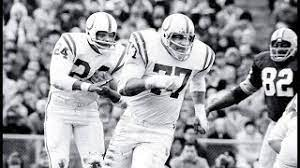
Parker received numerous honors for his contributions to the sport. He got many honors including his jersey No. 77 being retired by the Colts. In August 1969, Parker was named to the NFL's 1950s All-Decade Team. In September 1969, he was selected by the Football Writers Association of America as one of two guards on the all-time All-America team consisting of players from the modern era starting in 1920. He was inducted into the Pro Football Hall of Fame in 1973, his first year of eligibility. He was the first full-time offensive lineman so inducted. In 1974, he was inducted into the College Football Hall of Fame. Also in 1974, he was inducted into the Georgia Sports Hall of Fame. In 1977, he became a charter inductee in the Ohio State Varsity O Hall of Fame. In August 1994, he was named to the National Football League 75th Anniversary All-Time Team selected by a 15-person panel of NFL and Pro Football Hall of Fame officials, former players, and media representatives. In August 1999, Parker was ranked number 24 on The Sporting News' list of the 100 Greatest Football Players. He ranked second among guards behind John Hannah, and third among offensive linemen behind Hannah and Anthony Muñoz. Also in August 1999, Parker was selected as an offensive guard on the Sports Illustrated college-football All-Century team. In 2007, he was selected by The Atlanta Journal-Constitution at the No. 1 spot on its list of the top 25 all-time professional football players from Georgia. In 2019, he was named to the National Football League 100th Anniversary All-Time Team.

Sources
https://www.pro-football-reference.com/
https://www.profootballarchives.com/index.html
https://americanfootballdatabase.fandom.com/wiki/Football_Wiki
https://www.gridiron-uniforms.com/GUD/controller/controller.php?action=main
https://www.profootballhof.com/hall-of-famers/
 "Jim Parker". Pro Football Archives. Archived from the original on November 14, 2022. Retrieved November 14, 2022.
 Mike Klingaman (July 19, 2005). "Jim Parker 1934-2005: Colts' great 'blocked out the sun' and rushers, too". The Baltimore Sun. pp. 1C, 7C – via Newspapers.com.
 Smith, Don (1980). "The Coffin Corner: Jim Parker" (PDF). Archived from the original (PDF) on December 18, 2010. Retrieved December 29, 2010.
 "FWAA All America" (PDF). Football Writers Association of America. Archived (PDF) from the original on March 26, 2009. Retrieved April 19, 2009.
 Walter Johns (November 26, 1955). "Central Press Captains All-American: Cassady Repeats On All-America". Mansfield News Journal.
 "Jet's All-American College Grid Team". Jet.
 "Five Boilermaker Gridders Gain Recognition on AP's All-Big Ten". Journal and Courier. November 22, 1955 – via Newspapers.com.
 "Krupa Named All-Big Ten: Dawson, Lundey, Murley, Murakowski Cited by UP". Journal and Courier. November 23, 1955. p. 9 – via Newspapers.com.
 "UP All-America". Mansfield News-Journal. November 29, 1956. p. 35 – via Newspapers.com.
 "Football Award Winners" (PDF). National Collegiate Athletic Association (NCAA). 2016. p. 9. Retrieved November 14, 2022.
 "Parker Gets Outland Trophy". Sidney News. December 7, 1956. p. 8 – via Newspapers.com.
 "1956 Heisman Trophy Voting". SR/College Football. Sports Reference LLC. Retrieved November 14, 2022.
 Paul Lionel Zimmerman (1984). The New Thinking Man's Guide to Pro Football. Simon & Schuster. p. 53. ISBN 0-671-45394-7.
 Larry Harris (December 7, 1967). "Colts' Jim Parker Retires From Football: Eight-Time All-Pro Tackle Quits Club In Surprise Move". The Evening Sun. p. C13 – via Newspapers.com.
 Cameron C. Snyder (December 8, 1967). "Jim Parker Announces Retirement: Knee Injured In Game With Eagles Slows Great Lineman". The Baltimore Sun. pp. C1, C6 – via Newspapers.com.
 Cameron C. Snyder (December 11, 1967). "Parker 'Has Ball' As Fan, Then Receives Game Ball". The Baltimore Sun. pp. C1, C7 – via Newspapers.com.
 "Jim Parker Tribute Sunday". The Baltimore Sun. September 12, 1968. p. D18 – via Newspapers.com.
 "Graham, Huff on All-1950s Pro Football Selections". Racine Sunday Bulletin. August 31, 1969. p. 6C – via Newspapers.com. Open access icon
 Tom Siler (September 28, 1969). "Suffridge, Parker Used Contrasting Approaches". The News and Observer. p. II-8 – via Newspapers.com.
 "Unitas QBs NFL Team". Tampa Tribune. September 7, 1969. p. 34.
 "Berry, Parker In Pro Hall of Fame". The Baltimore Sun. February 6, 1973. p. C5 – via Newspapers.com.
 "Jim Parker". National Football Foundation. Retrieved November 14, 2022.
 "Class of 1974". Georgia Sports Hall of Fame. Retrieved November 14, 2022.
 "Very Best of the NFL". Detroit Free Press. August 24, 1994. p. 1D – via Newspapers.com. Open access icon
 "untitled". Democrat and Chronicle (Rochester, NY). August 15, 1999. p. 3D – via Newspapers.com. Open access icon
 Ivan Maisel (August 16, 1999). "Team of the Century". Sports Illustrated.
 "Prolific Georgians". The Atlanta Journal-Constitution. August 26, 2007. p. 10F – via Newspapers.com.
 Laurie Willis (November 23, 1999). "Tackling his retirement". The Baltimore Sun. pp. 1B, 4B – via Newspapers.com.
 Laurie Willis (November 9, 1999). "Former Baltimore Colts player closes his store after 35 years: After suffering a stroke, Jim Parker decides to retire". The Baltimore Sun. p. 3B – via Newspapers.com.
 "Friends say goodbye to Jim Parker". The Baltimore Sun. July 24, 2005. pp. 1A, 2B – via Newspapers.com.
 Litsky, Frank (2005). "Jim Parker Is Dead at 71; Kept Johnny Unitas Protected". The New York Times. Retrieved December 27, 2021.

Monday, January 9, 2023

The Story And Significance Of Raymond Berry - His 12 Receptions In The 1958 NFL Championship Game Record For More Than Half A Century

Raymond Emmett Berry Jr. is an American former professional football player and coach in the National Football League. He played as a split end for the Baltimore Colts from 1955 to 1967, and after several assistant coaching positions, was head coach of the New England Patriots from 1984 to 1989. With the Colts, Berry led the NFL in receptions and receiving yards three times and in receiving touchdowns twice, and was invited to six Pro Bowls. The Colts won consecutive NFL championships, including the 1958 NFL Championship Game, known as "The Greatest Game Ever Played" in which Berry caught 12 passes for 178 yards and a touchdown. He retired as the all-time NFL leader in both receptions and receiving yardage.

As a head coach, Berry led the Patriots to Super Bowl XX following the 1985 season, where his team was defeated by the Chicago Bears, 46–10.

After catching very few passes in high school and college, Berry was drafted in the 20th round of the 1954 NFL Draft by the Colts and was considered a long shot to make the team's roster. Diminutive and unassuming, his subsequent rise to the Pro Football Hall of Fame has been touted as one of football's Cinderella stories. He made up for his lack of athleticism through rigorous practice and attention to detail, and was known for his near-perfect route running and sure-handedness. Berry was a favorite target of quarterback Johnny Unitas, and the two were regarded as the dominant passing and receiving duo of their era.

After his playing career, Berry coached wide receivers for the Dallas Cowboys, the University of Arkansas, Detroit Lions, Cleveland Browns, and Patriots. He became the Patriots' head coach in 1984 and held that position through 1989, amassing 48 wins and 39 losses. In recognition of his playing career, Berry was inducted into the Pro Football Hall of Fame in 1973. He is a member of the NFL 75th Anniversary All-Time Team as one of the best players of the NFL's first 75 years and a unanimous selection to the NFL 100th Anniversary All-Time Team as one of the best players of the NFL's first 100 years. His number 82 jersey is retired by the Indianapolis Colts and he is a member of the Patriots' 1980s All-Decade Team.

Berry was drafted by the Baltimore Colts in the 20th round as the 203rd overall pick of the 1954 NFL Draft. Considered a long-shot to make the team roster,  he was used sparingly as a rookie, catching only 13 passes. By his second NFL season he became a permanent starter when the Colts acquired quarterback Johnny Unitas. Over the next 12 seasons together the two became one of the most dominant passing and catching duos in NFL history. Berry, who did not miss a single game until his eighth year in the league, led the NFL in receptions and receiving yards three times and in receiving touchdowns twice.

In 1957, Berry caught 47 passes for 800 yards and six touchdowns, leading the NFL in receiving yards for the first time. Against the Washington Redskins that year in near-freezing weather, Unitas connected with Berry on 12 passes for 224 yards and two touchdowns, staging what the Pittsburgh Post-Gazette called a "spectacular show". He was recognized as a first-team All-Pro by The Sporting News and earned second-team honors from the Associated Press (AP). The following season, he recorded 794 receiving yards and led the league with 56 receptions and nine touchdowns. For his efforts, Berry was invited to his first Pro Bowl, and was a first-team All-Pro by the AP and several other major selectors. The Colts finished atop the Western Division with a record of 9–3 and faced the New York Giants in the NFL Championship Game.

One of Berry's most notable performances was in that 1958 NFL Championship Game, known as "The Greatest Game Ever Played", in which he led the Colts to the franchise's first title with a then championship record 12 catches for 178 yards and a touchdown in the Colts' 23–17 victory over the Giants. At the end of regulation, he caught three consecutive passes for 62 yards to set up the Colts' tying field goal. He also had two key receptions for 33 yards during the Colts' final game-winning drive in overtime. His 12 receptions would remain an NFL championship game record for more than half a century, topped by one by Demaryius Thomas in Super Bowl XLVIII after the 2013 season.

Berry led the NFL in receptions, receiving yards, and receiving touchdowns in 1959, becoming the fourth player to record a "triple crown" in receiving. His 14 receiving touchdowns set a Colts single-season franchise record that stood unmatched for over four decades. He was invited to his second straight Pro Bowl, and earned first-team All-Pro honors from the AP, UPI, the Newspaper Enterprise Association, and the New York Daily News. The Colts won back-to-back championships in an encore with the Giants, 31–16. In that game, Berry caught five passes for 68 yards, second on the team behind halfback Lenny Moore's 126 yards on three receptions.

In 1960, Berry recorded his only 1,000-yard season, catching 74 passes en route to career highs in receiving yards (1,298) and receiving yards per game (108.2). Each of those totals led the NFL that year by a wide margin; no other player had more than 1,000 yards, and the next highest yards-per-game average was 81.0. He had a mid-season string of six straight games with over 100 yards, during which he caught 50 passes for 920 yards and eight touchdowns. Berry again was a Pro Bowl invitee, and earned first-team All-Pro honors from all the same selectors as the previous year, including unanimous All-Pro recognition by UPI sportswriters.

Following this zenith, Berry did not have the same statistical success over his final seven seasons, but remained a consistent target for Unitas. His 75 receptions in the 1961 season was second-most in the league, and he finished 10th in receiving yards, but failed to record a touchdown for the first time since his rookie year. He scored the first touchdown of the 1962 Pro Bowl on a 16-yard reception from Unitas in the first quarter. His streak of Pro Bowl invitations ended at four, but he rebounded to appearances in 1963 and 1964, the latter his final. The Colts returned to the postseason in 1964, where they were shut out 27–0 by the Cleveland Browns in the 1964 championship game.

After consecutive seasons recording 700+ receiving yards and seven touchdowns in 1965 and 1966, Berry missed half of the 1967 season due to injuries and caught only 11 passes for 167 yards. He announced his retirement shortly after the season's end. He completed his professional playing career having caught 631 passes for 9,275 yards (14.7 yards per catch) and 68 touchdowns. At the time, he held the NFL career records for receptions and receiving yards, and his receiving touchdowns were tied for fourth most with Don Maynard.

After retiring from playing, Berry joined Tom Landry's Dallas Cowboys coaching staff as receivers coach. In 1970, after two seasons, Berry took a job with Frank Broyles at the University of Arkansas as receivers coach. In 1973 Berry joined Don McCafferty with the Detroit Lions as his receivers coach. In 1976, Berry joined former SMU teammate Forrest Gregg as his receivers coach with the Cleveland Browns. Berry joined the New England Patriots as receivers coach under Chuck Fairbanks in 1978. He stayed on with new coach Ron Erhardt until Erhardt and his entire staff were fired following a 2–14 1981 season. Berry left football and worked in real estate in Medfield, Massachusetts, until the Patriots fired Ron Meyer in the middle of the 1984 season and hired Berry to replace him. Under his leadership, the Patriots won four of their last eight games and finished the season with a 9–7 record. Berry's importance to the team was reflected less in his initial win–loss record than in the respect he immediately earned in the locker room – according to running back Tony Collins, "Raymond Berry earned more respect in one day than Ron Meyer earned in three years".

In the 1985 season, the team improved further, posting an 11–5 record and making the playoffs as a wild card team. They went on to become the first team in NFL history to advance to the Super Bowl by winning three playoff games on the road, defeating the New York Jets 26–14 (the second postseason win in franchise history), the Los Angeles Raiders 27–20, and the Miami Dolphins 31–14. It was the first time the Patriots had beaten the Dolphins at the Orange Bowl (Miami's then-home stadium) since 1966, Miami's first season as a franchise. The Patriots had lost to the Dolphins there 18 consecutive times, including a 30–27 loss in Week 15 of the regular season. Despite their success in the playoffs, the Patriots were heavy underdogs to the Chicago Bears in Super Bowl XX. They lost 46–10 in what was at the time the most lopsided defeat in Super Bowl history. "We couldn't protect the quarterback, and that was my fault. I couldn't come up with a system to handle the Bears' pass rush", Berry acknowledged.

The following season, Berry's Patriots again recorded an 11–5 record and made the playoffs, this time after winning their second division title as an NFL team. However, they lost in the first round of the postseason. It would be Berry's last postseason appearance in New England, and the Patriots' last playoff berth altogether until 1994. They narrowly missed the playoffs with an 8–7 record in 1987 (a strike-shortened season) and a 9–7 record in 1988, in which quarterback Doug Flutie went 6–3 as a starter. However, Berry benched Flutie in the season finale against the Denver Broncos until the final seconds. The Patriots lost 21–10 and Flutie left for the CFL less than two years later. Then in Berry's last year as a coach, the Patriots finished the 1989 season 5–11. New Patriots majority owner Victor Kiam demanded Berry relinquish control over personnel and reorganize his staff; Berry refused and was fired. His regular-season coaching record was 48–39 (.552) and he was 3–2 (.600) in the playoffs.

After a year out of coaching, Berry joined Wayne Fontes' staff with the Detroit Lions in 1991 as their quarterbacks coach, and then held the same position the following season on Dan Reeves' staff with the Denver Broncos. Reeves was fired after that season, along with his entire coaching staff.

In 1973, Berry was voted into the Pro Football Hall of Fame in Canton, Ohio. He is a member of the NFL 75th Anniversary All-Time Team, compiled in 1994 by the Hall of Fame selection committee and media to honor the NFL's best players of the league's first 75 years, and the 1950s All-Decade Team. In 1999, he was ranked 40th on The Sporting News' list of the 100 Greatest Football Players. Berry's number 82 jersey is retired by the Colts, he is a member of the Patriots' 1980s All-Decade Team as a coach, and he is enshrined in the Baltimore Ravens Ring of Honor.
Sources
https://www.pro-football-reference.com/
https://www.profootballarchives.com/index.html
https://americanfootballdatabase.fandom.com/wiki/Football_Wiki
https://www.gridiron-uniforms.com/GUD/controller/controller.php?action=main
https://www.profootballhof.com/hall-of-famers/
 Berry 2016, p. 1.
 "Raymond Berry Bio". Pro Football Hall of Fame. Retrieved January 11, 2017.
 Newell, Cliff (February 10, 1985). "Raymond Berry: Underestimated Champion : Skinny Little Receiver Looked More Like a Candidate for the Hospital Than a Football Immortal at Schreiner". Los Angeles Times. Retrieved January 10, 2017.
 "Past Athletic Hall of Honor". Schreiner University. Archived from the original on October 6, 2017. Retrieved January 10, 2017.
 Wills 2004, p. 348.
 Olesker 2008, p. 105.
 Wills 2004, p. 359.
 "Raymond Berry Stats". Pro Football Reference. Sports Reference LLC. Archived from the original on November 13, 2016. Retrieved January 10, 2017.
 "Unitas' Score Wins for Colts Over 'Skins in Last Minute, 21–17". Pittsburgh Post-Gazette. Associated Press. November 11, 1957. p. 27. Retrieved January 17, 2017.
 "1958 NFL All-Pros". Pro Football Reference. Sports Reference LLC. Retrieved January 16, 2017.
 "Flashy Colts Seek First NFL Crown". The Eugene Guard. Associated Press. December 28, 1958. p. 24. Retrieved October 6, 2017 – via Newspapers.com.
 "Baltimore Colts at New York Giants – December 28th, 1958". Pro Football Reference. Sports Reference LLC. Retrieved January 16, 2017.
 Gregory, Sean (December 29, 2008). "Legends of the NFL's "Greatest Game Ever"". Time. Retrieved January 14, 2017.
 "Broncos Demaryius Thomas Sets Super Bowl Receptions Record In Losing Effort". cbslocal.com. February 2, 2014.
 "Triple crown for receivers". Chicago Tribune. December 18, 2003. Retrieved January 16, 2017.
 Porter, David L. (2004). Latino and African American Athletes Today: A Biographical Dictionary (illustrated ed.). Greenwood Publishing Group. p. 156. ISBN 0313320489.
 "Brown Tops All-Pro Squad". Lakeland Ledger. Associated Press. December 23, 1959. p. 10. Retrieved January 29, 2017.
 "Berry, Brown, Huff Lead All-Pro Team". The Town Talk. United Press International. December 23, 1959. p. 11. Retrieved January 29, 2017 – via Newspapers.com.
 Olderman, Murray (December 17, 1959). "Colts, Giants Dominate Players' All-Pro Teams". Redlands Daily Facts. Newspaper Enterprise Association. p. 8. Retrieved January 29, 2017 – via Newspapers.com.
 "1959 NFL All-Pros". Pro Football Reference. Sports Reference LLC. Retrieved January 16, 2017.
 "New York Giants at Baltimore Colts – December 27th, 1959". Pro Football Reference. Sports Reference LLC. Retrieved January 17, 2017.
 Sell, Jack (December 28, 1959). "Colts Destroy Giants for Pro Crown, 31–16". Pittsburgh Post-Gazette. p. 20. Retrieved January 17, 2017.
 "1960 NFL Leaders and Leaderboards". Pro Football Reference. Sports Reference LLC. Retrieved January 17, 2017.
 "Raymond Berry 1960 Game Log". Pro Football Reference. Sports Reference LLC. Retrieved January 17, 2017.
 "1960 NFL All-Pros". Pro Football Reference. Sports Reference LLC. Retrieved January 17, 2017.
 "Ray Berry Only Unanimous Choice on All-Pro Team". Traverse City Record-Eagle. United Press International. December 21, 1960. p. 17. Retrieved January 29, 2017.
 "Unitas' Last-Second Pass Nips East, 31–20". Pittsburgh Post-Gazette. Associated Press. January 15, 1962. p. 23. Retrieved January 18, 2017.
 "Cleveland Wallops Baltimore, 27–0". Eugene Register-Guard. Associated Press. November 28, 1964. p. 1D. Retrieved January 18, 2017.
 Snyder, Cameron C. (January 7, 1968). "Retirement Is 'Certain,' Berry Says". The Baltimore Sun. p. 35. Retrieved January 29, 2017.
 "NFL Career Receptions Leaders Through 1967". Pro Football Reference. Sports Reference LLC. Retrieved January 19, 2017.
 "NFL Career Receiving Yards Leaders Through 1967". Pro Football Reference. Sports Reference LLC. Retrieved January 19, 2017.
 "NFL Career Receiving Touchdowns Leaders Through 1967". Pro Football Reference. Sports Reference LLC. Retrieved January 19, 2017.
 Rogers, Ron (July 30, 1983). "Ex-Colt recalls a simpler time". The York Dispatch (York, Pennsylvania). p. 14.
 "Doug Atkins Stats, Height, Weight, Position, Draft, College". Pro-Football-Reference.com. Retrieved October 5, 2025.
 "Doug Atkins | Pro Football Hall of Fame". pfhof. Retrieved October 5, 2025.
 Couch, Dick (September 5, 1968). "Dallas Top Grid Choice". The Evening News. Associated Press. p. 6B. Retrieved January 17, 2017.
 Donaldson, Jim (December 20, 1985). "Berry Again Overcomes The Skeptics". Chicago Tribune. Retrieved January 14, 2017.
 Felger 2006, p. 76.
 Rattey, Chris (October 8, 2015). "Squish the Fish: 1985 Patriots run one of the greatest in NFL history". The Boston Globe. Retrieved January 17, 2017.
 Goldberg, Jeff (January 24, 1997). "Ah Yes, The '85 Pats: They Were Never Dull". Hartford Courant. Retrieved January 17, 2017.
 "Patriots break jinx vs. Miami". Bangor Daily News. Associated Press. January 13, 1986. p. 8. Retrieved January 17, 2017.
 Murray, Jim (January 23, 1986). "It's Not Berry's Part, but He's Got His Act Down Pat". Los Angeles Times. Retrieved January 19, 2017.
 Felger 2006, p. 80.
 "Patriots Fire Berry; Rust in Line for Job". Los Angeles Times. Associated Press. February 27, 1990. Retrieved January 11, 2017.
 "Raymond Berry Record, Statistics, and Category Ranks". Pro Football Reference. Sports Reference. Retrieved October 6, 2017.
 "Berry named QB coach of the Broncos". United Press International. February 12, 1992. Retrieved January 28, 2017.
 "Denver Broncos fire Dan Reeves". The Tuscaloosa News. Associated Press. December 29, 1992. p. 3B. Retrieved January 28, 2017.
 Berry 2016, p. 13.
 Berry 2016, p. 12.
 Roberts, Rich (January 20, 1986). "The Meticulous Motivator Raymond Berry: Locked Into His Own Private World, He's Still Been Able to Leave It Long Enough to Reach the Hall of Fame and Super Bowl". Los Angeles Times. Retrieved January 11, 2017.
 Klingaman, Mike (January 21, 2012). "Former Colts great Raymond Berry has ties to Baltimore and New England". The Baltimore Sun. Archived from the original on February 2, 2017. Retrieved January 20, 2017.
 "NFL 100". NFL.com. Retrieved November 3, 2024.
 "Very Best of the NFL". Detroit Free Press. August 24, 1994. p. 1D. Retrieved November 10, 2016 – via Newspapers.com. Open access icon
 "Graham, Huff on All-1950s Pro Football Selections". Racine Sunday Bulletin. Associated Press. August 31, 1969. p. 6C. Retrieved January 28, 2017 – via Newspapers.com. Open access icon
 "Sporting News Top 100 Football Players". Democrat and Chronicle. August 15, 1999. p. 3D. Retrieved November 10, 2016 – via Newspapers.com. Open access icon
 Staff, The Athletic NFL. "The NFL 100: From Derrick Brooks to Tom Brady, The Athletic finds the best players in football history". The New York Times. ISSN 0362-4331. Retrieved November 3, 2024.
 "NFL Retired Player Numbers". NFL.com. National Football League. Retrieved January 28, 2017.
 Price, Christopher (2013). New England Patriots New & Updated Edition: The Complete Illustrated History (illustrated, revised ed.). MVP Books. p. 198. ISBN 978-0760345139.
 Hensley, Jamison (October 5, 2002). "Ravens to honor Unitas, ex-Colts". The Baltimore Sun. Retrieved January 28, 2017.
 "Hall induction was full of stars". The Gadsden Times. May 23, 2010. Retrieved January 20, 2017.
 Smith, Sam (January 16, 1986). "Pats Ripen Under Berry". Chicago Tribune. Retrieved January 20, 2017.
 Klingaman, Mike (December 15, 2009). "Catching Up With...former Colt Raymond Berry". The Toy Department (The Baltimore Sun sports blog). Retrieved January 10, 2017.
 Klingaman, Mike (February 6, 2012). "Raymond Berry's 'Super' Walk". The Baltimore Sun. Archived from the original on February 2, 2017. Retrieved January 20, 2017.
Berry, Raymond; Stewart, Wayne (2016). All the Moves I Had: A Football Life. Rowman & Littlefield. ISBN 978-1493017812.
Felger, Michael (2006). Tales from the Patriots Sideline (illustrated, reprint ed.). Sports Publishing LLC. ISBN 1596701544.
Olesker, Michael (October 13, 2008). "5: Father Raymond Berry". The Colts' Baltimore: A City and Its Love Affair in the 1950s (illustrated ed.). JHU Press. ISBN 978-0801890628.
Wills, Garry (2004). "37: Raymond Berry". Lead Time: A Journalist's Education (illustrated, reprint ed.). Houghton Mifflin Harcourt. ISBN 0618446907.