Showing posts with label HOF 1971. Show all posts

Wednesday, December 7, 2022

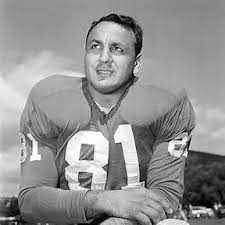
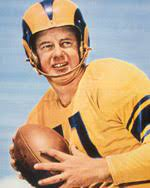
The Story And Significance Of Norm Van Brocklin - Led The NFL In Passing Three Times And In Punting Twice

Norman Mack Van Brocklin, nicknamed "The Dutchman", was an American football quarterback and coach who played in the National Football League for 12 seasons. He spent his first nine seasons with the Los Angeles Rams and was a member of the Philadelphia Eagles during his final three. Following his playing career, he was the inaugural head coach of the Minnesota Vikings from 1961 to 1966 and the second head coach of the Atlanta Falcons from 1968 to 1974.

Van Brocklin received All-American honors at Oregon, but was not selected by the Rams until the fourth round of the 1949 NFL Draft due to concerns over his professional availability. During his first three seasons, he and teammate Bob Waterfield alternated as the starting quarterback, culminating with them leading Los Angeles to victory in the 1951 championship. After Waterfield retired, Van Brocklin served as the Rams' primary starter from 1952 to 1957, concluding his tenure with six consecutive Pro Bowl selections and a passing-yards leading season in 1954. He joined Philadelphia in 1958, where his three seasons all saw him receive further Pro Bowl selections, bringing his total to nine. In his final season, he was named Most Valuable Player en route to winning the 1960 championship with the Eagles.
As the head coach of the expansion Vikings and Falcons, Van Brocklin had less success and was unable to reach the postseason with either team. Nevertheless, he recorded the first winning seasons for both franchises. He was inducted to the College Football Hall of Fame in 1966 and the Pro Football Hall of Fame in 1971.

He served in the U.S. Navy from 1943 through 1945, foregoing his senior year of high school. Following World War II, Van Brocklin followed two former high school teammates north and enrolled at the University of Oregon in Eugene. He became the starting quarterback in 1947 under first-year head coach Jim Aiken, and led the Ducks to a 16–5 record in his two seasons as a starter. In 1948, Oregon tied with California for the title of the Pacific Coast Conference, forerunner of the Pac-12. California was undefeated overall, and Oregon's only loss was at undefeated Michigan, that year's national champions, and the Ducks had seven victories in the PCC to Cal's six. Oregon did not go to the Rose Bowl, however, because Cal was voted by the other schools to represent the PCC in the game. Oregon needed only a 5–5 tie vote, as Cal had been to the game more recently, and with six Northwest schools and four in California, appeared favored to advance. Oregon had opted for a playoff game, but California declined. Among the Cal voters was the University of Washington, which elevated the intensity of the Oregon-Washington rivalry. Breaking with tradition, the PCC allowed Oregon to accept an invitation to play SMU in the Cotton Bowl in Dallas. It was the first time that a Pacific Coast team played in a major bowl game other than the Rose Bowl (a policy which was continued by the Pac-8 through 1974). Both Oregon and California lost their New Year's Day bowl games. That season, Van Brocklin was honored with an All-America selection and finished sixth in the Heisman Trophy voting. Coincidentally, the Heisman Trophy winner that year was SMU running back Doak Walker. Both Walker and Van Brocklin got Outstanding Player recognition for their performance in the Cotton Bowl Classic.

Van Brocklin left Oregon for the NFL with one remaining year of college eligibility. At that time, a player was not allowed to join the NFL until four years after graduating from high school. Though he had only been at the University of Oregon for three years, he was eligible due to his time in the Navy during World War II. At age 23, he completed his bachelor's degree in June 1949.

Van Brocklin was selected 37th overall in the 1949 NFL Draft, taken in the fourth round by the Los Angeles Rams. Teams were not sure if he planned to play the 1949 season in college or not, so he fell in the draft, conducted in December 1948. Van Brocklin signed with the Rams in July and joined a team that already had a star quarterback, Bob Waterfield. Beginning in 1950, new Rams coach Joe Stydahar solved his problem by platooning Waterfield and Van Brocklin. The 1950 Rams scored a then-record 466 points (38.8 per game – which is still a record) with a high octane passing attack featuring Tom Fears and Elroy "Crazy Legs" Hirsch. Fears led the league and set a new NFL record with 84 receptions. Van Brocklin and Waterfield finished 1–2 in passer rating as well. They were defeated by the Cleveland Browns in the 1950 title game, 30–28.

In 1951, Van Brocklin and Waterfield again split quarterbacking duties and the Rams again won the West. That year, Hirsch set an NFL record with 1,495 receiving yards and tied Don Hutson's record of 17 touchdown receptions. This time, the Rams won the title rematch against Cleveland, 24–17. Waterfield (9-24, 125 yards) took most of the snaps at the L.A. Coliseum, but Van Brocklin (4-6, 128 yards) threw a game-winning 73-yard touchdown pass to Fears. It was the Rams' only NFL championship while originally based in southern California; their next came in 1999, several years after the move east to St. Louis. After returning to Los Angeles for the 2016 season, the Rams subsequently won Super Bowl LVI during the 2021 season.

Earlier in 1951 on opening night, Van Brocklin threw for an NFL record 554 yards on September 28, breaking Johnny Lujack's single-game record of 468 set two years earlier. Waterfield was injured so Van Brocklin played the entire game and completed 27 of 41 attempts with five touchdowns. Despite the increase in passing attacks by NFL teams in recent years, the yardage record still stands.

Waterfield retired after the 1952 season and Van Brocklin continued to quarterback the Rams, leading them to the title game again in 1955, hosted at the L.A. Coliseum. In that game, the visiting Browns crushed the Rams 38-14 as Van Brocklin threw six interceptions. In early January 1958, he announced his retirement from pro football after nine seasons and had plans to enter private business in Oregon at Portland.

Less than five months later in late May, Van Brocklin changed his mind and was traded to the Philadelphia Eagles for two players (offensive lineman Buck Lansford and defensive end Jimmy Harris) and a first round draft pick. It was disclosed he did not want to play another season for the Rams under head coach Sid Gillman's offense, but it was not a personality issue with Gillman. Under famed head coach Buck Shaw, Van Brocklin was given total control of the offense in Philadelphia in 1958, and he steadily improved the Eagles' attack. In his third and final season with Philly in 1960, the team had the best regular season record in league at 10–2, and hosted the Green Bay Packers in the NFL Championship Game at Franklin Field. Throwing to his favorite receiver, 5 feet 9 inches and 176 pound Tommy McDonald, Van Brocklin led the Eagles to victory. In a game dominated by defense, he led a fourth quarter comeback, resulting in a final score of 17–13.

During his twelve-year career, Van Brocklin played on two NFL championship teams: the 1951 Los Angeles Rams and the 1960 Philadelphia Eagles. Following the latter triumph, he retired. As it turned out, the Eagles were the only team to defeat the Packers in a playoff game during Vince Lombardi's tenure as Green Bay's head coach. Van Brocklin led the NFL in passing three times and in punting twice. On nine occasions, he was selected to the Pro Bowl.

Van Brocklin cut his ties with the Eagles after his belief that the team had reneged on an agreement to name him head coach to replace the retiring Buck Shaw. On January 18, 1961, he accepted the head coaching position for the expansion Minnesota Vikings, less than a month after winning the NFL Championship game. During his six years with Minnesota, Van Brocklin compiled a record of 29-51-4 (.369). The tenure was highlighted by his contentious relationship with quarterback Fran Tarkenton. Van Brocklin was displeased with Tarkenton's penchant for scrambling, preferring that he stay in the pocket. The feud culminated with Tarkenton's demand for a trade and Van Brocklin's surprise resignation on February 11, 1967. Tarkenton was traded to the New York Giants shortly after Van Brocklin's departure, but was reacquired by Van Brocklin's successor, Bud Grant, five years later in 1972. One thing Van Brocklin was known for was his disdain for soccer-style kickers (now the standard in the NFL). In one game, soccer-style kicker Garo Yepremian beat Van Brocklin's team and after the game, a reporter asked about how felt about losing the game on a last-second field goal, and he replied "They ought to change the god-damned immigration laws in this country".
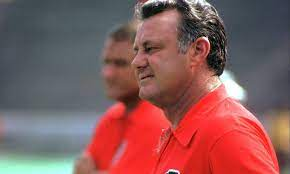
During his first year off the field in over two decades, Van Brocklin served as a commentator on NFL broadcasts in 1967 for CBS.

In 1968, Van Brocklin took over as head coach of the Atlanta Falcons on October 1, replacing Norb Hecker, who had started the season with three defeats, extending the team losing streak to ten games. Over the next seven seasons, Van Brocklin had mixed results, putting together a 37-49-3 mark. He led the team to its first winning season in 1971 with a 7-6-1 record, then challenged for a playoff spot in 1973 with a 9–5 mark. His 1973 Falcons handed the Fran Tarkenton-led, 9-0 Minnesota Vikings its first defeat, on Monday Night Football. However, after winning just two of his first eight games in 1974, he was fired.
Sources
https://www.pro-football-reference.com/
https://www.profootballarchives.com/index.html
https://americanfootballdatabase.fandom.com/wiki/Football_Wiki
https://www.gridiron-uniforms.com/GUD/controller/controller.php?action=main
https://www.profootballhof.com/hall-of-famers/
Week 1, against the New York Giants in 1951.[2]
 Grasso, John (June 13, 2013). Historical Dictionary of Football. Scarecrow Press. p. 413. ISBN 978-0-8108-7857-0.
 Kelly, Doug (September 28, 2022). "A Passing Record Even Marino, Manning and Brady Haven't Touched". The New York Times. Retrieved March 21, 2023.
 "Van Brocklin dies of heart attack at age 57". Spartanburg Herald-Journal. South Carolina. Associated Press. May 3, 1983. p. 2B.
 "Norm van Brocklin calls it quits". Sarasota Herald-Tribune. February 7, 1967. Retrieved September 27, 2011 – via Google News.
 Atwater, Edward C (September 24, 1962). "Van Brocklin rare coach". Baltimore Sun. Archived from the original on January 31, 2013. Retrieved September 27, 2011.
 Hall, John (November 3, 1972). "Van Brocklin: The Dutchman Nobody Knows". Los Angeles Times. Archived from the original on January 31, 2013. Retrieved September 27, 2011.
 "Acalanes '42". Acalanes High School Yearbook. 1942.
 "Acalanes '43". Acalanes High School Yearbook. 1943.
 Clark, Bob (September 5, 1995). "After 46 years, Van Brocklin's legacy lives on". Eugene Register-Guard. p. 1D.
 "Oregon stars a Trilby for Svengali Jim Aiken". Milwaukee Journal. Associated Press. November 15, 1948. p. 2, final.
 Clark, Bob (September 3, 1998). "Top Ducks". Eugene Register-Guard. p. 3D.
 "Oregon suffers 14–0 loss, but shows real class". Eugene Register-Guard. October 3, 1948. p. 1.
 Bellamy, Ron (September 19, 2003). "Ducks have been shut out of success against the Wolverines". Euegene Register-Guard. p. B1.
 "Final Coast Conference standings". Eugene Register-Guard. November 21, 1948. p. 1.
 "California Bears get Rose Bowl Bid". Eugene Register-Guard. United Press. November 22, 1948. p. 1.
 Strite, Dick (January 2, 1949). "Oregon, Cal both drop bowl games". Eugene Register-Guard. p. 1.
 "Year-by-Year Bowl Facts", Official 2007 NCAA Division I Football Records Book, National Collegiate Athletic Association, p. 366, 2007.
 "Norm "The Dutchman" Van Brocklin". College Football Hall of Fame. Football Foundation. Retrieved February 16, 2010.
 "Winners". Archived from the original on April 4, 2010. Retrieved February 16, 2010.
 1949 Classic Recap[permanent dead link] (pdf format)
 "Van Brocklin inks contract with pro Rams". Eugene Register-Guard. United Press. July 12, 1949. p. 11.
 "Norm Van Brocklin signs with Rams". Spokesman-Review. Associated Press. July 12, 1949. p. 14.
 "1949 NFL Draft Listing". Pro Football Reference. Retrieved September 7, 2024.
 "Browns win pro title; Groza's kick thriller". Spokane Daily Chronicle. Associated Press. December 25, 1950. p. 25.
 "Van Brocklin pitches L.A. Rams to victory". Spokane Daily Chronicle. December 24, 1951. p. 10.
 "Cleveland/St. Louis/LA Rams Team Encyclopedia". Pro Football Reference. Retrieved December 3, 2020.
 Schwartz, Larry (November 19, 2003). "Van Brocklin's 554 yards passing still a record". ESPN.com. Retrieved December 10, 2023.
 "History: Norm Van Brocklin's record-setting 554 yards". Pro Football Hall of Fame. Retrieved October 28, 2014.
 Myers, Bob (September 29, 1951). "Rams smack Yanks in opener 54–14". Free Lance-Star. Associated Press. p. 5.
 "Browns blast Rams in record tilt". Spokane Daily Chronicle. Associated Press. December 27, 1955. p. 15.
 "Van Brocklin retires as Rams' quarterback". Pittsburgh Post-Gazette. Associated Press. January 3, 1958. p. 16.
 "High pressure of running club one reason Van quit LA Rams". Eugene Register-Guard. Associated Press. January 3, 1958. p. 9.
 "Eagles get Van Brocklin". Milwaukee Sentinel. press dispatches. May 27, 1958. p. 3, part 2. Archived from the original on November 17, 2015. Retrieved November 15, 2015.
 "Van Brocklin traded to Eagles by Rams". Eugene Register-Guard. Associated Press. May 26, 1958. p. 2B.
 "1960 NFL Standings & Team Stats". Pro Football Reference. Retrieved December 3, 2020.
 Lea, Bud (December 27, 1960). "Eagles win NFL title". Milwaukee Sentinel. p. 1, part 1. Archived from the original on November 17, 2015. Retrieved November 15, 2015.
 "1951 Los Angeles Rams Rosters, Stats, Schedule, Team Draftees". Pro Football Reference. Retrieved March 21, 2023.
 "1960 Philadelphia Eagles Rosters, Stats, Schedule, Team Draftees". Pro Football Reference. Retrieved March 21, 2023.
 Longman, Jeré (January 6, 2011). "Eagles' 1960 Victory Was an N.F.L. Turning Point". The New York Times. Retrieved March 21, 2023.
 "1960 NFL All-Pros". Pro Football Reference. Retrieved March 21, 2023.
 https://www.twincities.com/2018/02/06/norm-van-brocklins-daughter-looks-back-at-eagles-championship-qb-first-vikings-coach/
 "Van Brocklin signs as Vikings' coach". Times-News. Hendersonville, North Carolina. January 19, 1961. p. 10 – via Google News.
 "Van Brocklin hired to coach Vikings". Eugene Register-Guard. Associated Press. January 18, 1961. p. 1D – via Google News.
 https://vault.si.com/vault/1965/09/13/the-dutchman-is-half-an-inch-away
 https://www.startribune.com/vikings-first-game-bears-60th-anniversary-fran-tarkenton/600098049
 https://www.vikings.com/news/longform/fran-tarkenton-joshua-dobbs-quarterbacks-launch-pads
 "Minnesota Vikings Coaches". Pro Football Reference. Retrieved July 16, 2021.
 "Tarkenton will return 'under no circumstances'". Eugene Register-Guard. Associated Press. February 11, 1967. p. 3B – via Google News.
 https://time.com/archive/6630666/football-right-between-the-ears/
 "Van Brocklin surprises Viks – resigns". Eugene Register-Guard. Associated Press. February 12, 1967. p. 3B – via Google News.
 "Giants trade draft picks for Tarkenton". Sarasota Herald-Tribune. Florida. Associated Press. March 8, 1967. p. 18 – via Google News.
 Fitzpatrick, Frank (January 19, 2018). "Norm Van Brocklin: The ghost at the NFC title game". Inquirer.com. Retrieved March 21, 2023.
 "Norm Van Brocklin – Football". Oregon Sports Hall of Fame and Museum. Archived from the original on March 15, 2012. Retrieved September 6, 2012.
 Speer, Ron (October 2, 1968). "Van to have 5-year pact". Eugene Register-Guard. Associated Press. p. 1D – via Google News.
 "Atlanta Falcons Team Encyclopedia". Pro Football Reference. Retrieved December 3, 2020.
 "Minnesota Vikings at Atlanta Falcons – November 19th, 1973". Pro Football Reference. Retrieved December 3, 2020.
 "1974 Atlanta Falcons Rosters, Stats, Schedule, Team Draftees". Pro Football Reference. Retrieved March 21, 2023.
 Shearer, Ed (November 6, 1974). "Van Brocklin fired by Atlanta". Daily News. Bowling Green, Kentucky. Associated Press. p. 21 – via Google News.
 "Football great Norm Van Brocklin, who quarterbacked 12 years... – UPI Archives". UPI. May 3, 1983. Retrieved March 21, 2023.
 "Van Brocklin is officially hired". Robe News-Tribune. Georgia. Associated Press. March 2, 1979. p. 7A.
 "Van Brocklin says goodbye to college life". Eugene Register-Guard. Associated Press. January 17, 1980. p. 4B.
 "Former UO great Van Brocklin dies". Eugene Register-Guard. wire services. May 2, 1983. p. 1B.
 https://www.twincities.com/2018/02/06/norm-van-brocklins-daughter-looks-back-at-eagles-championship-qb-first-vikings-coach/
 Collier, Gene (October 30, 2014). "Van Brocklin's record stands test of time". Pittsburgh Post-Gazette. Retrieved March 21, 2023.
 "Best and worst of 1981 sports quotes". Pittsburgh Press. UPI. December 27, 1981. p. D9.
 Johnson, Chuck (May 5, 1983). "there's was no one like the Dutchman". Milwaukee Journal. p. 3, part 3. Archived from the original on November 17, 2015. Retrieved November 15, 2015.
 "Former Rams star Waterfield dies". Wilmington Morning Star. North Carolina. Associated Press. March 26, 1983. p. 4D.
 "Norm Van Brocklin (1992) – Hall of Fame". University of Oregon Athletics. Retrieved March 21, 2023.
 "NFL Passing Yards Single Game Leaders". Pro Football Reference. Retrieved March 21, 2023.

Monday, December 5, 2022

The Story And Significance Of Y.A. Tittle - Led The League In TD Passes Three Times

Yelberton Abraham Tittle Jr. was a professional American football quarterback. He played in the National Football League for the San Francisco 49ers, New York Giants, and Baltimore Colts, after spending two seasons with the Colts in the All-America Football Conference (AAFC). Known for his competitiveness, leadership, and striking profile, Tittle was the centerpiece of several prolific offenses throughout his 17-year professional career from 1948 to 1964.

Tittle played college football for Louisiana State University, where he was a two-time All-Southeastern Conference (SEC) quarterback for the LSU Tigers football team. As a junior, he was named the most valuable player (MVP) of the infamous 1947 Cotton Bowl Classic also known as the "Ice Bowl", a scoreless tie between the Tigers and Arkansas Razorbacks in a snowstorm. After college, he was drafted in the 1947 NFL Draft by the Detroit Lions, but he instead chose to play in the AAFC for the Colts.

With the Colts, Tittle was named the AAFC Rookie of the Year in 1948 after leading the team to the AAFC playoffs. After consecutive one-win seasons, the Colts franchise folded, which allowed Tittle to be drafted in the 1951 NFL Draft by the 49ers. Through ten seasons in San Francisco, he was invited to four Pro Bowls, led the league in touchdown passes in 1955, and was named the NFL Player of the Year by the United Press in 1957. A groundbreaker, Tittle was part of the 49ers' famed Million Dollar Backfield, was the first professional football player featured on the cover of Sports Illustrated, and is credited with having coined "alley-oop" as a sports term.

Considered washed-up, the 34-year-old Tittle was traded to the Giants following the 1960 season. Over the next four seasons, he won several individual awards, twice set the league single-season record for touchdown passes including a 1962 game with a combined 7 touchdown passes and 500-yards passing with a near perfect (151.4 out of 158.33) passer rating, and led the Giants to three straight NFL championship games. Although he was never able to deliver a championship to the team, Tittle's time in New York is regarded among the glory years of the franchise.

In his final season, Tittle was photographed bloodied and kneeling down in the end zone after a tackle by a defender left him helmetless. The photograph is considered one of the most iconic images in North American sports history. He retired as the NFL's all-time leader in passing yards, passing touchdowns, attempts, completions, and games played. Tittle was inducted into the Pro Football Hall of Fame in 1971, and his jersey number 14 is retired by the Giants.

Tittle was the sixth overall selection of the 1948 NFL Draft, taken by the Detroit Lions. However, Tittle instead began his professional career with the Baltimore Colts of the All-America Football Conference in 1948. That season, already being described as a "passing ace", he was unanimously recognized as the AAFC Rookie of the Year by UPI after passing for 2,739 yards and leading the Colts to the brink of an Eastern Division championship. After a 1–11 win–loss record in 1949, the Colts joined the National Football League in 1950. The team again posted a single win against eleven losses, and the franchise folded after the season due to financial difficulties. Players on the roster at the time of the fold were eligible to be drafted in the next NFL draft.

Tittle was then drafted by the San Francisco 49ers in the 1951 NFL Draft after the Colts folded. While many players at the time were unable to play immediately due to military duties, Tittle had received a class IV-F exemption due to physical ailments, so he was able to join the 49ers roster that season. In 1951 and 1952, he shared time at quarterback with Frankie Albert. In 1953, his first full season as the 49ers' starter, he passed for 2,121 yards and 20 touchdowns and was invited to his first Pro Bowl. San Francisco finished with a 9–3 regular season record, which was good enough for second in the Western Conference, and led the league in points scored.

In 1954, the 49ers compiled their Million Dollar Backfield, which was composed of four future Hall of Famers: Tittle; fullbacks John Henry Johnson and Joe Perry; and halfback Hugh McElhenny. "It made quarterbacking so easy because I just get in the huddle and call anything and you have three Hall of Fame running backs ready to carry the ball," Tittle reminisced in 2006. The team had aspirations for a championship run, but injuries, including McElhenny's separated shoulder in the sixth game of the season, ended those hopes and the 49ers finished third in the Western Division. Tittle starred in his second straight Pro Bowl appearance as he threw two touchdown passes, including one to 49ers teammate Billy Wilson, who was named the game's MVP.

Tittle became the first professional football player featured on the cover of Sports Illustrated when he appeared on its 15th issue dated November 22, 1954, donning his 49ers uniform and helmet featuring an acrylic face mask distinct to the time period. The cover photo also shows a metal bracket on the side of Tittle's helmet which served to protect his face by preventing the helmet from caving in. The 1954 cover was the first of four Sports Illustrated covers he graced during his career.

Tittle led the NFL in touchdown passes for the first time in 1955, with 17, while also leading the league with 28 interceptions thrown. When the 49ers hired Frankie Albert as head coach in 1956, Tittle was pleased with the choice at first, figuring Albert would be a good mentor. However, the team lost four of its first five games, and Albert replaced Tittle with rookie Earl Morrall. After a loss to the Los Angeles Rams brought San Francisco's record to 1–6, Tittle regained the starting role and the team finished undefeated with one tie through the season's final five games.

In 1957, Tittle and receiver R. C. Owens devised a pass play in which Tittle tossed the ball high into the air and the 6 feet 3 inches Owens, who leapt to retrieve it, typically resulting in a long gain or a touchdown. Tittle dubbed the play the "alley-oop", the first usage of the term in sports and it was highly successful when utilized. The 49ers finished the regular season with an 8–4 record and hosted the Detroit Lions in the Western Conference playoff. Against the Lions, Tittle passed for 248 yards and tossed three touchdown passes, one each to Owens, McElhenny, and Wilson but Detroit overcame a 20-point third quarter deficit to win 31–27. For the season, Tittle had a league-leading 63.1 completion percentage, threw for 2,157 yards and 13 touchdowns, and rushed for six more scores. He was deemed "pro player of the year" by a United Press poll of members of the National Football Writers Association. Additionally, he was named to his first All-Pro team and invited to his third Pro Bowl.

After a poor 1958 preseason by Tittle, Albert started John Brodie at quarterback for the 1958 season, a decision that proved unpopular with the fan base. Tittle came in to relieve Brodie in a week six game against the Lions, with ten minutes left in the game and the 49ers down 21–17. His appearance "drew a roar of approval from the crowd of 59,213," after which he drove the team downfield and threw a 32-yard touchdown pass to McElhenny for the winning score. A right knee ligament injury against the Colts in week nine ended Tittle's season, and San Francisco finished with a 7–5 record, followed by Albert's resignation as coach. Tittle and Brodie continued to share time at quarterback over the next two seasons. In his fourth and final Pro Bowl game with the 49ers in 1959, Tittle completed 13 of 17 passes for 178 yards and a touchdown.

Under new head coach Red Hickey in 1960, the 49ers adopted the shotgun formation. The first implementation of the shotgun was in week nine against the Colts, with Brodie at quarterback while Tittle nursed a groin injury. The 49ers scored a season-high thirty points, and with Brodie in the shotgun won three of their last four games to salvage a winning season at 7–5. Though conflicted, Tittle decided to get into shape and prepare for the next season. He stated in his 2009 autobiography that at times he thought, "The hell with it. Quit this damned game. You have been at it too long anyway." But then another voice within him would say, "Come back for another year and show them you're still a good QB. Don't let them shotgun you out of football!" However, after the first preseason game of 1961, Hickey informed Tittle he had been traded to the New York Giants.

In mid-August 1961, the 49ers traded the 34-year-old Tittle to the New York Giants for second-year guard Lou Cordileone. Cordileone, the 12th overall pick in the 1960 NFL Draft, was quoted as reacting "Me, even up for Y. A. Tittle? You're kidding," and later remarked that the Giants traded him for "a 42-year-old quarterback." Tittle's view of Cordileone was much the same, stating his dismay that the 49ers did not get a "name ballplayer" in return. He was also displeased with being traded to the East Coast, and said he would rather have been traded to the Los Angeles Rams.

Already considered washed up, Tittle was intended by the Giants to share quarterback duties with 40-year-old Charlie Conerly, who had been with the team since 1948. The players at first remained loyal to Conerly, and treated Tittle with the cold shoulder. Tittle missed the season opener due to a back injury sustained before the season. His first game with New York came in week two, against the Steelers, in which he and Conerly each threw a touchdown pass in the Giants' 17–14 win. He became the team's primary starter for the remainder of the season and led the revitalized Giants to first place in the Eastern Conference. The Newspaper Enterprise Association (NEA) awarded Tittle its Jim Thorpe Trophy as the NFL's players' choice of MVP. In the 1961 NFL Championship Game, the Giants were soundly defeated by Vince Lombardi's Green Bay Packers, as they were shut-out 37-0. Tittle completed six of 20 passes in the game and threw four interceptions.

In January 1962, Tittle stated his intention to retire following the 1962 season. After an off-season quarterback competition with Ralph Guglielmi, Tittle played and started in a career-high 14 games. He tied an NFL record by throwing seven touchdown passes in a game on October 28, 1962, in a 49–34 win over the Washington Redskins. Against the Dallas Cowboys in the regular season finale, Tittle threw six touchdown passes to set the single-season record with 33, which had been set the previous year by Sonny Jurgensen's 32. He earned player of the year honors from the Washington D.C. Touchdown Club, UPI, and The Sporting News, and finished just behind Green Bay's Jim Taylor in voting for the AP NFL Most Valuable Player Award. The Giants again finished first in the Eastern Conference and faced the Packers in the 1962 NFL Championship Game. In frigid, windy conditions at Yankee Stadium and facing a constant pass rush from the Packers' front seven, Tittle completed only 18 of his 41 attempts in the game. The Packers won, 16–7, with New York's lone score coming on a blocked punt recovered in the end zone by Jim Collier.

Tittle returned to the Giants in 1963 and, at age 37, supplanted his single-season passing touchdowns record by throwing 36. He broke the record in the final game with three touchdowns against the Steelers, three days after being named NFL MVP by the AP. The Giants led the league in scoring by a wide margin, and for the third time in as many years clinched the Eastern Conference title. The Western champions were George Halas' Chicago Bears. The teams met in the 1963 NFL Championship Game at Wrigley Field. In the second quarter, Tittle injured his knee on a tackle by Larry Morris, and required a Novocain shot at halftime to continue playing. After holding a 10–7 halftime lead, The Giants were shutout in the second half, during which Tittle threw four interceptions. Playing through the knee injury, he completed 11 of 29 passes in the game for 147 yards, a touchdown, and five interceptions as the Bears won 14–10.

The following year in 1964, Tittle's final season, the Giants went 2–10–2 (.214), the worst record in the 14-team league. In the second game of the year, against Pittsburgh, he was blindsided by defensive end John Baker. The tackle left Tittle with crushed cartilage in his ribs, a cracked sternum, and a concussion. However, he played in every game the rest of the season, but was relegated to a backup role later in the year. After throwing only ten touchdowns with 22 interceptions, he retired after the season at age 39, saying rookie quarterback Gary Wood not only "took my job away, but started to ask permission to date my daughter." Over 17 seasons as a professional, Tittle completed 2,427 out of 4,395 passes for 33,070 yards and 242 touchdowns, with 248 interceptions. He also rushed for 39 touchdowns.

In recognition of his high school and college careers, respectively, Tittle was inducted to the Texas Sports Hall of Fame in 1987 and the Louisiana Sports Hall of Fame in 1972.

Tittle was inducted into the Pro Football Hall of Fame with its 1971 class, which included contemporaries Jim Brown, Norm Van Brocklin, the late Vince Lombardi, and former Giants teammate Andy Robustelli. By virtue of his membership in the pro hall of fame, he was automatically inducted as a charter member of the San Francisco 49ers Hall of Fame in 2009.

The Giants had originally retired the number 14 jersey in honor of Ward Cuff, but Tittle requested and was granted the jersey number by Giants owner Wellington Mara when he joined the team. It was retired again immediately following his retirement, and is now retired in honor of both players. In 2010, Tittle became a charter member of the New York Giants Ring of Honor.
Sources
https://www.pro-football-reference.com/
https://www.profootballarchives.com/index.html
https://americanfootballdatabase.fandom.com/wiki/Football_Wiki
https://www.gridiron-uniforms.com/GUD/controller/controller.php?action=main
https://www.profootballhof.com/hall-of-famers/
Pavlick, Ed (1980). "Pro Football Records Should Include the AAFC" (PDF). The Coffin Corner. 2 (7). Professional Football Researchers Association. Archived from the original (PDF) on March 20, 2023. Retrieved September 12, 2017.
 Roberts, Jerry (2015). Pass Receiving in Early Pro Football: A History to the 1960s (illustrated ed.). McFarland. p. 137. ISBN 978-0786499465. Retrieved September 12, 2017.
 "Y.A Tittle Bio". Pro Football Hall of Fame. Retrieved August 26, 2016.
 "Tiger Den Archives – IX". goldenrankings.com. Archived from the original on March 15, 2016. Retrieved August 15, 2016.
 Vincent, Herb (2008). LSU Football Vault: The History of the Fighting Tigers. Whitman Publishing, LLC. p. 57. ISBN 978-0-7948-2428-0.
 Finney, Peter (November 18, 2009). "Quarterback Y. A. Tittle made it look easy, even if it wasn't". The Times Picayune. Retrieved August 30, 2016.
 Calhoun, Jim (1971). Louisiana Sports Record Book. Pelican Publishing. pp. 25–26. ISBN 978-1-4556-0785-3. Retrieved September 22, 2016.
 "Tittle Named Rookie of Year in AAC". Schenectady Gazette. United Press. December 14, 1948. p. 21. Retrieved August 11, 2016.
 "Louisiana State Routes Tulane 41-27". The Sunday Morning Star. United Press. December 1, 1946. p. 24. Retrieved August 15, 2016.
 "1947 Classic Recap" (PDF). attcottonbowl.com. Archived from the original (PDF) on March 16, 2016. Retrieved May 21, 2016.
 Tucker, William (November 21, 1946). "Travis Tidwell, Auburn Back, On 2nd Team". The Anniston Star. p. 16. Retrieved May 30, 2015 – via Newspapers.com. Open access icon
 "Three Alabama Players Given Stellar Ratings". The Courier News. November 26, 1947. p. 35. Retrieved August 14, 2016 – via Newspapers.com. Open access icon
 "Drop your pants and stumble into Hall of Shame". The Telegraph. Associated Press. May 3, 1987. p. C-12. Retrieved August 24, 2016.
 Casstevens, David (January 1, 1987). "Regret? Tittle would change a few things he did". Spokane Chronicle. p. C1. Retrieved August 15, 2016.
 "Y. A. Tittle". Louisiana Sports Hall of Fame. Retrieved November 19, 2016.
 "1948 NFL Draft Picks". Pro-Football-Reference.com. Sports Reference LLC. Retrieved May 21, 2016.
 "Motley Star As Cleve. Browns Down Colts". The Afro American. November 13, 1948. p. 8. Retrieved August 12, 2016.
 Coenen, Craig R. (2005). From Sandlots to the Super Bowl: the National Football League, 1920–1967. University of Tennessee Press. p. 170. ISBN 1-57233-447-9. Retrieved August 14, 2016.
 Maxymuk, John (2007). Strong Arm Tactics: A History and Statistical Analysis of the Professional Quarterback. McFarland. p. 280. ISBN 978-0-7864-3277-6. Retrieved August 30, 2016.
 Sainsbury, Ed (January 19, 1951). "Professional Football Teams Draft College Stars, But Uncle Sam May Come First". The Bulletin. United Press. p. 7. Retrieved August 12, 2016.
 "Season Ends In Pro Bowl". Ellensburg Daily Record. Associated Press. January 16, 1964. p. 4. Retrieved August 14, 2016.
 "1953 San Francisco 49ers Statistics & Players". Pro-Football-Reference.com. Sports Reference LLC. Retrieved August 14, 2016.
 Tameta, Andre (May 22, 2009). "San Francisco's Million Dollar Backfield: The 49ers' Fabulous Foursome". Bleacher Report. Archived from the original on June 9, 2011. Retrieved August 14, 2016.
 Fimrite, Ron (September 2, 1996). "49ers Quarterback Y. A. Tittle November 22, 1954". Sports Illustrated. 35 (10). Retrieved August 14, 2016.
 "Shoulder Injuries Fell Stars, Reshuffle Pro Grid Standings". Daytona Beach Morning Journal. Associated Press. November 20, 1954. p. 9. Retrieved August 14, 2016.
 "West Defeats East 26–19 In All-Star Bowl". Gettysburg Times. Associated Press. January 17, 1955. p. 5. Retrieved August 15, 2016.
 Worden, William L. (November 22, 1954). "Tittle of the 49ers". Sports Illustrated. 1 (15): 34. Archived from the original on April 17, 2012. Retrieved August 14, 2016.
 Lukas, Paul. "The rich history of helmets". ESPN. Retrieved August 15, 2016.
 "Y. A. Tittle – SI Vault". Sports Illustrated. Time Inc. Archived from the original on January 17, 2014. Retrieved August 17, 2016.
 "Frankie Albert Appointed San Francisco Head Coach". Toledo Blade. Associated Press. January 13, 1956. p. 28. Retrieved August 16, 2016.
 "1956 San Francisco 49ers Statistics & Players". Pro-Football-Reference.com. Sports Reference LLC. Retrieved August 16, 2016.
 "alley-oop, adv., int., adj., and n." Oxford English Dictionary. Archived from the original on April 20, 2012. Retrieved August 15, 2016.
 Martin, Douglas (June 19, 2012). "R. C. Owens, Receiver Who Made the Alley-Oop Famous, Dies at 77". The New York Times. Retrieved August 14, 2016.
 Stevenson, Jack (December 23, 1957). "Another Amazing Comeback Gives Lions 31–27 Victory". Ludington Daily News. Associated Press. p. 10. Retrieved August 16, 2016.
 "Tittle, Francis Feted at Million Dollar Dinner". The Bulletin. United Press. January 29, 1958. p. 3. Retrieved August 15, 2016.
 "UPI NFL Most Valuable Player Winners". Pro-Football-Reference.com. Sports Reference LLC. Retrieved May 23, 2016.
 "1957 NFL All-Pros". Pro-Football-Reference.com. Sports Reference LLC. Retrieved August 16, 2016.
 "West Eleven Favored in Pro Bowl Meet". The Bulletin. United Press. January 11, 1958. p. 3. Retrieved August 16, 2016.
 Stevenson, Jack (November 3, 1958). "Tittle Sparks San Francisco Victory". The Lewiston Daily Sun. Associated Press. p. 9. Retrieved August 17, 2016.
 "Unitas, Arnett, Flu Whip East Pro Stars". Beaver Valley Times. United Press International. January 18, 1960. p. 12. Retrieved August 17, 2016.
 "'Shotgun' inventor Red Hickey dead at 89". The Victoria Advocate. March 31, 2006. p. 3B. Retrieved August 17, 2016.
 "Giants get Tittle for Cordileone". Milwaukee Sentinel. UPI. August 16, 1961. p. 2-part 3.[permanent dead link]
 Wentworth, Bridget (September 22, 2009). "Tittle didn't want Giants trade". The Star-Ledger. Retrieved August 17, 2016.
 "Tittle Retires From Pro Football After 17 Seasons". Lodi News-Sentinel. United Press International. January 23, 1965. p. 7. Retrieved August 25, 2016.
 Fraley, Oscar (May 11, 1962). "Today's Sport Parade". Reading Eagle. United Press International. p. 16. Retrieved August 19, 2016.
 Daley, Arthur (July 19, 1965). "Elements of Uncertainty". The Telegraph. p. 10. Retrieved August 19, 2016.
 Hunt, Jim (October 24, 1964). "Who's the guy with the bald head?". The Montreal Gazette. pp. 14–15. Retrieved August 19, 2016.
 Sell, Jack (September 20, 1961). "Giant Wheels Hope to Roll Over Steelers". Pittsburgh Post-Gazette. p. 21. Retrieved August 23, 2016.
 "Steelers Lose". Herald-Journal. Associated Press. September 25, 1961. p. 7. Retrieved August 23, 2016.
 "Tittle Star Of Giants' Key Win; Colts Victors". The Telegraph. Associated Press. November 27, 1961. p. 10. Retrieved August 23, 2016.
 Olderman, Murray (December 27, 1961). "Players Name Tittle Thorpe Trophy Winner". The Telegraph. Newspaper Enterprise Association. p. 12. Retrieved August 23, 2016.
 "Newspaper Ent. Assoc. NFL Most Valuable Player Winners". Pro-Football-Reference.com. Sports Reference LLC. Retrieved May 23, 2016.
 "'Soldier' Hornung Leads Driving Packers To 37–0 Humiliation of New York Giants". Spokesman-Review. Associated Press. January 1, 1962. p. 14. Retrieved August 22, 2016.
 Strickler, George (January 1, 1962). "Green Bay 37, New York 0!". Chicago Tribune. p. 1, part 6. Retrieved August 22, 2016.
 "Tittle May Retire". The Fort Scott Tribune. Associated Press. January 31, 1962. p. 7. Retrieved August 23, 2016.
 "Tittle's Aerials Rip Skins". The Milwaukee Sentinel. United Press. October 29, 1962. p. 3. Retrieved May 9, 2016.[permanent dead link]
 "Seven TD passes in a game". profootballhof.com. Pro Football Hall of Fame. Retrieved July 30, 2016.
 Miller, Norman (December 17, 1962). "Hot Giants eye title". The Bulletin. United Press International. p. 2. Retrieved August 23, 2016.
 "Tittle Earns More Honors". Schenectady Gazette. Associated Press. December 22, 1962. p. 16. Retrieved August 29, 2016.
 "The Sporting News Football Almanac". Sporting News. Archived from the original on July 16, 2009. Retrieved December 4, 2016.
 "Jim Taylor Player of Year and Allie Sherman Coach of Year in NFL Voting". The Evening Times. Associated Press. December 13, 1962. p. 14. Retrieved January 31, 2017.
 Strickler, George (December 31, 1962). "Packers Keep Title; Beat Giants, 16–7". Chicago Tribune. p. 1, part 3. Retrieved August 23, 2016.
 "Giants Rip Steelers 33–17 Behind Tittle". Lodi News-Sentinel. United Press International. December 16, 1963. p. 13. Retrieved May 21, 2016.
 "Tittle Is Chosen As Most Valuable In National Loop". Lawrence Journal-World. Associated Press. December 13, 1963. p. 16. Retrieved August 24, 2016.
 Strickler, George (December 30, 1963). "Bears the Champions! Win, 14–10". Chicago Tribune. p. 1, section 1.
 "New York Giants at Chicago Bears - December 29th, 1963". Pro-Football-Reference.com. Sports Reference LLC. Retrieved August 24, 2016.
 "1964 NFL Standings, Team & Offensive Statistics". Pro-Football-Reference.com. Sports Reference LLC. Retrieved May 21, 2016.
 "Steelers Smash New York; Tittle Given 'Good Beating'". Eugene Register Guard. Associated Press. September 21, 1964. p. 3B. Retrieved August 25, 2016.
 "Tittle Decides To Retire At 39". Gadsden Times. Associated Press. January 23, 1965. p. 7. Retrieved May 21, 2016.
 "Y.A. Tittle Stats". Pro-Football-Reference.com. Sports Reference LLC. Retrieved August 26, 2016.
 Strickler, George (December 27, 1963). "Profile of a Pro". Chicago Tribune. Retrieved August 17, 2016.
 Schmitt, Larry (November 4, 2013). "Y. A. Tittle's Incomparable 1962 and 1963 seasons". Big Blue Interactive. Retrieved August 26, 2016.
 Maule, Tex (November 18, 1963). "Y. A. Tittle is the best policy". Sports Illustrated. 19 (21). Retrieved August 26, 2016.
 Farmer, Sam (September 12, 2002). "A Crew Cut Above". Los Angeles Times. Retrieved August 26, 2016.
 "Y. A. Tittle versus John Unitas". Washington Afro-American. January 28, 1964. p. 13. Retrieved August 24, 2016.
 Katzowitz, Josh (October 24, 1014). "A happy birthday to Y. A. Tittle, one of the best middle-aged QBs ever". CBS Sports. Retrieved August 26, 2016.
 "Y. A. Tittle Retires, Set Longevity Record". The Morning Record. Associated Press. January 23, 1965. p. 5. Retrieved August 26, 2016.
 Rappoport, Ken (December 10, 1984). "Tittle and Blanda give Marino passing marks". Gainesville Sun. Associated Press. Retrieved May 21, 2016.
 "Giants Ring of Honor: Y. A. Tittle". New York Giants. Archived from the original on October 12, 2016. Retrieved August 29, 2016.
 Wolf, Bob (August 14, 1985). "Tittle never got to the top". The Milwaukee Journal. p. 3.
 Wickersham, Seth (July 15, 2014). "Awakening The Giant". ESPN the Magazine. Retrieved May 21, 2016.
 "New York Giants". Encyclopædia Britannica. Retrieved August 26, 2016.
 "AP NFL Most Valuable Player Winners". Pro-Football-Reference.com. Sports Reference LLC. Retrieved May 23, 2016.
 Maule, Tex (November 20, 1961). "The Right to be First". Sports Illustrated. p. 20. Archived from the original on January 16, 2014. Retrieved August 17, 2016.
 "An Old Story: The Giants and Tittle". Sports Illustrated. September 7, 1964. p. 48. Archived from the original on January 16, 2014. Retrieved August 17, 2016.
 Leifer, Neil. "The NFL's Golden Oldies – Y. A. Tittle 1963 N.Y. Giants, age 37". SI Photos. Archived from the original on July 24, 2010. Retrieved January 15, 2014.
 Tittle, Y.A. (August 16, 1965). "A Good Quarterback Has To Be His Own Man". Sports Illustrated: 26. Archived from the original on January 16, 2014. Retrieved August 30, 2016.
 Damon, Bruce (2010). The Great Book of San Francisco Bay Area Sports Lists. ReadHowYouWant.com. p. 269. ISBN 978-1-4587-7837-6. Retrieved August 30, 2016.
 Stewart, Michael (December 5, 2011). "New York Giants: Five Best And Worst Trades In Franchise History". Football Nation. Archived from the original on September 13, 2016. Retrieved August 30, 2016.
 Goldstein, Richard (October 9, 2017). "Y.A. Tittle, Quarterback Who Led Giants to 3 Title Games, Dies at 90". The New York Times. Retrieved October 10, 2017.
 Shapiro, Michael (February 2007). "Fallen Giant". Smithsonian Magazine. Retrieved May 21, 2016.
 Mannix, Vin (February 18, 1982). "Y. A. Tittle and his statue". Boca Raton News. p. 1D. Retrieved August 26, 2016.
 Crowe, Jerry (January 28, 2008). "It turned out to be the biggest snap of his career". Los Angeles Times. Retrieved May 21, 2016.
 Thurber, Jon (June 21, 2002). "Morris Berman, 92; Tittle Photo Endures". Los Angeles Times. Retrieved May 21, 2016.
 How They Racked Up the Great Tittle. Life. October 2, 1964. Retrieved August 30, 2016.
 Emerson, Bo (November 22, 2009). "One moment, two photographs, different tales". The Atlanta Journal-Constitution. Retrieved August 31, 2017.
 Utterback, Bill (1989). "Former Steeler Baker Still the Enforcer" (PDF). The Coffin Corner. 11 (1). Professional Football Researchers Association. Retrieved August 31, 2017.
 "John H. Baker Jr., 72; Played in N.F.L." The New York Times. Associated Press. November 1, 2007. Retrieved August 31, 2017.
 "Y. A. Tittle Helps Election Bid of Foe Who Left Him Bloodied". Los Angeles Times. Associated Press. December 5, 1989. Retrieved August 31, 2017.
 "Texas Hall Inducts Eight". The Victoria Advocate. Associated Press. January 25, 1987. p. 3B. Retrieved August 29, 2016.
 "Louisiana Honors Go To Y. A. Tittle". Gettysburg Times. Associated Press. February 22, 1972. p. 9. Retrieved August 29, 2016.
 Rathet, Mike (July 31, 1971). "Nixon Attends Induction Of Brown, Lombardi, Tittle And Others In Grid Hall Of Fame". Gettysburg Times. Associated Press. p. 9. Retrieved May 21, 2016.
 "49ers Announce Edward DeBartolo Sr. 49ers Hall of Fame". San Francisco 49ers. May 12, 2009. Retrieved August 30, 2016.
 "New York Giants Retired Jersey Numbers". Big Blue Interactive. Retrieved August 25, 2016.
 "New York Giants Ring of Honor". Big Blue Interactive. Retrieved August 29, 2016.
 "Y. A. Tittle new QB mentor for NY Giants". Eugene Register-Guard. Associated Press. May 19, 1970. p. 3C. Retrieved August 31, 2016.
 "Tittle May Be Ready To Call It Quits". Toledo Blade. Associated Press. December 10, 1964. p. 61. Retrieved August 31, 2016.
 Goldstein, Richard (October 9, 2017). "Y.A. Tittle, Quarterback Who Led Giants to 3 Title Games, Dies at 90". The New York Times. Retrieved October 9, 2017.
 Ziegel, Vic (December 14, 1995). "Daughter's book was a true labor of love". Star-News. p. 2C. Retrieved August 31, 2016.
Cavanaugh, Jack (2008). Giants Among Men: The Smartest Football Team There Ever Was. Random House. ISBN 978-1588366979.
De Laet, Dianne (1995). Giants & heroes: a daughter's memories of Y. A. Tittle. University of Michigan: Steerfoth Press.
Maiocco, Matt (2013). San Francisco 49ers: Where Have You Gone? Joe Montana, Y. A. Tittle, Steve Young, and Other 49ers Greats. Skyhorse Publishing. ISBN 978-1613215722.
Schwartz, Paul; Mara, Wellington (2011). Tales from the New York Giants Sideline: A Collection of the Greatest Giants Stories Ever Told. Skyhorse Publishing. ISBN 978-1613210321.
Tittle, Y.A.; Clark, Kristine Setting (2009). Nothing Comes Easy. Triumph Books. ISBN 978-1-60078-210-7.

Wednesday, November 30, 2022

The Story And Significance Of Andy Robustelli - Six-Time First-Team All-Pro Selection

Andrew Richard Robustelli was an American football defensive end in the National Football League for the Los Angeles Rams and the New York Giants. He played college football at Arnold College and was drafted in the nineteenth round of the 1951 NFL Draft. Robustelli was a six-time First-team All-pro selection and was inducted into the Pro Football Hall of Fame in 1971.

A two-way end at Arnold College, Robustelli was selected by the Los Angeles Rams in the nineteenth round of the 1951 NFL Draft and was considered a long shot to make the team. The Rams were impressed with his determination and toughness as a defensive end and he not only made the team, he was an All-Pro in 1953 and 1955. He played for the Rams until he was traded to the New York Giants in 1956.

Robustelli spent nine seasons with the Giants, playing for six conference champions and one NFL championship team. He was a starter on the Giants defense from 1956 until his retirement after the 1964 season.

In Robustelli's first season, the Giants won the NFL championship. They won Eastern Division titles in 1958, '59, '61, '62, and '63, losing in the NFL championship game each time, in 1958 and 1959 to the Baltimore Colts, in 1961 and 1962 to the Green Bay Packers, and in 1963 to the Chicago Bears.

With the Giants, Robustelli was an All-Pro in 1956, and 1958 through 1960. He received the 1962 Bert Bell Award as best player in the NFL, one of the few defensive players to do so. He played in 174 NFL games, missing only one in his career. Over his career, he recovered 22 fumbles (the NFL record when he retired) and intercepted two passes, returning both for touchdowns.

Although small for a defensive end at 6'0" and 230 pounds, Robustelli was exceptionally smart, quick, and strong and known as a superb pass rusher. Robustelli also holds the distinction of being the only football player to have played in the first two nationally televised NFL games.

Robustelli returned to the Giants when he was appointed as its director of operations on December 17, 1973. He took over responsibility for most of the Giants' football matters. Owner Wellington Mara had been making the team's football decisions himself since joining the Giants organization in the 1930s, and retained control over on-field matters even after the death of his older brother Jack in 1965 made him principal owner of the team. However, he had finally been prevailed upon to give up some of his authority. For all intents and purposes, Robustelli was the team's first general manager.

He took over a team whose 2–11–1 record the previous season was the worst in the National Football Conference. The Giants had to play home games at the Yale Bowl in 1974 and Shea Stadium in 1975 before they were finally able to move into Giants Stadium in 1976.

The Giants never had a winning record during Robustelli's five years in the front office. Their best finish during that span was 6–10–0 in 1978, a season which included a 19–17 debacle to the Philadelphia Eagles on November 19 which ended with what is known to Giants fans as simply "Miracle at the Meadowlands." Robustelli announced his resignation as director of operations in conjunction with the Giants' dismissal of head coach John McVay on December 18, 1978, one day after the regular season finale. He had decided one year prior that the 1978 season would be his last with the ballclub. He was succeeded by George Young 58 days later on February 14, 1979.

After his retirement as an active player, Robustelli spent one year (1965) as a color analyst for NBC's coverage of the American Football League. That same year he purchased Stamford-based Westheim Travel and renamed it Robustelli Travel Services, Inc. Specializing in corporate travel management, it grew into Robustelli World Travel by the time it was sold to Hogg Robinson Group in 2006.

He also founded National Professional Athletes (NPA), a sports marketing business which arranged appearances by sports celebrities at corporate functions, and International Equities, which evolved into Robustelli Merchandise Services. The latter eventually became the foundation for Robustelli Corporate Services.
Sources
https://www.pro-football-reference.com/
https://www.profootballarchives.com/index.html
https://americanfootballdatabase.fandom.com/wiki/Football_Wiki
https://www.gridiron-uniforms.com/GUD/controller/controller.php?action=main
https://www.profootballhof.com/hall-of-famers/
 "(2)Arnold College".
 Richard Goldstein (May 31, 2011). "Andy Robustelli, Giants' Hall of Fame Defensive End, Dies at 85". The New York Times.
 Giants Among Men, Jack Cavanaugh, p.7, 2008, Random House, ISBN 978-1-4000-6717-6
 "Pro Football Hall of Fame Bio". profootballhof.com. Pro Football Hall of Fame. Retrieved September 7, 2024.
 Giants Among Men, Jack Cavanaugh, p.113, 2008, Random House, ISBN 978-1-4000-6717-6
 Anderson, Dave. "Robustelli Named Giants' Director of Operations," The New York Times, Tuesday, December 18, 1973. Retrieved July 21, 2016
 1973 NFL Standings, Team & Offensive Statistics – Pro-Football-Reference.com.
 Myers, Gary. "Giants Ax McVay; Robustelli Resigns," The Associated Press, Tuesday, December 19, 1978. Retrieved July 21, 2016
 Katz, Michael. "George Young Is Appointed General Manager of Giants," The New York Times, Thursday, February 15, 1979. Retrieved November 22, 2020
 About Us – Robustelli Corporate Services.
 "National Italian American Sports Hall of Fame Bio". National Italian American Sports Hall of Fame. 2004. Archived from the original on September 28, 2007. Retrieved January 8, 2008.
 Robustelli, Bob. "The Pope of the NFL: The Andy Robustelli Story And the Family That Loved Him". ASIN B0DFQ3XD83. Retrieved September 7, 2024 – via Amazon.com.
 Pennington, Bill (May 9, 2015). "Rookie Andrew Robustelli Brings Familiar Name to Giants". nytimes.com. Retrieved October 15, 2016.
 "Andrew Robustelli". arenafan.com. Retrieved October 15, 2016.
 Graziano, Dan (May 8, 2015). "Andrew (not Andy) Robustelli is in Giants rookie camp". espn.com/. Retrieved October 15, 2016.
 Clausing, Shane (May 16, 2025). "Improbable road leads Joe Robustelli to massive opportunity with Riders". northeastNOW. Retrieved September 7, 2025.

Monday, November 28, 2022

The Story And Significance Of Vince Lombardi - Five Titles In Nine Years As Green Bay Packers Head Coach

Vincent Thomas Lombardi was an American football coach and executive in the National Football League. Lombardi is considered by many to be the greatest coach in football history, and he is recognized as one of the greatest coaches and leaders in the history of all American sports. He is best known as the head coach of the Green Bay Packers during the 1960s, where he led the team to three straight and five total NFL Championships in seven years, in addition to winning the first two Super Bowls at the conclusion of the 1966 and 1967 NFL seasons.

Lombardi began his coaching career as an assistant and later as a head coach at St. Cecilia High School in Englewood, New Jersey. He was an assistant coach at Fordham, the United States Military Academy and the New York Giants before becoming head coach of the Green Bay Packers from 1959 to 1967 and the Washington Redskins in 1969.

He never had a losing season as head coach in the NFL, compiling a regular-season winning percentage of 73.8% (96–34–6), and 90% (9–1) in the postseason for an overall record of 105 wins, 35 losses and 6 ties in the NFL.
The year after his sudden death from cancer in 1970, he was enshrined in the Pro Football Hall of Fame, and the NFL Super Bowl trophy was named in his honor.

In 1939, Lombardi wanted to marry his girlfriend, Marie Planitz, but he deferred at his father's insistence because he needed a steady job to support himself and a family; he married Marie the following year. In 1939, Lombardi accepted an assistant coaching job at St. Cecilia's, a Catholic high school in Englewood, New Jersey. He was offered the position by the school's new head coach, Lombardi's former Fordham teammate, quarterback Andy Palau. Palau had just inherited the head coaching position from another Fordham teammate, Nat Pierce (left guard), who had accepted an assistant coach's job back at Fordham. In addition to coaching, Lombardi, age 26, taught Latin, chemistry, and physics for an annual salary of under $1,000.

In 1942, Andy Palau left St. Cecilia's for another position at Fordham, and Lombardi became the head coach at St. Cecilia's. He stayed a total of eight years, five as head coach. In 1943, St. Cecilia's was recognized as the top high school football team in the nation, in large part because of their victory over Brooklyn Prep, a Jesuit school considered one of the best teams in the eastern United States. Brooklyn Prep that season was led by senior Joe Paterno, who, like Lombardi, was to rise to legendary status in football. Lombardi won six state private school championships (NJISAA - New Jersey Independent Schools Athletic Association), and became the president of the Bergen County Coaches' Association.

In 1947, Lombardi became the coach of freshman teams in football and basketball at his alma mater, Fordham University. The following year, he was an assistant coach for the varsity football team under head coach Ed Danowski, but he was arguably the de facto head coach.

Following the 1948 season, Lombardi accepted an assistant coaching job at the U.S. Military Academy at West Point, a position that greatly influenced his future philosophy and system of coaching. He was offensive line coach under head coach Earl "Colonel Red" Blaik. "As integral as religion was to Lombardi's sense of self, it was not until he reached West Point and combined his spiritual discipline with Blaik's military discipline that his coaching persona began to take its mature form." Blaik's emphasis on execution became a trademark of Lombardi's coaching style. Lombardi coached at West Point for five seasons, with varying results. The 1949 and 1950 seasons were successful, but the 1951 and 1952 seasons were not, due to the aftermath of a cadet cribbing scandal (a violation of the Cadet Honor Code) which was revealed in spring 1951. By order of the Superintendent, 43 of the 45 members of the varsity football team were discharged from the Academy as a result of the scandal. "Decades later, looking back on his rise, Lombardi came to regard ..." Blaik's decision not to resign "... as a pivotal moment in his own career" — it taught him perseverance. After the 1951 and 1952 seasons not much was expected from the 1953 team as it had also lost six players due to academic failure. The 1953 team, however, did achieve a 7–1–1 record, as Lombardi had a bigger role than ever in coaching the team. Following these five seasons at Army, Lombardi accepted an assistant coaching position with the New York Giants.

At age 41 in 1954, Lombardi began his NFL career with the New York Giants. He accepted a job that later became known as the offensive coordinator position under new head coach Jim Lee Howell. The Giants had finished the previous season under 23-year coach Steve Owen with a 3–9 record. By his third season in 1956, Lombardi, along with the defensive coordinator, former All-Pro cornerback turned coach Tom Landry, turned the squad into a championship team, defeating the Chicago Bears 47–7 for the league title. "Howell readily acknowledged the talents of Lombardi and Landry, and joked self-deprecatingly, that his main function was to make sure the footballs had air in them." At points in his tenure as an assistant coach at West Point, and as an assistant coach with the Giants, Lombardi worried that he was unable to land a head coaching job due to prejudice against his Italian heritage, especially with respect to Southern colleges. Howell wrote numerous recommendations for Lombardi to aid him in obtaining a head coaching position. Lombardi applied for head coaching positions at Wake Forest, Notre Dame, and other universities and, in some cases, never received a reply. In New York, Lombardi introduced the strategy of rule blocking to the NFL. In rule blocking, the offensive lineman would block an area, and not necessarily a particular defensive player, as was the norm up to that time. The running back was then expected to run towards any hole that was created. Lombardi referred to this as running to daylight.

The Green Bay Packers, with six future Hall of Famers on the roster in 1958, finished at 1–10–1 under head coach Ray McLean, the worst record in Packer history. The players were dispirited, the Packer shareholders were disheartened, and the Green Bay community was enraged. The angst in Green Bay extended to the NFL as a whole, as the financial viability and the very existence of the Green Bay Packer franchise were in jeopardy. On February 2, 1959, Lombardi accepted the position of head coach and general manager of the Packers. He demanded and gained full control over the football operations of the community-owned franchise, leaving no doubt of this when he told the franchise's executive committee, "I want it understood that I am in complete command here."

Lombardi's assertion of "complete command" applied to the players as well. For his first training camp, he instituted harsh regimens and demanded absolute dedication and effort from his players. The Packers immediately improved in 1959 to 7–5, and rookie head coach Lombardi was named Coach of the Year. The fans appreciated what Lombardi was trying to do and responded by purchasing all the tickets for every home game during the 1960 season. Every Packers home game—preseason, regular season and playoffs—has been sold out ever since then.

In Lombardi's second year in 1960, Green Bay won the NFL Western Conference for the first time since 1944. This victory, along with his well-known religious convictions, led the Green Bay community to anoint Lombardi with the nickname "The Pope". Lombardi led the Packers to the 1960 Championship Game against the Philadelphia Eagles. Before the championship game, Lombardi met with Wellington Mara and advised him that he would not take the Giants' head coaching job, which was initially offered after the end of the 1959 season. In the final play of the game, in a drive that would have won it, the Packers were stopped a few yards from the goal line. Lombardi had suffered his first and only championship game loss. After the game, and after the press corps had left the locker room, Lombardi told his team, "This will never happen again. You will never lose another championship." In later years as coach of the Packers, Lombardi made it a point to admonish his running backs that if they failed to score from one yard out, he would consider it a personal affront to him and he would seek retribution. He coached the Packers to win their next nine post-season games, a record streak not matched or broken until Bill Belichick won ten straight from 2002 to 2006 with New England. The Packers defeated the Giants for the NFL title in 1961 (37–0 in Green Bay) and 1962 (16–7 at Yankee Stadium), marking the first two of their five titles in Lombardi's seven years. After the 1962 championship victory, President John F. Kennedy called Lombardi and asked him if he would "come back to Army and coach again". Kennedy received Lombardi's tacit refusal of the request. His only other post-season loss occurred to the St. Louis Cardinals in the third-place Playoff Bowl after the 1964 season (officially classified as an exhibition game).

Including postseason but excluding exhibition games, Lombardi compiled a 105–35–6 (.740) record as head coach, and never suffered a losing season. He led the Packers to three consecutive NFL championships — in 1965, 1966, and 1967 — a feat accomplished only once before in the history of the league, by Curly Lambeau, co-founder of the Packers, who coached the team to their first three straight NFL Championships in 1929, 1930, and 1931. At the conclusion of the 1966 and 1967 seasons, Lombardi's Packers won the first two Super Bowls, for championships in five of seven seasons.

Shortly after the victory in Super Bowl II, Lombardi resigned as head coach of the Packers on February 1, 1968, continuing as general manager. He handed the head coaching position to Phil Bengtson, a longtime assistant, but the Packers finished at 6–7–1 in the 1968 season and were out of the four-team NFL playoffs. In February 1969, Lombardi became head coach and general manager of the Washington Redskins. The Redskins finished at 7–5–2, their first winning record since the 1955 season. Lombardi died the following year, but he was credited with having "truly changed the culture in that one unforgettable season in 1969," laying the foundation for Washington's early 1970s success under another future Hall of Fame coach, George Allen.
Sources
https://www.pro-football-reference.com/
https://www.profootballarchives.com/index.html
https://americanfootballdatabase.fandom.com/wiki/Football_Wiki
https://www.gridiron-uniforms.com/GUD/controller/controller.php?action=main
https://www.profootballhof.com/hall-of-famers/
"Countdown - No. 1: Vince Lombardi". ESPN.com. June 11, 2013. Archived from the original on March 21, 2024. Retrieved March 21, 2024.
 "Hall of Famers » VINCE LOMBARDI". Profootballhof.com. Archived from the original on September 24, 2015. Retrieved April 29, 2013.
 O'Brien 1987, p. 21.
 Maraniss 1999, p. 17.
 O'Brien 1987, p. 20.
 Maraniss 1999, p. 23.
 O'Brien 1987, p. 22.
 Maraniss 1999, p. 25.
 Maraniss 1999, p. 16.
 O'Brien 1987, pp. 21, 23.
 Maraniss 1999, p. 24.
 O'Brien 1987, pp. 21–22.
 Maraniss 1999, pp. 16–17.
 O'Brien 1987, p. 25.
 Maraniss 1999, p. 20.
 O'Brien 1987, p. 24.
 Maraniss 1999, p. 18.
 O'Brien 1987, pp. 24–25.
 O'Brien 1987, p. 23.
 Maraniss 1999, pp. 23–24.
 O'Brien 1987, p. 26.
 O'Brien 1987, pp. 27–28.
 Maraniss 1999, p. 26.
 Maraniss 1999, p. 27.
 O'Brien 1987, p. 29.
 Maraniss 1999, p. 28.
 "Prominent Alumni of The Omega Gamma Delta Fraternity". Archived from the original on February 15, 2009. Retrieved April 8, 2011.
 O'Brien 1987, p. 31.
 Maraniss 1999, pp. 29, 30.
 "About Lombardi". HBO. Archived from the original on December 12, 2010. Retrieved December 22, 2010.
 Maraniss 1999, p. 31.
 Maraniss 1999, p. 37.
 Maraniss 1999, p. 38.
 Maraniss 1999, p. 225.
 Maraniss 1999, p. 49.
 Maraniss 1999, pp. 58, 59.
 Gruver 1998, p. 36.
 "Fordham University Official Athletic Site". fordhamsports.com. Archived from the original on July 20, 2011. Retrieved April 25, 2017.
 "Green Bay Packers Legend of the Past: Vince Lombardi (Part I)". Sports Media 101 | Packers 101. July 25, 2013. Archived from the original on August 24, 2013.
 O'Brien 1987, p. 46.
 O'Brien 1987, p. 48.
 Maraniss 1999, p. 66.
 "Vince Lombardi hired as Packers coach". History.com. Archived from the original on March 7, 2010. Retrieved September 23, 2015.
 O'Brien 1987, p. 49.
 O'Brien 1987, pp. 49–50.
 Flynn 1976, pp. 19, 29.
 Flynn 1976, p. 19.
 "Englewood's St. Cecilia school to close". Bergen County Record. Archived from the original on September 27, 2012. Retrieved March 29, 2011.
 "About". Vince Lombardi. Archived from the original on February 15, 2011. Retrieved February 7, 2011.
 Wiebusch 1971, p. 61.
 "Paterno legend traces back to prep roots". The Brooklyn Prep Alumni Association. Archived from the original on December 2, 2013. Retrieved May 22, 2012.
 Flynn 1976, p. 30.
 Maraniss 1999, pp. 94, 95.
 Maraniss 1999, p. 96, 99.
 Maraniss 1999, p. 101.
 Maraniss 1999, p. 100.
 MacCambridge 2004, p. 291.
 Maraniss 1999, p. 129.
 Maraniss 1999, p. 131.
 Maraniss 1999, p. 136.
 Maraniss 1999, p. 147.
 Maraniss 1999, p. 154.
 Maraniss 1999, p. 160.
 Maraniss 1999, pp. 146, 165.
 O'Brien 1987, p. 104.
 Claerbaut 2004, p. 106.
 "Vince Lombardi – The Read Optional". Archived from the original on March 8, 2021. Retrieved March 4, 2021.
 Maraniss 1999, p. 156.
 "Lombardi invented philosophy 'Run to Daylight'". www.packers.com. Retrieved April 3, 2019.
 Claerbaut 2004, p. 86.
 Eisenberg 2009, p. 33.
 Phillips 2001, p. 28.
 Johnson, Chuck (January 29, 1959). "Packers name Vince Lombardi head coach, general manager". Milwaukee Journal. p. 11, part 2. Archived from the original on May 19, 2016. Retrieved September 20, 2020.
 Johnson, Chuck (February 3, 1959). "Lombardi reception warm, despite cold". Milwaukee Journal. p. 14, part 2.[permanent dead link]
 "Vince Lombardi – Class of 1971". Green Bay Packers, Inc. Archived from the original on May 5, 2012. Retrieved May 5, 2012.
 Don Guilbrandsen (2011). Green Bay Packers: The Complete Illustrated History – Third Edition. Voyageur Press. ISBN 978-1-61673-148-9.
 Maraniss 1999, p. 230.
 Connolly, Oliver (May 29, 2015). "The Men Who Made The Game: Vince Lombardi". The Read Optional. Retrieved April 3, 2019.[permanent dead link]
 Maraniss 1999, pp. 260, 303.
 Maraniss 1999, p. 266, 268.
 Maraniss 1999, p. 265.
 Kramer & Schapp 2006, p. 58.
 "Official Website of the New England Patriots". patriots.com. Archived from the original on September 10, 2007. Retrieved April 25, 2017.
 Maraniss 1999, p. 299.
 Maraniss 1999, p. 362.
 "Green Bay Packer Media Guide" (PDF). nfl.com. Archived from the original (PDF) on January 26, 2021. Retrieved April 25, 2017.
 Day, Iyer & Boswell 2009.
 "ESPN.com: Page 2: The greatest NFL coaches ever". go.com. Archived from the original on November 30, 2023. Retrieved April 25, 2017.
 Davis 2005, p. 417.
 MacCambridge 2004, p. 306.
 Bob Newhardt Carroll (1997). Total Football: The Official Encyclopedia of the National Football League. HarperCollins. ISBN 978-0-06-270170-1.
 "ESPN.com – ENDOFCENTURY – The NFL's greatest games". ESPN. Archived from the original on October 9, 2017. Retrieved February 7, 2011.
 Gruver 1998, p. 203.
 Gruver 1998, p. 202.
 Maraniss 1999, p. 424.
 Maraniss 1999, p. 414.
 Claerbaut 2004, p. 229.
 Kramer & Schapp 2006, p. 210.
 D'Amato, Gary (December 28, 2017). "The Ice Bowl, 50 years later: An oral history of the Packers-Cowboys 1967 NFL Championship Game". Milwaukee Journal Sentinel. Retrieved September 2, 2020. ... Starr (15) sneaks into the end zone for the winning touchdown...... Bowman and Kramer executed a double-team block on Pugh on the winning touchdown...
 "1968 Green Bay Packers Statistics & Players". Pro-Football-Reference.com. Archived from the original on April 3, 2019. Retrieved April 3, 2019.
 "Vince Lombardi's Enduring Redskins Legacy". Commanders.com. Archived from the original on June 12, 2024. Retrieved June 12, 2024.
 "When Vince Lombardi left Green Bay for Washington, one town wept. The other cheered". Washington Post. Archived from the original on January 2, 2023. Retrieved April 3, 2019.
 Loverro, Thom (December 15, 2016). "Lombardi's one year changed Redskins forever". The Washington Times. Archived from the original on November 12, 2020. Retrieved September 2, 2020.
 "The greatness of Lombardi, Allen through the eyes of Larry Brown". Sports Illustrated. May 9, 2016. Archived from the original on March 2, 2021. Retrieved September 2, 2020.
 Havel, Chris (November 4, 2011). Lombardi – An Illustrated Life. Krause Publications. ISBN 978-1-4402-1811-8. Retrieved April 25, 2017 – via Google Books.[permanent dead link]
 Maraniss 1999, pp. 40–41.
 Maraniss 1999, pp. 46–47, 106, 171, 251, 371.
 Claerbaut 2004, pp. 106–107.
 Maraniss 1999, p. 74.
 Maraniss 1999, p. 75.
 Maraniss 1999, pp. 87, 179, 236, 362, 450.
 Maraniss 1999, pp. 75, 76.
 Maraniss 1999, pp. 88, 89.
 Maraniss 1999, p. 272.
 Maraniss 1999, pp. 27, 74, 208.
 Maraniss 1999, p. 231.
 "Joe Lombardi". Denver Broncos. Archived from the original on September 15, 2024. Retrieved June 6, 2024.
 Maraniss 1999.
 Maraniss 1999, pp. 19, 112, 179.
 Maraniss 1999, pp. 20, 33.
 Maraniss 1999, pp. 76, 77.
 Maraniss 1999, p. 85, 86.
 Maraniss 1999, p. 403.
 Maraniss 1999, p. 244.
 "The Compass newspaper – Special Section: Priests' Jubilee". www.thecompassnews.org. Archived from the original on April 19, 2016. Retrieved April 1, 2016.
 Maraniss 1999, p. 444.
 Butler, Andrew (2019). "Inspiring Knights in the NFL". www.kofc.org. Knights of Columbus. Archived from the original on July 13, 2020. Retrieved September 2, 2020. A Fourth Degree Knight, Lombardi brought his Catholic players to Mass while on the road.
 "Knights who shaped history". www.kofc.org. Knights of Columbus. 2020. Archived from the original on July 13, 2020. Retrieved September 2, 2020. Lombardi joined Msgr. Basche Council 4505 in Green Bay, Wis., and later became a Fourth Degree Knight.
 Aldridge, David (April 7, 2020). "'Bobby was bigger than a Hall of Famer': the meaningful life of Bobby Mitchell". The Athletic. Archived from the original on April 10, 2020. Retrieved April 17, 2020.
 Ross 1999, p. 149.
 Eisenberg 2009, p. 81.
 Maraniss 1999, p. 237.
 Maraniss 1999, pp. 240–241.
 Phillips 2001, p. 69.
 Smith, Johnny (September 30, 2017). "Vince Lombardi Would Be Proud". Slate. Archived from the original on September 30, 2017. Retrieved October 2, 2017.
 Eisenberg 2009, p. 99.
 Maraniss 1999, p. 241.
 Maraniss 1999, pp. 241–242.
 Maraniss 1999, p. 242.
 Phillips 2001, p. 70.
 Maske, Mark; Carpenter, Les (April 6, 2020). "Bobby Mitchell, Pro Football Hall of Famer and pioneering Redskins star, dies at 84". The Washington Post. Archived from the original on January 28, 2021. Retrieved April 17, 2023.
 "Gays in the NFL: Vince Lombardi would be fine with it". outsports.com. June 19, 2012. Archived from the original on September 10, 2017. Retrieved April 25, 2017.
 "Vince Lombardi Was Ahead of His Time". acmepackingcompany.com. May 7, 2013. Retrieved April 25, 2017.
 Juzwiak, Rich. "Former Pro Football Player Reflects on Brokeback Romance with Teammate". gawker.com. Archived from the original on November 30, 2016. Retrieved April 25, 2017.
 Sorgi, Jay. "Anniversary year of African-American Packers' bold, historic statement". wtmj.com. Archived from the original on March 4, 2016. Retrieved January 13, 2016.
 "Ex-player: Lombardi championed gay rights". go.com. May 3, 2013. Archived from the original on February 11, 2017. Retrieved April 25, 2017.
 "'The NFL Beat': Lombardi and Kopay". Austin Chronicle. February 3, 2013. Archived from the original on April 23, 2017. Retrieved April 25, 2017.
 "45 years ago, Lombardi accepted a gay player". citizen-times.com. Retrieved April 25, 2017.
 "Vince Lombardi accepted gay players on his team". nbcsports.com. May 3, 2013. Retrieved April 25, 2017.
 "Would Vince Lombardi Have Drafted a Gay Player?". Archived from the original on December 25, 2015. Retrieved October 17, 2015.
 "Jerry Smith Stats - Pro-Football-Reference.com". pro-football-reference.com. Archived from the original on December 1, 2020. Retrieved April 25, 2017.
 Maraniss 1999, p. 344.
 Klemko, Robert (June 23, 2017). "What happened to Ray McDonald, Washington's first-round draft pick in 1967?". Sports Illustrated. Archived from the original on April 10, 2024. Retrieved May 9, 2024.
 Maraniss 1999, p. 469.
 Maraniss 1999, p. 468.
 Maraniss 1999, p. 471.
 Cillizza, Chris (April 6, 2016). "BREAKING: Donald Trump doesn't really know much about Vince Lombardi". WashingtonPost.com. Archived from the original on December 16, 2017. Retrieved October 2, 2017.
 Maraniss 1999, p. 389.
 Maraniss 1999, pp. 488–489.
 Maraniss 1999, p. 493.
 Maraniss 1999, pp. 493–498.
 "Richard Nixon: Remarks to the 89th Annual International Meeting of the Knights of Columbus in New York City". ucsb.edu. Retrieved April 25, 2017.
 Maraniss 1999, p. 497.
 Maraniss 1999, p. 498.
 Flynn 1976, p. 176.
 Maraniss 1999, pp. 498–499.
 Johnson, Brent. "Report: Bring Super Bowl trophy to Vince Lombardi's NJ grave?", NJ Advance Media for NJ.com, January 28, 2014. Accessed January 24, 2025. "Mount Olivet Cemetery in Middletown is about a 32-mile — or 40-minute — drive from MetLife Stadium in East Rutherford, the site where the Super Bowl will be played Sunday.... Such is the request of Ed Cardoza, the superintendent of the Monmouth County cemetery where legendary Green Bay Packers coach Vince Lombardi is buried, according to a report by the New York Daily News."
 Maraniss, David. "Coach, Symbol, Savior". ESPN. Retrieved January 19, 2010.
 Overman, Stephen J. (1999). ""Winning Isn't Everything, It's The Only Thing", the Origin, Attribution, and Influence of a Famous Football Quote" (PDF). Archived from the original (PDF) on May 28, 2008. Retrieved January 19, 2010.
 "Legend in Granite". December 14, 1973. Archived from the original on February 14, 2017. Retrieved April 25, 2017 – via IMDb.
 Phalon, Richard (February 6, 1974). "Lombardi Service Area Dedicated on Turnpike". The New York Times. Retrieved September 2, 2020.
 "Rock 'n' Roll High School synopsis and movie info". Tribute.ca. Tribute. Retrieved September 2, 2020.
 "Rock 'n' Roll High School on iTunes". iTunes Preview. August 24, 1979. Retrieved September 2, 2020.
 "Rock 'N' Roll High School". TV Guide. TV Guide. Archived from the original on October 10, 2020. Retrieved September 2, 2020.
 "Lombardi: I Am Not a Legend (1986)". IMDb. Archived from the original on March 24, 2016. Retrieved February 3, 2014.
 Sandomir, Richard (January 14, 1997). "From a Loser's Father To a Legendary Winner". The New York Times. Retrieved September 2, 2020.
 Meinert, Kendra (May 11, 2020). "Jerry Stiller played Vince Lombardi for a series of Nike commercials in the '90s, including one shot at Al's Hamburger". Green Bay Press-Gazette. Retrieved September 2, 2020.
 "Code Breakers (2005) (TV)". IMDb. Archived from the original on December 24, 2011. Retrieved February 3, 2014.
 Hague, Jim. "'Lombardi' on Broadway is a smash hit" "Tasty Tidbits" The Union City Reporter; October 24, 2010; pg. 12–13
 "HBO to Air Documentary on Vince Lombardi". TV Guide. Archived from the original on October 24, 2010. Retrieved June 29, 2010.
 "Vince Lombardi: A Coach for All Seasons". Fordham.edu. Archived from the original on June 20, 2010. Retrieved February 7, 2011.
 Maraniss 1999, pp. 408–409.
 Flynn 1976, p. 38.
 "Fordham University Official Athletic Site". Fordhamsports.com. Archived from the original on March 10, 2011. Retrieved February 7, 2011.
 "Player Bio: Vincent Lombardi — Fordham Official Athletic Site". Fordhamsports.com. Archived from the original on July 20, 2011. Retrieved February 7, 2011.
 Garber, Greg (October 9, 2012). "Toughest NFL venues: No. 3, Frozen in time". ESPN.com. Archived from the original on June 12, 2021. Retrieved September 2, 2020.
 Meinert, Kendra (June 24, 2016). "Lambeau statues bring fans from far and wide". Green Bay Press-Gazette. Retrieved September 2, 2020.
 "Lambeau, Lombardi Statues Installed At Lambeau Field". www.packers.com. August 21, 2003. Archived from the original on August 7, 2020. Retrieved September 2, 2020.
 Flynn 1976, p. 39.
 Maraniss 1999, p. 459.
 "About". georgetown.edu. Archived from the original on December 10, 2013. Retrieved April 25, 2017.
 Imrie, Robert (January 21, 1998). "School Named After Vince Lombardi". AP NEWS. Archived from the original on March 1, 2021. Retrieved September 2, 2020.
 "Lombardi Middle School". lombardi.gbaps.org. Green Bay Area Public School District. Archived from the original on September 6, 2020. Retrieved September 2, 2020.
 Chiusano, Anthony (September–October 2010). "OBHS alumnus replaces long-time head football coach" (PDF). KnightLife. Old Bridge, New Jersey. Archived from the original (PDF) on December 8, 2013.
 "Football is Back | Palisades Park High School". May 7, 2011. Archived from the original on May 7, 2011.
 Gottesdiener, Laura (January 25, 2011). "Vince Lombardi — Brooklyn native — is a forgotten hero in his borough". The Brooklyn Paper. Archived from the original on December 11, 2013. Retrieved May 23, 2012.
 "Welcome – P.S. 204 Vince Lombardi – K204 – New York City Department of Education". nyc.gov. Archived from the original on September 11, 2007. Retrieved April 25, 2017.
 "Vince Lombardi — a life". brooklynpaper.com. January 25, 2011. Archived from the original on July 2, 2017. Retrieved April 25, 2017.
 "The Vincent T. Lombardi Council 6552". kofc6552.org. Knights of Columbus. Archived from the original on October 29, 2020. Retrieved September 2, 2020.
 "Vince Lombardi Cancer clinic website". aurorahealthcare.org. Archived from the original on July 22, 2010. Retrieved April 25, 2017.
 Fordham. "Fordham online information – Student Life – Deans of Students and Student Life". fordham.edu. Archived from the original on December 10, 2013. Retrieved April 25, 2017.
 Maraniss 1999, p. 499.
 Arnaud, Maydrick. "Rotary Lombardi Award". rotarylombardiaward.com. Archived from the original on February 1, 2013. Retrieved April 25, 2017.
 "Scouting magazine: List of Silver Buffalo recipients". Scouting magazine. June 9, 2020. Archived from the original on July 9, 2019. Retrieved September 2, 2020.
 Phillips 2001, p. 184.
 "History Ring of Fame Table". Washington Commanders. Archived from the original on February 4, 2022. Retrieved February 4, 2022.
 "Archived copy" (PDF). Archived from the original (PDF) on January 22, 2016. Retrieved August 28, 2011.
 "New Jersey Hall of Fame welcomes first-ever class". nj.com. May 5, 2008. Archived from the original on April 9, 2023. Retrieved February 4, 2022.
 "Legendary Football Coaches: Vince Lombardi". Postalmuseum.si.edu. July 25, 1997. Archived from the original on June 16, 2011. Retrieved February 7, 2011.
 Lombardi, Vince; Heinz, W. C. (1963). Run to Daylight!. Prentice-Hall. Retrieved September 2, 2020.
 Kramer & Schapp 2006.
 Schoor, Gene (1975). Football's Greatest Coach: Vince Lombardi. Pocket Books. ISBN 978-0-671-80130-4. Retrieved September 2, 2020.
 Robinson, Richard David (December 2009). The Lombardi Legacy: 30 Stories of Those Touched by Greatness. Goose Creek Publishers. ISBN 978-1-59633-021-4. Retrieved September 2, 2020.
 Dowling, Tom (September 1970). Coach: A Season with Lombardi. W W Norton & Company. ISBN 978-0-393-33154-7. Retrieved September 2, 2020.
 Riess, Steven A. (April 1, 1989). "Michael O'Brien. Vince: A Personal Biography of Vince Lombardi. New York: William Morrow. 1987. Pp. 457. $19.95". The American Historical Review. 94 (2): 550. doi:10.1086/ahr/94.2.550. Archived from the original on November 30, 2023. Retrieved September 2, 2020.
 Phillips 2001.
Claerbaut, David (2004). Bart Starr: When Leadership Mattered. Lanham, MD: Taylor Trade Publishing. ISBN 978-1-58979-117-6.
Davis, Jeff (2005). Papa Bear, the life and legacy of George Halas. New York: McGraw-Hill. ISBN 978-0-07-146054-5.
Davis, Jeff (2008). Rozelle: Czar of the NFL. Foreword by Ernie Accorsi. New York: McGraw-Hill. ISBN 978-0-07-159352-6.
Day, Paul; Iyer, Vinnie; Boswell, James (August 3, 2009). "Sports' 50 greatest coaches". Sporting News. 233 (16): 32–45.
Eisenberg, John (2009). That First Season: How Vince Lombardi Took the Worst Team in the NFL and Set It on the Path to Glory. New York: Houghton Mifflin Harcourt Publishing Company.
Flynn, George L. (1976). The Vince Lombardi Scrapbook. New York: Grosset and Dunlap New York. ISBN 978-0-448-12401-8.
Gruver, Edward (1998). The Ice Bowl: The Cold Truth About Football's Most Unforgettable Game. Ithaca, New York: McBooks Press, Inc. ISBN 978-1-59013-080-3.
Kramer, Jerry; Schapp, Dick (2006). Instant Replay, The Green Bay Diary of Jerry Kramer. New York: Doubleday. ISBN 978-0-385-51745-4.
Levy, Alan H. (2003). Tackling Jim Crow, Racial Segregation in Professional Football. Jefferson, North Carolina: McFarland and Co., Inc. ISBN 978-0-7864-1597-7.
Lombardi, Vince Jr. (2003). The Essential Vince Lombardi: Words & Wisdom to Motivate. New York: McGraw-Hill. ISBN 978-0-07-139096-5.
MacCambridge, Michael (2004). America's Game. New York: Anchor Books. ISBN 978-0-307-48143-6.
Maraniss, David (1999). When Pride Still Mattered, A Life of Vince Lombardi. Simon & Schuster. ISBN 978-0-618-90499-0.
O'Brien, Michael (1987). Vince: A Personal Biography of Vince Lombardi. New York: William Morrow and Company, Inc. ISBN 978-0-688-07406-7.
Phillips, Donald T. (2001). Run to Win. New York: St. Martin's Griffin. ISBN 978-0-312-27298-2.
Ross, Charles K. (1999). Outside the Lines: African Americans and the Integration of the National Football League. New York: New York Publishing Company. ISBN 978-0-8147-7495-3.
Summerall, Pat; Levin, Michael (2010). Giants: What I learned about life from Vince Lombardi and Tom Landry. Hoboken, NJ: John Wiley and Sons, Inc. ISBN 978-0-470-90908-9.
Wiebusch, John (1971). Lombardi. Chicago: Triumph Books. ISBN 978-1-57243-028-0.
Cavanaugh, Jack (2008), Giants Among Men. New York: Random House. ISBN 978-1-58836-697-9.
Gifford, Frank and Richmond, Peter (2008), The Glory Game: How the 1958 NFL Championship Changed Football Forever. New York: HarperCollins. ISBN 978-0-06-171659-1.
Lombardi, Vince Jr. (2001), What It Takes to Be #1: Vince Lombardi on Leadership. New York: McGraw-Hill.
Lombardi, Vince Jr. (2003), The Lombardi Rules: 26 Lessons from Vince Lombardi: The World's Greatest Coach. New York: McGraw-Hill.