Showing posts with label HOF 1994. Show all posts

Wednesday, April 24, 2024

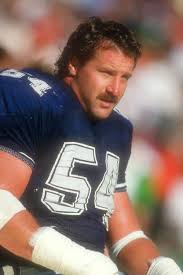
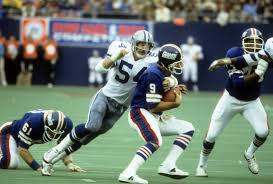
The Story And Significance Of Randy White - Seven Time First Team All-Pro At Defensive Tackle

Randall Lee White, nicknamed "the Manster", is an American former professional football player who was a defensive tackle for the Dallas Cowboys in the National Football League from 1975 to 1988. He played college football for the Maryland Terrapins from 1972 to 1974. He is a member of the College Football Hall of Fame (1994), the Pro Football Hall of Fame (1994) and the Delaware Sports Hall of Fame (1994).

White was the Dallas Cowboys' first pick and the second player selected in the 1975 NFL draft, and was moved to middle linebacker, where he was a backup to Cowboy legend Lee Roy Jordan, playing mostly on special teams his first two seasons, including his rookie season when Dallas lost to the Pittsburgh Steelers in Super Bowl X. Jordan retired following the 1976 season, and his slot was filled by Bob Breunig, who held the position the next nine seasons. During his third season (1977), White was moved to right defensive tackle, the same position formerly occupied by "Mr. Cowboy", Bob Lilly, from 1961 through 1974, a move which in turn moved veteran Larry Cole back to his natural defensive end position (backing up Ed "Too Tall" Jones and Harvey Martin, though he did play left defensive tackle after the retirement of Jethro Pugh.

That year would prove to be his breakout year; he was named to his first All-Pro team, his first Pro Bowl, and (on his 25th birthday) was named co-MVP of Super Bowl XII with teammate Harvey Martin, making him one of ten defensive players to win that honor. In 1978, White was named the NFC Defensive Player of the Year, and would be named to nine consecutive All-Pro and Pro Bowl teams. He would retire in 1988 (coincidentally, also the last season on the sidelines for original Cowboys coach Tom Landry), having played 209 games in 14 seasons, only missing one game during that span. At the time of his retirement, he had played the second most of any Dallas Cowboy in history. During those 14 years, he played in three Super Bowls, six NFC Championship Games, and accumulated 1,104 tackles (701 solo) and 111 sacks. His highest single season sack total was 16 in 1978. He was elected to the Pro Football Hall of Fame in 1994. On the occasion of the 35th anniversary of the naming of the only co-MVPs in Super Bowl history, Super Bowl XLVII, which like Super Bowl XII was played in New Orleans, Louisiana, was dedicated to White. Harvey Martin had died in 2001.

Gradually, the accumulation of injuries began to limit White's effectiveness. He was credited with only 64 tackles in the 1987 season (a season in which White made the controversial choice to cross the picket line during the players' strike); this followed shoulder surgery the previous year and a bulging disc in his neck that worsened. In 1988, he played in a backup role, not assuming a three-point stance because of the disability. White openly and honestly acknowledged his frustration that he could no longer play at the level at which he was accustomed, and he decided to retire after the 1988 season.

White married Dallas model Vicci Haney, in 1978. They have one child together, daughter Jordan.

White is nicknamed "The Manster" (half man, half monster). He studied Thai Boxing under Chai Sirisute, the founder of the Thai Boxing Association of the USA. White's round kick reportedly registered 400 psi on a gauge after two months of training.

Sources
https://www.pro-football-reference.com/
https://www.profootballarchives.com/index.html
https://americanfootballdatabase.fandom.com/wiki/Football_Wiki
https://www.gridiron-uniforms.com/GUD/controller/controller.php?action=main
https://www.profootballhof.com/hall-of-famers/
 "Delaware Sports Museum and Hall of Fame in Wilmington, Delaware - 1994". www.desports.org.
 Staff Report. "The State of Football: Delaware; Looking at the past, present and future of high school football in the First State". MaxPreps.com. Retrieved February 14, 2022.
 "Grant Recipients". dfrcfoundation.org. Retrieved February 14, 2022.
 "DFRC Blue-Gold All Star Football Game". dfrcfoundation.org. Retrieved February 14, 2022.
 Vancil, Mark ed., ABC Sports College Football All-Time All-America Team. 2000, Hyperion Press ISBN 0-7868-6710-8
 "Randy White". College Football Hall of Fame. Football Foundation. Retrieved December 5, 2006.
 Maisel, Ivan (August 16, 1999). "Team of the Century". Sports Illustrated. 91 (6).
 Pro Football Hall of Fame Member Biography for Randy White Retrieved January 16, 2007
 "Manster". profootballhof.com. Retrieved February 26, 2008.
 Thomas, David, Dallas Cowboys in the Hall of Fame: Their Remarkable Journeys to Canton, Rowman and Littlefield, 2016, p.154
 "10 things to know about Cowboys legend Randy White: From his brief Hollywood career to fighting an ex-teammate". SportsDay.com. Archived from the original on April 21, 2018. Retrieved April 20, 2018.
 "Views from the Loon: The Manster-half man, half monster, Randy White". Fansided.com. July 13, 2012. Retrieved April 20, 2018.
 ""Manster"". Pro Football Hall of Fame. Retrieved April 20, 2018.
 Karate/Kung Fu Illustrated, March 1987.

Monday, April 22, 2024

The Story And Significance Of Jackie Smith - Highest Average Yards Per Catch Among All Tight Ends In NFL History

Jackie Larue Smith is an American former football tight end who played in the National Football League for the St. Louis Cardinals and the Dallas Cowboys. He played college football for the Northwestern State Demons. He was inducted into the Pro Football Hall of Fame in 1994.

Smith was selected by the St. Louis Cardinals in the tenth round (129th overall) of the 1963 NFL draft, based on the recommendation of Jack Rockwell, then a Cardinals trainer and a part-time scout, who saw him in a spring game during his senior season, where he showed enough speed to stand out. He was a part of a group of 10 rookies that made the team that year.

He was originally projected to play flanker, but was named the starter at tight end after Taz Anderson was injured. In the fifth game of the season against the Pittsburgh Steelers, he posted 212 yards and 2 touchdowns on 9 receptions, while playing a key role in a 24–23 win. He would not relinquish his starter position and would become a team co-captain.

Besides being a talented receiver, Smith displayed elite conditioning and ran with great determination, not only avoiding tacklers but also running through them. He was an excellent blocker, in an era where the tight ends were expected to block more than feature their receiving skills. He was the team starting punter from 1964 to 1966, until Chuck Latourette took over the role.

His best season came in 1967, when in 14 games he registered 56 receptions for 1,295 (third on the league), 21.5 yard-average per reception and 9 touchdowns. Smith proved his durability by playing in 121 straight games, until suffering torn ligaments in the ninth game of the 1971 season.

In 1974 and 1975, he was a part of the NFC East divisional champions. In 1975, although he played in only 9 games, he contributed to the Cardinals setting an NFL record by allowing only 8 sacks in 14 games.

Injuries that included a problem with the arch in one foot and a spinal condition (his arms would go numb after being tackled) affected him in his last two years.

In 1976, he was passed on the depth chart by J. V. Cain and was relegated to a backup role. On December 4, 1977, he announced his retirement after playing 15 seasons and 198 games. In August 1978, it was reported in the media that the Cardinals contacted Smith to return, but no contract was offered.

Smith played in five straight Pro Bowls and posted more than 40 receptions in seven seasons. He is tied for the most seasons played in a Cardinals uniform with 15 and had a string of 45 straight games with at least one reception. Despite his individual accomplishments, the franchise's success proved fleeting, as the Cardinals only made the playoffs twice in Smith's 15 seasons with them, and were eliminated both times in their first round, with Smith catching only one pass in each game.

On January 29, 1994, Smith was officially voted into the Pro Football Hall of Fame in Canton, Ohio, as the third tight end to ever receive this honor and recognized as one of the key players that helped revolutionize the position. In 1994, he was inducted into the Missouri Sports Hall of Fame. In 2001, he was inducted into the St. Louis Walk of Fame. In 2009, he was inducted into the St. Louis Sports Hall of Fame.

In late September 1978, the Cowboys needed to add depth at tight end after Jay Saldi fractured his arm in the fourth game of the season against the St. Louis Cardinals. Head coach Tom Landry called Smith on Monday, September 25, looking to convince him to come back from retirement and sign with the defending Super Bowl champions on September 28.

He reported to the team on Thursday, September 28, and provided depth against the Washington Redskins three days later. Although he was the oldest player (38 years old) in the Dallas Cowboys roster, not many could keep up with his running ability.

During the regular season, he was used as a blocking tight end in goal-line formations and did not record a start or a reception. He received a game ball for his blocking after a win against the Philadelphia Eagles.

In the NFC divisional playoff game against the Atlanta Falcons, the Cowboys were behind 20–13 in the third quarter and their starting quarterback Roger Staubach was out of the game with a concussion. Backup quarterback Danny White found Smith in the end zone (one of his 3 receptions) to tie the game and contribute to a 27–20 comeback win.

Smith eventually made his only trip to the Super Bowl, which would end up leaving a mark on his career. With the Cowboys trailing the Pittsburgh Steelers 21–14 in the third quarter of Super Bowl XIII, Smith dropped a third-down pass in the end zone from Staubach, so instead of tying the score, the team had to settle for a field goal. Although this wasn't the only critical play or turning point of the game and Staubach has also stated at different times that it was a poorly thrown pass, because it was such an iconic play, Smith was singled out in the media for the 35–31 loss. ESPN ranked Smith's dropped pass in the end zone #24 on their list of "100 Greatest Super Bowl Moments".

Smith retired again, even though the Cowboys still wanted him back for the 1979 season. At the time, Smith's 7,918 career receiving yards were the most ever by an NFL tight end, until he was surpassed by Ozzie Newsome's 7,980 yards in 1990. His 16.5 yards per catch average is currently the highest among all tight ends in the Hall of Fame.

Smith has worked in the marketing of Hobie Cat boats, including pedal kayaks and the Mirage Pro Angler. He has performed the national anthem at different sporting events.

Sources
https://www.pro-football-reference.com/
https://www.profootballarchives.com/index.html
https://americanfootballdatabase.fandom.com/wiki/Football_Wiki
https://www.gridiron-uniforms.com/GUD/controller/controller.php?action=main
https://www.profootballhof.com/hall-of-famers/
"Jackie Smith Stats, Height, Weight, Position, Draft, College". Pro-Football-Reference.com. Retrieved March 30, 2025.
 "Jackie Smith | Pro Football Hall of Fame". pfhof. Retrieved March 30, 2025.
 Brock, Todd (May 30, 2021). "Stars of the Cowboys' Past: Super Bowl drop doesn't define Jackie Smith's Hall of Fame career (USA Today)". Cowboys Wire. Retrieved March 30, 2025.
 "Gold Jacket Spotlight: Jackie Smith Never Quit | Pro Football Hall of Fame". pfhof. Retrieved March 30, 2025.
 Smith, Don (1994). "Jackie Smith: Revolutionary Receiver" (PDF). Coffin Corner. 16 (6).
 Baskin, Ben (January 19, 2016). "Jackie Smith talks extensively about the drop that almost ruined his life". Sports Illustrated. Retrieved January 22, 2021.
 "Jackie Smith (1980) - N-Club Hall of Fame". Northwestern State University Athletics. Retrieved March 30, 2025.
 "Louisiana Sports Hall of Fame Inductee". Archived from the original on June 30, 2018. Retrieved January 23, 2021.
 Dunne, Tyler (November 24, 2022). "Tears & Beers: How Jackie Smith found himself". www.readoptional.com. Retrieved March 30, 2025.
 "1963 NFL Draft Listing". Pro-Football-Reference.com. Retrieved March 30, 2025.
 Olderman, Murray (November 21, 1963). "Three P's Make a Pro – Cards' Rookies Master 'Em; Preparation, Passion, Pride". The Florence Times. Florence, Alabama. Retrieved December 20, 2021.
 "Large Group Impressive: Mackey, Flatley Top NFL Rookies". Sarasota Journal. Sarasota, Florida. Associated Press. October 29, 1963. Retrieved December 20, 2021.
 "Big Red Tackles Powerful Green Bay Packers Sunday". The Southeast Missourian. Cape Girardeau, Missouri. October 18, 1963. Retrieved December 20, 2021.
 "Pittsburgh Steelers at St. Louis Cardinals - October 13th, 1963". Pro-Football-Reference.com. Retrieved March 30, 2025.
 Underwood, Bob (July 23, 2023). "The 10 Greatest Big Red Games From the 1960s". THE BIG RED ZONE. Retrieved March 30, 2025.
 "Chuck Latourette Stats, Height, Weight, Position, Draft, College". Pro-Football-Reference.com. Retrieved March 30, 2025.
 "1967 NFL Pro Bowlers". Pro-Football-Reference.com. Retrieved March 30, 2025.
 "1966 NFL Pro Bowlers". Pro-Football-Reference.com. Retrieved March 30, 2025.
 "1968 NFL All-Pros". Pro-Football-Reference.com. Retrieved March 30, 2025.
 "1969 NFL Pro Bowlers". Pro-Football-Reference.com. Retrieved March 30, 2025.
 "1970 NFL Pro Bowlers". Pro-Football-Reference.com. Retrieved March 30, 2025.
 "Jackie Smith Out for Year". Pittsburgh Post-Gazette. November 19, 1971. Retrieved December 20, 2021.
 "John Mackey Stats, Height, Weight, Position, Draft, College". Pro-Football-Reference.com. Retrieved March 30, 2025.
 "John Mackey | Pro Football Hall of Fame". pfhof. Retrieved March 30, 2025.
 "Mike Ditka Stats, Height, Weight, Position, Draft, College". Pro-Football-Reference.com. Retrieved March 30, 2025.
 "Mike Ditka | Pro Football Hall of Fame | Pro Football Hall of Fame". pfhof. Retrieved March 30, 2025.
 Detillier, Mike (October 16, 2011). "The rise of the tight end". The Courier. Retrieved March 30, 2025.
 "1974 St. Louis Cardinals Rosters, Stats, Schedule, Team Draftees". Pro-Football-Reference.com. Retrieved March 30, 2025.
 "1975 St. Louis Cardinals Rosters, Stats, Schedule, Team Draftees". Pro-Football-Reference.com. Retrieved March 30, 2025.
 Urban, Darren (October 30, 2024). "The Historical - And Current - Context Of Sack-Less Protection Streak". Arizona Cardinals. Retrieved March 30, 2025.
 "Record-Holding Smith To Retire". The Blade. Toledo, Ohio. December 6, 1977. Retrieved December 20, 2021.
 "Jackie Smith returns". The Michigan Daily. Ann Arbor, Michigan. September 29, 1978. Retrieved December 20, 2021.
 https://www.sports-reference.com/stathead/tiny/pNQiQ
 https://www.sports-reference.com/stathead/tiny/lEyIt
 "Divisional Round - St. Louis Cardinals at Minnesota Vikings - December 21st, 1974". Pro-Football-Reference.com. Retrieved March 30, 2025.
 "Divisional Round - St. Louis Cardinals at Los Angeles Rams - December 27th, 1975". Pro-Football-Reference.com. Retrieved March 30, 2025.
 "Jackie Smith Out To Have 'Super' Fun". Florence Times–Tri-Cities Daily. Florence, Alabama. January 18, 1979. Retrieved December 20, 2021.
 "Former Cardinal Signs With Dallas". The Victoria Advocate. Victoria, Texas. September 29, 1978. Retrieved December 20, 2021.
 "'Happy As A Town Hog In Slop'". Evening Independent. St. Petersburg, Florida. January 1, 1979. Retrieved December 20, 2021.
 Katz, Michael (January 22, 1979). "Henderson Says he's not ashamed". The Day. New London, Connecticut. Retrieved December 20, 2021.
 "Jackie Smith dream became a nightmare". The Gazette. Montreal. Associated Press. January 22, 1979. Retrieved December 20, 2021.
 Jackson, Kevin; Merron, Jeff; Schoenfield, David. "100 Greatest Super Bowl Moments". ESPN Page 2. Retrieved December 20, 2021.
 "Ozzie Newsome, Executive Vice President, Baltimore Ravens". www.baltimoreravens.com. Retrieved March 30, 2025.
 "Ozzie Newsome Stats, Height, Weight, Position, Draft, College". Pro-Football-Reference.com. Retrieved March 30, 2025.
 "Pro Football TE Hall of Fame Monitor". Pro-Football-Reference.com. Retrieved March 30, 2025.
 "For combined seasons, up to 2025, played TE, in the regular season, sorted by descending Receiving Yds". Stathead.
 Moore, Tim. "Jackie Smith". St Louis Sports Hall of Fame. Retrieved March 30, 2025.
 "Missouri Sports Hall of Fame Inductee". Retrieved January 22, 2021.
 St. Louis Walk of Fame. "St. Louis Walk of Fame Inductees". stlouiswalkoffame.org. Archived from the original on October 31, 2012. Retrieved April 25, 2021.
 "St. Louis Sports Hall of Fame Inductee". Retrieved January 22, 2021.
 Glynn Harris (July 24, 2008). "Pleasure at the Pump". Louisiana Sportsman. Retrieved January 23, 2021.
 Hotop, Justin (March 29, 2018). "Smith speaks to students on character". Perryville News.

Wednesday, April 17, 2024

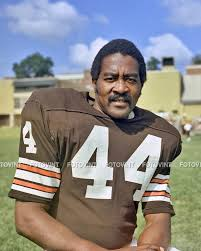
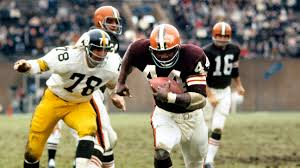
The Story And Significance Of Leroy Kelly - Named All-NFL Five Times And To Six Pro Bowls

Leroy Kelly is an American former professional football player who was a running back for the Cleveland Browns in the National Football League from 1964 to 1973. He was inducted into the Pro Football Hall of Fame.

Kelly had attended Simon Gratz High School in Philadelphia and Morgan State University in Baltimore. He was selected by the Browns in the eighth round of the 1964 NFL draft. As a Cleveland rookie he was a key return man, averaging 24.3 yards per return and contributing to the Browns' 1964 NFL championship, and backup running back behind featured fullback Jim Brown and blocking halfback Ernie Green. He moved up to become the Browns' featured running back after Brown's retirement at the end of the 1965 season.

When Jim Brown retired before the 1966 season, Kelly became the starter. For the next three years, he rushed for 1,000 yards, led the NFL in rushing touchdowns, and won All-NFL and starting Pro Bowl honors. Kelly also played in three other Pro Bowls following the 1969, 1970 and 1971 seasons, and earned first-team All-NFL in 1969 and 1971. In 1968, he scored a touchdown in a franchise-record 12 games, and two-or-more touchdowns in a franchise-record 7. In game 12 of the 1970 season, he passed Bill Brown as the career rushing-yards leader among active players, a position he maintained until his retirement in 1974. Kelly led the NFL in rushing for two consecutive seasons (1967–1968). He also was a talented punt and kick returner, who averaged 10.5 yards per punt return and 23.5 yards per kick return for his career.

Kelly ended his pro career with the Chicago Fire of the World Football League in 1974, rushing for 315 yards (4.1 average) and catching 8 passes for 128 yards (16.0 average).

At the time of his retirement Kelly, had rushed for 7,274 yards (then 4th all-time to Jim Brown, Joe Perry, and Jim Taylor) and 74 touchdowns (3rd) on 1,727 carries for 4.2 yards per carry. He also caught 190 passes for 2,281 yards and 13 touchdowns. On special teams, he returned 94 punts for 990 yards and 3 touchdowns, and 76 kickoffs for 1,784 yards. Overall, he gained 12,330 all-purpose yards and scored 90 touchdowns. He was named All-NFL five times and to six Pro Bowls.

After his retirement as an active player, he remained in the World Football League as the Philadelphia Bell's offensive backfield coach, joining two other Hall of Famers on that staff, former Green Bay Packers defensive backfield standouts Willie Wood (the first black head coach in pro football history) and Herb Adderley (defensive coordinator).

Kelly was voted to the Pro Football Hall of Fame in 1994.

Pat Kelly, his younger brother, was an All-Star outfielder who played for five teams during a 15-year Major League Baseball career. Felicia Kelly, only daughter, worked in news 20 years at WEWS Newschannel 5; engineering department, news source reporter, hosted a half-hour entertainment show called,"The Set" in Cleveland, Ohio. Now an educator in the Cleveland Public School System. David Kelly, his eldest son, is sports anchor and reporter for KMSB-TV in Tucson, Arizona. Leroy Kelly II his second son, played 3 years in the American Indoor Football League and 1 year overseas in the GFL Germany League For the Kiel-Baltic Hurricanes. Leroy Kelly II was invited to 2 workouts with the Cleveland Browns and 1 with the Detroit Lions.

Sources
https://www.pro-football-reference.com/
https://www.profootballarchives.com/index.html
https://americanfootballdatabase.fandom.com/wiki/Football_Wiki
https://www.gridiron-uniforms.com/GUD/controller/controller.php?action=main
https://www.profootballhof.com/hall-of-famers/
 "Leroy Kelly". ProFootballHOF.com. Pro Football Hall of Fame Official Site. Retrieved July 12, 2019.
 Rosa, Poch de la (February 5, 2023). "The Life And Career Of Leroy Kelly (Story)". Pro Football History. Retrieved October 25, 2024.
 Tulsa, Alfonso L. "Pat Kelly – Society for American Baseball Research". sabr.org. Retrieved October 25, 2024.
 Goldstein, Alan (July 28, 1994). "Hall Of Fame A Rush For Kelly". Baltimore Sun.
 Naedele, Walter F. (March 4, 2010). "Louis E. DeVicaris, coach at Gratz, principal at King". Philadelphia Inquirer.
 "Morgan State University Named 'HBCU Institutional Leader' by Fulbright Program". Morgan State University Newsroom. Retrieved October 25, 2024.
 "Leroy Kelly enshrined in Black College Football Hall of Fame". morganstatebears.com. Retrieved July 7, 2019.
 Mahon, Tom (August 4, 2014). "Wilt tops list of top pros from city leagues". Philadelphia Inquirer.
 "Philadelphia Sports Hall of Fame". www.phillyhall.org. Retrieved October 25, 2024.
 "Leroy Kelly (1977) - Hall of Fame". Morgan State University Athletics. Retrieved October 25, 2024.
 McManamon, Pat (April 20, 2016). "Draft's eighth round gave Browns Hall of Famer Leroy Kelly". ESPN.com. ESPN, Inc. Retrieved July 7, 2019.
 "Leroy Kelly: Career Stats". NFL.com. NFL Enterprises, LLC. Retrieved July 11, 2019.
 "Gold Jacket Spotlight: Leroy Kelly Excelled As 'Next Man Up' | Pro Football Hall of Fame". pfhof. Retrieved October 25, 2024.
 "Jim Brown, football great and activist, dies at 87". ESPN.com. May 19, 2023. Retrieved October 24, 2024.
 Kasabian, Paul. "Browns Legend Jim Brown Becomes 1st Player Named to NFL's All-Time Team". Bleacher Report. Retrieved October 24, 2024.
 "Leroy Kelly: Career Stats". NFL.com. Retrieved July 7, 2019.
 "NFL Rushing Touchdowns Single-Season Leaders". ProFootballReference.com. Retrieved July 7, 2019.
 "Leroy Kelly learned from Jim Brown, became one of NFL's most feared ball carriers". ClevelandBrowns.com. Retrieved July 12, 2019.
 "Leroy Kelly Stats". ProFootballReference.com. Retrieved July 12, 2019.
 "WFL World Football League". Archived from the original on July 15, 2009. Retrieved April 23, 2010.
 1974 Rushing yards career leaderboard
 1974 Rushing TD career leaderboard
 "Player BIO". profootballhof.com. Retrieved July 7, 2019.
 "Leroy Kelly". phillyhall.org. Retrieved July 7, 2019.
 "And Still Another First". Johnson Publishing Company. November 1975. Retrieved July 12, 2019.
 "Leroy Kelly, Class of 1994". ProFootballHOF.com. Retrieved July 7, 2019.
 Fitzpatrick, Frank (October 23, 2013). "Leroy Kelly selected for Black College Hall". Philadelphia Inquirer.
 "Leroy Kelly | Pro Football Hall of Fame". pfhof. Retrieved October 25, 2024.
 Rasmussen, Frederick N. (October 4, 2005). "Pat Kelly, 61, outfielder for Orioles, evangelical minister". The Baltimore Sun. Retrieved July 7, 2019.
 Cabot, Mary Kay (May 31, 2012). "Cleveland Browns will try out Leroy Kelly Jr., son of their Hall of Fame running back, on Monday". Cleveland.com. Retrieved July 8, 2019.

Monday, April 15, 2024

The Story And Significance Of Jimmy Johnson - Eight Time All-Pro At Cornerback

James Earl Johnson is an American former professional football player and Olympic track athlete.

Johnson was born in Dallas and raised in Kingsburg, California. He is the younger brother of Rafer Johnson, winner of the decathlon gold medal at the 1960 Summer Olympics. Johnson played college football and ran track at UCLA. He won the NCAA 110-meter hurdles championship and was named an All-American in track and field.

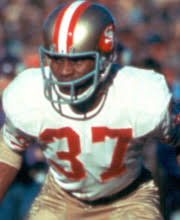
Johnson was the sixth player selected in the 1961 NFL draft and played for the San Francisco 49ers in the National Football League from 1961 to 1976. He was selected four times as a first-team All-Pro and played in five Pro Bowls. His jersey (No. 37) was permanently retired by the 49ers in 1977. In 1980, he was named as a first-string cornerback on the NFL 1970s All-Decade Team, and in 1994 he was inducted into the Pro Football Hall of Fame.

Johnson was selected by the San Francisco 49ers in the first round (sixth overall pick) of the 1961 NFL draft and by the San Diego Chargers in the fourth round (31st overall pick) of the 1961 AFL Draft. He signed with the 49ers in June 1961. As a rookie, Johnson appeared in 12 games for the 1961 49ers, played at the cornerback position, and intercepted five passes for a career-high 116 return yards. He became a wide receiver in 1962 and caught 34 passes for 626 yards and four touchdowns. His most productive game as a wide receiver came against the Detroit Lions, in which he caught 11 passes for 181 yards. Earlier that season, he caught a game-winning 80-yard touchdown reception against the Chicago Bears, which at the time was the longest scoring pass in 49ers history. Johnson returned to defense in 1963 and played principally at safety and cornerback for the rest of his career. He remained with the 49ers for 16 years through the 1976 season, appearing in 213 NFL games.

During his 16 years in the NFL, Johnson intercepted 47 passes for 615 return yards and two touchdowns in his NFL career. He was selected four times as a first-team All-Pro: 1969 (AP, UPI), 1970 (AP, NEA, Pro Football Writers, Pro Football Weekly), 1971 (AP, NEA, Pro Football Writers, Pro Football Weekly), and 1972 (AP, NEA, Pro Football Writers, Pro Football Weekly). He was also selected to play in five Pro Bowls (1969–1972, 1974). According to his biography at the Pro Football Hall of Fame, Johnson is regarded as "one of the best man-to-man defenders in history."

Johnson has received numerous honors for his football career. In 1977, the 49ers retired Johnson's jersey (No. 37) during halftime of a Monday night game dubbed "Jimmy Johnson Night at Candlestick Park." In 1978, Johnson was inducted into the Fresno Athletic Hall of Fame. In 1980, Johnson and Willie Brown were named the first-string cornerbacks on the NFL 1970s All-Decade Team. In 1990, Johnson was inducted into the Bay Area Sports Hall of Fame. In 1992, Johnson was inducted into the UCLA Athletics Hall of Fame. In 1994, he was inducted into the Pro Football Hall of Fame. In 2009, he was one of the charter inductees into the San Francisco 49ers Hall of Fame.

Sources
https://www.pro-football-reference.com/
https://www.profootballarchives.com/index.html
https://americanfootballdatabase.fandom.com/wiki/Football_Wiki
https://www.gridiron-uniforms.com/GUD/controller/controller.php?action=main
https://www.profootballhof.com/hall-of-famers/
 "Jimmy Johnson Stats". Pro-Football-Reference.com. Sports Reference LLC. Retrieved April 9, 2017.
 "1978 Inductees". Fresno County Athletic Hall of Fame. Archived from the original on April 12, 2017. Retrieved April 9, 2017.
 "They Shall Not Pass-That's Johnson's Credo". The Sporting News. November 21, 1970.
 "Santa Monica College a Football Factory?". smccorsairs. June 21, 2015. Retrieved June 28, 2024.
 "Jimmy Johnson Biography". Pro Football Hall of Fame. Retrieved April 9, 2017.
 "Jim Johnson College Stats". SR/College Football. Sports Reference LLC. Retrieved April 9, 2017.
 "Famous Pilams". Pi Lambda Phi Fraternal Organization.
 "Kilmer, Johnson Sign 49er Pacts". Reno Gazette-Journal. June 14, 1961. p. 20.
 "49ers Snap Chicago Jinx On Record Scoring Pass". Daily Independent Journal. United Press International. October 15, 1962. p. 10. Retrieved April 11, 2017 – via Newspapers.com.
 Inman, Cam (May 9, 2024). "Jimmy Johnson, legendary 49ers cornerback and Hall of Famer, dies at 86". The Mercury News. Retrieved May 9, 2024.
 Gordon, Grant (May 9, 2024). "49ers legend Jimmy Johnson dies at 86; Hall of Fame corner spent all 16 NFL seasons in San Francisco". NFL.com. Retrieved May 11, 2024.
 "49ers honor Jimmy Johnson this evening". Ukiah Daily Journal. December 12, 1977. p. 6.
 "Shula, Guy, O.J. on All-Decade team". The Akron Beacon-Journal. August 3, 1980. p. C12.
 "1990". Bay Area Sports Hall of Fame. Archived from the original on June 16, 2011. Retrieved November 11, 2009.
 "Names in the News". Los Angeles Times. April 21, 1992. p. C8.
 "Dorsett spearheads new picks for Hall". Daily Press (VA). January 30, 1994. p. 5.
 "49ers Announce Edward DeBartolo Sr. 49ers Hall of Fame". San Francisco 49ers. May 12, 2009. Retrieved September 30, 2016.

Wednesday, April 10, 2024

The Story And Significance Of Bud Grant - Coached The Vikings To Four Super Bowls In Eight Years

Harry Peter "Bud" Grant Jr. was an American professional gridiron football player and coach in the National Football League and Canadian Football League (CFL). Grant was head coach of the NFL's Minnesota Vikings for 18 seasons; he was the team's second (1967–83) and fourth (1985) head coach, leading them to four Super Bowl appearances, 11 division titles, one league championship and three National Football Conference championships. Before coaching the Vikings, he was the head coach of the Winnipeg Blue Bombers for 10 seasons, winning the Grey Cup four times.

Grant attended the University of Minnesota and was a three-sport athlete, in football, basketball, and baseball. After college, he played in the National Basketball Association (NBA) for the Minneapolis Lakers where he won the 1950 NBA Finals. Grant left the NBA to play in the NFL with the Philadelphia Eagles before leaving for the Winnipeg Blue Bombers of the CFL. A statue of Grant stands in front of the Winnipeg Blue Bombers' current stadium, IG Field.

Grant is the most successful coach in both Vikings and Blue Bombers history. He is the fifth-most winningest coach in professional football history with a combined 286 wins in the NFL and CFL. Grant was elected to the Canadian Football Hall of Fame in 1983 and to the Pro Football Hall of Fame in 1994. He was the first coach to guide teams to both the Grey Cup and the Super Bowl, the only other being Marv Levy.

He graduated from high school in 1945 and enlisted in the U.S. Navy during World War II. He was assigned to the Great Lakes Naval Training Station in Illinois and played on the football team coached by Paul Brown. Using an acceptance letter from the University of Wisconsin–Madison to be discharged from the service, Grant decided to attend the University of Minnesota instead. He was a three-sport, nine-letterman athlete in football, basketball, and baseball for the Minnesota Golden Gophers, earning All-Big Ten Conference honors in football twice.

While at the University of Minnesota, Grant was a member of the Phi Delta Theta fraternity.

After leaving the University of Minnesota, Grant was selected in both the NFL and NBA draft. He was selected in the first round (14th overall) of the 1950 NFL draft by the Philadelphia Eagles and fourth round (47th overall) selection of the Minneapolis Lakers in the 1950 NBA draft. He played 35 games during the 1949–50 NBA season and signed with the Lakers for the 1950–51 NBA season. He chose to continue his basketball career with the Lakers because they were local and because he was offered a raise to stay for the season. Grant's close friend Sid Hartman was the Lakers' general manager, which may have influenced his decision to remain with the team. He averaged 2.6 points per game in his two seasons as a reserve with the Lakers and was a member of the 1950 championship team. After the death of Arnie Ferrin in 2022, he became the oldest living NBA champion.

After two seasons in the NBA, Grant decided to end his professional basketball career. He contacted the Philadelphia Eagles of the NFL and agreed to play for the team during the 1951 NFL season. In his first season with the Eagles, Grant played as a defensive end and led the team in sacks (an unofficial statistic at the time). He switched to offense as a wide receiver for his second season with the club and ranked second in the NFL for receiving yardage, with 997 yards on 56 catches, including seven touchdowns.

Grant's contract expired at the end of the 1952 NFL season and the Eagles refused to pay him what he thought he was worth. The Winnipeg Blue Bombers of the CFL had been interested in Grant while in college. Grant left for Winnipeg, Manitoba in 1953 and became the first professional player to "play out his option" and leave for another team. He played for the Blue Bombers until 1956 as an offensive end and was named a Western Conference all-star three times. He led the Western Conference in pass receptions for the 1953, 1954, and 1956 seasons and receiving yards for the 1953 and 1956 seasons. He also holds the distinction of having made five interceptions in a playoff game, played on October 28, 1953, which is a record in all of professional football. The Blue Bombers played for the Grey Cup in 1953, but lost to the Hamilton Tiger-Cats in the 41st Grey Cup game.

Blue Bombers management decided that they needed a new coach prior to the 1957 season. On January 30, 1957, Grant accepted the Blue Bombers head coaching position after impressing management with his ability to make adjustments on offense and defense as a player. Club president J. T. Russell thought that Grant could coach even though nobody else did. Grant remained the head coach of the Blue Bombers until 1966. At age 29 (he was 30 by the time he coached his first game), Grant became the youngest head coach in CFL history.

During his ten seasons as head coach in Winnipeg, he led the team to six Grey Cup appearances winning the championship four times in 1958, 1959, 1961, and 1962. He finished his Blue Bombers coaching career with a regular season record of 105 wins, 53 losses, and two ties and an overall record of 122 wins, 66 losses, and 3 ties. Grant was the CFL Coach of the Year in 1965. Grant took on additional responsibilities as a club manager between 1964 and 1966. Max Winter, the Minnesota Vikings founder, contacted Grant in 1961 and asked him to coach the new NFL expansion team. Grant declined the offer and remained in Winnipeg until 1967 when Winter and General Manager Jim Finks were successful in luring Grant to Minnesota.

The Minnesota Vikings hired Grant as their head coach on March 11, 1967, taking over from their original coach, Norm Van Brocklin.

Over his tenure as Vikings head coach, Grant was known for instilling discipline in his teams and displaying a lack of emotion during games. He believed that football is a game of controlled emotion and teams would not follow the coach's lead if he were to panic or lose his poise during the course of a game. He required his team to stand at attention in a straight line during the entire national anthem played before the game and even had national anthem practice. Grant required outdoor practice during the winter to get players used to the cold weather and did not allow heaters on the sidelines during games. As per the latter practice it goes that Grant posited that with the heaters present on the sidelines the players would gather around the source of the warmth but if the heaters were not present the players would be paying attention to the game.

In his second year, Grant led the team to a divisional championship and his first NFL playoffs appearance. In 1969, he led the team to its first NFL Championship and their first appearance in the Super Bowl. The Vikings lost in Super Bowl IV to the American Football League champion Kansas City Chiefs. Prior to the 1970 season, Minnesota released Joe Kapp. After starting Gary Cuozzo at quarterback in 1970 and 1971, the Vikings re-acquired Fran Tarkenton prior to the 1972 season. During the 1970s, the Vikings appeared in three more Super Bowls (VIII, IX, and XI) under Grant and lost each one, but he was the first coach to lead a team to four Super Bowl appearances. He retired after the 1983 NFL season and was succeeded by Les Steckel, who led the team to a 3–13 record the following season. Steckel was fired as head coach after the 1984 season and Grant returned as coach for the Vikings in 1985. After one season where he returned the club to a 7–9 record, he stepped down again. Grant retired as the eighth most successful coach in NFL history with an overall record of 161 wins, 99 losses, and 5 ties. As of 2021, he also remains the most successful coach in Vikings history. During his tenure with the Vikings, he led the Vikings to four Super Bowl games, 11 division titles, one league championship, and three NFC championships.

Grant was the first coach to lead his teams to both a Grey Cup and a Super Bowl, with the only other one being Marv Levy.

After retiring, Grant became a less prominent public figure and focused on hunting and fishing as well as supporting environmental reforms. He was a spokesperson against Native American hunting and fishing treaty rights in Minnesota. In 1993, Grant's efforts resulted in a death threat. In 2005, he spoke at a Capitol rally in Minnesota for the conservation of wetlands, wetland wildlife, and water. Grant addressed 5,000 supporters, saying, "In this legislative session, we want to see some action. It's more important than any stadium they could ever build in this state." In 1983, Grant was inducted into the Canadian Football Hall of Fame and in 1994, he would be inducted into the Pro Football Hall of Fame by Sid Hartman, who was by then a senior Minnesota sports columnist.

Until his death, Grant was still listed as a consultant for the Vikings and maintained an office at the team's headquarters at TCO Performance Center in Eagan, Minnesota.

In 2004, Bud Grant would be asked to return to the position of Vikings head football coach by Red McCombs, hypothetically replacing Mike Tice. However, the deal would break down over the salary Grant would receive. As Grant would state afterwards, "I would have come back...for a short time, anyway. It certainly would have been exciting to do at 78 years old."

In 2014, the Winnipeg Blue Bombers unveiled a statue of Coach Grant outside IG Field. In 2016, Grant was inducted into the Blue Bomber ring of honour.

Bud married Pat in 1950, and they had six children (Kathy, Laurie, Harry III "Peter", Mike, Bruce, and Danny). Bruce died July 25, 2018, from brain cancer. Mike started coaching in 1979 at Minnetonka High School, then became the Forest Lake head coach from 1981 to 1986 and 1989 to 1991. In between those stints, Mike served as the Saint John's (Minnesota) offensive coach in 1987 and 1988. Mike has been the football head coach for Eden Prairie High School in Eden Prairie, Minnesota since 1992. Mike Grant has coached Eden Prairie to 11 state championships since he began his tenure at the school. Bud Grant's grandson Ryan Grant was a quarterback and linebacker at Eden Prairie and played at the University of Minnesota (2008–2012) as a linebacker. Bud's granddaughter Jenny is married to former NFL quarterback Gibran Hamdan.

Pat Grant died of Parkinson's disease on March 4, 2009, at age 81.

Bud Grant died at home in Bloomington, Minnesota, on March 11, 2023, at age 95.

Sources
https://www.pro-football-reference.com/
https://www.profootballarchives.com/index.html
https://americanfootballdatabase.fandom.com/wiki/Football_Wiki
https://www.gridiron-uniforms.com/GUD/controller/controller.php?action=main
https://www.profootballhof.com/hall-of-famers/
 "Grant's legacy still looms in Minnesota". Associated Press. August 12, 2006. Archived from the original on August 31, 2006. Retrieved May 25, 2007.
 Dawson, Chris (September 12, 2024). "O'Shea humbly becomes Blue Bombers all-time winning coach". Bay Today. Retrieved December 2, 2024.
 "Beating the Clock". American Football Monthly. June 1999. Archived from the original on September 28, 2007. Retrieved May 13, 2007.
 "Harry (Bud) Grant". Canadian Football Hall of Fame & Museum. Retrieved April 26, 2018.
 "Bud Grant". Pro Football Hall of Fame. Retrieved May 13, 2007.
 "History: Bud Grant". Viking Update. July 19, 2001. Archived from the original on June 29, 2007. Retrieved May 12, 2007.
 Kumpula, Carlo (May 9, 2007). "'The Glacier' and 'The Gladiator'". Spooner Advocate (Spooner, Wisconsin). Archived from the original on June 13, 2007. Retrieved May 13, 2007.
 Armistice Day Blizzard nearly claimed Bud Grant Star-Tribune, Accessed March 11, 2023
 "Bud Grant". Manlyweb.com. Retrieved May 13, 2007.
 Marshall, Brian (1998). "Bud Grant: Purple and Blue, Through and Through". Professional Football Researchers Association. Archived from the original on April 3, 2007. Retrieved May 13, 2007.
 1947 Minnesota Gopher yearbook, p.311, accessed August 13, 2020.
 "Bud Grant". Phi Delta Theta Fraternity. Retrieved March 11, 2023.
 "The 1950 NFL Draft". Pro Football Hall of Fame. Retrieved May 13, 2007.
 "1950 NBA Draft". Basketball-Reference.com. Retrieved May 13, 2007.
 "Bud Grant Statistics". Basketball-Reference.com. Retrieved May 28, 2007.
 "1950 Minneapolis Lakers". Basketball-Reference.com. Retrieved May 13, 2007.
 Florio, Mike (March 11, 2023). "Bud Grant dies at 95". ProFootballTalk. NBC Sports.
 "Bud Grant NFL Football Statistics". Pro Football Reference. Sports Reference LLC. Retrieved November 12, 2025.
 "Bud Grant". The Manitoba Sports Hall of Fame & Museum. Archived from the original on July 9, 2007. Retrieved May 13, 2007.
 "All-Time Playoff Records". CFL.ca. Retrieved May 13, 2007.
 Young, Lindsey (March 10, 2022). "5 Interceptions & a Pro Football Record: The Lesser-Known Bud Grant Story". Vikings.com. Retrieved August 28, 2025.
 "Harry Peter Bud Grant". CFL.ca. Retrieved May 13, 2007.
 Goodwin, Jack (March 11, 1967). "Bud Grant Named Vikings' Head Coach". Minneapolis Star. Archived from the original on August 19, 2013. Retrieved March 11, 2023.
 "Ex-Vikings HC Bud Grant's insane cold weather rituals". NFL.com. January 7, 2016. Retrieved February 29, 2024.
 Gordon, Grant (March 11, 2023). "Bud Grant, legendary Vikings head coach and Pro Football Hall of Famer, dies at age 95". National Football League.
 "Harry Bud Grant". College Basketball at Sports Reference. Retrieved March 12, 2023.
 "Bud Grant". Basketball Reference. Sports Reference. Retrieved November 17, 2022.
 "Bud Grant Coaching Record – Pro Football Archives". www.profootballarchives.com. Archived from the original on January 23, 2022.
 "Grant Receives A Death Threat". The New York Times. January 10, 1993. Archived from the original on January 30, 2013. Retrieved May 12, 2007.
 Anderson, Dennis (January 11, 2005). "Rally hats on". Minnesota Environmental Partnership. Archived from the original on September 29, 2007. Retrieved May 25, 2007.
 Schultz, Chris (April 11, 2005). "Open water has returned once again". Herald Journal. Archived from the original on March 23, 2006. Retrieved May 25, 2007.
 Bud Grant's Career Capsule Pro Football Hall of Fame, Accessed October 19, 2020
 "Minnesota Vikings | Front Office Staff". www.vikings.com.
 Grant, Bud; Bruton, Jim (2013). I Did It My Way: A Remarkable Journey to the Hall of Fame. Triumph Books. ISBN 9781623683153.
 "Blue Bombers unveil statue of coaching legend Bud Grant". CBC. Retrieved March 13, 2023.
 "Legendary coach Bud Grant going into Bombers Ring of Honour". CBC. September 26, 2016. Retrieved August 28, 2025.
 Brackin, Dennis; Rand, Mike. "Success has a price". Star Tribune. Archived from the original on June 7, 2007. Retrieved May 7, 2007.
 Rand, Michael (November 23, 2007). "Eagles' all-around game proves to be too much". Archived from the original on November 25, 2007. Retrieved November 24, 2007.
 Monter, Chris (April 5, 2007). "Ryan Grant Commits to Minnesota". GoldenSports.net. Archived from the original on December 20, 2007. Retrieved May 13, 2007.
 Jude, Adam (September 8, 2016). "For UW assistant coach Bush Hamdan, Seattle's been a happy reunion personally and professionally". The Seattle Times.
 Harlow, Tim (March 4, 2009). "Pat Grant, wife of Vikings coach, dies". Star Tribune. Archived from the original on March 7, 2009. Retrieved March 5, 2009.
 Belson, Ken (March 11, 2023). "Bud Grant, Longtime Minnesota Vikings Coach, Dies at 95". The New York Times. Retrieved March 11, 2023.
 "Hall of Fame Vikings coach Grant dies at age 95". ESPN.com. March 11, 2023.
 "Bud Grant". Pro Football History.com. May 20, 1927. Retrieved March 11, 2023.
 "Pete Carroll". Pro Football History.com.
 "Marc Trestman". Pro Football History.com.
 "Jerry Burns". Pro Football History.com.
 "Buddy Ryan". Pro-Football-Reference.com.
 "Neill Armstrong". Pro Football History.com.
 "Jack Patera". Pro Football History.com.
 "Bob Hollway". Pro Football History.com.
Bruton, Jim; Grant, Bud. I Did It My Way: A Remarkable Journey to the Hall of Fame, published by Triumph Books, 2013, ISBN 9781600787867
McGrane, Bill (1986). Bud: The Other Side of the Glacier. Harper & Row. ISBN 0-06-015583-3.

Wednesday, April 3, 2024

The Story And Significance Of Tony Dorsett - Retired As The Second All-Time Leading Rusher

Anthony Drew Dorsett Sr. is an American former football running back who played in the National Football League for the Dallas Cowboys and the Denver Broncos.

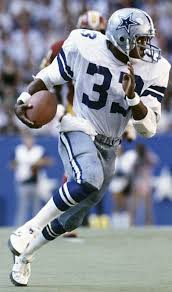
Raised in western Pennsylvania, Dorsett played college football for the Pittsburgh Panthers, where he led the Panthers to the national championship as a senior in the 1976 season and won the Heisman Trophy. He was the first-round, second overall draft choice of the Dallas Cowboys in the 1977 NFL draft. Dorsett was the NFL Offensive Rookie of the Year and played for the team for 11 seasons, through 1987. He won a Super Bowl title in his rookie season over the Denver Broncos, who he spent his final season with before retiring due to injuries. He is a member of the Pro Football Hall of Fame (1994) and the College Football Hall of Fame (1994).

Ahead of the 1977 NFL draft, scouts were skeptical about Dorsett's potential at the professional level, citing his small size as his primary liability in his long-term durability. After being passed over by the Tampa Bay Buccaneers with the first overall pick, the Dallas Cowboys selected him with the second overall pick, which they had acquired from the Seattle Seahawks in exchange for the 14th overall (Steve August), 30th overall (Tom Lynch), 41st overall (Terry Beeson), and 54th overall (Glenn Carano) picks; Dorsett had previously told the Seahawks that he would not play for them. Dorsett signed a five-year contract worth a reported $1.1 million, becoming the first contract in Cowboys history to exceed $1 million; it was the second-largest contract signed for a rookie that season, with first overall pick Ricky Bell beating Dorsett with a $1.2 million contract.

From the beginning, Dorsett and head coach Tom Landry had differing opinions on how he should run the ball. Landry initially designed precise running plays, but was eventually convinced that Dorsett was a different type of running back and instructed the offensive line to block and hold their man, while Dorsett chose the running lane with his gifted vision and instincts.

In 1977, Dorsett's rookie year, he provided an instant impact, rushing for 1,007 yards (including a 206-yard rushing effort against the Philadelphia Eagles), scoring 12 touchdowns, and earning rookie of the year honors. He set a new Cowboys rookie record and was also the only Cowboy to rush for more than 1,000 yards in his rookie season. He held the record for 39 years, until 2016, when Ezekiel Elliott surpassed 1,000 yards in his 9th game and broke Dorsett's record in game 10 with 1,102 yards.

He was named the starter in the 10th game of the season, and became the first player to win the college football championship, then win the Super Bowl the next year, when the Cowboys beat the Denver Broncos 27–10 in Super Bowl XII. In his second season, Dorsett recorded 1,325 yards and 9 touchdowns, with the Cowboys once again reaching the Super Bowl, although they lost 35–31 to the Pittsburgh Steelers in Super Bowl XIII.

In 1980, he had one of his best runs. With the ball on the four-yard line against the St. Louis Cardinals, the right defensive end and linebacker had penetration, while the two cornerbacks were blitzing. Dorsett suddenly pivoted on his right foot, turned 360 degrees, and ran wide around the left side, beating the safety and eluding a total of five defenders for a touchdown without being touched.

His most productive season was in 1981, when he recorded 1,646 yards, breaking the Cowboys' franchise record.

In 1982, his streak of five straight years with at least 1,000 rushing yards was interrupted by the strike-shortened season. Dallas only played 9 games, with Dorsett registering 745 yards and five touchdowns. In the final regular-season game against the Minnesota Vikings, he set a record that can only be tied, with a 99-yard touchdown run. Derrick Henry tied his record with a 99-yard touchdown run in 2018.

Prior to the 1985 season, he held out, demanding that his contract be renegotiated. Defensive tackle Randy White had been given a larger contract by the Cowboys.

In 1986, running back Herschel Walker was signed by the Cowboys and moved to fullback, so he could share backfield duties with Dorsett, becoming the second Heisman backfield tandem in NFL history, after George Rogers and Earl Campbell were teammates on the 1984 New Orleans Saints. This move created tension, as it would limit Dorsett's playing time, and because Walker's $5 million five-year contract exceeded his $4.5 million five-year contract. Although Dorsett was slowed by ankle and knee injuries that caused him to miss three games, he still led the Cowboys in rushing for the 10th consecutive season with 748 yards.

In 1987, Walker complained to Cowboys management that he was being moved around between three different positions (running back, fullback, wide receiver) and that Dorsett had more carries. He took over as the team's main running back, with Dorsett playing in 12 games (six starts) and rushing for 456 yards on 130 carries. Dorsett was not played in two games despite being healthy, which made him demand a trade.

On June 2, 1988, Dorsett was traded to the Denver Broncos in exchange for a conditional fifth-round draft choice. He left as the franchise's rushing leader (12,036 yards) and second in league history in postseason rushing yards (1,383).

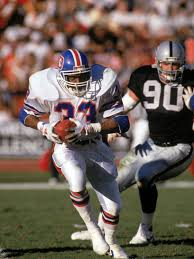
The Denver Broncos acquired Dorsett because they were desperate to improve their running game. He reunited with former Cowboys offensive coordinator Dan Reeves and at the age of 34, he reportedly could still run 40 yards in 4.3 seconds. With the retirement of Walter Payton the previous year, he was the career leader in rushing yards among active players. He also had a positive impact on the offense until being limited with injuries late in the season, appearing in 16 games (13 starts), while leading the team with 703 rushing yards and five rushing touchdowns. In a November 27, 1988, game against the Los Angeles Rams, Dorsett threw the only touchdown pass of his career (only the second pass completion in eight career attempts, with one interception), for 7 yards to fellow running back Sammy Winder.

On September 26, 1988, Dorsett moved into second place on the all-time rushing list with 12,306 yards, and finished his career with 12,739 yards, trailing only Walter Payton. He retired after having torn left knee ligaments during training camp the following season.

Dorsett rushed for 12,739 yards and 77 touchdowns in his 12-year career. Dorsett also had 13 receiving scores and even a fumble recovery for a touchdown. On January 3, 1983, during a Monday Night Football game in Minnesota, Dorsett broke a 99-yard touchdown run against the Vikings, which is the longest run from scrimmage in NFL history (Derrick Henry of the Tennessee Titans would tie this record in 2018). Dorsett broke the previous record of 97 yards, set by Andy Uram in 1939 and Bob Gage in 1949. The Cowboys only had 10 men on the field at the time, as fullback Ron Springs was unaware of the play being called. Despite the feat, the Cowboys lost the game 31-27.

Dorsett made the Pro Bowl 4 times during his career (1978, 1981–1983) and rushed for over 1,000 yards in 8 of his first 9 seasons. Of his 12 NFL seasons, he surpassed 1,000 yards eight times. During the strike-shortened, 9-game season of 1982, he led the NFC in rushing with 745 yards. He was a First-team All-Pro in 1981 and a Second-team All-Pro in 1982 and 1983.

Dorsett was elected to both the Pro Football Hall of Fame and the College Football Hall of Fame in 1994 and was enshrined in the Texas Stadium Ring of Honor the same year. In 1999, he was ranked number 53 on The Sporting News' list of the 100 Greatest Football Players. He is the first of only two players in history (along with former running back Marcus Allen) who has won the Heisman Trophy, won the Super Bowl, won the College National Championship, been enshrined in the College Hall of Fame, and been enshrined in the Pro Football Hall Of Fame.

The football stadium at Hopewell High School in Aliquippa, Pennsylvania, is named after Dorsett and a street near Heinz Field, the home stadium of the University of Pittsburgh, is named after him.

Sources
https://www.pro-football-reference.com/
https://www.profootballarchives.com/index.html
https://americanfootballdatabase.fandom.com/wiki/Football_Wiki
https://www.gridiron-uniforms.com/GUD/controller/controller.php?action=main
https://www.profootballhof.com/hall-of-famers/
Price, S.L. (September 9, 2014). "The Heart Of Football Beats In Aliquippa". Sports Illustrated.
 Finder, Chuck (August 4, 1994). "Tony Dorsett's Hopewell High coaches celebrate his Hall of Fame induction". Pittsburgh Post-Gazette. Retrieved December 1, 2011.
 "FRESHMEN GIVEN VARSITY STATUS IN MAJOR SPORT (Published 1972)". January 9, 1972. Archived from the original on August 17, 2024. Retrieved December 28, 2024.
 Pitt's Dorsett All-America Pick. Pittsburgh Post-Gazette – December 4, 1973
 Millman, Chad; Coyne, Shawn (2010). The Ones Who Hit the Hardest: The Steelers, the Cowboys, the '70s, and the Fight for America's Soul. Gotham Books. pp. 185–186. ISBN 978-1592406654. Retrieved June 6, 2013.
 Quick as a hiccup, Panthers Dorsett. The Morning Record – December 1, 1976
 "College Football – Heisman Heroes – Suzuki presents Heisman Heroes: Tony Dorsett". sportsillustrated.cnn.com. CNN. August 25, 2000. Archived from the original on January 24, 2001.
 "Dorsett Is Best in the Land..." Colorado Springs Gazette-Telegraph. Associated Press. November 30, 1976. p. 19. Retrieved June 3, 2017 – via Newspapers.com.
 "Tony Dorsett Receives Maxwell Club Award". The Morning Herald. Associated Press. January 20, 1977. p. 20. Retrieved June 3, 2017 – via Newspapers.com.
 "1976 College Football Leaders". College Football at Sports-Reference.com. Retrieved November 20, 2025.
 Winners Archived October 4, 2013, at the Wayback Machine. Heisman.com. Retrieved on January 13, 2014.
 "Dorsett Proves He's Big Enough". Retrieved February 19, 2016.[permanent dead link]
 "This agent's no secret". Sports Illustrated Vault | Si.com. Sports Illustrated. Retrieved June 7, 2015.
 "Super Bowl XIII - Pittsburgh Steelers vs. Dallas Cowboys - January 21st, 1979". Pro-Football-Reference.com. Retrieved October 15, 2024.
 Hoffman, Benjamin (December 7, 2018). "Derrick Henry's 99-Yard Touchdown Highlights Record-Setting Day". The New York Times. Retrieved June 22, 2025.
 "1986 Dallas Cowboys Rosters, Stats, Schedule, Team Draftees". Pro-Football-Reference.com. Retrieved June 22, 2025.
 "No Trade Underneath Tony Dorsett's Tree". Retrieved February 19, 2016.
 "Tony Dorsett Is Traded To The Denver Broncos". Retrieved February 19, 2016.
 "GoodBye Big D, Hello Denver". Sports Illustrated Vault | Si.com. Retrieved February 19, 2016.
 https://www.pro-football-reference.com/players/D/DorsTo00.htm/ Archived July 25, 2022, at the Wayback Machine
 "Broncos Report Knee Injury Threatens Dorsett's Career". Herald-Journal. Associated Press. August 5, 1989. Retrieved February 19, 2016 – via Google News.
 "Tony Dorsett #33 – Running Back". Archived from the original on August 5, 2007. Retrieved September 4, 2009.. dallascowboysfanclub.com
 Dallas Cowboys at Minnesota Vikings – January 3rd, 1983. Pro-Football-Reference.com (January 3, 1983). Retrieved on January 13, 2014.
 "Maddie Dorsett - 2017 Soccer Roster - University of Texas Athletics". www.texassports.com. Retrieved August 24, 2017.
 Batko, Brian (July 30, 2019). "Compared to Aliquippa, NFL 'was easy' for Hall of Fame inductee Ty Law". Pittsburgh Post-Gazette. Retrieved August 9, 2024.
 Jacobs, Kyle. "Public Relations". PRWeb. Archived from the original on March 7, 2014. Retrieved June 26, 2013.
 DiPaola, Jerry (November 6, 2013). "Report: Ex-Pitt star Dorsett has signs of neurological disorder". Pittsburgh Tribune-Review. Retrieved November 7, 2013.
 Alper, Josh (November 7, 2013). "Brains of Tony Dorsett, others show signs of CTE". NBC Sports. Retrieved November 7, 2013.
 Crain, Zac (January 21, 2014). "Tony Dorsett Is Losing His Mind". D Magazine. Retrieved December 20, 2024.