Showing posts with label HOF 1981. Show all posts

Wednesday, July 12, 2023

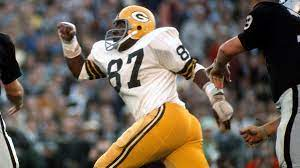
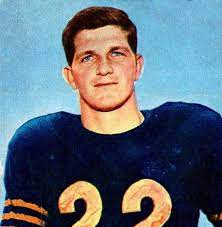
The Story And Significance Of Jim Ringo - 10 Time Pro Bowler At Center

James Stephen Ringo was an American professional football player and coach in the National Football League . He played 15 years as a center, earning 10 Pro Bowl sections. He was inducted into the Pro Football Hall of Fame in 1981.

The Packers selected him in the seventh round of the 1953 NFL draft. Ringo was considered vastly undersized at 211 pounds.

He was not, however, unfit for the role; he used his outstanding quickness and excellent technique to build a 15-year NFL career, the first 11 with the Packers, as one of the game's best centers.

Ringo played for four different head coaches in Green Bay. In his first six seasons under Gene Ronzani (1953), Lisle Blackbourn (1954–57), and Ray "Scooter" McLean (1958), the Packers went 20–50–2 (.286).

But Vince Lombardi's arrival in January 1959 changed everything, and for Ringo's next five seasons, the Packers went 50–15–1 (.769) and 2–1 in championship games. Ringo certainly knew individual success before the Lombardi era—attending his first of seven straight Pro Bowls in 1957—but he flourished under the coaching legend, earning consensus All-Pro honors from 1959 to 1963.
Ringo's speed and mobility made him an ideal blocker for Lombardi's famous Packers sweep, and all but one of running back Jim Taylor's five 1,000-yard seasons—including his then-record 1,474-yard effort in 1962—came with Ringo at center.

Ringo was a member of the Packers' NFL Championship teams of 1961 and 1962 but was traded to the Philadelphia Eagles in May 1964. The details of Ringo's trade have been the subject of speculation. In his memoir, Jerry Kramer, who played guard next to Ringo from 1958 to 1963, recounted the story that following the 1963 season, Ringo showed up in Lombardi's office with an agent in tow and looking to negotiate a raise. Lombardi, according to this account, was so angered that he excused himself for five minutes only to return and announce that he had traded Ringo to the Eagles. Over the years, it has been suggested that that story is more fiction than fact. In reality, Lombardi had probably been negotiating a trade for some time. The Packers also traded fullback Earl Gros and received in return linebacker Lee Roy Caffey and a first-round draft pick, which was used to select halfback-punter Donny Anderson as a "future pick" in 1965. Still, the legend persists. Ringo, who played 126 consecutive games for the Packers from 1954–63, finished out his career with the Eagles, attending three more Pro Bowls and retiring after the 1967 season.

He went on to work on the coaching staffs of the Los Angeles Rams, Buffalo Bills (two separate engagements), Chicago Bears, New England Patriots, and New York Jets, and he served as Bills head coach after the resignation of Lou Saban in 1976, posting a 3–20 record. He is best known as a coach for creating the dominant Bills offensive line of the early- to mid-1970s called the Electric Company, which supported running back O. J. Simpson. He returned to Buffalo as the Bills offensive coordinator and offensive line coach in 1985. He held the positions until his retirement after the 1988 season.

Ringo was inducted into the Pro Football Hall of Fame in 1981.

Ringo died November 19, 2007, in Chesapeake, Virginia, after a short illness. He is buried at Fairmount Cemetery in his hometown of Phillipsburg, New Jersey.
Sources
https://www.pro-football-reference.com/
https://www.profootballarchives.com/index.html
https://americanfootballdatabase.fandom.com/wiki/Football_Wiki
https://www.gridiron-uniforms.com/GUD/controller/controller.php?action=main
https://www.profootballhof.com/hall-of-famers/
 "Jim Ringo's playing stats". Databasefootball.com. Archived from the original on September 30, 2007. Retrieved November 19, 2007.
 Litsky, Frank (November 21, 2007). "Jim Ringo, Pro Football Hall of Fame Center, Dies at 75 (Published 2007)". New York Times. pp. A25. Retrieved September 4, 2025.
 Schudel, Matt (November 22, 2007). "NFL's Jim Ringo; Hall of Famer With Packers and Eagles". ISSN 0190-8286. Retrieved September 3, 2025.
 "Green Bay Packers, Jim Ringo". www.packers.com. Retrieved September 3, 2025.
 Logic, Jack (October 17, 1993). "Former all-stater honored". The Morning Call (Allentown, Pennsylvania). p. 116.
 via Associated Press. "Phillipsburg grad, NFL great Jim Ringo dies at 75", The Star-Ledger, November 19, 2007. Accessed March 14, 2011. "Jim Ringo, who played for Phillipsburg High School before going on to a Hall of Fame career as a center for the Green Bay Packers and Philadelphia Eagles, died this morning after a short illness. He was two days shy of his 76th birthday."
 "Phillipsburg Has 6–5 Center To Oppose HHS Here Friday". The Plain Speaker (Hazleton, Pennsylvania). February 5, 1948. p. 28.
 "Pro Football's Top Offensive Center, J. Ringo, Will Be Here Gas House Banquet May 27". The Record American (Mahanoy City, Pennsylvania). May 4, 1964. p. 7.
 "Jim Ringo | Pro Football Hall of Fame". pfhof. Retrieved September 3, 2025.
 "Scholarships, Awards Listed". The Morning Call (Allentown, Pennsylvania). June 14, 1969. p. 14.
 "Ben Schwartzwalder (1982) - Hall of Fame". National Football Foundation. Retrieved September 4, 2025.
 "All-Time All-Area Offensive Linemen". The Morning Call (Allentown, Pennsylvania). August 27, 2006. p. 32.
 "Bart Starr Stats, Height, Weight, Position, Draft, College". Pro-Football-Reference.com. Retrieved September 3, 2025.
 "Bart Starr | Pro Football Hall of Fame | Pro Football Hall of Fame". pfhof. Retrieved September 3, 2025.
 Mallette, Al (December 8, 1964). "Who They?". Star-Gazette (Elmira, New York). p. 21.
 "Pennsylvanians Play for Orange". The Ithaca Journal (Ithaca, New York). October 1, 1952. p. 12.
 "Syracuse, with Valley Boys in Lineup, Favored over Lafayette". The Morning Call (Allentown, Pennsylvania). November 4, 1950. p. 12.
 "1953 NFL Draft Listing". Pro-Football-Reference.com. Retrieved September 3, 2025.
 "Jim Ringo Stats, Height, Weight, Position, Draft, College". Pro-Football-Reference.com. Retrieved September 3, 2025.
 "1953 Green Bay Packers Rosters, Stats, Schedule, Team Draftees". Pro-Football-Reference.com. Retrieved September 3, 2025.
 "Green Bay Packers Team Records, Leaders, and League Ranks". Pro-Football-Reference.com. Retrieved September 3, 2025.
 "1957 NFL Pro Bowlers". Pro-Football-Reference.com. Retrieved September 3, 2025.
 "1957 NFL All-Pros". Pro-Football-Reference.com. Retrieved September 3, 2025.
 "1958 NFL All-Pros". Pro-Football-Reference.com. Retrieved September 3, 2025.
 "1959 Green Bay Packers Rosters, Stats, Schedule, Team Draftees". Pro-Football-Reference.com. Retrieved September 3, 2025.
 "1959 NFL All-Pros". Pro-Football-Reference.com. Retrieved September 3, 2025.
 "1960 NFL All-Pros". Pro-Football-Reference.com. Retrieved September 3, 2025.
 "1961 NFL All-Pros". Pro-Football-Reference.com. Retrieved September 3, 2025.
 "1962 NFL All-Pros". Pro-Football-Reference.com. Retrieved September 3, 2025.
 "1963 NFL All-Pros". Pro-Football-Reference.com. Retrieved September 3, 2025.
 "Championship - Green Bay Packers at Philadelphia Eagles - December 26th, 1960". Pro-Football-Reference.com. Retrieved September 3, 2025.
 "Championship - New York Giants at Green Bay Packers - December 31st, 1961". Pro-Football-Reference.com. Retrieved September 3, 2025.
 "Championship - Green Bay Packers at New York Giants - December 30th, 1962". Pro-Football-Reference.com. Retrieved September 3, 2025.
 "1963 NFL Standings & Team Stats". Pro-Football-Reference.com. Retrieved September 3, 2025.
 Christl, Cliff. "Jim Ringo". Packers.com. Archived from the original on June 6, 2023. Retrieved September 20, 2023.
 "Jim Ringo | Pro Football Hall of Fame". pfhof. Retrieved September 3, 2025.
 Associated Press (May 6, 1964). "Kuharich Bolsters Offense with Gros, Ringo". Delaware County Daily Times (Chester, Pennsylvania). p. 25.
 "1965 NFL Draft Listing". Pro-Football-Reference.com. Retrieved September 3, 2025.
 "Packers Trade Ringo, Gros". The Montana Standard (Butte, Montana). United Press International. May 6, 1964. p. 10.
 "Packers Trade Ringo, Gros". St. Petersburg Times. Associated Press. May 6, 1964. pp. 2-C.
 "Packers Pull Trade, Create New Problem". The Pittsburgh Press. United Press International. May 6, 1964. p. 58.
 "Green Bay Packers, Donny Anderson". www.packers.com. Retrieved September 3, 2025.
 "Green Bay Packers, Jim Ringo". www.packers.com. Retrieved September 3, 2025.
 "1964 NFL All-Pros". Pro-Football-Reference.com. Retrieved September 3, 2025.
 "1966 NFL All-Pros". Pro-Football-Reference.com. Retrieved September 3, 2025.
 "Bob Brown Stats, Height, Weight, Position, Draft, College". Pro-Football-Reference.com. Retrieved September 4, 2025.
 "Bob (Boomer) Brown | Pro Football Hall of Fame". pfhof. Retrieved September 4, 2025.
 Logic, Jack (October 17, 1993). "Former all-stater honored". The Morning Call (Allentown, Pennsylvania). p. 116.
 "Who's in the Philadelphia Eagles Hall of Fame?". Inside the Iggles. July 18, 2024. Retrieved September 3, 2025.
 Frank, Martin (August 12, 2019). "The top 100 Eagles players of all time". The News Journal (Wilmington, Delaware). pp. C1, C3.
 "Jerry Kramer Stats, Height, Weight, Position, Draft, College". Pro-Football-Reference.com. Retrieved September 3, 2025.
 Schaap, Dick; Kramer, Jerry; Kramer, Gerald L. (August 15, 2011). Instant Replay: The Green Bay Diary of Jerry Kramer. Knopf Doubleday Publishing. ISBN 978-0307743381.
 Hand, Jack (August 4, 1964). "Packers Have Material, May Lack Spirit, Says Jim Ringo". Argus-Leader (Sioux Falls, South Dakota). p. 11.
 United Press International (May 7, 1964). "Packers Mull More Trades". Portland Press Herald (Portland, Maine). p. 28.
 "1963 Green Bay Packers Roster & Players". Pro-Football-Reference.com. Retrieved September 4, 2025.
 "1964 Green Bay Packers Roster & Players". Pro-Football-Reference.com. Retrieved September 4, 2025.
 "Lee Roy Caffey Stats, Height, Weight, Position, Draft, College". Pro-Football-Reference.com. Retrieved September 4, 2025.
 "1964 NFL Draft Listing". Pro-Football-Reference.com. Retrieved September 4, 2025.
 "1965 Green Bay Packers Roster & Players". Pro-Football-Reference.com. Retrieved September 4, 2025.
 "Ken Bowman Stats, Height, Weight, Position, Draft, College". Pro-Football-Reference.com. Retrieved September 4, 2025.
 "Lee Roy Caffey Stats, Height, Weight, Position, Draft, College". Pro-Football-Reference.com. Retrieved September 3, 2025.
 "1966 Green Bay Packers Rosters, Stats, Schedule, Team Draftees". Pro-Football-Reference.com. Retrieved September 3, 2025.
 "Green Bay Packers, Lee Roy Caffey". www.packers.com. Retrieved September 3, 2025.
 "Donny Anderson Stats, Height, Weight, Position, Draft, College". Pro-Football-Reference.com. Retrieved September 3, 2025.
 "Earl Gros Stats, Height, Weight, Position, Draft, College". Pro-Football-Reference.com. Retrieved September 3, 2025.
 "Marv Levy | Pro Football Hall of Fame". pfhof. Retrieved September 3, 2025.
 "Bills former Coach Jim Ringo passes". www.buffalobills.com. Retrieved September 3, 2025.
 "Jim Ringo Coaching Record and Bio - Pro Football Archives". www.profootballarchives.com. Retrieved September 3, 2025.
 "Jim Ringo Joins Bears". The Terre Haute Tribune. Associated Press. February 5, 1969. p. 22.
 "Three Dooley Assistants Want Top Job". Herald and Review (Decatur, Illinois). December 31, 1971. p. 11.
 Felser, Larry (February 9, 1972). "Ringo and Dooley Join Bills' Grid Coaching Staff". The Buffalo News. p. 56.
 "Reggie McKenzie Stats, Height, Weight, Position, Draft, College". Pro-Football-Reference.com. Retrieved September 3, 2025.
 "Joe DeLamielleure | Pro Football Hall of Fame". pfhof. Retrieved September 3, 2025.
 Lupica, Mike (December 12, 1977). "Electric Company Has No More Juice". Daily News (New York, New York). p. 57.
 "O.J. Simpson Stats, Height, Weight, Position, Draft, College". Pro-Football-Reference.com. Retrieved September 3, 2025.
 "1973 NFL Standings & Team Stats". Pro-Football-Reference.com. Retrieved September 3, 2025.
 "1975 NFL Standings & Team Stats". Pro-Football-Reference.com. Retrieved September 3, 2025.
 "1976 Buffalo Bills Rosters, Stats, Schedule, Team Draftees". Pro-Football-Reference.com. Retrieved September 3, 2025.
 "1977 Buffalo Bills Rosters, Stats, Schedule, Team Draftees". Pro-Football-Reference.com. Retrieved September 3, 2025.
 Sewell, Dan (December 23, 1977). "Wilson must open his wallet to bring back the Bills". Star-Gazette (Elmira, New York). p. 15.
 "1979 NFL Division Standings". NFL.com. Retrieved September 4, 2025.
 "1979 NFL Standings & Team Stats". Pro-Football-Reference.com. Retrieved September 4, 2025.
 "1980 NFL Division Standings". NFL.com. Retrieved September 4, 2025.
 "1981 NFL Division Standings". NFL.com. Retrieved September 4, 2025.
 McDonough, Will (February 13, 1982). "Out of Work". The Boston Globe. p. 25.
 "Football, National Football League, Buffalo Bills". Asbury Park Press (Asbury, New Jersey). February 7, 1989. p. 40.
 "Ringo dies at age 75". profootballhalloffame.com. Archived from the original on November 21, 2007. Retrieved November 19, 2007.
 "James Ringo Obituary (2007) - Easton, PA - The Express Times". Legacy.com. Retrieved September 4, 2025.
 "Jim Ringo Record, Statistics, and Category Ranks - Pro-Football-Reference.com". Pro-Football-Reference.com.

Monday, July 10, 2023

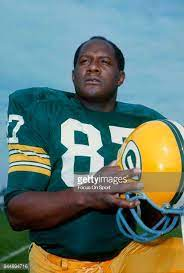
The Story And Significance Of Willie Davis - Recovered The Most Fumbles In Packers' History

Willie D. Davis was an American professional football player who was a defensive end in the National Football League. Davis played college football for the Grambling State Tigers before being drafted 181st in the 1956 NFL Draft. He spent 12 seasons in the NFL, playing for the Cleveland Browns and the Green Bay Packers.

In the NFL, Davis was a five-time champion, including winning the first two Super Bowls under Vince Lombardi. Individually, Davis was a six-time All-Pro, and was elected to the Pro Football Hall of Fame in 1981.

Davis was selected with pick number 181 in the 15th round of the 1956 NFL Draft by the Cleveland Browns, but he did not start his career until the 1958 NFL season due to military service in the United States Army. Davis wore number 77 and played at various positions on both offense and defense for the Browns, before being traded to the Green Bay Packers in 1960.

Davis wore number 87 during his career with the Packers, where he was moved to a permanent position at defensive end by Vince Lombardi. For 10 seasons, Davis anchored the Packers' defensive line, playing 138 consecutive regular-season games and part of 162 regular-season games for his NFL career. Davis was a member of all five of Lombardi's NFL title-winning teams and played in Super Bowls I and II.

Davis played in an era when neither tackles nor sacks were official statistics. However, John Turney, a member of the Professional Football Researchers Association, reports that Davis had in excess of 100 sacks during his 10-year Green Bay career (1960–69), "possibly more than 120," including a minimum of 40 over the 1963–65 seasons alone. Davis himself is quoted as saying, "I would think I would have to be the team's all-time leader in sacks. I played 10 years and I averaged in the 'teens' in sacks for those 10 years. I had 25 one season. [Paul] Hornung just reminded me of that the other day." Davis earned All-Pro honors 5 times (1962, 64–67). He was voted to the Pro Bowl five times (1963–67).

Davis recovered 21 fumbles over his Packers career, which, more than three decades removed from his retirement, remains a team record. The Packers honored his retirement with a Willie Davis Day on December 21, 1969. Davis served on the team's Board of Directors.

During his early years with the Packers, Davis along with other players, lived in the Hotel Northland. He often told the story about how he along with the visiting officials, CBS broadcasters and crew, etc. were awoken on the morning of the Ice Bowl by a wake-up call from the front desk announcing the time and that the temperature was 17 degrees below zero.

Davis was also credited with following Vince Lombardi's lead in having no one associated with the team treat any man differently regardless of race. Davis would intentionally take the leadership position to offer to have lunch and dinner with players that had never played on an integrated team or eaten at the same table with an African American. Davis proactively and positively ensured that they acclimated well to Lombardi's culture of inclusion.

In the early 1970s, Davis worked as a color commentator on NFL telecasts for NBC. He was inducted into the Pro Football Hall of Fame in 1981. In 1986, Davis was named the Walter Camp Man of the Year. In 1987, he was given the Career Achievement Award from the NFL Alumni, and in 1988 he was elected to the Wisconsin Athletic Hall of Fame. In 1999, Davis was ranked number 69 on The Sporting News' list of the 100 Greatest Football Players.

Davis was a member of Kappa Alpha Psi fraternity. He received his Master of Business Administration (MBA) from the University of Chicago Booth School of Business in 1968. He was a member of the boards of Marquette University, Alliance Bank, Dow Chemical (1988–2006), Johnson Controls (1991–2006), K-Mart, LA Gear, Manpower (2001–2020), Metro-Goldwyn-Mayer (1999–2020), MGM Mirage, Rally's Inc., Sara Lee (1983–2020), Schlitz Brewing, and WICOR Inc. He was president of All-Pro Broadcasting, operators of radio stations KHTI, KATY-FM, WLDB-FM, WLUM-FM, and WZTI since 1976. In 1989 he was a finalist for the position of National Football League Commissioner.

Davis' son is actor Duane Davis, known for his role as "Featherstone" in Necessary Roughness. He also had a daughter, Lori Davis a lawyer known for her work in marijuana legislation within the Los Angeles children’s court system. Davis' grandson, Wyatt Davis, was an All-American guard at the Ohio State University, and currently plays for the New Orleans Saints.

After being hospitalized for a month due to kidney failure, Davis died on April 15, 2020, at the age of 85.

During the 2020 season, the Green Bay Packers wore a helmet decal to honor Davis, featuring his name and number.
Sources
https://www.pro-football-reference.com/
https://www.profootballarchives.com/index.html
https://americanfootballdatabase.fandom.com/wiki/Football_Wiki
https://www.gridiron-uniforms.com/GUD/controller/controller.php?action=main
https://www.profootballhof.com/hall-of-famers/
Carlson, Chuck (2004). Game of My Life: Memorable Stories of Packer Football. Sports Publishing LLC. p. 57. ISBN 1582618143. Retrieved March 18, 2016.
"Willie Davis - Class of 1981". Packers.com. Green Bay Packers, Inc. Archived from the original on January 2, 2018. Retrieved March 18, 2016.
"FNF Company Profile and Executives - William Delford Davis, 80". wsj.com. The Wall Street Journal. Archived from the original on March 25, 2016. Retrieved March 18, 2016.
"Willie Davis statistics". Pro-Football-Reference. Sports Reference LLC. Retrieved March 18, 2016.
Clark, Kristine Setting (2008). Legends of Hall: 1950s. Arcadia Publishing. p. 100. ISBN 978-0-7385-6169-1.
 "Willie Davis earned reputation as one of league's greatest pass rushers". www.packers.com. Archived from the original on April 7, 2022. Retrieved February 4, 2020.
 Smith, Don (1985). "Willie Davis: Speed, Agility, and Size" (PDF). Pro Football Researchers.
 "Willie Davis | Pro Football Hall of Fame Official Site". www.profootballhof.com. Retrieved February 4, 2020.
 "Letters To Lee Remmel". packers.com. July 20, 2004. Archived from the original on October 12, 2008. Retrieved August 13, 2019.
 Holder, Larry. "NFL 100: At No. 91, Willie Davis turned a trade to Green Bay into the turning point of his career". The New York Times. ISSN 0362-4331. Retrieved November 3, 2024.
 "It's Been All Business For Packers Great, Entrepreneur Willie Davis | Investor's Business Daily". Investor's Business Daily. January 21, 2017. Retrieved February 4, 2020.
 The Associated Press (October 8, 1989). "Four finalists named for commissioner post". Ocala Star-Banner. Retrieved June 13, 2012.
 Landis, Bill (November 29, 2019). "How Ohio State stole Wyatt Davis, and the delicate balance it now faces with offensive line change". The Athletic. Retrieved February 7, 2020.
 "Miss Los Angeles County United States". Retrieved May 22, 2024.
 Christl, Cliff (April 15, 2020). "Packers legend Willie Davis dies at 85". Green Bay Packers, Inc. Archived from the original on April 15, 2020. Retrieved April 15, 2020.
 "Packers to honor Willie Davis with helmet decal in 2020". www.packers.com. Retrieved September 14, 2020.

Wednesday, July 5, 2023

The Story And Significance Of George Blanda - 26 Professional Football Seasons As Quarterback And Kicker

George Frederick Blanda was an American professional football player who was a placekicker and quarterback in the American Football League (AFL) and National Football League. Blanda played 26 seasons of professional football, the most in the sport's history, and had scored more points than anyone in history at the time of his retirement.

Blanda retired from pro football in August 1976 at age 48, the sport's oldest player ever. One of only two players to play in four different decades (the other being John Carney), he holds the record for most extra points made (943) and attempted (959). During his career, he played under head coaches Bear Bryant, George Halas, Clem Crowe, Lou Rymkus, Wally Lemm, Pop Ivy, Sammy Baugh, Hugh Taylor, John Rauch, and John Madden.

Blanda began his professional career with the Chicago Bears in 1949. In 1950, the Bears traded George Blanda to the Colts. When he was cut after Week 1, the Packers claimed him off waivers. Before the signing could be made official, the Colts revoked the waiver and sold Blanda back to Chicago as their trade terms said he couldn't be sent to a conference rival. 

He spent four seasons with the Bears, where he established himself as a talented quarterback and kicker. Blanda was signed by the Chicago Bears for $600 in 1949, an amount owner George Halas demanded back when he made the team. Blanda was given a lucrative contract of $6000, as the $600 was just a sign on bonus. While primarily used as a quarterback and placekicker, Blanda also saw time on the defensive side of the ball at linebacker. It was not until 1953 that Blanda emerged as the Bears' top quarterback, but an injury the following year effectively ended his first-string status. For the next four years, he was used mostly in a kicking capacity. Later commenting on his testy relationship with Halas, Blanda noted, "he was too cheap to even buy me a kicking shoe." Blanda later reflected that by the 1950s the pro game had moved beyond Halas, who seemed to lack the interest he had earlier.

Blanda retired after the 1958 season because of Halas' insistence on only using him as a kicker, but returned in 1960 upon the formation of the American Football League. He signed with the Houston Oilers as both a quarterback and kicker. He was derided by the sports media as an "NFL Reject", but he went on to lead the Oilers to the first two league titles in AFL history, and he was the All-AFL quarterback and won AFL Player of the Year honors in 1961. During that season, he led the AFL in passing yards (3,330) and touchdown passes (36). His 36 touchdown passes in 1961 were the most ever thrown by any NFL/AFL quarterback in a single season, until matched by Y. A. Tittle of the NFL New York Giants two years later in 1963. Blanda's and Tittle's mark remained the record until surpassed by Dan Marino's 48 touchdown passes in 1984. Blanda's 42 interceptions thrown in 1962 is a record that still stands.

During 1962, he had two 400-yard passing days for the Oilers: a 464-yard effort against the Buffalo Bills on October 29, with four touchdown passes (winning 28–16); and 418 yards three weeks later against the Titans of New York, this time with seven touchdown passes in a 49–13 victory. Blanda passed for 36 touchdowns that season. On 13 occasions, he connected on four or more touchdown passes during a game, and on November 1, 1964, unleashed 68 passes for Houston against the eventual champion Buffalo Bills.

From 1963 to 1965, Blanda led the AFL in passing attempts and completions, and ranked in the top ten for attempts, completions, yards and touchdowns during seven consecutive seasons. The 1966 season would see Blanda's Oilers begin the season with a 3-5 record despite a statistically prolific connection with receiver Charley Frazier. Blanda would cede playing time at quarterback to the 25-year-old Don Trull, though Blanda continued to serve as the team's primary kicker. A four-time AFL All-Star, Blanda's already-long career seemed over when he was released by the Oilers on March 18, 1967. However, the Oakland Raiders signed him that July, seeing his potential as a contributing backup passer and a dependable kicker.

In later years, Blanda remained a strong supporter of AFL heritage, saying: "That first year, the Houston Oilers or Los Angeles Chargers (24–16 losers to the Oilers in the title game) could have beaten the NFL champion (Philadelphia) in a Super Bowl." Blanda said further: "I think the AFL was capable of beating the NFL in a Super Bowl game as far back as 1960 or '61. I just regret we didn't get the chance to prove it."

In 1967, Blanda's first season with the Raiders, his kicking skills helped him lead the AFL in scoring with 116 points. In two instances, his leg helped play a role in Raider victories: a trio of field goals helped upset the defending league champion Kansas City Chiefs on October 1; in the closing weeks of the regular season, Blanda booted four field goals behind a hostile Houston crowd in a 19–7 victory over his former team, the Oilers, helping gain a measure of revenge. Three weeks later, the Raiders met the Oilers again in the AFL Championship Game and won 40–7.

The Raiders went on to compete in Super Bowl II, but lost the game to the Green Bay Packers.
In 1970, Blanda was released during the exhibition season, but bounced back to establish his 21st professional season. During that season, Blanda, at age 43, had a remarkable five-game run. Against the Steelers, Blanda threw for three touchdowns in relief of an injured Daryle Lamonica. One week later, his 48-yard field goal with three seconds remaining salvaged a 17–17 tie with the Kansas City Chiefs. On November 8, he again came off the bench to throw a touchdown pass to tie the Cleveland Browns with 1:34 remaining, then kicked a 53-yard field goal with 0:03 left for the 23–20 win. Immediately after the winning field goal, Raiders radio announcer Bill King excitedly declared, "George Blanda has just been elected King of the World!" In the team's next game, Blanda replaced Lamonica in the fourth quarter and connected with Fred Biletnikoff on a touchdown pass with 2:28 left in the game to defeat the Denver Broncos, 24–19. The following week, Blanda's 16-yard field goal in the closing seconds defeated the San Diego Chargers, 20–17.

In the AFC title game against the Baltimore Colts, Blanda again relieved an injured Lamonica, completing 17 of 32 passes for 217 yards and two touchdowns while also kicking a 48-yard field goal and two extra points, keeping the Raiders in the game until the final quarter, when he was intercepted twice. Aged 43, he became the oldest quarterback ever to play in a championship game, and was one of the few remaining straight-ahead kickers in the NFL.

Blanda's achievements resulted in his winning the Bert Bell Award. Chiefs' owner Lamar Hunt said, "Why, this George Blanda is as good as his father, who used to play for Houston." Although he never again played a major role at quarterback, Blanda served as the Raiders' kicker for five more seasons. Blanda was also named the Associated Press Male Athlete of the Year, being the first-ever professional football player to earn the award.

He played in his last game at Pittsburgh's Three Rivers Stadium on January 4, 1976, at age 48, in the 1975 AFC Championship Game, in which he kicked a 41-yard field goal and made one extra point as the Raiders lost to the Steelers 16–10. Blanda was released during training camp in late August 1976, succeeded at kicker by rookie Fred Steinfort, but pulled for the team as the Raiders went on to win the NFL title that season in Super Bowl XI. (Steinfort was injured in mid-season, and was replaced by 35-year-old veteran Errol Mann.) He would be released by the Raiders and retire in 1976.

Blanda finished his 26 professional football seasons having completed 1,911 of 4,007 pass attempts for 26,920 yards and 236 touchdowns. Blanda also held the NFL record for most interceptions thrown with 277, until Brett Favre broke it on October 14, 2007. He rushed for 344 yards and 9 touchdowns on the ground, kicked 335 of 641 field goals, and 943 of 959 extra points, giving him 2,002 total points. Additional stats include 1 interception, 2 kickoff returns for 19 yards, 22 punts for 809 yards, and 23 fumble recoveries.

He is the placekicker on the All-Time All-AFL Team, and was one of only 20 players to play all ten years of the AFL, as well as one of only three who were in every AFL game their teams played. Blanda was elected to the Pro Football Hall of Fame in 1981, his first year of eligibility, and also was inducted into the University of Kentucky Hall of Fame.

Blanda held the record for most professional football games played with 340 until September 26, 2004, when it was broken by another placekicker, Morten Andersen as well as the record for most consecutive games played until September 26, 1976, by defensive end Jim Marshall. He still holds the record for most games played by an AFL/NFL player who was not exclusively a kicker or punter. His 114 postseason points were an NFL record at the time of his retirement.

Blanda broke Lou Groza's career scoring record in 1971, a record he held until 2000 when it was broken by Gary Anderson. Blanda's 2,002 total points are still good for 7th on the all-time scoring list.

U.S. Route 119 in Blanda's hometown of Youngwood, Pennsylvania, was renamed George Blanda Boulevard in 1985.

In 1999, Blanda was ranked number 98 on The Sporting News' list of the 100 Greatest Football Players.

Blanda was the first-ever recorded fantasy football draft pick when the game was first created in 1962 by The Greater Oakland Professional Pigskin Prognosticators League.

According to the Pro Football Hall of Fame, Blanda died after a "short illness" on September 27, 2010. He was 83 years old. A moment of silence was held in Blanda's honor prior to the start of the September 27, 2010, game between the Green Bay Packers and the Chicago Bears on Monday Night Football, from Soldier Field.
Sources
https://www.pro-football-reference.com/
https://www.profootballarchives.com/index.html
https://americanfootballdatabase.fandom.com/wiki/Football_Wiki
https://www.gridiron-uniforms.com/GUD/controller/controller.php?action=main
https://www.profootballhof.com/hall-of-famers/
"Blanda called too old again". Spokesman-Review. Spokane, Washington. Associated Press. August 26, 1976. p. 43.
 "George Blanda not bitter, pulls for Oakland success". Spokesman-Review. Spokane, Washington. Associated Press. December 23, 1976. p. 23.
 Frank Litsky; Bruce Weber (September 27, 2010). "George Blanda, Hall of Fame Football Player, Dies at 83". The New York Times. {{cite news}}: |access-date= requires |url= (help); Unknown parameter |Oldest player to play in a game (48) url= ignored (help)
 "Kentucky Wildcats School History: Football". sports-reference.com. Retrieved November 19, 2020.
 "Kentucky Football Retired Jerseys - UK Wildcats News". Archived from the original on August 10, 2013.
 "NFL Passes Intercepted Single Game Playoffs Leaders". Pro-Football-Reference.com.
 Farrar, Doug (December 29, 2019). "Jameis Winston becomes first QB with 30 touchdowns, 30 interceptions in same season". touchdownwire.usatoday.com. Retrieved November 17, 2020.
 "NFL Passes Intercepted Single-Season Leaders". Pro Football Reference. Retrieved November 17, 2020.
 "George Blanda 1966 Game Log". Pro Football Reference. Retrieved August 18, 2022.
 Ross, George (September 27, 2010). "Blanda's miracle season: Browns beaten by 52-yard field goal from 'King of the World'". The Oakland Tribune. Retrieved September 28, 2010.
 Maule, Tex (November 23, 1970). "Let George do it - and he does". Sports Illustrated. p. 30.
 "1970 Awards Voting". Pro-Football-Reference.com.
 "History: Players Who've Played in NFL at Age 40 or Older". Pro Football Hall of Fame. Retrieved December 1, 2012.
 "Kicker for Raiders?". Lodi News-Sentinel. California. UPI. October 26, 1976. p. 14.
 "Oakland rallies to beat Denver". Lodi News-Sentinel. California. UPI. November 1, 1976. p. 10.
 "Nick Foles ties Peyton Manning with 7 touchdown passes, crushes Raiders". November 3, 2013. Archived from the original on November 7, 2013. Retrieved November 23, 2013.
 ESPN Sports Almanac 2006, page 273. Sports Almanac, Inc. 2005.
 "George Blanda Career Highlights". Pro Football Hall of Fame. Archived from the original on October 4, 2010. Retrieved May 28, 2012.
 "NFL Career Points Scored Leaders". Pro Football Reference. Retrieved November 17, 2020.
 Cohn, Bob (September 28, 2010). "NFL great, Youngwood native Blanda dies". triblive.com. Retrieved November 17, 2020.
 "Sporting News Football's 100 Greatest Players". Democrat and Chronicle. Rochester, New York. August 15, 1999. p. 41. Retrieved November 17, 2020 – via newspaper.com.
 Dickey, Glenn (January 8, 2011). "Fantasy Football: Craze's roots go back to Oakland". The San Francisco Chronicle.
 Richardson, Bill (September 27, 2010). "Ageless wonder George Blanda dies". Kansas City Star. Archived from the original on October 1, 2010. Retrieved September 28, 2010.
 "Hall of Famer's longevity was legendary", Salt Lake Tribune, September 28, 2010
 "Raiders Hall of Fame QB George Blanda dies at 83". Pittsburgh Tribune-Review. September 27, 2010. Retrieved September 28, 2010.
 Monkovic, Toni (September 27, 2010). "George Blanda in Quotations". The New York Times. Archived from the original on February 8, 2016. Retrieved January 2, 2016.
"George Blanda: The Old Man". (1999). In ESPN SportsCentury. Michael MacCambridge, Editor. New York: Hyperion ESPN Books. p. 228.

Wednesday, June 28, 2023

The Story And Significance Of Morris (Red) Badgro - NFL Champion And Receptions Co-Leader in 1934

Morris Hiram "Red" Badgro was an American professional football and baseball player. He played as an end in the National Football League. He was inducted into the Pro Football Hall of Fame in 1981.
A native of Orillia, Washington, he attended the University of Southern California (USC) where he played baseball, basketball, and football. He then played nine seasons of professional football for the New York Yankees (1927–1928), New York Giants (1930–1935), and Brooklyn Dodgers (1936). He was selected as a first-team All-Pro in 1931, 1933, and 1934. He scored the first touchdown in the first NFL Championship Game and was a member of the 1934 New York Giants team that won the second NFL Championship Game.

Badgro also played professional baseball as an outfielder for six years from 1928 to 1933, including two seasons in Major League Baseball for the St. Louis Browns (1929–1930). After his career as an athlete was over, Badgro served as a football coach for 14 years, including stints as the ends coach for Columbia (1939–1942) and Washington (1946–1953).

Badgro played 10 seasons of professional football. During the 1927 season, he appeared in 12 games for the New York Yankees. The Yankees folded after the 1928 season, and Badgro opted to focus on professional baseball. He did not play professional football in 1929.

After playing Major League Baseball in 1929 and 1930, Badgro qualified as a free agent in professional football and signed with the New York Giants for $150 a game. He gained his greatest acclaim as the starting left end for the Giants from 1930 to 1935. He was regarded as a sure-tackling defender and an effective blocker and talented receiver on offense. Giants coach Steve Owen said of Badgro: "He could block, tackle, and catch passes equally well. And he could do each with the best of them."

In 1930, he appeared in 17 games at left end, 14 as a starter, and was selected by the Green Bay Press-Gazette as a second-team end on the 1930 All-Pro Team.

In 1931, he appeared in 13 games, 11 as a starter, and was selected by the NFL as a first-team end on the official 1931 All-Pro Team.

In 1932, he appeared in 12 games, 11 as a starter.

In 1933, he appeared in 12 games, 10 as a starter, and was selected by the Chicago Daily News as a second-team end on the 1933 All-Pro Team. He helped lead the Giants to the 1933 NFL Championship Game where he scored the first touchdown in the first NFL Championship Game, a 29-yard touchdown on a pass from Harry Newman.

In 1934, he appeared in 13 games, all as a starter, for the Giants team that won the 1934 NFL Championship Game. He was selected by the NFL and the Chicago Daily News as a first-team end on the 1934 All-Pro Team. He also led the NFL with 16 receptions.

Playing against the Boston Redskins in 1935, Badgro blocked a punt, and teammate Les Corzine returned it for a go-ahead touchdown.

Badgro also played professional baseball. He played minor league ball in 1928 for the Tulsa Oilers in the Western League and the Muskogee Chiefs in the Western Association, compiling a .351 batting average in 513 at bats. He also played for the Milwaukee Brewers of the American Association in 1929.

In June 1929, Badgro made his major league debut with the St. Louis Browns. Over the 1929 and 1930 season, he appeared in 143 games, 80 of them as a right fielder and 13 as a center fielder. He compiled a .257 batting average in 382 major league at-bats and appeared in his final major league game on September 18, 1930.

Badgro continued to play in the minor leagues for several years, including stints with the Wichita Falls Spudders of the Texas League (1931–1932) and Seattle Indians of the Pacific Coast League (1933).

In 1937, Badgro returned to USC to finish the credits he needed to graduate. At the same time, he was a member of Howard Jones' football coaching staff at USC, responsible for working with USC's frosh players.

In June 1938, Badgro was hired as the football coach at Ventura High School in Ventura, California. He also coached football, baseball, and basketball for Ventura Junior College.

In June 1939, he was hired as an assistant coach (responsible for ends) under Lou Little at Columbia. He remained at Columbia through the 1942 season.

In 1944, Badgro was employed in a Seattle war plant.

In February 1946, Badgro was hired as an assistant football coach at the University of Washington. When Howard Odell took over as Washington's head coach, he retained Badgro as his ends coach. Badgro was again retained when John Cherberg took over as head coach in 1953. He resigned his coaching post at Washington in January 1954 in order to pursue private business in Kent, Washington.

Badgro was married to Dorothea Taylor. After retiring from football, Badgro worked for the Department of Agriculture in the State of Washington.

In 1967, Badgro was inducted into the Washington State Sports Hall of Fame. Badgro was inducted into the Pro Football Hall of Fame in 1981 at age 78. At that time, he was the oldest person to be inducted into the Hall of Fame.

Badgro died in July 1998 at age 95 in Kent, Washington. He had been hospitalized after a fall.
Sources
https://www.pro-football-reference.com/
https://www.profootballarchives.com/index.html
https://americanfootballdatabase.fandom.com/wiki/Football_Wiki
https://www.gridiron-uniforms.com/GUD/controller/controller.php?action=main
https://www.profootballhof.com/hall-of-famers/
"Red Badgro". Pro-Football-Reference.com. Sports Reference LLC. Retrieved October 1, 2017.
 Census entry for Walter Badgro and family. Son Morris H. age 7 born in Washington State. Census Place: Orillia, King, Washington; Roll: T624_1657; Page: 3B; Enumeration District: 0027; FHL microfilm: 1375670. Ancestry.com. 1910 United States Federal Census [database on-line].
 Census entry for Walter Badgro and family. Son Morris age 16 born in Washington State. Census Place: Orillia, King, Washington; Roll: T625_1925; Page: 7A; Enumeration District: 55. Ancestry.com. 1920 United States Federal Census [database on-line].
 "Morris "Red" Badgro". Greater Kent Historical Society. Retrieved October 1, 2017.[permanent dead link]
 Richard Whittingham (1984). What a Game They Played: An Inside Look at the Golden Era of Pro Football. University of Nebraska Press. p. 46. ISBN 0803298196.
 "'Red' Badgro Is All-Around Star". Santa Ana Register. March 18, 1927. p. 13 – via Newspapers.com.
 "Badgro on All-Coast Basketball Team". Los Angeles Times. March 10, 1927. p. 37 – via Newspapers.com.
 "Morris Badgro Named On 3 All-Coast Teams". The Courier-Journal. May 15, 1927. p. 72 – via Newspapers.com.
 Whittingham, "What a Game They Played", pp. 47-48.
 Richard Whittingham (1984). What a Game They Played: An Inside Look at the Golden Era of Pro Football. University of Nebraska Press. p. 45. ISBN 0803298196.
 "1933 NFL Championship Game". Pro Football Hall of Fame. Retrieved October 1, 2017.
 "Giants Defeat Redskins, 17-6, In Early Attack". Chicago Tribune. October 21, 1935. p. 23 – via Newspapers.com.
 "Red Badgro Minor League Statistics". Baseball-Reference.com. Sports Reference LLC. Retrieved October 1, 2017.
 "Red Badgro Statistics". Baseball-Reference.com. Sports Reference LLC. Retrieved October 1, 2017.
 Whittington, "What a Game They Played", p. 51.
 "Troy Drills on Defense". Los Angeles Times. September 21, 1937. p. 30 – via Newspapers.com.
 "Badgro Will Coach At Ventura High". The San Bernardino County Sun. June 4, 1938. p. 15 – via Newspapers.com.
 "Badgro to Coach Ends at Columbia". The Brooklyn Daily Eagle. June 23, 1939. p. 20 – via Newspapers.com.
 "Stars Serving Under Uncle Sam". Pittsburgh Post-Gazette. November 17, 1942. p. 19 – via Newspapers.com.
 "Huskies Sign Red Badgro". Los Angeles Times. February 19, 1946. p. 11 – via Newspapers.com.
 "Reggie Root and Red Badgro Named Husky Grid Aides". Los Angeles Times. January 17, 1948. p. 31 – via Newspapers.com.
 "Huskies Name Back Coach". Corvallis Gazette-Times. March 14, 1953. p. 3 – via Newspapers.com.
 "Huskies Lose Coach Badgro". Statesman Journal. January 29, 1954. p. 7 – via Newspapers.com.
 "Sports Figures Honored". The Daily Chronicle. January 25, 1967. p. 10 – via Newspapers.com.
 "Badgro to become Hall of Fame's oldest enshrinee". The Akron Beacon Journal. July 29, 1981. p. E1 – via Newspapers.com.
 Frank Litsky (July 15, 1998). "Red Badgro, 95, Football Hall of Famer, Dies". The New York Times. Retrieved October 1, 2017.