Showing posts with label Dallas Texans. Show all posts

Wednesday, October 21, 2026

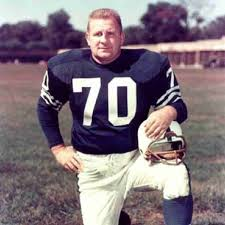
The Story And Significance Of Johnny Robinson - First Team All-Pro Five Straight Years At Safety

Johnny Nolan Robinson is an American former professional football player. He was primarily a safety, but also played on offense as a halfback and flanker early in his career. He played college football for the LSU Tigers.

Robinson played his entire 12-year professional career with the Dallas Texans / Kansas City Chiefs of the American Football League (AFL) and later the National Football League (NFL). He led the AFL in interceptions with 10 in 1966, and led the NFL in 1970 with 10. He had 57 interceptions during his career. Robinson is a 2019 inductee to the Pro Football Hall of Fame, becoming the ninth member of the Chiefs' Super Bowl IV championship team to be inducted.

In 1960, Robinson was selected by the Dallas Texans (who later became the Kansas City Chiefs) in the first round of the 1960 AFL draft, and selected third overall by the Detroit Lions in the 1960 NFL draft. He chose the Texans. In his third season, the Texans won the 1962 AFL title with a 20–17 double-overtime victory over the two-time defending AFL champion Houston Oilers in the longest professional football league championship game ever played. Robinson had two interceptions. The dramatic game was watched by millions on television, and played an important part in creating the grounds for an AFL-NFL merger.

Robinson played in the first Super Bowl in early 1967, a loss to the Green Bay Packers in which Robinson had 9 tackles. Three years later in Super Bowl IV, the underdog Chiefs decisively defeated the Minnesota Vikings, 23–7. Robinson played that game with three broken ribs he received in the previous game, and took novocaine injections to dull the pain for the Super Bowl. Late in the first half, he picked up a Minnesota fumble, and made an interception in the second half to help seal the win.

During his first two years in the AFL, Robinson played flanker on offense, rushing for 658 yards on 150 carries and had 1,228 receiving yards on 77 receptions, and fifteen touchdowns. Texans coach Hank Stram moved Robinson to safety after his second year, and he continued as a standout for ten of his twelve years.

His last game came on Christmas Day 1971, when the Chiefs lost to the Miami Dolphins 24–27 after 22 minutes and forty seconds of overtime. Robinson suffered a career-ending injury that game, which remains the longest game in NFL history, as of 2024, and the last NFL game in Municipal Stadium. Robinson thus played in the sport's longest championship game in 1962, and in its absolute longest game, each game closing out professional football in its respective stadium.

After twelve seasons with the same franchise, Robinson retired at age 33 in July 1972, prior to training camp.

Robinson was a five-time first-team All-AFL selection (1965, 1966, 1967, 1968, 1969), one-time first-team NFL All-Pro selection (1970), and one-time second-team All-AFL selection (1963). The Sporting News named him first-team All-AFC in 1971. He is a member of the All-time All-AFL Team and one of only 20 players who were in the AFL for its entire ten-year existence. He is one of only three players (with Hall of Famers Jim Otto and Ron Mix) who were on the All-AFL first-team and the combined AFL/NFL All-Decade Team for the 1960s.

The Chiefs had a 35–1–1 record in games where Robinson made an interception. He is an inductee of the Louisiana Sports Hall of Fame, and was elected into the Pro Football Hall Of Fame in February 2019, the ninth member inducted from the 1969 Chiefs. His bust at Canton was sculpted by Scott Myers. Later that year, he was recognized as an SEC Football Legend for LSU. He is also a member of the Missouri Sports Hall of Fame.

After he retired as a player, Robinson was a scout for the Chiefs until Hank Stram was fired in 1974. He then coached defensive backs for the Jacksonville Express of the World Football League in 1975. The league folded that year, and he became a scout for the New Orleans Saints, again under Stram.

Robinson became an ordained minister in 1979. He founded and operates a youth home called Johnny Robinson's Boys Home for troubled boys in Monroe, Louisiana, and has been a long-time supporter of children's causes.

Sources
"Chiefs Hall of Honor, 1974 | Johnny Robinson | Safety". Kansas City Chiefs. Retrieved November 2, 2024.
 Dixon, John (August 3, 2019). "One of the greatest of his era, Johnny Robinson is finally in the Hall of Fame". Arrowhead Pride. SB Nation. Retrieved November 2, 2024.
 Rosa, Poch de la (March 27, 2022). "The Life And Career Of Johnny Robinson (Complete Story)". Pro Football History. Retrieved November 3, 2024.
 "Cannon Paces South Stars To 33–0 Football Victory". The Town Talk (Alexandria, Louisiana). August 4, 1956. p. 10.
 "University High to honor alum Johnny Robinson, Pro Football Hall of Fame member Friday". The Advocate. October 26, 2019. Retrieved November 2, 2024.
 "Robinson Named SEC Legend". LSU. September 26, 2019. Retrieved November 2, 2024.
 "1958 College Football National Championship". tiptop25.com. Retrieved November 2, 2024.
 "25th Annual Sugar Bowl Classic ~ January 1, 1959". Sugar Bowl. Retrieved November 2, 2024.
 "26th Annual Sugar Bowl Classic ~ January 1, 1960". Sugar Bowl. Retrieved November 2, 2024.
 "Johnny Robinson AFL & NFL Football Statistics". pro-football-reference.com. Sports Reference LLC. Retrieved March 31, 2016.
 Eisenberg, John (December 15, 2012). "A Football Interloper's First Gust of Success". New York Times.
 "Johnny Robinson | Pro Football Hall of Fame". pfhof. Retrieved November 2, 2024.
 Teicher, Adam (August 2, 2019). "No 'garbage interceptions' for Hall of Famer Johnny Robinson". ESPN. Retrieved January 20, 2020.
 "Gets High–on Novocaine!". Chicago Tribune. July 15, 1970. p. 57.
 Skretta, Dave (July 30, 2019). "Now there are nine: Robinson to join Super Bowl IV teammates in Hall of Fame". Fox Sports. Associated Press. Retrieved January 20, 2020.
 "Fifty years later, Chiefs-Dolphins playoff thriller still holds title as NFL's greatest Christmas Day game". www.cbssports.com. Retrieved November 3, 2024.
 "Pivotal Pro Football Plays". goldenrankings.com. Retrieved November 3, 2024.
 SAM (February 12, 2024). "NFL Record: What is the record for the longest game in NFL history?". MARCA. Retrieved November 3, 2024.
 "Chiefs begin trying to fill Robinson void". Lawrence Daily Journal-World. Kansas. Associated Press. July 13, 1972. p. 21.
 "1965 AFL All-Pros". Pro-Football-Reference.com. Retrieved January 19, 2026.
 "1966 AFL All-Pros". Pro-Football-Reference.com. Retrieved January 19, 2026.
 "1967 AFL All-Pros". Pro-Football-Reference.com. Retrieved January 19, 2026.
 "1968 AFL All-Pros". Pro-Football-Reference.com. Retrieved January 19, 2026.
 "1969 AFL All-Pros". Pro-Football-Reference.com. Retrieved January 19, 2026.
 "1970 NFL All-Pros". Pro-Football-Reference.com. Retrieved January 19, 2026.
 "1963 AFL All-Pros". Pro-Football-Reference.com. Retrieved January 19, 2026.
 "1971 NFL All-Pros". Pro-Football-Reference.com. Retrieved January 19, 2026.
 Fitzpatrick, Mark (August 3, 2019). "Former Chiefs S Johnny Robinson finally getting his deserved recognition". USA Today. Retrieved January 20, 2020.
 Thomas, Jim. "Robinson was the best safety of both pro leagues in the '60s". Canton Repository. Retrieved November 3, 2024.
 "Johnny Robinson". Pro Football Hall of Fame. Retrieved January 20, 2020.
 Kubena, Brooks (September 26, 2019). "Hall of Fame safety Johnny Robinson will serve as LSU's SEC Football Legend". The Advocate. Retrieved January 20, 2020.
 Kubena, Brooks (August 2, 2019). "'God's timing': Former LSU great Johnny Robinson finally enters Hall of Fame after full life". The Advocate. Retrieved January 20, 2020.
 Hilburn, Chet (2012). The Mystique of Tiger Stadium: 25 Greatest Games: The Ascension of LSU Football. Bloomington, Indiana: WestBow Press. p. 32. ISBN 978-1-4497-5269-9.
 Thomas, Jim. "Robinson: Safety turned savior with his Boys Home". Canton Repository. Retrieved November 3, 2024.

Monday, October 28, 2024

The Story And Significance Of Hank Stram - Only Coach To Last The Entire AFL's History

Henry Louis Stram was an American football coach. He is best known for his 15-year tenure with the Dallas Texans / Kansas City Chiefs of the American Football League (AFL) and National Football League.

Stram won three AFL championships, more than any other coach in the league's history. He then won Super Bowl IV with the Chiefs. He also coached the most victories (87), had the most post-season games (7) and the best post-season record in the AFL (5–2). Stram is largely responsible for the introduction of Gatorade to the NFL due to his close association with Ray Graves, coach at the University of Florida during Gatorade's development and infancy. Stram never had an offensive coordinator, defensive coordinator, or special teams coach during his career with the Chiefs.

He was an assistant football coach for the Boilermakers from 1948 to 1955 and the head baseball coach from 1951 to 1955. In 1996, Stram and Len Dawson were inducted into the Purdue Athletic Hall of Fame. After coaching at Purdue, Stram was an assistant at Notre Dame, Southern Methodist University, and Miami. Stram was Miami's backfield coach and credited with installing the multiple offense that helped lead the team to a 6–4 record in 1959.

In 1959, Lamar Hunt recruited Stram to coach his Dallas Texans in the new AFL, which commenced play in 1960. Hunt had previously been a bench player at SMU when Stram had been coaching there and the Texans' position had been turned down by Bud Wilkinson and Tom Landry, then an assistant at the New York Giants. The Texans played their first game in the new AFL in September 1960 and proved to be successful from the beginning.

In 1962, the Texans won the AFL Western Division and the AFL championship. The Texans won the championship against the Houston Oilers 20–17 in what was the longest professional football championship game ever played. Tommy Brooker kicked a field goal at 17:54 of overtime to win the game for the Texans and stop the Oilers from winning their third straight title.

The Dallas Texans became the Kansas City Chiefs in 1963 and continued their success. In 1966, they won the AFL title again on the back of one of the best defensive teams in the history of professional football featuring three hall of famers and eight all star players. The Chiefs defeated the Buffalo Bills 31–7 in Buffalo. The Chiefs played the Green Bay Packers in Super Bowl I with the Packers winning 35–10. To overcome the Chiefs' defense, Packers' coach Vince Lombardi used a short passing game which proved successful, with quarterback Bart Starr becoming the first Super Bowl MVP.

In a 1968 game against the Oakland Raiders in Kansas City, the Chiefs entered the game without a healthy wide receiver ready to play. Stram went in to pro football's past and resurrected the T formation. The Chiefs won the game 24–10 running the ball 60 times for over 300 yards while passing only three times for 16 yards.

The Kansas City Chiefs won the AFL championship again in 1969. In Super Bowl IV, his ingenious innovations, the "moving pocket" and the "triple-stack defense", dominated the Minnesota Vikings on both sides of the ball. In the Super Bowl, Stram became the first professional football coach to wear a microphone. Stram's recorded comments from that game have become classics: "Just keep matriculatin' the ball down the field, boys.", "How could all six of you miss that play?" "65 Toss Power Trap", "Kassulke was running around there like it was a Chinese fire drill", and his assessment of the Vikings' ineffectual play: "You can't do that in OUR league!". In the clip where he asks a referee "How could all six of you miss that play?" the referee's response leads the confused Stram to mutter, "No. What?" The Super Bowl victory was the second straight by a team from the AFL and added credibility to the newer league, which would complete a planned merger with the NFL the following season.

In 1971, the Chiefs won the AFC Western Division championship. The Miami Dolphins defeated the Chiefs on Christmas Day 1971. The teams played the longest game in the history of professional football. After that, the Chiefs did not enjoy the same success, resulting in Stram leaving the franchise. Stram's tenure in Kansas City ended with a 35–15 loss at home to the same Viking team the Chiefs defeated in Super Bowl IV.

Following a 5–9 finish in the 1974 season, which was at the time the worst record in franchise history, Stram was fired.

Stram's 129 victories were the most in Chiefs history until 2023 when Andy Reid surpassed him with his 130th win.

Stram became the head coach of the New Orleans Saints in 1976, but posted losing records in his two seasons, 4–10 and 3–11. Hampering Stram's efforts to rebuild the typically struggling Saints was a severe elbow injury to quarterback Archie Manning, who missed the entire 1976 season and parts of the 1977 campaign. Stram also had to deal with continuous discipline problems caused by his leading rusher, Chuck Muncie, who was in the early stages of a cocaine addiction which would lead to his trade in 1980 from New Orleans to the San Diego Chargers.

Perhaps the biggest highlight of his New Orleans tenure was a 27–17 win over his former team, the Kansas City Chiefs, at Arrowhead Stadium in 1976, Stram's first victory with the Saints. The 1977 campaign culminated in an historic home loss to the previously winless Tampa Bay Buccaneers who were riding a 26-game losing streak over two seasons. Stram took the loss hard, burning the game film. He was fired after the final game of the season.

Stram was an innovator, a shrewd judge of talent, and an excellent teacher. He helped develop Hall of Famers Len Dawson, Bobby Bell, Buck Buchanan, Curley Culp, Willie Lanier, Jan Stenerud, Emmitt Thomas, and Johnny Robinson, and others like Ed Budde and Otis Taylor. He would take players that had been unsuccessful on other teams, such as Len Dawson, who had failed to catch on with both the Steelers and the Browns, and help them develop their potential. Stram recruited heavily from historically black colleges, so his teams were always diverse, and he also instituted weight-training and off-season mini-camps. He was also the first coach in professional football to use Gatorade on his sidelines and run both the I formation and two-tight end offense, still used in professional football today. On defense, the Chiefs employed a triple-stack defense, hiding the three linebackers behind defensive linemen.

He was considered a motivational genius, and his emphasis on the Chiefs' wearing of a patch commemorating the AFL in Super Bowl IV was one of his typical ploys, extracting maximum effort from players who had been derided by proponents of the NFL. Stram was inducted into the Pro Football Hall of Fame in 2003, nine years after Bud Grant, the man whose team he had convincingly defeated in Super Bowl IV, had been enshrined. At the Hall of Fame ceremonies, Stram was so weakened by the effects of diabetes that Len Dawson pushed his former coach onto the stage in a wheelchair. Stram's induction speech was then played from a previously recorded videotape.

Stram was the only head coach who lasted the entire history of the AFL (1960 – 1969).

Following his retirement from coaching, Stram enjoyed a long and successful career as a color commentator on CBS' television and radio broadcasts of NFL games. Stram began broadcasting games for CBS in 1975, originally calling games with Frank Glieber. After a brief hiatus so he could return to coaching, Stram returned to call games with Gary Bender in 1978. His other broadcast partners were Jack Buck, Vin Scully, Curt Gowdy, Dick Stockton, Tim Brant, Steve Zabriskie, Jim Henderson, Sean McDonough, and Jim Nantz, along with various others. From 1979 through 1989 he also called the Tampa Bay Buccaneers' preseason football games for WTOG-TV in Tampa, Florida.

As a broadcaster, Stram is best remembered for his near-20-year stint (beginning in 1978 and lasting through the 1995 season) with Jack Buck on CBS Radio broadcasts of Monday Night Football games. Stram's key broadcasting trademark was his habit of predicting the next play before it happened.

On January 10, 1982, Stram, along with Vin Scully, called the famous NFC Championship Game between the San Francisco 49ers and the Dallas Cowboys. The game in question was immortalized by Dwight Clark's touchdown catch which elevated the 49ers into their first Super Bowl appearance (the first of four during the 1980s).

During a 1988 broadcasting trip to Indianapolis for a Chicago Bears–Colts game, Stram collapsed with a severely blocked aortic valve and underwent open heart surgery. He was hospitalized in Indianapolis for a week and later resumed his career with CBS.

He remained a part of CBS' television broadcast team until 1993. His last game as a broadcaster was Super Bowl XXX for CBS Radio in 1996.

Stram married Phyllis Marie Pesha in 1953 and they stayed together as husband and wife until his death due to complications from diabetes in 2005. They had six children, four sons and two daughters, including actor Henry Stram.

Stram made a guest appearance as himself on the TV show Coach. In the episode, Stram was attending a coaching convention with fellow coaches Barry Switzer and George Allen. Hayden Fox, the fictional protagonist of the show, also attended the conference.

Hank Stram retired to New Orleans, Louisiana, where he built a home in the town of Covington. He died at St. Tammany Parish hospital in Covington, from complications due to diabetes, on July 4, 2005.

Sources
https://www.pro-football-reference.com/
https://www.profootballarchives.com/index.html
https://americanfootballdatabase.fandom.com/wiki/Football_Wiki
https://www.gridiron-uniforms.com/GUD/controller/controller.php?action=main
https://www.profootballhof.com/hall-of-famers/
Drobnicki, John. (2011). "Stram, Hank," in The Polish American Encyclopedia. Ed. James S. Pula. Jefferson, NC: McFarland & Co., 506.
 "UPI Almanac for Thursday, Jan. 3, 2019". United Press International. January 3, 2019. Archived from the original on January 3, 2019. Retrieved September 3, 2019. football Hall of Fame Coach Hank Stram in 1923
 Farmer, Sam (July 5, 2005). "Hank Stram, 82; Won More Games Than Any Other Coach in the AFL". Los Angeles Times. Retrieved February 2, 2020.
 "Coach Stram Moves On". The Miami Hurricane. January 5, 1960. Retrieved January 30, 2022.
 Grathoff, Pete (November 27, 2023). "Andy Reid passes Hank Stram for most wins as Chiefs coach, makes NFL history". Yahoo! News. Retrieved February 17, 2025.
 "Buccaneers vs. New Orleans Saints Sunday December 11, 1977 - Away Game". BuccaneersFan.com©. Retrieved June 12, 2024.
 "Hall of Fame Coach Hank Stram Dies at 82". FOX News. Associated Press. July 4, 2005. Retrieved January 27, 2019.
 "Hank Stram Record, Statistics, and Category Ranks". Pro-Football-Reference.com.
Hank Stram with Lou Sahadi, They're Playing My Game, Morrow, New York 1986 ISBN 0-688-06080-3
Edward Gruver, The American Football League: A Year-by-Year History 1960–1969 McFarland & Company 1997 ISBN 0-7864-0399-3
Brad Adler, Coaching Matters: Leadership & Tactics of the NFL's Ten Greatest Coaches Brassey's Inc 2003 pages 56–57 ISBN 1-57488-613-4
"Stram gets Texan post", Dallas Morning News December 21, 1959
"Texans now rule AFL kingdom", Dallas Morning News December 24, 1962
MacCambridge, Michael (2005), America's Game. New York:Anchor Books. ISBN 978-0-307-48143-6

Wednesday, November 1, 2023

The Story And Significance Of Len Dawson - Led The League In Completion Percentage Seven Times

Leonard Ray Dawson was an American professional football quarterback who played in the National Football League and American Football League (AFL) for 19 seasons, primarily with the Kansas City Chiefs franchise. After playing college football at Purdue, Dawson began his professional career with the NFL in 1957, spending three seasons with the Pittsburgh Steelers and two with the Cleveland Browns. He left the NFL in 1962 to sign with the AFL's Chiefs (then known as the Dallas Texans), where he spent the last 14 seasons of his career, and rejoined the NFL after the AFL–NFL merger.
    
In the AFL, Dawson led the league in completion percentage seven times, passer rating six times, and passing touchdowns four times. He was named Most Valuable Player in 1962 and selected to six AFL All-Star games. Dawson also guided the Chiefs to three AFL championships and the franchise's first Super Bowl title in Super Bowl IV, of which he was named MVP. He retired from professional football after the 1975 season and later served as the sports director at KMBC-TV in Kansas City and color analyst for the Chiefs Radio Network. His demeanor and style earned him the nickname "Lenny the Cool" from his teammates.

Dawson was the fifth overall selection in the 1957 NFL Draft, taken by the Pittsburgh Steelers, but he was unable to make an impact. Following his rookie season in 1957, his status became more tenuous when the Steelers acquired future Hall of Famer Bobby Layne early in the 1958 season.

Dawson was traded to the Cleveland Browns on December 31, 1959. However, after encountering similar problems in battling Browns quarterback Milt Plum, Dawson was released after the 1961 season, having completed only 21 passes for 204 yards and two touchdowns in his five seasons of NFL play.

Dawson signed with the American Football League's Dallas Texans on June 30, 1962. The move reunited him with Stram, who was beginning his third year as the Texans' head coach.

In 1962, Dawson led the league in touchdowns and yards per attempt, and was the Sporting News' selection as the AFL MVP. He also led Dallas to the first of three league titles in a thrilling double-overtime victory over the two-time defending champion Oilers in Houston. Dawson ran a ball-control offense in the 20–17 win, and tossed a 28-yard touchdown pass to halfback Abner Haynes.

Dawson (center) being tackled by the Green Bay Packers in Super Bowl I, January 1967

The team moved north to Kansas City and was renamed to the Chiefs in 1963.

A pinpoint passer, Dawson's mobility helped him flourish in Stram's "moving pocket" offense. He would win four AFL passing titles and was selected as a league All-Star six times, ending the 10-year run of the league as its highest-rated career passer. From 1962 to 1969, Dawson threw more touchdown passes (182) than any other professional football quarterback. In 1966, Dawson led the Chiefs to an 11–2–1 record and a 31–7 win over the Buffalo Bills in the AFL Championship Game, earning his team the honor of representing the AFL in Super Bowl I, the first championship game between the AFL and their NFL rivals. The NFL champion Green Bay Packers won easily, 35–10, but Dawson performed fairly well, completing 16 of 27 passes for 210 yards and one touchdown, with one interception. Dawson was selected by his peers as a Sporting News 1966 AFL All-League player.

Though he threw for more than 2,000 yards in each of the previous seven campaigns, Dawson's 1969 season with Kansas City would be his most memorable because of his dramatic comeback from a knee injury suffered in the season's second game. The injury was at first feared to be season-ending, but after missing five games, Dawson went on to lead the Chiefs to road playoff victories over both the defending Super Bowl champion New York Jets and the Oakland Raiders. He then capped his year with MVP accolades in Super Bowl IV, the last game ever played by an American Football League team. In the game, Dawson paced the Chiefs to a win over the NFL's heavily favored Minnesota Vikings by completing 12 of 17 passes for 142 yards and a touchdown, with one interception, and rushing for 11 yards. The performance was especially notable given that Dawson had been mistakenly linked to a gambling scandal (by an unrelated gentleman who was named Donald Dawson) in the days leading up to the game.

On November 1, 1970, the Chiefs led the Oakland Raiders 17–14 late in the fourth quarter. Facing third and long, a run by Dawson apparently sealed victory for the Chiefs, but as Dawson lay on the ground, he was speared by Raiders' defensive end Ben Davidson, who dove into Dawson with his helmet, provoking Chiefs' receiver Otis Taylor to attack Davidson. After a bench-clearing brawl, offsetting penalties were called, nullifying the first down under the rules in effect at that time. The Chiefs were obliged to punt, and the Raiders tied the game on a George Blanda field goal with eight seconds to play. Taylor's retaliation against Davidson not only cost the Chiefs a win, but Oakland won the AFC West with a season record of 8–4–2, while Kansas City finished 7–5–2 and out of the playoffs.

Dawson announced his retirement in May 1976, shortly before turning 41. Dawson ended his career in 1975, having completed 2,136 of 3,741 passes for 28,711 yards and 239 touchdowns, with 181 interceptions. He also gained 1,293 rushing yards and nine rushing touchdowns in his career.

Dawson owned the Chiefs' single-season passing touchdown record, which he set in 1964 with 30 touchdowns, a record that stood until 2018, when Patrick Mahomes broke it. He still owns the Chiefs career passing yards, touchdowns, and wins records despite last playing in 1975, the NFL expanding to 16 game seasons, and the evolution into the NFL being a pass-dominated league. He was inducted into the Chiefs Hall of Fame in 1979 and the Pro Football Hall of Fame in 1987. His number 16 was retired by the Chiefs. He was also named to the American Football League All-Time Team in 1970.

In 1966, while still playing for the Chiefs, Dawson became sports director at KMBC-TV in Kansas City. On March 16, 2009, Dawson announced he would step down from anchoring on a nightly basis but would still report for KMBC during the Chiefs football season and would fill in when other anchors were on leave.

From 1977 to 2001, Dawson hosted HBO's Inside the NFL. He also worked as an analyst for NBC's AFC coverage from 1977 to 1982. From 1985 to 2017, Dawson was the color analyst for the Chiefs' radio broadcast team. In 2012, Dawson was honored with the Pete Rozelle Radio-Television Award presented by the Pro Football Hall of Fame for his longtime contributions as a sports broadcaster. At the beginning of his final season as the Chiefs radio analyst, the Chiefs named their broadcast booth at Arrowhead Stadium after Dawson.

In 1979, Dawson was enshrined in the Kansas City Chiefs Hall of Fame, followed by induction into the Pro Football Hall of Fame in 1987 and Purdue's Intercollegiate Athletics Hall of Fame in 1996. In 2008, he was awarded the Walter Camp Distinguished American Award.

In 2006, Dawson was interviewed for the NFL Network documentary America's Game: The Super Bowl Champions chronicling the 1969 Kansas City Chiefs season.

Dawson teamed with Depend in 1998 to encourage men to visit their doctors and to be screened for prostate cancer.

Dawson was the seventh son of a seventh son, born the ninth of 11 children overall. He was married to his high school sweetheart from 1954 until her death in 1978. He had two children. He later remarried and remained married until his death.

In 1991, Dawson was diagnosed with prostate cancer.

On August 12, 2022, Dawson's family announced that he had entered hospice care at the University of Kansas Medical Center in Kansas City, Kansas. He died on August 24, at the age of 87.

The Chiefs wore a decal with the number 16 on their helmets for the entire 2022 season in honor of Dawson. Before the Chiefs first offensive play of the preseason game the day after his death, the Chiefs lined in huddle popularized by Dawson where the quarterback stands in front of all other 10 offensive players instead of the quarterback standing in the middle with the players making a circle around him.

Sources
https://www.pro-football-reference.com/
https://www.profootballarchives.com/index.html
https://americanfootballdatabase.fandom.com/wiki/Football_Wiki
https://www.gridiron-uniforms.com/GUD/controller/controller.php?action=main
https://www.profootballhof.com/hall-of-famers/
Anderson, Dave (January 11, 1970). "The Heat Is on Lenny the Cool". The New York Times. Retrieved March 4, 2024.
 Morse, Greg (August 15, 2022). "Why Len Dawson will always be Lenny the Cool".
 "'Lenny the Cool' dies at 87". The Cowley CourierTraveler. August 25, 2022.
 Gregorian, Vahe (August 26, 2022). "On Chiefs great Len Dawson, seventh son of a seventh son and enduring Kansas City icon". The Kansas City Star. Retrieved November 14, 2025.
 "Len Dawson recognized as 'hometown hero' at Alliance High School where he was quarterback - newsnet5.com Cleveland". Archived from the original on October 29, 2014. Retrieved October 28, 2014.
 "OHSAA Circle of Champions". Archived from the original on October 8, 2014. Retrieved October 28, 2014.
 "Chiefs' 'Man of the Moment' – Len Dawson: 1935-2022". profootballhof.com. Pro Football Hall of Fame. August 2022.
 Miller, Travis (June 22, 2011). "Purdue ICONS #12: Len Dawson". Hammer and Rails.
 Morrison, Daniel (August 24, 2022). "Former Purdue, NFL quarterback and broadcaster Len Dawson, 87, passed away Wednesday". On3.
 Douglas, Brett (April 21, 2020). "Draft Pick Countdown, No. 4: Len Dawson, a True Legend Of the Game". Sports Illustrated.
 Bechtel, Mark (August 24, 2022). "Hall of Fame QB Len Dawson Dies at Age 87: Remembering Len Dawson: Super Bowl Champion, TV Host and 'One Lucky Son of a Gun'". Sports Illustrated.
 "Purdue Football Legend Len Dawson has Died". Hammer and Rails. August 24, 2022.
 Fezler, D. J. (August 24, 2022). "Hall of Fame Quarterback, Purdue Football Legend Len Dawson Dies at 87". Sports Illustrated.
 Skretta, Dave (August 24, 2022). "Len Dawson, Hall of Fame Chiefs quarterback who started career with Steelers, dies at 87". Pittsburgh Post-Gazette.
 "Browns get Len Dawson, Gern Nagler". Toledo Blade. Ohio. Associated Press. January 1, 1960. p. 27.
 Sell, Jack (July 3, 1962). "Dawson ends 5-year, inactive NFL career". Pittsburgh Post-Gazette. p. 12.
 Livingston, Pat (October 21, 1961). "Len Dawson gets shot at old mates". Pittsburgh Press. p. 6.
 "Len Dawson Stats". Pro-Football-Reference.com.
 "Len Dawson joins Texans of A.F.L." Youngstown Vindicator. Ohio. Associated Press. July 1, 1962. p. D1.
 "Len Dawson Goes To AFL". Akron Beacon Journal. Ohio. July 1, 1962. p. 39 – via Newspapers.com. Open access icon
 "If That Kick Missed, Li'l Abner Was Next". Press & Sun-Bulletin. December 24, 1962. p. 22 – via Newspapers.com. Open access icon
 "Team History". profootballhof.com. Pro Football Hall of Fame.
 Covitz, Randy (August 24, 2022). "Len Dawson, Chiefs' Hall of Fame quarterback and Kansas City sports icon, dies at 87". The Kansas City Star.
 Whitt, Richie (August 24, 2022). "Dallas' First Star Pro QB, Chiefs Icon Len Dawson, Dead at 87". Sports Illustrated.
 "1966 AFL and NFL Awards". Pro Football Archives.
 Goldstein, Richard (August 24, 2022). "Len Dawson, Who Took Kansas City to a Championship, Dies at 87". The New York Times. Retrieved August 24, 2022.
 "Once a Quarterback, Always a Quarterback: Stories of the Legend Len Dawson". chiefs.com. Kansas City Chiefs. November 11, 2017.
 DeArdo, Bryan; Kerr, Jeff (August 24, 2022). "Len Dawson, Chiefs legend, former Super Bowl MVP and Hall of Fame QB dies at age 87". CBS Sports.
 Sterling, Wayne (August 24, 2022). "Len Dawson, Hall of Fame quarterback who led Kansas City Chiefs to first Super Bowl title, has died at 87". CNN.
 Rovell, Darren (September 23, 2021). "The Gambling Scandal That Rocked the Chiefs' Last Super Bowl Berth 50 Years Ago". The Action Network.
 Parker, Craig (2003). Football's Blackest Hole: A Fan's Perspective. Frog Books. p. 22. ISBN 9781583940921.
 "Defensive End Ben Davidson". nfl.com. National Football League.
 "Len Dawson is retiring". Tuscaloosa News. associated Press. May 2, 1976. p. 19B.
 Covitz, Randy (March 17, 2009). "New role for Dawson". The Kansas City Star. p. 19, 24 – via Newspapers.com. Open access icon
 "Len Dawson named Rozelle Award Winner | Pro Football Hall of Fame Official Site". pfhof. Retrieved August 24, 2022.
 "Chiefs Broadcast Booth Named After Gold Jacket Len Dawson". ProFootballHOF.com.
 "Official Website of the Kansas City Chiefs | Chiefs.com". Kansas City Chiefs. Archived from the original on June 17, 2021. Retrieved October 18, 2019.
 "Purdue Intercollegiate Athletics Hall of Fame". Purdue University Athletics. Archived from the original on April 23, 2013. Retrieved September 6, 2014.
 "The Walter Camp Distinguished American". waltercamp.org. Walter Camp Football Foundation.
 Flanagan, Jeffrey (December 5, 2006). "K-State Fans Lose Out On Bowl TV Agreement". The Kansas City Star. p. 22 – via Newspapers.com. Open access icon
 "Super Bowl MVP Teams Up with DEPEND". Depend. December 27, 2008. Archived from the original on December 20, 2008. Retrieved December 27, 2008.
 "Len Dawson's wife dies". Lawrence Journal-World. Kansas. Associated Press. December 8, 1978. p. 20.
 "Hall of Fame QB Len Dawson, who led Kansas City Chiefs to Super Bowl IV win, dies at age 87". ESPN.com. Associated Press. August 24, 2022. Retrieved August 24, 2022.
 "ESPN Sportsnation chat". Archived from the original on January 24, 2013.
 "Legendary Chiefs quarterback and Kansas City broadcaster Len Dawson has died". kmbc.com. August 24, 2022.
 Foote, Jordan (August 26, 2022). "Chiefs Honor Len Dawson With Helmet Decal and Iconic Huddle". Sports Illustrated. Retrieved September 6, 2024.

Wednesday, August 30, 2023

The Story And Significance Of Mike McCormack - The Best Offensive Lineman Paul Brown Ever Coached

Michael Joseph McCormack Jr. was an American professional football player, coach, and executive in the National Football League. He played as an offensive tackle with the Cleveland Browns from 1954 through 1962 and served as head coach of the Philadelphia Eagles, Baltimore Colts, and Seattle Seahawks. He was elected to the Pro Football Hall of Fame in 1984.

McCormack played college football at University of Kansas and assumed that he would take up a career as a high school coach. He was selected by the New York Yanks in the 1951 NFL Draft, but had to wait until the third round before being taken. After the 1951 season concluded, he was conscripted into the U.S. Army and served in the Korean War. While he was away, the Yanks moved to Dallas and became the Texans, which folded after just one season.

McCormack came home in 1954 to find that his team had ceased to exist, so he became a free agent and was immediately signed by the Baltimore Colts, a new franchise created the previous year to replace the defunct Yanks/Texans. Cleveland Browns founder Paul Brown had not forgotten seeing McCormack play in his rookie season three years earlier and was sufficiently impressed that he decided to add him to the roster in a trade exchange with Baltimore. In his first season with the team in 1954, he played on the defensive line, and famously grabbed the ball out of Lions QB Bobby Layne's hands (in what the referees ruled as a fumble recovery) in the 1954 NFL Championship game against the Detroit Lions, helping set up an important early touchdown.

The following season, he was shifted to offensive tackle and helped the Browns once again capture the NFL title. He played a key role in helping legendary running back Jim Brown become one of the dominant players in the game, ending his career with six selections to the Pro Bowl.

Paul Brown, legendary Cleveland Browns founder, owner, and coach, stated in his 1979 memoir, PB: The Paul Brown Story, "I consider (Mike) McCormack the finest offensive tackle who ever played pro football." Also, according to Paul Zimmerman's 1984 book, The New Thinking Man's Guide to Pro Football, Brown also stated that McCormack was the best offensive lineman he ever coached. The book states that McCormack "[c]ould handle the Colts' Gino Marchetti better than any tackle in the game. Power combined with great intelligence and 4.8 speed. 'I've seen him have games,' former player and NFL executive Bucko Kilroy says, 'where if you were grading him, he'd score 100. Not one mistake, and his guy would never make a tackle.'"

McCormack retired from playing in 1962 and began coaching with the first of four consecutive stints as an assistant in the annual College All-Star Game. In 1965, he was hired as an assistant coach with the Washington Redskins, spending the next eight seasons working under four different head coaches, including former teammate Otto Graham from 1966–1968.

McCormack was hired to replace Ed Khayat as head coach of the Philadelphia Eagles on January 17, 1973. He inherited a team that ended 1972 in the NFC East cellar at 2–11–1 and hadn't had a winning campaign since 1966. Three seasons and a 16–25–1 record later, he was dismissed on December 22, 1975, following a 4–10 last-place finish.

After four years as offensive line coach with the Cincinnati Bengals from 1976 through 1979, he was selected over Frank Kush and George Welsh to succeed Ted Marchibroda as head coach of the Baltimore Colts on January 17, 1980. The ballclub finished in last place at 5–11 in each of the two seasons prior to McCormack's arrival. When the Colts fell from 7–9 in 1980 to 2–14 the following year, he was fired on December 21, 1981, and replaced by Kush the next day.As McCormack put it, "I wanted to be like my mentor, Paul Brown. He was a great teacher and I tried to do the same but unfortunately I always let my emotions carry me away."

In 1982, McCormack joined the Seattle Seahawks, eventually becoming president and general manager. That year, the Seahawks lost their first two games, then a 57-day players strike ensued. During the hiatus, seventh-year head coach Jack Patera was fired in mid-October and McCormack took over as interim head coach. He led them to a 4–3 record, the only time he compiled a winning record as an NFL head coach, but Seattle did not qualify for the 16-team postseason. McCormack then returned to his management position when the Seahawks hired Chuck Knox as their new head coach in 1983 and declined all further offers to become a head coach.

In late January 1989, he was abruptly fired by the new Seahawks owner, Ken Behring, who explained the decision was necessary in order to make changes in the financial operations of the team. Later that year, McCormack became a consultant for Jerry Richardson and his ownership group that were seeking to land an NFL expansion team in Charlotte, North Carolina. In 1993, he was hired by the newly-formed Carolina Panthers as their team president and general manager, and their inaugural season was in 1995. He retired from the Panthers organization in 1997, which erected a monument in their stadium honoring him.

At the age of 83 in 2013, McCormack died of heart failure in Palm Desert, California.

Sources
https://www.pro-football-reference.com/
https://www.profootballarchives.com/index.html
https://americanfootballdatabase.fandom.com/wiki/Football_Wiki
https://www.gridiron-uniforms.com/GUD/controller/controller.php?action=main
https://www.profootballhof.com/hall-of-famers/
Brown, Paul; Jack T. Clary (1979). PB: The Paul Brown Story. Atheneum Books. ISBN 0689109857.
 Goldstein, Richard (November 15, 2013). "Mike McCormack, Hall of Fame Browns Lineman, Dies at 83". The New York Times. Retrieved November 16, 2013.
 Zimmerman, Paul. ISBN 0-671-45394-7, Simon & Schuster, 1984, p. 54.
 "McCormack, Redskin Aide, Named Eagles' Head Coach," The Associated Press, Wednesday, January 17, 1973. Retrieved May 7, 2018
 "McCormack Dismissed By Eagles," United Press International, Monday, December 22, 1975. Retrieved May 7, 2018
 Didinger, Ray. "Didinger Reflects On The Late McCormack," Philadelphia Eagles, Friday, November 15, 2013. Retrieved May 8, 2018
 Leavy, Jane. "Colts Pick McCormack," The Washington Post, Thursday, January 17, 1980. Retrieved May 8, 2018
 Hershey, Steve. "Colts Fire McCormack, Hire Kush," The Washington Post, Tuesday, December 22, 1981. Retrieved May 8, 2018
 Cour, Jim (October 14, 1982). "Patera fired". Spokesman-Review. Spokane, Washington. Associated Press. p. 29.
 "Do Seahawks want James?". Eugene Register-Guard. Oregon. Associated Press. October 14, 1982. p. 1C.
 "Seattle fires McCormack". Reading Eagle. Pennsylvania. news services. January 31, 1989. p. 11.
 "New Seattle owner fires McCormack", Eugene Register-Guard, (Oregon), Associated Press, p. 2D, January 31, 1989
 "Hall of Fame lineman Mike McCormack dies at 83 - Yahoo Sports". sports.yahoo.com. Archived from the original on November 20, 2013.

Monday, December 19, 2022

The Story And Significance Of Gino Marchetti - Pro Bowl Or All-Pro For Eleven Consecutive Seasons At Defensive End

Gino John Marchetti was an American professional football player who was a defensive end and offensive tackle in the National Football League. He played in 1952 for the Dallas Texans and from 1953 to 1966 for the Baltimore Colts.

He was inducted into the Pro Football Hall of Fame in 1972. In 1969, Marchetti was named to the National Football League 50th Anniversary All-Time Team. In 1994, Marchetti was named to the National Football League 75th Anniversary All-Time Team. In 2019, he was unanimously named to the NFL 100th Anniversary All-Time Team.

During his rookie season, the Yanks became the Dallas Texans, which became the Baltimore Colts in 1953. Marchetti played 13 seasons with the Colts and helped them win NFL Championships in 1958 and 1959. During his career, he was noted for being effective against the run and a relentless pass-rusher. He was voted "the greatest defensive end in pro football history" by the Pro Football Hall of Fame in 1972.

He moved to left offensive tackle in 1954, a position Marchetti hated, but admitted that it taught him how to beat a blocker. He returned to defensive end in 1955 and made his first Pro Bowl.

He made a big play in the 1958 NFL Championship Game when he prevented the New York Giants from gaining a first down by tackling Frank Gifford just a yard before the first down mark. He fractured his ankle on that same play but, as a team captain, insisted on watching the rest of the historic overtime contest from the sideline with his teammates rather than seeking immediate medical attention in the locker room. The injury forced him to miss the Pro Bowl that year and ended his string of nine consecutive Pro Bowl appearances. Marchetti was First-team All-Pro nine times and a Second-team selection once.

Marchetti's stellar play led to his being called by Sid Gillman, the Los Angeles Rams head coach, "The greatest player in football. It's a waste of time to run around this guy's end. It's a lost play. You don't bother to try it."

His Hall of Fame teammate Art Donovan had this to say about him: "For his first couple of years with the Colts, Gino Marchetti was our enforcer. Gino was a tough kid from the ghetto.... An Antioch recruiter had spotted the big hulk at the racetrack one day and brought him along to the head coach. He immediately became a star. He could also kick some ass, and that particular talent gained him quite a reputation as not only perhaps the greatest defensive end to ever play the game, but also as a dirty, cheap-shot artist. Then one day Gino was born again, so to speak. He had just brought down Detroit's marvelous halfback Doak Walker, and he couldn't resist digging the heel of his hand into Walker's schnozz as he was getting up off the ground. But instead of starting a fight or yelling anything, Walker just looked at him. Didn't say a word, just stared at Gino. Gino felt like a piece of shit. 'I could see it in his eyes,' he said later. 'A big guy like me, with probably eighty pounds and six inches on Walker, having to resort to a mean, lowdown trick like that. That look of disgust reformed me. I'm no longer the hatchet man around here.' Which, of course, did not mean that Gino stopped getting his licks in. Everyone gets their licks in playing football."

He was enshrined in the Bay Area Sports Hall of Fame in 1985. Also a member of Modesto Junior College Athletic Hall of Fame Class of 1990. He is also a member of the National Italian American Sports Hall of Fame.

Forrest Gregg in an interview: "You ask who was the best ... just my opinion, Marchetti was the best all-around player I ever played against. Great pass rusher. Great against the run. And he never let you rest."

In 1959, Marchetti joined with several of his teammates, including Alan Ameche, and opened a fast food restaurant. The business grew, began to franchise, and would eventually become known as Gino's Hamburgers. It was a successful Mid-Atlantic regional fast-food chain and had 313 company-owned locations when they were sold in 1982 to Marriott International, which abandoned the name in favor of their Roy Rogers restaurants.

In 2009, Marchetti teamed with other former key Gino's employees to resurrect the Gino's name. Hiring commenced in September 2010 to staff their first new restaurant in the company's old hometown of King of Prussia, Pennsylvania, and Gino's Burgers & Chicken, as the company is now known, opened its first store on October 25, 2010. This restaurant has since closed. As of April 9, 2021, the chain operates restaurants in Glen Burnie, Maryland and Towson, Maryland.

Marchetti died of complications of pneumonia at Paoli Hospital in Paoli, Pennsylvania on April 29, 2019.
Sources
https://www.pro-football-reference.com/
https://www.profootballarchives.com/index.html
https://americanfootballdatabase.fandom.com/wiki/Football_Wiki
https://www.gridiron-uniforms.com/GUD/controller/controller.php?action=main
https://www.profootballhof.com/hall-of-famers/
 "Hall of Fame DE Gino Marchetti dies at 93". ESPN.com. ESPN News Services. April 30, 2019. Retrieved April 9, 2021.
 Wolff, Alexander (July 4, 2016). "Gino Marchetti". Sports Illustrated. 125 (1).
 Lavietes, Stuart (April 30, 2019). "Gino Marchetti, Baltimore Colts Defensive Star, Dies at 93". The New York Times. Retrieved July 30, 2024.
 Callahan, Tom (2006). Johnny U, The Life & Times of Johnny Unitas (First ed.). Crown Publishers. pp. 122–131. ISBN 978-1-4000-8139-4.
 Steadman, John (February 13, 2000). "`Alien' thoughts never entered Marchetti's mind". Baltimore Sun. Retrieved October 11, 2024.
 "Where are they now: Gino Marchetti". Yahoo Sports. April 15, 2014. Retrieved October 10, 2024.
 Marchetti, Gino (November 11, 2009). "My Army experience was life-altering". ESPN.com. Retrieved April 9, 2021.
 "Gino Marchetti". Antioch Sports Legends Hall of Fame, Inc. Retrieved October 11, 2024.
 Jacobs, Martin (Summer 2019). ""Gino the Giant" A Relentless Defensive End". Gridiron Greats.
 Fimrite, Ron (November 20, 1990). "BEST TEAM YOU NEVER HEARD OF The '51 USF Dons were unbeaten -- and unsung". Sports Illustrated. 73 (20).
 "Burl Toler, an NFL Officiating Pioneer | NFL Football Operations". operations.nfl.com. Retrieved October 9, 2024.
 "1951 USF Dons: The team that stood tall". NFL.com. Retrieved October 9, 2024.
 "Gino Marchetti | Pro Football Hall of Fame". pfhof. Retrieved October 9, 2024.
 "Hall of Fame Inductees". East-West Shrine Bowl. Shriners Hospitals for Children. Retrieved April 9, 2021.
 "Gino Marchetti". Pro Football Hall of Fame Official Site. Retrieved April 9, 2021.
 "Gino Marchetti: From The Battle Of The Bulge To The 'Greatest Game Ever Played'". www.wbur.org. July 22, 2016. Retrieved October 9, 2024.
 Bowden, Mark (2008). The Best Game Ever. Triumph Books. pp. 175–177, 180. ISBN 0-87113-988-X.
 Lombardi, David. "NFL 100: At No. 34, Gino Marchetti's larger-than-life legacy remains an inspiration to many". The New York Times. ISSN 0362-4331. Retrieved October 9, 2024.
 Sahadi, Lou (2004). Johnny Unitas, America's Quarterback. Triumph Books. ISBN 1-57243-610-7.
 "TSN Presents - Football's 100 Greatest Players". The Sporting News. 1999. Archived from the original on May 25, 2006. Retrieved April 9, 2021.
 Donovan, Arthur (1987). Fatso: Football When Men Were Really Men. W. Morrow. p. 165. ISBN 0-688-07340-9.
 "NFL 100". NFL.com. Retrieved October 9, 2024.
 "1958 Baltimore Colts Roster & Players". Pro-Football-Reference.com. Retrieved October 9, 2024.
 Bowden, Mark (2008). The Best Game Ever. Atlantic Monthly Press. p. 121. ISBN 0-87113-988-X.
 "Gino Marchetti". Bay Area Sports Hall of Fame. Retrieved April 9, 2021.
 "Modesto Junior College". Modesto Junior College. Retrieved October 9, 2024.
 "NIASHF Inductees". National Italian American Sports Hall of Fame. Retrieved October 9, 2024.
 "The top 100". Football Digest. 28 (9). June 1999.
 Kraus, Jared (Spring 2016). "In the Huddle with Forrest Gregg, The Answer". Gridiron Greats: 17–19.
 Johnson, Jim (August 8, 2021). "Baltimore's Football Ring of Honor". Baltimore Sports and Life. Retrieved October 9, 2024.
 Zimmerman, Paul (December 20, 1993). "DON SHULA SI salutes the most successful NFL coach in history, a man whose mastery of the game spans four decades". Sports Illustrated. 79 (25).
 Aurand Jr., Harold (2002). "Football and Fast Food: The Gino's Story, The Coffin Corner, Vol. 24 No. 2" (PDF). profootballresearchers.org.
 "Gino's Burgers & Chicken". GinosGiant.com. Retrieved April 9, 2021.
 Klingaman, Mike (April 30, 2019). "Gino Marchetti, Baltimore Colts legend and Pro Football Hall of Famer, dies at 93". The Baltimore Sun. Retrieved April 9, 2021.
 Klingaman, Mike (November 28, 2003). "Old hand provides lift to his fallen grandson". The Baltimore Sun. Retrieved April 18, 2021.
 "Unitas QBs NFL Team". Tampa Tribune. September 7, 1969. p. 34.
 "The Athletic's 100 Greatest Players of All-Time (2021)". futurefootballlegends.com. Retrieved November 20, 2024.
 "Cleanup in Gino Marchetti Park Area | Antioch Herald". antiochherald.com. December 30, 2011. Retrieved October 11, 2024.

Wednesday, December 14, 2022

The Story And Significance Of Lamar Hunt - Founder Of The Dallas Texans/Kansas City Chiefs Franchise

Lamar Hunt was an American businessman most notable for his promotion of American football, soccer, and tennis in the United States.

He was the principal founder of the American Football League (AFL) and Major League Soccer (MLS), as well as MLS's predecessor, the North American Soccer League (NASL), and co-founder of World Championship Tennis. He was also the founder and owner of the Kansas City Chiefs of the National Football League, the Kansas City Wizards of MLS, and at the time of his death owned two other MLS teams, Columbus Crew and FC Dallas. In Kansas City, Hunt also helped establish the Worlds of Fun and Oceans of Fun theme parks.

The oldest ongoing national soccer tournament in the United States, the U.S. Open Cup (founded 1914), now bears his name in honor of his pioneering role in that sport stateside. He was inducted into the Pro Football Hall of Fame in 1972; into the National Soccer Hall of Fame in 1982; and into the International Tennis Hall of Fame in 1993. The National Soccer Hall of Fame bestowed upon Hunt their Medal of Honor in 1999, an award given to only three recipients in history thus far. He was married for 42 years to his second wife Norma, and had four children, Sharron, Lamar Jr., Daniel, and Clark Hunt.

On the strength of his great inherited oil wealth, Hunt applied for a National Football League expansion franchise but was turned down. In 1959, professional American football was a distant second to Major League Baseball in popularity, and the thinking among NFL executives was that the league must be careful not to "oversaturate" the market by expanding too quickly. Hunt also attempted to purchase the NFL's Chicago Cardinals franchise in 1959 with the intention to move them to Dallas, but was again turned down.

In response, Hunt approached several other businessmen who had also unsuccessfully sought NFL franchises, including fellow Texan and oilman K. S. "Bud" Adams of Houston, about forming a new football league, and the American Football League was established in August 1959. The group of the eight founders of the AFL teams was referred to as the "Foolish Club". Hunt's goal was to bring professional football to Texas and to acquire an NFL team for the Hunt family. Hunt became an owner of the Dallas Texans and hired future hall-of-Famer Hank Stram as the team's first head coach.

As a response to the newly formed league and the presence of an AFL franchise in Dallas, the NFL quickly placed a new franchise of their own in Dallas, the Dallas Cowboys. As a result, the Dallas Texans, despite being one of the more successful AFL teams in the league's early days, had little luck at the gate, as they had to compete with the Cowboys for fans.

By the end of the 1962 season, Hunt concluded that Dallas was not big enough to support two teams, and began to consider moving the team. Kansas City became one of the contenders, as Hunt wanted a city to which he could easily commute from Dallas. To convince Hunt to move the team to Kansas City, mayor H. Roe Bartle promised Hunt home attendance of 25,000 people per game: Hunt finally agreed to move the team to Kansas City, and in 1963 the Dallas Texans were rebranded the Kansas City Chiefs.

While the Chiefs' first two seasons had attendance not match the levels Mayor Bartle had promised, in 1966 average home attendance at Chiefs games increased and reached 37,000. By 1969, Chiefs' average home attendance had reached 51,000. In 1966, the Chiefs won their first AFL Championship (after having previously won it as the Dallas Texans) and reached the first-ever Super Bowl, which the Chiefs lost to the Green Bay Packers. The Chiefs remained successful through the 1960s, and in 1970 the Chiefs won the AFL Championship and Super Bowl IV (the last Super Bowl played when the AFL was a separate league, prior to it being absorbed into the NFL as the American Football Conference) over the heavily favored Minnesota Vikings.

Hunt insisted that he be listed in team media guides as the founder of the Chiefs rather than the owner, and publicly listed his telephone number in the phone book for the rest of his life.

In 1966, the NFL and AFL agreed to merge, with a championship game between the two leagues to be played after that season. In a July 25, 1966, letter to NFL commissioner Pete Rozelle, Hunt wrote, "I have kiddingly called it the 'Super Bowl,' which obviously can be improved upon." Hunt would later say the name was likely in his head because his children had been playing with a Super Ball toy. Although the leagues' owners decided on the name "AFL-NFL Championship Game", the media immediately picked up on Hunt's "Super Bowl" name, which would become official beginning with the third annual game, which was won by the AFL's New York Jets over the NFL's Baltimore Colts.
In 1967 Hunt helped promote professional soccer in the United States. Hunt's interest in soccer began in 1962 when he accompanied his future wife, Norma, to a Shamrock Rovers game in Dublin, Ireland. In 1966, he viewed the FIFA World Cup in England, and then attended nine of the next 11 World Cup tournaments.

In 1967, Hunt founded the Dallas Tornado as members of the United Soccer Association. In 1968 the league merged with the National Professional Soccer League to form the North American Soccer League. Hunt was an active advocate for the sport and the league and the Dallas Tornado won the NASL championship in 1971 and were runners-up in 1973.

The NFL owners were not happy with Hunt's ownership in and promotion of pro soccer.[citation needed] The NFL attempted to force legal requirements that would disallow team ownership in more than one sport for owners of NFL franchises. This strategy backfired on the NFL, and the NASL won an anti-trust case against the NFL. A primary benefactor of this outcome was Lamar Hunt.

In 1981, after 15 seasons and losses in the millions, Hunt and his Dallas Tornado partner Bill McNutt decided to merge their team with the Tampa Bay Rowdies franchise, while retaining a minority stake in the Florida club. Two years later, along with Rowdies principal George Strawbrige, they sold the Rowdies to local investors. The move effectively ended Hunt's ties to the NASL a year before the league itself finally collapsed.

Hunt returned to soccer as one of the original founding investors of Major League Soccer, which debuted in 1996. He originally owned two teams: the Columbus Crew and the Kansas City Wizards (now Sporting Kansas City). In 1999, Hunt financed the construction of the venue now known as Mapfre Stadium, the second, and first since 1913, of several large soccer-specific stadiums in the USA. In 2003, Hunt purchased a third team, the Dallas Burn (now FC Dallas), after announcing that he would partially finance the construction of their own soccer-specific stadium. On August 31, 2006, Hunt sold the Wizards to a six-man ownership group led by Cerner Corporation co-founders Neal Patterson and Cliff Illig.

In 1968, Hunt co-founded the World Championship Tennis circuit, which gave birth to the Open Era of tennis. He was inducted into the International Tennis Hall of Fame in 1993.

Lamar Hunt died December 13, 2006, at Presbyterian Hospital in Dallas of complications related to prostate cancer. Upon his death, Cowboys owner Jerry Jones called Hunt "a founder of the NFL as we know it today," adding "He's been an inspiration for me." Said Dan Rooney, chairman of the Pittsburgh Steelers: "Lamar Hunt was one of the most influential owners in professional football over the past 40-plus years, He was instrumental in the formation of the American Football League and in the AFL-NFL merger, which helped the National Football League grow into America's passion." The Mayor of Kansas City, Missouri, Kay Waldo Barnes, requested that all city flags fly at half-staff the following Thursday and Friday after Hunt's death.

Upon Hunt's death, his son Clark was named the chairman of the Kansas City Chiefs and FC Dallas, having been elected by Hunt's other children, Lamar Hunt Jr., Sharron Munson, and Daniel Hunt. Though Hunt's wife and children share legal ownership of the Chiefs, Clark represents the team at all league owner meetings and handles the day-to-day responsibilities of the team.
Sources
https://www.pro-football-reference.com/
https://www.profootballarchives.com/index.html
https://americanfootballdatabase.fandom.com/wiki/Football_Wiki
https://www.gridiron-uniforms.com/GUD/controller/controller.php?action=main
https://www.profootballhof.com/hall-of-famers/
Sanders, Craig; Jasinski, Laurie E. (May 22, 2012). "Hunt, Lamar (1932–2006)". Texas State Historical Association.
 "Forbes Profile: The Hunt family". Forbes. Retrieved June 13, 2023.
 "Kappa Sigma Mourns Loss of Brother Lamar Hunt, Sports Industry Legend" (PDF). The Caduceus of Kappa Sigma (Winter 2006–2007): 22. November 2006. Archived from the original (PDF) on October 7, 2008. Retrieved June 18, 2013.
 Townsend, Brad (December 13, 2006). "Hunt remembered for energy, integrity". Dallas Morning News. Retrieved December 14, 2006.
 Drobnicki, John A. (2010). "Hunt, Lamar". The Scribner Encyclopedia of American Lives. Vol. VIII: 2006–2008. Scribner's. p. 228.
 Drobnicki, pp. 228-229
 "Lamar Hunt and the "Foolish Club"". Kansas City Chiefs. Retrieved January 19, 2020.
 Covitz, Randy; Pulliam, Kent (December 14, 2006). "Chiefs' founder Lamar Hunt dies". The Kansas City Star. Archived from the original on January 8, 2007. Retrieved September 29, 2025.
 Drobnicki, p. 230
 MacCambridge, Michael (2004). America's Game. New York City: Random House. p. 237.
 "Hunt a quiet pioneer of U.S. soccer". ESPN FC. Archived from the original on October 23, 2012. Retrieved December 12, 2014.
 MacCambridge, Michael (2012). Lamar Hunt: A Life in Sports. Andrews McMeel Publishing. p. 262. ISBN 978-1-449423391. Retrieved November 25, 2014.
 Miranda, Randy (September 14, 1983). "Rowdies sold to Bay area investors". The Ledger. Lakeland, Florida. Retrieved December 12, 2014 – via Google News Archive Search.
 "SPORTS PEOPLE: TENNIS; Hunt to Enter Another Hall". New York Times. July 10, 1993.
 Adler, Eric (January 21, 2016). "Lamar Hunt Jr.: Faith, forgiveness and hockey". The Kansas City Star.
 Eskenazi, Gerald (December 15, 2006). "Lamar Hunt, a Force in Football, Dies at 74". The New York Times.
 Townshed, Brad (June 4, 2023). "Norma Hunt, only woman to attend all 57 Super Bowls, dies at 85". Dallas Morning News. Retrieved June 5, 2023.
 "Chiefs' owner Hunt in hospital, unable to attend game". ESPN.com. November 24, 2006. Archived from the original on January 31, 2024. Retrieved January 31, 2024.
 "Hunt's condition worsens | The Spokesman-Review". www.spokesman.com. December 13, 2006. Retrieved January 31, 2024.
 "Chiefs founder Lamar Hunt fighting for life". The San Jose Mercury News. December 13, 2006. Retrieved January 31, 2024.
 "Influential NFL Owner Lamar Hunt Dies at 74". Washington Post. ISSN 0190-8286. Retrieved January 31, 2024.
 "Chiefs Hall of Fame owner Hunt dies". Chron. December 14, 2006. Retrieved January 31, 2024.
 Simnacher, Joe; Townsend, Brad (December 13, 2006). "Sports innovator Lamar Hunt dies". WFAA. Archived from the original on December 29, 2006. Retrieved December 14, 2006.

Wednesday, September 28, 2022

The Story And Significance Of Art Donovan - Four-time consecutive first-team All-Pro

Arthur James Donovan Jr., nicknamed the Bulldog, was an American football defensive tackle who played for three National Football League teams, most notably the Baltimore Colts. He was inducted into the Pro Football Hall of Fame in 1968.

Art attended Mount Saint Michael Academy in the Bronx. He received a scholarship to the University of Notre Dame in 1942 but left after one semester to join the United States Marine Corps, enlisting in April 1943. He served four years, to include service in the Pacific Theatre during World War II. He took part in some of the conflict's fiercest engagements, such as the Battle of Luzon and the Battle of Iwo Jima. He also served as an ammo-loader on a 40mm gun on the aircraft carrier USS San Jacinto and as a member of 3rd Marine Division. His earned citations, which included the Asiatic-Pacific Campaign Medal and the Philippine Liberation Medal, and would later earn him a place in the U.S. Marine Corps Sports Hall of Fame, the first pro football player so honored. After the war, he completed his college career at Boston College.

In each of his first three seasons, Donovan played for a team that went out of business. He started out with the first Baltimore Colts, which folded after his rookie season in 1950, followed by the New York Yanks in 1951, and their successor, the Dallas Texans, in 1952. After the Texans franchise folded, many of their players moved to Baltimore when the Colts were awarded a new franchise in 1953 and became the second Baltimore Colts, Donovan played with that team. He became one of the stars in an outstanding defense and was selected to five straight Pro Bowls, from 1953 through 1957. The Colts won back-to-back championships in 1958 and 1959. He was selected to the Pro Football Hall of Fame in 1968.
During his career, Donovan played in what many believe was one of the most important games in NFL history, the 1958 NFL Championship Game between the Colts and the New York Giants. The contest between the two teams took place on December 28, 1958, and ended in a 17–17 tie. Being the championship game, it went into overtime, the first NFL game to do so. Witnessed by 40 million viewers on nationwide television, the game came to be known as the "greatest game ever played." Donovan made an important tackle during the overtime, stopping the Giants and allowing Johnny Unitas to lead the Colts on an 80-yard scoring drive to win the game. Donovan was one of 12 Hall of Fame players to take part, six of whom were Colts.

He published an autobiography, Fatso, in 1987. He was noted as a jovial and humorous person during his playing career and capitalized on that with television and speaking appearances after retiring as a player. He owned and managed a country club near Baltimore. Donovan also appeared ten times on Late Night with David Letterman, telling humorous stories about his old playing days and about other footballers he played with and against in his time. He relayed a story that he played without a helmet and in fact is shown on football cards without a helmet. Letterman wore Donovan's No. 70 Colts jersey in the famous Super Bowl XLI commercial with Oprah Winfrey and Jay Leno. Donovan also made several appearances on The Tonight Show Starring Johnny Carson.

Donovan guest-starred in the Nickelodeon show The Adventures of Pete & Pete in the episode "Space, Geeks, and Johnny Unitas". He also appeared as a guest commentator at the WWF King of the Ring tournament in 1994. Donovan's appearance at the event would become infamous among wrestling fans for being seemingly uninformed about the product as well as generally befuddled behavior such as repeatedly asking how much certain wrestlers weighed. He was joined by Gorilla Monsoon on play-by-play, who inadvertently referred to Donovan as "Art O'Donnell", and Randy Savage.

He was co-host of the popular 1990s program Braase, Donovan, Davis and Fans on WJZ-TV in Baltimore with Colt teammate Ordell Braase. The trio talked more about Art Donovan's fabled stories than contemporary NFL football, but the show held high ratings in its time slot. He was also a pitchman for the Maryland State Lottery and ESPN.
Sources
https://www.pro-football-reference.com/
https://www.profootballarchives.com/index.html
https://americanfootballdatabase.fandom.com/wiki/Football_Wiki
https://www.gridiron-uniforms.com/GUD/controller/controller.php?action=main
https://www.profootballhof.com/hall-of-famers/
Martin, Douglas (August 5, 2013). "Art Donovan, a Behemoth of Modesty, Dies at 89". The New York Times. Retrieved March 2, 2020.
 "Averno, Donovan Sent by Browns to Weak Yankees," [Bowling Green, OH] Daily Sentinel-Tribune, Aug. 30, 1951, p. 11.
 "Art Donovan, Pro Football Hall of Famer, dies at 88". NFL.com. Retrieved August 5, 2013.
 "Unitas QBs NFL Team". Tampa Tribune. September 7, 1969. p. 34.
 Schudel, Matt (August 7, 2013) "Colt a Hall of Famer on the field, a card off it" The Washington Post, page B6.[1]
 "HALL OF FAME DT ART DONOVAN DEAD AT 89". AP. Archived from the original on February 22, 2014. Retrieved August 5, 2013.
 "Art Donovan, Uncensored, on Tonight Show, April 12, 1990". YouTube. Archived from the original on January 8, 2019. Retrieved January 14, 2019.
 "Art Donovan on the Tonight Show". YouTube. Archived from the original on December 12, 2021. Retrieved January 14, 2019.
 McNeill, Pat (2002). The Tables All Were Broken: McNeill's Take on the End of Professional Wrestling. iUniverse. p. 278. ISBN 0-595-22404-0.
 Simon, Harry (August 4, 2013). "Classic Induction: Art Donovan – Man of a Thousand Questions. And They Were All "How Much Does This Guy Weigh?"". WrestleCrap. Archived from the original on October 1, 2021. Retrieved November 11, 2018.
 Demme, Ted (September 20, 1996), "Hostage: Part 1", Homicide: Life on the Street, Richard Belzer, Andre Braugher, Reed Diamond, retrieved May 21, 2025
 "Valley Country Club – Weddings In Maryland". www.valleycountryclub.com. Archived from the original on August 8, 2013. Retrieved August 9, 2013.
 "Art Donovan, vocal ex-Colts defensive tackle, dies at 89". The Baltimore Sun. Archived from the original on August 20, 2013. Retrieved August 5, 2013.
 Klingaman, Mike (August 9, 2013) "Hundreds arrive for Art Donovan's Funeral at Cathedral of Mary our Queen" The Baltimore Sun.
 Hamilton, Tracee (August 11, 2013). "Donovan was the real deal, both on the field and off it". The Washington Post. p. D2. Archived from the original on December 12, 2017.
Arthur J. Donovan Jr. and Bob Drury, Fatso: Football When Men Were Really Men. New York: William Morrow & Co., 1987

Friday, April 8, 2022

History Of The Kansas City Chiefs

The Kansas City Chiefs are a professional American football team based in Kansas City, Missouri. The Chiefs compete in the National Football League as a member club of the league's American Football Conference, west division.

The team was founded in 1960 as the Dallas Texans by businessman Lamar Hunt, and was a charter member of the American Football League (AFL). In spring 1963, the team relocated to Kansas City, and assumed its current name. The Chiefs joined the NFL as a result of the merger in 1970, and the team is valued at over $2 billion. Hunt's son, Clark Hunt, serves as chairman and CEO. While Hunt's ownership stakes passed to his widow and children after his death in 2006, Clark is the operating head of the franchise; he represents the Chiefs at all league meetings, and has ultimate authority on personnel changes.

The Chiefs won three AFL championships, in 1962, 1966, and 1969, and were the second AFL team (after the New York Jets) to defeat an NFL team in an AFL–NFL World Championship Game, when they defeated the Minnesota Vikings in Super Bowl IV. That victory on January 11, 1970, was the final game before the leagues' merger went into full effect. The Chiefs were also the second team, after the Green Bay Packers, to appear in more than one Super Bowl (and the first AFL team to do so) as well as the first to appear in the championship game in two different decades. Despite post-season success early in the franchise's history, winning five of their first six postseason games, the team struggled to find success in the playoffs for decades, including losing ten of eleven playoff games from 1993 to 2017, which included an eight-game losing streak. Since then, the Chiefs have won five of their last six playoff games, including Super Bowl LIV in 2020 over the San Francisco 49ers, which earned the franchise their first championship in fifty years. In February 2021, the team made it to Super Bowl LV, but lost to the Tampa Bay Buccaneers.

In 1959, Lamar Hunt, son of oil tycoon H. L. Hunt, began discussions with other businessmen in establishing an American football organization that would rival that of the National Football League. Since as early as 1958, Hunt had the interest of purchasing an NFL franchise and moving them to Dallas, Texas. His desire to secure a professional football franchise was further heightened after watching the historic 1958 NFL Championship Game between the Baltimore Colts and the New York Giants. The team that Hunt was most interested in buying was the Chicago Cardinals.

The NFL convinced Hunt to contact Cardinals owner Violet Bidwill Wolfner, and her husband Walter Wolfner eventually agreed to sell Hunt 20 percent of the Cardinals franchise. Hunt declined the opportunity. He then conceived the concept of forming a second league. "Why wouldn't a second league work", Hunt recalled. "There was an American and National League in baseball, why not football?" Hunt contacted several other individuals who had expressed interest in the Cardinals franchise, Bud Adams, Bob Howsam, Max Winter and Bill Boyer gauged their interest in forming a second league.

On August 14, the first meeting of the new league was held in Chicago. Charter memberships were issued to six original cities — Dallas, New York, Houston, Denver, Los Angeles and Minneapolis. The league was officially christened the American Football League on August 22. Ralph Wilson was extended the league's seventh franchise for Buffalo, New York, on October 28 and Billy Sullivan became the league's eighth team's owner for Boston on November 22. Minneapolis withdrew its franchise from the AFL in November after receiving an offer for a team in the NFL, and Oakland, California instead joined the AFL as the Oakland Raiders.

For the Texans' inaugural season, team owner Lamar Hunt pursued both legendary University of Oklahoma coach Bud Wilkinson and New York Giants defensive assistant Tom Landry to lead his Texans franchise. Wilkinson opted to stay at Oklahoma, while Landry was destined to coach the NFL's franchise in Dallas, to be called the Cowboys. In mid-December 1959 Hunt settled on a relatively unknown assistant coach from the University of Miami, Hank Stram. "One of the biggest reasons I hired Hank was that he really wanted the job", Hunt explained. "It turned out to be a very lucky selection on my part."

The Texans were very fortunate to have Don Klosterman as their head talent man. Klosterman had a penchant for luring star talent away from the NFL, and for finding talent otherwise undiscovered.
Reserved seats at the Cotton Bowl cost USD $4, general admission $2 and high school students paid 90¢ (90 cents) that initial season. Don Rossi served as the team's General Manager until November when he was succeeded by Jack Steadman. The team was headquartered in the Mercantile National Bank Building. The AFL was also headquartered in Dallas.

The Texans conducted their inaugural training camp at the New Mexico Military Institute in Roswell, New Mexico. The club embarked on a whirlwind pre-season barnstorming tour that featured road games in Oakland, Tulsa, Boston, Abilene and Little Rock. An announced crowd of 51,000 at the Cotton Bowl witnessed a 24–3 victory against Houston on September 2 as the club concluded a perfect 6–0 preseason record.

In both teams' inaugural 1960 seasons, the Dallas Texans and Dallas Cowboys competed fiercely for the attention of local football fans. For example, according to the book Ten-Gallon War, the Texans offered discounted tickets at department stores and airline offices, free tickets for fill-ups at certain service stations, and even had free tickets "stuffed inside helium-filled balloons set loose over the city." They held a promotion where fans in barber's capes got discounted tickets (under the theory that local barbers were some of the most trusted people in the city) and gave free admission to fans who showed ticket stubs from local high school games played on certain weeks. In competition, the Dallas Cowboys had such promotions as hiring Roy Rogers and Dale Evans for a halftime show.

In their early years, the Texans had a strong home-state identity with quarterback Cotton Davidson from Baylor, linebacker Sherrill Headrick from TCU and running back Abner Haynes from North Texas. Haynes led the league with 875 rushing yards and nine TDs, as well as combined net yards (2,100) and punt return average (15.4). The Texans also had a flashy, high-scoring club which finished the year at 8–6 as three close losses kept the squad from challenging for the division title. The Texans averaged 24,500 for their home games, the highest average in the league. In one attempt to draw more fans to their games, the Texans would offer free tickets to anyone who brought a ticket stub from the previous Friday's high school football game, to counter the NFL Cowboys' playing their home games on Friday night.

In 1961, the Texans and the NFL's Dallas Cowboys both drafted linebacker E.J. Holub from Texas Tech, described by many scouts as "the best football player in America." Holub decided to play for the Texans, joining three future franchise Hall of Famers Jerry Mays, Fred Arbanas and Jim Tyrer. As a part of the club's draft class. The club moved its training camp to Lamar Hunt's alma mater of Southern Methodist University and started the regular season at 3–1 before hitting a six-game losing skid, the longest such streak of Stram's tenure with the franchise. The Texans rebounded to claim wins in three of its final four contests to finish 6–8, marking the club's second straight finish behind the San Diego Chargers in the AFL Western Conference standings.

In 1962, head coach Hank Stram was named AFL Coach of the Year and running back Curtis McClinton was named the AFL Rookie of the Year. Haynes became the franchise's first 1,000-yard rusher, concluding the season with 1,049 yards and an AFL-high 13 rushing touchdowns.

The Texans clinched their initial AFL Western Division Championship in November and finished with an 11–3 regular season record. The team won the 1962 AFL Championship when kicker Tommy Brooker connected on a 25-yard field goal during the second overtime of the title game, giving the Texans a 20–17 victory against the Houston Oilers. Spanning an elapsed time of 77:54, the game stands as the third-longest contest in pro football history. Until a Christmas Day playoff game in 1971 between the Chiefs and Dolphins, the game was the longest ever played.

The Dallas Cowboys joined the NFL as an expansion team in 1960. By the end of the 1962 season, it was apparent that Dallas could not support two teams. Even though the Texans had been far more successful on the field, Hunt investigated opportunities to move his team elsewhere for the 1963 season, including Miami, Atlanta, Seattle and New Orleans. Hunt wanted to find a city to which he could commute easily from Dallas, and when he was unable to secure Tulane Stadium because the university didn't want its football program to compete with a pro team, he turned to Kansas City, Missouri, where Mayor H. Roe Bartle persuaded him to move to the Midwest.

The negotiations in Kansas City were conducted in secrecy. On several occasions Hunt and Jack Steadman were in Kansas City and met with businessmen, without the general public's knowledge. Bartle introduced Hunt as "Mr. Lamar" in all the meetings with other Kansas City businessmen. Steadman was introduced as "Jack X."

The support the team received from the Kansas City community before the team announced the move was extraordinary. Hunt made the move dependent upon the ability of Mayor Bartle and the Kansas City community to guarantee him 35,000 in season ticket sales. Hunt had set this number, being that it was the Texans' average attendance at the Cotton Bowl in Dallas. An ambitious campaign took shape to deliver on Bartle's guarantee to Hunt of tripling the season-ticket base the Texans had enjoyed in Dallas. Kansas City's mayor also promised to add 3,000 permanent seats to Municipal Stadium, as well as 11,000 temporary bleacher seats. Along with Bartle, a number of other prominent Kansas Citians stepped forward to aid in the efforts, putting together more than 1,000 workers to sell season tickets.

Bartle called to his office 20 business leaders and called upon them to form an association later known as "The Gold Coats", whose sole objective was to sell and take down payments on the 35,000 season tickets required. "The Gold Coats" had to sell season tickets to people without knowing the team name, where it was coming from, who the owner was, which football league they would play in, who the players or coaches were, when the team would play its first game in Kansas City, or where it would play. Hunt gave Bartle a four-month deadline to accomplish the sales. Bartle and "The Gold Coats" made good in only 8 weeks. Later, Hunt admitted he was really only hoping for 20,000, for which he still would have moved the franchise. On May 22, Hunt announced he was moving the franchise to Kansas City, Missouri.

Hunt, with a roster replete with players who had played college football in Texas, wanted to maintain a lineage to the team's roots and wanted to name the club the Kansas City Texans. "The Lakers stayed the Lakers when they moved from Minnesota to California", he reasoned. "But Jack Steadman convinced me that wasn't too smart. It wouldn't sell." The team was renamed the Kansas City Chiefs—one of the most popular suggestions Hunt received in a name-the-team contest. Lamar Hunt sent letters dated June 21, 1963, to all the contest entrants who selected the name CHIEFS in the "Rename the Texans" contest of whom Mrs. Joan Feuerborn was one of those entrants, and along with their respective guesses as to the number of season tickets sold by May 1. The actual total was 10,808, and based on this the car winner was Mr. E. L. Diemler of Kansas City, Missouri, a warehouse manager who got the idea when making out a bill of lading to Chief Freight Lines. Another name also considered at the time for the team was the Kansas City Mules.

The name, "Chiefs" is not only derived from a fan contest, but also from Mayor Bartle, who 35 years prior, founded the Native American-based honor society known as The Tribe of Mic-O-Say within the Boy Scouts of America organization, which earned him the nickname, "The Chief."

The Chiefs moved into Municipal Stadium, located at 22nd and Brooklyn, which opened in 1923 and had 49,002 seats. The Chiefs shared the facilities with the Kansas City Athletics of Major League Baseball. The first appearance of the Chiefs in Municipal Stadium attracted just 5,721 fans for a 17–13 pre-season victory against Buffalo on August 9.

The Chiefs' inaugural season in Kansas City began with owner Lamar Hunt's trade of starting quarterback Cotton Davidson to the Oakland Raiders, which landed the number one overall selection in the AFL Draft (which they used to select Buck Buchanan). Ironically, the Raiders would later select Gene Upshaw in 1967 for the express purpose of blocking Buchanan. The Chiefs also selected guard Ed Budde from Michigan State with their other first round pick, and Bobby Bell from Minnesota in the seventh round. Buchanan, Budde and Bell all became starters on their way to a combined 526 games with the team and all three of them played their entire careers with the Chiefs.

Tragedy struck the club when rookie running back Stone Johnson, who was a sprinter in the 1960 Summer Olympics in Rome, suffered a fractured vertebra in his neck in a pre-season game against Oakland on August 30 in Wichita, Kansas. He died 10 days later on September 8 and his jersey number 33 was subsequently retired. The Chiefs finished their first season in Kansas City with a 5–7–2 record and failed to reappear in the AFL Championship game for a consecutive year.

In 1964, the Chiefs began the year with a 2–1 mark before dropping three consecutive games as several of the team's best players, including E.J. Holub, Fred Arbanas and Johnny Robinson missed numerous games with injuries. Arbanas missed the final two games of the year after undergoing surgery to his left eye, in which he suffered almost total loss of vision. Running back Mack Lee Hill, who signed with the club as a rookie free agent and received a mere $300 signing bonus, entered the starting lineup and earned a spot in the AFL All-Star Game. The club rounded out the season with two consecutive wins to close the season at 7–7, finishing second in the AFL Western Conference behind the San Diego Chargers. An average of just 18,126 fans attended each home game at Municipal Stadium, prompting discussion at the AFL owners' meeting about the Chiefs future in Kansas City.

For the 1965 season, the Chiefs were once again caught in the middle of the AFL and NFL's bidding wars for college talent. Kansas City made running back Gale Sayers from the University of Kansas their first-round draft pick, but Sayers eventually signed with the Bears for less money. Running back Mack Lee Hill suffered torn ligaments in his right knee in the second to last regular season game of the year at Buffalo on December 12. Following what was expected to be a routine surgery on December 14 at Menorah Hospital in Kansas City, Hill died from what was termed "a sudden and massive embolism." Hunt called Hill's death "the worst shock possible." Beginning the following year, the club annually bestowed the Mack Lee Hill Award on its top rookie or first-year performer in Hill's honor. Just days after Hill's unexpected death, the mourning Chiefs defeated the Denver Broncos on December 19 to finish the year with a 7–5–2 record, their first winning season in Kansas City.

In 1966, the Chiefs were beginning to lay the groundwork for a return to the AFL Championship game and eventual dominance in the later years of the AFL. Team owner Lamar Hunt was publicly negotiating with NFL Commissioner Pete Rozelle about a possible merger of the two leagues. Defensive end Aaron Brown was highly coveted by many clubs, including the NFL's Steelers, who intended to select him. The Steelers couldn't locate Brown on draft day since he was already aboard a flight with Chiefs owner Lamar Hunt, who carried out the first mid-air signing in team history. The Chiefs signed Heisman Trophy-winning running back Mike Garrett in the 20th round of the 1966 AFL Draft. Garrett went on to earn AFL Rookie of the Year honors for the 1966 season.

The Chiefs started the season at 3–0. A crowd of 43,885 attended the Chiefs home opener against the defending AFL Champion Buffalo Bills on October 2, the largest ever to witness a sports event in Kansas City at the time. The Chiefs dropped a 29–14 decision to the Bills, but after the contest, Chiefs coach Hank Stram and Buffalo head coach Joe Collier negotiated a trade in the middle of the field. Kansas City received placekicker Mike Mercer for a fifth-round pick. Chiefs quarterback Len Dawson led the league in passing, while Otis Taylor became the first 1,000-yard receiver in franchise history, registering 1,297 yards. The Chiefs finished three games in front of Oakland to claim an AFL Western Conference title with an 11–2–1 record, setting the stage for the franchise's second trip to the AFL Championship Game.

Using a dazzling I-formation offense and a smothering defense, the Chiefs claimed a dominating 31–7 victory in the AFL title game at Buffalo on New Year's Day, 1967. That victory propelled Kansas City to the first AFL-NFL World Championship Game, later known as the Super Bowl. At the Los Angeles Memorial Coliseum, the Chiefs met Vince Lombardi's powerful Green Bay Packers of the National Football League on January 15, 1967. The Chiefs played the Packers close for a half, trailing 14–10, but Green Bay took control in the final two quarters, winning the game by a score of 35–10.

For 1967, the club's special teams got a boost with the addition of kicker Jan Stenerud, and kick returner Noland "Super Gnat" Smith. The Chiefs' first regular season game against an NFL team resulted in a commanding 66–24 Chiefs victory against the Chicago Bears at Municipal Stadium on August 23. Injuries again hit the club hard during the regular season as the Chiefs clawed their way to a 9–5 record.

Interest in the team skyrocketed following the team's appearance in the AFL-NFL Championship Game, forcing an increase in seating capacity at Municipal Stadium from 40,000 to 47,000. In June, Jackson County voters approved a $43 million bond issue for construction of a sports complex[2] to be completed by 1972. Eastern Jackson County was chosen as the site of the Chiefs and Royals' new stadiums, and groundbreaking ceremonies took place in July with plans calling for a unique "rolling roof" design (which was later scrapped).

The 1968 Chiefs defense allowed a franchise-low 170 points (12.1 ppg). The nucleus of the defensive unit was in its prime, producing six AFL All-Stars, including all three of the squad's linebackers. Offensively, quarterback Len Dawson led the AFL in passing for the fourth time. The Chiefs began the season with a 7–1 record and rattled off five straight victories to close the regular season at 12–2, sharing the AFL Western Conference title with the Oakland Raiders and setting up a one-game playoff between the two teams. Kansas City lost a 41–6 decision at Oakland on December 22 as the Raiders advanced to the 1968 AFL Championship Game against the New York Jets. The loss to Oakland is considered to be the beginning of the Chiefs' rivalry with the Raiders, one of the NFL's most bitter feuds.

The Chiefs used the momentum they built during the 1968 campaign by posting a perfect 6–0 record during pre-season play for 1969. The team began the regular season with four consecutive road games for the only time in team history. After a decisive 27–9 win at San Diego on September 14, the club posted a 31–0 shutout at Boston on September 21. During the game, quarterback Len Dawson sustained a knee injury which would sideline him for the following two months.

The once-optimistic picture for the Chiefs went from bad to worse the following week when back-up quarterback Jacky Lee went down with a broken ankle in a 24–19 loss at Cincinnati on September 28. That injury left the team's most crucial position in the hands of second-year quarterback Mike Livingston, who took just five snaps as a rookie in 1968. However, Livingston engineered a five-game winning streak, while getting plenty of help from the club's defense. The team's home opener was played in a day-long deluge referred to as a "frog-strangler" by Chiefs radio broadcaster Bill Grigsby. The Chiefs and Houston Oilers combined for 14 fumbles in a 24–0 Kansas City victory on October 12. Len Dawson returned to the starting lineup in a 27–3 win against San Diego on November 9 and guided the club to three wins in the season's next four games.

The Chiefs defeated the Denver Broncos 31–17 on Thanksgiving Day. Trailing 24–17 late in the game, Denver attempted an onside kick that was recovered by linebacker Bobby Bell, who promptly returned that kick for a 53-yard touchdown. Mike Livingston started the following week against Buffalo on December 7 for an again-injured Dawson, who returned for the regular season finale at Oakland on December 13. A 10–6 loss against the Raiders gave the Chiefs an 11–3 record, good for second in the AFC Western Conference behind Oakland (12–1–1).

In an AFL Divisional Playoff Game at New York, Kansas City rode its dominating defense which produced a crucial goal-line stand en route to a 13–6 win over the defending Super Bowl champion Jets to set up a rematch with the Raiders in the final AFL Championship Game. Looking for retribution of the previous losses in the regular season and in the 1968 playoffs, the Chiefs became the league's only three-time champions, defeating the Raiders by a 17–7 count at Oakland on January 4, 1970.

During the days preceding Kansas City's clash with the heavily favored Minnesota Vikings of the NFL, unsubstantiated media reports associating Len Dawson with a known gambler hounded the Chiefs quarterback. Dawson was later revealed to be mistaken for another man with the same last name. The night before Super Bowl IV, Ed Sabol of NFL Films approached Vikings coach Bud Grant about being wired for sound for the game. Grant declined, but Chiefs coach Hank Stram accepted. As both the Chiefs and the cameras rolled, Stram clamored for his team to run "65 toss power trap" and to "keep matriculating the ball down the field." Stram became the first-ever coach to be wired for NFL Films, and ironically, as a coach in the rival AFL.

The Chiefs used the game as a crusade for the American Football League and wore "AFL-10" patches honoring the league's 10-year existence. The Chiefs used three field goals from Jan Stenerud and a rushing touchdown from Mike Garrett to take a 16–0 halftime lead. A dynamic 46-yard TD pass from Len Dawson to Otis Taylor in the third quarter sealed the victory as Dawson was named the game's Most Valuable Player. Perhaps the grittiest performance of the day came from safety Johnny Robinson, who registered two interceptions and a fumble recovery despite playing with three broken ribs. At approximately 5:20 PM, the final seconds ticked off the clock at Tulane Stadium as the Chiefs were crowned World Champions by claiming a 23–7 victory in the final game between the AFL and NFL. A victory parade ensued upon the club's triumphant return the following day in downtown Kansas City. Super Bowl IV was the last championship won by the Chiefs until Super Bowl LIV,

Following their championship win, the NFL-AFL merger placed the Chiefs in the newly created AFC West division with the Chargers, Raiders, and Broncos. The team traded running back Mike Garrett to San Diego in 1970 and replaced him in the lineup with Ed Podolak. Despite a 44–24 win against Baltimore on September 28 in just the second-ever telecast of ABC's Monday Night Football package, the Chiefs owned a 3–3–1 record at the season's midpoint. The Chiefs and the Raiders tied a game at 17–17 on November 1 following a controversial play from Oakland. The Chiefs were ahead 17–14 when Len Dawson apparently sealed the win, running for a first down which would have allowed Kansas City to run out the clock. While on the ground, Dawson was speared by Raiders defensive end Ben Davidson in an infamous incident that cost the Chiefs a victory and further inflamed the already heated Chiefs-Raiders rivalry. Wide receiver Otis Taylor retaliated and a bench-clearing brawl ensued. Offsetting penalties were called, nullifying Dawson's first down. The Chiefs were forced to punt and Raiders kicker George Blanda booted a game-tying field goal with eight seconds remaining. That tie ultimately cost the Chiefs the opportunity to split the AFC West division title with Oakland as Kansas City finished the year with a 7–5–2 record, while the Raiders went 8–4–2 and reached the conference championship.

In 1971, the Chiefs were regarded by many as the finest squad ever assembled by the franchise, including team owner Lamar Hunt. The team featured a franchise record 11 Pro Bowlers. Offensively, wide receiver Otis Taylor led the league with 1,110 receiving yards. In just his third pro season, Ed Podolak surpassed Abner Haynes as the all-time leading rusher in team history. The longstanding linebacking trio of Willie Lanier, Bobby Bell and Jim Lynch was the league's best. The offensive line was headlined by guard Ed Budde and tackle Jim Tyrer, while the defensive front featured a pair of Pro Bowlers in tackles Buck Buchanan and Curley Culp. Both placekicker Jan Stenerud and punter Jerrel Wilson represented the squad in the Pro Bowl, as well.

After bolting to a 5–1–1 start, the club went 5–2 during the second half of the season to finish the year at 10–3–1. A 16–14 victory against Oakland on December 12 gave the franchise its initial AFC West title.[8] The great promise of the 1971 campaign ended dramatically in the longest game in NFL history, an AFC Divisional Playoff Game played on Christmas Day against the Miami Dolphins. It took 82:40[8] to finish the contest, but a 37-yard field goal from Dolphins kicker Garo Yepremian finally ended this epic as Miami claimed a 27–24 double overtime win in the final football contest played at Kansas City's Municipal Stadium. Chiefs' running back Ed Podolak accounted for 350 combined net yards, a figure that remains an NFL post-season record.[8] The baton of power in the AFC was officially passed to the Dolphins, who went on to appear in three consecutive Super Bowls. It would be the Chiefs' last playoff appearance for 15 years, effectively signaling the conclusion of the franchise's glory days.

In 1972, the last original member of the 1960 Dallas Texans team departed when safety Johnny Robinson announced his retirement at training camp. Meanwhile, starting quarterback Len Dawson ended speculation about his retirement by signing a two-year contract. Franchise owner Lamar Hunt became the first AFL figure to be inducted into the Pro Football Hall of Fame on July 29.

After two different construction strikes and a myriad of other delays, Arrowhead Stadium was officially dedicated on August 12 when the Chiefs registered a 24–14 victory against the St. Louis Cardinals. Running back Ed Podolak scored the first touchdown in the facility. Regular season ticket prices for the team's first season at Arrowhead were USD$8 for box seats and $7 for reserved seating.

On September 17, the Chiefs lost a 20–10 decision against Miami in the first regular season game at Arrowhead in front of a crowd of 79,829. A standing-room-only crowd of 82,094 fans was in attendance for a 27–14 victory against Oakland on November 5, the largest "in-house" attendance total for an NFL contest in Arrowhead's history. After a 5–3 start, a three-game losing streak effectively eliminated the club from playoff contention, including an embarrassing home loss to the winless Philadelphia Eagles. An 8–6 record was good enough for only a second-place finish in the AFC West behind Oakland. Linebacker Willie Lanier became the first Chiefs player to receive the NFL Man of the Year Award in the offseason.

For 1973, quarterback Mike Livingston started in a 23–13 Opening Day loss against Los Angeles, but Len Dawson returned to rally the club for three consecutive wins to get the club off to a 3–1 start for a third consecutive year. The aging Len Dawson made his final start of the year in a 23–14 loss at Buffalo on October 29 on Monday Night Football and was replaced for the remainder of the year by Livingston, beginning a string of three straight seasons in which both players split time at the position. Livingston led the club to another three straight wins, putting the team in first place in mid-November with a 6–3–1 record. A 1–2–1 ledger over the season's final month ended the club's post-season aspirations as the team finished the year in a second-place tie with Denver at 7–5–2. Len Dawson became the second Chiefs player in as many years to win the NFL Man of the Year Award. Following Super Bowl VIII, The AFC-NFC Pro Bowl was held at Arrowhead Stadium on January 20 with the AFC claiming a 15–13 win thanks to five field goals from Miami placekicker Garo Yepremian.

While the club's sparkling new facility at Arrowhead Stadium was drawing rave reviews, the Chiefs roster was beginning to show its age in 1974. The result was the team's first losing season in 11 years as the club was unable to string together consecutive victories during the year, a first in franchise history. Most of the team's starters were advancing in age: Len Dawson was 39, Jim Tyrer was 35, Bobby Bell, Buck Buchanan, and Ed Budde were 34, Dave Hill was 33 and Otis Taylor was 32.

One of the year's few bright spots in the 5–9 season was cornerback Emmitt Thomas, who led the league with a franchise-record 12 interceptions. The final game of the 1974 campaign marked the final time all five of Kansas City's future Hall of Fame players from the club's AFL championship era took the field together with coach Hank Stram. Including Lamar Hunt and five future Minnesota Vikings Hall of Famers, an amazing total of 12 Hall of Fame inductees were involved in that 1974 season finale game. That 35–15 loss against Super Bowl-bound Minnesota provided an anticlimactic conclusion to Hank Stram's illustrious coaching career in Kansas City. Stram, the only head coach in franchise history was relieved of his duties on December 27 after compiling a 124–76–10 regular season record with the club.

San Francisco 49ers defensive coordinator Paul Wiggin was named the second head coach in franchise history on January 23, 1975. Wiggin inherited the unenviable task of rebuilding a squad whose pool of talent had been largely depleted due to age and a number of ill-considered trades that had left the club devoid of first-round draft choices in 1973 and 1975. After an 0–3 start to the season, Wiggin directed the Chiefs to three straight wins, beginning with a convincing 42–10 victory against the Raiders. The highlight of the season was a 34–31 upset win at Dallas on Monday Night Football. The club could not maintain the early success; owning a 5–5 record heading into the home stretch of the season, injuries to a number of key players crippled the team. The team dropped its final four contests of the year to finish at 5–9 for the second consecutive season. The regular season finale at Oakland marked the final games in the Hall of Fame careers of Len Dawson and Buck Buchanan.

By 1976, many of the Chiefs' championship players were on their way out of Kansas City. Buck Buchanan announced his retirement in February, while Dawson announced his own departure on May 1. Off the field, Jack Steadman was promoted to team president and Jim Schaaf was named general manager in August. On the field, Kansas City's fortunes didn't improve in the second year of the Wiggin regime. The club dropped three straight home games, including a 27–17 loss to a New Orleans Saints team coached by Stram, before suffering a 50–17 setback at Buffalo on October 3, opening the season at 0–4 for the first time in team history. The team registered a 3–1 record during a successful midseason stretch, but like most of the previous seasons, could not maintain that momentum.

After lingering in Len Dawson's shadow for eight seasons, Mike Livingston was firmly entrenched as the team's starting quarterback, becoming the first QB to start every regular season game since Dawson in 1968. Although Livingston played well and rallied the squad for wins in two of the season's final three games, the Chiefs still ended the year with their third consecutive 5–9 record. Running back MacArthur Lane was the club's top offensive threat, becoming the only player at the time in franchise history to lead the league in receptions (66).

On the field, the Chiefs suffered their worst season ever in 1977, winning just twice and undergoing a mid-season coaching change. Following three consecutive 5–9 seasons, the team finished with a league worst 2–12 record. An 0–5 start doomed the squad with a 44–7 loss at Cleveland, where Wiggin starred as a defensive lineman during the Browns' glory days, effectively sealing the coach's fate. Wiggin was relieved of his duties on Halloween, marking the only in-season coaching switch in team history.[8] Defensive backs coach Tom Bettis was named interim coach and claimed a 20–10 victory against Green Bay in the club's initial contest under his direction, but it was the only victory of his brief head coaching tenure.

Bettis and the remainder of the coaching staff assembled by Wiggin were relieved on December 19, one day after a 21–20 loss at Oakland in the regular season finale. Marv Levy, the former head coach of the Canadian Football League's Montreal Alouettes, was named the fourth head coach in franchise history the following day. The heart and soul of the Chiefs once-vaunted defense departed when Willie Lanier and Jim Lynch retired following the season.

For 1978, Marv Levy's systematic restocking of a relatively barren defensive roster began with a 1978 draft class that included defensive end Art Still and linebacker Gary Spani. Running back Ed Podolak, who was the club's all-time leading rusher at the time, retired in the offseason on June 15.

Perhaps Levy's most unconventional tactic in rebuilding the Chiefs was installing the "Wing-T offense". "It was a situation where we took over a team that had the worst defensive record in the history of the National Football League", Levy explained. "We wanted to keep that defense off the field, so we ran the ball 60 times a game." The 1978 Chiefs team ran and ran often, posting franchise records with 663 rushing attempts and 2,986 ground yards. Levy's squad ran the ball a staggering 69 times in a 24–23 Opening Day win at Cincinnati on September 3, the most rushing attempts in an NFL contest since 1948. Five different players had 100-yard rushing games during the year, including running back Tony Reed, who finished the season with 1,053 yards to become the team's first 1,000-yard back since 1967. Despite the squad's Opening Day success, the club lost 10 of its next 11 games, including a pair of overtime decisions. However, the team showed signs of improvement with the defense recording a 23–0 shutout against San Diego on November 26 as the club concluded its first 16-game schedule with a 4–12 mark.

In 1979, Kansas City owned a pair of picks in the first round of the Draft, selecting defensive end Mike Bell and quarterback Steve Fuller. By the season's third game, Fuller had supplanted Mike Livingston as the club's starter.

With Fuller at the helm, the Chiefs owned a 4–2 record after six games, but a five-game mid-season losing stretch sullied that effort. Despite finishing fifth in the AFC West for a second straight season, Kansas City's 7–9 record was a notable accomplishment considering the fact that the division's other four clubs all posted winning records for a second consecutive season. The Chiefs lost a 3–0 decision at Tampa Bay on December 16 in one of the most water-logged contests in franchise annals. As both clubs struggled to move the ball under monsoon-like conditions, a late, fourth-quarter field goal by the Buccaneers averted the NFL's first scoreless tie since 1943.

In 1980, the Chiefs selected guard Brad Budde in the first round of the Draft, the son of former Chiefs guard Ed Budde, as the team's first-round draft choice, making the Buddes the first father-son combination to become first-round draftees of the same team in NFL history.[9] In a then-controversial move on August 26, the Chiefs released placekicker Jan Stenerud, who at the time was club's all-time leading scorer. He was replaced by journeyman Nick Lowery, who had been cut 11 times by eight different teams himself.

After enduring an 0–4 start, the club rebounded to post a four-game winning streak, starting with a 31–17 victory in Oakland, in which Raiders quarterback Dan Pastorini broke his leg and was replaced by Jim Plunkett, who guided the team to the Super Bowl XV championship. After Steve Fuller was sidelined with a knee injury late in the season, former Miami 12th-round draft choice Bill Kenney became the team's starting quarterback. He was so anonymous that when he appeared in that contest, the name on the back of his jersey was inadvertently misspelled "Kenny." Kenney went on to lead the club to a 31–14 victory against Denver on December 7 in his initial NFL start. The defense continued to evolve as defensive end Art Still and safety Gary Barbaro became the first Chiefs defensive players to be elected to the Pro Bowl in five seasons. The Chiefs finished the year at 8–8, the club's highest victory tally since 1972.

Bill Kenney began the 1981 season as the club's starting quarterback and directed the Chiefs to a 6–2 start, including a 37–33 win over the Steelers on Opening Day. Second-round draft choice, running back Joe Delaney electrified the club's offense by rushing for 1,121 yards, a team single-season record at the time. He was named the AFC's Rookie of the Year and became the first running back to represent the franchise in the Pro Bowl. Delaney registered a 193-yard performance in a 23–10 victory against the Oilers on November 15, the best single-game total ever amassed by a Kansas City rookie.

Owning an 8–4 record with four games remaining, the Chiefs were poised to make the playoffs for the first time in 10 years. However, a three-game losing streak ended the anticipation. Bill Kenney missed the club's final three contests due to injury as Steve Fuller temporarily reclaimed the starting QB position and guided the club to a 10–6 win at Minnesota, in the final contest played at Metropolitan Stadium. With the Chiefs winning the game, Vikings fans began dismembering the stadium as early as the second half—taking seats, pieces of the scoreboard and even chunks of sod as souvenirs. The victory assured the Chiefs of a 9–7 record, the club's first winning mark since 1973 as coach Marv Levy increased the club's victory total for a third consecutive year. Inspired by the Washington Redskins's "Hail to the Redskins", Levy penned a fight song for the Chiefs ("Give a Cheer for Kansas City"), but much like the team's Wing-T offense, the concept never really caught on.

In 1982, running back Joe Delaney underwent surgery to repair a detached retina in his eye, a radical procedure at the time. Optimism abounded at Arrowhead thanks to the club's promising 9–7 record from 1981, but swelling labor unrest from NFL players spelled doom for both the Chiefs and Levy in 1982. The Chiefs split their first two games of the year before a 57-day strike by the NFL Players Association began at midnight on September 20. The strike concluded on November 17 after six games were canceled and one was rescheduled, but the Chiefs would never recover, dropping four straight games after their return to the field. Center Jack Rudnay, who had been one of the franchise's most durable and decorated offensive performers over the past decade, announced on December 20 that he would retire after the season. Despite wins in two of the season's final three games, the Levy era concluded as the club finished the strike-shortened campaign at 3–6.

To begin 1983, the Chiefs fired head coach Marv Levy on January 4 after compiling a 31–42 record. Dallas Cowboys quarterbacks coach John Mackovic was named the fifth head coach in team history on February 2. The 39-year-old Mackovic became the youngest individual ever to hold that post for the club. The Chiefs held the seventh overall pick in the quarterback-laden 1983 NFL Draft and selected Todd Blackledge. The five other signal-callers selected in the first round that year included John Elway, Jim Kelly, Tony Eason, Ken O'Brien and Dan Marino.

Tragedy struck the club on June 29 when Joe Delaney drowned trying to save the lives of three youngsters in Monroe, Louisiana. Delaney was posthumously awarded the Presidential Citizen's Medal by Ronald Reagan on July 13. Linebacker Bobby Bell became the first Chiefs player to be inducted into the Pro Football Hall of Fame on July 30, providing some solace for the mourning Chiefs fan base following Joe Delaney's death.

With Kenney and Blackledge both on the roster, starting QB Steve Fuller was traded to the Los Angeles Rams on August 19. Kenney earned a Pro Bowl berth after racking up a franchise-record 4,348 passing yards, while wide receiver Carlos Carson hauled in 80 passes for 1,351 yards. Despite the team's high-flying passing game, head coach John Mackovic had trouble finding a suitable replacement for Joe Delaney and the running back position. The highest scoring contest in franchise history took place as the Chiefs and Seattle Seahawks combined for 99 points in a wild, 51–48 overtime loss at the Kingdome. A meager crowd of 11,377 attended the club's season-ending 48–17 win against Denver on December 18, the smallest attendance figure ever for a Chiefs game at Arrowhead as the club finished the year at 6–10.

Pro Bowl safety Gary Barbaro became the most notable Chiefs player to defect to the rival United States Football League, signing with the New Jersey Generals on February 2 after sitting out the entire 1983 campaign in a contract dispute. Barbaro's departure and the trade of cornerback Gary Green began a youth movement that produced the most vaunted secondary in team history. Cornerbacks Kevin Ross and Albert Lewis, and safeties Deron Cherry and Lloyd Burruss accounted for a combined 13 Pro Bowl appearances for the Chiefs in the years to come.

All-America defensive tackle Bill Maas and offensive tackle John Alt were both selected in the first round of the 1984 NFL Draft. Maas was named NFL Defensive Rookie of the Year, while Alt eventually became the cornerstone of the club's offensive line later in the decade. Kansas City's defense registered a team-record 11.0 sacks in a 10–6 win against Cleveland on September 30, coming one sack shy of the NFL single-game record.

Quarterback Bill Kenney suffered a broken thumb during the preseason and was sidelined until the season's seventh week. Second year back-up QB Todd Blackledge opened the first six contests of the season and had the club at 3–3. Kenney returned to the starting lineup against the New York Jets on October 21, but inconsistency marked the rest of the season as the club dropped four of first five contests after his return. However, the team rattled off three consecutive wins to conclude the year at 8–8.

The Chiefs got off to a flying start in 1985 with a 47–27 win at New Orleans, while safety Deron Cherry tied an NFL record by registering four interceptions in a 28–7 win against Seattle on September 29 as the club boasted a 3–1 record four games into the season. The club was then confronted with a seven-game losing streak that wasn't snapped until QB Todd Blackledge was installed as the starter against Indianapolis on November 24. The team rebounded to win three of its final five contests of the year with Blackledge under center, further inflaming a quarterback controversy that continued into the 1986 season.

One of the few remaining bright spots in a disappointing 6–10 season came in the regular season finale against San Diego when wide receiver Stephone Paige set an NFL record with 309 receiving yards in a 38–34 win, breaking the previous mark of 303 yards set by Cleveland's Jim Benton in 1945. Paige's mark was subsequently surpassed by a 336-yard effort by Flipper Anderson (L.A. Rams) in 1989.

Former linebacker Willie Lanier was enshrined in the Pro Football Hall of Fame on August 2. On the field, the pieces started coming together for head coach John Mackovic. His offense displayed plenty of scoring punch, while the club's defense and special teams became increasingly effective. With the team sitting at 3–3, Bill Kenney replaced Todd Blackledge for the second half of the season in a game against San Diego, guiding the club to a 42–41 victory. That win was the first of four consecutive triumphs with Kenney at the helm, the club's longest winning streak since 1980. Poised with a 7–3 record after 10 games, three straight losses in November put the Chiefs playoff chances in jeopardy. Two December wins gave Kansas City a 9–6 mark, putting the Chiefs on the verge of their first postseason berth in 15 years.

The defining moment of the season came in the regular season finale at Pittsburgh on December 21. Despite being outgained in total yardage by a 515-to-171-yard margin, the Chiefs were able to notch a 24–19 victory as all of the team's points came via special teams on a blocked punt return, a field goal, a kickoff return and a blocked field goal return. With a 10–6 record the Chiefs earned an AFC Wild Card berth, winning a tiebreaker with Seattle. Bill Kenney was injured in the fourth quarter of the Steelers contest, meaning Todd Blackledge would draw the starting assignment for the club's first playoff contest since 1971, a 35–15 loss at New York.

One of the most tumultuous weeks in franchise history took place following the club's playoff loss against the Jets. Assistant head coach and special teams coach Frank Gansz, resigned his position on January 7 in order to pursue opportunities as an NFL offensive coordinator. The following day, the Chiefs announced in an impromptu press conference that John Mackovic was relieved of his duties as head coach on January 8. A popular figure among Chiefs players, Gansz was reinstated on January 10 and was named the sixth head coach in franchise history.

Former quarterback Len Dawson became the third Chiefs player inducted into the Pro Football Hall of Fame on August 8, while injuries forced the retirement of the club's all-time leading tackler Gary Spani. A duo of rookies made a splash in a 20–13 win on Opening Day against San Diego as running back Paul Palmer returned a kickoff for a TD and Christian Okoye dashed for 105 yards. A 24-day players strike began on September 22, effectively canceling the club's contest against Minnesota.

Kansas City's replacement squad consisted primarily of players cut in training camp. One of the few bright spots among this motley crew was running back Jitter Fields, who remained on the active roster following the strike. The Chiefs strike squad received an ominous welcome in Los Angeles when in the early morning hours of October 4, the day prior to a contest against the Raiders, an earthquake rattled Southern California. The shaken Chiefs lost a 35–17 decision later that day. The low point of the year came the following week at Miami in the first regular season game played at what then was known as Joe Robbie Stadium. Chiefs replacement QB Matt Stevens was injured early in the contest, forcing into duty QB Alex Espinoza, a player who had never taken an NFL snap. The result was a 42–0 Dolphins victory, setting the stage for an 0–3 performance by Kansas City's replacement unit, giving the Chiefs a 1–4 record before the club's regular roster returned at San Diego on October 25. Five straight losses followed, giving the Chiefs a team-record nine-game losing skid. For the only time in team history, five different players started games at quarterback for the club. Behind Kenney, Kansas City won two of its last three games to conclude the strike-shortened 4–11 campaign.

The spring was marked by several notable trades as the club jockeyed to improve on its 4–11 finish in 1987. Todd Blackledge was traded to Pittsburgh on March 29 and 12-year veteran quarterback Steve DeBerg was acquired from Tampa Bay on March 31. The Chiefs moved up one spot in the first round of the draft to select defensive end Neil Smith with the third overall pick. Bill Kenney opened the team's initial two games at quarterback, but was replaced by DeBerg for the second half against Seattle. DeBerg guided the team to a 20–13 win against Denver in his initial start as a member of the Chiefs. However, six losses and a tie followed as Kenney and DeBerg jostled for the QB job.

As the season drew to a close, it became apparent the winds of change were blowing across the organization. President Jack Steadman resigned on December 8, while general manager Jim Schaaf was relieved of his duties the same day. Steadman was later named chairman of the board. On the field, the Chiefs finished the year at 4–11–1 as questions swirled regarding Gansz's future and who would fill the club's leadership void. One day after the season's conclusion, former Philadelphia Eagles and USFL executive Carl Peterson was named the club's president/general manager and chief operating officer on December 19.

After compiling an 8–22–1 record in two seasons, Frank Gansz was relieved of his duties as head coach on January 5, 1989. General manager Carl Peterson's selection as Gansz's successor would be former Cleveland Browns head coach Marty Schottenheimer, who was named the seventh head coach in Chiefs history on January 24. The first draft choice of the Peterson era set the tone for the next decade as the club selected linebacker Derrick Thomas with the fourth overall selection. Thomas paired with defensive end Neil Smith to form one of the most feared pass-rushing duos in NFL history, compiling a combined 212.5 sacks during their illustrious Chiefs careers. The Peterson-Schottenheimer era got off to an inauspicious start in a 34–20 loss at Denver on September 10 as quarterback Steve DeBerg's first pass attempt was intercepted and returned for a TD. The club won just four times in its next 10 games as former Philadelphia Eagles quarterback Ron Jaworski and Steve Pelluer, who was acquired in a trade from Dallas, each opened three games apiece during that span. DeBerg regained the starting job for the final five weeks of the season, generating four wins that put the Chiefs just out of post-season qualification at 8–7–1. A 34–0 shutout win against Houston highlighted the club's stretch run. Running back Christian Okoye became the first Chief to lead the NFL in rushing with 1,480 yards, while Derrick Thomas won consensus NFL Rookie of the Year honors.

The foundation for the club's formidable offensive line of the 1990s gathered two key ingredients when center Tim Grunhard and guard Dave Szott were acquired in the 1990 NFL Draft. Construction began on the club's indoor practice facility at the Truman Sports Complex, giving the Chiefs an 80-yard indoor field and weight room facilities upon its completion. Former defensive tackle Buck Buchanan was inducted into the Pro Football Hall of Fame on August 4. In the pre-season, The Chiefs made their initial overseas appearance, losing a 19–3 American Bowl decision against the Los Angeles Rams at Olympic Stadium in Berlin, Germany. Schottenheimer's club got out of the starting gate quickly, winning three of their first four games. The club then struggled, splitting its next six contests.

Free agent running back Barry Word produced a team-record 200-yard rushing outburst in a 43–24 victory against Detroit on October 14. Kansas City led the NFL with a franchise-record 60.0 sacks, including a team-record 20.0 by Derrick Thomas. Thomas established an NFL single-game record with 7.0 sacks in an inspiring Veterans Day performance against Seattle, a game the Seahawks miraculously won, 17–16, on a last-second, 25-yard TD pass to wide receiver Paul Skansi. That loss brought on the furious stretch run which saw the club record victories in six of its last seven outings. Behind DeBerg's offensive leadership (23 TD passes with just four interceptions) Kansas City finished the year with a franchise-best +26 turnover differential. The Chiefs clinched their first post-season berth since 1986 with a 24–21 win at San Diego and finished the year at 11–5, marking the franchise's best finish since 1969. The Chiefs suffered a heart-breaking, 17–16 loss at Miami on January 5, 1991, in an AFC Wild Card Game as placekicker Nick Lowery's potential game-winning 52-yard field goal fell short with 0:56 remaining.

On July 27, former placekicker Jan Stenerud became the first of his position to be inducted into the Pro Football Hall of Fame. The Chiefs moved their training camp to the University of Wisconsin–River Falls after spending the previous 28 summers at William Jewell College in Liberty, Missouri. On September 1, the Chiefs defeated the Atlanta Falcons 14–3 in front of a sold-out crowd at Arrowhead Stadium.

The Chiefs were featured on Monday Night Football three times, including a 33–6 victory over the defending AFC Champion Buffalo Bills before a raucous crowd at Arrowhead on October 7, marking the club's first home Monday Night Football contest in eight years. The club finished the regular season at 10–6, marking the first time since 1968–69 that the franchise had qualified for the playoffs in consecutive seasons. A 27–21 victory against the Los Angeles Raiders in the regular season finale gave the Chiefs the right to host the Raiders just six days later in the inaugural post-season game in Arrowhead's history, and the Chiefs' first home playoff game in 20 years. Thanks to six Los Angeles turnovers, the Chiefs registered their first post-season victory since Super Bowl IV with a 10–6 win in an AFC Wild Card Game on December 28. The following week, the Chiefs lost a 37–14 decision at Buffalo on January 5, 1992, in an AFC Divisional Playoff match-up as the Buffalo Bills' dynamic offense proved to be too much for the Chiefs.

A longtime nemesis with Seattle, "Plan B" free agent quarterback Dave Krieg was signed as the club's starter on March 19. A melancholy off-season awaited the Chiefs, who mourned the passing of Player Personnel Director Whitey Dovell on May 22 and Hall of Fame defensive tackle Buck Buchanan on July 16. Both Dovell and Buchanan lost courageous battles with cancer. Six-time Pro Bowl safety Deron Cherry announced his retirement in July after registering 50 interceptions in 11 seasons with the franchise. The Chiefs retired the jerseys of former players Buck Buchanan (#86), Willie Lanier (#63) and Jan Stenerud (#3) in a ceremony prior to a pre-season contest against Buffalo.

First-round draft pick, cornerback Dale Carter won the Bert Bell Trophy as the NFL's Rookie of the Year. The very first time Carter touched the ball in an NFL contest, he registered a 46-yard punt return touchdown in a 24–10 win at San Diego on September 6. Running back Christian Okoye surpassed Ed Podolak as the all-time leading rusher in team history against Seattle on September 13. Injuries eventually made the 1992 campaign Okoye's last with the Chiefs after he compiled 4,897 rushing yards with the franchise. The club got off to a 3–1 start, but was faced with a 4–4 record at the season's midpoint. Despite four consecutive victories, the club's post-season hopes still came down to the season's final contest. Owning a 9–6 record and needing one more victory to secure a playoff berth, the Chiefs defense tallied three touchdowns, while Dave Krieg tossed a pair of scoring passes as Kansas City claimed a 42–20 win against Denver to finish the season at 10–6. Despite the big win against Denver, the Chiefs made a quick exit from the playoffs as Krieg was sacked 7 times in a 17–0 AFC Wild Card loss at San Diego on January 2, 1993.

The Chiefs spent the off-season installing the "West Coast offense" under the direction of new offensive coordinator Paul Hackett, who at one time served as quarterbacks coach to Joe Montana in San Francisco. On April 20, the Chiefs traded for Joe Montana, who directed the 49ers to four Super Bowl victories in the previous decade. Guard Will Shields was selected with the club's third-round draft choice, rounding out the "law firm" of Grunhard, Szott and Shields which anchored the interior of Chiefs offensive line for most of the decade.

On June 9, the club signed unrestricted free agent running back Marcus Allen, who had spent 11 seasons tormenting the Chiefs as a member of the rival Los Angeles Raiders. Montana and Allen made their debuts in a 27–3 win at Tampa Bay on September 5, marking Montana's first Opening Day appearance since 1990. Shields initiated a franchise-record streak of 175 consecutive starts the following week at Houston. Thanks to a pair of Monday Night Football wins at Arrowhead, the club owned a 6–2 mid-season record. Before taking the field in a Sunday night contest at Minnesota on December 26, the team learned it had clinched its first AFC West title since 1971 thanks to a Raiders loss earlier in the day. The team finished the season with an 11–5 regular season record, marking the club's fourth consecutive year with a double-digit victory tally. Linebacker Derrick Thomas was named the NFL's Man of the Year following the season. Thomas, who founded "The Third and Long Foundation", received the honor in large part due to his efforts in promoting children's literacy.
Kansas City got its first true taste of "Montana Magic" as the Hall of Fame passer engineered a brilliant comeback in a 27–24 OT win in an AFC Wild Card thriller against Pittsburgh on January 8, 1994. Next, the Chiefs traveled to the Astrodome to face the red-hot Oilers, who had won 11 straight games to conclude the regular season. The heavily favored Oilers opened up a 13–7 lead in the fourth quarter, but once again, Montana conjured a comeback, guiding the club to a 28–20 victory. The Chiefs playoff journey ended as the club made its initial AFC Championship Game appearance at Buffalo on January 23. Montana was knocked out of the contest early in the second half as Buffalo claimed its record fourth straight AFC title by a score of 30–13. The win over the Oilers marked the last time the Chiefs won a playoff game until 2015, and the win over the Steelers marked the last time until 2018 that they won a playoff game at Arrowhead Stadium.

While the previous off-season saw the Chiefs stockpile several key free agents, a number of familiar faces departed following the 1993 season, most notably cornerbacks Albert Lewis and Kevin Ross, as well as placekicker Nick Lowery. Quarterback Steve Bono was acquired in a trade with San Francisco on May 2 to serve as Joe Montana's backup, a job he previously held when both were with the 49ers. A grass playing field was installed at Arrowhead Stadium, replacing the previous AstroTurf surface. The club made its second American Bowl appearance in the pre-season, meeting Minnesota in Tokyo, Japan.

On September 11, Steve Young and the San Francisco 49ers came to Arrowhead to play against Joe Montana and the Chiefs in a highly anticipated matchup. The Chiefs prevailed over the 49ers and Montana's successor by a 24–17 count before a crowd of 79,907, the second-largest "in-house" attendance in Arrowhead history. After starting the season 3–0, the Chiefs dropped back-to-back games before snapping an 11-game losing streak against Denver at Mile High Stadium on October 17 in a memorable Monday night contest. Montana orchestrated a masterful comeback, connecting with WR Willie Davis for a five-yard TD with 0:08 remaining to give the Chiefs a 31–28 triumph. A late-season, three-game losing skid put the club's playoff hopes in jeopardy. The Chiefs found themselves at 8–7 faced with a do-or-die regular season finale against the Raiders in the final NFL contest (to date) played at the Los Angeles Coliseum and in Los Angeles until 2016. Marcus Allen had his finest game as a Chief, ironically against his former team, rushing 33 times for 132 yards en route to a 19–9 win. At 9–7, Kansas City qualified for the playoffs for a fifth straight season. However, the Chiefs made a rapid departure from the playoffs in Montana's final professional contest at Miami on New Year's Eve. Montana and Dolphins' quarterback Dan Marino conducted a masterful first-half duel that ended deadlocked at 17–17, but Miami eventually prevailed by a 27–17 count.

Joe Montana announced his retirement from football after 16 years in the NFL on April 18 and Steve Bono was promoted to the starting job. Immediately, so-called media experts predicted much gloom and doom for the 1995 Chiefs under Bono, leading Schottenheimer to quip during training camp that his club had been picked "sixth in a five-team division." Led by Bono, who merited a Pro Bowl berth, Kansas City posted an NFL-best 13–3 record with unblemished 8–0 marks in the AFC West and at Arrowhead. The Chiefs led the NFL in rushing offense (138.9 ypg), scoring defense (15.1 ppg) and turnover ratio (+12). A 24–3 win at Arizona on October 1 featured a surreal, 76-yard TD run on a bootleg by Bono as the Chiefs initiated a seven-game winning streak, the franchise's longest since 1969. In a Monday Night Football classic against San Diego on October 9, wide receiver Tamarick Vanover returned a punt for an 86-yard TD to provide the winning points in a 29–23 victory, the team's third straight home win in overtime.

The club's defense began to flex its muscle, beginning with a 21–7 win at Denver on October 22. The contest, played in a Rocky Mountain snowstorm, featured the 100th rushing TD of Marcus Allen's career. The Chiefs won a home game for the third time on a last-second return score that concluded in Arrowhead's west end zone when cornerback Mark Collins scooped up a fumble for a 20–13 win against Houston. Kansas City clinched a division title with a 29–23 victory at Oakland on December 3 en route to a franchise-best 13–3 regular season record and a team-record sixth consecutive postseason berth. The Chiefs were represented by seven players in the Pro Bowl, more than any other AFC team.[10] In the playoffs, the Chiefs dropped an AFC Divisional Playoff Game against the underdog Indianapolis Colts on January 7—a blustery afternoon with the temperature at 11 degrees and a wind chill of −9. Three interceptions and three missed field goals from placekicker Lin Elliot contributed to the 10–7 loss at Arrowhead.

Kansas City entered the 1996 campaign with essentially the same lineup as the club boasted in 1995 and were featured on the cover of Sports Illustrated along with Green Bay as pre-season Super Bowl favorites. Kansas City made its third American Bowl appearance, this time against Dallas in Monterrey, Mexico. The club started the season with a 4–0 record for the first time in team history, but the season's lofty expectations came crashing down as the squad lost three of its next four games. A three-game winning streak, including a victory over the eventual Super Bowl champion Packers, put the club back in post-season contention at 8–3.

That rosy picture quickly crumbled in a 28–14 loss against San Diego on November 24 as Steve Bono was relieved in the second half by back-up quarterback Rich Gannon. Gannon assumed the starting reins for a 28–24 win in a Thanksgiving Day game at Detroit as Marcus Allen registered his 111th career rushing TD to surpass Walter Payton as the NFL's all-time leader in that department, a mark that was later broken by Emmitt Smith. Needing just one more win to qualify for the playoffs, the Chiefs dropped their next two games as an injury-hampered Gannon was sidelined for good in the second quarter of a 24–19 loss against Indianapolis. Faced with a must-win situation in a frigid regular season finale at Buffalo, the club's post-season hopes hinged on Bono. Despite a 20–9 loss to the Bills, the Chiefs still had a shot to slip into the playoffs if Atlanta could secure a win at Jacksonville. However, Atlanta placekicker Morten Andersen's 30-yard field goal attempt went wide left with 0:04 remaining, preserving a 19–17 win and the AFC's final Wild Card spot for the Jaguars, who won a tiebreaker with Kansas City. The Chiefs finished with a 9–7 record, missing the postseason for the first time since 1989.

Kansas City dramatically retooled its roster in 1997, beginning with the signing of free agent quarterback Elvis Grbac on March 17. In addition to Grbac, the Chiefs lineup featured 11 new starters, including wide receiver Andre Rison, who won team MVP honors after becoming the club's first Pro Bowl receiver in a decade. On defense, the club's top four picks from the 1996 Draft, safeties Jerome Woods and Reggie Tongue, defensive end John Browning and linebacker Donnie Edwards, all emerged as starters.

Tackle John Alt announced his retirement at training camp in River Falls, Wisconsin on July 21. All the new faces quickly formed a cohesive unit as the Chiefs posted a 13–3 record, an 8–0 Arrowhead record and their second AFC West title in three years. The club engineered several dramatic finishes, the first of which came in a Monday Night Football thriller at Oakland on September 8 when Elvis Grbac connected with Andre Rison on an improbable 32-yard TD pass with just 0:03 remaining to cap a 28–27 win. Six days later, Kansas City's defense produced a remarkable goal-line stand to preserve a 22–16 victory at Arrowhead vs. Buffalo.[10] After posting a 6–2 record during the season's first half, Kansas City's good fortune appeared to run out against Pittsburgh when Grbac suffered a broken clavicle. However, Rich Gannon led the team to a 5–1 mark in their next six outings.

Placekicker Pete Stoyanovich provided one of the year's most memorable moments, connecting on a line-drive 54-yard field as time expired to give Kansas City a 24–22 win against Denver on November 16. San Francisco entered Arrowhead boasting an 11-game winning streak, the team departed after suffering a 44–9 defeat. The Chiefs' vaunted defensive unit pitched a 30–0 shutout vs. Oakland on December 7. The Chiefs led the NFL in scoring defense, allowing a mere 14.5 points per game. The 232 total points permitted by the Chiefs in 1997 were the lowest tally ever allowed in a 16-game season in team history. Kansas City also broke a 63-year-old mark owned by the 1934 Detroit Lions by not permitting a second-half TD in 10 consecutive games. Grbac returned for the regular season finale against New Orleans on December 21 as the squad finished the year with six consecutive victories, a first in team history.

The Chiefs' 13–3 record gave them home field advantage throughout the AFC Playoffs. However, their playoff run was short-lived, as Kansas City lost to the eventual Super Bowl champion Denver Broncos 14–10 in the Divisional round.

The following year, with Elvis Grbac back at the helm, the Chiefs fell to 7–9 in 1998. Marty Schottenheimer took much of the blame for his failed attempts in the playoffs and conservative style of coaching ("Martyball"), and resigned following the 1998 season.

Schottenheimer left as head coach, replaced by his defensive coach Gunther Cunningham. In two years, Cunningham showed little improvement, going 9–7 and 7–9. After the loss of Derrick Thomas, the collapse of the defense was unmistakable. The Chiefs' wins were mostly made by a high scoring offense rather than a powerful defense.

Further information on 2001 Kansas City Chiefs season: 2001 Kansas City Chiefs season
After coaching the St. Louis Rams to the Super Bowl and retiring, Dick Vermeil was lured out of retirement and took over as head coach in 2001. It was noted that Vermeil would have the team ready for the Super Bowl "within three years", while in fact Vermeil would stay in Kansas City for the next five.

The first move the team made was forced after quarterback Elvis Grbac voided his contract, forgoing an $11 million bonus, leaving to lead the Super Bowl champion Baltimore Ravens. Vermeil replaced him with his primary pick for the Rams' quarterback, Trent Green.

Another notable replacement was Priest Holmes at running back, who had served as back-up to Baltimore's Jamal Lewis in their Super Bowl season. Additions to the offensive line, including left tackle Willie Roaf from New Orleans, Casey Wiegmann at center, Brian Waters at guard, and John Welbourn from Philadelphia helped create the Chiefs' high powered offense. Holmes would go on to break Marshall Faulk's record of 26 touchdowns in a season on December 27, 2003.

Vermeil brought many elements of "The Greatest Show on Turf" from St. Louis to Kansas City's own offense, but much like the Schottenheimer era in the 1990s, the offense didn't win any playoff games.
2003.

The Chiefs went 13–3 in 2003 and their offense, considered by many as one of the most powerful of all time, helped make Kansas City again a favorite to win Super Bowl XXXVIII. After starting 9–0, the Chiefs lost to the Cincinnati Bengals in their tenth game following a "guarantee" by Bengals wide receiver Chad Johnson. The Chiefs' dream season of 2003 began to lose momentum by November, but they still managed to gain the number two seed in the 2004 playoffs. The mighty homefield advantage of Arrowhead Stadium and their high-powered offense wouldn't lead the Chiefs to glory and the Chiefs lost to the Indianapolis Colts in the AFC Divisional playoffs in an offensive shootout in which neither team punted, an NFL playoffs first. The Chiefs' defense came under fire immediately after the loss, and Greg Robinson, the team's defensive coordinator, resigned in disgrace after the season.

As with the loss to the Broncos in 1997, this loss led to a poor following season. The Chiefs managed to finish the 2004 season with a 7–9 record. In 2004, Gunther Cunningham was brought back as the defensive coordinator. However, the defense showed little improvement. The offense, unable to record the same high scores as the previous year, was unable to bring in the wins as they had the previous year.

For their 2005 campaign, the Chiefs brought in several new players to boost a defense that had finished among the worst units the past three years. The year also saw Larry Johnson start at running back in place of an injured Priest Holmes. But despite winning ten games, the Chiefs became just the fourth team in NFL history to go 10–6 and not reach the playoffs.

A tearful head coach Dick Vermeil announced his retirement before the final game of the 2005 season. Within two weeks, then-New York Jets head coach Herman Edwards had signed a new 4-year contract to coach the Chiefs. The 2006 Chiefs returned to the playoffs for the first time in three seasons, only to lose 23–8 in the Wild Card round against their playoff nemesis, the Indianapolis Colts.

Meanwhile, Chiefs owner and founder Lamar Hunt died on December 13, 2006, due to complications brought on by a ten-year battle with prostate cancer. Hunt was remembered throughout the remainder of the 2006 season all throughout the NFL with moments of silence and ceremonies in Kansas City. Hunt's four children inherited ownership of the Chiefs. His oldest son, Clark, became chairman and CEO of the Chiefs, and the public face of the ownership group. He represents the Chiefs at owner meetings, and has the final say in team operations.

The Chiefs' 2007 off-season began with turmoil over the contract of Tony Gonzalez, and the long-term career of Trent Green in Kansas City. Backup quarterback Damon Huard was signed to a three-year contract in February and Green was not only asked to restructure his contract but offered in trades to other teams.

On June 5, the Chiefs agreed to trade Green to the Miami Dolphins for a conditional fifth round pick in the 2008 NFL Draft, pending a physical from Green.

After a strong 4–3 start, the Chiefs' offensive woes slowed the team down. Five different running backs were used after Larry Johnson was injured in week 9 against Green Bay. The team also had no stability at quarterback with Huard and Brodie Croyle, while their offensive line depleted in the absence of their former Pro Bowl guard Will Shields.

The season ended with a nine-game losing streak, the team's first since 1987, and a 4–12 record. It was the Chiefs' first season with 12 losses since 1978.

Head coach Herman Edwards continued to build upon the Chiefs' roster with young players, mostly on defense, and attempted stabilize a once record-setting offensive line. The Chiefs continue to rebuild a defense that may quietly creep its way back to respectability.

In the 2008 season opener at New England, Patriots quarterback Tom Brady was hit in the leg by Chiefs safety Bernard Pollard, tearing his ACL and removing him from action for the rest of the year. Other than that, there was little else of note about the season, which saw Kansas City fall to a franchise-worst 2–14 record.

During the next offseason, the team made news by acquiring quarterback Matt Cassel (who had filled in for Brady during the previous year) and veteran linebacker Mike Vrabel from New England for a second-round draft pick, which was used to obtain LSU defensive end Tyson Jackson. The Chiefs were also awarded the 256th and last player in the draft for the first time since 1970, South Carolina kicker Ryan Succop. Also, Scott Pioli was hired as general manager, yet another acquisition from New England. On January 23, 2009, head coach Herm Edwards was fired. On February 6, 2009, former Arizona Cardinals offensive coordinator Todd Haley was hired as the team's 11th head coach.

There was little apparent sign of improvement as the Chiefs began 2009 by losing five games in a row before a victory over the Washington Redskins in Week 6. However, the team did manage to inflict an overtime defeat on the defending Super Bowl Champion Pittsburgh Steelers in Week 11, and closed out the year with a 4–12 record by overpowering Denver and preventing the Broncos from going to the playoffs. In that game, second-year running back Jamaal Charles set a franchise record by rushing for 259 yards.

The Chiefs got off to a 3–0 start in 2010, first by beating San Diego 21–14 on Monday Night Football. This was their first MNF win in a decade, in addition to their first home win over the Chargers since 2006. They followed up the next week with a 16–14 win in Cleveland, followed by a 31–10 thrashing of the San Francisco 49ers at home. The Chiefs entered their bye week as the only remaining undefeated team, but as most experts predicted, fell to Indianapolis 19–9 in Week 5. They lost a close game with the Houston Texans (35–31) in Week 6, beat Jacksonville in Week 7, and then won a razor-thin game against the winless Buffalo Bills. After going into overtime with a 10–10 score, neither team was able to score anything until Ryan Succop kicked a 35-yard field goal just as the clock reached 0:00 and avoiding a tie. Then came losses to Oakland and Denver, three straight wins over Seattle, Arizona, and Denver, a loss in San Diego, and wins over St. Louis and Tennessee. Losing the final game at home versus Oakland, the Chiefs finished 10–6 and won their first division title since 2003. However, the team's lack of postseason experience showed up as they were buried 30–7 by the Baltimore Ravens in the wild card round of the playoffs.

Kansas City began 2011 by losing its first three games, including blowout losses at home against Buffalo and at Detroit, where the Chiefs lost Jamaal Charles for the remainder of the season due to a torn ACL. However, the Chiefs were able to rebound from the slow start, winning their next four contests, including a thrilling overtime victory over San Diego on Monday Night Football.

Unfortunately, the Chiefs would lose all momentum the following week when they were stunned at Arrowhead by the winless Miami Dolphins, losing quarterback Matt Cassel for the season with a hand injury. After losing four of the next five, the Chiefs fired head coach Todd Haley less than one year removed from a division title. With interim head coach Romeo Crennel and recently acquired quarterback Kyle Orton at the helm, the Chiefs were able to knock off then-undefeated Green Bay, and at 6–8, still had a shot at the division crown. The Chiefs would fall just short, however, losing 16–13 in overtime to arch-rival Oakland. The Chiefs would finish the 2011 season with a road win versus eventual AFC West champion Denver, finishing the season at 7–9.

The Chiefs hit rock bottom in 2012, with a passing game that was one of the worst of all time. Cassel was benched twice in favor of Brady Quinn, but neither quarterback could perform well enough to win more than one game each. Despite having a roster that produced five Pro Bowlers and a 1,500-yard rushing season from Charles, the Chiefs stumbled to a 1–9 record.

Kansas City's 2012 season took a tragic and bizarre turn on December 1 when linebacker Jovan Belcher murdered his girlfriend in an argument. He then drove to Arrowhead Stadium, where he got into a confrontation with Crennel and several other Chiefs employees in the parking lot. They attempted to calm him down, after which Belcher thanked them and immediately shot himself dead.

With the team scheduled to play against Carolina the next day, there was considerable controversy as to whether the game should go on, but in the end it was decided not to move or cancel it. In a half-empty stadium, the Chiefs won the emotional match 27–21.

After the Chiefs' victory over Carolina, the team did not win again in the 2012 season, only averaging 5.75 points per game in their final four games, and finished the season on a four-game losing streak and with a 2–14 record on the season.

Following the 2012 season, both head coach Romeo Crennel and general manager Scott Pioli were fired from their positions. On January 4, the Chiefs signed former Philadelphia Eagles head coach Andy Reid, who had been fired after coaching the Eagles for the past fourteen years, and on January 13 of the same year the Chiefs hired John Dorsey to be their general manager.

The Kansas City Chiefs, due to their 2–14 record in the season prior, received the #1 pick in the 2013 NFL Draft, which was the first time in franchise history that team had the #1 pick in the NFL Draft that was not acquired in a transaction. However, about eight weeks prior to their first selection in the 2013 NFL Draft, the Chiefs traded for quarterback Alex Smith, who the year prior had been benched in favor of Colin Kaepernick on the San Francisco 49ers. The Chiefs were able to acquire Smith by trading their second round picks in 2013 and 2014. While this move did end up bringing the quarterback for the Chiefs for the next five years to Kansas City, the selection was only supported by a plurality of Chiefs fans[20] at the time of the trade. After an offseason that brought players such as Sean Smith and Geoff Schwartz, the Chiefs selected Eric Fisher with the first pick in the 2013 NFL Draft, as well as selecting future four time Pro Bowler Travis Kelce in the third round of the same draft. In the 2013 season, the Chiefs started the season with an incredible start, tying the 2003 team as the best start in franchise history and being the last team undefeated in the 2013 season, starting out with a 9–0 record. However, due a more difficult second half of the Chiefs schedule and somewhat of a regression by the Chiefs defense, the team faltered down the stretch, going 2–5 in their final seven games.

Even though the team struggled near the end of the season, the Chiefs still clinched a playoff berth as a wildcard and played the Indianapolis Colts in the first round of the 2013–14 NFL playoffs. It seemed that the Chiefs would be able to win their first playoff game in twenty years and go on to the Divisional Round, but even though the Chiefs took a 38–10 lead in the early portion of the third quarter, the Chiefs were unable to contain the Colts offense and lost the game by only one point, 45–44.

Entering the 2014 season, the Chiefs had the twenty-second pick in the 2014 NFL Draft, and selected linebacker Dee Ford out of Alabama, as well as future starting right guard Laurent Duvernay-Tardif with the 200th pick of the same draft.

Unlike the 2013 season, the Chiefs were unable to get out to a good start on the year, as the Chiefs lost their first two and three out of their first five games. However, after a bye week in week 6, the Chiefs went on a tear, as they won their next five games, dominating the St. Louis Rams and the New York Jets, as well as beating the eventual Super Bowl participant Seattle Seahawks to put the team at a 7–3 record after ten games.

However, disaster struck as the team suffered a devastating loss to the winless 0–10 Oakland Raiders, who were able to upset the Chiefs on Thursday Night Football. This led to a three-game losing streak, which put the Chiefs at 7–6 on the season and desperately needing to win out for a chance to play in the NFL playoffs. This did not occur, as the Chiefs lost to the Pittsburgh Steelers in Week 16 and eventually missed the playoffs with a 9–7 record.

One bright spot was LB Justin Houston, who set a franchise record with 22.0 sacks, only 0.5 sacks short of the NFL record set by Michael Strahan.

Entering the 2015 season, the Chiefs had the 18th pick in the 2015 NFL Draft, and selected cornerback Marcus Peters out of Washington, who would become the eventual Defensive Rookie of the Year and a two time Pro Bowler for the Kansas City Chiefs. In the same draft, the Chiefs also selected future starters such as Mitch Morse, Chris Conley, and Steven Nelson.

While the Chiefs were able to win their first game against the Houston Texans and in their second game of the season, they held a 24–17 lead with only two minutes to play against the Denver Broncos, who had won the past four AFC West championships, the Chiefs allowed a touchdown and then fumbled with less than 30 seconds remaining, sealing a victory for the Broncos. This loss was the first of five consecutive losses, and the team seemed to be spiraling out of control with a record of 1–5.

Thankfully for the Chiefs, the team overall began to play better and began an extremely improbable eleven game winning streak, beating the eventual Super Bowl Champion Denver Broncos in their third game of the streak, and this streak was able to give the Chiefs the push they needed to make the 2015–16 NFL playoffs, as they clinched in Week 16, and even had a chance to win the AFC West in Week 17 if the Broncos lost and the Chiefs won. While the Chiefs were able to beat the Oakland Raiders and uphold their end of the scenario, the San Diego Chargers fell short and were unable to beat the Denver Broncos, and the Broncos clinched the division and home-field throughout the AFC Playoffs.

In the Chiefs first game of the postseason, they matched up against the 9–7 Houston Texans, and after a 22-year drought, the Chiefs were finally able to win a playoff game as the Chiefs walloped the Texans 30–0. This victory was the first time the Chiefs had won a playoff game since 1993, and gave the Chiefs the chance to make the AFC Championship Game for only the second time in team history, if they could beat the New England Patriots on the road. The Chiefs were unable to beat the Patriots, as injuries and losing the turnover battle sealed the loss for the Chiefs, and they were unable to beat the Patriots and lost 27–20 in the divisional round.

One notable achievement during this season was the first award given to the Chiefs in the Andy Reid era, as Marcus Peters won the Defensive Rookie of the Year award, and Eric Berry also won the Comeback Player of the Year award after beating his battle with cancer and playing well with the Chiefs in his first year after his treatment.

In the 2016 NFL Draft, the Chiefs traded back out of the first round and instead drafted with the 37th pick in the draft, and used this selection to draft Chris Jones. As well as drafting Chris Jones, the Chiefs selected eventual three-time Pro Bowler Tyreek Hill in the fifth round of the same draft.

The Chiefs start to the season was no more than mediocre, and the before their bye week the Chiefs were destroyed by the Pittsburgh Steelers 43–14, which put the Chiefs on 2–2 for the year. After the bye week, however, the Chiefs won their next five games and were sitting at 7–2 on the season until an upset occurred as the Tampa Bay Buccaneers were able to eek out a two-point victory against the Chiefs at Arrowhead Stadium, as the Bucs won 19–17. The Chiefs experienced an almost identical game against another team that missed the postseason, losing 19–17 to the Tennessee Titans at home. This loss put the Chiefs at 10–4 and the dream of a division title was in jeopardy. Heading into Week 17, the Chiefs were 11–4 and their rival, the Oakland Raiders, were 12–3 but the Raiders did not have the tiebreaker on the Chiefs. In order for the Chiefs to clinch the division, similar to the 2015 season, the Chiefs needed a win and the division leader to lose. Unlike 2015, however, the division leader lost as the Oakland Raiders were unable to start their quarterback, Derek Carr due to an injury and the Raiders lost to the Broncos. The Chiefs were able to pick up a crucial victory over the San Diego Chargers (which would also be their final game in San Diego) and clinch the division and a first-round bye.

Heading into the 2016-17 NFL playoffs, the Chiefs were 12–4 and claimed the second seed in the AFC. After the Pittsburgh Steelers were able to defeat the Miami Dolphins in the Wildcard Round, it was confirmed that the Chiefs would have to play the same team that beat them by 29 points fifteen weeks prior. While the Chiefs were able to hold Pittsburgh from scoring any touchdowns in their divisional round game, the Chiefs were only able to put up 16 points of offense and the Steelers' six field goals were enough to put the Steelers into the AFC Championship Game and once again give a devastating playoff loss to the franchise.

In the 2017 NFL Draft, the Chiefs decided to trade up into the draft, giving up their first round selections in 2017 and 2018 as well as their third round pick in 2017 in order to move up to #10 in the draft. With this selection, the Chiefs selected Patrick Mahomes, their first quarterback drafted in the first round since 1983. While Mahomes would only start one game in the 2017 season, he was pegged to become the future of the franchise as the Chiefs had to trade a significant amount of draft capital in order to secure the quarterback. As well, during the offseason John Dorsey was fired and Brett Veach was promoted to become the Chiefs next general manager.

The Chiefs were able to start the season strong, and after five games the Chiefs were 5–0 on the season. However, the Chiefs were unable to keep the winning streak alive and instead started a streak in the other direction, losing six of seven and four in a row. This put the Chiefs at 6–6 on the season and they desperately needed a win against the Los Angeles Chargers to put themselves in a good position to win back to back AFC West titles. The Chiefs were able to beat the Chargers and move to 7–6. The Chiefs were able to win their next two games and clinch the AFC West in Week 16, which was the first time in team history that they had won consecutive division titles. With the Chiefs being locked into the #4 seed in the AFC, the Chiefs rested most of their starters and Patrick Mahomes started his first game of his career. While his numbers were not incredibly impressive, he showed raw talent with several impressive throws. He was also able to win this game, and the Chiefs finished the year at 10–6 and with the #4 seed in the AFC.

In the 2017–18 NFL playoffs, the Chiefs were matched up with the 9–7 Tennessee Titans, led by Marcus Mariota. The Chiefs were able to get out to an early 21–3 lead, but the offense and defense faltered down the stretch and the Chiefs lost another close playoff game as the final score was 22–21 Titans. One bright spot for the team was rookie sensation Kareem Hunt, who led the NFL in rushing yards and was selected to the Pro Bowl as well as being named Co-Offensive Rookie of the Year, along with Alvin Kamara.

In the same month as the playoff loss to the Tennessee Titans, a trade was announced between the Chiefs and the Washington Redskins, and after five years of starting at least 15 games in each year, Alex Smith was traded to the Redskins. In return, the Chiefs received Kendall Fuller and a third-round pick.

In the 2018 NFL Draft, the Chiefs did not have a first-round selection due to their trade to acquire the selection to draft Patrick Mahomes, but they traded up to select Breeland Speaks in the second round of the NFL Draft. This draft also demonstrated the emphasis on improving the defense as the Chiefs only selected defensive players in the draft.

Identically to 2017, the Chiefs started out the season 5–0 and then lost their following game to an AFC juggernaut, this time to the New England Patriots in primetime. During this stretch, Patrick Mahomes threw ten touchdown passes in his first two games and four more over the next three. This was the start of an incredible campaign for the 23-year-old, as he finished the season with over 5,000 yards and 50 touchdowns, being the second quarterback in NFL history to accomplish that feat, only behind Peyton Manning. After the Chiefs fell to the Patriots, they then won their next four to sit at 9–1 heading into their game against the also 9–1 Los Angeles Rams. While Patrick Mahomes threw six touchdown passes and led his team to over 50 points, he also had five turnovers and the Chiefs became the first team in NFL history to lose a game while also scoring 50 points or more, as the Chiefs lost 54–51. The Chiefs then won their next two games to clinch a playoff berth in Week 14 as they were able to beat the Baltimore Ravens in overtime and sit at 11–2 on the season. Only needing a victory to secure a first-round bye and a third consecutive AFC West title, the Chiefs fell short against the Los Angeles Chargers and fell to 11–3 on the season as they lost 29–28. After the Chargers lost the following Saturday to the Baltimore Ravens and the Houston Texans lost to the Philadelphia Eagles, the Chiefs only needed to beat the Seattle Seahawks to clinch the #1 seed in the AFC and an AFC West title. The Chiefs, however, fell short and lost 38–31. Now sitting at 11–4 and only needing to beat the Oakland Raiders to clinch the #1 seed in the AFC but also having the risk of falling all the way to the #5 seed, the Chiefs walloped the 4–11 Oakland Raiders 35–3, and clinched their third consecutive AFC West title and the #1 seed in the AFC for the first time since 1997.

Heading into the 2018–19 NFL playoffs, the Chiefs were sitting at 12–4 and were the #1 seed in the AFC. After the Indianapolis Colts were able to beat the Houston Texans on the road, the Colts came to Kansas City to play the Chiefs in a divisional round matchup. The Colts to this point were 4–0 against the Chiefs in the playoffs and had given them plenty of trouble in the past. However, the Chiefs continued their stellar season with an impressive victory over the Colts, as the Chiefs won 31–13 and did not falter down the stretch like some of their previous postseason games in the Andy Reid era. This win came on a combination of four rushing touchdowns and a defense that only allowed six points, as the other seven came on a blocked punt that was recovered for a touchdown. With this victory, the Chiefs were able to host the AFC Championship Game for the first time in team history, and this was the first time ever that Kansas City had hosted a conference championship or a championship game in the AFL or NFL. After the New England Patriots beat the Los Angeles Chargers, the matchup was set: Patriots at Chiefs for the AFC Championship.

In the AFC Championship Game, the Chiefs started out slow and were shut out in the first half, and the Patriots were leading 14–0. By the fourth quarter, however, the Chiefs were winning 21–17. The teams traded blows during the fourth quarter, where the two teams combined to score 38 points in the quarter. Down 31–28 with one timeout and only 39 seconds to go, the Chiefs were able to drive down the field and kick a field goal to send the game into overtime. However, the Chiefs did not win the coin toss and the Patriots received the ball to begin overtime. The Chiefs were able to get the Patriots into three 3rd down and 10 to go situations, however the Patriots converted on all of them and eventually scored a touchdown to win the game by a score of 37–31. It was the third consecutive year where the Chiefs had lost a playoff game by six points or less.

Heading into the 2019 offseason, the Chiefs had many key players that they cut, traded, or allowed to become free agents. Some of these players included Dee Ford (traded after being franchise tagged), Mitch Morse, Chris Conley, Allen Bailey, Justin Houston, Eric Berry, and more. The Chiefs also had to find a new defensive coordinator after the firing of Bob Sutton following the collapse against New England in the AFC Championship game. The Chiefs would hire Steve Spagnuolo as their defensive coordinator on January 24, 2019.

Kansas City enjoyed a 4–0 start before losing to the Indianapolis Colts and Houston Texans. Patrick Mahomes suffered a dislocated kneecap during the next game, a win over the rival Denver Broncos, missing the next two weeks. After an upset loss to the Tennessee Titans, the Chiefs would win their remaining games, including a Monday night game against the Los Angeles Chargers in Mexico City and a 23–16 win over the defending Super Bowl champion New England Patriots in Foxboro, to finish the season at 12–4, clinching the AFC West title and a first-round bye in the playoffs for the second consecutive season.

In the Divisional round of the playoffs, Kansas City faced a rematch against the Houston Texans, falling behind 24–0 in the second quarter. However, the Chiefs then scored 41 unanswered points, including 28 in the second quarter, on the way to crushing the Texans 51–31. It was the first time in NFL postseason history that a team came back from a deficit of 20 or more points to win by 20 or more points. The Chiefs then faced a rematch against the Tennessee Titans in the AFC Championship game. They once again found themselves behind early as Tennessee took a 10–0 lead, but Kansas City took the lead by halftime, thanks to two passing touchdowns from Mahomes to Tyreek Hill and a Mahomes touchdown run. The Chiefs ultimately won 35–24, avenging another regular season loss and clinching their first Super Bowl appearance in 50 years.

In Super Bowl LIV, the Chiefs were down 20-10 in the 4th quarter only to come back and win 31-20 to get their first Super Bowl in 50 years and second Super Bowl overall. Patrick Mahomes was named Super Bowl MVP for his 285-yard, 2-TD performance.

After their huge 2019 campaign, the Chiefs were ready to build up. However, running back Damien Williams opted out of playing the 2020 season due to the COVID-19 pandemic. This did not matter much, however, as the Chiefs used their first-round draft pick on star LSU running back Clyde Edwards-Helaire.

The 2020 season was a dominant season for the Chiefs, as they managed to enjoy their fourth straight 4–0 start, an NFL record. They also managed to break the franchise record for longest winning streak in history (previously held by the 2015 Chiefs) at 12 after a 34–20 week 3 win at Baltimore. Their first loss came at the hands of the Las Vegas Raiders, who beat them in Kansas City for the first time since the Chiefs' miserable 2012 season;[30] the loss ended the Chiefs' franchise-record winning streak at 13. The Chiefs then went on to win ten straight games on their way to a league-high and franchise-best 14–2 record.

In the postseason, the Chiefs started off against the Cleveland Browns, who had just acquired their first playoff win in a quarter-century. The Chiefs held on to a 19–3 lead before Patrick Mahomes went down with a minor concussion. After that, the Browns attempted a comeback, trailing 22–17 in the final minutes. That's when Chiefs backup quarterback Chad Henne hit Tyreek Hill perfectly on fourth and inches in one of the gutsiest play calls in NFL history, to seal the victory. In their third straight AFC Championship Game at home (an NFL record), the Chiefs played the Buffalo Bills, who, like the Browns, had also just overcame a quarter-century playoff win drought. Despite trailing 9-0 in the first quarter, the Chiefs would remind fans of 2019 by scoring three straight touchdowns on their way to a thrilling 38–24 victory, to win their second straight Lamar Hunt trophy.

Super Bowl LV against the Tampa Bay Buccaneers was the fifth meeting between Mahomes and Tom Brady. The series was 2-2 heading into the game. What was supposed to be a battle for the ages instead became a domination. The Chiefs could not get anything going right, not scoring a single touchdown in the game for the first time in Mahomes' career, as the Buccaneers crushed them 31–9. With the loss, the Chiefs were denied a second straight NFL title, which would have ended the streak at 15 for consecutive years without repeat world champions; the 2004 New England Patriots are the most recent team to do so. In 2021, the Chiefs would be blow a big half time lead against the Cincinnati Bengals in the AFC Championship game. The Bengals would finish the comeback in overtime.

Sources
https://www.pro-football-reference.com/
https://www.profootballarchives.com/index.html
https://americanfootballdatabase.fandom.com/wiki/Football_Wiki
https://www.gridiron-uniforms.com/GUD/controller/controller.php?action=main
https://www.profootballhof.com/hall-of-famers/
 "Chiefs History" (PDF). 2023 Kansas City Chiefs Media Guide. NFL Enterprises, LLC. Archived (PDF) from the original on August 14, 2023. Retrieved January 14, 2024.
 "Kansas City Chiefs Team Facts". ProFootballHOF.com. NFL Enterprises, LLC. Archived from the original on January 14, 2024. Retrieved January 14, 2024.
 "Fan Experience". Chiefs.com. Archived from the original on February 8, 2022. Retrieved February 8, 2022.
 "Kansas City Chiefs Team History–NFL Football Operations". Operations.NFL.com. NFL Enterprises, LLC. Archived from the original on November 21, 2023. Retrieved November 20, 2023.
 "Chiefs Uniform History" (PDF). 2023 Kansas City Chiefs Media Guide (PDF). NFL Enterprises, LLC. Archived (PDF) from the original on August 14, 2023. Retrieved August 14, 2023. At one of the initial organizational meetings of the American Football League in late '59 – before the teams even had any players or coaches – the AFL owners choose their team colors. Lamar Hunt desires Columbia Blue and Orange for his Dallas Texans franchise. But before Hunt or any other owner can make a selection, Houston's Bud Adams claims Columbia Blue for his Oilers franchise. Hunt reverts to Red and Gold for the Texans, which remains the primary color scheme for the Chiefs to this day.
 "Kansas City Chiefs Team Capsule" (PDF). 2022 Official National Football League Record and Fact Book (PDF). July 20, 2022. Retrieved November 20, 2023.
 "Front Office Staff". Chiefs.com. Archived from the original on June 2, 2020. Retrieved June 3, 2020.
 Edholm, Eric (February 12, 2024). "Chiefs owner/CEO Clark Hunt expects HC Andy Reid to return next season for chance at 'three-peat'". NFL.com. NFL Enterprises, LLC. Archived from the original on February 13, 2024. Retrieved February 15, 2024.
 Allen, Scott (January 28, 2020). "The Chiefs' last Super Bowl appearance featured gambling accusations and a monumental upset". The Washington Post. Archived from the original on March 13, 2020. Retrieved August 22, 2022.
 Gregory, Sean (February 3, 2020). "Patrick Mahomes Led the Kansas City Chiefs to a Super Bowl Comeback. He Also Affirmed His Greatness". Time. Archived from the original on April 7, 2020. Retrieved March 17, 2020.
 Wagoner, Nick (January 29, 2020). "Chiefs, 49ers fill the need for speed in Super Bowl LIV". ESPN Internet Ventures, LLC. Archived from the original on February 4, 2020. Retrieved February 4, 2020.
 Judge, Clark (May 30, 2020). "Guest column: The best Chiefs NOT in Canton and why they deserve to be there". Sports Illustrated. Archived from the original on March 25, 2022. Retrieved March 25, 2022.
 "Everything is set for Texans' change". Lawrence Daily Journal-World. (Kansas). Associated Press. May 23, 1963. p. 10. Archived from the original on April 29, 2021. Retrieved March 4, 2021 – via Google News.
 "AFL team moves to Kansas City". Eugene Register-Guard. (Oregon). AP, UPI reports. May 23, 1963. p. 4D. Archived from the original on April 29, 2021. Retrieved March 4, 2021 – via Google News.
 "K.C. pro eleven has 'Chiefs' tag". Lawrence Daily Journal-World. (Kansas). May 27, 1963. p. 17. Archived from the original on April 29, 2021. Retrieved March 4, 2021 – via Google News.
 "Text Page - American Indian Heritage Chiefs Name". Chiefs.com. January 1, 2020. Archived from the original on February 14, 2023. Retrieved April 1, 2022.
 "Pro Football Hall of Fame: Kansas City Chiefs". Pro Football Hall of Fame. Archived from the original on January 26, 2016. Retrieved January 22, 2016.
 Shuck, Barry (May 27, 2013). "The 1969 Kansas City Chiefs: Two Championships in One Season". Bleacher Report. Archived from the original on March 25, 2022. Retrieved March 25, 2022.
 Brewer, Jerry (February 10, 2023). "Perspective | The Patrick Mahomes era is only beginning. The end could be astonishing". The Washington Post. ISSN 0190-8286. Archived from the original on February 12, 2023. Retrieved February 13, 2023.
 Maske, Mark (February 2, 2020). "Chiefs rally to defeat 49ers, 31-20, claim first Super Bowl title in 50 years". The Washington Post. ISSN 0190-8286. Archived from the original on February 12, 2023. Retrieved February 13, 2023.
 "Kansas City Chiefs defeat the Philadelphia Eagles in Super Bowl LVII". KMBC. February 13, 2023. Archived from the original on February 12, 2023. Retrieved February 13, 2023.
 "Kansas City Chiefs History – AFL Origins". Chiefs.com. Archived from the original on March 2, 2010. Retrieved December 31, 2008.
 NFL (November 3, 2017), That Time the Chiefs Battled the Cowboys for Dallas' Hearts | NFL Highlights, archived from the original on July 5, 2020, retrieved November 4, 2017
 Althaus, p. 35
 "Kansas City Chiefs History – 1960s". Chiefs.com. Archived from the original on June 9, 2008. Retrieved December 31, 2008.
 "Kansas City Chiefs Franchise Encyclopedia". Pro Football Reference. Archived from the original on January 19, 2009. Retrieved January 11, 2009.
 Kuhbander, Brad (February 8, 2008). "Kuhbander: This Week in Chiefs History". Chiefs.com. Archived from the original on February 19, 2008. Retrieved January 10, 2009.
 Gruver, p. 103
 "How the Kansas City Chiefs got their name and the Boy Scout Tribe of Mic-O-Say". Ict News. September 21, 2019. Archived from the original on July 4, 2020. Retrieved July 3, 2020.
 Caldwell, Dave (February 2, 2020). "The True Tale Of The Original Kansas City Chief". Forbes. Archived from the original on July 3, 2020. Retrieved July 3, 2020.
 Cash, Meredith (January 23, 2020). "The Chiefs got their controversial name from a Kansas City mayor who went by 'Chief' and insisted on the team being named after himself". Business Insider. Archived from the original on July 1, 2020. Retrieved July 4, 2020.
 Maske, p. 325
 Huppke, Rex W. (January 30, 2007). "Legends of the Bowl". Chicago Tribune. Archived from the original on June 5, 2022. Retrieved June 5, 2022. Lamar Hunt, who died in December, coined the term Super Bowl in the late 1960s after watching his kids play with a Super Ball, the bouncy creation of iconic toy manufacturer Wham-O.
 DeArdo, Bryan (February 6, 2024). "Why is it called the Super Bowl? NFL title game's name was birthed by child's toy, Lamar Hunt's wit". CBSSports.com. Retrieved August 25, 2024.
 Gruver, p. 167
 "Super Bowl I - Kansas City Chiefs vs. Green Bay Packers - January 15th, 1967". Pro-Football-Reference.com. Retrieved August 25, 2024.
 Gruver, p. 179
 "Len Dawson Stats, Height, Weight, Position, Draft, College". Pro-Football-Reference.com. Archived from the original on August 29, 2008. Retrieved August 25, 2024.
 One game more than the Los Angeles/San Diego Chargers, Pro-Football-Reference: In multiple seasons, from 1960 to 1969, in the regular season, sorted by descending date. Archived July 16, 2012, at archive.today
 "1970 Kansas City Chiefs Rosters, Stats, Schedule, Team Draftees". Pro-Football-Reference.com. Retrieved August 25, 2024.
 "Kansas City Chiefs History – 1970s". Chiefs.com. Archived from the original on June 9, 2008. Retrieved December 31, 2008.
 "Walter Payton Man of the Year Winners". Pro-Football-Reference.com. Retrieved August 25, 2024.
 Althaus, p. 97
 Althaus, p. 101
 "Kansas City Chiefs History – 1980s". Chiefs.com. Archived from the original on May 1, 2008. Retrieved December 31, 2008.
 "Joe Delaney headed for Chiefs ring of honor Sunday". Chiefs.com. September 23, 2004. Archived from the original on January 13, 2005. Retrieved July 13, 2008.
 Althaus, p. 167
 "Warrick, Klinger fell way short in Cincy". ESPN. April 16, 2008. Archived from the original on December 4, 2008. Retrieved June 5, 2022.
 Mackovic released Archived December 13, 2017, at the Wayback Machine. The New York Times, January 9, 1987.
 "1987 Kansas City Chiefs Rosters, Stats, Schedule, Team Draftees". Pro-Football-Reference.com. Retrieved August 25, 2024.
 "1988 Kansas City Chiefs Rosters, Stats, Schedule, Team Draftees". Pro-Football-Reference.com. Retrieved August 25, 2024.
 "A Decade to Remember: The NFL in the '90s". NFL.info. December 20, 1999. Archived from the original on February 16, 2023. Retrieved February 16, 2023.
 "Kansas City Chiefs History – 1990s". Chiefs.com. Archived from the original on July 9, 2008. Retrieved December 31, 2008.
 Althaus, p. 63
 "Marty Schottenheimer Record, Statistics, and Category Ranks". Pro-Football-Reference.com. Archived from the original on July 9, 2008. Retrieved August 20, 2024.
 Teicher, Adam (January 10, 2016). "Chiefs get first playoff win in 22 years, say they aren't done". ESPN.com. Retrieved August 25, 2024.
 "Chiefs' Schottenheimer resigns". UPI. January 11, 1999. Retrieved August 25, 2024.
 Tucker, Doug (January 20, 2004). "Chiefs name Gunther Cunningham defensive coordinator". USA Today. Archived from the original on April 29, 2021. Retrieved June 5, 2022.
 "Kansas City Chiefs History – 2000s". Chiefs.com. Archived from the original on June 9, 2008. Retrieved December 31, 2008.
 "Chiefs Hire Vermeil as Coach". ABC News. January 12, 2001. Retrieved August 25, 2024.
 "Rams Trade Green to Chiefs". Los Angeles Times. Associated Press. April 21, 2001. Retrieved August 25, 2024.
 Grathoff, Pete (April 11, 2023). "Priest Holmes reflects on how joining the Chiefs changed trajectory of his career". Kansas City Star. Retrieved August 25, 2024.
 "2001 Kansas City Chiefs Rosters, Stats, Schedule, Team Draftees". Pro-Football-Reference.com. Retrieved August 25, 2024.
 "2002 Kansas City Chiefs Rosters, Stats, Schedule, Team Draftees". Pro-Football-Reference.com. Retrieved August 25, 2024.
 Skretta, Dave (November 9, 2013). "Chiefs credit culture change with 9-0 start". The Topeka Capital-Journal. Retrieved August 25, 2024.
 Althaus, p. 65
 "2003 NFL Standings & Team Stats". Pro-Football-Reference.com. Retrieved August 25, 2024.
 "Divisional Round - Indianapolis Colts at Kansas City Chiefs - January 11th, 2004". Pro-Football-Reference.com. Retrieved August 25, 2024.
 "2004 Kansas City Chiefs Rosters, Stats, Schedule, Team Draftees". Pro-Football-Reference.com. Retrieved August 25, 2024.
 "2005 Kansas City Chiefs Rosters, Stats, Schedule, Team Draftees". Pro-Football-Reference.com. Retrieved August 25, 2024.
 "Larry Johnson 2005 Game Log". Pro-Football-Reference.com. Retrieved August 25, 2024.
 "Vermeil to retire". ESPN.com. Associated Press. January 1, 2006. Retrieved August 25, 2024.
 "Cincinnati Bengals at Kansas City Chiefs - January 1st, 2006". Pro-Football-Reference.com. Retrieved August 25, 2024.
 Pasquarelli, Len (January 6, 2006). "Jets, Chiefs strike deal; Edwards free to leave". ESPN.com. Retrieved August 25, 2024.
 "Chiefs' Green out indefinitely". The Denver Post. Associated Press. September 11, 2006. Retrieved August 25, 2024.
 "Damon Huard 2006 Game Log". Pro-Football-Reference.com. Retrieved August 25, 2024.
 "NFL Rushing Attempts Single-Season Leaders (since 1933)". Pro-Football-Reference.com. Retrieved August 25, 2024.
 "Wild Card - Kansas City Chiefs at Indianapolis Colts - January 6th, 2007". Pro-Football-Reference.com. Retrieved August 25, 2024.
 Pasquarelli, Len (June 5, 2007). "Green goes to Dolphins from Chiefs in trade". Archived from the original on October 10, 2007. Retrieved June 5, 2022.
 "Gonzalez gets TD record as KC beats Bengals 27-20". ESPN.com. Associated Press. October 15, 2007. Retrieved August 25, 2024.
 "2007 NFL Defense". Pro-Football-Reference.com. Retrieved August 25, 2024.
 Clayton, John (November 6, 2008). "Interesting list of suitors for Hall". ESPN. Archived from the original on April 29, 2021. Retrieved June 5, 2022.
 "KC trades DE Jared Allen to Minnesota for multiple draft choices". Chiefs.com. April 23, 2008. Archived from the original on June 9, 2008. Retrieved November 27, 2008.
 "Chiefs QB Thigpen to start vs. Falcons". Associated Press. September 17, 2008. Archived from the original on September 19, 2008. Retrieved June 5, 2022.
 "Chiefs' Day 1 plan comes together with Dorsey, others". ESPN. April 26, 2008. Archived from the original on October 24, 2008. Retrieved June 5, 2022.
 "Draft yields quantity, and plenty of quality, for Chiefs". ESPN. April 27, 2008. Archived from the original on October 22, 2008. Retrieved June 5, 2022.
 Williamson, Bill (June 18, 2008). "Several '08 picks should make immediate impact". ESPN. Archived from the original on August 4, 2008. Retrieved June 5, 2022.
 "Chiefs QB Croyle out for this week". National Football League. Associated Press. September 8, 2008. Archived from the original on April 10, 2021. Retrieved September 17, 2008.
 "Chiefs QB Thigpen to start vs. Falcons". ESPN. Associated Press. September 17, 2008. Archived from the original on September 19, 2008. Retrieved June 5, 2022.
 "Falcons back on track after victory over winless Chiefs". National Football League. Associated Press. September 21, 2008. Archived from the original on December 11, 2008. Retrieved June 5, 2022.
 "Huard will start at quarterback Sunday for Kansas City". National Football League. Associated Press. September 22, 2008. Archived from the original on January 7, 2009. Retrieved November 14, 2008.
 "Chiefs' Johnson under investigation for latest incident involving a woman". ESPN. October 20, 2008. Archived from the original on October 23, 2008. Retrieved June 5, 2022.
 "Chiefs' Johnson charged for spitting in woman's face, won't play for now". ESPN. October 28, 2008. Archived from the original on October 30, 2008. Retrieved June 5, 2022.
 Smith, Michael (October 12, 2008). "Source: Chiefs willing to listen to offers for record-setting TE Gonzalez". ESPN. Archived from the original on October 20, 2008. Retrieved June 5, 2022.
 "Gonzalez tells teammates he's not bitter about failed trade request". ESPN. October 16, 2008. Archived from the original on October 18, 2008. Retrieved June 5, 2022.
 "Chiefs QB Croyle sprains right knee, done for the season". ESPN. Associated Press. October 19, 2008. Archived from the original on October 22, 2008. Retrieved October 19, 2008.
 Rand, Jonathan (November 13, 2008). "Breaking the Mold". Chiefs.com. Archived from the original on January 10, 2009. Retrieved November 14, 2008.
 Chadiha, Jeffri (November 21, 2008). "Spread changes options for Chiefs". ESPN. Archived from the original on October 25, 2012. Retrieved June 5, 2022.
 "Source: Johnson's discipline in response to pattern of behavior". ESPN. October 18, 2008. Archived from the original on October 19, 2008. Retrieved June 5, 2022.
 "Titans extend winning streak as Chiefs lose game, Croyle". National Football League. Associated Press. October 19, 2008. Archived from the original on October 23, 2008. Retrieved June 5, 2022.
 "Williams' career-best game helps Panthers blank Chiefs". National Football League. Associated Press. October 5, 2008. Archived from the original on December 11, 2008. Retrieved June 5, 2022.
 "Edwards, Bills score most points against Chiefs in history". ESPN. Associated Press. November 23, 2008. Archived from the original on December 6, 2008. Retrieved June 5, 2022.
 "Chiefs GM Peterson to step down at end of season". ESPN. Associated Press. December 15, 2008. Archived from the original on December 17, 2008. Retrieved June 5, 2022.
 "Scott Pioli to join Kansas City Chiefs". ESPN. January 13, 2009. Archived from the original on January 20, 2009. Retrieved June 5, 2022.
 "Chiefs fire Edwards; Shanahan next?". ESPN. January 23, 2009. Archived from the original on January 30, 2009. Retrieved June 5, 2022.
 "Herm Edwards relieved of duties as Chiefs head coach". Kansas City Chiefs. January 23, 2009. Archived from the original on January 26, 2009. Retrieved January 23, 2009.
 "Todd Haley named Kansas City Chiefs head coach". Kansas City Chiefs. February 6, 2009. Archived from the original on February 9, 2009. Retrieved February 6, 2009.
 "Chiefs hire Cardinals offensive coordinator Haley as coach". NFL.com. Associated Press. February 6, 2009. Archived from the original on April 10, 2021. Retrieved June 5, 2022.
 "Chiefs trade Gonzalez for 2010 draft pick". ESPN. Associated Press. April 23, 2009. Archived from the original on April 26, 2009. Retrieved June 7, 2009.
 King, Peter (February 28, 2009). "Chiefs complete trade for Cassel". Sports Illustrated. Archived from the original on March 4, 2009. Retrieved June 5, 2022.
 "Chiefs acquire QB Matt Cassel, LB Mike Vrabel in trade with Patriots". Kansas City Chiefs. February 28, 2009. Archived from the original on March 4, 2009. Retrieved February 28, 2009.
 "Chiefs claim Chambers". ESPN. Associated Press. November 3, 2009. Archived from the original on November 7, 2009. Retrieved November 3, 2009.
 "Crennel will become Chiefs' D-coordinator, reunite with Weis, Pioli". NFL.com. January 13, 2010. Retrieved August 25, 2024.
 "2010 Kansas City Chiefs Rosters, Stats, Schedule, Team Draftees, Injury Reports". Pro-Football-Reference.com. Retrieved August 25, 2024.
 "Wild Card - Baltimore Ravens at Kansas City Chiefs - January 9th, 2011". Pro-Football-Reference.com. Retrieved August 25, 2024.
 "2010 NFL Receiving". Pro-Football-Reference.com. Retrieved August 20, 2024.
 Teicher, Adam (April 28, 2011). "Kansas City Chiefs select receiver Jonathan Baldwin in NFL draft". Wichita Eagle. Retrieved August 20, 2024.
 Goldman, Leah (December 12, 2011). "Kansas City Chiefs Head Coach Todd Haley Has Been Fired". Business Insider. Retrieved August 25, 2024.
 "Packers' Chance to Finish 19-0 Ended by Chiefs". The New York Times. Associated Press. December 19, 2011. Retrieved August 25, 2024.
 "Romeo Crennel will coach Chiefs for remainder of season". Kansas City Chiefs. Archived from the original on January 7, 2012. Retrieved August 12, 2020.
 "Chiefs to Name Romeo Crennel Head Coach". Kansas City Chiefs. Archived from the original on January 12, 2012. Retrieved August 12, 2020.
 "Steelers 16, Chiefs 13 (OT)". Chicago Tribune. November 12, 2012. Archived from the original on August 24, 2022. Retrieved August 24, 2022.
 "2012 Kansas City Chiefs Rosters, Stats, Schedule, Team Draftees, Injury Reports". Pro-Football-Reference.com. Retrieved August 25, 2024.
 "2013 NFL Draft order set". CBS Sports. Archived from the original on May 25, 2013.
 Mortensen, Chris (December 31, 2012). "Chiefs dump Crennel, retain GM Pioli for now". ESPN.com. Associated Press. Retrieved July 30, 2024.
 Garafolo, Mike (January 4, 2013). "GM Scott Pioli fired by Chiefs". USA TODAY. Retrieved July 30, 2024.
 Mortensen, Chris; Schefter, Adam (January 4, 2013). "Reid reaches deal to be next Chiefs coach". ESPN.com. Retrieved July 30, 2024.
 "Chiefs hire Packers' John Dorsey as general manager". NFL.com. January 12, 2013. Retrieved July 30, 2024.
 Williamson, Bill (March 12, 2013). "Niners announce Alex Smith trade". ESPN. Archived from the original on March 15, 2013. Retrieved June 5, 2022.
 Rosenthal, Gregg (March 14, 2013). "Matt Cassel released by Kansas City Chiefs". NFL.com. Retrieved August 25, 2024.
 Teicher, Adam (December 9, 2020). "The forgotten No. 1: Has Chiefs' Eric Fisher proved worthy of top pick?". ESPN.com. Retrieved July 30, 2024.
 Teicher, Adam (April 26, 2013). "Chiefs draft TE Kelce, RB Davis in NFL Draft's third round". Kansas City Star. Archived from the original on April 30, 2013. Retrieved September 9, 2015.
 Bonesteel, Matt (October 5, 2017). "The Chiefs are the only unbeaten team left and probably are doomed". The Washington Post. ISSN 0190-8286. Archived from the original on February 13, 2023. Retrieved August 24, 2022.
 "2013 Kansas City Chiefs Rosters, Stats, Schedule, Team Draftees, Injury Reports". Pro-Football-Reference.com. Retrieved August 25, 2024.
 "In remarkable rally, Colts overcome 28-point deficit, beat Chiefs 45-44". NBC Sports. January 4, 2014. Retrieved August 25, 2024.
 Thorman, Joel (December 28, 2014). "Chiefs beat Chargers but miss the playoffs". Arrowhead Pride. Retrieved July 30, 2024.
 Teicher, Adam (October 12, 2015). "Chiefs RB Charles has torn ACL, out for season". ESPN.com. Associated Press. Retrieved July 30, 2024.
 "How a 1-5 Chiefs team started rolling right into the playoffs". FOX Sports. January 8, 2016. Retrieved July 30, 2024.
 "Kansas City Chiefs dominate Texans in Houston". National Football League. Associated Press. January 9, 2016. Archived from the original on January 19, 2016. Retrieved January 21, 2016.
 "Patriots on to 5th straight AFC title game in 27-20 win over Chiefs". Montreal Gazette. Associated Press. January 17, 2016. Retrieved July 30, 2024.
 Grathoff, Pete (April 20, 2021). "Chiefs share highlights of Alex Smith-led comeback win against Chargers in 2016". Kansas City Star. Retrieved August 20, 2024.
 "Steelers hold off Chiefs on Boswell's 6 field goals, 18-16". CBSSports.com. January 16, 2017. Retrieved July 30, 2024.
 "2017 Kansas City Chiefs Rosters, Stats, Schedule, Team Draftees, Injury Reports". Pro-Football-Reference.com. Retrieved July 30, 2024.
 Fisher, Tim (December 25, 2017). "Chiefs top Dolphins, clinch back-to-back division titles for first time in franchise history". Missourinet. Missouri net. Archived from the original on October 16, 2018. Retrieved October 15, 2018.
 Schwab, Frank (January 6, 2018). "Didn't think the Chiefs' miserable playoff history could get worse? Well, it did". Yahoo! Sports. Archived from the original on January 7, 2018. Retrieved January 6, 2018.
 Teicher, Adam; Keim, John (January 31, 2018). "Sources: Chiefs trading QB Smith to Redskins". ESPN.com. Retrieved July 30, 2024.
 Gibson, Bransen (July 17, 2022). "Revisiting Patrick Mahomes' first start for the KC Chiefs". Arrowhead Addict. Retrieved July 30, 2024.
 Stites, Adam (October 15, 2018). "The Patriots' shootout win over the Chiefs lived up to the hype". SBNation.com. Retrieved August 20, 2024.
 Gantt, Darin (November 20, 2018). "Chiefs become first team to score 50 and lose". NBC Sports. Retrieved August 20, 2024.
 "Patrick Mahomes 2018 Game Log". Pro-Football-Reference.com. Retrieved August 20, 2024.
 Weinrib, Ben (December 31, 2018). "Patrick Mahomes joins the exclusive 50 touchdown club with career-long pass". Yahoo Sports. Retrieved August 20, 2024.
 "Chiefs' Patrick Mahomes Becomes 2nd Ever to Throw 50 TDs and 5,000 Yards in a Season". Complex. December 31, 2018. Retrieved August 20, 2024.
 Rosenthal, Gregg (February 2, 2019). "Chiefs QB Patrick Mahomes named 2018 NFL MVP". NFL.com. Retrieved July 30, 2024.
 Baxter, Kevin (January 13, 2019). "Chiefs' Patrick Mahomes, Damien Williams and defense lead playoff victory over Colts". Los Angeles Times. Retrieved July 30, 2024.
 Schwab, Frank (January 13, 2019). "With first home playoff win in 25 years, Chiefs one more Arrowhead win from Super Bowl". Yahoo! Sports. Retrieved August 20, 2024.
 Mellinger, Sam (January 18, 2019). "The ballad of the Chiefs' home, Arrowhead Stadium and the people who love it". Kansas City Star. Retrieved July 30, 2024.
 Wilner, Barry (January 21, 2019). "Patriots make 3rd straight Super Bowl, beat Chiefs 37-31 OT". AP News. Retrieved July 30, 2024.
 "2019 NFL Standings & Team Stats". Pro-Football-Reference.com. Retrieved July 30, 2024.
 McMullen, Matt (January 13, 2020). "Chiefs Defeat Texans, 51-31, to Complete Largest Comeback in Franchise History". Chiefs.com. Retrieved July 30, 2024.
 McMullen, Matt (January 20, 2020). "Chiefs Defeat Titans, 35-24, and Advance to Super Bowl". Chiefs.com. Retrieved July 30, 2024.
 Palmer, Tod (January 21, 2020). "50 years is a long time: Changes from Super Bowl IV to LIV". KSHB 41 Kansas City News. Retrieved July 30, 2024.
 Gregorian, Vahe (September 6, 2020). "'Jet Chip Wasp' was a moment that will last forever, but also speaks to Chiefs' future". Kansas City Star. Retrieved August 20, 2024.
 McMullen, Matt (February 3, 2020). "Chiefs Rally to Win Super Bowl LIV, 31-20, and Secure World Championship". Chiefs.com. Retrieved July 30, 2024.
 "Patrick Mahomes tops Mike Trout for biggest contract in sports history". ESPN.com. July 6, 2020. Archived from the original on August 18, 2020. Retrieved July 7, 2020.
 "Chad Henne replaces injured Patrick Mahomes to help Chiefs defeat Browns". Los Angeles Times. Associated Press. January 17, 2021. Retrieved July 30, 2024.
 Skretta, Dave (January 25, 2021). "Reigning champion Chiefs dump Bills 38-24 in AFC title game". AP News. Retrieved July 30, 2024.
 Maaddi, Rob (February 8, 2021). "Tom Brady wins Super Bowl No. 7, Buccaneers beat Chiefs 31-9". AP News. Retrieved July 30, 2024.
 Teicher, Adam (December 27, 2021). "With Travis Kelce out, Patrick Mahomes spreads wealth as Kansas City Chiefs win AFC West". ESPN. Archived from the original on December 27, 2021. Retrieved December 27, 2021.
 Rogers, Martin (January 24, 2022). "Best NFL playoff game ever? Chiefs, Bills make case". Fox Sports. Archived from the original on April 21, 2022. Retrieved January 24, 2022.
 Morse, Ben (January 24, 2022). "Patrick Mahomes goes 'Grim Reaper' as Kansas City Chiefs defeat the Buffalo Bills in epic back-and-forth overtime battle". CNN. Archived from the original on January 30, 2022. Retrieved January 24, 2022.
 Barnwell, Bill (January 24, 2022). "Greatest NFL playoff round ever? 10 takeaways from Bills-Chiefs, struggles by Tom Brady and Aaron Rodgers, plus how the Rams, 49ers and Bengals won". ESPN.com. Archived from the original on January 25, 2022. Retrieved January 24, 2022.
 Levin, Josh (January 24, 2022). "How Chiefs-Bills Became One of the Greatest Games in NFL History". Slate. Archived from the original on July 29, 2022. Retrieved January 24, 2022.
 Dodd, Dennis (January 24, 2022). "Chiefs' epic victory over Bills leaves NFL fans longing for more, but it doesn't get any better than this". National Football League. Archived from the original on January 31, 2022. Retrieved January 24, 2022.
 Ley, Tom (January 24, 2022). "That Was A Football Game For All Time". Defector.com. Archived from the original on July 28, 2022. Retrieved January 24, 2022.
 Shook, Nick (March 23, 2022). "Chiefs trading WR Tyreek Hill to Dolphins for multiple draft picks, including 2022 first-rounder". NFL.com. Archived from the original on March 23, 2022. Retrieved March 23, 2022.
 "Kansas City Chiefs clinch No 1 seed in AFC with 31-13 win over Las Vegas Raiders in regular-season finale". Sky Sports. January 8, 2023. Retrieved August 4, 2024.
 Echlin, Greg (January 27, 2023). "The Chiefs have enjoyed 5 straight AFC Championships at home. 'It's nuts' for Kansas City businesses". KCUR. Retrieved August 4, 2024.
 McMullen, Matt (January 30, 2023). "Chiefs Defeat Bengals, 23-20, to Secure a Third AFC Championship in Four Years". Chiefs.com. Retrieved July 30, 2024.
 McMullen, Matt (February 14, 2023). "Chiefs Complete Epic Comeback to Win Super Bowl LVII, 38-35, Over Philadelphia". Chiefs.com. Retrieved July 30, 2024.
 Chadiha, Jeffri (February 13, 2023). "Super Bowl win, MVP awards only part of why Patrick Mahomes' 2022 season may end up his best". NFL.com. Retrieved August 4, 2024.
 Grotz, Bob (February 13, 2023). "Bob Grotz: 'Big Red' Andy Reid gets big revenge as Chiefs rally past Eagles in Super Bowl LVII". Delco Times. Retrieved August 4, 2024.
 Grathoff, Pete (December 31, 2023). "Chiefs' eighth straight AFC West title gives KC historical edge over division rivals". Kansas City Star. Retrieved February 6, 2024.
 Goldman, Charles (December 31, 2023). "Chiefs make AFC West division history in Week 17 vs. Bengals". A to Z Sports. Retrieved February 6, 2024.
 Palmer, Tod (January 1, 2024). "Chiefs' divisional dominance puts franchise in rare company". KSHB 41 Kansas City News. Retrieved February 6, 2024.
 Jones, Jonathan (February 11, 2024). "2024 Super Bowl: Postseason overtime rules means it is better to give than receive". CBS Sports. Archived from the original on February 13, 2024. Retrieved February 13, 2024.
 "Patrick Mahomes, Kansas City Chiefs cement dynasty with repeat Super Bowl win". TSN.ca. Canadian Press. February 11, 2024. Archived from the original on February 12, 2024. Retrieved February 12, 2024.
 Davis, Nate (February 12, 2024). "Patrick Mahomes and Chiefs leave no doubt in Super Bowl: They're an all-time NFL dynasty". USA Today. Archived from the original on February 12, 2024. Retrieved February 12, 2024.
 Maaddi, Rob (February 10, 2025). "Eagles deny the Chiefs a Super Bowl three-peat with dominant defense in a 40-22 rout". AP News. Retrieved February 10, 2025.
 "How many Super Bowls have the Chiefs won? History of Kansas City's big game appearances". www.sportingnews.com. August 12, 2021. Archived from the original on August 23, 2022. Retrieved August 23, 2022.
 Ferrin, Reid. (July 31, 2007) River Falls Wrap: Day Six Archived February 20, 2011, at the Wayback Machine. Kansas City Chiefs Retrieved on July 29, 2013.
 "Lamar Hunt patch becomes a permanent part of the Chiefs' uniform". Kansas City Chiefs. January 28, 2008. Archived from the original on June 9, 2008. Retrieved December 31, 2008.
 "Chiefs to unveil "throwback" AFL uniforms in 2009". Kansas City Chiefs. March 24, 2009. Archived from the original on March 27, 2009. Retrieved March 24, 2009.
 Thorman, Joel (September 15, 2013). "The story behind the red on red". Arrowhead Pride. Retrieved August 20, 2024.
 "Arrowhead Stadium". Kansas City Chiefs. Archived from the original on August 30, 2009. Retrieved September 14, 2009.
 "NFL team valuations: #20 Kansas City Chiefs". Forbes. August 25, 2010. Archived from the original on September 28, 2010. Retrieved September 15, 2010.
 Mosley, Matt (August 29, 2008). "NFL's best fans? We gotta hand it to the Steelers (barely)". ESPN. Archived from the original on August 31, 2008. Retrieved January 14, 2009.
 "Stadiums of the NFL – Arrowhead Stadium". Archived from the original on December 16, 2008. Retrieved December 31, 2008.
 "Arrowhead Stadium Quotes". Archived from the original on December 16, 2008. Retrieved December 31, 2008.
 "Peter King Notes – The NFL". CNN. October 1, 2001. Archived from the original on March 29, 2008. Retrieved December 31, 2008.
 "NFL's Top 10 Fan Bases (Photo Gallery)". FoxSports.com. Archived from the original on September 12, 2008. Retrieved January 14, 2009.
 "Chiefs ready for playoff nemesis Indianapolis". Topeka Capital-Journal. January 11, 2004. Archived from the original on October 5, 2008. Retrieved December 31, 2008.
 "Sports Illustrated's 2005 poll: "Toughest Places to Play"". Sports Illustrated. Archived from the original on December 16, 2008. Retrieved December 31, 2008.
 Crumpacker, John (October 1, 2006). "49ers have to cope with the din of Arrowhead". San Francisco Chronicle. Archived from the original on October 10, 2008. Retrieved December 31, 2008.
 "This Week in Chiefs History". Kansas City Chiefs. February 2, 2008. Archived from the original on March 7, 2008. Retrieved February 9, 2009.
 Benne, Jon (October 13, 2013). "Chiefs set new Guinness world record for stadium noise". SBNation.com. Vox Media. Archived from the original on October 17, 2014.
 "Records Broken". KCChiefs.com. Archived from the original on October 15, 2013. Retrieved October 13, 2013.
 "Chiefs Kingdom to be Featured on National TV". Chiefs.com. September 28, 2014. Archived from the original on August 12, 2022. Retrieved July 11, 2022.
 "Chiefs and GEHA Announce Naming Rights Agreement for GEHA Field at Arrowhead Stadium". Chiefs.com. March 4, 2021. Archived from the original on March 4, 2021. Retrieved March 4, 2021.
 Peterson, p. 176
 Moris, Pete (August 21, 2009). "Au Revoir, River Falls". Kansas City Chiefs. Archived from the original on August 26, 2009. Retrieved September 6, 2009.
 "Chiefs to be featured in HBO's 'Hard Knocks' this summer". Kansas City Chiefs. June 2, 2007. Archived from the original on June 9, 2008. Retrieved December 31, 2008.
 "Chiefs announce plans for 2009 training camp". Kansas City Chiefs. December 12, 2008. Archived from the original on December 17, 2008. Retrieved December 12, 2008.
 "Kansas City Chiefs to train in St. Joseph". Joplin Independent. December 16, 2008. Archived from the original on April 1, 2009. Retrieved December 31, 2008.
 "Chiefs training camp to return to Missouri beginning in 2010". Kansas City Chiefs. June 18, 2009. Archived from the original on June 22, 2009. Retrieved June 19, 2009.
 Goldman, Charles (May 15, 2024). "NFL attempting to reignite storied Chiefs rivalry in Week 13". A to Z Sports. Retrieved August 20, 2024.
 McDonald, Jerry (September 12, 2019). "Dishing dirt one last time on Raiders-Chiefs rivalry". The Mercury News. Archived from the original on September 22, 2019. Retrieved September 22, 2019.
 "Top 10 NFL Rivalries of All Time". Sports Illustrated. si.com. Archived from the original on October 15, 2013. Retrieved March 9, 2024.
 Thomas, Mike (November 23, 2020). "The Bitter Chiefs and Raiders Rivalry Sparked Hatred, Rule Change". Sportscasting | Pure Sports. Archived from the original on October 4, 2023. Retrieved July 17, 2022.
 "All Matchups, Kansas City Chiefs vs. Las Vegas/LA/Oakland Raiders". Pro-Football-Reference.com. Retrieved August 4, 2024.
 Reed, Jason (October 19, 2023). "A brief history of Justin Herbert vs Patrick Mahomes". Bolt Beat. Retrieved August 20, 2024.
 "All Matchups, Kansas City Chiefs vs. Los Angeles/San Diego Chargers". Pro-Football-Reference.com. Retrieved August 20, 2024.
 "Wild Card - Kansas City Chiefs at San Diego Chargers - January 2nd, 1993". Pro-Football-Reference.com. Retrieved August 20, 2024.
 Conner, Matt (October 29, 2023). "KC Chiefs win streak over Denver Broncos ends at 16 straight". Arrowhead Addict. Retrieved August 20, 2024.
 "Remembering the Broncos' upset at arrowhead in the 1997 playoffs". DenverBroncos.com. Archived from the original on August 11, 2022. Retrieved March 9, 2024.
 "All Matchups, Kansas City Chiefs vs. Denver Broncos". Pro-Football-Reference.com. Retrieved August 4, 2024.
 "Who were the original 8 teams in the AFL?". The Game Before the Money. April 28, 2020. Retrieved August 20, 2024.
 Gramling, Gary (January 23, 2022). "Mahomes-Allen could reach Brady-Manning rivalry levels". Sports Illustrated. Archived from the original on July 29, 2022. Retrieved January 24, 2022.
 "All Matchups, Kansas City Chiefs vs. Buffalo Bills". Pro-Football-Reference.com. Retrieved August 4, 2024.
 McMullen, Matt (November 20, 2018). "Chiefs Fall to Rams, 54-51, on Monday Night Football". Chiefs.com. NFL Enterprises, LLC. Archived from the original on September 11, 2020. Retrieved April 27, 2019.
 Dennis, Clarence (November 22, 2018). "Seven Stats: Rams Beat Chiefs in Monday Night Thriller". TheRams.com. NFL Enterprises, LLC. Archived from the original on September 11, 2020. Retrieved April 27, 2019.
 Vousoughian, Farzin (July 12, 2012). "Kansas City Chiefs: The 5 Best Non-Divisional Rivalries". Bleacher Report. Archived from the original on September 22, 2019. Retrieved September 22, 2019.
 "All Matchups, Kansas City Chiefs vs. Cleveland/St. Louis/LA Rams". Pro-Football-Reference.com. Retrieved August 4, 2024.
 "Kansas City Chiefs mascots and cheerleaders". June 21, 2008. Archived from the original on February 10, 2012. Retrieved December 31, 2008.
 McKenzie, p. 141
 Echlin, Greg (September 21, 2009). "KCUR: Warpaint returns to Arrowhead Stadium". KCUR. Archived from the original on June 5, 2011. Retrieved September 21, 2009.
 "Warpaint". Kansas City Chiefs. Archived from the original on December 14, 2014. Retrieved November 13, 2014.
 McDowell, Sam (July 27, 2021). "Kansas City Chiefs aren't changing name. But they're putting Warpaint out to pasture". KansasCity.com. Archived from the original on July 28, 2021. Retrieved July 28, 2021.
 "K. C. Wolf". Kansas City Chiefs. Archived from the original on June 10, 2008. Retrieved December 31, 2008.
 "K. C. Wolf". Mascot Hall of Fame. Archived from the original on January 28, 2013. Retrieved December 31, 2008.
 McKenzie, p. 140
 "Kansas City Chiefs History – Cheerleaders". Kansas City Chiefs. Archived from the original on August 22, 2008. Retrieved December 31, 2008.
 Gretz, Bob (March 11, 2009). "Who's next for Chiefs Hall?". Kansas City Chiefs. Archived from the original on March 16, 2009. Retrieved March 11, 2009.
 "Kansas City Chiefs Hall of Fame". Kansas City Chiefs. Archived from the original on June 9, 2008. Retrieved December 31, 2008.
 "NFL Passer Rating Career Leaders". Pro-Football-Reference.com. Archived from the original on September 13, 2019. Retrieved December 14, 2023.
 "NFL Sacks Single Game Leaders". Pro-Football-Reference.com. Archived from the original on November 1, 2023. Retrieved December 14, 2023.
 Kerr, Jeff (February 7, 2024). "2024 Super Bowl: Inside Travis Kelce's playoff transformation; Chiefs TE sheds all doubts from regular season". CBSSports.com. Archived from the original on February 24, 2024. Retrieved February 24, 2024.
 "Kansas City Chiefs Coaches". Pro-Football-Reference.com. Retrieved August 4, 2024.
 "Hank Stram Record, Statistics, and Category Ranks". Pro-Football-Reference.com. Retrieved August 20, 2024.
 "Vermeil and the Chiefs in perfect harmony as the curtain falls with a 37–3 win". Kansas City Chiefs. Archived from the original on March 17, 2008. Retrieved July 9, 2008.
 "Hall of Famers by Franchise". Pro Football Hall of Fame. Archived from the original on July 7, 2008. Retrieved July 9, 2008.
 "Herm Edwards named the 10th head coach in Kansas City Chiefs history". Kansas City Chiefs. Archived from the original on May 24, 2007. Retrieved July 9, 2008.
 "Chiefs given permission to talk to Herm Edwards". Kansas City Chiefs. Archived from the original on May 10, 2006. Retrieved July 9, 2008.
 Dillon, John (November 6, 2023). "Chiefs HC Andy Reid tied Hank Stram for most regular season wins in franchise history". Chiefs Wire. USA Today. Retrieved August 4, 2024.
 Gregorian, Vahe (November 5, 2023). "'It's like a dream': Chiefs' victory over Dolphins mesmerizes fresh German fan base". The Kansas City Star. p. 1. Archived from the original on January 31, 2024. Retrieved November 11, 2023.
 Herb, Kuhbander, Looney, and Moris, p. 4
 "Clark Hunt, Chairman of the Board". Kansas City Chiefs. Archived from the original on June 10, 2008. Retrieved December 31, 2008.
 Herb, Kuhbander, Looney, and Moris, p. 6
 "Denny Thum steps down from the Chiefs; Clark Hunt to be CEO". Kansas City Chiefs. September 14, 2010. Archived from the original on September 17, 2010. Retrieved September 15, 2010.
 Teitelbaum, Justin (August 29, 2024). "The NFL's Most Valuable Teams 2024". Forbes. Retrieved September 8, 2024.
 Herb, Kuhbander, Looney, and Moris, p. 411
 "Chiefs' Carl Peterson resigns; Edwards' future uncertain". USA Today. Associated Press. December 15, 2008. Archived from the original on December 17, 2008. Retrieved December 15, 2008.
 "Denny Thum named Kansas City Chiefs president". Kansas City Chiefs. May 8, 2009. Archived from the original on May 15, 2009. Retrieved May 8, 2009.
 "Chairman of the Board Clark Hunt Press Conference on the resignation of Carl Peterson". Kansas City Chiefs. December 15, 2008. Archived from the original on December 18, 2008. Retrieved December 15, 2008.
 "Scott Pioli named Kansas City Chiefs general manager". Kansas City Chiefs. January 13, 2009. Archived from the original on January 18, 2009. Retrieved January 14, 2009.
 "Chiefs, Dorsey Agree to Part Ways". Archived from the original on July 10, 2017. Retrieved July 11, 2017.
 "Kansas City Chiefs promote Brett Veach to GM spot". ESPN. July 10, 2017. Archived from the original on July 10, 2017. Retrieved July 10, 2017.
 Graversen, Lyle (November 15, 2012). "65 Toss Power Trap Productions: Something The Chiefs Have Done Right". ArrowheadAddict.com. Archived from the original on March 20, 2023. Retrieved March 20, 2023.
 Beaton, Andrew; Robinson, Joshua (February 7, 2025). "The Chiefs Don't Want to Be America's Team. They're Out to Conquer the Entire World". The Wall Street Journal. Retrieved February 7, 2025.
 Schein, Adam (June 2, 2009). "Ranking the NFL: Insider grading on every franchise". Fox Sports. Archived from the original on June 8, 2009. Retrieved June 8, 2009.
 Thomas, G. Scott (September 4, 2006). "Cleveland is No. 1 in ranking of NFL fan loyalty". Bizjournals. Archived from the original on October 11, 2008. Retrieved January 14, 2009.
 "Welcome to Chiefs Nation!". Kansas City Chiefs. Archived from the original on August 22, 2008. Retrieved January 15, 2009.
 "Lamar Hunt announces birth of Chiefs Nation". Kansas City Chiefs. April 16, 2008. Archived from the original on June 13, 2007. Retrieved January 5, 2009.
 McKenzie, p. 132
 "VIDEO: Hear Chiefs Kingdom at the end of the National Anthem in Arizona". KMBC.com. September 11, 2022. Archived from the original on October 13, 2022. Retrieved October 13, 2022.
 Brennan, Eamonn (January 20, 2012). "Bill Self says no to 'home of the Chiefs'". ESPN.com. Archived from the original on October 13, 2022. Retrieved October 13, 2022.
 "Giants beat Chiefs 13–3 in defensive struggle". Sports Illustrated. Associated Press. September 24, 2001. Archived from the original on October 25, 2012. Retrieved December 31, 2008.
 Pahigian, Josh (December 3, 2007). "It's a Celebration: Best NFL Touchdown Rituals". ESPN. Archived from the original on November 3, 2012. Retrieved January 16, 2009.
 Grathoff, Pete (August 21, 2015). "The Chiefs are changing their TD celebration song and fans are furious". The Kansas City Star. Archived from the original on August 14, 2019. Retrieved August 14, 2019.
 Grathoff, Pete (September 3, 2020). "Barrier to Chiefs using old touchdown song appears to be gone". KansasCity.com. Archived from the original on October 12, 2023. Retrieved January 13, 2023.
 Goldman, Charles (May 15, 2020). "Reminder: Chiefs have a new touchdown song coming for 2020". USA Today. Archived from the original on January 22, 2021. Retrieved February 4, 2021.
 Gardner, Chris (February 5, 2021). "Superstitions and Kansas City Barbeque: How Celebrity Chiefs Fans Are Prepping for Super Bowl". The Hollywood Reporter. Archived from the original on August 23, 2022. Retrieved August 23, 2022.
 Peters, Micah (September 30, 2014). "Chiefs break Guinness crowd noise record at Arrowhead against the Patriots". For The Win. USA Today. Archived from the original on September 30, 2014. Retrieved August 4, 2024.
 "Decibel (Loudness) Comparison Chart". GCAudio.com. Archived from the original on July 1, 2016. Retrieved July 2, 2016.
 "NFL announces international home marketing area teams and markets". NFL.com. December 15, 2021. Archived from the original on January 19, 2023. Retrieved January 19, 2023.
 Truong, Wilson (April 25, 2023). "NFL grants Chiefs expanded marketing footprint in Europe, including Austria, Switzerland". KSHB. Archived from the original on April 25, 2023. Retrieved April 25, 2023.
 "Chiefs Designated to Play Game in Germany in 2023". Chiefs.com. January 19, 2023. Archived from the original on January 19, 2023. Retrieved January 19, 2023.
 "Chiefs to Play Dolphins in Frankfurt for 2023 Germany Game". chiefs.com. May 10, 2023. Archived from the original on May 10, 2023. Retrieved May 10, 2023.
 Arrowheads Abroad (KCChiefsUK) on Twitter Archived October 6, 2013, at the Wayback Machine. Twitter.com. Retrieved on July 29, 2013.
 Althaus, p. 86
 McKenzie, p. 137
 Althaus, p. 100
 Unell, Justin (January 27, 2011). "Chiefs band leader Tony DiPardo dies". KSHB 41 News, Kansas City. Archived from the original on September 27, 2011. Retrieved January 27, 2011.
 "Not In Our Honor Coalition Statement on Taylor Swift at Kansas City Football Game". September 25, 2023.
 Moya-Smith, Simon (September 20, 2020). "Opinion | If the Kansas City Chiefs want to "end racism," they can start with their name". NBC News. Archived from the original on February 7, 2021. Retrieved February 17, 2021.
 Brito, Christopher (February 5, 2021). "Protest calling for Chiefs to change name and stop using tomahawk chop planned ahead of Super Bowl". CBS News. Archived from the original on February 16, 2021. Retrieved February 17, 2021.
 Cash, Meredith (January 23, 2020). "The Chiefs got their controversial name from a Kansas City mayor who went by 'Chief' and insisted on the team being named after himself". BusinessInsider.com. Archived from the original on July 1, 2020. Retrieved July 4, 2020.
 Kelley, Alexandra (February 5, 2021). "On eve of Super Bowl, Native Americans boo the Kansas City Chiefs". The Hill. Archived from the original on February 17, 2021. Retrieved February 17, 2021.
 Asmelash, Leah (February 2020). "How the Kansas City Chiefs got their name, and why it's so controversial". CNN. Archived from the original on February 18, 2021. Retrieved February 17, 2021.
 McKenzie, p. 133
 Barnes, Craig (October 9, 1991). "The Tomahawk Chop-it's No Longer Just FSU's". South Florida Sun Sentinel. Archived from the original on September 24, 2013. Retrieved September 29, 2014.
 "Game Day Activities: Chiefs vs. Giants". Chiefs.com. September 28, 2013. Archived from the original on July 11, 2022. Retrieved July 11, 2022.
 "Clint Bowyer revs up Kansas City Chiefs' pregame tradition". NASCAR.com. December 9, 2018. Archived from the original on January 12, 2020. Retrieved January 8, 2020.
 "Tech N9ne will be guest drummer and spirit leader at Arrowhead Sunday". Fox4KC.com. December 27, 2019. Archived from the original on December 27, 2019. Retrieved January 8, 2020.
 Rothfield, Ariel (January 15, 2016). "Kansas indigenous group asking Kansas City Chiefs fans to stop the Tomahawk chop". KSHB. Archived from the original on December 28, 2016. Retrieved February 23, 2017.
 Oldfield, Ed (August 8, 2016). "A message for Exeter Chiefs rugby club from a member of the Crow Creek Dakota Sioux tribe". Exeter Express and Echo. Archived from the original on August 9, 2016. Retrieved February 23, 2017.
 "Stop the Offensive 'Arrowhead Chop.' It's Time for a New Chiefs Tradition". Kansas City Star. November 1, 2019. Archived from the original on January 25, 2020. Retrieved January 20, 2020.
 Utacia Krol, Debra (February 10, 2023). "With Chiefs in the Super Bowl, some Native people say it's time to erase the offensive name". USA Today. Archived from the original on February 12, 2023. Retrieved February 12, 2023.
 "Will U.S. schools follow the big leagues and leave behind Native American mascots?". History. December 20, 2024. Retrieved December 20, 2024.
 Davis, Clayton (February 15, 2024). "'Flower Moon's' Lily Gladstone Criticizes Kansas City Chiefs' Tomahawk Chop: 'It's a Stark Reminder of What Hollywood Has Done' to Native Americans". Variety. Retrieved December 20, 2024.
 Bogage, Jacob (January 27, 2020). "The Chiefs are bringing Native American imagery, and the 'tomahawk chop,' to a Super Bowl stage". The Washington Post. Archived from the original on January 29, 2020. Retrieved January 29, 2020.
 Eligon, John (January 29, 2020). "Celebrating the Kansas City Chiefs, the Chop Divides". The New York Times. Archived from the original on July 3, 2020. Retrieved January 29, 2020.
Althaus, Bill (2007). The Good, The Bad, and The Ugly: Kansas City Chiefs: Heart-Pounding, Jaw-Dropping, and Gut-Wrenching Moments in Kansas City Chiefs History. Triumph Books. ISBN 978-1-57243-928-3.
Gruver, Ed (1997). The American Football League: A Year-by-year History, 1960–1969. McFarland Publishing. ISBN 0-7864-0399-3.
Herb, Patrick; Kuhbander, Brad; Looney, Josh; et al., eds. (2008). 2008 Kansas City Chiefs Media Guide. Kansas City Chiefs Football Club, Inc.
Hoskins, Alan (1999). Warpaths: The Illustrated History of the Kansas City Chiefs. Taylor Publishing Company. ISBN 0-87833-156-5.
Maske, Mark (2007). War Without Death: A Year of Extreme Competition in Pro Football's NFC East. Penguin Group. ISBN 978-1-59420-141-7.
McKenzie, Michael (1997). Arrowhead: Home of the Chiefs. Addax Publishing Group. ISBN 1-886110-11-5.
Peterson, John E. (2003). The Kansas City Athletics: A Baseball History, 1954–1967. McFarland. ISBN 0-7864-1610-6.
Stallard, Mark (2004). Kansas City Chiefs Encyclopedia (2nd ed.). Sports Publishing, LLC. ISBN 1-58261-834-8.