Showing posts with label HOF 1987. Show all posts

Monday, November 27, 2023

The Story And Significance Of Gene Upshaw - Played In Three Different Super Bowls From Three Different Decades

Eugene Thurman Upshaw Jr., nicknamed "Uptown Gene" and "Highway 63", was an American professional football guard who played for the Oakland Raiders of the American Football League (AFL) and later the National Football League. He later served as the executive director of the National Football League Players Association (NFLPA). Upshaw was inducted into the Pro Football Hall of Fame in 1987 and is also the only player in NFL history to reach the Super Bowl with the same team in three different decades.

After playing football in college at a number of offensive line positions, he settled at left offensive guard for the Oakland Raiders in the American Football League and the National Football League for 15 years. During that time, he played in three Super Bowls; in the 1967, 1976, and 1980 seasons, making him the first player to reach the game in three different decades (Jerry Rice and Bill Romanowski would later accomplish the feat in 2002, while Tom Brady later accomplished the feat in 2020). He also played in three AFL Championship Games, seven American Football Conference title games, one AFL All-Star game, and six NFL Pro Bowls. He was selected by The Sporting News' to the 1969 AFL All League team.

He was part of a particularly strong offensive line during the 1976 season, with interior linemates Dave Dalby at center and George Buehler at right guard. In the 1976 AFC championship game of the 1976–77 NFL playoffs, the Raiders beat the Pittsburgh Steelers, rushing for 157 yards and passing for 88 yards. The Raiders then beat the Minnesota Vikings in Super Bowl XI, rushing for a whopping 266 yards and passing for 180 yards, as Upshaw overwhelmed the opposing defensive tackle, Alan Page, a Hall-of-Famer. In the 1980 AFC championship game of the 1980–81 NFL playoffs, the Raiders beat the San Diego Chargers, rushing for 138 yards and passing for 261 yards. The Raiders then beat the Philadelphia Eagles in Super Bowl XV, rushing for 117 yards and passing for 261 yards again, as Upshaw, Dalby, and right guard Mickey Marvin outmatched Eagle nose tackle Charlie Johnson and inside linebackers Bill Bergey and Frank LeMaster.

In 1999, he was ranked No. 62 on The Sporting News' list of the 100 Greatest Football Players.

He was the older brother of Marvin Upshaw, who was a defensive lineman with the Cleveland Browns, Kansas City Chiefs and St. Louis Cardinals.

Over the course of his sixteen seasons in the NFL, Upshaw witnessed—and, in many cases, participated in many iconic NFL games and plays. These include the Heidi Game, the Immaculate Reception, The Sea of Hands Game, Ghost to the Post, the Holy Roller Game, and Red Right 88. He also reached three Super Bowls in three different decades (1967, 1976, and 1980); in total, Upshaw played in 24 playoff games with the Raiders.

Upshaw was an active member of the bargaining committee for the National Football League Players' Association (NFLPA) throughout the late 1970s and early 1980s. He led the NFLPA in its unsuccessful strike in 1987 and through years of antitrust litigation against the league, including a brief period in which the NFLPA became a professional association rather than a union, that ended with the union's acceptance of a salary cap in return for free agency and an enhanced share of league revenues for the union's members. Until his death, he was the executive director of the association.

In an infamous 1987 incident during labor negotiations between the NFL and the NFLPA, Dallas Cowboys president and general manager Tex Schramm told Upshaw, "Gene, here's what you have to understand: we're the ranchers and you're the cattle, and we can always get more cattle."

He alienated many retired players after comments he made in response to 325 former AFL and NFL players receiving minimal retirement benefits. When the former players attempted to have the NFL and the NFLPA consider their plight, Upshaw responded: "The bottom line is I don't work for them. They don't hire me and they can't fire me. They can complain about me all day long. They can have their opinion. But the active players have the vote." Upshaw later said he was misquoted and was speaking solely about fellow Hall of Famer Joe DeLamielleure, further saying "A guy like DeLamielleure says the things he said about me; you think I'm going to invite him to dinner? No. I'm going to break his damn neck." While Upshaw's comments were true on the letter of the NFL's benefit rules—the NFLPA is charged with the union rights of active players, and any matters dealing with retirees are subject to negotiations between the NFLPA and the NFL Management Council—they were badly received by both former and current players, fans, and the media. Prior to his death, a campaign was allegedly being led by Ravens kicker Matt Stover to oust Gene Upshaw as head of the NFLPA; however, all parties have denied such a plan. Stover along with a number of other players claim to have only been seeking a definite succession plan in order to avoid a drawn-out and messy transfer of power such as Upshaw's death has seen realized. Tennessee Titans center Kevin Mawae, president of the NFLPA, issued a statement saying that Stover's opinion did not reflect the opinion of the board of player representatives.

Upshaw was inducted into the Pro Football Hall of Fame in 1987. And in 1996, Upshaw was also inducted into the Bay Area Sports Hall of Fame.
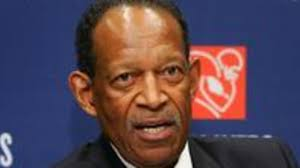
In 2004, the NCAA Division II sports information directors awarded the first Gene Upshaw Division II Lineman of the Year award. It is presented each year during the weekend of the NCAA Division II Football Championship by the Manheim (Pennsylvania) Touchdown Club.

In mid-August 2008 at his home in Lake Tahoe, Upshaw began to feel ill. His wife Terri noticed that his breathing was labored, so she convinced him to go to the emergency room, where he was diagnosed with pancreatic cancer on August 17. On August 20, Upshaw died with Terri and his sons Eugene III, Justin, and Daniel by his side, five days after his 63rd birthday.

After his death, the NFL announced that all 32 teams would wear a patch on their jerseys with the initials "GU" and the number 63 for the opening weekend of the 2008 season. Beginning in the second week of the season, all teams wore the patch as a decal on their backs of their helmets instead of a shoulder patch; while the Raiders continued to wear the shoulder patch throughout the season.

In 2011, his son Eugene Upshaw III filed a lawsuit in Fairfax County Circuit Court regarding how the will was handled at the time of his father's death, stating his father was too ill to be able to understand the document he was signing. The case was settled out of court prior to the trial, but the facts of the case created more conflict between retired players and the NFLPA, with several prominent retired players/advocates lashing out at Upshaw and his family for a $15 million payment in his will and citing the large number of disabled and broke veterans who had no resources; however, the reporting also showed that the $15 million was a deferred payment from Upshaw's long tenure as the NFLPA head and the money was taken out of his salary during that time and served as a de facto pension separate from the issues that were causing controversy.

Sources
https://www.pro-football-reference.com/
https://www.profootballarchives.com/index.html
https://americanfootballdatabase.fandom.com/wiki/Football_Wiki
https://www.gridiron-uniforms.com/GUD/controller/controller.php?action=main
https://www.profootballhof.com/hall-of-famers/
 "Gene Upshaw". daabaseFootball.com. Archived from the original on April 8, 2013. Retrieved December 10, 2012.
 O'Shea, Tyler. (July 28, 2023). NAIA Football Players Who Made it to The NFL. Joker Mag. Retrieved October 5, 2025.
 "Remains of Former Star's Ex Wife Found". Gadsden Times. October 31, 2002. Retrieved October 28, 2015 – via google news.
 Meggyesy, David (July 27, 2011). "How Players Won the NFL Lockout". The Nation. Archived from the original on October 30, 2017. Retrieved October 28, 2017.
 Johnson, Greg (August 22, 2008). "Raider star later led NFL players union". Los Angeles Times. Retrieved October 28, 2017.
 "Ex-players say NFL neglects retirees: Hall of Famers: League, union leader fall short in providing benefits". Archived from the original on August 27, 2008.
 Colston, Chris (August 13, 2007). "NFL retirees feel forgotten as fight for benefits rages". USA Today. Retrieved August 21, 2008.
 "NFLPA director Upshaw, 63, dies of cancer". ESPN.com. August 21, 2008.
 "Baltimore kicker Matt Stover wants to oust Upshaw as union head". ESPN. Associated Press. April 8, 2008. Retrieved November 7, 2022.
 Arnold, Laurence; Kuriloff, Aaron (August 21, 2007). "Hall of Famer Gene Upshaw, Head of NFL Players' Union, Dies". Bloomberg L.P. Retrieved August 21, 2008.
 Battista, Judy (August 21, 2007). "Gene Upshaw, N.F.L. Union Chief, Dies". New York Times. Retrieved August 21, 2008.
 "Tahoe Forest Cancer Center | Truckee CA". tahoecancercenter.com.
 "Players to wear uniform patch to honor Upshaw". ESPN.com. September 1, 2008.
 "Gene Upshaw's Will – or was it really his Will?". Pennsylvania Fiduciary Litigation. June 15, 2011. Retrieved October 29, 2015.
 Jackman, Tom (May 4, 2011). "Gene Upshaw had $15 million fund from NFL players union". The Washington Post. ISSN 0190-8286. Retrieved October 29, 2015.

Wednesday, November 15, 2023

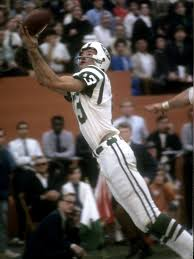
The Story And Significance Of Don Maynard - First Receiver To Reach 10,000 Yards Receiving

Donald Rogers Maynard was an American professional football player who was a wide receiver known for playing for the New York Jets in the National Football League. He also played with the New York Giants and St. Louis Cardinals; and the Shreveport Steamer of the World Football League (WFL).

Maynard was a four-time AFL All-Star and played for the Super Bowl III champions. The Jets retired Maynard's No. 13 in his honor. He was inducted into the Pro Football Hall of Fame and included on the AFL All-Time Team.

Nicknamed "Country", the quick and sure-handed Maynard was perhaps the most productive receiver of his day, setting career records for total receiving yards as well as yards per reception.

Maynard grew up in Texas. His father was a cotton broker, and with the family constantly moving, Maynard attended 13 schools, including five high schools. As a senior at Colorado City High School in Colorado City, Texas, he lettered in football, basketball, and track.

Maynard played collegiately for Rice University (one year), then for Texas Western College (now the University of Texas at El Paso). In three seasons (1954–56) with the Miners, he caught only 28 passes but averaged 27.6 yards per reception and recorded 10 touchdowns. As a running back, he had 843 yards rushing on 154 attempts for a 5.4 average and also returned punts and kickoffs. He amassed 2,283 all-purpose yards, while also intercepting 10 passes playing defensive back.

The New York Giants selected Maynard in the ninth round, with the 109th overall selection, of the 1957 NFL Draft. In 12 games as a rookie, he had 12 rushes for 45 yards (3.8 yards per carry), caught five passes for 84 yards (a 16.8 yard average), and played on special teams. After being released by the Giants during their 1959 training camp, he played one season in the Canadian Football League with the Hamilton Tiger-Cats, catching just one pass for 10 yards. In the off-season, he worked as a plumber and a teacher.

Maynard became the first player to sign with the New York Titans in 1960 (the team was renamed the Jets in 1963). This came about because the Titans' first head coach, Sammy Baugh, had coached against Maynard in college and knew his talent. Although scorned by the New York press as an "NFL reject" in 1960, he teamed with Art Powell to form the first professional wide receiver tandem to each gain over 1,000 yards on receptions in a season, with the pair achieving this milestone again in 1962. Over the next 13 years Maynard put up receiving numbers that would earn him a spot in the Pro Football Hall of Fame in 1987.

Collecting 72 pass receptions in his first year as a Titan, he went on to compile four more seasons with 50 or more catches and 1,000 yards receiving, and held the professional football record for total receptions and yards receiving. A four-time AFL All-Star, he is sixth in all-time pro football touchdown receptions, and is a member of the AFL All-Time Team.

In 1965, Maynard was teamed with rookie quarterback Joe Namath. Maynard had 1,218 yards on 68 receptions and 14 touchdowns in Namath's first season (Namath had 22 touchdown passes that year). In 1967, Maynard caught 1,434 of Namath's historic 4,007 passing yards. The receiving yards were a career-high for Maynard and led the league; he also had 71 receptions, 10 touchdowns, and averaged 20.2 yards per catch. In the 1968 season opener against Kansas City, Maynard had 200+ receiving yards for the first time in his career and passed Tommy McDonald as the active leader in receiving yards, where he remained for the next six seasons until his retirement. He added a career-best 228 yards in Game 10 against the Oakland Raiders. Maynard had 57 receptions for 1,297 yards (22.8 yards per catch) and 10 of Namath's 15 touchdowns that year. In the 1968 AFL Championship Game, a 27–23 Jets victory over the Oakland Raiders, Maynard caught six passes for 118 yards and two touchdowns. His 14-yard catch in the first quarter gave the Jets the lead and his six-yard catch in the fourth quarter proved to be the game winner. The Jets won Super Bowl III, 16–7 over the NFL's Baltimore Colts, which was hailed as the first "upset" in Super Bowl history. Maynard played, but had no catches while suffering the effects of a hamstring injury in the AFL title game.

Maynard played four more seasons with the Jets after Super Bowl III including being named first-team all-Pro in 1969. But long-simmering tensions between him and Jets’ Coach Weeb Ewbank boiled over in 1973. He reported late to Jets' camp that summer and, six weeks later on September 10, Ewbank unceremoniously traded him to the St. Louis Cardinals for a future draft pick. He appeared in the Redbirds’ first two games for rookie head coach Don Coryell and caught one pass for 18 yards but didn’t play in the club’s next two contests and was released October 10. Two months later, on December 12, Maynard signed as a free agent with the playoff-bound Los Angeles Rams. The Rams were coached by Chuck Knox, who’d mentored the New York Jets' offensive line during four of Maynard's prime seasons in Gotham – 1963-'66. The Rams, however, didn't activate Maynard for their final game of that regular season nor their 27-16 divisional playoff loss to the Dallas Cowboys in Texas Stadium two days before Christmas.

His NFL playing career at an apparent end, the 39-year-old Maynard caught on with the Houston Texans / Shreveport Steamer of the embryonic World Football League the next summer. But he had just five receptions for the club, which was forced to abruptly move from Houston in September 1974 when Texans' owner R. Steven Arnold unloaded the financially floundering franchise on a group of investors from Shreveport, Louisiana. Maynard retired as an active player after that tumultuous season but was hired by the newly christened Steamer’s as their receivers' coach. Maynard remained in that role until the organization – and league – folded for good in October 1975.

As a player, Maynard did not wear a chin strap on his helmet, instead using special cheek inserts that held the helmet tightly in place.

One of only 20 players who were in the AFL for its entire 10-year existence, Maynard was also one of only seven players who played their entire AFL careers with one team. Maynard finished his career with 633 receptions for 11,834 yards and 88 touchdowns. His 18.7 yards per catch is the highest for anyone with at least 600 receptions. Maynard was the first receiver to reach 10,000 yards and retired as pro football's all-time leader in receptions and yards receiving. Charley Taylor passed him in career receptions in 1975, while Maynard's yardage mark stood until 1986, when Charlie Joiner surpassed him.

Following his NFL career, Maynard went on to participate in many charity-sponsored events. He also participated in the coin toss in Super Bowl XXXIII along with his former teammates, in honor of the 40th anniversary of the 1958 NFL Championship, which is also known as "The Greatest Game Ever Played". He was also once named the grand marshal in the annual El Paso Sun Bowl Thanksgiving Parade. He worked as a math and industrial arts teacher, sold a variety of products, and was a financial planner.

Later in his life, Maynard lived in both El Paso and in Ruidoso, New Mexico to be close to his son and daughter and two grandchildren. His son was also a coach in the Canadian Football League with the Winnipeg Blue Bombers in 1990.

Maynard and his wife Marilyn (Weaver), whom he met when she was a student at Texas Western, were married in December 1955 after his junior season. She predeceased him. Maynard died from complications of dementia, among other ailments, at a care facility in Ruidoso on January 10, 2022, at the age of 86.

Sources
https://www.pro-football-reference.com/
https://www.profootballarchives.com/index.html
https://americanfootballdatabase.fandom.com/wiki/Football_Wiki
https://www.gridiron-uniforms.com/GUD/controller/controller.php?action=main
https://www.profootballhof.com/hall-of-famers/
Sargent, Jim (2005). "Don Maynard - Best Big-Time Receiver for New York's Titans and Jets" (PDF). The Coffin Corner. 27 (1). Professional Football Researchers Association. Archived from the original (PDF) on September 4, 2012.
 "Dan Maynard Bio". University of Texas at El Paso Official Athletic Site. Archived from the original on October 24, 2014. Retrieved October 24, 2014.
 "Hall of Fame - 2004 Inductees". University of Texas at El Paso Official Athletic Site. 2014. Archived from the original on October 24, 2014. Retrieved October 24, 2014.
 "Don Maynard Stats". pro-football-reference.com.
 "Super Bowl 2014: Former Jets great Don Maynard was almost a Green Bay Packer". January 26, 2014.
 "Don Maynard". Pro Football Hall of Fame Official Site.
 "Maynard to Be Honored". The New York Times. August 8, 1987. Retrieved October 3, 2009.
 "Who is on El Paso sports, athletic Mount Rushmore?". Elpasotimes.com. Retrieved January 10, 2022.
 "Don Maynard Career Game Log". Pro-Football-Reference.com.
 "2021 Super Bowl Sunday: When, Where, & More". NFL.com.
 Doug Grow, “Maynard Brings ‘Trade Secrets,” St. Louis Post Dispatch; Sept. 12, 1973
 “Maynard Joins Rams To Help In Playoffs;” Pomona, California Progress Bulletin; Dec. 13, 1973
 “Maynard Says Joe Wasn’t Like Image;” The Shreveport Journal; July 31, 1975
 Bob Ingram; “As I Was Saying;” El Paso Herald Post; June 7, 1975
 "OH, HOW GENTLY FLOWS THIS DON - Sports Illustrated Vault". SI.com. July 23, 1973. Retrieved January 10, 2022.
 Seppy, Tom (December 22, 1975). "Turnovers topple Redskins". Free Lance-Star. Fredericksburg, Virginia. Associated Press. p. 10. Retrieved January 13, 2022.
 "Largent, Joiner Set Reception Records". The New York Times. AP. October 7, 1986. p. D28. Retrieved January 13, 2022.
 "Pro Football Hall of Famer, New York Jets great Don Maynard dies at age 86". ESPN.com. January 10, 2022. Retrieved January 10, 2022.
 Goldstein, Richard (January 10, 2022). "Don Maynard, Hall of Fame Receiver for Champion Jets, Dies at 86". The New York Times. Retrieved January 10, 2022.

Monday, November 13, 2023

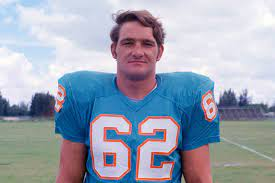
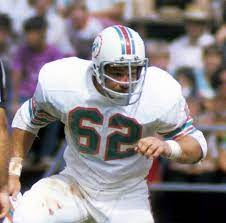
The Story And Significance Of Jim Langer - Six-Time Pro Bowler, Four-Time First-Team All-Pro And Two-Time Super Bowl Champion

James John Langer was an American professional football player who was a center and guard in the National Football League for the Miami Dolphins and Minnesota Vikings. BBC Sport reported him as one of the greatest centers in NFL history. Langer was elected to the Pro Football Hall of Fame in his first year of eligibility in 1987.

He is one of only five Dolphins players to get elected to the Hall of Fame in their first year of eligibility; the others being Dan Marino, Don Shula, Paul Warfield, and Jason Taylor.

In Langer's first two years in Miami he played sparingly behind veteran center Bob DeMarco but in 1972, DeMarco was traded to Cleveland during the pre-season and Langer became the starter at center in the 1972 season. Between 1970 and 1979, he played 128 consecutive games for the Dolphins. Among these games were the 1972 and 1973 Super Bowl victories.

In 1972, during Super Bowl VII he played every offensive snap. The Dolphins win–loss figure in the season was 17-0 when it won the Super Bowl VII. Dolphins were the only unbeaten, untied team in the history of the league.

In 1973, during the Super Bowl VIII, the Dolphins again became the champions after they defeated the Vikings 24–7. Langer played a decisive role in the game where the ball was run 53 times for 196 yards by the Dolphins.

Upon graduating from SDSU, Langer was commissioned as a 2nd Lieutenant in the U.S. Army. He was signed as a free agent by the Cleveland Browns in 1970, but was released to the Miami Dolphins where he played for 10 seasonsDuring a 6-year stretch in the mid-1970s, Langer was named AP First-team All-Pro 3 times 1974, 1975, and 1977, and Second-team Team All-Pro thrice, in 1973, 1976, and 1978. He also appeared in the Pro Bowl each of those seasons. Langer played in three Super Bowls with the Dolphins, losing in Super Bowl VI, but winning in Super Bowl VII and Super Bowl VIII. In 1975, he was voted as the Dolphins' most valuable player while serving as an offensive lineman. He played ten seasons with the Dolphins. A knee injury ended his playing days with Miami nine games into the 1979 season with seven games still left.

Langer wanted to stay closer to his home, and was accordingly traded to the Minnesota Vikings prior to the 1980 season, playing his final 2 NFL seasons with them before retiring after the 1981 campaign. He played 22 games as a Viking player from his overall 151 games.

His final participation in the NFL was in 1981. By this time, Langer was a six-time Pro Bowler, four-time first-team All-Pro and two-time Super Bowl champion.

Around the middle of the decade of 1980s, he worked in the WJON AM 1240 radio station as a broadcaster. He handled the color commentator duties for the football broadcasts of St. Cloud State University Huskies.

Langer was inducted to the Dolphins Honor Roll and in the Dolphins Walk of Fame.

The Jim Langer Award, which is presented to the nation's top NCAA Division II lineman, is named after him.

In 2016, the football field of Royalton High School was named after Langer. It is one of 97 high school football fields in America to be named an NFL Hometown Hall of Fame field.

He lived in Ramsey, Minnesota, had married Linda and had four children.

In 2013, President Barack Obama honored the entire 1972 Perfect Season Dolphins at an event in the White House, but Langer declined to attend for political reasons. He told sports columnist Dave Hyde of Ft. Lauderdale's Sun-Sentinel "We've got some real moral compass issues in Washington... I don't want to be in a room with those people and pretend I'm having a good time. I can't do that. If that [angers] people, so be it."

According to his wife Linda, Langer died on August 29, 2019, at a hospital near his home in Coon Rapids, Minnesota because of a sudden heart-related issue.

To honor his contributions, the Hall of Fame flag was flown at half-staff in Canton, Ohio. Langer's death made him the third player from the 1972 Dolphins team to die in 2019, along with Bob Kuechenberg and Nick Buoniconti.

Sources
https://www.pro-football-reference.com/
https://www.profootballarchives.com/index.html
https://americanfootballdatabase.fandom.com/wiki/Football_Wiki
https://www.gridiron-uniforms.com/GUD/controller/controller.php?action=main
https://www.profootballhof.com/hall-of-famers/
"HOF center, Dolphins great Jim Langer dies at 71". NFL.com. August 30, 2019. Archived from the original on September 2, 2019. Retrieved January 6, 2020.
 "Jim Langer: Miami Dolphins Hall of Famer dies aged 71". August 30, 2019. Archived from the original on August 30, 2019. Retrieved August 31, 2019.
 "Jim Langer Pro Football Hall of Fame Official Site". www.profootballhof.com. Archived from the original on April 24, 2009. Retrieved August 31, 2019.
 "Miami Dolphins: Former center and Hall of Famer Jim Langer has died". www.msn.com. Archived from the original on September 2, 2019. Retrieved September 2, 2019.
 Mark, Craig (August 30, 2019). "Pro Football Hall of Famer Jim Langer, a Minnesota native, dies at 71". Star Tribune. Archived from the original on September 2, 2019. Retrieved September 4, 2019.
 "Remembering Jim Langer | STATE | South Dakota State University Alumni Magazine | SDState Conntect". state.sdstateconnect.org. February 18, 2020. Retrieved December 22, 2020.
 Kraczkowski, Kevin (May 14, 2012). "Miami Dolphins All-Time Top 100 Players: 10. Jim Langer". The Phinsider. Archived from the original on August 31, 2019. Retrieved August 31, 2019.
 "Dolphins Hall of Fame center Jim Langer, 71, dies". ESPN. August 30, 2019. Retrieved September 3, 2019.
 "Hall of Fame Center Jim Langer Dies at 71". AM 1240 WJON. Associated Press. Archived from the original on September 4, 2019. Retrieved September 4, 2019.
 "Royalton high school grad, ex-Dolphins Hall of Fame center Jim Langer dies at 71". St. Cloud Times. Retrieved September 4, 2019.
 Cote, Greg (August 20, 2013). "White House invite a last stamp of approval for '72 Miami Dolphins". MiamiHerald.com. Miami Herald Media. Archived from the original on August 20, 2013. Retrieved August 20, 2013.
 Darlington, Jim (August 20, 2013). "President Obama honors 1972 Miami Dolphins at White House". NFL.com. NFL Enterprises. Archived from the original on August 21, 2013. Retrieved August 20, 2013.
 McIntyre, Brian (August 20, 2013). "Three members of the 1972 Miami Dolphins to skip White House visit for political reasons". Sports.yahoo.com. Shutdown Corner. Yahoo!. Archived from the original on December 16, 2013. Retrieved August 20, 2013.
 Hyde, Dave (August 17, 2013). "At least three '72 Dolphins refuse White House invite". Sun-Sentinel.com. Howard Greenberg (Tribune Company). Archived from the original on August 21, 2013. Retrieved August 20, 2013.

Wednesday, November 8, 2023

The Story And Significance Of John Henry Johnson - Oldest Player To Rush For Over 1,000 Yards In A Career At The Age Of 34

John Henry Johnson was an American professional football player who was a running back. He was known for his excellence at the fullback position as both a runner and a blocker. His first professional stint was in Canada in the Western Interprovincial Football Union (WIFU, a forerunner league to today's Canadian Football League) for one season with the Calgary Stampeders. He then played in the National Football League for the San Francisco 49ers, Detroit Lions, and Pittsburgh Steelers before spending his final season in the American Football League (AFL) with the Houston Oilers. Commonly referred to as simply John Henry, an allusion to the folk hero of the same name, Johnson was a tough and tenacious player who performed at a high level well into the tail end of his career.

After playing college football for St. Mary's College of California and Arizona State, Johnson was selected in the second round of the 1953 NFL Draft by the Steelers, the 18th overall pick. He instead played one season of Canadian football for the Stampeders, in which he won the Jeff Nicklin Memorial Trophy as the league's most valuable player. He then signed with the 49ers, and played left halfback in San Francisco's famed "Million Dollar Backfield". He was traded to Detroit in 1957, and became the team's leading rusher en route to that year's NFL championship, their most recent.

His abilities seemingly in decline, Johnson was traded to Pittsburgh in 1960, where he had the most productive years of his career, recording two 1,000-yard rushing seasons. He remains the oldest player to record a 1,000-yard rushing season as well as the oldest to rush for 200 or more yards in a game, each at age 34. A four-time Pro Bowl selection, Johnson ranked third on the NFL's all-time rushing yards list when he retired, but was best remembered by his peers for the mark he left with his blocking. He was elected to the Pro Football Hall of Fame in 1987.

Selected in the second round of the 1953 NFL Draft by the Pittsburgh Steelers, Johnson instead played one season in Canada with the Calgary Stampeders of the Western Interprovincial Football Union (WIFU) in 1953. Johnson reasoned that Calgary had offered more money, but Steelers owner Art Rooney speculated that Johnson thought it was too cold in Pittsburgh. "He must have thought he was going to some resort up there," joked Rooney. He led the Stampeders in rushing that season with 107 carries for 648 yards, an average of six yards per carry with five touchdowns. In addition, Johnson caught 33 passes for 365 yards and three more touchdowns, returned 47 punts for 386 yards, and had a 104-yard kickoff return touchdown. He also starred on defense and intercepted five passes. He was awarded the Jeff Nicklin Memorial Trophy as the league's most valuable player. Johnson was also a leading WIFU All-Star vote receiver, but because he played both offense and defense so well voters split their votes and he was left off the team's "roster".

Johnson was signed by the San Francisco 49ers in 1954 as a halfback, where he joined Hugh McElhenny, Y. A. Tittle, and Joe Perry to form the 49ers' famed "Million Dollar Backfield". That year, the 49ers shattered the team record for rushing yards in a season. Johnson finished second in the league in rushing with 681 yards, behind only Perry, who picked up the majority of his 1,049 yards behind blocking from Johnson. Johnson scored nine touchdowns, which were the most for a season in his career. He was invited to his first Pro Bowl following the season, joining Tittle and Perry. Johnson earned second-team All-Pro honors from United Press International (UPI) and the New York Daily News.

For the remainder of his time in San Francisco, Johnson was unable to replicate the success of his rookie year, as his production dropped significantly in the following two seasons. He played in seven games in 1955 before injuring his shoulder against the Los Angeles Rams, and finished the year with only 19 carries for 69 yards and one touchdown. He was traded to the Detroit Lions following the 1956 season in exchange for fullback Bill Bowman and defensive back Bill Stits.

Lions head coach Buddy Parker saw Johnson's value as a blocker and moved him to fullback. In his first season with Detroit in 1957, he led the team in rushing, carrying for 621 yards and five touchdowns. In the 1957 NFL Championship Game, which was won by the Lions 59–14 over the Cleveland Browns, Johnson carried seven times for 34 yards, caught a 16-yard pass, and recovered a fumble on defense. Going into the 1958 season, the Lions looked to continue their success, and Johnson was expected to be the team's primary ball carrier. However, Johnson missed several games due to injuries, and the Lions finished with a 4–7–1 record and one of the league's worst rushing offenses.

In 1959, Johnson was suspended indefinitely by the Lions after he missed the team plane back to Detroit following a one-sided 33-7 loss to the 49ers on November 1 in which he carried the ball five times for only eight yards. To that point, the Lions had a 1–5 record, and coach George Wilson used Johnson's suspension as an opportunity to call out the team for its lack of "desire." Johnson was ultimately fined $1,000. Wilson took the brunt of the blame for Detroit's struggles in 1958 and 1959, but he questioned the resolve of some of the team's higher-paid players, including Johnson. Following the season, Johnson was traded to the Pittsburgh Steelers for two draft picks. "That's all we could get for him," explained Wilson.

The Steelers finally acquired Johnson in 1960, after having lost him to the CFL when they drafted him eight years prior. His career rejuvenated, he had his most productive years as a pro while in Pittsburgh. In his first season with the team, he rushed for 621 yards with a 5.3 yards-per-carry average, which included a career-high 87-yard score against the Philadelphia Eagles. He became the first Steelers player to rush for 1,000 yards in a season when he did so in 1962, and he repeated the feat in 1964. He made three straight Pro Bowl appearances, and was a second-team All-Pro selection by the AP, UPI, and Newspaper Enterprise Association in 1962. As of 2017, he remains the oldest player in NFL history to eclipse 1,000 yards rushing in a season, finishing with 1,048 in 1964, aged 35. In a game that season against the Cleveland Browns, then aged 34, Johnson carried 30 times for 200 yards and scored three touchdowns, out-dueling the great Jim Brown. It was only the ninth 200-yard rushing game in NFL history to that point, and the performance made him the oldest player to reach that mark, a record he still holds.[34] Johnson's effort impressed Steelers president Dan Rooney, who remarked that "he got almost all the yardage by himself." Age and injuries caught up to Johnson in 1965, as he was limited to just three carries for 11 yards.

After playing out his option with the Steelers, in July 1966 Johnson signed as a free agent with the Houston Oilers of the American Football League. He joined the Oilers with the hope of helping the team win an AFL championship. However, the team finished the season last in the Eastern Division with a record of 3–11. Johnson retired after the season at the age of 37. He completed his NFL career having carried 1,571 times for 6,803 yards and 48 touchdowns, and picked up 1,478 yards on 186 pass receptions for seven receiving touchdowns.

Equally proficient as both a blocker and runner, Johnson was described as "the perfect NFL fullback". A talented runner, he ran with power both inside and outside the tackles, and he was as fast as McElhenny and Perry. Jim Brown called Johnson the greatest running back he had ever seen. He was also a very skilled safety and linebacker on defense.During a preseason game in 1955, Johnson hit Chicago Cardinals halfback Charley Trippi so hard that he fractured Trippi's face in multiple places, leaving him with a smashed nose and concussion and all but ended his career. "Football was like a combat zone," said Johnson. "I was always told that you carry the impact to the opponent. If you wait for it, the impact will be on you."

Perhaps the most notable aspect of Johnson's game was his blocking abilities, for which he received heavy praise. He took pride in it, saying "It gave me a chance to hit all those people who hit me all the time." Quarterback Bobby Layne, a teammate of Johnson with both the Lions and Steelers, listed Johnson as one of the one of "Pro Football's 11 Meanest Men" in an article for SPORT magazine in 1964. "By 'mean,' I mean vicious, unmanageable, consistently tough," said Layne. "I don't mean dirty." Layne also called Johnson his "bodyguard," saying "Half the good runners will get a passer killed if you keep them around long enough. But a quarterback hits the jackpot when he gets a combination runner-blocker like Johnson."

Upon his retirement, Johnson was ranked fourth on pro football's all-time rushing yards list, behind Jim Brown, Jim Taylor, and his fellow Million Dollar Backfield teammate Perry. As of 2016, he is fourth on the Steelers franchise all-time rushing yards list, behind Franco Harris, Jerome Bettis, and Willie Parker. In 1987, he was selected to the Pro Football Hall of Fame, and chose Steelers owner Art Rooney as his presenter. Many of his contemporaries felt his induction was belated; he had been eligible for induction for the past fifteen years. The 49ers' "Million Dollar Backfield" is currently the only full-house backfield to have all four of its members enshrined in the Hall of Fame. Johnson is a member of the Pittsburgh Steelers Legends team, which honors the franchise's best players pre-1970. He was a charter inductee to the San Francisco 49ers Hall of Fame in 2009.

n November 1955, while on the sick list for the 49ers due to a shoulder injury, Johnson carried two women to safety out of a blazing apartment building in Oakland, California. One of the women was his pregnant wife, Barbara Johnson. The couple divorced in 1959, and a bench warrant was issued for Johnson after he fell $2,360 behind on alimony payments, concurrent with his suspension from the Lions for missing the team plane. After retiring as a player, he worked for Columbia Gas and later for Warner Communications. He had aspirations of coaching football, but the opportunity never arose.

Johnson died at age 81 in 2011 in Tracy, California. Several days later, it was announced that Johnson and his fellow Million Dollar Backfield teammate, Joe Perry, who died six weeks earlier, would have their brains examined by researchers at Boston University, who were studying head injuries in sports. Both men were suspected of having chronic traumatic encephalopathy (CTE), a disorder linked to repeated brain trauma. According to his daughter, Johnson could not talk or swallow in the final year of his life and also used a wheelchair. She told the San Francisco Chronicle that she hoped by donating her father's brain, it would "help with a cure."

Johnson was confirmed to have Stage 4 CTE, the most severe form of the disease. He was one of at least 345 NFL players to be diagnosed after death with this disease.

Sources
https://www.pro-football-reference.com/
https://www.profootballarchives.com/index.html
https://americanfootballdatabase.fandom.com/wiki/Football_Wiki
https://www.gridiron-uniforms.com/GUD/controller/controller.php?action=main
https://www.profootballhof.com/hall-of-famers/
Bouchette, Ed (August 7, 1987). "John Henry was a steel-drivin' man". Pittsburgh Post-Gazette. p. 17. Retrieved October 10, 2016.
 Sell, Jack (December 2, 1953). "Steelers lose No. 2 draft choice to Frisco team". Pittsburgh Post-Gazette. p. 20.
 "Former Tempe football star scores in Canada". Prescott Evening Courier. Arizona. Associated Press. September 21, 1953. p. 5.
 "Border Loop Is Nurturing Two Champs". Prescott Evening Courier. Associated Press. September 10, 1952. p. 1. Retrieved September 26, 2016.
 "Gaels abandon gridiron sport". Spokane Daily Chronicle. Washington. Associated Press. January 6, 1951. p. 7.
 "Gaels bow out of grid picture". Eugene Register-Guard. Oregon. Associated Press. January 7, 1951. p. 9.
 McLin, E. H. (October 4, 1952). "The Sports Parade". St. Petersburg Times. p. 21. Retrieved September 26, 2016.
 "Devils Await Old Adversary". Prescott Evening Courier. Associated Press. November 28, 1952. p. 5. Retrieved September 26, 2016.
 "San Jose Wary Of Safety Ace". Spokane Daily Chronicle. Associated Press. October 1, 1952. p. 29. Retrieved September 26, 2016.
 Jordan, Jimmy (April 12, 1960). "Steelers finally get John Henry Johnson". Pittsburgh Post-Gazette. p. 19.
 Stamps mourn death of John Henry Johnson. Calgary Stampeders. June 4, 2011. Retrieved March 19, 2017.
 DeGeer, Vern (November 6, 1953). "Good Morning". The Montreal Gazette. p. 25. Retrieved September 9, 2016.
 Tameta, Andre (May 22, 2009). "San Francisco's Million Dollar Backfield: The 49ers' Fabulous Foursome". Bleacher Report. Archived from the original on June 9, 2011. Retrieved September 23, 2016.
 Abrams, Al (April 14, 1960). "John Henry Could Help". Pittsburgh Post-Gazette. p. 22. Retrieved September 23, 2016.
 Corkran, Steve (June 3, 2011). "Former 49ers star John Henry Johnson dies". San Jose Mercury News. Retrieved September 24, 2016.
 "1954 NFL Leaders and Leaderboards". Pro-Football-Reference.com. Sports Reference LLC. Retrieved September 23, 2016.
 "Lineups Named For Pro Bowl Today". Daytona Beach Morning Journal. Associated Press. January 16, 1955. p. 14. Retrieved September 24, 2016.
 "1954 NFL All-Pros". Pro-Football-Reference.com. Sports Reference LLC. Retrieved September 24, 2016.
 "Player Rescues 2 Women In Fire". Spokane Daily Chronicle. Associated Press. November 28, 1955. p. 2. Retrieved September 25, 2016.
 Latshaw, Bob (May 15, 1957). "Lions, 49ers Swap 3 Backs". Detroit Free Press. p. 25. Archived from the original on September 28, 2016. Retrieved September 28, 2016.
 Goldstein, Richard (June 5, 2011). "John Henry Johnson Dies at 81; Inspired Fear on the Field". The New York Times. Retrieved September 25, 2016.
 "Cleveland Browns at Detroit Lions - December 29th, 1957". Pro-Football-Reference.com. Sports Reference LLC. Retrieved September 26, 2016.
 "Veteran Performers to Carry Load for Detroit Lions in 1958 Campaign". Ludington Daily News. July 7, 1958. p. 6. Retrieved September 27, 2016.
 Diles, Dave (August 11, 1959). "Johnson, Rote Are Ifs for Detroit Lions". Prescott Evening Courier. Associated Press. p. 5. Retrieved September 27, 2016.
 "Lions' Fullback Is Suspended". Spokane Daily Chronicle. Associated Press. November 2, 1959. p. 15. Retrieved September 26, 2016.
 "Double Trouble For John Henry". Toledo Blade. Associated Press. November 3, 1959. p. 21. Retrieved September 26, 2016.
 "Lions' back suspended". The Bulletin. United Press International. November 3, 1959. p. 2. Retrieved September 26, 2016.
 "Wilson Says He's Sick Of Being Fall Guy For Detroit's Pro Lions". Ocala Star-Banner. Associated Press. August 25, 1960. p. 7. Retrieved September 27, 2016.
 "John Henry Johnson Traded to Pittsburgh". Ukiah Daily Journal. United Press International. April 12, 1960. p. 2. Retrieved September 28, 2016.
 Wexell, Jim; Mendelson, Abby; Aretha, David (2014). The Steelers Experience: A Year-by-Year Chronicle of the Pittsburgh Steelers (illustrated ed.). MVP Books. p. 58. ISBN 978-0760345764. Retrieved September 28, 2016.
 "1962 NFL All-Pros". Pro-Football-Reference.com. Sports Reference LLC. Retrieved September 26, 2016.
 Langager, Chad (March 3, 2015). "Best Running Back Seasons By 30+ Year Olds". SportingCharts.com. Retrieved September 28, 2016.
 Smizik, Bob (September 6, 1994). "The day John Henry Johnson ran wild". Pittsburgh Post-Gazette. p. 6. Retrieved September 16, 2016.
 "Player Game Finder Query Results". Pro-Football-Reference.com. Sports Reference LLC. Retrieved September 28, 2016.
 "John Henry Johnson Signs Contract With Oilers". Park City Daily News. Associated Press. July 17, 1966. p. 12. Retrieved September 29, 2016.
 Swauger, Kirk (October 14, 1984). "John Henry: The perfect NFL fullback". Beaver County Times. p. C2. Retrieved September 25, 2016.
 Jacobs, Martin (2005). San Francisco 49ers (illustrated ed.). Arcadia Publishing. p. 53. ISBN 0738529664. Retrieved September 25, 2016.
 Swauger, Kirk (October 14, 1984). "John Henry: the perfect NFL fullback". Beaver County Times. Pennsylvania. p. C2.
 Murray, Jim (February 11, 1970). "Johnson seeks coaching job". Free Lance-Star. Fredericksburg, Virginia. (Los Angeles Times). p. 13.
 Wexell, Mendelson, & Aretha 2014, p. 62.
 "Trippi Badly Hurt; Fear Career Over". St. Petersburg Times. Associated Press. September 16, 1955. p. 12. Retrieved September 28, 2016.
 Cook, Ron (June 27, 1982). "John Henry He's learned how quickly they forget". Beaver County Times. p. C3. Retrieved September 30, 2016.
 "Night Train, Jimmy Hill, John Henry are 'meanest'". Baltimore Afro-American. October 6, 1964. p. 14. Retrieved September 26, 2016.
 Melvin, Chuck (August 9, 1987). "Pro football's hall of fame inducts seven". The Day. New London, Connecticut. Associated Press. p. E5.
 Bouchette, Ed (August 6, 1987). "Ceremonial chief". Pittsburgh Post-Gazette. p. 12.
 Players become eligible for induction into the Pro Football Hall of Fame five years after their final pro season.
 "Johnson, member of 49ers' 'Million Dollar Backfield,' dies at 81". National Football League. June 4, 2011. Retrieved September 3, 2016.
 "Steelers Announce Legends Team as Part of 75th Season Celebration Twenty-Four Honored as Best Pre-1970's Players in Club History". Pittsburgh Steelers. October 2007. Archived from the original on June 5, 2009. Retrieved September 30, 2016.
 "49ers Announce Edward DeBartolo Sr. 49ers Hall of Fame". San Francisco 49ers. May 12, 2009. Retrieved September 30, 2016.
 Schudel, Matt (June 6, 2011). "John Henry Johnson, punishing NFL fullback of 1950s and '60s, dies at 81". The Washington Post. Retrieved September 30, 2016.
 "Researchers to study 49ers RBs". ESPN.com. Associated Press. June 9, 2011. Retrieved January 28, 2016.
 "John Henry Johnson". Concussion Legacy Foundation. Retrieved July 3, 2023.
 "Researchers Find CTE in 345 of 376 Former NFL Players Studied". Boston University Chobanian & Avedisian School of Medicine. Retrieved March 26, 2023.
Sullivan, George (1972). The Great Running Backs. New York: G. P. Putnam's Sons. pp. 100–106. ISBN 0-399-11026-7.

Monday, November 6, 2023

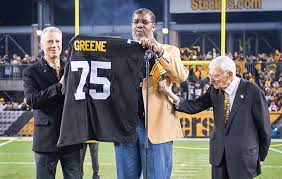
The Story And Significance Of Joe Greene - Four Time Super Bowl Champion And Two Time NFL Defensive Player Of The Year

Charles Edward Greene, better known as "Mean" Joe Greene, is an American former football defensive tackle who played for the Pittsburgh Steelers of the National Football League from 1969 to 1981. A recipient of two NFL Defensive Player of the Year awards, five first-team All-Pro selections, and ten Pro Bowl appearances, Greene is widely considered to be one of the greatest defensive linemen to play in the NFL. He was noted for his leadership, fierce competitiveness, and intimidating style of play for which he earned his nickname.

Born and raised in Temple, Texas, Greene attended North Texas State University—now University of North Texas—where he earned consensus All-America honors as a senior playing for the North Texas State Eagles football team. He was selected by the Steelers fourth overall in the 1969 NFL Draft and made an immediate impact with the team, as he was named the NFL's Defensive Rookie of the Year. Greene is credited with providing the foundation upon which Steelers coach Chuck Noll turned the dismal franchise into a sports dynasty. He was the centerpiece of the "Steel Curtain" defense that led Pittsburgh to four Super Bowl championships in a six-year span.

Throughout his career, Greene was one of the most dominant defensive players in the NFL, able to overpower opposing offensive linemen with ease and disrupt blocking. Former teammate Andy Russell called Greene "unquestionably the NFL's best player in the seventies". He is a member of the Pro Football Hall of Fame and the College Football Hall of Fame, and his number 75 jersey is one of only three retired by the Steelers. Greene is also well known for his appearance in the "Hey Kid, Catch!" Coca-Cola commercial, which aired during Super Bowl XIV and solidified his reputation as a "tough football player who's a nice guy".

While sources agree the name is a reference to North Texas' athletics teams, the Mean Green, there are conflicting accounts as to how, when, and why Greene received his "Mean Greene" nickname. When he first arrived at North Texas, the university's moniker was the Eagles. In 1966, Greene's first year on the varsity team, the team adopted the "Mean Green" moniker. Two possible origins of the nickname are two separate cheers that supposedly developed independently during North Texas' 1966 game against UTEP. One cheer was by Sidney Sue Graham, wife of the North Texas sports information director. In response to a tackle by Greene, she blurted out, "That's the way, Mean Greene!" Bill Mercer, former North Texas play-by-play announcer, states Graham's thought behind the nickname was the Mean Green defense. Meanwhile, in the student section, North Texas basketball players Willie Davis and Ira Daniels, unsatisfied with the unenthusiastic crowd, began to sing, "Mean Green, you look so good to me". The rest of the crowd soon followed. "After that we did it every game," Davis said. "A lot of people later on started associating it with Joe because his last name was Greene, but it actually started with that simple chant that Saturday night at Fouts Field. And that's the truth."

Although it stuck with him throughout his professional career due to his playing style, Greene himself was not fond of the nickname, insisting it did not reflect his true character. "I just want people to remember me as being a good player and not really mean," he said. "I want to be remembered for playing 13 years and contributing to four championship teams. I would like to be remembered for maybe setting a standard for others to achieve."

As for the “Joe” part of his nickname (since his given name was Charles, not Joseph), that came from one of his aunts. During a 2014 interview with NFL Films, Greene said that his aunt nicknamed him Joe due to his resemblance to boxing legend Joe Louis, who at the time of Greene's birth was in the middle of his 12-year reign as heavyweight champion. "She thought I was hefty and bulky enough to be called Joe Louis," Greene said. "She started calling me Joe, and it kind of stuck."

The Pittsburgh Steelers franchise was one of the most downtrodden in the NFL, having experienced many losing seasons before the hiring of Chuck Noll as head coach in 1969. Noll and the Rooney family, which had owned the franchise since its formation, agreed that building the defensive line was crucial to rebuilding the team. Thus, they decided on Greene with the fourth pick of the 1969 NFL Draft. The selection proved unpopular with fans and media, who were hoping for a player that would generate excitement; the relatively unknown Greene did not appear to meet their expectations. Meanwhile, Greene, who was highly competitive, was disappointed he was picked by a team that had such a reputation for losing. "I did not, did not want to be a Steeler," he admitted in a 2013 interview. Noll saw immense potential in Greene and insisted on drafting him. Ken Kortas, who had played in all 42 games as defensive tackle over the previous three seasons, was soon traded away to the Chicago Bears to accommodate him on the roster. In a matter of months he established himself as one of the most dominant players in the league at his position. Despite his team finishing 1969 with a 1–13 record, the Associated Press (AP) named Greene the NFL Defensive Rookie of the Year, and he was invited to his first Pro Bowl.

Former teammate Andy Russell called Greene "unquestionably the NFL's best player in the seventies," saying "No player had a greater impact or did more for his team." Greene and coach Noll are widely credited with turning the Steelers franchise around. The Steelers finished 1970 with a 5–9 record and went 6–8 in 1971. Greene was invited to the Pro Bowl in both seasons. In 1972, Pittsburgh finished 11–3 and won its first division title and its first playoff game—the "Immaculate Reception" game against the Oakland Raiders. During the season, Greene tallied 11 quarterback sacks and 42 solo tackles, and he was recognized as the AP NFL Defensive Player of the Year. Miami Dolphins head coach Don Shula lauded Greene, saying, "He's just a super super star. It's hard to believe he isn't offside on every play. He makes the other team adjust to him." By this time, Noll had built a formidable defense. "We have maybe 10 guys now capable of making All-Pro," said Greene in 1972. "I'm just like all the other guys, doing my best in a team effort." With the drafting of defensive tackle Ernie Holmes in 1972, the Steelers assembled what became known as the "Steel Curtain" defensive line of Greene, Holmes, L. C. Greenwood, and Dwight White. Greene was invited to the Pro Bowl for 1973, joining White and Greenwood on the American Football Conference (AFC) roster.

Greene won his second AP NFL Defensive Player of the Year Award after the 1974 season, becoming the first player to receive the award multiple times. That year, he developed a new tactic of lining up at a sharp angle between the guard and center to disrupt the opposition's blocking assignments. His coaches were at first skeptical of the tactic and did not allow him to try it during the regular season. He first implemented it against the Buffalo Bills in the division championship game. It proved to be highly effective, as it impeded Buffalo's blocking, and running back O. J. Simpson managed only 48 yards rushing. The following week, the Steelers faced the Oakland Raiders in the AFC championship game, with the defining match-up being Greene against All-Pro center Jim Otto. At one point Greene, consumed by emotions, kicked Otto in the groin. Later, on a third-down play, Greene threw Otto to the ground with one arm before leaping to sack quarterback Ken Stabler. Oakland was held to 29 rushing yards in the Steelers' 24–13 victory. On January 12, 1975, the Steelers won their first of four Super Bowl championships in a six-year span by defeating the Minnesota Vikings 16–6 in Super Bowl IX. In that game, lined up against center Mick Tingelhoff, Greene recorded an interception, forced fumble, and fumble recovery in what is considered one of the greatest individual defensive Super Bowl performances. Pittsburgh limited the Vikings to only 119 total yards of offense, 17 of which were gained on the ground. After the season, Greene was honored by the Pittsburgh Post-Gazette at its 39th Dapper Dan dinner as Pittsburgh's outstanding sports figure of the year.

Greene missed four games in 1975 due to a pinched nerve, snapping a streak of 91 straight games started since he entered the league. In December 1975, he and the other members of the Steel Curtain appeared on the cover of Time magazine. After leading the Steelers to another Super Bowl win after the 1975 season over the Dallas Cowboys in Super Bowl X, Greene missed the first several games of the 1976 season with a back injury. The Steelers started off the season 1–4 and looked like they would not make the playoffs. Quarterback Terry Bradshaw was also injured and was replaced by rookie Mike Kruczek. Greene returned and the Steelers defense carried the team to nine-straight wins and the playoffs. With a defense considered one of the best in NFL history, the 1976 Steelers held opponents to an average of less than 10 points per game (138 points over 14 games). During their nine-game winning streak, the Steelers defense recorded five shutouts, including three straight, and surrendered a total of 28 points (roughly 3 points per game). The defense allowed only two touchdowns over those nine games. The Steelers were defeated by the Raiders in that year's AFC championship game.

By 1977, Greene was the captain of the Steelers defense, although his reduced effectiveness over the previous two seasons due to injuries led to rumors that he was washed up. He was never again able to attain the same success as a pass rusher after his pinched nerve in 1975. Spurred by the rumors, he returned in 1978 to lead all Pittsburgh linemen in tackles, and he had four sacks and a career-high five fumble recoveries. The Steelers defense allowed a league-low 195 points during the season, en route to a 35–31 victory over the Cowboys in Super Bowl XIII. In that contest, Greene had one of Pittsburgh's five sacks of Dallas quarterback Roger Staubach.

Pittsburgh finished the 1979 season with a 12–4 record, and ranked second in total defense and fifth in scoring defense. Greene was named a first-team All-Pro by the Pro Football Writers Association and Pro Football Weekly and was invited to his final Pro Bowl. He was also deemed the NFL's Man of the Year in recognition of his off-field contributions. In the AFC championship game against the Houston Oilers, the Steelers held NFL MVP Earl Campbell to just 15 rushing yards on 17 carries. Pittsburgh then defeated the Los Angeles Rams in Super Bowl XIV for an unprecedented fourth Super Bowl title. With the fourth title came Greene's fourth Super Bowl ring, inspiring his famous phrase, "one for the thumb", an allusion to winning a fifth championship. His wish went unfulfilled, however, as the Steelers failed to reach the playoffs in each of his final two seasons.

Greene retired as a player following the 1981 season. He finished his career having played in 181 out of a possible 190 games, and recorded 77.5 sacks (unofficially, as sacks were not an official statistic until 1982) and 16 fumble recoveries. His spot in the lineup was technically not replaced; the Steelers switched to a 3–4 defensive alignment for the 1982 season, which has only one nose tackle as opposed to two defensive tackles. The team has used the 3–4 as its base alignment continuously in the years since Greene's retirement, and more recently have used alignments that deploy only two true linemen.

Greene's nickname remained popular due to his exploits on the playing field, where he was described as ferocious and intimidating. He instilled fear in opponents with the intensity of his play. In a 1979 game against the Houston Oilers, with only seconds remaining and Houston leading 20–17, the Oilers lined up near the Pittsburgh goal line to run their final play. With victory already assured for the Oilers, Greene pointed angrily across the line of scrimmage at Houston quarterback Dan Pastorini, warning, "If you come into the end zone, I'll beat the crap out of you! I'm gonna kill you!" Pastorini responded by taking a knee, ending the game. Afterward, Greene laughed and said, "I knew you weren't going to do it."

In his early years with the Steelers, Greene was at times uncontrollable, and often let his temper get the best of him. On one occasion during a 1975 game against the rival Cleveland Browns at Cleveland Municipal Stadium, Greene repeatedly kicked Browns lineman Bob McKay in the groin while McKay was lying on the ground. He also punched Denver Broncos guard Paul Howard and spat at quarterback Fran Tarkenton, and he frequently clashed with officials.

Greene and middle linebacker Jack Lambert became the emotional leaders of Pittsburgh's defensive squad. Greene was described as a huge presence both on and off the field. Joe Gordon of the Steelers front office recalled an instance in which a teammate was loudly voicing his discontent over the long and cold practice they had just gone through as he yanked off his equipment. At a nearby locker, Greene lifted his head and silently glared at him. "Believe me, that's all Joe did, he never even said anything," said Gordon. "I don't think the other players saw Joe glare at him. I think the other player just felt it, and then he sat down and never said another word." A natural leader, Greene was named the captain of the defense in 1977. His leadership was also channeled to the offense; Lynn Swann, a wide receiver, considered Greene a mentor. "If you were giving less than 100 percent, he let you know one way or the other," said Swann.

After retiring from the NFL, Greene spent one year, 1982, as a color analyst for NFL on CBS before becoming an assistant coach under Steelers' head coach Chuck Noll in 1987. He spent the next 16 years as an assistant coach with the Pittsburgh Steelers (1987–1991), Miami Dolphins (1991–1995), and Arizona Cardinals (1996–2003). In 2004, he retired from coaching and was named the special assistant for player personnel for the Steelers. In this position, he earned his fifth Super Bowl ring after the Steelers won Super Bowl XL. When asked how it felt to finally win "one for the thumb", he replied, "That's all utter nonsense. It's one for the right hand. It's one for this group, for this team." He earned a sixth ring from Super Bowl XLIII. Greene is one of four people outside the Rooney family to have Super Bowl rings from the first six championship seasons. He retired from his position in the Steelers front office in 2013.

In 2014, Greene was the subject of an episode of the NFL Network documentary series A Football Life, which chronicled his life and career. As of 2016, he resides in Flower Mound, Texas. His wife of 47 years, Agnes, with whom he had three children, died in 2015. He has since remarried to Charlotte Greene. Greene is known as "Papa Joe" to his seven grandchildren. In 2017, Greene released an autobiography entitled Mean Joe Greene: Built by Football.

In 2018 Greene set up the Agnes Lucille Craft Greene Memorial Scholarship in honor of his late wife. The scholarships are presented annually to students from Texas, whose parents have battled cancer.

Greene is recognized as one of the most dominant players to ever play in the NFL. He is widely considered one of the greatest defensive linemen in league history. His durability allowed him to play in 181 of a possible 190 games, including a streak of 91 straight to begin his career. The Steel Curtain defense is consistently ranked among the top defensive groups of all time. As of the death of L. C. Greenwood in September 2013, Greene is the last surviving member of the Steel Curtain.

Sources
https://www.pro-football-reference.com/
https://www.profootballarchives.com/index.html
https://americanfootballdatabase.fandom.com/wiki/Football_Wiki
https://www.gridiron-uniforms.com/GUD/controller/controller.php?action=main
https://www.profootballhof.com/hall-of-famers/
Emery, Mark (January 28, 2016). "NFL legend 'Mean Joe' Greene reunited with co-star from classic 1979 Coke commercial". New York Daily News. Archived from the original on November 12, 2016. Retrieved November 11, 2016.
 "Legends of the Mean Green: Joe Greene No. 75". University of North Texas Libraries. Archived from the original on November 11, 2016. Retrieved November 11, 2016.
 Pomerantz 2014, pp. 68–69
 "Joe Greene Is Named All-American". Denton Record-Chronicle. November 26, 1968. p. 8. Archived from the original on August 27, 2017. Retrieved May 28, 2017 – via Newspapers.com.
 "Joe Greene College Football Hall of Fame bio". National Football Foundation. Retrieved December 30, 2016.
 Myerberg, Paul (August 15, 2015). "Which nickname came first at North Texas? 'Mean Joe' Greene or Mean Green?". USA Today. Archived from the original on October 28, 2016. Retrieved October 27, 2016. But we can put one misguided theory to rest right here: The North Texas Mean Green are not, in fact, named in honor of 'Mean Joe' Greene.
 "'Mean Joe' Doesn't Like His Nickname". Sarasota Herald-Tribune. Associated Press. January 8, 1975. p. 3-C. Archived from the original on April 23, 2021. Retrieved October 27, 2016.
 Pomerantz 2014, p. 66.
 Coleman, Rufus. "How Our Green Got Mean". The North Texan. Archived from the original on October 28, 2016. Retrieved October 27, 2016.
 Ehsan, Azad (September 5, 2013). "Looking back at a century of Mean Green". North Texas Daily. Archived from the original on October 28, 2016. Retrieved October 27, 2016.
 "Joe Greene Bio". Pro Football Hall of Fame. Archived from the original on October 22, 2016. Retrieved October 21, 2016.
 "Joe Greene turns 75: Six amazing facts about the Steelers' greatest player of all-time". CBSSports.com. Retrieved November 9, 2021.
 Freedman & Hoak 2009, p. 72.
 Millman & Coyne 2010, p. 45
 Smith, Don (1993). "Chuck Noll" (PDF). The Coffin Corner. 15 (2). Archived (PDF) from the original on September 7, 2015. Retrieved October 19, 2016.
 Freedman & Hoak 2009, p. 83.
 Pompeani, Bob (November 25, 2013). "Joe Greene Opens Up About Time With Steelers, Teammates' Passing". CBS Pittsburgh. Archived from the original on May 7, 2016. Retrieved October 18, 2016.
 Wexell, Mendelson, & Aretha 2014, p. 82.
 Rutter, Joe (June 17, 2020). "'Burgh's Best to Wear It, No. 75: Joe Greene nearly wore another number to fame with Steelers". Pittsburgh Tribune-Review. Retrieved October 20, 2022.
 "Greene Top Defensive Rookie". The Odessa American. Associated Press. December 20, 1969. p. 15. Archived from the original on April 25, 2017. Retrieved April 25, 2017 – via Newspapers.com.
 Harrison, Elliot (April 9, 2015). "Top rookie seasons of the Super Bowl era: Defensive linemen". NFL.com. Archived from the original on October 19, 2016. Retrieved October 19, 2016.
 "Sports Briefs". The Tuscaloosa News. December 23, 1969. p. 6. Archived from the original on April 23, 2021. Retrieved October 19, 2016.
 Russell, Andy; Bleier, Rocky (2012). "Joe Greene". Andy Russell: A Steeler Odyssey. Skyhorse Publishing, Inc. ISBN 978-1613211595. Archived from the original on April 23, 2021. Retrieved October 18, 2016.
 Pomerantz 2014, p. 58.
 Brown, Scott (June 14, 2014). "Hall of Famer Chuck Noll dies at 82". ESPN. Archived from the original on October 20, 2016. Retrieved October 19, 2016.
 "Joe Greene Stats". Pro-Football-Reference.com. Sports Reference. Archived from the original on March 21, 2021. Retrieved October 19, 2016.
 Mihoces, Gary (January 5, 1973). "Joe Greene Defensive Player of the Year". The Evening News. Associated Press. p. 6B. Archived from the original on April 23, 2021. Retrieved October 19, 2016.
 Battista, Judy (January 31, 2009). "Steelers' Defense Recalls Steel Curtain Memories". The New York Times. Archived from the original on October 29, 2017. Retrieved May 28, 2017.
 "NFL Ready For Final 'Joke' Game". The Daily Courier. United Press International. January 18, 1974. p. 7. Archived from the original on November 13, 2018. Retrieved May 28, 2017 – via Newspapers.com.
 "Defensive Honor Goes To 'Mean' Joe Greene". Sarasota Herald-Tribune. Associated Press. January 8, 1975. p. 1C. Archived from the original on April 23, 2021. Retrieved October 21, 2016.
 Pomerantz, Gary M. (November 1, 2013). "Mean Joe vs. Double O". Sports Illustrated. Archived from the original on November 14, 2016. Retrieved November 13, 2016.
 Ruiz, Steven (February 2, 2016). "The best Super Bowl performances at every position". USA Today. Archived from the original on October 15, 2016. Retrieved October 21, 2016.
 Silverman, Steve (2014). Who's Better, Who's Best in Football?: Setting the Record Straight on the Top 65 NFL Players of the Past 65 Years. Skyhorse Publishing. p. 71. ISBN 978-1613217535. Archived from the original on April 23, 2021. Retrieved October 21, 2016.
 "Super Bowl IX Game Recap". NFL.com. NFL Enterprises LLC. Archived from the original on October 29, 2018. Retrieved October 21, 2016.
 "Mean Joe Star of Dapper Dan Weekend". Pittsburgh Post-Gazette. February 8, 1975. p. 10. Archived from the original on April 23, 2021. Retrieved November 8, 2016.
 Ruiz, Steven (February 8, 2016). "Stats show the 2015 Broncos defense is top-10 all time, but just barely". USA Today. Archived from the original on November 3, 2016. Retrieved November 1, 2016.
 Tallent, Aaron (February 15, 2016). "10 Greatest Defenses in NFL History". Athlon Sports. Archived from the original on November 16, 2016. Retrieved November 1, 2016.
 Pomerantz 2014, p. 7.
 "Steelers' Dan Rooney through the years". Pittsburgh Tribune-Review. April 13, 2017. Archived from the original on May 22, 2017. Retrieved May 28, 2017.
 Marshall, Joe (January 15, 1979). "Pouncing on a Championship". Sports Illustrated. Vol. 50, no. 2. Archived from the original on April 8, 2016. Retrieved October 29, 2016.
 Wexell, Mendelson, & Aretha 2014, p. 83.
 Anderson, Dave (February 16, 1982). "More Than Just Mean". The New York Times. Archived from the original on November 4, 2016. Retrieved November 3, 2016.
 Fox, Larry (January 22, 1979). "Super Bowl XIII: Steelers first 3-time winner in Super thriller, 35-31". New York Daily News. p. 3. Archived from the original on October 29, 2016. Retrieved October 28, 2016.
 "Super Bowl XIII - Pittsburgh Steelers vs. Dallas Cowboys - January 21st, 1979". Pro-Football-Reference.com. Sports Reference. Archived from the original on November 2, 2016. Retrieved October 28, 2016.
 Zimmerman, Paul (January 14, 1980). "Hitting a Wall of Steel". Sports Illustrated. Vol. 52, no. 2. Archived from the original on November 8, 2016. Retrieved November 7, 2016.
 Attner, Paul (January 21, 1980). "Super Bowl XIV: Steelers Rally for Fourth Title". The Washington Post. Archived from the original on November 8, 2016. Retrieved November 7, 2016.
 Pomerantz 2014, p. 239.
 Bouchette, Ed (June 5, 2006). "The one for the thumb: Steelers collect their Super Bowl rings". Pittsburgh Post-Gazette. Archived from the original on April 15, 2016. Retrieved November 8, 2016.
 Wexell 2006, p. 79.
 "Joe Greene Retires". The New York Times. February 11, 1982. Archived from the original on June 12, 2018. Retrieved June 11, 2018.
 Bouchette, Ed (October 6, 2016). "On the Steelers: Signature 3–4 defense is a thing of the past". Pittsburgh Post-Gazette. Archived from the original on October 12, 2016. Retrieved December 30, 2016.
 "75. DT Joe Greene (Steelers, IX, X, XIII, XIV)". Sun-Sentinel. Associated Press. Archived from the original on November 4, 2016. Retrieved November 3, 2016.
 Schudel, Jeff (September 14, 2008). Rivalry makes turn to primetime. The Morning Journal. Retrieved November 3, 2016.
 "Steelers' Joe Greene retires after 13 years". The Afro-American. United Press International. February 20, 1982. p. 9. Archived from the original on April 23, 2021. Retrieved November 2, 2016.
 Shontell, Alyson (January 18, 2011) "The 10 Best Award-Winning TV Ads Everyone Must See" Archived April 4, 2011, at the Wayback Machine. Business Insider
 Fowler, Scott (February 23, 1992). "Take it from Mean Joe: Famous ad wasn't easy". The Philadelphia Inquirer.
 Mooney, Philip; Ryan, Ted; Nash, Helen (November 29, 2000). "Highlights in the History of Coca-Cola Television Advertising". Library of Congress. Archived from the original on March 8, 2010. Retrieved November 10, 2016.
 Butters, Gerald R. (2016). From Sweetback to Super Fly: Race and Film Audiences in Chicago's Loop. University of Missouri Press. p. 104. ISBN 978-0826273291. Archived from the original on April 23, 2021. Retrieved August 25, 2018.
 "Pittsburgh Steelers to retire Joe Greene's No. 75 jersey". Sports Illustrated. July 30, 2014. Archived from the original on November 11, 2016. Retrieved November 11, 2016.
 Bouchette, Ed (May 7, 2013). "Steelers legend Joe Greene retires from front office job". Pittsburgh Post-Gazette. Archived from the original on May 7, 2013. Retrieved May 6, 2013.
 Waits, Tim (September 28, 2014). "Film returns 'Mean' Joe Greene to spotlight". Temple Daily Telegram. Archived from the original on January 26, 2020. Retrieved December 30, 2016.
 Starkey, Joe (November 11, 2016). "Joe Starkey: Joe Greene reflects on life, loss and the Cowboys". Pittsburgh Post-Gazette. Archived from the original on December 31, 2016. Retrieved December 30, 2016.
 Fittipaldo, Ray (November 2, 2014). "'Completely overwhelming': Steelers raise curtain on Joe Greene's No. 75". Pittsburgh Post-Gazette. Archived from the original on August 5, 2016. Retrieved October 29, 2016.
 Kapp, Joe (March 22, 2017). "Steelers Hall Of Famer Joe Greene Would Have Said Goodbye To Antonio Brown". CBS Pittsburgh. Archived from the original on November 13, 2018. Retrieved July 25, 2017.
 Weller, Patrick (May 24, 2018). The Prime Ministers' Craft. Vol. 1. doi:10.1093/oso/9780199646203.001.0001. ISBN 9780199646203. {{cite book}}: |journal= ignored (help)
 Joe Greene
 Best run stuffer? Finding the best defensive tackle in the NFL Archived January 7, 2012, at the Wayback Machine. USA Today. July 5, 2008. Retrieved November 10, 2016.
 Augustyn, Adam. "Joe Greene". Encyclopædia Britannica. Archived from the original on November 16, 2016. Retrieved November 15, 2016.
 "Eleven join Hall of Fame". Ellensburg Daily Record. United Press International. February 13, 1984. p. 10. Archived from the original on April 23, 2021. Retrieved November 10, 2016.
 "1987 Pro Football Hall of Fame Ballot". Pro-Football-Reference.com. Sports Reference. Archived from the original on September 28, 2016. Retrieved November 10, 2016.
 "The Very Best of the NFL". Detroit Free Press. August 24, 1994. p. 1D. Archived from the original on October 2, 2016. Retrieved November 10, 2016 – via Newspapers.com.
 "Sporting News Top 100 Football Players". Democrat and Chronicle. August 15, 1999. p. 3D. Archived from the original on November 16, 2018. Retrieved November 10, 2016 – via Newspapers.com.
 "The Top 100: NFL's Greatest Players". NFL.com. Archived from the original on December 7, 2010. Retrieved December 9, 2017.
 Brown, Scott (November 3, 2014). "Steelers retire Joe Greene's No. 75". ESPN.com. Archived from the original on October 29, 2016. Retrieved October 29, 2016.
 DeArdo, Bryan (December 21, 2022). "Steelers to retire Franco Harris' No. 32 jersey during halftime of Week 16 matchup vs. Raiders". CBSSports.com. Retrieved June 7, 2025.
 "Statue Unveiled for UNT Legend Mean Joe Greene". CBS News. September 29, 2018. Archived from the original on October 18, 2018. Retrieved October 17, 2018.
 "Mean Joe Green Community Football Field". Archived from the original on September 2, 2019. Retrieved September 2, 2019.
 "Steelers legend Joe Greene is first defensive player named to NFL's 100th Anniversary All-Time Team". CBS Sports. November 29, 2019. Archived from the original on April 10, 2020. Retrieved June 1, 2020.
Freedman, Lew; Hoak, Dick (2009). Pittsburgh Steelers: The Complete Illustrated History (illustrated ed.). MBI Publishing Company LLC. ISBN 978-0760336458.
Millman, Chad; Coyne, Shawn (2010). The Ones Who Hit the Hardest: The Steelers, the Cowboys, the '70s, and the Fight for America's Soul. Penguin. ISBN 978-1101459935.
Pomerantz, Gary M. (2014). Their Life's Work: The Brotherhood of the 1970s Pittsburgh Steelers (illustrated, reprint ed.). Simon and Schuster. ISBN 978-1451691634.
Wexell, Jim (2006). Pittsburgh Steelers: Men of Steel (illustrated ed.). Sports Publishing LLC. ISBN 978-1582619965.
Wexell, Jim; Mendelson, Abby; Aretha, David (2014). The Steelers Experience: A Year-by-Year Chronicle of the Pittsburgh Steelers (illustrated ed.). MVP Books. ISBN 978-0760345764.

Wednesday, November 1, 2023

The Story And Significance Of Len Dawson - Led The League In Completion Percentage Seven Times

Leonard Ray Dawson was an American professional football quarterback who played in the National Football League and American Football League (AFL) for 19 seasons, primarily with the Kansas City Chiefs franchise. After playing college football at Purdue, Dawson began his professional career with the NFL in 1957, spending three seasons with the Pittsburgh Steelers and two with the Cleveland Browns. He left the NFL in 1962 to sign with the AFL's Chiefs (then known as the Dallas Texans), where he spent the last 14 seasons of his career, and rejoined the NFL after the AFL–NFL merger.
    
In the AFL, Dawson led the league in completion percentage seven times, passer rating six times, and passing touchdowns four times. He was named Most Valuable Player in 1962 and selected to six AFL All-Star games. Dawson also guided the Chiefs to three AFL championships and the franchise's first Super Bowl title in Super Bowl IV, of which he was named MVP. He retired from professional football after the 1975 season and later served as the sports director at KMBC-TV in Kansas City and color analyst for the Chiefs Radio Network. His demeanor and style earned him the nickname "Lenny the Cool" from his teammates.

Dawson was the fifth overall selection in the 1957 NFL Draft, taken by the Pittsburgh Steelers, but he was unable to make an impact. Following his rookie season in 1957, his status became more tenuous when the Steelers acquired future Hall of Famer Bobby Layne early in the 1958 season.

Dawson was traded to the Cleveland Browns on December 31, 1959. However, after encountering similar problems in battling Browns quarterback Milt Plum, Dawson was released after the 1961 season, having completed only 21 passes for 204 yards and two touchdowns in his five seasons of NFL play.

Dawson signed with the American Football League's Dallas Texans on June 30, 1962. The move reunited him with Stram, who was beginning his third year as the Texans' head coach.

In 1962, Dawson led the league in touchdowns and yards per attempt, and was the Sporting News' selection as the AFL MVP. He also led Dallas to the first of three league titles in a thrilling double-overtime victory over the two-time defending champion Oilers in Houston. Dawson ran a ball-control offense in the 20–17 win, and tossed a 28-yard touchdown pass to halfback Abner Haynes.

Dawson (center) being tackled by the Green Bay Packers in Super Bowl I, January 1967

The team moved north to Kansas City and was renamed to the Chiefs in 1963.

A pinpoint passer, Dawson's mobility helped him flourish in Stram's "moving pocket" offense. He would win four AFL passing titles and was selected as a league All-Star six times, ending the 10-year run of the league as its highest-rated career passer. From 1962 to 1969, Dawson threw more touchdown passes (182) than any other professional football quarterback. In 1966, Dawson led the Chiefs to an 11–2–1 record and a 31–7 win over the Buffalo Bills in the AFL Championship Game, earning his team the honor of representing the AFL in Super Bowl I, the first championship game between the AFL and their NFL rivals. The NFL champion Green Bay Packers won easily, 35–10, but Dawson performed fairly well, completing 16 of 27 passes for 210 yards and one touchdown, with one interception. Dawson was selected by his peers as a Sporting News 1966 AFL All-League player.

Though he threw for more than 2,000 yards in each of the previous seven campaigns, Dawson's 1969 season with Kansas City would be his most memorable because of his dramatic comeback from a knee injury suffered in the season's second game. The injury was at first feared to be season-ending, but after missing five games, Dawson went on to lead the Chiefs to road playoff victories over both the defending Super Bowl champion New York Jets and the Oakland Raiders. He then capped his year with MVP accolades in Super Bowl IV, the last game ever played by an American Football League team. In the game, Dawson paced the Chiefs to a win over the NFL's heavily favored Minnesota Vikings by completing 12 of 17 passes for 142 yards and a touchdown, with one interception, and rushing for 11 yards. The performance was especially notable given that Dawson had been mistakenly linked to a gambling scandal (by an unrelated gentleman who was named Donald Dawson) in the days leading up to the game.

On November 1, 1970, the Chiefs led the Oakland Raiders 17–14 late in the fourth quarter. Facing third and long, a run by Dawson apparently sealed victory for the Chiefs, but as Dawson lay on the ground, he was speared by Raiders' defensive end Ben Davidson, who dove into Dawson with his helmet, provoking Chiefs' receiver Otis Taylor to attack Davidson. After a bench-clearing brawl, offsetting penalties were called, nullifying the first down under the rules in effect at that time. The Chiefs were obliged to punt, and the Raiders tied the game on a George Blanda field goal with eight seconds to play. Taylor's retaliation against Davidson not only cost the Chiefs a win, but Oakland won the AFC West with a season record of 8–4–2, while Kansas City finished 7–5–2 and out of the playoffs.

Dawson announced his retirement in May 1976, shortly before turning 41. Dawson ended his career in 1975, having completed 2,136 of 3,741 passes for 28,711 yards and 239 touchdowns, with 181 interceptions. He also gained 1,293 rushing yards and nine rushing touchdowns in his career.

Dawson owned the Chiefs' single-season passing touchdown record, which he set in 1964 with 30 touchdowns, a record that stood until 2018, when Patrick Mahomes broke it. He still owns the Chiefs career passing yards, touchdowns, and wins records despite last playing in 1975, the NFL expanding to 16 game seasons, and the evolution into the NFL being a pass-dominated league. He was inducted into the Chiefs Hall of Fame in 1979 and the Pro Football Hall of Fame in 1987. His number 16 was retired by the Chiefs. He was also named to the American Football League All-Time Team in 1970.

In 1966, while still playing for the Chiefs, Dawson became sports director at KMBC-TV in Kansas City. On March 16, 2009, Dawson announced he would step down from anchoring on a nightly basis but would still report for KMBC during the Chiefs football season and would fill in when other anchors were on leave.

From 1977 to 2001, Dawson hosted HBO's Inside the NFL. He also worked as an analyst for NBC's AFC coverage from 1977 to 1982. From 1985 to 2017, Dawson was the color analyst for the Chiefs' radio broadcast team. In 2012, Dawson was honored with the Pete Rozelle Radio-Television Award presented by the Pro Football Hall of Fame for his longtime contributions as a sports broadcaster. At the beginning of his final season as the Chiefs radio analyst, the Chiefs named their broadcast booth at Arrowhead Stadium after Dawson.

In 1979, Dawson was enshrined in the Kansas City Chiefs Hall of Fame, followed by induction into the Pro Football Hall of Fame in 1987 and Purdue's Intercollegiate Athletics Hall of Fame in 1996. In 2008, he was awarded the Walter Camp Distinguished American Award.

In 2006, Dawson was interviewed for the NFL Network documentary America's Game: The Super Bowl Champions chronicling the 1969 Kansas City Chiefs season.

Dawson teamed with Depend in 1998 to encourage men to visit their doctors and to be screened for prostate cancer.

Dawson was the seventh son of a seventh son, born the ninth of 11 children overall. He was married to his high school sweetheart from 1954 until her death in 1978. He had two children. He later remarried and remained married until his death.

In 1991, Dawson was diagnosed with prostate cancer.

On August 12, 2022, Dawson's family announced that he had entered hospice care at the University of Kansas Medical Center in Kansas City, Kansas. He died on August 24, at the age of 87.

The Chiefs wore a decal with the number 16 on their helmets for the entire 2022 season in honor of Dawson. Before the Chiefs first offensive play of the preseason game the day after his death, the Chiefs lined in huddle popularized by Dawson where the quarterback stands in front of all other 10 offensive players instead of the quarterback standing in the middle with the players making a circle around him.

Sources
https://www.pro-football-reference.com/
https://www.profootballarchives.com/index.html
https://americanfootballdatabase.fandom.com/wiki/Football_Wiki
https://www.gridiron-uniforms.com/GUD/controller/controller.php?action=main
https://www.profootballhof.com/hall-of-famers/
Anderson, Dave (January 11, 1970). "The Heat Is on Lenny the Cool". The New York Times. Retrieved March 4, 2024.
 Morse, Greg (August 15, 2022). "Why Len Dawson will always be Lenny the Cool".
 "'Lenny the Cool' dies at 87". The Cowley CourierTraveler. August 25, 2022.
 Gregorian, Vahe (August 26, 2022). "On Chiefs great Len Dawson, seventh son of a seventh son and enduring Kansas City icon". The Kansas City Star. Retrieved November 14, 2025.
 "Len Dawson recognized as 'hometown hero' at Alliance High School where he was quarterback - newsnet5.com Cleveland". Archived from the original on October 29, 2014. Retrieved October 28, 2014.
 "OHSAA Circle of Champions". Archived from the original on October 8, 2014. Retrieved October 28, 2014.
 "Chiefs' 'Man of the Moment' – Len Dawson: 1935-2022". profootballhof.com. Pro Football Hall of Fame. August 2022.
 Miller, Travis (June 22, 2011). "Purdue ICONS #12: Len Dawson". Hammer and Rails.
 Morrison, Daniel (August 24, 2022). "Former Purdue, NFL quarterback and broadcaster Len Dawson, 87, passed away Wednesday". On3.
 Douglas, Brett (April 21, 2020). "Draft Pick Countdown, No. 4: Len Dawson, a True Legend Of the Game". Sports Illustrated.
 Bechtel, Mark (August 24, 2022). "Hall of Fame QB Len Dawson Dies at Age 87: Remembering Len Dawson: Super Bowl Champion, TV Host and 'One Lucky Son of a Gun'". Sports Illustrated.
 "Purdue Football Legend Len Dawson has Died". Hammer and Rails. August 24, 2022.
 Fezler, D. J. (August 24, 2022). "Hall of Fame Quarterback, Purdue Football Legend Len Dawson Dies at 87". Sports Illustrated.
 Skretta, Dave (August 24, 2022). "Len Dawson, Hall of Fame Chiefs quarterback who started career with Steelers, dies at 87". Pittsburgh Post-Gazette.
 "Browns get Len Dawson, Gern Nagler". Toledo Blade. Ohio. Associated Press. January 1, 1960. p. 27.
 Sell, Jack (July 3, 1962). "Dawson ends 5-year, inactive NFL career". Pittsburgh Post-Gazette. p. 12.
 Livingston, Pat (October 21, 1961). "Len Dawson gets shot at old mates". Pittsburgh Press. p. 6.
 "Len Dawson Stats". Pro-Football-Reference.com.
 "Len Dawson joins Texans of A.F.L." Youngstown Vindicator. Ohio. Associated Press. July 1, 1962. p. D1.
 "Len Dawson Goes To AFL". Akron Beacon Journal. Ohio. July 1, 1962. p. 39 – via Newspapers.com. Open access icon
 "If That Kick Missed, Li'l Abner Was Next". Press & Sun-Bulletin. December 24, 1962. p. 22 – via Newspapers.com. Open access icon
 "Team History". profootballhof.com. Pro Football Hall of Fame.
 Covitz, Randy (August 24, 2022). "Len Dawson, Chiefs' Hall of Fame quarterback and Kansas City sports icon, dies at 87". The Kansas City Star.
 Whitt, Richie (August 24, 2022). "Dallas' First Star Pro QB, Chiefs Icon Len Dawson, Dead at 87". Sports Illustrated.
 "1966 AFL and NFL Awards". Pro Football Archives.
 Goldstein, Richard (August 24, 2022). "Len Dawson, Who Took Kansas City to a Championship, Dies at 87". The New York Times. Retrieved August 24, 2022.
 "Once a Quarterback, Always a Quarterback: Stories of the Legend Len Dawson". chiefs.com. Kansas City Chiefs. November 11, 2017.
 DeArdo, Bryan; Kerr, Jeff (August 24, 2022). "Len Dawson, Chiefs legend, former Super Bowl MVP and Hall of Fame QB dies at age 87". CBS Sports.
 Sterling, Wayne (August 24, 2022). "Len Dawson, Hall of Fame quarterback who led Kansas City Chiefs to first Super Bowl title, has died at 87". CNN.
 Rovell, Darren (September 23, 2021). "The Gambling Scandal That Rocked the Chiefs' Last Super Bowl Berth 50 Years Ago". The Action Network.
 Parker, Craig (2003). Football's Blackest Hole: A Fan's Perspective. Frog Books. p. 22. ISBN 9781583940921.
 "Defensive End Ben Davidson". nfl.com. National Football League.
 "Len Dawson is retiring". Tuscaloosa News. associated Press. May 2, 1976. p. 19B.
 Covitz, Randy (March 17, 2009). "New role for Dawson". The Kansas City Star. p. 19, 24 – via Newspapers.com. Open access icon
 "Len Dawson named Rozelle Award Winner | Pro Football Hall of Fame Official Site". pfhof. Retrieved August 24, 2022.
 "Chiefs Broadcast Booth Named After Gold Jacket Len Dawson". ProFootballHOF.com.
 "Official Website of the Kansas City Chiefs | Chiefs.com". Kansas City Chiefs. Archived from the original on June 17, 2021. Retrieved October 18, 2019.
 "Purdue Intercollegiate Athletics Hall of Fame". Purdue University Athletics. Archived from the original on April 23, 2013. Retrieved September 6, 2014.
 "The Walter Camp Distinguished American". waltercamp.org. Walter Camp Football Foundation.
 Flanagan, Jeffrey (December 5, 2006). "K-State Fans Lose Out On Bowl TV Agreement". The Kansas City Star. p. 22 – via Newspapers.com. Open access icon
 "Super Bowl MVP Teams Up with DEPEND". Depend. December 27, 2008. Archived from the original on December 20, 2008. Retrieved December 27, 2008.
 "Len Dawson's wife dies". Lawrence Journal-World. Kansas. Associated Press. December 8, 1978. p. 20.
 "Hall of Fame QB Len Dawson, who led Kansas City Chiefs to Super Bowl IV win, dies at age 87". ESPN.com. Associated Press. August 24, 2022. Retrieved August 24, 2022.
 "ESPN Sportsnation chat". Archived from the original on January 24, 2013.
 "Legendary Chiefs quarterback and Kansas City broadcaster Len Dawson has died". kmbc.com. August 24, 2022.
 Foote, Jordan (August 26, 2022). "Chiefs Honor Len Dawson With Helmet Decal and Iconic Huddle". Sports Illustrated. Retrieved September 6, 2024.