Showing posts with label Cincinnati Bengals. Show all posts

Wednesday, August 19, 2026

The Story And Significance Of Terrell Owens - Top 3 In Receiving Yards And Touchdowns In NFL History

Terrell Eldorado Owens, also known by his initials T. O., is an American former professional football wide receiver who played 15 seasons in the National Football League. Owens ranks third in NFL career receiving yards and receiving touchdowns, and is regarded as one of the greatest wide receivers of all time.

Owens played college football for the Chattanooga Mocs and was selected in the third round of the 1996 NFL draft by the San Francisco 49ers. He was a member of the team for seven seasons until he was traded to the Philadelphia Eagles in 2004. Two years later, he signed with the Dallas Cowboys, where he spent three seasons. Owens' NFL career concluded after one season each with the Buffalo Bills and Cincinnati Bengals. He later played for the Allen Wranglers of the Indoor Football League (IFL) in 2012 and last played professionally with Fan Controlled Football (FCF) in 2022.

A six-time Pro Bowl and five-time first-team All-Pro selection, Owens also created a significant amount of controversy during his professional career and attracted attention for his flamboyant touchdown celebrations. He was inducted into the Pro Football Hall of Fame in 2018.

Because he played his college football at UT–Chattanooga, an FCS school that did not have a winning season during his time there, Owens' visibility to NFL scouts was low, and he dropped to the third round of the 1996 NFL draft, where the San Francisco 49ers chose him 89th overall. Owens made his professional debut against the New Orleans Saints, playing on special teams. He caught his first two passes against the Carolina Panthers in Week 4 on September 22, 1996, for a total of six yards. Owens caught his first touchdown on October 20 against the Cincinnati Bengals; a 45-yard pass from Steve Young. He finished his rookie season with 35 receptions for 520 yards and four touchdowns.

After the 49ers' top receiver Jerry Rice suffered a torn ACL early in the 1997 NFL season, Owens took Rice's place in the lineup, beating out former 1st round pick J. J. Stokes for the job. He helped the 49ers win 13 games that season, finishing with 936 receiving yards and eight touchdowns. He scored his first postseason touchdown in a Divisional Round win over the Minnesota Vikings.

1998 saw Owens eclipse 1,000-yards for the first time in his career, catching 67 passes for 1,097 yards and 14 touchdowns. In the Wildcard playoff game, the 49ers faced the Green Bay Packers, who had beaten them five straight times, three of them playoff games. Owens struggled, dropping a number of passes. Despite this, Young kept throwing to Owens and he redeemed himself by catching the game-winning touchdown (immortalized by the impassioned game call of 49ers radio play-by-play announcer Joe Starkey) for a 30–27 comeback victory.

In 1999, Owens' production dropped after Jeff Garcia replaced the injured Steve Young as starting quarterback. He finished the season with 60 catches for 754 yards and four touchdowns.

Owens had a record-breaking day on December 17, 2000, with 20 catches for 283 yards in a 17–0 win over the Chicago Bears. His 20 receptions surpassed a 50-year-old mark held by Tom Fears (which has since been surpassed by Brandon Marshall). Owens finished the year with 97 receptions for 1,451 yards and thirteen touchdowns.

Owens had another strong season in 2001, finishing with 93 receptions for 1,412 yards and 16 touchdowns.

During the 2002 season, Owens had 100 receptions for 1,300 yards and 13 touchdowns. The 49ers hosted the New York Giants in the Wild Card playoff round and after falling behind 38–14, the 49ers scored 25 unanswered points. Owens accounted for two touchdowns and caught two 2-point conversions in the 49ers' 39–38 win. The following week, Owens was held to four catches for 35 yards in a 31–6 loss to the soon-to-be Super Bowl champion Tampa Bay Buccaneers.

In 2003, Owens finished the season with 80 receptions for 1,102 yards and nine touchdowns. The 49ers finished with a 7–9 record in what would be Owens' final season with the team.

In the summer of 2004, Owens appeared in an interview for Playboy magazine, where he was asked about long-standing rumors that his former teammate Garcia was homosexual, to which he implied he thought there might be truth to the rumors.

Although Owens was eager to leave the 49ers, the 49ers asserted that Owens' previous agent, David Joseph, had missed the deadline to void the final years of his contract with the team. The National Football League Players Association and Owens disputed this assertion, contending that the deadline referred to by the 49ers was not the applicable deadline. On March 4, 2004, San Francisco, believing it still held Owens' rights, attempted to trade Owens to the Baltimore Ravens for a second-round pick in the 2004 draft. However, Owens challenged the 49ers' right to make the deal. Owens assumed that he would become a free agent on March 3, and did not believe that the earlier deadline was applicable. Hence, he negotiated with other teams in advance of his expected free agency, and reached a contract agreement with the Philadelphia Eagles. The NFLPA filed a grievance on his behalf.

Before an arbitrator could make a ruling on Owens' grievance, the NFL and the three teams involved in the controversy reached a settlement on March 16, 2004. The Ravens got their second-round pick back from San Francisco, and the 49ers in turn received a conditional fifth-round pick and defensive end Brandon Whiting from the Eagles in exchange for the rights to Owens. Owens' contract with the Eagles was worth about $49 million for seven years, including a $10 million signing bonus.

On December 19, 2004, Owens sustained a severely sprained ankle and a fractured fibula when Dallas Cowboys safety Roy Williams took him down with a horse-collar tackle; Williams' horse-collars resulted in injuries to several NFL players, and the horse-collar tackle was later prohibited. Owens' injury required surgery, including insertion of a screw into his leg, and Eagles trainer Rick Burkholder stated that he would miss the rest of the season, with only an outside chance of playing in the Super Bowl if the Eagles advanced.

After the Eagles defeated the Atlanta Falcons in the NFC Championship game, Owens defied the advice of his doctors and played in Super Bowl XXXIX. Owens' trainer, James "Buddy" Primm, helped bring Owens back much sooner with the use of microcurrent and a hyperbaric chamber. Owens started in the game and had nine receptions for 122 yards, but the Eagles lost to the New England Patriots. After the game, Owens stated that the media would have called Brett Favre "a warrior" for playing with such an injury, but that "For me, they said I was selfish."

In April 2005, Owens announced that he had hired a new agent, Drew Rosenhaus, and indicated that he would seek to have his contract with the Eagles renegotiated. Owens made $9 million in 2004 (most of which was bonus money, as his base salary was only $660,000), and was slated to make $4.5 million in 2005. This two-year amount did not place Owens in the top ten paid wide receivers playing. He also made a comment that he "wasn't the guy who got tired in the Super Bowl." The remark, directed at quarterback Donovan McNabb, caused a controversy to heat up between them. On July 1, Owens' relationship with the Eagles became even more tense after Eagles owner Jeffrey Lurie and club president Joe Banner denied Owens permission to play basketball in a summer league under the auspices of the National Basketball Association's Sacramento Kings.

Owens, with the negotiating help of Rosenhaus, continued to lobby for a new contract. Owens and Rosenhaus met with Eagles head coach Andy Reid and president Joe Banner, but no agreement was reached (this was in line with the Eagles' policy against contract renegotiations). Owens threatened to hold out of training camp until a deal was reached, but reported to camp on time. When the 2005 football season began, Owens was in the second year of a seven-year, $49 million contract. However, the contract was heavily back-loaded, and while outlets like Sports Illustrated touted the $49 million figure to mock Owens for wanting more, the money guaranteed to him was under the annual average for a top-tier wide receiver.

Owens and McNabb, to their credit, did not appear to allow the off-the-field controversies to affect their play on the field during the first half of the season: through Week 7 Owens was McNabb's receiving target an average of 13.14 times per game (most in the NFL since 1999 when receiver "targets" were first tracked, and a still-current NFL record as of 2023), with Owens second only to Panthers WR Steve Smith Sr. in receiving touchdowns, receptions, and receiving yards at that point in 2005. McNabb was leading the NFL in several passing categories at that point.

However, after a game against the Dallas Cowboys on October 9 in which the Eagles lost, Owens was seen by reporters wearing a throwback jersey of former Cowboys player Michael Irvin on the team plane. On November 2, Owens was involved in an argument in the training room with team ambassador Hugh Douglas, which led to a fistfight between the two. The argument was reportedly started after Douglas said there were players on the team who were faking injuries.

During an interview with college student journalist Graham Bensinger the next day, Owens made several comments that Eagles fans perceived as verbal jabs at McNabb and the team. In this interview, when asked whether he agreed with a comment made by analyst Michael Irvin saying that the Eagles would be undefeated if Brett Favre was on the team, Owens replied, "That's a good assessment. I would agree with that." Owens went on to state that if Favre were the Eagles quarterback, "I just feel like we'd be in a better situation." Owens stated on his radio show that his remarks were taken out of context, noting that he had just stated two questions prior that the Eagles' record would also be better had McNabb not been injured. While he did not comment on Owens' slight at the time, McNabb later stated in an interview that "It was definitely a slap in the face to me."

Two days after the interview aired, the Eagles suspended Owens indefinitely for "conduct detrimental to the team". According to Owens' agent Drew Rosenhaus, head coach Andy Reid demanded that Owens make a public apology to McNabb. An apology was drafted by Rosenhaus, but Owens balked at reading a specific apology to McNabb, and crossed that part of the statement out. The apology he read on TV did not address McNabb directly. The following day, Reid announced that Owens' suspension would be increased to four games and that he would be deactivated for the remainder of the season.

On November 8, Owens and Rosenhaus held a news conference at Owens' residence, where he apologized to the fans, the team, and McNabb specifically, and also made an appeal for reinstatement to the team. The NFL Players Association filed a grievance against the Eagles, claiming violation of the sport's collective bargaining agreement, but Owens' suspension and deactivation were upheld by an arbitrator.

On March 14, 2006, the Philadelphia Eagles released Owens.

On March 18, 2006, the Dallas Cowboys signed Owens to a 3-year, $25 million deal, including a $5 million signing bonus, with a $5 million first-year salary.

Owens returned to the field during the Cowboys' 2006 season opener against the Jacksonville Jaguars. While the game ended in a Jaguars victory, Owens recorded eight receptions for 80 yards and one touchdown. The following week against the Redskins, Owens broke his finger while blocking, and was forced to leave the game. He had a plate screwed into the finger, and returned to play the team's next game against the Tennessee Titans, where he accounted for 88 receiving yards.

The following week, Owens made his highly anticipated return to Philadelphia, where he played against his former teammate, Donovan McNabb. Upon his return, Owens was met by a hail of angry jeers and taunts, including chants of "O.D." throughout the game. Despite pregame talk about a weak Eagles secondary, Owens struggled throughout the game. Owens had three catches for 45 yards, while the Cowboys went on to lose, 38–24.

After the Cowboys defeated the Atlanta Falcons, 38–28, owner Jerry Jones revealed that Owens had injured a tendon on the same finger that he had broken earlier in the season. The doctors recommended season-ending surgery, but Owens elected to risk permanent damage to his finger and decided to wait until the end of the season to repair the damage. "There's no question about what he's willing to do for his team", Jones said.

Owens led the league in regular season with 13 touchdown receptions. On March 1, 2007, he underwent surgery twice to repair his right ring finger.

In the 2007 season, Owens and the Cowboys began to live up to their potential. On November 18, Owens set a new career high and tied a franchise record, with four touchdown catches against the Washington Redskins. With his touchdown catch against Green Bay on November 29, Owens became the first player in NFL history with at least one touchdown catch and six receptions in seven straight games. Also with this win, the Cowboys clinched a playoff berth for the second consecutive season, making this the third time Owens would participate in back-to-back postseasons. Owens was one of the starting wide receivers to represent the NFC in the Pro Bowl along with Arizona Cardinals wide receiver Larry Fitzgerald. On January 9, Owens made the All-Pro team along with teammates Jason Witten and DeMarcus Ware. On December 22 in a Week 16 game against the Carolina Panthers, Owens caught his 15th touchdown catch of the season to set a new Cowboys record for touchdown catches in a season. During this game, however, Owens suffered a high ankle sprain after making a catch in the second quarter, which kept him out of the rest of the regular season. Owens was leading the league in receiving yards and was second in receiving touchdowns at the time. He finished the season with 81 receptions, 15 touchdowns, and 1,355 receiving yards, as the team finished 13–3 and clinched the NFC's top seed.

Owens returned for the divisional playoff game against the Giants, where he caught four passes for 49 yards and a touchdown. The Cowboys lost the game, however, 21–17 and Owens broke down crying during the postgame press conference in a now-infamous incident.

In the 2008 Pro Bowl, Owens caught seven passes for 101 yards and two touchdowns in an NFC win. Despite his efforts, Minnesota Vikings rookie running back Adrian Peterson was named MVP.

In the Cowboys' second game of the season, the last Monday Night game at Texas Stadium, Owens passed Cris Carter to move to second in touchdowns behind former teammate Jerry Rice.

The Cowboys released Owens on March 4, 2009. Owens later said that Jones had assured him that he would be remaining with the team and that he was blindsided by his release.

On March 8, 2009, the Buffalo Bills signed Owens to a 1-year, $6.5 million contract. Owens had his first catch with the Bills when he had a 27-yard play on a 3rd-and-1 in the 25–24 loss to the New England Patriots at Gillette Stadium. With that catch, he passed former Bills receiver Andre Reed on the all-time Top 20 career leaders list for pass receptions. Owens debuted with two catches for 45 yards in the game. Owens caught his first touchdown pass with Buffalo in a 33–20 win over the Tampa Bay Buccaneers on September 20, 2009. However, the following week, Owens was held without a catch against the New Orleans Saints, ending a 185-game streak of consecutive games with a catch that was the longest streak among active players at the time.

Owens had his best game with the Bills in a 15–18 loss to the Jacksonville Jaguars, with nine receptions for 197 yards and a touchdown. Owens and Ryan Fitzpatrick set a Bills record for longest touchdown reception when Fitzpatrick connected with Owens for a 98-yard touchdown, which also became Owens' longest career touchdown reception. He also became the oldest player to have a touchdown reception of more than 76 yards (35 years, 350 days). Against the Atlanta Falcons in Week 16, Owens became the sixth player to reach 1,000 receptions in a career after catching an 8-yard pass from Brian Brohm. He finished his lone season with Buffalo with 55 catches for 829 yards and 5 receiving touchdowns, and also rushed 6 times for 54 yards and a touchdown.

On July 27, 2010, Owens signed a one-year contract with the Cincinnati Bengals. It was reportedly worth $2 million, with another $2 million possible from bonuses. He joined Carson Palmer and Chad Johnson, both of whom lobbied for the Bengals to sign Owens. With the retirement of Isaac Bruce, Owens spent his last active season in the NFL as the active career leader in receiving yards. He received his customary number, #81, given to him by free-agent acquisition wide receiver Antonio Bryant in exchange for an undisclosed sum of money, some of which went to a charity of Bryant's choice. He was ranked 91st by his fellow players on the NFL Top 100 Players of 2011.

Against the Cleveland Browns in Week 4, he had a spectacular game with ten receptions, 222 yards and a touchdown of 78 yards. On December 21, Owens was placed on injured reserve, for the first time in his 15-year career. He still managed to lead all Bengals' receivers (including Ochocinco) with receptions (72), yards (983), and touchdowns (9) for the season. However, the Bengals fell from a 10–6 record the year before Owens joined to a 4–12 record with Owens. The Bengals decided not to re-sign Owens for the 2011 season.

He suffered a torn ACL during the 2011 offseason and underwent surgery in April 2011. According to his agent, he was cleared to play again on October 19. He held a televised workout on October 25, which no NFL teams chose to attend.

On November 2, 2011, the Allen Wranglers of the Indoor Football League announced they had extended a six-figure contract offer to Owens to play for the Wranglers in the 2012 season. On January 18, 2012, Owens announced via Twitter that he had accepted the Wranglers' offer and joined their ownership group, with an official press conference to follow the following week. In his debut for the Wranglers, Owens caught three passes for 53 yards and three touchdowns as the Wranglers defeated the Wichita Wild 50–30. His statistics were: eight games played; 35 catches; 420 yards; 52.5 yards per game; 12 yards per catch; 45 longest catch; and ten touchdowns.

On May 29, 2012, Owens was released. The Wranglers' co-owners stated Owens was released for showing a lack of effort both on and off the field.

On August 6, 2012, Owens signed a one-year, $925,000 contract with the Seattle Seahawks. He appeared in two preseason games, catching two passes for 41 yards. On August 26, 2012, Owens announced on his Twitter account that the Seahawks had released him.

On January 13, 2015, in an interview with Sports Illustrated Now, Owens stated that he had not retired and that, after a hiatus, he had trained with numerous NFL players during the 2014 NFL season and the offseason. He did not state when he planned to return to the NFL.

On June 28, 2017, Owens played as team captain for Team Owens in the inaugural game for the newly formed American Flag Football League.

On June 19, 2018, the Edmonton Eskimos of the Canadian Football League (CFL) added Owens to their negotiation list. On July 14, Owens activated his 10-day signing window with the Eskimos, requiring the team to offer him a contract in ten days, else he would've become a CFL free agent and be eligible to sign with any of the eight other CFL teams. On July 20, 2018, the Eskimos dropped Owens from their negotiation list. On August 5, 2018, a day after his Hall of Fame induction, Owens worked out for the Saskatchewan Roughriders.

On March 31, 2022, Owens signed with Fan Controlled Football. Though FCF players typically rotate through multiple teams in a season, Owens was expected to be given a franchise tag by the Zappers (one of two Zappers franchise players, along with quarterback Johnny Manziel) committing Owens to that team. On May 11, 2022, Owens was traded to the Knights of Degen in a three-team, four-player trade.

On December 28, 2022, it was announced that Owens was in contact with the Dallas Cowboys, as well as other teams, regarding a possible NFL return. However, no deal was reached with Dallas, or any other team.

Owens is the father of two daughters and two sons. In September 2011, Owens was sued by Melanie Paige Smith III, the mother of his daughter, for failure to pay child support, but the case was settled prior to trial. Owens insisted that the reason for the missed child support payments was due to his wages decreasing in the NFL and Smith was aware of his circumstances.

His daughter Kylee plays volleyball at Prairie View A&M University. His son, Terique, is also a wide receiver.

In September 2004, Owens released an autobiography: Catch This! Going Deep with the NFL's Sharpest Weapon, which he co-wrote with bestselling author Stephen Singular.

On a May 8, 2012, episode of Dr. Phil, three of the four mothers to his children accused Owens of either coming up short in his monthly child support payments or not paying at all. Owens said he was paying some $45,000 per month in child support at one time.

Owens is a Christian. He was raised as a Christian by his grandmother and has been baptized.

On October 16, 2023, Owens was hit by a car in Calabasas, California, after being in an argument following a pick-up basketball game. He was not injured.

On November 15, 2004, Owens, wearing a Philadelphia Eagles uniform, appeared with television actress Nicollette Sheridan (of the ABC series Desperate Housewives in character as Edie Britt) in an introductory skit which opened that evening's Monday Night Football telecast, in which Owens and the Eagles played the Cowboys at Texas Stadium. Some observers (especially then-Indianapolis Colts coach Tony Dungy) condemned the skit as being sexually suggestive because of Sheridan removing a towel, and ABC later apologized for airing it. However, on March 14, 2005, the Federal Communications Commission ruled that the skit did not violate decency standards, because it contained no outright nudity or foul language.

Some media outlets in Dallas reported on the morning of September 27, 2006, that Owens had tried to kill himself by intentionally ingesting an overdose of hydrocodone, a pain medication. A police report filed on the night of September 26 seemed to confirm the attempt, saying that Owens' publicist, Kim Etheredge, found him unresponsive with an empty bottle of pain killers, pried two pills from his mouth, and called 9-1-1, after which an ambulance transported him four blocks from his Deep Ellum condo to Baylor University Medical Center.

According to the police report, Owens and Etheredge both said he was depressed, and Owens answered "yes" when asked whether he had intended to harm himself. Owens' publicist, however, refuted the report, stating that Owens had suffered an allergic reaction to the medication combined with a dietary supplement. ESPN reported that about half the police report was blacked out, but included the phrases "attempting suicide by prescription pain medication" and "a drug overdose".

Owens left the hospital later on September 27. At a news conference after his release, Owens denied having made a suicide attempt, stating that he expected to join the team for practice the next morning. He stated that he was "not depressed" and was "very happy to be here", and denied that doctors had pumped his stomach, calling speculation to that effect "definitely untrue". The press conference took place after Owens had run routes and caught passes with the Cowboys at the team's practice facility in Valley Ranch.

Afterwards, Owens' publicist stated that she felt the police had taken advantage of Owens. The president of the union representing Dallas police officers subsequently demanded an apology from Owens and his publicist for her comments, which he said damaged the reputations of three patrolmen. On Thursday, September 28, the Dallas Police Department reported the incident to be an "accidental overdose" and ended their investigation.

The pain medication Owens had ingested had been prescribed to him for a broken finger he had suffered in a Week 2 victory against the Washington Redskins. Bill Parcells had noted in a press conference a few days before the incident that the medication Owens had been taking had made him sick, and he had been prescribed a milder pain killer.

After the December 16, 2006, game against the Atlanta Falcons, Falcons cornerback DeAngelo Hall stated that Owens spat in his face after a play early in the game. Game officials and reporters were unaware of the incident and Owens was not asked about it until his post-game interview with the NFL Network, when he confirmed it. Owens said, "I got frustrated and I apologize for that. It was a situation where he kept hugging me and getting in my face. He had a lot of words, I didn't. I just wanted to come and prove I'm not a guy to be schemed with." Hall said that he lost all respect for Owens. When made aware that Hall was saying Owens did it deliberately, Owens said that it was an accident that occurred while they were in each other's face, talking trash. Despite no video evidence, the NFL fined Owens $35,000 for the incident. After initially refusing to take a phone call from Owens, Hall was convinced by Deion Sanders to speak with Owens two days after the incident and later stated that they "cleared it all out".

Owens was not voted into the Pro Football Hall of Fame in his first two years of eligibility, despite being statistically ranked near the top of every NFL receiving category. Commentators attributed Owens' exclusion to his issues off the field.

In 2018, Owens was voted into the Hall of Fame. He subsequently caused controversy in his induction by skipping the official celebration in Canton, Ohio, and instead choosing to host his own celebration in McKenzie Arena on the campus of the University of Tennessee at Chattanooga, his alma mater. Owens is the only inductee of the hall to skip his induction and instead host a separate induction ceremony.

Owens is depicted in a photographic work by contemporary African-American artist Hank Willis Thomas entitled Liberation of T.O.: Ain't no way I'm go'n in back ta'work fa'massa in dat darn field (2004). The work was featured in "Frequency", the Studio Museum in Harlem's 2006 exhibition of emerging artists.

Owens rapped in a single titled "I'm Back", available for download on his website.

Outside of his football career, Owens also appeared in various commercials, television shows, and films. Owens played himself, as a wide receiver wearing #82 for the fictional Miami Sharks, in the 1999 film Any Given Sunday. In 2003, he appeared in a commercial for the ESPY Awards where he caught a home run ball from Barry Bonds in McCovey Cove. Owens appeared in an episode of Punk'd, starring Ashton Kutcher, which is based on his November 19, 2005, suspension.

In August 2008, Owens was featured in the pilot episode of the web series FACETIME, on My Damn Channel. He and Three 6 Mafia interview each other in the episode.

He starred in a summer 2009 reality show on VH1, dubbed The T.O. Show; the show followed Owens and his "best friends and publicists" as they re-evaluated Owens' personal life.

Owens appeared in the NBA All-Star celebrity game again in 2009 scoring 17 points including two alley-oops, to secure his second consecutive MVP award.

In June 2009, Owens starred in ABC's reincarnation of Superstars, a sports competition show from the 70s where celebrities are paired with professional athletes. The first episode is rumored to have ended in controversy, as evidenced by a leaked clip of partner supermodel Joanna Krupa calling Owens a "prima donna".

As a one-time rating sweeps week stunt, Owens replaced WKBW-TV sports anchor Jeff Russo for their 6:00 p.m. newscast on May 18, 2009.

On May 8, 2012, Owens appeared on Dr. Phil with the mothers of three of his children to discuss relationships.

In 2013, NBC Sports reported that Owens has become a model.

In 2014, Owens made a cameo appearance in R&B singer Faith Evans' music video "I Deserve It", featuring Missy Elliott and Sharaya J.

In 2015, Owens participated in The Celebrity Apprentice 7, finishing in 12th place.

On September 5, 2017, Owens was announced as one of the celebrities set to compete on season 25 of Dancing with the Stars. He was partnered with professional dancer Cheryl Burke and was the eighth contestant eliminated.

In 2017, Owens competed on the special for the MTV reality series The Challenge titled Champs vs. Stars.

In May 2018, it was announced that Owens would be featured on the cover of the "Hall of Fame" edition of Madden NFL 19.

An avid bowler, Owens has twice won Chris Paul's CP3 PBA Celebrity Invitational, an annual televised event in which celebrities and PBA Tour professionals team up to benefit the Chris Paul Family Foundation. Owens won in 2016 with Pete Weber, and again in 2021 with AJ Johnson. Owens has also won the Celebrity Clash at this event twice, in 2018 and 2021.

In the summer of 2009, VH1 premiered The T.O. Show, which followed Owens in his personal life off the football field. The show was renewed for two additional seasons.

In September 2013, Owens launched a podcast on the Sideshow Network with co-hosts comedian Alonzo Bodden and former Survivor contestant and podcast host, Rob Cesternino. Shows are released each Wednesday and the discussion centers on the week's NFL games and news. Comedian Roy Wood Jr. has been a regular guest.

Guests have been from both the sports and the entertainment worlds. Some of them were: Ron Artest, Ray J, comic Sam Tripoli, and writer Caleb Bacon. The podcast ended in April 2014.

Sources
 Kenyon, David (October 3, 2018). "The Top 10 NFL Wide Receivers of All Time". Bleacher Report. Archived from the original on April 5, 2022. Retrieved August 16, 2022.
 Harrison, Elliot (March 8, 2016). "Ten best receivers of all time". NFL.com. Archived from the original on June 3, 2022. Retrieved August 16, 2022.
 Tallent, Aaron (February 18, 2022). "25 Greatest Wide Receivers in NFL History". AthlonSports.com. Archived from the original on April 5, 2022. Retrieved August 16, 2022.
 Markarian, Jerry (April 27, 2022). "The 10 Best NFL Wide Receivers Of All Time, Ranked". TheSportster. Archived from the original on June 27, 2022. Retrieved August 16, 2022.
 Brennan, Ryan (September 5, 2021). "10 Greatest Wide Receivers of All-Time". At The Buzzer. Archived from the original on August 16, 2022. Retrieved August 16, 2022.
 Patuto, Greg (May 15, 2020). "Ranking The 20 Greatest NFL Wide Receivers Of All Time". ClutchPoints. Archived from the original on February 7, 2022. Retrieved August 16, 2022.
 Kerr, Jeff (March 31, 2022). "Terrell Owens coming out of retirement to play in Fan Controlled Football League, per report". CBSSports.com. Retrieved April 2, 2022.
 Okura, Lynn (November 5, 2013). "Terrell Owens' Father Asks For Forgiveness". HuffPost. Retrieved July 1, 2021.
 Bensinger, Graham (February 8, 2017). "Terrell Owens: A neighbor said he was my dad". YouTube.com. Archived from the original on October 30, 2021. Retrieved July 1, 2021.
 Williams, Charean (June 18, 2006). "He's just Terrell back home". Chicago Tribune. Retrieved August 30, 2017.
 "Terrell Owens Biography". JockBio.com. Archived from the original on March 1, 2012. Retrieved November 12, 2006.
 Taylor, Jean-Jacques (August 3, 2018). "Flashback: Terrell Owens before he was 'T.O.': Stories of a polarizing figure and hometown hero". Dallas News. Retrieved March 7, 2026.
 "Terrell Owens Interview". PickSixPreviews.com. January 18, 2017. Retrieved January 18, 2017.
 Grasso, John (2013). Historical Dictionary of Football. Scarecrow Press. p. 296. ISBN 9780810878570. Retrieved August 8, 2017.
 "Terrell Owens 1994-95 Game Log". Sports-Reference.com. Retrieved May 4, 2020.
 Smith, Daeshen (February 2, 2024). "Hall of fame wide receiver Terrell Owens visits Senior Bowl practice". fox10tv.com. Retrieved March 7, 2026.
 "Dane Brugler on Twitter".
 "Terrell Owens Combine Results". nflcombineresults.com.
 "1996 NFL Draft Listing". Pro Football Reference. Retrieved March 30, 2023.
 "San Francisco 49ers at Carolina Panthers – September 22nd, 1996". Pro Football Reference. Retrieved June 4, 2024.
 "Cincinnati Bengals at San Francisco 49ers – October 20th, 1996". Pro Football Reference. Retrieved June 4, 2024.
 "Terrell Owens 1996 Game Log". Pro Football Reference. Retrieved June 4, 2024.
 Pierson, Don (September 2, 1997). "1st Injury Of Career Puts 49ers' Rice Out For '97". Chicago Tribune. Retrieved August 5, 2017.
 "1st Injury Of Career Puts 49ers' Rice Out For '97". Chicago Tribune. September 2, 1997.
 "1997 San Francisco 49ers Rosters, Stats, Schedule, Team Draftees". Pro Football Reference. Retrieved June 4, 2024.
 "Terrell Owens 1997 Game Log". Pro Football Reference. Retrieved June 4, 2024.
 "Divisional Round – Minnesota Vikings at San Francisco 49ers – January 3rd, 1998". Pro Football Reference. Retrieved June 4, 2024.
 "Terrell Owens 1998 Game Log". Pro Football Reference. Retrieved June 4, 2024.
 "Terrell Owens 1999 Game Log". Pro Football Reference. Retrieved June 4, 2024.
 "Chicago Bears at San Francisco 49ers – December 17th, 2000". Pro Football Reference. Retrieved June 4, 2024.
 "Terrell Owens 2000 Game Log". Pro Football Reference. Retrieved June 4, 2024.
 "Terrell Owens 2001 Game Log". Pro Football Reference. Retrieved June 4, 2024.
 "Terrell Owens 2002 Game Log". Pro Football Reference. Retrieved June 4, 2024.
 "Wild Card – New York Giants at San Francisco 49ers – January 5th, 2003". Pro Football Reference. Retrieved June 4, 2024.
 "Divisional Round – San Francisco 49ers at Tampa Bay Buccaneers – January 12th, 2003". Pro Football Reference. Retrieved June 4, 2024.
 "Terrell Owens 2003 Game Log". Pro Football Reference. Retrieved June 4, 2024.
 "2003 San Francisco 49ers Rosters, Stats, Schedule, Team Draftees". Pro Football Reference. Retrieved June 4, 2024.
 McGowan, Ryan (August 13, 2004). "Terrell Owens: Go Back to Fourth Grade". SportsColumn.com. Archived from the original on March 12, 2009. Retrieved January 7, 2009.
 "The Owens trade still in question". Pocono Record. Associated Press. March 8, 2004. Retrieved March 7, 2026.
 services, ESPN com news (March 17, 2004). "Ravens, Niners compensated in settlement". ESPN.com. Associated Press. Retrieved March 7, 2026.
 Bloch, Richard I. (November 23, 2005). "Text of arbitrator Richard Bloch's ruling". ESPN.com. Retrieved June 3, 2024.
 O'Keefe, Eric (May 27, 2005). "Roy Williams Will Play by Rules, Including His Own". The New York Times. Retrieved September 6, 2025.
 Maske, Mark (December 20, 2004). "Ankle Injury Likely to End Owens' Season". Washington Post. Retrieved August 8, 2017.
 Clayton, John (February 6, 2005). "Playing injured, Owens still a handful". ESPN.com. Retrieved August 8, 2017.
 Mishra, Raja (February 3, 2005). "Specialists say Owens risking career". Boston Globe. Retrieved August 8, 2017.
 "USA TODAY Salaries Database". Asp.usatoday.com. November 5, 2008. Archived from the original on October 14, 2007. Retrieved March 5, 2009.
 Pasquarelli, Len. Just say no, Eagles are saying publicly. ESPN.com, July 5, 2005. Retrieved February 14, 2008.
 Chadiha, Jeffri (April 25, 2005). "Get Me Rewrite!". Sports Illustrated. Retrieved September 15, 2024.
 "Which quarterback had the most yards passing in 2005 first seven games". Statmuse.com.
 "Which quarterback had the most passing touchdowns in 2005 first seven games". Statmuse.com. Retrieved November 27, 2023.
 "Which receiver had the most targets per game by year until 2023". Statmuse.com
Target data available from 1999 to present. Retrieved November 27, 2023.
 "Which receiver had the most receptions in 2005 first seven games". Statmuse.com. Retrieved November 27, 2023. The search results also include statistics on receiving touchdowns and yards.
 "Today in Philly Sports History: TO Wears Irvin Jersey After Loss to Cowboys, 2005". CSN Philly. December 9, 2008. Retrieved August 4, 2017.
 Rys, Richard (September 16, 2014). "Terrell Owens: 10 Years After the Eagles". Philadelphia magazine. Archived from the original on August 19, 2017. Retrieved August 4, 2017.
 Pasquarelli, Len (November 7, 2005). "Owens-Douglas fistfight contributed to suspension". ESPN.com. Associated Press. Retrieved February 14, 2008.
 Owens, Terrell; Rosenhaus, Jason (2006). T.O. Simon & Schuster. p. 162. ISBN 9781416534433. Retrieved August 8, 2017.
 "Former Teammate Says He Had a Fight With Owens". The New York Times. Associated Press. November 7, 2005. Retrieved August 17, 2017.
 Rosenhaus, Drew; Rosenhaus, Jason (2008). Next Question: An NFL Super Agent's Proven Game Plan for Business Success. Berkley Books. ISBN 9781440633782. Retrieved August 5, 2017.
 Stewart, Larry (November 9, 2005). "Receiver Ran Into Trouble on Familiar Turf". Los Angeles Times. Retrieved January 18, 2025.
 "Eagles Suspend Owens for Remarks". Los Angeles Times. November 6, 2005.
 "T.O. Apologizes to Eagles for Latest Flap". The Washington Post. ISSN 0190-8286. Retrieved February 24, 2021.
 Smith, Michael (February 2, 2006). "McNabb: T.O. situation was about money, power". ESPN.com. Retrieved August 7, 2017.
 Farmer, Sam (November 6, 2005). "Eagles Suspend Owens for Remarks". Los Angeles Times. Retrieved August 17, 2017.
 Longman, Jere (November 8, 2005). "Eagles Suspend Owens for Season". The New York Times. Retrieved April 25, 2016.
 "Eagles say Owens won't return this season". ESPN.com. Associated Press. November 4, 2005. Retrieved August 6, 2017.
 "Owens apologizes to Eagles and fans". USA Today. November 8, 2005. Retrieved August 17, 2017.
 Maske, Mark (November 24, 2005). "Owens Loses Arbitration". The Washington Post. Retrieved August 17, 2017.
 Owens is finally released by Eagles Archived March 27, 2007, at the Wayback Machine, NFL.com, March 14, 2006. Retrieved December 20, 2006.
 "A star is born: Owens signs with the Cowboys". ESPN.com. Associated Press. March 18, 2006. Retrieved June 4, 2024.
 "Dallas Cowboys at Jacksonville Jaguars – September 10th, 2006". Pro Football Reference. Retrieved June 4, 2024.
 "Owens Has Surgery on Finger". The New York Times. The Associated Press. January 13, 2007. Retrieved September 6, 2025.
 "Dallas Cowboys at Tennessee Titans – October 1st, 2006". Pro Football Reference. Retrieved June 4, 2024.
 Willis, George. Not the T.O. show Archived December 21, 2008, at the Wayback Machine, New York Post, October 9, 2006. Retrieved December 20, 2006.
 T.O.'s finger injury likely permanent, Jones says – The Philadelphia Inquirer, December 17, 2006
 "2006 NFL Receiving". Pro Football Reference. Retrieved June 4, 2024.
 "Owens recovering from another surgery on ring finger". Chron.com. Associated Press. March 5, 2007. Retrieved March 7, 2026.
 "Terrell Owens 2007 Game Log". Pro Football Reference. Retrieved June 4, 2024.
 "2007 Dallas Cowboys Rosters, Stats, Schedule, Team Draftees". Pro Football Reference. Retrieved June 4, 2024.
 "2007 NFL Standings & Team Stats". Pro Football Reference. Retrieved June 4, 2024.
 "Divisional Round – New York Giants at Dallas Cowboys – January 13th, 2008". Pro Football Reference. Retrieved June 4, 2024.
 "Cowboys' Owens catches career TDs No. 131, 132". ESPN.com. Associated Press. September 16, 2008. Retrieved June 4, 2024.
 Aron, Jaime (March 5, 2009). "Cowboys release star WR Terrell Owens". Yahoo! Sports. Retrieved March 6, 2009.[permanent dead link]
 "Owens: Jones reassured him of job". ESPN.com. March 28, 2009. Retrieved June 4, 2024.
 "Bills sign Owens to one-year, $6.5 million deal". NFL.com. March 23, 2009. Retrieved March 7, 2026.
 "History Story". profootballhof.com. Archived from the original on October 19, 2015. Retrieved October 10, 2015.
 "Tampa Bay Buccaneers at Buffalo Bills – September 20th, 2009". Pro Football Reference. Retrieved June 4, 2024.
 "NFL Notebook: Terrell Owens shut out in Buffalo's loss". The Associated Press. September 28, 2009. Archived from the original on October 11, 2019. Retrieved October 11, 2019.
 "Buffalo Bills at Jacksonville Jaguars – November 22nd, 2009". Pro Football Reference. Retrieved June 4, 2024.
 Graham, Tim (November 22, 2009). "A look at T.O.'s 98-yard touchdown". ESPN.com. Retrieved October 11, 2019.
 Odum, Charles (December 27, 2009). "Bills' Terrell Owens has 1,000th career reception". The San Diego Union-Tribune. Retrieved March 7, 2026.
 "Terrell Owens 2009 Game Log". Pro Football Reference. Retrieved June 4, 2024.
 Schefter, Adam (July 27, 2010). "Source: Owens agrees with Bengals". ESPN.com. Associated Press. Retrieved June 4, 2024.
 Tadych, Frank (July 28, 2010). "Owens will wear signature No. 81 for Bengals". NFL Network. Retrieved September 13, 2017.
 "2011 NFL Top 100". Pro Football Reference. Retrieved March 18, 2024.
 "Cincinnati Bengals at Cleveland Browns – October 3rd, 2010". Pro Football Reference. Retrieved June 4, 2024.
 Tadych, Frank (November 9, 2010). "Owens on pace to reach contract incentives". NFL Enterprises LLC. Retrieved November 9, 2010.
 "2010 Cincinnati Bengals Rosters, Stats, Schedule, Team Draftees, Injury Reports". Pro Football Reference. Retrieved June 4, 2024.
 "Cincinnati Bengals 2010 Games and Schedule". Pro Football Reference. Retrieved June 4, 2024.
 "Bengals' receivers are very green as a group". FOX Sports. August 1, 2011. Retrieved February 4, 2018.
 "Terrell Owens acting during knee rehab". ESPN.com. Associated Press. August 24, 2011. Retrieved October 19, 2011.
 Florio, Mike (October 19, 2011). "T.O. is officially ready to play". NBC Sports. Retrieved June 4, 2024.
 "Terrell Owens' agent waits for calls". ESPN.com. Associated Press. October 26, 2011. Retrieved June 3, 2024.
 "Allen Wranglers Extend Offer To Terrell Owens". AllenWranglers.com. Allen Wranglers. November 2, 2011. Archived from the original on January 7, 2012. Retrieved January 19, 2012.
 Watkins, Calvin (January 19, 2012). "Terrell Owens to join Allen Wranglers". ESPN Dallas/Fort Worth. ESPN. Retrieved January 19, 2012.
 Watkins, Calvin (February 26, 2012). "Terrell Owens makes Wranglers debut". ESPN. Retrieved September 6, 2025.
 Wilson, Ryan (May 29, 2012). "Terrell Owens released by Allen Wranglers". CBS Sports. Retrieved March 7, 2026.
 "Terrell Owens joins Seahawks". ESPN.com. Associated Press. August 6, 2012. Retrieved June 4, 2024.
 "Terrell Owens game logs". The Football Database. Retrieved July 17, 2025.
 Sando, Mike (August 26, 2012). "Terrell Owens cut by Seattle". ESPN.com. Associated Press. Retrieved June 4, 2024.
 "Terrell Owens says he hasn't retired, is training with NFL players – NFL – SI.com". SI.com. January 13, 2015. Retrieved October 10, 2015.
 Taylor, Tom (June 29, 2017). "Star-studded flag football league leans on NFL influences in debut". Sports Illustrated. Retrieved July 22, 2017.
 "Report: Eskimos add Terrell Owens to neg list – CFL.ca". CFL.ca. June 19, 2018. Retrieved July 18, 2018.
 "Report: Terrell Owens activates 10-day window with Esks – CFL.ca". CFL.ca. July 16, 2018. Retrieved July 18, 2018.
 "Report: Eskimos drop Terrell Owens from neg list – CFL.ca". CFL.ca. July 20, 2018. Retrieved July 21, 2018.
 McClure, Vaughn (August 6, 2018). "Terrell Owens works out for CFL team day after HOF induction". ABC7 San Francisco. Retrieved March 5, 2026 – via ESPN.
 Gavin, Mike (May 11, 2022). "T.O. traded in Fan Controlled Football after fans approve deal". NBC Sports Bay Area. Retrieved May 13, 2022.
 Lemoncelli, Jenna (December 28, 2022). "Terrell Owens 'in constant communication' with Cowboys about reunion". New York Post. Retrieved June 4, 2024.
 Gavin, Mike (December 28, 2022). "Report: Cowboys won't sign TO after contact about NFL return". NBC Sports Bay Area & California. Retrieved June 4, 2024.
 "Football Records, History & Archives". Chattanooga MOCS. Retrieved January 13, 2026.
 Freeman, Chris (June 22, 2017). "Terrell Owens' Net Worth 2017 – How Rich is TO Now? – The Gazette Review".
 "Terrell Owens Faces Incarceration for Failure to Pay Child Support". Law Office of Louis L. Sternberg P.C. September 29, 2011. Retrieved June 4, 2024.
 "Terrell Owens issues a statement regarding child support case |". Todaysloser.com. July 1, 2011. Archived from the original on December 31, 2013. Retrieved February 14, 2014.
 "Kylee Owens player profile". PVPanthers.com.
 Middlehurst-Schwartz, Michael. "Terique Owens, Terrell Owens' son, signs with 49ers after NFL draft". USA TODAY. Retrieved May 22, 2024.
 Owens, Terrell; Singular, Stephen (May 7, 2011). Catch This!. Simon & Schuster. ISBN 978-1-4516-3168-5.
 "Terrell Owens faces his children's mothers on 'Dr. Phil'". NFL.com. May 7, 2012. Retrieved May 13, 2012.
 Thomasos, Christine (December 14, 2012). "Terrell Owens Exclusive: Faith Helping WR Transition Out of NFL". Retrieved February 19, 2023.
 "Terrell Owens' Major Life Influence? His Grandmother". Faith on the Field. April 28, 2022. Retrieved June 4, 2024.
 Mossburg, Cheri; Boyette, Chris; Martin, Jill (October 18, 2023). "Pro Football Hall of Famer Terrell Owens hit by car following argument, sheriff's department says". CNN. Retrieved October 20, 2023.
 "ABC Apologizes for Steamy Football Intro". Associated Press. November 16, 2004. Retrieved January 14, 2021.
 "Indecency complaints against ABC axed". CNN. March 14, 2005. Archived from the original on March 16, 2005. Retrieved January 14, 2021.
 Archer, Todd. T.O.: 'There was no suicide attempt Archived April 24, 2010, at the Wayback Machine, Dallas Morning News, September 27, 2006. Retrieved December 20, 2006.
 Terrell Owens Suicide Attempt, The Smoking Gun, September 27, 2006. Retrieved December 20, 2006.
 "Owens refutes report, says he didn't attempt suicide". ESPN.com. Associated Press. September 27, 2006. Retrieved June 4, 2024.
 Glauber, Bob (September 27, 2006). "Owens denies suicide try". Newsday.[dead link]
 Daley, Ken (September 29, 2006). "Owens Owes Dallas Police an Apology, Official Says". The New York Times. Retrieved September 13, 2017.
 Aaron, Jamie. Police Say Owens Accidentally Overdosed, Associated Press, September 28, 2006. Retrieved December 17, 2006.
 Pasquarelli, Len (December 17, 2006). "Hall: 'I lost all respect for the guy'". ESPN.com. Retrieved June 4, 2024.
 Hall, T.O. friendship now all wet, MSNBC, December 17, 2006. Retrieved December 17, 2006.
 NFL Fines Dallas Cowboys' Terrell Owens $35,000 for Spitting on Opponent, FoxNews.com, December 18, 2006. Retrieved December 20, 2006.
 "Falcons' Hall takes call from T.O., says feud is over - USATODAY.com". usatoday30.usatoday.com.
 Wagner-McGough, Sean (February 18, 2017). "One Hall of Fame voter sheds light on why Terrell Owens didn't make it in". Archived from the original on August 10, 2022.
 Breech, John (August 3, 2017). "2018 Pro Football Hall of Fame predictions: Will Terrell Owens finally get in?". Archived from the original on March 15, 2022.
 Rosenthal, Gregg (February 3, 2018). "Ray Lewis, Terrell Owens, Randy Moss lead HOF class". NFL.com. Archived from the original on April 16, 2022.
 "Terrell Owens to his critics: 'This is for you'". sports.yahoo.com. August 4, 2018.
 Terada, Souichi (August 4, 2018). "Terrell Owens hosts own NFL Hall of Fame ceremony: Chattanooga over Canton 'right thing to do'". The Tennessean. Retrieved August 11, 2018.
 "10 best NFL touchdown celebrations that drew fines". New York Daily News. January 21, 2016.
 Beacham, Greg (September 25, 2000). "Mariucci Disciplines Owens for Dallas Incident". ABC News. Archived from the original on April 7, 2022. Retrieved August 30, 2017.
 Wyatt, Jim (November 5, 2018). "Titans Safety Kevin Byard Makes Game-Turning Interception, and Celebrates in T.O.-Like Fashion". TitansOnline.com. Retrieved November 7, 2018.
 "Mariucci OK with Owens' end-zone autograph session". ESPN.com. Associated Press. October 15, 2002. Archived from the original on August 3, 2012.
 Bell, Jarrett (August 10, 2006). "No luster off T.O.'s Dallas star so far". USA Today. Archived from the original on August 20, 2006. Retrieved March 1, 2026.
 Rand, Jonathan (July 1, 2006). 300 Pounds of Attitude: The Wildest Stories And Craziest Characters The NFL Has Ever Seen. Lyons Press. pp. 7–. ISBN 978-1-4617-4982-0.
 Hayes, Joshua (June 17, 2017). "Pittsburgh Steelers: Top 13 Moments of Hines Ward's Career". Bleacher Report. Retrieved September 14, 2017.
 "Owens' Dance Ruffles Ravens". Los Angeles Times. Associated Press. November 1, 2004. Retrieved August 30, 2017.
 Since 1997, the Dallas Cowboys Thanksgiving Day game halftime show has traditionally started the Salvation Army's Red Kettle Christmas Campaign.
 Orsborn, Tom (November 24, 2006). "Cowboys QB Romo ties mark in win over Buccaneers". San Antonio Express-News. Archived from the original on May 9, 2008. Retrieved March 1, 2026.
 Wine, Steven (September 16, 2007). "High-scoring, ball-hawking Cowboys beat Dolphins 37–20". Sports.yahoo.com. Retrieved May 13, 2012.
 "Owens fined 'thousands' for videotape TD celebration". ESPN.com. Associated Press. September 19, 2007. Retrieved September 30, 2024.
 Maaddi, Rob (November 5, 2007). "Cowboys Hammer the Eagles With Ease". Washington Post. Retrieved September 30, 2024.
 Brockington, Horace. Wavelength?. NYArts, March/April 2006. Retrieved January 7, 2007.
 "Official Store of Terrell Owens : I'm Back mp3 Download". Terrellowens.com. Archived from the original on May 11, 2008. Retrieved March 5, 2009.
 "Any Given Sunday full credits". IMDb.com.
 Kupelian, Vartan; O'Hara, Mike (October 30, 2005). "Garcia was Wing for a day in ESPN spot". The Detroit News. Retrieved December 17, 2006.
 "Terrell Owens Official Website – Terrell Owens Image & Video Gallery Message Board". Terrellowens.com. Archived from the original on May 11, 2008. Retrieved March 5, 2009.
 "Terrell Owens & Three 6 Mafia". My Damn Channel. Archived from the original on March 13, 2009. Retrieved March 5, 2009.
 "Owens to star in reality show". ESPN.com. Associated Press. January 26, 2009. Retrieved July 24, 2024.
 "T.O. pulls in another MVP trophy in wild celebrity game". NBA.com. February 14, 2009. Archived from the original on April 29, 2009. Retrieved March 5, 2009.
 "Joanna Krupa Insults Terrell Owens". ABC. January 23, 2009. Archived from the original on October 30, 2021. Retrieved January 15, 2009.
 Pergament, Alan (May 20, 2009). "On a slow day, TV news goes overboard for Owens". Buffalo News. Archived from the original on May 23, 2009. Retrieved March 1, 2026.
 "Shows – A Football Star's Daddy Drama". Dr. Phil.com. May 8, 2012. Retrieved May 13, 2012.
 "The Hype: T.O. and his abs sign modeling deal". NBC Sports. Yahoo! Sports. March 9, 2013. Retrieved March 9, 2013.
 ""I Deserve It feat. Missy Elliott & Sharaya J" by Faith Evans". Vh1. Archived from the original on September 11, 2014. Retrieved September 10, 2014.
 Colurso, Mary (January 13, 2015). "'You're fired!' Alabama native Terrell Owens finishes lackluster run on 'Celebrity Apprentice'". AL.com. Retrieved August 12, 2020.
 Russian, Ale (October 11, 2017). "Cast Revealed! Josh Murray, Shawn Johnson and More Stars to Compete in MTV's The Challenge: Champs vs. Stars". People. Retrieved October 11, 2017.
 Brinson, Will (May 25, 2018). "LOOK: Terrell Owens on Madden cover in Cowboys uni, first look at 49ers' Richard Sherman". CBS Sports. Retrieved June 5, 2018.
 Goodger, Jef (October 17, 2021). "TERRELL OWENS, AJ JOHNSON WIN CP3 PBA CELEBRITY INVITATIONAL". PBA.com. Retrieved October 18, 2021.
 "Sideshow Network :: Time Out with Terrell Owens". Sideshownetwork.tv. Retrieved February 14, 2014.
 "Time Out w/ Terrell Owens". Apple. Retrieved February 4, 2026.

Monday, December 29, 2025

History Of The American Football League (1940)

The American Football League, also known retrospectively as the AFL III to distinguish it from earlier organizations of that name, was a professional American football league that operated from 1940 to 1941. It was created when three teams, the original Cincinnati Bengals, the Columbus Bullies, and the Milwaukee Chiefs, were lured away from the minor-league American Professional Football Association and joined three new franchises in Boston, Buffalo, and New York City in a new league. It competed against the National Football League, the oldest existing professional football league, which had been established in 1920 and reorganized in 1922.

The organization was the third major league to bear the name American Football League. Its establishment resulted in the dissolution of the American Professional Football Association, which had just announced its intentions to compete with the NFL as a major league organization. In 1941, the American Football League became the first football league to play a double round robin schedule (five home games and five away games). However, it folded after the end of the 1941 season (Commissioner William D. Griffith photo above).

Although the third American Football League was not directly connected to any previous American football leagues of the same name, its formation was at the cost of an already-existing minor football league of the same name.

In the spring of 1940, the former American Professional Football Association announced intentions of turning itself into a major league with the addition of a Milwaukee team for the upcoming season, over the protests of the Green Bay Packers.

As the teams prepared for the upcoming season, the announcement of a rival major league resulted in the collapse of this edition of the American Football League. On July 14, 1940, a press conference introduced a new American Football League - not a continuation of the former minor league, but a new one with franchises in New York, Boston, and Buffalo. Bill Edwards, the president of the first AFL of 1926, was slated to be both the president of the new league and co-owner of the New York Yankees franchise, while Joseph Carr Jr., the son of recently deceased NFL president and Columbus Panhandles founder Joe Carr, was touted as a potential backer of the Columbus franchise.

The group of businessmen based on the American East Coast behind the formation of the new league had resorted to a trick done by the first two AFLs: they raided the established minor league by enticing APFA members Cincinnati, Columbus, and the new Milwaukee team to jump to their circuit.

The move fractured the APFA as two of its members decided not to field teams for 1940, while one the Los Angeles Bulldogs had already resigned from the league, and there were only three teams left with only two months to go before the start of the new season. After the Kenosha Cardinals and St. Louis Gunners applied to join the new league (and were subsequently rejected), the APFA went out of business.

After a 30-hour-long meeting of the owners (and other representatives) of the six invited teams in Buffalo's Hotel Lafayette, the bylaws and officials of the new league were determined. Each team was scheduled to play a double round robin schedule (five home games, five away games), with games on either Sunday or Wednesday to reduce the likelihood of conflicts with baseball teams sharing the stadium in five of the six AFL cities (all except Buffalo). The agreement was signed by the team owners on October 5, 1940.

While Bill Edwards did not take over the league as previously announced (that job eventually went to former Ohio State University publicity director William D. Griffith), the 1940 season began with six teams owned by people who were, for the most part, in better financial standing than their NFL counterparts. In the NFL, many of the owners had their franchise as their primary investment and source of income, while the AFL of 1940 had most of the owners with money invested in many other fields, such as local newspapers.

The third American Football League had teams playing in six U.S. markets. The Boston Bears disbanded in 1941, before the beginning of the second AFL season. The Buffalo Indians became the Buffalo Tigers for the 1941 season after a change in ownership. The Cincinnati Bengals, previously a member of the second AFL, and the American Professional Football Association, the "original Bengals" joined the third AFL with traditional rival Columbus Bullies. The Columbus Bullies a former APFA member which won the AFL championship both years the league was in existence. Quarterback Jay Arnold, formerly of the Philadelphia Eagles, led the team in 1940; when Arnold returned to the Eagles in 1941, John LeBay took over the signal calling role. The Milwaukee Chiefs a former APFA member joined the AFL without being in an official APFA contest. The New York Yankees, the third major league professional football team with the name, it became the New York Americans in 1941 after a change of ownership.

Encouraged by the success of the New York and Columbus franchises, Detroit, Baltimore, and Philadelphia applied to join the league for the 1941 season. While the Detroit application was accepted for play in 1942, the latter two were turned down by a league that was not interested in further expansion.

Promoter Douglas Grant Hertz purchased the New York Yankees, changed their name to the New York Americans, and then announced (in August) the team's withdrawal from the league. The league refused to acknowledge the "withdrawal." Boston folded before the start of the 1941 season. Buffalo changed the team name upon new ownership assuming control of the team. New York Americans president William D. Cox became the new AFL league president in 1941.

Columbus was league champion again in 1941, with a final record of 5-1-2.

Although the AFL lost the Boston Bears franchise prior to the beginning of the 1941 season, its owners were optimistic about the league's long-term future. Although the league's average attendance was less than that of the more-established NFL, the AFL seemed to be on as firm a financial footing as the older league. By the end of the 1941 season, a new franchise was awarded to Detroit for the 1942 season. The league was the first major football league to complete a double round robin schedule, in which each team played each other twice.

All the plans for 1942 came to a sudden stop upon the Japanese attack on Pearl Harbor and the United States' entry into World War II on December 7, 1941. During the winter of 1941–42, numerous players from both leagues were drafted into the U.S. military. So many players went overseas that several AFL and NFL teams were left with barely enough players to field viable teams. It soon became apparent to the AFL owners that the success of the league was very much in question.

On September 2, 1942, AFL president William D. Cox announced the league would suspend operations for the war's duration.

We do not have the time to go into the football business this fall. I want to stress that there is no financial problem involved. Each team definitely has enough finances to continue.

The league did not return. The NFL was without a competitor until the formation of the All-America Football Conference in 1946, one year after the end of World War II.

Sources
 Frank P. Josza and John J. Guthrie, Relocating Teams and Expanding Leagues in Professional Sports (Greenwood Publishing Group 1999) ISBN 1-56720-193-8
 Gipe, G., The Great American Sports Book (Doubleday 1978) ISBN 0-385-13091-0
 NFL Competitors: 1926-1975
 Kenosha Cardinals:Life on the Fringe (1983) Archived March 1, 2006, at the Wayback Machine
 Indians Occupy Faded Spot in Buffalo’s Football Scrapbook Archived November 27, 2010, at the Wayback Machine – Joe Marren, Professional Football Research Association (1997)
 Bob Carroll, Michael Gershman, David Neft, and John Thorn, Total Football II: The Official Encyclopedia of the National Football League (HarperCollins 1999) ISBN 0-06-039232-0
 Crippen, K. R., The Original Buffalo Bills: A History of the All-America Football Conference Team, 1946-1949 (Jefferson, NC: McFarland & Company, 2010), p. 6.
 Kenosha Cardinals: Life on the Fringe (1983) Archived March 1, 2006, at the Wayback Machine
 David L. Porter, ed., Biographical Dictionary of American Sports: Football (Greenwood Press 1987) ISBN 0-313-25771-X, p. 142
https://www.gridiron-uniforms.com/GUD/AFL_1940/controller/controller.php?action=main

Monday, April 14, 2025

The Story And Significance Of Dick Lebeau - Part Of The National Football League For 59 Consecutive Seasons

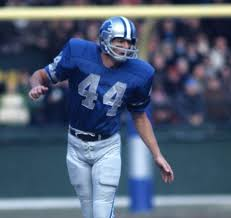
Charles Richard LeBeau is an American former professional football player and coach in the National Football League He was active at field level in the NFL for 59 consecutive seasons, 14 playing as a cornerback with the Detroit Lions and 45 as a coach. LeBeau spent the majority of his coaching career as a defensive assistant, most notably as the defensive coordinator of the Cincinnati Bengals and Pittsburgh Steelers. Described as an "innovator" and "defensive football genius", he is considered to be one of the greatest defensive coordinators of all time.

LeBeau played college football for the Ohio State Buckeyes. He was selected by the Cleveland Browns in the fifth round of the 1959 NFL draft before signing with the Lions, where he was named to three Pro Bowls. Upon retiring as a player in 1972, LeBeau began his coaching career the following season as the special teams coach of the Philadelphia Eagles and landed his first defensive role as the Green Bay Packers' defensive backs coach in 1976. He joined the Bengals in 1980, where he spent 19 non-consecutive years, including 12 years as defensive coordinator. During his first stint as Cincinnati's defensive coordinator, LeBeau popularized the "zone blitz", which helped the Bengals make two Super Bowl appearances in Super Bowl XVI and Super Bowl XXIII. He also served as the Bengals' head coach from 2000 to 2002, his sole head coaching position.

In between his two stints with Cincinnati, LeBeau began a defensive assistant tenure for the Steelers in 1992 and rejoined them in 2004 after one season as the Buffalo Bills' assistant head coach. His time in Pittsburgh spanned 16 non-consecutive years, holding the position of defensive coordinator for 13 years. LeBeau helped the Steelers make four Super Bowl appearances as their defensive coordinator, winning Super Bowl XL and Super Bowl XLIII during his second stint. After leaving the Steelers for the second time in 2014, LeBeau served as the defensive coordinator and assistant head coach of the Tennessee Titans until 2017. He was inducted to the Pro Football Hall of Fame as a player in 2010.

LeBeau was selected in the fifth round in 1959 by the Cleveland Browns, but was cut in training camp. A few months later, he was signed by the Detroit Lions. He played 14 seasons in Detroit and was teamed with Hall of Famers Dick "Night Train" Lane, Yale Lary, and Lem Barney as part of a Detroit secondary that was one of the most feared in the NFL. Johnny Unitas always had respect for him, stating, "Dick is a good corner. I am just glad Night Train Lane is gone.

LeBeau is widely considered to be one of the greatest defensive backs in Lions history. He recorded 62 interceptions for 762 yards and four touchdowns. His 62 interceptions are still a Lions franchise record, and he is tied for tenth all-time in NFL history. His 762 interception return yards rank third all-time in team history.

LeBeau was also one of the most durable players in the league. In 14 years, he played 185 games, placing him fourth on Detroit's all-time list. He is third all-time for most seasons played (14) and previously held the NFL record for consecutive appearances by a cornerback with 171, which has since been broken by Ronde Barber. LeBeau also recovered nine fumbles, returning them for 53 yards and a touchdown.

During his career, LeBeau was named to three consecutive Pro Bowls (1964–1966). In 1970, he established a career-high nine interceptions (tied for sixth on the team's all-time single-season interceptions list). LeBeau was a major defensive contributor to the Lions finishing with a 10–4 record that season. The Lions finished second in the NFC Central and earned a berth in the playoffs.

In 2010, LeBeau was voted into the Pro Football Hall of Fame along with running back Floyd Little.

LeBeau was honored by the Lions and inducted into the Pride of the Lions in 2010.

After retirement as a player, LeBeau immediately went into coaching with the Philadelphia Eagles as a special teams coach under coach Mike McCormack, spending three seasons in Philadelphia. In 1976, LeBeau coached the secondary for the Green Bay Packers under Pro Football Hall of Fame QB Bart Starr. In his first season, Willie Buchanon, Johnnie Gray, Steve Luke, and Perry Smith combined for 10 interceptions. In 1977, Mike C. McCoy replaced Smith, and that quartet combined for 11 interceptions. In 1979, Estus Hood replaced Buchanan, and the secondary combined for another 11 interceptions.

In 1980, LeBeau became the Cincinnati Bengals' secondary coach; in that season, his starting secondary intercepted seven passes.

In 1981, Cincinnati had an outstanding defense that had not given up more than 30 points in any of their regular season or playoff games. Their line was anchored by defensive ends Ross Browner and Eddie Edwards, who were effective at stopping the run. Cincinnati's defense was also led by defensive backs Louis Breeden and Ken Riley and linebackers Bo Harris, Jim LeClair, and Reggie Williams, who intercepted four passes and recovered three fumbles. The Bengals intercepted 19 passes for 318 yards and also recorded 41 total sacks. The Bengals played in their first AFC Championship Game, defeating San Diego 27–7, limiting the Chargers' offense to only 7 points. In Super Bowl XVI, the Bengals trailed 20–0 at halftime and lost to San Francisco, 26–21.

In 1984, LeBeau was promoted to be the Bengals' defensive coordinator. His defenses rarely allowed more than 30 points in a game to an opponent. In 1984, his first season as defensive coordinator, the Bengals dropped from the top-ranked defense in 1983 (when they were coordinated by Hank Bullough) to 13th, allowing 339 points all season. In 1985, they dropped from 13th to 22nd. In 1986, points allowed were cut to 394 and the team finished with the 20th-ranked defense in the NFL. In 1987, they cut the points allowed to 370.

In 1988, the Bengals defense ranked 17th in the league, allowing 5,556 yards and 329 points during the regular season. Cincinnati had a superb defensive line, led by pro bowl defensive tackle Tim Krumrie, along with linemen Jim Skow (9.5 sacks), David Grant (five sacks), and Jason Buck (six sacks). Pro Bowl defensive backs Eric Thomas and David Fulcher combined for 12 interceptions. The team won the AFC Central Division with a 12–4 record but lost Super Bowl XXIII to the San Francisco 49ers for the second time in franchise history. The following season, 1989, the Bengals defense was 15th in the NFL, an improvement of two spots and was in the top half of NFL defenses due to LeBeau's scheme. In 1990 and 1991 the Bengals' defense ranked 25th and 28th respectively, out of 28 teams, and the team made a change in defensive coordinators.

LeBeau was hired by the Pittsburgh Steelers in 1992 as the secondary coach. In 1994, four defensive players were called to play in the 1995 Pro Bowl (Kevin Greene, Carnell Lake, Greg Lloyd and Rod Woodson). As a secondary coach LeBeau strongly influenced Lake and Woodson.

In 1995, LeBeau was promoted to be the defensive coordinator and the 1995 Pittsburgh defense ranked third in the league in total yards allowed after they had finished as the second-ranked defense in 1994 in that same category, so the drop off was minimal with LeBeau at the helm. They did allow 327 points in 1995 as opposed to 234 the year before when the Steelers defense was coordinated by Dom Capers, but they got to the Super Bowl in 1995 with a much-improved offense. Pro Bowl linebacker Kevin Greene led the team in sacks with nine, while Pro Bowl linebacker Greg Lloyd led the team in tackles with 86. The secondary was led by Pro Bowl defensive backs Carnell Lake and Hall of Famer Rod Woodson. The Steelers lost to the Dallas Cowboys in Super Bowl XXX, making it the third Super Bowl loss for him.

In 1997, LeBeau returned to the Bengals as defensive coordinator. The defense was ranked 25th in 1996, and in his first year back they dropped to 28th and allowed just over 400 points. In 1998 they remained 28th in the NFL (of 30 teams) and allowed 452 points. In 1999 the zone blitz scheme began to take hold and although the Bengals defense allowed 460 points, they improved to 25th in the NFL (out of 31 teams).

LeBeau was named interim head coach for the Bengals in 2000 following head coach Bruce Coslet's resignation during the 2000 season. Following the season, he was named permanent head coach.

Despite LeBeau's considerable defensive coaching talent, his offenses were not nearly as successful as head coach, and his teams finished 4–9, 6–10, and 2–14, respectively, in his three seasons. LeBeau's overall record as a head coach was 12–33. He was fired after the 2002 season.

Shortly after being fired by the Bengals, LeBeau was named the Buffalo Bills's assistant head coach.

LeBeau returned to the Steelers in 2004 as their defensive coordinator. He was the Steelers defensive coordinator until 2014. During this time frame, LeBeau helped lead the Steelers to three Super Bowl appearances, winning two. He was named "Coordinator of the year" by the Sporting News for the 2008 season. On January 10, 2015, LeBeau resigned as defensive coordinator of the Steelers.

A month after resigning from the Steelers, LeBeau was hired as the assistant head coach and defensive coordinator of the Tennessee Titans.

On January 20, 2016, LeBeau was officially named assistant head coach/defensive coordinator of the Titans after the departure of Ray Horton to the Cleveland Browns. Said LeBeau, "I like Tennessee a lot. I really love being here." On January 22, 2018, it was reported that LeBeau was considering retirement after not being retained after head coach Mike Mularkey and the Tennessee Titans agreed to part ways and Houston Texans defensive coordinator Mike Vrabel was hired as the new head coach. Although LeBeau was open to returning to the Titans under Vrabel, the Titans decided to not invite him to be part of their new coaching staff.

As an assistant coach, LeBeau is credited with inventing the "Fire Zone" or "zone blitz" defense, which employs unpredictable pass rushes and pass coverage from various players. His defenses typically employ 3–4 sets, with any of the four linebackers (and frequently a defensive back) among the pass rushers, while defensive linemen may drop back into short pass coverage zones to compensate for the pass rush coming from other positions. The design is intended to confuse the opposition's quarterback and frustrate its blocking schemes. Since zone blitzes don't identify any of the prospective rushers, the offense may be unsure on each play of which defenders will rush the passer and which will drop into coverage. While often described as a "blitzing" scheme (implying more than the typical number of four pass-rushers used by most defenses), the call on any particular "zone blitz" play may involve only three or four pass rushers but from unpredictable positions and angles.

LeBeau is beloved among his players, many of whom refer to him as "Coach Dad." Steelers players have given him many gifts, including a Rolex watch.

LeBeau has four children with his first wife, Phyllis Geer LeBeau, who died from cancer in 2002: Richard Jr., Linda, Lori, and Fe. He has been married to his current wife, Nancy, since 1973 and they have a son together, Brandon.

LeBeau acted in the 1970 film Too Late the Hero, where he played Michael Caine's double in a scene. LeBeau is said to regularly recite A Visit from St. Nicholas by heart to his players every Christmas season. LeBeau credits his London High School coach, Jim Bowlus, with influencing him to take up coaching after his playing years ended. LeBeau says seeing the effect that Coach Bowlus had on him and his teammates clinched it for him at that point.

LeBeau attended the American Legion Ohio Buckeye Boys State program in 1954 as a delegate. On June 10, 2019, he was inducted into the Buckeye Boys State Hall of Fame.

Sources
https://www.pro-football-reference.com/
https://www.profootballarchives.com/index.html
https://americanfootballdatabase.fandom.com/wiki/Football_Wiki
https://www.gridiron-uniforms.com/GUD/controller/controller.php?action=main
https://www.profootballhof.com/hall-of-famers/
Domowitch, Paul (January 28, 2009). "Unassuming LeBeau has respect of blitzing Steelers defense". Philadelphia Daily News.
 Gosselin, Rick (January 30, 2009). "Steelers' LeBeau deserves spot in Hall of Fame". Dallas Morning News.
 Kragthorpe, Kurt (January 29, 2009). "Steelers' LeBeau knows defense". Salt Lake Tribune. Archived from the original on February 6, 2009.
 Brubach, Holly (January 8, 2009). "After the Zone Blitz, the Deadpan Defense". The New York Times.
 "Detroit Lions Top 50: #14-10 with VIDEO". Detroit Jock City. July 17, 2014. Retrieved February 18, 2022.
 Kowalski, Tom (February 7, 2010). "Former Lions defensive back Dick LeBeau voted into Pro Football Hall of Fame". mlive. Retrieved February 18, 2022.
 Bouchette, Ed (February 7, 2010). "LeBeau elected to football Hall of Fame". Pittsburgh Post-Gazette.
 Klis, Mike (February 7, 2010). "Floyd Little elected to Pro Football Hall of Fame". Denver Post.
 "Lions to Honor Hall of Fame CB Dick LeBeau on Alumni Day". Detroit Lions. October 7, 2010. Archived from the original on October 14, 2010. Retrieved December 20, 2021.
 Coordinator of the year: Dick LeBeau, Steelers Archived January 29, 2009, at the Wayback Machine. Retrieved on January 21, 2009.
 Stout, Steve (January 10, 2015). "LeBeau resigning as Steelers defensive coordinator". Pittsburgh Post-Gazette. Retrieved January 10, 2015.
 "Titans Name Dick LeBeau Assistant Head Coach/Defense". Titansonline.com. Archived from the original on February 8, 2015. Retrieved February 8, 2015.
 "Titans DC Dick LeBeau: "I really love being here"". www.titansonline.com. Retrieved March 30, 2016.
 Wolfe, Cameron (January 23, 2018). "Dick LeBeau, 80, won't return as Titans defensive coordinator". ESPN.com. Retrieved February 25, 2018.
 Mihoces, Gary (January 15, 2009). "The puppet master: LeBeau's X's and O's fuel Steelers' run". USA Today. Retrieved May 1, 2010.
 Svrluga, Barry (January 18, 2009). "Steelers' LeBeau Earns Respect of Former Teammates and Current Players". The Washington Post. Retrieved May 1, 2010.
 Steelers coordinator LeBeau still the man for all seasons Archived February 3, 2009, at the Wayback Machine
 Cook, Ron (November 30, 2008). "The type of thing that makes a grown man cry". Pittsburgh Post-Gazette.
 Curnutte, Mark (September 7, 2001). "Dick LeBeau: The Bengals' man for all seasons". The Cincinnati Enquirer. Retrieved January 14, 2015.
 Steelers innovator Dick LeBeau never shows his age Archived September 23, 2015, at the Wayback Machine. Retrieved on February 1, 2009
 "Steelers' LeBeau Earns Respect of Former Teammates and Current Players". The Washington Post. January 18, 2009. Retrieved April 5, 2026.

Wednesday, July 10, 2024

The Story And Significance Of Anthony Munoz - Eleven Straight First Or Second Team All-Pro Seasons At Left Tackle

Michael Anthony Muñoz is an American former football offensive tackle who played for 13 seasons with the Cincinnati Bengals of the National Football League. He played college football for the USC Trojans. In 2022, an ESPN panel named Muñoz as the greatest offensive tackle in NFL history. He was inducted into the Pro Football Hall of Fame in 1998.

Muñoz was the third overall pick in the 1980 NFL draft by the Cincinnati Bengals. His selection was viewed as a major risk by many pundits since knee problems limited the 6 ft. 6 in., 280-pound Muñoz to just a combined 16 games in his final two college seasons.

Muñoz became a starter in his rookie season and remained a fixture at left tackle for the Bengals for 13 seasons and is considered one of the greatest offensive linemen - if not the greatest - in NFL history. Despite his history of injuries, Muñoz missed just three games during his first 12 seasons. His rigorous workout routine included working out in the weight room he had installed in his home and running three to four miles every day. In addition to his talents as a blocker, Anthony Muñoz was also a capable receiver, notching seven receptions for 18 yards and scoring four touchdowns on tackle-eligible plays, including one in 1984 from rookie quarterback Boomer Esiason against the Cleveland Browns in Cleveland.

Muñoz played in two Super Bowls during his time with the Bengals, XVI and XXIII, both narrow losses to the San Francisco 49ers.

After missing much of the 1992 season battling knee and shoulder injuries, Muñoz attempted to play a 14th season with the Tampa Bay Buccaneers, but he was released before the season started and decided to retire shortly after.

Muñoz was the Offensive Lineman of the Year in 1981, and 1988, and was awarded the NFL Players Association Lineman of the Year honors in 1981, 1985, 1988, and 1989. The NFL Alumni Association voted Munoz the Offensive Lineman of the Year four times (1987, 1989–1991). He won the Seagram's Seven Crowns of Sports award for Offensive Lineman of the Year in 1981 and 1986.

At the time of his retirement, his Pro Bowl selections were tied with Tom Mack for the most ever by an offensive lineman in league history, and also set the Bengals franchise record. In 1994, Muñoz was named to the National Football League 75th Anniversary All-Time Team. In 1999, he was ranked #17 on Sporting News' list of the 100 greatest football players and was the highest-ranked offensive lineman. In 2010, he was ranked #12 on the NFL Network's The Top 100: NFL's Greatest Players list and again was the highest-ranked offensive lineman.

In 1998, Muñoz was enshrined in the Pro Football Hall of Fame. He was the first exclusive Cincinnati Bengals player to be enshrined. Shortly after receiving the honor, Muñoz's hometown of Ontario, California, renamed its Colony Park "Anthony Muñoz Hall of Fame Park". The renaming ceremony was held on June 26, 1998, and was attended by Muñoz, his family, city officials, and Ontario residents.

Muñoz was a member of the Bengals inaugural Ring of Honor class in 2021.

While the Bengals have not officially retired it, they have not reissued the number 78 since Muñoz left the team.

Muñoz appeared in two motion pictures: 1980's Borderline as "Guatemalan" and 1983's The Right Stuff (an Academy Award nominee for Best Picture) as "Gonzalez".

From 1994 to 1995, Muñoz served as a color commentator on Fox Sports' NFL telecasts and has for many years been color commentator for TV broadcasts of Bengals' preseason games.

Since 1992, Muñoz has starred in a series of commercials for the Cincinnati-area furniture store Furniture Fair.

In 2002, the Anthony Muñoz Foundation was created to consolidate Muñoz's charitable activities and encourages area individuals and businesses to "...impact area youth mentally, physically and spiritually". In 2004, Muñoz served on a panel to select the year's recipient of the Walter Payton Award. On November 14, 2012, Allstate dedicated a Hometown Hall of Famers plaque to Muñoz at Chaffey High School. On October 8, 2015, Muñoz received the Congressional Hispanic Caucus Institute (CHCI) Medallion of Excellence for his contributions to the Hispanic community.

Muñoz attended a celebrity flag-football game at Candlestick Park, the last event before the demolition of the stadium in 2014. He describes the event:

The final touchdown pass, there were probably 30,000 people in that stadium viewing a bunch of old guys playing a flag football game, but to see (Montana) throw to (DeBartolo) for the final touchdown there and to hear the fans go crazy and to see the admiration from these former players like Ronnie Lott and Joe Montana; that to me was impressive... to me, that's what it's all about.

Muñoz is of Mexican–American descent and met his wife at USC; they married during his sophomore year in 1978. They have two children. His son Michael played offensive lineman at Tennessee where he was an All-America and went undrafted in 2005. His daughter, Michelle, played basketball at Tennessee and later transferred to Ohio State.

Muñoz is a Christian. He has said, “My faith is everything for me in my life, college, my 13 years playing in the NFL. Now that I've been retired from the NFL it continues to be the most important thing in my life.”

Sources
https://www.pro-football-reference.com/
https://www.profootballarchives.com/index.html
https://americanfootballdatabase.fandom.com/wiki/Football_Wiki
https://www.gridiron-uniforms.com/GUD/controller/controller.php?action=main
https://www.profootballhof.com/hall-of-famers/
 "The NFL's GOAT at every offensive position: Why a panel of experts judged Jim Brown the best running back ever". ESPN.com. May 19, 2023. Retrieved April 8, 2024.
 https://www.youtube.com/watch?v=8pR1-Fm-29A
 https://bleacherreport.com/articles/1650295-top-25-players-in-bengals-history
 "Hometown Hero: Hall of Famer Anthony Munoz reconnects with Chaffey High". Press Telegram. November 14, 2012. Retrieved April 16, 2025.
 "Anthony Munoz can go home again, to the thrill of football campers". Daily Bulletin. July 23, 2016. Retrieved April 16, 2025.
 "USC Legends Anthony Muñoz". Archived from the original on June 29, 2006. Retrieved July 20, 2006.
 "Anthony Muñoz's return sparked USC's 1980 Rose Bowl victory over Ohio State". Los Angeles Daily News. December 28, 2017.
 "Anthony Muñoz's return sparked USC's 1980 Rose Bowl victory over Ohio State". Los Angeles Daily News. December 28, 2017.
 "1980 NFL Draft Listing". Pro-Football-Reference.com. Retrieved September 28, 2025.
 "Anthony Muñoz - Pro Football Hall of Fame Official Site". Profootballhof.com. Retrieved August 8, 2017.
 "PLAYING FOR THE BUCS". ChicagoTribune.com. July 20, 1993.
 profootballresearchers.org Archived October 7, 2010, at the Wayback Machine
 TSN Presents - Football's 100 Greatest Players Archived November 5, 2005, at the Wayback Machine
 "Chaffey High School Alumni Association". Chaffey.org. Retrieved August 8, 2017.
 "Bengals Ring Of Honor Anchored By Hall-of-Famers Paul Brown And Munoz". Bengals.com.
 "Bengals number 78 history". ProFootballReference.com.
 "Anthony Munoz". IMDb. Retrieved August 8, 2017.
 "The Story of ed and Anthony". YouTube.
 About the AMF Archived July 23, 2008, at the Wayback Machine
 "Connect Landing Page - Pro Football Hall of Fame Official Site". Profootballhof.com. Retrieved August 8, 2017.
 "NFL Hall of Famer Anthony Munoz and Education Advocate Sonia Gutierrez to Receive CHCI Highest". Prnewswire.com (Press release). Retrieved August 8, 2017.
 Miller, Ira (January 29, 2016). "Family approach leads Eddie DeBartolo to steps of Hall of Fame". United Press International. Retrieved January 22, 2019.
 "Hispanic Football Hall Of Fame Established To Celebrate Hispanic Excellence In The Game". National Football League. September 17, 2025. Retrieved October 8, 2025.
 "Mason | The Enquirer". Masonbuzz.com. Retrieved August 8, 2017.
 Newhan, Ross (November 13, 1985). "His Faith Produced Miracles : Munoz Needed It to Come Back and Excel in the NFL". Los Angeles Times. Retrieved February 22, 2023.
 "Anthony Munoz Has Been a Man of Faith for 44 Years". Retrieved February 22, 2023

Wednesday, May 29, 2024

The Story And Significance Of Charlie Joiner - Retired As The NFL Career Leader In Receptions, Receiving Yards, Games Played At Wide Receiver, And Seasons Played At Wide Receiver

Charles B. Joiner Jr. is an American former professional football wide receiver who played in the American Football League (AFL) and the National Football League for 18 seasons. He played 11 seasons with the San Diego Chargers, with whom he earned all three of his Pro Bowl selections, and was named first-team All-Pro by the Associated Press in 1980. He was inducted into the Pro Football Hall of Fame in 1996.

Joiner played college football with the Grambling State Tigers and was a three-time, first-team all-conference selection in the Southwestern Athletic Conference (SWAC). He was selected as a defensive back in the fourth round of the 1969 NFL/AFL draft by the AFL's Houston Oilers, who soon returned him to the wide receiver position. Joiner played three and a half seasons each for the Oilers (1969–1972) and Cincinnati Bengals (1972–1975), missing substantial time through injuries with both teams.

Cincinnati traded Joiner to the Chargers, with whom he played for eleven seasons (1976–1986). He made the Pro Bowl in his first year with the team, but his role was reduced in the following two seasons, nearly leading him to retire as early as 1978. Joiner's career was revitalised once head coach Don Coryell installed his Air Coryell passing offense. He had three consecutive 1,000-yard receiving seasons from 1979–1981, making two further Pro Bowls (1979–1980) and the 1980 All-Pro team.

He retired with the most career receptions, receiving yards, and games played of any wide receiver in NFL history. He was noted for his precise route running, as well as his longevity and late-career success, with over half his catches coming after his 32nd birthday. Joiner went on to serve as a wide receivers coach for twenty-six years before retiring completely after the 2012 season.

Joiner graduated from Grambling in 1969 and was selected in the fourth round of the 1969 NFL/AFL draft with the 93rd overall pick by the AFL's Houston Oilers. A Corpus Christi Times draft review described him as a having "great speed (4.5 in the 40) and excellent hands." The Oilers drafted Joiner with intent to use him at defensive back; this upset Robinson, who stated his former player could "beat any defensive back one-on-one" in a press release urging Houston to keep him on offense. Joiner's own expectation was that he would "play a few years," qualify for an NFL pension and then move on to another career.

The Oilers eventually chose to play Joiner both ways as a rookie, installing him as their fourth wide receiver for the 1969 season. He was playing on offense when his rookie season was brought to an end by injury—he was tackled after making a catch in a week 7 victory over the Denver Broncos and suffered a compound fracture of the right arm. Head coach Wally Lemm described Joiner as a "fine young prospect" after the injury.

Joiner had another injury setback in 1970 when he broke an arm in the first preseason game. He missed the first five regular season games before returning to face the San Diego Chargers, producing 5 catches for 100 yards and scoring his first professional touchdown on a 46-yard pass from Jerry Rhome. He scored twice in a game against the Cincinnati Bengals later in the season, one of those on a career-long 87-yard touchdown catch.

Houston moved Joiner up in their depth chart by trading starting wide receiver Jerry LeVias before the 1971 season; general manager John W. Breen gave Joiner's performance in a preseason scrimmage as a reason for the trade. While the Oilers struggled for much of the season, they had one of the highest ranked passing attacks in the American Football Conference (AFC) and Joiner led the team in both receiving yardage and touchdowns.

Houston traded Joiner to Cincinnati six games into the 1972 season, on October 24; he and linebacker Ron Pritchard were sent to the Bengals in exchange for running backs Paul Robinson and Fred Willis. Joiner had been leading the Oilers in receiving with 16 receptions for 307 yards and 2 touchdowns, and had scored in his final game the day before the trade. He said, "I really didn't think it was me they were talking about. I was their leading pass receiver for two years and it really hurt me."

Houston traded Joiner to Cincinnati six games into the 1972 season, on October 24; he and linebacker Ron Pritchard were sent to the Bengals in exchange for running backs Paul Robinson and Fred Willis. Joiner had been leading the Oilers in receiving with 16 receptions for 307 yards and 2 touchdowns, and had scored in his final game the day before the trade. He said, "I really didn't think it was me they were talking about. I was their leading pass receiver for two years and it really hurt me."

Joiner said of his new team, "You come to a new situation and you may be a little scared, but everyone here has been friendly and it's been real good," adding that he found passes from the Bengals' quarterbacks to be thrown softer and to be easier to catch.

Cincinnati and Houston were scheduled to meet the Sunday after the trade. Joiner saw limited action with a single catch for 19 yards in a 30–7 win. Overall, he struggled to make an impact with his new team in 1972, catching only eight passes in eight games—he remained on the bench for the entirety of two of these. The Cincinnati Enquirer described him as a "disappointment" who "never quite measured up."

Joiner's progress was praised by offensive assistant coach Bill Walsh in the build-up to the 1973 season, with Walsh noting a particular improvement in accurate route running. Nonetheless, he entered the 1973 season with his position in the team under threat after the Bengals selected another wide receiver, Isaac Curtis, in the first round of the NFL draft; Curtis was expected to start as a rookie. Joiner suffered another injury setback in preseason, this time to his knee, and began the regular season on the inactive list. Head coach Paul Brown was impressed by his attitude as he fought to regain fitness after the injury, saying "No man ever worked harder or gave it more to get himself back in shape." Joiner returned to face the Cleveland Browns after missing three games but was immediately injured again; he caught a 26-yard pass on the Bengals' first play from scrimmage but suffered a fractured collar bone while being tackled and was believed to be out for the year.

Joiner returned sooner than expected, missing six further games before beginning a consecutive appearance streak that would last for over 13 years. Quarterback Ken Anderson praised Joiner's impact, saying that having both he and Curtis on the field stretched the opposing defense, who could not double cover both of them. Joiner finished the season with 13 catches for 134 yards from his five appearances. The Bengals were successful as a team, winning the AFC Central division with a 10–4 record. Joiner's first playoff game ended in a 34–16 defeat to the Miami Dolphins. The Bengals' passing attack was largely shut down, and he caught only two passes for 33 yards.

Cincinnati gave Joiner a new multi-year contract in the run-up to the 1974 season. He scored his first Bengals touchdown in week 5, a 65-yarder against Cleveland. He shared time with Chip Myers as Curtis' partner during the year.

Brown planned to use Joiner together with Myers and second-year receiver John McDaniel as a trio of partners for Curtis in 1975. He was the most successful of the three as the season progressed, posting new career bests of 37 receptions for 726 yards, an average of 19.6 yards per catch. On November 23, 1975, he set a Bengals then-single-game record with 200 receiving yards in a 35–23 loss to Cleveland; it would remain his personal career high.

Cincinnati won a wild card spot in the playoffs with an 11–3 record. They again lost in the first round, this time 31–28 to the Oakland Raiders. Joiner scored his first postseason touchdown as the Bengals came close to rallying from seventeen points behind in the final quarter—he said, "We should have won the ball game, we just ran out of time." It was his final game as a Bengal.

On April 1, Cincinnati traded Joiner to the San Diego Chargers for defensive end Coy Bacon. Brown acknowledged that Joiner was coming off a good year, but identified the defensive line as a stronger area of need for his team. Joiner was happy to reunite with Walsh, who had just joined the Chargers as their offensive coordinator. Chargers quarterback Dan Fouts was impressed by his new receiver in preseason: "I love Charlie Joiner. He has a knack for finding the open spot."

Joiner became the Chargers' leading receiver during a successful 1976 season with the team. He had a run of four consecutive 100-yard games early in the year, and secured his first 1,000-yard receiving season with two games to spare. He finished the year with 50 receptions for 1,056 yards (the third most in the league, and 285 more than Curtis had in Cincinnati) while averaging 21.1 yards per catch, and was named second-team All-Pro by the Newspaper Enterprise Association (NEA) at season's end.

The trade for Joiner benefited both teams in the short term, as both he and Bacon were named to the Pro Bowl and voted MVP by their respective teams that year. Beyond 1976, Bacon only played one more year in Cincinnati, while Joiner's career with the Chargers covered a further decade.

Joiner gave some thought to retirement before committing to play the 1977 season. He was reunited with his Grambling quarterback James Harris on the field, as Fouts was holding out through much of the season. Joiner was often double covered as newly acquired receiver Johnny Rodgers was injured, and their No. 1 draft pick from the year before, running back Joe Washington, was recovering from knee issues. Joiner finished with 35 catches, 542 yards and 6 touchdowns, short of his 1976 performance in all three statistics but still enough to led all Chargers wide receivers.

Ray Perkins became the Chargers' offensive coordinator in 1978, their third offensive coordinator in three years. He emphasized using running backs as possession receivers and rookie No. 1 pick John Jefferson as the deep threat while phasing out Joiner, who had undergone offseason knee surgery. He informed head coach Tommy Prothro before the season that he was considering retirement, but Prothro was able to persuade him to continue. Don Coryell became San Diego's head coach in 1978, replacing Prothro midseason; Coryell had a reputation as an offensive strategist, but largely stuck with Perkins' system in 1978. Joiner struggled with post-surgery knee problems during the year and finished with 33 receptions, two fewer than in 1976 despite the regular season increasing from fourteen games to sixteen.

In the 1979 season, Joiner featured heavily in the pass-based offense known as Air Coryell. The Chargers bolstered their receiving corps entering the season by using their first-round draft pick to select tight end Kellen Winslow. Coryell also hired Joe Gibbs as the new offensive coordinator that season after Perkins left for the New York Giants. They noticed that Joiner had been getting open the year before, and envisioned him as a key to their offense.

It was a successful regular season for the Chargers, as they posted a 12–4 record and earned their first divisional title in 14 years. Joiner played a key role in the division-deciding game, a 17–7 win over the Denver Broncos in the regular-season finale. He was forced back to the locker room twice during the game with injuries, but returned to the field bandaged both times. He sustained a concussion during the game and finished it with stitches over one eye, as well as hip and thigh injuries. Joiner finished the game with 3 catches for 58 yards and the game-winning touchdown. It was an inspirational performance with Jefferson unable to play and John Floyd, the Chargers only other receiver, being just a rookie; Coryell later remembered it as "The Charlie Joiner Game."

Joiner finished second in the AFC in receptions to Baltimore's Joe Washington, his former Chargers teammate, with a career-high 72 catches covering 1,008 yards and four touchdowns. His reception total was the most by a Charger since Lance Alworth's 73 in 1966, and the most by a player Joiner's age (32) in NFL history at that time. Joiner was the third player in league history to catch 70 or more passes after age 30, joining Don Maynard and Ahmad Rashad, who were each 30. He was named to the Pro Bowl, replacing an injured Lynn Swann, who himself was a replacement for Steve Largent. Joiner was the oldest player in the all-star game.

Joiner's third playoff game ended in another defeat; his former team the Oilers overcame key injuries to surprise San Diego 17–14 in their own stadium. A disappointed Joiner commented: "I think we took it for granted... You got to fight in this game. We let them take it away from us. They wanted it more than we did."

Joiner had again expected to retire after the previous season, but returned in 1980 saying he wanted "one more shot at the Super Bowl." He had a career-high 10 catches in one game in a 44–7 win over the New York Giants, accounting for 171 yards and a touchdown. Joiner finished the year with 71 receptions for 1,132 yards, and teamed with Jefferson and Winslow to become the first trio of receivers on a team to reach 1,000 yards in the same season. The three were all named first-team All-Pro by the Associated Press.

The Chargers won their division again, this time with an 11–5 record. In the divisional playoffs, Joiner's 9-yard touchdown catch from Fouts began a comeback that saw the Chargers turn a 14–3 halftime deficit into a 20–14 victory, Joiner's first in the playoffs. San Diego progressed to the AFC championship game, where Joiner led the team with 6 catches for 130 yards and two touchdowns, but could not prevent a 34–27 home defeat to the Raiders. Reflecting on a second consecutive season of being eliminated at home, Joiner said, "We have to think about opportunities. We really missed the last two years."

Joiner once again considered retirement before the 1981 season, saying "Frankly, I don't know how much longer I can play. I feel my skills have diminished." Nonetheless, he continued his career, beginning the season as the Chargers' top wide receiver due to Jefferson holding out and eventually being traded. In San Diego's opening game at Cleveland, Joiner caught 6 passes for 191 yards, which would be his best total with the Chargers. This prompted Fouts to say, "I don't why he's so much better than he was when I first saw him, but he is. I've never seen him better." After another strong performance in week 2, Joiner already had 13 catches for 357 yards on the season, and felt his knees to be in better condition than past seasons. His production decreased in the following weeks as opposing defenses double covered him, but the addition of Wes Chandler to replace Jefferson relieved that pressure. Joiner finished with 70 catches, making him the first receiver with at least 70 catches in three consecutive NFL seasons. He also had a team-leading and career-high 1,188 yards receiving, and the Chargers won their third consecutive AFC West title with a 10–6 record.

In the divisional playoffs, Joiner played a key role in San Diego's 41–38 overtime win over the Miami Dolphins, a game that became known as The Epic In Miami. He caught 7 passes for 108 yards, including a 39-yard reception on the penultimate play of the game set up Rolf Benirschke's game-winning 29-yard field goal. The Chargers advanced again to the conference championship, but lost 27–7 to Joiner's former team Cincinnati in a game later known as the Freezer Bowl due to frigid gameday conditions.

Joiner committed to another season in July, signing a new contract. The 1982 season was reduced to nine games by a players' strike. Joiner had no touchdowns in the regular season, though he did produce three 100-yard games.

San Diego finished 6–3, making the playoffs for the last time in Joiner's career. They won their first game 31–28 at the Pittsburgh Steelers, but lost the next 34–13 in Miami, with their powerful offense largely shut down. Joiner scored his only touchdown of the season during the Miami defeat. He said, "The Chargers are human. You can't ask everything of us, every game."

During the offseason Joiner intimated that his decision on whether to continue his career might rest on whether Fouts, a free agent, negotiated a new contract with the Chargers. Fouts did eventually sign, and Joiner was back for another season.

The Chargers had a disappointing 1983 campaign; Fouts missed time through injuries, and they finished 6–10. Joiner played the full season despite cracked ribs, he caught 65 passes for 960 yards and 3 touchdowns, and was voted both the most valuable and most inspirational Charger by his teammates. His late-career surge had seen Joiner catch 314 passes in the past five seasons after only catching 282 in his first ten.

Joiner quickly expressed an interest in returning for the 1984 season, and said that he was "kind of looking forward to camp." He nonetheless did not attend his first mandatory practice, as he was holding out for a two-year contract and the Chargers were only offering him one year. Winslow said of his absence, "It's like there's a missing link, the chemistry isn't there. It's as if you're missing an ingredient." The holdout lasted only six days before Joiner agreed to a one-year contract. He entered the season needing 52 receptions to break Charley Taylor's NFL record of 649 for a career.

Joiner made little impact during the early part of the season, with only eight catches during the first four games; in week 4 against the Raiders he had no catches at all, ending a streak of 85 consecutive games with a catch (78 regular season, 7 postseason). He improved enough to finish with 61 catches on the year.

Joiner passed Taylor as the career leader in receptions on November 25, 1984, breaking the mark with 6 catches for 70 yards and a touchdown in a 52–24 loss against the Steelers. The record-breaking 650th catch was a 3-yarder from backup quarterback Ed Luther late in the game. Joiner expressed disappointment that the landmark had come in an away game, in a loss, and that Fouts hadn't thrown the record-breaking pass.

During the offseason Joiner signed another one-year contract, committing to a tenth year with the Chargers. He stated in training camp that he considered himself "on the bubble" as a player who might struggle to maintain a place in the team at the expense of younger receivers. Joiner continued to play in every game, and passed Jackie Smith's record of 210 appearances at a receiving position early in the season. He finished the 1985 season with 59 catches for 932 yards, and tied his career high by scoring 7 touchdowns.

Joiner signed another one-year contract, and entered the 1986 season only 128 receiving yards behind Don Maynard's NFL record of 11,834 for a career. He would turn 39 during the course of the season and was the second-oldest active player behind Jeff Van Note of the Atlanta Falcons, as well as the oldest wide receiver in league history.

He surpassed Maynard's record of receiving yards in a week 5 away game against the Seattle Seahawks. The record-breaking catch was a 20-yarder from Fouts during the 3rd quarter of a 33–7 defeat; the game was halted briefly and Joiner got a standing ovation from the Seattle crowd. Joiner broke his right hand late in the season. In week 15, he was available to play in what would have been his final home game, but was kept on the sidelines by new head coach Al Saunders due to his injury. It was the first game he had missed since 1973 with the Bengals, and broke a 194-game regular season appearance streak. Joiner was disappointed, but said that the younger receivers had practiced all week for the game and it would have been unfair to them if he had played. Saunders expressed regret for not using him, saying that the Joiner's streak and potential last home game didn't cross his mind. Joiner did play the following week, ending his career with 3 catches for 25 yards in a 47–17 defeat at Cleveland.

Joiner finished the year with 34 catches, his least productive season since 1978, and retired from playing after the season. He said, "I'd thought about it for about eight or nine years and I finally did it. I'm 39 and that's too old to be playing football for a wide receiver. I've had a great career, I think, and I'm just proud of the fact that I finished No. 1, even though it probably won't last that long."

Joiner was the last active player from the AFL. He finished his 18 AFL/NFL seasons with 750 receptions for 12,146 yards, averaging 16.2 average per catch, and 65 touchdowns. He caught 586 passes in 11 seasons with San Diego after totaling 164 in seven seasons with Houston and Cincinnati. Joiner had 50 or more catches in seven seasons, five with 60 or more, and three with at least 70 with the Chargers. He retired as the then-NFL leader in career receptions and receiving yards. At the time, he also played the most seasons (18) and games by a wide receiver (239). At age 39, Joiner also retired as the oldest wide receiver in NFL history, Joiner had 530 receptions after he was 30 years old, including 396 starting from the 1980 season, during which he turned 33. He credited his success and longevity to Coryell: "Thanks to Coach Coryell’s offense and his revolutionary passing game, he prolonged my career, from the day I got to the Chargers until the day I retired. I will forever be grateful to him and what he did for the game of football."

Joiner excelled despite neither being among the quickest nor most talented receivers in the NFL. Throughout his career, he was overshadowed by more glamorous receiving mates, including LeVias and Ken Burrough in Houston, Curtis in Cincinnati, and Jefferson, Chandler, and Winslow with San Diego. In addition to good health and longevity, Joiner was an intelligent player and precise pass route runner, capable of changing direction without sacrificing speed due to a short stride and low centre of gravity. He had a tendency to fumble while with the Bengals, but fixed the problem and seldom fumbled while in San Diego. Joiner rarely ran deep routes, specialising in running inside patterns and making tough catches in traffic. He became aware early in his time in San Diego that he no longer had the sprinting speed of his youth, and compensated with an improved knowledge of defenses brought on by experience. Quiet and modest as an individual, Joiner was voted the Chargers' most inspirational player seven times by his teammates.

Hall of Fame coach Walsh called Joiner "the most intelligent, the smartest, the most calculating receiver the game has ever known." Gibbs, his offensive coordinator in San Diego, praised Joiner as "a totally dedicated guy who was just a great producer." "Without question, he is the finest technician—running routes and reading coverages—in the National Football League", said Ernie Zampese, the Chargers' receiving coach. Bengals teammate Bob Trumpy praised Joiner's work ethic, saying, "You know why he's caught all those balls? Because he's busted his tail in every practice, on every play in practice. Whatever quarterback he's been with has known that Charlie will be there, every time. He trusts Charlie." Joiner was Fouts' favorite receiver on third down. "All I’m trying to do out there is look for a port in a storm. He’s the port. Having Charlie is like having a fail-safe button," said Fouts.

Joiner was inducted into the Louisiana Sports Hall of Fame in 1990. He was voted into the Pro Football Hall of Fame in 1996, becoming the third Grambling player to be selected. In 1999, he was ranked No. 100 on The Sporting News's list of the 100 greatest football players, while a 2019 USA Today article ranked him as the ninth-best player in Chargers history. He was inducted into the Black College Football Hall of Fame in 2013. The Chargers inducted Joiner into their hall of fame in 1993 and retired his No. 18 in 2023.

In 1987, Saunders hired Joiner as an assistant coach working with wide receivers. He was retained by the following head coach, Dan Henning, but Henning's entire coaching staff were dismissed following the 1991 season, ending Joiner's sixteen-year run with the team as a player and coach. He joined the Marv Levy's Buffalo Bills shortly afterwards, again serving as a wide receiver coach, then moved on to take the same role with the Kansas City Chiefs in 2001. Joiner stayed with the Chiefs for seven seasons before losing his job with them in 2008; he re-joined the Chargers three weeks later for final stint working with their receivers. Joiner spent five more years in San Diego, then announced his retirement at the age of 65, saying football was "definitely a young man's game."

Joiner's retirement ended a 44-year professional career, eighteen as a player and twenty-six as a position coach. Twenty-one of those years were spent with the Chargers.

After leaving the Oilers, Joiner continued to live in Houston throughout the rest of his playing career, only moving to Rancho Bernardo in San Diego when he joined the Chargers' coaching staff. He has an accountancy degree from his time in college, and worked part time for Gulf Oil during the offseason for ten years. Joiner was unusual in not employing a sports agent, as his knowledge of finance allowed him to manage his own contract negotiations.

Joiner is married and has two daughters.

Sources
https://www.pro-football-reference.com/
https://www.profootballarchives.com/index.html
https://americanfootballdatabase.fandom.com/wiki/Football_Wiki
https://www.gridiron-uniforms.com/GUD/controller/controller.php?action=main
https://www.profootballhof.com/hall-of-famers/
 "Charlie Joiner statistics". Pro Football Reference. Retrieved March 20, 2024.
 Smith, Don (1996). "Charlie Joiner" (PDF). The Coffin Corner. Vol. 18, no. 2. Professional Football Researchers Association. Retrieved March 19, 2024.
 Gaines, Bob (August 31, 1985). "When they were young". Daily Times-Advocate. p. 19 – via newspapers.com.
 Harrison, Cal (September 28, 1963). "Boston knocks Wallace 52–6". Lake Charles American-Press. p. 12 – via newspapers.com.
 "Panthers wallop J.S. Clark 91–6". Lake Charles American-Press. November 15, 1964. p. 36 – via newspapers.com.
 "2 win in tipoff; pairings are set". Lake Charles American-Press. December 19, 1964. p. 6 – via newspapers.com.
 "Clark is champion in district 7–AAA". Lake Charles American-Press. April 23, 1965. p. 12 – via newspapers.com.
 Football Media Guide (PDF). Grambling State University Athletics. 2018. p. 156.
 "Inductees of the Black College Football Hall Of Fame". blackcollegefootballhof.org. Retrieved March 10, 2024.
 "Grambling might puts crusher on P.V. Panthers". New Pittsburgh Courier. October 9, 1965. p. 14 – via newspapers.com.
 "4. Charlie Joiner". Corpus Christi Times. February 11, 1969. p. 3-B – via newspapers.com.
 "Brief summary of cumulative football statistics, Grambling 1966". stats.ncaa.org. Retrieved November 17, 2024.
 "All-SWAC team names six Tigers". Shreveport Times. December 18, 1966. p. 6-D – via newspapers.com.
 "Grid awards". Louisiana Weekly. June 3, 1967. p. 11 – via newspapers.com.
 Young, Rick (December 28, 1994). "Grambling star end Moore a traveler". Alabama Journal. p. 12 – via newspapers.com.
 "Brief summary of cumulative football statistics, Grambling 1968". stats.ncaa.org. Retrieved November 17, 2024.
 "Grambling bowl victor". Lancaster Sunday News. AP. December 8, 1968. p. 46 – via newspapers.com.
 Howard, Brian (ed.). "2022 Grambling Football Fact Book" (PDF). Grambling Athletics Communications Office. p. 65. Retrieved January 20, 2023.
 Gaines, Bob (December 14, 1985). "That ol' man Joiner keeps rollin' along". Escondido Times-Advocate. p. B1 – via newspapers.com.
 "Charlie Joiner". Pro Football Hall of Fame. Retrieved January 22, 2022.
 Harris, Andrew (February 9, 1969). "Speaking of sports". Baton Rouge News Leader. p. 1-D – via newspapers.com.
 Distel, Dave (December 13, 1986). "Don't strike up band, just give Charlie Joiner a hand". Los Angeles Times. pp. III-1, III-24 – via newspapers.com.
 Magee, Jerry (December 29, 1979). "Aging Charlie Joiner now a thinking man's receiver". Shreveport Times. Gannett News Service. p. 2-C – via newspapers.com.
 "Fractured arm sidelines Joiner". Tampa Tribune. UPI. October 27, 1969. p. 4-C – via newspapers.com.
 McDonough, Will (November 1, 1969). "Oilers pick over Pats despite injury jinx". Boston Globe. p. 22 – via newspapers.com.
 "Team history". Pro Football Hall of Fame. Retrieved November 16, 2024.
 "Oilers elect five captains for game". McAllen Monitor. UPI. September 17, 1970. p. 17 – via newspapers.com.
 "Oilers activate Charlie Joiner". Brownsville Herald. UPI. October 23, 1970. p. 10 – via newspapers.com.
 "Oilers, Chargers tie". Quad-City Times. October 26, 1970. p. 7.
 "Surprising Bengals clinch tie by 30–20". Fort Worth Star-Telegram. AP. December 14, 1970. p. 5C – via newspapers.com.
 "Charlie Joiner touchdowns". Pro Football Reference. Retrieved March 11, 2024.
 "Football's lopsided deal". Pomona Progress-Bulletin. United Press International. July 27, 1971. p. C-1 – via newspapers.com.
 "Oilers go out to salvage some pride". Corpus Christi Caller-Times. December 3, 1971. p. 6 – via newspapers.com.
 "1971 Houston Oilers summary". Pro Football Reference. Retrieved March 11, 2024.
 "Oilers land two rushers". Kansas City Star. AP. October 24, 1972. p. 13 – via newspapers.com.
 "Phipps late score saves Browns, 23-17". Daily Oklahoman. AP. October 23, 1972. p. 25 – via newspapers.com.
 Forbes, Dick (October 26, 1972). "Bengal newcomers, some new, some 'old', at Spinney Field". Cincinnati Enquirer. p. 73 – via newspapers.com.
 Callahan, Tom (November 10, 1972). "Strike up the band". Cincinnati Enquirer. p. 55 – via newspapers.com.
 Forbes, Dick (October 27, 1972). "Newcomers to see action—P.B." Cincinnati Enquirer. p. 30 – via newspapers.com.
 "An easy one for 'the old coach'". Cincinnati Enquirer. October 30, 1972. p. 50 – via newspapers.com.
 Stewart, D.L. (July 19, 1973). "Bengals trade may prove OK". Dayton Journal Herald. p. 18 – via newspapers.com.
 Forbes, Dick (June 10, 1973). "Bengals sign Chandler, like Spinney, preview". Cincinnati Enquirer. p. 8-C – via newspapers.com.
 Cobb, Barry (January 31, 1973). "Curtis, Chandler could be starters". Cincinnati Post. p. 9 – via newspapers.com.
 Cobb, Barry (February 1, 1973). "245-pound back taken by Bengals". Cincinnati Post. p. 25 – via newspapers.com.
 Cobb, Barry (September 19, 1973). "Dressler, Joiner doubtful". Cincinnati Post. p. 19 – via newspapers.com.
 "Carter injured, lost for season". Beckley Post-Herald. AP. September 11, 1973. p. 3 – via newspapers.com.
 Forbes, Dick (October 6, 1973). "Joiner has some lost time to redeem Sunday". Cincinnati Enquirer. p. 23 – via newspapers.com.
 Kozloski, Hank (October 8, 1973). "Cleveland gets by Bengals, 17-10". Mansfield News-Journal. p. 19 – via newspapers.com.
 "Crippled Bengals can expect no mercy from Steelers". Racine Journal Times. Associated Press. October 14, 1973. p. 5C – via newspapers.com.
 Appleman, Marc (December 16, 1986). "Joiner stood idle as streak came to end". Los Angeles Times. pp. III-1, III-9 – via newspapers.com.
 Stewart, D. L. (November 26, 1973). "Bengals say Cards 'dirty'". Dayton Journal Herald. p. 11 – via newspapers.com.
 Gray, Frank (December 10, 1973). "Bengals 'shoot the works'". Troy Daily News. p. 14 – via newspapers.com.
 Rorrer, George (September 21, 1974). "Charlie Joiner". Louisville Courier-Journal. p. 12 – via newspapers.com.
 Lutz, Michael A. (December 17, 1973). "Champ Bengals subdued". Brownwood Bulletin. Associated Press. p. 7-A – via newspapers.com.
 Williams, Marty (December 24, 1973). "Miami's near-perfection shocks Bengals, 34–16". Dayton Daily News. p. 6 – via newspapers.com.
 "Bengals ink pair". Paterson News. UPI. May 25, 1974. p. 17 – via newspapers.com.
 Kozloski, Hank (October 14, 1974). "Bengals blast Browns, 34 to 24". Mansfield News-Journal. p. 9 – via newspapers.com.
 Fink, David (December 14, 1974). "Those Bengals: cats of a different color". Pittsburgh Post-Gazette. p. 10 – via newspapers.com.
 Queenan, Bob (November 27, 1975). "Charlie Joiner is the Bengals Mr. Modest". Cincinnati Post. p. 44 – via newspapers.com.
 "Bengals Deal Joiner For Chargers' Bacon". Coshocton Tribune. UPI. April 2, 1976. p. 8. Retrieved January 27, 2022 – via Newspapers.com.
 "Chargers Get Joiner". Times-Advocate. Escondido, California. AP. April 2, 1976. pp. A-11, A-12. Retrieved January 27, 2022 – via Newspapers.com.
 Williams, Marty (November 24, 1975). "Browns Spot Flaw, Then Belt Bengals". Dayton Daily News. p. 16. Retrieved January 27, 2022 – via Newspapers.com.
 "Regular Season Individual Records - Cincinnati Bengals". Archived from the original on October 14, 2006. Retrieved November 15, 2006.
 "Career highlights". Lafayette Daily Advertiser. January 14, 1987. p. 28 – via newspapers.com.
 "Raiders face gamble against playoff odds". Roanoke World-News. AP. December 29, 1975. p. 15 – via newspapers.com.
 "Bengals: we should have won". Tallahassee Democrat. AP. December 29, 1975. p. 20 – via newspapers.com.
 "Charlie Joiner traded". Belleville News-Democrat. April 2, 1976. p. 15 – via newspapers.com.
 "Bengals Deal Joiner for Charger's Bacon". The Coshocton Tribune. UPI. April 2, 1976. p. 8. Retrieved March 5, 2022 – via Newspapers.com.
 Hoff, Dave (August 4, 1976). "New look spawns Charger hopes". Escondido Times-Advocate. p. A-17. Retrieved March 5, 2022 – via Newspapers.com.
 Hoff, Dave (August 2, 1976). "Chargers' first step pointing right direction". Escondido Times-Advocate. p. A-9 – via newspapers.com.
 "Frustrated Chargers are dangerous". Palm Springs Desert Sun. UPI. November 13, 1976. p. A14 – via newspapers.com.
 Felser, Larry (November 20, 1976). "Scoring amnesia hurts last chance to win at home". The Buffalo News. p. B-3 – via newspapers.com.
 Gosselin, Rick (November 28, 1976). "Zones, blitzes aid NFL pass rebirth". Miami Herald. United Press International. p. 2-C – via newspapers.com.
 "Podolak pops Chargers". Escondido Times-Advocate. UPI. November 29, 1976. p. A-9 – via newspapers.com.
 "Stabler is No. 1 passer". Tucson Daily Citizen. Associated Press. December 16, 1976. p. 54 – via newspapers.com.
 Hoff, Rick (July 24, 1977). "Rodgers high on Chargers' hopes for '77". Times-Advocate. Escondido, California. p. B-1. Retrieved January 17, 2022 – via Newspapers.com.
 Olderman, Murray (January 11, 1977). "O.J., Ham, Guy Top All-NFL". The Register. Orange County, California. Newspaper Enterprise Association. p. C-3. Retrieved January 17, 2022 – via Newspapers.com.
 Michaels, Matt (October 2, 1977). "Look-a-like coaches facing each other". Times-Advocate. Escondido, California. p. B-6. Retrieved March 6, 2022 – via Newspapers.com.
 Albers, Bucky (September 28, 1977). "Joiner bit wistful about Bengal era". Dayton Journal Herald. p. 15 – via newspapers.com.
 Whicker, Mark (September 26, 1984). "Joiner's efficiency yields high mileage". Philadelphia Daily News. p. 87 – via newspapers.com.
 Distel, Dave (September 11, 1981). "Cornerbacks just don't buy Charlie Joiner's deterioration". Los Angeles Times. pp. III-1, III-18 – via newspapers.com.
 Braucher, Bill (October 2, 1977). "SD's Harris still seeking an NFL home". Cincinnati Enquirer. p. C1.
 "Chargers 30, Seahawks 28". San Francisco Examiner. November 28, 1977. p. 46.
 Frauenheim, Norm (May 27, 1978). "Jefferson set to sign soon". Arizona Republic. p. D-11 – via newspapers.com.
 Zimmerman, Paul (October 8, 1984). "HE'S CATCHING UP TO THE CATCHING RECORD". Sports Illustrated. Retrieved January 19, 2023.
 "Joiner hints at retirement". Cincinnati Enquirer. February 10, 1980. p. C-16 – via newspapers.com.
 Oates, Bob (October 1, 1978). "Pro football". Los Angeles Times. p. III-2.
 Pierson, Don (October 23, 1981). "Air Coryell flying high". Chicago Tribune. pp. VI-1, VI-4.
 Distel, Dave (October 24, 1979). "A patient man calls the shots for Chargers". Los Angeles Times. pp. III-1, III-6.
 "Joiner bounces off mat to spur Charger victory". Columbus Ledger. AP. December 18, 1979. p. C-1 – via newspapers.com.
 Dolan, Steve (January 13, 1987). "For Joiner, Career Had Thrills and a Regret : He Recalls Records, but Missed Super Bowl". Los Angeles Times. Retrieved March 19, 2024.
 Mayer, Ron (January 24, 1980). "Joiner: A Sub's Still an Honor". Honolulu Star-Bulletin. p. D-1. Retrieved January 18, 2022 – via Newspapers.com.
 Maffei, John (August 28, 1980). "Chargers must pass the test in '80". Escondido Times-Advocate. Football Supplement, p. 3. Retrieved January 6, 2024 – via Newspapers.com.
 "Phillips: 'character exhibited'". Lancaster Sunday News. AP. December 30, 1979. p. C-3.
 "Steelers next for reborn Oilers". Tampa Tribune. UPI. December 31, 1979. p. 8-C – via Newspapers.com.
 "Chargers dominate All-Pro squad..." Times-Advocate. Escondido, California. AP. January 7, 1981. p. D-1. Retrieved January 17, 2022 – via Newspapers.com.
 "Benirschke, Fouts pace Chargers to 26–17 win". Sacramento Bee. AP. December 23, 1980. pp. C1, C4 – via Newspapers.com.
 "'Electric' Chargers shock Bills, 20–14". Santa Cruz Sentinel. AP. January 4, 1981. pp. 47, 50 – via Newspapers.com.
 Maffei, John (January 12, 1981). "Chargers' story ends on super sour note". Escondido Times-Advocate. pp. D-1, D-2 – via Newspapers.com.
 Valli, Bob (January 13, 1981). "Silent grief replaces Chargers' spark". Oakland Tribune. p. D-3.
 "Jefferson puts trust in Slusher". Zanesville Times Recorder. AP. July 30, 1981. p. 5-B – via newspapers.com.
 Pulliam, Kent (September 20, 1981). "Fouts and Joiner on same wavelength". Kansas City Star. p. 15 – via newspapers.com.
 "Seattle Seahawks vs. San Diego Chargers". Escondido Times-Advocate. October 2, 1981. p. C-4 – via newspapers.com.
 Byrd, Jerry (November 14, 1981). "Still going up hill at 34". Shreveport Journal. p. 1-B – via newspapers.com.
 Magee, Jerry (December 25, 1981). "Dan Fouts". Miami News. p. 1C – via newspapers.com.
 Moran, Malcolm (January 3, 1982). "CHARGERS WIN IN OVERTIME; COWBOYS ROMP; BENIRSCHKE KICK GIVES SAN DIEGO 41-38 DECISION". The New York Times. Section 5, page 1. Retrieved December 17, 2019.
 "Bengals say cold beat the Chargers". Lafayette Journal and Courier. AP. January 11, 1982. p. C-1 – via Newspapers.com.
 "Sports in brief". Asbury Park Press. Associated Press. July 10, 1982. p. B4 – via newspapers.com.
 "Tentative agreement reached; NFL to resume play Sunday with nine-week abbreviated season". Eau Claire Leader-Telegram. AP. February 5, 1982. p. 1B – via Newspapers.com.
 Maffei, John (January 10, 1983). "For the Chargers, weather was NF—no factor". Escondido Times-Advocate. p. D4 – via newspapers.com.
 "NFL playoffs are emotional for winners and losers". Modesto Bee. January 17, 1983. p. C-3 – via newspapers.com.
 Greene, Jerry (January 17, 1983). "Charger circus performance: Clowns under the 'big flop'". Orlando Sentinel. p. C-4 – via newspapers.com.
 Distel, Dave (April 14, 1983). "Their future lies in Fouts' hands". Los Angeles Times. p. III-1 – via newspapers.com.
 "Chargers give Fouts big bucks to sign 6-year pact". Tampa Tribune. AP. June 30, 1983. p. 1C – via Newspapers.com.
 Cobbs, Chris (December 20, 1983). "Chargers' season ends on a high note for Charlie Joiner". Los Angeles Times. pp. III-1, III-9 – via newspapers.com.
 Norcross, Don (July 27, 1984). "Chargers welcome back 'the pro'". Escondido Times-Advocate. pp. C1, C6 – via newspapers.com.
 Magill, Eric (June 20, 1984). "Joiner adds specialty to 'contact'". Salisbury Daily Times. p. 29 – via newspapers.com.
 "Chargers notes". Escondido Times-Advocate. July 22, 1984. p. D3 – via newspapers.com.
 Norcross, Don (September 28, 1984). "Should the Chargers worry about Joiner". Escondido Times-Advocate. pp. C1, C7 – via newspapers.com.
 "Joiner signs for 17th year". Abilene Reporter-News. April 24, 1985. p. 2-C – via newspapers.com.
 Pulliam, Kent (December 15, 1984). "The game always comes first for Chargers' Joiner". Kansas City Times. p. E-4 – via newspapers.com.
 "Chargers' Joiner snaps NFL receiving mark". Twin Falls Times-News. AP. November 26, 1984. p. B-3 – via newspapers.com.
 Distel, Dave (July 31, 1985). "On the bubble". Los Angeles Times. pp. III-1, III-8 – via newspapers.com.
 "Fouts, Joiner still thanking Bengals". Hanford Sentinel. United Press International. September 20, 1985. p. 11 – via newspapers.com.
 Posner, Jay (February 27, 1986). "Joiner signs contract for 18th pro season". Escondido Times-Advocate. p. D1 – via newspapers.com.
 "Rice set record in years". Tampa Bay Times. October 12, 2002. p. 10C – via newspapers.com.
 Garber, Greg (August 10, 1986). "Game has changed, Falcon in middle hasn't". Hartford Courant. p. E12 – via newspapers.com.
 Gaines, Bob (August 30, 1986). "Joiner keeps bagging those milestones". Escondido Times-Advocate. pp. 12, 24 – via newspapers.com.
 "Largent, Joiner Set Reception Records". The New York Times. AP. October 7, 1986. p. D28. Retrieved January 13, 2022.
 "Joiner misses what may be last home game". Meriden Record-Journal. UPI. December 16, 1986. p. 14 – via newspapers.com.
 Posner, Jay (December 22, 1986). "Chargers notes". Escondido Times-Advocate. p. D2 – via newspapers.com.
 Judge, Clark (January 12, 1987). "Joiner retires to coach WRs - Chargers release Durden, Bauer". Evening Tribune. p. C-1. Retrieved January 19, 2023. At 39, Joiner was coming off his least productive season (34 catches) since 1978 and made it known he would like to enter coaching.
 "Largent in daze after record-setting catch". Spokane Spokesman-Review. December 28, 1987. p. C1 – via newspapers.com.
 "Sunday's stars". San Bernardino County Sun. September 19, 1988. p. C6 – via newspapers.com.
 "NFL receiving whiz Charlie Joiner exits". Shreveport Times. Associated Press. January 13, 1987. p. 15 – via newspapers.com.
 "Joiner retires". Merced Sun-Star. Associated Press. January 13, 1987. p. 10. Retrieved January 15, 2022 – via Newspapers.com.
 "Hall of Fame Thumbnails". Los Angeles Times. Associated Press. January 16, 1994. Retrieved January 15, 2022.
 Cobbs, Chris (January 12, 1987). "Joiner May Retire Today, Source Says". Los Angeles Times. Retrieved January 19, 2023.
 "Charlie Joiner highlights". The Oregonian. January 14, 1987. p. D5 (61).
 Center, Bill (July 10, 2010). "Don Coryell, ex-Chargers, Aztecs coach dies at 85". San Diego Union-Tribune. Retrieved January 9, 2023.
 "Chargers-Bears". Escondido Times-Advocate. November 30, 1978. p. D-4 – via newspapers.com.
 "Walsh looks to O.J. and J.O. in his initial season". Los Angeles Times. June 4, 1979. pp. III-7, III-7 – via newspapers.com.
 "Joiner". Los Angeles Times. November 14, 1984. p. III-8 – via newspapers.com.
 "Joiner". Los Angeles Times. November 14, 1984. p. III-8 – via newspapers.com.
 "Monday scouting report". Miami News. October 27, 1984. p. 59 – via newspapers.com.
 Wolf, Bob (September 11, 1987). "The man who can't miss can quit". Los Angeles Times. p. III-2C – via newspapers.com.
 Burick, Si (June 30, 1974). "When speaking of big backs, can Jim Brown be forgotten?". Dayton Daily News. p. 1-D – via newspapers.com.
 Olderman, Murray (December 27, 1984). "Record holder is quiet". Sapulpa Daily Herald. NEA. p. 9 – via newspapers.com.
 "Coaches". Escondido Times-Advocate. September 12, 1987. p. 39 – via newspapers.com.
 Trey Iles (July 23, 2014). "NFL Hall of Famer Grambling's Charlie Joiner is No. 28 on Louisiana's list of all-time top 51 athletes | Sports". The Times-Picayune. nola.com. Retrieved October 26, 2019.
 Friend, Tom (January 28, 1996). "Dierdorf And Gibbs Lead Five Into Hall". The New York Times. Retrieved January 9, 2023.
 Matthews, Bob (August 15, 1999). "Wings' streak was Rochester's best". Rochester Democrat and Chronicle. p. 3D. Retrieved December 17, 2019 – via Newspapers.com.
 Borquez, Gavino; Neumann, Thomas (August 29, 2019). "NFL 100: Best players in Chargers history". USA Today. Retrieved August 29, 2019.
 "All Inductees". BlackCollegeFootballHOF.org. Archived from the original on February 2, 2020. Retrieved February 25, 2021.
 Roth, Leo (September 15, 1993). "Chargers to honor ex-great Joiner". Rochester Democrat and Chronicle. p. 6D.
 "Chargers to Retire Numbers of Pro Football Hall of Fame Receiver Charlie Joiner and Pro Football Hall of Fame Tight End Kellen Winslow at Season Opener". Chargers.com. August 24, 2023.
 Canepa, Nick (November 16, 2009). "Greatest Chargers list rings true". The San Diego Union-Tribune. Archived from the original on January 14, 2010.
 "Chargers to Relocate to Los Angeles". Los Angeles Chargers. January 12, 2017. Archived from the original on January 12, 2017. Retrieved February 22, 2017.
 "Los Angeles Chargers 2023 Media Guide". NFL.com. Los Angeles Chargers. pp. 327–328. Retrieved March 20, 2024.
 Distel, Dave (February 20, 1992). "Fame has yet to catch up with Joiner". Los Angeles Times. pp. C1, C9A – via newspapers.com.
 "Posnanski: Receivers aren't speedy". Kansas City Star. August 7, 2001. p. C7 – via newspapers.com.
 "Joiner replaces Lofton as Chargers receivers coach". NFL.com. Retrieved January 23, 2008.
 "Charlie Joiner retires from San Diego Chargers". NFL.com. January 22, 2013. Retrieved October 26, 2019.
 Brown, Bruce (June 23, 1985). "Hall of Fame threesome joined by common thread". Lafayette Daily Advertiser. p. 33 – via newspapers.com.
 Distel, Dave (July 28, 1984). "Chargers' Joiner showed class even while holding out". Los Angeles Times. p. III-1 – via newspapers.com.