Showing posts with label HOF 1967. Show all posts

Wednesday, September 21, 2022

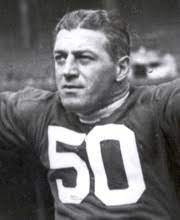
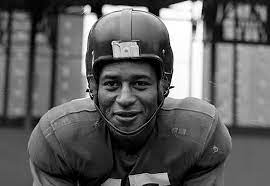
The Story And Significance Of Emlen Tunnell - Retired With The Most Interceptions In NFL History

Emlen Lewis Tunnell, sometimes known by the nickname "The Gremlin", was an American professional football player and coach. He was the first African American to play for the New York Giants and also the first to be inducted into the Pro Football Hall of Fame.

Born and raised in the Philadelphia area, Tunnell played college football at the University of Toledo in 1942 and University of Iowa in 1946 and 1947. He also served in the United States Coast Guard from 1943 to 1946. He received the Silver Lifesaving Medal for heroism in rescuing a shipmate from flames during a torpedo attack in 1944 and rescuing another shipmate who fell into the sea in 1946.

He next played 14 seasons in the National Football League as a defensive halfback and safety for the New York Giants (1948–1958) and Green Bay Packers (1959–1961). He was selected as a first-team All-Pro six times and played in nine Pro Bowls. He was a member of NFL championship teams in 1956 and 1961. When he retired as a player, he held NFL career records for interceptions (79), interception return yards (1,282), punt returns (258), and punt return yards (2,209).

After retiring as a player, Tunnell served as a special assistant coach and defensive backs coach for the New York Giants from 1963 to 1974. In addition to the Pro Football Hall of Fame, he was named to the NFL's 1950s All-Decade Team and the all-time All-Pro team, and was ranked number 70 on The Sporting News' list of the 100 Greatest Football Players.

Tunnell enrolled at the University of Toledo in the fall of 1942 and played college football as a halfback for Toledo Rockets football team. He was described as the "main spring" of Toledo's offense in the first part of the 1942 season. However, on October 26, 1942, he sustained a broken neck in a game when he was blocked while attempting to make a tackle against Marshall. He recuperated sufficiently to help lead the Toledo Rockets men's basketball team to the finals of the 1943 National Invitation Tournament.

Tunnell's neck injury in 1942 resulted in his being rejected in efforts to enlist in both the United States Army and Navy during World War II. In May 1943, Tunnell enlisted in the United States Coast Guard.
 From August 1943 to July 1944, he served on the USS Etamin, a cargo ship that was manned by Coast Guard personnel and stationed in the South West Pacific Area. In April 1944, while unloading explosives and gasoline at Aitape in Papua New Guinea, the Etamin was struck by a torpedo dropped from a Japanese airplane; Tunnell saved a fellow crew member who was set afire in the blast, beat out the flames with his hands, sustained burns to his own hands, and carried the shipmate to safety. He was next stationed at San Francisco and Alameda from August 1944 to October 1945.

In the fall of 1944, Tunnell played at the halfback position for the San Francisco Coast Guard Pilots football team. On November 11, 1944, he led the Pilots to a 13–0 victory over Amos Alonzo Stagg's Pacific Tigers football team, throwing 22 yards for a touchdowns and returning an interception 75 yards for another touchdown. At the end of the 1944 season, he was named to the All-Pacific Coast service football team. He also played basketball for the San Francisco Coast Guard, scoring 13 points in a December 1944 game against the California Golden Bears.

In March 1946, while stationed at Naval Station Argentia in Newfoundland, Tunnell rescued a shipmate who fell from the USS Tampa. Tunnell jumped into the 32-degree water and saved his drowning shipmate. In 2011, Tunnell was posthumously recognized by having the gymnasium on Coast Guard Island named in his honor and was awarded the Silver Lifesaving Medal for his heroism in rescuing his shipmate on the Tampa.

On December 12, 2017, the Coast Guard announced that it planned to name its 45th Sentinel class cutter the USCGC Emlen Tunnell. In 2021, the Coast Guard announced plans to name an athletic building on the Coast Guard Academy campus the Emlen Tunnell Strength and Conditioning Center.
Tunnell was discharged from the Coast Guard in April 1946. He enrolled at the University of Iowa in the fall of 1946. Playing for the 1946 Iowa football team, Tunnell led the team with 541 yards of total offense and 28 pass completions and ranked second on the team with 333 rushing yards.

On October 11, 1947, he set an Iowa single-game record with 155 receiving yards and three touchdowns on six receptions. Three weeks later, Tunnell quit the team after an argument with backfield coach Frank Carideo. He apologized and was reinstated two days later, but he played "sparingly" in the final two games of the 1947 season.

Tunnell left Iowa in January 1948 in order to make some money to enable him to return and play football in the fall. He was told by school officials that, in order to be eligible to play football again in the fall, he would need to return for summer school and make up for a class he failed in the fall. Tunnell later explained: "I got a telegram on Sunday saying I had to be back in school on Monday and didn't have any money or nothing."

On July 24, 1948, Tunnell signed with the New York Giants. He was the first African American signed by, and the first to play for, the Giants. He later wrote that he hitchhiked from his family home in Garrett Hill to New York City to meet Jack Mara, son of Giants founder Tim Mara, and ask for a try out. In his Hall of Fame induction speech, Tunnell thanked a West Indian banana-truck driver who dropped him off near this Polo Grounds "appointment".

As a rookie in 1948, Tunnell appeared in 10 games and intercepted seven passes, including one returned 43 yards for a touchdown. Between 1949 and 1952, he was known as one of the best pass defenders and punt returners in the NFL. He was a key element in the Giants' famed "umbrella defense" that shut down the passing game of opponents in the early 1950s, and he was referred to as the Giants' "offense on defense".

In 1949, he was selected as an All-NFL/AAFC player by the International News Service. He led the NFL with two interceptions returned for touchdown and three non-offensive touchdowns. He ranked second in the NFL with 315 punt returns yards and 251 interception return yards and third with 10 interceptions.

In 1950, he ranked second in the NFL with 305 punt return yards and fourth with 167 interception return yards.

In 1951, he was selected as a first-team All-Pro by the Associated Press (AP) and United Press (UP). He led the NFL with a career-high 489 punt return yards and four non-offensive touchdowns. He returned a kickoff 100 yards for a touchdown, and his combined total of 716 kick and punt return yards was second best in the NFL. His 37.8 yards per kick return and three punt returns for touchdowns remain Giants franchise records. His nine interceptions and average of 14.4 yards per punt return both ranked third in the NFL.
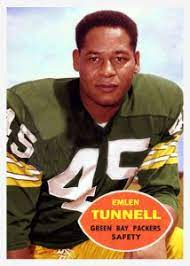
In 1952, he was again selected as a first-team All-Pro by the AP and UP. He led the NFL with six fumble recoveries and 411 punt return yards and averaged 13.7 yards per return. He also ranked among the league leaders with seven interceptions and 149 interception return yards. He gained more yards (924) returning interceptions, punts, and kickoffs than the 1952 NFL rushing leader, Dan Towler.

Tunnell remained with the Giants for a total of 11 years from 1948 to 1958. During that time, he was selected as a first-team All-Pro six times, played in eight Pro Bowls, and set franchise records that still stand with 74 intercepted passes for 1,240 interception return yards and four touchdowns (tied with Dick Lynch and Jason Sehorn). He also recovered 15 fumbles and still holds franchise records with 257 punt returns for 2,206 yards and five touchdowns, which was good for an average of 8.6 yards per return. His total of 3,421 return yards is also a franchise record.

After the 1958 season, the Giants' offensive coordinator Vince Lombardi left New York to become head coach and general manager of the Green Bay Packers. In June 1959, the Packers, in one of their first major personnel moves under Lombardi, purchased Tunnell from the Giants. In three years with the Packers, Tunnell saw reduced playing time, but helped to bolster the defense with his experience, worked to develop the team's young players, and became known as "an unofficial pastor" for the team.
 He appeared in 13 games for the 1961 Packers team that won the NFL championship. He saw playing time in red zone defensive situations. Defensive backs coach Norb Hecker said of Tunnell: "He was still a vicious tackler. When the opposition got inside our 15, we put him in and he responded with the fury of a linebacker. He could fall back on experience and by watching an offensive player's move was seldom beat."

In the fall of 1962, Tunnell worked as a scout for the Giants and Packers, observing college players on Saturdays and watching the Giants' upcoming opponents on Sundays. In May 1963, he was hired by the Giants as a special assistant coach under head coach Allie Sherman. In addition to his scouting duties, he was responsible for "special assignments" during the Giants' training camp.

In February 1965, Tunnell was promoted to assistant coach responsible for the Giants' defensive backs. While some sources credit Tunnell as the first African American to work as an assistant coach in the NFL, and even as the first black coach in the NFL, Fritz Pollard was a head coach in the NFL in the 1920s, and Lowell Perry was an assistant coach for the Pittsburgh Steelers in 1957.

Tunnell suffered a minor heart attack in October 1974 and thereafter assumed a new position as the Giants' assistant personnel director. In July 1975, Tunnell died from a heart attack during a Giants practice session at Pace University in Pleasantville, New York. He was buried at Gulph United Church of Christ Cemetery in West Conshohocken, Pennsylvania.
Sources
https://www.pro-football-reference.com/
https://www.profootballarchives.com/index.html
https://americanfootballdatabase.fandom.com/wiki/Football_Wiki
https://www.gridiron-uniforms.com/GUD/controller/controller.php?action=main
https://www.profootballhof.com/hall-of-famers/
As noted in the "Early years" section below, reliable sources are substantially in dispute as to w whether Tunnell was born in 1922, 1923, 1924, or 1925.
 "Emlen Tunnell". Pro-Football-Reference.com. Sports Reference LLC. Retrieved October 17, 2017.
 "Photograph of Tunnell's tombstone". Emlentunnell.com. Archived from the original on August 10, 2017. Retrieved October 18, 2017.
 Ancestry.com. U.S., Social Security Death Index, 1935–2014 [database on-line].
 Ancestry.com. U.S., Department of Veterans Affairs BIRLS Death File, 1850–2010 [database on-line].
 "Emlen Tunnell". NFL.com. National Football League. Retrieved October 18, 2017.
 "Green Bay Packers Respect Defensive Back Em Tunnell". The Terre Haute Tribune (AP story). December 14, 1961. p. 46 – via Newspapers.com.("The Packer record book says that Tunnell was born March 29, 1922, making him 39 – the same age as Jack Benny.")
 "Em Tunnell, NFL Vet, Calls It Quits". The Morning Call (AP story). March 29, 1962. p. 53 – via Newspapers.com.
 Application for World War II Compensation completed by Emlen Lewis Tunnell and dated March 20, 1950. He listed his birth date as March 29, 1923, at Bryn Mawr, Pennsylvania. Ancestry.com. Pennsylvania, Veteran Compensation Application Files, WWII, 1950-1966 [database on-line].
 The National Archives in St. Louis, Missouri; St. Louis, Missouri; Draft Registration Cards for Pennsylvania, October 16, 1940 – March 31, 1947; Record Group: Records of the Selective Service System, 147; Box: 2560. Source Information: Ancestry.com. U.S. WWII Draft Cards Young Men, 1940-1947 [database on-line].
 "Emlen Tunnell". Portraits of Delaware County. Delaware County. Retrieved October 18, 2017.
 "Eyes and Ears of the New York Giants: Em Tunnell coaches, scouts for pro team". Ebony. December 1963. p. 60. Retrieved October 17, 2017.
 Pennington, Bill (January 14, 2012). "The Giants' Greatest Packer". The New York Times. Retrieved October 18, 2017.
 "Tunnell Stars In Radnor Win". Delaware County Daily Times. October 4, 1941. p. 14 – via Newspapers.com.
 "Giants' Ace, Tunnell, Was Radnor Star". The Philadelphia Inquirer. October 6, 1948. p. 46 – via Newspapers.com.
 "Broken Neck Sustained: By Toledo Freshman In Game With Marshall". The Cincinnati Enquirer. October 27, 1942. p. 14 – via Newspapers.com.
 "Blocked Tunnel". The Brooklyn Daily Eagle. March 19, 1943. p. 17 – via Newspapers.com.
 "Emlen Tunnell". Pro Football Hall of Fame. Retrieved October 18, 2017.
 "Emlen Tunnell, an unsung hero". Coast Guard Compass. United States Coast Guard. February 4, 2011. Archived from the original on October 19, 2017. Retrieved October 19, 2017.
 "Coasting Along". Nevada State Journal. September 24, 1944. p. 12 – via Newspapers.com.
 "Tunnell Stars as Guard Beats Pacific". Oakland Tribune. November 12, 1944. p. 19 – via Newspapers.com.
 "Toledo Univ. Ace Leads Coast Guard". The Pittsburgh Courier. January 20, 1945. p. 12 – via Newspapers.com.
 "Bears Beat Guard of S.F." Oakland Tribune. December 10, 1944. p. 18 – via Newspapers.com.
 "Coast Guard Aligns Names with Hull Numbers for its Sentinel-class FRCs". Seapower magazine. Washington DC. December 12, 2017. Archived from the original on December 13, 2017. Retrieved December 9, 2017. The U.S. Coast Guard has announced the names and corresponding hull numbers for its next 20 Sentinel-class Fast Response Cutters (FRCs), each vessel being named for a deceased leader, trailblazer or hero of the Coast Guard and its predecessor services of the U.S. Revenue Cutter Service, the U.S. Lifesaving Service and the U.S. Lighthouse Service, according to a Dec. 12 Coast Guard release.
 Eaton-Robb, Pat (February 6, 2021). "Coast Guard honors Black veteran, NFL great Emlen Tunnel". The Associated Press. Retrieved February 6, 2021.
 "Grid Marks Come Up". Iowa City Press-Citizen. November 19, 1946. p. 13 – via Newspapers.com.
 "Iowa Passes Dazzle Indiana, 27–14". The Des Moines Register. October 12, 1947. pp. 5–1, 5–3 – via Newspapers.com.
 "Tunnell Quits Iowa But Asks To Return". The Des Moines Register. November 5, 1947. p. 13 – via Newspapers.com.
 Mike Finn, Chad Leistikow (2005). Hawkeye Legends, Lists, & Lore. Simon and Schuster. p. 86. ISBN 0-7432-4591-1.
 "Em Tunnell Fails To Register at Iowa U." The Daily Times (Davenport, IA). February 26, 1948. p. 22 – via Newspapers.com.
 "Tunnell Didn't Know He Needed Summer Classes". Council Bluffs Nonpareil. August 29, 1948. p. 23 – via Newspapers.com.
 "Giant Eleven Signs Tunnell, Iowa's Back". Des Moines Tribune. July 24, 1948. p. 7 – via Newspapers.com.
 "The Human Touch of Emlen Tunnell". The New York Times. July 26, 1975.
 Tunnell, Emlen (1966). Footsteps of a Giant. New York, NY: Doubleday. ASIN B0007DZSNY.
 "Emlen Tunnell Is Dead". Hartford Courant (AP story). July 24, 1975. p. 99 – via Newspapers.com.
 "Em Tunnell, 34, Older Than His Immediate Packer Coach". Green Bay Press-Gazette. June 27, 1959. p. 13 – via Newspapers.com.
 Lea, Bud (November 2, 1960). "Packers Defense Now Solid Unit". The Milwaukee Journal. p. 34. Retrieved April 24, 2014.[permanent dead link]
 "Em Tunnell Packers' Pastor". Green Bay Press-Gazette. December 14, 1961. p. 18 – via Newspapers.com.
 "Em's Retirement Clears Way for New No. 1 Aide". Green Bay Press-Gazette. March 29, 1962. p. 4 – via Newspapers.com.
 "NFL Interceptions Career Leaders". Pro-Football-Reference.com. Sports Reference LLC. Retrieved October 18, 2017.
 "NFL Interception Return Yards Career Leaders". Pro-Football-Reference.com. Sports Reference LLC. Retrieved October 18, 2017.
 "Emlen Tunnell: A Giant of Defense" (PDF). Coffin Corner. Pro Football Researchers. 1994.
 "NFL Punt Returns Career Leaders". Pro-Football-Reference.com. Sports Reference LLC. Retrieved October 18, 2017.
 "NFL Punt Return Yards Career Leaders". Pro-Football-Reference.com. Sports Reference LLC. Retrieved October 18, 2017.
 Bob Broeg (November 6, 1966). "Em Tunnell Made Giant Footsteps as Punt Returner". St. Louis Post-Dispatch. p. 46 – via Newspapers.com.
 "Hall of Fame Names Tunnell, Bednarik". Delaware County Daily Times. February 8, 1967. p. 26 – via Newspapers.com.
 "Graham, Huff on All-1950s Pro Football Selections". Racine Sunday Bulletin. August 31, 1969. p. 6C – via Newspapers.com.
 "Night Train Lane Picked On Pros' All-Time Team". Detroit Free Press. September 7, 1969. p. 3E – via Newspapers.com.
 "Iowa, pro star Tunnell joins Register 'Hall'". Des Moines Register. March 30, 1975. pp. D1, D3 – via Newspapers.com.
 "untitled". Democrat and Chronicle (Rochester, NY). August 15, 1999. p. 3D – via Newspapers.com.
 "Honoring Giants". Philadelphia Daily News. October 4, 2010.
 "Top 100 Players of All Time". The Hartford Courant. November 7, 2010. p. E7 – via Newspapers.com.
 "#79: Emlen Tunnell". The Top 100: NFL’s Greatest Players. NFL Films. 2010. Retrieved October 18, 2017.[dead YouTube link]
 Robert W. Cohen (2014). The 50 Greatest Players in New York Giants Football History. Rowman & Littlefield. p. 13. ISBN 978-1442236325.
 Linda Stein (June 2, 2018). "New statue unveiled for Emlen Tunnell, football legend and World War II hero". Delaware County Daily Times. Archived from the original on June 5, 2018. Saturday, with a U.S. Coast Guard honor guard and all the pomp and circumstances that befits a local hero, Radnor Township officials and the Sports Legends of Delaware County Museum dedicated a 7-foot-tall bronze statue of Tunnell that now stands outside the township building. The statue, created by sculptor Jennifer Frudakis Petry, depicts Tunnell running with a football.
 "Tunnell Takes Coaching Post". Nevada State Journal. May 2, 1963. p. 7 – via Newspapers.com.
 "'Pop' Ivy, Emlen Tunnell To Join New York Giant Staff". Lubbock Avalanche-Journal. February 4, 1965. p. 72 – via Newspapers.com.
 Murray Olderman (October 19, 1965). "Emlen Tunnell Makes Professional Coaching History With His Gremlins". The Daily Home News (New Brunswick, NJ). p. 16 – via Newspapers.com.

Monday, September 19, 2022

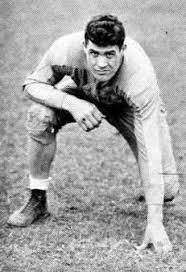
The Story And Significance Of Joe Stydahar - All-Pro Five Consecutive Years At Offensive Tackle

Joseph Lee Stydahar, sometimes listed as Joseph Leo Stydahar, and sometimes known by the nickname "Jumbo Joe", was an American football player and coach. He was inducted into the Pro Football Hall of Fame in 1967 and the College Football Hall of Fame in 1972.

A native of Kaylor, Pennsylvania, Stydahar grew up in West Virginia and played college football and basketball for the West Virginia Mountaineers. He was drafted by the Chicago Bears in the first round of the 1936 NFL Draft and played nine seasons as a tackle for the Bears from 1936 to 1942 and 1945 to 1946. He was selected as a first-team All-Pro five consecutive years from 1936 to 1940 and helped the Bears win NFL championships in 1940, 1942, and 1946 NFL Championship Games.

After his playing career ended, Stydahar was the head coach of the Los Angeles Rams during the 1950 and 1951 seasons and the Chicago Cardinals during the 1953 and 1954 seasons. His 1950 and 1951 Rams teams both advanced to the NFL Championship Game, and the 1951 team won the championship. He also served as an assistant coach for the Rams (1947–1949) and Bears (1963–1965).

hile overlooked by All-America selectors, Stydahar was not overlooked in the 1936 NFL Draft. He was selected by George Halas' Chicago Bears in the first round with the sixth overall pick, becoming the first player drafted by the Bears in the first NFL draft and the first lineman to be selected in the first round.
As a rookie, Stydahar started all 12 games at left tackle for a 1936 Chicago Bears team that compiled a 9–3 record. He was selected as a first-team All-Pro by Collyer's Eye magazine and a second-team All-Pro by the NFL and UPI.

By 1937, Stydahar helped lead the Bears to the NFL Western Division title with a 9-1-1 record. He was recognized as one of the best players in the NFL, receiving the highest point total of any player at any position in voting for the Associated Press (AP) All-Pro team.

The AP reported that "The standout player of the 1937 national pro football league season wasn't Slingin' Sammy Baugh . . ., but Joe Stydahar, veteran tackle of the Chicago Bears. That was the way the coaches of the 10 league clubs figured, at least, when it came to casting their ballots for the all-league team. ... Stydahar received 43 points out of a possible 50".

Stydahar played nine years as a tackle for the Bears from 1936 to 1942 and from 1945 to 1946, appearing in 84 NFL games. He continued to be acknowledged as one of the best players in the league through the 1930s. In 1939, the United Press rated him as "the league's best tackle" and "one of the toughest linemen in the league to take out." He was also ranked third among all NFL players in points received in the AP's 1939 All-Pro voting, trailing only Don Hutson and Dan Fortmann. In all, he was selected as a first-team All-Pro five consecutive years from 1936 to 1940. During his time with the club, the Bears won five NFL Western Division titles (1937, 1940, 1941, 1942, and 1946) and won the 1940, 1942, and 1946 NFL Championship Games.

Stydahar missed the 1943 and 1944 NFL seasons due to military service during World War II. He served as a lieutenant and gunnery officer in the United States Navy on the USS Monterey light aircraft carrier.

In February 1947, Stydahar was hired by the Los Angeles Rams as an assistant coach. He served three years as the Rams' line coach from 1947 to 1949.

In February 1950, Sydahar took over as the Rams' head coach. In his first season as head coach, he led the 1950 Rams to the NFL Western Division championship with a 9–3 record and the top offense in the NFL (38.8 points per game). In the 1950 NFL Championship Game, the Rams lost, 30–28, to the Cleveland Browns on a field goal by Lou Groza with 27 seconds remaining in the game.

In his second season with the Rams, Stydahar led the 1951 Rams to the NFL championship with a victory over the Cleveland Browns in the 1951 NFL Championship Game.

Stydahar began the 1952 season as the Rams' head coach. After losing to the Cleveland Browns in the season opener, dissension between Stydahar and his backfield coach Hamp Pool became public. On September 30, Stydahar reached an agreement with Rams owner Dan Reeves under which Stydahar resigned and was paid him $11,900 to buy out his contract, and Pool was promoted as the new head coach.

In mid-November 1952, Stydahar was hired by the Green Bay Packers. He served as a scout and part-time assistant coach for the balance of the 1952 season.

In January 1953, he was hired as head coach of the Chicago Cardinals. His Cardinals teams compiled records of 1–10–1 in 1953 and 2–10 in 1954. In June 1955, Stydahar and the Cardinals reached an agreement buying out the remainder of his three-year contract with the club.

In February 1963, George Halas hired Stydahar as defensive line coach for the Chicago Bears. Stydahar was credited with overhauling the Bears defensive line, helping to lead the 1963 Bears to the best scoring defense in the NFL and an NFL championship. The Bears dropped to sixth place in the Western Division in 1964, and Stydahar resigned from his position with the club at the end of the 1964 season in order devote his efforts to his work for a corrugated carton company.
Sources
https://www.pro-football-reference.com/
https://www.profootballarchives.com/index.html
https://americanfootballdatabase.fandom.com/wiki/Football_Wiki
https://www.gridiron-uniforms.com/GUD/controller/controller.php?action=main
https://www.profootballhof.com/hall-of-famers/
 "Joe Stydahar Bio". Pro Football Hall of Fame. Retrieved October 9, 2017.
 "Joe "Jumbo Joe" Stydahar". College Football Hall of Fame. Football Foundation. Retrieved October 8, 2017.
 "Joe Stydahar". Pro-Football-Reference.com. Sports Reference LLC. Retrieved October 4, 2017.
 "Stydahar Joins Grid Greats". The Charleston Daily Mail. February 17, 1972. p. 5C – via Newspapers.com.
 "Football Great Stydahar Dies, Had Planned To Live In Beckley". Beckley Post-Herald. March 25, 1977. p. 17 – via Newspapers.com.
 "The Mountaineers All Worked Up Over the Stydahar Case". The Pittsburgh Press. September 20, 1931. p. 41 – via Newspapers.com.
 "Services set for ex-Bear Stydahar". Chicago Tribune. March 25, 1977. p. 4-1 – via Newspapers.com.
 Harry Grayson (November 12, 1935). "By Harry Grayson". Muncie (IN) Evening Press. p. 10 – via Newspapers.com.
 Bernard Bierman (December 2, 1935). "Southern Players Get Grid Spotlight". The Maryville (MO) Daily Forum. p. 8 – via Newspapers.com.
 "Joe Stydahar". West Virginia University. Retrieved October 9, 2017.
 "1936 NFL Draft Listing". Pro-Football-Reference.com. Retrieved March 20, 2023.
 "Stydahar, Veteran Bear Tackle, Is Top Grid Pro". The Burlington (N.C.) Daily Times-News. December 15, 1937. p. 2.
 "Bears Win Three Places on Pro All Star Team". The Hammond (IN) Times. December 14, 1939. p. 21 – via Newspapers.com.
 "Four Giants Win Honors". Los Angeles Times. December 15, 1939. p. II-13 – via Newspapers.com.
 "Joe Stydahar to Help Tutor L. A. Rams' Line". Green Bay Press-Gazette. February 7, 1947. p. 13 – via Newspapers.com.
 "Stydahar To Be Coach Of Rams". The News, Frederick, Md. February 20, 1950. p. 10 – via Newspapers.com.
 "1950 Los Angeles Rams Statistics & Players". Pro-Football-Reference.com. Sports Reference LLC. Retrieved October 9, 2017.
 "1950 Los Angeles Rams Statistics & Players". Pro-Football-Reference.com. Sports Reference LLC. Retrieved October 9, 2017.
 "Trouble Between Coaches Bared". News-Press. September 30, 1952. p. 5 – via Newspapers.com.
 "Pool Succeeds Stydahar as Ram Coach; Joe Paid, $11,900". Los Angeles Times. October 1, 1952. p. 4-1 – via Newspapers.com.
 "Joe Stydahar Joins Bay Staff". Green Bay Press-Gazette. November 14, 1952. p. 13 – via Newspapers.com.
 "Stydahar New Cardinals Coach". The Journal and Courier (IN). January 30, 1953. p. 16 – via Newspapers.com.
 "1953 Chicago Cardinals Statistics & Players". Pro-Football-Reference.com. Sports Reference LLC. Retrieved October 9, 2017.
 "1954 Chicago Cardinals Statistics & Players". Pro-Football-Reference.com. Sports Reference LLC. Retrieved October 9, 2017.
 "Grid Cards Name Richards Coach: Joe Stydahar Out; Settle 3 Season Pact". Chicago Tribune. June 3, 1955. p. 3-1 – via Newspapers.com.
 "Bears Sign Stydahar As Defense Aid". Chicago Tribune. February 15, 1963. p. 4-1 – via Newspapers.com.
 "Bears' Defensive Line Overhauled by Stydahar". Chicago Tribune. August 28, 1963. p. 3-1 – via Newspapers.com.
 "1963 Chicago Bears Statistics & Players". Pro-Football-Reference.com. Sports Reference LLC. Retrieved October 9, 2017.
 "1964 Chicago Bears Statistics & Players". Pro-Football-Reference.com. Sports Reference LLC. Retrieved October 9, 2017.
 "Stydahar Resigns His Post As Line Coach for Bears". The New York Times. December 16, 1964. Retrieved July 19, 2025 – via UPI.
 "Joe Stydahar Record, Statistics, and Category Ranks". Pro-Football-Reference.com. Retrieved June 26, 2025.
 "Pro Football's Hall of Fame Is Announced". The Circleville (OH) Herald. August 3, 1950. p. 13 – via Newspapers.com.
 "Dr. Hugh MacMillan Makes 25th Anniversary All-America". The Cumberland News. December 19, 1960. p. 6 – via Newspapers.com.
 "Fete Ex-Bear Stydahar in Highland Park". Chicago Tribune. April 20, 1967. p. 3-3 – via Newspapers.com.
 "All-1930's NFL Team Selected". The Baltimore Sun. August 27, 1969. p. C5.
 "Inaugural Croatian-American Sports Hall of Fame induction held". croatianweek.com. October 18, 2022.
 "Former NFL Great Joe Stydahar Dies". The Cumberland News. March 25, 1977. p. 16 – via Newspapers.com.
 "Joe Stydahar Father of Boy". Los Angeles Times. February 12, 1948. p. II-9 – via Newspapers.com.
 "Stydahar Proud Father of Son". Redlands Daily Facts. June 27, 1952. p. 7 – via Newspapers.com.
 "In the Wake of the News". Chicago Tribune. March 4, 1955. p. III-1 – via Newspapers.com.
 "Ram-Bear Switch May Help Both ---Stydahar". Los Angeles Times. May 1, 1961. p. IV-2 – via Newspapers.com.
 "Illustrious Career Of Shinnston's "Jumbo Joe" Stydahar Still Being Remembered". Shinnston News & Harrison County Journal. February 2, 2017. Retrieved July 19, 2025.

Friday, September 16, 2022

The Story And Significance Of Ken Strong - 16 Professional Football Seasons Playing In New Jersey And New York

Elmer Kenneth Strong was an American football halfback and fullback who also played minor league baseball. Considered one of the greatest all-around players in the early decades of the game, he was inducted into the College Football Hall of Fame in 1957 and the Pro Football Hall of Fame in 1967 and was named to the NFL 1930s All-Decade Team.

A native of West Haven, Connecticut, Strong played college baseball and football for the NYU Violets. In football, he led the country in scoring with 162 points in 1928, gained over 3,000 yards from scrimmage, and was a consensus first-team selection on the 1928 College Football All-America Team.

Strong played professional football in the National Football League (NFL) for the Staten Island Stapletons (1929–1932) and New York Giants (1933–1935, 1939, 1944–1947), and in the second American Football League for the New York Yankees (1936–1937). He led the NFL in scoring in 1934 and was selected as a first-team All-Pro in 1930, 1931, 1933, and 1934. He also played minor league baseball from 1929 to 1931, but his baseball career was cut short by a wrist injury.

Strong played 16 seasons of professional football from 1929 to 1940 and 1944 to 1947. He earned a reputation as a triple-threat man and a versatile athlete who played on offense and defense and in the kicking game. The Pro Football Hall of Fame's biography of Strong states: "Strong could do everything – run, block, pass, catch passes, punt, placekick, and play defense with the very best."

Unable to reach terms with the New York Giants, Strong signed instead with the Staten Island Stapletons. He played for the Stapletons for four years from 1929 to 1932. While statistics are not available for the 1929 NFL season, Strong was regarded as one of the best backs in the NFL. He started all 10 games at halfback for the 1929 Stapletons. In his first NFL game, he threw a long forward pass to set up the Stapleton's first touchdown and scored all of the team's 12 points on two short touchdown runs. He also had a 70-yard run in a scoreless tie with the Orange Tornadoes on November 3, 1929. Two days later, Strong had a 50-yard touchdown run against the Providence Steam Roller. At the end of the 1929 season, Strong was selected by Collyer's Eye and the Green Bay Press-Gazette as a second-team All-Pro.

In 1930, Strong appeared in all 12 games for the Stapletons and scored 53 points on two rushing touchdowns, five receiving touchdowns, one field goal, and eight extra points. His point total ranked third in the NFL in 1930, trailing only Jack McBride (56 points) and Verne Lewellen (54 points). On September 28, 1930, he caught two touchdown passes, threw a 40-yard pass that set up a third touchdown, and kicked three extra points in a 21–0 victory over the Frankford Yellow Jackets. In December 1930, he led the Stapletons to a 16–7 victory over the New York Giants for the pro football championship of New York City; Strong accounted for all 16 Stapleton points, running 98 yards for a touchdown, passing for a second touchdown, and kicking a field goal and an extra point. He was selected as a first-team player on the 1930 All-Pro Team by Collyer's Eye and the Green Bay Press-Gazette.

In 1931, Strong appeared in all 11 games for the Stapletons and scored 53 points on six rushing touchdowns, one punt return for a touchdown, two field goals, and five extra points. His 53 points ranked fourth in the NFL, trailing only Johnny Blood (84 points), Ernie Nevers (66 points), and Dutch Clark (60 points). On November 22, 1931, Strong scored all 16 points in a 16–7 victory over Cleveland; he had two rushing touchdowns, including a 50-yard run and kicked a field goal and an extra point. At the end of the 1931 season, Strong was selected as an All-Pro for the second year in a row, receiving first-team honors from the United Press (UP) and Collyer's Eye.

Strong's output dropped off in 1932 as he moved to the fullback position. He appeared in 11 games and ranked sixth in the NFL with 375 rushing yards, but scored only 15 points on two touchdowns and three extra points. At the end of the 1932 season, the Stapletons team folded.

In 1933, Strong signed with the New York Giants. The 1932 Giants had compiled a 4–6–2 record, but the 1933 Giants, with Strong at fullback and Harry Newman at quarterback, improved to 11–3 and advanced to the 1933 NFL Championship Game. Strong led the NFL with 64 points in 1933; his points were scored on three rushing touchdowns, two receiving touchdowns, a touchdown on an interception return, five field goals, and 13 extra points. On November 26, 1933, he became the first known player in NFL history to score on a fair catch kick. The 30-yard kick was made at the Polo Grounds in a win against the Green Bay Packers.[citation needed] After the 1933 season, Strong received first-team All-Pro honors from the United Press, Collyer's Eye, and the Green Bay Press-Gazette.

In 1934, Strong again played in every game for the Giants as a fullback. He rushed for 431 yards and scored 56 points (six rushing touchdowns, four field goals, and eight extra points) in the regular season. His greatest fame derives from his role in the Giants' comeback victory over the Chicago Bears in the 1934 NFL Championship Game; Strong scored 17 points for the Giants on a 38-yard field goal, two fourth-quarter touchdowns on runs of 42 and 8 yards, and two extra points. Strong received first-team All-Pro honors in 1934 from the NFL and others.

In 1935, Strong helped lead the Giants to their third consecutive NFL Championship Game. In a 10–7 victory over the Brooklyn Dodgers, he was only able to play a few minutes due to injury, but he still managed to score all of the Giants' points on a 24-yard touchdown run and a 24-yard field goal. Slowed by injury in 1935, he was described as "a celebrated invalid" who "hobbled" from the bench to kick a field goal for the Giants in a 3–0 victory over the Bears on November 17. In the 1935 NFL Championship Game, a 26–7 loss to the Detroit Lions, Strong scored all of the Giants' points on a long touchdown catch and run and the extra point.

In August 1936, Strong signed with the New York Yankees of the newly formed second American Football League. Strong's departure from the NFL was the new league's first raid on the NFL. Strong later recalled that Giants owner Jack Mara wanted Strong to accept a pay cut from $6,000 to $3,200; the Yankees agreed to pay him $5,000.

During the 1936 season, Strong earned a reputation as "the best blocker in the game." He also: kicked a field goal and two extra points in a 17–6 victory over Brooklyn on October 14; scored a touchdown and kicked the extra point in a 7–6 victory over Pittsburgh on October 21; and kicked three field goals in a 15–7 win over Cleveland on November 23.

Strong returned to the Yankees in 1937. However, he left the team after three games to assist Mal Stevens in coaching the NYU Violets football team.

In 1938, Strong was a player and head coach for the Jersey City Giants, the New York Giants' farm team in the American Association. He was barred from playing in the NFL because of his decision to jump to the American Football League in 1936. Tim Mara, owner of the Giants, reportedly negotiated a deal with Strong to play for Jersey City in exchange for which Mara would seek Strong's reinstatement in 1939. He kicked 13 field goals, scored 51 points, and was named to the all-league team.[28] He led the Giants to a 7–1 record and the league championship, scoring 10 points in Jersey City's championship game victory over the Union City Rams.

Strong returned to the New York Giants in 1939. He appeared in nine games and scored 19 points on four field goals and seven extra points. Strong is also believed to be the second player (after Mose Kelsch) to have devoted an entire season to placekicking; his 1939 season with the Giants had him playing very little outside of kicks.

In the summer of 1940, Strong became ill with stomach ulcers, underwent emergency surgery, and was hospitalized for four weeks. He said that he intended to return to playing when his health permitted. He played for the Jersey City Giants while recuperating in the fall of 1940, led Jersey City to another league championship, then announced his retirement as a player in November 1940.

He came out of retirement in 1942 to play for the Long Island Clippers, scoring 12 points in four games.

In 1944, with talent in the NFL depleted by wartime military service, Strong returned for a third stint with the New York Giants. He appeared in all 10 games for the 1944 Giants, including six as a starter. In his first three games with the Giants in 1944, Strong at age 38 accounted for 22 of the team's 48 points. He helped lead the team to the 1944 NFL Championship Game, scoring 41 points on six field goals and 23 extra points.

After the war ended, Strong remained with the Giants for another three years as the team's place-kicker and remained one of the league's leading scorers with 41 points in 1945, 44 points in 1946, and 30 points in 1947. His 32 extra points in 1946 ranked second in the league. In April 1948, at age 41, Strong announced his retirement as a player.

In 12 seasons in the NFL, Strong received first-team All-Pro honors four times (1930, 1931, 1933, and 1934) and scored 520 career points (including 36 points in the post-season) on 38 touchdowns, 39 field goals, and 175 extra points.

In October 1937, Red Cagle, a member of the College Football Hall of Fame, rated Strong at the greatest all-around football player. Cagle said: "Strong ... can do everything. He's a great punter, place kicker, pass thrower, and how he could carry his 198 pounds! I played with and against Strong, and he always stood out. He is tops when the chips are down ... Ken is also a brilliant blocker, so I guess that makes him the class."

Walter Steffen, also a member of the College Football Hall of Fame, said: "I'll tell you he is easily the greatest football player I ever saw – and I've been around over twenty-five years ... I can tell you honestly that since 1905 I've never seen a football player in his class for all-around stuff."

In 1939, Grantland Rice rated Strong and Jim Thorpe as the greatest players in football history. In Strong's favor, Rice cited Strong's "unusual speed", the "driving force in his legs", and his stamina.

Harry Grayson wrote: "An amazing runner, blocker, passer, kicker, and defensive man, Strong was, in the opinion of many who saw him, the greatest football player of them all." Grayson later called Strong "a runaway buffalo with the speed of an antelope."

Sources
https://www.pro-football-reference.com/
https://www.profootballarchives.com/index.html
https://americanfootballdatabase.fandom.com/wiki/Football_Wiki
https://www.gridiron-uniforms.com/GUD/controller/controller.php?action=main
https://www.profootballhof.com/hall-of-famers/
 "Ken Strong". Pro-Football-Reference.com. Sports Reference LLC. Retrieved October 4, 2017.
 "Ken Strong, Ex-Star For Football Giants". The New York Times. October 6, 1979.
 1910 U.S. Census entry for Elmer F. Strong (egg inspector). Son Elmer K. Strong, age 4, born in Connecticut. Census Place: Orange, New Haven, Connecticut; Roll: T624_137; Page: 12A; Enumeration District: 0448; FHL microfilm: 1374150. Ancestry.com. 1910 United States Federal Census [database on-line]
 1920 U.S. Census entry for Elmer F. Strong (dairy inspector). Son Elmer K. Strong, age 13, born in Connecticut. Census Place: Orange, New Haven, Connecticut; Roll: T625_190; Page: 33A; Enumeration District: 415. Ancestry.com. 1920 United States Federal Census [database on-line].
 "A Football Giant and More: Strong Made Name As Two-Sport Star (part 2)". Hartford Courant. December 16, 1999. p. C7 – via Newspapers.com.
 Davis, Hartley R. (July 7, 1960). "Cape Cod League Yesteryears". Barnstable Patriot. Barnstable, MA. p. 6. Archived from the original on July 1, 2022. Retrieved September 1, 2019.
 "Ken Strong, Jr". College Football Hall of Fame. Football Foundation. Retrieved October 4, 2017.
 Mark Purcell. "A Strong year at NYU" (PDF). College Football Historical Society. Retrieved October 4, 2017.
 "Football Award Winners" (PDF). National Collegiate Athletic Association (NCAA). 2016. p. 7. Retrieved October 4, 2017.
 "A Football Giant and More: Strong Made Name As Two-Sport Star (part 1)". Hartford Courant. December 16, 1999. p. C1 – via Newspapers.com.
 "Ken Strong Rated Greatest Player In Football History". The Baltimore Sun. September 6, 1939. p. 14 – via Newspapers.com.
 "Ken Strong Bio". Pro Football Hall of Fame. Retrieved October 4, 2017.
 "Ken Strong Helps Stapleton Triumph". The Brooklyn Daily Eagle. October 7, 1929. p. 22 – via Newspapers.com.
 "Ken Strong's Sprint Features Tie Game". The Wilkes-Barre Record. November 4, 1929. p. 16 – via Newspapers.com.
 "Ken Strong Stars Again". Journal and Courier (IN). November 7, 1929. p. 16 – via Newspapers.com.
 "Stapleton Drubs Frankford, 21 to 0". The Indianapolis Star. September 29, 1930. p. 10 – via Newspapers.com.
 "Ken Strong Stars As Stapes Beat Giants". The Post-Crescent. December 22, 1930. p. 12 – via Newspapers.com.
 "Ken Strong Stars". The Courier-Journal. November 23, 1931. p. 7 – via Newspapers.com.
 "New York Defeats Bears; Wins Title". Green Bay Press-Gazette. December 10, 1934. p. 11 – via Newspapers.com.
 "Giants Keep First Place". Green Bay Press-Gazette. October 14, 1935. p. 13 – via Newspapers.com.
 "Giants Beat Bears, 3 to 0". Chicago Tribune. November 18, 1935. p. 21 – via Newspapers.com.
 "Detroit Whips New York, 26–7 in Pro Football Title Game". Chicago Tribune. December 16, 1935. p. 23 – via Newspapers.com.
 "Yankee Gridders Sign Strong". Democrat and Chronicle. August 22, 1936. p. 14 – via Newspapers.com.
 "Hall of Famer Ken Strong Recalls Trickery, Slim Pay of '34 NFL Playoff". Independent Press Telegram. p. S5 – via Newspapers.com.
 "Strong Rated Best Blocker". St. Louis Post-Dispatch. November 6, 1936. p. 26 – via Newspapers.com.
 "Ken Strong Quits Pros To Help NYU Coach". Williamsport (PA) Sun-Gazette. October 28, 1937. p. 6.
 "Strong Leads Jersey Giants Against Eagles". The Brooklyn Daily Eagle. October 15, 1938. p. 11 – via Newspapers.com.
 Bob Gill (1988). "The Hidden Career Of Ken Strong" (PDF). Coffin Corner. Pro Football Researchers Association.
 "Jersey City Gains Title, Strong Star". The Philadelphia Inquirer. November 21, 1938. p. 17 – via Newspapers.com.
 Hogrogian, John (2000). "Twelve Interesting Things About The 1939 NFL Season" (PDF). Coffin Corner. 22 (3). Professional Football Researchers Association: 1–5. Archived from the original (PDF) on April 28, 2012.
 "Ken Strong Is Recovered Now From Illness". The Vidette Messenger. August 3, 1940. p. 6 – via Newspapers.com.
 Harry Grayson (July 15, 1940). "Grayson's Scoreboard". Mount Carmel Item (NEA story). p. 5 – via Newspapers.com.
 "Ken Strong Planning Gridiron Retirement". The Courier-News (NJ). November 19, 1940. p. 13 – via Newspapers.com.
 "Ken Strong, 38, Most Valuable Of The Giants". Nevada State Journal. October 15, 1944. p. 11 – via Newspapers.com.
 "Ken Strong Leaves Giants After 25-Year Grid Career". Pittsburgh Post-Gazette. April 17, 1948. p. 10 – via Newspapers.com.
 "Former Cadet All-America Rates Ken Strong Outstanding Gridder". Reading Times. October 20, 1937. p. 16 – via Newspapers.com.
 Harry Grayson (December 2, 1943). "Ken Strong Set Pro Records To Earn Place On All-Time Team". The Brownsville (TX) Herald (NEA story). p. 21 – via Newspapers.com.
 "Pro Football's Hall of Fame Is Announced". The Circleville (OH) Herald. August 3, 1950. p. 13 – via Newspapers.com.
 "Ken Strong named to grid hall of fame". Norwalk Hour. Connecticut. Associated Press. February 8, 1967. p. 24.
 "All-1930's NFL Team Selected". The Baltimore Sun. August 27, 1969. p. C5.
 "Ken Strong". NYU Athletics. Retrieved October 4, 2017.
 "Honoring Giants". Philadelphia Daily News. October 4, 2010.
 "Ken Strong Minor League Statistics". Baseball-Reference.com. Sports Reference LLC. Retrieved October 4, 2017.
 "Four or more home runs in a single game – Society for American Baseball Research". sabr.org. Retrieved June 21, 2021.
 "Ken Strong Is To Get $75,000". The Morning Call. July 22, 1933. p. 13 – via Newspapers.com.
 "Ken Strong married". Pittsburgh Press. United Press. December 13, 1928. p. 1.
 "Ken Strong Weds Long Island Girl". The Brooklyn Daily Eagle. December 13, 1931. p. 2 – via Newspapers.com.
 "Ken Strong Is Signed To Coach Giant Kickers". The Bridgeport Post. June 22, 1962. p. 18 – via Newspapers.com.
 "Ken Strong dead at 73". Reading Eagle. Pennsylvania. Associated Press. October 6, 1979. p. 30.
 Raser, Derek (January 25, 1987). "The late Ken Strong, an NFL pioneer with N.Y., is gone but not forgotten". Los Angeles Times. Retrieved December 21, 2015.
 "To Tell the Truth". CBS. Archived from the original on December 21, 2021.

Wednesday, September 14, 2022

The Story And Significance Of Dan Reeves (NFL Executive) - The Man Who Turned The Rams Into A Successful Franchise

Born in New York City to Irish immigrants James Reeves and Rose Farrell, Reeves' father and an uncle, Daniel, had risen together from fruit peddlers to owners of a grocery-store chain, bringing wealth to the family.

Reeves was a graduate of the Newman School in Lakewood, New Jersey, and attended Georgetown University in Washington, D.C., which he left before acquiring his degree. While attending Georgetown, Reeves met his future wife, Mary V. Corroon. The couple were married on October 25, 1935, and would together have six children.

The Reeves family's grocery chain was sold to Safeway Stores in 1941, generating capital and freeing the youthful Dan Reeves, age 29, to pursue his dream of owning a professional football franchise.
Together with his friend and business partner Robert Levy, Reeves purchased the Cleveland Rams franchise in 1941 from a local ownership group for $135,000. The team was a comparatively young one, launched in 1936, and finances were tight, with as few as 200 season ticket holders and no television revenue, forcing some players to work for as little as $100 per game. The team did not operate in 1943, and Reeves became the sole owner in December, while serving stateside in the U.S. Army Air Forces.

Despite its financial woes, the previously unsuccessful franchise began to turn around in 1944; the Rams won Western division title in 1945 and the championship game behind rookie quarterback and league MVP Bob Waterfield, a future member of the Pro Football Hall of Fame.

Immediately following the conclusion of the 1945 season, with the championship game having been played in icy Cleveland before 32,000 fans on December 15, Reeves announced his intention to move his team to sunny Southern California. The League approved the move on January 12, 1946.

On January 15, Rams team representatives went before the Los Angeles Coliseum Commission with a plan to lease use of the facility for home games, as it was already the home venue for college football for both UCLA and USC of the Pacific Coast Conference. On January 23, the Coliseum Commission approved use of the 103,000-seat stadium for Rams' Sunday home games during the 1946 season. The move did not immediately cure the team's financial woes, however: in 1947, Reeves found himself in need of co-owners to share the mounting losses while attempting a turnaround. Reeves brought Levy back in for a one-third stake in the team, while another third went to Edwin Pauley and Hal Saley.

Eventually, the team proved to be extremely successful on the field, with quarterback Bob Waterfield helping the team to three straight League Championship games from 1949 to 1951, culminating in the 1951 Championship trophy. Boasting some of football's most glamorous stars, the Rams drew extremely well at the ticket office. Topped by a crowd of 102,368 for game against the San Francisco 49ers in 1957, attendance for Rams games in the Los Angeles Memorial Coliseum topped 80,000 on 22 occasions during the teams' first two decades in California.

The previous closeness between Reeves and Levy fell away, though, and soon Levy was siding with Pauley against Reeves on most significant ownership decisions. Pauley eventually assumed Levy's stake, giving Pauley two-thirds ownership of the team but that did nothing to resolve the constant battles between Pauley and Reeves. Finally in 1962, the NFL stepped in to resolve the situation by holding a closed auction to result in one partner buying out the other. Reeves outbid Pauley for the team, valuing the Rams at $7.1 million against Pauley's bid of $6.1 million. Reeves once again assumed sole ownership.
He then raised the funds to support his bid by immediately selling 49% of the team to a group of minority owners that included Gene Autry. By the time of Reeves' death in 1971, the team's worth was estimated at $20 million.

Reeves also owned one of Los Angeles' first ice hockey teams, the Western Hockey League's Los Angeles Blades, which lasted from 1961 to 1967 and played nearby the Coliseum at the Los Angeles Memorial Sports Arena. Given the Blades' success, Reeves was an early favorite to get a National Hockey League franchise during the 1967 NHL expansion, but the league awarded the team to Los Angeles Lakers owner Jack Kent Cooke.

The innovative Reeves made several other significant contributions to pro football. He instituted the famed "Free Football for Kids" program that enabled youngsters to enjoy the game in their formative years and then, hopefully, become ardent fans as adults. His signing of the ex-UCLA great, Kenny Washington, in the spring of 1946 marked the first time a black player had been hired in the NFL since 1933.

Reeves' experimentation in the early days of television provided the groundwork for pro football's current successful TV policies. He was also the first to employ a full-time scouting staff.

In 1965, Reeves lured away defensive coordinator and head of player personnel George Allen from the Chicago Bears. Allen made key trades and draft choices, which returned the team back to prominence within the next three seasons of his tenure. Allen allegedly had agreed on the deal with Reeves with two years remaining on his contract with the Bears, and a protracted legal battle followed.

By 1968, Reeves had sought to go in a new direction as far as to find a new head coach for the team. On Christmas Day, Reeves attempted to fire Allen, but due to the wide public outcry of the Rams' fans over the dismissal, he finally relented and retained Allen as the head coach for the next two years, then fired him again after the 1970 season.

Reeves was enshrined in the Pro Football Hall of Fame in 1967. For his contribution to sports in Los Angeles, he was honored with a Los Angeles Memorial Coliseum "Court of Honor" plaque by the Coliseum commissioners. A longtime smoker, Reeves's health began to deteriorate by 1969. Reeves, who was also diagnosed with Hodgkin's disease, succumbed to cancer in his New York City apartment on April 15, 1971.

After Reeves' death, Baltimore Colts owner Carroll Rosenbloom assumed control of the Rams in July 1972, spinning off the Colts to Robert Irsay in a swap of franchises between the owners and their investors.
Sources
https://www.pro-football-reference.com/
https://www.profootballarchives.com/index.html
https://americanfootballdatabase.fandom.com/wiki/Football_Wiki
https://www.gridiron-uniforms.com/GUD/controller/controller.php?action=main
https://www.profootballhof.com/hall-of-famers/
"Dan Reeves, LA Rams' owner, dies". Press-Courier. Oxnard, California. Associated Press. April 16, 1971. p. 24.
 "Services held for Dan Reeves". Wilmington Morning Star. North Carolina. UPI. April 17, 1971. p. 5C.
 "Dan Reeves proved Indians were gone". Spartanburg Herald-Journal. South Carolina. Associated Press. April 18, 1971. p. C3.
 TOBIN, JACK (January 1969). "A MARRIAGE THAT WAS DOOMED".
 "Cleveland grid team to be sold". Pittsburgh Press. May 1, 1941. p. 32.
 "Cleveland Rams sold". St. Petersburg Times. Florida. INS. June 12, 1941. p. 9, section 2.
 Tom Reed, "How Moving a Franchise from Cleveland to L.A. Benefited the Browns and Fostered Social Change," Cleveland Plain Dealer, www.cleveland.com, Feb. 3, 2014.
 "Reeves sole Rams' owner". Pittsburgh Post-Gazette. Associated Press. December 9, 1943. p. 14.
 "Bob Waterfield: Biography," Pro Football Hall of Fame, www.profootballhof.com/
 "Rams transfer to Los Angeles". Milwaukee Journal. Associated Press. January 13, 1946. p. 1, sports.
 Guerrieri, Vince (September 21, 2014). "Documentary documents Browns' pro football integration". Telegraph-Forum. Bucyrus, Ohio. Retrieved March 30, 2022.
 "Rams to Go After Coliseum Lease," San Mateo Times, vol. 35, no. 13 (Jan. 15, 1946), pg. 7.
 "Los Angeles Pros to Use Coliseum," Tucson Daily Citizen, vol. 75, no. 20 (Jan. 23, 1946), pg. 12.
 Edwin Shrake (October 3, 1966). "A Private Eye on the New Rams". Sports Illustrated.
 Bass, Alan (2011). "Chapter 7: Los Angeles Kings". The Great Expansion: The Ultimate Risk That Changed the NHL Forever. pp. 87–93. ISBN 978-1-4502-8605-3.
 (Chicago) Bears take matter to court, AP article, The Miami News, Jan 12, 1966, accessed April 11, 2012.
 Florence, Mal (December 31, 1970). "Allen fired by Rams' owner for second time in 2 years". Sarasota Herald-Tribune. Florida. (Los Angeles Times). p. 1C.
 "Colts' owner now sole owner of Rams". The Bulletin. UPI. July 14, 1972. p. 12.
 Los Angeles (Rams) Owner Dan Reeves dies of cancer, UPI Article for The Palm Beach Post, Apr 16, 1971, accessed April 11, 2012.

Monday, September 12, 2022

The Story And Significance Of Bobby Layne - "The Toughest Quarterback Who Ever Lived"

Robert Lawrence Layne  was an American football quarterback who played for 15 seasons in the National Football League. He played for the Chicago Bears in 1948, the New York Bulldogs in 1949, the Detroit Lions from 1950–1958, and the Pittsburgh Steelers from 1958–1962.

Layne was selected by the Pittsburgh Steelers with the third overall pick of the 1948 NFL draft. He played college football at the University of Texas. Layne was inducted into the Pro Football Hall of Fame in 1967 and the College Football Hall of Fame in 1968. His number, 22, has been retired by the University of Texas Longhorns and Detroit Lions.

Drafted into the National Football League by the Pittsburgh Steelers, Layne was the third overall selection in the 1948 NFL draft and was the second overall selection in the 1948 AAFC Draft by the Baltimore Colts. Layne did not want to play for the Steelers, the last team in the NFL to use the single-wing formation, so his rights were quickly traded to the Chicago Bears.

He was offered $77,000 to play for the Colts, but George Halas, who attended the Sugar Bowl victory over Alabama and sat with Cherry and Layne after the game, "sweet talked" him into signing with the Bears. He promised a slow rise to fame in the "big leagues" with a no-trade understanding.

After one season with the Bears in 1948, during which Layne was the third-string quarterback behind both Sid Luckman and Johnny Lujack, Layne refused to return and tried to engineer his own trade to the Green Bay Packers. Halas, preoccupied with fending off a challenge from the AAFC, traded Layne to the New York Bulldogs for their first-round pick in the 1950 draft and $50,000 cash. The cash was to be paid in four installments.

With Layne at quarterback, the Bulldogs won only one game and lost 11, but Layne played well and developed quickly. Layne compared one season with the soon-to-be-defunct New York Bulldogs as worth five seasons with any other NFL team.

In 1950, he was traded to the Detroit Lions for wide receiver Bob Mann, and the Lions agreed to make the final three payments to Halas (Halas later remarked that the Lions should have continued the yearly payments indefinitely to him in view of Layne's performance). For the next five years, Layne was reunited with his great friend and Highland Park High School teammate Doak Walker, and together they helped make Detroit into a champion.

In 1952, Layne led the Lions to their first NFL Championship in 17 years, and then did so again in 1953 for back-to-back league titles. They fell short of a three-peat in 1954 when they lost 56–10 to Cleveland Browns in the NFL championship game, a loss which Layne explained by saying, "I slept too much last night."

In 1955, the team finished last in their conference and Walker surprisingly retired at the top of his game. As Walker had been the team's kicker, Layne took over the kicking duties in 1956 and 1957, and in 1956 led the league in field-goal accuracy. In 1956, the Lions finished second in the conference, missing the championship game by only one point. In 1957, the season of the Lions' most recent NFL championship, Layne broke his leg in three places in a pileup during the 11th game of the 12-game season. His replacement, Tobin Rote, finished the season and led the Lions to victory in the championship game in Detroit, a 59–14 rout of the Cleveland Browns.

After the second game of the 1958 season, Pittsburgh Steelers coach Buddy Parker, formerly in Detroit, arranged a trade on October 6 that brought Layne to the Steelers. During his eight seasons in Detroit, the Lions won three NFL championships and Layne played in four Pro Bowls, made first-team All-Pro twice, and at various times led the league in over a dozen single-season statistical categories.

Following the trade, Layne played five seasons with the Pittsburgh Steelers. Though he made the Pro Bowl two more times, he never made it back to the playoffs, and the team's best finish was second in the conference in 1962. During his last year in the NFL, he published his autobiography Always on Sunday. Later he stated that the biggest disappointment in his football career was having never won a championship for the Pittsburgh Steelers and specifically, Art Rooney.

By the time Layne retired before the 1963 season, he owned the NFL records for passing attempts (3,700), completions (1,814), touchdowns (196), yards (26,768), and interceptions (243). He left the game as one of the last players to play without a face mask and was credited with creating the two-minute drill. Doak Walker said of him, "Layne never lost a game...time just ran out on him."

Following his retirement as a player, Layne served as the quarterback coach for the Pittsburgh Steelers from 1963 to 1965 and the St. Louis Cardinals in 1965. He was a scout for the Dallas Cowboys from 1966–67. He later unsuccessfully sought the head coaching job at Texas Tech, his last professional involvement with the sport.

For his on-the-field exploits, Layne was inducted into a vast assortment of halls of fame. These included the Texas Sports Hall of Fame in 1960, the Longhorn Hall of Honor in 1963, the Pro Football Hall of Fame in 1967, the state halls of fame in Michigan and Pennsylvania, and the Texas High School Sports Hall of Fame in 1973. In 1981, he received the Golden Plate Award of the American Academy of Achievement presented by Awards Council member Tom Landry. He was presented alongside fellow honoree Doak Walker.

In 2006, he was a finalist on the initial ballot for pre-1947 inductees to the College Baseball Hall of Fame. He was a finalist again the following year.

In a special issue in 1995, Sports Illustrated called Layne "The Toughest Quarterback Who Ever Lived." In 1999, he was ranked number 52 on the Sporting News' list of Football's 100 Greatest Players. After retirement, Layne spent 24 years as a businessman back in Texas in Lubbock, working with his old college coach, Blair Cherry. His business ventures included farms, bowling alleys, real estate, oil, and the stock market.

In his younger days, he was often accompanied by Alex Karras, and was well known for his late-night bar-hopping and heavy drinking. It was said of him, "He would drink six days a week and play football on Sunday", and Layne would in fact drink during games - this heavy drinking may have contributed to his death.

Layne is reported to have stated: "If I'd known I was gonna live this long, I'd have taken a lot better care of myself." That line was later used by baseball player Mickey Mantle, a Dallas neighbor and friend of Layne's, who also died in part due to decades of excess alcohol consumption. Layne suffered from cancer during his last years.

For his on-the-field exploits, Layne was inducted into a vast assortment of halls of fame. These included the Texas Sports Hall of Fame in 1960, the Longhorn Hall of Honor in 1963, the Pro Football Hall of Fame in 1967, the state halls of fame in Michigan and Pennsylvania, and the Texas High School Sports Hall of Fame in 1973. In 1981, he received the Golden Plate Award of the American Academy of Achievement presented by Awards Council member Tom Landry. He was presented alongside fellow honoree Doak Walker.

In 2006, he was a finalist on the initial ballot for pre-1947 inductees to the College Baseball Hall of Fame. He was a finalist again the following year.

In a special issue in 1995, Sports Illustrated called Layne "The Toughest Quarterback Who Ever Lived." In 1999, he was ranked number 52 on the Sporting News' list of Football's 100 Greatest Players. After retirement, Layne spent 24 years as a businessman back in Texas in Lubbock, working with his old college coach, Blair Cherry. His business ventures included farms, bowling alleys, real estate, oil, and the stock market.

In his younger days, he was often accompanied by Alex Karras, and was well known for his late-night bar-hopping and heavy drinking. It was said of him, "He would drink six days a week and play football on Sunday", and Layne would in fact drink during games - this heavy drinking may have contributed to his death.

Layne is reported to have stated: "If I'd known I was gonna live this long, I'd have taken a lot better care of myself." That line was later used by baseball player Mickey Mantle, a Dallas neighbor and friend of Layne's, who also died in part due to decades of excess alcohol consumption. Layne suffered from cancer during his last years.
Sources
https://www.pro-football-reference.com/
https://www.profootballarchives.com/index.html
https://americanfootballdatabase.fandom.com/wiki/Football_Wiki
https://www.gridiron-uniforms.com/GUD/controller/controller.php?action=main
https://www.profootballhof.com/hall-of-famers/
Modoono, Bill (December 2, 1986). "Bobby Layne: Time finally runs out on fun-loving Texan". Pittsburgh Press. p. D1. Archived from the original on August 16, 2023. Retrieved November 18, 2019.
 Kohou, Martin Donell. "Layne, Robert Lawrence". tshaonline.org. Archived from the original on May 2, 2019. Retrieved May 25, 2017.
 Bryce, Charles (September 9, 2017). "McSwane relives 1943 title at Bobcats' home opener". San Angelo Standard-Times. Archived from the original on October 25, 2021. Retrieved October 25, 2021.
 "Football State Archives School Search: 1943" (PDF). uiltexas.org. Archived (PDF) from the original on October 25, 2021. Retrieved October 25, 2021.
 Lucksinger, Ross. "The History of Freshman Quarterbacks at Texas". insidetexas.com. Archived from the original on May 2, 2019. Retrieved May 25, 2017.
 Jenkins, Dan (October 30, 1972). "A locomotive for the class of '76". Sports Illustrated. p. 26. Archived from the original on November 7, 2019. Retrieved October 25, 2021.
 "Texas-Oklahoma classic to be played Saturday in Dallas". Abilene Reporter-News. October 10, 1944. Archived from the original on July 30, 2017. Retrieved May 25, 2017.
 "One Man, All 40 Points". goldenrankings.com. Archived from the original on January 10, 2015. Retrieved August 7, 2013.
 "Bobby Layne Chalks Up Three SWC Titles". Lubbock Morning Avalanche. December 3, 1946. p. 8. Archived from the original on October 29, 2024. Retrieved October 29, 2024 – via Newspapers.com.
 "1946 Heisman Trophy Voting". sports-reference.com. Archived from the original on January 21, 2015. Retrieved January 21, 2015.
 "1947 Heisman Trophy Voting". Archived from the original on October 19, 2021. Retrieved October 17, 2021.
 "Texas vs SMU (Nov 1, 1947)". Archived from the original on October 17, 2021. Retrieved October 17, 2021.
 "SMU's Greatest Moments #21". smumustangs.com. Archived from the original on December 21, 2014. Retrieved January 22, 2015.
 "14th Annual Sugar Bowl Classic". allstatesugarbowl.org. January 1, 1948. Archived from the original on December 11, 2014. Retrieved January 22, 2015.
 "1969 Football Roster". Archived from the original on October 17, 2021. Retrieved October 17, 2021.
 "1973 Texas Christian Horned Frogs Roster". Archived from the original on October 17, 2021. Retrieved October 17, 2021.
 "2006 Official College Baseball Foundation Hall of Fame Ballot" (PDF). lsusports.net. Archived (PDF) from the original on January 30, 2015. Retrieved January 29, 2015.
 Madden, W.C.; Stewart, Patrick J. (January 1, 2004). The College World Series: A Baseball History, 1947–2003. McFarland. p. 11. ISBN 0786418427.
 Guzzardi, Joe (February 5, 2011). "Bobby Layne: The NFL Hall of Fame Great Who Could Have Starred in the Major League". Archived from the original on April 2, 2015. Retrieved January 30, 2015.
 Nassar, Taylor. "Layne, Robert Lawrence". libraries.psu.edu. Archived from the original on May 15, 2013. Retrieved January 23, 2015.
 "The Unhappiest Millionaire". Sports Illustrated Vault. 1960. Archived from the original on August 1, 2023. Retrieved August 1, 2023.
 "The NFL's 10 Most Significant Front Office Decisions Ever". Bleacher Report. Archived from the original on August 1, 2023. Retrieved August 1, 2023.
 Collier, Gene (April 23, 2006). "Making a pitch for Bobby Layne for baseball hall". Archived from the original on February 18, 2015. Retrieved January 29, 2015.
 "Lions lose Layne but win, 20–7". Pittsburgh Post-Gazette. Associated Press. December 9, 1957. p. 26. Archived from the original on March 10, 2016. Retrieved January 2, 2016.
 "Championship - Cleveland Browns at Detroit Lions - December 29th, 1957". Pro-Football-Reference.com. Retrieved June 12, 2024.
 Livingston, Pat (October 7, 1958). "Layne takes over as Steeler QB". Pittsburgh Press. p. 27. Archived from the original on May 17, 2016. Retrieved January 2, 2016.
 Sell, Jack (October 7, 1958). "Steelers get Layne for Morrall". Pittsburgh Post-Gazette. Archived from the original on April 26, 2016. Retrieved January 2, 2016.
 "Lions send Bobby Layne to Steelers for Morrall". Youngstown Vindicator. (Ohio). Associated Press. October 7, 1958. p. 21. Archived from the original on August 16, 2023. Retrieved November 18, 2019.
 "Bobby Layne Stats, Height, Weight, Position, Draft, College". Pro-Football-Reference.com. Archived from the original on April 6, 2023. Retrieved June 12, 2024.
 Cavanaugh, Jack (2008). Giants Among Men. Random House. p. 129. ISBN 978-1-4000-6717-6.
 Harvey, Randy (December 2, 1986). "Football Legend Layne Dies at 59 of Heart Failure". Los Angeles Times. Archived from the original on January 29, 2015. Retrieved January 27, 2015.
 "Longhorn MVPs/Hall of Famers" (PDF). Archived from the original (PDF) on November 25, 2015.
 "Famed quarterback Bobby Layne dies". Pittsburgh Post-Gazette. press dispatches. December 2, 1986. p. 8. Archived from the original on November 17, 2015. Retrieved January 30, 2015.
 "Bobby Layne Stats". Pro-Football-Reference. Archived from the original on April 6, 2023. Retrieved October 6, 2019.
 "Golden Plate Awardees of the American Academy of Achievement". www.achievement.org. American Academy of Achievement. Archived from the original on December 15, 2016. Retrieved November 25, 2020.
 "College Baseball Hall of Fame Announces Official 2007 Nominee Ballot" (PDF). Archived (PDF) from the original on January 29, 2015. Retrieved May 25, 2017.
 "Sporting News' Football's 100 Greatest Players". Archived from the original on May 16, 2008. Retrieved May 25, 2017.
 "Bobby Layne remains in critical condition". Sarasota Herald-Tribune. Florida. Associated Press. November 21, 1986. p. 8C. Archived from the original on April 30, 2016. Retrieved January 2, 2016.
 "500 attend funeral for Bobby Layne". Ottawa Citizen. (Canada). UPI. December 4, 1986. p. B6. Archived from the original on May 13, 2016. Retrieved January 2, 2016.
 "Friends eulogize Layne". Ludington Daily News. (Michigan). Associated Press. December 4, 1986. p. 10. Archived from the original on May 9, 2016. Retrieved January 2, 2016.
 "Searching for Bobby Layne". Archived from the original on December 20, 2023. Retrieved December 20, 2023.
 Rogers, Justin (March 7, 2009). "Turns out the Curse of Bobby Layne is probably a myth". MLive.com. Archived from the original on June 13, 2011. Retrieved November 25, 2010.
 "2008 Detroit Lions Rosters, Stats, Schedule, Team Draftees". Pro-Football-Reference.com. Archived from the original on August 29, 2023. Retrieved June 12, 2024.
 "Detroit Lions Become NFL's First 0-16 Team". Associated Press. December 28, 2008. Archived from the original on October 26, 2021. Retrieved October 26, 2021 – via Fox News.
 Seifert, Kevin (July 27, 2009). "Black and Blue all over: Offseason's final week". ESPN.com. Archived from the original on February 26, 2011. Retrieved November 25, 2010.
 "Matthew Stafford Stats, Height, Weight, Position, Draft, College". Pro-Football-Reference.com. Archived from the original on April 7, 2019. Retrieved June 12, 2024.
 "2011 Detroit Lions Rosters, Stats, Schedule, Team Draftees, Injury Reports". Pro-Football-Reference.com. Archived from the original on January 29, 2018. Retrieved June 12, 2024.
 Scott, Jelani (January 30, 2021). "Lions to trade Matthew Stafford to Rams in blockbuster deal involving Jared Goff, picks". National Football League. Archived from the original on January 31, 2021. Retrieved June 12, 2024.
 "2021 NFL Standings & Team Stats". Pro-Football-Reference.com. Archived from the original on January 30, 2023. Retrieved June 12, 2024.
 "2013 NFL Record & Fact Book" (PDF). NFL. Archived from the original (PDF) on September 27, 2020.
 "Show clip: Peyton Manning prepared a curse-breaking bathtub for Jeff Daniels and the Lions". YouTube. October 28, 2022. Archived from the original on December 15, 2022. Retrieved December 15, 2022.
 "Broderick: Thankful the curse on the Detroit Lions has been lifted — I think". Archived from the original on October 13, 2023. Retrieved December 15, 2022.
 Middlehurst-Schwartz, Michael (December 24, 2023). "Lions win division for first time in 30 years, claiming franchise's first NFC North title". USA TODAY. Retrieved January 23, 2024.
 Bachar, Zach (January 15, 2024). "NFL Fans Celebrate Jared Goff's Lions for Earning 1st Playoff Win Since 1992 vs. Rams". Bleacher Report. Retrieved January 23, 2024.
 "Detroit Lions Playoff History". Pro-Football-Reference.com. Archived from the original on October 12, 2023. Retrieved June 12, 2024.
 Gantert, Tom (November 27, 2024). "Did Peyton Manning Break the Curse of Bobby Layne?". Michigan Enjoyer. Archived from the original on November 27, 2024. Retrieved January 15, 2025.
 "NFC Championship - Detroit Lions at San Francisco 49ers - January 28th, 2024". Pro-Football-Reference.com. Retrieved June 12, 2024.
 Wetzel, Dan (December 15, 2024). "Lions' injuries are becoming recurring nightmare in otherwise dream season". Yahoo Sports. Retrieved December 16, 2024.
 Camenker, Jacob (October 14, 2024). "How long is Aidan Hutchinson out? Updated injury timeline for Lions DE". USA Today. Retrieved December 16, 2024.
 Ramsey, Jared (January 18, 2025). "Lions vs Commanders score: Recap, highlights from Lions disappointing 45-31 playoff loss". Detroit Free Press. Retrieved January 23, 2025.