Pro Football Historian (PFH) is a blog page written by Flint Given. Pro Football Historian or PFH is a page to inform people on prior NFL events that people might not know about. Learning about teams from the 1920s or even the first few NFL World Championships in the 1930s fascinates me. It's these kinds of events that I want to discuss in this blog. Hopefully you are interested and will continue to check up on my blogs.
Troy Kenneth Aikman is an American former professional football quarterback who played in the National Football League for 12 seasons with the Dallas Cowboys. After transferring from the Oklahoma Sooners, he played college football for the UCLA Bruins and won the Davey O'Brien Award as a senior. Aikman was selected first overall by the Cowboys in the 1989 NFL draft, went to six Pro Bowls, and won three Super Bowls. He was also named MVP of Super Bowl XXVII, the franchise's first title in over a decade. Aikman was inducted to the Pro Football Hall of Fame in 2006 and the College Football Hall of Fame in 2008.
After retiring in 2000, Aikman served as the color commentator of NFL on Fox from 2001 to 2021 and has served as the color commentator of Monday Night Football since 2022. He and his partner play-by-play announcer Joe Buck are the longest tenured announcer pairing in NFL history. Aikman was also a co-owner of the now defunct NASCAR Sprint Cup Series team Hall of Fame Racing from 2005 to 2009, along with fellow former Cowboys quarterback Roger Staubach, and is a part-owner of the San Diego Padres in Major League Baseball (MLB).
Aikman was selected as the first overall pick in the 1989 NFL draft by the Dallas Cowboys. On February 25, 1989, new owner Jerry Jones fired Tom Landry and replaced him with Jimmy Johnson. A few months later, in the NFL's supplemental draft, Johnson drafted Steve Walsh, who played for Johnson at the University of Miami. Aikman won the starting quarterback job, and Walsh was traded early in the 1990 season.
Aikman played his first NFL preseason game on August 26, 1989, against the Denver Broncos. His NFL debut started with a 28–0 loss to the New Orleans Saints. The following week, Aikman threw his first touchdown pass, a 65-yard completion to Michael Irvin, but the Atlanta Falcons intercepted two passes and won. In a game against the Phoenix Cardinals, he threw for 379 yards to set an NFL rookie record.[9] Aikman finished 1989 with a 0–11 record as a starter, completing 155 of 293 passes for 1,749 yards, 9 touchdowns, and 18 interceptions.
Following Aikman's rookie season, Dallas selected Florida Gators running back Emmitt Smith in the first round of the 1990 NFL draft. With Smith and Irvin, Aikman led the Cowboys to a 7–7 record in the 1990 season but was injured in the 15th game, against the Philadelphia Eagles. The Cowboys would go on to lose that game and the following week against the Atlanta Falcons with backup quarterback Babe Laufenberg, missing the final playoff wild card spot by one game.
In 1991, Aikman led the Cowboys to a 6–4 record in the first 10 games and had the Cowboys ahead in week 12 against an undefeated Washington Redskins team when he was injured. Steve Beuerlein replaced Aikman, and Dallas finished the season 5–0 and earned the #5 playoff seed. Beuerlein went on to lead the Cowboys to a road upset over the #4 seed Chicago Bears in the Wild Card round. With the Cowboys trailing 17–6 at halftime the following week against the Detroit Lions in the NFC Divisional Playoff game, Aikman was inserted to start the third quarter but was unable to provide a spark as the Cowboys lost, 38–6. Aikman was selected to the first of six consecutive Pro Bowls.
In 1992, Aikman set career highs in completions (302), passing yards (3,445), and touchdown passes (23), and led the Cowboys to a team record 13 regular-season victories and the second-best record in the NFC. During the playoffs, Aikman broke Joe Montana's record of 83 passes without an interception by throwing 89. The Cowboys defeated the Philadelphia Eagles at home in the Divisional Round and squared off against the San Francisco 49ers in the NFC Championship, a matchup that featured the two best teams in the NFC. The Cowboys won, 30–20, with Aikman completing two game-changing passes to send the Cowboys to their first Super Bowl appearance since 1978. In Super Bowl XXVII against the Buffalo Bills, Aikman led the Cowboys to a 52–17 victory (coincidentally the game was played in his alma mater's home stadium, the Rose Bowl). Aikman was named Super Bowl MVP after completing 22 of 30 passes for 273 yards and 4 touchdowns.
In 1993, the Cowboys finished 12–4, the best record in the NFC. In the playoffs, Aikman again led the Cowboys to a home playoff win, this time over a young, upstart Green Bay Packers squad led by quarterback Brett Favre, who was in his first full season as a starting quarterback. Aikman then shredded the San Francisco 49ers secondary in the NFC Championship 38–21, before leaving the game with a concussion after 49ers defensive tackle Dana Stubblefield's knee hit Aikman's head. Aikman now says he has no memory of playing in the game. In Super Bowl XXVIII, Aikman was kept out of the end zone, but a combination of key turnovers by the Buffalo Bills offense and the running of Emmitt Smith helped lead to a 30–13 victory for the Cowboys.
Head coach Jimmy Johnson left the team on March 29, 1994, and Jerry Jones hired Barry Switzer, Aikman's former college coach at Oklahoma. In 1994, the Cowboys finished with the second-best record in the NFC (behind the San Francisco 49ers) and Aikman again missed playing time due to injuries. The Cowboys won their Divisional Playoff game against the Green Bay Packers 35–9, but fell to the 49ers in the NFC Championship, 38–28.
In 1995, Aikman passed for over 3,300 yards as the Cowboys once again finished with the best record in the NFC, with the 49ers having the second-best record. Aikman was knocked out of a highly anticipated rematch between the Cowboys and the San Francisco 49ers when 49ers' Stubblefield landed on Aikman, forcing his knee to hit the turf. After a playoff loss at home by the 49ers to the Green Bay Packers, the Cowboys hosted the Packers in the NFC Championship and, for the third straight season, knocked the Packers out of the playoffs, this time by a 38–27 score, to earn their third Super Bowl appearance in four years. The Cowboys won Super Bowl XXX against the Pittsburgh Steelers 27–17, with Aikman throwing one touchdown pass.
In 1996, despite offensive troubles, Aikman again helped lead the Cowboys to another NFC East Division title and a home game for the Wild Card playoff round, a 40–15 drubbing of the Minnesota Vikings. The following week, the Cowboys fell in the Divisional Round to the Carolina Panthers, 26–17.
In 1997, Aikman became the first quarterback in Cowboys history to have three straight 3,000-yard seasons, but the team finished 6–10 and missed the playoffs for the first time since 1990. Switzer suffered the first losing season of his career and resigned at the end of the season.
1998 was a rebound year for Aikman and the Cowboys, and despite missing five games, Aikman again helped lead the Cowboys back to the NFC East title and the playoffs. The Cowboys were stunned at home in the Wild Card game as the #6 seed Arizona Cardinals won, 20–7.
The 1999 season started with a bang for Aikman and the Cowboys as they squared off against the Washington Redskins. Aikman threw a career-high five touchdown passes, including the game-winner in overtime to beat the Redskins. 1999 also marked the final playoff appearance for Aikman, and the final season the trio of Aikman, Irvin, and Emmitt Smith would play together. The Cowboys finished 8–8 and lost in the Wild Card round to the Minnesota Vikings, 27–10.
The 2000 season was Aikman's final season as a professional football player. Aikman suffered several concussions during the season, and a revolving door at quarterback took place between Aikman and former Eagles quarterback Randall Cunningham. Aikman's final game was at home against the Washington Redskins. He was hit by linebacker LaVar Arrington and suffered the tenth and final concussion of his career.
During the 2001 offseason, Aikman was waived a day before he was due a $70 million/7-year contract extension, and ultimately announced his retirement on April 9, after failing to find another team. He ended his career as the Cowboys' all-time leading passer (32,942 yards). 90 of his 94 career wins were in the 1990s and the most of any quarterback in any decade until Peyton Manning surpassed him in the 2000s with 115 wins. Presently, Aikman is third on that list, also trailing Tom Brady (122 in the 2010s).
During a late December 2013 radio interview, Aikman said the real reason he retired was due to persistent back issues he had in his final season. Aikman explained that he had back surgery in the offseason following Super Bowl XXVII with no complications but by the time he reached his final season he was constantly getting treatment for back pain. While the hit by Arrington ended his 2000 season, he claims it was the back pain and not that concussion that ended his career. In a January 2020 interview, Aikman said he wanted to sign with the San Diego Chargers after being released by the Cowboys in the 2001 offseason to play for Norv Turner (Aikman's former offensive coordinator in Dallas), but they signed Doug Flutie instead and Aikman chose to retire. He said Andy Reid called him after Eagles' starting quarterback Donovan McNabb suffered a broken ankle in week 11 of the 2002 season to offer him the starting position, but Aikman declined. In 2003, Aikman agreed to play for the Miami Dolphins with Turner as their offensive coordinator and began training again, but the team decided not to sign a contract with him.
After he retired from professional football as a player, Aikman joined Fox's NFC telecasts as a color commentator for the 2001 season. A year later, he was named to the network's lead announcing crew, teaming with Joe Buck and (from 2002 to 2004) Cris Collinsworth. Aikman received an Emmy Award nomination for his television work in 2004 and has helped broadcast six Super Bowls (XXXIX, XLII, XLV, XLVIII, LI, and LIV) to date. It was revealed in 2016 that in 2004, Aikman nearly came out of retirement to sign a one-year deal with the Miami Dolphins, but the Dolphins ended up not signing him.
Aikman also hosts a weekly sports radio show which airs on Thursday from 7 to 8 p.m. ET on Sporting News Radio and appears weekly during the football season on the Dunham & Miller morning show on Dallas sports talk radio station 1310 The Ticket. He was a public spokesman for Acme Brick throughout his career. He is also the chairman of the Troy Aikman Foundation, a charity to benefit children that has recently focused on building playplaces for children's hospitals. In 2016, Aikman merged his foundation with the United Way Foundation of Metropolitan Dallas and donated $1 million to United Way in the process. The Agency Sports Management & Marketing handles Aikman's marketing activities, where Jordan Bazant is his lead agent.
Aikman, who in 1999 was ranked No. 95 on The Sporting News' list of the 100 Greatest Football Players, has been the official Wingstop spokesman for several years. He appeared in The Simpsons episode "Sunday, Cruddy Sunday" alongside former Miami Dolphins quarterback Dan Marino. He also participated in the 2001 and 2011 videos honoring Billy Graham's 83rd and 93rd birthdays. Aikman said he was going to appear on Dancing with the Stars in front of TMZ cameras. However, he revealed he was only joking about it and won't appear on the show.
On September 19, 2005, at halftime of the Dallas Cowboys-Washington Redskins game (broadcast on Monday Night Football), Aikman was inducted into the Dallas Cowboys Ring of Honor with his longtime teammates Michael Irvin and Emmitt Smith. On August 5, 2006, Aikman was one of six players inducted into the Pro Football Hall of Fame.
At another halftime ceremony, on February 7, 2009, at the UCLA-Notre Dame basketball game, Aikman's induction into the College Hall of Fame was honored. Aikman announced he had completed coursework to finish his degree in sociology. He participated in UCLA's 2009 Sociology Department commencement ceremony with current quarterback Kevin Craft and former linebacker Marcus Reece, who also came back to finish his college education. Former UCLA quarterback John Sciarra was the keynote speaker at the ceremony.
On February 9, 2010, Aikman became a member of the National Football Foundation Board of Directors.
As of fall 2010, Aikman is a co-spokesman for Rent-a-Center, along with Hulk Hogan.
In the fall of 2011, Aikman joined the Oxford Preparatory Academy Charter School Advisory Board in Southern California.
In November 2013, Aikman was named a 2014 recipient of the NCAA Silver Anniversary Award, given annually to six former college athletes 25 years after the end of their college athletics careers.
In March 2014, Aikman was announced as a partner and spokesman for IDLife.
Before a 2020 NFL broadcast between the Packers and Buccaneers in Tampa, Aikman and his partner Joe Buck were caught on a hot mic questioning the necessity of a military flyover when only 15,000 fans were allowed in Raymond James Stadium for the game. Aikman most notably said "That's a lot of jet fuel just to do a little flyover" and "That stuff ain't happening with a Kamala-Biden ticket, I'll tell you that right now, partner." An Armed Forces spokesperson later said there is no additional cost to conduct the flyovers. Meanwhile, Buck and Aikman faced accusations of being unpatriotic.
After 20 seasons as Fox's lead broadcast team, ESPN announced on March 16, 2022, that both Buck and Aikman would join the network as the new lead commentators of Monday Night Football.
In late 2005, Aikman together with another former Cowboys quarterback, Roger Staubach, established a NASCAR team known as Hall of Fame Racing, fielding the No. 96 car (derived by multiplying Aikman's jersey number as a Dallas Cowboy by Staubach's) shared between Terry Labonte and Tony Raines during the 2006 NASCAR Nextel Cup Series. Raines drove for Hall of Fame full-time in 2007, and J. J. Yeley and Brad Coleman drove the car in 2008. The team closed after the 2009 season.
Aikman has owned several car dealerships in the Dallas–Fort Worth area and launched a light beer brand called Eight in 2022.
Aikman was once named the most eligible bachelor in Dallas by Texas Monthly, and dated country singer Lorrie Morgan. He married former Cowboys publicist Rhonda Worthey on April 8, 2000, in Plano, Texas. Worthey has a daughter named Rachel from a previous marriage. Worthey and Aikman have two daughters. The couple announced their separation on January 24, 2011. Their divorce was finalized on April 12, 2011. On June 2, 2017, Aikman announced his engagement to high-end fashion retailer Catherine "Capa" Mooty on Instagram. Mooty has two sons with her ex-husband, lawyer Jerry Mooty, who is the nephew of Cowboys owner Jerry Jones. On September 1, 2017, Aikman and Catherine Mooty married at the Biltmore Four Seasons in Montecito, California. However, it was revealed in July 2023 that Aikman and Mooty were officially divorced. Aikman resides in Dallas.
Jon Steven Young is an American former professional football quarterback who played in the National Football League for 15 seasons, most notably with the San Francisco 49ers. He was drafted by and played for the Tampa Bay Buccaneers. Prior to his NFL career, Young was a member of the Los Angeles Express in the United States Football League (USFL) for two seasons. He played college football for the BYU Cougars, setting school and NCAA records en route to being runner-up for the 1983 Heisman Trophy.
Young was named the AP's NFL Most Valuable Player in 1992 and 1994, and was the MVP of Super Bowl XXIX where he led the 49ers to a victory over the San Diego Chargers with a record six touchdown passes. During his 1994 MVP campaign, Young set a new NFL record for passer rating at 112.8. He is a member of the College Football Hall of Fame and the Pro Football Hall of Fame.
Young was an extremely efficient passer, leading the league in passer rating a record six times and completion percentage and yards per attempt five times. At the time of his retirement, Young had the highest passer rating among NFL quarterbacks with at least 1,500 passing attempts (96.8). Currently, he is ranked fourteenth all time in passer rating, and is ranked fourth-highest amongst retired players, behind only Drew Brees, Tom Brady, and Tony Romo. Young's 43 career rushing touchdowns are third among quarterbacks, while his 4,239 rushing yards ranks sixth all time.
At the time Young left college the USFL was proving a serious challenge to the established NFL, and he had a choice to be a top pick in either league.
Young was selected by the USFL Los Angeles Express in the first round (11th overall) of the 1984 draft held that January. Express general manager Don Klosterman told Young that if he signed with the Express, his head coach would be John Hadl, a former All-Pro quarterback who had shepherded John Elway through his first year in the NFL. Klosterman also told Young that Hall of Fame coach Sid Gillman, who had been hired as a consultant, would tutor him on how to be a pro quarterback.
The regular 1984 NFL draft would not be held until May. To help influence his decision, the Express offered an all-sports record 10-year, $40 million contract. Young was convinced, and signed with the Express in March 1984. He agreed to take his payment in the form of an annuity paid out over forty years to help the fledgling team.
After missing the first six games of his rookie season while taking some college classes in order to graduate on time, Young started the final 12 games. He had a respectable year, highlighted by becoming the first pro football player ever to pass for 300 yards and rush for 100 in a single game.
Despite a roster which included such future NFL players as Jojo Townsell, Mel Gray, and Kevin Nelson, and making the Western Conference title game in Young's first season, the Express were never able to create a sustaining fan base in Los Angeles. They often played to sparse crowds that looked even more so in the then-95,000-seat Los Angeles Memorial Coliseum.
Near the end of the 1984 season, Express owner J. William Oldenburg was forced to give up control of the team after multiple reports revealed he had misrepresented his net worth. Houston Gamblers minority owner Jay Roulier was cleared to buy the team, only to be pushed out shortly before the 1985 preseason when it emerged that he too had lied about his finances. For all intents and purposes, the Express' 1985 season ended at that point. The league took over the team and cut the budget to the bare minimum. Notably, no money was allocated to replace injured players. This left the Express in a precarious position when a rash of injuries decimated the roster. Even before then, Young and the other young players concluded that the Express would not be around for the planned move to a fall schedule in 1986, even if the USFL survived. With this in mind, they played tentatively so as not to harm their NFL prospects. As a result, despite fielding essentially the same team as a year prior, the Express cratered to a 3–15 record.
Before the Express' final home game — which had been moved to Los Angeles Pierce College in the San Fernando Valley — the bus driver refused to leave unless he was paid up front, in cash. Young contributed some money, as did the team trainer, and the driver took them to the game. In the season finale at Orlando, Young had to line up at tailback because the Express had no healthy running backs left on the roster.
It was reported that Young had insured his contract and would still be paid until 2027. However, facing the prospect of both a faltering owner and an unstable league, Young had already renegotiated his 10-year deal down to 4 years, and had already collected a total of $4.8 million of the $5.8 million due in toto through the final year of that deal (in 1987), working out to an annual rate of pay of $2.4 million for his first two seasons that was the highest in all of American sports. Included in that negotiation was a payment of $1.4 million for the balance of the 10-year annuity (less money paid out against it), and salaries for the remaining two years of the deal "in excess of $450,000" annually according the USFL Commissioner then overseeing the LA Express (which had fallen into receivership).
Young grew increasingly dissatisfied with the disarray surrounding the Express. Just a week before what proved to be the last USFL title game, Young gave the USFL an ultimatum – find a new owner for the Express, or allow him to buy out his contract and go to the NFL. Soon after the league decided to suspend the Express's operations for the 1986 season, Young bought out his Express contract and signed with the Tampa Bay Buccaneers, who had made him the first pick in a supplemental draft of USFL and CFL players a year earlier.
By this time, the Buccaneers were in the midst of what would be 12 consecutive 10-loss seasons. They posted identical 2–14 records in Young's two seasons with them, going 3–16 with him as a starter. Young threw for only 11 touchdowns with 21 interceptions while completing fewer than 55% of his passes.
The Buccaneers selected University of Miami quarterback Vinny Testaverde first overall in the 1987 NFL draft because Young was deemed a bust. Young was traded to the San Francisco 49ers on April 24, 1987, to serve as a backup to Joe Montana. 49ers coach Bill Walsh was impressed by Young's natural abilities, and believed his lackluster numbers were primarily due to the lack of talent around him in Tampa Bay.
The Buccaneers received second and fourth round draft picks in the trade, which they used to draft Miami linebacker Winston Moss, and Arizona State wide receiver Bruce Hill, respectively.
Young played behind Montana for four years, but shone as a backup. Substituting for an injured Montana, early in the first quarter of a 1987 game against the Chicago Bears, Young threw four touchdown passes in a 41–0 victory. In their 1987 divisional playoff game against the Minnesota Vikings, he replaced Montana in the second half after the team fell behind 27–10. The 49ers still lost the game, but Young had a good performance, completing 12 of 17 pass attempts for 158 yards, a touchdown, and an interception while also leading San Francisco in rushing with 72 yards and a touchdown on six carries. On October 30, 1988, Young ran for a 49-yard, game-winning touchdown against the Minnesota Vikings. He started the game out with a 73-yard touchdown pass to John Taylor, after Montana went down with an injury. The play earned the 49ers a 24–21 victory and a bit of revenge on the Vikings for their previous season's playoff loss. The win turned out to be crucial. Without it, the 49ers would have finished the season 9–7 and missed the playoffs. Two other teams in their division, the Los Angeles Rams and New Orleans Saints, had 10–6 records. Instead, the 49ers won their division, earned the #2 playoff seed, and went on to win the Super Bowl.
In 1989, Young displayed potential to become the team's starter in the future. While Montana won the NFL MVP award and led the team to a victory in Super Bowl XXIV, Young still had a good season, completing 69% of his passes for 1,001 yards, eight touchdowns, and only three interceptions. On October 22, 1989, he posted a perfect passer rating of 158.3 when he completed 11 of 12 passes for 188 yards and three touchdown passes in a 37–20 victory over the New England Patriots.
Young rushed for a career-high 102 yards on just eight carries against the New Orleans Saints on December 23, 1990, making him only the second 49ers quarterback to rush for at least 100 yards in a single game. The 49ers lost the game 13–10.
In his four seasons as a backup, Young threw 23 touchdown passes and only six interceptions.
Following an injury to Montana's elbow in the 1990 NFC Championship Game, which forced him to miss the entire 1991 season, Young got his chance to lead the 49ers, but got off to a rough start. Midway through the season, the 49ers found themselves struggling with a 4–4 record. In the ninth game of the season, after throwing a franchise-record 97-yard touchdown pass to Taylor, Young suffered a knee injury and was replaced by backup quarterback Steve Bono. After a loss in that game and the next, Bono led the 49ers to five consecutive victories, playing so well that coach George Seifert decided to keep him in the starting lineup after Young had recovered. It was not until late in the 15th game of the season, after Bono went down with an injury of his own, that Young got to play again. Young then closed out the season by throwing for 338 yards and three touchdowns and also rushing for 63 yards and another touchdown in a 52–14 win over the Chicago Bears in a Monday Night Football game at Candlestick Park.
Young finished the season with an NFL best 101.8 passer rating. Despite missing five full games and most of a sixth, he still threw for 2,517 yards, 17 touchdowns, and only eight interceptions. Despite Young's strong season, the season for the team was widely regarded as a disappointment. The 49ers had slipped from a 14–2 record in the previous season to a 10–6 record in 1991. 10 wins, while usually being enough to grant a playoff spot for a team, kept the 49ers just short of the playoffs, and San Francisco ended up not playing in the postseason for the first time since 1982. It was thought by many that Young's days as the 49ers starter were numbered due to the impending return of Montana from the injury to his right elbow, and some observers said the 49ers should trade Young and keep Montana and Bono. However, the trade never happened.
By the start of the 1992 season, it appeared that Young's starting job was in serious peril. In addition to having to compete with Bono, Montana appeared to be close to recovering from his elbow tendon surgery. San Francisco came close to trading Young to the Los Angeles Raiders, but no deal was finalized and it turned out that Montana would not recover in time to start in the opening game. Montana would not return until the final game of the 1992 season, a Monday Night home game against the Detroit Lions. Montana played the entire second half of that final game and guided the 49ers to victory.
Young ended up as San Francisco's starting quarterback, but once again got off to a rough start. On the fifth play of the opening game at the New York Giants, he suffered a concussion and was replaced by Bono, who threw two touchdown passes while leading the 49ers to a 31–14 victory. The following week, the 49ers lost 34–31 to the Buffalo Bills, despite a career-high 449 passing yards and three touchdowns from Young, in a game that for the first time in NFL history had zero punts from either team.
Young recovered and led the 49ers on a five-game winning streak, capped off by a 56–17 victory over the Atlanta Falcons in which he passed for 399 yards and three touchdowns. After missing most of the next game (a 24–14 loss to the Cardinals) with the flu, Young led San Francisco to a victory in all of their remaining games of the season, giving the team a 14–2 record. He went on to throw for 227 yards and two touchdowns and rushed for 73 yards in a 20–13 divisional playoff win over the Washington Redskins. However, the 49ers lost the NFC Championship game, 30–20, to the eventual Super Bowl champion Dallas Cowboys. Young threw for 313 yards, completing 71.4% of his passes while passing for a touchdown and rushing for another. However, he also threw two interceptions, but the final one came with the outcome of the game already decided.
Young finished the season with 3,465 passing yards and 537 rushing yards, along with an NFL-best 25 touchdown passes and 107.0 passer rating, earning him the NFL Most Valuable Player Award and his first selection to the Pro Bowl. Young was the first quarterback ever to record a triple-digit rating in consecutive seasons. Many credit his turnaround to the mentoring of the 49ers' new offensive coordinator Mike Shanahan, who worked with Young on combining his running skill with on-the-move passing decisions.
Before the start of the 1993 season, team owner Eddie DeBartolo Jr. announced that he wanted Montana to resume his role as starting quarterback for the 49ers. However, a rift in the locker room had developed, with players split on whom they wanted at quarterback. In the spring of 1993, at Montana's request, San Francisco traded Montana to the Kansas City Chiefs. Young was now the 49ers' undisputed starter, and would remain so for the rest of his career. But once again, Young had a rough start to the season. Over the first four games of 1993, Young, who was hindered by a swollen thumb on his throwing hand, threw eight interceptions, more than he had thrown during the entire 1992 season. But after his thumb healed, Young went on an incredible streak over a span of seven games, throwing 16 touchdown passes with only two interceptions and a 122.2 passer rating. By the end of the year, Young set franchise records for most passing yards (4,023), and consecutive passes thrown without an interception (189, later eclipsed by Alex Smith in 2012), while leading the NFL in touchdown passes (29) and passer rating (101.5). The team slipped to a 10–6 record, but advanced to the NFC championship game again by blowing out the New York Giants 44–3 in the Divisional Round. However, they were again defeated by the Dallas Cowboys, this time 38–21.
After several key free agent signings (including All-Pro cornerback Deion Sanders) and NFL draft selections, the 49ers looked to win their first Super Bowl since 1989. They started fast, beating the Los Angeles Raiders 44–14 on the strength of four touchdown passes from Young, one of four games during the regular season in which he had at least four. After a loss in a much-anticipated game to Joe Montana and the Kansas City Chiefs, the 49ers won their next two games before losing to the Philadelphia Eagles 40–8 at Candlestick Park, a game in which Young was eventually benched in the middle of an offensive series. Although head coach George Seifert later said he only pulled Young because he was getting manhandled by the Eagles' defense, Young had had enough of being scapegoated for 49er shortfalls and loudly (and visibly) lambasted Seifert over his decision while standing on the sideline during the game.
But the game was considered a turning point in the season; from there, Young led the team to 10 consecutive wins, by an average of 20 points, before losing the meaningless finale against the Vikings in which Young completed his first 12 of 13 attempts before going to the sidelines. They finished an NFL best 13–3, securing home-field advantage throughout the NFC playoffs. The 49ers had the number-one offense in the NFL, and were so dominant that Seifert often took Young out of games early if he felt that the 49ers had an insurmountable lead at the time.
After an easy 44–15 victory over the Chicago Bears in the Divisional Round, the 49ers jumped out to a 31–14 halftime lead over the Dallas Cowboys in the NFC Championship Game, holding on to win 38–28. Young threw for two touchdowns, while adding 47 yards and another touchdown on the ground. As a result, he went to his first Super Bowl as a starting quarterback. The 49ers were heavy favorites to become the first team with five Super Bowl victories.
On the strength of a six-touchdown performance that surpassed the previous Super Bowl record of five, owned by the man Young replaced, Joe Montana, Young was named the MVP of Super Bowl XXIX, as the 49ers defeated the San Diego Chargers, 49–26. Young also threw for 325 yards and rushed for 49 yards, making him the first player ever to finish a Super Bowl as the game's leader in both rushing and passing yards.
The victory capped off an incredible year for Young, who had one of the best seasons by a quarterback in NFL history. He threw for 3,969 yards, a then-franchise record 35 touchdown passes with only 10 interceptions, completed 70.3 percent of his passes – the highest completion percentage of the 1990s, third all-time, and at the time, the best completion percentage by any quarterback with more than 400 attempts (later eclipsed by Drew Brees in 2009). Additionally, Young broke Joe Montana's single-season mark with a then-record 112.8 passer rating, and also once again demonstrated his great scrambling ability, accumulating another 289 yards and seven touchdowns on the ground. For his record-breaking season performances, Young was awarded his second AP NFL MVP award, becoming the seventh player in NFL history to win both league and Super Bowl MVP honors in the same season.
In the three years following Super Bowl XXIX, the 49ers were eliminated in the playoffs each year by Brett Favre and the Green Bay Packers, twice in San Francisco. In addition to the early playoff exits, Young suffered a series of injuries that forced him to miss several games from 1995 to 1997. Young entered the 1998 season at age 37 and some began to wonder if his skills would diminish because of his history of injuries and a general decline in his game due to age. However, Young silenced all critics once again, putting up career numbers in passing yards (4,170) and passing touchdowns (36). The 49ers finally beat Favre and the Packers in the NFC Wild Card Round that year, as Young threw the winning touchdown to wide receiver Terrell Owens with three seconds remaining to win the game 30–27. In reference to Dwight Clark's legendary catch against the Dallas Cowboys in the 1981 NFC Championship Game, Owens's grab was called "The Catch II". A week later, however, Garrison Hearst broke his ankle on the 49ers' first play from scrimmage. Without the threat of a running game, Young threw three interceptions (the last one a Hail Mary pass with under 30 seconds remaining in the game) and the 49ers were defeated by the Atlanta Falcons 20–18. Over that span of seasons from 1995 to 1998, Young led the NFL in passer rating twice (in 1996 and 1997), and led the NFL with 36 touchdown passes in 1998.
The 1999 season turned out to be Young's last in the NFL. Young was plagued by concussions throughout his career. During a Week 3 Monday Night Football game against the Arizona Cardinals, Young was violently sacked by Cardinals cornerback Aeneas Williams on a blitz. Running back Lawrence Phillips was supposed to pick up Williams, but missed. Young was knocked out of the game with a concussion, and did not return again for the rest of the season due to symptoms of post-concussion syndrome. The concussion he suffered against the Cardinals was reportedly his second in a season that was only three weeks old, and the seventh (at least) of his career. Following the season, the 49ers told him that he would be released if he did not retire. Although Young was offered a job as the starting quarterback of the Denver Broncos (where his former offensive coordinator, Mike Shanahan, was the head coach), he retired because of his repeated concussions. In a 2013 Frontline interview, Young said that, partially based upon their own experiences, he and many retired players are increasingly concerned about repeated concussions and subconcussive hits. Young is particularly concerned about certain positions that take frequent hits, such as running backs and linemen.
Although Young did not become the 49ers' first-string quarterback until his seventh NFL season, and he played a full season only thrice (all consecutively) during his 15-year career, Young had a significant impact on the NFL. A two-time league MVP, he completed 2,667 of 4,149 passes for 33,124 yards and 232 touchdowns, with 107 interceptions, and 43 rushing touchdowns. Young's 96.8 career passer rating is the twelfth highest in NFL history and fourth highest among retired players, behind Tony Romo, Tom Brady, and Drew Brees. Young's 4,239 rushing yards are the sixth most ever gained by a quarterback, behind Michael Vick, Cam Newton, Russell Wilson, Lamar Jackson, and Randall Cunningham. At the time of his retirement, Young had the highest career passer rating ever, and only trailed Cunningham in rushing yards for a quarterback. He was the NFL's top rated passer in six different seasons and led the league in touchdown passes four times. In 20 postseason games, Young threw 20 touchdown passes with only 13 interceptions, and scored eight touchdowns on the ground. During his stint with the 49ers, Young passed for 29,907 yards, 221 touchdowns, and 86 interceptions, with a passer rating of 101.4, highest in franchise history. He was also sacked 290 times, also most in franchise history. From October 20, 1991, to October 1, 2023, Young held the franchise's highest single game completion rate of 90%, which he set against the Detroit Lions, until it was bested by Brock Purdy's 95.2% against the Arizona Cardinals.
Young has both performed dramatic roles and appeared as himself in a limited acting career. He appeared in one episode of Frasier and one episode of Lois & Clark: The New Adventures of Superman (cast as Lois' former high school football quarterback boyfriend, Joe Maloy). He also made a guest appearance as himself in the Dharma & Greg episode "Are You Ready for Some Football?" encouraging Dharma, the team's Number One Fan. In 1995, Young appeared as himself in the Season 6, Episode 12 episode of Beverly Hills, 90210. He also made cameo appearances in the LDS comedy The Singles Ward (2002) and in a season 5 episode of BYUtv's Studio C (2014). Young also made a guest appearance as himself in season 8 of the NBC comedy series Wings in the episode "Just Call Me Angel".
Young was originally offered a part in the 1998 movie There's Something About Mary, but turned the role down; the role ultimately went to Brett Favre.
Young was laid off by ESPN on June 30, 2023, after being a fixture on ESPN's NFL studio shows, including “NFL Countdown,” for more than two decades. He was part of a round of layoffs that included many notable on-air personalities.
Young serves as a National Advisor to ASCEND: A Humanitarian Alliance. This non-profit organization plans expeditions to African and South American countries to provide life skills mentoring with sustainable solutions in education, enterprise, health and simple technology.
In 1993, Young founded a charitable foundation known as the Forever Young Foundation, which serves children facing significant physical, emotional, and financial challenges by providing academic, athletic, and therapeutic opportunities otherwise unavailable to them.
Young also serves as the national spokesman for an organization founded by former Save Darfur Coalition executive director and founder, David Rubenstein. Young began his affiliation with the organization in 2009, when he became the honorary league commissioner for their charitable dodgeball tournaments held on college campuses nationwide.
Young is a member of the Church of Jesus Christ of Latter Day Saints (LDS Church). He is a great-great-great-grandson of Brigham Young, second president of the LDS Church, for whom BYU is named.
Young has been married to Barbara Graham since 2000. They have two sons and two daughters. According to A Football Life, as his playing career ended before his eldest child was born, Young wrote his autobiography QB: My Life Behind the Spiral initially as a private memoir for his children. The book was published in 2016, with writer Jeff Benedict as coauthor.
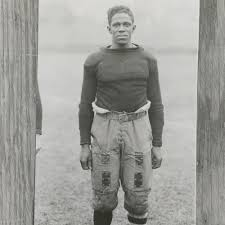
Frederick Douglass "Fritz" Pollard was an American professional football player and coach. In 1921, he became the first African-American head coach in the National Football League. Pollard and Bobby Marshall were the first two African-American players in the NFL in 1920. Football pioneer Walter Camp called Pollard "one of the greatest runners these eyes have ever seen."
Pollard coached Lincoln University's football team in Oxford, Pennsylvania during the 1918 to 1920 seasons and served as athletic director of the school's World War I era Students' Army Training Corps. During 1918–1919, he led the team to a victorious season defeating Howard University's Bisons 13–0 in the annual Thanksgiving classic as well as Hampton University (7–0) on November 9, 1918, and teams of military recruits at Camp Dix (19–0) on November 2, 1918, and Camp Upton (41–0). By the fall of 1920, he had begun to play for Akron, missing key Lincoln losses to Hampton (0–14) and Howard (0–42), much to the consternation of the alumni and administration. Paul Robeson was enlisted by Lincoln's alumni to coach the Thanksgiving 1920 game against Howard.
Pollard criticized Lincoln's administration, saying they had hampered his ability to coach and had refused to provide adequate travel accommodations for the team. "Prior to the Hampton game, the team was compelled to go to Hampton by boat, sleeping on the decks and under portholes," he told a reporter. "No cabins were provided, nor were they given a place to sleep after reaching Hampton. They lost the game through lack of rest." He also blamed the school for not providing the proper equipment. "I, myself, bought and paid $200 out of my pocket for football shoes for the team." He missed the 1920 Howard game, he said, because his Lincoln salary was so low that he was compelled to augment it with pay from Akron.
He played professional football with the Akron Pros, the team he would lead to the APFA championship in 1920. In 1921, he became the co-head coach of the Akron Pros, while still maintaining his roster position as running back. He also played for the Milwaukee Badgers, Hammond Pros, Gilberton Cadamounts, Union Club of Phoenixville and Providence Steam Roller. An article in the October 1, 1921 issue of the Chicago Whip newspaper stated that Pollard served as "assistant coach of the backfield men" of Northwestern University's football team.
Some sources indicate that Pollard also served as co-coach of the Milwaukee Badgers with Budge Garrett for part of the 1922 season.
On November 19, 1922, Pollard and Paul Robeson led the Badgers to victory over the great Jim Thorpe and his Oorang Indians. The final was 13–0 with Robeson scoring both touchdowns in his finest pro football performance.
Fritz also coached the Gilberton Cadamounts, a non-NFL team. In 1923 and 1924, he served as head coach for the Hammond Pros.
Pollard, along with all nine of the African American players in the NFL at the time, were removed from the league at the end of the 1926 season, never to return again. He spent some time organizing all-African American barnstorming teams, including the Chicago Black Hawks in 1928 and the Harlem Brown Bombers in the 1930s.
In the 1930s, Pollard founded his own professional football team, the Brown Bombers. The Depression ended the Brown Bombers' run in 1938, and Pollard went on to other ventures, including a talent agency, tax consulting, and film and music production. He produced Rockin' the Blues in 1956, which included such performers as Connie Carroll, The Harptones, The Five Miller Sisters, Pearl Woods, Linda Hopkins, Elyce Roberts, The Hurricanes, and The Wanderers.
Pollard also published the New York Independent News from 1935 to 1942, purportedly the first African American-owned tabloid in New York City. The war and a rivalry forced it to close. The paper's offices were on 125th Street and at its peak, the paper had a weekly circulation of approximately thirty-five thousand, ranking it among the top most read Black newspapers in the country.
Daniel Constantine Marino Jr. is an American former professional football player who was a quarterback in the National Football League for 17 seasons with the Miami Dolphins and has worked with them since 2014 as a special advisor. He played college football for the Pittsburgh Panthers, earning first-team All-American honors in 1981. Marino was the last quarterback taken in the first round of the famed quarterback class of 1983. He held or currently holds dozens of NFL records associated with the quarterback position, and despite never being on a Super Bowl-winning team, he is recognized among the greatest quarterbacks in American football history.
Best remembered for his quick release and powerful arm, Marino helped the Dolphins become consistent postseason contenders, leading them to the playoffs ten times and one Super Bowl appearance in XIX, although a title victory ultimately eluded him during his career. Marino is considered by many to be one of the greatest players to never win a Super Bowl and has the most career victories of quarterbacks not to win a title at 155.
A nine-time Pro Bowl selection, six-time first (3) or second (3) team All-Pro, and All-AFC six times, Marino was voted NFL Rookie of the Year by Sporting News. The following season in 1984, Marino was the NFL Most Valuable Player (MVP), when he set single-season records of 5,084 passing yards, 48 touchdown passes, nine 300-yard passing games, and four 400-yard passing games. He was voted the 1994 NFL Comeback Player of the Year, and the 1998 NFL Walter Payton Man of the Year. At the time of his retirement, Marino held more than 40 NFL single-season and career passing records (many of which have since been surpassed), including career passing attempts (8,358), completions (4,967), passing yards (61,361), and touchdown passes (420). Marino was the first quarterback in NFL history to reach 5,000 yards passing in a season (1984); 50,000 and 60,000 career passing yards respectively, and also the first quarterback to reach 40-plus touchdown passes in a season (48 in 1984), and 400 career touchdown passes.
Marino was enshrined into the Miami Dolphins Honor Roll immediately after his retirement in 2000, inducted into the College Football Hall of Fame in 2003, inducted into the Pro Football Hall of Fame in 2005 in his first year of eligibility, and is currently one of only three former Miami Dolphins to have his jersey number retired. In 2019, Marino was named to the NFL 100th Anniversary All-Time Team as one of the 10 greatest quarterbacks in NFL history, as determined by a panel of coaches and media members.
Marino's selection status in the 1983 NFL draft plummeted after his weaker senior season at Pitt and rumors of recreational drug use. Five other quarterbacks—Ken O'Brien, Tony Eason, Todd Blackledge, and Hall of Famers Jim Kelly and John Elway—were drafted ahead of him in the first round. Bill Hillgrove, who was with the Marino family on draft day, later recalled that when the New York Jets selected O'Brien, Marino "became visibly ill". (O'Brien, who played for Division II Cal-Davis, was so obscure that Marino later asked his agent Marvin Demoff "Who is Ken O'Brien?")
The Miami Dolphins chose Marino as the 27th pick in the first round. He did not expect to be available for the team to draft, so he never spoke to head coach Don Shula or anyone else from the Dolphins before the coach called after the selection. Opinion was divided on the wisdom of the team's decision; Chris Berman said that Shula was "the best", but Paul Zimmerman was skeptical of the coaching staff's ability to help Marino "overcome the problems he's had". Shula later said that being passed up by so many teams "motivated [Marino] to show everybody else what a mistake that they had made".
Marino was the first draft pick in the history of the United States Football League, selected by the Los Angeles Express. He did not sign with the team, choosing instead to sign with the Dolphins. After starting the season as a backup to incumbent starter David Woodley, Marino was given his first NFL start in Week 6 versus the Buffalo Bills. Marino and Miami lost that game 38–35 in overtime. As a rookie, Marino set several records: he posted a 96.0 passer rating, he was selected to the Pro Bowl as a rookie, he had the lowest percentage of passes intercepted with 2.03, he was the only rookie quarterback to lead a conference in passing, and he had the highest passing completion percentage with 58.45. The Dolphins finished the season with a 12–4 record and advanced to the AFC divisional playoffs, where Marino threw two touchdown passes in his playoff debut. However, he also threw two interceptions as the team lost to the 9–7 Seattle Seahawks, 27–20.
In his second season, Marino broke six NFL full-season passing records, including the records for most touchdown passes (48, surpassed by Peyton Manning in 2004) and most passing yards (5,084, surpassed by Drew Brees in 2011), and was selected as the NFL's Most Valuable Player. Marino led the league in completions, yards, and TD passes and the Dolphins finished with a 14–2 regular-season record, clinching home-field advantage for the playoffs. In the Divisional round, the Dolphins avenged their playoff loss of the previous season to the Seattle Seahawks 31–10 behind Marino's 262 passing yards and 3 touchdowns. The next week the Dolphins defeated the Pittsburgh Steelers in the AFC Championship Game 45–28. In that game, Marino set AFC Championship Game records with 421 passing yards and 4 touchdowns, despite throwing his last pass of the game with 11:07 still remaining on the clock. Both records still stand as of 2024.
In Super Bowl XIX, Marino and the Dolphins faced off against the San Francisco 49ers and Joe Montana in Palo Alto, California. The Dolphins, who had 74 rushing attempts in the previous two weeks, ran the ball only eight times in this game. Marino finished with 29 completions out of 50 attempts for 318 yards, throwing one touchdown pass and two interceptions. The Dolphins lost 38–16 in what was Marino's only Super Bowl appearance.
In 1985, Marino threw for 4,137 yards and 30 touchdowns while leading the Dolphins to the AFC Championship game. On September 29, Marino threw for 390 yards and 3 touchdowns in the Dolphins' 30–26 victory over the Denver Broncos, in the first matchup between Marino and Broncos quarterback John Elway. Then on December 2, Marino threw for 270 yards and 3 touchdowns against the vaunted Chicago Bears defense in a 38–24 victory. The loss was the only one that the Bears experienced that season. Marino again led the league in completions, yards, and touchdown passes and was named first-team All-Pro in 1985.
On September 7, 1986, 8 days shy of his 25th birthday, Marino threw his 100th touchdown pass in a 50–28 loss to San Diego. Marino accomplished that feat in just 44 games- the fastest in NFL history. In the 1986 season, Marino threw for 4,746 yards and 44 touchdowns. Marino became the first QB in NFL history to record three consecutive seasons of 30 or more touchdown passes; 48 in 1984, 30 in 1985, and 44 in 1986. Marino again led the league in completions, yards and touchdown passes (the first and only QB in NFL history to lead in all three categories for three consecutive seasons) and was named 1986 first-team All-Pro.
In 1988, Marino threw for 4,434 yards and 28 touchdowns. As a result of his 4,434 yards passing, Marino became the first QB in NFL history to throw for 4,000 or more yards in four different seasons. Marino had been tied with Dan Fouts for the most 4,000 yard passing seasons with three.
In 1992, Marino again led the Dolphins to the AFC Championship game while passing for 4,116 and 24 touchdowns. His 4,116 passing yards led the entire NFL and marked the fifth time in his NFL career that he led the league in passing yards.
In 1993, Miami was strongly favored at the start of the year to make it back to the AFC championship game and possibly the Super Bowl. However, after throwing a swing pass at a game in Cleveland, Marino, who was untouched on the play, crumpled to the ground in pain with a torn Achilles tendon and was out for the season. Marino later said, "I felt like I got kicked". Backup quarterback Scott Mitchell had an impressive series of starts before suffering an injury of his own. Steve DeBerg started the last 4 games of the season. Mitchell signed a free-agent contract with the Detroit Lions, and Miami signed veteran quarterback Bernie Kosar from the Dallas Cowboys as a backup. Wearing a special shoe on one foot, and having a right calf that was visibly atrophied, Marino was the starting quarterback at the opening of the 1994 season.
In the 1994 season opener, a home game versus the New England Patriots and quarterback Drew Bledsoe, the two quarterbacks put up a combined 894 yards (Marino, 473 yards; Bledsoe, 421 yards) and nine passing touchdowns (Marino, 5; Bledsoe, 4), with Miami winning 39–35. Later in the season, Marino led a comeback win on the road against the New York Jets (28–24), a game famous for Marino's execution of a fake spike for the winning touchdown pass, a play known as "The Clock Play". The Dolphins finished 10–6 that year, and Marino passed for 4,453 yards and was named the NFL's Comeback Player of the Year by the Pro Football Writers Association. After missing the postseason in 1993, Miami came back to the playoffs in 1994. Placing third overall in the AFC, Miami was pitted against the Kansas City Chiefs in what became the final NFL game played by Montana. Marino threw 257 yards and two touchdown passes, contributing to Miami's 27–17 win. The Dolphins reached the AFC Divisional Playoff round, where they competed with the San Diego Chargers. Three touchdown passes by Marino in the first half allowed the Dolphins to lead 21–6, before the Chargers staged a comeback and took the lead toward the end of the fourth quarter. In the final moments of the game, Marino tried to set up a good position for a field goal, but with little time left at the Chargers' 30-yard line, Pete Stoyanovich was forced to attempt a 48-yard field goal. Stoyanovich missed, ending the game with a 22–21 loss for Miami.
Marino started in 14 out of 16 games in the 1995 season. He suffered a hip injury in week 6 against the Indianapolis Colts and was replaced by Bernie Kosar in the following two games. Throughout the regular season, Marino threw 3,668 yards and 24 touchdowns. Despite falling to 9–7 and to third place in the AFC East, the Dolphins again advanced to the playoffs because they placed sixth in the AFC. In the wildcard round against the Buffalo Bills, Miami dominated in passing – with Marino passing 432 yards – while Buffalo was far ahead of Miami for rushing yards (341 yards). In terms of scoring, Buffalo held a wide lead throughout the game. The Dolphins remained scoreless until the fourth quarter, when they scored 22 points, which included two touchdown passes from Marino. However, Miami fell well short of a comeback and lost 37–22.
On November 10, 1996, against Indianapolis, Marino became the first QB in NFL History to throw for 50,000 career passing yards.
On November 29, 1998, against New Orleans, Marino threw for three touchdowns. His second touchdown pass, a 7 yarder to wide receiver OJ McDuffie, gave him 400 for his career as Marino became the first QB in NFL History to reach 400 career TD passes.
The Dolphins opened the 1999 season on September 13 at the defending Super Bowl champions Denver Broncos on Monday Night Football. Marino threw for 215 yards and two touchdowns in the Dolphins' 38–21 victory. For that performance, Marino earned AFC Offensive Player of the Week honors. Marino earned that honor again on October 10 as he threw for 393 yards and two touchdowns in a thrilling 34–31 comeback victory over the Indianapolis Colts. On October 17 against the New England Patriots, Marino became the first quarterback in NFL history to throw for 60,000 career passing yards. He missed the next five games to a shoulder injury before returning in Week 12. In the 1999 season, he appeared in 11 games and finished with 2,448 passing yards, 12 touchdowns, and 17 interceptions.
Marino's final win was his first playoff road win and his 36th comeback win, as the Dolphins defeated the Seattle Seahawks 20–17 in the Wild Card Round on January 9, 2000, in the final football game ever in the Seattle Kingdome. In the Divisional Round (January 16), also on the road, Marino and the Dolphins lost 62–7 to the Jacksonville Jaguars. The Dolphins' 55-point margin of loss was the worst in the AFC playoffs' history. Marino was replaced by backup Damon Huard after playing one series in the second half. However, he did end the first half on a high note, leading the Dolphins on an 80-yard scoring drive and throwing a 20-yard touchdown pass to receiver Oronde Gadsden with one second remaining in the half. The Jacksonville game marked the end of Jimmy Johnson's coaching career; Johnson announced his retirement the next day.
Before the 2000 season, Marino decided to retire, after declining offers from Minnesota, Tampa Bay, and his hometown of Pittsburgh when the Dolphins declined his option on his contract. Marino later admitted that he seriously considered the offer from the Vikings, but that he turned it down not because of his arm, but because he was not sure that his legs could take another season. He also appreciated the fact that unlike many of his contemporaries, he got to play his entire career with one team.
During Marino's career, the Dolphins were perennial playoff contenders, reaching the postseason in 10 of his 17 seasons. He was selected to play in nine Pro Bowls (1983–1987, 1991, 1992, 1994, 1995), seven times as a starter, but due to injuries he only played in two of the games (1984, 1992). He was named first- or second-team All-Pro six times and earned All-AFC honors six times.[54] Marino won all three major individual awards: NFL MVP (1984); NFL Comeback Player of the Year (1994); and NFL Man of the Year (1998), which recognizes charitable work off the field.
In 1999, Marino was ranked 27th on The Sporting News list of the 100 greatest football players, making him the highest-ranking Dolphins player. In 2010, he was ranked number 25 on the NFL's Top 100 Greatest Players list. Marino was known for his quick release, and despite the fact that he was not skilled at scrambling, Marino possessed a natural awareness in the pocket, often sliding a step or two to avoid the pass rush. As of the conclusion of the 2020 NFL regular season, Marino's 155 wins rank seventh among NFL quarterbacks, behind Tom Brady, Peyton Manning, Brett Favre, Drew Brees, Ben Roethlisberger, and John Elway. Marino is also the winningest quarterback without a Super Bowl victory.
On Sunday, September 17, 2000, at halftime of the Dolphins-Baltimore Ravens game at Pro Player Stadium, Dan Marino's jersey number of 13 was retired. The only other Dolphins jersey number retired at the time was Bob Griese's #12. Since then #39, Larry Csonka, has been retired as well. Marino joined the Dolphins Honor Roll the same day. In a year of accolades from the franchise he led for many years, the Dolphins also installed a life-size bronze statue of Marino at Pro Player Stadium (now Hard Rock Stadium) and renamed Stadium Street to Dan Marino Boulevard.
In 2003, Marino was honored for his outstanding NCAA career at Pitt with an induction into the College Football Hall of Fame. In early 2004, Marino briefly returned to the Miami Dolphins as Senior Vice President of Football Operations, but resigned from the newly created position only three weeks later, saying that the role was not in the best interest of either his family or the Dolphin organization. Marino was elected to the Pro Football Hall of Fame in 2005, one of only four Dolphins to be elected in their first year of eligibility (Jim Langer, Paul Warfield, Jason Taylor). He was inducted into the Hall of Fame on August 7, 2005, and was introduced by his oldest son, Daniel. During his induction speech, Dan threw "one last pass" to former teammate Mark Clayton, who was sitting in the audience.
Marino was an analyst for CBS's Sunday pregame show The NFL Today from 2002 to 2013. On February 18, 2014, it was announced that Marino, along with Shannon Sharpe were being relieved of their duties as on-air commentators on The NFL Today and were being replaced by Tony Gonzalez and Bart Scott. He was formerly a studio analyst on HBO's Inside the NFL, from 2002 to 2007.
On August 24, 2014, Marino announced he would return to the Dolphins as a special adviser.
Current Miami Dolphins quarterback Tua Tagovailoa has also revealed that Marino regularly attends Dolphins quarterback meetings to give his opinion and input on how to be a better quarterback.
In 1997, Marino became involved in a marketing role with Team Cheever of the Indy Racing League through FirstPlus Mortgage, the sponsor of the car. In 1998, Marino co-owned a NASCAR Winston Cup Series racing team with driver Bill Elliott, creating Elliott-Marino Motorsports. The team's car number was #13, Marino's uniform number, and had primary sponsorship from FirstPlus Mortgage, whose company colors, coincidentally, were turquoise, orange, and white – similar to aqua and coral, the team colors of the Miami Dolphins. The team chose rookie driver Jerry Nadeau to pilot the car at the start of the season; he was later released and the team went through a rotation of drivers. The team failed to qualify for several races, but did post a top-5 finish at Phoenix International Raceway late in the season with Ted Musgrave driving. The team only lasted the 1998 season and closed afterward.
The Dan Marino Foundation was established in 1992 by Marino and his wife, Claire, after their son, Michael, was diagnosed with autism. The foundation has distributed over $22 million to research, services, and treatment programs serving children with neurodevelopment disabilities. The Dan Marino Center, which opened in 1995 along with the Miami Children's Hospital, is an integrated neurodevelopmental center specializing in the diagnosis and treatment of children at risk for developmental and psychological problems. The center saw more than 48,000 children last year alone. Marino has teamed with other celebrities to raise awareness about autistic spectrum disorders, including fellow NFL quarterback Doug Flutie, whose son also has an autism diagnosis.
On November 7, 2005, the National Basketball Association's Miami Heat honored Marino's charitable works and recognized his service to South Florida with a halftime tribute, as well as a large donation to the Marino Foundation. Though a Heat jersey with his name and #13 was unveiled, this did not constitute retirement of his number by the Heat, and is currently worn by Heat big man Bam Adebayo.
On March 23, 2010, The Dan Marino Foundation held its first "Walk about Autism". Over 6000 walkers participated, as well as 420 volunteers provided by the Miami Dolphins Special Teams.
The money raised benefited several funds including the Autism Societies of Miami-Dade and Broward; the University of Miami-Nova Southeastern University Center for Autism and Related Disabilities; the Florida Atlantic University Center for Autism and Related Disabilities; and the Dan Marino Foundation.
Marino acted in the 1994 comedy Ace Ventura: Pet Detective alongside Jim Carrey and Courteney Cox where he played himself. Marino made a cameo appearance in the Adam Sandler film Little Nicky wherein he asked Satan for a Super Bowl ring. In 1999, he voiced himself in a guest-starring role in The Simpsons Season ten episode "Sunday, Cruddy Sunday". Marino also had cameo roles in Holy Man and Bad Boys II. He worked as a project consultant on Oliver Stone's Any Given Sunday, and some observers noticed a resemblance between him and Dennis Quaid's character, Jack Rooney. Marino's actual house was used as the fictional quarterback's house in the film.
In 1995, Hootie and the Blowfish featured Marino in their music video for their single "Only Wanna Be with You".
Musician MJ Lenderman has a song titled "Dan Marino" on his 2022 album Boat Songs.
Marino was featured in advertisement campaigns for Hooters, NutriSystem weight loss programs, Maroone, Papa John's, Nutrasource.com, and Empi Select (a TENS device). Previously, Marino endorsed Isotoner gloves and FirstPlus Mortgage against whom he later filed suit due to contracts related to his racing team.
In April 2012, Marino became the AARP's "Men's Life Ambassador", through which he planned to share his point of view and expertise on a variety of men's interests, including health, fitness, sports, lifestyle, entrepreneurship, aging, and community service, primarily through the website.
Marino was the cover athlete on Front Page Sports: Football Pro '98. A video game featuring Marino's likeness and sponsorship, similar to John Madden Football, was announced for the Sega Genesis at CES 1993. The game, referred to as both Dan Marino Football and Dan Marino's Touchdown Football, never released.
In 1985, Marino married Claire D. Veazey of Mt. Lebanon, Pennsylvania, at St. Regis Catholic Church, across the street from the home of Marino's parents. The couple have six children together.
Marino was awarded an honorary doctorate degree in broadcast journalism by his alma mater, the University of Pittsburgh, in 2005. He delivered the commencement speech at the university's 2008 graduation ceremony.
In January 2013, Marino admitted to fathering a child with CBS employee Donna Savattere in 2005, a fact he only shared with his wife. He previously paid Savattere several million dollars to keep the news of their daughter from the public.
Bruton, Michelle (August 28, 2017). "The Top 10 Quarterbacks of All Time". Bleacher Report. Archived from the original on August 28, 2017. Retrieved August 18, 2022.
Harrison, Elliot (July 2, 2019). "Top 25 quarterbacks of all time: Patriots' Tom Brady leads list". NFL.com. Archived from the original on August 13, 2022. Retrieved August 18, 2022.
Teets, Sam (June 23, 2020). "The Greatest NFL Quarterbacks Of All-Time, Ranked 20-1". ClutchPoints. Archived from the original on February 20, 2022. Retrieved August 18, 2022.
Clayton, John (January 30, 2017). "Clayton's GOAT quarterback ranking". ESPN.com. Archived from the original on October 23, 2021. Retrieved August 18, 2022.
Healy, John (January 29, 2022). "From Elway to Brady, ranking the 10 greatest NFL quarterbacks of all time". Audacy. Archived from the original on August 18, 2022. Retrieved August 18, 2022.
Arthur, Kenneth (September 7, 2017). "Best active and retired NFL players without a Super Bowl ring". sportsonearth.com. MLB Advanced Media, LP. Archived from the original on March 14, 2019. Retrieved January 10, 2019.
Pollin, Tom (June 30, 2017). "20 Best Players to Never Win a Super Bowl". foxsports.com. Fox Sports Interactive Media, LLC. Retrieved January 10, 2019.
Santorsa, Tony. "50 Greatest Quarterbacks Never to Win a Super Bowl". Bleacher Report.
Gaines, Cork. "The Best Quarterbacks To Never Win A Super Bowl". Business Insider.
"Dan Marino". pro-football-reference.com. Retrieved March 6, 2026.
"NFL Career Passer Rating Leaders Through 1999". pro-football-reference.com. Retrieved June 30, 2025.
"NFL 100". NFL.com.
Powell, Albrecht. "About.com Guide". Archived from the original on January 13, 2008. Retrieved May 5, 2010.
"Marino, Daniel Constantine, Jr. ("Dan") – Scribner Encyclopedia of American Lives, Thematic Series: Sports Figures". November 5, 2013. Archived from the original on November 5, 2013. Retrieved May 9, 2020.
Grupp, John (February 6, 2005). "Marino has come a long way from Parkview Avenue". Pittsburgh Tribune-Review. Archived from the original on March 3, 2010. Retrieved May 5, 2010.
Hecht, Steve (June 23, 1979). "Pitt hurls wrench in Marino's talks with Kansas City". Pittsburgh Post-Gazette. p. 10.
"Video". CNN. February 17, 1997. Archived from the original on May 9, 2010.
"College Days: Russ Grimm". Pro Football Hall of Fame. October 3, 2013. Retrieved September 3, 2025.
"Face to Face with Dan Marino". Electronic Gaming Monthly. No. 86. Ziff Davis. September 1996. p. 134.
"1981 College Football Leaders". College Football at Sports-Reference.com. Retrieved November 20, 2025.
Baker, Chris (January 5, 1983). "... And Now to the No. 1 Task of Signing Marino: Express Make Pitt Quarterback Top Selection; UCLA's Ramsey Is Also on L.A. List". Los Angeles Times. p. D3.
"Dan Marino CFB Stats". Sports-reference.com. Sports Reference LLC. Archived from the original on November 12, 2020. Retrieved February 14, 2021.
"Elway to Marino". 30 for 30. Season 2. April 23, 2013. ESPN.
Schultz, Jeff (April 19, 2010). "Jonathan Dwyer will overcome bad pre-draft rumor | Jeff Schultz". Blogs.ajc.com. Archived from the original on July 16, 2010. Retrieved September 28, 2010.
Florio, Mike (May 5, 2020). "Dan Marino didn't meet Don Shula before being drafted by Dolphins". ProFootballTalk. Retrieved May 6, 2020.
"Dan Marino Page". Retrieved December 21, 2011.
"Divisional Round - Seattle Seahawks at Miami Dolphins - December 31st, 1983". Pro Football Reference. Retrieved February 28, 2018.
"Dan Marino: Biography". Pro Football Hall of Fame. Archived from the original on August 6, 2011. Retrieved February 10, 2015.
"Divisional Round - Seattle Seahawks at Miami Dolphins - December 29th, 1984". Pro Football Reference. Retrieved February 28, 2018.
"AFC Championship - Pittsburgh Steelers at Miami Dolphins - January 6th, 1985". Pro Football Reference. Retrieved February 28, 2018.
"Super Bowl XIX - San Francisco 49ers vs. Miami Dolphins - January 20th, 1985". Pro Football Reference. Retrieved February 28, 2018.
"1985 Miami Dolphins". pro-football-reference.com. Retrieved February 10, 2015.
"Miami Dolphins at Denver Broncos - September 29th, 1985". Pro Football Reference. Retrieved February 28, 2018.
"Chicago Bears at Miami Dolphins - December 2nd, 1985". Pro Football Reference. Retrieved February 28, 2018.
"Dan Marino". Miami Dolphins. Archived from the original on December 3, 2000. Retrieved February 10, 2015.
"Dan Marino: Highlights". Pro Football Hall of Fame. Archived from the original on February 11, 2015. Retrieved February 10, 2015.
"Dan Marino Career Stats". National Football League. Retrieved January 28, 2016.
"The Deseret News - Google News Archive Search". news.google.com.
"Miami Dolphins Franchise Encyclopedia". Pro-Football-Reference.com. 2017. Retrieved April 5, 2017.
"Wild Card - Kansas City Chiefs at Miami Dolphins - December 31st, 1994". Pro-Football-Reference.com. Retrieved April 5, 2017.
Steve Wilstein (April 19, 1995). "Golden Boy says goodbye". The Gettysburg Times. San Francisco, California. Associated Press. p. 16. Retrieved April 5, 2017 – via Newspapers.com. Open access icon
"Divisional Round - Miami Dolphins at San Diego Chargers - January 8th, 1995". Pro-Football-Reference.com. Retrieved April 5, 2017.
"Miami Dolphins at Denver Broncos - September 13th, 1999". Pro Football Reference. Retrieved June 14, 2024.
"1999 NFL Week 1 Leaders & Scores". Pro Football Reference. Retrieved June 14, 2024.
"Miami Dolphins at New England Patriots - October 17th, 1999". Pro Football Reference. Retrieved June 14, 2024.
"1999 NFL Week 1 Leaders & Scores". Pro Football Reference. Retrieved June 14, 2024.
Freeman, Mike (October 18, 1999). "Huard, Not Marino, Answers Challenge". The New York Times. Retrieved June 14, 2024.
"Shoulder injury sidelines Marino". ESPN.com. Associated Press. October 17, 1999. Retrieved June 14, 2024.
"Dan Marino 1999 Game Log". Pro Football Reference. Retrieved June 14, 2024.
"Wild Card - Miami Dolphins at Seattle Seahawks - January 9th, 2000". Pro Football Reference. Retrieved June 14, 2024.
"Divisional Round - Miami Dolphins at Jacksonville Jaguars - January 15th, 2000". Pro Football Reference. Retrieved June 14, 2024.
"Johnson: 'I've had my time in the sun'". ESPN.com. Associated Press. January 17, 2000. Retrieved June 14, 2024.
"Dan Marino Announces Retirement". CNN. March 13, 2000. Archived from the original on August 8, 2003. Retrieved July 14, 2007.
"Marino retires after 17 seasons". ESPN.com. Associated Press. March 15, 2000. Retrieved August 11, 2023.
"Marino has offer on table from Vikings". ESPN.com. Associated Press. Retrieved June 14, 2024.
King, Peter (March 20, 2000). "Letting Go". Sports Illustrated Vault. Retrieved June 14, 2024.
"Dan Marino". Pro Football Hall of Fame. Retrieved June 14, 2024.
"TSN 100 Greatest". sportingnews.com. Archived from the original on November 5, 2005. Retrieved July 14, 2007.
"The Top 100: NFL's Greatest Players" Archived July 30, 2013, at the Wayback Machine NFL.com
Sterngass, Jon (2008). Dan Marino (Football Superstars). Chelsea House Publications. p. 62. ISBN 978-0-7910-9606-2.
"Peyton Manning – Quarterback" Colts.com Archived May 11, 2011, at the Wayback Machine
"Dan Marino Career Stats". nfl.com. Retrieved February 8, 2025.
"Career Highlights" Archived June 6, 2012, at the Wayback Machine Pro Football Hall of Fame
"2010 NFL Record & Fact Book: All-Time Individual Records" Archived August 20, 2010, at the Wayback Machine 2010 NFL Record & Fact Book, p. 545-549.
"Player Game Finder Query Results - Pro-Football-Reference.com". Pro Football Reference.
"Game Notes". Foxnews.com. December 10, 2012. Retrieved February 18, 2014.
"Favre, Jets hand Titans first loss of the season". NFL.com. November 23, 2008. Retrieved September 3, 2025.
"NFL records that could be broken in 2021 as Russell Wilson, Patrick Mahomes chase significant milestones". September 7, 2021.
Justin Kubatko (August 6, 2009). "Quarterbacks and fourth quarter comebacks, Part 1". Pro-football-reference.com. Archived from the original on June 22, 2018. Retrieved February 18, 2014.
Kaberon, Eli (October 8, 2011). "Brees streaking up all-time list for touchdown passes". Pro Football Weekly. Archived from the original on February 26, 2014. Retrieved February 18, 2014.
@NFL345 (November 21, 2021). "In today's @Vikings victory, @KirkCousins8 passed for 341 yards and 3 TDs. Cousins has 25 career games with 300+ passing yards and 3+ TD passes, surpassing Aaron Rodgers for the 2nd-most ever by a QB in his 1st 10 seasons. Only @ProFootballHOF Dan Marino (26 games) has more" (Tweet) – via Twitter.
Cugno, Mike; Akbari, Cherine (August 24, 2014). "Dan Marino Returning to Miami Dolphins as Special Advisor". NBC 6 South Florida. Retrieved June 14, 2024.
"Marino's No. 13 To Be Retired". CBS News. Associated Press. April 28, 2000. Retrieved June 14, 2024.
Nogle, Kevin (February 10, 2023). "Dolphins retired jersey numbers: Time to formalize Jason Taylor and Zach Thomas". The Phinsider. Retrieved June 14, 2024.
Bouchette, Ed (February 6, 2005). "Marino Interview". post-gazette.com. Retrieved July 14, 2007.
Davis, Nate (February 18, 2014). "CBS hires Tony Gonzalez, parts with two Hall-of-Fame analysts". USA Today. Retrieved February 18, 2014.
"Dan Marino accepts job with Dolphins". ESPN.com. Associated Press. August 24, 2014. Retrieved August 24, 2014.
Papke, Grey (August 25, 2021). "Hall of Famer Dan Marino helping out in Dolphins QB meetings". Larry Brown Sports. Retrieved June 14, 2024.
Pockrass, Bob (January 31, 2014). "NFL and NASCAR: Former NFL stars who dabbled in stock-car racing". Sporting News. Archived from the original on May 22, 2013. Retrieved March 2, 2014.
"Dan the Man". nba.com. Retrieved July 14, 2007.
"Baltimore City Paper: Any Given Sunday | Movie Review". Citypaper.com. Archived from the original on June 3, 2012. Retrieved September 28, 2010.
"Any Given Sunday (1999) - Trivia". IMDb. Retrieved August 11, 2023.
Laffer, Lauren (February 25, 2021). "People are Just Now Realizing Darius Rucker Sings about the Miami Dolphins in 'Only Want to Be with You'". Sounds Like Nashville. Retrieved August 11, 2023.
"Boat Songs, by MJ Lenderman".
"Nutrisystem – Official Site -Diet Plans, Weight Loss Programs, Diet Programs, Lose Weight". Nutrisystem.com. April 6, 2010. Archived from the original on May 13, 2008. Retrieved September 28, 2010.
"Empi Products". Itookcontrolofpain.com. Archived from the original on December 26, 2008. Retrieved September 28, 2010.
Cawley, Rusty; Webb, Cynthia (September 3, 1999). "Race team sues FirstPlus". Dallas Business Journal. Retrieved September 28, 2010.
Martin, Jen (April 23, 2012). "Football Legend Dan Marino Passes His Knowledge to Members as AARP's New Ambassador". AARP. Archived from the original on April 26, 2012. Retrieved January 3, 2022.
"CES Show - News: New Games '93 - Megadrive". Mean Machines Sega. No. 10. EMAP. August 1993. pp. 13–26.
Salvador, Phil (December 15, 2025). "The Secrets of Sega Channel: VGHF recovers over 100 Sega Channel ROMs (and more)". Video Game History Foundation. Archived from the original on December 17, 2025. Retrieved December 17, 2025.
"Miami QB Marino takes bride". The Oregonian. January 31, 1985. p. E7.
"Backed by local celebrities, Yinzer Dogs set to open first brick-and-mortar location in Cranberry". June 12, 2025.
"Marino Tells Graduates to "Go After Your Passion," "Nurture Your Relationships," "Touch Someone's Life in a Positive Way"". Pitt.edu. April 27, 2008. Retrieved June 14, 2024.
Mohr, Ian (January 31, 2013). "Exclusive: NFL legend Dan Marino had a love child with CBS employee in 2005". New York Post. Retrieved January 31, 2013.
Benjamin Friedman was an American football player and coach, and athletic administrator.
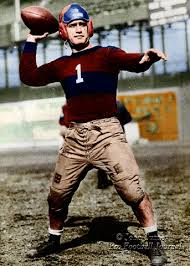
A native of Cleveland, Ohio, Friedman played college football as a halfback and quarterback for the University of Michigan Wolverines from 1924 to 1926. Friedman played in the backfield on both offense and defense, handled kicking and return duties, and was known for his passing game. He was a consensus first-team All-American in both 1925 and 1926, and won the Chicago Tribune Silver Football trophy as the most valuable player in the Big Ten Conference in 1926.
Friedman also played eight seasons in the National Football League for the Cleveland Bulldogs (1927), Detroit Wolverines (1928), New York Giants (1929–1931), and Brooklyn Dodgers (1932–1934). He was the leading passer of his era in the NFL and is credited with revolutionizing the game with his passing prowess. He led the league in passing for four consecutive years from 1927 to 1930, and was selected as the first-team All-NFL quarterback in each of those years. He also served as the head coach of the Giants for the last 2 games of the 1930 season, both were victories. Then he was the head coach of the Dodgers during the 1932 season.
Friedman later served as the head football coach at City College of New York from 1934 to 1941, and at Brandeis University from 1950 to 1959. He was also the first athletic director at Brandeis, holding the position from 1949 to 1963. During World War II, he was a lieutenant in the United States Navy, serving as the deck officer aboard the aircraft carrier USS Shangri-La in the Pacific theater. He was part of the inaugural class of inductees into the College Football Hall of Fame in 1951, and was posthumously inducted into the Pro Football Hall of Fame in 2005.
In August 1927, Friedman announced that he would play professional football for the Cleveland Bulldogs in the National Football League. During the 1927 season, Friedman started all 13 games at quarterback and led Cleveland to an 8–4–1 record. Cleveland had the top scoring offense in the league with an average of 16.1 points per game. In his first NFL game, he threw a 50-yard touchdown pass to Al Bloodgood. He led the NFL during the 1927 with 12 passing touchdowns and 1,721 passing yards; his closest competitors totaled seven passing touchdowns and 1,362 passing yards. He was selected as a first-team All-NFL player by both the Chicago Tribune and the Green Bay Press Gazette.
In 1928, the Cleveland NFL franchise moved to Detroit and became known as the Detroit Wolverines. Friedman started all 10 games for the Wolverines and led the club to a 7–2–1 record. With Friedman at the helm, Detroit also had the top-scoring offense in the league with an average of 18.9 points scored per game. For the second straight season, he led the NFL with 10 passing touchdowns (double the next highest total) and 1,120 yards, and was again selected as a first-team All-NFL player by both the Chicago Tribune and the Green Bay Press Gazette. Friedman also led the NFL in rushing touchdowns in 1928, making him the only player in NFL history to lead the league in both passing and rushing touchdowns in the same season.
In July 1929, Friedman signed with the New York Giants. In his first year in New York, Friedman appeared in all 15 games and led the 1929 Giants to a 13–1–1 record, second best in the NFL. The Giants also had the top scoring offense in the league with an average of 20.8 points per game. Friedman led the NFL with 985 passing yards, and his 20 touchdown passes set an NFL single season record that stood until 1942. After the final game of the 1929 season, one sports writer noted: "The uncanny field generalship of Friedman, combined with his bullet passes, was a big factor in the Giants' thirteenth and last victory of the season."
In 1930, Friedman had another strong season, appearing in 15 games for the Giants and helping the team to a 13–4 record. The Giants again finished in second place in the NFL and had the top scoring offense in the league with 18.1 points scored per game. Friedman led the NFL with 922 passing yards and 10 touchdown passes in 1930. For the fourth consecutive season, Friedman was selected as a first-team All-NFL player.
Friedman's passing proficiency was especially noteworthy considering that the football used at the time was rounder and more difficult to throw. Friedman called plays at the line of scrimmage and threw on first and second down, when most teams waited until third down. "Benny revolutionized football. He forced the defenses out of the dark ages." George Halas later said.
In February 1931, Friedman announced that he intended to retire from professional football. He was hired as an assistant coach for the Yale Bulldogs football team. On October 26, 1931, Friedman signed a contract to return to the Giants for the remainder of the season. Since the Giants' practices were held in the morning, Friedman indicated that his duties with the Giants would not conflict with his coaching duties at Yale. Friedman appeared in nine games for the 1931 Giants.
In March 1932, Friedman signed as player, manager, and coach for the Brooklyn Dodgers. The Dodgers compiled a 3–9 record in 1932.
Friedman signed to return to the Dodgers in September 1933, though he did not serve as the head coach in 1933. He started five of ten games for the 1933 Dodgers. His average of 84.9 passing yards per game led the NFL for the 1933 season.
In 1934, Friedman appeared in only one NFL game.
In his eight seasons in the NFL, statistics are incomplete, but he appeared in 81 games, compiled at least 5,326 passing yards, and had 66 touchdown passes and 51 passes intercepted. He was the NFL's career leader in passing yardage until Sammy Baugh's seventh NFL season in 1947. Friedman also totaled over 1,000 yards rushing and over 400 yards on punt returns. At the time of his retirement, Friedman also held the NFL record with 66 career touchdown passes.
In February 1934, Friedman was hired as the football coach at City College of New York. He remained the coach at City College through the 1941 season, stepping down in 1942 for military service. Friedman's City College teams compiled a composite record of 27–31–4.
In the summer of 1942, Friedman enlisted in the United States Navy with the rank of lieutenant. He was named an assistant football coach at the Great Lakes Naval Training Station in North Chicago, Illinois. He later served as the deck officer aboard the aircraft carrier USS Shangri-La in the Pacific Ocean theater of World War II.
After being discharged, he went into the automobile sales business. He operated a Jeep dealership in Detroit.
In June 1949, Friedman was hired as the athletic director at Brandeis University, a university founded in 1948 at Waltham, Massachusetts. He was also the school's first coach of the Brandeis football team when it began play in 1950. He remained the head football coach at Brandeis through the 1959 season. Despite the limited enrollment, the first years of the football program were incredibly successful winning their first game against the prestigious Harvard freshman team. In the following years Friedman's Judges posted a winning record in their first varsity season as well as going 6–1 in 1957, the team's best record. Friedman's run as head coach of the Judges was filled with years of struggles to attract high end talent. Additionally, players at Brandeis were required to maintain certain academic standards that made it challenging for Friedman to recruit. Despite this, in 10 years as head coach, Friedman's Brandeis football teams compiled a winning record of 38–35–4.
In 1960, Brandeis discontinued its football program, noting that "the per capita cost of fielding a varsity football team is inordinately high in relation to other varsity and intramural sports." Despite the end of the football program, Friedman remained as the athletic director at Brandeis until April 1963 when he resigned his post.
When the College Football Hall of Fame was established in 1951, Friedman was part of the inaugural group of 32 players and 21 coaches to be inducted.
Friedman also received acclaim for his professional football career. Sports writer Paul Gallico called Friedman "the greatest football player in the world." Wellington Mara, the owner of the New York Giants, said of Friedman, "He was the Johnny Unitas of his day. He was the best of his time." George Halas gave Friedman credit for revolutionizing the game with his passing and wrote an article in 1967 titled "Halas Calls Friedman Pioneer Passer – Rest Came By Design."
However, when the Pro Football Hall of Fame was established in 1963, Friedman was overlooked. As years passed, numerous quarterbacks were inducted, including Sammy Baugh (1963), Dutch Clark (1963), Jimmy Conzelman (1964), Paddy Driscoll (1965), Otto Graham (1965), Sid Luckman (1965), Bob Waterfield (1965), Arnie Herber (1966), Bobby Layne (1967), Y. A. Tittle (1971), Norm Van Brocklin (1971), and Ace Parker (1972). Friedman's frustration grew as he continued to be overlooked. In February 1976, more than 40 years after his NFL career had ended, he wrote a letter to The New York Times pleading his case. It was not until 2005, 23 years after his death, that Friedman was finally inducted into the Pro Football Hall of Fame. A group of 40 to 50 players who played for him at Brandeis printed brochures and lobbied for his induction. He was then nominated by the Hall's veterans committee and received the requisite votes by a 39-member panel of selectors.
Friedman was married in February 1931 to Shirley Immerman, a resident of Brooklyn. The wedding was held at a Long Island country club with Guy Lombardo and his orchestra providing the entertainment. They were married for more than 50 years.
In 1949, Friedman became Brandeis University's first athletic director. He also served as head football coach until the school dropped the program. He went on sabbatical in September 1962 and resigned the following April, citing business pressures and the growth of his boys' quarterback school at Camp Kohut in Oxford, Maine. He sold the camp in 1969.
In his later years, Friedman suffered from multiple health problems. He battled and beat cancer, underwent back surgery, and suffered from heart disease and diabetes. In April 1979, Friedman developed a diffused clot of arteries in his left leg that resulted in gangrene. He underwent a partial amputation of his left leg below the knee.
In November 1982, he was found dead in his apartment in New York City as the result of a self-inflicted gunshot wound. He left a note indicating that he was "severely depressed." Friedman was survived by his wife, Shirley, a brother, and a sister.
Professional wrestler Maxwell Jacob Friedman claims to be a relative of Friedman.
"Benny Friedman". Pro-Football-Reference.com. Sports Reference LLC. Retrieved October 5, 2016.
Jewish Sports Stars: Athletic Heroes Past and Present - David J. Goldman - Google Books
Murray Greenberg, Passing Game: Benny Friedman and the Transformation of Football. New York: Public Affairs, 2008; p. 6.
Friedman's mother was referred to as Mayme in the 1910 US Census and as Mamy in the 1930 US Census.
The Scribner Encyclopedia of American Lives: 1981–1985 - Kenneth T. Jackson - Google Books
Whalen, Jim; Staph, C.C. (1986). "The Facts About Friedman" (PDF). The Coffin Corner. Pro Football Researchers.
1910 US Census entry for Louis Friedman and family. Census Place: Cleveland Ward 20, Cuyahoga, Ohio; Roll: T624_1171; Page: 8A; Enumeration District: 0302; FHL microfilm: 1375184. Ancestry.com. 1910 United States Federal Census [database on-line].
Grayson, Harry (December 11, 1943). "Friedman Overcame Discouragement To Be Greatest Player of His Period". The News-Herald (NEA wire story). p. 7 – via Newspapers.com. Open access icon
Greenberg, Passing Game, p. 11.
John J. Grabowski (1992). Sports in Cleveland: An Illustrated History. Indiana University Press. p. 55. ISBN 0253207479.
"University of Michigan Football Rosters". Bentley Historical Library. Retrieved October 5, 2016.
"100–to–1 Shot a Derby Favorite". The News-Herald. December 29, 1924. p. 8 – via Newspapers.com. Open access icon
"Michigan Defeats Wisconsin, 21 to 0: Friedman's Passing and Running Lead to Three Touchdowns by Wolverines; 45,000 Witness Contest". The New York Times. October 26, 1924.
"Michigan Crew Has Easy Time in Home Battle: Northwestern Falls to 27–0 Score – Rockwell Scores Three Touchdowns". Youngstown Vindicator (AP story). November 9, 1924. p. 4C.
Evans, Billy (November 25, 1924). "Friedman Is Michigan's Big Find". The News-Palladium (Benton Harbor, Mich.). p. 5 – via Newspapers.com. Open access icon
"Yost Calls 1925 Eleven Greatest: Does Not Even Except Wonderful Teams of 1901 and 1902; Rolled Up Grand 227 Point Total; Wolverine Mentor Says He's Proud to Have Coached Boys". The Hartford Courant. November 29, 1925. p. B2.
"30,000 See Michigan Take Opener, 39–0: Friedman Stars as Wolverines Beat Michigan State Before Record Crowd". The New York Times. October 4, 1925.
"YOSTMEN STRIKE THROUGH AIR TO NIP STATE, 39–0: EASY FOR MICHIGAN". Chicago Daily Tribune. October 4, 1925. p. A3.
"Michigan Crushes Indiana by 63–0: Wins Easily Behind Brilliant Work of Friedman, Who Is Star of Game". The New York Times. October 11, 1925.
"Michigan Eleven Leads in Big Ten: Decisive Victory Over Wisconsin Puts Yost's Team in Van – Chicago Has Great Defense". The New York Times (AP story). October 19, 1925.
Vidmer, Richards (November 1, 1925). "Michigan Crushes Navy Eleven, 54–0: Yost's Great Wolverine Machine Rolls Relentlessly Over the Middies Eight Times; Excels in Every Phase; Powerful Line Blocks Navy While Friedman and Other Backs Execute Plays at Will". The New York Times.
Hackleman, Jack (December 5, 1956). "1925 Version of Michigan Eleven Called Greatest Work of Pigskin Artist Yost". The Commerce Daily Journal.
Crusinberry, James (November 1, 1925). "Michigan Sinks Navy Gridiron Craft, 54 to 0: Baffling Passes Rout Midshipmen; Near Point a Minute". Chicago Daily Tribune. p. A1.
Crusinberry, James (November 3, 1925). "Brains Replace Beef on Winning Football Teams: Michigan Victory Proves Value of Wits". Chicago Daily Tribune. p. 25. Retrieved July 5, 2017.
Crusinberry, James (November 22, 1925). "Michigan Ruins Gophers' Title Hopes, 35 to 0: Victory Gives Them Claim on Title". Chicago Daily Tribune. p. A1.
"NCAA Football's Finest" (PDF). NCAA. 2002. Retrieved October 5, 2016.
"All-America Roster" (PDF). NCAA. Archived from the original (PDF) on December 1, 2007. Retrieved January 14, 2008.
Will Perry, The Wolverines, pp. 109–112 (Chapter 18 concerning the 1925 and 1926 seasons is titled "The Benny-To-Bennie Show.")
"What's a Michigan Man?". Maize and Blue Football Fans. January 5, 2011.
Parker, Dick. "Friedman to Oosterbaan" (PDF). LA84 Foundation. Archived from the original (PDF) on June 13, 2010. Retrieved October 6, 2016.
Jordan Krumey (March 22, 2009). "Benny To Bennie: The Connection That Changed College Football". Bleacher Report.
Greenberg, Murray (2008). Passing Game: Benny Friedman and the Transformation of Football. Public Affairs. ISBN 9781586484774.
"Benni Oosterbaan: Class of 1987". Muskegon Ara Sports Hall of Fame. Archived from the original on August 28, 2008. Retrieved August 18, 2016.
"Benny Friedman Selected as Captain of Michigan's 1926 Football Squad". The Detroit Free Press. November 24, 1925. p. 22 – via Newspapers.com. Open access icon
"1926 Football Team". University of Michigan, Bentley Historical Library. Retrieved October 6, 2016.
"Benny Friedman, Jewish Football Star, Honored". Jewish Daily Bulletin. November 3, 1926.
"2014 NCAA Football Records: Consensus All-America Selections" (PDF). National Collegiate Athletic Association (NCAA). 2014. p. 5. Archived from the original (PDF) on November 26, 2018. Retrieved October 6, 2016.
"Middle West Given The Lion's Share in All-American Selections". The Huntington Press. Indiana. December 5, 1926 – via Newspapers.com. Open access icon
"Seven Western Players Named On Collier's All-American; Big Three Teams Are Slighted". Charleston Daily Mail. December 6, 1926.
Brown, Norman (December 13, 1926). "Six Mid-West Stars Are On Nation's All-American Football Selection: Mythical Team of Million Grid Fans Released; 500 Newspapers Conduct Poll to Get Genuine Football Eleven". The Davenport Democrat And Leader.
"Fans Select First All-American Grid Team". Billings Gazette. December 13, 1926.
"All-American Is Chosen By New York Sun". Athens Messenger. November 28, 1926.
"These Players Honored by Eckersall with Places on All-America Team". Detroit Free Press. December 12, 1926. p. 29.
""Big Ten" Trophy Goes To Friedman". The Lincoln Star. December 19, 1926. p. 10 – via Newspapers.com. Open access icon
"Benny Joins Cleveland Pros". The Des Moines Register. August 7, 1927. p. 19 – via Newspapers.com. Open access icon
"NFL Career Passing Touchdowns Leaders". Pro-Football-Reference.com. Sports Reference LLC. Retrieved October 5, 2016.
"The Little Giant: Former Michigan star called 'best I ever played against' by Red Grange". Lansing (MI) State Journal (AP story). August 5, 2005. p. 19 – via Newspapers.com. Open access icon
"Ben Friedman Signs To Coach City College". Plainfield, N.J., Courier News. February 5, 1934. p. 16.
"Friedman Named Navy Coach". Montana Standard. August 30, 1942. p. 21 – via Newspapers.com. Open access icon
"Benny Friedman Has Hands Busy In Navy Instead of Football". The Fresno Bee. July 28, 1945. p. 6 – via Newspapers.com. Open access icon
"Friedman Set to Tackle Auto Business". Detroit Free Press. November 28, 1945. p. 14 – via Newspapers.com. Open access icon
"Benny Friedman Named Brandeis Athletic Head". The News Journal. June 16, 1949. p. 42 – via Newspapers.com. Open access icon
"Building Sports at Brandeis U.: Friedman Turns Trailblazer". Detroit Free Press. October 31, 1950. p. 16 – via Newspapers.com. Open access icon
[1]
"Benny Friedman Records by Year". College Football Data Warehouse. David DeLassus. Archived from the original on August 5, 2016. Retrieved October 5, 2016.
"Friedman Left Without Football". Pittsburgh Post-Gazette. May 22, 1960. p. 31 – via Newspapers.com. Open access icon
"Friedman Quits Brandeis Post". The Des Moines Register. April 29, 1963. p. 19 – via Newspapers.com. Open access icon
"Name 32 Players, 21 Coaches To Football's Hall of Fame". Ironwood Daily Globe. November 5, 1951. p. 8 – via Newspapers.com. Open access icon
"The man that fame forgot". The Boston Globe. January 30, 2005.
"Class of 2005 Clippings". Pro Football Hall of Fame. Retrieved October 6, 2016.
"Sports Editor's Mailbox: Football Hall of Fame/N.F.L. Essay/Hockey Soreheads". The New York Times. February 8, 1976.
"Friedman to be inducted to Football Hall of Fame". Jewish Post. April 6, 2005. p. 16.
Wilner, Barry (August 5, 2005). "NFL pioneer Friedman headed to Hall posthumously". The Anniston Star (AP story). p. 24 – via Newspapers.com. Open access icon
"Six Named To Michigan Fame Hall". The News-Palladium (Benton Harbor, Mich.). May 15, 1961. p. 12 – via Newspapers.com. Open access icon
"1976 Inductees". Greater Cleveland Sports Hall of Fame. Retrieved October 5, 2016.
"Benny Friedman profile". International Jewish Sports Hall of Fame. Retrieved October 5, 2016.
"Friedman heads Hall of Honor". Detroit Free Press. July 11, 1980. p. 6D – via Newspapers.com. Open access icon
"Michigan Athletic Hall of Honor". Bentley Historical Library. Retrieved October 5, 2016.
"Inductees". jewishsports.org. Archived from the original on February 13, 2007.
Greenberg, Passing Game, p. 236.
"Cupid Wins This Game". The Eugene Guard. February 12, 1931. p. 5C – via Newspapers.com. Open access icon
"Friedman Resigns Post In Athletics at Brandeis". The New York Times. April 29, 1963.
"Benny Friedman Holds Quarterback 'School'". The Portsmouth (NH) Herald. August 13, 1963. p. 9 – via Newspapers.com. Open access icon
"Friedman Sells Maine Grid Camp; Planning to Open Seven More". Fitchburg Sentinel. July 8, 1969. p. 7 – via Newspapers.com. Open access icon
"More Injuries Now Than '27 For Quarterbacks – Friedman". Florence Morning News. October 14, 1977. p. 21 – via Newspapers.com. Open access icon
Kirshner, Sheldon (December 2, 2009). "American Jewish Football Player Revolutionized the Game". The Canadian Jewish News.
"Wolverine great Friedman has his left leg amputated". Detroit Free Press. April 28, 1979. p. 1C – via Newspapers.com. Open access icon
"Ex-Wolverine QB Friedman found dead". Detroit Free Press. November 24, 1982. p. 1D – via Newspapers.com. Open access icon
Tuite, James (November 24, 1982). "Benny Friedman, Star Passer At Michigan And With Pros". The New York Times.
"Bennie Friedman NFL Record, Statistics, and Category Ranks". Pro-football-reference.com. Retrieved January 7, 2025.
Bob Curran, Pro Football's Rag Days. Englewood Cliffs, NJ: Prentice-Hall, 1969.
Barry Gottehrer, The Giants of New York: The History of Professional Football's Most Fabulous Dynasty. New York, G.P. Putnam's Sons, 1963.
Murray Greenberg, Passing Game: Benny Friedman and the Transformation of Football. New York: Public Affairs, 2008.
Francis J. Powers, "Friedman of Michigan Team is One of Big Ten Stars: Splendid Showing of Wolverines is Credited to Him," Springfield [OH] News-Sun, Nov. 10, 1924, pp. 12–13.