Pro Football Historian (PFH) is a blog page written by Flint Given. Pro Football Historian or PFH is a page to inform people on prior NFL events that people might not know about. Learning about teams from the 1920s or even the first few NFL World Championships in the 1930s fascinates me. It's these kinds of events that I want to discuss in this blog. Hopefully you are interested and will continue to check up on my blogs.
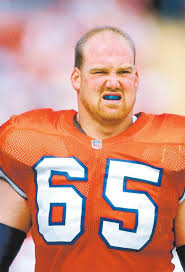
Gary Wayne Zimmerman is an American former professional football player who was a Hall of Fame offensive tackle in the National Football League and United States Football League (USFL). He earned a Super Bowl ring with the Denver Broncos (Super Bowl XXXII).
Zimmerman was born in Fullerton, California and played scholastically at Walnut High School in the San Gabriel Valley of California. He played collegiately at Oregon, and was a first-team All-American as a senior. He was inducted into the Oregon Sports Hall of Fame in 2002.
Zimmerman played for the Minnesota Vikings from 1986 to 1992 and for the Denver Broncos from 1993 to 1997. He won Super Bowl XXXII with the Broncos against the Green Bay Packers. He was selected to the Pro Bowl seven times and was an All-Pro selection eight times. He was inducted into the Pro Football Hall of Fame in 2008.
In 1984, Zimmerman was drafted in the second round (36th overall) by the Los Angeles Express in the 1984 USFL Draft. He subsequently signed with the Express on February 13, 1984, and went on to play in 17 games that season, starting all 17 at left tackle. His Express teammate was future Pro Football Hall of Famer, QB Steve Young. The Express lost in the USFL Semi-Finals to the Arizona Wranglers to end a 10–8 regular season. In 1985, Zimmerman suited up again with the Express, playing in 18 games (starting 17) with a 3-15 club that ended up out of the USFL playoff picture.
After the USFL folded in August 1986, Zimmerman joined the Minnesota Vikings after they obtained his rights from the New York Giants who drafted him in the 1984 NFL Supplemental Draft of USFL and CFL Players.
During his time in the NFL, Zimmerman was famous for his refusal to interact with the media. This disdain for the sports press came about due to an early incident in his NFL career, after comments made by Zimmerman (which stated both the offense and defense didn't play well enough) were construed to be comments that the defense didn't play well enough that led to teammates ostracizing him for speaking ill of his teammates' performance; this led Zimmerman to decide to boycott the sports media as a result, refusing to do interviews or engage in any sort of interaction with them for the rest of his career.
Zimmerman ultimately left the Vikings for the Broncos in 1993, and stayed with the team from 1993 to 1997. He would be part of the team's first Super Bowl-winning squad, winning the game in 1997 and was "in spirit" for the 1998 season. Arriving as the veteran player in 1993 to an offense that was made up of mostly rookies, Zimmerman became the de facto leader of the Broncos offensive line on and off the field. Zimmerman started the Denver offensive line tradition of not speaking to the media. It became a long running tradition that would continue on a full decade after his retirement in 1997. In 2007 the NFL created “The Broncos O-line rule" in response, requiring all players to talk to the media.
He played in 184 NFL games, starting 169 of them.
On February 2, 2008, he was elected to the Pro Football Hall of Fame.
Zimmerman joins Reggie White, Sam Mills, Steve Young, Jim Kelly, Marv Levy, George Allen, Bill Polian, and Sid Gillman as former USFL/AFL league members who are enshrined in the Pro Football Hall of Fame.
Jon Steven Young is an American former professional football quarterback who played in the National Football League for 15 seasons, most notably with the San Francisco 49ers. He was drafted by and played for the Tampa Bay Buccaneers. Prior to his NFL career, Young was a member of the Los Angeles Express in the United States Football League (USFL) for two seasons. He played college football for the BYU Cougars, setting school and NCAA records en route to being runner-up for the 1983 Heisman Trophy.
Young was named the AP's NFL Most Valuable Player in 1992 and 1994, and was the MVP of Super Bowl XXIX where he led the 49ers to a victory over the San Diego Chargers with a record six touchdown passes. During his 1994 MVP campaign, Young set a new NFL record for passer rating at 112.8. He is a member of the College Football Hall of Fame and the Pro Football Hall of Fame.
Young was an extremely efficient passer, leading the league in passer rating a record six times and completion percentage and yards per attempt five times. At the time of his retirement, Young had the highest passer rating among NFL quarterbacks with at least 1,500 passing attempts (96.8). Currently, he is ranked fourteenth all time in passer rating, and is ranked fourth-highest amongst retired players, behind only Drew Brees, Tom Brady, and Tony Romo. Young's 43 career rushing touchdowns are third among quarterbacks, while his 4,239 rushing yards ranks sixth all time.
At the time Young left college the USFL was proving a serious challenge to the established NFL, and he had a choice to be a top pick in either league.
Young was selected by the USFL Los Angeles Express in the first round (11th overall) of the 1984 draft held that January. Express general manager Don Klosterman told Young that if he signed with the Express, his head coach would be John Hadl, a former All-Pro quarterback who had shepherded John Elway through his first year in the NFL. Klosterman also told Young that Hall of Fame coach Sid Gillman, who had been hired as a consultant, would tutor him on how to be a pro quarterback.
The regular 1984 NFL draft would not be held until May. To help influence his decision, the Express offered an all-sports record 10-year, $40 million contract. Young was convinced, and signed with the Express in March 1984. He agreed to take his payment in the form of an annuity paid out over forty years to help the fledgling team.
After missing the first six games of his rookie season while taking some college classes in order to graduate on time, Young started the final 12 games. He had a respectable year, highlighted by becoming the first pro football player ever to pass for 300 yards and rush for 100 in a single game.
Despite a roster which included such future NFL players as Jojo Townsell, Mel Gray, and Kevin Nelson, and making the Western Conference title game in Young's first season, the Express were never able to create a sustaining fan base in Los Angeles. They often played to sparse crowds that looked even more so in the then-95,000-seat Los Angeles Memorial Coliseum.
Near the end of the 1984 season, Express owner J. William Oldenburg was forced to give up control of the team after multiple reports revealed he had misrepresented his net worth. Houston Gamblers minority owner Jay Roulier was cleared to buy the team, only to be pushed out shortly before the 1985 preseason when it emerged that he too had lied about his finances. For all intents and purposes, the Express' 1985 season ended at that point. The league took over the team and cut the budget to the bare minimum. Notably, no money was allocated to replace injured players. This left the Express in a precarious position when a rash of injuries decimated the roster. Even before then, Young and the other young players concluded that the Express would not be around for the planned move to a fall schedule in 1986, even if the USFL survived. With this in mind, they played tentatively so as not to harm their NFL prospects. As a result, despite fielding essentially the same team as a year prior, the Express cratered to a 3–15 record.
Before the Express' final home game — which had been moved to Los Angeles Pierce College in the San Fernando Valley — the bus driver refused to leave unless he was paid up front, in cash. Young contributed some money, as did the team trainer, and the driver took them to the game. In the season finale at Orlando, Young had to line up at tailback because the Express had no healthy running backs left on the roster.
It was reported that Young had insured his contract and would still be paid until 2027. However, facing the prospect of both a faltering owner and an unstable league, Young had already renegotiated his 10-year deal down to 4 years, and had already collected a total of $4.8 million of the $5.8 million due in toto through the final year of that deal (in 1987), working out to an annual rate of pay of $2.4 million for his first two seasons that was the highest in all of American sports. Included in that negotiation was a payment of $1.4 million for the balance of the 10-year annuity (less money paid out against it), and salaries for the remaining two years of the deal "in excess of $450,000" annually according the USFL Commissioner then overseeing the LA Express (which had fallen into receivership).
Young grew increasingly dissatisfied with the disarray surrounding the Express. Just a week before what proved to be the last USFL title game, Young gave the USFL an ultimatum – find a new owner for the Express, or allow him to buy out his contract and go to the NFL. Soon after the league decided to suspend the Express's operations for the 1986 season, Young bought out his Express contract and signed with the Tampa Bay Buccaneers, who had made him the first pick in a supplemental draft of USFL and CFL players a year earlier.
By this time, the Buccaneers were in the midst of what would be 12 consecutive 10-loss seasons. They posted identical 2–14 records in Young's two seasons with them, going 3–16 with him as a starter. Young threw for only 11 touchdowns with 21 interceptions while completing fewer than 55% of his passes.
The Buccaneers selected University of Miami quarterback Vinny Testaverde first overall in the 1987 NFL draft because Young was deemed a bust. Young was traded to the San Francisco 49ers on April 24, 1987, to serve as a backup to Joe Montana. 49ers coach Bill Walsh was impressed by Young's natural abilities, and believed his lackluster numbers were primarily due to the lack of talent around him in Tampa Bay.
The Buccaneers received second and fourth round draft picks in the trade, which they used to draft Miami linebacker Winston Moss, and Arizona State wide receiver Bruce Hill, respectively.
Young played behind Montana for four years, but shone as a backup. Substituting for an injured Montana, early in the first quarter of a 1987 game against the Chicago Bears, Young threw four touchdown passes in a 41–0 victory. In their 1987 divisional playoff game against the Minnesota Vikings, he replaced Montana in the second half after the team fell behind 27–10. The 49ers still lost the game, but Young had a good performance, completing 12 of 17 pass attempts for 158 yards, a touchdown, and an interception while also leading San Francisco in rushing with 72 yards and a touchdown on six carries. On October 30, 1988, Young ran for a 49-yard, game-winning touchdown against the Minnesota Vikings. He started the game out with a 73-yard touchdown pass to John Taylor, after Montana went down with an injury. The play earned the 49ers a 24–21 victory and a bit of revenge on the Vikings for their previous season's playoff loss. The win turned out to be crucial. Without it, the 49ers would have finished the season 9–7 and missed the playoffs. Two other teams in their division, the Los Angeles Rams and New Orleans Saints, had 10–6 records. Instead, the 49ers won their division, earned the #2 playoff seed, and went on to win the Super Bowl.
In 1989, Young displayed potential to become the team's starter in the future. While Montana won the NFL MVP award and led the team to a victory in Super Bowl XXIV, Young still had a good season, completing 69% of his passes for 1,001 yards, eight touchdowns, and only three interceptions. On October 22, 1989, he posted a perfect passer rating of 158.3 when he completed 11 of 12 passes for 188 yards and three touchdown passes in a 37–20 victory over the New England Patriots.
Young rushed for a career-high 102 yards on just eight carries against the New Orleans Saints on December 23, 1990, making him only the second 49ers quarterback to rush for at least 100 yards in a single game. The 49ers lost the game 13–10.
In his four seasons as a backup, Young threw 23 touchdown passes and only six interceptions.
Following an injury to Montana's elbow in the 1990 NFC Championship Game, which forced him to miss the entire 1991 season, Young got his chance to lead the 49ers, but got off to a rough start. Midway through the season, the 49ers found themselves struggling with a 4–4 record. In the ninth game of the season, after throwing a franchise-record 97-yard touchdown pass to Taylor, Young suffered a knee injury and was replaced by backup quarterback Steve Bono. After a loss in that game and the next, Bono led the 49ers to five consecutive victories, playing so well that coach George Seifert decided to keep him in the starting lineup after Young had recovered. It was not until late in the 15th game of the season, after Bono went down with an injury of his own, that Young got to play again. Young then closed out the season by throwing for 338 yards and three touchdowns and also rushing for 63 yards and another touchdown in a 52–14 win over the Chicago Bears in a Monday Night Football game at Candlestick Park.
Young finished the season with an NFL best 101.8 passer rating. Despite missing five full games and most of a sixth, he still threw for 2,517 yards, 17 touchdowns, and only eight interceptions. Despite Young's strong season, the season for the team was widely regarded as a disappointment. The 49ers had slipped from a 14–2 record in the previous season to a 10–6 record in 1991. 10 wins, while usually being enough to grant a playoff spot for a team, kept the 49ers just short of the playoffs, and San Francisco ended up not playing in the postseason for the first time since 1982. It was thought by many that Young's days as the 49ers starter were numbered due to the impending return of Montana from the injury to his right elbow, and some observers said the 49ers should trade Young and keep Montana and Bono. However, the trade never happened.
By the start of the 1992 season, it appeared that Young's starting job was in serious peril. In addition to having to compete with Bono, Montana appeared to be close to recovering from his elbow tendon surgery. San Francisco came close to trading Young to the Los Angeles Raiders, but no deal was finalized and it turned out that Montana would not recover in time to start in the opening game. Montana would not return until the final game of the 1992 season, a Monday Night home game against the Detroit Lions. Montana played the entire second half of that final game and guided the 49ers to victory.
Young ended up as San Francisco's starting quarterback, but once again got off to a rough start. On the fifth play of the opening game at the New York Giants, he suffered a concussion and was replaced by Bono, who threw two touchdown passes while leading the 49ers to a 31–14 victory. The following week, the 49ers lost 34–31 to the Buffalo Bills, despite a career-high 449 passing yards and three touchdowns from Young, in a game that for the first time in NFL history had zero punts from either team.
Young recovered and led the 49ers on a five-game winning streak, capped off by a 56–17 victory over the Atlanta Falcons in which he passed for 399 yards and three touchdowns. After missing most of the next game (a 24–14 loss to the Cardinals) with the flu, Young led San Francisco to a victory in all of their remaining games of the season, giving the team a 14–2 record. He went on to throw for 227 yards and two touchdowns and rushed for 73 yards in a 20–13 divisional playoff win over the Washington Redskins. However, the 49ers lost the NFC Championship game, 30–20, to the eventual Super Bowl champion Dallas Cowboys. Young threw for 313 yards, completing 71.4% of his passes while passing for a touchdown and rushing for another. However, he also threw two interceptions, but the final one came with the outcome of the game already decided.
Young finished the season with 3,465 passing yards and 537 rushing yards, along with an NFL-best 25 touchdown passes and 107.0 passer rating, earning him the NFL Most Valuable Player Award and his first selection to the Pro Bowl. Young was the first quarterback ever to record a triple-digit rating in consecutive seasons. Many credit his turnaround to the mentoring of the 49ers' new offensive coordinator Mike Shanahan, who worked with Young on combining his running skill with on-the-move passing decisions.
Before the start of the 1993 season, team owner Eddie DeBartolo Jr. announced that he wanted Montana to resume his role as starting quarterback for the 49ers. However, a rift in the locker room had developed, with players split on whom they wanted at quarterback. In the spring of 1993, at Montana's request, San Francisco traded Montana to the Kansas City Chiefs. Young was now the 49ers' undisputed starter, and would remain so for the rest of his career. But once again, Young had a rough start to the season. Over the first four games of 1993, Young, who was hindered by a swollen thumb on his throwing hand, threw eight interceptions, more than he had thrown during the entire 1992 season. But after his thumb healed, Young went on an incredible streak over a span of seven games, throwing 16 touchdown passes with only two interceptions and a 122.2 passer rating. By the end of the year, Young set franchise records for most passing yards (4,023), and consecutive passes thrown without an interception (189, later eclipsed by Alex Smith in 2012), while leading the NFL in touchdown passes (29) and passer rating (101.5). The team slipped to a 10–6 record, but advanced to the NFC championship game again by blowing out the New York Giants 44–3 in the Divisional Round. However, they were again defeated by the Dallas Cowboys, this time 38–21.
After several key free agent signings (including All-Pro cornerback Deion Sanders) and NFL draft selections, the 49ers looked to win their first Super Bowl since 1989. They started fast, beating the Los Angeles Raiders 44–14 on the strength of four touchdown passes from Young, one of four games during the regular season in which he had at least four. After a loss in a much-anticipated game to Joe Montana and the Kansas City Chiefs, the 49ers won their next two games before losing to the Philadelphia Eagles 40–8 at Candlestick Park, a game in which Young was eventually benched in the middle of an offensive series. Although head coach George Seifert later said he only pulled Young because he was getting manhandled by the Eagles' defense, Young had had enough of being scapegoated for 49er shortfalls and loudly (and visibly) lambasted Seifert over his decision while standing on the sideline during the game.
But the game was considered a turning point in the season; from there, Young led the team to 10 consecutive wins, by an average of 20 points, before losing the meaningless finale against the Vikings in which Young completed his first 12 of 13 attempts before going to the sidelines. They finished an NFL best 13–3, securing home-field advantage throughout the NFC playoffs. The 49ers had the number-one offense in the NFL, and were so dominant that Seifert often took Young out of games early if he felt that the 49ers had an insurmountable lead at the time.
After an easy 44–15 victory over the Chicago Bears in the Divisional Round, the 49ers jumped out to a 31–14 halftime lead over the Dallas Cowboys in the NFC Championship Game, holding on to win 38–28. Young threw for two touchdowns, while adding 47 yards and another touchdown on the ground. As a result, he went to his first Super Bowl as a starting quarterback. The 49ers were heavy favorites to become the first team with five Super Bowl victories.
On the strength of a six-touchdown performance that surpassed the previous Super Bowl record of five, owned by the man Young replaced, Joe Montana, Young was named the MVP of Super Bowl XXIX, as the 49ers defeated the San Diego Chargers, 49–26. Young also threw for 325 yards and rushed for 49 yards, making him the first player ever to finish a Super Bowl as the game's leader in both rushing and passing yards.
The victory capped off an incredible year for Young, who had one of the best seasons by a quarterback in NFL history. He threw for 3,969 yards, a then-franchise record 35 touchdown passes with only 10 interceptions, completed 70.3 percent of his passes – the highest completion percentage of the 1990s, third all-time, and at the time, the best completion percentage by any quarterback with more than 400 attempts (later eclipsed by Drew Brees in 2009). Additionally, Young broke Joe Montana's single-season mark with a then-record 112.8 passer rating, and also once again demonstrated his great scrambling ability, accumulating another 289 yards and seven touchdowns on the ground. For his record-breaking season performances, Young was awarded his second AP NFL MVP award, becoming the seventh player in NFL history to win both league and Super Bowl MVP honors in the same season.
In the three years following Super Bowl XXIX, the 49ers were eliminated in the playoffs each year by Brett Favre and the Green Bay Packers, twice in San Francisco. In addition to the early playoff exits, Young suffered a series of injuries that forced him to miss several games from 1995 to 1997. Young entered the 1998 season at age 37 and some began to wonder if his skills would diminish because of his history of injuries and a general decline in his game due to age. However, Young silenced all critics once again, putting up career numbers in passing yards (4,170) and passing touchdowns (36). The 49ers finally beat Favre and the Packers in the NFC Wild Card Round that year, as Young threw the winning touchdown to wide receiver Terrell Owens with three seconds remaining to win the game 30–27. In reference to Dwight Clark's legendary catch against the Dallas Cowboys in the 1981 NFC Championship Game, Owens's grab was called "The Catch II". A week later, however, Garrison Hearst broke his ankle on the 49ers' first play from scrimmage. Without the threat of a running game, Young threw three interceptions (the last one a Hail Mary pass with under 30 seconds remaining in the game) and the 49ers were defeated by the Atlanta Falcons 20–18. Over that span of seasons from 1995 to 1998, Young led the NFL in passer rating twice (in 1996 and 1997), and led the NFL with 36 touchdown passes in 1998.
The 1999 season turned out to be Young's last in the NFL. Young was plagued by concussions throughout his career. During a Week 3 Monday Night Football game against the Arizona Cardinals, Young was violently sacked by Cardinals cornerback Aeneas Williams on a blitz. Running back Lawrence Phillips was supposed to pick up Williams, but missed. Young was knocked out of the game with a concussion, and did not return again for the rest of the season due to symptoms of post-concussion syndrome. The concussion he suffered against the Cardinals was reportedly his second in a season that was only three weeks old, and the seventh (at least) of his career. Following the season, the 49ers told him that he would be released if he did not retire. Although Young was offered a job as the starting quarterback of the Denver Broncos (where his former offensive coordinator, Mike Shanahan, was the head coach), he retired because of his repeated concussions. In a 2013 Frontline interview, Young said that, partially based upon their own experiences, he and many retired players are increasingly concerned about repeated concussions and subconcussive hits. Young is particularly concerned about certain positions that take frequent hits, such as running backs and linemen.
Although Young did not become the 49ers' first-string quarterback until his seventh NFL season, and he played a full season only thrice (all consecutively) during his 15-year career, Young had a significant impact on the NFL. A two-time league MVP, he completed 2,667 of 4,149 passes for 33,124 yards and 232 touchdowns, with 107 interceptions, and 43 rushing touchdowns. Young's 96.8 career passer rating is the twelfth highest in NFL history and fourth highest among retired players, behind Tony Romo, Tom Brady, and Drew Brees. Young's 4,239 rushing yards are the sixth most ever gained by a quarterback, behind Michael Vick, Cam Newton, Russell Wilson, Lamar Jackson, and Randall Cunningham. At the time of his retirement, Young had the highest career passer rating ever, and only trailed Cunningham in rushing yards for a quarterback. He was the NFL's top rated passer in six different seasons and led the league in touchdown passes four times. In 20 postseason games, Young threw 20 touchdown passes with only 13 interceptions, and scored eight touchdowns on the ground. During his stint with the 49ers, Young passed for 29,907 yards, 221 touchdowns, and 86 interceptions, with a passer rating of 101.4, highest in franchise history. He was also sacked 290 times, also most in franchise history. From October 20, 1991, to October 1, 2023, Young held the franchise's highest single game completion rate of 90%, which he set against the Detroit Lions, until it was bested by Brock Purdy's 95.2% against the Arizona Cardinals.
Young has both performed dramatic roles and appeared as himself in a limited acting career. He appeared in one episode of Frasier and one episode of Lois & Clark: The New Adventures of Superman (cast as Lois' former high school football quarterback boyfriend, Joe Maloy). He also made a guest appearance as himself in the Dharma & Greg episode "Are You Ready for Some Football?" encouraging Dharma, the team's Number One Fan. In 1995, Young appeared as himself in the Season 6, Episode 12 episode of Beverly Hills, 90210. He also made cameo appearances in the LDS comedy The Singles Ward (2002) and in a season 5 episode of BYUtv's Studio C (2014). Young also made a guest appearance as himself in season 8 of the NBC comedy series Wings in the episode "Just Call Me Angel".
Young was originally offered a part in the 1998 movie There's Something About Mary, but turned the role down; the role ultimately went to Brett Favre.
Young was laid off by ESPN on June 30, 2023, after being a fixture on ESPN's NFL studio shows, including “NFL Countdown,” for more than two decades. He was part of a round of layoffs that included many notable on-air personalities.
Young serves as a National Advisor to ASCEND: A Humanitarian Alliance. This non-profit organization plans expeditions to African and South American countries to provide life skills mentoring with sustainable solutions in education, enterprise, health and simple technology.
In 1993, Young founded a charitable foundation known as the Forever Young Foundation, which serves children facing significant physical, emotional, and financial challenges by providing academic, athletic, and therapeutic opportunities otherwise unavailable to them.
Young also serves as the national spokesman for an organization founded by former Save Darfur Coalition executive director and founder, David Rubenstein. Young began his affiliation with the organization in 2009, when he became the honorary league commissioner for their charitable dodgeball tournaments held on college campuses nationwide.
Young is a member of the Church of Jesus Christ of Latter Day Saints (LDS Church). He is a great-great-great-grandson of Brigham Young, second president of the LDS Church, for whom BYU is named.
Young has been married to Barbara Graham since 2000. They have two sons and two daughters. According to A Football Life, as his playing career ended before his eldest child was born, Young wrote his autobiography QB: My Life Behind the Spiral initially as a private memoir for his children. The book was published in 2016, with writer Jeff Benedict as coauthor.
"Steve Young Stats: Leaderboards". Pro-Football-Reference.com. Sports Reference LLC. Retrieved January 4, 2017.
"NFL Passer Rating Career Leaders". Pro-Football-Reference.com. Retrieved October 2, 2025.
"NFL Rushing Touchdowns Career Leaders". Pro Football Reference. Retrieved January 1, 2025.
Sobus, Robert (January 3, 2021). "Lamar Jackson rushes into 12th place on all-time QB rushing yards list". Ravens Wire. Retrieved March 5, 2022.
"Darien Defense Stops Greenwich, 17–0". The New York Times. November 23, 1979. Retrieved December 27, 2019.
"1983 College Football Leaders". College Football at Sports-Reference.com. Retrieved November 20, 2025.
"Wonderlic scores of 2010 NFL starting quarterbacks and NFL draft QB prospects". palmbeachpost.com. Retrieved October 19, 2021.
"Hall recall: Steve Young". profootballhof.com. Retrieved September 12, 2021.
Peters, Ken (March 2, 1984). "Express sign Young for $40 million". Spokesman-Review. Spokane, Washington. Associated Press. p. C1.
"Young will be old when pact ends". The Register-Guard. Eugene, Oregon. wire services. March 6, 1984. p. E1.
"Young signs with Express". Deseret News. Salt Lake City, Utah. (AP, Los Angeles Times, Washington Post). March 5, 1984. p. D1.
"Express paid 'market price' for QB". The Bulletin. Bend, Oregon. UPI. March 6, 1984. p. D3.
Reeths, Paul (2017). The United States Football League, 1982–1986. McFarland & Company. ISBN 978-1476667447.
Smith, Scott (March 29, 2015). "10 Most Significant Trades in Buc History". Tampa Bay Buccaneers.
Pearlman, Jeff (2018). Football For A Buck: The Crazy Rise and Crazier Demise of the USFL. Houghton Mifflin Harcourt. ISBN 978-0544454385.
Keeney, Tim (October 25, 2013). "Steve Young Will Make $1 Million in 2014 from USFL Deal Signed in 1984". Bleacher Report.
Oates, Bob (August 10, 1985). "USFL Confirms Young Is Highest-Paid Player at $2.4 Million a Year". Los Angeles Times. Retrieved December 27, 2019.
"1984 NFL Draft Listing". Pro Football Reference. Retrieved October 10, 2023.
"Tampa Bay Buccaneers: Top 10 Draft Mistakes in team history". April 16, 2021.
Brown, Daniel (2013). 100 Things 49ers Fans Should Know and Do Before They Die. Chicago, Illinois: Triumph books. p. 98. ISBN 978-1-60078-791-1.
"New Orleans Saints at San Francisco 49ers – December 23rd, 1990". Pro Football Reference.
Panacy, Peter. "Steve Young sheds light on relation with Joe Montana: 'It's always been awkward'". Niner Noise. Retrieved February 3, 2026.
"Los Angeles Raiders at San Francisco 49ers - September 5th, 1994". Pro Football Reference. Retrieved June 15, 2024.
"San Francisco 49ers at Kansas City Chiefs - September 11th, 1994". Pro Football Reference. Retrieved June 15, 2024.
Telander, Rick (February 6, 1995). "Superb!". Sports Illustrated's Super Bowl Archive. Archived from the original on March 12, 2004.
"Divisional Round - Chicago Bears at San Francisco 49ers - January 7th, 1995". Pro Football Reference. Retrieved June 15, 2024.
"Steve Young 1998 Game Log". Pro Football Reference. Retrieved June 15, 2024.
"Wild Card - Green Bay Packers at San Francisco 49ers - January 3rd, 1999". Pro Football Reference. Retrieved June 15, 2024.
"Divisional Round - San Francisco 49ers at Atlanta Falcons - January 9th, 1999". Pro Football Reference. Retrieved June 15, 2024.
"1996 NFL Passing". Pro Football Reference. Retrieved June 15, 2024.
"1997 NFL Passing". Pro Football Reference. Retrieved June 15, 2024.
"1998 NFL Passing". Pro Football Reference. Retrieved June 15, 2024.
"Injury to sideline Young on Sunday". The Deseret News. The Associated Press. September 29, 1999. Retrieved July 11, 2025.
"49ers Suspend Phillips and Plan to Waive Him". New York Times. November 16, 1999.
Lombardi, David (August 3, 2021). "NFL 100: At No. 49, Steve Young and two stumbles that bookended an epic 49ers career". The New York Times. Retrieved October 3, 2024.
"Young dealing with another concussion". ESPN.com. September 29, 1999. Retrieved July 11, 2025.
"FindArticles.com - CBSi". findarticles.com.
Judge, Clark (February 23, 2010). "Use Your Head, Brian: Be Smart and Walk Away Now". CBS Sports.
Young, Steve (March 27, 2013). "League of Denial: The NFL's Concussion Crisis". Frontline (Interview). Interviewed by Jim Gilmore. PBS.
"Steve Young Career Stats". nfl.com. Retrieved February 8, 2025.
Dajani, Jordan (October 1, 2023). "Brock Purdy sets 49ers QB record in stellar performance against Cardinals: Purdy continues to impress as San Francisco stays red-hot". CBS Sports. Retrieved October 2, 2023.
"NFL Career Leaders - Pass Completion Percentage". The Football Database. Retrieved February 8, 2022.
"NFL Playoff Records: Individual – Passing". National Football League. Archived from the original on July 22, 2015. Retrieved August 9, 2008.
"Steve Young". Pro Football Hall of Fame. Retrieved September 30, 2022.
"Left-handed QBs". Pro Football Hall of Fame. January 1, 2005. Retrieved September 30, 2022.
"49ers to Retire Steve Young's Jersey". San Francisco 49ers. September 25, 2008.
Brown, Daniel (September 25, 2008). "49ers to retire Steve Young's No. 8 on Oct. 5". 49ers Hot Read. San Jose, California: The Mercury News.
"Steve Young Stats, Height, Weight, Position, Draft, College". Pro Football Reference. Retrieved March 6, 2025.
"Young recalls glory days as Niners retire jersey". ESPN. Associated Press. October 5, 2008. Retrieved March 6, 2025.
"Inductee | Jon Steven Young 2001". College Football Hall of Fame. Retrieved March 6, 2025.
"Steve Young - Football". BYU Cougars. Retrieved March 6, 2025.
"Steve Young College Stats, School, Draft, Gamelog, Splits". Sports Reference. Retrieved March 6, 2025.
"Young's Jersey Retired". BYU Cougars. Retrieved March 6, 2025.
"Steve Young". BYU Cougars. Retrieved September 30, 2022.
Davidson, Lee; Bernick, Bob Jr. (August 3, 2000). "This is not your father's Republican National Convention". Deseret News. Retrieved September 30, 2022.
Leiber, Ron (September 10, 2011). "Your Money: Financial Lessons from Sports Stars' Mistakes". The New York Times. Retrieved September 10, 2011.
BYU Real Cougar 2 – Jimmered!. YouTube. Brigham Young University. September 9, 2011. Retrieved September 30, 2022.
"Meet Our Leadership". Integrity Marketing Group. Retrieved April 9, 2022.
"Integrity Marketing Group | Portfolio". HGGC. Retrieved April 9, 2022.
"Steve Young - Actor". IMDb. Retrieved November 12, 2024.
Leitch, Will (February 23, 2011). "Don't Forget: 'There's Something About Mary'". Yahoo.com.
Fernandez, Gabe (June 30, 2023). "49ers legend Steve Young included in round of big-name ESPN layoffs". www.sfgate.com. Retrieved July 25, 2023.
"Sixteen Celebrities Join Together Promoting a Life-Changing Cause; Utah's Global Humanitarian Impact Stronger Through Non-Profit Merger" (Press release). ASCEND: A Humanitarian Alliance. October 17, 2008. Archived from the original on October 17, 2008.
"Forever Young Foundation"[dead link], Condé Nast Portfolio.com.
"Sports Commission, Forever Young Foundation join forces for Chelsea Cohen Courage Award", StamfordPlus.com, July 29, 2008.
"Best Shot Foundation". Archived from the original on April 5, 2010. Retrieved April 21, 2011.
"Steve Young: Honorary League Commissioner". Archived from the original on June 15, 2011. Retrieved April 21, 2011.
"Steve Young: Honorary League Commissioner « Best Shot Foundation". Archived from the original on June 15, 2011. Retrieved April 21, 2011.
"'Why I'm a Mormon': Steve Young". Deseret News. February 10, 2012. Archived from the original on January 26, 2022. Retrieved August 4, 2023.
Krakauer, Jon. "Under the Banner of Heaven" pg. 203
"Steve Young Opens up About Miraculously Surviving a Deadly Car Crash Without a Scratch". December 15, 2016.
"Crash Fatal to Woman Injures a B.Y.U. Back". The New York Times. April 24, 1983.
"Young filled a promise he made". August 8, 2005.
"49ers great Steve Young tells his story for his children". October 13, 2016.
"Trending Now: Steve Young reflects on life after tragic car wreck | in Depth with Graham Bensinger".
"Steve Young testifies of angels to famous sports journalist". February 20, 2025.
"Steve Young's wife Barbara Graham Young - PlayerWives.com". January 29, 2013.
Young, Steve; Benedict, Jeff (2016). QB: My Life Behind the Spiral. Houghton Mifflin Harcourt. ISBN 978-0544845763.
"Steve Young". www.ldsliving.com. Retrieved May 27, 2023.
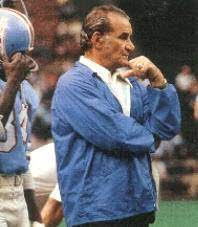
Sidney Gillman was an American football player, coach and executive. Gillman's insistence on stretching the football field by throwing deep downfield passes, instead of short passes to running backs or wide receivers at the sides of the line of scrimmage, was instrumental in making football into the modern game that it is today.
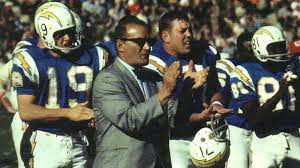
Gillman played football as an end at Ohio State University from 1931 to 1933. He played professionally for one season in 1936 with the Cleveland Rams of the second American Football League. After serving as an assistant coach at Ohio State from 1938 to 1940, Gillman was the head football coach at Miami University from 1944 to 1947 and at the University of Cincinnati from 1949 to 1954, compiling a career college football record of 81–19–2. He then moved to the ranks of professional football, where he headed the NFL's Los Angeles Rams (1955–1959), the American Football League's Los Angeles and San Diego Chargers (1960–1969), and the NFL's Houston Oilers (1973–1974), amassing a career record of 123–104–7 in the National Football League and the American Football League. Gillman's 1963 San Diego Chargers won the AFL Championship. Gillman was inducted as a coach into the Pro Football Hall of Fame in 1983 and the College Football Hall of Fame in 1989.
Always deeply interested in the game, while working as a movie theater usher, he removed football segments from newsreels the theater would show, so that he could take them home and study them on a projector he had bought. This dedication to filmed football plays made Gillman the first coach to study game footage, something that all coaches do today.
Gillman debated between pursuing a pro football career and entering coaching upon leaving college, with the Boston Redskins offering him a contract while Willaman wished to hire him as end coach at Western Reserve University. His participation in the inaugural Chicago College All-Star Game caused him to arrive late for Redskins training camp, and he would fail to make the team. He played one year in the American Football League (1936) for the Cleveland Rams. He became an assistant coach at Denison University, Ohio State University, and was an assistant coach to Earl Blaik of Army, then head coach at Miami University and the University of Cincinnati. He spent 21 years as a college coach or head coach, and his total record for these years was 79–18–2.
He returned to professional football as a head coach with the Los Angeles Rams, leading the team to the NFL's championship game, and then moved to the American Football League (AFL, 1960–1969), where he coached the Los Angeles and San Diego Chargers to five Western Division titles and one league championship in the first six years of the AFL's existence.
His greatest coaching success came after he was persuaded by Barron Hilton, then the Chargers' majority owner, to become the head coach of the AFL franchise he planned to operate in Los Angeles. When the team's general manager, Frank Leahy, became ill during the Chargers' founding season, Gillman took on additional responsibilities as general manager.
As the first coach of the Chargers, Gillman gave the team a mercurial personality that matched his own.
He had much to do with the AFL being able to establish itself. Gillman was a thorough professional, and in order to compete with him, his peers had to learn pro ways. They learned, and the AFL became the genesis of modern professional football.
"Sid Gillman brought class to the AFL," Oakland Raiders managing general partner Al Davis once said of the man he served under on that first Chargers team. "Being part of Sid's organization was like going to a laboratory for the highly developed science of professional football."
Through Gillman's tenure as head coach, the Chargers went 87–57–6 and won five AFL Western Division titles. In 1963 they captured the only league championship the franchise ever won by outscoring the Boston Patriots, 51–10, in the American Football League championship game in Balboa Stadium. That game was a measure of Gillman's genius.
He crafted a game plan, "Feast or Famine", that used motion, then seldom seen, to negate the Patriots' blitzes. His plan freed running back Keith Lincoln to rush for 206 yards. addition to Lincoln, on Gillman's teams through the '60s were these notable players: wide receiver Lance Alworth; offensive tackle Ron Mix; running back Paul Lowe; quarterback John Hadl; and defensive linemen Ernie Ladd and Earl Faison (Alworth and Mix are Hall of Famers). Gillman was one of only two head coaches to hold that position for the entire 10-year existence of the American Football League (the other being fellow Hall of Fame coach Hank Stram, who coached the Dallas Texans and Kansas City Chiefs from 1960 through 1974).
Gillman approached NFL Commissioner Pete Rozelle in 1963 with the idea of having the champions of the AFL and the NFL play a single final game, but his idea was not implemented until the Super Bowl (originally titled the AFL-NFL World Championship Game) was played in 1967.
Following his tenure with San Diego, he coached the Houston Oilers for two years from 1973 to 1974, helping bring the club out of the funk it had been in for many seasons prior, and closer to playoff contention. He later served as the offensive coordinator for the Chicago Bears in 1977 and as a consultant for Dick Vermeil's Philadelphia Eagles in 1980.
In July 1983, at age 71, Gillman came out of retirement after an offer from Bill Tatham, Sr. and Bill Tatham, Jr., owners of the United States Football League (USFL) expansion team the Oklahoma Outlaws. Gillman agreed to serve as Director of Operations and signed quarterback Doug Williams, who later led the Washington Redskins to victory in Super Bowl XXII. Although Gillman signed a roster of players to play for the Tulsa, Oklahoma-based franchise, he was fired by Tatham six months later in a dispute over finances.
Gillman then served as a consultant for the USFL's Los Angeles Express in 1984.
Always deeply interested in the game, while working as a movie theater usher, he removed football segments from newsreels the theater would show, so that he could take them home and study them on a projector he had bought. This dedication to filmed football plays made Gillman the first coach to study game footage, something that all coaches do today.
Gillman debated between pursuing a pro football career and entering coaching upon leaving college, with the Boston Redskins offering him a contract while Willaman wished to hire him as end coach at Western Reserve University. His participation in the inaugural Chicago College All-Star Game caused him to arrive late for Redskins training camp, and he would fail to make the team. He played one year in the American Football League (1936) for the Cleveland Rams. He became an assistant coach at Denison University, Ohio State University, and was an assistant coach to Earl Blaik of Army, then head coach at Miami University and the University of Cincinnati. He spent 21 years as a college coach or head coach, and his total record for these years was 79–18–2.
He returned to professional football as a head coach with the Los Angeles Rams, leading the team to the NFL's championship game, and then moved to the American Football League (AFL, 1960–1969), where he coached the Los Angeles and San Diego Chargers to five Western Division titles and one league championship in the first six years of the AFL's existence.
His greatest coaching success came after he was persuaded by Barron Hilton, then the Chargers' majority owner, to become the head coach of the AFL franchise he planned to operate in Los Angeles. When the team's general manager, Frank Leahy, became ill during the Chargers' founding season, Gillman took on additional responsibilities as general manager.
As the first coach of the Chargers, Gillman gave the team a mercurial personality that matched his own.
He had much to do with the AFL being able to establish itself. Gillman was a thorough professional, and in order to compete with him, his peers had to learn pro ways. They learned, and the AFL became the genesis of modern professional football.
"Sid Gillman brought class to the AFL," Oakland Raiders managing general partner Al Davis once said of the man he served under on that first Chargers team. "Being part of Sid's organization was like going to a laboratory for the highly developed science of professional football."
Through Gillman's tenure as head coach, the Chargers went 87–57–6 and won five AFL Western Division titles. In 1963 they captured the only league championship the franchise ever won by outscoring the Boston Patriots, 51–10, in the American Football League championship game in Balboa Stadium. That game was a measure of Gillman's genius.
He crafted a game plan, "Feast or Famine", that used motion, then seldom seen, to negate the Patriots' blitzes. His plan freed running back Keith Lincoln to rush for 206 yards. addition to Lincoln, on Gillman's teams through the '60s were these notable players: wide receiver Lance Alworth; offensive tackle Ron Mix; running back Paul Lowe; quarterback John Hadl; and defensive linemen Ernie Ladd and Earl Faison (Alworth and Mix are Hall of Famers). Gillman was one of only two head coaches to hold that position for the entire 10-year existence of the American Football League (the other being fellow Hall of Fame coach Hank Stram, who coached the Dallas Texans and Kansas City Chiefs from 1960 through 1974).
Gillman approached NFL Commissioner Pete Rozelle in 1963 with the idea of having the champions of the AFL and the NFL play a single final game, but his idea was not implemented until the Super Bowl (originally titled the AFL-NFL World Championship Game) was played in 1967.
Following his tenure with San Diego, he coached the Houston Oilers for two years from 1973 to 1974, helping bring the club out of the funk it had been in for many seasons prior, and closer to playoff contention. He later served as the offensive coordinator for the Chicago Bears in 1977 and as a consultant for Dick Vermeil's Philadelphia Eagles in 1980.
In July 1983, at age 71, Gillman came out of retirement after an offer from Bill Tatham, Sr. and Bill Tatham, Jr., owners of the United States Football League (USFL) expansion team the Oklahoma Outlaws. Gillman agreed to serve as Director of Operations and signed quarterback Doug Williams, who later led the Washington Redskins to victory in Super Bowl XXII. Although Gillman signed a roster of players to play for the Tulsa, Oklahoma-based franchise, he was fired by Tatham six months later in a dispute over finances.
Gillman then served as a consultant for the USFL's Los Angeles Express in 1984.
Gillman and his wife Esther had four children and were married for 67 years (until his death). They resided in Carlsbad, California before moving in 2001 to Century City in Los Angeles.
On January 3, 2003, Gillman died in his sleep at age 91. He was interred in the Hillside Memorial Park Cemetery in Culver City, California.
Siegman, Joseph M. (1992). The International Jewish Sports Hall of Fame. S.P.I. Books. p. 113. ISBN 9781561710287 – via Google Books.
"Sid Gillman". www.jewishsports.net. Retrieved December 23, 2024.
Tobias, Todd. "An Interview with Sid & Esther Gillman". Tales from the AFL. Retrieved December 24, 2024.
"Sid Gillman | Pro Football Hall of Fame". pfhof. Retrieved December 24, 2024.
Lawson, Earl (October 8, 1955). "Football's Man Without Mercy". Saturday Evening Post.
Peterson, Bill (August 16, 2006). "Cincinnati's Connection to Football's "West Coast Offense"". City Beat. Archived from the original on January 28, 2007. Retrieved September 7, 2006.
"Sid Gillman, College Football Hall of Fame". cfbhall.com.
Farmer, Sam (January 4, 2003). "Coach Revolutionized Offenses in Football". Los Angeles Times. Retrieved December 24, 2024.
Bach, John. "Sports -- Sid Gillman transformed football with film". University of Cincinnati. Retrieved December 24, 2024.
"Sid Gillman has coaching, pro offers for 1934 season". Minneapolis Star. February 19, 1934. Retrieved May 27, 2021 – via Newspapers.com.
Dalton, Ernest (August 25, 1934). "Seven Redskins missing from opening practice". The Boston Globe. Retrieved May 27, 2021 – via Newspapers.com.
"Redskin recruits arrive at Wayland camp today". The Boston Globe. September 3, 1934. Retrieved May 27, 2021 – via Newspapers.com.
"Sid Gillman, Cradle of Coaches: A Legacy of Excellence". spec.lib.miamioh.edu.
"'Way ahead of his time'". The Columbus Dispatch. Retrieved December 24, 2024.
Zimmerman, Paul (July 1, 2016). "Best of Dr. Z: 1991 Sid Gillman feature". Sports Illustrated. Retrieved February 16, 2024.
Katzowitz, Josh (2012). Sid Gillman Father Of The Passing Game. Clerisy Press. pp. 85–86, 150–178. ISBN 978-1-57860-505-7.
"Ara Parseghian (1980) - Hall of Fame". National Football Foundation. Retrieved December 24, 2024.
"Cincinnati Bearcats History - College Football". www.collegefootballhistory.com. Retrieved December 24, 2024.
"100 Figures Who Shaped the NFL's First Century". SI. August 28, 2019. Retrieved December 24, 2024.
Wallace, William N. (January 4, 2003). "Sid Gillman, 91, Innovator Of Passing Strategy in Football". New York Times.
"Los Angeles Rams Team Records, Leaders, and League Ranks". Pro-Football-Reference.com. Retrieved December 24, 2024.
Murray, James. "Cleveland Won the Title Again But Not Before the Whole NFL Had Come to Appreciate Coach Sid Gillman and His L.A. Rams". Sports Illustrated Vault. Retrieved February 16, 2024.
"Andy Robustelli | Pro Football Hall of Fame". pfhof. Retrieved December 24, 2024.
Gomez, Johnny (August 23, 2013). "1956: Andy Robustelli traded; Rams' fortunes change - Rams Talk". Retrieved December 24, 2024.
"1960 Philadelphia Eagles, Only team to beat Vince Lombardi in the playoffs, NFL 100". NFL.com. Retrieved December 24, 2024.
"Van Brocklin, at Odds With Ram Coach, Is Traded to Eagles in Football Deal". New York Times. May 27, 1958.
"This I Remember: Elroy Hirsch". University of Michigan Athletics. Retrieved December 24, 2024.
Gomez, Johnny (August 23, 2013). "1959: The Gillman era falls flat - Rams Talk". Retrieved February 16, 2024.
Tracy, Marc (February 3, 2011). "How Three Jews Behind the AFL Invented the Modern Media Spectacle That is Pro Football Today". Tablet Magazine. Retrieved December 24, 2024.
"Los Angeles Chargers Team Records, Leaders, and League Ranks". Pro-Football-Reference.com. Retrieved December 24, 2024.
Shrake, Edwin (December 13, 1965). "They All Go Bang! At Bambi". Sports Illustrated. Vol. 23, no. 4.
"Detroit Free Press from Detroit, Michigan". Newspapers.com. October 19, 1966. Retrieved February 16, 2024.
Shrake, Edwin (September 13, 1965). "San Diego Chargers". Sports Illustrated Vault. Archived from the original on August 11, 2022. Retrieved December 25, 2024.
Shrake, Edwin (January 24, 1966). "Big rookie bonuses start a battle, Annoyed by the vast sums paid untried players, two San Diego All-Stars are bidding for $1 million". Sports Illustrated.
"Chargers Trade Faison And Ladd For Three Oilers". New York Times. January 16, 1966.
Rathet, Mike (January 20, 1966). "Commissioner Voids Trade Between Oilers, Chargers". El Paso Times. p. 22.
Fitzgerald, Tommy (May 2, 1966). "Dolphins Won't Deal For Faison Or Ladd". The Miami News. pp. 25A.
Braucher, Bill (October 20, 1966). "Dolphins Catch Charger Faison". The Miami Herald. pp. 2-D.
Tobias, Todd. "An Interview with the San Diego Chargers John Hadl". Tales from the AFL. Retrieved February 16, 2024.
"1960 Los Angeles Chargers Rosters, Stats, Schedule, Team Draftees". Pro-Football-Reference.com. Retrieved December 24, 2024.
"1961 San Diego Chargers Rosters, Stats, Schedule, Team Draftees". Pro-Football-Reference.com. Retrieved December 24, 2024.
"Jack Kemp | Pro Football Hall of Fame". pfhof. Retrieved December 24, 2024.
"Championship - Los Angeles Chargers at Houston Oilers - January 1st, 1961". Pro-Football-Reference.com. Retrieved December 24, 2024.
"Championship - Houston Oilers at San Diego Chargers - December 24th, 1961". Pro-Football-Reference.com. Retrieved December 24, 2024.
"Gold Jacket Spotlight: Grace, Speed Defined Lance Alworth | Pro Football Hall of Fame". pfhof. Retrieved December 24, 2024.
"Way Back When: A quarterback's path". www.denverbroncos.com. Retrieved December 24, 2024.
"Hall of Famer Ron Mix on Sid Gillman". Tablet Magazine. April 19, 2017. Retrieved December 24, 2024.
"Hank Stram Record, Statistics, and Category Ranks". Pro-Football-Reference.com. Retrieved December 25, 2024.
"Sid Gillman Record, Statistics, and Category Ranks". Pro-Football-Reference.com. Retrieved December 25, 2024.
"Gillman Resigns as Chargers' Coach". New York Times. November 23, 1971.
Marshall, Joe. "After 18 Dry Wells, A Little Gusher". Sports Illustrated Vault. Retrieved February 16, 2024.
Wallace, William N. (October 16, 1973). "Peterson Is Ousted By Oilers". The New York Times. ISSN 0362-4331. Retrieved February 16, 2024.
"Remember When: Bud Adams hires Bum Phillips; Sid Gillman quits". CBSSports.com. October 25, 2013. Retrieved February 16, 2024.
Farrar, Doug (October 19, 2013). "Remembering Bum Phillips, the unsung defensive innovator". SI. Retrieved December 25, 2024.
"1974 Houston Oilers Rosters, Stats, Schedule, Team Draftees". Pro-Football-Reference.com. Retrieved December 25, 2024.
"Curley Culp | Pro Football Hall of Fame". pfhof. Retrieved December 25, 2024.
"Packers Get Hadl". New York Times. October 23, 1974.
"Sid Gillman dies at 91 - UPI.com". UPI. Retrieved December 25, 2024.
"Celebrating Hall of Fame coaches on National Coaches Day | Pro Football Hall of Fame". pfhof. Retrieved December 25, 2024.
"Robert Brazile | Pro Football Hall of Fame". pfhof. Retrieved December 25, 2024.
"1975 Houston Oilers Rosters, Stats, Schedule, Team Draftees". Pro-Football-Reference.com. Retrieved December 25, 2024.
Pierson, Don (January 4, 2003). "Sid Gillman 1911-2003". Chicago Tribune.
Frank, Reuben (January 31, 2024). "Ranking the top 10 coordinators in Eagles history". CSNPhilly.
Barkowitz, Ed. "BRIEF: Jaws fondly recalls Sid Gillman, his mentor". Erie Times-News. Retrieved December 25, 2024.
Domowitch, Paul (August 6, 2021). "The wait is over. Harold Carmichael finally goes into the Hall of Fame". www.inquirer.com. Retrieved December 25, 2024.
"Harold Carmichael | Pro Football Hall of Fame". pfhof. Retrieved December 25, 2024.
"Oklahoma Outlaws to Join USFL". Chicago Herald. July 8, 1983. p. 22.
"Quarterback Doug Williams says his move from the Tampa... - UPI Archives". UPI. Retrieved December 25, 2024.
"Super Bowl XXII - Washington Redskins vs. Denver Broncos - January 31st, 1988". Pro-Football-Reference.com. Retrieved December 25, 2024.
"Outlaws Move Gillman Out". The Oklahoman. Retrieved December 25, 2024.
Schwab, Frank (June 24, 2016). "The crazy story behind Steve Young's crazy 43-year USFL contract". Yahoo Sports. Retrieved December 25, 2024.
"Steve Young - USFL (United States Football League)". www.usflsite.com. Retrieved December 25, 2024.
Katzowitz, Josh (2012). Sid Gillman Father Of The Passing Game. Clerisy Press. pp. 259–64. ISBN 978-1-57860-505-7.
"Sid Gillman Coaching Tree · Cradle of Coaches". spec.lib.miamioh.edu. Retrieved December 25, 2024.
"George Blackburn College Coaching Records, Awards and Leaderboards". College Football at Sports-Reference.com. Retrieved December 25, 2024.
"In Memory of Paul Dietzel | Walter Havighurst Special Collections, The University Archives & Preservation". October 4, 2013. Retrieved December 25, 2024.
"Paul Dietzel College Coaching Records, Awards and Leaderboards". College Football at Sports-Reference.com. Retrieved December 25, 2024.
"Honoring a legend". Your Observer. October 2, 2014. Retrieved December 25, 2024.
"Chuck Noll Record, Statistics, and Category Ranks". Pro-Football-Reference.com. Retrieved December 25, 2024.
Oates, Bob (January 4, 2003). "Gillman Had Other Love in Life". Los Angeles Times. Retrieved March 11, 2022.
"Dick Vermeil | Pro Football Hall of Fame | Pro Football Hall of Fame". pfhof. Retrieved December 25, 2024.
"Dick Vermeil Record, Statistics, and Category Ranks". Pro-Football-Reference.com. Retrieved December 25, 2024.
"George Allen Record, Statistics, and Category Ranks". Pro-Football-Reference.com. Retrieved December 25, 2024.
"Way Back When: How Sid Gillman's coaching tree extends from LA to Denver". www.denverbroncos.com. Retrieved December 25, 2024.
"Coryell, Gibbs' Mentor For Many Years, Passes Away". www.commanders.com. Retrieved December 25, 2024.
Union-Tribune, Tom Krasovic | The San Diego (July 29, 2019). "Tom Bass, who coached under Coryell and Gillman, dies at 83". San Diego Union-Tribune. Retrieved December 25, 2024.
"Sid Gillman Coaching Tree". Retrieved December 18, 2014.
"Sid Gillman | Pro Football Hall of Fame". pfhof. Retrieved December 25, 2024.
"Sid Gillman (1989) - Hall of Fame". National Football Foundation. Retrieved December 25, 2024.
"Sidney Gillman (1981) - Hall of Fame Inductees". Ohio State. Retrieved December 23, 2024.
"Sid Gillman (1981) - University of Cincinnati James P. Kelly Athletics Hall Of Fame". University of Cincinnati Athletics. Retrieved December 25, 2024.
"Los Angeles Chargers". www.chargers.com. Retrieved December 25, 2024.
"Southern California Jewish Sports Hall of Fame Home". scjewishsportshof.com.
"Sid Gillman (1991) - Hall of Fame". Miami University RedHawks. Retrieved December 25, 2024.
Martin, Susan (January 4, 2003). "Legendary Gillman dies at 91". Buffalo News. Retrieved January 15, 2021.
"Gillman Helped Engineer West Coast Offense". ESPN.com. Associated Press. January 7, 2003. Retrieved April 11, 2020.