Showing posts with label Los Angeles Chargers. Show all posts

Wednesday, March 20, 2024

The Story And Significance Of Chuck Noll - Head Coach For Four Super Champion Pittsburgh Steelers Teams

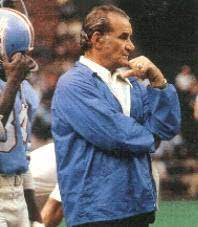
Charles Henry Noll was an American professional football player and head coach. Regarded as one of the greatest head coaches of all time, his sole head coaching position was for the Pittsburgh Steelers of the National Football League from 1969 to 1991. When Noll retired after 23 years, only three other head coaches in NFL history had longer tenures with one team.

After a seven-year playing career that included two NFL Championships as a member of his hometown Cleveland Browns and several years as an assistant coach with various teams, in 1969 Noll took the helm of the then moribund Steelers (which had played in only one post-season game in its previous 36 years, a 21–0 loss), and turned it into a perennial contender. As a head coach, Noll won four Super Bowls, four AFC titles and nine Central Division championships, compiled a 209–156–1 (.572) overall record, a 16–8 playoff record and had winning records in 15 of his final 20 seasons. His four Super Bowl victories rank second behind Bill Belichick for the most of any head coach in NFL history. His four Super Bowl wins are the most ever by a coach without a Super Bowl loss.

Between his playing and coaching tenures, Noll won a total of seven NFL Championships as well as one AFL Championship and was elected to the Pro Football Hall of Fame in 1993, his first year of eligibility.

Noll built the team through astute drafting and meticulous tutoring. During his career, he was notable for the opportunities he gave African Americans, starting the first black quarterback in franchise history and hiring one of the first black assistant coaches in league history. He was often credited with maintaining the morale of Western Pennsylvania, despite the region's steep economic decline in the late 20th century, by creating a team of champions in the image of its blue-collar fan base.

Noll played running back and tackle on the high school football team, winning All-State honors. During his senior year, he was named to the "All Catholic Universe" team by the Diocese of Cleveland newspaper. Noll was also a wrestler while in high school.

Noll planned to attend Notre Dame, but during a practice before his freshman year he suffered an epileptic seizure on the field. Notre Dame coach Frank Leahy refused to take the risk of allowing Noll to play there and so Noll accepted a football scholarship to the University of Dayton. Noll graduated with a degree in secondary education. As a member of the Flyers, he was a lineman, linebacker and a co-captain, and acquired the nickname, the "Pope," for his "'infallible' grasp of the game."

Noll was selected by the Cleveland Browns in the 20th round of the 1953 NFL draft (239th overall). During his first year, the Browns lost to the Detroit Lions in the NFL championship. The next two years, however, the Browns were NFL champions, and Noll finished his NFL career with eight interceptions, three fumble recoveries, and a touchdown on one of each.
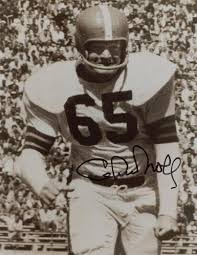
Although the undersized Noll was drafted as a linebacker, Coach Paul Brown used him as one of his "messenger guards" to send play calls to the quarterback, beginning with Otto Graham. Brown recalled that Noll soon "could have called the plays himself without any help from the bench. That's how smart he was."[8] According to Art Rooney, Jr., director of scouting for the Steelers before and during most of Noll's tenure. However, Noll felt demeaned by Brown's use of him in that way and "disliked the term 'messenger boy' so much that as coach of the Steelers he entrusted all the play calling to his quarterbacks."

Noll was paid only $5,000 per season with the Browns and so while there he acted as substitute teacher at Holy Name High School and sold insurance on the side. During that period Noll also attended Cleveland-Marshall College of Law at night. He told Dan Rooney that he decided against becoming a lawyer because "he didn't really like the constant confrontation and arguments that come with being a lawyer."

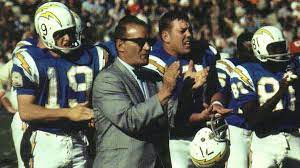
When Noll lost the starting guard position to John Wooten, he chose to retire at age 27 expecting to begin his coaching career at his alma mater. He was surprised, however, when he was not offered an open position on the University of Dayton coaching staff. He was offered a position by Sid Gillman on the staff of the Los Angeles Chargers, during its inaugural season.

Noll was an assistant coach for the American Football League's then Los Angeles and later San Diego Chargers from 1960 to 1965. He then became assistant to head coach Don Shula of the NFL Baltimore Colts from 1965 to 1968, when he was selected as the Pittsburgh Steelers' head coach.

Noll is considered part of Sid Gillman's coaching tree. He later remembered Gillman as "one of the game's prime researchers and offensive specialists. In six years, I had more exposure to football than I normally would have received in 12 years." During Noll's six-year tenure with the Chargers, where he was defensive line coach, the defensive backfield coach and defensive coordinator, the team appeared in five AFL championship games. Gillman said that Noll "had a great way with players," specifically "If a guy didn't do the job expected, Chuck could climb on his back." Massive defensive tackle Ernie Ladd said that Noll was a "fiery guy" but also "the best teacher I ever played under." "He and I were always fighting, always squabbling, but he had a great way of teaching. I take my hat off to Chuck. He was one of the main reasons for our success." The defensive line under Noll became known as the "Fearsome Foursome," and during 1961 defensive end Earl Faison was named AFL rookie of the year.

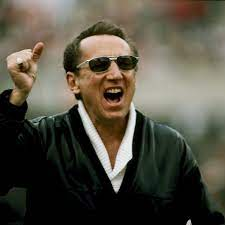
During Noll's time at Chargers, Al Davis was also an assistant and scout. Davis would later become coach and general manager of the Oakland Raiders, the principal AFC rival of the Steelers' in the 1970s.

With the Colts, Noll was defensive backfield coach and later defensive coordinator. Together with assistant coach Bill Arnsparger the Colts employed shifting alignments of rotating zone and maximum blitz defensive packages. In 1968, Noll's last season as defensive coordinator, the Baltimore Colts compiled a 13–1 record in the regular season and tied the NFL season record for fewest points allowed (144).

Shula was impressed by Noll's approach: "He explained how to do things and wrote up the technique. He was one of the first coaches I was around that wrote up in great detail all of the techniques used by players—for example, the backpedal and the defensive back's position on the receiver. He was like a classroom teacher."

The Colts won the NFL championship by routing the Cleveland Browns 34–0 in Cleveland, but were shocked by the upstart AFL champion New York Jets, 16–7, in Super Bowl III at the Orange Bowl in Miami. The next day, Noll interviewed for the head coach position in Pittsburgh.

At age 37, Noll was named the 14th head coach of the Pittsburgh Steelers on January 27, 1969, after Penn State coach Joe Paterno turned down an offer for the position.[20] At the time of his hiring, he was the youngest head coach in the NFL. Steelers owner Art Rooney would later credit Don Shula as the person who recommended Noll as a head coach.

Noll implemented a defensive system in Pittsburgh that became the legendary "Steel Curtain" defense. His coaching style earned him the nickname of The Emperor Chaz by sports announcer Myron Cope. Noll was the first head coach to win four Super Bowls (IX, X, XIII, XIV).

The key to Noll's coaching success during this run was the Steelers' skill in selecting outstanding players in the NFL college player draft. Noll's first round-one pick was Joe Greene, a defensive tackle from North Texas State, who went on to become a perennial All-Pro and anchor the defensive line. During the next few years, the Steelers drafted quarterback Terry Bradshaw (Louisiana Tech) and running back Franco Harris (Penn State) as round one picks. In the 1974 draft, Noll and the Steelers achieved a level of drafting success never seen before or since, when they selected four future Hall of Fame players with their first five picks: wide receivers Lynn Swann and John Stallworth, middle linebacker Jack Lambert, and center Mike Webster. To this day, no other draft by any team has included more than two future Hall of Famers.

A meticulous coach, Noll was known during practice to dwell on fundamentals—such as the three-point stance—things that professional players were expected to know. For instance, Andy Russell, already a Pro Bowl linebacker before Noll arrived and one of the few players Noll kept after purging the roster his first year, was told by Noll that he didn't have his feet positioned right. As a result of Noll's attention to detail, Russell went on to become a key member for the first two Super Bowl teams and started the linebacker tradition that continues today in Pittsburgh.

Noll was a well-read man who valued education and expected likewise from his team, so he sought players who studied useful or practical subjects in college and had interests outside of football. "I didn't want to pick guys who just took wood shop or some other easy course they could breeze through to play football." he explained.

While most of his contemporaries, as well as current NFL head coaches, enforced strict curfew rules on its players, Noll was very lax on off-the-field behavior. This was shown at Super Bowl IX. While Noll's counterpart – Minnesota Vikings head coach Bud Grant – strictly kept his team in their hotel rooms except for practice before the game, Noll told his team upon arriving in New Orleans to go out on Bourbon Street "and get the partying out of your system now."

The hallmark of the team during the 1970s was a stifling defense known as the Steel Curtain. Linemen L. C. Greenwood, Joe Greene, as well as Ernie Holmes and Dwight White, linebackers Jack Ham, and Jack Lambert had a collective level of talent unseen before in the NFL.

The teams that won Super Bowls IX and X used a run-oriented offense, primarily featuring Franco Harris and blocking back Rocky Bleier. Over the next few years, Terry Bradshaw matured into an outstanding passer, and the teams that won Super Bowls XIII and XIV fully utilized the receiving tandem of Lynn Swann and John Stallworth.

Noll was notoriously shy and did not like the media or give many interviews. His 1970s teams were so talented that his contributions as head coach (and architect of the team) often were overlooked.

The first half of the 1980s would see the team continue their excellence, making the playoffs for three straight years from 1982 to 1984, even as they failed to reach the Super Bowl, but as the team, facing a spate of injuries and departures to their Super Bowl-winning teams by the decade's second half, began to skid and would see three losing seasons from the years 1985 to 1989.

In 1989, Noll was recognized as NFL Coach of the Year, when he guided the Steelers into the second round of the playoffs. The team was not especially talented and lost its first two regular-season games by scores of 51–0 and 41–10. However, Noll kept the team focused and its play steadily improved enough to make the playoffs and play competitively in two playoff games; Noll went a combined 16–16 in his last two seasons at the helm of the Steelers.

Noll retired as Steelers head coach after the 1991 season with a career record of 209–156–1, including regular season and postseason games. He was elected to the Pro Football Hall of Fame two years later, in 1993.

Noll maintained a residence in suburban Pittsburgh, and also spent time at his Florida home. The Pittsburgh Steelers gave him a gift of a stationary bicycle, which he avidly used. Noll's mobility was limited by chronic back problems.

Noll held the ceremonial title of administration adviser in the Pittsburgh Steelers' front office but had no real role in the team's operations after his retirement. He spent about half the year in Pittsburgh with his wife Marianne. Their son, Chris, is a teacher in a private high school in Connecticut.

Noll died of natural causes in his Sewickley, Pennsylvania, condominium on June 13, 2014, after suffering for several years from Alzheimer's disease, a heart condition, and back problems. Noll's funeral was held on June 17, 2014, at St. Paul's Cathedral in Pittsburgh.

Noll's legacy includes providing opportunities for African Americans. Under Noll, Joe Gilliam became the league's first African American starting quarterback just a few seasons after the AFL started Marlin Briscoe, and James Harris (Gilliam started ahead of Terry Bradshaw briefly during the 1974 season). In January 1975, Franco Harris became the first African American to win the Super Bowl MVP award.

During the 1980s, Tony Dungy, who played for two seasons under Noll in the late 1970s, got his start as an NFL assistant coach, initially as the Steelers' defensive backs coach, and later he became the first African-American coordinator (defensive) in the NFL. Noll strongly promoted Dungy as a well-qualified head coaching candidate, but it did not happen for Dungy with the Steelers when Noll retired after the 1991 season. However, Dungy did become head coach of the Tampa Bay Buccaneers and later became the first African American coach to win a Super Bowl (XLI) with the Indianapolis Colts.

On August 2, 2007, the field at St. Vincent Seminary in Latrobe, Pennsylvania, was dedicated and renamed Chuck Noll Field in honor of the former coach. For more than 40 years the Steelers have held their summer camp at St. Vincent College, as it was Noll's idea to take the team away from the distractions in the city to prepare for the season each year.

Noll was honored on October 7, 2007, at Heinz Field during the Pittsburgh Steelers' pre-game ceremonies.

On September 30, 2011, Pittsburgh honored Noll by naming a new street after him. Chuck Noll Way connects North Shore Drive to West General Robinson St. The street runs along Stage AE, on the North Shore of Pittsburgh.

Sources
https://www.pro-football-reference.com/
https://www.profootballarchives.com/index.html
https://americanfootballdatabase.fandom.com/wiki/Football_Wiki
https://www.gridiron-uniforms.com/GUD/controller/controller.php?action=main
https://www.profootballhof.com/hall-of-famers/
Lahman, Sean (2008). The Pro Football Historical Abstract: A Hardcore Fan's Guide to All-Time Player Rankings. Lyons Press. p. 261.
 "Chuck Noll Biography". Pro Football Hall of Fame. Retrieved August 24, 2014.
 Muscat, Charlon (February 18, 2025). "SteelersComparing the Steelers' Dynasty to Rivals". Steelers Nation. Retrieved February 27, 2025.
 Gary M. Pomerantz, Their Life's Work: The Brotherhood of the 1970s Pittsburgh Steelers (Simon & Schuster: 2013), p. 62
 Valade, Jodie (December 27, 2008). "The invisible legend: A near recluse in retirement, Chuck Noll brought the Browns-Steelers rivalry to life". Cleveland Plain Dealer. Retrieved August 25, 2014.
 Labriola, Bob (June 14, 2014). "Hall of Fame coach Chuck Noll, 82". Steelers.com. Retrieved August 23, 2014.
 Bill Livingston & Gregg Brinda, The Great Book of Cleveland Sports Lists (Running Press: 2008), p. 28
 Abbott, Gary. Top 10 Wrestlers Who Played in the NFL. nwhof.org. Retrieved February 27, 2023.
 Rob Ruck, Maggie Jones Patterson & Michael P. Weber, Rooney: A Sporting Life (University of Nebraska Press: 2010) ["Ruck, Patterson & Weber"], p. 169.
 Mosher, Jerry. "Legendary Steelers coach Chuck Noll dies". Tribune Review. Retrieved August 23, 2014.
 Art Rooney, Jr. & Roy McHugh, Ruanaidh: The Story of Art Rooney and His Clan (Geyer Printing Co. [for Art Rooney, Jr.]: c2008), p. 241.
 Price, Elizabeth (June 19, 2014). "Letter to the Editor". Cleveland Plain Dealer. Retrieved August 25, 2014.
 Dan Rooney (as told to Andrew E. Masich, Andrew & David F. Halaas), Dan Rooney: My 75 Years with the Pittsburgh Steelers and the NFL (Da Capo Press: 2007).
 "Chuck Noll, 1932-2014". Pro Football Hall of Fame. June 14, 2014. Archived from the original on June 29, 2015. Retrieved August 24, 2014.
 Lahman, p. 260.
 Ed Gruver, The American Football League: A Year-by-Year History, 1960-1969 (McFarland: 1997) ["Gruver"], p. 97.
 Gruver, p. 216.
 The record has since been broken by the 1977 Atlanta Falcons (129).
 Livingston, Pat (January 27, 1969). "Chuck Noll named Steeler coach". Pittsburgh Press. p. 24.
 Sell, Jack (January 28, 1969). "Noll gets three years to build Steelers". Pittsburgh Post-Gazette. p. 16.
 "Colts' Noll named coach of Steelers". Milwaukee Journal. Associated Press. January 27, 1969. p. 10, part 2.[permanent dead link]
 Dulac, Gerry (June 14, 2014). "Chuck Noll / Coach who led Steelers to 4 Super Bowl titles". Pittsburgh Post-Gazette. Retrieved June 14, 2014.
 Pope, Edwin (January 6, 1985). "The Chief". Beaver County Times. Retrieved August 24, 2014.
 "Steelers Worst Season Record". StatMuse. December 15, 2024. Retrieved December 17, 2024.
 "1969 Pittsburgh Steelers Rosters, Stats, Schedule, Team Draftees". Pro Football Reference. December 16, 2024. Retrieved December 17, 2024.
 "1970 NFL Draft Listing". Pro Football Reference. December 16, 2024. Retrieved December 17, 2024.
 "Remembering Chuck Noll and A Turning Point for Pittsburgh". 90.5 WESA. June 16, 2014. Retrieved December 17, 2024.
 "1969 Pittsburgh Steelers Roster & Players". Pro Football Reference. December 16, 2024. Retrieved December 17, 2024.
 "1970 Pittsburgh Steelers Roster & Players". Pro Football Reference. December 16, 2024. Retrieved December 17, 2024.
 "1970 Pittsburgh Steelers Rosters, Stats, Schedule, Team Draftees". Pro Football Reference. December 16, 2024. Retrieved December 17, 2024.
 Millman, Chad (September 1, 2010). "How Chuck Noll Saved the Steelers". ESPN.com. Retrieved June 14, 2014. Excerpt from Chad Millman & Shawn Coyne, The Ones Who Hit the Hardest: The Steelers, the Cowboys, the 70s and the Fight for America's Soul (Gotham: 2010).
 Dedman, Gordon (September 2, 2021). "Steelers History: The Architect of the Steel Curtain". Steel City Blitz. Retrieved December 17, 2024.
 Pasquarelli, Len (January 6, 2007). "Cowher not universally adored in hometown". ESPN.com. Retrieved July 4, 2008.
 "1972 Pittsburgh Steelers Rosters, Stats, Schedule, Team Draftees". Pro Football Reference. December 16, 2024. Retrieved December 17, 2024.
 "Oakland Raiders at Pittsburgh Steelers". Pro Football Reference. December 16, 2024. Retrieved December 17, 2024.
 "Miami Dolphins at Pittsburgh Steelers". Pro Football Reference. December 16, 2024. Retrieved December 17, 2024.
 "1973 Pittsburgh Steelers Rosters, Stats, Schedule, Team Draftees". Pro Football Reference. December 16, 2024. Retrieved December 17, 2024.
 "1974 Pittsburgh Steelers Rosters, Stats, Schedule, Team Draftees". Pro Football Reference. December 16, 2024. Retrieved December 17, 2024.
 "1975 Pittsburgh Steelers Rosters, Stats, Schedule, Team Draftees". Pro Football Reference. December 16, 2024. Retrieved December 17, 2024.
 America's Game: The Super Bowl Champions. The 1974 Pittsburgh Steelers
 https://www.cleveland.com/browns/2008/12/the_invisible_legend_a_nearrec.html
 "1983 NFL Draft Listing". Pro Football Reference. Retrieved December 10, 2024.
 "Dan Marino Stats, Height, Weight, Position, Draft, College". Pro Football Reference. September 15, 1961. Retrieved December 10, 2024.
 Schad, Tom (July 17, 2018). "Gabe Rivera, ex-Steelers, Texas Tech DT paralyzed in wreck, dies at 57". USA TODAY. Retrieved December 10, 2024.
 Clark, Joe (October 28, 2023). "Chuck Noll Explains Steelers Decision To Pass On Dan Marino". Steelers Depot. Retrieved December 10, 2024.
 "1984 Pittsburgh Steelers Rosters, Stats, Schedule, Team Draftees". Pro Football Reference. September 2, 1984. Retrieved December 10, 2024.
 "1988 Pittsburgh Steelers Rosters, Stats, Schedule, Team Draftees". Pro Football Reference. September 4, 1988. Retrieved December 10, 2024.
 "The 1988 Steelers: The Year I Re-Found My Faith in the Franchise". Steel Curtain Rising. September 1, 2024. Retrieved December 10, 2024.
 Chrise, Kyle (June 9, 2023). "The season when Chuck Noll got the Matt Canada treatment". Behind the Steel Curtain. Retrieved December 10, 2024.
 "1989 Pittsburgh Steelers Rosters, Stats, Schedule, Team Draftees". Pro Football Reference. September 10, 1989. Retrieved December 10, 2024.
 https://www.yahoo.com/news/day-chuck-noll-retired-104025286.html
 https://www.nytimes.com/1991/12/27/sports/football-glory-years-long-gone-noll-resigns.html
 Merrill, Elizabeth (January 22, 2009). "The Lessons of Chuck Noll". ESPN.com. Retrieved August 24, 2014.
 "Noll Funeral Arrangements". Tribune Review. June 14, 2014. Retrieved August 24, 2014.
 "Steelers set the standard for diversity in the NFL". Steelers Wire. June 19, 2020. Retrieved June 7, 2022.
 "Chuck Noll's low profile belies lasting legacy". NFL.com. Retrieved June 7, 2022.
 Hayes, Joshua. "Legendary Pittsburgh Steelers Coach Chuck Noll Deserves Proper Appreciation". Bleacher Report. Retrieved June 7, 2022.
 "Legendary Steelers Coach Chuck Noll Fact Blitz". University of Pittsburgh Press. August 1, 2016. Retrieved June 7, 2022.
 J, Homer (July 24, 2014). "The living legacy of Chuck Noll". Behind the Steel Curtain. Retrieved June 7, 2022.
 "Meet Author of "Chuck Noll: His Life's Work"". Peters Township Public Library. March 2, 2017. Retrieved June 7, 2022.
 Lippock, Ron (December 28, 2017). "Interview: Tony Dungy Used Chuck Noll's Teachings To Become A Great Head Coach". Steelers Depot. Retrieved June 7, 2022.
 Garber, Greg (February 2, 2007). "A Retrospective on Progress". ABC News.
 Koehler, Allison (September 3, 2021). "Life lessons Tony Dungy learned from Steelers HC Chuck Noll". Steelers Wire. USA Today. Retrieved June 7, 2022.
 "Dungy shares his respect for Noll". www.steelers.com. Retrieved June 7, 2022.
 Washinski, Bill; Writer, Staff (February 27, 2022). "Tony Dungy shares the private reason Chuck Noll passed on Dan Marino - SteelerNation.com". www.steelernation.com. Retrieved June 7, 2022.
 "Chuck Noll Field". Saint Vincent College. October 11, 2010. Retrieved January 24, 2025.
 "Stallworth: 'I actually enjoyed training camp'". Steelers.com. June 3, 2015. Retrieved January 24, 2025.
 "Steelers 21-0 Seahawks (Oct 7, 2007) Final Score". ESPN. January 9, 2025. Retrieved January 9, 2025.
 "Chuck Noll Gets His Way". Pittsburgh.cbslocal.com. September 30, 2011. Retrieved June 14, 2014.
 "Chuck Noll: His Life's Work By Michael MacCambridge". The Official Steelers Pro Shop. January 14, 2025. Retrieved January 24, 2025.
 Wexell, J. (2006). Pittsburgh Steelers: Men of Steel. Sports Pub. ISBN 978-1-58261-996-5. Retrieved January 24, 2025.

Monday, March 4, 2024

The Story And Significance Of Al Davis - Part Of The Raiders Organization For Almost Five Decades

Allen Davis  was an American football coach and executive. He was the principal owner and general manager (officially titled managing general partner) of the National Football League Oakland Raiders for 39 years, from 1972 until his death in 2011. Prior to becoming principal owner of the Raiders, he served as the team's head coach from 1963 to 1965 and part owner from 1966 to 1971, assuming both positions while the Raiders were part of the American Football League (AFL). He served as AFL commissioner in 1966.

Known for his motto "Just win, baby", the Raiders became one of the NFL's most successful and popular teams under Davis' management. The franchise enjoyed their greatest successes during the 1970s and 1980s where they were perennial playoff contenders and won three Super Bowl titles. He was inducted into the Pro Football Hall of Fame in 1992.

Davis was active in civil rights, refusing to allow the Raiders to play in any city where black and white players had to stay in separate hotels. He was the first NFL owner in the modern era to hire a black head coach (Art Shell), the first to hire a female chief executive (Amy Trask), and the first NFL owner to hire a Latino head coach (Tom Flores). He remains the only executive in NFL history to be an assistant coach, head coach, general manager, commissioner, and owner.

In job hunting, he would introduce himself as "Davis from Syracuse", likely intentionally to conflate with George Davis, star halfback for the school's football team. Turned down at Hofstra University and by Bill Altenberg, athletic director at Adelphi University (both on Long Island), he approached Adelphi's president. What went on between the two men is not known; his biographer Mark Ribowsky suggests Davis used a combination of "bluff and con," but a half hour after Altenberg dismissed Davis from his office, he received a call from the president that he had a new freshman football coach.

In 1952, with his student deferral ended upon receipt of his master's degree, Davis was inducted into the United States Army. He quickly secured a place attached to a public relations unit near Syracuse, and set about obtaining a place on one of the coaching staff for the military's football teams. General Stanley Scott of Fort Belvoir, Virginia, obtained Davis's services in 1953 as football coach for his post's football squad. At the time, military football was taken very seriously; the teams were well-stocked with drafted college stars, and often scrimmaged National Football League teams. Davis coached Fort Belvoir, just south of Washington, D.C., to a record of eight wins, two losses, and one tie (8–2–1), missing a chance to play in the Poinsettia Bowl in San Diego because of a final-game loss to the nearby Quantico Marine Base. As a private first class, he was often coaching players of a higher rank, including officers.[19] Near the end of 1952, he was called to testify before a congressional committee investigating whether athletes were being coddled in the military. Although most of Davis's team was sent to Korea, he remained at Fort Belvoir until his discharge in 1954.[20][21] While coaching in the army, Davis sold scouting information about his players to NFL teams.[22] One NFL executive who contacted Davis was Pete Rozelle of the Los Angeles Rams, but as Rozelle had been allocated no money, Davis gave him no information.

After his military service, Davis married his fiancée, Carol Sagal, in a Brooklyn synagogue; the couple established a first home in Atlantic Beach, near Al Davis's parents. Davis worked for a year as a freelance scout for the Baltimore Colts of the NFL. He had considerable knowledge of the players he had had on his roster or coached against, and advised the Colts which players to offer contracts to or draft as they returned to civilian life. Davis cultivated the Colts' head coach, Weeb Ewbank, hoping Ewbank's connections would lead to a coaching job for Davis, and these efforts paid off in January 1955, when Davis was hired by The Citadel in South Carolina as an assistant to first-year head coach John Sauer. In contrast to the glory won by its alumni in war, the South Carolina military academy's football team had lost every game the previous season, and previous head coach John McMillan was dismissed after two seasons. Davis stated, in his interview, that he would be able to persuade small-town boys from the Northeast to attend The Citadel, which often had difficulty in recruiting star players because of its regimented lifestyle. He was successful in his recruiting, although not all remained past the first training camp, at Parris Island Marine base.

During games, Davis was stationed in the press box, calling plays which were generally run by Sauer without modification. The Citadel unexpectedly began the season by winning five of its first six games, although it lost the next three to end the season 5–4. Davis received much credit for his role in The Citadel's success, although losing Sauer's regard through too-aggressive self-promotion. The 1956 season was less successful, as the team finished 3–5–1. Sauer resigned at the end of the season; Davis unsuccessfully sought the head coaching position and then resigned; Ribowsky records that there were allegations of payments and other benefits to players in violation of NCAA rules; he also states that Davis pressured professors to change grades to keep student-athletes eligible to play football. By the time he left The Citadel, Davis had already arranged his next job, at the University of Southern California (USC) in Los Angeles.

Davis was an effective recruiter as a USC assistant coach, bringing one prospect, Angelo Coia to the Los Angeles Coliseum at night, and as the lights were slowly turned off, asked the student to imagine himself playing there before 100,000 people. Coia played for USC and later worked for the Raider front office. When Davis arrived, USC was on NCAA probation for allowing alumni to surreptitiously give money to players, and had not been permitted to play in a bowl game after the 1956 season; these sanctions hampered Davis's first two seasons at USC, 1957 and 1958, during which the team posted a combined 5-14-1 record. The head coach, Don Clark, came to rely heavily on Davis. Clark and Davis hoped that 1959 would bring a conference championship and the chance to play in the Rose Bowl, but in April 1959 USC was sanctioned by the NCAA again, this time for inducing recruits signed by other schools into breaking their letters of intent. Not allowed to play on television, USC won its first eight games before losing to UCLA and Notre Dame. Despite the defeats, the team was Pacific Coast Conference champions, but because of the sanctions could not play in the Rose Bowl. Clark resigned after the season; although Davis put in for the position, it went to another assistant, John McKay, who did not keep Davis on his staff.

Davis had met Los Angeles Rams coach Sid Gillman in Atlantic City at a coaching clinic; the NFL coach had been impressed that Davis had sat in the front row, taken copious notes, and had asked many questions afterwards. Gillman was fired after the 1959 season, but was quickly hired by the Los Angeles Chargers of the startup American Football League (AFL) for their debut 1960 season. He hired Davis as backfield coach on a coaching staff which included future hall of famer Chuck Noll as well as future AFL head coach and NFL general manager Jack Faulkner. Gillman later stated that he hired Davis for his success both as a coach and as a recruiter, and because "Al had that knack of telling people what they wanted to hear. He was very persuasive."

The AFL's rules were crafted to encourage wide-open, high-scoring football. In later years, much to Gillman's anger, Davis hinted that he had designed the Chargers' offense, or at least deserved partial credit. The team initially proved successful, winning the AFL Western Division in 1960 and 1961, although losing each time in the AFL Championship Game to the Houston Oilers. Due to financial losses sustained by drawing small crowds to the huge Los Angeles Coliseum, the team moved to San Diego in 1961. In 1962, however, the team won only four of fourteen games.

One player whom Davis recommended to the Chargers, and then secured, was wide receiver Lance Alworth of Arkansas, who was a first-round selection of NFL San Francisco 49ers in the 1962 NFL Draft. Unwilling to give the 49ers a chance to sign him, Davis raced onto the field at the conclusion of Alworth's final college game and signed him to a contract under the goalpost as 49ers head coach Red Hickey watched helplessly from the stands. Davis later stated, "I knew it wasn't safe to let Alworth go to the dressing room." In 1978, Davis was selected by Alworth to introduce him at his induction to the Pro Football Hall of Fame in Canton, Ohio.

Early in the 1962 season, Davis spoke with Oakland Raiders owner F. Wayne Valley about their head coaching job. However, Davis was not then interested. After the team's disastrous 1962 season, in which it lost its first 13 games before defeating a Boston Patriots team demoralized from having just been eliminated from playoff contention, Valley sought to replace head coach Red Conkright.

A number of names were rumored to be in contention for the Raiders head coaching job, from Green Bay Packers coach Vince Lombardi to Lou Agase, former coach of the Canadian Football League Toronto Argonauts. On January 1, 1963, Davis met with Valley and the other Raiders general partner, Ed McGah. According to witnesses present at the negotiations, Davis did not have a high opinion of Valley and McGah, indicating during their absence that they did not know the right questions to ask. They offered him a one-year contract as head coach. He declined, insisting on a multi-year deal as both head coach and general manager, with complete control over football operations, to which they eventually agreed and settled on a three-year stint at an annual salary of $20,000. According to Davis biographer Ira Simmons, the date that Davis came to Oakland, January 18, 1963, "was probably one of the three or four most important dates in AFL history. Maybe NFL history too." Valley later stated, "we needed someone who wanted to win so badly, he would do anything. Everywhere I went, people told me what a son of a bitch Al Davis was, so I figured he must be doing something right."

The Raiders team had been a late addition to the original AFL in 1960; the franchise had been awarded when the owners of the AFL Minnesota team had been induced to join the NFL instead. While it inherited the departed Minnesota team's draft picks, it had little else. The franchise, originally nicknamed the Señors (changed to Raiders after columnists raised objections) was not established until the other AFL teams had had the opportunity to sign players and coaches, a handicap which contributed to it being the only team to post a losing record in each of the AFL's first three seasons. The University of California refused to let it play at Memorial Stadium in Berkeley, and no other facility in the East Bay was suitable even for temporary use, forcing it to play its first two seasons at Kezar Stadium and Candlestick Park, both located across the bay in San Francisco.

Valley and his group purchased the Raiders in 1961. Valley and his partners used the threat of leaving to induce city officials to construct Frank Youell Field, a temporary facility in downtown Oakland next to the Nimitz Freeway which held about 15,000 people, the use of which was shared with high schools. Planning for a larger stadium — what became the Oakland Coliseum — began, but there was no guarantee that it would ever be built. 

Davis immediately began to try to build the Raiders into a championship team, both on the field and in the front office. Many Raiders players and front-office employees were dismissed. Since their first season, the Raiders had used hand-me-down black and gold uniforms from the University of the Pacific in Stockton. Davis had been impressed by the black uniforms of the football players at West Point, which he felt made them look larger. Soon after he arrived, the Raiders adopted their now-iconic silver and black motif. The Raiders' offices were on an open mezzanine overlooking a downtown Oakland hotel lobby; Davis got Valley to move them to more private facilities. With no agreement between the AFL and NFL, drafted players often went to the higher bidder. Davis could not hope to outbid the NFL and drafted players with remaining college eligibility, hoping to sign them once they finished their careers. Thus, his hopes of success for 1963 rested on what trades he could make, and in signing players cut by other teams.

Davis's methods of acquiring these players caused other teams' executives to regard him with respect and caution. He acquired All-AFL guard Bob Mischak from the New York Jets for Dan Ficca without telling Jets coach/general manager Weeb Ewbank that Ficca would not be released from his military service until after the season began. Wide receiver Art Powell had played out his contract with New York and become a free agent, and had apparently been signed by the Buffalo Bills. Davis learned that the Powell contract had been made before the season ended, and thus constituted tampering. He signed Powell himself, and the Bills did not contest it.

Gillman's Chargers teams had used high-powered offenses. Davis sought to increase their power. From the opening of training camp, he sought to motivate his players, using techniques he had learned in the military. From the start, players saw phrases like "commitment to excellence" and, on schedules next to the time of games, "We go to war!" In the season opener, at Houston's Jeppesen Stadium against the Oilers, the two-touchdown underdog Raiders won, 24–13, then came home to defeat the Bills 35–17. A home loss to the Patriots was next, followed by an East Coast road trip on which the Raiders lost all three games. To growing excitement in Oakland, the Raiders did not lose the rest of the season, finishing 10–4, a game behind the division champion Chargers, whom the Raiders defeated twice. Davis was voted AFL Coach of the Year. The 1963 Oakland Raiders were the only pro football team to improve its record by nine victories under the 14-game schedule.

Although the team slipped to 5–7–2 in 1964, it rebounded to an 8–5–1 record in 1965.

By the end of its sixth season in 1965, the American Football League had overcome its initial status of bare-bones survivor to become a significant rival to the NFL. With a television contract with NBC and major stadiums constructed or being built, the AFL could afford to compete on equal terms for players with the NFL. Not all AFL owners sought a merger — Jets owner Sonny Werblin, for example, felt that with brand-new Shea Stadium and the young star Joe Namath at quarterback, his team could compete on equal terms with the crosstown NFL Giants, then playing at Yankee Stadium in the South Bronx. However, most AFL owners wanted to be a part of the older, better-established NFL, whose owners feared continued escalation of player salaries.

While the AFL owners liked the league's first commissioner, Joe Foss, they had little confidence in his abilities at a time for struggle between the two leagues, and Foss resigned on April 7, 1966. Davis, 36, was voted in as commissioner the following day, and took the job with Valley's agreement, hired as a fighter who would win the war with the NFL. The owners, led by Chiefs owner Lamar Hunt, felt that Davis could put pressure on the NFL and force a favorable settlement. His biographer, Glenn Dickey, notes that Davis was deceived by the owners, "He thought he had been hired to win the war with the NFL. In fact, the owners only wanted to force a peace. They were quietly negotiating a merger while Davis was fighting a war."

According to sportswriter Ken Rappoport in his history of the AFL, "Davis had a plan, and, considering the football genius the man would become, no one should have been surprised that it would work—brilliantly." Davis's target in the war was the NFL's quarterbacks, arranging for AFL teams to sign star players, such as Roman Gabriel of the Rams, who would be free agents after 1966 although that season had not yet begun. Gabriel, with his AFL contract to begin in 1967, received an immediate $100,000 bonus. The signing of 49ers quarterback John Brodie was announced by Davis and the AFL. These transactions increased the financial pressure on the NFL's weaker franchises, which faced the prospect of losing their best players in a year, or greatly increasing their labor costs. A merger agreement was announced on June 8 and Davis was greatly displeased with the agreement on two fronts. It required the Jets and Raiders to pay indemnities to the Giants and 49ers for establishing teams within their exclusive territories, and it also put him out of a job: the merger agreement immediately abolished the post of AFL commissioner. Pete Rozelle would continue in his post as NFL commissioner under the merger agreement. Davis had hoped to be named commissioner if any merger was reached; the result increased what already had become a dislike of Rozelle.

Davis resigned as commissioner on July 25, 1966. AFL owners wanted Davis to continue serving as AFL President. AFL owners had explicitly agreed that the office of AFL President would be subservient to that of the NFL Commissioner, and Davis flatly refused to consider serving as a subordinate to Rozelle. Eventually, Milt Woodard (who was assistant commissioner under Foss) agreed to serve as President of the AFL.

After resigning as AFL commissioner, Davis formed a holding company, A.D. Football, Inc. and returned to his old club as one of three general partners, along with Wayne Valley and Ed McGah. He owned a 10% stake in the team, and was also named head of football operations. From this day onward, Davis was operating head of the franchise; Valley and McGah largely left the Raiders in Davis' hands.

On the field, the team Davis had assembled and coached steadily improved. With John Rauch (Davis's hand-picked successor) as head coach, the Raiders won the 1967 AFL Championship, defeating the Houston Oilers 40–7. The win earned the team a trip to Super Bowl II, where they were beaten 33–14 by Vince Lombardi's Green Bay Packers. The following two years, the Raiders again won Western Division titles, only to lose the AFL Championship to the eventual Super Bowl winners—the New York Jets (1968) and Kansas City Chiefs (1969).

In 1969, John Madden became the team's sixth head coach, and under him, the Raiders became one of the most successful franchises in the NFL, winning six division titles during the 1970s. In 1970, the AFL-NFL merger took place and the Raiders joined the Western Division of the American Football Conference in the newly merged NFL. The first post-merger season saw the Raiders win the AFC West with an 8–4–2 record and go all the way to the conference championship, where they lost to the Colts. Despite another 8–4–2 season in 1971, the Raiders failed to win the division or achieve a playoff berth.

In 1972, while managing general partner Valley was attending the 1972 Summer Olympics in Munich, Davis drafted a revised partnership agreement that made him the new managing general partner, with near-absolute control over team operations. McGah signed the agreement. Since two of the team's three general partners had voted in favor of the agreement, it was binding under California partnership law at the time. Valley sued to overturn the agreement once he returned to the country but was unsuccessful. Valley sold his interest in 1976 and from that point none of the other partners played any role in the team's operations, despite the fact that Davis did not acquire a majority interest in the Raiders until 2005, when he bought the shares held by McGah's family (McGah died in 1983). At the time of his death, Davis owned about 67% of the team.

In addition to serving as owner, Davis effectively served as his own general manager until his death — longer than any football operations chief in the league at the time. When he died, he was one of three NFL owners who had the title or powers of general manager, the others being Jerry Jones of the Dallas Cowboys and Mike Brown of the Cincinnati Bengals. Davis was long recognized as one of the most hands-on owners in professional sports and reportedly had more authority over day-to-day operations than any other owner in the league.

Davis was known throughout the league as a maverick and dressed the part. By the time he had taken complete control of the Raiders, he had assumed his classic image—slicked-back hair in a 1950s-style ducktail, dark sunglasses, tracksuits and Brooklyn-tinged speech ("the Raiduhs").

With Davis in control, the Raiders became one of the most successful teams in all of professional sports. From 1967 to 1985, the team won 13 division championships, one AFL championship (1967), three Super Bowls (XI, XV and XVIII) and made 15 playoff appearances. Although the Raiders later fell on harder times, going 37–91 from 2003 to 2010, they are one of only five teams to play in the Super Bowl in four different decades[timeframe?], the others being the Pittsburgh Steelers, New England Patriots, New York Giants and Denver Broncos.

In 1992, Davis was inducted into the Pro Football Hall of Fame as a Team and League Administrator and was presented by John Madden. Davis was chosen by a record nine Pro Football Hall of Fame inductees to present them at the Canton, Ohio ceremony: Lance Alworth, Jim Otto, George Blanda, Willie Brown, Gene Upshaw, Fred Biletnikoff, Art Shell, Ted Hendricks and Madden.


In 2007, Davis sold a minority stake in the Raiders for $150 million and said that he would not retire until he won two more Super Bowls or died.

Davis' generosity was legendary when it came to helping former players in need, although he routinely did so without fanfare. His philosophy was: once a Raider, always a Raider.

Davis was long considered one of the most controversial owners in the NFL and was involved in multiple lawsuits involving Los Angeles, Oakland, Irwindale and the National Football League. In 1980, he attempted to move the Raiders to Los Angeles but was blocked by a court injunction. In response, Davis filed an antitrust lawsuit against the NFL and his team won the Super Bowl. In June 1982 a federal district court ruled in Davis' favor and the team relocated to Los Angeles for the 1982 NFL season. When the upstart United States Football League filed its antitrust suit in 1986, Davis was the only NFL owner who sided with the USFL.

In 1995, after being unable to secure a new stadium in the Los Angeles area and when a proposed move to Sacramento that involved Davis taking ownership of the Sacramento Kings fell apart, Davis moved the team back to Oakland then sued the NFL, claiming the league sabotaged the team's effort to build a stadium at Hollywood Park in Inglewood by not doing enough to help the team move from the antiquated Los Angeles Memorial Coliseum to a new stadium complete with luxury suites. The NFL won a verdict in 2001, but Los Angeles County Superior Court Judge Richard Hubbell ordered a new trial amid accusations that one juror was biased against the team and Davis and that another juror committed misconduct. A state appeals court later overturned that decision. The case was thrown out in 2007 when the Supreme Court of California unanimously ruled that the verdict against the Raiders stood. This was the last of several lawsuits the Raiders had outstanding against the league and its stadium landlords.

In the mid-1990s, Davis sued the NFL on behalf of the Raiders, claiming the Raiders had exclusive rights to the Los Angeles market, even though the Raiders were in Oakland. Davis and the Raiders lost the lawsuit.

In 2007, NFL Films chose the feud between Davis and the NFL/Pete Rozelle as their number 1 greatest feud in NFL history on the NFL Network's Top Ten Feuds, citing almost a half-century of animosity between Davis and the league. Some believe that the root of Davis' animosity towards the NFL and his former co-owners in the AFL was the surreptitious way they pushed the AFL-NFL merger behind his back.

The feud was most recently chronicled in Al Davis vs. the NFL, a documentary on the feud between Davis and Rozelle first broadcast by ESPN on February 4, 2021, as part of its 30 for 30 series. The film's narrative structure uses reconstructions of Davis and Rozelle to "tell" its story, using deepfake technology and extensive content from the NFL Films archives.

Davis introduced the Raiders' signature colors silver and black in 1963 in a unilateral move as head coach and general manager. In 1966 as AFL Commissioner, Davis initiated a bidding war with the NFL over players. But it was his return to Oakland in 1967 that allowed him to reach his true calling. That season Davis made a number of roster moves, including landing Buffalo Bills quarterback Daryle Lamonica, a backup for starter Jack Kemp on two AFL champion Bills teams. Another move at first thought to be desperate was the signing of former Houston Oilers quarterback George Blanda, who was already 39 but was still a very solid placekicker, and had played on the first AFL champion teams with Houston, as well as for the Chicago Bears and Baltimore Colts before that. Davis identified Blanda as a mentor for Lamonica as well as a solid special teams man despite his advanced age. That year, he also drafted guard Gene Upshaw, who would become the cornerstone of the Oakland offensive line well into the 1980s. Lamonica propelled the Raiders to a 13–1 won-lost record in the 1967–68 season, and they coasted to the league championship with a 40–7 victory over Houston, although they were defeated easily by the Green Bay Packers in Super Bowl II. Oakland under Davis would go on to win the two remaining AFL Western Division titles before the 1970 AFL–NFL merger.

During the first years of the new league format Oakland was a dominant franchise, winning the AFC West Division every year except 1971, and was kept out of the Super Bowls between 1970 and 1975 only by phenomenal Baltimore Colts, Miami Dolphins and Pittsburgh Steelers teams. Indeed, during the nine-year span from 1967 through 1975, the Raiders were eliminated by the team that won the Super Bowl on seven occasions (Green Bay in Super Bowl II at the end of the 1967 season, Super Bowl III champion New York in the 1968 AFL Championship Game, Super Bowl IV champion Kansas City in the 1969 AFL Championship Game, Super Bowl V champion Baltimore in the 1970 AFC Championship, Super Bowl VIII champion Miami in the 1973 AFC Championship Game, and Super Bowl IX and X champion Pittsburgh in the 1974 and 1975 AFC Championship Games). Finally, in 1976, the Raiders won their first title in Super Bowl XI under Davis's homegrown head coach John Madden. From 1970 to 1981 Oakland was able to reach the AFC Championship Game seven out of eleven years, and won two Super Bowls. They also captured additional division titles in that span.

In the 1980 offseason, star quarterback Ken Stabler attempted to renegotiate his contract with the Raiders. A veteran “gunslinger”, Stabler had won the Raiders' only title until then and had been a mainstay since his 1968 signing with the team as a protĂ©gĂ© of Lamonica. Davis angered much of the Raider community by dealing him to the Oilers for quarterback Dan Pastorini, a trade many regarded as selfishly seeking revenge while strengthening the team's top AFC rival. Pastorini was injured in week 5, and the starting role fell to his backup, Jim Plunkett. The former Heisman Trophy-winning but little-achieved professional led the Raiders to a first-place tie with San Diego for the best AFC West record and the wild-card spot for their first playoff appearance since 1977. The Raiders defeated Stabler and the Oilers, 27–7, in the AFC wild card game, and subsequently became the third second-place team to play in the Super Bowl, joining the 1969 Kansas City Chiefs and the 1975 Dallas Cowboys. They defeated the Philadelphia Eagles, 27–10, in Super Bowl XV, enabling them to become the first wild-card team to ever win the Super Bowl. The Raiders won the AFC semifinal game over the Browns, 14–12, at Cleveland in one of the most exciting games, with a key interception of a Brian Sipe pass sealing victory in the freezing cold by Lake Erie. Then they defeated San Diego, 34–27, on the road on their march to victory in Super Bowl XV in New Orleans.

Marcus Allen, the most valuable player in the Raiders' Super Bowl XVIII victory, was ordered benched by Davis for two years following a contract dispute. Davis only commented, "He was a cancer on the team." Allen said that Davis "told me he was going to get me." He added that "I think he's tried to ruin the later part of my career. He's trying to stop me from going to the Hall of Fame. They don't want me to play." Davis called Allen's charges "fraudulent", and then-Raiders coach Art Shell said only he decided who plays. The Raiders released Allen in 1992, and he played the last five years of his 16-year, Hall of Fame career with the Kansas City Chiefs.

On February 18, 2002, Davis dealt his head coach Jon Gruden to the Tampa Bay Buccaneers in exchange for Tampa Bay's 2002 and 2003 first-round draft picks, 2002 and 2004 second-round draft picks, and $8 million in cash. His replacement, Bill Callahan, led Oakland to an 11–5 record and their third consecutive division championship. The Raiders reached Super Bowl XXXVII, where they faced Gruden, who led Tampa Bay to its first Super Bowl berth. The Buccaneers won in a 48–21 blowout, in a matchup that was termed the "Gruden Bowl". Seventeen years later, Gruden returned to the Raiders as head coach in 2018 after seven years with the Buccaneers and nine years with ESPN, although he resigned in 2021 as a result of emails leaked of Gruden making misogynistic, homophobic, and racist comments.

Although it was not apparent at the time, the Raiders' loss in the Super Bowl would be Davis' last hurrah. The Raiders would start to struggle and suffer six consecutive losing seasons from 2003 to 2009, the longest drought in franchise history. This included double-digit loss record seasons in seven consecutive years from 2003 to 2009. The team cycled through multiple head coaches. Their 2007 first overall draft pick, quarterback JaMarcus Russell, was called "the biggest draft flop in NFL history" by FoxSports.com. Davis was largely blamed, and his motto of "Just win, baby!" was mocked by many. Russell was released by the Raiders in May 2010 and never played another down in the NFL.

The 2011 Raiders' record was 2–2 at Davis' death. The day after his death, the Raiders defeated the Houston Texans 25–20 on a final play interception by safety Michael Huff in the end zone. The Raiders finished the season with a record of 8–8 and missed the playoffs, after starting the season 7–4.

Davis breached several civil rights and diversity barriers during his career with the Raiders. In 1963, the Raiders were scheduled to play a preseason game in Mobile, Alabama. In protest of Alabama's segregation laws, Davis refused to allow the game to be played there and demanded the game be moved to Oakland. He also refused to allow the players to travel to cities to play games where the black and white players would have to stay in separate hotels.

Davis was the first NFL owner to hire an African American head coach, Art Shell, and a female chief executive, Amy Trask. He also hired Tom Flores, the first Latino head coach in the league.

Davis died, aged 82, in his suite at the Hilton Hotel Oakland Airport at 2:45 a.m. PDT on October 8, 2011, in Oakland, California. Nine days later, a private service and funeral was held for Davis, who was interred at Chapel of the Chimes. In the days following the funeral, The Associated Press obtained information pertaining to Davis' death. The death certificate, issued by Alameda County, disclosed Davis had died from "an abnormal heart rhythm, congestive heart failure and a heart muscle disease". Davis had previously undergone heart surgery in 1996. Davis was also afflicted with Merkel-cell carcinoma, a rare skin cancer, and had undergone throat surgery in the days preceding his death.

There was an outpouring of support and grief in the wake of Davis' death. John Madden, who had remained close to Davis since their first meeting in 1966, lamented, "You don't replace a guy like that. No way. No damn way. You look at the things he's done that no one ever did before, being a scout, assistant coach, head coach, general manager, commissioner and owner." The Sunday following his death, the Oakland Raiders adorned their helmets with a sticker which read "Al" in Davis' memory. A league-wide moment of silence was also observed. Despite the widespread remembrance of his accomplishments, Davis' position as a controversial figure lives on as part of his legacy. Sportswriter Rick Reilly was particularly adamant that the questionable personnel decisions Davis made later in his career and his arrogant, brash personality should not be forgotten amidst sportswriters' praise of him as an innovative owner.

Davis was survived by his wife, Carol, and their only child, Mark, a graduate of California State University, Chico. Mark assumed his father's old title of managing general partner of the Raiders and with his mother owns the majority of the team. Both Mark and Carol represent the Raiders in owners' meetings. Carol suffered a serious heart attack in 1979 and was hospitalized for three weeks but was able to make a complete recovery.

Al Davis' mother Rose had lived to age 103. She died in 2001, having outlived her husband Lou by 40 years.

Sources
https://www.pro-football-reference.com/
https://www.profootballarchives.com/index.html
https://americanfootballdatabase.fandom.com/wiki/Football_Wiki
https://www.gridiron-uniforms.com/GUD/controller/controller.php?action=main
https://www.profootballhof.com/hall-of-famers/
 "Al Davis, Hall of Fame owner of Raiders, dies at age 82". NFL.com. October 8, 2011. Retrieved August 6, 2023.
 "NFL mourns passing of Raiders owner Al Davis". SportingNews.com. Associated Press. October 8, 2011. Archived from the original on February 2, 2013.
 Inman, Cam (September 10, 2020). "Al Davis' diversity legacy: Of Silver & Black, and the full rainbow". The Mercury News. Retrieved March 18, 2022.
 Elman, Jake (February 2, 2021). "Late Raiders Owner Al Davis Fought Segregation Laws as Fiercely as He Did the NFL". Sportscasting | Pure Sports. Archived from the original on March 20, 2023. Retrieved March 18, 2022.
 "Hall of Famer Al Davis went the extra yard for social justice | Pro Football Hall of Fame Official Site". pfhof. Retrieved March 18, 2022.
 Frank, Vincent. "Al Davis: Art Shell and 5 NFL Coaches Who Owe Most to Oakland Raiders Owner". Bleacher Report. Retrieved June 19, 2022.
 Davenport, Gary. "Al Davis: Hiring Art Shell Paved the Way for Diversity in the NFL". Bleacher Report. Retrieved June 19, 2022.
 RaiderusMax. "Amy Trask of the Oakland Raiders: The Toughest and 1st Female CEO in the NFL". Bleacher Report. Retrieved June 19, 2022.
 Shaw, A.R. (October 8, 2011). "Oakland Raiders Owner Al Davis Dies, Hired First Black and Latino Coaches in the NFL". Rolling Out. Retrieved July 22, 2024.
 Robertson, Maddie (October 21, 2020). "The impact of one man on America and professional football, the story of Al Davis". Footballscoop. Retrieved March 18, 2022.
 Schalter, Ty. "Al Davis Death: Oakland Raiders Owner Championed Diversity in the NFL". Bleacher Report. Retrieved June 19, 2022.
 "Hall of Famer Al Davis went the extra yard for social justice | Pro Football Hall of Fame Official Site". pfhof. Retrieved June 19, 2022.
 Gray, Jim (June 20, 2025). "Jim Gray on the Dan Patrick Show Full Interview (6-20-25)". Retrieved June 20, 2025.
 Ribowsky 1991, pp. 15–24.
 Dickey, p. 3.
 Simmons, pp. 12–13.
 Ribowsky 1991, pp. 27–31.
 Ribowsky 1991, pp. 34–35.
 Ribowsky 1991, pp. 11–13.
 Toppmeyer, Blake. "How former Tennessee Vols lineman Jim Haslam came to play football for Al Davis on a military base", Knoxnews.com, April 23, 2019. Retrieved June 23, 2021.
 Ribowsky 1991, pp. 41–54.
 Richmond 2010, p. 41.
 Simmons, pp. 14–15.
 Dickey, p. 4.
 Ribowsky 1991, pp. 58–64.
 Ribowsky 1991, pp. 65–76.
 Ribowsky 1991, pp. 76–92.
 Dickey, p. 5.
 Simmons, p. 18.
 Ribowsky 1991, pp. 95–97.
 Simmons, pp. 18–21.
 Simmons, p. 19.
 Simmons, pp. 37–38.
 Simmons, pp. 29–35.
 Richmond 2010, p. 44.
 Ribowsky 1991, pp. 110–111.
 Simmons, pp. 29–30.
 Simmons, pp. 23–29.
 Miller 2003, p. 119.
 Ribowsky 1991, pp. 118–121.
 Ribowsky 1991, pp. 121–123.
 Ribowsky 1991, pp. 125–130.
 Ribowsky 1991, pp. 130–134.
 Simmons, pp. 43–45.
 Rappoport, pp. 159–166.
 "Foss quits $50,000 post as AFL czar". Milwaukee Sentinel. Associated Press. April 8, 1966. p. 2, part 2.[permanent dead link]
 "Appoint Davis as AFL czar". Milwaukee Sentinel. Associated Press. April 9, 1966. p. 1, part 2.[permanent dead link]
 Dickey, pp. 38–39.
 Rappoport, p. 164.
 Rappoport, pp. 164–166.
 Ribowsky 1991, pp. 165–177.
 "Woodard new boss in AFL power shift". Milwaukee Journal. Associated Press. July 26, 1966. p. 13, part 2.[permanent dead link]
 "Art Modell interim president for NFL". Miami News. Associated Press. May 27, 1967. p. 1B.[permanent dead link]
 Sandomir, Richard (October 10, 2011). "A brash style and power plays allowed Davis to wrest control". New York Times. Retrieved April 25, 2014.
 ESPN Classic's SportsCentury
 Young, Eric (November 19, 2007). "Davis sells minority stake in Raiders for $150M".
 "Mercury News - San Diego Hotels Review". www.mercextra.com.
 Steve Kroner. "'Raiders players, coaches recall Al Davis' loyalty". San Francisco Chronicle. October 9, 2011.
 Dickey, Just Win, Baby. p. 168.
 Dickey, Just Win, Baby. p. 172.
 "Al Davis biography". HickokSports.com. Archived from the original on February 23, 2002. Retrieved January 30, 2007.
 Puma, Mike (December 1, 2003). "Good guys wear black". ESPN Classic. Retrieved January 30, 2007.
 "A Gridiron Home". UCLA Alumni. August 18, 1982. Retrieved February 20, 2024.
 "A Tale of Two Davises". The Ringer.
 "Al Davis, Hall of Fame owner of Raiders, dies at age 82". NFL.com.
 "Court ends Raiders lawsuit against NFL". Associated Press.
 "Al Davis, Hall of Fame owner of Raiders, dies at age 82". NFL.com. Retrieved March 16, 2015.
 "ESPN Films Latest 30 for 30 Documentary Al Davis vs. The NFL to Premiere February 4" (Press release). ESPN. January 15, 2021. Retrieved October 7, 2021.
 Gay, Nancy (August 4, 2003). "Raiders Notebook: Classy Allen has the last word on his day". San Francisco Chronicle. p. D–7. Archived from the original on September 16, 2011. Retrieved June 29, 2017.
 "Pro Football: Raiders' Allen Irked at Davis". The New York Times. December 15, 1992. Archived from the original on October 14, 2011.
 "Gruden agrees to five-year deal with Bucs". ESPN. February 18, 2002. Archived from the original on September 24, 2012.
 Martzke, Rudy. "'Gruden Bowl' keeps fans glued to TVs". USA Today. January 27, 2003.
 Shpigel, Ben (November 13, 2021). "Gruden Sues N.F.L. and Goodell, Alleging 'Soviet Style' Plot Against Him". The New York Times. p. B10.
 Marvez, Alex (October 8, 2011). "Davis leaves Raiders on the right path". FoxSports.com. Fox Sports Interactive Media. Archived from the original on October 10, 2011.
 Battista, Judy (October 9, 2011). "Al Davis Was a Maverick Until His Death". The New York Times. Retrieved April 24, 2025.
 Farmer, Sam (October 9, 2011). "Al Davis dies at 82; Oakland Raiders owner transformed team". Los Angeles Times. Archived from the original on October 10, 2011.
 "History: Latin-Americans in Pro Football". Pro Football Hall of Fame. Archived from the original on October 14, 2011.
 Branch, John (November 15, 2008). "For Alberto Riveron, From Cuba to N.F.L.'s First Hispanic Referee". The New York Times. p. SP1. Archived from the original on June 18, 2013.
 McDonald, Jerry (August 12, 2016). "Al Davis' death still resonates with Raiders one year later". The Mercury News. Retrieved November 21, 2016.
 "Raiders owner Al Davis dead at 82". ESPN. Associated Press. October 9, 2011. Archived from the original on March 21, 2012. Retrieved 6 June 2012.
 "Al Davis died of heart failure". ESPN. Associated Press. October 28, 2011. Archived from the original on December 30, 2011. Retrieved 6 June 2012.
 Schulman, Henry (October 17, 2011). "Raiders fans pay respects to Al Davis at Oakland chapel". San Francisco Chronicle. Archived from the original on January 20, 2012. Retrieved 6 June 2012.
 Farooq, Sajid (October 28, 2011). "Al Davis Death Certificate Reveals Cause of Death". KNTV. Retrieved September 3, 2023.
 Sandomir, Richard (October 13, 2011). "For Grieving Madden, a Death in the Family". The New York Times. Retrieved October 14, 2011.
 "Raiders honor Davis with helmet decals, win over Texans". National Football League. Associated Press. October 9, 2011. Archived from the original on January 21, 2012. Retrieved 6 June 2012.
 Reilly, Rick (October 14, 2011). "Commitment to honesty". ESPN. Archived from the original on April 18, 2012. Retrieved 17 October 2011.
 Tafur, Vittorio (October 9, 2011). "Davis family will retain ownership of Raiders". San Francisco Chronicle. Archived from the original on March 28, 2012. Retrieved 9 October 2011.
 "Raiders owner admits L.A. stadium talks". ESPN. Associated Press. January 10, 2012. Archived from the original on June 30, 2012. Retrieved January 11, 2012.
 "Carole Davis returns to fun, travel and football". Gadsden Times. November 9, 1980. Retrieved October 14, 2011.
 "Al Davis' mother, Rose, dies at 103". Amarillo Globe-News. Associated Press. October 23, 2001. Archived from the original on June 16, 2013. Retrieved October 14, 2011.
 "Wk 5 Can't-Miss Play: Emotional finish". Archived from the original on October 12, 2011. Retrieved October 12, 2011.
 "Final play – Raiders had 10 on field". Archived from the original on January 20, 2013. Retrieved October 12, 2011.
 "Was Davis the 11th Raider on the field?". Retrieved October 12, 2011.
 "Raiders vs. Texans, NFL Scores: Last-Second Michael Huff Interception Seals Raiders 25–20 Win". Retrieved October 12, 2011.
 Samano, Simon (October 12, 2011). "Raiders knew they were a man down on final play vs. Texans". NFL.com. Retrieved October 13, 2011.
 "Raiders hold off Texans on emotional day after honoring Al Davis". ESPN.com. Associated Press. October 9, 2011. Archived from the original on October 11, 2011. Retrieved October 9, 2011.
 Dinant, Jason (June 24, 2020). "Raiders' Al Davis memorial torch moved to Henderson from Oakland". KTNV. Retrieved October 30, 2025.
 Becker, Jon. "Which Raider great got to light Al Davis' memorial torch for last time in Oakland?". East Bay Times. Retrieved October 30, 2025. From Hall of Fame coach John Madden, who first ignited the flame a week after Al Davis died in 2011, to Woodson, there was a star-studded list of distinguished Raiders alumni and celebrities who Mark Davis called upon to fulfill the duty for home games.
 "Al Davis Memorial Torch". Las Vegas Raiders. Retrieved October 30, 2025. Since the tradition started, several Raiders alumni, celebrities, and fans have had the opportunity to light the torch; let's take a look at the full list.
 Akers, Mick (October 9, 2020). "Al Davis torch 'eternally' lit at Raiders' Henderson HQ". Las Vegas Review-Journal. Retrieved October 30, 2025. The Raiders took a moment Thursday night to mark the nine-year anniversary of the death of team owner Al Davis by lighting the original torch created in his honor. Owner Mark Davis, Al Davis' son, chose Raiders President Marc Badain to light the torch that sits in front of the team's headquarters in Henderson.
 Akers, Mick (September 6, 2018). "FIVE THINGS TO KNOW ABOUT THE RAIDERS' FUTURE HOME". Las Vegas Weekly. Archived from the original on August 3, 2021. Retrieved August 4, 2019.
 Katsilometes, John (September 8, 2025). "Vegas again at Raiders opener". Las Vegas Review-Journal. Retrieved October 30, 2025.
 Akers, Mick (November 25, 2019). "The skeleton of the memorial torch at @AllegiantStadm being constructed. Will be 85 feet tall when complete and the largest 3-D printed object in the world, according to Don Webb. #vegas #raiders #stadiumpic.twitter.com/gcikVfIRnS". @mickakers. Retrieved November 25, 2019.
 "Southern California Jewish Sports Hall of Fame Home". scjewishsportshof.com.
Dickey, Glenn (1991). Just Win, Baby: Al Davis & His Raiders. New York: Harcourt Brace Jovanovich. ISBN 978-0-15-146580-4.
Ribowsky, Mark (1991). Slick: The Silver and Black Life of Al Davis. New York: Macmillan Publishing Company. ISBN 978-0-02-602500-3.
Simmons, Ira (1990). Black Knight: Al Davis and His Raiders. Rocklin, California: Prima Publishing. ISBN 978-1-55958-055-7.
Miller, Jeff (2003). Going Long: The Wild Ten-Year Saga of the Renegade American Football League In the Words of Those Who Lived It. McGraw-Hill. ISBN 0-07-141849-0.
Olderman, Murray (2012). Just Win, Baby: The Al Davis Story. Illinois: Triumph Books. ISBN 978-1-60078-764-5.
Davis, Jeff (2008). Rozelle, Czar of the NFL. New York: McGraw Hill. ISBN 978-0-07-147166-4.
Rappoport, Ken (2010). The Little League that Could: A History of the American Football League. Lanham, Maryland: Taylor Trade Publishing. ISBN 978-1-58979-463-4.
Richmond, Peter (2010). Badasses: The Legend of Snake, Foo, Dr. Death, and John Madden's Oakland Raiders. New York: HarperCollins. ISBN 978-0-06-183430-1.

Monday, August 14, 2023

The Story And Significance Of Sid Gillman - First Coach Of The Chargers Franchise

Sidney Gillman was an American football player, coach and executive. Gillman's insistence on stretching the football field by throwing deep downfield passes, instead of short passes to running backs or wide receivers at the sides of the line of scrimmage, was instrumental in making football into the modern game that it is today.

Gillman played football as an end at Ohio State University from 1931 to 1933. He played professionally for one season in 1936 with the Cleveland Rams of the second American Football League. After serving as an assistant coach at Ohio State from 1938 to 1940, Gillman was the head football coach at Miami University from 1944 to 1947 and at the University of Cincinnati from 1949 to 1954, compiling a career college football record of 81–19–2. He then moved to the ranks of professional football, where he headed the NFL's Los Angeles Rams (1955–1959), the American Football League's Los Angeles and San Diego Chargers (1960–1969), and the NFL's Houston Oilers (1973–1974), amassing a career record of 123–104–7 in the National Football League and the American Football League. Gillman's 1963 San Diego Chargers won the AFL Championship. Gillman was inducted as a coach into the Pro Football Hall of Fame in 1983 and the College Football Hall of Fame in 1989.

Always deeply interested in the game, while working as a movie theater usher, he removed football segments from newsreels the theater would show, so that he could take them home and study them on a projector he had bought. This dedication to filmed football plays made Gillman the first coach to study game footage, something that all coaches do today.
Gillman debated between pursuing a pro football career and entering coaching upon leaving college, with the Boston Redskins offering him a contract while Willaman wished to hire him as end coach at Western Reserve University. His participation in the inaugural Chicago College All-Star Game caused him to arrive late for Redskins training camp, and he would fail to make the team. He played one year in the American Football League (1936) for the Cleveland Rams. He became an assistant coach at Denison University, Ohio State University, and was an assistant coach to Earl Blaik of Army, then head coach at Miami University and the University of Cincinnati. He spent 21 years as a college coach or head coach, and his total record for these years was 79–18–2.

He returned to professional football as a head coach with the Los Angeles Rams, leading the team to the NFL's championship game, and then moved to the American Football League (AFL, 1960–1969), where he coached the Los Angeles and San Diego Chargers to five Western Division titles and one league championship in the first six years of the AFL's existence.

His greatest coaching success came after he was persuaded by Barron Hilton, then the Chargers' majority owner, to become the head coach of the AFL franchise he planned to operate in Los Angeles. When the team's general manager, Frank Leahy, became ill during the Chargers' founding season, Gillman took on additional responsibilities as general manager.

As the first coach of the Chargers, Gillman gave the team a mercurial personality that matched his own.

He had much to do with the AFL being able to establish itself. Gillman was a thorough professional, and in order to compete with him, his peers had to learn pro ways. They learned, and the AFL became the genesis of modern professional football.

"Sid Gillman brought class to the AFL," Oakland Raiders managing general partner Al Davis once said of the man he served under on that first Chargers team. "Being part of Sid's organization was like going to a laboratory for the highly developed science of professional football."

Through Gillman's tenure as head coach, the Chargers went 87–57–6 and won five AFL Western Division titles. In 1963 they captured the only league championship the franchise ever won by outscoring the Boston Patriots, 51–10, in the American Football League championship game in Balboa Stadium. That game was a measure of Gillman's genius.

He crafted a game plan, "Feast or Famine", that used motion, then seldom seen, to negate the Patriots' blitzes. His plan freed running back Keith Lincoln to rush for 206 yards. addition to Lincoln, on Gillman's teams through the '60s were these notable players: wide receiver Lance Alworth; offensive tackle Ron Mix; running back Paul Lowe; quarterback John Hadl; and defensive linemen Ernie Ladd and Earl Faison (Alworth and Mix are Hall of Famers). Gillman was one of only two head coaches to hold that position for the entire 10-year existence of the American Football League (the other being fellow Hall of Fame coach Hank Stram, who coached the Dallas Texans and Kansas City Chiefs from 1960 through 1974).

Gillman approached NFL Commissioner Pete Rozelle in 1963 with the idea of having the champions of the AFL and the NFL play a single final game, but his idea was not implemented until the Super Bowl (originally titled the AFL-NFL World Championship Game) was played in 1967.

Following his tenure with San Diego, he coached the Houston Oilers for two years from 1973 to 1974, helping bring the club out of the funk it had been in for many seasons prior, and closer to playoff contention. He later served as the offensive coordinator for the Chicago Bears in 1977 and as a consultant for Dick Vermeil's Philadelphia Eagles in 1980.

In July 1983, at age 71, Gillman came out of retirement after an offer from Bill Tatham, Sr. and Bill Tatham, Jr., owners of the United States Football League (USFL) expansion team the Oklahoma Outlaws. Gillman agreed to serve as Director of Operations and signed quarterback Doug Williams, who later led the Washington Redskins to victory in Super Bowl XXII. Although Gillman signed a roster of players to play for the Tulsa, Oklahoma-based franchise, he was fired by Tatham six months later in a dispute over finances.

Gillman then served as a consultant for the USFL's Los Angeles Express in 1984.

Always deeply interested in the game, while working as a movie theater usher, he removed football segments from newsreels the theater would show, so that he could take them home and study them on a projector he had bought. This dedication to filmed football plays made Gillman the first coach to study game footage, something that all coaches do today.

Gillman debated between pursuing a pro football career and entering coaching upon leaving college, with the Boston Redskins offering him a contract while Willaman wished to hire him as end coach at Western Reserve University. His participation in the inaugural Chicago College All-Star Game caused him to arrive late for Redskins training camp, and he would fail to make the team. He played one year in the American Football League (1936) for the Cleveland Rams. He became an assistant coach at Denison University, Ohio State University, and was an assistant coach to Earl Blaik of Army, then head coach at Miami University and the University of Cincinnati. He spent 21 years as a college coach or head coach, and his total record for these years was 79–18–2.

He returned to professional football as a head coach with the Los Angeles Rams, leading the team to the NFL's championship game, and then moved to the American Football League (AFL, 1960–1969), where he coached the Los Angeles and San Diego Chargers to five Western Division titles and one league championship in the first six years of the AFL's existence.

His greatest coaching success came after he was persuaded by Barron Hilton, then the Chargers' majority owner, to become the head coach of the AFL franchise he planned to operate in Los Angeles. When the team's general manager, Frank Leahy, became ill during the Chargers' founding season, Gillman took on additional responsibilities as general manager.

As the first coach of the Chargers, Gillman gave the team a mercurial personality that matched his own.

He had much to do with the AFL being able to establish itself. Gillman was a thorough professional, and in order to compete with him, his peers had to learn pro ways. They learned, and the AFL became the genesis of modern professional football.

"Sid Gillman brought class to the AFL," Oakland Raiders managing general partner Al Davis once said of the man he served under on that first Chargers team. "Being part of Sid's organization was like going to a laboratory for the highly developed science of professional football."

Through Gillman's tenure as head coach, the Chargers went 87–57–6 and won five AFL Western Division titles. In 1963 they captured the only league championship the franchise ever won by outscoring the Boston Patriots, 51–10, in the American Football League championship game in Balboa Stadium. That game was a measure of Gillman's genius.

He crafted a game plan, "Feast or Famine", that used motion, then seldom seen, to negate the Patriots' blitzes. His plan freed running back Keith Lincoln to rush for 206 yards. addition to Lincoln, on Gillman's teams through the '60s were these notable players: wide receiver Lance Alworth; offensive tackle Ron Mix; running back Paul Lowe; quarterback John Hadl; and defensive linemen Ernie Ladd and Earl Faison (Alworth and Mix are Hall of Famers). Gillman was one of only two head coaches to hold that position for the entire 10-year existence of the American Football League (the other being fellow Hall of Fame coach Hank Stram, who coached the Dallas Texans and Kansas City Chiefs from 1960 through 1974).

Gillman approached NFL Commissioner Pete Rozelle in 1963 with the idea of having the champions of the AFL and the NFL play a single final game, but his idea was not implemented until the Super Bowl (originally titled the AFL-NFL World Championship Game) was played in 1967.

Following his tenure with San Diego, he coached the Houston Oilers for two years from 1973 to 1974, helping bring the club out of the funk it had been in for many seasons prior, and closer to playoff contention. He later served as the offensive coordinator for the Chicago Bears in 1977 and as a consultant for Dick Vermeil's Philadelphia Eagles in 1980.

In July 1983, at age 71, Gillman came out of retirement after an offer from Bill Tatham, Sr. and Bill Tatham, Jr., owners of the United States Football League (USFL) expansion team the Oklahoma Outlaws. Gillman agreed to serve as Director of Operations and signed quarterback Doug Williams, who later led the Washington Redskins to victory in Super Bowl XXII. Although Gillman signed a roster of players to play for the Tulsa, Oklahoma-based franchise, he was fired by Tatham six months later in a dispute over finances.

Gillman then served as a consultant for the USFL's Los Angeles Express in 1984.

Gillman and his wife Esther had four children and were married for 67 years (until his death). They resided in Carlsbad, California before moving in 2001 to Century City in Los Angeles.

On January 3, 2003, Gillman died in his sleep at age 91. He was interred in the Hillside Memorial Park Cemetery in Culver City, California.
Sources
https://www.pro-football-reference.com/
https://www.profootballarchives.com/index.html
https://americanfootballdatabase.fandom.com/wiki/Football_Wiki
https://www.gridiron-uniforms.com/GUD/controller/controller.php?action=main
https://www.profootballhof.com/hall-of-famers/
 Siegman, Joseph M. (1992). The International Jewish Sports Hall of Fame. S.P.I. Books. p. 113. ISBN 9781561710287 – via Google Books.
 "Sid Gillman". www.jewishsports.net. Retrieved December 23, 2024.
 Tobias, Todd. "An Interview with Sid & Esther Gillman". Tales from the AFL. Retrieved December 24, 2024.
 "Sid Gillman | Pro Football Hall of Fame". pfhof. Retrieved December 24, 2024.
 Lawson, Earl (October 8, 1955). "Football's Man Without Mercy". Saturday Evening Post.
 Peterson, Bill (August 16, 2006). "Cincinnati's Connection to Football's "West Coast Offense"". City Beat. Archived from the original on January 28, 2007. Retrieved September 7, 2006.
 "Sid Gillman, College Football Hall of Fame". cfbhall.com.
 Farmer, Sam (January 4, 2003). "Coach Revolutionized Offenses in Football". Los Angeles Times. Retrieved December 24, 2024.
 Bach, John. "Sports -- Sid Gillman transformed football with film". University of Cincinnati. Retrieved December 24, 2024.
 "Sid Gillman has coaching, pro offers for 1934 season". Minneapolis Star. February 19, 1934. Retrieved May 27, 2021 – via Newspapers.com.
 Dalton, Ernest (August 25, 1934). "Seven Redskins missing from opening practice". The Boston Globe. Retrieved May 27, 2021 – via Newspapers.com.
 "Redskin recruits arrive at Wayland camp today". The Boston Globe. September 3, 1934. Retrieved May 27, 2021 – via Newspapers.com.
 "Sid Gillman, Cradle of Coaches: A Legacy of Excellence". spec.lib.miamioh.edu.
 "'Way ahead of his time'". The Columbus Dispatch. Retrieved December 24, 2024.
 Zimmerman, Paul (July 1, 2016). "Best of Dr. Z: 1991 Sid Gillman feature". Sports Illustrated. Retrieved February 16, 2024.
 Katzowitz, Josh (2012). Sid Gillman Father Of The Passing Game. Clerisy Press. pp. 85–86, 150–178. ISBN 978-1-57860-505-7.
 "Ara Parseghian (1980) - Hall of Fame". National Football Foundation. Retrieved December 24, 2024.
 "Cincinnati Bearcats History - College Football". www.collegefootballhistory.com. Retrieved December 24, 2024.
 "100 Figures Who Shaped the NFL's First Century". SI. August 28, 2019. Retrieved December 24, 2024.
 Wallace, William N. (January 4, 2003). "Sid Gillman, 91, Innovator Of Passing Strategy in Football". New York Times.
 "Los Angeles Rams Team Records, Leaders, and League Ranks". Pro-Football-Reference.com. Retrieved December 24, 2024.
 Murray, James. "Cleveland Won the Title Again But Not Before the Whole NFL Had Come to Appreciate Coach Sid Gillman and His L.A. Rams". Sports Illustrated Vault. Retrieved February 16, 2024.
 "Andy Robustelli | Pro Football Hall of Fame". pfhof. Retrieved December 24, 2024.
 Gomez, Johnny (August 23, 2013). "1956: Andy Robustelli traded; Rams' fortunes change - Rams Talk". Retrieved December 24, 2024.
 "1960 Philadelphia Eagles, Only team to beat Vince Lombardi in the playoffs, NFL 100". NFL.com. Retrieved December 24, 2024.
 "Van Brocklin, at Odds With Ram Coach, Is Traded to Eagles in Football Deal". New York Times. May 27, 1958.
 "This I Remember: Elroy Hirsch". University of Michigan Athletics. Retrieved December 24, 2024.
 Gomez, Johnny (August 23, 2013). "1959: The Gillman era falls flat - Rams Talk". Retrieved February 16, 2024.
 Tracy, Marc (February 3, 2011). "How Three Jews Behind the AFL Invented the Modern Media Spectacle That is Pro Football Today". Tablet Magazine. Retrieved December 24, 2024.
 "Los Angeles Chargers Team Records, Leaders, and League Ranks". Pro-Football-Reference.com. Retrieved December 24, 2024.
 Elwood, Hayley (September 20, 2019). "Remembering Chargers Founding Owner Barron Hilton". www.chargers.com. Retrieved December 24, 2024.
 Gardner, Sam (January 12, 2017). "Original Charger remembers when the team called Los Angeles home". FOX Sports. Retrieved December 24, 2024.
 "Ailing Leahy Quits Charger Post". New York Times. July 2, 1960.
 "Head Coach, Sid Gillman, NFL 100". NFL.com. Retrieved December 24, 2024.
 "Al Davis | Pro Football Hall of Fame". pfhof. Retrieved December 24, 2024.
 Katzowitz, Josh (2012). Sid Gillman Father Of The Modern Passing Game. Crerisy Press. p. 184. ISBN 978-1-57860-505-7.
 Tobias, Todd. "Dickie Post - February 17, 2004". Tales from the AFL. Retrieved February 16, 2024.
 "Dickie Post Stats, Height, Weight, Position, Draft, College". Pro-Football-Reference.com. Retrieved December 25, 2024.
 "Dave Kocourek Stats, Height, Weight, Position, Draft, College". Pro-Football-Reference.com. Retrieved December 25, 2024.
 "Dave Kocourek Discusses Sid Gillman's Offense". talesfromtheamericanfootballleague.com.
 Shrake, Edwin (December 13, 1965). "They All Go Bang! At Bambi". Sports Illustrated. Vol. 23, no. 4.
 "Detroit Free Press from Detroit, Michigan". Newspapers.com. October 19, 1966. Retrieved February 16, 2024.
 Shrake, Edwin (September 13, 1965). "San Diego Chargers". Sports Illustrated Vault. Archived from the original on August 11, 2022. Retrieved December 25, 2024.
 Shrake, Edwin (January 24, 1966). "Big rookie bonuses start a battle, Annoyed by the vast sums paid untried players, two San Diego All-Stars are bidding for $1 million". Sports Illustrated.
 "Chargers Trade Faison And Ladd For Three Oilers". New York Times. January 16, 1966.
 Rathet, Mike (January 20, 1966). "Commissioner Voids Trade Between Oilers, Chargers". El Paso Times. p. 22.
 Fitzgerald, Tommy (May 2, 1966). "Dolphins Won't Deal For Faison Or Ladd". The Miami News. pp. 25A.
 Braucher, Bill (October 20, 1966). "Dolphins Catch Charger Faison". The Miami Herald. pp. 2-D.
 Tobias, Todd. "An Interview with the San Diego Chargers John Hadl". Tales from the AFL. Retrieved February 16, 2024.
 "1960 Los Angeles Chargers Rosters, Stats, Schedule, Team Draftees". Pro-Football-Reference.com. Retrieved December 24, 2024.
 "1961 San Diego Chargers Rosters, Stats, Schedule, Team Draftees". Pro-Football-Reference.com. Retrieved December 24, 2024.
 "Jack Kemp | Pro Football Hall of Fame". pfhof. Retrieved December 24, 2024.
 "Championship - Los Angeles Chargers at Houston Oilers - January 1st, 1961". Pro-Football-Reference.com. Retrieved December 24, 2024.
 "Championship - Houston Oilers at San Diego Chargers - December 24th, 1961". Pro-Football-Reference.com. Retrieved December 24, 2024.
 "Gold Jacket Spotlight: Grace, Speed Defined Lance Alworth | Pro Football Hall of Fame". pfhof. Retrieved December 24, 2024.
 "Way Back When: A quarterback's path". www.denverbroncos.com. Retrieved December 24, 2024.
 "Jack Kemp Stats, Height, Weight, Position, Draft, College". Pro-Football-Reference.com. Retrieved December 24, 2024.
 "1962 AFL Draft Listing". Pro-Football-Reference.com. Retrieved December 24, 2024.
 "1963 San Diego Chargers Rosters, Stats, Schedule, Team Draftees". Pro-Football-Reference.com. Retrieved December 24, 2024.
 "1963 Awards Voting". Pro-Football-Reference.com. Retrieved December 24, 2024.
 "Championship - Boston Patriots at San Diego Chargers - January 5th, 1964". Pro-Football-Reference.com. Retrieved December 24, 2024.
 Center, Bill (July 11, 2014). "Sid Gillman helped put AFL on the map". San Diego Union-Tribune. Retrieved December 24, 2024.
 "Ron Mix | Pro Football Hall of Fame". pfhof. Retrieved December 24, 2024.
 "Speedy Duncan Stats, Height, Weight, Position, Draft, College". Pro-Football-Reference.com. Retrieved December 24, 2024.
 "Kenny Graham Stats, Height, Weight, Position, Draft, College". Pro-Football-Reference.com. Retrieved December 24, 2024.
 "Dick Westmoreland Stats, Height, Weight, Position, Draft, College". Pro-Football-Reference.com. Retrieved December 24, 2024.
 "Frank Buncom Stats, Height, Weight, Position, Draft, College". Pro-Football-Reference.com. Retrieved December 24, 2024.
 "Hall of Famer Ron Mix on Sid Gillman". Tablet Magazine. April 19, 2017. Retrieved December 24, 2024.
 "Hank Stram Record, Statistics, and Category Ranks". Pro-Football-Reference.com. Retrieved December 25, 2024.
 "Sid Gillman Record, Statistics, and Category Ranks". Pro-Football-Reference.com. Retrieved December 25, 2024.
 "Gillman Resigns as Chargers' Coach". New York Times. November 23, 1971.
 Marshall, Joe. "After 18 Dry Wells, A Little Gusher". Sports Illustrated Vault. Retrieved February 16, 2024.
 Wallace, William N. (October 16, 1973). "Peterson Is Ousted By Oilers". The New York Times. ISSN 0362-4331. Retrieved February 16, 2024.
 "Remember When: Bud Adams hires Bum Phillips; Sid Gillman quits". CBSSports.com. October 25, 2013. Retrieved February 16, 2024.
 Farrar, Doug (October 19, 2013). "Remembering Bum Phillips, the unsung defensive innovator". SI. Retrieved December 25, 2024.
 "1974 Houston Oilers Rosters, Stats, Schedule, Team Draftees". Pro-Football-Reference.com. Retrieved December 25, 2024.
 "Curley Culp | Pro Football Hall of Fame". pfhof. Retrieved December 25, 2024.
 "Packers Get Hadl". New York Times. October 23, 1974.
 "Sid Gillman dies at 91 - UPI.com". UPI. Retrieved December 25, 2024.
 "Celebrating Hall of Fame coaches on National Coaches Day | Pro Football Hall of Fame". pfhof. Retrieved December 25, 2024.
 "Robert Brazile | Pro Football Hall of Fame". pfhof. Retrieved December 25, 2024.
 "1975 Houston Oilers Rosters, Stats, Schedule, Team Draftees". Pro-Football-Reference.com. Retrieved December 25, 2024.
 Pierson, Don (January 4, 2003). "Sid Gillman 1911-2003". Chicago Tribune.
 Frank, Reuben (January 31, 2024). "Ranking the top 10 coordinators in Eagles history". CSNPhilly.
 Barkowitz, Ed. "BRIEF: Jaws fondly recalls Sid Gillman, his mentor". Erie Times-News. Retrieved December 25, 2024.
 Domowitch, Paul (August 6, 2021). "The wait is over. Harold Carmichael finally goes into the Hall of Fame". www.inquirer.com. Retrieved December 25, 2024.
 "Harold Carmichael | Pro Football Hall of Fame". pfhof. Retrieved December 25, 2024.
 "Oklahoma Outlaws to Join USFL". Chicago Herald. July 8, 1983. p. 22.
 "Quarterback Doug Williams says his move from the Tampa... - UPI Archives". UPI. Retrieved December 25, 2024.
 "Super Bowl XXII - Washington Redskins vs. Denver Broncos - January 31st, 1988". Pro-Football-Reference.com. Retrieved December 25, 2024.
 "Outlaws Move Gillman Out". The Oklahoman. Retrieved December 25, 2024.
 Schwab, Frank (June 24, 2016). "The crazy story behind Steve Young's crazy 43-year USFL contract". Yahoo Sports. Retrieved December 25, 2024.
 "Steve Young - USFL (United States Football League)". www.usflsite.com. Retrieved December 25, 2024.
 "Randall Cunningham Stats, Height, Weight, Position, Draft, College". Pro-Football-Reference.com. Retrieved December 25, 2024.
 Katzowitz, Josh (2012). Sid Gillman Father Of The Passing Game. Clerisy Press. pp. 259–64. ISBN 978-1-57860-505-7.
 "Sid Gillman Coaching Tree · Cradle of Coaches". spec.lib.miamioh.edu. Retrieved December 25, 2024.
 "George Blackburn College Coaching Records, Awards and Leaderboards". College Football at Sports-Reference.com. Retrieved December 25, 2024.
 "In Memory of Paul Dietzel | Walter Havighurst Special Collections, The University Archives & Preservation". October 4, 2013. Retrieved December 25, 2024.
 "Paul Dietzel College Coaching Records, Awards and Leaderboards". College Football at Sports-Reference.com. Retrieved December 25, 2024.
 "Honoring a legend". Your Observer. October 2, 2014. Retrieved December 25, 2024.
 "Chuck Noll Record, Statistics, and Category Ranks". Pro-Football-Reference.com. Retrieved December 25, 2024.
 Oates, Bob (January 4, 2003). "Gillman Had Other Love in Life". Los Angeles Times. Retrieved March 11, 2022.
 "Dick Vermeil | Pro Football Hall of Fame | Pro Football Hall of Fame". pfhof. Retrieved December 25, 2024.
 "Dick Vermeil Record, Statistics, and Category Ranks". Pro-Football-Reference.com. Retrieved December 25, 2024.
 "George Allen Record, Statistics, and Category Ranks". Pro-Football-Reference.com. Retrieved December 25, 2024.
 "Way Back When: How Sid Gillman's coaching tree extends from LA to Denver". www.denverbroncos.com. Retrieved December 25, 2024.
 "Coryell, Gibbs' Mentor For Many Years, Passes Away". www.commanders.com. Retrieved December 25, 2024.
 Union-Tribune, Tom Krasovic | The San Diego (July 29, 2019). "Tom Bass, who coached under Coryell and Gillman, dies at 83". San Diego Union-Tribune. Retrieved December 25, 2024.
 "Sid Gillman Coaching Tree". Retrieved December 18, 2014.
 "Sid Gillman | Pro Football Hall of Fame". pfhof. Retrieved December 25, 2024.
 "Sid Gillman (1989) - Hall of Fame". National Football Foundation. Retrieved December 25, 2024.
 "Sidney Gillman (1981) - Hall of Fame Inductees". Ohio State. Retrieved December 23, 2024.
 "Sid Gillman (1981) - University of Cincinnati James P. Kelly Athletics Hall Of Fame". University of Cincinnati Athletics. Retrieved December 25, 2024.
 "Los Angeles Chargers". www.chargers.com. Retrieved December 25, 2024.
 "Southern California Jewish Sports Hall of Fame Home". scjewishsportshof.com.
 "Sid Gillman (1991) - Hall of Fame". Miami University RedHawks. Retrieved December 25, 2024.
 Martin, Susan (January 4, 2003). "Legendary Gillman dies at 91". Buffalo News. Retrieved January 15, 2021.
 "Gillman Helped Engineer West Coast Offense". ESPN.com. Associated Press. January 7, 2003. Retrieved April 11, 2020.