Pro Football Historian (PFH) is a blog page written by Flint Given. Pro Football Historian or PFH is a page to inform people on prior NFL events that people might not know about. Learning about teams from the 1920s or even the first few NFL World Championships in the 1930s fascinates me. It's these kinds of events that I want to discuss in this blog. Hopefully you are interested and will continue to check up on my blogs. Check out the website at https://profootballhistorian.lovable.app/
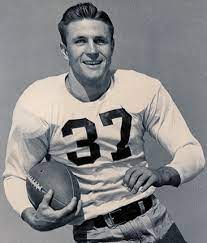
Ewell Doak Walker II was an American professional football player for the Detroit Lions of the National Football League. He played college football as a halfback at Southern Methodist University (SMU), where he won the Heisman Trophy in 1948. Walker then played professionally in the NFL with the Lions for six seasons, from 1950 to 1955.
Walker was inducted into the College Football Hall of Fame in 1959 and the Pro Football Hall of Fame in 1986. The Doak Walker Award, awarded annually since 1990 to the top running back in college football, is named after him.
Following his junior year at SMU, Walker was selected by the Boston Yanks with the third pick of in the 1949 NFL Draft, held in December 1948. The Detroit Lions acquired Walker's rights from Boston in exchange for John Rauch, whom the Lions had selected with the second pick of the 1949 NFL Draft. The Cleveland Browns held the AAFC to arbitrate their conflicting claims or flip a coin. Instead, the Browns agreed in January 1950 to forego their claim to Walker in exchange for the Lions' second pick in the 1950 NFL Draft.
In Detroit, Walker was reunited with former high school teammate Bobby Layne who the Lions acquired by trade in April 1950. The two Texans led the Lions to one of the top scoring offenses during the 1950 NFL season, as Layne led the NFL with 2,323 passing yards and Walker led the league with 128 points on five rushing touchdowns, six receiving touchdowns, 38 extra points, and eight field goals. Walker appeared in all 12 games for the 1950 Lions at the left halfback position; he rushed for 386 yards on 83 carries (4.7 yards per carry), caught 34 passes for 534 yards, and totaled 1,262 all-purpose yards. He was selected by both the Associated Press (AP) and United Press (UP) as a first-team player on the 1950 All-Pro Team. His 128 points in 1950 was the second highest single-season total in NFL history to that time.Walker had another strong season in 1951, appearing in all 12 games at left halfback for the Lions, totaling 1,270 all-purpose yards (fourth best in the NFL), scoring 97 points (third best in the NFL), and leading the NFL with 43 extra points. He was again selected by the AP and UP as a first-team All-Pro.
Walker suffered leg injuries that limited him to seven games during the 1952 season. He was fully recovered in time for the post-season and rushed for 97 yards and caught two passes against the Browns in the 1952 NFL Championship Game.
Healthy for the full 1953 season, Walker helped lead the Lions to their second consecutive NFL championship. He ranked third in the NFL with 93 points scored and totaled 978 all-purpose yards, including 502 receiving yards and 337 rushing yards. In the 1953 NFL Championship Game, he scored a touchdown and kicked a field goal and an extra point to account for 10 of the Lions' 17 points. At the end of the 1953 season, Walker was selected by the AP as a first-team All-Pro and by the UP as a second-team All-Pro.
In 1954, Walker helped lead the Lions to their third consecutive NFL Western Division championship. He led the NFL with 43 extra points (out of 43 attempted) and an average of 14.4 yards per touch. He ranked second in the NFL with 106 points scored and third with 11 field goals. He also kicked a field goal and an extra point in the 1954 NFL Championship Game and was selected by the AP, UP, and The Sporting News as a first-team back on the 1954 All-Pro Team.
In July 1955, Walker signed a contract worth $27,500 to play a final season for the Lions and to serve as a special scout for the Lions in Texas in 1956 and 1957. At age 28, Walker retired not because his abilities had diminished but because of the need to attend to multiple business interests in Texas. In his final season, he appeared in all 12 games for the Lions and led the NFL in scoring with 96 points. Walker scored 11 points in the final game of the season to secure the league's scoring title. His 1955 scoring title was remarkable given the fact that it was achieved while playing for a team that won only three games and compiled the worst record in the NFL.
On December 11, 1955, the day of Walker's final regular season game, the Lions held a "Doak Walker Day" at Briggs Stadium at which he was presented with a silver football engraved with the names of his teammates and coaches. Walker's jersey (No. 37) was also retired as part of the ceremony.
Walker's final NFL appearance was in the 1956 Pro Bowl at the Los Angeles Memorial Coliseum on January 15, 1956.
At the time of his retirement, Walker ranked third in NFL history with 534 points scored (not including 21 post-season points) in six NFL seasons. Only Don Hutson (825 points in 11 seasons) and Bob Waterfield (573 points in eight seasons) had scored more points. Walker also totaled 1,520 rushing yards on 309 carries (4.9 yards per carry) and 152 receptions for 2,539 yards (16.7 yards per reception).
In March 1950, Walker married his college sweetheart, Norma Jane Peterson, at the Highland Park Presbyterian Church in Dallas. His groomsmen included Bobby Layne and Kyle Rote. They had four children: Laurie ('52), Kris ('56), Russ ('60), and Scott ('63), but divorced in 1965. Walker married Olympic ski racer Skeeter Werner in 1969, and they lived in her hometown of Steamboat Springs, Colorado.
Walker left pro football in 1955 to concentrate on his private business interests in sporting goods and as a sales executive with an electrical contracting company. Walker took a position as a coach with the Akron Vulcans of the Continental Football League. When the Vulcans owner was exposed as a con-artist and stopped paying his bills, Walker and his assistant coaches (Tobin Rote and Lou Rymkus being among them) kept the team alive as long as they could with funds out of their own pockets; Walker eventually quit before the team folded. He later founded Walker Chemicals in Denver, a company he sold upon retirement.
In January 1998, at age 71, Walker was paralyzed from the neck down in a skiing accident at Steamboat Springs, Colorado. After hitting a change in terrain, he flew 20 to 30 feet in the air and tumbled 75 feet. He died in September from injuries sustained in the accident.
Wallace, William N. (September 28, 1998). "Doak Walker, 71, standout in college and pro football". New York Times. Retrieved December 24, 2015.
Weller, Robert (September 28, 1998). "His college's only Heisman winner; played for Detroit Lions". Pittsburgh Post-Gazette. Associated Press. p. A14.
"Doak Walker". Pro-Football-Reference.com. Sports Reference LLC. Retrieved November 8, 2017.
"In the Air or On the Ground, Doak's Game is Close to Perfect", Stanley Woodward's Football – 1949. New York: Dell Publishing, 1949; pg. 11.
1930 U.S. Census entry for Ewell D. Walker and family. Son Ewell age 3. Census Place: Dallas, Dallas, Texas; Roll: 2313; Page: 88A; Enumeration District: 0017; FHL microfilm: 2342047. Ancestry.com. 1930 United States Federal Census [database on-line].
1940 U.S. Census entry for Ewell D. Walker and family. Son Ewell age 13. Census Place: University Park, Dallas, Texas; Roll: T627_4015; Page: 62A; Enumeration District: 57-7A. Ancestry.com. 1940 United States Federal Census [database on-line].
"Walker To Play In Frisco Game". Big Spring (TX) Herald. December 20, 1945. p. 11 – via Newspapers.com.
SMU 1946 Online yearbook http://memories.smu.edu/launch.aspx?eid=b263c230-c3c4-4f8e-aefa-d3aa10e6fadb&pnum=221&skip=true&keywords=doak%20walker%20cycen%20fjodr Archived July 25, 2013, at the Wayback Machine
Maisel, Ivan (August 16, 1999). "Team of the Century". Sports Illustrated. Vol. 91, no. 6.
"Detroit obtains draft rights to Doak Walker". St. Petersburg Times. Florida. Associated Press. January 22, 1950. p. 33.
"Lions Swap Wilson for Layne". Detroit Free Press. April 9, 1950. p. 51 – via Newspapers.com.
"Lions Honor Doak: Walker Hangs Up NFL Cleats, Scoring Title". Brownwood (TX) Bulletin. December 12, 1955. p. 4 – via Newspapers.com.
"Injured Leg Finally Hospitalizes Doak". Detroit Free Press. October 25, 1952. p. 15 – via Newspapers.com.
"Championship – Detroit Lions at Cleveland Browns – December 28th, 1952". Pro-Football-Reference.com. Sports Reference LLC. Retrieved November 8, 2017.
"Championship – Cleveland Browns at Detroit Lions – December 27th, 1953". Pro-Football-Reference.com. Sports Reference LLC. Retrieved November 8, 2017.
"Doak Signs . . . for $27,500". Detroit Free Press. July 30, 1955. p. 11 – via Newspapers.com.
"Lions Are Beaten By Giants, 24–19". Detroit Free Press. December 12, 1955. p. 1 – via Newspapers.com.
"1955 NFL Standings & Team Stats". Pro-Football-Reference.com. Sports Reference LLC. Retrieved November 9, 2017.
"Lions Hold 'Day' For Walker Sunday". Detroit Free Press. December 7, 1955. p. 7 – via Newspapers.com.
"East Defeats West In Pro Bowl". Los Angeles Times. January 16, 1956. pp. 4–1, 4–2.
"Lions to retire Doak Walker's jersey number". Victoria Advocate. Texas. United Press. December 4, 1955. p. 14A.
"Doak "The Doaker" Walker". National Football Foundation. Retrieved November 8, 2017.
"Golden Plate Awardees of the American Academy of Achievement". www.achievement.org. American Academy of Achievement.
"Walker was the ultimate Lion". Detroit Free Press. August 2, 1986. pp. 1D, 2D – via Newspapers.com.
"Washington running back wins first Doak Walker award". The Jackson Sun. December 8, 1990. p. 16 – via Newspapers.com.
"1998 Year in Review – Saying Goodbye – Saying goodbye to Doak Walker". CNN/SI. December 16, 1998. Archived from the original on August 24, 2000. Retrieved August 26, 2007.
"Doak Walker Takes Bride". The Arizona Republic. March 18, 1950. p. 9 – via Newspapers.com.
Werner, Skeeter; Walker, Doak (January 3, 1967). "First suggestion: get an instructor". Pittsburgh Press. p. 40.
Association, International Skiing History (September 2000). "Remembering: Skeeter Werner". Skiing Heritage: 36.
"Doak Walker dies of paralysis injuries". Reading Eagle. Pennsylvania. Associated Press. September 28, 1998. p. D9.
"Friends, family honor Walker". Victoria Advocate. Texas. Associated Press. October 1, 1998. p. 2B.
"Lion star ponders big offer by team". Spokane Daily Chronicle. Washington. Associated Press. April 6, 1955. p. 25.
"A false start – News – Ohio". Archived from the original on August 8, 2014.
"Football Hall of Famer Doak Walker paralyzed". Democrat & Chronicle. February 1, 1998. p. 5D – via Newspapers.com.
William N. Wallace (September 28, 1998). "Doak Walker, 71, Standout In College and Pro Football". The New York Times.
"Former Lion, college star Doak Walker dies at 71". Detroit Free Press. September 28, 1998. p. 2D – via Newspapers.com.
Francis Asbury Tarkenton is an American former football quarterback who played in the National Football League for 18 seasons, primarily with the Minnesota Vikings. He played college football at the University of Georgia, where he was recognized as a twice first-team All-SEC, and was selected by the Vikings in the third round of the 1961 NFL Draft. After retiring from football, he became a media personality and computer software executive.
Tarkenton's tenure with the Vikings spanned thirteen non-consecutive seasons. He played for Minnesota six seasons from 1961 to 1966 when he was traded to the New York Giants for five seasons, and then traded back to Minnesota for his last seven seasons from 1972 to 1978. At the time of his retirement, Tarkenton owned many quarterback records. He was inducted into the Pro Football Hall of Fame in 1986 and the College Football Hall of Fame in 1987.
In addition to his football career, Tarkenton served as a commentator on Monday Night Football and a co-host of That's Incredible!. He also founded Tarkenton Software, a computer-program generator company, and he toured the U.S. promoting CASE (computer-aided software engineering) with Albert F. Case Jr. of Nastec Corporation. Tarkenton Software later merged with KnowledgeWare (with Tarkenton as president), until selling the company to Sterling Software in 1994.
The expansion Minnesota Vikings selected Tarkenton in the third round (29th overall) of the 1961 NFL Draft, and he was picked in the fifth round of the AFL draft by the Boston Patriots. He signed with the Vikings. Tarkenton, 21, played his first NFL game (and the Vikings' first game) on September 17 against the Chicago Bears, coming off the bench to lead the Vikings to a come-from-behind victory by passing for 250 yards and four touchdown passes and running for another as the Vikings defeated the Bears 37–13. He was the only player in NFL history to pass for four touchdowns in his first NFL game, until the feat was repeated by Marcus Mariota in the Tennessee Titans' 2015 season opener versus the Tampa Bay Buccaneers.
He played for the Vikings from 1961 through 1966. His early years with the team were plagued by the trouble expected for a newly created team, with the Vikings winning a total of 10 games combined in their first three seasons, with Tarkenton winning eight of them. He threw 18 touchdowns and 17 interceptions for 1,997 yards in his first season. He rushed for 308 yards on 56 rushes for five touchdowns. The following year, he threw 22 touchdowns and 25 interceptions for 2,595 yards. He rushed for 361 yards on 41 rushes for two touchdowns.
Tarkenton was traded to the New York Giants in March 1967 for three draft picks (and a player to be named later), at which time he moved to the suburb of New Rochelle, New York. In the first game of the 1969 season, the Giants played the Vikings. After trailing 23–10 in the fourth quarter, Tarkenton threw two touchdown passes to secure a 24–23 comeback victory over his former team. The 24 points allowed by Minnesota's defense were a season-worst for the unit, one more point than the Vikings allowed in losing Super Bowl IV to the Kansas City Chiefs in January.
Tarkenton enjoyed his best season with the Giants in 1970. They overcame an 0–3 start with nine wins in the next ten games and moved into position to win the NFC East division championship in week 14. However, New York was routed 31–3 by the Los Angeles Rams at Yankee Stadium to finish at 9–5, one game behind the division champion Dallas Cowboys and the wild card Detroit Lions. The 1970 season was the closest the Giants came to making the playoffs during a 17-year drought, from 1964 through 1980.
On January 27, 1972, Tarkenton was traded back to the Vikings for quarterback Norm Snead, receiver Bob Grim, running back Vince Clements, a first rounder in 1972 (24th overall–Larry Jacobson, defensive lineman) and a second rounder in 1973 (40th overall–Brad Van Pelt, linebacker). Tarkenton led the Vikings to three National Football Conference championships, but the Vikings lost each ensuing Super Bowl. In the 1974 Super Bowl, Minnesota lost to the Miami Dolphins 24–7 in Houston. They lost the 1975 Super Bowl to the Pittsburgh Steelers 16–6 in New Orleans, and (in Minnesota's last Super Bowl to date) lost the 1977 Super Bowl to the Oakland Raiders 32–14 at the Rose Bowl in Pasadena, California.
In his eighteen NFL seasons, Tarkenton completed 3,686 of 6,467 passes for 47,003 yards and 342 touchdowns, with 266 interceptions, all of which were NFL records at the time of his retirement. Tarkenton's 47,003 career passing yards rank him fourteenth all time, while his 342 career passing touchdowns is eleventh all time in NFL history. He also is eighth on the all-time list of regular-season wins by a starting quarterback with 124 regular season victories. He used his impressive scrambling ability to rack up 3,674 rushing yards and 32 touchdowns on 675 carries. During his career, Tarkenton ran for a touchdown in 15 different seasons, an NFL record among quarterbacks. He ranks sixth in career rushing yards among quarterbacks, behind Randall Cunningham, Steve Young, Michael Vick, Cam Newton, and Russell Wilson. He is also one of four NFL quarterbacks ever to rush for at least 300 yards in seven different seasons; the others are Cam Newton, Michael Vick and Tobin Rote. When he retired, Tarkenton held NFL career records in pass attempts, completions, yardage, touchdowns, rushing yards by a quarterback, and wins by a starting quarterback.
The Vikings finished the 1975 season with an NFC-best 12–2 record and Tarkenton won the NFL Most Valuable Player Award and the NFL Offensive Player of the Year Award while capturing All-Pro honors in the process. He was also a second-team All-Pro in 1973 and earned All-NFC selections in 1972 and 1976. He was named second-team All-NFC in 1970 and 1974. Tarkenton was selected to play in nine Pro Bowls.
Tarkenton was indecisive on his retirement during the last seven years of his playing career.
Despite not winning a Super Bowl, he won six playoff games, and in 1999 he was ranked #59 on The Sporting News list of the 100 Greatest Football Players.
Tarkenton was inducted into the Georgia Sports Hall of Fame in 1977, the Pro Football Hall of Fame in 1986, the College Football Hall of Fame in 1987, and the Athens, Georgia Athletic Hall of Fame in 2000.
A biography of Tarkenton titled Better Scramble than Lose was published in 1969. This followed Tarkenton's 1967 autobiography No Time for Losing and preceded by several years his 1977 autobiography Tarkenton co-written with Jim Klobuchar. The autobiographies chronicle not only his football career but also his personal evolution from his early football days as a preacher's son. Tarkenton co-wrote with Brock Yates a book in 1971 titled Broken Patterns: The Education of a Quarterback, a chronicle of the 1970 New York Giants season.
In 1986, Tarkenton, with author Herb Resincow, wrote a novel titled Murder at the Super Bowl, the whodunit story of a football coach killed just before his team is to participate in the championship game.
Tarkenton wrote the self-help, motivational books Playing to Win in 1984, and How to Motivate People: The Team Strategy for Success in 1986. He also wrote the motivational self-help business book titled What Losing Taught Me About Winning, and Every Day is Game Day. In 1987, Tarkenton hosted a Think and Grow Rich TV infomercial that sold the book with an audio cassette version (the audio cassettes contained an introduction and conclusion by Tarkenton).
Mark McCormack helped Tarkenton invest, making him wealthy enough to "retire this week if [he] wanted to", as New York magazine wrote in 1971. Tarkenton was a pioneer in computer software, and founder of Tarkenton Software, a program generator company. He toured the United States promoting CASE or "computer-aided software engineering" with Albert F. Case, Jr. of Nastec Corporation, but ultimately merged his software firm with James Martin's KnowledgeWare, of which Tarkenton was president until selling the company to Sterling Software in 1994.
In 1999, Tarkenton was fined by federal regulators as part of a securities fraud sweep. According to the LA Times, "In Tarkenton's case, the Hall of Fame quarterback and 10 other former executives of his computer software and consulting firm, KnowledgeWare Inc., were accused of inflating by millions of dollars the company's earnings in reports for its fiscal year ended June 30, 1994. The former Minnesota Vikings quarterback agreed to pay a $100,000 fine and $54,187 in restitution. He did not admit any wrongdoing".
Since then, Tarkenton has been promoting various products and services including Tony Robbins and 1-800-BAR-NONE. He also founded GoSmallBiz, a small-business consulting website. He also operates an annuity marketing firm called Tarkenton Financial.
Keefer, Zak (July 11, 2021). "NFL 100: At No. 95, Fran Tarkenton proved QBs could run long before Young, Vick and Lamar". The New York Times. Retrieved September 5, 2024.
Reid, Jason (2022). The Rise of the Black Quarterback. Disney Book Group. ISBN 978-1-368-08217-4 – via Google Books.
Long, Howie; Czarnecki, John (2023). Football For Dummies, USA Edition. Wiley. p. 349. ISBN 978-1-394-18127-8.
Tarkenton, Fran (1997). What Losing Taught Me About Winning: The Ultimate Guide for Success in Small and Home-Based Businesses. Fireside Books. ISBN 0-684-83879-6.
"Father of Tarkenton Dies During Telecast". New York Times. December 29, 1975. Archived from the original on September 20, 2019. Retrieved September 20, 2019.
"Sigma Alpha Epsilon". omegafi.com. Retrieved September 20, 2019.
Bratton, Michael Wayne (July 2019). "History of all-time SEC football championships entering 2019". Saturday Down South. Archived from the original on September 20, 2019. Retrieved September 20, 2019.
Moffit, David M. (November 25, 1959). "Auburn Lands 3 Lineman On All-Star Team". The Monroe News-Star. p. 23. Archived from the original on June 12, 2015. Retrieved June 11, 2015 – via Newspapers.com. Open access icon
"Gibbs and Tarkenton Named on UPI All-SEC". The Delta Democrat-Times. November 22, 1960. p. 7. Archived from the original on September 20, 2019. Retrieved September 20, 2019.
"1961 NFL Draft Listing". Pro Football Reference. Retrieved June 5, 2024.
"1961 AFL Draft Listing". Pro Football Reference. Retrieved June 5, 2024.
"Countdown to the 2013 NFL Draft". National Football League. Archived from the original on April 6, 2013. Retrieved April 2, 2013.
"Vikings, 49ers, Colts, Eagles win openers". Eugene Register-Guard. Oregon. Associated Press. September 18, 1961. p. 3B.
"A Look at Marcus Mariota's Rookie Accomplishments Archived August 21, 2016, at the Wayback Machine" by Jim Wyatt, Titans online, December 31, 2015
"1961 Minnesota Vikings Rosters, Stats, Schedule, Team Draftees". Pro Football Reference. Retrieved June 5, 2024.
"1962 Minnesota Vikings Rosters, Stats, Schedule, Team Draftees". Pro Football Reference. Retrieved June 5, 2024.
"1963 Minnesota Vikings Rosters, Stats, Schedule, Team Draftees". Pro Football Reference. Retrieved June 5, 2024.
"Fran Tarkenton 1961 Game Log". Pro Football Reference. Retrieved June 5, 2024.
"Fran Tarkenton 1962 Game Log". Pro Football Reference. Retrieved June 5, 2024.
"A new slant on an old game in Atlanta". Sports Illustrated Vault | SI.com.
"TBT: A Trade, A Hire & A Draft for the Ages Set up Vikings 50 Years Ago".
Grimsley, Will (March 8, 1967). "Fran Tarkenton is the Giants' answer to rival Jets' Joe Namath". The Day. New London, Connecticut. Associated Press. p. 41.
Kriegel, Mark (2005). Namath: A Biography. Penguin Books. p. 210. ISBN 978-0143035350.
"Tarkenton will return 'under no circumstances'". Eugene Register-Guard. Associated Press. February 11, 1967. p. 3B – via Google News.
"Van Brocklin surprises Viks – resigns". Eugene Register-Guard. Associated Press. February 12, 1967. p. 3B – via Google News.
"Giants trade draft picks for Tarkenton". Sarasota Herald-Tribune. Florida. Associated Press. March 8, 1967. p. 18 – via Google News.
"Fran Tarkenton 1967 Game Log". Pro Football Reference. Retrieved November 7, 2024.
"Fran Tarkenton 1968 Game Log". Pro Football Reference. Retrieved November 7, 2024.
"Minnesota Vikings at New York Giants – September 21st, 1969". Pro Football Reference. Archived from the original on June 20, 2017.
"1969 Minnesota Vikings". Pro Football Reference. Archived from the original on July 8, 2018.
"1970 New York Giants Rosters, Stats, Schedule, Team Draftees". Pro Football Reference. Retrieved June 5, 2024.
"New York Giants Team Records, Leaders, and League Ranks". Pro Football Reference. Retrieved June 5, 2024.
Lowitt, Bruce (January 28, 1972). "Fran Tarkenton traded to Minnesota". The Day. New London, Connecticut. Associated Press. p. 16.
Koppett, Leonard (January 28, 1972). "Vikings Get Tarkenton For Snead and 4 Others". The New York Times. Archived from the original on October 29, 2020. Retrieved November 1, 2020.
"1972 NFL Draft Pick Transactions, February 1 (Rounds 1–7) & 2 (Rounds 8–17)". Pro Sports Transactions. Archived from the original on October 31, 2020. Retrieved November 1, 2020.
"Super Bowl VIII - Minnesota Vikings vs. Miami Dolphins - January 13th, 1974". Pro Football Reference. Retrieved June 5, 2024.
"Super Bowl IX - Pittsburgh Steelers vs. Minnesota Vikings - January 12th, 1975". Pro Football Reference. Retrieved June 5, 2024.
"Super Bowl XI - Oakland Raiders vs. Minnesota Vikings - January 9th, 1977". Pro Football Reference. Retrieved June 5, 2024.
"NFL Passing Yards Career Leaders". Pro Football Reference. Archived from the original on November 6, 2018. Retrieved August 7, 2020.
"NFL Passing Touchdowns Career Leaders". Pro Football Reference. Archived from the original on July 30, 2020. Retrieved August 7, 2020.
"Most Qb Wins All-time". StatMuse. Retrieved March 26, 2025.
"Most Rushing Yards By A Quarterback All-time". StatMuse. Retrieved February 29, 2024.
"1975 NFL Standings & Team Stats". Pro Football Reference. Retrieved June 5, 2024.
"AP NFL Most Valuable Player Winners". Pro Football Reference. Retrieved June 5, 2024.
"AP Offensive Player of the Year Winners". Pro Football Reference. Retrieved June 5, 2024.
"1975 NFL All-Pros". Pro Football Reference. Retrieved June 5, 2024.
"1972 NFL All-Pros". Pro Football Reference. Retrieved June 5, 2024.
"1973 NFL All-Pros". Pro Football Reference. Retrieved June 5, 2024.
"1976 NFL All-Pros". Pro Football Reference. Retrieved June 5, 2024.
"1970 NFL All-Pros". Pro Football Reference. Retrieved June 5, 2024.
"1974 NFL All-Pros". Pro Football Reference. Retrieved June 5, 2024.
"Fran Tarkenton". Professional Football Hall of Fame. Archived from the original on August 22, 2016.
"Tarkenton Has Retired, Giants Say Archived October 23, 2012, at the Wayback Machine", Chicago Tribune, Αugust 10, 1971
Quote Of The Day Archived November 17, 2015, at the Wayback Machine, The Ledger, March 22, 1978
Wallace, William N. (May 13, 1979). "An Appreciation: The Tarkenton Legacy". The New York Times.
"NFL Sacked Career Leaders (Since 1960)". Pro-Football-Reference.com.
"Inductees". Georgia Hall of Fame. Archived from the original on January 15, 2019.
"Inductees". College Football Hall of Fame. Archived from the original on August 17, 2016.
"2000 Inductees". Athens Hall of Fame. Archived from the original on August 22, 2016.
Olsen, Jack (1969). Better Scramble Than Lose. Four Winds Press.
Tarkenton, Fran; Yates, Brock W. (1971). Broken Patterns: The Education of a Quarterback. Simon and Schuster. ISBN 978-0671210533.
Tarkenton, Fran; Resincow, Herb (1986). Murder at the Super Bowl (1st ed.). William Morrow & Co. ISBN 978-0688067168.
Tarkenton, Fran, Playing to Win, 1985, Bantam Books ISBN 0-553-25079-5
Tarkenton, Fran and Tuleja, Tad 1986, Harper and Row ISBN 0-06-015543-4
Tarkenton, Fran; Bruton, Jim (2009). Every Day Is Game Day. Triumph Books. ISBN 978-1-60078-253-4.
"Partners in Time : Guthy-Renker, Charles Wesley Orton Archived February 25, 2011, at the Wayback Machine", Response magazine, May 2001
Axthelm, Pete. ""The Third Annual Permanent Retirement of Joe Namath Archived January 19, 2016, at the Wayback Machine", New York magazine, July 7, 1971, pp.47–49
"Monday Night Football All-Time Commentators (1970-present)".
LA Times, September 29, 1999
Condon, Patrick (July 21, 2016). "Vikings veteran Fran Tarkenton speaks at Republican convention". Star Tribune. Archived from the original on August 9, 2016. Retrieved August 4, 2016.
Looney, Douglas S. (October 25, 1982). "Fran Tarkenton". People. Meredith Corporation. Archived from the original on September 21, 2019. Retrieved September 21, 2019.
Martin, Frank (October 4, 1976). "Ping-Pong Ace, Record-Setting Quarterback, Fran Tarkenton Battles a Runner-Up Image". People. Meredith Corporation. Archived from the original on September 21, 2019. Retrieved September 21, 2019.
"Hayley Gray & the Medicine". ReverbNation. Archived from the original on April 23, 2021. Retrieved October 19, 2019.
Willie Edward Lanier, is a former American football linebacker who played for the Kansas City Chiefs from 1967 through 1977. He won postseason honors for eight consecutive years, making the American Football League All-Star team in 1968 and 1969 before being selected to the Pro Bowl from 1970 through 1975.
A Super Bowl champion, Lanier won the NFL Man of the Year in 1972. He was selected to both the NFL’s 75th and 100th Anniversary All-Time Teams, and inducted into the Pro Football Hall of Fame in 1986 and the College Football Hall of Fame in 2000.
On January 15, 1967, the Chiefs lost Super Bowl I to Vince Lombardi's Green Bay Packers by a 35-10 score, forcing head coach Hank Stram to look for defensive players in the upcoming draft. Stram picked the 6’ 1”, 245 lb. Lanier with the 50th overall pick, three picks after another linebacker, Jim Lynch of the Notre Dame Fighting Irish.
Lynch had been chosen to play in the annual College All-Star Game, causing him to miss the first two weeks of Chiefs practice. By the time Lynch made it to camp, Lanier had already established himself as the team's middle linebacker. He joined Garland Boyette of the AFL's Houston Oilers as the first black middle linebackers in professional American football history. In the midst of a solid first season, Lanier suffered an injury and missed the last four games of the year.
The following year, Lanier collected four interceptions, then matched that total in 1969 as he helped the Chiefs capture Super Bowl IV with a 23-7 upset of the Minnesota Vikings. He was stellar in the Super Bowl, recording 7 tackles and an interception. He later commented on the increased motivation that Chiefs players felt because of wearing an AFL patch to honor the league's final year.
There were numerous great moments throughout Lanier’s career, but none exemplifies his heart and desire as much as the Chiefs' goal line stand against the New York Jets in the 1969 divisional playoff game. Trailing 6-3 in the fourth quarter, New York had a first-and-goal at the Chiefs' one-yard line after a pass interference call on Kansas City. It was then that Lanier made an emotional appeal to the rest of the Chiefs defense, yelling: "They're not going to score...! They're not going to score!" The Chiefs shut down the Jets on three straight plays and held them to a field goal. Kansas City scored a touchdown on its next possession, winning the game, and winning a place in the Super Bowl.
The Chiefs reached the NFL playoffs only one more time during Lanier's career, in 1971, winning the AFC Western Division title. On Christmas Day, in the final contest at Municipal Stadium, the Chiefs' season came to an end against the Miami Dolphins in a double overtime classic. The contest was the longest game in NFL history, clocking in at more than 82 minutes.
In 1972, the Chiefs moved to Arrowhead Stadium. By 1974 the team's talent was depleted by age and injuries. After the conclusion of that season, Stram was fired after 15 years at the helm.
The linebacking trio of Lanier, Lynch and fellow Hall of Famer Bobby Bell is recognized as one of the most talented in professional football history, lasting until the arrival of new head coach Paul Wiggin in 1975.
Lanier was traded in April 1978 to the Baltimore Colts, but announced his retirement as an active player three months later on July 20, 1978.
After Lanier's retirement, the Chiefs retired Lanier's number.
Lanier returned to school, taking graduate courses at the University of Missouri–Kansas City. He then returned to Virginia as a stockbroker, at First Union Securities, where he served as vice-chairman. He is the former CEO of TDS/US, the minority venture partner of TDS Logistics (now Syncreon).
In 2006, Lanier was interviewed for the NFL Network documentary America's Game: The Super Bowl Champions chronicling the 1969 Kansas City Chiefs season.
In 1974, Lanier starred in The Black Six as Tommy Bunka. The move, which was directed by Matt Cimber (Matteo Ottaviano), was about racism in a southern town, with six black bikers (The Black Six) avenging the death of a friend. Lanier teamed with other 1970s players including (Joe Greene, Carl Eller, Gene Washington, Mercury Morris).
"Willie Lanier, Library of Virginia". edu.lva.virginia.gov. 2012.
"William Lanier | Virginia Sports Hall of Fame". August 25, 2017. Retrieved November 2, 2024.
"Willie Lanier | Pro Football Hall of Fame". pfhof. Retrieved November 2, 2024.
Marshall, Ryan (October 22, 2019). "Chiefs great Willie Lanier helped pave the way for black players in football". KSHB 41 Kansas City News. Retrieved November 2, 2024.
"Behind the Bronze: Willie Lanier | Pro Football Hall of Fame". pfhof. Retrieved November 2, 2024.
Lipper, Bob (October 15, 2000). "A Whole New Ballgame". Richmond Times-Dispatch. p. 321.
Gretz, Bob (August 3, 1989). "Willie Lanier found his way home after cheering faded". The Kansas City Star. p. 192.
Willie Lanier Ancestry Reveal on YouTube
Murray, Ken (December 8, 1992). "Lanier walked on, into Canton Banks taught him to be student first". Baltimore Sun.
"Morgan State graduate Lanier honored; Former Chiefs great will be inducted into College Hall of Fame; State Notebook". Baltimore Sun. April 28, 2000.
Schmuck, Peter (December 25, 2015). "1966 Morgan State bowl team that broke barriers to be honored". Baltimore Sun.
"Earl Banks (1992) - Hall of Fame". National Football Foundation. Retrieved May 9, 2025.
"Leroy Kelly | Pro Football Hall of Fame". pfhof. Retrieved May 9, 2025.
Claasen, Harold (November 30, 1965). "BU's Mitchell Repeats As First Team Little All-American End". Sunbury Daily Item (Associated Press). p. 19.
"Morgan State Turns Back West Chester on Defense, 14–6". The Philadelphia Inquirer. December 11, 1966. p. 82.
"Lanier Wins C.I.A.A. Award". The Baltimore Sun. December 4, 1966. p. 34.
"Willie Lanier (1982) - Hall of Fame". Morgan State University Athletics. Retrieved November 2, 2024.
Finnegan, Daniel (December 6, 2009). "Willie Lanier Made a Name Worth Awarding". Richmond Times Dispatch. pp. E4.
"NFL Hall of Famer Willie Lanier to Speak at VUU Football Kickoff Banquet". Virginia Union University Athletics. June 4, 2012. Retrieved November 2, 2024.
Willie Lanier at football-reference.com
Williams, Madison (July 22, 2022). "Jim Lynch, Chiefs Great and Super Bowl Champion, Has Died". SI. Retrieved November 2, 2024.
"Willie Lanier Pro Football Stats, Position, College, Transactions". www.profootballarchives.com. Retrieved November 2, 2024.
"Super Bowl IV - Minnesota Vikings vs. Kansas City Chiefs - January 11th, 1970". Pro-Football-Reference.com. Retrieved November 2, 2024.
"AFL Patch". www.remembertheafl.com. Retrieved November 2, 2024.
Verderame, Matt (February 9, 2015). "The '69 Chiefs: A defense for the ages". Arrowhead Pride. Retrieved November 1, 2024.
"Johnny Robinson | Pro Football Hall of Fame". pfhof. Retrieved November 1, 2024.
"NFL 100". NFL.com. Retrieved November 2, 2024.
"Pivotal Pro Football Plays". goldenrankings.com. Retrieved November 2, 2024.
"1971 AFC Divisional Playoff Game | Pro Football Hall of Fame". pfhof. Retrieved November 2, 2024.
"Kansas Ciy Chiefs: Big Red "Arrowhead Stadium"". Bleacher Report. Retrieved November 2, 2024.
"Kansas City Chiefs 1974 Roster". StatMuse. Retrieved November 2, 2024.
Press, Chris Tomasson | Pioneer (November 4, 2022). "Soon to be 88, Paul Wiggin, one of the NFL's 'true treasures,' still working for Vikings". Twin Cities. Retrieved November 2, 2024.
"Stram Dismissed by Chiefs". The New York Times. December 28, 1974.
Tobias, Todd. "Top 10 Linebacking Corps: #4 Hank Stram's Chiefs". Tales from the AFL. Retrieved November 2, 2024.
Taylor, Nate (July 18, 2023). "NFL 100: At No. 74, Bobby Bell blended rare athleticism, smarts as Chiefs' superstar linebacker". The New York Times. ISSN 0362-4331. Retrieved November 2, 2024.
Miller, Jim. "Colts Trade Chester To Oakland For Siani," The Baltimore Evening Sun, Friday, July 21, 1978. Retrieved October 28, 2020
Holder, Larry (July 18, 2023). "NFL 100: At No. 80, Willie Lanier's football skills led to all-time great accolades he never craved". The New York Times. ISSN 0362-4331. Retrieved November 2, 2024.
"Chiefs Hall of Honor, 1985, Willie Lanier, Linebacker". Kansas City Chiefs. Retrieved November 2, 2024.
"Sports People: Pro Football; 3 Chiefs to Have Jersey Numbers Retired". The New York Times. July 16, 1992.
"Willie Lanier – Missouri Sports Hall of Fame". Retrieved November 2, 2024.
"The Sporting News 100 Greatest Players of All-Time (1999)". futurefootballlegends.com. Retrieved November 2, 2024.
"AP Little All-America Archive (1934-2023)" (PDF). staticesuwarriors.com.
"1968 AFL All-Pros". Pro-Football-Reference.com. Retrieved May 9, 2025.
"1969 AFL All-Pros". Pro-Football-Reference.com. Retrieved May 9, 2025.
"1970 NFL Pro Bowlers". Pro-Football-Reference.com. Retrieved May 9, 2025.
"1971 NFL Pro Bowlers". Pro-Football-Reference.com. Retrieved May 9, 2025.
"1972 NFL Pro Bowlers". Pro-Football-Reference.com. Retrieved May 9, 2025.
"1973 NFL Pro Bowlers". Pro-Football-Reference.com. Retrieved May 9, 2025.
"1974 NFL Pro Bowlers". Pro-Football-Reference.com. Retrieved May 9, 2025.
"1975 NFL Pro Bowlers". Pro-Football-Reference.com. Retrieved May 9, 2025.
"Hall of Famers by Year of Enshrinement, Pro Football Hall of Fame". pfhof. Retrieved May 9, 2025.
"Enright blow as Syncreon's $1bn sale is 'off the table'". Irish Independent. August 25, 2013. Retrieved November 2, 2024.
"Making 'Contact'". Wealth Management. July 1, 2000. Retrieved November 2, 2024.
"Screen: 'The Black Six'". The New York Times. March 14, 1974.
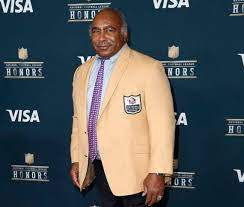
Kenneth Ray Houston is an American former professional football player who was a safety in the American Football League (AFL) and National Football League. He was inducted into the Pro Football Hall of Fame in 1986.Houston played for the AFL's Houston Oilers from 1967 through 1969, and after the AFL–NFL merger, with the Oilers from 1970 through 1972, then with the Washington Redskins until 1980.
Houston was an all-league free safety player for twelve consecutive years: an American Football League All-Star in 1968 and 1969, and then in the AFC-NFC Pro Bowl from 1970 through 1979. He was selected All-Pro three times. In 1999, he was ranked number 61 on The Sporting News' list of the 100 Greatest Football Players.
Throughout his career, he had an extraordinary ability to know where the ball was going. Houston intercepted 49 passes, recovered 21 fumbles, gained 1,498 return yards (on interception, fumble, blocked field goal, kickoff, and punt returns), and scored 12 touchdowns. He is a member of the 1986 class of the Pro Football Hall of Fame.
Houston was drafted in the ninth round of the 1967 AFL-NFL Draft by the Houston Oilers of the American Football League. He became a starter by the third game of his rookie season. Two weeks later, in a game against the New York Jets, he scored two touchdowns, one on a 71-yard blocked field goal attempt, and the other on a 43-yard interception return.
In 1971 he set an NFL record with five touchdown returns (four interceptions and one fumble). This would stand until surpassed by Devin Hester's six return touchdowns in the 2006 season.
After six years with the Oilers, Houston was traded to the Washington Redskins for five veteran players in 1973. Included in the trade were offensive lineman Jim Snowden, tight end Mack Alston, wide receiver Clifton McNeil, defensive end Mike Fanucci, and defensive back Jeff Severson. While with the Redskins, Houston went to seven straight Pro Bowls.
After his retirement in 1980, Houston served as a head football coach for Wheatley High School and Westbury High School in Houston, Texas. From 1982 to 1985, he was the defensive backfield coach for the Houston Oilers and from 1986 to 1990 he was the defensive backfield coach for the University of Houston.
Since 1990, Houston has served as a guidance counselor for children in hospitals and who are home-bound or have been placed in child care agencies by the State of Texas. He does this work for the Houston Independent School District.
Houston has a wife, Gustie, a daughter, Kene; and a son, Kenneth Christian.
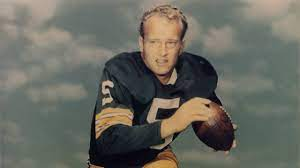
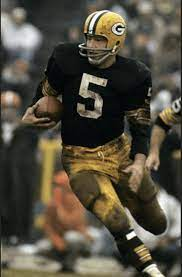
Paul Vernon Hornung, nicknamed "the Golden Boy", was an American professional football player who was a running back for the Green Bay Packers of the National Football League from 1957 to 1966. He played on teams that won four NFL titles and the first Super Bowl. He is the first Heisman Trophy winner to be selected as the first overall selection in the NFL Draft, play pro football, win the NFL most valuable player award, and be inducted into both the Pro Football Hall of Fame and College Football Hall of Fame. Packers coach Vince Lombardi stated that Hornung was "the greatest player I ever coached."
A versatile player, Hornung was a halfback, quarterback, and placekicker. He was an excellent all-around college athlete at Notre Dame, where he played basketball in addition to football.
After graduating from Notre Dame with a degree in business, Hornung was the first selection overall in the 1957 NFL Draft. He was taken by the Green Bay Packers, with whom he went on to win four league championships, including the first Super Bowl in January 1967.
Hornung was the only Packer on the roster who did not play in Super Bowl I. A pinched nerve sidelined him, and he chose not to enter the game in the fourth quarter.
As a professional, Hornung played the halfback position as well as field goal kicker for several seasons. Hornung led the league in scoring for three straight seasons from 1959–61. During the 1960 season, the last with just 12 games, he set an all-time record by scoring 176 points. Hornung also passed for two additional touchdowns, which did not add to his point-scoring total. The record stood until the 2006 season, when running back LaDainian Tomlinson of the San Diego Chargers broke the record with 180 points by scoring his 30th touchdown on December 17, leaving him with four points more than Hornung's record with more than two games to play (but in his 14th game, compared to Hornung's 12 games).
In 1961, Hornung set the scoring record in an NFL championship game with 19 points. That record stood for 56 years until James White scored 20 points in Super Bowl LI. In Green Bay's 1965 championship win, he rushed for 105 yards and a touchdown on a very muddy field against the Cleveland Browns. In October of that same year, he set a record for most points in a calendar month with 77. This was also broken by Tomlinson, who posted 78 points in November 2006.
Hornung was voted the league's Most Valuable Player in 1961 and was chosen as an All-Pro twice and named to the Pro Bowl twice. He is one of only nine players to have won both the Heisman Trophy and the NFL's Most Valuable Player Award. He is also the only one to ever make a 50+ yard fair catch kick, which is a rule that allows a team that has just made a fair catch to attempt a free kick from the spot of the catch. This came in 1964 on September 13, at the end of the first half of the opener against rival (and defending champion) Chicago.
In 1965 the 29 year-old Hornung scored a team-record five touchdowns (three rushing and two pass receptions) in a 42–27 road win over the Baltimore Colts on December 12. Hornung's five TD's were overshadowed by the record-tying six touchdowns scored by Chicago's Gale Sayers later that same day against San Francisco at Wrigley Field. But the Packers' victory over the Colts proved important for the Packers, as they wound up tied with the Colts in the Western Conference standings at season's end (forcing an extra playoff game on December 26 which the Packers won in overtime to advance to the NFL Championship). In that NFL championship game against the Cleveland Browns on January 2, Hornung ran for 105 yards and a touchdown in the Packers' 23–12 win for their third league title under Lombardi.
A pinched nerve in Hornung's neck severely curtailed his playing time in 1966, and Hornung did not see action in Super Bowl I, when the Packers defeated the Kansas City Chiefs, 35–10. Hornung was selected in the expansion draft by the New Orleans Saints, who later traded for Hornung's backfield mate at Green Bay, Jim Taylor. Hornung never suited up for the Saints, as the neck injury forced him to retire during training camp. Taylor & Hornung were affectionately known as "Thunder & Lightning" by Packer fans of the early 1960s.
Hornung holds the record for most games with 30+ points (2), the most games with 25+ points (3), and the most games with 13 points in a season (8 games in 1960). He also holds the dubious distinction of having missed an NFL record 26 field goals in a season, doing so in 1964.
Hornung was elected to the College Football Hall of Fame in 1985, the Pro Football Hall of Fame in 1986, and the Wisconsin Athletic Hall of Fame in 1990. Also, the "Paul Hornung Award" is given out annually to the state of Kentucky's top high school player. Starting in 2010, an award named in Hornung's honor is given out to the most versatile college football player in the nation. Hornung's number 5 was also unofficially retired by Lombardi on July 10, 1967, as there has not been a ceremony to have his number on the wall of retired numbers at Lambeau Field.
Hornung was obliged to serve in the U.S. Army and he was called to active duty during the 1961 season, but he was able to get weekend passes to play on Sundays. Head coach Vince Lombardi was a friend of President John F. Kennedy, and a pass was arranged so Hornung could play in the NFL championship game against the New York Giants.
Sport magazine named Hornung the most outstanding player in the 1961 championship game, which led to a tax dispute between Hornung and the Internal Revenue Service that cemented the tax status of awards to athletes. Hornung was awarded a 1962 Chevrolet Corvette, but the car's fair market value was not included on his tax returns for either 1961 or 1962. The dispute went to the United States Tax Court in the case of Hornung v. Commissioner. The court determined that because it would have been impossible for Hornung to take possession of the Corvette in 1961 – the game was played on December 31 in Green Bay and the car was in a closed dealership in New York – the car should have been included in income in 1962. More importantly for the athletic community, the court also determined that awards for achievement in the field of athletics do not fall under the exceptions provided under section 74(b) of the Internal Revenue Code. From this point on, it became impossible for athletes to exclude any awards they are given for athletics from their gross incomes.
Hornung's penchant for high-living proved disastrous when, in 1963, a major scandal erupted and Hornung and another of the league's top stars, defensive tackle Alex Karras of the Detroit Lions, were suspended from football indefinitely in April 1963 by commissioner Pete Rozelle for betting on NFL games and associating with undesirable persons. Forthright in admitting to his mistake, Hornung's image went relatively untarnished, and in 1964 his suspension, and Karras's, were re-evaluated by the league and both were reinstated in March.
In a September 2006 interview with Bob Costas, Hornung stated that it was his belief that it was Lombardi's constant lobbying of Rozelle that got him reinstated for the 1964 NFL season. In exchange for Lombardi's efforts, Hornung agreed not to have anything to do with gambling, to stay out of Las Vegas and to even forgo attending the Kentucky Derby which he had done annually.
Hornung was employed as a color analyst on Minnesota Vikings radio broadcasts from 1970 to 1974, as well as TVS WFL telecasts in 1974, CBS NFL telecasts from 1975 to 1979, and ABC Radio USFL broadcasts from 1983 to 1985. He also worked as a sideline reporter for CBS' coverage of Super Bowl XII. Hornung did college play-by-play for TigerVision, LSU's pay-per-view broadcasts in 1982 with ex-Green Bay Packers teammate Jim Taylor. Hornung also performed color commentary for games on College Football on TBS in the early 1980s.
Upon Rozelle's retirement in 1989, Hornung wrote him a letter crediting him with promoting the NFL's rise and for having been "the best commissioner of any [sports league]."
During a radio interview on March 30, 2004, Hornung, speaking about the recent lack of football success at Notre Dame, said, "We can't stay as strict as we are as far as the academic structure is concerned because we've got to get the black athletes. We must get the black athletes if we're going to compete." The response was immediate. The University replied, "We strongly disagree with the thesis of his remarks. They are generally insensitive and specifically insulting to our past and current African-American student-athletes." Famed former Notre Dame head coach Ara Parseghian also disagreed with Hornung, saying that Notre Dame did not lower admission standards for him. Hornung said that he was not differentiating between races. "We need better ball players, black and white, at Notre Dame."
Hornung's lifetime dream was to have a horse compete in the Kentucky Derby. He had a horse on the 2013 Road to the Kentucky Derby by the name of Titletown Five, trained by friend and hall of fame trainer D. Wayne Lukas. Although the horse did not earn enough points to gain entry to the race, the horse was entered in the 2013 Preakness Stakes, finishing last.
Hornung died on November 13, 2020, at the age of 84, in Louisville, Kentucky from dementia, which he felt was caused by multiple concussions. He was survived by his wife of 41 years, Angela (Cervilli) Hornung.
Christl, Cliff (November 19, 2020). "It's time Canton got it right". Packers.com. Retrieved November 4, 2021.
"1956 – 22nd Award". Heisman.com. Archived from the original on December 3, 2007. Retrieved December 22, 2007.
"Biography of Paul Hornung". All American. Retrieved December 22, 2007.
"Heisman History: A Look Back At 1956". The Heisman Pundit. November 10, 2006. Archived from the original on October 29, 2007. Retrieved December 22, 2007.
"Notre Dame Heisman Trophy Winners". Rivals.com. August 24, 2005. Retrieved December 22, 2007.
Douchant, Mike (1995). Encyclopedia of College Basketball. International Thomson Publishing. ISBN 0-8103-9640-8.
Live interview during the broadcast of the March 15, 2012, NCAA Tournament first-round game between Murray State and Colorado State.
"NFL Points Scored Single Game Playoffs Leaders". Pro-Football-Reference.com.
Lea, Bud (January 1, 1962). "Packers World Champions!". Milwaukee Sentinel. p. 1M.
"Facts and figures". Milwaukee Sentinel. January 1, 1962. p. 1S.
Strickler, George (January 1, 1962). "Green Bay 37, New York 0!". Chicago Tribune. p. 1, part 6.
Strickler, George (January 3, 1966). "Green Bay wins N.F.L. crown, 23 to 12". Chicago Tribune. pp. 1, 3.
Lea, Bud (January 3, 1966). "Packers blast Browns for title". Milwaukee Sentinel. p. 2, part 2.
Hand, John (January 3, 1966). "Green Bay's ball-control tactics beat Browns for title, 23–12". Youngstown Vindicator. Ohio. Associated Press. p. 18.
Chris Huston. "M-V-P!". Heisman.com. Retrieved December 7, 2017. The others are: Frank Sinkwich (1944), Roger Staubach (1971), O. J. Simpson (1973), Earl Campbell (1978 and 1979), Marcus Allen (1985), Barry Sanders (1997) and Cam Newton (2016).
Lea, Bud (September 14, 1964). "Packers hammer Bears, 23–12!". Milwaukee Sentinel. p. 4, part 2.
"Green Bay uses fair catch rule". Lawrence Journal-World. Kansas. Associated Press. September 14, 1964. p. 10.
Sell, Jack (September 17, 1964). "Something for free". Pittsburgh Post Gazette. p. 37.
"Paul's pure gold for Pack; Sayers scores 6 Bear TD's". Spokesman-Review. Spokane, Washington. Associated Press. December 13, 1965. p. 12.
Bochat, Rel (December 13, 1965). "Hero Hornung lauds mates". Milwaukee Sentinel. p. 2, part 2. Archived from the original on March 12, 2016. Retrieved February 29, 2016.
Strickler, George (December 13, 1965). "Bears win; 6 touchdowns by Sayers". Chicago Tribune. p. 1, section 3.
"Move to New Orleans no surprise to Hornung". Free Lance-Star. Fredericksburg, Virginia. Associated Press. February 11, 1967. p. 6.
Who Holds the Record for Most Missed Field Goals in a Season?
Christl, Cliff. "Paul Hornung". Packers.com. Archived from the original on June 7, 2023. Retrieved September 20, 2023.
"Hornung, Miller make hall of fame". Milwaukee Journal. AP and UPI. February 11, 1985. p. 2, part 3. Archived from the original on March 12, 2016. Retrieved February 29, 2016.
"Hornung finally enshrined into College Hall of Fame". Gainesville Sun. Florida. Associated Press. October 30, 1987. p. 5D.
"Hornung celebrates long-sought honor". Toledo Blade. Ohio. Associated Press. August 3, 1986. p. D3.
"Home". The Paul Hornung Award. September 17, 2012. Retrieved October 11, 2012.
"Vince: Got what we wanted". Milwaukee Sentinel. Associated Press. July 11, 1967. p. 1, part 2.
Johnson, Chuck (July 11, 1967). "Milwaukee will get play-off game if the Packers win division crown". Milwaukee Journal. p. 9, part 2.
Christl, Cliff. "No. 5 should hang on Lambeau wall". jsonline.com. Retrieved July 28, 2010.
"Crick in the neck may save Hornung". Eugene Register-Guard. Oregon. Associated Press. October 28, 1961. p. 9.
Fox, Bob. "JFK's Friendship with Lombardi Helped the Packers Win the 1961 NFL Title Game". bleacherreport.com. Retrieved February 18, 2020.
Samuel A. Donaldson, "Federal Income Taxation Of Individuals: Cases, Problems and Materials", 2d. edition (St. Paul: Thompson-West 2007, 2d edition), 353–359
"Hornung suspended". Milwaukee Sentinel. April 18, 1963. p. 1, part 1.
"Suspend 2 football stars". Chicago Tribune. Associated Press. April 18, 1963. p. 1, section 1.
Grimsley, Will (April 18, 1963). "All pro leagues honor suspension of Paul Hornung, Detroit's Karras". Lakeland Ledger. Florida. Associated Press. p. 28.
"Hornung's exile is ended; Karras reinstated as well". Milwaukee Journal. March 16, 1964. p. 12, part 2. Archived from the original on March 12, 2016. Retrieved February 29, 2016.
Lea, Bud (March 17, 1964). "Can Paul overcome year's lay-off". Milwaukee Sentinel. p. 2, part 2. Archived from the original on March 12, 2016. Retrieved February 29, 2016.
"N.F.L. lifts suspensions". Spokesman-Review. Spokane, Washington. Associated Press. March 17, 1964. p. 12.
"Reggie Bush". Costas Now. Episode 202. September 6, 2006. HBO.
"Rabalais: When it comes to LSU, Paul Mainieri has and does set his love of Notre Dame aside". theadvocate.com. February 17, 2018. Retrieved July 15, 2018.
"LSU's Brodhead has Eye of Tiger(Vison)". newspapers.com. September 9, 1982. Retrieved July 15, 2018.
"Sports of The Times; Hornung Has Failed to Meet Standard of Common Sense". The New York Times. April 1, 2004. Retrieved December 18, 2011.
Remembering Paul Hornung’s Kentucky Derby hope: Titletown Five
Cherwa, John (November 22, 2020). "Horse racing newsletter: Remembering the real Titletown Five". Los Angeles Times. Retrieved June 7, 2025.
Buckeye Nissan (November 16, 2019). Heisman House - Delay of game. Retrieved November 21, 2025 – via YouTube.
"Paul Hornung, Packers great and Hall of Famer, passes away at 84". NFL.com. Retrieved November 13, 2020.
Goldstein, Richard (November 13, 2020). "Paul Hornung, Midcentury Football's 'Golden Boy,' Is Dead at 84". The New York Times. ISSN 0362-4331. Retrieved February 10, 2023.
Goldberg 11.21.20, Paul. "College and Pro Football Hall of Famer Paul Vernon Hornung Passes Away at Age 84". Heisman. Retrieved February 10, 2023.
Kent Babb (December 8, 2023). "They watched their husbands win the Heisman – then lost them to CTE. For years, Heisman weekend was a chance to remember their husband's glory. Now it's a reminder of a sport's violent toll". Washington Post. Retrieved December 9, 2023.
"The driving force behind Chronic Traumatic Encephalopathy (CTE)". Concussion Legacy Foundation. Archived from the original on July 2, 2023. Retrieved July 2, 2023.
Ken Belson and Benjamin Mueller (June 20, 2023). "Collective Force of Head Hits, Not Just the Number of Them, Increases Odds of C.T.E. The largest study of chronic traumatic encephalopathy to date found that the cumulative force of head hits absorbed by players in their careers is the best predictor of future brain disease". The New York Times. Retrieved July 2, 2023.