Wednesday, January 29, 2025

The Story And Significance Of Darrell Green - Nineteen Straight Years With An Interception

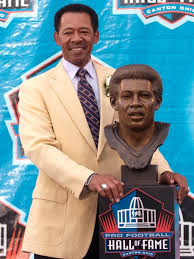
Darrell Ray Green is an American former professional football player who was a cornerback for the Washington Redskins of the National Football League for 20 seasons. Considered to be one of the greatest cornerbacks and fastest players in NFL history, he played college football for the Texas A&M–Kingsville Javelinas and was drafted by the Redskins in the first round of the 1983 NFL draft. Green played in 295 games with Washington, winning Super Bowls XXII and XXVI, before retiring in 2003. He was named the 1996 NFL Man of the Year, inducted into the Pro Football Hall of Fame in 2008, and included on the NFL 100th Anniversary All-Time Team.

Green was the last player selected in the first round (28th overall) of the 1983 NFL draft by the Washington Redskins. The first time he touched the ball, during a pre-season game against the Atlanta Falcons, he returned a punt 61 yards for a touchdown. During his first regular-season game, he made his first big play when he ran down running back Tony Dorsett of the Dallas Cowboys to prevent a touchdown. Green started all 16 regular season games during his rookie season and finished fourth on the team in tackles with 109 and led the team in solo tackles with 79. He was runner-up for the Associated Press NFL Rookie of the Year Award.

During the strike-shortened 1987 season, the Redskins went 11–4 and Green had a very successful year. He registered a career-high three interceptions in a game against the Detroit Lions on November 15, 1987. Two of his more notable performances occurred in that postseason. One happened during a divisional playoff game against the Chicago Bears, where he returned a punt 52 yards for the game-winning touchdown. Green tore rib cartilage while vaulting over a tackler during the return, but he merely grabbed his side and kept running until he scored. Then in the 1987 NFC Championship game, on a pivotal fourth-down play at the Washington goal line with 56 seconds remaining, Green knocked away a pass intended for Minnesota's Darrin Nelson to secure a Redskins 17–10 victory that enabled the team to go to Super Bowl XXII.

Green was also successful in the 1990s. In 1997, Green returned an interception 83 yards for a touchdown against the Philadelphia Eagles, which was the longest return of his career. Then on December 13, 1997, he played in his 217th career game as a Redskin, breaking Monte Coleman's record for games played. In a 1999 game against the Arizona Cardinals, he intercepted his 50th NFL pass against Jake Plummer at FedExField.

In the last game of his career on December 29, 2002, Green and the Redskins defeated the Dallas Cowboys 20–14 at FedExField. During the game, he returned a punt on a reverse from Champ Bailey for 35 yards which is the longest gain of any kind for a player his age (42 years, 327 days).

Green retired after the 2002 season at the age of 42, the oldest Redskin, having played for six head coaches: Joe Gibbs, Richie Petitbon, Norv Turner, Terry Robiskie, Marty Schottenheimer, and Steve Spurrier. For several years, Green and former Los Angeles/St. Louis Rams offensive tackle Jackie Slater were the only players in NFL history to play for the same team for 20 seasons; kicker Jason Hanson broke this record when he retired after 21 seasons with the Detroit Lions.

In his 20 NFL seasons, Green recorded 54 interceptions, which he returned for 621 yards and six touchdowns. He also added two additional touchdowns on interception returns in the postseason. Three times he recorded a career-best of five interceptions in a season (1984, 1986, and 1991). Green also returned 51 punts for 611 yards and recovered 10 fumbles, returning them for 131 yards and two touchdowns. Also known for staying healthy, he missed just 25 games throughout his career. He missed two months after sustaining a broken arm in a 24–17 win over the Atlanta Falcons on September 15, 1992.

He is the four-time winner of the NFL's Fastest Man competition, and the only undefeated multiple winner in NFL history. Green is rumored to have the fastest recorded 40 yard dash time of 4.09, which he is said to have run consistently in Washington's 1986 training camp.

Green was with the Redskins for their victories in Super Bowls XXII and XXVI, and started in their loss to the Los Angeles Raiders in Super Bowl XVIII. Green recorded an interception in Super Bowl XXVI and a then-record 34-yard punt return in Super Bowl XVIII.

Green was named All-Pro in 1986, 1987, 1990, and 1991 and was voted to seven Pro Bowls. He is a member of the National Football League 1990s All-Decade Team as well as winning all four NFL Fastest Man competitions he participated in. His pre-game rituals included eating and sticking Tootsie Rolls in his sock claiming that the candy helped him run fast. Washington retired his number 28 during halftime of a home game against the Carolina Panthers on October 20, 2024.

In 2006, Green was encouraged to run for the United States Senate by the Republican Party of Virginia. The Virginia Republicans wanted Green to enter into politics because of his longtime support for the community and dedication to Christianity.

Green was in the news on February 16, 2010, his 50th birthday, for reportedly running a 4.43-second 40-yard dash.

On April 26, 2013, Green announced that he had accepted a position as Special Assistant for Student–Athlete Development and Public Relations at the University of Mary Washington in Fredericksburg, Virginia.

On August 22, 2016, Green announced that he had accepted a position as an associate athletics director and special assistant to the athletic director at George Mason University.

Green has a professional services company that manages his appearances and autograph requests, www.DarrellGreen.com. Green is currently an associate athletic director at George Mason University working with student-athletes to improve their well-being, and collaborating with the community. He also started an online fitness company promoting increased physical activity through simply walking called WalkFitHealth Nation.

In 1988, Green founded the Darrell Green Youth Life Foundation, a faith-based charitable organization, in an effort to "meet the needs of children, their families and the communities in which they live."

In addition, he served as a board member for the Baltimore-Washington 2012 Summer Olympics bid, NFL/NFLPA September 11 Relief Fund, and the Loudoun Education Foundation. In 2003, he was selected to serve as the Chair of President George W. Bush's Council on Service and Civic Participation. He currently sits on the boards of the Wolf Trap Foundation as its National Spokesman for Education and Marymount University.

In 1999, while still active, Green was ranked number 81 on The Sporting News' list of the 100 Greatest Football Players.

Green has received honorary Doctorates of Humane Letters from Marymount University in 1999, and St. Paul's College and George Washington University in 2002.

In 2004, Green was inducted into the College Football Hall of Fame and was inducted into the Pro Football Hall of Fame on August 2, 2008. His fellow Hall of Fame classmates include former Redskins teammate Art Monk, and his former position coach Emmitt Thomas. Green has also been inducted into the NCAA Division II Hall of Fame, the Texas Sports Hall of Fame, the Lone Star Conference Hall of Honor and the Javelina Hall of Fame.

In December 2007, Green was voted the All-Time Redskins Legend in a WUSA-TV Channel 9 online poll.

In Loudoun County, Virginia, where Green lives, State Route 28 is named Darrell Green Boulevard.

On February 4, 2018, as part of the post-game celebrations for the Philadelphia Eagles winning Super Bowl LII, Green was given the honor of bringing the Lombardi Trophy to the podium as it was presented to the Eagles for their 41–33 victory over the New England Patriots.

Green is married to his wife Jewel and has four children. His eldest son Jared is a pastor. He and his wife live in Ashburn, Virginia.

In 2013, he and Art Monk agreed that the name Redskins should possibly be changed.

Sources
https://www.pro-football-reference.com/
https://www.profootballarchives.com/index.html
https://americanfootballdatabase.fandom.com/wiki/Football_Wiki
https://www.gridiron-uniforms.com/GUD/controller/controller.php?action=main
https://www.profootballhof.com/hall-of-famers/
 "For Green, 20 Years of Cherished Memories". Washington Redskins. Archived from the original on September 27, 2008. Retrieved July 4, 2008.
 Reiss, Mike (February 3, 2008). "Hall sends out the call to Tippett". Boston Globe. Retrieved July 7, 2008.
 Scheiber, Dave (August 1, 2008). "Never short on speed". St. Petersburg Times. Archived from the original on September 13, 2008. Retrieved August 1, 2008.
 Wilson, Chad. (February 24, 2017). Know Your DB History: Darrell Green. alleyesdbcamp.com. Retrieved October 6, 2025.
 O'Shea, Tyler. (July 28, 2023). NAIA Football Players Who Made it to The NFL. Joker Mag. Retrieved October 5, 2025.
 "Darrell Green's College Football HOF profile". College Football Hall of Fame. Retrieved July 4, 2008.
 "Darrell's Biography". DarrellGreen.com. Archived from the original on November 26, 2007. Retrieved December 4, 2007.
 "Darrell Green Elected To Pro Football Hall of Fame". Texas A&M – Kingsville. Archived from the original on February 11, 2009. Retrieved July 4, 2008.
 Inductee | Darrell Ray Green 2004. College Football Hall of Fame. Retrieved October 6, 2025.
 "Darrell Green's Pro Football HOF profile". Pro Football Hall of Fame. Retrieved July 5, 2008.
 "Redskins' History: History by Decades". Washington Redskins. Archived from the original on October 29, 2007. Retrieved July 7, 2008.
 Maske, Mark (December 30, 2002). "Amid Farewell, Welcome Relief". Washington Post. Retrieved July 7, 2008.
 "Green says goodbye after 20 Redskins seasons". ESPN.com. Associated Press. December 29, 2002. Retrieved July 7, 2008.
 "Archives | The Philadelphia Inquirer". inquirer. Retrieved November 25, 2019.
 @darrellgreen28 (March 25, 2021). "If you can keep a secret, I will tell you it was somewhere in the range of 4.09ish, but I will also tell you that i…" (Tweet) – via Twitter.
 "The Top 25 Fastest Players in NFL History". Bleacher Report.
 "Super Bowl Records: Individual – Punt Returns". NFL.com. Retrieved November 21, 2007.
 @darrellgreen28 (March 25, 2021). "Here's a little something to keep the convo going tonight lol" (Tweet) – via Twitter. [user-generated source]
 NFL (October 19, 2015). #1 Darrell Green | Top 10: Fastest Players | NFL Films. Retrieved October 30, 2024 – via YouTube.
 Whyno, Stephen (October 20, 2024). "Darrell Green gets his No. 28 retired by Washington more than two decades since his final season". Associated Press.
 "25 of the Fastest NFL Players Ever". September 16, 2021.[permanent dead link]
 Joyner, James. "Darrell Green, Redskin Legend, Being Recruited by GOP". Outside the Beltway. Retrieved October 2, 2025.
 Miller, Jason (February 18, 2010). "Even At 50, Darrell Green Is Still Faster Than All Of Us". ESPN.
 DeShazo, Steve. "Redskins Hall-of-Famer Darrell Green joins UMW sports staff in Fredericksburg". The Free-Lance Star. Archived from the original on May 1, 2013. Retrieved April 26, 2013.
 "Pro Football Hall of Famer Darrell Green Joins Mason Athletics". George Mason University Athletics.
 "Home". Retrieved December 21, 2023.
 "WalkFitHealth Nation | WalkFitHealth Nation". September 26, 2011. Archived from the original on September 26, 2011. Retrieved November 25, 2019.
 "Darrell Green Youth Life Foundation". Archived from the original on July 2, 2007. Retrieved December 4, 2007.
 "Green, Monk Selected to NFL Hall of Fame". Washington Redskins. Archived from the original on December 24, 2008. Retrieved July 4, 2008.
 "Football's 100 Greatest Players: Darrell Green". The Sporting News. Archived from the original on December 2, 2009. Retrieved September 8, 2009.
 "First African-American President of an Ivy League institution, Ruth J. Simmons, to keynote GW's commencement on The Ellipse May 19". April 2, 2007. Retrieved December 4, 2007.
 "Insider's Guide: Owner of Posh Couture Jewell Green shares her fashion faves for fall". Northern Virginia Magazine. September 10, 2020.
 Florio, Mike (July 23, 2013). "Art Monk, Darrell Green think Redskins should consider name change". NBC Sports. Retrieved December 1, 2013.

Wednesday, January 22, 2025

The Story And Significance Of Fred Dean - Set A Mark At The Time Of Six Sacks In A Game

Frederick Rudolph Dean was an American professional football player who was a defensive end in the National Football League. A two-time first-team All-Pro and a four-time Pro Bowler, he won two Super Bowls with the San Francisco 49ers. He was inducted into the Pro Football Hall of Fame in 2008.

Dean played college football for the Louisiana Tech Bulldogs. He was selected in the second round of the 1975 NFL draft by the San Diego Chargers. He was traded to San Francisco in 1981 due to a contract dispute. He is a member of both the Chargers Hall of Fame and 49ers Hall of Fame.

Dean was selected by the San Diego Chargers in the second round of the 1975 NFL draft with the 33rd overall pick. Chargers coach Tommy Prothro initially projected him as a linebacker but eventually relented to Dean's wish to remain a lineman. As a rookie, he had seven sacks and registered his career-high of 93 tackles. He recorded 15.5 sacks in 1978. In 1979, the Chargers won the AFC West division while leading the AFC in fewest points allowed (246). Dean had nine sacks in 13 games and was named to the All-AFC team.

The Chargers again won the AFC West in 1980, with Dean teaming with fellow 1975 Charger draftees Gary "Big Hands" Johnson and Louie Kelcher as the Chargers led the NFL in sacks (60). Dean had missed the first two games of the season after not reporting, but still finished the season with 10.5 sacks. He and Johnson were named first-team All-Pro, with Kelcher being named second-team All-Pro. The trio along with Leroy Jones formed a defensive front that was nicknamed the Bruise Brothers.

In 1981, Dean was traded to the San Francisco 49ers due to a contract dispute with Chargers' ownership. He complained that he was the lowest-paid sixth-year defensive lineman in 1980 and that his salary was below the average of all defensive linemen. Dean contended that he was making the same amount of money as his brother-in-law who was a truck driver. Originally set to make $75,000 that season, the 49ers renegotiated his contract to reportedly near $150,000 a year. The Chargers' defense would not be the same afterwards, and Don "Air" Coryell's Chargers teams are now most remembered for its high-scoring, pass-oriented offense that did not have enough defense to make it to a Super Bowl. In 2013, U-T San Diego called the Chargers trading Dean "perhaps the biggest blunder in franchise history". "I can't say how much it affected us, because we did make it to the AFC championship game," said Johnson of the Chargers without Dean. "But I could say if we had more pass rush from the corner, it might've been different".

With San Francisco, Dean was used as a pass-rush specialist, playing only when the 49ers switched from a 3–4 defense to a 4–3 or a 4–2 nickel. He joined the team mid-season for Game 6 against the Dallas Cowboys. After only a couple of practices, he played and was still able to record two sacks and apply pressure and repeatedly hurry Danny White in a 45–14 win by the 49ers. His performance was noted by author Tom Danyluk as "the greatest set of downs I have ever seen unleashed by a pass rusher". In what had been a game of possum, Bill Walsh, the 49er head coach, said to John Madden, who covered the game, "Fred (Dean) just got here... If he plays, he won't play much". But he played the whole game.

Two weeks later at home against the Los Angeles Rams, the 49ers won 20–17 for their first-ever win against the Rams at home in Candlestick Park, as Dean sacked Pat Haden 4+1⁄2 times. Dean was named the UPI NFC Defensive Player of the Year with 12 sacks while playing in 11 games for the 49ers. The 49ers went on to win Super Bowl XVI that year, and Steve Sabol (NFL Films) is quoted in 2006 as saying that Dean's acquisition was the last meaningful in-season trade, in that it affected the destination of the Lombardi Trophy. San Francisco, which was 3–2 when Dean arrived, won 13 of their final 14 games, including the playoffs.

In 1983, Dean recorded a career-high 17.5 sacks to lead the NFC and recorded a then-NFL record of six in one game, setting that mark during the 49ers’ 27–0 shutout of the New Orleans Saints on November 13, 1983.

Dean was also a key player on the 1984 squad than won Super Bowl XIX. He was reunited with his former Charger teammates Johnson, Kelcher and Billy Shields, who were acquired by the 49ers.

Dean ended his NFL career with 93 unofficial sacks, according to the Professional Football Researchers Association. Dean was inducted into the Pro Football Hall of Fame in 2008, when his bust, sculpted by Scott Myers, was unveiled. He was also named to both the Chargers' 40th and 50th anniversary teams and inducted into the Chargers Hall of Fame.

Dean was inducted into the Louisiana Tech University Athletic Hall of Fame in 1990 and the Louisiana Sports Hall of Fame in 1995. In 2009, Dean was elected to the College Football Hall of Fame.

After his football career, Dean was a minister in his hometown, Ruston.

Dean died from COVID-19 while being airlifted from a hospital in West Monroe, Louisiana, to Jackson, Mississippi, on October 14, 2020, during the COVID-19 pandemic. He was 68.

Dean is one of at least 345 NFL players to be diagnosed after death with chronic traumatic encephalopathy (CTE), which is caused by repeated hits to the head.

Sources
https://www.pro-football-reference.com/
https://www.profootballarchives.com/index.html
https://americanfootballdatabase.fandom.com/wiki/Football_Wiki
https://www.gridiron-uniforms.com/GUD/controller/controller.php?action=main
https://www.profootballhof.com/hall-of-famers/
Traub, Alex (October 17, 2020). "Fred Dean, Sack Specialist Who Ignited 49ers Dynasty, Dies at 68". New York Times. ISSN 0362-4331. Retrieved October 17, 2020.
 "Fred Dean Enshrinement speech". ProFootballHOF.com. August 2, 2008. Retrieved October 15, 2020.
 "The life and career of NFL Hall of Famer, Louisiana Tech alum Fred Dean ahead of 49ers' date in Super Bowl LIV". KLFY. KYVE. January 23, 2020. Retrieved January 29, 2023.
 "Dean Readies for the Hall". 49ers.com. July 26, 2008. Retrieved October 15, 2020.
 Thomas, Jim (July 30, 2008). "Fred Dean: Situational pass-rusher made most of his opportunities". The State Journal-Register. Archived from the original on September 19, 2016.
 "La. Tech to retire Fred Dean's number". Shreveport Times. July 11, 2017. Retrieved October 16, 2020.
 "2009 Divisional College Football Hall of Fame Class Announced". National Football Foundation & College Hall of Fame. May 12, 2009. Retrieved October 16, 2020.
 "Hall of Fame Class of 2007". ESPN.com. Associated Press. February 3, 2007. Retrieved October 16, 2020.
 Center, Bill (July 1, 2010). "Don Coryell, ex-Chargers, Aztecs coach, dies at 85". The San Diego Union-Tribune. Retrieved October 16, 2020.
 Thomas, Jim (July 30, 2008). "Fred Dean: Trade to 49ers proves beneficial for player and team". The Patriot Ledger. Retrieved July 31, 2017. It's been called the trade of all in-season football trades by NFL Films' Steve Sabol.
 "Fred Dean's Career Highlights". ProFootballHOF.com. Retrieved October 16, 2020.
 "Grambling State University Loses Two Football Legends". FoxSports.com. Fox Sports Interactive Media, LLC. August 11, 2010. Archived from the original on August 19, 2010.
 "No. 16: Chargers' best draft class". ESPN.com. March 28, 2009. Retrieved May 27, 2011. The 2001 class was good, but the 1975 class ranks the best. San Diego had four of the first 33 picks in the draft, and the Chargers selected three defensive linemen that would form the nucleus of "The Bruise Brothers" and once formed three-fourths of the AFC Pro Bowl defensive line.(subscription required)
 Smith, Rick (1981). 1981 San Diego Chargers Facts Book. San Diego Chargers. p. 28.
 "Say It Ain't So". cnnsi.com. January 28, 2001. Archived from the original on April 3, 2013.
 "Dean Goes to Chargers". The New York Times. October 3, 1981. Retrieved October 19, 2020.
 "Chargers six-year defensive end Fred Dean, complaining his salary..." United Press International. September 30, 1981. Retrieved October 19, 2020.
 Wilson, Bernie (July 31, 2008). "Charger-turned-Niner Fred Dean answers Hall's call". USA Today. Retrieved November 3, 2008.
 Zimmerman, Paul (November 2, 1981). "The 49ers Are Really Panning Out". Sports Illustrated. Archived from the original on November 28, 2020. Retrieved October 16, 2020.
 Pomerantz, Gary (November 10, 1981). "Quarterbacks Facing 49ers Make the Dean's List". The Washington Post. Retrieved October 19, 2020.
 Krasovic, Tom (June 5, 2013). "Chargers had a Fearsome Foursome, too". U-T San Diego. Archived from the original on August 1, 2017.
 Killion, Ann (October 11, 2020). "Keep 49ers great Fred Dean in your thoughts as he battles coronavirus". San Francisco Chronicle. Retrieved October 19, 2020.
 Danyluk, Tom; Zimmerman, Paul (January 1, 2005). The Super '70s. Mad Uke Publishing. ISBN 9780977038305.
 Madden, John; Anderson, Dave (October 1, 1987). One knee equals two feet: (and everything else you need to know about football). Jove Books. ISBN 9780515091939.
 Conetzkey, Chris (August 1, 2008). "Defensive end Fred Dean: In the words of ..." ESPN. Retrieved July 31, 2017. 10 or 12 plays turned into a whole game against the Dallas Cowboys
 Gay, Nancy (February 3, 2008). "49ers' Dean is headed to Hall of Fame". San Francisco Chronicle. Retrieved October 16, 2020.
 Branch, Eric (October 15, 2020). "49ers' Hall of Fame pass rusher Fred Dean dies at 68 after coronavirus infection". San Francisco Chronicle. Retrieved October 16, 2020. In 1981, the 49ers, coming off a 6-10 season, acquired Dean in a trade from San Diego when they were 3-2. They proceeded to win 13 of their last 14 games, including the Super Bowl.
 "Fred Dean | Pro Football Hall of Fame Official Site". www.profootballhof.com. Retrieved April 12, 2016.
 Magee, Jerry (February 2, 2008). "Dean awaits call from Canton". The San Diego Union-Tribune. p. D-3. During a career made up of six seasons in San Diego and five in San Francisco, he had 93 sacks, by the count of John Turney of the Pro Football Researchers Association.
 Price, Taylor (December 2, 2008). "Fred Dean: Life After the Hall of Fame". 49ers.com. Retrieved July 31, 2017.
 Gosset, Brian (July 27, 2015). "Granbury sculptor says making Hall of Fame bust of Haley 'special'". Star-Telegram. Retrieved July 31, 2017.
 "Fred Dean with his wife Pam, and his bust". 49ers.com. August 3, 2008. Archived from the original (Photo) on August 1, 2017. Retrieved July 31, 2017.
 "Chargers 50th anniversary team". The Press-Enterprise. Archived from the original on December 18, 2009.
 "Chargers Honor Lincoln". Lewiston Tribune. October 24, 2000. Retrieved March 8, 2013.
 2010 San Diego Chargers Media Guide (PDF). San Diego Chargers. 2010. p. 231. Archived from the original (PDF) on September 22, 2010.
 "Fred Dean". Louisiana Sports Hall of Fame. Retrieved October 16, 2020.
 Krasovic, Tom (October 15, 2020). "Fred Dean led 49ers' Super Bowl run after Chargers' Klein wouldn't pay star wages". The San Diego Union-Tribune. Retrieved October 16, 2020.
 Crabtree, Curtis. "Reports: Hall of Fame defensive end Fred Dean dies of COVID-19 at 68". NBC Sports. Retrieved October 15, 2020.
 "The driving force behind Chronic Traumatic Encephalopathy (CTE)". Concussion Legacy Foundation. Archived from the original on July 2, 2023. Retrieved July 2, 2023.
 Ken Belson and Benjamin Mueller (June 20, 2023). "Collective Force of Head Hits, Not Just the Number of Them, Increases Odds of C.T.E. The largest study of chronic traumatic encephalopathy to date found that the cumulative force of head hits absorbed by players in their careers is the best predictor of future brain disease". The New York Times. Retrieved July 2, 2023.

Wednesday, January 15, 2025

The Story And Significance Of Roger Wehrli - Five Time First Team All-Pro In The 1970s

Roger Russell Wehrli is an American former professional football cornerback who played for his entire 14-year career with the St. Louis Cardinals of the National Football League from 1969 until 1982. He was a seven-time Pro Bowler after playing college football for the Missouri Tigers, where he was a consensus All-American and a first-round draft choice by the Cardinals in 1969. He was inducted to the College Football Hall of Fame in 2003 and the Pro Football Hall of Fame in 2007.

Wehrli's outstanding attribute was his speed. Originally expected to be taken in the third round, he ran a 4.5 40-yard dash and vaulted into the first round. Hall of Fame quarterback Roger Staubach has called Wehrli the best cornerback he played against, and claims that the term "shutdown corner" originated as a description of Wehrli. Although he only played on five winning teams and only went to the playoffs in non-strike years twice, he is considered one of the best cornerbacks in the history of the game.

In his career, Wehrli had 40 career interceptions for 309 yards and recovered 19 fumbles. He was elected to the Pro Football Hall of Fame in 2007. When inducted into the Pro Football Hall of Fame, he became the second Missouri player to be elected, joining former tight end Kellen Winslow, who was enshrined in 1995. Wehrli was inducted into the Cardinals Ring of Honor on October 14, 2007.

An All-Rookie choice in 1969, Wehrli was voted All-Pro in 1970 and was a consensus All-NFC selection including being voted to the Pro Bowl. In 1971, Wehrli was 2nd team All-Pro by the NEA and again was a consensus All-NFC choice and was selected to his second Pro Bowl. In 1972 Wehrli was moved to safety by the Cardinals coaching staff where he played alongside Hall of Famer Larry Wilson. He returned to right cornerback in 1973.

In 1974 Wehrli was again All-Pro and he made his third Pro Bowl and was a consensus All-NFC selection. The following year, 1975 though 1977, he was a consensus All-pro and consensus All-NFC player and a Pro Bowler. In 1978 Wehrli's only post-season honor was being honorable mention All-NFC by UPI as his Cardinal team struggled under new coach Bud Wilkinson. In 1979 Wehrli had a fine season and was a consensus All-NFC pick and made his seventh Pro Bowl. In 1981, after 12 seasons as right cornerback (except for 1972), Wehrli switched to the left side. In his first start at the other corner, he broke up two passes and made four tackles as the Cards shut out the Buffalo Bills, 24–0.

In his 14 seasons, Wehrli played in 193 games. In addition to his starting defensive back duties, he was the holder on the place-kicks. In that role he scored a touchdown in 1982 on a fake field goal.

Sources
https://www.pro-football-reference.com/
https://www.profootballarchives.com/index.html
https://americanfootballdatabase.fandom.com/wiki/Football_Wiki
https://www.gridiron-uniforms.com/GUD/controller/controller.php?action=main
https://www.profootballhof.com/hall-of-famers/
 "Cardinals All-Time Team: Cornerbacks – Roger Wehrli - '69-'82". Revenge of the Birds blog. SBNation. August 1, 2009. Retrieved June 17, 2016.
 Miklasz, Bernie (February 4, 2007). "Hall of Fame for Wehrli? Roger that". St. Louis Post-Dispatch. Archived from the original on February 7, 2007. Retrieved December 1, 2013.

Monday, January 13, 2025

The Story And Significance Of Thurman Thomas - Set NFL Playoff Records With The Most Career Points, Touchdowns, And Consecutive Playoff Games With A Touchdown

Thurman Lee Thomasis an American former professional football running back who played in the National Football League for 13 seasons, primarily with the Buffalo Bills. He played college football for the Oklahoma State Cowboys. Thomas was selected by the Bills in the second round of the 1988 NFL draft, where he spent all but one season of his professional career. He spent his final NFL year as a member of the Miami Dolphins in 2000.

During his twelve seasons with the Bills, Thomas established himself as a central contributor of the Bills "K-Gun" offense that utilized no-huddle shotgun formations. He qualified for the Pro Bowl five times, twice received first-team All-Pro honors, and was NFL MVP in 1991. Thomas' efforts helped his team make a record four consecutive Super Bowl appearances from 1991 to 1994, although the Bills lost each game. He was inducted into the Pro Football Hall of Fame in 2007 and into the College Football Hall of Fame in 2008.

A knee injury damaged Thomas's certain first round pick status and caused him to slip into second round (40th overall) of the 1988 NFL draft by the Buffalo Bills, their first choice in the draft. Seven other running backs were drafted ahead of him. Thomas is well known as part of the offense that included Jim Kelly and Andre Reed, which led the Bills to four straight Super Bowl appearances.

Thomas was the AFC rushing leader in three seasons (1990, 1991, and 1993). In the first three seasons of his career, Thomas had a total of twelve games with at least 100 yards rushing. The Bills won every one of those games. In 1989 and 1990, his combined total yards from scrimmage was 3,742. This was more than 200 yards better than any other player in the NFL. He was voted to the All-Pro team in 1990 and 1991, was selected to five straight Pro Bowls from 1989 to 1993, and was named NFL's Most Valuable Player in 1991, after becoming the eleventh player in NFL history to finish a season with over 2,000 all-purpose yards. Currently, he is fifteenth on the NFL all-time list for most rushing yards in a career.

Thomas currently holds the all-time Buffalo Bills rushing record with 11,938 yards and the team record for yards from scrimmage with 16,279 over twelve seasons. He is also fourth overall in team scoring. Overall, Thomas finished his thirteen seasons (the last one was spent in Miami) with 12,074 rushing yards, 472 receptions for 4,458 yards, and 88 touchdowns (65 rushing and 23 receiving) with 16,532 total yards from scrimmage.

Thomas is the only player in NFL history to lead the league in total yards from scrimmage for four consecutive seasons. He is one of only eight running backs to have over 400 receptions and 10,000 yards rushing. Walter Payton, Marshall Faulk, Marcus Allen, Ricky Watters, Tiki Barber, Warrick Dunn and LaDainian Tomlinson are the other six. Thomas is also one of five running backs to have rushed for over 1,000 yards in eight consecutive seasons along with Curtis Martin, Barry Sanders, Emmitt Smith and Tomlinson.

Thomas also set NFL playoff records with the most career points (126), touchdowns (21), and consecutive playoff games with a touchdown (nine). Overall, he rushed for 1,442 yards and caught 76 passes for 672 yards in his 21 postseason games. In a 1989 playoff loss to the Cleveland Browns, Thomas recorded thirteen receptions for 150 yards and two touchdowns, which was a postseason record for receptions by a running back and tied tight end Kellen Winslow's record for most receptions in a playoff game. At the time of his retirement, his 76 postseason receptions ranked him fourth all time, and to this day he remains the only running back among the NFL's top ten leaders in that category.

Thomas had an outstanding performance in Super Bowl XXV, rushing for 135 yards and a touchdown, while also catching five passes for 55 yards. He would have likely won the Super Bowl MVP award, but the Bills lost the game 20-19 when kicker Scott Norwood missed a 47-yard field goal attempt with eight seconds remaining.

Some fans and sports writers, such as Sports Illustrated writer Paul Zimmerman, have argued that Thomas had the best performance of the game, so therefore he should have won the MVP award even though his team lost. He had far more yards and catches than New York Giants running back Ottis Anderson, who won the MVP.

His performances in the Bills other postseason games that year were also superb. He rushed for a total of 255 yards, caught eight passes for 99 yards, and scored three touchdowns in their two playoff games prior to the Super Bowl.

Thomas is noted for a mishap in Super Bowl XXVI. Thomas had a pre-game ritual where he placed his helmet at the 34-yard line. His helmet was moved in order for the stage to be set up for Harry Connick, Jr. to perform the national anthem. A trainer eventually found the helmet, but by then Thomas had missed Buffalo's first two offensive plays. He went on to gain just thirteen rushing yards and a touchdown on ten carries. He also caught four passes for 27 yards. On August 8, 2009, during teammate Bruce Smith's Hall of Fame induction speech, while he was acknowledging his relationship with Thomas, Bruce proclaimed "I hid your helmet!" Following the ceremony on NFL Total Access, Bruce indicated this was merely a joke.

Thomas scored the first points of the game for his team on a two-yard touchdown run, but was limited to just nineteen rushing yards on eleven carries and four receptions for ten yards in Buffalo's 52–17 loss to the Dallas Cowboys. Thomas was still recovering from a hip injury he suffered in the first game of the postseason. As a result, running back Kenneth Davis got the majority of carries in the game. Thomas also committed a costly fumble that was converted into a Dallas touchdown.

Thomas had another disappointing Super Bowl performance in this game, which the Bills lost to the Cowboys 30–13. He scored the only touchdown of the game for his team, but was limited to just 37 rushing yards on sixteen carries. He was a reliable target as a receiver out of the backfield, catching seven passes for 52 yards but he lost two fumbles that led to ten Dallas points.

Thomas signed with the Miami Dolphins during the 2000 off-season, after the Bills had released him to clear space under the salary cap. He suffered a knee injury on November 12, 2000, against the San Diego Chargers which ended his NFL career. In his only season with the Dolphins, Thomas ran for 136 yards on 28 carries and no rushing touchdowns while having sixteen receptions for 117 yards and one receiving touchdown in nine games.

After deciding to retire, Thomas signed a ceremonial one-day contract on February 27, 2001, with the Bills.

Thurman Thomas was first eligible for induction into the Pro Football Hall of Fame in 2006. In that year, he made it to the list of ten finalists, but was not one of the six players elected to the Hall that year. He was selected on February 3, 2007, to be inducted into the Hall of Fame. Thomas joined his former quarterback Jim Kelly and wide receiver James Lofton in the Hall of Fame.

Thomas, Steve Tasker, Andre Reed, Bruce Smith, Don Beebe, and Jim Kelly were the subject of the 30 for 30 film, Four Falls of Buffalo.

His jersey number, 34, was retired by the Bills on national TV on Monday October 29, 2018 in honor of his achievements.

Thomas is married to Patti Mariacher, who is from Buffalo and was on the Oklahoma State University golf team. They have four children, Olivia, Angel, Annika, and Thurman III.

He is involved with several business enterprises including sports, energy, telecommunications and construction. He was appointed as vice chair of the New York State Tourism Advisory Council in 2014.

Thomas has been involved in community issues since early in his career, establishing the Thurman Thomas Foundation in 1992. He has talked about mental health and the effects of concussions suffered during his football career.

Sources
https://www.pro-football-reference.com/
https://www.profootballarchives.com/index.html
https://americanfootballdatabase.fandom.com/wiki/Football_Wiki
https://www.gridiron-uniforms.com/GUD/controller/controller.php?action=main
https://www.profootballhof.com/hall-of-famers/
 "No more doubting Thomas: Bills' back selected as Offensive Player of Year". The Victoria Advocate. Associated Press. December 30, 1991. p. B1. Retrieved July 6, 2016 – via Google News.
 "1987 Heisman Trophy Voting". Sports-Reference.com. Archived from the original on June 10, 2017.
 Thomas also finished 10th in Heisman voting in 1985, Sports-Reference.com: 1985 Heisman Trophy Voting Archived October 10, 2011, at the Wayback Machine
 "Thurman Thomas HOF Induction - Oklahoma State Official Athletic Site". Archived from the original on November 5, 2014. Retrieved November 5, 2014.
 http://www.buffalobills.com/news/article-1/Thurman-Thomas-No-34-to-be-retired-by-the-Bills/8a3ea9ad-0a81-4bb8-9176-b4fab1dcdb28' [dead link]
 "Thurman Thomas (2008)". footballfoundation.org. 2019 NATIONAL FOOTBALL FOUNDATION & COLLEGE HALL OF FAME, INC. Retrieved October 30, 2019.
 "Thurman Thomas, Combine Results, RB - Oklahoma State". nflcombineresults.com. Retrieved September 25, 2022.
 "Player BIO". profootballhof.com. Pro Football Hall of Fame. Retrieved October 30, 2019.
 "1988 NFL Draft Listing". Pro Football Reference. Retrieved September 24, 2023.
 "NFL Receptions Single Game Playoffs Leaders". Pro Football Reference.
 "Wide and to the right: The kick that will forever haunt Scott Norwood". si.com. ABG-SI LLC. September 12, 2011. Retrieved November 8, 2019.
 "SI.com - Writers - Showing up is half the battle (Cont.) - Thursday July 6, 2006 2:44PM". Archived from the original on July 21, 2006. Retrieved July 6, 2006.
 "Super Bowl XXV - New York Giants vs. Buffalo Bills - January 27th, 1991". Pro Football Reference. Sports Reference, LLC. Retrieved November 8, 2019.
 "Oklahoma State's Thurman Thomas Still Living Down Super Bowl Gaffe – Lostlettermen.com". Archived from the original on September 24, 2011.
 Brown, Larry (August 9, 2009). "Bruce Smith Says He Hid Thurman Thomas' Helmet". larrybrownsports.com. Retrieved October 30, 2019.
 "Super Bowl XXVII - Dallas Cowboys vs. Buffalo Bills - January 31st, 1993". Pro Football Reference. Sports Reference LLC. Retrieved December 31, 2019.
 "Super Bowl XXVIII - Dallas Cowboys vs. Buffalo Bills - January 30th, 1994". Pro Football Reference. Sports Reference LLC. Retrieved December 6, 2019.
 Hyde, Dave (November 13, 2000). "THURMAN MAY BE GONE FOR GOOD". sun-sentinel.com. Sun Sentinel. Retrieved October 30, 2019.
 "Thurman Thomas". nfl.com. NFL Enterprises LLC. Retrieved October 30, 2019.
 "Feb. 27, 2001: Thurman Thomas retires". buffalobills.com. The Buffalo Bills. Retrieved September 1, 2019.
 "Thurman Thomas". profootballhof.com. Pro Football Hall of Fame. Retrieved September 1, 2019.
 Wolf, Jason (October 30, 2018). "Jason Wolf: Thurman Thomas' greatness not lost on dreary night". Buffalo News. Retrieved June 7, 2025.
 "Up Close With Thurman Thomas: Conversations on Life After The Game and Fatherhood". www.nflplayerengagement.com. Retrieved January 14, 2018.
 "About Us". 3480 Group, LLC. Archived from the original on January 14, 2018. Retrieved January 14, 2018.
 "Governor Cuomo Announces the Appointment of Former Buffalo Bills Running Back Thurman Thomas to the New York State Tourism Advisory Board". Governor Andrew M. Cuomo. September 28, 2014. Archived from the original on January 15, 2018. Retrieved January 14, 2018.
 Lieber, Jill (February 1, 1993). "Mistaken Identity". SI.com. Retrieved January 14, 2018.
 Spiteri, Ray (April 22, 2016). "NFL legend breaks silence about concussions". Niagara Falls Review. Retrieved January 14, 2018.
 Kawaya, Jordan (December 14, 2017). "Thurman Thomas gives back in life after football". Niagara Frontier Publications. Retrieved January 14, 2018.

Wednesday, January 8, 2025

The Story And Significance Of Charlie Sanders - Seven Time Pro Bowl Tight End For The Detroit Lions

Charles Alvin Sanders was an American professional football player who was a tight end for the Detroit Lions of the National Football League from 1968 to 1977. Sanders was chosen for the NFL's 1970s All-Decade Team and voted into the Pro Football Hall of Fame in 2007.

The Lions selected Sanders in the third round of the 1968 NFL draft, and he became their starting tight end for the next ten seasons. He had 336 career receptions for 4,817 yards and 31 touchdowns. He was also known as a superior blocker. Sanders was chosen for the Pro Bowl seven times (1968–71, 1974–76). He was the only rookie to be named to the 1969 Pro Bowl, following a season where he had forty receptions for 533 yards. Sanders was also selected as a first-team All-Pro for the 1970 and 1971 seasons, receiving the most votes of any player in both years. During an exhibition game in 1976, he injured his right knee, but continued to play until his retirement at age 31 in November 1977.

Sanders was named to the NFL 1970s All-Decade Team as selected by voters of the Pro Football Hall of Fame. He was inducted into the North Carolina Sports Hall of Fame in 1997, and the Minnesota M Club Hall of Fame in 2013. In 2008, Sanders was chosen as a member of the Lions' 75th Anniversary All Time Team.

Sanders served as a color analyst on Lions radio broadcasts from 1983 through 1988, worked with the team as an assistant coach in charge of wide receivers from 1989 to 1996, returned to perform radio broadcasts in 1997, and then joined the Lions' front office as a scout. He became the team's assistant director of pro personnel in 2000, and held the role until his death. In 2005, he co-authored Charlie Sanders' Tales from the Detroit Lions, a book of anecdotes about the team and its players.

Sanders also worked in the team's community relations department and served as a spokesman for the United Way and The March of Dimes. He created The Charlie Sanders Foundation in 2007, which provided two college scholarships per year for students from Oakland County, Monroe, Michigan, and his home state of North Carolina. In 2012, he began the "Have A Heart Save A Life" program (within the foundation) to raise funds to provide heart (EKG) screenings to young people. In August 2012, the first "Charlie Sanders Have A Heart Save A Life Celebrity Golf Outing was held in West Bloomfield, Michigan. St. Jude Children's Research Hospital honored Sanders for his charitable work in 2014.

Sanders and his wife, Georgianna, had nine children and lived in Rochester Hills, Michigan. Charlie has nine children Mia, Charese, Mary Jo, Georgianna Jr., Charlie Jr., Nathalie, Talissa, Wayne and Jordan. One of his daughters, Mary Jo is a pro boxer, and three of his sons played college football: Charlie Sanders Jr. at Ohio State University and had a brief NFL career with the Detroit Lions; one son formerly played at Saginaw Valley State University; and one son is currently playing at Saginaw Valley State University, after transferring from Michigan State University.

Sanders developed a malignant tumor behind his right knee, which was discovered while he was undergoing knee replacement surgery. Sanders underwent chemotherapy, but died on July 2, 2015, in Royal Oak, Michigan, from cancer.

Sources
https://www.pro-football-reference.com/
https://www.profootballarchives.com/index.html
https://americanfootballdatabase.fandom.com/wiki/Football_Wiki
https://www.gridiron-uniforms.com/GUD/controller/controller.php?action=main
https://www.profootballhof.com/hall-of-famers/
"Charlie Sanders". Pro-Football-Reference.com. Sports Reference LLC. Retrieved November 3, 2016.
 "Charlie Sanders, proud of his Dudley roots, never forgot where he came from (video)". News & Record (Greensboro, NC). July 2, 2015. Retrieved July 3, 2015.
 Fox Sports (July 3, 2015). "Former Gophers standout Charlie Sanders dies at age 68". FOX Sports. Retrieved July 3, 2015.
 gopherguy05 (July 2, 2015). "Former Gopher Football Great Charlie Sanders Dies at Age of 68". The Daily Gopher. Retrieved July 3, 2015.
 "Longtime Lions stalwart Charlie Sanders dies at age 68 – US News". U.S. News & World Report. Retrieved July 3, 2015.
 "Toledo Blade – Google News Archive Search". google.com. Retrieved July 3, 2015.
 "Gadsden Times – Google News Archive Search". google.com. Retrieved July 3, 2015.
 Weber, Bruce (July 3, 2015). "Charlie Sanders, Hall of Fame tight end with Lions, dies at 68". New York Times. Retrieved November 6, 2021.
 "Worthy inducted into N.C. shrine". Wilmington Morning Star. North Carolina. Associated Press. February 10, 1997. p. 3C.
 "Lions unveil 75th Season All-Time team". MLive.com. October 31, 2008. Retrieved July 3, 2015.
 Dave Birkett (July 2, 2015). "Detroit Lions legend Charlie Sanders dies at 68". Detroit Free Press. Retrieved July 3, 2015.
 "Charlie Sanders through the years". Detroit Free Press. June 30, 2015. Retrieved July 3, 2015.
 "Charlie Sanders: Hall of Fame player, Hall of Fame person". detroitlions.com. Archived from the original on July 3, 2015. Retrieved July 3, 2015.
 Weber, Bruce (July 3, 2015). "Charlie Sanders, Hall of Fame Tight End With Lions, Dies at 68". The New York Times.