Wednesday, May 31, 2023

The Story And Significance Of Johnny Unitas - 47 Games In A Row Throwing A TD Pass, That Record Stood For 52 Years

John Constantine Unitas was an American professional football player who was a quarterback in the National Football League for 18 seasons, primarily with the Baltimore Colts. Following a career that spanned from 1956 to 1973, he has been consistently listed as one of the greatest NFL players of all time, and is widely considered to be the first "superstar" quarterback in American football history.

Unitas set many NFL records and was named Most Valuable Player three times in 1959, 1964, and 1967, in addition to receiving 10 Pro Bowl and five first-team All-Pro honors. He helped lead the Colts to four championship titles; three in the pre-merger era in 1958, 1959, and 1968, and one in the Super Bowl era in Super Bowl V. His first championship victory is regarded as one of the league's greatest games and credited with helping popularize the NFL. Between 1956 and 1960, he set the record for most consecutive games with a touchdown pass at 47, which held for 52 years.

Nicknamed "Johnny U" and the "Golden Arm", Unitas was considered the prototype of the modern era marquee quarterback. He was inducted into the Pro Football Hall of Fame in 1979.

After his collegiate career, the Pittsburgh Steelers of the NFL drafted Unitas in the ninth round. However, he was released before the season began as the odd man out among four quarterbacks trying to fill three spots. Steelers' head coach Walt Kiesling had made up his mind about Unitas; he thought he was not smart enough to quarterback an NFL team, and he was not given any snaps in practice with the Steelers. Among those edging out Unitas was Ted Marchibroda, future longtime NFL head coach. Out of pro football, Unitas—by this time married—worked in construction in Pittsburgh to support his family. On the weekends, he played quarterback, safety and punter on a local semi-professional team called the Bloomfield Rams for $6 a game.

In 1956, Unitas joined the Baltimore Colts of the NFL under legendary coach Weeb Ewbank, after being asked at the last minute to join Bloomfield Rams lineman Jim Deglau, a Croatian steelworker with a life much like Unitas, at the latter's scheduled Colts tryout. The pair borrowed money from friends to pay for the gas to make the trip. Deglau later told a reporter after Unitas's death, "[His] uncle told him not to come. [He] was worried that if he came down and the Colts passed on him, it would look bad (to other NFL teams)." The Colts signed Unitas, much to the chagrin of the Cleveland Browns, who had hoped to claim the former Steeler quarterback.

Unitas made his NFL debut with an inauspicious "mop-up" appearance against Detroit, going 0–2 with one interception. Two weeks later, starting quarterback George Shaw suffered a broken leg against the Chicago Bears. In his first serious action, Unitas's initial pass was intercepted and returned for a touchdown. Then he botched a hand-off on his next play, a fumble recovered by the Bears. Unitas rebounded quickly from that 58–27 loss, leading the Colts to an upset of Green Bay and their first win over Cleveland. He threw nine touchdown passes that year, including one in the season finale that started his record 47-game streak. His 55.6-percent completion mark was a rookie record.

In 1957, his first season as the Colts full-time starter at quarterback, Unitas finished first in the NFL in passing yards (2,550) and touchdown passes (24) as he helped lead the Colts to a 7–5 record, the first winning record in franchise history. At season's end, Unitas received the Jim Thorpe Trophy as the NFL's Most Valuable Player by the Newspaper Enterprise Association (NEA).

Unitas continued his prowess in 1958 passing for 2,007 yards and 19 touchdowns as the Colts won the Western Conference title. The Colts won the NFL championship under his leadership on December 28, 1958, by defeating the New York Giants 23–17 in sudden death overtime on a touchdown by fullback Alan Ameche. It was the first overtime game in NFL history, and is often referred to as the "greatest game ever played". The game, nationally televised by NBC, has been credited for sparking the rise in popularity of professional football during the 1960s.

In 1959, Unitas was named the NFL's MVP by the Associated Press (AP) for the first time, as well as United Press International's player of the year, after leading the NFL in passing yards (2,899), touchdown passes (32), and completions (193). He then led the Colts to a repeat championship, beating the Giants again 31–16 in the title game.

As the 1960s began, the Colts' fortunes (and win totals) declined. Injuries to key players such as Alan Ameche, Raymond Berry, and Lenny Moore were a contributing factor. Unitas's streak of 47 straight games with at least one touchdown pass ended against the Los Angeles Rams in week 11 of the 1960 season. In spite of this, he topped the 3,000-yard passing mark for the first time and led the league in touchdown passes for the fourth consecutive season.

After three middle-of-the-pack seasons, Colts owner Carroll Rosenbloom fired Weeb Ewbank and replaced him with Don Shula, who at the time was the youngest head coach in NFL history (33 years of age when he was hired). The Colts finished 8–6 in Shula's first season at the helm, good enough for only third place in the NFL's Western Conference, but they did end the season on a strong note by winning their final three games. The season was very successful for Unitas personally, as he led the NFL in passing yards with a career-best total of 3,481 and also led in completions with 237.

In the 1964 season the Colts returned to the top of the Western Conference. After dropping their season opener to the Minnesota Vikings, the Colts ran off 10 straight victories to finish with a 12–2 record. The season was one of Unitas's best as he finished with 2,824 yards passing, a league-best 9.26 yards per pass attempt, 19 touchdown passes and only 6 interceptions. He was named the NFL's Most Valuable Player by the AP and UPI for a second time. However, the season ended on a disappointing note for the Colts as they were upset by the Cleveland Browns in the 1964 NFL Championship Game, losing 27–0.

Unitas resumed his torrid passing in 1965, throwing for 2,530 yards, 23 touchdowns and finishing with a league-high and career-best 97.1 passer rating. But he was lost for the balance of the season due to a knee injury in a week 12 loss to the Bears. Backup quarterback Gary Cuozzo also suffered a season-ending injury the following week, and running back Tom Matte filled in as the emergency quarterback for the regular season finale and in a playoff loss to the Packers. The Colts and Packers finished in a tie for first place in the Western Conference and a one-game playoff was played in Green Bay to decide who would be the conference representative in the 1965 NFL Championship Game. The Colts lost in overtime 13–10 due in large part to a game-tying field goal by Don Chandler that many say was incorrectly ruled good.

Unitas, healthy once more, threw for 2,748 yards and 22 touchdowns in 1966 in a return to Pro Bowl form. However, he posted a league-high 24 interceptions.

After once again finishing second in the Western Conference in 1966, the Colts rebounded to finish 11–1–2 in 1967 tying the Los Angeles Rams for the NFL's best record. In winning his third MVP award from the AP and UPI in 1967 (and his second from the NEA), Unitas had a league-high 58.5 completion percentage and passed for 3,428 yards and 20 touchdowns. He openly complained about having tennis elbow and he threw eight interceptions and only three touchdown passes in the final five games. Once again, the season ended in loss for the Colts, as they were shut out of the newly instituted four-team NFL playoff after losing the divisional tiebreaker to the Rams, a 34–10 rout in the regular season finale.

In the final game of the 1968 preseason, the muscles in Unitas's arm were torn when he was hit by a member of the Dallas Cowboys defense. Unitas wrote in his autobiography that he felt his arm was initially injured by the use of the "night ball" that the NFL was testing for better TV visibility during night games. In a post-game interview the previous year, he noted having constant pain in his elbow for several years prior. He would spend most of the season sitting on the bench. The Colts still marched to a league-best 13–1 record behind backup quarterback and ultimate 1968 NFL MVP Earl Morrall. Although he was injured through most of the season, Unitas came off the bench to play in Super Bowl III, the famous game where Joe Namath guaranteed a New York Jets win despite conventional wisdom. Unitas's insertion was a desperation move in an attempt to retrieve dominance of the NFL over the upstart AFL. Although the Colts won an NFL Championship in 1968, they lost the Super Bowl to the AFL Champion New York Jets, thus becoming the first-ever NFL champions that were not also deemed world champions. Unitas helped put together the Colts' only score, a touchdown late in the game. Unitas also drove the Colts into scoring position following the touchdown and successful onside kick, but head coach Don Shula eschewed a field goal attempt, which (if successful) would have cut the Jets' lead to 16–10. Despite not playing until late in the third quarter, he still finished the game with more passing yards than the team's starter, Earl Morrall.

After an off-season of rehabilitation on his elbow, Unitas rebounded in 1969, passing for 2,342 yards and 12 touchdowns with 20 interceptions. But the Colts finished with a disappointing 8–5–1 record, and missed the playoffs.

In 1970, the NFL and AFL had merged into one league, and the Colts moved to the new American Football Conference, along with the Cleveland Browns and the Pittsburgh Steelers. He threw for 2,213 yards and 14 touchdowns while leading the Colts to an 11–2–1 season. In their first rematch with the Jets, Unitas and Namath threw a combined nine interceptions in a 29–22 Colts win. Namath threw 62 passes and broke his hand on the final play of the game, ending his season.

Unitas threw for 390 yards, three touchdowns, and no interceptions in AFC playoff victories over the Cincinnati Bengals and the Oakland Raiders. In Super Bowl V against the Dallas Cowboys, he was knocked out of the game with a rib injury in the second quarter, soon after throwing a 75-yard touchdown pass (setting a then-Super Bowl record) to John Mackey. However, he had also tossed two interceptions before his departure from the game. Earl Morrall came in to lead the team to a last-second, 16–13 victory.

In 1971, Unitas split playing time with Morrall, throwing only three touchdown passes. He started both playoff games, a win over the Cleveland Browns that sent the Colts to the AFC Championship game against the Miami Dolphins, which they lost by a score of 21–0. Unitas threw three interceptions in the game, one of which was returned for a touchdown by safety Dick Anderson.

The 1972 season saw the Colts declining. After losing the season opener, Unitas was involved in the second and final regular season head-to-head meeting with "Broadway" Joe Namath. The first was in 1970 (won by the Colts, 29–22). The last meeting took place on September 24, 1972 at Memorial Stadium. He threw for 376 yards and three touchdowns, but Namath upstaged him again, bombing the Colts for 496 yards and six touchdowns in a 44–34 Jets victory – their first over Baltimore since the 1970 merger. After losing four of their first five games, the Colts fired head coach Don McCafferty, and benched Unitas.

One of the more memorable moments in football history came on Unitas's last game in a Colts uniform at Memorial Stadium, in a game against the Buffalo Bills. He was not the starter for this game, but the Colts were blowing the Bills out by a score of 28–0 behind Marty Domres; Unitas entered the game due to the fans chanting, "We want Unitas!!!", and a plan devised by head coach John Sandusky to convince Unitas that the starting quarterback was injured. Unitas came onto the field, and threw two passes, one of which was a long touchdown to wide receiver Eddie Hinton which would be his last pass as a Colt. The Colts won the game by the score of 35–7.

Unitas was traded from the Colts to the San Diego Chargers on January 20, 1973, in a transaction that originally had future considerations returning to Baltimore. The deal's only obstacle was the personal services contract he had signed with the Colts in 1970 which would've kept him employed within the organization on an annual salary of $30,000 over ten years once his career as an active player ended. The pact had been signed when the ballclub was owned by Carroll Rosenbloom who subsequently acquired the Los Angeles Rams on July 13, 1972, in a franchise swap with Robert Irsay. The deal was completed when the Chargers purchased that contract. Eager to sever all ties with the Colts, Unitas signed a new two-year contract with the Chargers on June 8, 1973. He succeeded John Hadl who had requested and was granted a trade to the Rams.

Unitas started the season with a 38–0 loss to the Washington Redskins. He threw for just 55 yards and 3 interceptions, and was sacked 8 times. His final victory as a starter came against the Buffalo Bills in week two. Unitas was 10–18 for 175 yards, two touchdown passes, and no interceptions in a 34–7 Chargers rout. After a loss to the Bengals in week three, many were questioning Unitas' role as a starter. Two weeks later, he threw two first-half interceptions, passed for only 19 yards, and went 2-for-9 against the Pittsburgh Steelers. He was then replaced by rookie quarterback, future Hall of Famer Dan Fouts. After having posted a 1–3 record as a starter, Unitas retired in the preseason of 1974.

Unitas finished his 18 NFL seasons with 2,830 completions in 5,186 attempts for 40,239 yards and 290 touchdowns, with 253 interceptions. He also rushed for 1,777 yards and 13 touchdowns. Plagued by arm trouble in his later seasons, he threw more interceptions (64) than touchdowns (38) in 1968–1973. After averaging 215.8 yards per game in his first 12 seasons, his production fell to 124.4 in his final six. His passer rating plummeted from 82.9 to 60.4 for the same periods. Even so, Unitas set many passing records during his career. He was the first quarterback to throw for more than 40,000 yards, despite playing during an era when NFL teams played shorter seasons of 12 or 14 games (as opposed to today's 17-game seasons) and prior to modern passing-friendly rules implemented in 1978. His 32 touchdown passes in 1959 were a record at the time, making Unitas the first quarterback to hit the 30 touchdown mark in a season. His 47-game consecutive touchdown streak between 1956 and 1960 was a record considered by many to be unbreakable. The streak stood for 52 years before being broken by New Orleans Saints quarterback Drew Brees in a game against the San Diego Chargers on October 7, 2012.

After his playing days were finished, Unitas settled in Baltimore where he raised his family while also pursuing a career in broadcasting, doing color commentary for NFL games on CBS in the 1970s. He was elected to the Pro Football Hall of Fame in 1979. After Robert Irsay moved the Colts franchise to Indianapolis in 1984, a move known to this day in Baltimore as "Bob Irsay's Midnight Ride," he was so outraged that he cut all ties to the relocated team (though his No. 19 jersey is still retired by the Colts), declaring himself strictly a Baltimore Colt for the remainder of his life. Some other prominent old-time Colts followed his lead, although many attended the 1975 team's reunion at Lucas Oil Stadium in Indianapolis in 2009. A total of 39 Colts players from that 1975 team attended said reunion in Indianapolis, including Bert Jones and Lydell Mitchell. Unitas asked the Pro Football Hall of Fame on numerous occasions (including on Roy Firestone's Up Close) to remove his display unless it was listed as belonging to the Baltimore Colts. The Hall of Fame has never complied with the request. Unitas donated his Colts memorabilia to the Babe Ruth Museum in Baltimore; they are now on display in the Sports Legends Museum at Camden Yards.

Unitas was inducted into the American Football Association's Semi Pro Football Hall of Fame in 1987.

Unitas actively lobbied for another NFL team to come to Baltimore. After the Cleveland Browns moved to Baltimore in 1996 and changed their name to the Ravens, he and some of the other old-time Colts attended the Ravens' first game ever against the Raiders on Opening Day at Memorial Stadium. He was frequently seen on the Ravens' sidelines at home games (most prominently in 1998 when the now-Indianapolis Colts played the Ravens in Baltimore) and received a thunderous ovation every time he was pictured on each of the huge widescreens at M&T Bank Stadium. He was often seen on the 30-yard line on the Ravens side. When the NFL celebrated its first 50 years, Unitas was voted the league's best player. Retired Bears quarterback Sid Luckman said of Unitas, "He was better than me, better than Sammy Baugh, better than anyone."

Unitas lived most of the final years of his life severely hobbled. Due to an elbow injury suffered during his playing career, he had only very limited use of his right hand, and could not perform any physical activity more strenuous than golf due to his artificial knees.

In 1991, Unitas and his wife filed for bankruptcy protection under Chapter 11. Their court filings showed that the couple owed creditors as much as $3.2 million but had assets of about $1.4 million. His financial problems arose in part from a business venture in which he and two partners took out loans to buy National Circuits Inc., a maker of printed circuit boards, and the firm subsequently failed.
Sources
https://www.pro-football-reference.com/
https://www.profootballarchives.com/index.html
https://americanfootballdatabase.fandom.com/wiki/Football_Wiki
https://www.gridiron-uniforms.com/GUD/controller/controller.php?action=main
https://www.profootballhof.com/hall-of-famers/
 "Bio". johnnyunitas.com. Archived from the original on June 23, 2019. Retrieved April 7, 2020.
 "Johnny Unitas". lithhof.org. Archived from the original on November 29, 2016. Retrieved November 28, 2016.
 Clayton, John (January 19, 2010). "Playoffs raise historical stakes". ESPN.com. Archived from the original on November 25, 2015. Retrieved May 24, 2024.
 Nack, William (May 7, 2001). "The Wrecking Yard". Sports Illustrated.
 Mark Bowden (2008). The Best Game Ever. Atlantic Monthly Press. p. 46. ISBN 978-0-87113-988-7.
 DeMarco, Donald (October 20, 2002). "Faith Made Johnny Unitas the Best There Ever Was". National Catholic Register. Archived from the original on August 5, 2021. Retrieved August 5, 2021.
 Sahadi, Lou (2004). Johnny Unitas America's Quarterback. Triumph Books. pp. 27–33. ISBN 1-57243-610-7.
 "Johnny Unitas Dead At 69". University of Louisville Athletic. Retrieved March 3, 2025.
 "Hall of Fame QB Unitas dead at 69". sportsillustrated.cnn.com. September 11, 2002. Archived from the original on October 2, 2002. Retrieved January 5, 2021.
 Eisenberg, John (October 20, 2002). "Youngster's drive couldn't be sacked". Baltimore Sun.
 Callahan, Tom (2006). Johnny U, The Life & Times of John Unitas. Crown. pp. 34–35. ISBN 978-1-4000-8139-4.
 Sahadi, Lou (2004). Johnny Unitas America's Quarterback. Triumph Books. pp. 36–37. ISBN 1-57243-610-7.
 Morgan, Jon (September 18, 2002). "We won't see another Johnny Unitas". Baltimore Sun.
 Abdo, Mike; Davies, Bob (November 7, 1959). "Unitas 'Started' Career at St. Bona". Olean Times Herald.
 Callahan, Tom (2006). Johnny U, The Life & Times of John Unitas. Crown. pp. 38–41. ISBN 978-1-4000-8139-4.
 "Louisville Football 2011 Media Guide". Guide.provations.com. July 1, 2011. Archived from the original on November 13, 2012. Retrieved October 11, 2012.
 "Reflecting on Johnny Unitas' Louisville career". Louisville Cardinals On SI. May 7, 2020. Archived from the original on May 24, 2020. Retrieved November 7, 2024.
 Dan Rooney: My 75 years with the Pittsburgh Steelers and the NFL, ISBN 0-306-81569-9; p. 62.
 MacCambridge, 2005 pg. 124
 Cavanaugh, 2008 pg. 166
 "Youngster's drive couldn't be sacked". dailypress.com. October 20, 2002. Archived from the original on February 23, 2010. Retrieved August 5, 2009.
 "Unitas set the QB gold standard". Pittsburgpost-gazette.com. September 17, 2002. Archived from the original on December 21, 2008. Retrieved August 5, 2009.
 "Unitas' first pass wasn't a Bears' TD". Baltimore Sun. October 21, 2006. Archived from the original on November 5, 2013. Retrieved March 18, 2013.
 Gregory, Sean (December 29, 2008). "The Football Game that Changed It All". Time. Archived from the original on September 27, 2021. Retrieved January 18, 2017.
 "Unitas Named Player Of Year In Pro Football". The Tuscaloosa News. Associated Press. December 24, 1959. p. 10. Archived from the original on July 15, 2021. Retrieved January 9, 2017.
 "AP NFL Most Valuable Player Winners". Pro-Football-Reference.com. Sports Reference. Archived from the original on June 10, 2016. Retrieved June 20, 2016.
 Lee, Brenden; Gellerman, Jacob; King, Robert, eds. (2015). 2015 Official NFL Record and Fact Book (PDF). National Football League. p. 524. Archived (PDF) from the original on October 1, 2015. Retrieved August 1, 2016.
 "National Football League MVPs By The Associated Press". Gadsden Times. Associated Press. January 8, 1991. p. B2. Archived from the original on March 26, 2023. Retrieved January 9, 2017.
 Sell, Jack (December 28, 1959). "Colts Destroy Giants for Pro Crown, 31–16". Pittsburgh Post-Gazette. p. 20. Archived from the original on April 15, 2023. Retrieved January 17, 2017.
 Murray Olderman, "Johnny Unitas Makes the Colts Click," Pro All Stars 1960 Pro Football. New York: Maco Magazine Corporation, 1960; p. 9.
 "Baltimore Colts – Sports Ecyclopedia". Sports Ecyclopedia. Archived from the original on May 24, 2024. Retrieved February 24, 2021.
 "profootballresearchers.org" (PDF). Archived from the original (PDF) on October 5, 2010.
 Klingaman, Mike (December 27, 2022). "In 1962, the Colts suffered one of the most lopsided losses in NFL history. But there was a silver lining". Baltimore Sun. Archived from the original on November 8, 2024. Retrieved November 7, 2024.
 Lamers, Ben (March 26, 2015). "Throwback Thursday: John Unitas' 1964 Season". Stampede Blue. Archived from the original on November 8, 2024. Retrieved November 7, 2024.
 Steadman, John (November 3, 1996). "Chandler's admission helps take sting out of 31-year-old bad call". Baltimore Sun. Retrieved October 11, 2024.
 "Colts-Packers Playoff Remains Etched In Lore". www.packers.com. Archived from the original on January 28, 2025. Retrieved October 11, 2024.
 "1966 NFL Passing". Pro-Football-Reference.com. Archived from the original on February 8, 2023. Retrieved May 24, 2024.
 "Unitas surprised them all". ESPN Classic. Espn.go.com. Archived from the original on October 4, 2009. Retrieved August 5, 2009.
 Maule, Tex (October 2, 1967). "It's Johnny U. Again". Sports Illustrated. Archived from the original on May 24, 2024. Retrieved May 23, 2024.
 "1969 Baltimore Colts Statistics & Players". Pro-Football-Reference.com. Archived from the original on October 22, 2020. Retrieved March 29, 2018.
 "1970 Baltimore Colts Statistics & Players". Pro-Football-Reference.com. Archived from the original on September 29, 2013. Retrieved March 29, 2018.
 "Johnny Unitas Playoffs Game Log". Pro-Football-Reference.com. Archived from the original on November 15, 2013. Retrieved March 29, 2018.
 "Super Bowl V – Dallas Cowboys vs. Baltimore Colts – January 17th, 1971". Pro-Football-Reference.com. Archived from the original on June 12, 2018. Retrieved March 29, 2018.
 "Super Bowl V". Lines.com. Archived from the original on September 14, 2024. Retrieved November 7, 2024.
 "1970 NFL Standings, Team & Offensive Statistics". Pro-Football-Reference.com. Archived from the original on May 20, 2022. Retrieved October 11, 2012.
 "1971 NFL Standings, Team & Offensive Statistics". Pro-Football-Reference.com. Archived from the original on June 19, 2022. Retrieved October 11, 2012.
 Stellino, Vito (July 23, 1991). "49ers try to avoid half-baked turnover". Baltimore Sun. Archived from the original on November 8, 2024. Retrieved November 7, 2024.
 Sun, Baltimore (September 29, 1991). "MEMORIAL STADIUM: OUR COLTS". Baltimore Sun. Archived from the original on November 8, 2024. Retrieved November 7, 2024.
 Wallace, William N. (January 23, 1973). "Unitas Is Traded to Chargers, But Says He May Not Report". The New York Times. Archived from the original on November 11, 2020. Retrieved November 3, 2020.
 "Gabriel Is Traded To Eagles by Rams; Unitas Signs Pact". The New York Times. June 9, 1973. Archived from the original on April 15, 2023. Retrieved November 3, 2020.
 "San Diego Chargers at Washington Redskins - September 16th, 1973". Pro-Football-Reference.com. Archived from the original on October 7, 2024. Retrieved October 7, 2024.
 "Box Score, Buffalo Bills at San Diego Chargers, September 23, 1973". Pro-Football-Reference.com. Archived from the original on October 18, 2018. Retrieved March 29, 2018.
 "Johnny Unitas | Pro Football Hall of Fame". pfhof. Archived from the original on November 1, 2024. Retrieved November 6, 2024.
 Michael, Ryan. "50 years since Unitas' last pass: Some things you might not know about No. 19". pfhof. Archived from the original on November 2, 2024. Retrieved November 6, 2024.
 "NFL Fourth Quarter Comebacks Year-by-Year Leaders (since 1950)". Pro-Football-Reference.com. Archived from the original on December 1, 2024. Retrieved November 7, 2024.
 Godzinevski, Boris. "The Greatest Individual Streaks in Sport". Bleacher Report. Archived from the original on December 18, 2014. Retrieved August 1, 2013.
 Rovell, Darren (October 7, 2012). "Drew Brees breaks Unitas' mark". ESPN.com. Associated Press. Archived from the original on October 8, 2012. Retrieved July 10, 2012.
 "Dead Ball Era career passer rating leaders". coldhardfootballfacts.com. Archived from the original on September 14, 2013.
 "Unitas QBs NFL Team". Tampa Tribune. September 7, 1969. p. 34. Archived from the original on May 15, 2024. Retrieved November 7, 2024.
 "ESPN Classic - Unitas dies of heart attack at 69". www.espn.com. Archived from the original on December 21, 2024. Retrieved November 7, 2024.
 WENDLANT, MIKE (September 10, 2012). "Three rules that changed the way the NFL is played". The Times-Delphic. Archived from the original on September 14, 2024. Retrieved November 6, 2024.
 Holder, Stephen (November 26, 2021). "Making sense of NFL stats in the 17-game era: 'The highest does not mean the best'". The New York Times. ISSN 0362-4331. Retrieved November 17, 2025.
 "All-Time Passer Rating | Pro Football Hall of Fame". pfhof. Archived from the original on October 6, 2024. Retrieved November 6, 2024.
 Cunningham, Sean (November 30, 2017). "How NFL Rule Changes Created a Golden Era of Quarterback Stats". InsideHook. Archived from the original on December 9, 2024. Retrieved November 6, 2024.
 Zimmerman, Paul (September 23, 2002). "Talking Football In an interview more than two decades after his last game, the old pro showed the passion of an All-Pro still in his prime". Sports Illustrated. Archived from the original on September 29, 2022. Retrieved November 6, 2024.
 Bell, Upton (2017). Present At The Creation. University of Nebraska Press. pp. 298–299.
 Klingaman, Mike (February 1, 2007). "It was brutal". Baltimore Sun.
 Gilden, Jack (2018). Collision of Wills, Johnny Unitas, Don Shula, and the Rise of the Modern NFL. University of Nebraska Press. p. 86. ISBN 9781496206916.
 Berry, Raymond; Stewart, Wayne (2016). All the Moves I Had. Lyons Press. p. 64. ISBN 978-1-4930-1780-5.
 "Doug Atkins Stats, Height, Weight, Position, Draft, College". Pro-Football-Reference.com. Archived from the original on March 21, 2021. Retrieved November 8, 2024.
 Sahadi, Lou (2004). Johnny Unitas America's Quarterback. Triumph Books. pp. 192–194. ISBN 1-57243-610-7.
 Donahue, Ben (April 30, 2022). "The Life And Career Of Johnny Unitas (Complete Story)". Pro Football History. Retrieved November 7, 2024.
 Alvarez, Rafael (October 6, 2016). "Johnny Unitas Threw His First NFL Pass 60 Years Ago". Baltimore Magazine. Archived from the original on November 13, 2024. Retrieved November 7, 2024.
 "Ray Didinger: A Farewell To My Hero". www.philadelphiaeagles.com. Archived from the original on January 1, 2025. Retrieved November 7, 2024.
 "HBO's 60-Minute documentary chronicles Unitas' storied career". Baltimore Sun. December 10, 1999. Archived from the original on June 11, 2025. Retrieved November 7, 2024.
 "Johnny Unitas Archives". The Saturday Evening Post. Archived from the original on December 11, 2024. Retrieved November 7, 2024.
 "Scratch These Colts : Unitas and Matte Don't Think About How Their Former Team Is Doing, Because They Don't Consider Indianapolis Their Former Team". Los Angeles Times. January 13, 1996. Archived from the original on June 25, 2024. Retrieved November 7, 2024.
 "Hall of Fame listing" (PDF). americanfootballassn.com. Archived from the original (PDF) on January 22, 2016. Retrieved May 2, 2018.
 Rosenthal, Ken (April 17, 2000). "Fallen QB Redman provides uplifting moment for Ravens". The Baltimore Sun. Archived from the original on September 11, 2014. Retrieved September 11, 2014.
 "Ravens, others plan Unitas tributes". Philly.com. September 13, 2002. Archived from the original on March 4, 2016. Retrieved September 11, 2014.
 Steadman, John (January 20, 1995). "Old-time fete shows how far NFL has come". Baltimore Sun.
 Carter, Bob. "Unitas surprised them all". espn.com. Archived from the original on March 3, 2016. Retrieved September 11, 2014.
 Litsky, Frank (September 12, 2002). "Johnny Unitas, NFL's Genius of the Huddle, Dies at 69". New York Times. Archived from the original on October 28, 2014. Retrieved November 6, 2024.
 "Johnny Unitas' Former Home To Hit the Market". Towson, Maryland Patch. January 25, 2012. Archived from the original on March 8, 2018. Retrieved October 24, 2012.
 "BSO Decorators' Show House highlights Johnny Unitas' home". WBALTV.com. WBAL. October 24, 2014. Archived from the original on March 4, 2016. Retrieved October 24, 2014.
 "Towson To Immortalize Johnny Unitas By Naming Football Stadium After Former Colts QB". PatriotLeague.org. May 1, 2003. Archived from the original on November 23, 2015. Retrieved October 11, 2012.
 "Video". CNN. May 7, 2001. Archived from the original on October 24, 2010. Retrieved November 23, 2010.
 Nack, William (May 7, 2001). "The Wrecking Yard". Sports Illustrated. Archived from the original on August 11, 2014. Retrieved November 23, 2010.
 "Johnny Unitas: The NFL's Blue-Collar Hero". The Carolina Journal. November 13, 2002.
 "Unitas Files for Bankruptcy". Chicago Tribune. February 27, 1991. Archived from the original on April 15, 2023. Retrieved April 15, 2023.
 "Bankrupt Unitas Is $3.2 Million in Debt". Los Angeles Times. April 12, 1991. Archived from the original on April 15, 2023. Retrieved April 15, 2023.
 Singletary, Michelle (February 26, 1991). "Johnny Unitas files for bankruptcy". The Baltimore Sun. Archived from the original on April 15, 2023. Retrieved April 15, 2023.
 Morgan, Jon (September 18, 2002). "'We won't see another Johnny Unitas'". The Baltimore Sun. Archived from the original on August 5, 2021. Retrieved August 5, 2021.
 Hensley, Jamison (October 5, 2002). "Ravens to honor Unitas, ex-Colts". The Baltimore Sun. Archived from the original on November 4, 2019. Retrieved November 4, 2019.
 "Hall of Fame". americanfootballassn.com. Retrieved November 8, 2024.
 "Johnny Unitas (1933-2002) — College of Arts & Sciences". louisville.edu. Archived from the original on August 19, 2024. Retrieved November 7, 2024.
 "Big East gameday traditions: Louisville". ESPN. March 3, 2010. Archived from the original on September 19, 2017. Retrieved September 18, 2017.
 Sahadi, Lou (2004). Johnny Unitas America's Quarterback. Triumph Books. pp. ix–xi. ISBN 1-57243-610-7.
 "Football's 100 Greatest Players". Archive.sportingnews.com. Archived from the original on June 1, 2008. Retrieved August 5, 2009.
 Joyce, C. Alan (January 5, 2007). ""Unbreakable" Sports Records". The World Almanac. Archived from the original on August 2, 2009. Retrieved August 5, 2009.
 Drew Brees breaks Johnny Unitas' TD pass record Archived September 19, 2024, at the Wayback Machine Retrieved October 20, 2012.
 Mortensen, Chris (September 17, 2002). "NFL thwarts Manning in attempt to honor Unitas". ESPN.com. Archived from the original on May 28, 2014. Retrieved July 21, 2014.
 Vecsey, Laura (September 16, 2002). "NFL has laces tied too tight, banning Colt's high-top tribute". The Baltimore Sun. Archived from the original on October 16, 2014. Retrieved July 21, 2014.
 Sessler, Marc (April 6, 2013). "Joe Flacco will portray Johnny Unitas in upcoming film". National Football League. Archived from the original on April 8, 2013. Retrieved April 8, 2013.
 "PRESS RELEASE: Lithuanian American Legends, Dick Butkus, Ruta Lee, Johnny Unitas Enter The National Lithuanian American Hall of Fame 2013". lithhof.org. Archived from the original on November 12, 2016. Retrieved November 12, 2016.
 "August 24, 2013, The National Lithuanian American Hall of Fame Welcomes Dick Butkus, Ruta Lee, and Johnny Unitas". lithhof.org. Archived from the original on November 12, 2016. Retrieved November 12, 2016.
 "Johnny Unitas wins Bracketology as greatest QB of all time". NFL.com. April 7, 2014. Archived from the original on January 14, 2024. Retrieved January 14, 2024.
 "Johnny Unitas Historical Marker". www.hmdb.org. Archived from the original on October 18, 2020. Retrieved November 6, 2024.
 "Unitas, Turner Classic Movies". Turner Classic Movies. Archived from the original on July 12, 2025. Retrieved November 7, 2024.
 Weyer, Michael; Mocella, Stefano (April 7, 2022). "NFL Players Who Made Cameos In Movies". TheSportster. Archived from the original on November 25, 2024. Retrieved November 6, 2024.
 "Point Break (1991) Garry Busey: Pappas" – IMDb, archived from the original on April 29, 2024, retrieved April 28, 2024
 "The Adventures of Pete & Pete" Space, Geeks and Johnny Unitas (TV Episode 1992) – IMDb, archived from the original on May 24, 2024, retrieved May 11, 2023
 "Gus". TVGuide.com. Retrieved November 6, 2024.
Deford, Frank (2002). The Best There Ever Was. Sports Illustrated.
Staff (2010). The Steak that changed football. Sports Illustrated.
Zimmerman, Paul (2002). Talking Football. Sports Illustrated.
Bell, Upton. Present At The Creation. Lincoln, NE: U. of Nebraska Press, 2017.
Berry, Raymond and Wayne Stewart. All the Moves I Had. Guilford, CT: Lyons Press, 2016.
Bolus, Jim, and Billy Reed. Cardinal Football. Champaign, IL: Sports Pub Inc., 1999.
Bowden, Mark. The Best Game Ever. New York: Atlantic Monthly Press, 2008.
Callahan, Tom. Johnny U: the life and times of John Unitas. New York: Crown Publishers, 2006.
Gilden, Jack. Collision of Wills. Lincoln, NE: U. of Nebraska Press, 2018.
Lazenby, Roland. Johnny Unitas: the best there ever was. Chicago: Triumph Books, 2002.
Sahadi, Lou. Johnny Unitas America's Quarterback. Chicago: Triumph Books, 2004.
Schaap, Dick (1999). "Johnny Unitas: Sunday's Best". In ESPN SportsCentury. Michael MacCambridge, Editor. New York: ESPN-Hyperion Books. pp. 154–65.
Cavanaugh, Jack (2008), Giants Among Men. New York: Random House. ISBN 978-1-58836-697-9
MacCambridge, Michael (2005), America's Game. New York: Anchor Books. ISBN 978-0-307-48143-6

Wednesday, May 24, 2023

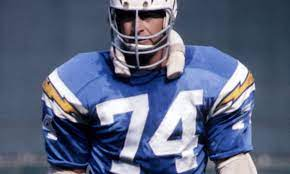
The Story And Significance Of Ron Mix - Elected To The AFL All-Star Team For Eight Straight Years As A Charger

Ronald Jack Mix is an American former professional football player who was an offensive tackle. He is a member of the American Football League (AFL) All-Time Team, and was inducted into the Pro Football Hall of Fame in 1979.

Mix attended the University of Southern California, where he was an All American. Upon graduation, he played right tackle and guard for the AFL's Los Angeles/San Diego Chargers (1960–69) and the National Football League's Oakland Raiders (1971). An eight-time AFL All-Star (1961–68) and a nine-time All-AFL (1960–68) selection, he is also a member of the Los Angeles Chargers Hall of Fame.
Mix was selected in the first round by two teams in 1960. The Baltimore Colts picked him as the tenth pick in 1960 on November 30 in the National Football League. He was drafted by the Boston Patriots in the first round of the American Football League draft, but the rights to Mix were traded to the Los Angeles Chargers, who felt they had a worthy chance at getting the local player to sign with them. Baltimore offered him an $8,000 salary and a $1,000 signing bonus while Los Angeles offered $12,000 and a $5,000 bonus. Mix said he would've signed with Baltimore if they countered with a deal of $10,000 salary and $2,000 bonus. The Colts, telling him the league would flop in a year, declined, and Mix elected to sign with Los Angeles.

He was a factor in the Chargers' early domination of the AFL's Western Division, and in San Diego helped them win an American Football League Championship in 1963, when they defeated the Boston Patriots 51–10 in the championship game. Mix was called for a mere two holding penalties in ten years. His coach in Sid Gillman once called him "the best offensive lineman I’ve ever seen."

Mix was the first white player in the 1965 AFL All-Star game in New Orleans to step forward and join his black teammates in a civil rights boycott. The racist environment of New Orleans caused the black players to say they weren't playing in a city that denied them the most basic rights (to eat, to get a cab, etc.). He made it clear that if the black players were not going to play, neither would he. That caused other white players to join the boycott. The game was then moved to Houston.

He was elected to the AFL All-Star team for eight straight years as a Charger, was a nine-time All-AFL selection, is a member of the All-time All-AFL Team, and is one of only 20 men who played the entire 10 years of the AFL. He was the first Charger to have his number retired in 1969 after he announced he was quitting football after playing injured that season. He earned a J.D. degree from the University of San Diego School of Law in 1970.

Mix told the Chargers he wanted to play again, but they had found a replacement in Gene Ferguson. After he asked to be traded to the New York Jets, San Diego dealt him to the Oakland Raiders for two high draft picks in 1970 and 1971. The deal was contingent upon Mix unretiring and agreeing to play for Oakland; he played with the Raiders in 1971. Chargers owner Eugene V. Klein, who hated the Raiders, unretired Mix's number 74.

Mix was also the general manager of the WFL Portland Storm in 1974.
In 1969 Mix was unanimously voted to the All-Time AFL Team by the Pro Football Hall of Fame, and named to the Chargers Hall of Fame in 1978.

He was voted to the Pro Football Hall of Fame in 1979. Mix was also elected a member of the International Jewish Sports Hall of Fame in 1980, inducted into the Southern California Jewish Sports Hall of Fame in 1990, inducted into the National Jewish Sports Hall of Fame in 2008, and inducted into the Jewish Sports Hall of Fame of Northern California in 2010. He was the second player from the AFL to be inducted into the Pro Football Hall of Fame. Lance Alworth was the first in 1978.
Sources
https://www.pro-football-reference.com/
https://www.profootballarchives.com/index.html
https://americanfootballdatabase.fandom.com/wiki/Football_Wiki
https://www.gridiron-uniforms.com/GUD/controller/controller.php?action=main
https://www.profootballhof.com/hall-of-famers/
"Hall of Famers profile". Profootballhof.com. Retrieved January 12, 2011.
 How Three Jews Behind the AFL Invented the Modern Media Spectacle That is Pro Football Today – Tablet Magazine
 Ron Mix Stats | Pro-Football-Reference.com
 Jewish Sports Stars (2nd Revised Edition): Athletic Heroes Past and Present – David J. Goldman – Google Books
 The Long Trial of Ron Mix | San Diego Reader
 McDonald, Jeff (August 27, 2019) [August 27, 2019]. "Ron Mix, San Diego Chargers standout turned lawyer, has been disbarred". San Diego Union-Tribune. Archived from the original on January 9, 2025. Retrieved January 9, 2025.
 Happy Hanukkah: The Greatest Jewish Sports Stars of All Time | Bleacher Report | Latest News, Videos and Highlights
 "Chargers' Success in the 1960s Case of Having the Right Mix". Los Angeles Times. July 17, 1990.
 "San Diego Hall of Champions Sports Museum " Ron Mix". Sdhoc.com. Archived from the original on March 16, 2012. Retrieved January 12, 2011.
 Siegman, Joseph (200). Jewish sports legends: the International Jewish Hall of Fame. Brassey's. ISBN 9781574882841. Retrieved January 12, 2011.
 Goldman, David J. (2006). Jewish Sports Stars: Athletic Heroes Past and Present. Kar-Ben. ISBN 9781580131834. Retrieved January 12, 2011.
 "NBA All-Star Game's Change Of Venue Reminds Our Commentator Of 1965". NPR.org.
 "Oakland Raiders | Raiders in the Hall of Fame – Ron Mix". Archived from the original on April 22, 2018. Retrieved April 21, 2018.
 Sullivan, Tim (March 4, 2010). "Retiring a number can be tricky math problem". The San Diego Union Tribune. Archived from the original on December 9, 2012.
 "Politics Lure Charger's Mix". Schenectady Gazette. December 3, 1969. p. 37. Retrieved May 14, 2012.
 Wallace, William N. (June 4, 1970). "Chargers Trade Mix To Raiders" (PDF). The New York Times. p. 56. Retrieved May 14, 2012.(subscription required)
 Wolf, Bob (July 11, 1990). "REMEMBER WHEN : At Offensive Tackle, Mix Was Master". Los Angeles Times. Archived from the original on October 19, 2015.
 "New Turf Rattles Pitchers". The Vancouver Sun. June 10, 1970. p. 28. Retrieved May 14, 2012.
 "Ron Mix might tackle politics". Pittsburgh Press. Newspaper Enterprise Association. November 21, 1971. p. D7.
 Sullivan, George (2000). Any Number Can Play:The Numbers Athletes Wear. Milbrook Press. p. 58. ISBN 0-7613-1557-8. Retrieved May 14, 2012.
 Canepa, Nick (May 13, 2012). "Chargers have several more numbers they should retire". U-T San Diego. Archived from the original on January 5, 2013.
 Ron Mix – Jewish Sports Hall of Fame Northern California
 "Southern California Jewish Sports Hall of Fame Home".
 "NJ Jewish News on-line | Seven to be added to National Jewish Sports Hall of Fame". www.njjewishnews.com. Archived from the original on July 5, 2008. Retrieved January 17, 2022.
 Ron Mix Archived April 19, 2007, at the Wayback Machine
 San Diego Union Tribune, May 23, 2016.
 "Ronald Jack Mix # 49663 - Attorney Licensee Search". members.calbar.ca.gov. Retrieved August 13, 2021.
 "In the Matter of Ronald Jack Mix" (PDF). Archived from the original (PDF) on July 16, 2019.

Wednesday, May 17, 2023

The Story And Significance Of Yale Lary - Nine Pro Bowls In Eleven Seasons At Safety And Punter

Robert Yale Lary Sr. was an American professional football player, businessman, and politician. He played for 11 seasons as a safety, punter and return specialist for the Detroit Lions of the National Football League. He was inducted into the Pro Football Hall of Fame in 1979 and was also selected for the NFL 1950s All-Decade Team.

A native of Fort Worth, Texas, Lary played college football for the Texas A&M Aggies from 1949 to 1951 and was selected as a first-team defensive back on the 1951 All-Southwest Conference football team. He also played baseball at Texas A&M, led his team to the 1951 College World Series, and set a Southwest Conference record for doubles. He was inducted into the Texas A&M Athletic Hall of Fame, the Texas Sports Hall of Fame, and the Michigan Sports Hall of Fame.

Lary played in the NFL with the Lions from 1952 to 1953 and from 1956 to 1964, missing the 1954 and 1955 seasons due to military service as an Army second lieutenant in Korea. He appeared in nine Pro Bowl games, and was a first-team All-NFL player five times. He led the NFL in punting three times, and at the time of his retirement in 1964, his 44.3-yard punting average ranked second in NFL history, trailing only Sammy Baugh. He also totaled 50 NFL interceptions for 787 return yards, both of which ranked fifth in NFL history at the time of his retirement.

Lary was selected by the Detroit Lions in the third round, 34th overall pick, of the 1952 NFL Draft. He signed with the Lions in June 1952, and played his entire NFL career for the Lions as a safety, punter, and return specialist.

As a rookie, Lary played all 12 regular-season games in the defensive backfield, intercepting four passes and recovering a fumble. He also returned 16 punts for an 11.4 yard average (including a 58-yard return for a touchdown against the Dallas Texans) and 12 kickoffs for a 25.2-yard average. The Lions defeated the Cleveland Browns, 17–7, in the 1952 NFL Championship Game.

In his second NFL season, Lary intercepted five passes in 11 regular season games, and returned a punt 74 yards for a touchdown against the Baltimore Colts on October 4, 1953. The Lions again defeated the Browns, 17–16, in the 1953 NFL Championship Game. Lary was selected to play in the 1953 Pro Bowl.

Lary also played professional baseball in the summer during his first few years in the NFL. He had been offered a $20,000 bonus by the St. Louis Cardinals after his junior season, but he declined the offer and returned for his senior year at Texas A&M. In January 1953, within days after the Lions' NFL championship, Lary signed a contract to play professional baseball for the Beaumont Exporters of the Texas League. He appeared in at least seven games for Beaumont in 1953. Lary again played minor league baseball in the summer of 1953, batting .429 for the Lake Charles Lakers and also playing for the Macon Peaches. In 1956, he played for the Austin Senators of the Texas League. He concluded his baseball career in 1957, appearing in 24 games for Lake Charles and five games for Austin.

In May 1954, Lary, who had served in the Reserve Officers' Training Corps at Texas A&M and was a reserve lieutenant, was ordered to report for duty in the United States Army, effective in July. Lary was stationed at Fort Benning in Georgia, and missed the 1954 and 1955 seasons due to military service

In January 1956, Lary signed a contract to return to the Lions after completing his military service in May 1956. Upon returning to the Lions, Lary became a regular in the Pro Bowl, playing in the all-star match every year from 1956 to 1962 and again in 1964. He also received first-team All-NFL honors in five years: 1956 (Associated Press [AP] and The Sporting News [TSN]); 1957 (TSN, United Press International [UPI], Newspaper Enterprise Association [NEA]); 1958 (AP, UPI, NEA); 1959 (TSN, NEA); and 1962 (AP, UPI, NEA).

During his NFL career, Lary played in Detroit's dominant defensive backfields that also included Hall of Fame inductees Jack Christiansen, Night Train Lane, and Dick LeBeau and six-time Pro Bowl selectee Jim David, with Hall of Famer Joe Schmidt filling in the gaps at middle linebacker. Playing at the right safety position, Lary ranked second in the NFL with eight interceptions in both 1956 and 1962. During his career, he totaled 50 interceptions, which ranked fifth in NFL history at the time of his retirement (trailing only Emlen Tunnell, Night Train Lane, Jack Butler, and Bobby Dillon). His 50 interception currently ranks third in Detroit Lions history behind Dick LeBeau and Lem Barney.

Lary was also known for his speed and evasiveness on interception returns. He returned an interception 73 yards for a touchdown in 1956, and his career total of 787 interception return yards ranked fifth in NFL history at the time of his retirement.

In 1957, Lary helped lead the Lions to a third NFL championship in his four years with the team. On October 13, 1957, he intercepted two passes against the Los Angeles Rams, including one which he returned 63 yards to set up the game-winning touchdown. The Lions defeated the Browns, 59–14, in the 1957 NFL Championship Game.

From 1959 to 1964, Lary was the most dominant punter in the NFL. He led the league in punting average in 1959 (45 punts for a 47.1 yard average and a long punt of 67 yards), 1961 (52 punts for an average of 48.4 yards and long punt of 71 yards) and 1963 (35 punts for an average of 48.9 yards and a long punt of 73 yards). Lary narrowly missed a fourth punting title in 1964, trailing Bobby Walden by one-tenth of a yard (or 3.6 inches) at 46.3 yards per punt. In 1962, he was two-tenths of a yard from the lead, losing the punting title due to a single blocked punt. Over the course of his 11-year NFL career, he punted 503 times for 22,279 yards for an average of 44.3 yards. His 48.9 yard average in 1963 was the second highest single-season total in NFL history, trailing only Sammy Baugh's 51.3 yard average in 1940. At the time of his retirement in 1964, Lary's 44.3 yard career punting average ranked second in NFL history, trailing only Sammy Baugh.

In addition to the length of his punts, Lary was also known for the hang time on his punts and once had a string of six games and 32 punts with no returns. Teammate Joe Schmidt later recalled, "Kicking from the end zone, Yale invariably put the ball across midfield with enough hang time to let us cover the kick. He made our defense look good because he always gave us room to work."

In 1992, sports writer Jack Saylor rated Lary as the second best punter in NFL history. Paul Hornung went further, saying in 2004 that Lary was the best punter ever.

Lary also handled punt returns for the Lions. He returned three punts for touchdowns and was among the NFL leaders in punt return yardage and yards per return in 1952, 1953, 1957, and 1958. He had the NFL's longest punt return in 1957 at 71 yards.

In July 1965, Lary announced that he was retiring from football. He said at the time that "it's too much to move my wife and kids twice a year. It's not fair to them."

Sources
https://www.pro-football-reference.com/
https://www.profootballarchives.com/index.html
https://americanfootballdatabase.fandom.com/wiki/Football_Wiki
https://www.gridiron-uniforms.com/GUD/controller/controller.php?action=main
https://www.profootballhof.com/hall-of-famers/
"Yale Lary". Pro-Football-Reference.com. Sports Reference LLC. Retrieved January 29, 2016.
 "Yale Lary, Aggies' Top Punter, Has Been Practicing Many Years". The Eagle (Bryan, TX). November 30, 1950 – via Newspapers.com. Open access icon
 "Texas A&M Tops Texas First Time in 12 Years". Detroit Free Press. November 30, 1951. p. 28 – via Newspapers.com. Open access icon
 Howard Ratliff (December 5, 1950). "Longhorns Dominate AP All-Southwest Conference Selections". Lubbock Morning Avalanche. p. H5 – via Newspapers.com. Open access icon
 Goldstein, Richard (May 15, 2017). "Yale Lary, a Force on the Detroit Lions' Title-Winning Teams of the 1950s, Dies at 86". The New York Times. p. B9. Retrieved May 15, 2017.
 "R. Yale Lary '52, Baseball". Texas A&M Lettermen's Association. Archived from the original on February 2, 2016. Retrieved January 29, 2016.
 "Lions Sign Yale Lary". The Corpus Christi Caller-Times. June 28, 1952. p. 5 – via Newspapers.com. Open access icon
 "Path to 2nd Title Thorny, Lions Find". Detroit Free Press. October 5, 1953. p. 29 – via Newspapers.com. Open access icon
 Howard Green (July 30, 1975). "Another Lary looms on the scene". Irving Daily News. p. 11.
 "Yale Lary Will Play Baseball With Beaumont". The Eagle (Bryan, Texas). January 15, 1953. p. 8 – via Newspapers.com. Open access icon
 "Yale Lary Register". Baseball-Reference.com. Sports Reference LLC. Retrieved January 29, 2016.
 "Two Sport Pro". The News-Palladium. August 2, 1956. p. 17 – via Newspapers.com. Open access icon
 "Second Lion Regular, Lary, Gets Army Call". Detroit Free Press. May 28, 1954. p. 27 – via Newspapers.com. Open access icon
 "Lions Lose Lary To Army Service". Corpus Christi Times. May 28, 1954. p. 24 – via Newspapers.com. Open access icon
 "Lary To Be Back With Lions Club". The Cincinnati Enquirer. January 8, 1956. p. 38 – via Newspapers.com. Open access icon
 O'Hara, Mike. "Remembering Yale Lary". Detroit Lions. Retrieved April 3, 2024.
 "Sports Bulletins". Detroit Free Press. January 7, 1956. p. 16 – via Newspapers.com. Open access icon
 "NFL Career Interceptions Leaders". Pro-Football-Reference.com. Sports Reference LLC. Retrieved January 29, 2016.
 "Where He Is Now; Yale Lary: Safety First". Ukiah (CA) Daily Herald. September 11, 1981. p. 1C, 2C – via Newspapers.com. Open access icon
 "Player Season Finder Query Results". Pro-Football-Reference.com. Sports Reference LLC. Archived from the original on March 10, 2018. Retrieved February 20, 2016.
 "NFL Career Interception Return Yards Leaders". Pro-Football-Reference.com. Sports Reference LLC. Retrieved January 29, 2016.
 "Tired Lions Cheer – 'Yeah Defense!'". Detroit Free Press. October 14, 1957. p. 39 – via Newspapers.com. Open access icon
 "1964 NFL Leaders and Leaderboards". Pro-Football-Reference.com. Sports Reference LLC. Retrieved January 29, 2016.
 "1962 NFL Leaders and Leaderboards". Pro-Football-Reference.com. Sports Reference LLC. Retrieved January 29, 2016.
 "Detroit Back Wins Crown". The Holland Evening Sentinel. December 20, 1962. p. 15.(Excluding the block, Lary averaged 49.7 yards on his other 51 punts.)
 "Yale Kicking Ace Yale Lary Quits". Detroit Free Press. July 24, 1965. p. 2C – via Newspapers.com. Open access icon
 "NFL Career Yards per Punt Leaders". Pro-Football-Reference.com. Sports Reference LLC. Retrieved January 29, 2016.
 "New Hall of Famer Lary recalls Lions' glory days". Detroit Free Press. January 30, 1979. p. 12 – via Newspapers.com. Open access icon
 Paula Pasche (2012). 100 Things Lions Fans Should Know & Do Before They Die. Triumph Books. ISBN 978-1623680213.
 "Yale Lary Bio". Pro Football Hall of Fame. Retrieved January 29, 2016.
 "Rankings". Detroit Free Press. September 3, 1992. p. 16E – via Newspapers.com. Open access icon
 Brent Zwerneman (2013). Game of My Life Texas A&M Aggies: Memorable Stories of Aggies Football. Skyhorse Publishing, Inc. ISBN 978-1613214558.
 "Texas Legislators: Past & Present - Mobile". www.lrl.state.tx.us.
 George Puscas (November 10, 1960). "'Senator' Sparkles: Defensive Vote For Yale Lary". Detroit Free Press. p. 44 – via Newspapers.com. Open access icon
 "Yale Lary To Sell Cars In Fort Worth". San Antonio Express. February 21, 1965. p. 5C – via Newspapers.com. Open access icon
 "Yale Lary, 1930-2017". Pro Football Hall of Fame. May 12, 2017. Retrieved May 12, 2017.
 "Lions great, Pro Football Hall of Famer Yale Lary dies at 86". National Football League. May 12, 2017. Retrieved May 12, 2017.
 "1950s All-Decade Team". NFL.com. Retrieved January 29, 2016.
 "Hall of Fame Inductees". Texas A&M Lettermen's Association. Archived from the original on February 23, 2013. Retrieved January 29, 2016.
 George Puscas (September 4, 1983). "Puscas picks best of the Lions". Detroit Free Press – via Newspapers.com. Open access icon
 "Overdue 'Train' happy to reach Hall of Fame". Detroit Free Press. January 26, 1988. p. D1, D2 – via Newspapers.com. Open access icon
 "Inductees". Texas Sports Hall of Fame. Archived from the original on September 30, 2016. Retrieved January 29, 2016.

Monday, May 15, 2023

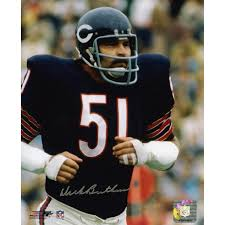
The Story And Significance Of Dick Butkus - Regarded As One Of The Greatest And Most Intimidating Linebackers In Pro Football History

Richard Marvin Butkus is an American former professional football player, sports commentator, and actor. He played football as a middle linebacker for the Chicago Bears of the National Football League from 1965 to 1973. He was invited to eight Pro Bowls, named a first-team All-Pro six times, and was twice recognized by his peers as the NFL's Defensive Player of the Year. He was renowned as a fierce tackler and for the relentless effort with which he played and is widely regarded as one of the greatest and most intimidating linebackers in pro football history.

Butkus was born in Chicago and played his entire football career in his home state of Illinois, which began at Chicago Vocational High School. He was a linebacker and a center at the University of Illinois. He was a two-time consensus All-American, and he led the Illini to a Rose Bowl victory in 1963 and was deemed the most valuable player in the Big Ten Conference. He was named college football's Lineman of the Year in 1964 by United Press International (UPI). He was inducted into the College Football Hall of Fame in 1983.

Butkus was drafted by the Bears as the third overall pick in the 1965 NFL Draft. He soon established himself as a ball hawk with his penchant for forcing turnovers. In his NFL career, he intercepted 22 passes and recovered 27 fumbles (a record when he retired), and he was responsible for causing many more fumbles with his jarring tackles. His tackling ability earned him both admiration and trepidation from opposing players. According to Hall of Fame defensive end Deacon Jones, Butkus "was a well-conditioned animal, and every time he hit you, he tried to put you in the cemetery, not the hospital." In 2009, the NFL Network named Butkus the most feared tackler of all time.

Butkus is credited with having defined the middle linebacker position, and is still viewed as the "gold standard by which other middle linebackers are measured." He was inducted into the Pro Football Hall of Fame in 1979, and his No. 51 jersey is retired by the Bears. Following his playing career, Butkus began careers in acting, sports commentary, and celebrity endorsement. He is active in philanthropy through the Butkus Foundation, which manages various charitable causes.

Butkus was drafted in the first round of the 1965 NFL draft by the Chicago Bears and also in the second round of the 1965 AFL draft by the Denver Broncos of the American Football League. After several days of recruiting by both the teams and leagues, his decision to sign with the Bears was viewed as a major victory for the NFL. Although the Bears offered him less money than the Broncos, playing for his hometown team and coach George Halas was more enticing. His rookie contract was worth $200,000. Along with fellow future Hall of Famer Gale Sayers, Butkus was one of three first-round picks for the Bears in the 1965 NFL Draft. The pick they used for Butkus had been acquired in a trade with the Pittsburgh Steelers.

Succeeding Hall of Famer Bill George at middle linebacker, Butkus made an immediate impact as a rookie. He established himself as a ball hawk by intercepting five passes and recovering six opponents' fumbles, and he was also credited unofficially with having forced six fumbles. Against the New York Giants on November 28, he intercepted a pass and recovered a fumble, and was named the NFL Defensive Player of the Week by the AP for the first of four times in his career.

He finished third in balloting for the AP's rookie of the year award, behind Sayers and Ken Willard of the San Francisco 49ers, with AP sportswriter Jack Hand remarking that Butkus would have certainly won if there was a separate award for defenders. He was named a first-team All-Pro by the AP and was invited to his first of eight straight Pro Bowls.

In 1966, Butkus was named the second-team middle linebacker on the All-Pro teams of the AP, UPI, Newspaper Enterprise Association (NEA), and New York Daily News, with each selector placing him behind Ray Nitschke of the Green Bay Packers. He reclaimed the first-team spot on the UPI and NEA teams in 1967, the AP team in 1968, and the Daily News team in 1969, all of which he occupied through the 1970 season.

Butkus scored the first points of his career on November 9, 1969, when he tackled Steelers quarterback Dick Shiner in the end zone for a safety. He also recorded 25 tackles in the game, and for his efforts was recognized as the NFL Defensive Player of the Week by the AP. That 38–7 win for the Bears was their only one of the season; they finished with a 1–13 record, which was the worst in franchise history. Additionally, Butkus' five-year contract had reached its end. A number of Bears players, including Butkus, expressed interest in being traded or cut by the team, but he signed a multi-year contract extension prior to the 1970 season to remain in Chicago. The contract raised his salary from $50,000 per year to around $80,000 to $100,000 per year.

Despite the ineptitude of the Bears as a team, Butkus developed a reputation around the league as one of its best players. In both 1969 and 1970, he was named the NFL Defensive Player of the Year by the NEA, which was voted on by NFL players. He appeared on the cover of Sports Illustrated in September 1970 with the caption, "The Most Feared Man in the Game". A panel of NFL coaches that year named Butkus the player they would most prefer to start a team with if they were building one from the ground up.

Prior to the 1971 season, Butkus underwent preventive surgery on his right knee; he had torn ligaments in high school, but was able to continue playing due to strong muscles compensating for the injury. In the Bears' first ever game at Soldier Field on September 19 against the Pittsburgh Steelers, Butkus turned in a great performance. With the Bears down 15–3 in the 4th, Butkus picked off quarterback Terry Bradshaw twice. Butkus did intercept a pass from Bradshaw a third time but was called back by a penalty against the Bears. In the final minutes with the Bears down 15–10, Butkus forced a fumble on running back Warren Bankston which was recovered by Bears defensive end Ed O'Bradovich on the Steelers' 12 yard line. The turnover led the Bears to score and win 17–15. In 1971, he recorded 117 tackles and four interceptions, leading the Bears in both statistics. He also scored a point; in the closing minutes of a game against the Washington Redskins on November 14, the score was tied at 15 and the Bears had lined up to kick an extra point. The snap went over the head of holder Bobby Douglass, who then raced back to retrieve the ball and looked to pass it. Butkus, who was playing as a blocking back, ran into the end zone and leapt to receive the pass for the winning score. Butkus later called the play his favorite of his career. Despite the statistical output, for the first time since 1966 Butkus was not named to a major All-Pro first-team, instead earning second-team honors from the NEA and Pro Football Writers Association.

Butkus sparked controversy in 1972 with the release of Stop-Action, a memoir describing the final week of the 1971 season. The Bears had lost their final five games in 1971, and Butkus used the memoir as an outlet for his frustrations and grievances. In particular, he harshly criticized the Detroit Lions organization, saying, "I think they are a lot of jerks, from the owner, the general manager, the coach on down... If we were voting for a jerk team or organization they'd have my vote all the way." The Lions responded with a 38–24 win over the Bears in Week 3 of 1972. After the game Lions linebacker Mike Lucci, whom Butkus had labeled a "crybaby", denied that the book had any bearing on the game's outcome, but told reporters, "Butkus should just keep his mouth shut and play football." Butkus, who was notoriously surly with reporters, also denied any connection and accused the media of sensationalism. Bears teammate Gale Sayers later said he did not like the book, feeling Butkus was above such name-calling. The season as a whole was another productive one for Butkus, who reclaimed the first-team middle linebacker spot on the major All-Pro teams and was invited to his final Pro Bowl.

Early in the first quarter against the Oilers in 1973, Butkus pounced on a fumble in the end zone for the only touchdown of his career. Houston tight end Mack Alston accused Butkus of intimidating the officials, saying he "grabbed the ball and started yelling 'touchdown, touchdown,'" after which "the officials looked at each other, shrugged their shoulders and called it a touchdown." His season was cut short after nine games by a lingering right knee injury, which he had been playing through for years, but was further aggravated after it gave out in Week 5 against the Atlanta Falcons. Prior to the 1974 season an orthopedic surgeon told him, "I don't know how a man in your shape can play football or why you would even want to." The injury ultimately forced him to retire in May 1974 at age 31.

Butkus's retirement came with four years remaining on a five-year contract with the Bears, which was to pay him $115,000 per year through 1977, came with a no-cut, no-trade clause, and was payable even if surgery was needed. The contract also promised necessary medical and hospital care which, according to Butkus, the Bears neglected to provide him, causing irreparable damage to his knee. The Bears then told him he would not be paid if he could not play. Butkus filed suit against the Bears' team doctor in May 1974 asking for $600,000 in compensatory damages and $1 million in punitive damages. It was eventually settled out of court when the Bears agreed to pay Butkus the full value of his contract. The episode caused a rift between Butkus and Bears owner George Halas, and the two did not speak for the next five years.

USA Today called Butkus the "gold standard by which other middle linebackers are measured." Although not the creator of the middle linebacker position—which is credited to his predecessor Bill George. Butkus is recognized as having defined the role. He is also recognized for having set the benchmark for the success of Bears middle linebackers, which continued with Mike Singletary and Brian Urlacher. Hall of Fame running back Earl Campbell, known for his hard-hitting running style, cited Butkus as his hero growing up.

After his university years, Butkus continued to receive recognition for his college career. He was inducted into the College Football Hall of Fame in 1983. His No. 50 jersey is one of only two retired by the Illinois Fighting Illini football program, the other being the No. 77 of Red Grange, and he was an inaugural inductee into the Illinois Athletics Hall of Fame in 2016. Butkus was named to the Walter Camp Football Foundation's All-Century Team in 1999, compiled to honor the best college players of the 20th century. In November 2017, Illinois announced it would erect a statue of Butkus on campus to overlook a future football performance center.

Butkus was elected to the Pro Football Hall of Fame in 1979, his first year of eligibility. The Hall's voters also named him to the NFL's 1960s All-Decade Team and 1970s All-Decade Team, deeming him one of the best players of both decades. On October 31, 1994, the Bears retired Butkus's No. 51 jersey along with Sayers's No. 40 jersey during a ceremony at Soldier Field. In 2004, a sculpture featuring Butkus, Halas, and seven other former Bears greats was unveiled at Soldier Field.

Butkus has been repeatedly ranked among the top players in NFL history, being named the ninth-best player in NFL history by The Sporting News in 1999, the tenth-best by the NFL Network in its The Top 100: NFL's Greatest Players series in 2010, and the eighth-best by the New York Daily News in 2014. In 2017, NFL senior analyst Gil Brandt ranked Butkus as the third greatest linebacker of all time, behind Derrick Thomas and Lawrence Taylor. He was also selected the 70th greatest athlete of the 20th century by ESPN. In 1994, he was named to the NFL 75th Anniversary All-Time Team, compiled to recognize the best players of the NFL's first 75 years as adjudged by NFL officials and media personnel. In 2019, Butkus was named to the NFL 100th Anniversary All-Time Team.

Butkus was ranked #1 on NFL Top 10: Most Feared Tacklers when the episode aired in 2008.

Honoring his contributions to Chicago sports, Butkus was inducted into the Chicagoland Sports Hall of Fame in 2008. On August 24, 2013, he was inducted into the National Lithuanian American Hall of Fame. In 2018 Butkus was inducted as a laureate of The Lincoln Academy of Illinois and awarded the Order of Lincoln, the state's highest honor, by the Governor of Illinois.

In 1985, the Downtown Athletic Club of Orlando, Florida created the Butkus Award, which is given annually to the most outstanding linebacker at the high school, college, and professional levels as chosen by a nationwide panel of 51 coaches and sportswriters. Butkus sued the Downtown Athletic Club for rights to the award in 2007, which it relinquished after a yearlong court battle. It has since been presented by the Butkus Foundation.

As an homage, actor Sylvester Stallone named his pet Bullmastiff Butkus after the dog ate a security blanket. He decided to name him after "possibly the fiercest football player in history". The dog later starred alongside Stallone in the Rocky film series.

Sources
https://www.pro-football-reference.com/
https://www.profootballarchives.com/index.html
https://americanfootballdatabase.fandom.com/wiki/Football_Wiki
https://www.gridiron-uniforms.com/GUD/controller/controller.php?action=main
https://www.profootballhof.com/hall-of-famers/
 "Chris Berman: No player intimidated opponents more than Dick Butkus". ESPN. ESPN Enterprises, Inc. Retrieved January 26, 2025.
 Mullin, John (November 8, 2016). "Bears Classics: Dick Butkus Profiles the Standard for MLB Greatness". CSN Chicago. Retrieved June 27, 2017.
 Davis, Nate (November 4, 2010). "Who is NFL's greatest player ever? NFL Network reveals No. 1 Thursday night". USA Today. Retrieved July 25, 2017.
 Nelson, Murry R. (2013). American Sports: A History of Icons, Idols, and Ideas (illustrated ed.). ABC-CLIO. pp. 212–214. ISBN 978-0313397530. Retrieved June 25, 2017.
 Pompei 2012, p. 1.
 Acocella, Nick (November 19, 2003). "Butkus was ferocious for struggling Bears". ESPN. Retrieved June 23, 2017.
 Telander, Rick (July 12, 2004). "Forever Growlin'". Sports Illustrated. Vol. 101, no. 2. Retrieved August 5, 2017.
 "Tops Have Busy Weekend of Ball". The Daily Calumet (Ill.). June 15, 1960. p. 8. Retrieved August 27, 2022 – via Newspapers.com.
 "1962 All-Big Ten Teams". Toledo Blade. Associated Press. November 27, 1962. p. 24. Retrieved June 24, 2017.
 "Pick Big Ten All-Star Squad". Galesburg Register-Mail. United Press International. November 27, 1962. p. 12. Retrieved June 24, 2017 – via Newspapers.com.
 "Dick Butkus Named MVP By Tribune". Freeport Journal-Standard. December 23, 1963. p. 13. Retrieved June 24, 2017 – via Newspapers.com.
 Johnson, Lew (December 29, 1963). "Four Unanimous Choices". The Lawton Constitution. p. 11. Retrieved June 24, 2017 – via Newspapers.com.
 Liska, Jerry (September 15, 1964). "Like a Rich Banker, Pete Elliott Has Gilt-Edge Assets At Illinois". Mt. Vernon Register-News. Associated Press. p. 8. Retrieved June 25, 2017 – via Newspapers.com.
 "Dick Butkus Top Lineman". Valley Morning Star. United Press International. December 10, 1964. p. 10. Retrieved June 23, 2017 – via Newspapers.com.
 Bradley, Ken (December 16, 2014). "Sporting News all-time College Football Players of the Year". Sporting News. Retrieved August 13, 2017.
 Rosenthal (December 7, 2017). "As Dick Butkus turns 75, Bears fans can embrace 51, who's more than media image". Chicago Tribune. Retrieved April 8, 2018.
 "Dick Butkus". Encyclopædia Britannica. Retrieved June 23, 2017.
 "Illinois: The Record Book" (PDF). University of Illinois. 2011. Archived from the original (PDF) on March 4, 2016. Retrieved June 22, 2017.
 "Dick Butkus Stats". Pro Football Reference. Sports Reference. Retrieved July 3, 2017.
 Rathet, Mike (December 3, 1964). "Butkus Will Sign With Bears Today". Times Daily. Associated Press. p. 22. Retrieved August 1, 2017.
 "Butkus Takes Lesser Sum of Money To Play for Chicago". Dixon Evening Telegraph. Associated Press. December 4, 1964. p. 11. Retrieved August 13, 2017 – via Newspapers.com.
 Eubanks, Lon (September 13, 1970). "Bear linebacker Butkus monster on Sunday". Southern Illinoisan. p. 45. Retrieved August 2, 2017 – via Newspapers.com.
 Pierson, Don (April 16, 1989). "Bears Didn't Blow It The Last Time They Had 3 First-rounders". Chicago Tribune. Retrieved August 1, 2017.
 Cosgrove, Ben (December 3, 2013). "Dick Butkus in 1965: The Baddest Rookie the NFL Has Ever Seen". Time. Archived from the original on May 21, 2015. Retrieved July 24, 2017.
 "Dick Butkus Proving Budding Football 'Thief'". News-Journal. December 19, 1965. p. 36. Retrieved June 24, 2017 – via Newspapers.com.
 Hand, Jack (December 1, 1965). "Butkus Defensive Player Of Week". Anderson Daily Bulletin. Associated Press. p. 19. Retrieved August 13, 2017 – via Newspapers.com.
 Hand, Jack (December 22, 1965). "Chicago's Gale Sayers Named Rookie of Year; Polls All But 7 Votes". The Post-Crescent. Associated Press. p. 10. Archived from the original on February 17, 2017. Retrieved June 27, 2017 – via Newspapers.com.
 "1966 NFL All-Pros". Pro-Football-Reference.com. Sports Reference. Retrieved July 23, 2017.
 "Bears' Star Dick Butkus Selected Best On Defense". Fond du Lac Commonwealth Reporter. Associated Press. November 13, 1969. p. 39. Retrieved July 23, 2017 – via Newspapers.com.
 "Virgil Carter's Outburst Draws Stiff Fine from Chicago Bears". Great Bend Tribune. Associated Press. December 17, 1969. p. 11. Retrieved July 23, 2017 – via Newspapers.com.
 "Chicago Bears Sign Butkus To Multi-Year Pact". Anderson Herald. United Press International. May 31, 1970. p. 20. Retrieved July 23, 2017 – via Newspapers.com.
 "Butkus Beats Out All Other 'Front Four'". Pampa Daily News. Newspaper Enterprise Association. December 22, 1969. p. 4. Retrieved July 3, 2017 – via Newspapers.com.
 Berkow, Ira (January 10, 1971). "Dick Butkus Named NFL's Defensive Player Of Year". Post-Herald and Register. Newspaper Enterprise Association. p. 22. Retrieved July 3, 2017 – via Newspapers.com.
 McDill, Kent (2013). 100 Things Bears Fans Should Know & Do Before They Die. Triumph Books. p. 16. ISBN 978-1617495779. Retrieved August 6, 2017.
 "Bears in the Hall – Dick Butkus". Chicago Bears. Archived from the original on August 2, 2017. Retrieved July 24, 2017.
 "Surgery slated for Dick Butkus". Star-News. United Press International. January 28, 1971. p. 1-D. Retrieved August 1, 2017.
 Freedman 2006, p. 9.
 Lowitt, Bruce (November 15, 1971). "Bears Nip Redskins, 16–15 On Butkus' Conversion Grab". The Journal News. Associated Press. p. 23. Retrieved July 24, 2017 – via Newspapers.com.
 Freedman 2006, p. 8.
 Olmert, Michael (October 16, 1972). "In 'Stop-Action,' the Bears' Dick Butkus may have taken his title too seriously". Sports Illustrated. Vol. 37, no. 16. Retrieved July 25, 2017.
 "Angry Lions Smash Bears, Butkus 38–24". The Times Recorder. United Press International. October 2, 1972. p. 10. Retrieved July 25, 2017 – via Newspapers.com.
 Smith, John (October 3, 1972). ""Back off" Dick Butkus". Belvidere Daily Republican. p. 5. Retrieved July 25, 2017 – via Newspapers.com.
 Claus, Jimmy (October 5, 1972). "Sporting Around". The Terre Haute Tribune. p. 31. Retrieved July 25, 2017 – via Newspapers.com.
 "Bears Find Someone To Pick On In Oilers". Freeport Journal-Standard. Associated Press. October 29, 1973. p. 13. Retrieved August 1, 2017 – via Newspapers.com.
 "Dick Butkus' knee is worse than ever". The Post-Crescent. Associated Press. October 20, 1973. p. 7. Retrieved August 2, 2017 – via Newspapers.com.
 Nightingale, Dave (February 3, 1974). "Dick Butkus' knee—almost beyond repair". The Billings Gazette. p. 47. Retrieved August 2, 2017 – via Newspapers.com.
 "Bears' Dick Butkus Retires". York Daily Record. United Press International. May 21, 1974. p. 17. Retrieved August 2, 2017 – via Newspapers.com.
 "Butkus Sues Bears for $1.6 Million, Charging Breach of Contract". The New York Times. May 30, 1974. Retrieved August 3, 2017.
 Rollow, Cooper (May 30, 1974). "Butkus sues Bears for 1.6 million". Chicago Tribune. p. 1, section 3. Retrieved August 3, 2017.
 Pompei 2012, p. 3.
 Gershman, Michael (1996). "Dick Butkus: Born to Play Football" (PDF). The Coffin Corner. 18 (2). Retrieved August 6, 2017.
 "Illini Center Dodges The Trees". Mt. Vernon Register-News. September 15, 1964. p. 8. Retrieved June 27, 2017 – via Newspapers.com.
 "Dick Butkus Bio". Pro Football Hall of Fame. Retrieved July 2, 2017.
 Chicago Tribune 2015, p. 128.
 Wojciechowski, Gene (January 25, 2012). "Toughness defined". ESPN. Retrieved August 4, 2017.
 Murray, Jim (May 23, 1976). "Name Inspired Terror". News-Journal. p. 27. Retrieved August 4, 2017 – via Newspapers.com.
 Jones, Robert F. (September 21, 1970). "Nobody thinks I can talk". Sports Illustrated. Retrieved December 6, 2015.
 Chicago Tribune 2015, p. 130.
 Magee, Jerry (August 30, 1970). "Dick Butkus— 'I Personally Don't Like Anybody'". The San Bernardino County Sun. p. 21. Retrieved August 2, 2017 – via Newspapers.com.
 Rand, Jonathan (2006). 300 Pounds of Attitude: The Wildest Stories And Craziest Characters The NFL Has Ever Seen. Rowman & Littlefield. pp. 88–89. ISBN 1461749824. Retrieved July 3, 2017.
 Pompei 2012, p. 2.
 "Top Ten Most Feared Tacklers: Dick Butkus". National Football League. January 7, 2009. Retrieved March 24, 2014.
 Center, Bill (January 12, 2013). "Prototype Butkus still No. 1 among NFL linebackers". The San Diego Union-Tribune. Retrieved August 6, 2017.
 "ESPN Chicago Hall of Fame". ESPN. Archived from the original on August 6, 2017. Retrieved August 6, 2017.
 Freedman 2006, p. 2.
 Mayer, Larry (November 8, 2016). "Butkus featured on 'Bears Classics'". Chicago Bears. Archived from the original on August 5, 2017. Retrieved August 4, 2017.
 Hopkins, Doc (March 22, 2013). "Chicago Bears Breakdown: The Best 8 Players in Team History". Yahoo! Sports. Archived from the original on March 25, 2013. Retrieved March 22, 2013.
 Isaacson, Melissa (August 11, 2011). "Bears' legacy deep up the middle". ESPN. Retrieved August 2, 2017.
 Peter, Josh (January 31, 2017). "NFL legend Earl Campbell still hits hard, compares current NFL to wrestling". USA Today. Retrieved August 2, 2017.
 "Simpson, Cannon head Hall of Fame list". The Salina Journal. United Press International. February 11, 1983. p. 19. Retrieved August 4, 2017 – via Newspapers.com.
 Asmussen, Bob (September 1, 2003). "Grabowski, Howard join Butkus, Grange on stadium scoreboard". The News-Gazette. Retrieved August 4, 2017.
 "Illini start sports Hall of Fame, Dick Butkus in 1st class". The Washington Times. Associated Press. October 27, 2016. Retrieved August 4, 2017.
 "Walter Camp Football Foundation All-Century Team". Tallahassee Democrat. December 29, 1999. p. 24. Retrieved August 4, 2017 – via Newspapers.com.
 Ryan, Shannon (November 20, 2017). "Illinois to build Dick Butkus statue". Chicago Tribune. Retrieved April 18, 2018.
 "Butkus, Unitas among grid Hall of Fame picks". The Pantagraph. Associated Press. January 30, 1979. p. 11. Retrieved August 4, 2017 – via Newspapers.com.
 Sullivan, Paul (October 22, 1994). "Richly Deserved Retirement For Butkus, Sayers Numbers". Chicago Tribune. Retrieved July 22, 2017.
 "Sporting News Top 100 Football Players". Democrat and Chronicle. August 15, 1999. p. 3D. Retrieved November 10, 2016 – via Newspapers.com.
 Barall, Andy (November 5, 2010). "Jim Brown Should Be No. 1, but What About Most Underrated?". The New York Times. Retrieved July 25, 2017.
 Myers, Gary (December 3, 2014). "NFL Top 50: Jim Brown is best player in league history, edges Giants' Lawrence Taylor in Daily News' rankings (Nos. 1–10)". Daily News. New York. Retrieved July 13, 2017.
 Brandt, Gil (June 30, 2017). "Gil Brandt's greatest NFL linebackers of all time". National Football League. Retrieved July 25, 2017.
 "Top N. American athletes of the century". ESPN. Retrieved September 30, 2008.
 "Very Best of the NFL". Detroit Free Press. August 24, 1994. p. 1D. Retrieved November 10, 2016 – via Newspapers.com.
 Mayer, Larry (November 29, 2019). "Butkus, Atkins, Hewitt named to NFL All-Time Team". chicagobears.com. Retrieved November 30, 2019.
 Stinson, Scott (April 7, 2012). "Scott Stinson: NFL sends mixed messages on violent hits". National Post. Retrieved October 5, 2023.[dead link]
 "Self, Sayers to Hall of Fame". The Topeka Capital-Journal. September 26, 2008. Archived from the original on August 5, 2017. Retrieved August 5, 2017.
 "Football legends, actress to be inducted into Lithuanian Hall of Fame in Lemont". Suburban Life Media. August 20, 2013. Retrieved July 25, 2017.
 "Gov. Rauner announces recipients of 2018 Order of Lincoln award" (PDF). illinois.gov. Office of the Governor. September 15, 2017. Retrieved June 10, 2018.
 "College football: 2016 Butkus Award preseason watch list announced". NCAA.com. July 18, 2016. Retrieved June 23, 2017.
 Schmadtke, Alan (April 29, 2008). "Downtown Athletic Club of Orlando relinquishes rights to the Dick Butkus Award". Orlando Sentinel. Archived from the original on January 21, 2017. Retrieved April 8, 2018.
 Shepatin, Matthew (2009). "Then Madden Said to Summerall. . .": The Best NFL Stories Ever Told. Triumph Books. p. 134. ISBN 978-1617491986. Retrieved August 2, 2017.
 Hernandez, Victoria; Henderson, Cydney. "Dick Butkus wasn't just a Chicago Bears legend. He became a busy actor after football". USA Today. Retrieved October 6, 2023.
 Nelson, Mark (October 6, 2023). "Remembering Dick Butkus and the XFL". XFL News and Discussion. Retrieved October 6, 2023.
 Browning, Matt; Browning, Matthew A. (September 15, 2021). The Definitive "Golden Girls" Cultural Reference Guide. Rowman & Littlefield. ISBN 978-1-4930-6337-6.
 Stewart, John (1994). Italian film: a who's who. McFarland. p. 66. ISBN 978-0-89950-761-3.
 LuKanic, Steven A. (1991). Film actors guide. Lone Eagle Publ. p. 91. ISBN 978-0-943728-38-4.
 Leonard Maltin's movie and video guide 1993. Penguin Group. 1992. pp. 499, 1166, 1181, 1209. ISBN 978-0-452-26857-9.
 Colangelo, B. J. (February 9, 2022). "Let's Revisit Gremlins 2's Wonderfully Strange Cameos". /Film. Archived from the original on October 6, 2023. Retrieved October 6, 2023.
 Conner, Floyd (September 1, 2000). Football's Most Wanted™: The Top 10 Book of the Great Game's Outrageous Characters, Fortunate Fumbles, and Other Oddities. Potomac Books, Inc. ISBN 978-1-57488-309-1.
 Marill, Alvin H. (1987). Movies Made For Television: The Telefeature and the Mini-series, 1964–1986. New York: Baseline/New York Zoetrope. pp. 53–54. ISBN 0-918432-85-5.
 Terrace, Vincent (January 17, 2020). Encyclopedia of Television Pilots. McFarland. ISBN 978-1-4766-3810-2.
 Batchelor, Bob; Coombs, Danielle Sarver, eds. (2014). We Are What We Sell: How Advertising Shapes American Life. . . And Always Has. ABC-CLIO. p. 161. ISBN 978-0313392450. Retrieved April 8, 2018.
 Alfano, Peter (October 9, 1983). "Athletes Advertising Images: Bullies to 'Beefcake'". The New York Times. Retrieved April 8, 2018.
 "Dick Butkus Out To Give Echo Greater Exposure". Chicago Tribune. July 11, 1985. Retrieved April 8, 2018.
 McCallum, Jack (2012). Sports Illustrated Book of the Apocalypse: Two Decades of Sports Absurdity. Diversion Books. p. 20. ISBN 978-1938120152. Retrieved June 23, 2017.
 "Butkus Joins CBS Team". Logansport Pharos-Tribune. Associated Press. July 19, 1988. p. 10. Retrieved August 5, 2017 – via Newspapers.com.
 Stewart, Larry (March 23, 2001). "Butkus Believes XFL Had Bad Marketing". Los Angeles Times. Retrieved June 23, 2017.
 Sandomir, Richard (September 20, 2005). "Mr. Butkus Goes Back to High School". The New York Times. Retrieved August 5, 2017.
 White, Mike (October 10, 2005). "Butkus leaves Montour". Pittsburgh Post-Gazette. Retrieved August 5, 2017.
 Telander, Rick (September 6, 1993). "The Last Angry Men". Sports Illustrated. Retrieved December 6, 2015.
 "Where are they now: Dick Butkus". University of Illinois. June 20, 2014. Retrieved December 6, 2015.
 Bisheff, Steve (December 26, 1993). "Butkus' USC Work Habits Deserve Hall Of Fame Vote". The Seattle Times. Archived from the original on October 6, 2023. Retrieved October 6, 2023.
 "Matthew "Matt" Butkus". National Lithuanian American Hall of Fame. Archived from the original on October 6, 2023. Retrieved October 6, 2023.
 Evans, Thayer (March 8, 2016). "Jaguars' Luke Butkus will be new offensive line coach at Illinois". Sports Illustrated. Retrieved June 23, 2017.
 "Luke Butkus". packers.com. Retrieved October 6, 2023.
 "2018 Men's Volleyball Roster". UCLA Bruins. Retrieved April 18, 2018.
 Butkus, Dick (September 4, 2017). "Dick Butkus: Don't overlook football's benefits". USA Today. Retrieved April 18, 2018.
 Farrar, Doug (November 20, 2012). "Outside the Game: Long after his retirement, Dick Butkus shows more heart than ever". Yahoo! Sports. Archived from the original on August 5, 2017. Retrieved August 5, 2017.
 Mitchell, Fred (October 5, 2023). "Dick Butkus, legendary Chicago Bears linebacker and Hall of Famer, dies at 80". Chicago Tribune. Retrieved October 5, 2023.
 DeArdo, Bryan (November 8, 2023). "Dick Butkus, Bears legend and Hall of Fame linebacker, cause of death at 80 revealed". CBS Sports. Retrieved November 15, 2023.
 "Fields and Moore lead the Bears to their first win of the season, beating the Commanders 40-20". ESPN. October 5, 2023. Retrieved October 9, 2023.
 Taylor, Ryan (October 6, 2023). "Bears win after Dick Butkus' death reminiscent of Walter Payton 1999 game". NBC Chicago. Retrieved October 9, 2023.
 Pompei 2012, p. 4.
 Reyes, Lorenzo (February 28, 2014). "Through 'I Play Clean' campaign, Butkus creates awareness". USA Today. Retrieved June 23, 2017.
Chicago Tribune staff (2015). The Chicago Tribune Book of the Chicago Bears: A Decade-By-Decade History. Agate Publishing. ISBN 978-1572847583.
Freedman, Lew (2006). Game of My Life: Chicago Bears. Sports Publishing LLC. ISBN 1596701005.
Pompei, Dan (December 15, 2012). "Bear for all seasons". Chicago Tribune. Retrieved June 22, 2017.
Butkus, Dick (1997). Butkus: Flesh and Blood. Doubleday. ISBN 0385486480.
Butkus, Dick (1972). Stop-Action. Dutton. ISBN 0525210059.