Showing posts with label HOF 1988. Show all posts

Wednesday, December 13, 2023

The Story And Significance Of Alan Page - First Defensive Player To Win NFL Most Valuable Player Award

Alan Cedric Page is an American retired Minnesota state Supreme Court judge and former professional football player.

He gained national recognition as a defensive tackle in the National Football League during 15 seasons with the Minnesota Vikings and Chicago Bears, and then embarked on a legal career. Page earned a B.A. in political science from the University of Notre Dame in 1967 and a J.D. from the University of Minnesota Law School in 1978. Page served as an associate justice of the Minnesota Supreme Court from 1993 until he reached the court's mandatory retirement age of 70 in 2015.

Page was the first defensive player in NFL history to win the MVP Award and only Lawrence Taylor has done it since. He is a member of both the College Football Hall of Fame (1993) and the Pro Football Hall of Fame (1988), and is considered one of the greatest defensive linemen ever to play the game.

In 2018, President Donald Trump awarded Page the Presidential Medal of Freedom.

Page was a first round selection (15th overall) in the 1967 NFL/AFL Draft by the Minnesota Vikings, for whom he played for 11 seasons, through 1977. He is one of 11 Vikings to have played in all four Super Bowls (IV, VIII, IX, XI) in which the team appeared. Page joined the Chicago Bears in 1978 and played there for four seasons and amassed an additional 40 sacks.

As a right defensive tackle, Page had an unusual 3-point stance, placing his left rather than his right hand on the ground. During his 15-year career, the Vikings won four conference titles and one league championship. Page was a member of the Vikings' "Purple People Eaters," a defensive line adept at sacking or hurrying the quarterback. Page played in 218 consecutive games without an absence (215 consecutive in the starting line-up), during which he recovered 22 fumbles, made 148½ sacks (Vikings-108½, Bears-40), and scored three touchdowns (two on fumble recoveries and one on an interception return). He also recorded three safeties, the second most in NFL history, and blocked 23 kicks. He set a career-high with 18 sacks in 1976 and is unofficially credited with five other seasons of 10 sacks or more.

While in the NFL, Page earned All-Pro honors six times and made second-team all-league three additional times. He was voted to nine consecutive Pro Bowls. He was voted All-Conference 10 times, in 1968 and 1969 as All-Western Conference and in 1970 through 1977 and 1980 as an All-National Football Conference.

In 1971 Page was named both the AP NFL Defensive Player of the Year (the first player to be named such) and the AP's NFL Most Valuable Player. Page was the first defensive player to be named MVP since the award's inception. Only one other defensive player, Lawrence Taylor, has ever received the award. Page was also voted the NEA NFL Defensive Player of the Year in 1973. In 2019 Page was chosen as a member of the NFL's 100th Anniversary All-Time Team.

Page was National Football League Players Association player representative from 1970 to 1974 and in 1976–1977, and a member of the NFLPA Association Executive Committee from 1972 to 1975. He was named to the Vikings' 40th Anniversary Team in 2000. Along the way, Page was named the Associated Press NFL Defensive Player of the Week three times: Week 9, 1967; Week 8, 1968; Week 13, 1971. In 1988 Page was further honored by his induction into the Pro Football Hall of Fame. In 1999, he was ranked number 34 on The Sporting News' list of the 100 Greatest Football Players, the highest-ranking Viking player. He received the NFL Alumni Career Achievement Award in 1995 for attaining success in his post-NFL career.

After his playing career he dabbled in the media, first as a commentator on Turner Broadcasting System covering the College Football Game of the Week series during the Fall of 1982 and then as a commentator on National Public Radio in 1982–1983.

Long before Page's football career came to a close, he was laying the groundwork for his future role as a justice of the Minnesota Supreme Court. While still playing for the Vikings, Page attended the University of Minnesota Law School, from which he received a Juris Doctor in 1978. After graduating, he worked at the Minneapolis law firm Lindquist and Vennum from 1979 to 1984 outside the football season. Page was appointed Special Assistant Attorney General in 1985, and soon thereafter promoted to Assistant Attorney General.

In 1992, Page was elected to an open seat as an associate justice of the Minnesota Supreme Court, becoming the first African-American to serve on that court. He was reelected in 1998 (becoming the biggest vote-getter in Minnesota history), again in 2004, and for a final time in 2010: Minnesota has mandatory retirement for judges at the end of the month in which they turn 70.

On January 7, 2009, Page was appointed by Chief Justice Eric Magnuson to select the three-judge panel that heard the election contest brought by Norm Coleman in the 2008 U.S. Senate election.

Alan and Diane Sims Page were married from 1973 until her death in 2018. They met while she was working for General Mills and he was playing for the Minnesota Vikings. Page is a Catholic.

In 1988, the Pages founded the Page Education Foundation. It provides financial and mentoring assistance to students of color in exchange for those students' commitment to further volunteer service in the community, an idea suggested by their daughter Georgi. The Page Education Foundation has awarded grants to more than 7,500 students, who in turn have given more than 475,000 hours of their time to young children. Upon his retirement from the bench, Page plans to continue the foundation's work and find other ways to encourage students of color to be successful in school, especially by developing critical thinking skills.

Page and his daughter Kamie Page have written four children's books: Alan and His Perfectly Pointy Impossibly Perpendicular Pinky (2013), The Invisible You (2014), Grandpa Alan's Sugar Shack (2017), and Bee Love (Can Be Hard) (2020). Proceeds from the sales of these books support the Page Education Foundation. Page is the subject of the authorized biography All Rise: The Remarkable Journey of Alan Page (2010).

Page has a passion for running and runs on a regular basis. In 1979, he became the first active NFL player to complete a marathon. His running routine, which he took up while helping his wife quit smoking, is believed to have contributed to his dismissal from the Minnesota Vikings. His running schedule of 35–40 miles per week during the season, and 55 miles per week in the offseason, caused his weight to drop below that dictated by the Vikings.

The Pages, instigated by Diane Page, also created the Diane and Alan Page Collection, an extensive collection of Americana and Jim Crow-related memorabilia. In 2012 Page appeared in a Minnesota-filmed episode of PBS's Antiques Roadshow with an 1865 banner commemorating Abraham Lincoln. In 2018 the banner and select items from the Diane and Alan Page Collection were exhibited at the Minneapolis Central Library in an exhibit called 'Testify', which coincided with Super Bowl LII in Minneapolis. The Testify exhibit, directed and produced by Georgi Page, returned to the library in 2023 with additional Testify photographic displays appearing throughout the state at various regional libraries.

In June 2017, after a campaign initiated by students at Alexander Ramsey Middle School in Minneapolis, the school's name was changed to Justice Page Middle School.

In November 2018, President Donald Trump awarded Page the Presidential Medal of Freedom.

In January 2020, Page and Neel Kashkari proposed amending a portion of the Minnesota State Constitution to read, "All children have a fundamental right to a quality education that fully prepares them with the skills necessary for participation in the economy, our democracy, and society, as measured against uniform achievement standards set forth by the state. It is a paramount duty of the state to ensure quality public schools that fulfill this fundamental right."

On October 30, 2020, the North St. Paul/Maplewood/Oakdale School District (ISD 622) announced a new elementary school to be built at 2410 Holloway Avenue in Maplewood will be named Justice Alan Page Elementary School, scheduled to open in September 2022.

Sources
https://www.pro-football-reference.com/
https://www.profootballarchives.com/index.html
https://americanfootballdatabase.fandom.com/wiki/Football_Wiki
https://www.gridiron-uniforms.com/GUD/controller/controller.php?action=main
https://www.profootballhof.com/hall-of-famers/
Litke, James (November 25, 1981). "Alan Page: leaving 23 years behind isn't easy". Lewiston Morning Tribune. Idaho. Associated Press. p. 1C.
 "Wall Street Cheat Sheet, "The Greatest Defensive Linemen of All Time."". Archived from the original on January 30, 2015. Retrieved January 6, 2015.
 Boren, Cindy (November 16, 2018). "Medal of Freedom honoree Alan Page will put aside his feelings about Trump". The Washington Post.
 Former Minn. Supreme Court Justice Alan Page on life, education, football and the law, Minnesota Public Radio. May 16, 2017.
 "Walter Camp News Release". Archived from the original on July 1, 2007. Retrieved May 1, 2007.
 startribune.com Archived February 2, 2009, at the Wayback Machine,
 HOF: ALAN PAGE Class of 1988
 purplepride.org Archived May 2, 2008, at the Wayback Machine
 chicagobears.com Archived February 29, 2008, at the Wayback Machine
 "Alan Page Stats". Pro-Football-Reference.com.
 "Alan Page". profootballhof.com. Pro Football Hall of Fame. Retrieved August 31, 2021.
 "AP NFL Most Valuable Player Winners". pro-football-reference.com. Sports-Reference, LLC. Retrieved August 31, 2021.
 "Alan Page Highlights". profootballhof.com. Pro Football Hall of Fame. Retrieved August 31, 2021.
 Wallace, William N. (December 31, 1975). "Rozelle Rule Found In Antitrust Violation". The New York Times. Retrieved May 8, 2025.
 Mackey v. National Football League, 407 F. Supp. 1000 (D. Minn. 1975) – Justia.com. Retrieved December 12, 2023.
 "Alan C. Page". Minnesota State Law Library. Retrieved November 29, 2018.
 "Top justice won't pick Minn. Senate lawsuit judges". Minnesota Public Radio. January 7, 2009. Retrieved January 7, 2009.
 "Diane Sims Page, revered philanthropist and wife of Alan Page, dies at 74". twincities.com. October 2, 2018.
 "Diane & Alan Page's storybook began with chance meeting". Minnesota Vikings. December 17, 2017.
 "Former pro athlete and jurist says faith about doing good, avoiding evil". Catholic Philly. Retrieved October 26, 2022.
 "Alan Page leaving Supreme Court to focus on youth". Twin Cities Pioneer Press. April 4, 2015. Retrieved March 4, 2016.
 "Home". page-ed.org.
 "All Rise". www.triumphbooks.com. Retrieved December 29, 2019.
 Martz, Ron. "A lineman who runs and runs". St. Petersburg Times. October 22, 1978
 Ward, Bill (August 3, 2007). "Going on the offensive" (PDF). Minneapolis Star Tribune. Archived from the original (PDF) on January 11, 2012. Retrieved January 1, 2011.
 Olson, Mark W. (May 7, 2012). "Behind the scenes at Antiques Roadshow". Chaska Herald. Archived from the original on April 30, 2014. Retrieved April 29, 2014.
 "Alan Page exhibits slavery artifacts in time for Super Bowl". USA Today. January 31, 2018. Retrieved February 15, 2018.
 "Rename Ramsey". Justice Page School. Archived from the original on May 14, 2018. Retrieved May 24, 2018.
 Meitrodt, Jeffrey (November 11, 2018). "Alan Page to receive nation's highest civilian honor". The Minnesota Star Tribune. Retrieved January 9, 2025.
 "Alan Page Receives Presidential Medal Of Freedom". November 16, 2018. Retrieved November 16, 2018.
 "Proposed Minnesota Constitutional Amendment" (PDF). Federal Reserve Bank Of Minneapolis. Archived from the original (PDF) on August 27, 2021. Retrieved February 7, 2021.
 "Name selected! Justice Alan Page Elementary School". ISD622.org. Archived from the original on November 24, 2020. Retrieved October 30, 2020.
 https://www.startribune.com/justice-alan-page-elementary-opens-in-maplewood/600207592

Monday, December 11, 2023

The Story And Significance Of Jack Ham - Most Takeaways By A Non-Defensive Back in NFL History With 53

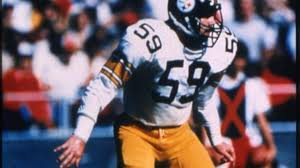
Jack Raphael Ham Jr. is an American former professional football player who was a linebacker for the Pittsburgh Steelers of the National Football League from 1971 to 1982. He is considered one of the greatest outside linebackers in the history of the NFL. Ham was inducted into the Pro Football Hall of Fame in 1988 and the College Football Hall of Fame in 1990. He played college football for the Penn State Nittany Lions. In mid-2019 the newsletter of the PSU Alumni Association rated Ham first among the 100 greatest athletes, considering all sports and all previous football players, in University history.

Ham was selected by the Pittsburgh Steelers in the second-round (34th overall) of the 1971 NFL Draft. He won the starting left linebacker job as a rookie. He was first-team All-Pro six years and was named to eight straight Pro Bowls. Ham was blessed with tremendous quickness — according to Steelers coach Chuck Noll and teammate Andy Russell he was the "fastest Steeler for the first ten yards, including wide receivers and running backs". He was one of the few outside linebackers who could play pass defense as well as the NFL's top safeties. Although he was a ferocious hitter, he was known as a player who could not be fooled and was seldom out of position. Maxie Baughan, a former NFL linebacker said of Ham, "He was one of the more intelligent players to ever play that position. He was able to diagnose plays. You couldn't ever fool him." Despite not being as revered as teammate Jack Lambert by fans (as well as not being as feared by opponents), some have regarded Ham as a better outside linebacker than Lambert as a middle linebacker during the Steelers dominance of the 1970s.

Ham's career statistics include 25 sacks, 21 fumbles recovered, and 32 interceptions (although the sack numbers are unofficial since the NFL did not begin recording sacks until Ham's final year in the league, so he officially has just three sacks). As these numbers indicate, Ham had a flair for the big play, guided by some of the best football instincts ever found in a linebacker. Ham was a member of four Super Bowl winning teams during his 12-year career (although he did not play in Super Bowl XIV due to an ankle injury), all of it spent with the Steelers. His 53 takeaways are the most in NFL history by a non-defensive back, while his 32 interceptions rank him 3rd all time among linebackers, behind Don Shinnick and Stan White.

"Dobre Shunka" (either Polish or Slovak for "good ham") was Ham's nickname while playing, as well as the name of Ham's fan club in the 1970s.

After announcing his retirement as an active player on February 17, 1983, Ham began a career as a radio personality. He served as a color commentator for national radio broadcasts of NFL games, and later hosted a show in Pittsburgh with Mark Madden on ESPN Radio 1250 during the NFL season. Ham is currently a sports analyst for Penn State Radio Network and also appears as an analyst on the Westwood One radio network.

Ham is a minority owner of the North American Hockey League's Johnstown Tomahawks. On January 31, 2013, Ham was honored by the Tomahawks' organization with a bobblehead giveaway to the first 1,000 fans who entered the Cambria County War Memorial Arena for the Tomahawks' game against the Port Huron Fighting Falcons.

In 2017, Ham became an advocate of medical marijuana, having studied the benefits of relieving symptoms related to playing football, and wants the NFL to soften their stance on the use of marijuana in general. Ham felt inspired after seeing the cognitive decline of contemporary Nick Buoniconti, as well as other current and former players including former teammate Mike Webster, despite Ham himself being healthy. Ham also believes medical marijuana would help counter the ongoing opioid epidemic affecting society as a whole.

Ham was inducted into the Pro Football Hall of Fame in 1988 and the College Football Hall of Fame in 1990. In 1999, he was ranked number 47 on The Sporting News' list of the 100 Greatest Football Players.

Sources
https://www.pro-football-reference.com/
https://www.profootballarchives.com/index.html
https://americanfootballdatabase.fandom.com/wiki/Football_Wiki
https://www.gridiron-uniforms.com/GUD/controller/controller.php?action=main
https://www.profootballhof.com/hall-of-famers/
 "Hall of Fame member bio". Pro Football Hall of Fame's official site.
 Oremland, Brad (February 24, 2010). "The Best Linebackers of All-Time". Sports Central. Retrieved May 26, 2010.
 Wilson, Burt (July 2019). "'Penn State's 100 Greatest Athletes:' Barney Ewell ranked No. 7". LNP | Lancaster Online. Retrieved October 10, 2020.
 Pollock, Chuck (July 6, 2019). "Prescott's 61st of Penn State's all-time athletes". Olean Times Herald. Community Media Group. Retrieved October 10, 2020.
 "Jack Ham bio from PSU libraries". Archived from the original on March 12, 2012. Retrieved May 26, 2010.
 "Jack Ham". Phi Delta Theta Museum. Retrieved January 6, 2025.
 "Jack Ham". College Football Hall of Fame. Football Foundation. Retrieved May 24, 2010.
 "1971 NFL Draft Listing". Pro-Football-Reference.com. Retrieved October 4, 2025.
 Branch, John (November 4, 2006). "Unofficially, Sack Record Doesn't Add Up". New York Times. Archived from the original on December 24, 2013. Retrieved January 3, 2012.
 "Jack Ham stats". Pro-Football-Reference.com. Archived from the original on January 3, 2012. Retrieved January 3, 2012.
 "Sports People: Ham of Steelers Retires", The New York Times, Friday, February 18, 1983. Retrieved November 20, 2020
 Mike Mastovich (January 24, 2013). "Jack Ham on Tomahawks: I'm glad to be involved". Johnstown Tribune-Democrat. Retrieved September 4, 2013.
 "Hall of Fame linebacker Jack Ham wants more research into use of medical marijuana". May 18, 2017.
 "Jack Ham player profile". NFL.com. Retrieved May 26, 2010.

Wednesday, December 6, 2023

The Story And Significance Of Mike Ditka - First Tight End To Reach 1,000 Yards Receiving

Michael Keller Ditka is an American former football player, coach, and television commentator. During his playing career, he was UPI NFL Rookie of Year in 1961, a five-time Pro Bowl selection, and a six-time All-Pro tight end with the Chicago Bears, Philadelphia Eagles, and Dallas Cowboys in the National Football League; he was inducted into the College Football Hall of Fame in 1986 and the Pro Football Hall of Fame in 1988. Ditka was the first tight end in NFL history to reach 1,000 yards receiving.

He was an NFL champion with the 1963 Bears and is a three-time Super Bowl champion, playing on the Cowboys' Super Bowl VI team, winning as an assistant coach for the Cowboys in Super Bowl XII, and coaching the Bears to victory in Super Bowl XX. He was named to the NFL's 75th- and 100th-Anniversary All-Time Teams.

As a head coach for the Bears from 1982 to 1992, he was twice both the AP and UPI NFL Coach of Year (1985 and 1988). He also was the head coach of the New Orleans Saints from 1997 to 1999.

Ditka and Tom Flores are the only people to win an NFL title as a player, an assistant coach, and a head coach. Ditka, Flores, Gary Kubiak, and Doug Pederson are also the only people in modern NFL history to win a championship as head coach of a team for which they played previously. Ditka is the only person to participate in both of the last two Chicago Bears' league championships, as a player in 1963 and as head coach in 1985.

In 2020, Ditka became the owner of the X League, a women's tackle football league that was originally the Lingerie Football League.

He is known by the nickname "Iron Mike", which he has said comes from his being born and raised in a steel town in Pennsylvania.

Ditka was selected by the Chicago Bears fifth overall in the 1961 NFL Draft, while the Houston Oilers drafted him eighth overall in the first round of the 1961 AFL Draft. He signed with the Bears and his presence was immediately felt. In his first season, Ditka had 58 receptions, introducing a new dimension to a tight end position that had previously been dedicated to blocking. He also scored 12 receiving touchdowns, which was the most by a Bears rookie. His success earned him Rookie of the Year honors. He continued to play for the Bears for the next five years, earning a Pro Bowl trip each season.

He played on the 1963 NFL championship team. Many of the players from that team, including Ditka, were drafted by assistant coach George Allen, a future Hall of Famer, who was then in charge of the Bears' drafts. During the season, against the Los Angeles Rams, Ditka tied Harlon Hill's franchise record for the most receiving touchdowns in a game with four. Ditka ranks first among tight ends and fourth in Bears history with 4,503 yards, fifth in both receptions (316) and touchdown catches (34).

In 1962, he started all 14 games, making 58 receptions (tied for the team lead) for 904 yards (led the team) and five receiving touchdowns (led the team). In 1963, he led the team with 59 catches for 794 yards and eight touchdowns.

In 1964, he was second on the team with 75 receptions for 897 yards and five touchdowns. The next year, he posted 36 receptions (second on the team), 454 receiving yards (third on the team), and two receiving touchdowns (tied for fourth on the team).

In 1966, he registered 32 receptions (second on the team), 378 yards (third on the team) and two touchdowns (tied for second on the team). Ditka was also noted for decking football fan Felix Carbajal, who had run onto the playing field late in a Week 2 31–17 loss to the Rams at the Los Angeles Memorial Coliseum on September 16. He had played out his option that season after not being able to reach a contract agreement with Bears' owner/head coach George Halas.

On February 8, 1967, The New York Times reported that just before the AFL–NFL merger, Ditka had signed a $300,000 contract with a $50,000 signing bonus with the Houston Oilers, the team that owned his AFL draft rights.

On April 26, 1967, Ditka was traded to the Philadelphia Eagles along with a 1968 fourth-round pick (#106-Alan Bush), in exchange for quarterback Jack Concannon. The transaction was intended to fill roster vacancies created by the retirements of Eagles' tight end Pete Retzlaff and Bears' quarterback Rudy Bukich. His Oilers contract was transferred to the Eagles and Ditka was able to keep his $50,000 bonus to avoid any legal conflicts. His time as a Bears player bitterly came to an end with a parting shot in which he stated that Halas "threw nickels around like manhole covers." He wore number 98 in his first season with the Eagles, while only playing in nine games with four starts because of injuries. Ditka was outplayed by tight end Jim Kelly, registering 26 receptions for 274 yards and two touchdowns.

In 1968, he changed his jersey number back to his usual 89. He appeared in 11 games with six starts, and his statistics were below tight end Fred Hill. He posted 13 receptions for 111 yards and two touchdowns.

On January 28, 1969, he was traded to the Dallas Cowboys in exchange for wide receiver Dave McDaniels. Pettis Norman ended up being named the starting tight end, but Ditka still was able to play in 12 games with four starts, while making 17 receptions for 268 yards and three touchdowns.

In 1970, he remained a reserve player behind Norman. He appeared in 14 games, while tallying eight receptions for 98 yards and no touchdowns. The Cowboys reached their first Super Bowl, losing 13–16 against the Baltimore Colts, by way of a field goal scored with five seconds left in regulation time.

In 1971, he was a backup player behind Billy Truax, appearing in 14 games with four starts. He set the franchise record for tight ends with 30 receptions in a season, while also compiling 360 receiving yards, one touchdown, and three kickoff returns for 30 yards. His highlight was a touchdown reception in the Cowboys' 24–3 victory over the Miami Dolphins in Super Bowl VI.

In 1972, he was named the starter at tight end, after Truax was limited by off-season knee surgery. He started all 14 games, posting 17 receptions for 198 yards and one touchdown, while alternating in some passing situations with rookie Jean Fugett.

On March 1, 1973, Ditka announced his retirement as a player, opening the door for him to be named the Cowboys wide receiver assistant coach under head coach Tom Landry. At the time, his 427 receptions were the most by a tight end in NFL history.

In 1988, his blocking and 427 career receptions for 5,812 yards and 43 touchdowns earned him the honor of being the first tight end inducted into the Pro Football Hall of Fame. Ditka also scored two touchdowns on offensive fumble recoveries, tying seven other players for the most in NFL history. In 1999, he was ranked number 90 on The Sporting News's list of the 100 Greatest Football Players.

Retiring after the 1972 season, Ditka was immediately hired as an assistant coach by Landry. Ditka spent nine seasons as an assistant coach with the Cowboys. During his tenure, the Cowboys made the playoffs eight times, won six division titles, three NFC championships, and a Super Bowl victory in 1977.

While working with the Cowboys, Ditka sent a letter to George Halas, his former head coach, who was still owner of the Bears. In the letter, Ditka expressed regret for the acrimonious manner in which his time with the Bears had come to an end and said that he would like to come back to Chicago and be the head coach of the Bears "when he was ready". Meanwhile, the Cowboys continued to win games, although they did not win another Super Bowl while Ditka was there. His last game with the Cowboys was the 1981 NFC Championship Game, where the team fell to the San Francisco 49ers.

After firing previous coach Neill Armstrong following the 1981 season, Halas decided to take Ditka up on his offer from several years earlier, and hired him to become the team's head coach for 1982 season. Although the Bears had made the playoffs under Armstrong and his predecessor Jack Pardee, those were the only two winning seasons since Halas' retirement as coach, so he was looking for a coach who would bring the Bears back to prominence. Shortly after his hiring, as recounted by Mike Singletary in 2006, Ditka called a team meeting. In the meeting, he warned that the team would experience some turnover, but if they were all willing to work hard for him and stand with him, Ditka promised a trip to the Super Bowl within three seasons. Specifically, Ditka said, "Give me three years, and if you walk with me, we'll get to the dance."

By his third season, Ditka led the Bears to the NFC Championship Game, where the Bears were shut out by the eventual Super Bowl-winning 49ers in San Francisco. The following year, Ditka's coaching career hit its pinnacle on January 26, 1986, with a 46–10 win over the New England Patriots in Super Bowl XX at the Louisiana Superdome in New Orleans. Ditka has stated that one of his biggest regrets in life was not letting Walter Payton score a touchdown in the Super Bowl, instead opting for Jim McMahon to run it in twice and rookie defensive tackle William "The Refrigerator" Perry to run it in once. Nevertheless, Ditka has contended that his reluctance to give Payton the ball was justified on account of the disproportionately heavy coverage the Bears' star running back faced from the Patriots' defense, and insisted that Payton's mere presence on the field was a decisive factor in the Bears' crushing victory notwithstanding personal statistics.

In 1985, Ditka led the Bears to a 15–1 record, and he was named NFL Coach of the Year by the Associated Press following the regular season. Football commentators widely regard the 1985 Bears defense as one of the best.[citation needed] It was masterminded by defensive coordinator Buddy Ryan, with little oversight from Ditka; in fact, Ditka and Ryan had a largely adversarial relationship dating back to Ditka's hiring as Ryan, who was already on the coaching staff when Ditka joined the Bears, felt that he should have been promoted into the head-coaching position. Although the two men continued to work together, the relationship continued to deteriorate, and with the Bears trailing by three touchdowns in a late-season Monday-night game against the Miami Dolphins that resulted in the team's only loss, Ryan finally snapped after Ditka, as he recounted in 2006 for NFL Network, told him that the defensive scheme was not working. The two began throwing punches at each other and had to be separated, and Ditka said that the relationship at that point became unsalvageable. In an unusual gesture, following the Bears Super Bowl victory, the players carried both Ryan and Ditka off the field. In addition, the 1985 Chicago Bears are one of several teams to consistently challenge the undefeated 1972 Dolphins for the unofficial title of the "Greatest NFL Team of All-Time". The NFL Network series America's Game rated the 1985 Bears as the second-best Super Bowl champion, only behind the 1972 Miami Dolphins.

Buddy Ryan left in 1986 to become the head coach of the Philadelphia Eagles. When asked if he was happy Ryan was gone, Ditka replied he was not happy, but "elated". In 1986, 1987, and 1988, the Bears won the Central Division title and earned three home playoff games. The first of those years saw the Bears finish the regular season with a 14–2 record to tie the New York Giants for the best in the entire league. However, the Bears were upset by the Washington Redskins in their first playoff game. The next year, the Bears finished second in the NFC with an 11–4 record, but were again upended by the Redskins en route to that team's second Super Bowl victory of the decade. The Bears finished 12–4 in 1988 and got homefield advantage. They defeated Ryan's Eagles in the Fog Bowl in their first game, but the team was defeated by the 49ers in the NFC championship game. This was the third time in five years that Ditka led the Bears to the NFC championship game, and was the last time they advanced this far until 2006.

Ditka suffered a heart attack during the 1988 season, which he attributed to stress since he was in excellent physical condition and had no significant family history of heart disease. However, despite being expected to miss much of the season, Ditka was on the sidelines as an "advisor" the next week and back in full charge the week after. He led the Bears to a 12–4 record and received his second coach of the year award from the AP.

The Bears started 4–0 in 1989, but a series of last-second losses eventually led to a complete meltdown at the end of the season, as the Bears finished 6–10. The Bears rallied to win a weak Central Division in 1990 and make the playoffs as a wild card in 1991, but were eliminated convincingly in the early rounds. After dropping to 5–11 in the 1992 season, the Bears fired Ditka on January 5, 1993. His 106 wins are the second-most in Bears history, behind only Halas.

On December 9, 2013, Ditka's Bears jersey, number 89, was retired in a halftime ceremony during a Monday Night Football game in Chicago as the Bears hosted the Dallas Cowboys, for whom Ditka also played and worked as an assistant coach under the late Tom Landry. "Thank you, thank you, thank you, and go Bears!" Ditka told the crowd.

In 1997, after a five-year absence in which he had served as a television analyst, Ditka returned to the NFL to take over as the permanent replacement for Jim Mora with the New Orleans Saints. Ditka inherited a team that had not made the playoffs, nor had recorded a record above .500, since 1992, and had finished the 1996 season, during which Mora had resigned, tied with the Atlanta Falcons for the second-worst record in the league (only the New York Jets, who only won once, had a worse record).

In Ditka's first season back in the league, he struggled early, as the Saints lost four of their first five games. They did manage to beat his former team, the Bears, along the way, and recorded five more wins, but after winning only one game in the division (even being swept by the last-place St. Louis Rams), the Saints finished at 6–10.

Ditka's team played more inconsistently in 1998, as the Saints started out 3–0, but could not keep the momentum going. Still, they were in playoff contention toward the end of the season, and defeated the eventual NFC East champions in Ditka's other former squad, the Cowboys, to get to 6–7 with three games to go. They dropped their last three, though, and were eliminated in week 16 on a last-second field goal against the Arizona Cardinals.

Then, in the offseason that followed, Ditka was roundly criticized for the trading of all of the team's 1999 draft picks (plus their first-round draft pick in 2000) to the Washington Redskins to move up in the draft and select Texas running back Ricky Williams (Washington later used the picks to select future All-Pro and Hall of Famer Champ Bailey, Jon Jansen, and LaVar Arrington). The trade was further mocked because of a magazine cover in which Ditka posed with Williams, who was wearing a wedding dress.

The 1999 season proved to be the worst of Ditka's coaching career. After winning the season opener against the Carolina Panthers, the Saints dropped their next seven games, including a loss to the expansion Cleveland Browns. As the season wore on, Ditka's frustrations began showing in the local media. After a late-season practice with the team sitting at 2–7, a grumpy Ditka gave a sixty-second press conference where he was very short tempered and dismissive of what he thought were stupid questions. When one of them made it a point to ask him why he was so angry, Ditka responded by saying "what do you care?", and then followed up by saying to the reporter "if you were 2-7, you'd be in a bad mood too." Ditka would take one more question before muttering to the reporters, "not very much fun, is it?", then going inside.

The low point of the season came three weeks later in a loss to the Falcons, which was the Saints' 10th in 11 weeks. Ditka came into the postgame press conference appearing emotionally exhausted, and said he felt his charges “broke” him. He then said the Saints would be better off hiring someone else to coach the team, claiming he was the "wrong guy" to lead them and that "[he] didn't have it anymore", saying "God puts people in places for reasons, and he probably put me here to be humbled. I deserve it."

Ditka said that he did not feel the Saints had much talent on the offensive side of the field, blaming himself for that and saying that he had let the players down by not having them ready. He also cited the Saints’ lack of playmaking ability, as they dropped several passes and failed to take advantage of three Falcons fumbles while turning the ball over seven times themselves. Ditka was asked if he felt the team had quit on him, which he denied; however, when he was asked if he was thinking about leaving immediately he responded affirmatively. However, Ditka also said that he would not do it unless he knew for certain he would be fired before the end of the year. Before leaving the press conference, the defeated Ditka called himself a "hypocrite" and said the entire exercise was "silly".

After two more losses, Ditka and the Saints faced the 7–7 Cowboys in their home finale on Christmas Eve. Ditka chose to give the start to Jake Delhomme, his third-string quarterback. In his first NFL start, Delhomme threw for two touchdowns and ran for a third, and Fred Weary took a forced fumble 56 yards for the game-winning score, as the Saints knocked off the Cowboys, 31–24. This proved to be Ditka's final victory as a head coach; after a 45–13 loss to the Panthers the following week left the Saints with a 3–13 record and their seventh consecutive nonwinning season, Ditka and general manager Bill Kuharich were fired on January 6, 2000.

Over a total of 14 seasons as a head coach, Ditka amassed a regular-season record of 121–95 and a postseason record of 6–6.

Sources
https://www.pro-football-reference.com/
https://www.profootballarchives.com/index.html
https://americanfootballdatabase.fandom.com/wiki/Football_Wiki
https://www.gridiron-uniforms.com/GUD/controller/controller.php?action=main
https://www.profootballhof.com/hall-of-famers/
Draper, Kevin (February 8, 2016). "Gary Kubiak Was Actually the Third Person to Win The Super Bowl Coaching the Same Team He Played For". Deadspin.com. Retrieved October 13, 2023.
 "Mike Ditka Becomes Owner X League Women's Tackle Football League". July 15, 2020.
 "Getting Down and Dirty with 'Da Coach'". Electronic Gaming Monthly. No. 75. Ziff Davis. October 1995. pp. 114–116.
 "Obituary: Mike Ditka: Aliquippa resident, father of Saints coach". Old.post-gazette.com. Archived from the original on October 18, 2015. Retrieved January 16, 2015.
 Price, S.L. (January 31, 2011). "The Heart Of Football Beats In Aliquippa". Sports Illustrated. Archived from the original on September 27, 2018. Retrieved February 6, 2011.
 "Ditka putting name on Polish sausage". ABC 7 Chicago. October 9, 2013. Retrieved October 9, 2013.
 "Mike Ditka page on". Chicagobears.com. Archived from the original on December 20, 2007. Retrieved September 1, 2011. Quote from article: "Mike's childhood name was Mike Dyzcko. His father was one of three brothers of a Ukrainian family in the coal-mining and steel-manufacturing area in Western Pennsylvania"
 Othello Harris, George Kirsch; Claire Nolte (2000). Encyclopedia of Ethnicity and Sports in the United States. Westport, Connecticut: Greenwood Publishing Group. p. 132. ISBN 0-313-29911-0.
 "Pitt Retired Jerseys: #89 Mike Ditka". University of Pittsburgh. Archived from the original on October 11, 2013. Retrieved December 10, 2013.
 "Mike Ditka College Stats". Retrieved June 14, 2020.
 "Bryant Inducted Into Hall Of Fame". Logansport Pharos-Tribune. United Press International. December 10, 1986. p. 14. Retrieved May 24, 2017 – via Newspapers.com.
 "Hall of Fame: Class of 2018". University of Pittsburgh LifeStyle. September 7, 2018. Archived from the original on September 21, 2021. Retrieved March 24, 2019.
 "Infographic: Iron Mike Ditka". Chicago Bears. December 8, 2013. Archived from the original on December 11, 2013. Retrieved December 8, 2013.
 Mayer, Larry (May 24, 2013). "Bears to retire Mike Ditka's number". Chicago Bears. Retrieved May 24, 2013.[permanent dead link]
 Royko, Mike (September 20, 1966). "Grid fan's rush to glory bashed by mighty Ditka". Chicago Daily News. Retrieved June 12, 2020.
 Anderson, Dave (February 8, 1967). "Ditka, Bears' End, Jumps To Oilers". The New York Times. p. 27. Retrieved February 11, 2023.
 "Ditka 'Obligated' To Houston Oilers". The Tampa Times. February 8, 1967. p. 8. Retrieved October 29, 2024 – via Newspapers.com.
 Sons, Ray (January 21, 1986). "Ditka sees himself in team's rebels". Chicago Sun-Times. Retrieved June 12, 2020.
 "Halas Trades Mike Ditka". April 27, 1967. Retrieved June 14, 2020.
 "Mike Ditka Gets $50,000; For Nothing". The Amarillo Globe-Times. Associated Press. April 27, 1967. p. 16. Retrieved June 12, 2020 – via Newspapers.com.
 "Mike Ditka Stats". Pro-Football-Reference.com.
 Merron, Jeff (April 18, 2005). "The strangest NFL draft moments". ESPN. Retrieved June 12, 2020.
 "Mike Ditka Will Retire". York Daily Record. Associated Press. March 2, 1973. p. 52. Retrieved October 29, 2024 – via Newspapers.com.
 "Pro Football Hall of Famers | Pro Football Hall of Fame Official Site". profootballhof.com. Archived from the original on January 17, 2007.
 America's Game: The Super Bowl Champions, "#2. 1985 Chicago Bears." Premiered on CBS, February 3, 2007
 Taylor, Roy. "Mike Ditka, Chicago Bear". Chicago Bears History. Retrieved January 2, 2015.
 "Bears Trounce Patriots, 46-10, in Super Bowl". Los Angeles Times. January 27, 1986. Retrieved October 31, 2023.
 "Ditka named Coach of Year". The Salina Journal. Associated Press. December 28, 1985. p. 15. Retrieved May 24, 2017 – via Newspapers.com.
 "Greatest NFL Teams of All Time". ESPN. August 14, 2002. Retrieved September 1, 2011.
 Goldberg, Dave (December 29, 1988). "Mike Ditka Named NFL Coach of Year". Daily Sitka Sentinel. Associated Press. p. 6. Retrieved May 24, 2017 – via Newspapers.com.
 Greenberg, Jon (December 9, 2013). "Mike Ditka gets jersey retired". ESPN. Retrieved February 2, 2014.
 Baker, Bill (April 18, 2009). "'Wedding photo' of Mike Ditka and Ricky Williams was worth a thousand". nola.com. Archived from the original on December 1, 2011. Retrieved May 11, 2010.
 Denlinger, Ken. "FIERY COACHES TRY TO REKINDLE THE FLAME". The Washington Post. Retrieved February 26, 2020.
 "Ditka, Kuharich fired by Saints". ESPN.com. January 9, 2000. Retrieved June 30, 2025.
 McCarthy, Michael (June 20, 2007). "ESPN tabs Greenberg, Golic to head second MNF team". USA Today. Retrieved November 18, 2012.
 "Greatest NFL Teams of All Time". Chicago Tribune. March 9, 2016. Retrieved March 10, 2016.
 Ditka, Mike (1986). Ditka : an autobiography. Pierson, Don, 1944–. Chicago. ISBN 0933893078. OCLC 13745770.
 Ditka, Mike. (2010). The '85 Bears : We Were the Greatest. Telander, Rick. Chicago: Triumph Books. ISBN 9781617494383. OCLC 773565548.
 Ditka, Mike. (2005). In life, first you kick ass : reflections on the 1985 Bears and wisdom from Da Coach. Telander, Rick. Champaign, Illinois: Sports Pub. ISBN 1582619778. OCLC 62154112.
 Keteyian, Armen. (1992). DITKA: monster of the Midway. New York: Pocket Books. ISBN 0671749994. OCLC 27266244.
 Ditka. Chicago: Agate Digital. 2013. ISBN 9781572844674. OCLC 868488942.
 Jiggetts, Dan. (2008). Then Ditka Said to Payton--- : the Best Chicago Bears Stories Ever Told. Mitchell, Fred. Chicago: Triumph Books. ISBN 9781617491955. OCLC 818819232.
 Cohen, Rich. (October 29, 2013). Monsters: the 1985 Chicago Bears and the wild heart of football. New York. ISBN 9780374298685. OCLC 864391469.
 Obejas, Achy (August 6, 1987). "Waiting for Grabowski". Chicago Reader. Retrieved February 26, 2022.
 "One for the Road". IMDb. February 2, 2007. Retrieved November 19, 2015.
 ""According to Jim" Cars & Chicks (TV Episode 2002)". IMDb.
 "The 7 WORST 7th Inning Stretch Performances In History". Chicagonow.com. Retrieved September 1, 2011.
 "Retired NFL Players". Sun-Sentinel. February 2, 2007. Archived from the original on July 16, 2011. Retrieved September 1, 2011.
 "Charity Run By NFL Legend Mike Ditka Folds". Firstcoastnews.com. Retrieved September 1, 2011.[permanent dead link]
 Greenberg, Jon (January 15, 2010). "Chicago Bears' 'Super Bowl Shuffle' an enduring, endearing sports moment". ESPN. Retrieved July 6, 2012.
 "ditkasrestaurant.com". Ditkasrestaurant.com. Retrieved January 16, 2015.
 "Vee Quiva Hotel & Casino – Dining & Restaurant". Wingilariver.com. Archived from the original on February 6, 2015. Retrieved January 16, 2015.
 "Football : Football News and Photos". Chicago Tribune. August 28, 2011. Retrieved September 1, 2011.[permanent dead link]
 George, John (August 3, 2011). "Ron Jaworski is investor in new India football league". Philadelphia Business Journal. Retrieved September 1, 2011.
 "Mike Ditka relaunches wine line". Crain's Chicago Business. August 27, 2012. Retrieved January 16, 2015.
 "Mike Ditka Wines: Overview – Terlato Wines International". Terlatowines.com. Archived from the original on March 13, 2015. Retrieved January 16, 2015.
 "Iron Mike Ditka Joins Camacho Cigars". Cigar Aficionado. Retrieved January 16, 2015.
 "camacho". us.davidoffgeneva.com. Archived from the original on January 15, 2013.
 "Vienna Beef and Coach Mike Ditka Partner to Launch Ditka Sausages". Yahoo! Finance. August 6, 2013. Retrieved August 6, 2013.
 "Mike Ditka and Jim McMahon team up again — for a commercial". Voices. Archived from the original on December 29, 2014. Retrieved January 16, 2015.
 "Mike Singletary not happy that Mike Ditka wore Packers sweater in ad". CBS SPorts.
 Keteyian, Armen (September 2, 1992). "OFF-FIELD DISTRACTIONS COST IRON MIKE DEARLY". Chicago Tribune. Retrieved April 22, 2019.
 "Mike Ditka suffers 'very minor stroke,' says he's OK". National Football League. November 16, 2012. Retrieved November 16, 2012.
 On the Market—Mike Ditka's Former Bannockburn Home | Chicago magazine | Deal Estate November 2007. Retrieved February 25, 2017.
 "Ditkas thrown for a loss in New Orleans". Chicago Tribune. December 2, 2001. Retrieved April 10, 2021.
 Gordon, Timothy (August 24, 2018). "Football Legend 'Iron Mike' Ditka Talks Church and Manhood". OnePeter5. Retrieved January 14, 2019.
 "History of the Knights of Columbus". Knights of Columbus, Council 81 (Marlboro, Massachusetts). Retrieved January 14, 2019. In the world of sports, Vince Lombardi, the famed former coach of the Green Bay Packers; wrestler Lou Albano; Mike Ditka, James Connolly, the first Olympic gold-medal champion in modern times; Floyd Patterson, former heavyweight boxing champion; and baseball legend Babe Ruth were all knights.
 "Famous Knights …". Knights of Columbus, British Columbia & Yukon State Council. December 22, 2018. Retrieved January 14, 2019.
 Roach, Becky (April 18, 2018). "7 Famous Men You Probably Didn't Realize Were Knights". Catholic Online. Retrieved January 14, 2019.
 "Mike Ditka, former NFL coach, treated for heart attack, reports say". Fox News. November 24, 2018.
 "GOP's morality drive hits potholes". USA Today. July 19, 2004. Retrieved May 12, 2010.
 "Ditka: 'Second Thoughts Until The Day I Die' – Orlando News Story – WKMG Orlando". Local6.com. Archived from the original on December 10, 2008. Retrieved September 1, 2011.
 "Ditka regrets not running for Senate, says Obama wouldn't be President". CBSSports.com. October 10, 2013.
 "Bruce Rauner turns to Ditka for campaign advice in new TV ad". Chicago Tribune. September 7, 2014. Retrieved November 29, 2014.
 "Photo gallery: 1985 Chicago Bears visit the White House". Chicago Tribune. October 7, 2011. Retrieved September 30, 2012.
 "Mike Ditka says he's with Donald Trump 'all the way'". Daily News. New York. Retrieved January 9, 2018.
 "New ESPN guidelines recognize connection between sports, politics". ESPN. Retrieved January 9, 2018.
 "Mike Ditka: 'I don't see all the atrocities' Colin Kaepernick is protesting". Archived from the original on January 10, 2018. Retrieved January 9, 2018.
 Rosenthal, Phil. "Mike Ditka: 'No oppression in last 100 years'". Chicago Tribune. Retrieved January 9, 2018.
 Bieler, Des; Boren, Cindy (October 11, 2017). "Called out by Joe Namath, Mike Ditka clarifies 'no oppression in the last 100 years' remark". The Washington Post. ISSN 0190-8286. Retrieved January 9, 2018.
 "STEINBERG: Mike Ditka is not a Chicagoan". Chicago Sun-Times. October 10, 2017. Retrieved January 9, 2018.
 "MITCHELL: Mike Ditka turns blind eye to America's racial past". Chicago Sun-Times. Archived from the original on January 10, 2018. Retrieved January 9, 2018.
 "Mike Ditka responds to the furor over his 'no oppression' statement". Chicago Sun-Times. Archived from the original on February 14, 2019. Retrieved January 9, 2018.

Wednesday, November 29, 2023

The Story And Significance Of Fred Bilitnikoff - Retired As The All-Time Leader In Postseason Receptions, Yards And Touchdowns For A Pass Catcher

Frederick Biletnikoff, nicknamed "Scarecrow", is an American former football player and coach. He played as a wide receiver for the Oakland Raiders in the American Football League (AFL) and National Football League for fourteen seasons and later was an assistant coach with the team. He retired as an NFL player after the 1978 season, and then played one additional season in the Canadian Football League (CFL) for the Montreal Alouettes in 1980. While he lacked the breakaway speed to be a deep-play threat, Biletnikoff was one of the most sure-handed and consistent receivers of his day, with a propensity for making spectacular catches. He was also known for running smooth, precise pass routes. He is a member of both the Pro Football Hall of Fame (1988) and College Football Hall of Fame (1991).

Biletnikoff attended Florida State University, where he played college football for the Florida State Seminoles football team and earned consensus All-American honors after leading the country in receiving yards and receiving touchdowns as a senior. The Fred Biletnikoff Award, given annually to the most outstanding receiver in NCAA Division I FBS, is named in his honor.

Through his AFL and NFL career, Biletnikoff had 589 receptions for 8,974 yards and 76 touchdowns, and had a then-league-record 10 straight seasons of 40 or more receptions, during a time when teams emphasized running over passing. With the Raiders, Biletnikoff played in the second AFL-NFL World Championship game—retroactively known as Super Bowl II—and in Super Bowl XI, in which he was named the game's MVP in a victory over the Minnesota Vikings. A four-time Pro Bowl selection, he also played two AFL All-Star games, three AFL title games, and five AFC championship games.

After graduating from FSU, he was selected by the Oakland Raiders in the second round of the 1965 AFL Draft, 11th overall and by the Detroit Lions in the third round of the 1965 NFL Draft, the 39th overall selection. Biletnikoff signed with the Raiders, where he played for fourteen seasons. With Oakland, he was nicknamed "Coyote", and "Doctor Zhivago" because of his Russian heritage. In 1966, he caught his first touchdown pass, thrown by quarterback Tom Flores, who later became the Raiders' head coach the season after Biletnikoff was released by the team.

Although he lacked the breakaway speed to be a deep threat, Biletnikoff's precise pass routes and sure hands made him one of the most consistent receivers of his day, and a favorite target of Raiders quarterbacks Daryle Lamonica and Ken Stabler. "I like catching passes", he explained. "And I like playing outside. I would be lost if I were ever told to do anything on a football field except catch passes." Through his career he recorded 589 receptions, and had a league record 10 straight seasons of 40 or more receptions from 1967 to 1976, since surpassed by many players. Following the retirement of Charley Taylor, Biletnikoff spent the 1978 season (his last) as the NFL's active leader in career receiving yards, and retired ranked 5th all-time.

Biletnikoff popularized the use of Stickum, an adhesive that many players applied to their hands to assist with catching and gripping the ball. He would apply the substance all over his body and uniform prior to a game, a practice that was later picked up by Raiders cornerback Lester Hayes after Biletnikoff introduced him to it. The use of Stickum was banned by the NFL in 1981.

In his rookie season, Biletnikoff played primarily on special teams. He did not see playing time on offense until the seventh game of the year, against the Boston Patriots, in which he caught seven passes for 118 yards. His production increased significantly with Oakland's acquisition of quarterback Daryle Lamonica in 1967. That year, he caught 40 passes for 876 yards and five touchdowns and led the league with an average of 21.9 yards per reception. He was invited to play in the 1967 AFL All-Star Game. In that year's AFL championship game, Biletnikoff had two receptions for 19 yards in the Raiders' 40–7 blow-out win over the Houston Oilers. In Super Bowl II against the Green Bay Packers, he caught two passes for 10 yards as the Raiders were defeated 33–14.

Biletnikoff recorded his only 1,000-yard receiving season in 1968, when he caught 61 passes for 1,037 yards and six touchdowns. The following season, in 1969 he caught a career-high 12 receiving touchdowns. He was an AFL All-Star for the second time and earned first-team All-AFL honors from the Associated Press, the Newspaper Enterprise Association, Pro Football Writers of America, The Sporting News, Pro Football Weekly, and the New York Daily News. The AFL merged into the National Football League in 1970. In his first five seasons in the NFL, Biletnikoff was invited to four Pro Bowls.

A highly productive receiver in the postseason, Biletnikoff left the NFL as the all-time leader in postseason receptions (70), receiving yards (1,167), and receiving touchdowns (10) accumulated over 19 postseason games. He recorded over 100 receiving yards in a postseason five times. In the 1968 American Football League playoffs, he had 14 receptions for 370 yards and four touchdowns through two games. In the 1976–77 NFL playoffs, Biletnikoff recorded 13 receptions for 216 yards and a touchdown. This included four catches for 79 yards to set up three Oakland scores in the Raiders' 32–14 victory in Super Bowl XI, for which he was named Super Bowl MVP. Until Super Bowl LVI, Biletnikoff was the only receiver ever to win Super Bowl MVP without gaining 100 receiving yards or scoring a touchdown.

Biletnikoff was released by the Raiders prior to the 1979 season. After a year off, he played one season in the Canadian Football League for the Montreal Alouettes in 1980. In his lone CFL season, Biletnikoff caught 38 passes, second-most on the team, for 470 yards and four touchdowns.

Biletnikoff began his career in coaching soon after his retirement from playing. He served on the coaching staff of Orange Glen High School (1982), Palomar College (1983), Diablo Valley College (1984), Oakland Invaders (1985), Arizona Wranglers (1986), and Calgary Stampeders (1987–88). In 1989 Biletnikoff became the wide receivers coach for the Oakland Raiders, a position he held until 2007.

In February 1999, Biletnikoff's daughter Tracey was found strangled to death at age 20 in Redwood City, California. Tracey's boyfriend, Mohammed Haroon Ali, was convicted of first-degree murder in 2012 after admitting he strangled her with a T-shirt at a drug and alcohol treatment center during an argument over whether he had relapsed. He was sentenced to 55 years to life imprisonment. Biletnikoff called Ali an "animal" after the sentencing, and said his hatred for him would never go away. In 2015, Biletnikoff founded Tracey's Place of Hope in Loomis, California, a shelter for domestic violence victims and substance abuse treatment for females ages 14 to 18.

Biletnikoff was inducted into the Pro Football Hall of Fame in 1988. In 1999, Biletnikoff was ranked number 94 on The Sporting News' list of the "100 Greatest Football Players". He was voted into the College Football Hall of Fame in 1991. The Fred Biletnikoff Award, awarded annually by the Tallahassee Quarterback Club Foundation to the nation's outstanding receiver in NCAA Division I FBS since 1994, is named in his honor. In 2016, Biletnikoff was named the Walter Camp Man of the Year by the Walter Camp Football Foundation in recognition of his public service and his contributions to football.

Sources
https://www.pro-football-reference.com/
https://www.profootballarchives.com/index.html
https://americanfootballdatabase.fandom.com/wiki/Football_Wiki
https://www.gridiron-uniforms.com/GUD/controller/controller.php?action=main
https://www.profootballhof.com/hall-of-famers/
 "Fred Biletnikoff". Pennsylvania Center for the Book. Archived from the original on November 22, 2016. Retrieved November 21, 2016.
 Birchfield, Jeff (February 21, 2014). "At 70, Biletnikoff relishes his past". Johnson City Press. Retrieved December 5, 2016.
 1920 United States Federal Census, 1930 United States Federal Census
 Hoffman, Frank; Gerhard, Falk; Manning, Martin J. (2013). Football and American Identity. Routledge. p. 94. ISBN 978-1135427146. Retrieved December 5, 2016.
 Tafur, Vic (September 26, 2012). "Biletnikoff, honored at high school, praises Mark Davis". San Francisco Chronicle. Retrieved December 5, 2016.
 "Bob Biletnikoff Leads Florida's Back Selection". Ocala Star-Banner. Associated Press. November 10, 1964. p. 10. Retrieved December 1, 2016.
 "Record Books Rewritten As Florida State Rips TU". The Oklahoman. Associated Press. October 20, 1985. Retrieved December 5, 2016.
 "Fred Biletnikoff College Stats". Sports-Reference. Retrieved December 1, 2016.
 Martin, Buddy (November 22, 1964). "Eager FSU Bombs Gators". Ocala Star-Banner. AFN. p. 25. Retrieved December 1, 2016.
 Nohe, Patrik (July 19, 2013). "FSU All-Time Countdown – No. 14 – Fred Biletnikoff". Miami Herald. Retrieved December 1, 2016.
 "Butkus Again All-American". Eugene Register-Guard. December 4, 1964. p. 1B. Retrieved December 1, 2016.
 Johns, Walter (November 30, 1964). "Captains' All-America Honors 2 Irish Stars". Evening Independent.
 Gangi, Ted. "FWAA All-America" (PDF). Sportswriters.net. Archived (PDF) from the original on December 27, 2015.
 "Tide's Wayne Freeman Wins All-America Honors". The Tuscaloosa News. November 17, 1964. p. 9. Retrieved December 1, 2016.
 Fuelvm (2018). "Notable Lambda Chis". Lambda Chi Alpha. Retrieved April 15, 2018.
 Toomay, Pat. "Part 2: The wild and the innocent". ESPN. Retrieved November 21, 2016.
 "Raiders waive Biletnikoff". Lawrence Journal-World. Associated Press. June 12, 1979. p. 13. Retrieved December 1, 2016.
 Smith, Don (1996). "Fred Biletnikoff: "I like catching passes."" (PDF). The Coffin Corner. Vol. 18, no. 5. Retrieved November 21, 2016.
 "(Not So) Fast Freddy". Pro Football Hall of Fame. February 23, 2010. Retrieved November 21, 2016.
 "Raiders in the Hall of Fame – Fred Biletnikoff". Oakland Raiders. Archived from the original on December 12, 2016. Retrieved December 1, 2016.
 Career receiving yards, 1978 leaderboard
 Plaschke, Bill (January 14, 2001). "Stickum Up!". Los Angeles Times. Retrieved December 3, 2016.
 "Stickum: They Both Use It". Reading Eagle. Associated Press. December 26, 1974. p. 44. Retrieved December 4, 2016.
 Kaplan, Emily (July 14, 2015). "History of the NFL in 95 Objects: Stickum". Sports Illustrated. Retrieved December 4, 2016.
 Chadiha, Jeffri (August 9, 2007). "Notorious image sticks with these Raiders". ESPN. Retrieved December 4, 2016.
 Miller, Rusty (February 2, 1988). "Ditka, trio 1988 picks for Hall". Kentucky New Era. Associated Press. p. 2B. Retrieved December 5, 2016.
 "Boston Patriots at Oakland Raiders - October 24th, 1965". Pro-Football-Reference. Sports Reference. Retrieved December 5, 2016.
 "Fred Biletnikoff Stats". Pro-Football-Reference.com. Sports Reference. Retrieved December 2, 2016.
 Bock, Hal (January 1, 1968). "Oakland romps past Houston, 40-7; meets Packers in Super Bowl Jan. 14". Youngstown Vindicator. Associated Press. p. 55. Retrieved December 1, 2016.
 "Super Bowl II - Oakland Raiders vs. Green Bay Packers - January 14th, 1968". Pro-Football-Reference.com. Sports Reference. Retrieved December 2, 2016.
 Rollow, Cooper (July 28, 1988). "Catching On To Fame". Chicago Tribune. Retrieved December 9, 2016.
 "Fred Biletnikoff Bio". Pro Football Hall of Fame. Retrieved December 9, 2016.
 "Fred Biletnikoff". CFLapedia. Retrieved November 14, 2016.
 Dubow, Josh (January 31, 2007). "Hall of Famer Biletnikoff Retires". The Washington Post. Associated Press. Retrieved December 5, 2016.
 Lynem, Julie; Finz, Stacy; Wilson, Marshall (February 17, 1999). "Ex-Raider's Daughter Slain / Boyfriend of Tracey Biletnikoff arrested at Mexico border". San Francisco Chronicle. Retrieved December 5, 2016.
 "Man guilty of killing Tracey Biletnikoff". ESPN. Associated Press. March 15, 2012. Retrieved December 9, 2016.
 "Killer of ex-Raider Fred Biletnikoff's daughter sentenced". NFL.com. Associated Press. June 16, 2012. Retrieved December 9, 2016.
 "A Legend and his Daughter's Legacy". Sports Illustrated. February 24, 2016. Archived from the original on December 20, 2016. Retrieved December 9, 2016.
 Morelli, Joe (January 10, 2016). "Fred Biletnikoff proud to be receiving Walter Camp Man of Year honor". New Haven Register. Retrieved December 9, 2016.
 "Sporting News Top 100 Football Players". Democrat and Chronicle. August 15, 1999. p. 3D. Retrieved November 21, 2016 – via Newspapers.com. Open access icon
 Pino, Mark (April 17, 1994). "A Raiders move would hurt Bucs". Ocala Star-Banner. p. 1C. Retrieved December 5, 2016.
 "Honoring Athlete Legends in All Sports - Hall of Fame". The International Sports Hall of Fame. Retrieved December 8, 2025.