Showing posts with label HOF 1977. Show all posts

Wednesday, April 5, 2023

The Story And Significance Of Bill Willis - Earned All-Pro At Defensive Tackle Every Year He Played

William Karnet Willis was an American professional football player who was a defensive tackle for eight seasons with the Cleveland Browns of the All-America Football Conference (AAFC) and the National Football League. Known for his quickness and strength despite his small stature, Willis was one of the dominant defensive football players of the 1940s and early 1950s. He was named an All-Pro in every season of his career and reached the NFL's Pro Bowl in three of the four seasons he played in the league. His techniques and style of play were emulated by other teams, and his versatility as a pass-rusher and coverage man influenced the development of the modern-day linebacker position. When he retired, Cleveland coach Paul Brown called him "one of the outstanding linemen in the history of professional football".

Willis was one of the first two African Americans to play professional football in the modern era, signing with the Browns and playing a game in September 1946 along with Marion Motley, a contest which took place months before Jackie Robinson broke the color barrier in Major League Baseball with the Brooklyn Dodgers.

Born in Columbus, Ohio, Willis attended Ohio State University, where he joined the track and football teams. He was part of a Buckeyes football team that won the school's first national championship in 1942. After graduating in 1944, Willis heard about a new AAFC club in Cleveland led by his old Ohio State coach, Paul Brown. He got a tryout and made the team. With Willis as a defensive anchor, the Browns won all four AAFC championships between 1946 and 1949, when the league dissolved. The Browns were then absorbed by the NFL, where Willis continued to succeed. Cleveland won the NFL championship in 1950.

Willis retired in 1954 to focus on helping troubled youth, first as Cleveland's assistant recreation commissioner and later as the chairman of the Ohio Youth Commission. He remained in that position until his death in 2007. Willis was inducted into both the College Football Hall of Fame and Pro Football Hall of Fame in the 1970s. He married Odessa Porter and had three sons, William Jr., Clement and Dan.

A professional football career was unlikely for Willis when he graduated from Ohio State in 1945. While the exclusion of black players was not a written rule, no African-American had played in the National Football League since 1933. The gentlemen's agreement had been in effect ever since segregationist George Preston Marshall entered the league as owner of the Boston Redskins. In his physical prime but with no real prospect of playing professionally, Willis took a job as the head football coach at Kentucky State College in the fall of 1945. Kentucky State, an historically black school, played against other small black schools near its campus in Frankfort.

Willis, however, still wanted to play football. "My heart was not really in coaching", he later said. He read that Paul Brown was coaching a team in the newly formed All-America Football Conference (AAFC), and he gave Brown a call. Brown said he would get back to Willis on a possible tryout. In the meantime, Willis was recruited by the Montreal Alouettes, a team in the Canadian Football League. Not hearing back from Brown, he planned to go play in Canada. Willis was about to leave for Montreal when Paul Hornung, a sportswriter for the Columbus Dispatch, called with a message from Brown. Hornung told Willis to go for a tryout in Bowling Green, Ohio, where the new team, the Cleveland Browns, was holding its training camp.

Willis went to the camp and impressed Brown with his speed and reflexes, as he had at Ohio State. Brown lined him up against center Mo Scarry in practice on his first day. Willis beat him every time. Scarry complained that Willis was coming across the line before he snapped the ball. On one snap, Scarry stepped on quarterback Otto Graham's foot as he backpedaled to handle Willis. Brown took a look himself: Willis was not offside. He was getting a jump by watching for the center's fingers to tighten on the ball. "He was quick", said Alex Agase, who later joined the Browns as a guard. "I don't think there was anybody as quick at that position, or any position for that matter. He came off that ball with that ball as quick as anything you would want to see."

Willis made the team, and 10 days later the Browns signed a second African-American player, fullback Marion Motley. Willis played middle guard for the Browns, lining up opposite the center but often dropping back into coverage to defend the pass. He had a playing style and physique similar to that of the modern-day linebacker. For Brown, signing Willis and Motley was nothing unusual. Brown had black players on his teams from the time he coached at Massillon Washington High School in Massillon, Ohio. The coach did not care about race one way or the other; he wanted to field the best team he could. "I never considered football players black or white, nor did I keep or cut a player just because of his color", Brown wrote in his autobiography. In joining the Browns in 1946, Willis and Motley were two of four professional football players who broke the color barrier in 1946, a year before Jackie Robinson became Major League Baseball's first black player in the modern era. Brown later added other black players to the team, including Horace Gillom and Len Ford.

With the Browns, Willis became an anchor on defense as the team dominated the AAFC. The team won each of the league's four championship games before the AAFC folded and the Browns, along with two other teams, were absorbed by the National Football League following the 1949 season. Willis was named to all-AAFC teams in every year of its existence.

While the team was a success, Willis and Motley contended with their share of racism. They were taunted, stepped on and insulted on the field. Off-the-field incidents also occurred. In their first season in 1946, Willis and Motley did not travel to a game against the Miami Seahawks after they received threatening letters and Miami officials said they would invoke a Florida law that forbade black players from competing against whites. Another time, a hotel where the team was staying asked Willis and Motley to leave. Brown threatened to move the entire team, and the hotel's management backed down. Willis and Motley were forced to stay in a separate hotel for a 1949 AAFC all-star game in Houston, Texas.

The Browns' success continued when the team entered the NFL in 1950. In a playoff game that year against the New York Giants, Willis caught up with running back Gene "Choo-Choo" Roberts on a breakaway reception in the fourth quarter to prevent the touchdown and ensure a Browns victory. "I knew it meant the ball game", he said. "I just had to catch him." The Browns beat the Giants 8–3 and went on to win the NFL championship in 1950. Willis was one of seven Browns players chosen for the first-ever Pro Bowl that year.

The 1951 and 1952 seasons were equally successful for Willis, although the Browns lost in the NFL championship to the Los Angeles Rams and Detroit Lions. He was an all-pro selection and was named to the Pro Bowl in both years. In 1953, when the Browns lost a third championship game in a row, Willis was named an all-pro but did not make the Pro Bowl.

Both Willis and Motley retired after the 1953 season. Willis was 32 years old and had played eight seasons for the Browns, earning all-pro honors every year he played. He was the best player on a strong defense that was crucial to Cleveland's success in the AAFC and NFL. He was also the embodiment of what Brown looked for in his players: speed and intelligence instead of size. At around 210 pounds, he was small for a lineman, even in his era. Willis's play as a powerful but quick middle guard influenced the development of the modern linebacker position. "In my opinion Bill ranks as one of the outstanding linemen in the history of professional football", Brown said when he retired. "He certainly was the fastest and many coaches use his technique as a model in teaching line play."

Willis retired because he wanted to concentrate on other activities; he had become a popular figure in Ohio and worked with youth in Cleveland and Columbus. He accepted a $6,570-a-year job as Cleveland's assistant recreation commissioner. "This is the type of work I want to do, working with kids", he said. By the late 1970s, he was the chairman of the Ohio Youth Commission, a state agency created to combat criminality among young people. He died in 2007. He was married to Odessa Porter until her death in 2002. The couple had three sons, William Jr., Clement and Dan.
Sources
https://www.pro-football-reference.com/
https://www.profootballarchives.com/index.html
https://americanfootballdatabase.fandom.com/wiki/Football_Wiki
https://www.gridiron-uniforms.com/GUD/controller/controller.php?action=main
https://www.profootballhof.com/hall-of-famers/
"Brown's Original Club Reduced to 5 Players". Cleveland Plain Dealer. March 17, 1954. p. 30.
 Gary Webster, The League That Didn't Exist: A History of the All-America Football Conference. Jefferson, NC: McFarland & Co., 2019; pp. 1–2.
 Porter 2005, p. 379.
 1930 Federal Census, 1940 Federal Census
 Ohio Death Certificate for Clem Willis, Union Cemetery, Columbus, Ohio records
 Steinberg 1992, p. 169.
 Steinberg 1992, p. 170.
 Piascik 2007, p. 34.
 Cantor 2008, p. 59.
 Steinberg 1992, p. 171.
 Cantor 2008, pp. 62–65.
 Heaton 2007, p. 175.
 Piascik 2007, p. 35.
 Piascik 2007, pp. 35–36.
 Steinberg 1992, p. 172.
 Piascik 2007, p. 36.
 Piascik 2007, p. 37.
 Keim 1999, p. 47.
 Keim 1999, p. 44.
 Keim 1999, p. 50.
 Boyer 2006, p. 20.
 Piascik 2007, p. 32.
 Piascik 2007, pp. 71, 153.
 Piascik 2007, pp. 141, 145.
 Piascik 2007, pp. 67, 82, 121, 148.
 Boyer 2006, p. 24.
 Piascik 2007, p. 50.
 Piascik 2007, p. 58.
 Piascik 2007, p. 147.
 Keim 1999, p. 49.
 Piascik 2007, p. 185.
 Piascik 2007, pp. 233–234, 254.
 Piascik 2007, pp. 235, 254.
 Piascik 2007, p. 284.
 Piascik 2007, p. 287.
 Piascik 2007, pp. 295–297.
 Piascik 2007, p. 298.
 Heaton 2007, p. 177.
 "Willis Recalls 'Pioneer' Days". The Evening Independent. Associated Press. August 1, 1977. p. 5C. Retrieved July 13, 2012.
 Goldstein, Richard (November 29, 2007). "Bill Willis, 86, Racial Pioneer in Pro Football, Dies". New York Times. Archived from the original on May 26, 2024. Retrieved July 13, 2012.
 "Eight Former College Grid Greats Named To Football Hall Of Fame". The Robesonian. Associated Press. February 21, 1971. p. 4B. Retrieved July 13, 2012.
 "Men's Varsity "O" Hall of Fame". Ohio State Buckeyes. Archived from the original on May 3, 2012. Retrieved July 13, 2012.
 Nagel, Kyle (November 4, 2007). "If Bucks can avoid Boone, they'll make title game". Dayton Daily News. Archived from the original on May 14, 2007. Retrieved July 13, 2012.
 "Defensive lineman finalists revealed for NFL 100 All-Time Team". NFL.com. November 27, 2019. Retrieved April 16, 2020.
 Baird, Nathan; clevel; .com (October 10, 2020). "Ohio State football's "Block O" No. 0 tradition a fitting tribute to both Bill Willis and Jonathon Cooper". cleveland. Retrieved October 22, 2020.
Boyer, Mary Schmitt (2006). Browns Essential. Chicago: Triumph Books. ISBN 978-1-57243-873-6.
Cantor, George (2008). Paul Brown: The Man Who Invented Modern Football. Chicago: Triumph Books. ISBN 978-1-57243-725-8.
Heaton, Chuck (2007). Browns Scrapbook: A Fond Look Back at Five Decades of Football, from a Legendary Cleveland Sportswriter. Cleveland: Gray & Company. ISBN 978-1-59851-043-0.
Henkel, Frank M. (2005). Cleveland Browns History. Mount Pleasant, South Carolina: Arcadia Publishing. ISBN 978-0-7385-3428-2.
Keim, John (1999). Legends by the Lake: The Cleveland Browns at Municipal Stadium. Akron, Ohio: University of Akron Press. ISBN 978-1-884836-47-3.
Piascik, Andy (2007). The Best Show in Football: The 1946–1955 Cleveland Browns. Lanham, Maryland: Taylor Trade Publishing. ISBN 978-1-58979-571-6.
Porter, David L. (2005). African-American Sports Greats: A Biographical Dictionary. Westport, Connecticut: Greenwood Press. ASIN B000OTQQWI.
Steinberg, Donald (1992). Expanding Your Horizons: Collegiate Football's Greatest Team. Pittsburgh: Dorrance Publishing. ISBN 978-0-8059-3323-9.

Monday, April 3, 2023

The Story And Significance Of Bart Starr - Super Bowl MVP In The First Two Super Bowls

Bryan Bartlett Starr was an American professional football quarterback and head coach for the Green Bay Packers of the National Football League . He played college football at the University of Alabama, and was selected by the Packers in the 17th round of the 1956 NFL Draft, where he played for them for 16 seasons until 1971. Starr is the only quarterback in NFL history to lead a team to three consecutive league championships (1965–1967). He led his team to victories in the first two Super Bowls: I and II. As the Packers' head coach, he was less successful, compiling a 52–76–3 (.408) record from 1975 through 1983.

Starr was named the Most Valuable Player of the first two Super Bowls and during his career earned four Pro Bowl selections. He won the league MVP award in 1966. He was inducted into the Pro Football Hall of Fame and the Packers Hall of Fame in 1977. Starr has the 2nd highest postseason passer rating (104.8) after Patrick Mahomes (106.1).  of any quarterback in NFL history and a postseason record of 9–1. His career completion percentage of 57.4 was an NFL best when he retired in 1972. For 32 years (through the 2003 season), Starr also held the Packers' franchise record for games played (196).

Starr began as a backup to Tobin Rote in 1956 and split time with Babe Parilli until 1959, Vince Lombardi's first year as Packers coach. In that season, Lombardi pulled starter Lamar McHan in favor of Starr, and he held the starting job henceforth. The following season, the Packers advanced to the 1960 NFL Championship Game, but lost to the Philadelphia Eagles in Lombardi's only post-season loss as a head coach.

1961 was Starr's first season as a full-time starting quarterback for the Packers, throwing for over 2,400 yards and 16 touchdown passes, leading the Packers to an 11-3 record and a return to the NFL Championship Game, this time against the New York Giants. Starr threw for 164 yards and 3 touchdowns in a 37-0 Packers victory. Starr and the Packers continued their success in 1962, going 13-1. Even though Starr was not the focal point of the Packers' offense, with the running duo of Jim Taylor and Paul Hornung, he still provided a solid passing attack, throwing for a career-high 2,438 yards and 14 touchdowns, leading the league with a completion percentage of 62.5. The Packers repeated as NFL champions, beating the Giants again in the 1962 NFL Championship game, 16-7. While not as impressive with his passing in the early years of his career, Starr was responsible for calling plays on the Packers' offense (which was then the norm), proving to be an effective strategist on offense.
In 1963, the Packers fell short of qualifying for their fourth consecutive NFL Championship Game appearance, with injuries to Starr keeping him from finishing a few games. Even so, Starr still threw for 1,855 yards and 15 touchdowns. In 1964, with Jim Taylor and Paul Hornung struggling to continue their strong running game, Starr started to become more of the focus of the Packers' offensive attack. Vince Lombardi would help this shift by acquiring more capable pass catchers to the offense, trading for receiver Carroll Dale to join with Boyd Dowler and Max McGee, replacing tight end Ron Kramer with Marv Fleming, and drafting more pass-catching running backs in Elijah Pitts and Donny Anderson. With these new offensive weapons, Starr would put up his best passing seasons from 1964 to 1969. In 1964, despite the Packers only going 8-5-1, Starr threw for 2,144 yards, 15 touchdown passes, and only 4 interceptions. He led the league with a 97.1 passer rating.

In 1965, the Packers went 10-3-1, led by Starr's 2,055 passing yards and 16 touchdown passes, a career-high. The Packers and their Western division foe, the Baltimore Colts, finished the season with identical records, so the two teams met in a playoff game to determine the division winner. Starr was knocked out of the game after the first play when he suffered a rib injury from a hard hit, but the Packers managed to win in overtime, 13-10, led by Starr's backup, Zeke Bratkowski. Starr came back and started the 1965 NFL Championship Game against the Cleveland Browns. On a sloppy Lambeau field, the Packers went back to their classic backfield tandem of Taylor and Hornung, with the pair running for over 200 yards. Starr threw for only 147 yards, but that included a 47-yard touchdown pass to Carroll Dale.

In 1966, Starr had arguably the best season of his career, throwing for 2,257 yards, 14 touchdown passes, and only 3 interceptions. He led the NFL with a completion percentage of 62.2 and a 105 passer rating, while leading the Packers to a dominating 12-2 record. Starr would be named the NFL's Most Valuable Player by the Associated Press (AP), the Sporting News, the Newspaper Enterprise Association (NEA), and the UPI In the NFL Championship Game against the Dallas Cowboys, Starr had his best postseason performance, throwing for 304 yards and 4 touchdown passes, leading the Packers to a 34-27 victory, and the right to represent the NFL in the first ever Super Bowl, against the AFL champion Kansas City Chiefs. Starr had another solid game against the Chiefs, throwing for 250 yards and two touchdowns, both to Max McGee, in a decisive 35-10 Packers win. Starr was named the first-ever Super Bowl MVP for his performance.

1967 was a down year for Starr, especially when compared to his previous three seasons. Bothered by a hand injury for much of the season, Starr threw for only 1,823 yards and 9 touchdowns, with a career-high 17 interceptions thrown. Helped in large part by their defense, the Packers still finished 9-4-1, which was good enough for the Packers to reach the postseason. In the divisional playoff against the Los Angeles Rams, Starr was back in form, throwing for 222 yards and a touchdown pass in a 28-7 Packers triumph. This victory would set the stage for the infamous Ice Bowl against the Dallas Cowboys in the 1967 NFL Championship Game. Consulting with Lombardi on the sideline, Starr suggested a basic wedge play ― with a twist. Instead of handing off to Chuck Mercein as the play dictated (and unbeknownst to his teammates), Starr suggested running it in himself. Having enough of the bitterly cold weather, Lombardi said, “Then do it, and let's get the hell out of here!" Starr almost broke down in laughter as he ran back to the huddle, but held his composure. The quarterback sneak play worked and the Packers went on to beat the Cowboys 21-17. Even in the cold conditions, Starr was still able to throw for 191 yards in the Ice Bowl, with two touchdown passes to Boyd Dowler.

At the Orange Bowl in Miami, the Packers defeated the AFL champion Oakland Raiders 33–14 in Super Bowl II, Lombardi's final game as head coach of the Packers. Starr won his second consecutive Super Bowl MVP award for his performance, where he threw for 202 yards and a touchdown pass, a 62-yard strike to Boyd Dowler. The 1967 Packers remain the only team to win a third consecutive NFL title since the playoff system was instituted in 1933.

Starr had originally planned to retire after the second Super Bowl win in January 1968, but without a clear successor and a new head coach, he stayed on. After Lombardi's departure, Starr continued to be a productive quarterback under new Packers coach Phil Bengston, though injuries hampered him. Starr threw for 15 touchdown passes in 1968, leading the NFL once again in completion percentage (63.7) and passer rating (104.3). Starr struggled to stay healthy again in 1969, but still once again led the league with a 62.2 completion percentage and an 89.9 passer rating, but only threw for 9 touchdowns and 1,161 yards. Starr was able to stay healthy for most of the entire 1970 season, but his age was showing, throwing for only 1,645 yards and 8 touchdowns, the last touchdown passes of his career. In an attempt to prolong his career, Starr had surgeries on his long-ailing throwing arm in July and August 1971. This nearly ended Starr's life, as the initial surgery was botched, nearly causing Starr to bleed to death. The surgeries ended up damaging the nerves in Starr's right arm, causing him to struggle to even grip a football, and while he stayed on the Packers' roster for the entire 1971 season, he only played in three games, usually with a glove on his throwing hand to try to regain his grip on the ball. In February 1972 Starr was set for one last year. He participated in the team's spring camp in Arizona in April, but his throwing shoulder and arm were no longer effective. Starr announced his retirement in July 1972 at age 38.

Starr's playing career ended with the 1971 season, having posted the second-best career passer rating of 80.5 (First at the time was Otto Graham with 86.6).

Immediately following his retirement as a player, Starr served as the Packers' quarterbacks coach and called plays in 1972 under head coach Dan Devine, when the Packers won the NFC Central division title at 10–4 with Scott Hunter under center. He pursued business interests and was then a broadcaster for CBS for two seasons. When Devine left for Notre Dame after the 1974 season, Starr was hired as head coach of the Packers on Christmas Eve. Upon taking the job, he recognized the long odds of a Hall of Fame player becoming a successful head coach. Initially given a three-year contract, he led the Packers for nine years, the first five as his own general manager.

His regular season record was a disappointing 52–76–2 (.408), with a playoff record of 1–1. Posting a 5–3–1 record in the strike-shortened season of 1982, Starr's Packers made their first playoff appearance in ten years (and their last for another 11 years). They defeated the St. Louis Cardinals 41–16 in the expanded wild card round of 16 teams on January 8, 1983–their first home playoff game since 1967. However, they then lost to the Dallas Cowboys 37–26 in the divisional round the following week. He tallied only three other non-losing seasons as Packers coach. After a disappointing 8–8 finish the following year, Starr was dismissed in favor of his former teammate Forrest Gregg, who previously led the Cincinnati Bengals to Super Bowl XVI in the 1981 season and had coached the Cleveland Browns prior to that.

On January 13, 1984, Starr was named the head coach of the Arizona Firebirds, a proposed expansion team for the NFL in Phoenix. The NFL never granted the would-be ownership group of the Firebirds a team (Phoenix would get the Cardinals in 1988).
Sources
https://www.pro-football-reference.com/
https://www.profootballarchives.com/index.html
https://americanfootballdatabase.fandom.com/wiki/Football_Wiki
https://www.gridiron-uniforms.com/GUD/controller/controller.php?action=main
https://www.profootballhof.com/hall-of-famers/
 "UPI Almanac for Thursday, Jan. 9, 2020". United Press International. January 9, 2020. Archived from the original on January 15, 2020. Retrieved January 16, 2020. …football Hall of Fame member Bart Starr in 1934
 Layden, Tim (May 26, 2019). "Bart Starr: The Self-Made QB Who Led Lombardi's Packers". Sports Illustrated. Archived from the original on June 9, 2019. Retrieved May 27, 2019.
 Profootball Hall of fame – Bart Starr
 "NFL Passer Rating Career Playoffs Leaders". Pro-Football-Reference.com. Archived from the original on July 4, 2019. Retrieved April 12, 2025.
 Packers.com
 Christopulos, Mike (December 25, 1974). "Open door policy pleases Bart's dad". Milwaukee Sentinel. p. 2, part 2. Archived from the original on March 4, 2016. Retrieved January 25, 2016.
 Starr, by Bart Starr, pg. 15
 Mooney, Loren (October 12, 1998). "Bart Starr, Green Bay Packers Legend". Sports Illustrated. Archived from the original on March 12, 2011. Retrieved November 8, 2011.
 Butterball 2004 pg. 19–20
 Starr, by Bart Starr, pg 17
 Claerbaut 2004 pg. 21
 Claerbaut 2004 pg. 23
 Starr, by Bart Starr, pg 18
 Claerbaut 2004 pg. 24–25
 Starr, by Bart Starr, pg 21
 Claerbaut 2004 pg. 27–28
 Claerbaut 2004 pg. 32
 Bart Starr by John Delaney, pg 32
 Starr, by Bart Starr, pg 25
 Claerbaut 2004 pg. 34–35
 Claerbaut 2004 pg. 35–36
 Bart Starr, by John Devaney, pg. 34
 Bart Starr, by John Devaney, pg. 36
 Bart Starr, by John Devaney, pg. 38
 Starr, by Bart Starr, pg 26
 Goodman, Joseph (February 29, 2016). "NFL legend Bart Starr was victim of 'brutal' secret Alabama hazing". al.com. Archived from the original on February 29, 2016. Retrieved February 29, 2016.
 Jones, Ed (June 1, 2019). "A Starr Has Fallen". The Alabama Gazette. Archived from the original on July 26, 2020. Retrieved September 19, 2019.
 Starr, by Bart Starr, pg 29
 Bart Starr, by John Devaney, pg. 40
 "Bart Starr at ProFootballHOF.com". profootballhof.com. Archived from the original on December 11, 2007. Retrieved December 12, 2007.
 Claerbaut 2004 pg. 47–48
 Bart Starr, by John Devaney, pg. 42
 Claerbaut 2004 pg. 49–50
 "Bart Starr is Clearly Underrated". Bleacher Report. Archived from the original on December 28, 2013. Retrieved July 26, 2013.
 Hand, Jack (December 15, 1966). "Bart Starr Most Valuable Player". The Morning Record. Associated Press. p. 9. Archived from the original on October 1, 2018. Retrieved August 3, 2016 – via Newspapers.com.
 "TSN Player of the Year". Archived from the original on July 16, 2009.
 Olderman, Murray (December 22, 1966). "Bart Starr Is Selected Jim Thorpe Award Winner". Standard-Speaker. Newspaper Enterprise Association. p. 25. Archived from the original on February 16, 2017. Retrieved February 16, 2017 – via Newspapers.com.
 "Newspaper Ent. Assoc. NFL Most Valuable Player Winners". Pro-Football-Reference.com. Sports Reference LLC. Archived from the original on June 10, 2016. Retrieved June 20, 2016.
 Total Football II: The Official Encyclopedia of the National Football League. Bob Carroll. HarperCollins Publishers. ISBN 9780062701749 pg. 389.
 "Super Bowl History". VegasInsider.com. Archived from the original on February 4, 2015. Retrieved September 19, 2019.
 Lea, Bud (July 24, 1971). "Starr decides on surgery; will be on shelf 12 weeks". Milwaukee Sentinel. p. 1, part 2.[permanent dead link]
 Lea, Bud (July 29, 1971). "Bart's surgery is 'routine'". Milwaukee Sentinel. p. 1, part 2.[permanent dead link]
 "2nd Starr operation". Milwaukee Sentinel. wire services. August 14, 1971. p. 1, part 2.[permanent dead link]
 "Bart Starr home after 2nd surgery". Florence Times. Alabama. Associated Press. August 19, 1971. p. 14. Archived from the original on April 25, 2021. Retrieved April 8, 2016.
 Lea, Bud (April 8, 1972). "Packers shaky, but Starr shines". Milwaukee Sentinel. p. 1, part 2.[permanent dead link]
 "Starr throws with 'zing' in workout". Milwaukee Journal. April 8, 1972. p. 16.[permanent dead link]
 "Green Bay's Bart Starr to retire at end of season; surgery aided shoulder". Gettysburg Times. Pennsylvania. Associated Press. February 1, 1972. p. 9. Archived from the original on April 25, 2021. Retrieved April 8, 2016.
 "Starr, 38, quits as Packer player". Milwaukee Journal. July 21, 1972. p. 1, part 1. Archived from the original on March 4, 2016. Retrieved January 25, 2016.
 "Injuries finally end Bart Starr's career". Eugene Register-Guard. Oregon. Associated Press. July 22, 1972. p. 4B. Archived from the original on March 4, 2016. Retrieved January 25, 2016.
 "NFL Career Passer Rating Leaders Through 1971". Pro-Football-Reference.com. Retrieved December 25, 2024.
 "1972 Green Bay Packers Statistics & Players". Pro-Football-Reference.com. Retrieved January 28, 2022.
 Lea, Bud; Hofmann, Dave (December 24, 1974). "Starr to be named today". Milwaukee Sentinel. p. 1, part 2. Archived from the original on March 4, 2016. Retrieved January 25, 2016.
 Kupper, Mike (December 24, 1974). "Starr, Packers, make it official". Milwaukee Journal. p. 1, part 1. Archived from the original on March 4, 2016. Retrieved January 25, 2016.
 Hofmann, Dale (December 25, 1974). "Starr pledges fresh start". Milwaukee Sentinel. p. 1, part 2. Archived from the original on March 4, 2016. Retrieved January 25, 2016.
 Anderson, Dave (December 27, 1974). "Did Bart make mistake?". Spokesman-Review. Spokane, Washington. (New York Times). p. 20. Archived from the original on March 4, 2016. Retrieved January 25, 2016.
 "Green Bay Packers Executives & Owners". Pro Football Reference. Sports Reference, LLC. Archived from the original on April 15, 2019. Retrieved September 19, 2019.
 Goldstein, Richard (April 12, 2019). "Forrest Gregg, Iron Man Lineman for Lombardi's Packers, Dies at 85". The New York Times. ISSN 0362-4331. Archived from the original on April 12, 2019. Retrieved April 12, 2019.
 "Bart Starr a coach again - but without a team". Tuscaloosa News. January 14, 1984. p. 11. Archived from the original on March 4, 2016. Retrieved January 25, 2016.
 "The Arizona Firebirds, a group seeking to bring an NFL franchise". United Press International. January 13, 1984. p. 1. Archived from the original on January 10, 2018. Retrieved January 10, 2018.
 "Hall of Famers by Year of Enshrinement". Pro Football Hall of Fame. Archived from the original on October 2, 2019. Retrieved September 19, 2019.
 "Green Bay Packers.com, "Retired Numbers"". packers.com. Archived from the original on April 4, 2008. Retrieved September 22, 2008.
 "Richard Nixon: Remarks at a Testimonial Reception in Honor of Green Bay Packers Quarterback Bart Starr". The American Presidency Project. UC Santa Barbara. October 17, 1970. Archived from the original on May 28, 2019. Retrieved May 28, 2019.
 "Golden Plate Awardees of the American Academy of Achievement". www.achievement.org. American Academy of Achievement. Archived from the original on December 15, 2016. Retrieved April 28, 2020.
 Christl, Cliff. "Bart Starr". Packers.com. Archived from the original on September 29, 2023. Retrieved September 20, 2023.
 "National High School Hall of Fame" (PDF). nfhs.org. Retrieved November 20, 2025.
 "The Bart Starr Award". Super Bowl Breakfast. Athletes in Action. Archived from the original on July 11, 2019. Retrieved September 19, 2019.
 Brown, Merrisa (September 30, 2014). "San Antonio street names and groupings". mysanantonio.com.
 "Bart Starr Stats, Height, Weight, Position, Draft, College". Pro-Football-Reference.com. Retrieved September 16, 2025.
 "Bart Starr Stats, Height, Weight, Position, Draft, College". Pro-Football-Reference.com. Retrieved September 16, 2025.
 Peterson, Eric (September 21, 2014). "Special gift for Rawhide Ranch". Fox 11. Archived from the original on August 6, 2015.
 Lea, Bud; Stephenson, Crocker (July 8, 1988). "Bart Starr finds son, 24, dead". Milwaukee Sentinel. p. 1, part 1. Archived from the original on March 4, 2016. Retrieved January 25, 2016.
 Faust, Pete; Christl, Cliff (July 8, 1988). "Foul play not suspected in death of Bart Starr's son". Milwaukee Journal. p. 1A. Archived from the original on March 4, 2016. Retrieved January 25, 2016.
 "ambassadors: Bart Star [sic]". Heart of a Lion. Archived from the original on October 14, 2014. Retrieved October 8, 2014.
 "Packers legend Bart Starr and wife, Cherry retiring from Lombardi Foundation". Fox 6. April 30, 2014. Archived from the original on October 13, 2014. Retrieved September 29, 2014.
 "Bart Starr". Beyond the Ultimate. Archived from the original on October 13, 2014. Retrieved September 29, 2014.
 Malcore, Paul. "The Legened of Bart Starr". rawhide.org. Archived from the original on February 15, 2017. Retrieved February 14, 2017.
 "Rawhide History". rawhide.org. Archived from the original on July 26, 2020. Retrieved September 19, 2019.
 Demovsky, Rob (October 5, 2014). "Bart Starr also suffered heart attack". ESPN. Archived from the original on October 6, 2014. Retrieved October 5, 2014.
 Eilerson, Nick (January 9, 2016). "Packers legend Bart Starr recovering from broken hip after slew of health problems". The Washington Post. Archived from the original on January 28, 2016. Retrieved February 8, 2016.
 Demovsky, Rob (June 17, 2015). "Packers great Bart Starr undergoing stem cell treatment". ESPN. Archived from the original on June 17, 2015. Retrieved June 17, 2015.
 "Brett Favre shares special moment with Bart Starr at Lambeau Field". USA Today. November 26, 2015. Archived from the original on September 12, 2017. Retrieved December 3, 2017.
 Schrotenboer, Brent (February 3, 2016). "Bart Starr not well enough to attend Super Bowl celebration". USA Today. Archived from the original on September 12, 2017. Retrieved December 3, 2017.
 "Packers legend Bart Starr dies at 85". GreenBayPackers.com. May 26, 2019. Archived from the original on May 26, 2019. Retrieved May 26, 2019.
 Levenson, Eric (May 26, 2019). "Legendary Green Bay Packers quarterback Bart Starr dies at 85". CNN.com. Archived from the original on May 27, 2019. Retrieved May 27, 2019.

Wednesday, March 29, 2023

The Story And Significance Of Gale Sayers - Most Touchdowns As A Rookie In NFL History

Gale Eugene Sayers was an American professional football player who was both a halfback and return specialist in the National Football League. In a relatively brief but highly productive NFL career, Sayers spent seven seasons with the Chicago Bears from 1965 to 1971, though multiple injuries effectively limited him to five seasons of play. He was known for his elusiveness and agility and was regarded by his peers as one of the most difficult players to tackle.

Nicknamed the "Kansas Comet", Sayers played college football for the Kansas Jayhawks football team of the University of Kansas, where he compiled 4,020 all-purpose yards over three seasons and was twice recognized as a consensus All-American. In Sayers' rookie NFL season, he set a league record by scoring 22 touchdowns—including a record-tying six in one game—and gained 2,272 all-purpose yards and earned the NFL's Rookie of the Year. He continued this production through his first five seasons, earning four Pro Bowl appearances and five first-team All-Pro selections. A right knee injury forced Sayers to miss the final five games of the 1968 season, but he returned in 1969 to lead the NFL in rushing yards and be named the NFL Comeback Player of the Year. An injury to his left knee in the 1970 preseason as well as subsequent injuries kept him sidelined for most of his final two seasons.

His friendship with Bears teammate Brian Piccolo, who died of cancer in 1970, inspired Sayers to write his autobiography, I Am Third, which in turn was the basis for the 1971 made-for-TV movie Brian's Song.

Sayers was inducted into the Pro Football Hall of Fame in 1977 at age 34 and remains the youngest person to have received the honor. He is one of four players in the Super Bowl era to be enshrined in the Hall of Fame without ever playing a postseason game. He was named to the NFL's 75th Anniversary Team as a halfback and kick returner, the only player to occupy two positions on the team. In 2019, he was named to the NFL 100th Anniversary All-Time Team. For his achievements in college, Sayers was inducted into the College Football Hall of Fame the same year. His jersey number is retired by both the Bears and the University of Kansas. Following his NFL career, Sayers began a career in sports administration and business and served as the athletic director of Southern Illinois University from 1976 to 1981.

Sayers was drafted by the Chicago Bears in the first round, fourth overall, in the 1965 NFL Draft, and was also picked fifth overall by the Kansas City Chiefs of the American Football League in the AFL draft. After consulting his wife, he decided he would rather play in Chicago, signing with George Halas's Bears. In his rookie year, he scored an NFL-record 22 touchdowns: 14 rushing, six receiving, and one each on punt and kickoff returns. He gained 2,272 all-purpose yards, a record for an NFL rookie, with 1,371 of them coming from scrimmage. Sayers averaged 5.2 yards per rush and 17.5 yards per reception. His return averages were 14.9 yards per punt return and a league-high 31.4 yards per kickoff return.

Against the Minnesota Vikings on October 17, Sayers carried 13 times for 64 yards and a touchdown; caught four passes for 63 yards and two touchdowns; and had a 98-yard kickoff return touchdown in the 45–37 Bears victory. He was the last NFL player to score a rushing, receiving, and kickoff return touchdown in the same game until Tyreek Hill accomplished the feat over 50 years later, in 2016. Bears coach Halas lauded Sayers after the game, saying, "I don't ever remember seeing a rookie back who was as good," and deemed his talents equal to former Bears greats Red Grange and George McAfee. "And remember," said Halas, "we used to call George 'One-Play McAfee'." On December 12, Sayers tied Ernie Nevers' and Dub Jones' record for touchdowns in a single game, scoring six in a 61–20 victory over the San Francisco 49ers that was played in muddy conditions at the Chicago Cubs' Wrigley Field. He accounted for 326 yards in the game: 113 rushing, 89 receiving, and 134 on punt returns. Sayers was the consensus choice for NFL Rookie of the Year honors from the AP, UPI, and NEA.

In his second season, Sayers led the league in rushing with 1,231 yards, averaging 5.4 yards per carry with eight touchdowns, and becoming the first halfback to win the rushing title since 1949. He also led the Bears in receiving with 34 catches, 447 yards, and two more touchdowns. He surpassed his rookie season's kick return numbers, averaging 31.2 yards per return with two touchdowns. He also supplanted his all-purpose yards total from the previous season, gaining 2,440 to set the NFL record. The first of his kickoff return touchdowns that season came against the Los Angeles Rams, as he followed a wedge of blockers on a 93-yard score. Against the Minnesota Vikings in the Bears' final game of the season, and the first of Sayers' pro career with his parents in attendance, he carried 17 times for a franchise-record 197 yards after returning the opening kickoff 90 yards for a touchdown. Sayers was named to All-Pro first-teams by the AP, UPI, the NEA, The Sporting News, and the Pro Football Writers Association, among others. Starring in his second straight Pro Bowl, Sayers carried 11 times for 110 yards and was named the back of the game. The Bears finished the season with a 5–7–2 record, and the Chicago Tribune tabbed Sayers as "the one bright spot in Chicago's pro football year."

In Halas's final season as an NFL coach, Sayers again starred. Sharing more of the rushing duties with other backs, such as Brian Piccolo, Sayers gained 880 yards with a 4.7-yard average per carry. His receptions were down as well. He had three kickoff returns for touchdowns on 16 returns, averaging 37.7 yards per return. Only rarely returning punts—he returned three all season—Sayers still managed to return one for a score against the San Francisco 49ers, a game in which he also returned the opening kickoff 97 yards for a touchdown and scored a rushing touchdown on a rain-soaked field in San Francisco's Kezar Stadium. "It was a bad field, but it didn't stop some people," said 49ers coach Jack Christiansen of Sayers' performance. Christiansen said that after Sayers' kickoff return, he ordered that all punts go out of bounds. But Sayers received the punt and ran 58 yards through the middle of the field for the score. In a November game against the Detroit Lions, a cutback by Sayers caused future hall of fame cornerback Lem Barney to fall over, after which Sayers sprinted for a 63-yard gain. Later in the game he returned a kickoff 97 yards for a touchdown. After the season, Sayers was chosen for his third straight Pro Bowl, in which he returned a kickoff 75 yards and scored a three-yard rushing touchdown and again earned player of the game honors. Chicago finished in second place in the newly organized Central Division with a 7–6–1 record.

Sayers had the most productive rushing yardage game of his career on November 3, 1968, against the Green Bay Packers, during which he carried 24 times for 205 yards. His season ended prematurely the following week against the 49ers' Kermit Alexander, when he tore several ligaments in his right knee including his anterior cruciate ligament, his medial collateral ligament, and his meniscus cartilage. Garry Lyle, the teammate nearest Sayers at the time, said, "I saw his eyes sort of glass over. I heard him holler. I knew he was hurt." Sayers had again been leading the league in rushing yards through the first nine games, and finished the year with 856 yards. After surgery, Sayers went through a physical rehabilitation program with the help of Piccolo, who had replaced him in the starting lineup. Despite missing the Bears' final five games, he earned first-team All-Pro recognition from several media outlets, including the AP, UPI, and NEA.

In the 1969 season, after a slow start and despite diminished speed and acceleration, Sayers led the league in rushing once again with 1,032 yards. He averaged 4.4 yards per carry and was the only player to gain over 1,000 rushing yards that year. He moved into second place on the Bears' all-time rushing yards list, passing Bronko Nagurski. Sayers was recognized as the NFL's Comeback Player of the Year by United Press International. The Bears, long past the Halas glory years, finished in last place with a franchise-worst 1–13 record. In his fourth and final Pro Bowl appearance, Sayers was the West's leading rusher and its leading receiver. For the third time in as many Pro Bowl performances, he was named the "Back of the Game".

In the 1970 preseason, Sayers suffered a second knee injury, this time bone bruises to his left knee. Attempting to play through the injury in the opening game against the Giants, his production was severely limited. He sat out the next two games and returned in Week 4 against the Vikings, but he was still visibly hampered, most evidently when he was unable to chase down Vikings defensive lineman Alan Page during a 65-yard fumble return. Sayers carried only six times for nine yards before further injuring his knee. He underwent surgery the following week and was deemed out for the remainder of the season. He had carried 23 times for 52 yards to that point. During his off time, Sayers took classes to become a stockbroker and became the first black stockbroker in his company's history. He also entered a Paine Webber program for 45 nationwide stockbroker trainees and placed second highest in sales.

After another knee operation and rehabilitation period, Sayers attempted a comeback for the 1971 season. He was kept out of the first three games after carrying the ball only twice in the preseason, as Bears head coach Jim Dooley planned to slowly work him back into the rotation. His first game back was against the New Orleans Saints on October 10, in which he carried eight times for 30 yards. After the game, he told reporters he was satisfied with his performance and that his knee felt fine. The following week, against the 49ers, he carried five times before injuring his ankle in the first quarter, an injury that ultimately caused him to miss the remainder of the season. He was encouraged to retire but decided to give football one last try. Sayers' final game was in the 1972 preseason in which he fumbled twice in three carries; he retired from professional football days later.

Sayers worked in the athletic department at his alma mater, the University of Kansas, for three and half years, before he was named the athletic director at Southern Illinois University Carbondale in 1976. He resigned from his position at Southern Illinois in 1981. From 1985-86, Sayers worked as the athletic director at Tennessee State University in Nashville, TN.

In 1984, Sayers founded Crest Computer Supply Company in the Chicago area. Under Sayers' leadership, this company experienced consistent growth and was renamed Sayers 40, Inc. He was chairman of Sayers 40, Inc., the aforementioned technology consulting and implementation firm serving Fortune 1000 companies nationally.
 He supported the Cradle Foundation—an adoption organization in Evanston, Illinois, and founded the Gale Sayers Center in the Austin neighborhood of Chicago. The Gale Sayers Center is an after-school program for children ages 8–12 from Chicago's west side and focuses on leadership development, tutoring, and mentoring. In 2009, Sayers joined the University of Kansas Athletic Department staff as Director of Fundraising for Special Projects.

In March 2017, Sayers' wife, Ardythe, revealed that he had been diagnosed with dementia four years prior. She stated that a Mayo Clinic doctor confirmed it was likely caused by his football career. "It wasn't so much getting hit in the head," she said. "It's just the shaking of the brain when they took him down with the force they play the game in." While he remained physically healthy, the disease had an adverse effect on his mental health and memory in particular, making simple tasks such as signing his own name difficult. After suffering from dementia for several years, Sayers died on September 23, 2020, at the age of 77.
Sources
https://www.pro-football-reference.com/
https://www.profootballarchives.com/index.html
https://americanfootballdatabase.fandom.com/wiki/Football_Wiki
https://www.gridiron-uniforms.com/GUD/controller/controller.php?action=main
https://www.profootballhof.com/hall-of-famers/
Tied with Ernie Nevers and Alvin Kamara[1]
 2019 NFL Record and Fact Book (PDF). New York: National Football League. 2019.
 "How many Pro Football Hall of Famers never made the playoffs?". March 17, 2018.
 "Roger Sayers – No. 36 – Nebraska's 100 Greatest Athletes". Omaha World-Herald. Archived from the original on May 17, 2019. Retrieved March 3, 2017.
 Riddinston, Al (May 21, 1961). "Omaha Central cops state plum, Weekes wins mile". Beatrice Daily Sun. p. 10. Retrieved March 3, 2017 – via Newspapers.com.
 "Gale Sayers—Pro Football's Rambling Rookie". Ebony. Johnson Publishing Co., Inc. January 1966. p. 75. Retrieved March 2, 2013.
 Marshall, Tom (December 2, 1964). "Chicago Lands Sayers". The Kansas City Times. p. 52. Retrieved February 15, 2017 – via Newspapers.com.
 "Gale Sayers College Stats". Sports Reference. Retrieved September 8, 2017.
 "Hall of Fame inductee detail – Gale Sayers". footballfoundation.org. National Football Foundation. Retrieved February 15, 2017.
 "Sayers Is Top Big 8 Rusher". The Ottawa Herald. Associated Press. October 30, 1962. p. 2. Retrieved February 15, 2017.
 Curt, Mosher (November 10, 1963). "Huskers Pass Another Test, 23–9". The Lincoln Star. p. 43. Retrieved February 14, 2017 – via Newspapers.com. The lead reduced to a scant 10–9 by a record-breaking 99-yard run by Kansas' Gale Sayers ...
 "Coaches Association Says Jay Wilkinson All-American". Star News. November 26, 1963. p. 11. Retrieved February 15, 2017.
 Gangi, Ted. "FWAA All-America" (PDF). sportswriters.net. Football Writers Association of America. Archived from the original (PDF) on December 27, 2015. Retrieved February 15, 2017.
 "Staubach Leads Youthful NEA All-Americans". Evening Independent. December 2, 1963. p. 14A. Retrieved February 15, 2017.
 ESPN College Football Encyclopedia. ESPN Books. 2005. p. 1,269. ISBN 1401337031.
 Petersen, Leo H. (December 5, 1963). "Gale Sayers Of Kansas Is Named As A Back On UPI All-American". Great Bend Tribune. United Press International. p. 15. Retrieved February 15, 2017 – via Newspapers.com.
 Van Valkenburg, Jim (October 19, 1964). "Mad, Merry Chase Shapes Up For Big Eight Title". The Ottawa Herald. Associated Press. p. 4. Retrieved February 15, 2017.
 "Garrison wins Big Eight Conference rushing crown over Sooners' Grisham". Ames Daily Tribune. December 9, 1964. p. 10. Retrieved February 15, 2017.
 Smits, Ted (December 5, 1964). "USC's Fisk on AP All-America: Trojan Guard Selected on First String; Huarte, Anderson, Timberlake, Sayers On No. 1 Backfield". The San Bernardino County Sun. Associated Press. p. 28. Retrieved February 15, 2017 – via Newspapers.com.
 "Gale Sayers Stats". Pro Football Reference. Sports Reference LLC. Retrieved February 19, 2017.
 "Chicago Bears at Minnesota Vikings – October 17th, 1965". Pro Football Reference. Sports Reference LLC. Retrieved February 19, 2017.
 Strickler, George (October 18, 1965). "Vikings Fall to Heroics of Rookie, 45–37". Chicago Tribune. p. 1, section 3. Retrieved February 19, 2017.
 Smiley, Brett (November 28, 2016). "Chiefs WR Tyreek Hill turned an NFL hat trick last accomplished by Gale Sayers in 1965". Fox News. Retrieved February 19, 2017.
 Markus, Robert (October 18, 1965). "Halas Rates Kansas Star with Greats". Chicago Tribune. p. 1, section 3. Retrieved February 19, 2017.
 "This Day in History: NFL rookie Gale Sayers ties single-game TD record". History.com. A&E Television Networks, LLC. Retrieved February 17, 2017.
 Mayer, Larry (May 30, 2013). "Hall of Famer Gale Sayers celebrates 70th birthday". Chicago Bears. Archived from the original on June 7, 2013. Retrieved May 30, 2013.
 "Sayers Annihilates 49ers With Six Touchdowns". The San Bernardino County Sun. Associated Press. December 13, 1965. p. 10. Retrieved June 22, 2017 – via Newspapers.com.
 Hand, Jack (December 22, 1965). "Chicago's Gale Sayers Named Rookie of Year; Polls All But 7 Votes". The Post-Crescent. Associated Press. p. 10. Archived from the original on February 17, 2017. Retrieved February 17, 2017 – via Newspapers.com.
 "Bears' Gale Sayers Rookie Of The Year". The Brownsville Herald. United Press International. December 22, 1965. p. 13. Retrieved February 17, 2017 – via Newspapers.com.
 Olderman, Murray (December 19, 1965). "Gale Sayers Wins Award". The Herald-Journal. Newspaper Enterprise Association. p. 5. Retrieved March 21, 2017 – via Newspapers.com.
 Silverman, Steve (2014). Who's Better, Who's Best in Football?: Setting the Record Straight on the Top 65 NFL Players of the Past 65 Years. Skyhorse Publishing. p. 82. ISBN 978-1613217535. Retrieved February 26, 2017.
 In every season from 1950 to 1965, the annual rushing yards leader was a fullback.
 "1966 Chicago Bears Statistics & Players". Pro Football Reference. Sports Reference LLC. Retrieved February 17, 2017.
 Chicago Tribune 2015, p. 129.
 "Mom, Pop See Gale Run Wild". Abilene Reporter-News. Associated Press. December 19, 1966. p. 19. Retrieved February 17, 2017 – via Newspapers.com.
 "Only 15,062 See East Defeat West, 20–10". Pittsburgh Post-Gazette. Associated Press. January 23, 1967. pp. 26, 28. Retrieved February 17, 2017.
 "Season's Bright Spot". Chicago Tribune. December 25, 1966. p. 4, section 2. Retrieved February 17, 2017.
 "Wow! Sayers Is Too Much". Daily Independent Journal. Associated Press. December 4, 1967. p. 28. Retrieved February 19, 2017 – via Newspapers.com.
 Layden 2010, p. 2.
 "Sayers, Bear Defenders Maul Lions, 27–13". The News-Palladium. Associated Press. November 6, 1967. p. 14. Retrieved February 26, 2017 – via Newspapers.com.
 Larson, Al (January 22, 1968). "West Rally Takes Breath from East, 38–20; Ask Fran". Independent. p. 19. Retrieved February 19, 2017 – via Newspapers.com.
 "1967 NFL Standings & Team Stats". Pro Football Reference. Retrieved December 25, 2024.
 "Chicago Bears at Green Bay Packers - November 3rd, 1968". Pro Football Reference. Sports Reference LLC. Retrieved February 26, 2017.
 Markus, Robert (November 11, 1968). "Anxiety with Gale in Darkest Moment". Chicago Tribune. p. 2. Retrieved February 14, 2017.
 Bock, Hal (November 16, 1968). "Bears' Piccolo Gets Sayers Spot at Running Back". The Daily Journal. p. 8. Retrieved February 19, 2017 – via Newspapers.com.
 "12 NFL All-Stars In Action This Weekend". Anderson Herald. Associated Press. December 19, 1968. Retrieved February 20, 2017 – via Newspapers.com.
 Stellino, Vito (December 19, 1968). "Kelly Emerges From Brown's Shadow To Top NFL All-Star Choices". Anderson Herald. United Press International. p. 25. Retrieved February 20, 2017 – via Newspapers.com.
 Olderman, Murray (December 27, 1968). "Bob Brown Picked on All-Player, All-Pro; Morrall, Sayers, Kelly in Backfield". Delaware County Daily Times. Newspaper Enterprise Association. p. 16. Retrieved February 20, 2017 – via Newspapers.com.
 Stellino, Vito (December 24, 1969). "Gale Sayers Named NFL Comeback Player Of Year". The Raleigh Register. United Press International. p. 7. Retrieved February 14, 2017 – via Newspapers.com.
 "Lions Brand Bears With Their Worst Record". The News-Palladium. Associated Press. December 22, 1969. p. 21. Retrieved February 14, 2017 – via Newspapers.com.
 Gohlke, Rich (January 19, 1970). "West captures Pro Bowl". The Argus. United Press International. p. 11. Retrieved February 28, 2017 – via Newspapers.com.
 Liska, Jerry (September 27, 1970). "Superstar Gale Sayers Remains Question Mark". The Terre Haute Tribune-Star. Associated Press. p. 50. Retrieved February 28, 2017 – via Newspapers.com.
 "Season Could Be Finished For Chicago's Gale Sayers". San Antonio Express. Associated Press. October 12, 1970. p. 35. Retrieved February 28, 2017 – via Newspapers.com.
 "Sayers in Cast For Six Weeks". Lawrence Journal-World. Kansas. Associated Press. October 22, 1970. p. 19. Retrieved February 13, 2017.
 Ruppert, Jim (September 27, 2007). "'It's a shame'—Gale Sayers makes pitch for better benefits". Helena Daily World. Arkansas. Archived from the original on February 28, 2017. Retrieved February 28, 2017.
 Twyman, Gib (October 8, 1989). "Gale Sayers: Magic In The Open Field". Chicago Tribune. Retrieved March 2, 2013.
 "Bears Hope Sayers Can Lift Offense". Tucson Daily Citizen. Associated Press. October 5, 1971. p. 30. Retrieved March 3, 2017 – via Newspapers.com.
 Smith, John; Medearis, John (October 11, 1971). "Bears decapitate Saints, 35–14". Belvidere Daily Republican. p. 5. Retrieved March 3, 2017 – via Newspapers.com.
 Brockmann, Dave (October 18, 1971). "49ers Record First Shutout In Ten Years". Santa Cruz Sentinel. p. 6. Retrieved March 3, 2017 – via Newspapers.com.
 "Year That Wasn't Ends for Gale Sayers". The Terre Haute Tribune. Associated Press. November 9, 1971. p. 11. Retrieved March 3, 2017 – via Newspapers.com.
 "Sayers Retires From Football". Tuscaloosa News. Alabama. Associated Press. September 11, 1962. p. 6. Retrieved February 13, 2017.
 Layden 2010, p. 1.
 Chicago Tribune 2015, p. 128.
 The Top 100: NFL's Greatest Players. NFL Films. 2010.
 "#22: Gale Sayers | the Top 100: NFL's Greatest Players (2010) | NFL Films". YouTube. July 7, 2016.
 Layden 2010, p. 3.
 Winderman, Ira (January 23, 1985). "Call To Glory Former Bear Gale Sayers Not Only Showed Up For The Pro Bowl—He Put On A Dazzling Show". Sun-Sentinel. Archived from the original on February 28, 2017. Retrieved February 28, 2017.
 Myers, Bob (January 18, 1970). "Gale Sayers Gets Top Pro Billing". News-Journal. Associated Press. Retrieved February 28, 2017 – via Newspapers.com. No one will deny, however, that Sayers is something special in the Pro Bowl.
 Larson, Al (January 17, 1970). "Gale Sayers Hopes to Keep Pro Bowl Award in 'Family". Independent Press-Telegram. p. 51. Retrieved February 28, 2017 – via Newspapers.com.
 Larson, Al (January 17, 1966). "West Plays Give-Away, Takes it on Chin". Independent. Long Beach, California. p. 17. Retrieved February 28, 2017 – via Newspapers.com.
 Mitchell, Fred (August 1, 2013). "Bears confident race not an issue on team". Chicago Tribune. Retrieved February 28, 2017.
 Richman, Milton (December 17, 1970). "Gale Sayers is getting help from Brian Piccolo". The Columbus Telegram. United Press International. p. 12. Retrieved February 28, 2017 – via Newspapers.com.
 Damer, Roy (June 17, 1970). "Bears Mourn for a Friend". Chicago Tribune. p. 1, section 3. Retrieved February 14, 2017.
 "Gale Sayers named SIU athletic director". The Bakersfield Californian. Associated Press. July 15, 1976. p. 20. Retrieved March 2, 2017 – via Newspapers.com.
 "Sayers' resignation as AD no surprise". The Galveston Daily News. United Press International. July 14, 1981. p. 12. Retrieved March 2, 2017 – via Newspapers.com.
 "National Football League Hall of Famer Gale Sayers was..."
 "Sayers". Sayers.com.
 "KU brings Sayers back to his alma mater". kusports.com. Lawrence Journal-World. August 31, 2009. Retrieved February 13, 2017.
 Hirst, Ellen Jean (September 20, 2013). "Gale Sayers sues NFL, claims memory loss from head injuries". Chicago Tribune. Retrieved February 13, 2017.
 Fenno, Nathan (January 7, 2014). "As NFL concussion settlement filed, Bears legend Gale Sayers sues". The Washington Times. Retrieved February 13, 2017.
 Dave Birkett (November 2, 2017). "NFL concussion settlement payouts slow coming for former Detroit Lions". Detroit Free Press. Retrieved November 5, 2022.
 "About retiring: OJ still undecided". The Delta Democrat-Times. United Press International. December 21, 1975. p. 27. Retrieved February 17, 2017 – via Newspapers.com.
 Lee, Brendon; Gellerman, Jake, eds. (2016). 2016 Official National Football League Record & Fact Book (PDF). National Football League. Archived from the original (PDF) on November 6, 2015. Retrieved February 17, 2017.
 "NFL Career Yards per Kick Return Leaders". Pro Football Reference. Sports Reference LLC. Retrieved February 17, 2017.
 Baker, Chris (December 17, 1990). "Suddenly, Tim Brown Is Making Third Downs His Own". Los Angeles Times. Retrieved February 17, 2017.
 Eidge, Frank (December 16, 1974). "Mack Herron sets NFL yardage mark, breaking Gale Sayers' old record". The Berkshire Eagle. United Press International. p. 34. Retrieved February 17, 2017 – via Newspapers.com.
 Parker, Virgil (December 25, 1973). "Football Fan Sayers Receives Honor: Joins Nebraska Sports Hall of Fame". Lincoln Evening Journal. p. 50. Retrieved February 15, 2017 – via Newspapers.com.
 Chatmon, Brandon (June 3, 2015). "Numbers you don't mess with in the Big 12". ESPN.com. Retrieved March 21, 2017.
 Chicago Tribune 2015, p. 202.
 "NFL's All-Decade Team of 1960s". Pro Football Hall of Fame. January 15, 2010. Retrieved February 14, 2017.
 "Unitas QBs NFL Team". Tampa Tribune. September 7, 1969. p. 34.
 "Very Best of the NFL". Detroit Free Press. August 24, 1994. p. 1D. Retrieved February 14, 2017 – via Newspapers.com.
 "Sporting News Top 100 Football Players". Democrat and Chronicle. August 15, 1999. p. 3D. Retrieved February 13, 2017 – via Newspapers.com.
 "Gale Sayers Has Dementia, His Family Says". The New York Times. Associated Press. March 21, 2017. Retrieved March 22, 2017.
 Boren, Cindy (March 20, 2017). "Gale Sayers and Dwight Clark, NFL legends with bad diagnoses, 'suspect' football is to blame". The Washington Post. Retrieved June 4, 2017.
 Pompei, Dan. "'Keep praying for Gale': Bears legend Sayers is coming back for the team's celebration, but he needs help". The Athletic. Retrieved September 23, 2020.
 George, Vecsey (September 23, 2020). "Gale Sayers Dies; Elusive Hall of Fame Running Back Was 77". The New York Times. Archived from the original on September 24, 2020. Retrieved September 23, 2020.
Chicago Tribune staff (2015). The Chicago Tribune Book of the Chicago Bears: A Decade-By-Decade History. Agate Publishing. ISBN 978-1572847583.
Layden, Tim (August 23, 2010). "Part Iii: The Icon". Sports Illustrated. Vol. 113, no. 6. Archived from the original on August 25, 2010. Retrieved March 2, 2013.
Sayers, Gale; Mitchell, Fred (2007). Sayers: My Life and Times. Triumph Books. ISBN 978-1572439955.

Monday, March 27, 2023

The Story And Significance Of Forrest Gregg - Won All-NFL Honors For Eight Straight Years

Alvis Forrest Gregg was an American professional football player and coach. A Pro Football Hall of Fame offensive tackle for 16 seasons in the National Football League, he was a part of six NFL championships, five of them with the Green Bay Packers before closing out his tenure with the Dallas Cowboys with a win in Super Bowl VI. Gregg was later the head coach of three NFL teams (Cleveland Browns, Cincinnati Bengals, and Green Bay Packers), as well as two Canadian Football League (CFL) teams (Toronto Argonauts and Shreveport Pirates). He was also a college football coach for the SMU Mustangs.

As a head coach, he led the 1981 Bengals to the Super Bowl, where they lost to the San Francisco 49ers, 26–21.

Gregg was a key player in the Packers dynasty of head coach Vince Lombardi that won five NFL championships and the first two Super Bowls. He played mostly at right tackle, but also filled in at guard. He earned an "iron man" tag by playing in a then-league record 188 consecutive games in 16 seasons from 1956 until 1971. He also won All-NFL honors for eight straight years from 1960 through 1967 and nine Pro Bowl selections.

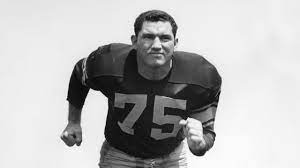
Gregg closed his career with the Dallas Cowboys, as did his Packer teammate, cornerback Herb Adderley. They both helped the Cowboys win Super Bowl VI in January 1972, making them the only players (along with former teammate Fuzzy Thurston, who was on the Baltimore Colts NFL championship team in 1958 and Tom Brady of the New England Patriots and Tampa Bay Buccaneers) in professional football history to play on six NFL title teams. Gregg wore the number 75 for 15 seasons in Green Bay, but that number belonged to Jethro Pugh in Dallas, so Gregg wore number 79 for his final season in 1971.

It has been reported that Vince Lombardi said, "Forrest Gregg is the finest player I ever coached!" but official Packers team historian Cliff Christl can find no evidence of Lombardi ever saying or writing that. In 1999, he was ranked 28th on The Sporting News list of the 100 Greatest Football Players, putting him second behind Ray Nitschke among players coached by Lombardi, second behind Anthony Muñoz (whom he coached) among offensive tackles, and fourth behind Munoz, John Hannah, and Jim Parker among all offensive linemen.

After serving as an assistant with the San Diego Chargers in 1973, he took a similar position the following year with the Browns. After head coach Nick Skorich was dismissed after the 1974 season, Gregg was promoted to head coach in 1975, a position he held through 1977.

After sitting out the 1978 season, Gregg returned to coaching in 1979 with the Canadian Football League's Toronto Argonauts. In 1980, he became the head coach of the Cincinnati Bengals for four seasons through 1983. His most successful season as a head coach was in 1981, when he led the Bengals to a 12–4 regular season record. They defeated the San Diego Chargers 27–7 in the AFC championship game (known as the Freezer Bowl), earning them a trip to Super Bowl XVI, where they lost to the San Francisco 49ers, 26–21.

When his longtime former teammate Bart Starr was fired after nine years as head coach of the Packers in December 1983, Gregg was allowed out of his Bengals' contract to take over in Green Bay. He finished his NFL coaching career with the Packers, leading them for four seasons, 1984–1987, with a record of 25-37-1. Gregg's overall record as an NFL coach was 75 wins, 85 losses and one tie. He was also 2–2 in playoff games, all with the Bengals. He is one of only two coaches, the other being Marvin Lewis, to have left the Bengals with a winning record.

Gregg resigned from the Packers in January 1988 and took a pay cut to take over at SMU, his alma mater. He was brought in to revive the Mustang football program after it received the "death penalty" from the NCAA for massive violations of NCAA rules. Though the NCAA had only canceled the 1987 season, school officials later opted to cancel the 1988 season due to fears that fielding a competitive team would be impossible; nearly every letterman from the 1986 squad had transferred elsewhere. Gregg knew that any new coach would be essentially rebuilding the program from scratch, but when acting president William Stalcup asked him to return, he felt he could not refuse.

As it turned out, when Gregg arrived, he was presented with a severely undersized and underweight roster composed mostly of freshmen. Gregg was taller and heavier than nearly the entire 70-man squad. The team was so short on offensive linemen that Gregg had to make several wide receivers bulk up and switch to the line. By nearly all accounts, it would have been unthinkable for the Mustangs to return for the 1988 season under such conditions.

In 1989, the Mustangs went 2–9, including a 95–21 thrashing by Houston—the second-worst loss in school history. In that game, eventual Heisman Trophy winner Andre Ware threw six touchdown passes in the first half, and David Klingler added four more in the second, even with the game long out of reach. Gregg was so disgusted that he refused to shake Houston coach Jack Pardee's hand after the game. Nonetheless, Gregg reflected fondly on the experience. In a 2012 interview with The New York Times, he said the players on the two teams he coached should have had their numbers retired for restoring dignity to the program. "I never coached a group of kids that had more courage," he said. "They thought that they could play with anyone. They were quality people. It was one of the most pleasurable experiences in my football life. Period."

After the season, Gregg was named SMU's athletic director. The Mustangs went 1–10 in 1990, and after the season, he resigned as coach to focus on his duties as athletic director. Gregg's coaching record at SMU was 3–19, and he served as athletic director until 1994.

He returned to the CFL with the Shreveport Pirates in 1994–95, during that league's brief attempt at expansion to the United States. His overall record in the CFL was 13–39.

When former Shreveport Pirates owner Bernard Glieberman bought a stake in the Ottawa Renegades in May 2005, Gregg was appointed Ottawa's vice president of football operations, a position he held through 2006.
Sources
https://www.pro-football-reference.com/
https://www.profootballarchives.com/index.html
https://americanfootballdatabase.fandom.com/wiki/Football_Wiki
https://www.gridiron-uniforms.com/GUD/controller/controller.php?action=main
https://www.profootballhof.com/hall-of-famers/
Goldstein, Richard (April 12, 2019). "Forrest Gregg, Iron Man Lineman for Lombardi's Packers, Dies at 85". The New York Times. ISSN 0362-4331. Retrieved April 12, 2019.
 "Texas Birth Certificates, 1903-1935," database with images, FamilySearch (https://familysearch.org/ark:/61903/1:1:K6P9-PQB : March 13, 2018), Gregg, October 18, 1933; citing , Hopkins, Texas, United States, certificate 81236, Texas Department of Health, Austin; FHL microfilm 2,283,232.
 "U.S., School Yearbooks, 1880-2012"; School Name: Southern Methodist University; Year: 1954
 "SMU Remembers Forrest Gregg '55 - SMU".
 Dunne, Tyler (July 7, 2012). "Packers great Gregg faces the battle of his life". Milwaukee Journal Sentinel. Retrieved January 25, 2016.
 "Forrest Gregg, Green Bay Packers, Class of 1977". pinterest.com. Retrieved December 31, 2019.
 Christl, Cliff. "It's time Canton got it right". Packers.com. Retrieved November 4, 2021.
 Matthews, Bob. "wings' Streak Was Rochester's Best". Democrat and Chronicle. Retrieved December 31, 2019.
 Christl, Cliff. "Forrest Gregg". Packers.com. Archived from the original on September 29, 2023. Retrieved September 20, 2023.
 Shook, Nick. "Pro Football Hall of Famer, former Browns coach Forrest Gregg passes away at 85". clevelandbrowns.com. Cleveland Browns. Retrieved December 28, 2019.
 McClelland, Sean (October 16, 2000). "BROWNS NOTEBOOK; SILVER LINING: JOHNSON AWAKENS DURING DRUBBING: [CITY Edition]". Dayton Daily News. p. 5D. ProQuest 254351431. Retrieved April 8, 2024. Logan, who broke in with the Browns in 1976, said one of his lasting memories involves a postgame fistfight between his first head coach, Forrest Gregg, and safety Thom Darden.
 Butler, Jason (August 25, 1999). "IN GREGG'S CASE, THE SPY CAME IN FROM THE HALL - BROWNS COACH UNCOVERS MODELL'S AGENT, THEN IS FIRED". Akron Beacon Journal. p. C1. Retrieved April 8, 2024. As the season went on, the team didn't respond well to the way Gregg pushed. Cliques formed, as players' differences polarized the locker room and broke down the team chemistry. "It was tough going to practice," said defensive back Thom Darden. "It was not a good working environment. You could cut the tension with a knife when we were in practice."
 Anderson, Dave (December 22, 1980). "The Cardiac Champions". The New York Times. p. C.1. ProQuest 424024679. Retrieved April 6, 2024.
 Van Sickle, Gary (January 17, 1982). "King of the Forrest". Milwaukee Journal. p. 3, sports. Archived from the original on March 5, 2016.
 Van Sickle, Gary (January 11, 1982). "Bengals are hot on a cold day". Milwaukee Journal. p. 1, part 3. Archived from the original on March 5, 2016. Retrieved January 25, 2016.
 Attner, Paul. "49ers Stifle Bengals Late to Win, 26-21". Washington Post. WP Company, LLC. Retrieved December 28, 2019.
 Salituro, Chuck (December 25, 1983). "Gregg shortened Parins' search". Milwaukee Journal. p. 1, sports.
 "Forrest Gregg Record, Statistics, and Category Ranks". Pro-Football-Reference.com.
 Perkins, Eddie (January 15, 1988). "The rebuilding starts for SMU, Packers". Milwaukee Journal. p. 1C.
 "Forrest Gregg eager to resurrect Mustangs". Tuscaloosa News. Associated Press. January 15, 1988. p. 15.
 Frank, Peter. "'88 football season canceled by SMU." The New York Times, April 11, 1987.
 Drape, Joe (August 1, 2012). "Coach Who Revived S.M.U. Looks Back With Pride". The New York Times. pp. B20. Retrieved April 26, 2013.
 Woodbury, Richard. Rebuilding a Shattered Team. Time, November 4, 1988.
 Drago, Mike (August 11, 1996). "'Death Penalty' Still Hurts SMU". The Seattle Times. Associated Press. Archived from the original on January 15, 2015. Retrieved April 26, 2013.
 "Forrest Gregg Coaching Record". sports-reference.com. SportsReference, LLC. Retrieved December 28, 2019.
 "SMU Remembers Forrest Gregg '56". smu.edu. Southern Methodist University. Retrieved December 28, 2019.
 Blevins, David (2012). The Sports Hall of Fame Encyclopedia: Baseball, Basketball, Football, Hockey, Soccer, Volume 1. Rowman & Littlefield. p. 382.
 "Forrest Gregg, a former CFL coach and ex-lineman for the Packers, dead at 85". Ottawa Citizen. Retrieved December 29, 2019.
 Luksa, Frank (January 23, 1982). "Gregg had to beat cancer first". Lewiston Morning Tribune. Idaho. (Dallas Times Herald). p. 2B.
 "Hall Of Famer Forrest Gregg Fighting Parkinson's". NPR. Associated Press. November 16, 2011. Retrieved November 18, 2011.
 "Forrest Gregg won't sue NFL". ESPN.com. Associated Press. April 17, 2013. Retrieved January 25, 2016.
 Harrison, Elliot (April 12, 2019). "Forrest Gregg's legacy? One of the best offensive linemen ever". NFL.com. Retrieved August 7, 2024.

Wednesday, March 22, 2023

The Story And Significance Of Frank Gifford - Pro Bowl Selections Came At Three Positions (Defensive Back, Running Back, And Flanker)

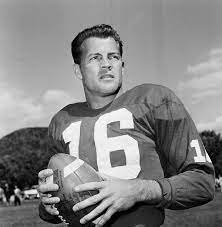
Francis Newton Gifford was an American football player, actor, and television sports commentator. After a 12-year playing career as a halfback and flanker for the New York Giants of the National Football League, he was a play-by-play announcer and commentator for 27 years on ABC's Monday Night Football.

Gifford won the NFL Most Valuable Player Award from United Press International in 1956, the same season his team won the NFL Championship. During his career, he participated in five league championship games and was named to eight Pro Bowls. He was inducted into the Pro Football Hall of Fame in 1977. After retiring as a player Gifford was an Emmy Award-winning sportscaster, known for his work on ABC's Monday Night Football, Wide World of Sports, and the Olympics. He was married to television host Kathie Lee Gifford from 1986 until his death.

Gifford spent his entire NFL career with the New York Giants, beginning in 1952, playing both offense and defense. He made eight Pro Bowl appearances and had five trips to the NFL Championship Game. Gifford's best season may have been 1956, when he won the league's Most Valuable Player Award and led the Giants to the NFL title over the Chicago Bears.

He lost 18 months in the prime of his career when he was tackled by Philadelphia Eagles linebacker Chuck Bednarik in what is widely considered the hardest defensive hit, or one of the hardest, in the history of the National Football League and is often referred to simply as The Hit. During a November 20, 1960 game against the Philadelphia Eagles, he was knocked out by Bednarik on a passing play, suffering a severe head injury that led him to retire from football in 1961. However, Gifford returned to the Giants in 1962, changing positions from running back to flanker (now a type of "wide receiver").

His Pro Bowl selections came at three positions...defensive back, running back, and flanker. He permanently retired following the 1964 season.

During his 12 seasons with the Giants (136 regular-season games) Gifford had 3,609 rushing yards and 34 touchdowns in 840 carries; he also had 367 receptions for 5,434 yards and 43 touchdowns. Gifford completed 29 of the 63 passes he threw for 823 yards and 14 touchdowns with 6 interceptions. The 14 touchdowns is the most among any non-quarterback in NFL history; the 6 interceptions is tied with Walter Payton for most thrown by a non-quarterback.

Gifford was inducted into the Pro Football Hall of Fame on July 30, 1977.

After his death, an autopsy on his brain revealed that he lived with Chronic Traumatic Encephalopathy (CTE), a disease closely related to repeated head trauma. As of September 18, 2015, 87 out of 91 former NFL players tested had been diagnosed with the disease.

After his playing days ended, Gifford became a broadcaster for CBS, covering football, golf and basketball. When Monday Night Football was launched in 1970, ABC had originally planned to have Gifford in their broadcast booth, but he still had a year remaining on his contract with CBS. Instead Gifford recommended his friend Don Meredith who was hired. The following year, Gifford replaced Keith Jackson as Monday Night Football's play-by-play announcer, and remained involved with the show for 27 of its next 28 years. His low-key delivery provided a perfect counterbalance to broadcast partners Meredith and Howard Cosell. In an era with only three television broadcast networks, the series became the longest-running prime-time sports program in television history, and developed into one of television's most valuable franchises.

Gifford was providing play-by-play in the waning moments of a 1980 Monday Night Football game between the New England Patriots and Miami Dolphins when he and Cosell learned of John Lennon's murder. Cosell initially balked at breaking the news live on air, but Gifford convinced him, saying, "You’ve got to. If you know it, we’ve got to do it. Don’t hang on it. It’s a tragic moment, and this is going to shake up the whole world". Cosell then informed the national audience of the tragedy.
On January 20, 1985, Gifford provided play-by-play for the first Super Bowl to be broadcast on ABC, Super Bowl XIX between the San Francisco 49ers and Miami Dolphins in Stanford, California. Gifford was joined in the booth by Don Meredith and Joe Theismann.

In 1986, Al Michaels took over play-by-play duties, and Gifford switched to a color commentator role. However, Gifford did play-by-play for the next several years (Gifford was joined by Lynn Swann and O. J. Simpson on color commentary in 1986 and by Dan Dierdorf for the rest of his run on Monday Night Football) whenever Michaels was covering post-season baseball games for the network.

Following his affair with airline flight attendant Suzen Johnson in 1997, Gifford was replaced in the broadcast booth by Boomer Esiason in 1998. That season he was reassigned to a nominal role for ABC's Monday night pregame show, but the program was cancelled after one season. Gifford was not offered a new role by the network. Gifford was also host of British TV network Channel 4's NFL coverage with British born former New England Patriots kicker John Smith in 1986, which included coverage of Super Bowl XXI. Additionally, he narrated the official Super Bowl XLVIII highlight film for NFL Films, for which he had narrated the New York Giants' annual highlight films.

Gifford was also a reporter and commentator on other ABC sports programs, such as coverage of the Olympics (including the controversial men's basketball gold medal game between the United States and Soviet Union at the 1972 Summer Olympics in Munich, which Gifford called alongside Bill Russell), skiing and golf. He announced Evel Knievel's jumps for ABC's Wide World of Sports in the 1970s, including when Knievel failed to clear 13 buses at Wembley Stadium in 1975. Gifford also guest hosted Good Morning America on occasion, including once when he met his future wife Kathie Lee.

In 1977, Gifford won an Emmy Award for Outstanding Sports Personality. He was given the Pete Rozelle Radio-Television Award by the Pro Football Hall of Fame In 1995 for his NFL television work.

Monday Night Football paid tribute to Gifford on September 14, 2015, by having ESPN announcers Mike Tirico and Jon Gruden wear the gold jackets that Gifford helped make famous as a broadcaster.

Sources
https://www.pro-football-reference.com/
https://www.profootballarchives.com/index.html
https://americanfootballdatabase.fandom.com/wiki/Football_Wiki
https://www.gridiron-uniforms.com/GUD/controller/controller.php?action=main
https://www.profootballhof.com/hall-of-famers/
Cf. Gifford & Richmond, The Glory Game, 2008, p.12-13, & various.
 Mike Puma. "Gifford was star in backfield, booth". ESPN Classic.
 Kyung Kim, Eun (August 18, 2015). "Kathie Lee Gifford returns to TODAY: 'Outpouring has been extraordinary'". TODAY. Retrieved August 19, 2015.
 Athletics Staff, USC (August 10, 2015). "Frank Gifford, college and pro football Hall of Famer from USC, dies at 84". USC Today. Retrieved February 7, 2025.
 Kupper, Mike (August 9, 2015). "Frank Gifford dies at 84; Pro Football Hall of Famer, TV sportscaster". Los Angeles Times. Retrieved February 7, 2025.
 Cf. Gifford & Richmond, The Glory Game, 2008, p.13.
 "Archived copy" (PDF). Archived from the original (PDF) on March 3, 2016. Retrieved March 5, 2012.
 Phi Sigma Kappa, ed. (1992). Hills and a Star, new member manual (10th ed.). Indianapolis, IN: Phi Sigma Kappa Fraternity. pp. 74–76.
 Kupper, Mike (August 9, 2015). "Frank Gifford dies at 84; Pro Football Hall of Famer, TV sportscaster". Los Angeles Times. Retrieved August 9, 2015.
 Goldstein, Richard; Weber, Bruce (August 9, 2015). "Frank Gifford, Star for the Giants and in Broadcast Booth, Dies at 84". The New York Times. Retrieved August 11, 2015.
 Natale, Richard (August 9, 2015). "Frank Gifford, Sportscaster and NFL Hall of Famer, Dies at 84". Variety. Retrieved August 9, 2015.
 Boren, Cindy (August 9, 2015). "Frank Gifford, Hall of Fame player and 'Monday Night Football' broadcaster, dies at 84". The Washington Post. Archived from the original on August 10, 2015.
 "Non-Quarterback Passing: This list only includes players who played during or after the 1960 season" pro-football-reference.com
 Breslow, Jason M. (September 18, 2015). "New: 87 Deceased NFL Players Test Positive for Brain Disease". Frontline. PBS. Retrieved August 29, 2018.
 Nelson, Murry R. (2013). American Sports: A History of Icons, Idols, and Ideas. ABC-CLIO. p. 297. ISBN 9780313397530. Retrieved August 12, 2015.
 "Monday Night Football comes to an end on ABC". Lubbock Avalanche-Journal. Associated Press. March 26, 2005. Archived from the original on December 8, 2015.
 Chase, Chris (August 10, 2015). "Frank Gifford defined 'Monday Night Football' for a generation". USA Today. Archived from the original on August 10, 2015.
 Kent, Milton (January 20, 1998). "Gifford's ouster from ABC booth is no surprise". The Baltimore Sun. Archived from the original on August 11, 2015.
 Werner, Barry (December 8, 2020). "Listen: 40 years ago, a stunned Howard Cosell told the nation John Lennon had been assassinated". USA Today.
 Goodwin, Michael (September 10, 1986). "TV SPORTS; MORE ANALYSIS WOULDN'T HURT". The New York Times. Archived from the original on May 24, 2015.
 Goolsby, Denise (August 10, 2015). "Frank Gifford, legendary NFL player, broadcaster dies". The Desert Sun. Retrieved August 10, 2015.
 "Esiason In; Gifford Moves". The New York Times. January 17, 1998. Archived from the original on May 27, 2015.
 Sandomir, Richard (September 12, 1999). "Two Voices in the Booth Might Comfort Esiason". The New York Times. Archived from the original on May 27, 2015.
 Trott, William C. (July 26, 1986). "FOOTBALLS ACROSS THE WATER". UPI. Archived from the original on August 11, 2015.
 "Eight hour difference didn't bother Britons". Spartanburg Herald-Journal. January 27, 1987. p. D4. Retrieved August 10, 2015.
 Hagger, Jeff (August 31, 2012). "Observations on the ABC coverage of 1972 Olympic basketball". Classic TV Sports.
 "Frank Gifford Interview Part 4 of 5". Archive of American Television. Retrieved August 10, 2015.
 Laracy, Alex. "WWOS Flashback: Evel Kneivel's '75 crash at Wembley". ABC Sports. Archived from the original on June 7, 2003. Retrieved August 10, 2015.
 Contrera, Jessica (August 9, 2015). "When Frank met Kathie Lee: The story of the Giffords' marriage". The Washington Post. Retrieved August 10, 2015.
 Wilner, Barry (August 10, 2015). "Whether on football field, in broadcast booth, Frank Gifford was All-Pro; dies at age 84". U.S. News & World Report. Retrieved August 10, 2015.
 Mike Barnes, Duane Byrge (August 9, 2015). "Frank Gifford Dead: 'Monday Night Football' Sportscaster Was 84". The Hollywood Reporter. Retrieved August 10, 2015.
 "Monday Night Football plays tribute to Frank Gifford". today.com. Retrieved September 15, 2015.
 IMDb.com page referring specific episode Retrieved February 28, 2011
 thecelebratedmisterk (July 13, 2010). "Frank Gifford Gets Lucky". Archived from the original on December 12, 2021 – via YouTube.
 "Kathie Lee's Story". people.com. Retrieved August 10, 2015.
 Cf. Gifford & Richmond, The Glory Game, 2008, p.291
 Szul, Barbara (February 13, 1988). "The 1988 Winter Olympics kick off this Saturday, and". Chicago Tribune.
 Furse, Jane (May 17, 1997). "Gifford Fling Bombshell Sleuth: I Was Asked To Tape Tryst". New York Daily News. Retrieved August 26, 2012.
 ""CREEPING TABLOIDISM!" LAWYER CLAIMS". The Atlantic Online. August 1999.
 "Tabloid Gets Snared In Gifford Affair". Orlando Sentinel. May 18, 1997. Archived from the original on August 26, 2015. Retrieved August 10, 2015.
 "Pro Football Hall Of Famer, Giants Legend Frank Gifford Dead At 84". New York City: WCBS-TV. August 9, 2015. Archived from the original on August 10, 2015. Retrieved August 9, 2015.
 Gittens, Hasani (August 9, 2015). "NFL Legend Frank Gifford Passes Away at 84". NBC News (NBCUniversal). Archived from the original on August 10, 2015. Retrieved August 9, 2015.
 "Hall of Fame player Frank Gifford suffered from CTE, family says". ESPN.com. November 25, 2015. Retrieved November 25, 2015.
 "The driving force behind Chronic Traumatic Encephalopathy (CTE)". Concussion Legacy Foundation. Archived from the original on July 2, 2023. Retrieved July 2, 2023.
 Ken Belson and Benjamin Mueller (June 20, 2023). "Collective Force of Head Hits, Not Just the Number of Them, Increases Odds of C.T.E. The largest study of chronic traumatic encephalopathy to date found that the cumulative force of head hits absorbed by players in their careers is the best predictor of future brain disease". The New York Times. Retrieved July 2, 2023.
 Shmelter, Richard J. (2013). "Frank Gifford". The USC Trojans Football Encyclopedia. pp. 210–11. ISBN 9781476615110. Retrieved August 10, 2015 – via Google Books.
 Prevatte, Pam (September 30, 1997). "A reunion of sorts at Ericsson Stadium". Spartanburg Herald-Journal. Spartanburg, South Carolina. p. D1. Retrieved August 11, 2015 – via Google News Archives.
 "Shane Stafford joins Arena team". Reading Eagle. October 19, 2000. p. C3. Retrieved August 11, 2015 – via Google News Archives.
 Ausiello, Michael; Webb Mitovich, Matt (August 9, 2015). "Frank Gifford, Legendary Monday Night Football Sportscaster and Husband of Kathie Lee Gifford, Dead at 84". Yahoo! TV. Retrieved August 11, 2015.