Monday, June 12, 2023

The Story And Significance Of David (Deacon) Jones - Coined The Word "Sack"

David D. "Deacon" Jones was an American professional football player who was a defensive end in the National Football League for the Los Angeles Rams, San Diego Chargers, and the Washington Redskins. He was inducted into the Pro Football Hall of Fame in 1980.

Jones specialized in sacks, a term that he coined. Nicknamed "the Secretary of Defense", Jones is considered one of the greatest defensive players ever. The Los Angeles Times called Jones "most valuable Ram of all time," and former Rams head coach George Allen called him the "greatest defensive end of modern football".

Due to a lack of television coverage and modern scouting networks, Jones was largely overlooked during his college career. According to an NFL Films interview with writer Ray Didinger, "Deacon was discovered kinda by accident. The Rams were scouting some running backs and they found this defensive tackle who was outrunning the running backs that they were scouting." Jones was drafted in the 14th round of the 1961 NFL Draft by the Los Angeles Rams. He then earned a starting role as a defensive end and teamed with tackle Merlin Olsen to give Los Angeles a perennial All-Pro left side of the defensive line. He became a part of the Fearsome Foursome defensive line of the Rams (along with Lamar Lundy, Rosey Grier, and Olsen), which is now considered to have been one of the best defensive lines of all time.

Jones won consensus All-Pro honors five straight years from 1965 through 1969 and was second-team All-Pro in 1964, 1970, and 1972. He was also in seven straight Pro Bowls, from 1964 to 1970, and was selected to an eighth after the 1972 season with the San Diego Chargers. He was voted the team's Outstanding Defensive Lineman by the Los Angeles Rams Alumni in 1962, '64, '65, and '66. In 1971, Jones suffered a severely sprained arch, which caused him to miss four starts, and he ended the season with 4½ sacks, his career-low to that point.

Jones was traded along with Lee White and Greg Wojcik from the Rams to the San Diego Chargers for Jeff Staggs, a second-rounder in 1972 (30th overall—Jim Bertelsen) and a second and third-rounder in 1973 (31st and 60th overall—Cullen Bryant and Tim Stokes respectively) on January 29, 1972. He was named San Diego's defensive captain and led all Chargers' defensive linemen in tackles and won a berth on the AFC Pro Bowl squad. He concluded his career with the Washington Redskins in 1974. In the final game of his NFL career, the Redskins allowed him to kick the point-after-touchdown for the game's last score. Along the way, Jones was named the Associated Press NFL Defensive Player of the Week four times: week 14, 1967; week 12, 1968; week 11, 1969; and week 10, 1970.

An extremely durable player, Jones missed only six games of a possible 196 regular-season encounters in his 14 National Football League seasons.

Jones was considered by many to revolutionize the position of defensive end. He was credited with coining the phrase "sacking the quarterback". He once stated that a quarterback being sacked devastated the offense in the same way that a city was devastated when it was sacked. In 1999, Jones provided a Los Angeles Times reporter with some other detailed imagery about his forte: "You take all the offensive linemen and put them in a burlap bag, and then you take a baseball bat and beat on the bag. You're sacking them, you're bagging them. And that’s what you're doing with a quarterback."

What separated Jones from every other defensive end was his speed and his ability to make tackles from sideline to sideline, which was unheard of in his time. He also was the first pass rusher to use the head slap, a move that he said was, "to give myself an initial head start on the pass rush, in other words an extra step. Because anytime you go upside a man's head … or a woman; they may have a tendency to blink they [sic] eyes or close they eyes. And that's all I needed." "The head slap was not my invention, but Rembrandt, of course, did not invent painting. The quickness of my hands and the length of my arms, it was perfect for me. It was the greatest thing I ever did, and when I left the game, they outlawed it."

Pro Football Weekly reported he accumulated 173.5 sacks over his career. The total would be third on the all-time sack list, which would have ranked first all-time at the time of his retirement by a substantial margin. Pro-Football-Reference.com in 2021 confirmed this sack total with their research.

In 1967, Jones had 21.5 sacks in only 14 games; he tallied 22 sacks in 14 games the following year. If official, this would have stood as an NFL record until Harvey Martin's 1977 campaign in which he totaled 23 sacks. This number was also equaled by Al Baker a year later. (The term "sack" had not yet been coined at the time, and official sack statistics were not recorded by the NFL until 1982.)

Jones worked as a television actor, and appeared in numerous TV programs since the 1970s, most often appearing in cameo roles. He appeared in an episode of The Odd Couple where he and Oscar were in a television commercial selling shaving products. He appeared on The Brady Bunch, and in a Bewitched episode in 1969, he played a guard to the Giant's castle in "Sam & the Beanstalk". Jones also played himself on an episode of Wonder Woman in 1978.

In 1978, he played a Viking named Thall in The Norseman. Fellow Hall of Famer Fred Biletnikoff joined Jones in the film, also portraying a Norseman. That same year, Jones portrayed a fierce defensive lineman named Gorman in the film Heaven Can Wait.

In the series G vs E, he played himself, but as an agent of "The Corps". He also played a role in the hit show, ALF, where he played a father figure to Alf.

Jones served as a color analyst for Rams broadcasts on KMPC radio in the 1994 season, teaming with Steve Physioc and Jack Snow. In 1998, shortly before Super Bowl XXXII between the Denver Broncos and Green Bay Packers, Jones correctly predicted the Broncos, 11 1/2 point underdogs, would win the game and Terrell Davis would be named MVP of the game.

Jones worked for many companies, including the Miller Brewing Company, Haggar Clothing, Pacific Coast Medical Enterprises, and Epson America, and represented the NFL and Champion Products as spokesman for their Throwback campaigns. Jones was also chairman for AstraZeneca Pharmaceuticals in their national hypertension awareness program.

NFL.com reported that Jones made several trips to Iraq to visit the U. S. military.

Jones served as the president and CEO of the Deacon Jones Foundation, an organization he founded in 1997 "to assist young people and the communities in which they live with a comprehensive program that includes education, mentoring, corporate internship, and community service."

Jones was one of the many former L.A. Rams players who disliked the team's controversial relocation to St. Louis in 1995. He was adamant in interviews and appearances that he played for Los Angeles, not St. Louis, and considered the Rams franchise there a different team that should have a different name. He participated in many grassroots efforts to bring NFL football back to L.A. and also voiced support on many new stadium proposals. The Rams eventually returned to Los Angeles in 2016 after Jones had died.

He was elected to the Pro Football Hall of Fame in his first year of eligibility in 1980, and was named to the NFL's 75th Anniversary All-Time Team in 1994. In 1999, he was ranked number 13 on The Sporting News list of the 100 Greatest Football Players, the highest-ranked player to have played for the Rams franchise, the highest-ranked defensive end, and the second-ranked defensive lineman behind Bob Lilly. The same year, he was named by Sports Illustrated as the "Defensive End of the Century". In 2010, he was named to the inaugural class of the Black College Football Hall of Fame.
Sources
https://www.pro-football-reference.com/
https://www.profootballarchives.com/index.html
https://americanfootballdatabase.fandom.com/wiki/Football_Wiki
https://www.gridiron-uniforms.com/GUD/controller/controller.php?action=main
https://www.profootballhof.com/hall-of-famers/
"About Deacon". Deacon Jones Foundation. Retrieved July 18, 2008.
 "Deacon Jones special: Page One". Pro Football Weekly. Archived from the original on September 5, 2001.
 "The Very Frightening Secretary of Defense: Was Deacon Jones the NFL's Meanest". Deacon Jones Foundation. Retrieved July 23, 2008.[permanent dead link]
 Goldstein, Richard (June 6, 2013). "Deacon Jones Dies at 74; Made Quarterback Sack Brutal and Enthralling". The New York Times. Retrieved June 6, 2013.
 "Deacon Jones' HOF Profile". Pro Football Hall of Fame. Retrieved July 18, 2008.
 Goldstein, Richard (February 26, 2007). "Lamar Lundy, Lineman on the Rams' Fearsome Foursome, Dies at 71". The New York Times. Retrieved July 21, 2008.
 "10 Burning Questions for Deacon Jones". ESPN. Retrieved July 21, 2008.
 "Chargers Trade for Deacon Jones," United Press International (UPI), Saturday, January 29, 1972. Retrieved November 1, 2020
 1972 NFL Draft Pick Transactions, February 1 (Rounds 1–7) & 2 (Rounds 8–17) – Pro Sports Transactions. Retrieved November 1, 2020
 Deacon Jones' Equal Rights (& Lefts) For Women! on YouTube
 Turney, John (June 26, 2000). "Setting the record straight on all of those QB takedowns". Pro Football Weekly online. Retrieved July 21, 2008.
 "The Norseman (1978)". IMDb. www.imdb.com. Retrieved April 1, 2011.
 "Deacon Jones, Hall of Fame defensive end, dies at 74". National Football League. April 9, 2008. Retrieved June 4, 2013.
 "All Inductees". BlackCollegeFootballHOF.org. Archived from the original on February 2, 2020. Retrieved February 25, 2021.
 "S.C. Athletic Hall of Fame: Honorees and Inductees". Retrieved June 4, 2013.
 "Central Florida Sports Hall of Fame". Central Florida Sports Commission. Archived from the original on August 6, 2011. Retrieved June 4, 2013.
 "Florida Sports Hall of Fame Inductees 1960 to Present". Florida Sports Hall of Fame. Archived from the original on February 26, 2014. Retrieved June 4, 2013.
 "Spirit Awards Finalists". Archived from the original on February 2, 2014. Retrieved June 4, 2013.
 "NFL Alumni to Honor Len Dawson, Deacon Jones and Paul Salata". BW SportsWire. August 24, 1999. Archived from the original on February 1, 2014. Retrieved June 4, 2013.
 "Felix Jones Named 2011 NFL Alumni Spirit Award Recipient". Archived from the original on February 1, 2014. Retrieved June 4, 2013.
 "Legend of the Year". Junior Seau Foundation. Archived from the original on May 7, 2013. Retrieved June 4, 2013.
 "FHSAA announces 33-member All-Century football team". FHSAA.org. December 12, 2007. Archived from the original on June 28, 2013. Retrieved June 4, 2013.
 Burwell, Bryan (September 27, 2009). "Rams finally getting around to retiring Deacon Jones' jersey". St. Louis Post-Dispatch. McClatchey-Tribune News Service. Retrieved March 18, 2014.
 Alper, Josh (January 2, 2014). "Robert Mathis wins inaugural Deacon Jones Award". profootballtalk.nbcsports.com. Retrieved January 2, 2014.
 Thursby, Keith (June 4, 2013). "David 'Deacon' Jones dies at 74; Fearsome L.A. Rams lineman". Los Angeles Times. Retrieved June 5, 2013.
 Farrar, Doug (June 4, 2013). "Legendary defensive end David 'Deacon' Jones dies at 74". Yahoo!.
 Myers, Marc (September 8, 2015). "How Steely Dan created Deacon Blues". Wall Street Journal. The Wall St. Journal.
 "NFL Hall of Fame defensive end Deacon Jones dead at 74". Fox News. Retrieved June 4, 2013.
 Goldstein, Richard (June 4, 2013). "Deacon Jones, Fearsome N.F.L. Defensive End, Dies at 74". The New York Times. Archived from the original on November 9, 2020.
 "NFL legend Deacon Jones dies at 74". ESPN. June 4, 2013. Retrieved June 4, 2013.
 King, Peter (June 4, 2013). "Late Deacon Jones would have dominated any era". Sports Illustrated. Retrieved January 29, 2016.
 McIntyre, Brian (June 22, 2013). "NFL to honor annual sacks leader with Deacon Jones Award". Yahoo! Sports. Retrieved June 22, 2013.

Wednesday, June 7, 2023

The Story And Significance Of Herb Adderly - One Of Only Four Players In Pro Football History To Play On Six World Championship Teams

Herbert Anthony Adderley  was an American professional football player who was a cornerback for the Green Bay Packers and the Dallas Cowboys of the National Football League. In 1980, he was enshrined in the Pro Football Hall of Fame.

Adderley played college football for the Michigan State Spartans and was an All-Big Ten offensive star as a halfback. He is the only player to appear in four of the first six Super Bowls.

Adderley was selected by the Green Bay Packers in the first round of the 1961 NFL draft, the 12th overall pick. He began his professional career as a halfback on offense, but was later switched to defense because the Packers already had eventual Hall of Fame runners in Paul Hornung and Jim Taylor. Adderley was first moved to cornerback to replace injured teammate Hank Gremminger against Detroit on Thanksgiving. and made an interception that set up the game-winning touchdown.

In 1962, the move became permanent and Adderley went on to become an all-NFL selection five times in the 1960s. Packers coach Vince Lombardi remarked, "I was too stubborn to switch him to defense until I had to. Now when I think of what Adderley means to our defense, it scares me to think of how I almost mishandled him."
Adderley recorded 39 interceptions in his nine seasons with the Packers. He held the Green Bay records for interceptions returned for touchdowns in a career (seven, tied with Darren Sharper, broken by Charles Woodson), and holds the record for interceptions returned for touchdowns in one season (three, in 1965).

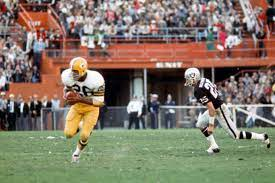
Adderley started for the Packers from 1961–1969, then played three seasons (1970–1972) with the Dallas Cowboys. While with the Packers, he won rings for five NFL championships and wins in the first two Super Bowls. Adderley was a factor in the Super Bowl II win over the Oakland Raiders, intercepting a pass by Raiders quarterback Daryle Lamonica in the fourth quarter and returning it 60 yards for a touchdown to put the game away. It was the first Super Bowl touchdown scored on an intercepted pass.

Herb stated that "Lombardi had certain players who he’d call into his office and talk to, others he’d talk to on the field or in the locker room. One thing I remember he said to me…He said I was the best cornerback he’d ever seen. In front of the whole team he said I was the best athlete …I’ll always remember that."

Adderley had a strained relationship with Phil Bengtson by the end of the latter's second and penultimate year as Packers head coach. He accused Bengtson of keeping him off the Pro Bowl team in 1969 and requested to be traded. After a holdout and two weeks before the start of the regular season, he was sent from the Packers to the Dallas Cowboys for Malcolm Walker and Clarence Williams on September 1, 1970. He became a vital cog in its "Doomsday Defense," assisting the Cowboys to a Super Bowl appearance in V and a win in VI.

Adderley admired Packer head coach Vince Lombardi, but not Tom Landry of the Cowboys. Benched in favor of a young Charlie Waters during the middle of the 1972 season, Adderley was traded to the Los Angeles Rams in the summer of 1973. He opted not to report and retired on August 7, after a dozen seasons in the NFL.

Along with the Patriots' Tom Brady, and two Packer teammates, offensive linemen Fuzzy Thurston (Colts) and Forrest Gregg (Cowboys), Adderley is one of only four players in pro football history to play on six world championship teams. However, in a revised edition of Instant Replay, a memoir by Packer teammate Jerry Kramer, Adderley is quoted as saying, "I'm the only man with a Dallas Cowboys Super Bowl ring who doesn't wear it. I'm a Green Bay Packer."

In his 12 seasons, Adderley recorded 48 interceptions, which he returned for 1,046 yards and seven touchdowns, an average of 21.8 yards per return. He also recovered 14 fumbles (returning them for 65 yards) an
d returned 120 kickoffs for 3,080 yards and two scores. Adderly also ran back 7 interceptions for touchdowns in his career (not including playoffs).

Adderley was the first NFL player ever to gain more than 1,000 interception return yards. Only eight other players have achieved this since then, and all of them did so with more interceptions than Adderley.

After Adderley retired, he returned to Philadelphia to broadcast football games for Temple University and the Philadelphia Eagles. He also coached as an assistant at Temple and with the Philadelphia Bell of the World Football League under head coach Willie Wood, a Packer teammate.

Adderley was inducted into the Pro Football Hall of Fame in 1980. A year after his induction in Canton, Adderley became a member of the Packer Hall of Fame in 1981. He was also chosen for the AFL-NFL 1960-1984 All-Star teams.

Adderley's cousin's grandson (first cousin twice removed), Nasir Adderley, was drafted by the Los Angeles Chargers in the second round of the 2019 NFL Draft.

Adderley died on October 30, 2020 at the age of 81.
Sources
https://www.pro-football-reference.com/
https://www.profootballarchives.com/index.html
https://americanfootballdatabase.fandom.com/wiki/Football_Wiki
https://www.gridiron-uniforms.com/GUD/controller/controller.php?action=main
https://www.profootballhof.com/hall-of-famers/
Goldstein, Richard (October 30, 2020). "Herb Adderley, a Packers Hall of Fame Cornerback, Dies at 81". New York Times.
 Amprey, Joseph L. Jr. (June 7, 2000). "Hall of famer Adderley never forgot Philly roots". Reading Eagle. Pennsylvania. (editorial). p. B9.
 Windhausen, John D (2002) [1992]. Dawson, Dawn P (ed.). Great Athletes. Vol. 1 (Revised ed.). Salem Press. pp. 14–16. ISBN 1-58765-008-8.
 "Enshrinement Speech, Herb Adderley | Pro Football Hall of Fame". pfhof. Retrieved November 19, 2025.
 Fitzpatrick, Frank (October 30, 2020). "Herb Adderley, a Philadelphian who became a Hall of Famer as a Packer, dies at 81". Philadelphia Inquirer.
 Blake, Corky (February 21, 2018). "Best Of The Best". The Express-Times (Easton, Pennsylvania). pp. B1, B4.
 Groller, Keith (July 27, 1997). "Big 23 comes up big in Big 33". The Morning Call (Allentown, Pennsylvania). pp. C1, C8.
 "Cliveden Award Goes to Adderley". The Philadelphia Inquirer. January 16, 1957. p. 39.
 Black, Ryan. "Why it took so long for Herb Adderley to enter MSU's sports Hall of Fame — and more from Friday's induction ceremony". Lansing State Journal. Retrieved November 6, 2024.
 Tucker, Cody. "'Who wore it best' at Michigan State: No. 26". Lansing State Journal. Retrieved November 19, 2025.
 "Herb Adderley Through the Years". NFL.com. Retrieved November 19, 2025.
 "Michigan State great, NFL Hall of Famer Herb Adderley dies at 81". The Detroit News. Retrieved November 6, 2024.
 "Herb Adderly, Packers.com, the official website of the Green Bay Packers". www.packers.com. Retrieved November 6, 2024.
 "1959 Michigan State Spartans Stats". College Football at Sports-Reference.com. Retrieved November 19, 2025.
 "1960 Michigan State Spartans Stats". College Football at Sports-Reference.com. Retrieved November 19, 2025.
 "Herb Adderley College Stats, School, Draft, Gamelog, Splits". College Football at Sports-Reference.com. Retrieved November 19, 2025.
 "Gary Ballman College Stats, School, Draft, Gamelog, Splits". College Football at Sports-Reference.com. Retrieved November 19, 2025.
 "Fred Arbanas College Stats, School, Draft, Gamelog, Splits". College Football at Sports-Reference.com. Retrieved November 19, 2025.
 "George Saimes Stats, Height, Weight, Position, Draft, College". Pro-Football-Reference.com. Retrieved November 19, 2025.
 "Easy to Battle West Saturday". The Journal Times (Racine, Wisconsin). December 28, 1960. p. 15.
 "Herbert Allen (Herb) Adderley". Michigan Sports Hall of Fame. Retrieved November 6, 2024.
 Hunt, Donald (April 28, 2021). "Herb Adderley, Pro Football Hall of Famer, 81". Philadelphia Tribune.
 Brooks, Kevin L. (2021). "Fred R. Porter: 10th District". Spectrum: A Journal on Black Men. 9 (1): 355–362. doi:10.2979/spectrum.9.1_2.23. ISSN 2162-3252.
 "1958 Michigan State Spartans Stats". College Football at Sports-Reference.com. Retrieved November 19, 2025.
 "Herb Adderley Stats, Height, Weight, Position, Draft, College". Pro-Football-Reference.com. Retrieved November 19, 2025.
 Hughes, Connor. "NFL 100: At No. 58, Herb Adderley was the perfect wingman, and a star cornerback all on his own". The New York Times. ISSN 0362-4331. Retrieved November 6, 2024.
 "1962 Green Bay Packers Rosters, Stats, Schedule, Team Draftees". Pro-Football-Reference.com. Retrieved November 19, 2025.
 "Championship - Cleveland Browns at Green Bay Packers - January 2nd, 1966". Pro-Football-Reference.com. Retrieved November 19, 2025.
 "1966 Green Bay Packers Rosters, Stats, Schedule, Team Draftees". Pro-Football-Reference.com. Retrieved November 19, 2025.
 "1967 Green Bay Packers Rosters, Stats, Schedule, Team Draftees". Pro-Football-Reference.com. Retrieved November 19, 2025.
 "Championship - Dallas Cowboys at San Francisco 49ers - January 3rd, 1971". Pro-Football-Reference.com. Retrieved November 19, 2025.
 "Super Bowl VI - Dallas Cowboys vs. Miami Dolphins - January 16th, 1972". Pro-Football-Reference.com. Retrieved November 19, 2025.
 "1961 NFL Draft Listing". Pro-Football-Reference.com. Retrieved November 19, 2025.
 "Bob Lilly | Pro Football Hall of Fame". pfhof. Retrieved November 19, 2025.
 "1961 AFL Draft Listing". Pro-Football-Reference.com. Retrieved November 19, 2025.
 "1961 Green Bay Packers Rosters, Stats, Schedule, Team Draftees". Pro-Football-Reference.com. Retrieved November 19, 2025.
 Johnson, Chuck (November 24, 1961). "Packers near title by defeating Lions". Milwaukee Journal. p. 4, part 2.
 Wolf, Bob (May 31, 1979). "When big play was the answer, Packer Adderley was a good bet". Milwaukee Journal. p. 3, part 3.
 Baker, David. "'Greatest Cornerback' Herb Adderley: 1939-2020 | Pro Football Hall of Fame". Pro Football Hall of Fame. Retrieved November 19, 2025.
 Lea, Bud (November 24, 1961). "Packers trip Lions 17-9; 1 win from title repeat". Milwaukee Sentinel. p. 1, part 4.
 Bochat, Rel (November 24, 1961). "3 service players big boost - Vince". Milwaukee Sentinel. p. 1, part 4.
 "Emlen Tunnell | Pro Football Hall of Fame". pfhof. Retrieved November 19, 2025.
 "Emlen Tunnell Stats, Height, Weight, Position, Draft, College". Pro-Football-Reference.com. Retrieved November 19, 2025.
 "Championship - New York Giants at Green Bay Packers - December 31st, 1961". Pro-Football-Reference.com. Retrieved November 19, 2025.
 Huber, Bill (October 30, 2020). "Packers Legend Adderley Dies". Green Bay Packers On SI. Retrieved November 6, 2024.
 "Johnny Unitas | Pro Football Hall of Fame | Pro Football Hall of Fame". pfhof. Retrieved November 19, 2025.
 "1962 NFL Leaders and Leaderboards". Pro-Football-Reference.com. Retrieved November 19, 2025.
 "Chicago Bears at Green Bay Packers - September 30th, 1962". Pro-Football-Reference.com. Retrieved November 19, 2025.
 "1962 NFL All-Pros". Pro-Football-Reference.com. Retrieved November 19, 2025.
 "Championship - Green Bay Packers at New York Giants - December 30th, 1962". Pro-Football-Reference.com. Retrieved November 19, 2025.
 "National Football League, 1963 Regular Season Standings". NFL.com. Retrieved November 19, 2025.
 "1963 Green Bay Packers Rosters, Stats, Schedule, Team Draftees". Pro-Football-Reference.com. Retrieved November 19, 2025.
 Remmel, Lee (October 7, 1963). "Crunching Block by Gros Springs Adderley for 98-Yard Kickoff Return". Appleton Post-Crescent (Appleton, Wisconsin). pp. B6.
 "1963 NFL Leaders and Leaderboards". Pro-Football-Reference.com. Retrieved November 19, 2025.
 "1963 NFL Pro Bowlers". Pro-Football-Reference.com. Retrieved November 19, 2025.
 "1964 Green Bay Packers Rosters, Stats, Schedule, Team Draftees". Pro-Football-Reference.com. Retrieved November 19, 2025.
 "1964 NFL Leaders and Leaderboards". Pro-Football-Reference.com. Retrieved November 19, 2025.
 "1964 NFL Pro Bowlers". Pro-Football-Reference.com. Retrieved November 19, 2025.
 "1965 Green Bay Packers Rosters, Stats, Schedule, Team Draftees". Pro-Football-Reference.com. Retrieved November 19, 2025.
 "1965 NFL Leaders and Leaderboards". Pro-Football-Reference.com. Retrieved November 19, 2025.
 Hand, Jack (September 29, 1965). "Packers' Herb Adderley Is Top Defensive Player". The Cumberland News (Cumberland, Maryland). p. 25.
 "Baltimore Colts at Green Bay Packers - September 26th, 1965". Pro-Football-Reference.com. Retrieved November 19, 2025.
 "Green Bay Packers at Pittsburgh Steelers - September 19th, 1965". Pro-Football-Reference.com. Retrieved November 19, 2025.
 "Green Bay Packers at San Francisco 49ers - December 19th, 1965". Pro-Football-Reference.com. Retrieved November 19, 2025.
 "Don Shula | Pro Football Hall of Fame | Pro Football Hall of Fame". pfhof. Retrieved November 19, 2025.
 "Divisional Round - Baltimore Colts at Green Bay Packers - December 26th, 1965". Pro-Football-Reference.com. Retrieved November 19, 2025.
 Hartnett, Ken (December 27, 1965). "Battered Packers, Especially Hornung-Starr Really Ache". The Sheboygan Press (Sheboygan, Wisconsin). Associated Press. p. 32.
 "Colts Are Critical Of Calls". Sun-Democrat (Paducah, Kentucky). Associated Press. December 28, 1965. p. 10.
 "Colts-Packers Playoff Remains Etched In Lore". www.packers.com. Retrieved November 19, 2025.
 "Championship - Cleveland Browns at Green Bay Packers - January 2nd, 1966". Pro-Football-Reference.com. Retrieved November 19, 2025.
 Heaton, Charles (January 3, 1966). "Packers Grab NFL Title With 23–12 Win". The Cincinnati Enquirer. The Cleveland Plain Dealer. p. 29.
 "1965 NFL Pro Bowlers". Pro-Football-Reference.com. Retrieved November 19, 2025.
 "1966 Green Bay Packers Rosters, Stats, Schedule, Team Draftees". Pro-Football-Reference.com. Retrieved November 19, 2025.
 "1966 NFL Pro Bowlers". Pro-Football-Reference.com. Retrieved November 19, 2025.
 "Atlanta Falcons at Green Bay Packers - October 23rd, 1966". Pro-Football-Reference.com. Retrieved November 19, 2025.
 "Championship - Green Bay Packers at Dallas Cowboys - January 1st, 1967". Pro-Football-Reference.com. Retrieved November 19, 2025.
 "Super Bowl I - Kansas City Chiefs vs. Green Bay Packers - January 15th, 1967". Pro-Football-Reference.com. Retrieved November 19, 2025.
 "1967 Green Bay Packers Rosters, Stats, Schedule, Team Draftees". Pro-Football-Reference.com. Retrieved November 19, 2025.
 "Green Bay Packers at St. Louis Cardinals - October 30th, 1967". Pro-Football-Reference.com. Retrieved November 19, 2025.
 "Polite Jim Hart Convinced He Could Beat Champs". Green Bay Post-Gazette. October 31, 1967. pp. B-1.
 "1967 NFL Pro Bowlers". Pro-Football-Reference.com. Retrieved November 19, 2025.
 "Divisional Round - Los Angeles Rams at Green Bay Packers - December 23rd, 1967". Pro-Football-Reference.com. Retrieved November 19, 2025.
 "Championship - Dallas Cowboys at Green Bay Packers - December 31st, 1967". Pro-Football-Reference.com. Retrieved November 19, 2025.
 "The Ice Bowl Game | Pro Football Hall of Fame | Pro Football Hall of Fame". pfhof. Retrieved November 19, 2025.
 "Packers Do It Again! Green Bay Wins, 21–17". Lubbock Avalanche-Journal. Associated Press. January 1, 1968. pp. 1-C, 6-C.
 "Super Bowl II - Green Bay Packers vs. Oakland Raiders - January 14th, 1968". Pro-Football-Reference.com. Retrieved November 19, 2025.
 "Lombardi Retires as Packer Coach, Bengston New Leader in Green Bay". The Expositor (Brantford, Ontario, Canada). Associated Press. February 2, 1968. p. 8.
 "1968 Green Bay Packers Rosters, Stats, Schedule, Team Draftees". Pro-Football-Reference.com. Retrieved November 19, 2025.
 "1969 NFL All-Pros". Pro-Football-Reference.com. Retrieved November 19, 2025.
 "1969 NFL Leaders and Leaderboards". Pro-Football-Reference.com. Retrieved November 19, 2025.
 Brown, Clifton (October 13, 2012). "Herb Adderley's book shines negative light on Tom Landry". Sporting News. Archived from the original on March 5, 2016. Retrieved January 12, 2016.
 "Adderely says he's fed up with Packers". The Morning Record. Meriden, Connecticut. Associated Press. December 23, 1969. p. 11.
 Di Petro, Bob (September 2, 1970). "Adderley traded". Times News. Hendersonville, North Carolina. UPI. p. 9.
 Epstein, Jori (October 4, 2022). "'Doomsday is back': How a stellar defense has carried Cowboys to a 3-1 start and hearkened memories of the glory days". Yahoo Sports. Retrieved November 6, 2024.
 "Mel Renfro | Pro Football Hall of Fame". pfhof. Retrieved November 19, 2025.
 "1970 Dallas Cowboys Rosters, Stats, Schedule, Team Draftees". Pro-Football-Reference.com. Retrieved November 19, 2025.
 "Divisional Round - Detroit Lions at Dallas Cowboys - December 26th, 1970". Pro-Football-Reference.com. Retrieved November 19, 2025.
 "Championship - Dallas Cowboys at San Francisco 49ers - January 3rd, 1971". Pro-Football-Reference.com. Retrieved November 19, 2025.
 "Super Bowl V - Dallas Cowboys vs. Baltimore Colts - January 17th, 1971". Pro-Football-Reference.com. Retrieved November 19, 2025.
 "1971 Dallas Cowboys Rosters, Stats, Schedule, Team Draftees". Pro-Football-Reference.com. Retrieved November 19, 2025.
 "1971 NFL Leaders and Leaderboards". Pro-Football-Reference.com. Retrieved November 19, 2025.
 "Divisional Round - Dallas Cowboys at Minnesota Vikings - December 25th, 1971". Pro-Football-Reference.com. Retrieved November 19, 2025.
 "NFC Championship - San Francisco 49ers at Dallas Cowboys - January 2nd, 1972". Pro-Football-Reference.com. Retrieved November 19, 2025.
 "Super Bowl VI - Dallas Cowboys vs. Miami Dolphins - January 16th, 1972". Pro-Football-Reference.com. Retrieved November 19, 2025.
 "Gil Brandt | Pro Football Hall of Fame". pfhof. Retrieved November 19, 2025.
 "Waters replaces Adderley at cornerback for Dallas". Spartanburg Herald. South Carolina. Associated Press. November 2, 1972. p. D3.
 "Landry: Waters in his defense". The Morning News (Wilmington, Delaware). Associated Press. November 2, 1972. p. 42.
 Imelio, Carlo (July 25, 1973). "Patriots Trade Adderley to Rams". The Union (Springfield, Massachusetts). p. 33.
 Baker, Hugh (August 3, 1973). "Emphasis on winning now, Knox says". News-Pilot (San Pedro, California). pp. B3.
 "Rams to look at safeties against Cowboys tomorrow". Santa Barbara News-Press reported (Santa Barbara, California). August 2, 1973. p. 12.
 "Herb Adderley Cut By Rams". The Post-Star (Glens Falls, New York). August 8, 1973. p. 22.
 "Herb Adderly". statscrew.com.
 "Bob Lilly | Pro Football Hall of Fame". pfhof. Retrieved November 19, 2025.
 Christl, Cliff. "Herb Adderley". Packers.com. Archived from the original on May 24, 2023. Retrieved September 20, 2023.
 "Super Bowl 2021: Tom Brady wins seventh title as Tampa Bay Buccaneers beat Kansas City Chiefs". BBC Sport. February 8, 2021. Retrieved November 6, 2024.
 "Only four players in 100 years have won six NFL titles". FOX Sports. Retrieved November 6, 2024.
 Dougherty, Pete. "Hall of Fame Packers cornerback Herb Adderley dies at 81". Packers News. Retrieved October 30, 2020.
 "NFL Interception Return Yards Career Leaders (Since 1940)". Pro-Football-Reference.com.
 "Herb Adderley Stats, Height, Weight, Position, Draft, College". Pro-Football-Reference.com. Retrieved November 19, 2025.
 "The Sporting News 100 Greatest Players of All-Time (1999)". futurefootballlegends.com. Retrieved November 6, 2024.
 "Unitas QBs NFL Team". Tampa Tribune. September 7, 1969. p. 34.
 Jerardi, Dick (July 8, 2012). "The men behind the Philly Sports Hall of Fame". Philadelphia Inquirer.
 "Herb Adderley Stats". Pro Football Reference. Retrieved June 3, 2023.
 "'Greatest Cornerback' Herb Adderley: 1939-2020 | Pro Football Hall of Fame". pfhof. Retrieved November 6, 2024.
 "Nasir Adderley working to live up to DB bloodline". www.giants.com. Retrieved October 30, 2020.
 "Nasir Adderley". www.chargers.com. Retrieved October 30, 2020.
 "Herb Adderley, Packers legend and Hall of Fame CB, passes away at age 81". NFL.com. Retrieved October 30, 2020.
 Smith, Michael David (October 30, 2020). "Hall of Famer Herb Adderley dies at 81". ProFootballTalk. Retrieved October 30, 2020.

Monday, June 5, 2023

The History Of The United Football League

The United Football League (UFL) was a professional American football minor league based in the United States that began play in October 2009 and played four seasons, the final one being cut short in October 2012. The small league, which never had more than five teams playing at one time, played most of its games in markets where the National Football League had no current presence.
 Unlike most alternative professional football leagues since the 1980s, the UFL played all of its games in the traditional fall season, competing directly with the NFL, college football, and high school football.

The UFL occupied the second tier of professional football in the United States, behind the National Football League. The UFL primarily consisted of players who had previously played for an NFL team. Although the league had no connection with the NFL, and had never intended to foster any such connection, some speculated that it could have become a minor or "developmental" league for the NFL, including the UFL's own commissioner.

Early news reports had speculated that based on the UFL's initial plan the league would become a "competitor" to the NFL. The UFL seemed poised to capitalize on fan disgust with the NFL should the established league lock out its players prior to the 2011−12 season. The thought was that the NFL would fail to reach an agreement with the NFL players' union after the end of their collective bargaining agreement. This would have led to the 2011−12 NFL season being delayed or cancelled, leaving the UFL the only pro football available. The NFL did lock out their players, but the situation was resolved in July 2011, before the start of the NFL season. This negated any benefits the UFL might have hoped to reap from the labor dispute.

The league was beset by frequent operational interruptions, stemming from systemic financial shortfalls, especially from summer 2011 onward. The United Football League announced on October 20, 2012, that it was ceasing operations immediately, after four weeks of play. The official line from the league was that they intended to resume operations and complete the unfinished 2012 schedule at an unspecified time in spring 2013, then revert to a fall schedule in fall 2013 without a full off-season. This announcement, however, was met with widespread skepticism from both within and outside the league, skepticism that was proven to be warranted as the league never returned.

Over the course of the league's history, the Las Vegas Locomotives were the most successful team, winning two of the three championships, appearing in (but losing) the third, and having a perfect record for the season at the time of the cessation of operations.

The United Football League was founded by Bill Hambrecht and Tim Armstrong. The UFL initially had plans to start with eight teams with $12–20 million rosters playing in targeted sites in the fall of 2008. T. Boone Pickens and Mark Cuban had originally been in discussion with the league as potential owners, but both backed out prior to the 2009 season. On February 9, 2009, it was announced that Paul Pelosi, husband of Speaker of the House Nancy Pelosi, was one of four investors who had stepped forward to invest $10,000,000, plus a personal commitment to cover opening-season losses up to another $10,000,000 for a one-half interest in four franchises to play in the league's 2009 inaugural season. The league was under the overall direction of William Hambrecht, a former Wall Street figure who had sold his old firm, Hambrecht & Quist, to what was then Chase Manhattan Bank for US$1.35 billion in 1999.

Michael Huyghue, a former executive with the Jacksonville Jaguars and the head of a sports agency service, was the league's first and only commissioner.

The league had identified 21 cities that they deemed possessed strong economic bases, passionate football tradition, and a high number of average TV viewing households as potential team locations. Target markets in the US included: Austin, Birmingham, Columbus, Hartford, Las Vegas, Los Angeles, Louisville, Memphis, Milwaukee, New York City, Oklahoma City, Orlando, Portland, Raleigh-Durham, Sacramento, Salt Lake City, San Antonio, and San Jose; as well as international markets in London, Mexico City and Monterrey.

With their planned launch date arriving soon and only a couple owners in hand, the UFL decided to go ahead and do a "soft launch" in 2009, similar to the one used by the Arena Football League in its inaugural season in 1987,[19] rather than delaying play another year. The soft launch called for opening the league with fewer teams than planned and playing an abbreviated schedule. They hoped a functioning league would yield the UFL a superior position for attracting potential owners over competing leagues still under development (like the New USFL, which at the time was trumpeting a spring 2010 launch).
The markets chosen for the premiere season were New York City (Sentinels), Las Vegas (Locomotives), Orlando (Florida Tuskers), and the San Francisco Bay Area (California Redwoods). The league's short schedule made the kind of expensive promotional efforts often employed with a new league cost prohibitive. Additionally, the league had a full schedule of three home games in the same stadium in only one of their selected cities, Las Vegas.

During the week of August 10, 2009, the four team names and their uniform jerseys were revealed. Each of the uniforms (and the team logos and helmets that were unveiled on October 2) incorporated the UFL's signature color scheme into their designs, including silver (primary color for the Las Vegas Locomotives), blue (Florida Tuskers), black (New York Sentinels), and lime green and white (California Redwoods). Each of the team jerseys had the same design template, complete with a horizontal arc across the top front that resembles the arc on the UFL's logo.

One of the Redwoods' games was moved to San Jose; the other two were played in San Francisco (the move to San Jose was a short-notice move due to poor attendance in San Francisco; however, the San Jose game ended up being even more poorly attended). The league was unable to secure a fiscally reasonable deal for a stadium within New York City, forcing the league to have the Sentinels play one home game each in Hartford, Connecticut; on the campus of Hofstra University in Long Island, and in New Jersey. In addition, one of the Tuskers' games was played at Tropicana Field in St. Petersburg, Florida, in part because the Tuskers shared ownership that year with the Tampa Bay Rays; this was not reprised in 2010.

The Florida Tuskers finished 2009 with a 6–0 record. The Las Vegas Locomotives were next at 4–2, the California Redwoods were 2–4, and the Sentinels were last at 0–6. The Locomotives played the Tuskers in the 2009 UFL Championship Game; the Locomotives won the title on a field goal in overtime.

Before the 2010 season, the New York Sentinels permanently settled in Hartford, Connecticut, becoming the Hartford Colonials. The new name was chosen by fans through an online vote. The California Redwoods relocated to Sacramento, California, and chose the name Mountain Lions, also from a fan vote. In another change for the 2010 season, each UFL team would gain their own uniform color identity, loosening them from the standard league colors.

For 2010, the league indicated that five markets were under consideration for expansion teams: Omaha, Nebraska; San Antonio or Austin, Texas; Portland, Oregon; and Salt Lake City. On April 15, 2010.

Omaha was granted an expansion team, called the Omaha Nighthawks.

Mark Cuban, who was mentioned as a potential franchise owner in the league's formative stages, loaned the league $5 million in April 2010. He did not own a franchise and he was not involved in day-to-day operations of the league nor of any of its teams. In January 2011, Cuban, the owner of the Dallas Mavericks and majority owner of HDNet (now AXS TV), a cable channel and Web-streaming service which had broadcast some games of the league's inaugural two seasons, filed a federal lawsuit against the UFL for their failure to repay the loan by the October 6, 2010, deadline.
For the 2011 season, the UFL announced the addition of a franchise in the Hampton Roads (Norfolk metro area) region of Virginia, originally owned by former CFL owner Jim Speros and managed by former NFL and USFL quarterback Doug Williams. Soon after Speros' ownership was announced, he relinquished control of the team to the league and allowed bidding to be opened again. Williams later joined his alma mater Grambling State University as their head coach, resigning as Destroyers' general manager.

The UFL announced former TD Ameritrade CEO Joe Moglia as the first head coach and president of the Destroyers in November 2010;[30] however, in January 2011, the league announced Moglia would instead coach the Omaha Nighthawks. At the same time, the Florida Tuskers ceased operations in Orlando and moved to Virginia, with Jay Gruden initially remaining as the Destroyers' coach; however, Gruden was hired the next month by the Cincinnati Bengals of the NFL.

For possible 2011 expansion, all cities that were in consideration for 2010 (Portland, San Antonio, Austin, and Salt Lake City) remained in consideration, as well as Raleigh, North Carolina; Los Angeles; and Honolulu. In regards to future expansion, Huyghue has said that they "may never have more than eight teams" depending on the league's economic situation.

The league announced it would expand into the Hampton Roads region of Virginia prior to the start of the 2011 season, giving the Virginia Destroyers time to organize. During UFL Championship Week 2010, the league announced it had a seventh franchise in place, with Huyghue indicating that it would most likely be in Los Angeles, and that the team would not be officially announced until an eighth franchise was confirmed. As events would turn out, neither franchise would materialize.

The league suffered a setback when they had to fold the Florida Tuskers in January 2011. The league moved most of the Tuskers' staff to the Destroyers and reassigned the coaching staff already in Virginia to Omaha, firing the previous Omaha coaching staff. After this, the league reduced their goal to six teams, with Portland, Oregon; Salt Lake City; and new contender Chattanooga, Tennessee, still in consideration, and Los Angeles no longer in consideration for the third consecutive year. If a sixth team had been added, the schedule for each team would have expanded to ten games.

The schedule for the 2011 UFL season, released June 9, 2011, confirmed that the league would be locked at five teams for the season, with no expansion. The 2011 season was to shift from a traditional late fall schedule to a late summer/early fall schedule beginning in August 2011 and ending in October; however, in July 2011, the UFL announced it would delay the start of its season until mid-September due to financial issues. The league was in negotiations with CBS and TNT for coverage after Versus dropped the UFL as part of its rebranding to NBC Sports Network, but was unable to get any, and the league also lost its existing television partners. After this postponement, the league confirmed it was considering even further contraction, with the Hartford Colonials potentially on the chopping block. On August 10, 2011, the UFL announced that it would "suspend operations" of the Colonials and go forward with a four-team league.

Jerry Glanville, a UFL consultant who had previously been announced as the new head coach of the now-suspended Colonials, began a listening tour of Chattanooga, Salt Lake City and Jackson, Mississippi, in October 2011 to gauge support for UFL expansion franchises. He has stated that of the three, at least "one has a UFL team and one may get a UFL team."

On October 16, 2011, immediately after each team's fourth game, numerous reports indicated that the remainder of the 2011 season had been cancelled and that the 2011 UFL Championship Game between Las Vegas and Virginia would be moved up to the date of Virginia's last home game, which would have taken place against Omaha on October 21. This is in fact what happened; in addition to the championship game between Virginia and Las Vegas, the season concluded with a third-place game (on the same day) in Omaha between the other two teams, the first such game in outdoor professional gridiron football since the demise of the NFL's old third-place game, the Playoff Bowl, which was last contested in January 1970 following the 1969 season.

Despite the difficulties of 2011, UFL officials were on record as wanting to move ahead on future plans for the league. An April 2012 Las Vegas Review-Journal report indicated that the UFL would announce plans on May 1 to field a five-team league for the 2012 season, including the four 2011 teams plus a fifth expansion team. (The Review-Journal report mentioned San Antonio, Southern California, and Portland, Oregon, were expansion candidates.) The report also indicated that the UFL was arranging a broadcast TV deal with CBS Sports Network (a deal the league had desperately sought) to go along with regional supplemental coverage. However, May 1 came and went without any official announcement by the UFL on their future plans. The league had previously entertained input on the possibility of moving from a fall schedule to the spring.

Michael Huyghue, the UFL's original commissioner, resigned from the position on January 31, 2012, citing in part the league's severe financial problems and philosophical differences with the league's owners on how to move forward. Instead, the league dispensed, at least for the time being, with a central office and owners Bill Hambrecht (Las Vegas) and Bill Mayer (Virginia) oversee the league's business operations, while Locos' coach/president Jim Fassel oversees football operations. Before the fourth season starts, a rebuilding and restocking of personnel will need to take place. To conserve much-needed funds the Virginia Destroyers relocated to much smaller office space by February 2012. The league remained silent throughout winter, spring and early summer 2012, raising fears that the league had quietly folded, in the same way the proposed All American Football League, without ever actually taking the field, had done in 2010 after repeated delays of its announced inaugural schedule. However, on July 26, 2012, news broke that the UFL would indeed play a fourth season in 2012. Terms had not been finalized, but initial plans called for four teams playing an eight-game schedule (which would require an unbalanced schedule) on Wednesdays and Fridays beginning September 19, 2012. The league did reach a deal to have their games broadcast on CBS sports. On the league's official website on August 1, 2012, an official schedule for 2012, with the September 19 starting date and each team playing an unbalanced, eight-game schedule was posted, matching the earlier speculation. As of that time, final postseason plans remained undecided; the date for the championship game, Friday, November 16, was set, although the location was not. Also left unanswered was the question of whether last season's unusual third-place game would be repeated. On September 6, a revised UFL schedule for 2012 was posted on the Omaha Nighthawks website showing the season rescheduled to begin on Friday, September 28, and end on Saturday, December 1, along with the claim that CBS Sports Network was in full concordance with this revision.

All teams but Sacramento used the same home stadiums as in 2011; the Mountain Lions moved to the Triple-A baseball stadium (Raley Field) of the Sacramento franchise of the Pacific Coast League, the Sacramento River Cats. In addition, the Las Vegas Locomotives also negotiated backup plans with Cashman Field in Las Vegas, although the team was able to play its first two home games at Sam Boyd Stadium.

On October 20, 2012, after four weeks, continued financial shortfalls, an uncertain stadium situation in Las Vegas, and dramatically reduced attendances across all four markets, the UFL ceased operations for the remainder of the 2012 season. According to head of public relations Larry Weismann, the league intended on resuming the canceled schedule some time in spring 2013, with those games counting toward the 2012 season standings, then come back yet again for the next season in fall 2013.

By spring 2013, 78 players from the 2012 season, two head coaches from 2011 and four assistant coaches from the 2012 season had sued the league ownership for failure to pay their salaries. The Destroyers' business license expired on March 1, 2013, and that team's remaining offices were closed before that date. On March 28, 2013, a report in The Wall Street Journal noted that both the spring 2013 resumption and the fall 2013 season were canceled, and that if the league were to return, it would not have been until spring 2014 at the earliest.

As of 2016, all of the remaining non-liquid assets of the league sit in a warehouse in Jacksonville, Florida, with an estimated value of $100,000. The ownership lost or settled most of the lawsuits against them in 2014. The league still owes approximately $1,000,000 to the estate of Dennis Green; under a court ruling, the league itself is liable for Green's salary, as the owners had not personally guaranteed it. Hambrecht has also allegedly not paid the 78 players who sued him for back pay, even as the players won a $2.4 million judgment against Hambrecht. Frank Vuono, an executive with the UFL in its early existence, stated that Hambrecht had simply stopped paying the league's bills.

The UFL abandoned its trademarks by 2017, when Vince McMahon filed a trademark on the United Football League name. In 2018, he instead announced a new XFL, a brand used by McMahon's defunct football league that played one season in 2001; the new XFL began play in 2020 but went on a two-season hiatus due to the Covid-19 pandemic.

Sources
https://www.pro-football-reference.com/
https://www.profootballarchives.com/index.html
https://americanfootballdatabase.fandom.com/wiki/Football_Wiki
https://www.gridiron-uniforms.com/GUD/controller/controller.php?action=main
https://www.profootballhof.com/hall-of-famers/
Klayman, Ben (May 15, 2008). "NFL rival to reveal West Coast football teams soon". Reuters. Archived from the original on December 11, 2008. Retrieved February 16, 2009.
 Hartford Colonials could fold as part of UFL contraction Archived 2012-09-25 at the Wayback Machine. Associated Press. Retrieved July 27, 2011.
 Destroyers and UFL back for another go. WAVY-TV. Retrieved July 26, 2012.
 Olivieri, Anthony (October 3, 2009). "Ex-NY Giants Coach Fassel: UFL Has Staying Power". FanHouse. Retrieved October 5, 2009.
 Prisco, Pete (March 30, 2009). "NFL could find new UFL to be a nice development". CBS Sports. Archived from the original on October 16, 2012. Retrieved April 1, 2009.
 Leahy, Sean (October 15, 2009). "Will the UFL be able to find a niche as NFL's minor league?". USA Today.
 Preston, Holly Hubbard (May 29, 2009). "A Disruptive Venture Capitalist Shakes Up a New Field". The New York Times. Archived from the original on April 29, 2017. Retrieved November 27, 2009.
 "Garber: Would lockout open door for UFL?". ESPN.com. March 7, 2011. Archived from the original on May 20, 2017. Retrieved April 29, 2018.
 Petchesky, Barry (May 2, 2011). "UFL To Conduct Player Draft On Twitter Tonight". deadspin.com. Archived from the original on May 20, 2017. Retrieved April 29, 2018.
 Clayton, John (March 12, 2009). "NFL labor strife would help UFL's cause". NFL. ESPN. Archived from the original on March 14, 2009. Retrieved March 13, 2009.
 "UFL suspends operations for 2012 season". Omaha Nighthawks. Omaha Nighthawks. October 20, 2012. Archived from the original on October 24, 2012.
 Carp, Steve (October 21, 2012). United Football League suspends operations. Las Vegas Review-Journal. Retrieved October 21, 2012.
 Smith, Michael David (October 20, 2012). UFL calls off its season Archived 2012-10-22 at the Wayback Machine. ProFootballTalk.com. Retrieved October 22, 2012.
 Robinson, Tom (October 24, 2012). Destroyers coach unsure league can continue Archived 2012-10-28 at the Wayback Machine. The Virginian-Pilot. Retrieved October 25, 2012.
 "About us". UFL Football. Archived from the original on February 1, 2016. Retrieved February 3, 2016.
 Nocera, Joe (June 3, 2007). "First and Long — Very Long". The New York Times. Archived from the original on December 6, 2017.
 "Football's new game in town". CNN. Archived from the original on May 11, 2012. Retrieved September 4, 2012.
 "About the United Football League (UFL)". ufl2008.com. September 2007. Archived from the original on December 18, 2007.
 King, Peter (October 12, 2009). "Broncos, Bengals open some eyes with impressive week 5 wins". Sports Illustrated. Retrieved September 2, 2012.[dead link]
 "United Football League Reveals Team Logos for 'Premiere' Season". Yahoo! Finance. October 2, 2009. Archived from the original on October 9, 2009. Retrieved November 27, 2009.
 "Hartford UFL Team Now Has A Name". The Hartford Courant. March 14, 2010. Archived from the original on July 22, 2012. Retrieved March 14, 2010.
 Carp, Steve (November 26, 2009). "UFL: Locos remain part of league's future". Las Vegas Review-Journal. Archived from the original on November 29, 2009. Retrieved May 20, 2010.
 Robb, Jeffrey (March 31, 2010). "New sport for new stadium?". Omaha World Herald. Archived from the original on September 5, 2012. Retrieved March 31, 2010.
 Livingston, Thad (April 13, 2010). "UFL plans announcement". Omaha World Herald. Archived from the original on April 16, 2010. Retrieved April 13, 2010.
 Cuban is newest league owner in UFL . KESN. Retrieved 2010-04-24.
 Wilonsky, Robert (January 13, 2011). "Mark Cuban Files Federal Suit to Get Back His $5 Million Loan to the United Football League". Dallas Observer. Archived from the original on June 8, 2011. Retrieved January 13, 2011.
 Rader, Bruce (June 30, 2010). "Beach Courts UFL Team". WAVY-TV. Archived from the original on September 28, 2011. Retrieved August 3, 2010.
 "UFL to add Virginia team for 2011 season". Associated Press. June 21, 2010. Archived from the original on June 26, 2010. Retrieved June 22, 2010.
 "Statement on UFL Virginia". United Football League. August 20, 2010. Archived from the original on July 17, 2011. Retrieved August 20, 2010.
 Karpeles, Robert (January 12, 2011). "Joe Moglia Officially Named Virginia Destroyers Head Coach, President". FanHouse. Retrieved January 12, 2011.
 Karpeles, Robert (January 12, 2011). "Joe Moglia to Coach Omaha Nighthawks". FanHouse. Retrieved January 12, 2011.
 "Jay Gruden to Coach the Virginia Destroyers of the United Football League". United Football League. January 12, 2011. Archived from the original on January 16, 2011. Retrieved January 12, 2011.
 Huyghue, Michael (June 25, 2010). "We just added our sixth city – Norfolk. Now we're considering Portland, Raleigh, St. Lake City, San Antonio, Austin, Los Angeles and Hawaii". Twitter. Retrieved June 25, 2010.
 King, Peter (October 12, 2009). "Broncos, Bengals open some eyes with impressive Week 5 wins". Sports Illustrated. Archived from the original on October 15, 2009. Retrieved November 27, 2009.
 Carpenter, Dave (November 27, 2010). "UFL chief pleased by league growth, Mountain Lions". The Sacramento Bee. Archived from the original on December 1, 2010. Retrieved January 12, 2011.
 Carp, Steve (April 22, 2011). "UFL also in crisis mode". Las Vegas Review-Journal. Archived from the original on October 10, 2012. Retrieved April 24, 2011.
 "Financial problems force UFL to delay start of season". CBSSports.com. July 19, 2011. Archived from the original on October 10, 2011.
 "Letter from Commissioner Huyghue". United Football League. July 19, 2011. Archived from the original on July 24, 2011.
 Despite Rumors, UFL, Jerry Glanville Say Hartford Colonials Still Alive ... For Now Archived 2012-07-29 at archive.today. Hartford Courant. Retrieved July 27, 2011.
 Omaha And Sacramento To Host Opening Games Of Four-Team 2011 United Football League Season In September Archived September 12, 2011, at the Wayback Machine
 Glanville, Jerry (October 3, 2011).Travel this week… One has a #UFL team and one may get a #UFL team. Stay tuned. Retrieved October 4, 2011.
 Florio, Mike (October 16, 2011). UFL fast forwarding to title game, extinction Archived 2011-10-17 at the Wayback Machine. Pro Football Talk. Retrieved October 16, 2011.
 "UFL not done yet; league set to return," Archived 2012-04-09 at the Wayback Machine from Las Vegas Review-Journal, 4/7/2012
 "UFL in the spring | UFL". Archived from the original on January 20, 2012. Retrieved January 27, 2012.
 "United Football League Commissioner Resigns," Archived 2012-05-04 at the Wayback Machine press release from UFL via OurSportsCentral, 1/31/2012
 Carp, Steve (January 31, 2012). UFL commissioner Huyghue steps down Archived 2012-05-13 at the Wayback Machine. Las Vegas Review-Journal. Retrieved January 31, 2012.
 "Destroyers close office space and get harder to find," Archived 2012-05-08 at the Wayback Machine from The Virginian-Pilot, 2/29/2012
 Pivovar, Steven (July 20, 2012). Report: Nighthawks plan return with UFL. Omaha World-Herald. Retrieved July 26, 2012.
 Minium, Harry (July 26, 2012). Virginia Destroyers say they'll play games this fall Archived 2012-10-22 at the Wayback Machine. The Virginian-Pilot. Retrieved July 26, 2012.
 Dougherty, Pete (July 26, 2012). CBS Sports Network to air UFL games Archived 2012-07-28 at Wikiwix. Times Union (Albany, New York). Retrieved July 26, 2012.
 "CBS Sports Network Inks UFL Deal". adweek.com. July 27, 2012. Archived from the original on March 4, 2016. Retrieved April 29, 2018.
 Forster, Chad (August 1, 2012). The Las Vegas Locos to return for a 4th season Archived 2012-08-17 at the Wayback Machine. KXNT. Retrieved August 21, 2012.
 Rauch, Isaac (October 20, 2012). "The United Football League Is Too Broke To Finish The Season". deadspin.com. Archived from the original on August 27, 2016. Retrieved April 29, 2018.
 Katzowitz, Josh (June 11, 2008). "UFL suspends rest of 2012 season". CBS Sports. Archived from the original on May 16, 2013. Retrieved October 20, 2012.
 "Fans still waiting for Virginia Destroyer ticket refunds". February 11, 2013. Archived from the original on April 7, 2013. Retrieved May 7, 2013.
 Adamson, Scott (May 5, 2013). Minor league football didn’t spring forward as promised Archived June 7, 2013, at the Wayback Machine. Independent Mail (Anderson, South Carolina). Retrieved June 10, 2013.
 Dale Kasler, Ex-NFL coach fighting owners of defunct Sacramento team over $1 million in back pay, Sacramento Bee (January 14, 2016).
 Kaplan, Daniel and John Ourand (January 29, 2018). A comeback for XFL, but can it win? Sports Business Journal. Retrieved January 19, 2019. Sidebar: "So you want to start a pro football league?"
 Bixenspan, David (December 19, 2017). "Timing Of Trademarks Suggests "New XFL" May Be A Response To NFL Protests". Deadspin.com. Retrieved February 1, 2020.
 "XFL files trademark applications for 'United Football League' and 'UFL'". San Antonio Express-News.
 Russell, Jake (December 31, 2023). "XFL, USFL announce merger to form the United Football League". The Washington Post. Retrieved December 31, 2023.
 Hahn, Nation (April 2, 2024). I actually managed @theUFL social and can confirm we are working to fix it so they can own the account name. They aren’t ignoring it. Retrieved April 6, 2024.
 "The NGL has Completed its Rebranding into the UFL". xflnewshub.com. August 21, 2021.
 Gregory, Sean (October 9, 2007). "Battling the NFL: Two Hail-Mary passes". Business & Tech. TIME Magazine. Archived from the original on May 14, 2009. Retrieved February 16, 2009.
 Betcha, Jack (July 15, 2009). "Will they play for 35k?". National Football Post. Archived from the original on December 16, 2009. Retrieved November 27, 2009.
 Winters, Dan (November 11, 2009). "Sit-down with UFL GM Rick Mueller". Pro Football Weekly. Archived from the original on November 17, 2009. Retrieved November 12, 2009.
 "QB Losman returns to NFL as Carroll's latest project in Seattle". NFL.com. Associated Press. May 25, 2010. Archived from the original on November 5, 2012. Retrieved May 25, 2010.
 Heitner, Darren (June 28, 2010). "UFL Player And Agent Compensation". Sports Agent Blog. Archived from the original on July 3, 2010. Retrieved July 9, 2010.
 Sloan, Dusty (September 28, 2010). "UFL quarterbacks: High salary, low price". FanHouse. Retrieved October 21, 2010.
 La Canfora, Jason (2010-12-30). Checks on the way, UFL commissioner tells unpaid players . NFL.com. Retrieved 2011-01-02.
 Carp, Steve (2011-02-14). Huyghue: UFL plans to play, pay Archived 2011-02-17 at the Wayback Machine. Las Vegas Review-Journal. Retrieved 2011-02-14.
 "United Football League Standard Player Contract" (PDF). Archived from the original on January 24, 2022. Retrieved July 17, 2021.
 Reiss, Mike (May 22, 2011). "Quick-hit thoughts around NFL & Patriots". ESPNBoston.com. Archived from the original on May 25, 2011. Retrieved May 25, 2011.
 Garber, Greg (March 7, 2011). "Would lockout open door for UFL?". ESPN. Archived from the original on March 11, 2011. Retrieved March 16, 2011.
 Robinson, Tom. Agent: three UFL players haven't been paid yet Archived 2013-07-29 at the Wayback Machine. The Virginian-Pilot. Retrieved October 4, 2012.
 Torrisi, Tom (November 20, 2010). "Boycott Not in Plans for UFL's Colonials". FanHouse. Archived from the original on December 31, 2010. Retrieved November 20, 2010.
 Nocera, Joe (June 3, 2007). "First and Long – Very Long". The New York Times. Archived from the original on May 16, 2013. Retrieved December 11, 2010.
 Sherman, Jake and John Bresnahan (June 17, 2013). Who are the wealthiest House leaders? Archived June 25, 2013, at the Wayback Machine Politico. Retrieved June 17, 2013.
 Eskenazi, Joe. "Are You Ready For Some Football? The Team Is Named 'The California Redwoods.' Still Ready?". sfweekly.com. Archived from the original on April 2, 2016. Retrieved April 29, 2018.
 Known as the New York Sentinels in 2009
 Known as the California Redwoods in 2009
 Minority shares held by George Zimmer and Angelo Tsakopoulos
 Jim Speros was originally listed as owner but left before the team began play. Bill Hambrecht controlled the team in 2011.
 Maske, Mark (October 15, 2005). "tuck Rule Hard to Grasp". The Washington Post. Archived from the original on September 14, 2010. Retrieved August 6, 2007.
 Pivovar, Steven (September 30, 2010). "A break for QBs: Blitz restrictions favor UFL offenses". Omaha World-Herald. Archived from the original on June 16, 2011. Retrieved October 9, 2010.
 "United Football League Announces Officials And Explains Rules Differences For 2010 Season". United Football League. OurSportsCentral.com. July 29, 2010. Archived from the original on June 29, 2011. Retrieved July 29, 2010.
 Barnett, Megan (May 31, 2007). "First and very long for Bill Hambrecht". News Blog. Condé Nast Portfolio Magazine. Archived from the original on January 26, 2009. Retrieved February 16, 2009.
 "Fortune magazine – Football's new game in town". CNN. October 8, 2010. Archived from the original on May 11, 2012. Retrieved September 4, 2012.
 "Hartford Colonials Announce TV Broadcast Schedule". Our Sports Central. July 26, 2010.
 "United Football League Announces 2010 Season Broadcast Talent on VERSUS, HDNet and NESN". United Football League. September 14, 2010. Archived from the original on September 17, 2010. Retrieved September 14, 2010.
 "What is the United Football League?". The Washington Post. October 17, 2009. Archived from the original on November 8, 2012. Retrieved November 27, 2009.
 Carp, Steve (April 7, 2012). UFL not done yet: League set to return Archived 2012-04-09 at the Wayback Machine. Las Vegas Review-Journal. Retrieved April 7, 2012.
 Florio, Mike (October 3, 2012). "UFL teeters on brink of financial implosion". ProFootballTalk.com. Archived from the original on March 12, 2013.
 "ESPN Radio 1410". espnradio1410.com. Archived from the original on December 23, 2011. Retrieved April 29, 2018.
 "WYGM to Air Tuskers Games in 2010". United Football League. July 13, 2010. Archived from the original on July 16, 2010. Retrieved July 15, 2010.
 Huggler, Randy (November 26, 2008). "Casa Grande to be UFL incubator: New pro football league to build 3-team summer training camp near Francisco Grande". Casa Grande Dispatch. Archived from the original on June 8, 2011. Retrieved March 12, 2009.
 Bierschenk, Ed (August 14, 2009). "United Football League won't be coming to Dodgertown in Vero Beach". TCPalm.com. Archived from the original on December 15, 2009. Retrieved November 27, 2009.
 "Training camps kick off Aug. 16". United Football League. UFLAccess.com. August 12, 2010. Archived from the original on August 27, 2010. Retrieved August 18, 2010.

Wednesday, May 31, 2023

The Story And Significance Of Johnny Unitas - 47 Games In A Row Throwing A TD Pass, That Record Stood For 52 Years

John Constantine Unitas was an American professional football player who was a quarterback in the National Football League for 18 seasons, primarily with the Baltimore Colts. Following a career that spanned from 1956 to 1973, he has been consistently listed as one of the greatest NFL players of all time, and is widely considered to be the first "superstar" quarterback in American football history.

Unitas set many NFL records and was named Most Valuable Player three times in 1959, 1964, and 1967, in addition to receiving 10 Pro Bowl and five first-team All-Pro honors. He helped lead the Colts to four championship titles; three in the pre-merger era in 1958, 1959, and 1968, and one in the Super Bowl era in Super Bowl V. His first championship victory is regarded as one of the league's greatest games and credited with helping popularize the NFL. Between 1956 and 1960, he set the record for most consecutive games with a touchdown pass at 47, which held for 52 years.

Nicknamed "Johnny U" and the "Golden Arm", Unitas was considered the prototype of the modern era marquee quarterback. He was inducted into the Pro Football Hall of Fame in 1979.

After his collegiate career, the Pittsburgh Steelers of the NFL drafted Unitas in the ninth round. However, he was released before the season began as the odd man out among four quarterbacks trying to fill three spots. Steelers' head coach Walt Kiesling had made up his mind about Unitas; he thought he was not smart enough to quarterback an NFL team, and he was not given any snaps in practice with the Steelers. Among those edging out Unitas was Ted Marchibroda, future longtime NFL head coach. Out of pro football, Unitas—by this time married—worked in construction in Pittsburgh to support his family. On the weekends, he played quarterback, safety and punter on a local semi-professional team called the Bloomfield Rams for $6 a game.

In 1956, Unitas joined the Baltimore Colts of the NFL under legendary coach Weeb Ewbank, after being asked at the last minute to join Bloomfield Rams lineman Jim Deglau, a Croatian steelworker with a life much like Unitas, at the latter's scheduled Colts tryout. The pair borrowed money from friends to pay for the gas to make the trip. Deglau later told a reporter after Unitas's death, "[His] uncle told him not to come. [He] was worried that if he came down and the Colts passed on him, it would look bad (to other NFL teams)." The Colts signed Unitas, much to the chagrin of the Cleveland Browns, who had hoped to claim the former Steeler quarterback.

Unitas made his NFL debut with an inauspicious "mop-up" appearance against Detroit, going 0–2 with one interception. Two weeks later, starting quarterback George Shaw suffered a broken leg against the Chicago Bears. In his first serious action, Unitas's initial pass was intercepted and returned for a touchdown. Then he botched a hand-off on his next play, a fumble recovered by the Bears. Unitas rebounded quickly from that 58–27 loss, leading the Colts to an upset of Green Bay and their first win over Cleveland. He threw nine touchdown passes that year, including one in the season finale that started his record 47-game streak. His 55.6-percent completion mark was a rookie record.

In 1957, his first season as the Colts full-time starter at quarterback, Unitas finished first in the NFL in passing yards (2,550) and touchdown passes (24) as he helped lead the Colts to a 7–5 record, the first winning record in franchise history. At season's end, Unitas received the Jim Thorpe Trophy as the NFL's Most Valuable Player by the Newspaper Enterprise Association (NEA).

Unitas continued his prowess in 1958 passing for 2,007 yards and 19 touchdowns as the Colts won the Western Conference title. The Colts won the NFL championship under his leadership on December 28, 1958, by defeating the New York Giants 23–17 in sudden death overtime on a touchdown by fullback Alan Ameche. It was the first overtime game in NFL history, and is often referred to as the "greatest game ever played". The game, nationally televised by NBC, has been credited for sparking the rise in popularity of professional football during the 1960s.

In 1959, Unitas was named the NFL's MVP by the Associated Press (AP) for the first time, as well as United Press International's player of the year, after leading the NFL in passing yards (2,899), touchdown passes (32), and completions (193). He then led the Colts to a repeat championship, beating the Giants again 31–16 in the title game.

As the 1960s began, the Colts' fortunes (and win totals) declined. Injuries to key players such as Alan Ameche, Raymond Berry, and Lenny Moore were a contributing factor. Unitas's streak of 47 straight games with at least one touchdown pass ended against the Los Angeles Rams in week 11 of the 1960 season. In spite of this, he topped the 3,000-yard passing mark for the first time and led the league in touchdown passes for the fourth consecutive season.

After three middle-of-the-pack seasons, Colts owner Carroll Rosenbloom fired Weeb Ewbank and replaced him with Don Shula, who at the time was the youngest head coach in NFL history (33 years of age when he was hired). The Colts finished 8–6 in Shula's first season at the helm, good enough for only third place in the NFL's Western Conference, but they did end the season on a strong note by winning their final three games. The season was very successful for Unitas personally, as he led the NFL in passing yards with a career-best total of 3,481 and also led in completions with 237.

In the 1964 season the Colts returned to the top of the Western Conference. After dropping their season opener to the Minnesota Vikings, the Colts ran off 10 straight victories to finish with a 12–2 record. The season was one of Unitas's best as he finished with 2,824 yards passing, a league-best 9.26 yards per pass attempt, 19 touchdown passes and only 6 interceptions. He was named the NFL's Most Valuable Player by the AP and UPI for a second time. However, the season ended on a disappointing note for the Colts as they were upset by the Cleveland Browns in the 1964 NFL Championship Game, losing 27–0.

Unitas resumed his torrid passing in 1965, throwing for 2,530 yards, 23 touchdowns and finishing with a league-high and career-best 97.1 passer rating. But he was lost for the balance of the season due to a knee injury in a week 12 loss to the Bears. Backup quarterback Gary Cuozzo also suffered a season-ending injury the following week, and running back Tom Matte filled in as the emergency quarterback for the regular season finale and in a playoff loss to the Packers. The Colts and Packers finished in a tie for first place in the Western Conference and a one-game playoff was played in Green Bay to decide who would be the conference representative in the 1965 NFL Championship Game. The Colts lost in overtime 13–10 due in large part to a game-tying field goal by Don Chandler that many say was incorrectly ruled good.

Unitas, healthy once more, threw for 2,748 yards and 22 touchdowns in 1966 in a return to Pro Bowl form. However, he posted a league-high 24 interceptions.

After once again finishing second in the Western Conference in 1966, the Colts rebounded to finish 11–1–2 in 1967 tying the Los Angeles Rams for the NFL's best record. In winning his third MVP award from the AP and UPI in 1967 (and his second from the NEA), Unitas had a league-high 58.5 completion percentage and passed for 3,428 yards and 20 touchdowns. He openly complained about having tennis elbow and he threw eight interceptions and only three touchdown passes in the final five games. Once again, the season ended in loss for the Colts, as they were shut out of the newly instituted four-team NFL playoff after losing the divisional tiebreaker to the Rams, a 34–10 rout in the regular season finale.

In the final game of the 1968 preseason, the muscles in Unitas's arm were torn when he was hit by a member of the Dallas Cowboys defense. Unitas wrote in his autobiography that he felt his arm was initially injured by the use of the "night ball" that the NFL was testing for better TV visibility during night games. In a post-game interview the previous year, he noted having constant pain in his elbow for several years prior. He would spend most of the season sitting on the bench. The Colts still marched to a league-best 13–1 record behind backup quarterback and ultimate 1968 NFL MVP Earl Morrall. Although he was injured through most of the season, Unitas came off the bench to play in Super Bowl III, the famous game where Joe Namath guaranteed a New York Jets win despite conventional wisdom. Unitas's insertion was a desperation move in an attempt to retrieve dominance of the NFL over the upstart AFL. Although the Colts won an NFL Championship in 1968, they lost the Super Bowl to the AFL Champion New York Jets, thus becoming the first-ever NFL champions that were not also deemed world champions. Unitas helped put together the Colts' only score, a touchdown late in the game. Unitas also drove the Colts into scoring position following the touchdown and successful onside kick, but head coach Don Shula eschewed a field goal attempt, which (if successful) would have cut the Jets' lead to 16–10. Despite not playing until late in the third quarter, he still finished the game with more passing yards than the team's starter, Earl Morrall.

After an off-season of rehabilitation on his elbow, Unitas rebounded in 1969, passing for 2,342 yards and 12 touchdowns with 20 interceptions. But the Colts finished with a disappointing 8–5–1 record, and missed the playoffs.

In 1970, the NFL and AFL had merged into one league, and the Colts moved to the new American Football Conference, along with the Cleveland Browns and the Pittsburgh Steelers. He threw for 2,213 yards and 14 touchdowns while leading the Colts to an 11–2–1 season. In their first rematch with the Jets, Unitas and Namath threw a combined nine interceptions in a 29–22 Colts win. Namath threw 62 passes and broke his hand on the final play of the game, ending his season.

Unitas threw for 390 yards, three touchdowns, and no interceptions in AFC playoff victories over the Cincinnati Bengals and the Oakland Raiders. In Super Bowl V against the Dallas Cowboys, he was knocked out of the game with a rib injury in the second quarter, soon after throwing a 75-yard touchdown pass (setting a then-Super Bowl record) to John Mackey. However, he had also tossed two interceptions before his departure from the game. Earl Morrall came in to lead the team to a last-second, 16–13 victory.

In 1971, Unitas split playing time with Morrall, throwing only three touchdown passes. He started both playoff games, a win over the Cleveland Browns that sent the Colts to the AFC Championship game against the Miami Dolphins, which they lost by a score of 21–0. Unitas threw three interceptions in the game, one of which was returned for a touchdown by safety Dick Anderson.

The 1972 season saw the Colts declining. After losing the season opener, Unitas was involved in the second and final regular season head-to-head meeting with "Broadway" Joe Namath. The first was in 1970 (won by the Colts, 29–22). The last meeting took place on September 24, 1972 at Memorial Stadium. He threw for 376 yards and three touchdowns, but Namath upstaged him again, bombing the Colts for 496 yards and six touchdowns in a 44–34 Jets victory – their first over Baltimore since the 1970 merger. After losing four of their first five games, the Colts fired head coach Don McCafferty, and benched Unitas.

One of the more memorable moments in football history came on Unitas's last game in a Colts uniform at Memorial Stadium, in a game against the Buffalo Bills. He was not the starter for this game, but the Colts were blowing the Bills out by a score of 28–0 behind Marty Domres; Unitas entered the game due to the fans chanting, "We want Unitas!!!", and a plan devised by head coach John Sandusky to convince Unitas that the starting quarterback was injured. Unitas came onto the field, and threw two passes, one of which was a long touchdown to wide receiver Eddie Hinton which would be his last pass as a Colt. The Colts won the game by the score of 35–7.

Unitas was traded from the Colts to the San Diego Chargers on January 20, 1973, in a transaction that originally had future considerations returning to Baltimore. The deal's only obstacle was the personal services contract he had signed with the Colts in 1970 which would've kept him employed within the organization on an annual salary of $30,000 over ten years once his career as an active player ended. The pact had been signed when the ballclub was owned by Carroll Rosenbloom who subsequently acquired the Los Angeles Rams on July 13, 1972, in a franchise swap with Robert Irsay. The deal was completed when the Chargers purchased that contract. Eager to sever all ties with the Colts, Unitas signed a new two-year contract with the Chargers on June 8, 1973. He succeeded John Hadl who had requested and was granted a trade to the Rams.

Unitas started the season with a 38–0 loss to the Washington Redskins. He threw for just 55 yards and 3 interceptions, and was sacked 8 times. His final victory as a starter came against the Buffalo Bills in week two. Unitas was 10–18 for 175 yards, two touchdown passes, and no interceptions in a 34–7 Chargers rout. After a loss to the Bengals in week three, many were questioning Unitas' role as a starter. Two weeks later, he threw two first-half interceptions, passed for only 19 yards, and went 2-for-9 against the Pittsburgh Steelers. He was then replaced by rookie quarterback, future Hall of Famer Dan Fouts. After having posted a 1–3 record as a starter, Unitas retired in the preseason of 1974.

Unitas finished his 18 NFL seasons with 2,830 completions in 5,186 attempts for 40,239 yards and 290 touchdowns, with 253 interceptions. He also rushed for 1,777 yards and 13 touchdowns. Plagued by arm trouble in his later seasons, he threw more interceptions (64) than touchdowns (38) in 1968–1973. After averaging 215.8 yards per game in his first 12 seasons, his production fell to 124.4 in his final six. His passer rating plummeted from 82.9 to 60.4 for the same periods. Even so, Unitas set many passing records during his career. He was the first quarterback to throw for more than 40,000 yards, despite playing during an era when NFL teams played shorter seasons of 12 or 14 games (as opposed to today's 17-game seasons) and prior to modern passing-friendly rules implemented in 1978. His 32 touchdown passes in 1959 were a record at the time, making Unitas the first quarterback to hit the 30 touchdown mark in a season. His 47-game consecutive touchdown streak between 1956 and 1960 was a record considered by many to be unbreakable. The streak stood for 52 years before being broken by New Orleans Saints quarterback Drew Brees in a game against the San Diego Chargers on October 7, 2012.

After his playing days were finished, Unitas settled in Baltimore where he raised his family while also pursuing a career in broadcasting, doing color commentary for NFL games on CBS in the 1970s. He was elected to the Pro Football Hall of Fame in 1979. After Robert Irsay moved the Colts franchise to Indianapolis in 1984, a move known to this day in Baltimore as "Bob Irsay's Midnight Ride," he was so outraged that he cut all ties to the relocated team (though his No. 19 jersey is still retired by the Colts), declaring himself strictly a Baltimore Colt for the remainder of his life. Some other prominent old-time Colts followed his lead, although many attended the 1975 team's reunion at Lucas Oil Stadium in Indianapolis in 2009. A total of 39 Colts players from that 1975 team attended said reunion in Indianapolis, including Bert Jones and Lydell Mitchell. Unitas asked the Pro Football Hall of Fame on numerous occasions (including on Roy Firestone's Up Close) to remove his display unless it was listed as belonging to the Baltimore Colts. The Hall of Fame has never complied with the request. Unitas donated his Colts memorabilia to the Babe Ruth Museum in Baltimore; they are now on display in the Sports Legends Museum at Camden Yards.

Unitas was inducted into the American Football Association's Semi Pro Football Hall of Fame in 1987.

Unitas actively lobbied for another NFL team to come to Baltimore. After the Cleveland Browns moved to Baltimore in 1996 and changed their name to the Ravens, he and some of the other old-time Colts attended the Ravens' first game ever against the Raiders on Opening Day at Memorial Stadium. He was frequently seen on the Ravens' sidelines at home games (most prominently in 1998 when the now-Indianapolis Colts played the Ravens in Baltimore) and received a thunderous ovation every time he was pictured on each of the huge widescreens at M&T Bank Stadium. He was often seen on the 30-yard line on the Ravens side. When the NFL celebrated its first 50 years, Unitas was voted the league's best player. Retired Bears quarterback Sid Luckman said of Unitas, "He was better than me, better than Sammy Baugh, better than anyone."

Unitas lived most of the final years of his life severely hobbled. Due to an elbow injury suffered during his playing career, he had only very limited use of his right hand, and could not perform any physical activity more strenuous than golf due to his artificial knees.

In 1991, Unitas and his wife filed for bankruptcy protection under Chapter 11. Their court filings showed that the couple owed creditors as much as $3.2 million but had assets of about $1.4 million. His financial problems arose in part from a business venture in which he and two partners took out loans to buy National Circuits Inc., a maker of printed circuit boards, and the firm subsequently failed.
Sources
https://www.pro-football-reference.com/
https://www.profootballarchives.com/index.html
https://americanfootballdatabase.fandom.com/wiki/Football_Wiki
https://www.gridiron-uniforms.com/GUD/controller/controller.php?action=main
https://www.profootballhof.com/hall-of-famers/
 "Bio". johnnyunitas.com. Archived from the original on June 23, 2019. Retrieved April 7, 2020.
 "Johnny Unitas". lithhof.org. Archived from the original on November 29, 2016. Retrieved November 28, 2016.
 Clayton, John (January 19, 2010). "Playoffs raise historical stakes". ESPN.com. Archived from the original on November 25, 2015. Retrieved May 24, 2024.
 Nack, William (May 7, 2001). "The Wrecking Yard". Sports Illustrated.
 Mark Bowden (2008). The Best Game Ever. Atlantic Monthly Press. p. 46. ISBN 978-0-87113-988-7.
 DeMarco, Donald (October 20, 2002). "Faith Made Johnny Unitas the Best There Ever Was". National Catholic Register. Archived from the original on August 5, 2021. Retrieved August 5, 2021.
 Sahadi, Lou (2004). Johnny Unitas America's Quarterback. Triumph Books. pp. 27–33. ISBN 1-57243-610-7.
 "Johnny Unitas Dead At 69". University of Louisville Athletic. Retrieved March 3, 2025.
 "Hall of Fame QB Unitas dead at 69". sportsillustrated.cnn.com. September 11, 2002. Archived from the original on October 2, 2002. Retrieved January 5, 2021.
 Eisenberg, John (October 20, 2002). "Youngster's drive couldn't be sacked". Baltimore Sun.
 Callahan, Tom (2006). Johnny U, The Life & Times of John Unitas. Crown. pp. 34–35. ISBN 978-1-4000-8139-4.
 Sahadi, Lou (2004). Johnny Unitas America's Quarterback. Triumph Books. pp. 36–37. ISBN 1-57243-610-7.
 Morgan, Jon (September 18, 2002). "We won't see another Johnny Unitas". Baltimore Sun.
 Abdo, Mike; Davies, Bob (November 7, 1959). "Unitas 'Started' Career at St. Bona". Olean Times Herald.
 Callahan, Tom (2006). Johnny U, The Life & Times of John Unitas. Crown. pp. 38–41. ISBN 978-1-4000-8139-4.
 "Louisville Football 2011 Media Guide". Guide.provations.com. July 1, 2011. Archived from the original on November 13, 2012. Retrieved October 11, 2012.
 "Reflecting on Johnny Unitas' Louisville career". Louisville Cardinals On SI. May 7, 2020. Archived from the original on May 24, 2020. Retrieved November 7, 2024.
 Dan Rooney: My 75 years with the Pittsburgh Steelers and the NFL, ISBN 0-306-81569-9; p. 62.
 MacCambridge, 2005 pg. 124
 Cavanaugh, 2008 pg. 166
 "Youngster's drive couldn't be sacked". dailypress.com. October 20, 2002. Archived from the original on February 23, 2010. Retrieved August 5, 2009.
 "Unitas set the QB gold standard". Pittsburgpost-gazette.com. September 17, 2002. Archived from the original on December 21, 2008. Retrieved August 5, 2009.
 "Unitas' first pass wasn't a Bears' TD". Baltimore Sun. October 21, 2006. Archived from the original on November 5, 2013. Retrieved March 18, 2013.
 Gregory, Sean (December 29, 2008). "The Football Game that Changed It All". Time. Archived from the original on September 27, 2021. Retrieved January 18, 2017.
 "Unitas Named Player Of Year In Pro Football". The Tuscaloosa News. Associated Press. December 24, 1959. p. 10. Archived from the original on July 15, 2021. Retrieved January 9, 2017.
 "AP NFL Most Valuable Player Winners". Pro-Football-Reference.com. Sports Reference. Archived from the original on June 10, 2016. Retrieved June 20, 2016.
 Lee, Brenden; Gellerman, Jacob; King, Robert, eds. (2015). 2015 Official NFL Record and Fact Book (PDF). National Football League. p. 524. Archived (PDF) from the original on October 1, 2015. Retrieved August 1, 2016.
 "National Football League MVPs By The Associated Press". Gadsden Times. Associated Press. January 8, 1991. p. B2. Archived from the original on March 26, 2023. Retrieved January 9, 2017.
 Sell, Jack (December 28, 1959). "Colts Destroy Giants for Pro Crown, 31–16". Pittsburgh Post-Gazette. p. 20. Archived from the original on April 15, 2023. Retrieved January 17, 2017.
 Murray Olderman, "Johnny Unitas Makes the Colts Click," Pro All Stars 1960 Pro Football. New York: Maco Magazine Corporation, 1960; p. 9.
 "Baltimore Colts – Sports Ecyclopedia". Sports Ecyclopedia. Archived from the original on May 24, 2024. Retrieved February 24, 2021.
 "profootballresearchers.org" (PDF). Archived from the original (PDF) on October 5, 2010.
 Klingaman, Mike (December 27, 2022). "In 1962, the Colts suffered one of the most lopsided losses in NFL history. But there was a silver lining". Baltimore Sun. Archived from the original on November 8, 2024. Retrieved November 7, 2024.
 Lamers, Ben (March 26, 2015). "Throwback Thursday: John Unitas' 1964 Season". Stampede Blue. Archived from the original on November 8, 2024. Retrieved November 7, 2024.
 Steadman, John (November 3, 1996). "Chandler's admission helps take sting out of 31-year-old bad call". Baltimore Sun. Retrieved October 11, 2024.
 "Colts-Packers Playoff Remains Etched In Lore". www.packers.com. Archived from the original on January 28, 2025. Retrieved October 11, 2024.
 "1966 NFL Passing". Pro-Football-Reference.com. Archived from the original on February 8, 2023. Retrieved May 24, 2024.
 "Unitas surprised them all". ESPN Classic. Espn.go.com. Archived from the original on October 4, 2009. Retrieved August 5, 2009.
 Maule, Tex (October 2, 1967). "It's Johnny U. Again". Sports Illustrated. Archived from the original on May 24, 2024. Retrieved May 23, 2024.
 "1969 Baltimore Colts Statistics & Players". Pro-Football-Reference.com. Archived from the original on October 22, 2020. Retrieved March 29, 2018.
 "1970 Baltimore Colts Statistics & Players". Pro-Football-Reference.com. Archived from the original on September 29, 2013. Retrieved March 29, 2018.
 "Johnny Unitas Playoffs Game Log". Pro-Football-Reference.com. Archived from the original on November 15, 2013. Retrieved March 29, 2018.
 "Super Bowl V – Dallas Cowboys vs. Baltimore Colts – January 17th, 1971". Pro-Football-Reference.com. Archived from the original on June 12, 2018. Retrieved March 29, 2018.
 "Super Bowl V". Lines.com. Archived from the original on September 14, 2024. Retrieved November 7, 2024.
 "1970 NFL Standings, Team & Offensive Statistics". Pro-Football-Reference.com. Archived from the original on May 20, 2022. Retrieved October 11, 2012.
 "1971 NFL Standings, Team & Offensive Statistics". Pro-Football-Reference.com. Archived from the original on June 19, 2022. Retrieved October 11, 2012.
 Stellino, Vito (July 23, 1991). "49ers try to avoid half-baked turnover". Baltimore Sun. Archived from the original on November 8, 2024. Retrieved November 7, 2024.
 Sun, Baltimore (September 29, 1991). "MEMORIAL STADIUM: OUR COLTS". Baltimore Sun. Archived from the original on November 8, 2024. Retrieved November 7, 2024.
 Wallace, William N. (January 23, 1973). "Unitas Is Traded to Chargers, But Says He May Not Report". The New York Times. Archived from the original on November 11, 2020. Retrieved November 3, 2020.
 "Gabriel Is Traded To Eagles by Rams; Unitas Signs Pact". The New York Times. June 9, 1973. Archived from the original on April 15, 2023. Retrieved November 3, 2020.
 "San Diego Chargers at Washington Redskins - September 16th, 1973". Pro-Football-Reference.com. Archived from the original on October 7, 2024. Retrieved October 7, 2024.
 "Box Score, Buffalo Bills at San Diego Chargers, September 23, 1973". Pro-Football-Reference.com. Archived from the original on October 18, 2018. Retrieved March 29, 2018.
 "Johnny Unitas | Pro Football Hall of Fame". pfhof. Archived from the original on November 1, 2024. Retrieved November 6, 2024.
 Michael, Ryan. "50 years since Unitas' last pass: Some things you might not know about No. 19". pfhof. Archived from the original on November 2, 2024. Retrieved November 6, 2024.
 "NFL Fourth Quarter Comebacks Year-by-Year Leaders (since 1950)". Pro-Football-Reference.com. Archived from the original on December 1, 2024. Retrieved November 7, 2024.
 Godzinevski, Boris. "The Greatest Individual Streaks in Sport". Bleacher Report. Archived from the original on December 18, 2014. Retrieved August 1, 2013.
 Rovell, Darren (October 7, 2012). "Drew Brees breaks Unitas' mark". ESPN.com. Associated Press. Archived from the original on October 8, 2012. Retrieved July 10, 2012.
 "Dead Ball Era career passer rating leaders". coldhardfootballfacts.com. Archived from the original on September 14, 2013.
 "Unitas QBs NFL Team". Tampa Tribune. September 7, 1969. p. 34. Archived from the original on May 15, 2024. Retrieved November 7, 2024.
 "ESPN Classic - Unitas dies of heart attack at 69". www.espn.com. Archived from the original on December 21, 2024. Retrieved November 7, 2024.
 WENDLANT, MIKE (September 10, 2012). "Three rules that changed the way the NFL is played". The Times-Delphic. Archived from the original on September 14, 2024. Retrieved November 6, 2024.
 Holder, Stephen (November 26, 2021). "Making sense of NFL stats in the 17-game era: 'The highest does not mean the best'". The New York Times. ISSN 0362-4331. Retrieved November 17, 2025.
 "All-Time Passer Rating | Pro Football Hall of Fame". pfhof. Archived from the original on October 6, 2024. Retrieved November 6, 2024.
 Cunningham, Sean (November 30, 2017). "How NFL Rule Changes Created a Golden Era of Quarterback Stats". InsideHook. Archived from the original on December 9, 2024. Retrieved November 6, 2024.
 Zimmerman, Paul (September 23, 2002). "Talking Football In an interview more than two decades after his last game, the old pro showed the passion of an All-Pro still in his prime". Sports Illustrated. Archived from the original on September 29, 2022. Retrieved November 6, 2024.
 Bell, Upton (2017). Present At The Creation. University of Nebraska Press. pp. 298–299.
 Klingaman, Mike (February 1, 2007). "It was brutal". Baltimore Sun.
 Gilden, Jack (2018). Collision of Wills, Johnny Unitas, Don Shula, and the Rise of the Modern NFL. University of Nebraska Press. p. 86. ISBN 9781496206916.
 Berry, Raymond; Stewart, Wayne (2016). All the Moves I Had. Lyons Press. p. 64. ISBN 978-1-4930-1780-5.
 "Doug Atkins Stats, Height, Weight, Position, Draft, College". Pro-Football-Reference.com. Archived from the original on March 21, 2021. Retrieved November 8, 2024.
 Sahadi, Lou (2004). Johnny Unitas America's Quarterback. Triumph Books. pp. 192–194. ISBN 1-57243-610-7.
 Donahue, Ben (April 30, 2022). "The Life And Career Of Johnny Unitas (Complete Story)". Pro Football History. Retrieved November 7, 2024.
 Alvarez, Rafael (October 6, 2016). "Johnny Unitas Threw His First NFL Pass 60 Years Ago". Baltimore Magazine. Archived from the original on November 13, 2024. Retrieved November 7, 2024.
 "Ray Didinger: A Farewell To My Hero". www.philadelphiaeagles.com. Archived from the original on January 1, 2025. Retrieved November 7, 2024.
 "HBO's 60-Minute documentary chronicles Unitas' storied career". Baltimore Sun. December 10, 1999. Archived from the original on June 11, 2025. Retrieved November 7, 2024.
 "Johnny Unitas Archives". The Saturday Evening Post. Archived from the original on December 11, 2024. Retrieved November 7, 2024.
 "Scratch These Colts : Unitas and Matte Don't Think About How Their Former Team Is Doing, Because They Don't Consider Indianapolis Their Former Team". Los Angeles Times. January 13, 1996. Archived from the original on June 25, 2024. Retrieved November 7, 2024.
 "Hall of Fame listing" (PDF). americanfootballassn.com. Archived from the original (PDF) on January 22, 2016. Retrieved May 2, 2018.
 Rosenthal, Ken (April 17, 2000). "Fallen QB Redman provides uplifting moment for Ravens". The Baltimore Sun. Archived from the original on September 11, 2014. Retrieved September 11, 2014.
 "Ravens, others plan Unitas tributes". Philly.com. September 13, 2002. Archived from the original on March 4, 2016. Retrieved September 11, 2014.
 Steadman, John (January 20, 1995). "Old-time fete shows how far NFL has come". Baltimore Sun.
 Carter, Bob. "Unitas surprised them all". espn.com. Archived from the original on March 3, 2016. Retrieved September 11, 2014.
 Litsky, Frank (September 12, 2002). "Johnny Unitas, NFL's Genius of the Huddle, Dies at 69". New York Times. Archived from the original on October 28, 2014. Retrieved November 6, 2024.
 "Johnny Unitas' Former Home To Hit the Market". Towson, Maryland Patch. January 25, 2012. Archived from the original on March 8, 2018. Retrieved October 24, 2012.
 "BSO Decorators' Show House highlights Johnny Unitas' home". WBALTV.com. WBAL. October 24, 2014. Archived from the original on March 4, 2016. Retrieved October 24, 2014.
 "Towson To Immortalize Johnny Unitas By Naming Football Stadium After Former Colts QB". PatriotLeague.org. May 1, 2003. Archived from the original on November 23, 2015. Retrieved October 11, 2012.
 "Video". CNN. May 7, 2001. Archived from the original on October 24, 2010. Retrieved November 23, 2010.
 Nack, William (May 7, 2001). "The Wrecking Yard". Sports Illustrated. Archived from the original on August 11, 2014. Retrieved November 23, 2010.
 "Johnny Unitas: The NFL's Blue-Collar Hero". The Carolina Journal. November 13, 2002.
 "Unitas Files for Bankruptcy". Chicago Tribune. February 27, 1991. Archived from the original on April 15, 2023. Retrieved April 15, 2023.
 "Bankrupt Unitas Is $3.2 Million in Debt". Los Angeles Times. April 12, 1991. Archived from the original on April 15, 2023. Retrieved April 15, 2023.
 Singletary, Michelle (February 26, 1991). "Johnny Unitas files for bankruptcy". The Baltimore Sun. Archived from the original on April 15, 2023. Retrieved April 15, 2023.
 Morgan, Jon (September 18, 2002). "'We won't see another Johnny Unitas'". The Baltimore Sun. Archived from the original on August 5, 2021. Retrieved August 5, 2021.
 Hensley, Jamison (October 5, 2002). "Ravens to honor Unitas, ex-Colts". The Baltimore Sun. Archived from the original on November 4, 2019. Retrieved November 4, 2019.
 "Hall of Fame". americanfootballassn.com. Retrieved November 8, 2024.
 "Johnny Unitas (1933-2002) — College of Arts & Sciences". louisville.edu. Archived from the original on August 19, 2024. Retrieved November 7, 2024.
 "Big East gameday traditions: Louisville". ESPN. March 3, 2010. Archived from the original on September 19, 2017. Retrieved September 18, 2017.
 Sahadi, Lou (2004). Johnny Unitas America's Quarterback. Triumph Books. pp. ix–xi. ISBN 1-57243-610-7.
 "Football's 100 Greatest Players". Archive.sportingnews.com. Archived from the original on June 1, 2008. Retrieved August 5, 2009.
 Joyce, C. Alan (January 5, 2007). ""Unbreakable" Sports Records". The World Almanac. Archived from the original on August 2, 2009. Retrieved August 5, 2009.
 Drew Brees breaks Johnny Unitas' TD pass record Archived September 19, 2024, at the Wayback Machine Retrieved October 20, 2012.
 Mortensen, Chris (September 17, 2002). "NFL thwarts Manning in attempt to honor Unitas". ESPN.com. Archived from the original on May 28, 2014. Retrieved July 21, 2014.
 Vecsey, Laura (September 16, 2002). "NFL has laces tied too tight, banning Colt's high-top tribute". The Baltimore Sun. Archived from the original on October 16, 2014. Retrieved July 21, 2014.
 Sessler, Marc (April 6, 2013). "Joe Flacco will portray Johnny Unitas in upcoming film". National Football League. Archived from the original on April 8, 2013. Retrieved April 8, 2013.
 "PRESS RELEASE: Lithuanian American Legends, Dick Butkus, Ruta Lee, Johnny Unitas Enter The National Lithuanian American Hall of Fame 2013". lithhof.org. Archived from the original on November 12, 2016. Retrieved November 12, 2016.
 "August 24, 2013, The National Lithuanian American Hall of Fame Welcomes Dick Butkus, Ruta Lee, and Johnny Unitas". lithhof.org. Archived from the original on November 12, 2016. Retrieved November 12, 2016.
 "Johnny Unitas wins Bracketology as greatest QB of all time". NFL.com. April 7, 2014. Archived from the original on January 14, 2024. Retrieved January 14, 2024.
 "Johnny Unitas Historical Marker". www.hmdb.org. Archived from the original on October 18, 2020. Retrieved November 6, 2024.
 "Unitas, Turner Classic Movies". Turner Classic Movies. Archived from the original on July 12, 2025. Retrieved November 7, 2024.
 Weyer, Michael; Mocella, Stefano (April 7, 2022). "NFL Players Who Made Cameos In Movies". TheSportster. Archived from the original on November 25, 2024. Retrieved November 6, 2024.
 "Point Break (1991) Garry Busey: Pappas" – IMDb, archived from the original on April 29, 2024, retrieved April 28, 2024
 "The Adventures of Pete & Pete" Space, Geeks and Johnny Unitas (TV Episode 1992) – IMDb, archived from the original on May 24, 2024, retrieved May 11, 2023
 "Gus". TVGuide.com. Retrieved November 6, 2024.
Deford, Frank (2002). The Best There Ever Was. Sports Illustrated.
Staff (2010). The Steak that changed football. Sports Illustrated.
Zimmerman, Paul (2002). Talking Football. Sports Illustrated.
Bell, Upton. Present At The Creation. Lincoln, NE: U. of Nebraska Press, 2017.
Berry, Raymond and Wayne Stewart. All the Moves I Had. Guilford, CT: Lyons Press, 2016.
Bolus, Jim, and Billy Reed. Cardinal Football. Champaign, IL: Sports Pub Inc., 1999.
Bowden, Mark. The Best Game Ever. New York: Atlantic Monthly Press, 2008.
Callahan, Tom. Johnny U: the life and times of John Unitas. New York: Crown Publishers, 2006.
Gilden, Jack. Collision of Wills. Lincoln, NE: U. of Nebraska Press, 2018.
Lazenby, Roland. Johnny Unitas: the best there ever was. Chicago: Triumph Books, 2002.
Sahadi, Lou. Johnny Unitas America's Quarterback. Chicago: Triumph Books, 2004.
Schaap, Dick (1999). "Johnny Unitas: Sunday's Best". In ESPN SportsCentury. Michael MacCambridge, Editor. New York: ESPN-Hyperion Books. pp. 154–65.
Cavanaugh, Jack (2008), Giants Among Men. New York: Random House. ISBN 978-1-58836-697-9
MacCambridge, Michael (2005), America's Game. New York: Anchor Books. ISBN 978-0-307-48143-6